The NGO regrets that those released will have to serve their sentences under a form of house arrest and could be returned to prison.
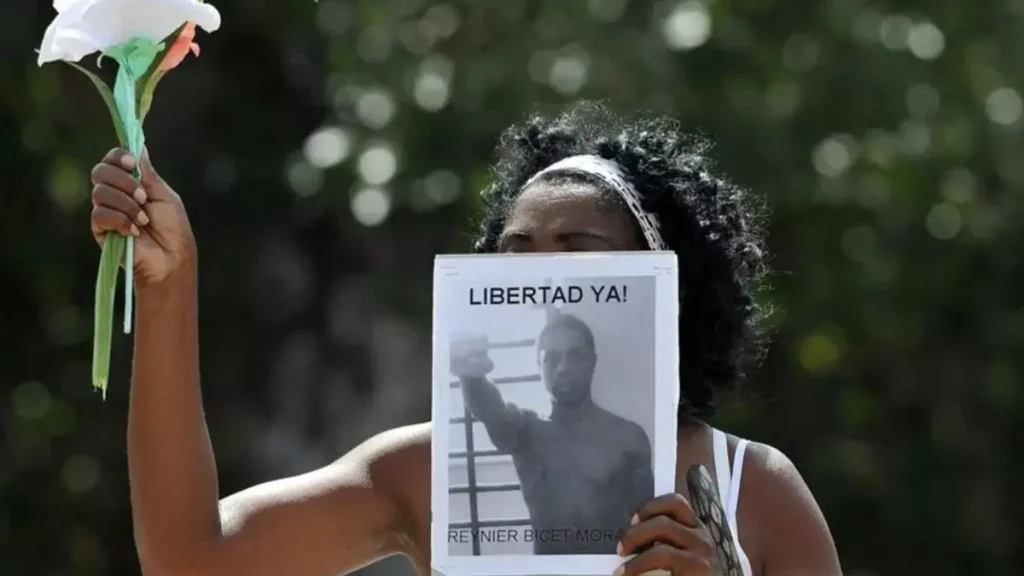
 14ymedio, Havana, March 13, 2026 – The Spanish NGO Prisoners Defenders confirmed this Friday the release of at least ten political prisoners in Cuba following the government’s announcement of the release of 51 inmates. They also report that the group of beneficiaries may include common prisoners, as already happened in January 2025. So far, two releases of inmates convicted of crimes unrelated to political motives have been verified.
Among those released are Ibrahín Ariel González Hodelin (26 years old, sentenced to 9 years, imprisoned in Mar Verde Prison); Ariel Pérez Montesino (52 years old, sentenced to 10 years, Guanajay Prison); Juan Pablo Martínez Monterrey (32 years old, sentenced to 11 years, Ceiba 5 Forced Labor Prison); Ronald García Sánchez (33 years old, sentenced to 14 years, Toledo 2 Forced Labor Prison); and Adael Jesús Leivas Díaz (29 years old, sentenced to 13 years, Zona 0 Forced Labor Prison, Combinado del Este).
Prisoners Defenders specified that the sentences of these individuals remain in force and that their release occurs under a particularly restrictive parole regime known as a “conditional parole regime.” This means they remain subject to strict controls and conditions while serving the rest of their sentences outside prison, and any violation could result in their return to a penitentiary facility. This model of conditional release has previously occurred in other cases of negotiated releases.
The decision applies to those who have served a significant portion of their sentence and have shown good behavior during their time in prison.
Cuba’s Ministry of Foreign Affairs explained that the decision applies to those who have served a large part of their sentence and demonstrated good conduct while imprisoned. The government described the measure as sovereign, although it noted that contacts were maintained with the Vatican, in line with the tradition of dialogue on prisoner release processes. In its statement it also linked the measure to the “proximity of the celebrations of Holy Week.”
Amnesty International and Justicia 11J criticized the lack of transparency in the process, since the complete list of those released has not been published and the conditions of their release have not been detailed. Amnesty International also denounced the use of prisoners as “bargaining chips in a political game” and reiterated its demand for the “immediate and unconditional” release of those it considers unjustly imprisoned in Cuba.
Cuban Foreign Minister Bruno Rodríguez met on February 28 at the Vatican with Pope Leo XIV and the Secretary of State, Cardinal Pietro Parolin, to discuss dialogue and mediation on prisoner issues. In addition, the U.S. ambassador to Cuba, Mike Hammer, met days earlier with Paul Richard Gallagher, the Vatican’s secretary for Relations with States.
In 2026, Cuba reached a historic record of political prisoners with a total of 1,214, according to the latest report by Prisoners Defenders published at the end of last February.
Translated by Regina Anavy
______________________
COLLABORATE WITH OUR WORK: The 14ymedio team is committed to practicing serious journalism that reflects Cuba’s reality in all its depth. Thank you for joining us on this long journey. We invite you to continue supporting us by becoming a member of 14ymedio now. Together we can continue transforming journalism in Cuba.