The Guantánamo Naval Base, a Point of Light on an Island in Darkness and in Crisis

The U.S. enclave in Cuba displays, in just 116 square kilometers, the extreme contrast between the island’s isolation and American abundance.
The Guantánamo naval base continues to be one of the strategic points of the U.S. Navy in the Caribbean. / EFE / Marta Garde

14ymedio bigger14ymedio/EFE, Yeni García, Guantánamo, March 28, 2026 – The century-old naval base that the U.S. occupies in southeastern Cuba, against the will of Havana, is separated from the rest of the Caribbean territory by more than just barbed wire and a strip of land that could still be mined.

The territorial, ideological, and economic gap between the two countries, estranged for nearly 70 years, becomes palpable when visiting the U.S. military enclave, established in 1903, one of the oldest that the U.S. maintains outside its borders and the only one in a communist nation.

On one side, a country immersed in a humanitarian crisis worsened by the recent crude oil blockade imposed by Washington, and on the other, a small portion of about 116 square kilometers with well-stocked markets, that never turns off the lights or stops its cars for lack of fuel.

While last weekend the rest of the Caribbean country experienced its second nationwide blackout in less than seven days, on the U.S. military base daily scenes could, if one ignores the signs prohibiting photography and the uniforms and military buildings, be the same as in any neighborhood in nearby Florida.

The connections between the two cultures are scarce, but the few that a keen eye manages to identify are evident

Despite the fact that the fences at the military base welcome visitors to “Guantánamo Bay, Cuba,” it is very difficult for someone who has walked the streets of Cuba to reconcile images of old cars, smoking trash on street corners, and darkened neighborhoods with an Irish pub, a movie theater showing the latest Hollywood release, or a McDonald’s on island soil, which has been serving its famous hamburgers since 1986. continue reading

At first glance, the connections between the two cultures are scarce, but the few that a keen eye can identify are evident: an altar to Our Lady of Charity of El Cobre, Cuba’s patron saint, streets named after heroes of the independence wars, such as José Martí and Antonio Maceo, royal palms, and endemic iguanas and hutias.

At present, only a small number of Cubans remain on the base and chose to stay as special residents, now very elderly and in fragile health, out of the more than 300 who used to work here decades ago . Five years ago there was a community center with a cultural program to maintain Cuban traditions.

A small museum preserves part of the history of the controversial enclave, which has become an uncomfortable legacy for the Cuban government, which considers it “illegal” and demands its return, something the U.S. has refused, relying on a bilateral agreement from the 1930s that requires joint authorization for its return.

A mural in the gift shop shows one of the few Cuban flags that can be seen on the base, where it is also not common to hear music from the island or find a completa with congrí, roast pork, cassava with mojo, and fried plantains, but where you can get a Starbucks frappuccino or a protein smoothie after leaving the gym.

The base has been “completely self-sufficient” and has “its own sources of energy and water” that serve about 6,000 inhabitants of the base

Since Fidel Castro came to power in Cuba in 1959, the once close relationship between the two countries cooled. The late Cuban former president cut relations with the U.S. in 1961, stopped cashing the roughly $4,000 rent checks that Washington still pays for the base, and cut off the supply of water and provisions in 1964.

From that moment on, “Gitmo,” as Americans call it, has been “completely self-sufficient” and has “its own sources of energy and water” that serve about 6,000 inhabitants of the base, according to the U.S. government’s military installations directory.

Shipments of fuel and supplies arrive at the enclave, which has its own hospital and airport, and although it is more recently known for housing the alleged perpetrators of the terrorist attacks of September 11, 2001, it continues to be one of the strategic points of the U.S. Navy in the Caribbean.

Translated by Regina Anavy

______________________

COLLABORATE WITH OUR WORK: The 14ymedio team is committed to practicing serious journalism that reflects Cuba’s reality in all its depth. Thank you for joining us on this long journey. We invite you to continue supporting us by becoming a member of 14ymedio now. Together we can continue transforming journalism in Cuba.

In Guantánamo, Cuban Families Juggle To Provide School Snacks for Their Children

With a monthly pension of 3,000 pesos, a grandfather in charge of his grandson, because the parents left the country, cannot guarantee a child’s food.

The responsibility of feeding students during the school day falls exclusively on families. / 14ymedio 14ymedio

14ymedio bigger14ymedio, Guantánamo, Dayamí Rojas, March 28, 2026 – The morning bustle gathers every day in front of a primary school in the Caribe neighborhood, in the city of Guantánamo. At that hour, children arrive with their backpacks slung over their shoulders and a small additional bundle in their hands: their snack. Some bring a piece of bread, others a small bag with cookies, and a few barely carry a bottle with an instant drink. Behind each of those portions there is a story of domestic sacrifice and inflation.

In most schools in Guantánamo there has not been a school snack distributed by the educational center itself for decades. That practice, which in other times included a bottle of soda or a portion of sweets, disappeared during the years of economic crisis and was never restored. Since then, the responsibility of feeding students during the school day has fallen exclusively on families, who must figure out each day what to put in the child’s backpack.

But in recent months, the rise in the cost of basic products has turned that daily task into a real obstacle course. The increase in the price of bread, cookies, and all flour-based products has driven up snack costs, while inflation and the devaluation of the Cuban peso continue to erode the purchasing power of salaries and pensions.

Private vendors offer baguette-style bread early in the morning. The loaves are displayed in plastic boxes or improvised baskets, and they disappear quickly. The price changes depending on availability and demand pressure. What used to cost a few dozen pesos has now become a significant expense for any family with school-age children.

“If you add lunch and dinner, each child needs between 300 and 400 pesos daily so that, at least, they do not go hungry” / 14ymedio

“Ensuring breakfast and a snack for a child today in Guantánamo costs, at a minimum, between 100 and 150 pesos daily,” a father, who also works as a teacher, explains to 14ymedio. “If you add lunch and dinner, each child needs between 300 and 400 pesos daily so that, at least, they do not go hungry.” continue reading

His words summarize a reality that is repeated in many households in the province, where family incomes do not grow at the same rate as prices. In a context marked by inflation and shortages, every purchasing decision
becomes a complex calculation. Parents and grandparents compare prices among different vendors, reduce portions, or substitute more expensive products with lower-quality ones.

On a corner in the San Justo neighborhood, Saúl waits his turn in front of a private sales point. He holds a crumpled bill in his hand and keeps his eyes fixed on the tray where the bread is piled up. He has two children in primary school and every morning he must go out early to secure the day’s snack.

“A baguette costs you 250 pesos, if you can find it at that price, because in my neighborhood they already sell them for 350. Soft drinks have also gone up, everything is very expensive,” the man from Guantánamo tells this newspaper.

What used to be an occasional purchase now represents an expense that many families cannot afford frequently

The increase in prices is not limited to bread. Cookies, sweets, and juices have followed the same trend, driven by the shortage of flour, rising sugar prices, and the higher cost of the inputs needed for their production. Many of these products are sold on the informal market or in small private businesses, where prices constantly adjust depending on the availability of goods.

Around several schools, street vendors have become a common presence. They offer small doughnuts, bread with cheese, and sweet cookies, aimed specifically at students. However, what used to be an occasional purchase now represents an expense that many families cannot afford frequently.

The situation becomes even more difficult in households where children are left in the care of grandparents, an increasingly common reality in Guantánamo due to the parents’ emigration. In those cases, an elderly person’s pension must cover all the child’s expenses, including daily food.

“A grandfather who is in charge of his grandson, because the parents left the country, and who has a monthly pension of 3,000 pesos cannot guarantee a snack every day for that child,” explains a resident of Guantánamo living in the city center.

Insufficient nutrition not only affects children’s physical well-being, but also their academic performance

The figure is revealing when compared with current food prices. With a pension that barely covers basic household expenses, allocating daily money for a school snack becomes an almost impossible challenge. In some cases, children attend classes with a minimal snack or nothing to eat, making it difficult for them to last until the end of the school day.

Inside classrooms, teachers closely observe this reality. Some students share their snacks with classmates who have nothing, while others try to stretch time so that hunger does not interfere with concentration. Insufficient nutrition not only affects children’s physical well-being, but also their academic performance.

In a school in the Los Maceo neighborhood, a teacher comments that it is increasingly common to see students arriving without snacks or with very small portions. The scene repeats itself during recess, when the yard fills with children who open their backpacks and compare what each was able to bring that day. The next day, the family will have to start the same battle again: finding and paying for something the student can eat mid-morning, in the middle of their classes.

Guantánamo: Cuban families and the daily challenge of school snacks

Translated by Regina Anavy

______________________

COLLABORATE WITH OUR WORK: The 14ymedio team is committed to practicing serious journalism that reflects Cuba’s reality in all its depth. Thank you for joining us on this long journey. We invite you to continue supporting us by becoming a member of 14ymedio now. Together we can continue transforming journalism in Cuba.

The Cuban Regime Resorts to the Vatican’s ‘Magical Power’ To Ease the U.S. Energy Blockade

‘The Washington Post’ cites several sources and notes that the lack of fuel is affecting the distribution of aid sent by Washington through the Church.

Image released by Caritas of the reception of aid for distribution in the east / Caritas

14ymedio bigger14ymedio, Madrid, March 27, 2026 – The Cuban Government is trying to get the Vatican to act as a mediator so that Washington eases the fuel blockade, which, among other things, is keeping tons of U.S. humanitarian aid that the Catholic Church itself distributes stalled in ports. A dozen sources have confirmed to The Washington Post both the diplomatic situation and the complexities of distribution, as well as the complications for this option to succeed.

It is not surprising that Havana seeks to involve the Holy See, whose influence has been crucial in various processes ranging from the release of prisoners from the Black Spring to the more than 500 prisoner releases that facilitated Cuba’s provisional removal from the list of State Sponsors of Terrorism in January 2025; not to mention the thaw carried out by Raúl Castro and Barack Obama in 2014. In all of these, the Vatican was behind the scenes.

This, along with the fact that Pope Leo XIV is American, motivates Havana to seek his influence, although nothing suggests the result will be productive, since the Trump Administration has ignored two of the pontiff’s main demands in his year on the throne of Saint Peter: the end of the wars in Gaza and Iran and different treatment for migrants.

“Cubans have always believed that the Vatican possesses a kind of magical power and that its support will make Cuba receive more,” John S. Kavulich, president of the U.S.-Cuba Trade and Economic Council, told the Post.

But a source familiar with the talks told the newspaper that the White House is reluctant. “The Administration is not going to allow the Vatican to dictate its policy toward Cuba. They can talk, but the answer is: ‘You’re right, there are problems, but we didn’t cause them.’” In his opinion, the Cuban Government already has it in its hands to ease the crisis if it makes the changes Washington demands. “So we’re not too enthusiastic about a quid pro quo, because we really don’t need to do anything for them to do something, since they are collapsing on their own and therefore we will get what we want.” continue reading

“So we’re not too enthusiastic about a quid pro quo, because we really don’t need to do anything for them to do something, since they are collapsing on their own and therefore we will get what we want”

The words of this source seem firm, but the Church has apparently tried to explain to the U.S. Administration that the very aid they send is useless in Cuban ports. “On the one hand, they want to deliver humanitarian aid to those in need through the Catholic Church, since it is present throughout the Island,” said a person familiar with coordinating the delivery of nine million dollars’ worth of products that Marco Rubio announced after Hurricane Melissa in October. “But, at the same time, that aid cannot arrive due to the oil blockade. The sanctions need to be lifted, because the situation has been like this for a couple of months,” he said.

Thomas Wenski, archbishop of Miami, told the Post that the mere fact that the Cuban regime accepted those packages, which very visibly bear the U.S. flag, is no small thing. Most of the supply containers were arriving at the port of Mariel, but the Church, says the archbishop, does not have trucks with fuel to transport them across the Island, and although they painstakingly coordinated a shipment by sea to Santiago, some cooperation from the Government was necessary. Wenski showed the Post photographs of volunteers in Guantánamo distributing the aid on tricycles and wheelbarrows. Another aid worker said that animals had to be used for transport. “It’s like a Mad Max movie,” Wenski added.

Another of the sources who spoke with the Post is Rolando Montes de Oca, a priest in three parishes near Havana, who distributed U.S. food aid among dozens of elderly people and people with disabilities who depend on his area. His volunteers had to cook with charcoal due to power outages, he said. He saves the little gasoline he has to collect and deliver aid, but he has calculated that it will barely last him until Easter Sunday. To celebrate Mass, he travels up to 18 kilometers by bicycle.

All of this was discussed, says the Post, at a meeting that Mike Hammer, head of mission of the U.S. in Havana, held on February 20 with Archbishop Paul Richard Gallagher, number two at the Vatican Secretariat of State. The diplomat also attended, along with Brian Burch, U.S. ambassador to the Holy See, a meeting with other Latin American colleagues to discuss “how to collaborate with the Church to support the Cuban people’s desire for economic opportunities and freedom.”

Hammer confirmed that the U.S. is in dialogue with Raúl Guillermo Rodríguez Castro, “El Cangrejo,” and “another person,” according to a source close to the meeting

At that meeting, the newspaper maintains, Hammer confirmed that the U.S. is in dialogue with Raúl Guillermo Rodríguez Castro, “El Cangrejo,” [The Crab] and “another person,” according to a source close to the meeting. But that while the agreement was taking shape, the U.S. wanted to send humanitarian aid by bypassing the regime. The Church was clear: the oil blockade is harming the distribution of any aid.

Only a few days later, Cuban Foreign Minister Bruno Rodríguez traveled to Rome to speak with the powerful Cardinal Pietro Parolin, Vatican Secretary of State. Although little has emerged from that meeting, one source told the Post that the minister requested the Pope’s intercession, and on March 12, Havana announced the release of 51 prisoners through mediation by the Holy See.

The Church is not comfortable either. Reluctant to become politically involved, it does not want, according to the report, to see a repeat of what happened in Venezuela with Maduro and prefers a “less traumatic” solution and for the departure of Miguel Díaz-Canel to be agreed upon if it is to occur. Although in their latest statement the bishops asked the regime to make the “political changes that Cuba needs,” they also said that “governments should be able to resolve their disagreements and conflicts through dialogue and diplomacy, not coercion.”

The Vatican has declined to comment to the Post, beyond condemning, since the time of John Paul II, the embargo. But when asked this month about Cuba, Parolin told the press: “We did what we had to do for Cuba. We met with the Foreign Minister and took the necessary steps, always with a view to a solution based on dialogue for the existing problems.” Nothing more.

Translated by Regina Anavy

______________________

COLLABORATE WITH OUR WORK: The 14ymedio team is committed to practicing serious journalism that reflects Cuba’s reality in all its depth. Thank you for joining us on this long journey. We invite you to continue supporting us by becoming a member of 14ymedio now. Together we can continue transforming journalism in Cuba.
The United States Deported 6,000 Cubans to Mexico through an ‘Unwritten’ Agreement

A Boston judge is seeking clarification from the Government after it claimed that these operations are being carried out following a verbal pact.

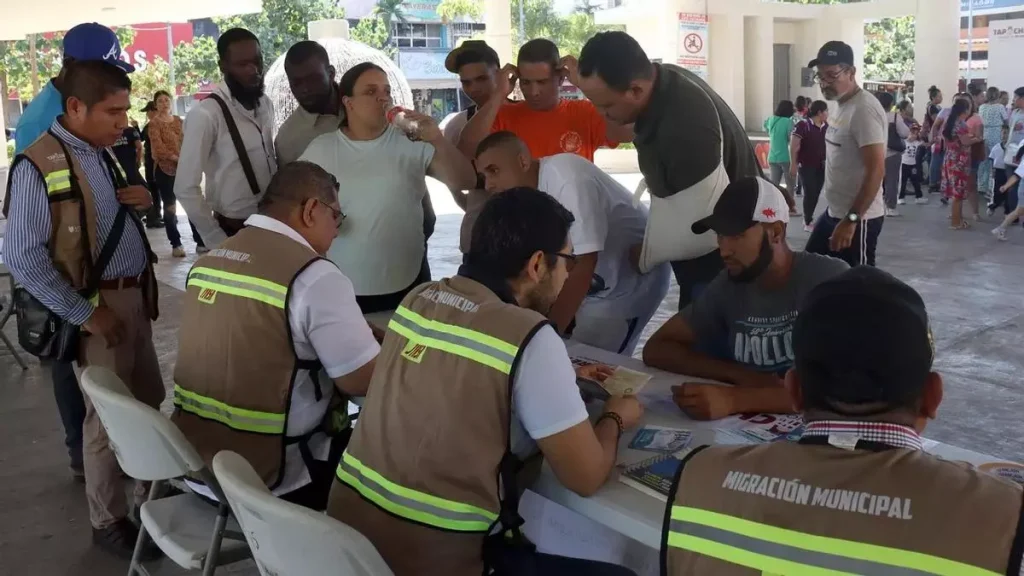
Tapachula has become a temporary hub for hundreds of Cubans, amid the closure of the U.S. border. / EFE

14ymedio bigger14ymedio, Madrid, March 26, 2026 / William Young, a district judge in Boston, has requested clarification from the U.S. Government after the Trump administration said it has an “unwritten” agreement with Mexico under which it has deported 6,000 Cubans.

The lawyers for Jorge Juan Navarro, a Cuban deported to Mexico after 30 years living in the United States, filed a complaint in court arguing that the U.S. Immigration and Customs Enforcement (ICE) violated his rights by sending him to Mexico.

The case is pending while another court decides whether the expedited deportations being carried out by the Administration are legal or not. In the meantime, Young has asked for clarification on how it is possible that a method lacking transparency is being used systematically to deport detainees.

The Government’s lawyer initially told the judge that he would provide a copy of that agreement, but later claimed that the agreement was verbal.

According to Reuters, the magistrate was outraged. “What? Can this be true? Is there some unwritten agreement between two sovereign nations under which 6,000 Cuban citizens have already been sent to Mexico? Is this agreement secret?” he asked. continue reading

“What? Can this be true? Is there some unwritten agreement between two sovereign nations under which 6,000 Cuban citizens have already been sent to Mexico? Is this agreement secret?”

Young, appointed as a judge by Republican Ronald Reagan, warned that “judicial deference” has its limits and that he will not allow the role of the judiciary to be ignored in the face of large-scale deportations that lack a transparent legal framework.

The Department of Homeland Security did not respond to the agency’s request for information.

According to the judge, the previous administration, under Joe Biden, established agreements to expedite cases in which a migrant’s country of origin is reluctant to accept them—apparently four countries including Cuba—but within the framework of the humanitarian parole and CBP One programs, which facilitated the legal arrival of hundreds of thousands of Cubans and other nationalities.

Last week, Luis Rey García Villagrán, director of the Center for Human Dignity, told 14ymedio that in Tapachula alone there are about 500 Cubans deported by the United States who have been “abandoned in the early morning over the past month in different locations. These are people who have been left in migratory limbo.”

It is believed that around 30,000 Cubans are stranded in the region due to the closure of the northern border under the Trump administration, a figure that adds to the more than 15,000 asylum applications stalled in the offices of the Mexican Commission for Refugee Assistance (Comar) and the National Migration Institute.

In October, the situation was already causing international concern, without clarity on how Cubans were ending up arriving in Mexico this way, although many migrants stated they preferred that destination to returning to the Island.

Translated by Regina Anavy

______________________

COLLABORATE WITH OUR WORK: The 14ymedio team is committed to practicing serious journalism that reflects Cuba’s reality in all its depth. Thank you for joining us on this long journey. We invite you to continue supporting us by becoming a member of 14ymedio now. Together we can continue transforming journalism in Cuba.
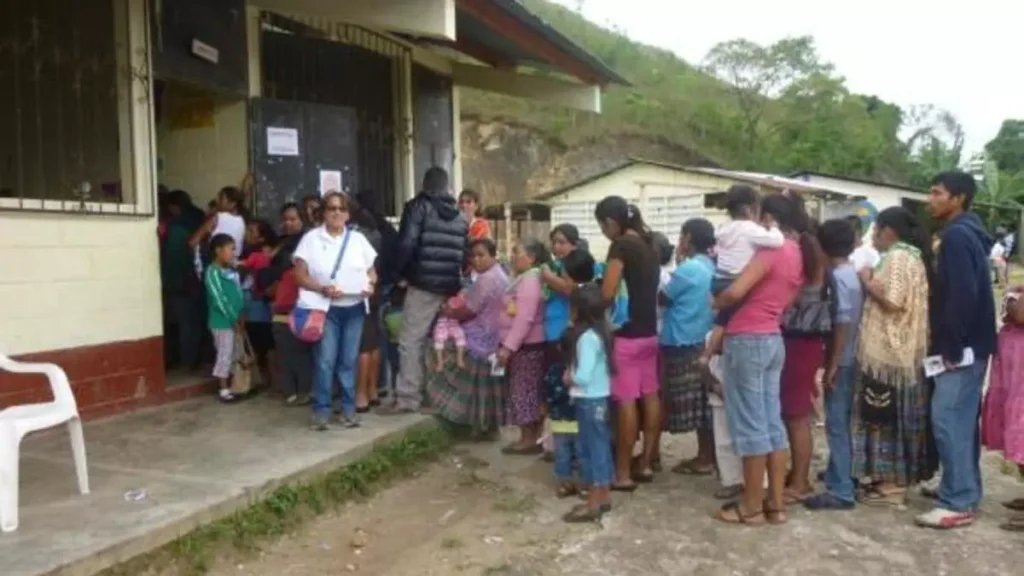
The Public Ministry of Guatemala Is Investigating More Than 60 Complaints Against Cubans Who Were Working As Doctors

The institution claims that specialists were practicing without the required qualifications and are seeking help from the United States for the investigation.

Patients being attended by Cuban doctors in Guatemala / Cubadebate 

14ymedio bigger14ymedio, Havana, March 26, 2026 / The Public Ministry (MP) of Guatemala is investigating more than 60 complaints against Cuban doctors, related to impersonation of professional qualifications, failure to meet legal requirements, and public safety.

“There are complaints filed against Cuban doctors in Guatemala, of various circumstances, from crimes committed by them individually to situations related to the performance of their duties in Guatemala,” stated the Secretary General of the MP, Ángel Arnoldo Pineda.

According to Pineda, the investigation carried out by the prosecutor’s office analyzes the proportion of healthcare specialists sent by the Cuban Government and indicates that only 3 out of every 10 Cubans sent were doctors.

“If one numerically analyzes 100% of the people designated by the Cuban regime to provide that medical support in different countries, it is mentioned that only 20% or 30% of the people who come are actually doctors, and the rest impersonate doctors and perform other functions,” the secretary noted.

It would be unfortunate that over time people might be receiving medical care without even having the professional capacity to provide it

The statement is based on the fact that the documents certifying the specialists were supposed to be endorsed by state agencies, such as the Ministry of Health.

The Secretary General added that in the last year the number of Cubans arriving in Guatemala increased, and the investigations are focused on determining what functions these supposed foreign doctors were performing in the country.

“It would be unfortunate, let’s say, that over time people might be delivering medical care without even having the professional capacity to provide it,” he stated. continue reading

Pineda also claims that the ministry has requested support from the U.S. government to assist in that investigation “because we have information, in terms of information-sharing on investigations, that this is happening in several countries in Latin America.”

Last January, the Government of Guatemala chose not to renew the contracts of the Cuban medical brigades, thus initiating a gradual withdrawal of their presence in the country. It followed the steps of other countries in the region such as Honduras, Jamaica, or the Bahamas, under pressure from the government of Donald Trump, which considers the Cuban missions “forced labor.”

The decision has sparked controversy and skepticism among Guatemalan medical opinion. Specialists have told the newspaper Prensa Libre that they doubt the Ministry of Health will be able to hire healthcare workers to replace the Cuban doctors, not only because of salaries and working conditions in the public health system but also because there is a shortage of specialists in various branches of medicine in the country.

Translated by Regina Anavy

______________________

COLLABORATE WITH OUR WORK: The 14ymedio team is committed to practicing serious journalism that reflects Cuba’s reality in all its depth. Thank you for joining us on this long journey. We invite you to continue supporting us by becoming a member of 14ymedio now. Together we can continue transforming journalism in Cuba.
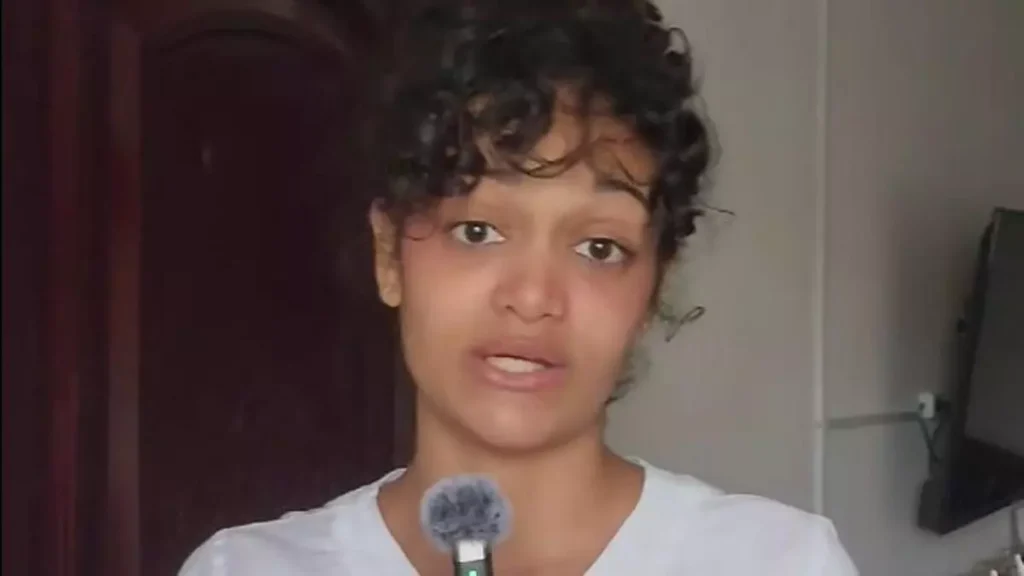
Cuban YouTuber Anna Bensi Appears To Testify Regarding the Accusation Against Her Mother and Leaves Charged With the Same Offense

The young woman is under house arrest and cannot leave the country or travel between provinces without notifying State Security.

Anna Bensi recounted what happened during the interrogation from her home, in the middle of a blackout. / Screenshot

14ymedio bigger14ymedio, Madrid, March 26, 2026 – Cuban YouTuber and activist Anna Sofía Benítez Silvente, known on social media as Anna Bensi, went this Wednesday to the Alamar police unit to be interrogated by State Security in relation to the case opened against her mother, Caridad Silvente. The young woman left the appointment, however, charged with the same offense, that of “acts against personal and family privacy, one’s own image and voice, identity of another person and their data.”

“I am under house arrest, I cannot leave the country or travel between provinces without notifying them,” she said in a video published on Facebook hours after arriving home to relate her encounter with State Security.

Benítez Silvente said she had been at the police station for an hour, a detail that became known thanks to her friend, David Espinosa, who reported it to reassure the people who had shown solidarity with her, some even accompanying her as a sign of support. “Anna Sofía Benítez Silvente has just left the unit. 3:07 pm. God is in control!” he announced, before she could give more details from the calm of her home, although in the middle of a blackout.

Now without her lawyer present, an agent led her to another office where another colleague was in charge of thoroughly searching her in case she was carrying any device to record

“First I went with the lawyer to an office and right there they took my statement and charged me,” she explained, and added that the investigator handling her mother’s case and a lieutenant filling out the paperwork were in the room. Barely a couple of minutes outside, waiting, “They told me they wanted to talk with me” and now without her lawyer present, an agent led her to another office where another colleague was in charge of thoroughly searching her in case she was carrying any device to record.

“They checked my hair, I had to undo my hairstyle, take off my blouse, my pants, they touched my shoes…,” she recounts. However, they then limited themselves to returning her ID card. “And this was everything that happened today,” she says, before thanking those who are supporting not only her and her mother, but also a national cause.

Benítez Silvente’s mother, Caridad Silvente, is accused of having disseminated images of a Ministry of the Interior agent who continue reading

had previously visited her to deliver a police summons. The authorities frame the action under Article 393 of the Cuban Penal Code, referring to “acts against personal and family privacy, one’s own image and voice.”

During the interrogation carried out on Silvente on March 12, she was also held responsible for allowing her daughter, Anna Bensi, to publish denunciations against the Government. She was threatened with a sentence of up to five years in prison. The agents called her a “bad mother” and accused her daughter of being “counterrevolutionary,” “conspiring,” and receiving orders from the United States. After that interrogation, Silvente was informed that she is under house arrest and cannot receive visitors. She was required to find a lawyer within five days for her criminal trial. She was also told that Anna Bensi would be summoned soon.

“If something happens to my mom or to me, it will be your fault,” Bensi expressed, in a message that summarizes not only her personal anguish, but also the defenselessness in which many citizens find themselves when they become targets of the political police.

The case against her mother is a form of intimidation to prevent her from continuing to express herself on social media, she maintains

In a live broadcast published this Tuesday by the influencer, the young woman had reported that the summons was signed by Lieutenant Colonel Eddy Cala, the investigator in charge of the case.

Bensi has questioned the legality of the procedure and has denounced irregularities in the summons itself, which, she says, was poorly written and did not precisely detail the reasons why she had to appear before the authorities. The case against her mother is a form of intimidation to prevent her from continuing to express herself on social media, she maintains.

Wednesday’s interrogation occurs in a context of growing repression against critical voices within the Island. Far from decreasing, surveillance, arbitrary summonses, threats, and restrictions on movement continue to be part of the daily life of activists, independent journalists, outspoken artists, and citizens who express dissent.

Translated by Regina Anavy

______________________

COLLABORATE WITH OUR WORK: The 14ymedio team is committed to practicing serious journalism that reflects Cuba’s reality in all its depth. Thank you for joining us on this long journey. We invite you to continue supporting us by becoming a member of 14ymedio now. Together we can continue transforming journalism in Cuba.
The Proximity of the Tanker Anatoly Kolodokin Sets Off Alarms About Russian Espionage in Cuba

The New York Times points to suspicions that the vessel may be gathering intelligence as it passes through the Caribbean.

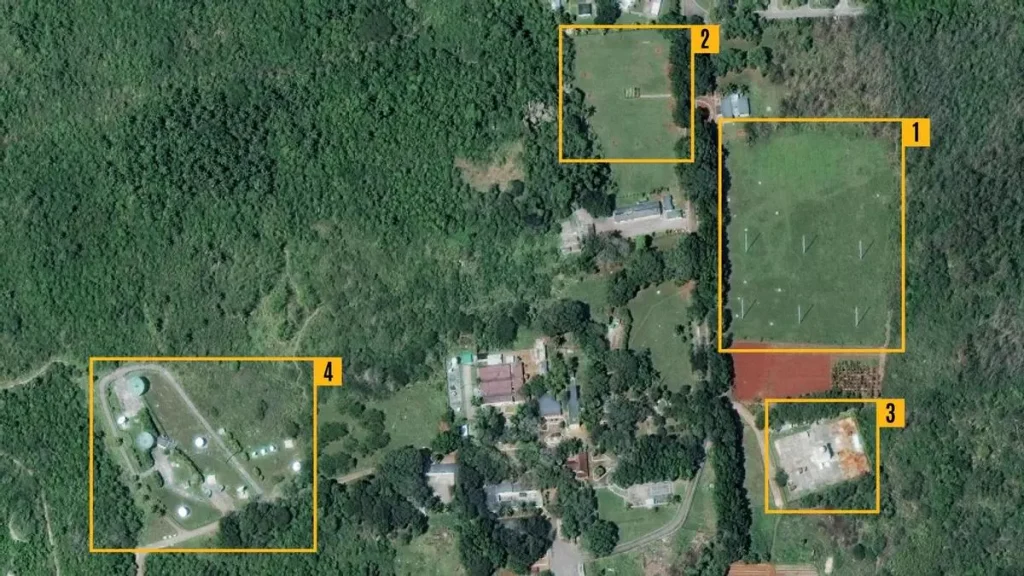
Satellite image of the alleged espionage station in Bejucal / CSIS

14ymedio bigger14ymedio, Havana, March 26, 2026 – U.S. concerns surrounding the Russian tanker Anatoly Kolodkin, which is heading toward Cuba, thus defying U.S. sanctions imposed on both Russia and Cuba, have put the U.S. Navy on alert and have reignited the debate over Russian espionage from the Island, according to The New York Times.

In a report published this Tuesday by the New York newspaper, the possibility of a hidden function of the Russian vessel is discussed, capable of supplying fuel to the Island but also being involved in espionage activities to gather strategic information in the Caribbean.

Among the reasons that Donald Trump cited in January for cutting oil imports to the Island, he pointed out that the Cuban regime allows Russia “to establish sophisticated military and intelligence capabilities there” that threaten U.S. national security. Specifically, Trump mentioned “the largest Russian signals intelligence installation abroad.”

The Russian base he refers to is the so-called Lourdes, near Havana, which operated during the Cold War and was closed 25 years ago. In 2014, when tensions between Washington and Russia worsened, speculation arose that it would be reactivated, although this was denied by both Russian President Vladimir Putin and U.S. intelligence.

Although less sophisticated than the reported Chinese bases in Cuba, Lourdes has the capacity to monitor key U.S. facilities located less than 320 kilometers away, in Florida, including Central Command, the satellite launchers at Cape Canaveral, and Trump’s residence at Mar-a-Lago. continue reading

According to ‘The New York Times’, preserving this station may be one of the reasons why Putin risks defying Trump by sending oil to Cuba.

Marco Rubio has for years called foreign bases on the Island unacceptable. In a 2016 Republican primary debate, when describing a “good” U.S. deal with Cuba, he stated that it would include Havana “kicking the Russians out of Lourdes and getting rid of the Chinese listening station in Bejucal.”

The Bejucal base, one of four alleged Chinese listening posts in Cuba, was built more than ten years ago near Lourdes and recently modernized. Following revelations by The Wall Street Journal in 2023, Antony Blinken confirmed that Beijing had upgraded it in 2019 and that the Biden Administration responded with a “more direct” diplomatic approach.

Chinese listening stations in Cuba could also monitor U.S. military training areas in Florida and satellite launches from Cape Canaveral.

Even if Trump were to succeed in forcing the closure of Russian and Chinese bases, those countries would continue operating diplomatic facilities on the Island

A former career official of U.S. intelligence services told the Times that even if Trump succeeded in forcing the closure of Russian and Chinese bases, those countries would still operate diplomatic facilities on the Island, “which would most likely be packed with covert listening equipment.”

For his part, William LeoGrande, a professor at American University and very close to the regime, has criticized suspicions of espionage from Cuba. According to him, the Lourdes base is already obsolete, and the Chinese facilities are not as threatening as claimed. “It’s a pretext to say that Cuba is a threat,” he said. “It’s a perfect excuse.”

However, the former general counsel of the National Security Agency (NSA), Glenn S. Gerstell, has indicated that espionage equipment does not need to be cutting-edge to be effective. “Local antennas remain surprisingly relevant,” he said, adding that they can capture walkie-talkie and radio signals more clearly than other more advanced but more distant methods.

Although Trump officials have not said whether they are demanding that the Cuban government expel Russian and Chinese agents, Trump’s executive order declaring a “national emergency” indicates that foreign bases are a high priority.

Translated by Regina Anavy

______________________

COLLABORATE WITH OUR WORK: The 14ymedio team is committed to practicing serious journalism that reflects Cuba’s reality in all its depth. Thank you for joining us on this long journey. We invite you to continue supporting us by becoming a member of 14ymedio now. Together we can continue

A Court in Camagüey Links a Man Sentenced to Life Imprisonment to Attacking a Police Officer to the United States

Granma publishes an article on “Firmness in the prevention and the fight against terrorism.”

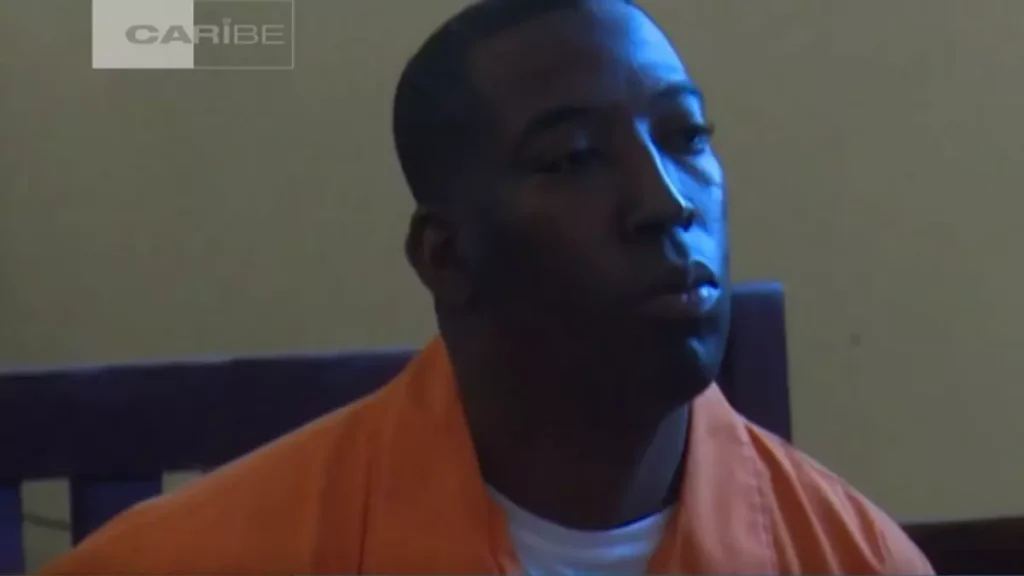
Osvaldo Fernández Pichardo has been sentenced to life imprisonment for the attack on an officer. / Canal Caribe

14ymedio bigger14ymedio, Madrid, March 24, 2026 – Osvaldo Fernández Pichardo, a man detained last year after attacking a police officer with a knife in the city of Camagüey, was sentenced to life imprisonment for the crimes of terrorism and carrying and possession of weapons. In the report, broadcast this Monday on Cuban Television, a citizen residing in the United States was pointed to as the instigator of the attack.

The attack occurred on May 29 on the Camagüey boulevard, when Fernández Pichardo attacked the officer from behind, as could be seen in a video presented as evidence during the trial and aired this Monday on television. The official press reported the arrest of the individual at the time, accusing him of having consumed alcoholic beverages. The officer was seriously injured, “with imminent risk to life,” although she later recovered.

It is now that the authorities have linked the incident to “a person mentioned in the investigative process who resides in the United States and has extensive activism against the Cuban Revolution.” This individual, whose name has not been published, allegedly offered Fernández Pichardo $600 to attack a member of the police force “in a public place” in order to “provoke fear among people, disrupt order, and foster feelings of insecurity in the population.”

This individual, whose name has not been published, allegedly offered Fernández Pichardo $600 to attack a member of the police force “in a public place”

The report also highlighted that the attacker’s strong physical build played a significant role not only in the act but also in how he left the scene “in a threatening manner.”

The First Criminal Chamber of the Provincial Court sentenced him, in addition to the principal penalty of life imprisonment, to other additional sanctions, such as compensating the victims. continue reading

“Officers of the National Revolutionary Police have among their duties guaranteeing public order and citizen tranquility. That is why this criminal incident was widely condemned when it became known; and today, in the name of the people, the courts imposed an exceptional, rigorous, and proportionate sanction to the seriousness of the act,” the report emphasized, also noting, as is customary, that procedural guarantees were observed.

The news also appears this Tuesday on the front page of the State newspaper Granma and on page two of its print edition, alongside a note signed by Bileardo Amaro Guerra, the chief prosecutor of the Department of the Directorate for Combating and Preventing Corruption and Illegalities, which highlights the “firmness in the prevention and the fight against terrorism,” an issue of ongoing dispute with the United States, which keeps Cuba on the list of state sponsors of terrorism and also on the list of states that do not cooperate against that crime.

The article defends the regime’s fight against a crime it “has suffered,” generally “organized and financed from the United States,” and cites several cases in which “despite providing evidence of the organizers and sponsors (…) impunity has prevailed.”

The article outlines national and international legislation ratified by Cuba and in force in the country, including penalties ranging from 10 to 30 years for terrorism offenses, which, as in the case of Fernández Pichardo, can result in life imprisonment or death “for the most serious forms.”

The article also defines the crime of terrorism and other forms aimed at generating terror, including acts against maritime navigation and aviation security or against the use of computer systems.

“A particular analysis under current circumstances is required for the crime of financing terrorism, which has been used by terrorist organizations based abroad”

“A particular analysis under current circumstances is required for the crime of financing terrorism, which has been used by terrorist organizations based abroad. The Code punishes anyone who collects, transports, provides, or possesses funds, financial or material resources with the purpose that they be used in any of the aforementioned crimes,” the note adds, warning of the rigor with which these cases will be judged as they continue to occur “at present.”

The fact that the article reviews the list of individuals and entities considered terrorists by the regime and its final argument, asserting that “there will be no impunity for those involved in these criminal acts,” suggests that it is not so much about cases like that of Fernández Pichardo, but rather about another issue of greater relevance at the moment: the case of the boat coming from the United States intercepted last February in Villa Clara.

There were 10 occupants, five died after being shot by Cuban border guards, four on the spot and another after several days hospitalized. They “intended to carry out an infiltration for terrorist purposes,” according to the authorities, who are investigating the case in collaboration with the FBI.

Translated by Regina Anavy

______________________

COLLABORATE WITH OUR WORK: The 14ymedio team is committed to practicing serious journalism that reflects Cuba’s reality in all its depth. Thank you for joining us on this long journey. We invite you to continue supporting us by becoming a member of 14ymedio now. Together we can continue transforming journalism in Cuba.
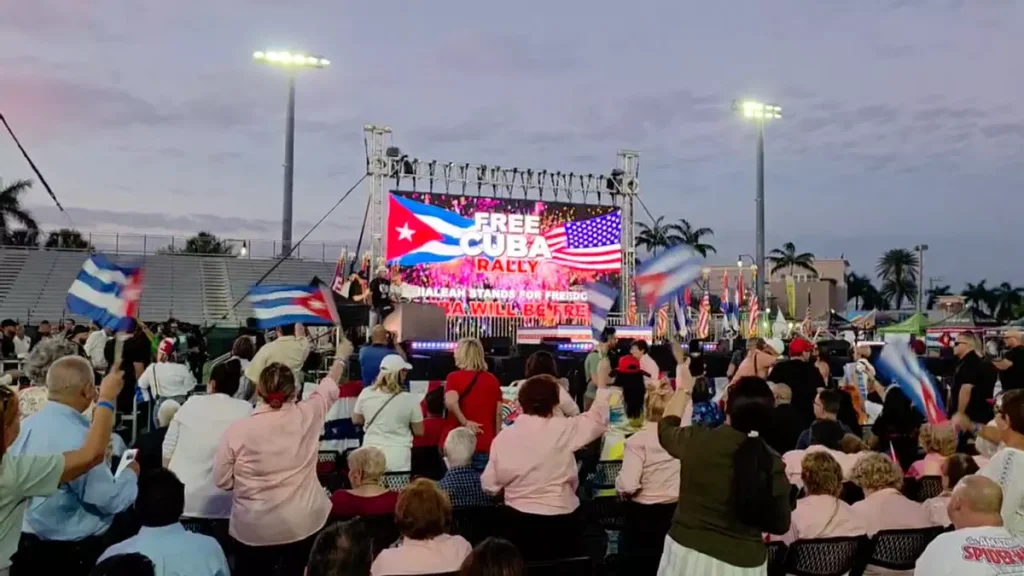
Large Demonstration in Miami With Shouts of ‘Freedom’ for Cuba and ‘Military Intervention’

Yotuel Romero, Jacob Forever, and El Chacal premiered their new song, Puente Libertad, in the presence of the mayor of Hialeah, Rosa María Payá, José Daniel Ferrer, and thousands of Cuban Americans.

Cuban flags mixed with American ones both on stage and off / 14ymedio

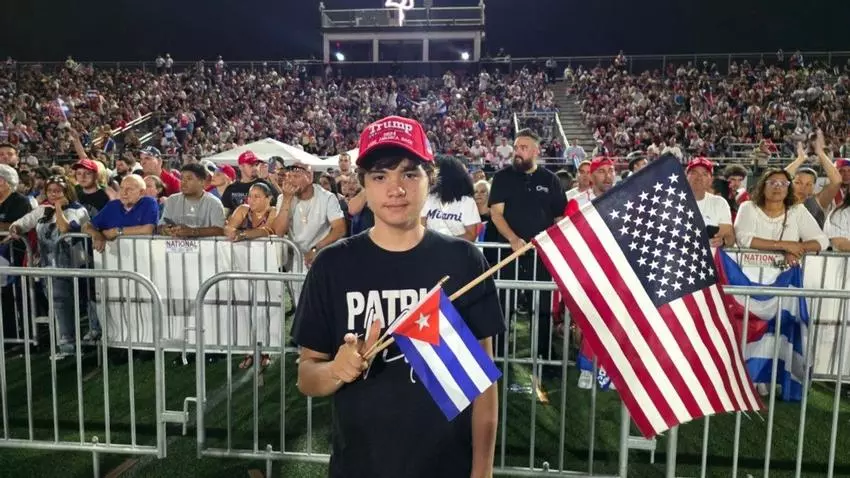
14ymedio bigger14ymedio, Hialeah, Alejandro Mena Ortiz, March 25, 2026 – “If Cuba is in the streets, so are we.” With that premise, thousands of Cubans in exile gathered this Tuesday at Milander Park in Hialeah, Florida, at an event called by the city’s mayor, Republican Bryan Calvo, and the Cuban Anti-Communist Foundation. At the event, a mix of demonstration and concert attendees repeatedly called for “freedom” and a U.S. “military intervention” on the Island to put an end to the Castro regime.

Among the exile figures present at the event, called the Free Cuba Rally, were Rosa María Payá, leader of Cuba Decide; Orlando Gutiérrez Boronat, spokesperson for the Cuban Democratic Directorate; José Daniel Ferrer, leader of the Patriotic Union of Cuba; and influencer Alexander Otaola, who proclaimed from the stage: “Freedom is very close, freedom is in the air.”

The organizers insisted that they want to convey the idea that Cuba is not alone. / 14ymedio

“We all know the saying ‘no evil lasts a hundred years.’ But now it doesn’t say that, it says ‘no evil lasts 68 years.’ And therefore, this is the final year of Castro-communist tyranny,” Ferrer said emphatically.

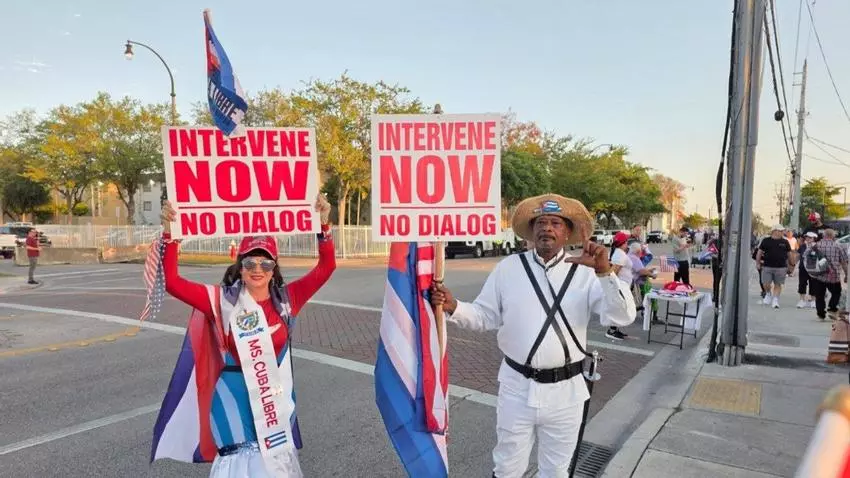
From the political sphere, in addition to the city’s mayor, there was Senator Ileana García, who urged the exile community to stay this course so that the Trump Administration intervenes. “I think that by showing up here, we continue to pressure the government to do the right thing,” she said. In the stands, several people displayed signs reading “Intervene now. No dialogue.”

“Tonight is about one message, with a single voice saying that we want change in Cuba. We want complete change, real change,” Bryan Calvo called out, amid shouts of Patria y Vida, one of the most chanted slogans at the event, which featured the participation of Yotuel Romero, one of the authors of the song that became a symbol of the July 11, 2021 protests, performed yesterday by the artist.

Attendees called for an intervention in Cuba to end Castroism. / 14ymedio

The former Orishas singer, Jacob Forever, and El Chacal premiered live last night their new song, Puente Libertad, in which they speak of a prosperous future for Cuba. “Let’s imagine together that bridge that connects us all, where happiness and abundance are the present of our Island,” the lyrics say. A few days ago, the authors released the music video for the song, created with artificial intelligence, which shows American brands such as McDonald’s and Walmart in Havana.

Nestor Meness and El Rojo also performed Como me duele Cuba, as did Los Tres de La Habana. Although the most emotional moment for those present was the performance of the national anthem, sung by the artist Lena Burke.

Alejandro González of Los Pichy Boys told the press that Cubans “are ready to face the hardships that come their way if that means they will be free in the end.” For that reason, amid a situation that is deteriorating by the moment on the Island, attendees reaffirmed, as one of the goals of the event, to show everyone that “Cuba is not alone.”

[see video here]

Translated by Regina Anavy

______________________

COLLABORATE WITH OUR WORK: The 14ymedio team is committed to practicing serious journalism that reflects Cuba’s reality in all its depth. Thank you for joining us on this long journey. We invite you to continue supporting us by becoming a member of 14ymedio now. Together we can continue transforming journalism in Cuba.
The Military Conglomerate Gaesa Is on the Verge of Bankruptcy and the Cuban Economy Will Fall by 7.2% This Year, According to The Economist

The British weekly says that poor investments in hotels have drastically reduced the foreign currency reserves of the Castro-era empire, while the Central Bank has barely 3 billion dollars.

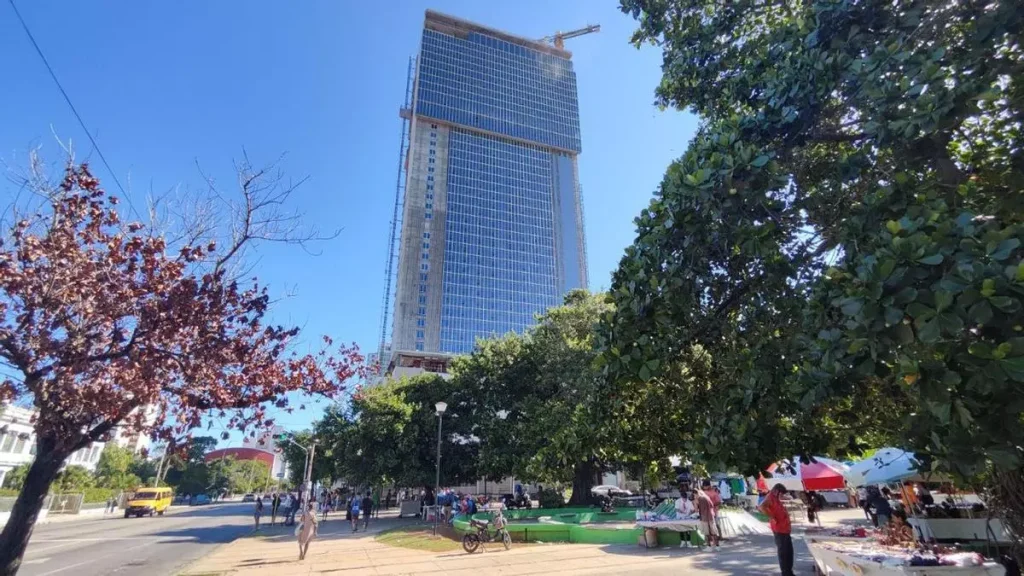
The Torre K, the greatest symbol of ostentation of the military conglomerate Gaesa, is now closed. / 14ymedio

14ymedio bigger14ymedio Madrid, March 25, 2026 – Far from the idea of a multimillion-dollar empire that exists about the Grupo de Administración Empresarial S.A. (Gaesa), the military conglomerate is collapsing at breakneck speed, according to the British weekly The Economist, which publishes an extensive analysis of the state of the Island’s finances and how their precariousness could serve as a lever for change. “They are against the ropes. They will do whatever is necessary to save themselves,” a source linked to the negotiations told the outlet.

The article starts from the idea that the Cuban economy was already deeply depressed, following decades of mismanagement and sanctions. “Trump’s new pressure campaign has made the situation even worse,” they note. From there comes a chain of data illustrating the collapse of Gaesa, which over the last ten years had invested 70% of its resources in tourism that was unable to recover after the 2020 coronavirus pandemic and now, without international flights, is practically at zero.

“Judging by analysis of its accounts and conversations with several Cuban officials, [the reality] appears more modest. Before the United States tightened restrictions, Gaesa barely had one billion dollars in reserves. That figure is falling rapidly, as its luxury hotels remain empty,” the article explains. In addition, according to its estimates, Cuba’s international reserves are not much higher: around 3 billion in total and declining. Its media affiliate, The Economist Intelligence Unit, estimates that this year gross domestic product (GDP) will fall by 7.2%, a catastrophe that small investments by Cuban Americans can do little to offset.

The Economist reviews some figures already familiar to the Cuban public. Tourism, mining, and manufacturing generated barely 2 billion dollars in foreign currency last year, but after the oil blockade decreed by Trump at the end of January, they have collapsed. Exports of cobalt, nickel, and zinc, which in 2025 amounted to about 6.6 billion dollars, are suspended following the decision by the Canadian company Sherritt to cancel its operations due to lack of fuel.

A sharp decline is also expected in medical missions, as U.S. pressure has forced the end of those agreements in at least continue reading

15 countries. “Italy and Qatar, where an entire hospital is staffed by Cubans, have resisted so far. Poorer countries such as Jamaica, Honduras, and Guatemala have given in,” the outlet summarizes. Only remittances remain “intact,” the analysis says, placing them at around 3 billion, although it does not address the fact that they once reached at least nearly double that amount, and that years of U.S. sanctions and the rise of technology have opened other channels through which vast sums of money flow. In December 2024, the think tank Cuba Siglo 21 had already stated that losses were 95%.

The choking off of each foreign-currency-generating sector responds, according to The Economist, to a meticulous and persistent plan by Marco Rubio, whose personal drive is behind this effort in which, apparently, the United States does not have as much to gain or lose as in the case of Iran (arms) or Venezuela (oil). However, the weekly asserts that Washington does have certain economic interests, particularly Trump himself, in tourism.

“The plan is vague, but probably includes giving U.S. companies access to energy, ports, tourism, and telecommunications. Trump has coveted the Cuban hotel market for decades. The Trump Organization registered its trademark in Havana in 2008 for hotels, casinos, and golf courses, and sent executives to explore potential locations in 2013,” The Economist recalls.

According to its sources, Washington aims for the removal of restrictions on the size of private businesses, the opening of the banking system, and the dismantling of monopolies such as Gaesa itself, even if the U.S. must modify its laws to do so. Havana entrepreneur Yulieta Hernández Díaz has expressed, The Economist reports, a widespread fear: that the main beneficiaries of any agreement will be large U.S. corporations, leaving local businesses at a disadvantage.

In this context, political risk is also present. Future options for Marco Rubio, the article notes, involve not losing the support of Cuban-American congress members who helped elevate him and who now, pushed in turn by Florida voters, fear the consequences of the much-discussed negotiations with Raúl Guillermo Rodríguez Castro, known as El Cangrejo [The Crab] and grandson of the former leader. To his name, The Economist adds two others: one is nothing new—Alejandro Castro Espín, whose role has already been discussed in the international press—but the other is. Diplomat Josefina Vidal, currently at the embassy in Canada, would also be involved according to its sources.

“It should be noted that the United States does not appear to be demanding measures against members of the Castro family, who continue to pull the strings of power in Cuba. An agreement in which a Castro exercises real power from the shadows while a new figurehead occupies the office would be an absurd outcome,” said Ric Herrero of the Cuba Study Group, who is nonetheless in favor of dialogue, but not in any form. The lawyer complained that neither Trump nor Rubio has explicitly spoken of democracy, but rather of change in the face of a catastrophic economy.

“We have not fought for 67 years, with prisoners and deaths, to earn the right to invest under the rules of a communist regime,” said Marcell Felipe, of the Cuban Diaspora Museum in Miami.

The Economist concludes that Trump appears to be on the verge of “closing a deal that keeps the regime under control.” “But,” it adds, “what are the chances that this will lead to a truly beneficial transformation?”

Translated by Regina Anavy

______________________

COLLABORATE WITH OUR WORK: The 14ymedio team is committed to practicing serious journalism that reflects Cuba’s reality in all its depth. Thank you for joining us on this long journey. We invite you to continue supporting us by becoming a member of 14ymedio now. Together we can continue transforming journalism in Cuba.
A Minor Detained After the Morón Protests Is in Prison Under “Inhumane Conditions”

The family of Jonathan David Muir Burgos denounces sustained police harassment, while Cubalex reports at least 55 detentions in the latest protests in Cuba.

Authorities are considering transferring Jonathan Muir to Canaleta prison, in Ciego de Ávila. / Facebook

14ymedio bigger14ymedio, Havana, March 24, 2026 / The Cuban teenager Jonathan David Muir Burgos, 16, remains detained in a unit of the Technical Department of Investigations in Ciego de Ávila, after being arrested following the protests that took place in Morón on March 13.

The evangelical pastor Mario Félix Lleonart, director of the Patmos Institute, denounced this Tuesday the physical and psychological deterioration of the minor under state custody, describing the conditions as “inhumane,” in statements to Martí Noticias.

The young Jonathan Muir Burgos was initially summoned, in the days following the protest, to a police station together with his father, Pastor Elier Muir Ávila. Both were transferred to a unit known as “El Técnico,” but only the father was released.

Lleonart said in his statement that the authorities are considering subjecting the minor to an exemplary public trial along with other adolescents detained for their alleged participation in the demonstration. According to the evangelical pastor, authorities are considering transferring the teenager to Canaleta prison in the same province, a penitentiary facility known for its harsh conditions, where a riot recently occurred and which resulted in several deaths, following the suicide of a young man, “almost a child,” according to reports received by 14ymedio. continue reading

The authorities are considering subjecting the minor to an exemplary public trial along with other adolescents detained for their alleged participation in the demonstration

Minervina Burgos López and Elier Muir, Jonathan’s parents, have filed a habeas corpus petition and requested bail, although, according to their testimony, authorities have already indicated that both requests will be denied. The mother has also been summoned by the Prosecutor’s Office, which relatives interpret as an additional form of pressure.

The Muir Burgos family has for years denounced harassment by State Security, including acts of repudiation, threats, surveillance, and even physical assaults. Pastor Elier Muir had reported attacks against his home, pressure to abandon his religious work, and the repeated refusal of authorities to legalize his congregation. In 2024, he was expelled from his religious denomination after official pressure and was prohibited from continuing to operate his church.

The case has also generated reactions in the United States: Cuban-American congressman Carlos Giménez demanded the immediate release of the minor: “In the U.S. Congress I am demanding the immediate release of Jonathan Muir, a 16-year-old political prisoner unjustly detained for expressing his ideas. The regime is committing flagrant human rights violations.”

As of today, at least 55 detentions have been recorded, of which 32 people remain in custody or their whereabouts are unknown

According to the independent organization Cubalex, following the protests that have emerged in Cuba since March 6, at least 55 detentions have been recorded to date, of which 32 people remain in custody or their whereabouts are unknown.

At least 14 detentions have been reported from Morón, stemming from the protest on Friday the 13th, among them the case of Jonathan David. The organization also denounces repressive patterns such as lack of transparency, lack of legal protection for detainees, and the criminalization of the right to protest.

Translated by Regina Anavy

______________________

COLLABORATE WITH OUR WORK: The 14ymedio team is committed to practicing serious journalism that reflects Cuba’s reality in all its depth. Thank you for joining us on this long journey. We invite you to continue supporting us by becoming a member of 14ymedio now. Together we can continue transforming journalism in Cuba.
The Central Bank of Cuba Allows the Spanish Company Bagalso To Deliver Remittances in Foreign Currency

As has been done with Cubamax from the U.S., the Galician firm will be able to “channel funds for deposit into accounts, debit cards, or the loading of prepaid cards for beneficiaries”

Headquarters of the Central Bank of Cuba, in Havana / 14ymedio

14ymedio bigger14ymedio, Madrid, March 24, 2026 / The Central Bank of Cuba (BCC) has authorized Bagalso Internacional S.L. (S.L.), a small Spanish financial services company, to “carry out money transmission activities” on the Island. The resolution, published this Tuesday in a special Official Gazette, effectively allows the firm to manage remittances, although the word itself is never mentioned.

Among the authorized activities are “channeling funds for deposit into accounts, debit cards, and the loading of prepaid cards for beneficiaries in Cuba;” “delivering cash in national currency or in foreign currency to beneficiaries;” and “developing, managing, and operating the digital platforms, interfaces, and technological systems required.” At the same time, Bagalso has around 10 obligations starting from the entry into force of the resolution within three days. The first of these is to “designate a representative residing in Cuba, with sufficient authority to receive notifications and requests from Cuban authorities, present required information and documentation,” and represent the firm before the BCC and other competent authorities.

The company will also be required to “comply with the transactional and operational limits established by the Central Bank of Cuba, both for individual and cumulative operations,” “submit to supervision and information requirements” from the BCC, and “submit to the jurisdiction of Cuban courts.”

The company will also be required to “comply with the transactional and operational limits established by the Central Bank of Cuba”

The resolution itself states that S.L. is a limited liability company; that is, a commercial entity in which the partners’ liability is limited to the capital contributed, and the minimum capital is low, under 6,000 euros. It was “established in accordance with the laws of the Kingdom of Spain to carry out activities auxiliary to financial services,” has its registered address in Lugo (Galicia), and “will not constitute a legal entity in Cuba.”

The company is barely three months old: it was registered in the Official Gazette of the Spanish Mercantile Registry on continue reading

December 18 and lists Sonnia Alejandra Núñez del Riego as its legal representative. The sole administrator of Bagalso Internacional is Eduardo Valín Fernández, from Lugo, linked to several firms in that Galician province, including the Breogán Basketball Club, and who is, in fact, the CEO of the Confederation of Entrepreneurs of Lugo.

Núñez del Riego, for her part, is a Cuban who founded an SME in Havana together with Raidel Pérez Nodarse: Sonrai Rodamientos. As its name indicates and as advertisements on its still-active social media show, they are engaged in wholesale marketing of bearings, rubber, and inner tubes for motorcycle and bicycle wheels, as well as transmission belts and tools. However, it is registered in the registry of micro, small, and medium-sized enterprises of the Ministry of Economy and Planning, like Sonrai Habana, in the municipality of Playa, to “commercialize food, beverages, and tobacco.”

The sole administrator of Bagalso Internacional is Eduardo Valín Fernández, from Lugo, linked to several firms in that Galician province

Both Núñez del Riego and Pérez Nodarse are also joint administrators of Rodamerican International S.L., established in Madrid in 2023 with the corporate purpose of “wholesale trade, non-specialized, import, export, and commercialization of alcoholic and non-alcoholic beverages and tobacco, as well as all types of food.”

Bagalso Internacional is not the first foreign financial firm authorized to operate by the BCC to replace Orbit S.A., sanctioned by the Trump Administration in January 2025 for its ties to the powerful military conglomerate Gaesa (Grupo de Administración Empresarial S.A.), as revealed by The Miami Herald in an extensive report. At the end of December, the U.S. company Cubamax Travel Inc. received the same permissions, including the delivery of “cash in national currency or foreign currency to beneficiaries.”

Meanwhile, authorities have been very active over the past two days regarding regulations and permits, following the official announcement that Cubans abroad, including Cuban Americans, will be able to invest in businesses on the Island.

This Monday, another special Official Gazette reported that the BCC had authorized for the first time 10 companies, nine SMEs and one joint venture, to use cryptocurrencies for international payments. The resolution included the names of the firms and their activities: Ingenius Tecnologías, Dofleini (founded by legislator Carlos Pérez Reyes),Cema Soltec, Pasarela Digital SURL, Ara, and DASQOM SURL (all related to IT or information technology services); La Calesa Real and El Asadito (gastronomy), and La Meknica (transportation). The joint venture is Productos Sanitarios S.A. (Prosa), whose general manager is Manolo González García.

Translated by Regina Anavy

______________________

COLLABORATE WITH OUR WORK: The 14ymedio team is committed to practicing serious journalism that reflects Cuba’s reality in all its depth. Thank you for joining us on this long journey. We invite you to continue supporting us by becoming a member of 14ymedio now. Together we can continue transforming journalism in Cuba.
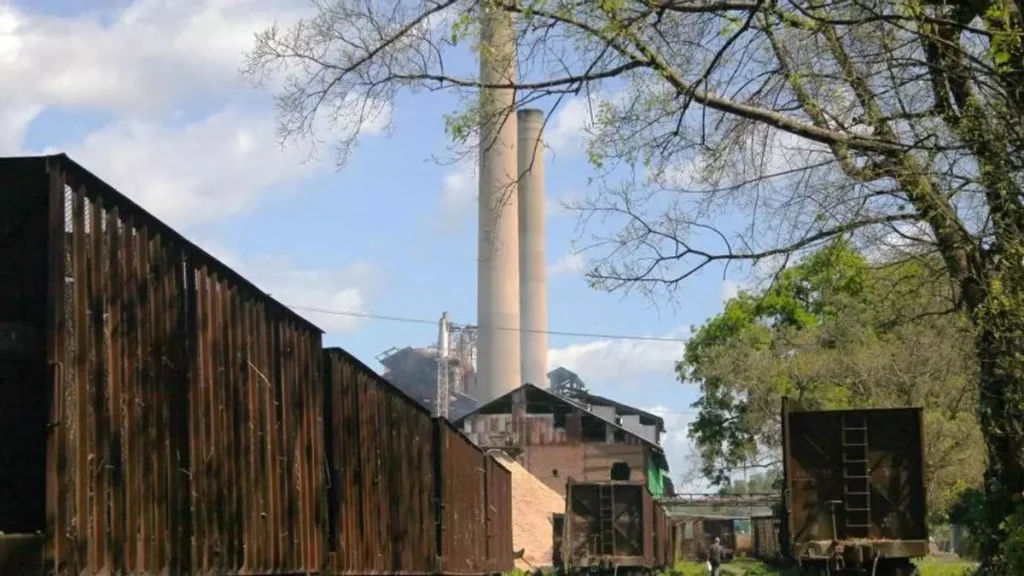
The Only Sugar Mill Still Operating in Cuba Shuts Down ‘Due to the Difficult Energy Situation’

For 2026, the goal is to achieve 229,500 tons of sugar nationwide, but perhaps not even last year’s minimal production will be reached: 127,300 tons

The Melanio Hernández mill, in Sancti Spíritus, has been one of the most efficient in recent harvests, being the only one that met its target in 2025. / Escambray

14ymedio bigger 14ymedio, Madrid, March 24, 2026 / This year there will be little doubt as to whether the sugar harvest was, once again, the worst in Cuba’s history, a title it has been repeatedly revalidating since 2021. The only mill that was grinding on the Island, Melanio Hernández, has had to cease operations due to the energy crisis.

The mill, located in Tuinucú (Sancti Spíritus), was the only one last year that met the planned work target. At the end of April 2025 it reported its achievement, and by mid-June it was 1,800 tons above projections, for an approximate total of 21,000, which earned it high praise.

This year, the projection was much more modest, at 14,000 tons, and although grinding began with a one-month delay in January instead of December, the situation was not going badly for this mill, which has withstood all odds. According to its directors, at this point it had reached 40% of the plan, about 5,600 tons, but it ultimately had to stop the machinery.

“Having had to close the mouth of the tilter when more than 40% of the sugar planned for the current harvest had already been produced has not meant, however, that the industry lets its guard down or accepts that ‘they throw in the towel,’” notes an article in the State newspaper Granma reporting continue reading

on the situation.

“Having had to close the mouth of the tilter when more than 40% of the sugar planned for the current harvest had already been produced has not meant, however, that the industry lets its guard down”

Antonio Viamontes Perdomo, director of the sugar company, told the state-run outlet that the mill and its workers will return to the task “as soon as conditions allow and the country so decides.” The future is very uncertain given that nothing indicates that fuel will arrive to the Island in the short or medium term. Since  U.S. president Donald Trump decided to block shipments of crude oil to Cuba under threat of tariffs or other measures, all ships that have attempted a relative approach have ended up turning toward another destination.

The latest case is that of the Sea Horse, flying the flag of Hong Kong (China) and carrying Russian oil, which sought to take advantage of the window of opportunity that opened when Washington temporarily lifted sanctions on that country’s crude; it changed course when the White House specified, days later, that the authorization was not valid for exports to Iran, North Korea, and Cuba. At present, everyone is watching closely to see whether the Russian oil tanker Anatoly Kolodkin, loaded with more than 700,000 barrels bound for Matanzas, will successfully complete its journey, although that is doubtful.

Just three days ago, the official press made the first mention of the suspension of grinding across the country. In another article published Saturday in Granma, Reidel López Santana, coordinator of Azcuba in Ciego de Ávila, said that “given the impossibility of carrying out grinding due to the lack of fuel, the 55 units and four sugar companies” in the province redirected “their efforts toward other productive activities.”

The priority activity has been the production of charcoal, which allows employees to remain active in a sector that, moreover, is one of the few that can currently generate some profit, since the product is exported at very attractive prices. At the Florencia agricultural company, there has also been an attempt to grow tobacco, another of the flagship export products. “In addition, food production has been implemented through the use of animal traction, taking advantage of existing resources,” the official added.

“In addition, food production has been implemented through the use of animal traction, taking advantage of existing resources,” the official added

Workers are focusing on products derived from sugarcane to make use of the harvested raw material, producing vinegar, molasses, and cane candy, specifically at the Primero de Enero Agroindustrial Company. In Ciro Redondo, meanwhile, and faced with the possibility of not being able to grind, the alternative has been much more “creative”: repairing playgrounds.

More than 4,500 workers in the sugar sector, both state and non-state producers, and cooperative members have thus been able to find alternatives, because the collapse of the harvest has lasted five years, but this year promises to be the one of its definitive disappearance.

Last December, Osbel Lorenzo Rodríguez, first secretary of the Communist Party of Cuba (PCC) in Las Tunas, warned that the 2026 harvest had to be “the harvest of dignity, shame, honor,” after the previous campaign recorded only 127,300 tons. For 2026, the aim was to reach around 229,500 tons, but at that time Nicolás Maduro was still sending crude oil to Havana.

Translated by Regina Anavy
______________________

COLLABORATE WITH OUR WORK: The 14ymedio team is committed to practicing serious journalism that reflects Cuba’s reality in all its depth. Thank you for joining us on this long journey. We invite you to continue supporting us by becoming a member of 14ymedio now. Together we can continue transforming journalism in Cuba.

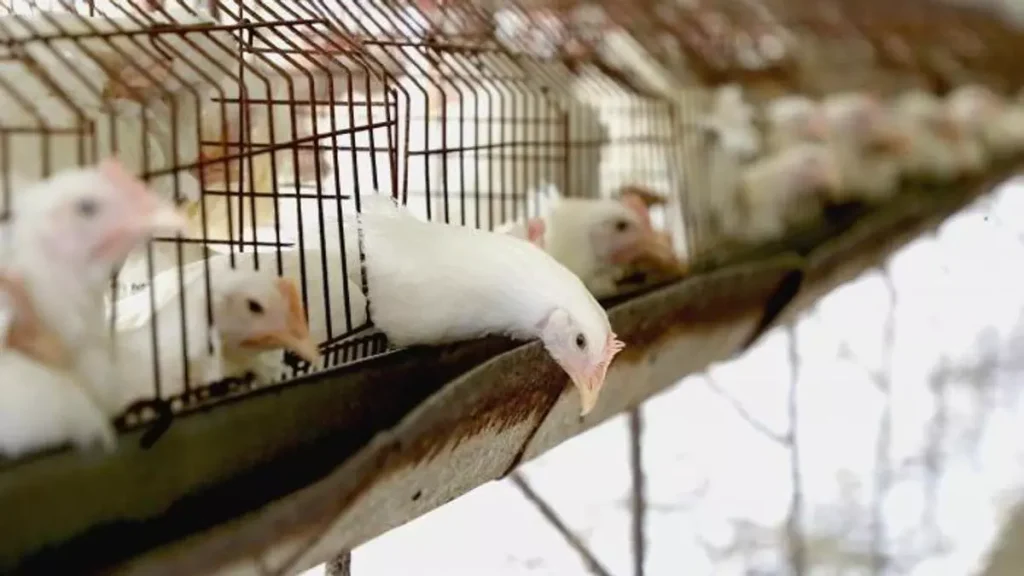
Because of Cuba’s Fuel Crisis, Chickens Are Left Without Feed and the Population Without Eggs

The announced “return” of state sales to the population in Sancti Spíritus only reached some residents of one neighborhood.

The situation of feed production in Cuba has been a persistent burden on the national economy and the population’s food supply. / Granma

14ymedio bigger

14ymedio, Sancti Spíritus, March 24, 2026 / In Sancti Spíritus, the crisis in state poultry production has worsened. To the problems accumulated in previous years is now added the fact that the provincial Poultry Company does not have the fuel required to transport feed from the ports of origin, which limits the feeding of the birds and, consequently, the production.

The situation interrupts the sale of 10 eggs per family unit that had recently been announced with enthusiasm in the official media. The initiative had been met with outrage among citizens, since the cost of 630 pesos for 10 eggs, rationed through the ration book, and with such sporadic frequency that it did not even occur monthly, exceeded prices on the informal market.

Regarding this “return of eggs,” reported triumphantly this very month, the official media Escambray now acknowledges that “only some residents in the Colón neighborhood had the opportunity to purchase the eggs through the ration store.”

The director of the Poultry Company of Sancti Spíritus, Félix Manuel Rodríguez González, explained the consequences of the lack of feed in the chickens’ diet: “This causes production levels in poultry farms to drop by almost half, and the quantities collected, about 15,000 eggs daily, are used only for prioritized deliveries.”

The prioritized allocations are, among others, “commercialization in foreign-currency-earning stores, with which it maintains a supply chain”

The prioritized allocations referred to by the director, according to the media, include, among others: hospitals, nursing homes, maternity centers, daycare centers, and “commercialization in foreign-currency-earning stores, with which it maintains a supply chain.”

Last year in Sancti Spíritus, more than two million laying hens died due to lack of feed. At that time, continue reading

the president of the Business Group of Food and Poultry of the Ministry of Agriculture, Jorge Luis Parapar López, had announced that the alliance with Tabacuba, one of the few state companies with profits in Cuba, would help improve feed production and expand egg distribution by the end of that year. However, nothing has been reported about the results of that agreement, and the promises to “include other population groups in distribution” have gone unfulfilled.

The egg that should be assigned through the ration book has been practically nonexistent in ration stores for more than two years

For more than half a decade, eggs have ceased to be a basic product in Cuba. It is not only the high prices, but also the lack of access to purchase them, as if they were a luxury food. Currently, the cheapest carton of eggs in Havana is around 2,900 pesos, with the prices in the informal market nearly double, while the average salary reported in Cuba by official statistics remains very low: 6,685.3 pesos, equivalent to about 14 dollars, according to the official exchange rate.

Data published by official media themselves have acknowledged that Cuba went from producing around five million eggs daily in 2020 to just over one million in 2024, a sustained decline driven by the loss of laying hens, the shortage of feed, and the progressive deterioration of the poultry system in general. In 2024, the inability to maintain the hens due to lack of feed led to the need to cull at least 54,000 laying hens in Holguín.

“The difficult situation of feed production in Cuba, vital for animal husbandry and the production of meat and eggs, has been a persistent burden on the national economy and the population’s food supply,” the State newspaper Granma had acknowledged this year, when the U.S. tariff sanctions that have worsened the energy crisis had not yet been implemented.

Translated by Regina Anavy

______________________

COLLABORATE WITH OUR WORK: The 14ymedio team is committed to practicing serious journalism that reflects Cuba’s reality in all its depth. Thank you for joining us on this long journey. We invite you to continue supporting us by becoming a member of 14ymedio now. Together we can continue transforming journalism in Cuba.
The Blackout Forces Musicians of the Gran Teatro de la Habana To Give a Concert in the Dark

Amid the gloom, they give “one of the few joys of the day, of the week, of the month”

Twenty minutes before the program began, the national electrical system collapsed, in what was the second total blackout in a week / Facebook

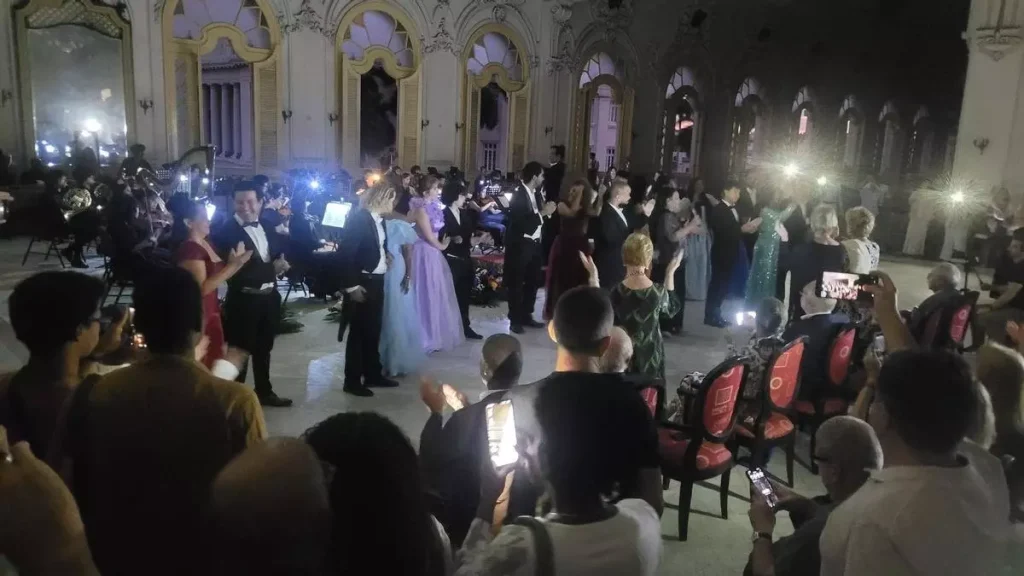
14ymedio bigger14ymedio, Havana, March 23, 2026 – Months of preparation and rehearsals were on the verge of going to waste last Saturday at the Gran Teatro de La Habana. That day was the culmination of the preparation for the Caruso concert, a lyrical evening commemorating the historic presence in Cuba of the famous Italian tenor Enrico Caruso, who performed in 1920 at that emblematic site, then known as Teatro Tacón. However, 20 minutes before the program began, the national electrical system collapsed, in what was the second total blackout in a week.

“Organizing and carrying out a project becomes more difficult every day,” laments Yhovani Duarte, director of the Symphony Orchestra of the Gran Teatro de La Habana, in a heartfelt post on social media, in which he recounts that, despite the lack of electricity, he decided to go ahead with the concert in front of the audience, which filled the venue.

“The theater director called me and said: ‘What do we do?’ Well, we open the windows and make music as long as the light allows it. The audience is there and deserves it. Seeing all the seats filled and some people standing was more than enough reason to give our best,” he writes. continue reading

“The magic happens. After half an hour you can only see the small lights of the musicians, and the faces are indistinguishable, but they are incredible”

On the other side, in the audience, was the countertenor Ubail Zamora. As a spectator, he recounts that, in the darkness, the orchestra uses portable lamps to illuminate the sheet music. “The magic happens. After half an hour you can only see the small lights of the musicians, and the faces are indistinguishable, but they are incredible… giving their best,” he says in a post on his social media.

From the stage, Yhovani Duarte and his musicians experience a catharsis with the audience, as the night stripped away the last traces of light. “It was beautiful to hear the enormous ovation the choir received after performing Va, pensiero, from the opera Nabucco, and the intense applause for each soloist and the orchestra. The concert went on, and the sunset was gifting us obscurity and the magic happened.”

“With the first harmony of Nessun dorma from Turandot, as if someone had given a signal, the flashlights of the cell phones in the audience all turned on at once, and the full emotional charge became evident on the faces and in the tears of the orchestra musicians and on mine,” adds the director.

Across from him, from Zamora’s perspective, the lights from the phones begin to reveal the singer to them, “perhaps, one of the few joys of the day, of the week, of the month… When it all ends, the ovation fills the venue and pours out through the windows of the hall.”

“When it all ends, the ovation fills the venue and pours out through the windows of the hall”

“The offer of La Traviata was now a catharsis for the finish. It was a magical late afternoon-evening that I will never forget,” adds the Symphony Orchestra director in his message, which has gathered dozens of comments highlighting the professionalism and courage to carry out their work despite adversity.

Duarte closed his post by thanking the team of the National Lyric Theater of Cuba, the Symphony Orchestra of the Gran Teatro de La Habana Alicia Alonso, and the audience, “who accompanied us until the end in the darkest part of the night, but with the light that only music can give us.”

The light generated by the musicians and attendees fades away. “Outside there is a dark Havana,” says Ubail Zamora, who, like the rest of the spectators, heads home. “I leave with some friends passing in front of a dimly lit Capitol, trying to stay illuminated after the wonderful hour I have just experienced,” he says, although he immediately admits that “reality hits you in the face with a blunt blow when you say goodbye to everyone and know you are going to walk through a very dark and dangerous Old Havana.”

“You arrive home, with a trembling and lonely soul after a day that seemed wonderful. And you write 24 hours later, still without electricity, with a weak connection, trying to gather a lot of calm so that the precise words come out, the ones your colleagues and every person who made it possible to change our lives for an hour deserve,” he says. And he concludes: “The phone battery is running out, and in the distance it seems they have turned on lights in one of the nearby neighborhoods because you can see the glow. Here the mosquitoes are eating me and I slowly fade. I return in the gloom to my corner, and as for the light… not even hope.”

Translated by Regina Anavy

______________________

COLLABORATE WITH OUR WORK: The 14ymedio team is committed to practicing serious journalism that reflects Cuba’s reality in all its depth. Thank you for joining us on this long journey. We invite you to continue supporting us by becoming a member of 14ymedio now. Together we can continue transforming journalism in Cuba.