In Cuba, being an independent journalist means resisting censorship and redefining the role of the press in a society in transformation.
Many independent journalists only had a landline (or public phone) to report on the realities of Cuba. / 14ymedio
14ymedio, Havana, Generation Y, Yoani Sánchez, May 3, 2026 — Every May 3rd carries a different weight when you practice journalism in a country where press freedom is not a right, but a daily battle. This is not a date for celebration, at least not in the most comfortable sense of the word, but for taking stock: of what has been won through hard work, what has been lost along the way, and what still needs to be built. In Cuba, being an independent journalist is not just a profession; it is a form of resistance.
I’ve learned to measure time not just by the days that pass, but by the times the internet connection drops, by the messages that never arrive, by the calls that are cut off just as someone begins to share their story. The poor quality of communications isn’t just a technical problem; it’s a strategy. As are the operations surrounding our homes, the police patrols that appear on “sensitive” dates, the officers who watch, take notes, and intimidate. There are days when going out to report something means first having to get past a cordon.
Added to this are the more visible threats: summonses, interrogations, seizures, and legal proceedings that seek to criminalize the practice of journalism. They call us “mercenaries,” “enemies,” “destabilizers,” as if reporting the truth were a form of violence. But the truth is that the greatest fear of those in power remains that someone will observe, ask questions, and publish.
The greatest fear of those in power remains that someone will look, ask questions, and publish.
However, the challenge doesn’t end with repression. There is another challenge, quieter, and more complex that has to do with Cuban society itself. For decades, the country lived under an information monopoly that shaped not only what was said, but also how it was heard. Many citizens grew up with the idea that the press should confirm, not question; accompany, not investigate; embrace, not criticize. Today, as the cracks continue reading
in that wall deepen, confusion also emerges: What is the role of a journalist? To whom do they answer?
Therein lies, perhaps, one of the greatest challenges of the future: rebuilding the relationship between the press and the public. Explaining, with facts and rigor, that our role is not to please nor to be an echo chamber for politicians or special interest groups. That we are not here to applaud nor to amplify slogans. That journalism, in its essence, makes people uncomfortable. It investigates. It reveals. And that this discomfort is necessary, both when it targets those in power and when it illuminates the dark corners of society itself.
To be an independent journalist in Cuba today is like walking on unstable ground, where every step can have consequences. But it is also an inspiring profession. Because amidst the blackouts, the censorship, and the imposed silence, every published story is a small victory against the gag order.
To be an independent journalist in Cuba today is like walking on unstable ground, where every step can have consequences.
This May 3rd, I have no certainties, but I do have convictions. The main one: that even if they cut off our connection, there will always be someone looking for a signal to publish an article or denounce an injustice. And as long as that need to know, to understand, to name what is happening exists, journalism, even the most persecuted kind, will continue to find a way to prevail.
To my colleagues, congratulations on this day, but I warn you that the road ahead is full of dangers, even dangers that come from what today seem to be very close support.
______________________
COLLABORATE WITH OUR WORK: The 14ymedio team is committed to practicing serious journalism that reflects Cuba’s reality in all its depth. Thank you for joining us on this long journey. We invite you to continue supporting us by becoming a member of 14ymedio now. Together we can continue transforming journalism in Cuba.
The lowest price in TaTamania is $1,080 a month, but the law requires it to reserve 10% of the places for the “vulnerable” at a rate set by the State.
TaTamanía nursing home in El Vedado, Havana. / 14ymedio
14ymedio, Havana, Dario Hernandez, May 3, 2026 / The TaTamanía Senior Residence is a hive of activity in recent days. “I’m not going to show you the whole house, I’m going to take you to a room so you can see how we have it equipped. Each room has its own bathroom, with hot and cold water. There’s a split air conditioner and a fan, because some of the elderly residents don’t like air conditioning…,” an employee of what will be the first private nursing home in Cuba tells 14ymedio.
“We are an agency that has been operating for four years. This permanent home service is a new experience for us, because we just received authorization, but we have been working in homes and hospitals for some time. So far, everything has gone well; we have quite a few clients. We are all healthcare professionals. Those who aren’t doctors are nurses, or if not they are are physiatrists. That’s why people seek us out,” the employee adds, alluding to the company’s experience in the Dominican Republic, as they boast on their social media. In fact, TaTamanía’s contact number has a Dominican country code, and the account where they request the required fee be deposited is also in Santo Domingo.
Its founders are pediatrician Yadira Álvarez and her husband, Rolando Pérez, a computer engineer
TaTamanía arrived in that country last year, opening a branch and establishing an alliance with Saritacelestec Homes, a group of senior living facilities. However, TaTamanía was founded in Guantánamo in 2023 and was the first private micro, small, and medium-sized enterprise (MSME) to offer this service on the island. Its founders are pediatrician Yadira Álvarez and her husband, Rolando Pérez, a computer engineer. It is registered with that name and purpose in the Ministry of Economy and Planning’s list of economic actors: “to provide care services for the sick, people with disabilities, and the elderly.”
On February 26 , legislation was finally approved formally authorizing the private sector to manage long-term and day care facilities after decades of state monopoly. The law was complemented by a resolution published in April —and which comes into effect on May 21—establishing the operating and oversight rules for these services, as well as the construction, personal care, and healthcare standards they must meet.
The law specifies that 10% of the places must be reserved for people continue reading
considered “of social interest due to their vulnerable status,” whose rates will be those set by the State for their own homes. If the beneficiary cannot afford the price, the Government will pay, the law states.
One of the rooms in the TaTamanía residence in Havana’s Vedado district. / 14ymedio
This is the Achilles’ heel of TaTamanía, whose prices are currently almost a state secret. The staff avoid answering the question of how much a private room will cost and simply hand out an advertising brochure outlining the services, which cover five main areas: accommodation, food – with adapted menus; hygiene and care – laundry, haircuts, assistance with bathing; medication and health; monitoring at the center and support outside of it; and activities – including physical and cognitive activities as well as leisure.
Finding out how much it costs is complicated, although if you search online you can eventually find the – restricted – profile that provides this information. The lowest cost is for a triple room, at $1.35 per hour, and the highest is for private rooms, at $1.75. At the Senior Residence in El Vedado, which a contributor to this newspaper visited, there are currently only double rooms available, whose price, according to this employee, is $1.50 per hour, totaling $1,080 per month if there are no additional charges.
The amount is unthinkable for any of the many elderly people living in Cuba without remittances from abroad, so the target audience can only be those with family living outside the island. Of the ten beds that TaTamanía has in its five double rooms, one would be reserved by law for a vulnerable person, who would pay the 1,260 pesos stipulated in the official rate, compared to the 535,680 pesos that — with the official floating exchange rate — the private room costs.
So far, TaTamanía has been very successful on the island. The very law that authorized the existence of private residences acknowledged in its preamble that “given the accelerated aging of the Cuban population, which demands increased care, and the need to expand the scope of social care services for older adults or people with disabilities, it is necessary to authorize the provision of such services by non-state economic actors.”
Some of the services offered by TaTamanía in Havana. / 14ymedio
This reform has allowed TaTamanía to expand services that, until now, could only be offered at home and in hospitals. “The elderly are assessed by a geriatrician who works three times a week in different municipalities, and, depending on that assessment, she determines whether or not they qualify to start here at the center. There are three options: permanent residents, daytime residents – the hours are from 8 am to 6 pm – who come and go on the same day, and temporary residents.” The latter are for those who stay for a short period of time while their caregiver is away on a trip.
It is noteworthy that the company’s advertising highlights some of its professionals as “doctors and nurses formerly employed in the public sector.” The salary of a nurse working at TaTamanía is unknown, but various accounts published in the independent press indicate that salaries in this market can range from 20,000 to 30,000 pesos for a nurse, compared to 5,000 to 7,500 pesos in the public sector. For nursing assistants, the salary can be up to five times higher in the private sector. To obtain certification, a course is mandatory, the price of which is set by the government at 500 pesos, and which TaTamanía has been offering in recent days.
The residence in El Vedado, with its ten beds, is a start, but the needs on an island where the serious problem of aging is compounded by the massive exodus of young people overwhelms not only the state sector, but also nascent private ones with serious difficulties in growing in a context of deep economic crisis.
______________________
COLLABORATE WITH OUR WORK: The 14ymedio team is committed to practicing serious journalism that reflects Cuba’s reality in all its depth. Thank you for joining us on this long journey. We invite you to continue supporting us by becoming a member of 14ymedio now. Together we can continue transforming journalism in Cuba.
Other outbreaks have been reported in Camagüey and Ciego de Ávila, although authorities are downplaying the problem.
At the beginning of April, in the Versalles neighborhood, there were already 18 active cases / ‘Girón’
Without mentioning specific figures, Andrés Lamas Acevedo, director of the Matanzas Provincial Center for Hygiene, Epidemiology, and Microbiology, confirmed this Saturday the existence of active hepatitis cases in several locations throughout the province, including Versalles, the Plácido area, La Cumbre, and “isolated cases in all municipalities.” In an interview with the media outlet Girón, the doctor stated that all outbreaks are now “fairly under control.”
The official explained that “the hepatitis cases in the province have been spread from person to person” and not through water, “as we had 20 years ago in Versailles.” He tried to downplay the outbreak: “There really have been very few cases.”
However, the same media outlet points out at the beginning of the article that “for the past couple of weeks, the inhabitants of the province of Matanzas have been concerned” about the situation.
To try to contain the cases, Lamas Acevedo points out that the authorities temporarily closed establishments in the Plácido area. “When a group of people concentrated in a certain area gets sick, as is the case in Plácido, we have to close establishments, including the guarapera (a sugarcane juice stand) and the cafes that sell prepared drinks, such as coffee and juice, because there is no evidence that they are safe.”
“Not everyone has a way to boil water, either because they don’t have gas or they have to use charcoal.”
Another preventative measure is to boil or chlorinate the water with hypochlorite. However, the official himself acknowledges the population’s material limitations: “Not everyone has a way to boil water, either because they don’t have gas or they need to use charcoal. Therefore, we must promote citizen access to hypochlorite in all pharmacies.”
“Currently, it has been implemented, for example, in areas with the highest rates of hepatitis. However, it should be extended to all pharmacies in the municipalities to ensure direct access to the product,” he emphasizes.
The importance, he says, lies in the fact that an outbreak can start after “a fly goes to a landfill where there is fecal matter from a sick person and then lands on a piece of bread, a sweet or broth that is in a house, well, that’s where it leaves the virus.”
The doctor also said that hepatitis is a difficult disease to control due to its silent transmission period. “It begins to be transmitted 10 days before symptoms appear and continues for up to 15 days after. Therefore, I can have it now, feel fine, and still be spreading it,” he explained.
At the beginning of April, provincial authorities had already announced that they had strengthened epidemiological surveillance in response to outbreaks.
At the beginning of April, provincial authorities had already announced that they had strengthened epidemiological surveillance in response to outbreaks of hepatitis in several municipalities, with the most critical situation concentrated in the Versalles neighborhood, where, at that time, 18 active cases were recorded.
Specialist Lamas Acevedo himself acknowledged the relative seriousness of the situation at the time, although he tried to downplay the alarm: “Although it is not a large-scale outbreak, joint actions between the health sector and other organizations will allow us to cut off transmission.”
Other cases have been reported in Camagüey. On April 23, provincial television interviewed a health official who acknowledged that “there is currently an increase in suspected and probable cases of hepatitis A virus in our province, primarily concentrated in our municipality.”
In the television report, the media outlet noted that “in a scenario where there are serious problems with solid waste collection, it is urgent to intensify hygiene and sanitation measures.” Despite this situation, the health official interviewed maintained that “at this time, we do not have an outbreak in the municipality of Camagüey, even though there has been a notable increase in the disease.”
“At this time, we do not have an outbreak in the municipality of Camagüey, despite a notable increase in the disease.”
“Camagüey has been full of hepatitis cases for months. Where I live, I know of more than 20 people who have had hepatitis. Please, take this seriously,” one user responded to the TV Camagüey video. Another internet user also questioned the official message: “Isolation isn’t the issue, because when you diagnose 30 to 40 positive cases in a single day in an emergency room, that’s an outbreak.”
At the beginning of the year, the health authorities of Ciego de Ávila reported, through official media, that they were investigating several suspected cases of hepatitis detected in different municipalities of the province.
As is usually the case, no figures were given, and they simply reported that, after the detection of the first patients with symptoms compatible with the disease, the protocols established by the health system were activated.
Hepatitis is a disease characterized by inflammation of the liver. Its most common symptoms include fatigue, yellowing of the skin and eyes, nausea, abdominal pain, and dark urine, although it can be asymptomatic. However, in severe cases, it can cause extreme fatigue, fever between 37.5 and 38 degrees Celsius [99.5F to 100.4F], headache, muscle aches, loss of appetite, and bleeding gums.
______________________
COLLABORATE WITH OUR WORK: The 14ymedio team is committed to practicing serious journalism that reflects Cuba’s reality in all its depth. Thank you for joining us on this long journey. We invite you to continue supporting us by becoming a member of 14ymedio now. Together we can continue transforming journalism in Cuba.
May 1, 2026, exposed two radically opposing political realities unfolding ninety miles apart. In Havana, the Cuban communist dictatorship attempted to stage its annual revolutionary spectacle amid visible fear, militarization, and growing insecurity. In Washington, the United States escalated its confrontation with the Castro-Communist regime through a sweeping executive order targeting the financial, political, and repressive architecture sustaining the dictatorship. The contrast was striking: one government desperately trying to manufacture the illusion of monolithic support; the other formally declaring the Cuban regime a continuing threat to U.S. national security and democratic values.
In Havana, the regime had originally planned a massive May Day mobilization at the Plaza Cívica — the monumental square later renamed Plaza de la Revolución after Fidel Castro consolidated communist rule. Historically, the plaza has served as the dictatorship’s preferred stage for choreographed demonstrations of revolutionary unity, giant propaganda rallies, and displays of ideological obedience. But this year, the regime abruptly relocated the main event to the so-called “Anti-Imperialist Tribune” in front of the U.S. Embassy. The explanation offered by state propaganda was predictable revolutionary theater. The real reasons were far more revealing..
The dictatorship feared poor turnout, despite available mass mobilization mechanisms. It feared images of half-empty plazas circulating across social media and independent outlets. More importantly, it feared the possibility of social unrest and spontaneous protest, particularly after the trauma inflicted on Cuban communism by the July 11, 2021, popular uprising. Thousands of Cubans across the island openly challenged communist rule in the largest anti-government demonstrations in decades. The memory of those protests continues to terrify the ruling elite because they shattered the regime’s carefully cultivated myth of universal revolutionary loyalty.
Security concerns also weighed heavily on the regime’s calculations. The appearance of the visibly frail and decomposing tyrant Raúl Castro beside dictator Miguel Díaz-Canel transformed the event into less a celebration than a display of dictatorial continuity under siege. Castroism’s rhetoric continue reading
was openly defiant and militant, sounding increasingly similar to the revolutionary absolutism and anti-Western hostility associated with the Iranian ayatollah regime, one of Havana’s closest ideological and geopolitical partners. This was not a workers’ celebration. It was a regime fortification exercise.
The communist dictatorship explicitly organized the May Day mobilization within the framework of the newly declared “Year of Defense Preparedness” for 2026. The Castroist regime has announced weekly military exercises, civil defense operations, and plans approved by the National Defense Council for a transition to a wartime footing in the event of conflict or internal instability. The atmosphere surrounding the parade reflected precisely that mentality. It is a state preparing not for prosperity or reform, but for confrontation and survival.
Military personnel, Ministry of the Interior (MININT) officers, intelligence agents, rapid- response brigades, and uniformed security forces maintained a heavy presence throughout the event. The symbolism was unmistakable. The regime increasingly governs Cuba, not as a confident political system, but as an entrenched security apparatus managing a population it fundamentally distrusts. The omnipresent deployment of coercive forces transformed what the dictatorship claimed was a celebration of workers into a demonstration of state intimidation and internal control. Rather than projecting revolutionary vitality, the spectacle exposed a government whose primary political instinct is surveillance, containment, and preparedness against its citizenry.
At the same time, the dictatorship attempted to manufacture legitimacy through mass political coercion. Havana triumphantly announced that more than 6.2 million signatures had been collected for the “Mi Firma por la Patria” (“My Signature for the Homeland”) campaign, a regime-driven initiative supposedly demonstrating national support for Cuban “sovereignty” and resistance to foreign pressure. In a totalitarian system, signatures gathered through workplaces, schools, party committees, unions controlled by the state, neighborhood surveillance networks, and government institutions cannot meaningfully be interpreted as free political expression. Participation in such campaigns is inseparable from intimidation, social pressure, and fear of retaliation. In Cuba, refusing to cooperate with state mobilizations can carry consequences ranging from professional marginalization to harassment, interrogation, or loss of opportunities controlled by the state.
The regime intended to project strength. Instead, it revealed insecurity. While Havana staged ideological rituals and militarized pageantry, Washington moved decisively in the opposite direction. On May 1, President Donald J. Trump signed an executive order titled Imposing Sanctions on Those Responsible for Repression in Cuba and Threats to U.S. National Security and Foreign Policy. The order represents another comprehensive sanction charter directed at the Cuban regime. It significantly expands the legal, financial, and diplomatic pressure against Castro-Communism.
The executive order declares that the actions and policies of the Castro government continue to constitute an “unusual and extraordinary threat” to U.S. national security and foreign policy. It further states that the regime’s conduct is “repugnant to the moral and political values of free and democratic societies.” The sanctions provisions are sweeping in scope. Under Section 2, the United States can block all property and interests in property under U.S. jurisdiction belonging to foreign individuals or entities operating in strategic sectors of the Cuban economy, including defense, energy, mining, metals, financial services, and security. The order specifically targets not only officials of the Castro government but also individuals and entities acting on behalf of the regime, those materially assisting it, and those providing financial, technological, or logistical support.
The order further authorizes sanctions against persons complicit in serious human rights abuses or corruption connected to communist Cuba, including expropriation of private assets, misappropriation of public resources, bribery, and political profiteering by regime officials. Even adult family members of sanctioned individuals may be designated. The message is unmistakable: the United States intends to target not merely isolated actors, but the broader ecosystem sustaining the dictatorship. By extending liability beyond formal state officials to financial enablers, intermediaries, and beneficiaries of regime corruption, the order seeks to penetrate the patronage networks that have long insulated Cuba’s ruling elite from meaningful accountability.
The executive order also dramatically raises pressure on international financial institutions. Foreign banks facilitating significant transactions for sanctioned Cuban individuals or entities may themselves face severe penalties, including restrictions on correspondent banking access in the United States or the blocking of assets under U.S. jurisdiction. These secondary sanctions substantially increase the financial risks associated with doing business with the Cuban regime. In practical terms, the measures are designed to further isolate Havana from global financial networks and deter foreign actors from serving as economic lifelines for the dictatorship.
Additionally, the order imposes a travel ban on foreign nationals tied to sanctionable activities connected to the Cuban government, suspending unrestricted immigrant and nonimmigrant entry into the United States for designated individuals. It also prohibits transactions designed to evade sanctions and authorizes aggressive enforcement under existing emergency powers legislation. The inclusion of immigration restrictions underscores that participation in repression and corruption in Cuba may now carry not only financial consequences, but also personal and diplomatic isolation from the United States.
Thus, May Day 2026 became far more than a symbolic holiday. In Havana, the regime attempted to choreograph revolutionary permanence through coercion, militarization, and ideological spectacle. It visibly displayed a deep-rooted fear of its population. In Washington, the United States formally intensified its economic and diplomatic campaign against the structures of Castro-Communist repression. Two cities, two systems, and two entirely different conceptions of political legitimacy.
One clings to power through surveillance, compulsory mobilization, and security-state control. The other increasingly signals that the Cuban dictatorship’s repression, corruption, and destabilizing conduct will face mounting consequences. The juxtaposition of Havana’s militarized choreography and Washington’s expanding sanctions policy underscored the growing collision between a system struggling to preserve totalitarian permanence and an American political environment becoming progressively less willing to tolerate or normalize its existence. Havana’s pathetic May Day spectacle revealed their inability to effectively orchestrate anything convincing. It also underscored their pathological refusal to negotiate themselves out of power. The U.S. must now seize the moment and take its legitimate national security concerns to another level.
Amelia Calzadilla achieved something difficult: connecting with real Cubans, with ordinary people, exhausted by blackouts, shortages, abuses, lies, and fear.
It is unfair to demand from every opponent the perfection that the dictatorial machinery itself prevented us from achieving. / Facebook / Amelia Calzadilla
14ymedio, Madrid, Yunior García Aguilera, May 2, 2026 / One of the most common pastimes among Cubans is public shaming. I’m not talking about honest, necessary, even harsh criticism. I’m talking about that emotional machinery that kicks in against anyone who dares to step forward. The moment someone tries to organize an idea, propose a path, found a project, or take on a responsibility, the stones appear.
Some, of course, come from the apparatus of the dictatorship. We know how they operate. They have resources, agents, smear campaigns, fake accounts, television programs, and spokespeople trained to destroy reputations. But not all the stones come from there. Some are born from ourselves, from our wounds, our frustration, from that anthropological damage left by decades of living under a system that rewards obedience and punishes initiative.
You don’t have to agree with every project to recognize the value of boldness. Nor do you have to applaud everything, suspend critical judgment, or make anyone into an untouchable figure. We’ve already suffered enough from the absolute chiefdoms. And a democracy isn’t built by replacing one altar with another. But neither is it achieved by demolishing every leader at their founding moment, before they can breathe, make mistakes, correct themselves, and mature.
We want one person to carry the shortcomings of an entire nation on their shoulders.
No opposition leader emerges fully formed. That’s a dangerous fantasy. Political maturity is a complex process, especially for those of us who come from authoritarian backgrounds. In a free society, people can join parties, debate platforms, lose internal elections, learn from campaigns, study others’ experiences, and train themselves in the exercise of citizenship. In Cuba, however, real politics has been confiscated for more than six decades by a single group in power. They educated us to repeat their slogans, not to deliberate. We were conditioned to in-or-out, and were never allowed to organize ourselves. We were taught to distrust everyone, not to build public trust.
That is why it is unfair to demand from each new opposition figure the perfection that the dictatorial machinery itself prevented us from developing. We expect impeccable biographies, carefully crafted continue reading
programs, perfect teams, flawless language, a heroic past, academic preparation, popular appeal, serenity, audacity, humility, charisma, strategy, and immediate results. We want one person to shoulder the shortcomings of an entire nation. And when they can’t, we accuse them of being unprepared, ambitious, naive, or worse, a product manufactured by the regime itself.
Perfect leadership sonly exists in retrospect. They are a dubious construct of time. After victory, history smooths over contradictions, polishes doubts, erases blunders, organizes the narrative, and presents as destiny what was often trial and error, chance, mistakes, persistence, and learning. But in real life, leadership is born chaotic. It contradicts itself. It changes tone. It makes mistakes. The consolidation of ideas almost never happens in a straight line. It happens amidst noise, pressure, exhaustion, urgency, and also human vanity, because no leader is made of marble.
Amelia Calzadilla doesn’t have to be liked by the whole world. Her political project can and should be discussed. Her ideas should be examined. Her party, like any other, will have to demonstrate whether it has structure, a platform, a vision, a team, and the ability to coordinate with other efforts. No one is obligated to follow her blindly. But it would be unfair not to acknowledge some of her merits.
Willpower, in exile, is no small thing. Exile wears you down. It disrupts your life. It forces you to start over.
Amelia achieved something difficult: connecting with real Cubans, with ordinary people, exhausted by blackouts, shortages, abuses, lies, and fear. Her voice emerged from a concrete, everyday, and relatable resistance. And that authenticity allowed her to reach many. Not all opposition figures achieve that. Some have a track record, but they don’t connect. Others have intellectual preparation, but they aren’t known outside certain circles. Amelia, with her successes and her limitations—like everyone—has demonstrated communication skills, social awareness, and a will that shouldn’t be underestimated.
Willpower, and in exile, is no small thing. Exile is exhausting. It disrupts life. It forces you to start over. It brings hardship, grief, guilt, loneliness, bureaucracy, low-paying jobs, homesickness, attacks, and suspicion. Many arrive with a desire to act and end up crushed by the routine of survival. Maintaining political intent amidst these ups and downs requires considerable energy. That a young woman, a mother, in exile, decides not to limit herself to denouncing injustice, but to attempt to build a political platform, deserves at least our respect.
This isn’t about declaring her project infallible. It is not. No human project is. It is about understanding that pluralism can’t just be a pretty word to use against dictatorship. It has to be practiced among ourselves as well. Pluralism means accepting that parties, movements, platforms, leaders, and proposals will emerge that don’t fully align with our expectations. It means discussing without annihilating. Questioning without humiliating. Recognizing risks without turning disagreement into a moral firing squad wall.
Cuban democracy, if it ever arrives, will need more than slogans against the Communist Party. It will need a different political culture. And that culture cannot be improvised after the fall of the regime; it must be practiced now. Every time we respond to the emergence of an initiative with mockery, automatic suspicion, or public condemnation, we reproduce a part of the authoritarian country we claim to want to overcome.
Criticism is essential, but brutality is not productive. High standards are healthy, but paralyzing perfectionism can be another form of sterility. We have been waiting too long for the ideal leader, the definitive project, the figure capable of single-handedly toppling a military regime that has been in power for over six decades. Perhaps that waiting is also a trap. Perhaps the solution lies not in finding the perfect leader, but in allowing many imperfect leaders to emerge, compete, collaborate, fail, learn, and try again.
______________________
COLLABORATE WITH OUR WORK: The 14ymedio team is committed to practicing serious journalism that reflects Cuba’s reality in all its depth. Thank you for joining us on this long journey. We invite you to continue supporting us by becoming a member of 14ymedio now. Together we can continue transforming journalism in Cuba.
The US announced more sanctions against the regime and the deployment of the aircraft carrier ‘Abraham Lincoln’ to “take control” of Cuba
The White House maintains that the policies and actions of the Cuban government are “repugnant” to the values of free and democratic societies. / EFE/ US Navy
In response to the US threat to send the aircraft carrier Abraham Lincoln to Cuba, President Miguel Díaz-Canel posted a tweet on Saturday accusing Donald Trump of escalating his “threats of military aggression” against Cuba to a “dangerous and unprecedented” scale. The Cuban president called on the international community and the American people to take note of what he described as a possible “criminal act” intended to satisfy the interests of a “small but wealthy and influential” group with “a thirst for revenge and domination.” Díaz-Canel also asserted that Cuba will not surrender to any aggression and that the country will defend “sovereignty and independence in every inch of its national territory.”
US President Donald Trump said on Friday – as he has done on other recent occasions – that he will “take control” of Cuba “almost immediately” after finishing the “job” in Iran, during his speech as the main speaker at a private dinner at the Forum Club in West Palm Beach, Florida.
The Republican added that he could have the USS Abraham Lincoln aircraft carrier —the largest in the world—travel to the Caribbean and “stop about 100 meters off the coast” of Cuba, from where the islanders, according to his speech, would say “thank you very much, we surrender.”
This Friday, Trump signed an executive order expanding sanctions against the Cuban government and authorizing the freezing of assets.
This Friday, Trump signed an executive order expanding sanctions against the Cuban government and authorizing the blocking of assets belonging to officials, state-owned companies, financial entities, and individuals linked to repression, corruption, or strategic sectors of the island’s economy.
The measure, dated May 1, 2026, is based on the national emergency declared by Washington in January of this year, when the White House stated that the actions of the Cuban government posed a threat to U.S. national security and foreign policy. With this new order, the U.S. administration reinforces that legal framework and opens the door to continue reading
further designations against individuals and entities linked to Havana.
The text stipulates that all property and interests in property located in, entering, or controlled by U.S. citizens, residents, or companies will be blocked. In practice, those sanctioned will be unable to move funds, receive payments, sell assets, or conduct transactions within the U.S. financial system.
The order directly targets those who operate or have operated in the energy, defense, metals and mining, financial services, and security sectors of the Cuban economy. It also allows the Treasury Department, in consultation with the State Department, to add other sectors if it deems it necessary.
Those potentially affected include high-ranking government officials, company executives, members of administrative boards, state agencies, and entities controlled by Havana
The scope of the measure is not limited to visible officials of the regime. Individuals or entities owned, controlled, or acting on behalf of the Cuban government, directly or indirectly, may also be sanctioned. The order further includes those who provide financial, material, or technological support, or supply goods and services to the Cuban state or to individuals already sanctioned.
Those potentially affected include high-ranking government officials, company executives, members of administrative boards, state agencies, and entities controlled by Havana. The document also mentions individuals responsible for or complicit in serious human rights abuses in Cuba, as well as those involved in acts of corruption, including the embezzlement of public funds, the expropriation of private property for personal or political gain, and bribery.
One of the broadest provisions allows for sanctions against adult relatives of individuals included on the list. The order specifies that it will not be necessary to notify those affected in advance before freezing their assets, to prevent them from transferring assets or withdrawing funds before the measure takes effect.
Entry into the United States is also suspended for those who meet the sanction criteria. The ban applies to both immigrants and non-immigrants, although the Secretary of State may authorize exceptions when he deems that admitting a person is in the U.S. national interest.
One of the broadest provisions allows for sanctions against adult relatives of people included on the list.
The order also contains a message for banks and financial institutions outside the United States. The Treasury Department may impose sanctions on foreign institutions that facilitate significant transactions for sanctioned individuals or entities. These measures can range from restrictions on maintaining correspondent accounts in U.S. banks to the complete freezing of assets under U.S. jurisdiction.
This point could have an impact beyond U.S. borders. Many international transactions pass through correspondent banks or use the dollar, so entities in third countries might avoid ties with Cuban companies or officials to avoid exposing themselves to sanctions.
The document maintains the validity of activities authorized under U.S. regulations concerning Cuba, including Part 515 of the Code of Federal Regulations. This means that certain operations permitted by general or specific licenses may continue, provided they do not conflict with the new restrictions.
The implementation of the order will be handled by the State Department — headed by Cuban-American Marco Rubio — and the Treasury Department, which will be able to issue regulations, guidelines, and licenses to put it into practice. The Treasury Secretary will also be required to submit periodic reports to Congress regarding the national emergency related to Cuba.
The White House maintains that the policies and actions of the Cuban government are “repugnant” to the values of free and democratic societies. The statement accuses Havana of engaging in practices that harm the United States and of posing an external threat to that country’s national security and foreign policy.
______________________
COLLABORATE WITH OUR WORK: The 14ymedio team is committed to practicing serious journalism that reflects Cuba’s reality in all its depth. Thank you for joining us on this long journey. We invite you to continue supporting us by becoming a member of 14ymedio now. Together we can continue transforming journalism in Cuba.
With a vote of 47 in favor and 51 against, the initiative was blocked by the Republicans.
File photo of US President Donald Trump (center) before a joint session of Congress in the US House of Representatives at the US Capitol in Washington DC / EFE/EPA/Will Oliver
EFE (via 14ymedio), Washington DC, April 28, 2026 — US Senate Democrats failed Tuesday in another attempt to limit President Donald Trump’s authority to use military force against Cuba.
With a vote of 47 in favor and 51 against, the initiative to control possible actions of force against Havana ordered from the executive branch was stopped by the Republicans who voted as a bloc.
However, Republicans Susan Collins of Maine and Rand Paul of Kentucky joined the Democratic initiative in the vote held this afternoon.
“Republicans must get ahead of the impending catastrophe in Cuba before it gets even worse, as they should have done with Trump’s war in Iran.”
The failed attempt with regards to Cuba joins a series of Senate failures to control Trump’s military actions, such as the five votes to prevent the president from ordering further attacks on Iran or attempts to restrain the Republican president prior to the capture of Nicolás Maduro in Venezuela.
Before the vote, Democratic Senator Chuck Schumer said that “Republicans must get ahead of the impending catastrophe in Cuba before it gets even worse, as they should have done with Trump’s war in Iran.”
For their part, Republicans rejected accusations that continue reading
the president intended to use force against Cuba and accused Democrats of ignoring allegations of human rights violations that have been made against the government of Miguel Díaz-Canel.
Since January, the Trump Administration has intensified pressure on Havana with an oil embargo, and the president has suggested on several occasions the need for regime change on the island.
______________________
COLLABORATE WITH OUR WORK: The 14ymedio team is committed to practicing serious journalism that reflects Cuba’s reality in all its depth. Thank you for joining us on this long journey. We invite you to continue supporting us by becoming a member of 14ymedio now. Together we can continue transforming journalism in Cuba.
A tricycle driver’s unexpected response to an inspector writing down names on his attendance list for Cuba’s May Day events
The scene took place at one of the electric tricycle taxi stands that have been authorized in Holguín in recent months to transport passengers. / 14ymedio
14ymedio, Miguel García, Holguín, April 30, 2026 / A private driver in Holguín thought it was just another inspection. He was at the taxi stand near the surgical hospital when a transportation official approached him, asked for his name, and pulled out a piece of paper. The driver prepared to show his documents, license, or vehicle registration. But it wasn’t a traffic ticket or a routine inspection.
“It turns out the man was handing out a political pamphlet or a call to action for the May Day parade,” recounts a passenger who witnessed the events. According to the passenger, the official was asking if the drivers were going to sign their “willingness” to participate in the demonstration.
The scene unfolded at one of the electric tricycle taxi stands that have been authorized in Holguín in recent months to transport passengers, amidst the collapse of public transportation and the energy crisis. In February, provincial authorities began issuing temporary permits allowing cargo tricycles and mopeds to carry passengers as well, a practice previously punishable by fines and even vehicle impoundment.
“Transport inspectors are going around to the bus stops collecting information on the tricycles with the special cargo and passenger permits that are required to participate in the parade.”
The measure was presented as an emergency solution for a city increasingly paralyzed by fuel and bus shortages. But it also placed these drivers under a system of registration, permits, designated taxi stands, and administrative controls. Now, according to testimony, that same structure is being used to incorporate them into the May 1st political machine. continue reading
“The transport inspectors are going around the established taxi stands in the city, collecting the information on the tricycles that were given special cargo and passenger permits to go to the parade,” the passenger explained to this newspaper.
The driver refused to sign. And he did so with a phrase that, just a few years ago, few Cubans would have dared to utter in public, much less before a state official with the power to inspect or penalize their livelihood: “He told them, ‘I’m not going to parade in anything that has to do with communism.’” The inspectors didn’t press the issue and continued on their way.
“He told them, ‘I’m not going to parade in anything that has to do with communism.’”
The complaint coincides with a moment of intense political mobilization in Cuba. The Cuban Workers’ Federation (CTC), the only authorized union on the island, called for the May Day parade under the slogan “The Homeland Defends Itself,” amidst an official campaign seeking to portray the march as a demonstration of unity against the oil blockade imposed by the US and the alleged threats of a military attack. In Holguín, the provincial CTC announced that it expects to gather around 200,000 workers in the main square.
That figure helps to understand the pressure, since mass demonstrations are never left to spontaneity. Workers and students are coerced with meetings, lists, commitments, assembly points, and attendance checks.
“They knock on the door with a piece of paper and you have to write your name, your surname, your ID number and sign it.”
But the pressure isn’t limited to workplaces, universities, or transportation hubs. Another report received from the Diez de Octubre municipality, in Havana, points to the use of vector control fumigators to collect signatures door-to-door in support of the official campaign “My Signature for the Fatherland.”
“Yes, the mosquito control people came, they got them for that purpose,” a neighbor recounts. “They knock on the door with a piece of paper and you have to write your name, your last name, your ID number, and sign it.” According to her, no one in her household agreed to join the campaign: “Of course, no one in my house signed.”
The scene ended with a conversation among the workers sent to collect signatures. “Another colleague arrived, who seemed to have been with her, and he said to her, ‘Are you finished yet?’ And he replied, ‘No, not at all, three people have already slammed the door in my face. Nobody wants to sign this.’” The tension was summed up in a curt phrase, directed at a bricklayer who refused to sign the official document: “If you’re not going to sign it, don’t mess it up.”
______________________
COLLABORATE WITH OUR WORK: The 14ymedio team is committed to practicing serious journalism that reflects Cuba’s reality in all its depth. Thank you for joining us on this long journey. We invite you to continue supporting us by becoming a member of 14ymedio now. Together we can continue transforming journalism in Cuba.
The peace petition campaign took center stage at the event, while official rhetoric alternated between calls for dialogue and threats of bloodshed and violence.
The new location offers the advantage of being easier for cameras to handle and less risky in the event of low attendance. / 14ymedio
14ymedio, Dario Hernandez, Havana, May 1, 2026 / “Practically half the people had already left when it started,” says an attendee at the May Day parade in Havana. The José Martí Anti-Imperialist Tribune, in front of the U.S. Embassy, was once again this year the stage chosen by the government to represent a unanimity that is increasingly difficult to maintain.
The change of venue, traditionally the Plaza of the Revolution, was justified by the authorities as due to the energy crisis. But the new location also offers the advantage of being more manageable for cameras, less risky in the event of low attendance, and easier to transform, through close-ups and enthusiastic narration, into a picture of massive support.
The event revolved around two obsessions: the fear of a US intervention and the desperate need to demonstrate popular support. Under the slogan “The homeland defends itself,” repeated ad nauseam, and with the centennial celebration of Fidel Castro’s birth as a backdrop, thousands of workers were mobilized from dawn toward Havana’s Malecón. The parade was presented by the official press as a combative, patriotic, and voluntary march. On the street, however, the scene resembled more of an obligation and a logistical operation than a display of civic fervor.
With the centennial celebration of Fidel Castro’s birth as a backdrop, thousands of workers were mobilized from the early hours of the morning. / 14ymedio
The demonstration had been organized from four points in Havana, culminating at la Tribuna. One of the attendees, who left from the gathering on Infanta Street around 6:30 a.m., described his experience to this newspaper: “There were mostly conga lines. I counted about five. The usual. Lots of shirts from state-run schools, and a ton of military personnel.” According to what he heard from the participants, many people had been called as early as 2:00 or 3:00 a.m.
When the main event began at 8:15 a.m., many of those invited had already left. “By the time it all started, after listening to Silvio Rodríguez’s entire discography, with the sun already beating down, easily half the people had left,” recounts one attendee. During the speeches, he adds, participants continued to leave. “When the groups came down and gathered on the stage, they stood there for almost an hour. And people were already exhausted.”
Despite this, official media announced the presence of 500,000 workers in the capital. However, the images do not support this figure. The density visible in photos and videos, the gaps in the crowd, the spaciousness continue reading
of the side areas, and the very layout of the location do not correspond to half a million people concentrated in that area, unless they spread out much more massively along adjacent avenues.
“They were stopped for almost an hour. And people were already exhausted.” / 14ymedio
“The government needed half a million. The images show considerably less,” one observer summarized. And, above all, they show something more damaging to the official narrative, because the crowd no longer seems convinced to even stay until the end.
Buses, work summonses, union orientations, and administrative pressure are all part of a familiar choreography at every political event of this magnitude. The ability to mobilize people remains one of the few organizational skills the state apparatus retains, even amidst the energy crisis and when daily public transportation continues to be a nightmare for millions of Cubans.
“Lots of people were drinking alcohol, ignoring the event,” the source said. In some sections, the honking horns seemed to be trying to compensate for the lack of enthusiasm with noise. “The avenue was empty, with the horns blaring,” the attendee summarized.
“They spoke of peace, of dialogue, and at the same time of whether the people were willing to die, of ‘give me my rifle,’ of whether they would collect blood.” / 14ymedio
The central moment of the event was the symbolic presentation to Raúl Castro and Miguel Díaz-Canel of the signatures collected in the “My Signature for the Fatherland” campaign, which, according to the state registry, totaled 6,230,973 signatures “for peace and sovereignty.” The figure was celebrated as proof of national unity. However, according to testimonies gathered, this support was not as voluntary as the propaganda proclaimed. “My neighbors and I have been practically harassed all week to sign. They came by three times in the last three days,” complained a resident of Diez de Octubre.
State television repeatedly insisted that the rally represented the true Cuba, in stark contrast to the discontent visible on Facebook, in independent media, at civic protests, and in recent polls. “On social media, they’re attacking the Revolution, but that’s not reality; this is reality,” said a commentator on Canal Caribe, while anticipating that criticisms would later emerge claiming that the attendees had been forced to go.
“The government needed half a million. The images show considerably less.” / 14ymedio
The official discourse inadvertently acknowledged the deep divide. “Everyone here is struggling: there’s no transportation, sometimes there’s not enough bread, but people keep persevering,” one commentator remarked. The statement was intended to extol resilience, but it ended up describing failure. In a country with prolonged blackouts, inflation, decimated wages, precarious transportation, impoverished retirees, and mass emigration that empties neighborhoods and families, calling on workers to celebrate their day feels somewhat mocking.
The day was also marked by a police crackdown on critical voices. The offices of this newspaper in Havana were surrounded by a police operation from the early hours of the morning to prevent journalists Yoani Sánchez and Reinaldo Escobar from leaving their homes on May 1st. This action confirms that, while the government attempted to project an image of popular support at the Anti-Imperialist Tribune, it was keeping independent journalists and dissenting citizens under surveillance and control.
The biggest contradiction lay in the language. The white shirts were presented as a symbol of peace, and the signatures as support for dialogue and sovereignty. But this pacifist appeal coexisted with a bellicose rhetoric of “the people’s war,” sacrifice, blood, and rifles. “They spoke of peace, of dialogue, and at the same time of saying the people are willing to die, ‘Give me my rifle,’ that they’ll collect blood. The discourse was quite incoherent,” the attendee concluded.
May Day parade in Havana: fewer people and more tiredness under the sun
______________________
COLLABORATE WITH OUR WORK: The 14ymedio team is committed to practicing serious journalism that reflects Cuba’s reality in all its depth. Thank you for joining us on this long journey. We invite you to continue supporting us by becoming a member of 14ymedio now. Together we can continue transforming journalism in Cuba.
Just as Villa Marista disrupts the cycles of detainees, the Island suffers its own sleep deprivation
The result of this chronic lack of sleep is the constant irritability and confusion seen on the streets. / 14ymedio
14ymedio, Yoani Sánchez, Generation Y, Havana, March 29, 2026 [delayed translation] — They say that detainees at Villa Marista, the feared headquarters of State Security in Havana, have their circadian rhythms disrupted, that biological rhythm that regulates sleep, wakefulness, body temperature, attention, and even one’s emotional state. Deliberately, jailers turn lights on and off in windowless cells and prolong interrogations to induce disorientation, false confessions, extreme fatigue, and cognitive impairment.
In Cuba, we all feel like we’re in Villa Marista. We get up in the middle of the night to wash clothes, cook, or carry water. At some point during the day, we have to try to catch a nap because we don’t know what chores await us after midnight. Even in the middle of that daytime rest, we might not be able to sleep because the stench of burning garbage wakes us up or the mosquitoes prevent us from taking a siesta. The result of this chronic lack of sleep is the constant irritation and confusion that we see on the streets.
In Cuba, we all feel like we’re at Villa Marista.
I ran into a neighbor in the elevator during one of those rare moments when we have electricity. She’d left for work and when she got to Boyeros Avenue, she realized she didn’t have her wallet with the money to pay for an electric tricycle. She went back home, picked up her wallet, and—surprise!—when she went to pay the taxi driver, it was empty. Another neighbor went downstairs as soon as a power outage ended to charge his electric motorcycle in a nearby parking lot, but when he was standing next to the vehicle, he realized he’d forgotten the charger and cable
These aren’t just random lapses in memory. It is the poor quality of sleep that leads to decreased concentration, memory lapses, and a higher risk of mistakes or accidents. We’re a country that barely gets any sleep.
______________________
COLLABORATE WITH OUR WORK: The 14ymedio team is committed to practicing serious journalism that reflects Cuba’s reality in all its depth. Thank you for joining us on this long journey. We invite you to continue supporting us by becoming a member of 14ymedio now. Together we can continue transforming journalism in Cuba.
The platform published a photograph of the teenager in prison playing the piano on Wednesday, accompanied by a text accusing the “subversive cluster and political operatives funded by the United States government” of lying when they claim the young man is ill. “Now we ask, using logic: if he were truly so ill, if his immune system were as destroyed as they falsely claim, if he were dying of dyshidrosis, intestinal parasites, and bedbugs… How does he have the strength to be there, standing, playing the piano at a cultural event? How does a boy on the verge of death participate in a benefit concert in prison? How does he spread smiles while moving his hands with such precision?” the text stated.
In a message sent to Cubanet, the young man’s father asserts that the images were taken under false pretenses. He claims they promised him “a day of visitation as a reward.” “They used him, they took his picture, they recorded video, they even recorded his blood type to do these horrendous things. I denounce them, I denounce all of them. And this also involves the prison authorities,” Muir Ávila maintained, after calling the dissemination of the photograph “a big lie, a big fallacy.”
The father, who is a pastor at the Tiempo de Cosecha evangelical church, defended his son, describing him as someone who is held in the highest regard and with the best opinion in his neighborhood. Muir Ávila accused Cuban authorities of trying to create “a very denigrating image of him, portraying him as a delinquent, a vandal, and a criminal, in order to prosecute and incriminate him.” continue reading
“Please, I ask the whole world (…) not to allow such injustice, my child is not a criminal; my child is a teenager, a child going through adolescence who is very sick and needs to be released now to be treated,” he insisted.
Yurisel Montes de Oca, who considers himself the young man’s brother, expressed a similar sentiment, although his testimony differs slightly from Muir Ávila’s. According to his version, Jonathan plays the piano in prison, encouraged by his family “to clear his mind,” which doesn’t mean he doesn’t “desperately ask when they’re going to let him out,” or “the times that, due to the poor digestion of the terrible food they give him, he vomits and has diarrhea,” or the times he says he goes hungry. “He refused to be recorded,” he adds.
“Playing piano does not negate the truth of a chronic illness that, without treatment, can become complicated,” he argues in response to the insistence of Razones de Cuba, which mentions the word piano up to four times in the post .
According to the official platform—which ignores the fact that the young man has been in a maximum-security prison for almost two months for participating in a protest—the fact that the young man engaged in a recreational activity “demonstrates what Cuba has been denouncing for years: the subversive group and its operatives are not trustworthy and lack any credibility. They spread fake news in order to tarnish our country’s image.”
The dissemination of that photograph, in any case, contravenes four rules approved by the Government of Miguel Díaz-Canel, starting with the Constitution itself, which enshrines in article 48 the right to “privacy, honor and one’s own image,” and mentions in article 86 the duty of the State to provide protection to minors.
More specific is the Family Code, approved in 2022, which makes it clear that parents or guardians are the custodians of their children’s image and that a third party cannot disseminate it without their consent. The same principle is established in the 2023 Social Communication Law, which emphasizes the protection of minors when their image is disseminated on social media, and even in the Penal Code. This law punishes anyone who, “with the purpose of knowing, outside of cases authorized by law, or of affecting the privacy or image, voice, data, or identity of another person, without their consent, obtains, facilitates, reproduces, discloses, transmits, or keeps in their possession a recording or reproduction of sound, photo, or video, messages, data, or any other information of a personal or family nature, with the penalty being aggravated if the person is a minor.”
Just a few days ago, the state-run newspaper Cubadebate published a lengthy article accusing the media outlet Cibercuba of using images of minors to “exploit childhood as a high-impact narrative resource.” The article condemned the dissemination of photographs of children enduring hardships to earn money and, at the same time, to impose a narrative contrary to the regime. Furthermore, it made it very clear that “in light of current Cuban regulations, [this] offers strong evidence of a practice that may constitute a violation of the right to one’s image and the dignity of children and adolescents.”
______________________
COLLABORATE WITH OUR WORK: The 14ymedio team is committed to practicing serious journalism that reflects Cuba’s reality in all its depth. Thank you for joining us on this long journey. We invite you to continue supporting us by becoming a member of 14ymedio now. Together we can continue transforming journalism in Cuba.
The measure seeks to eradicate potential asylum requests from non-immigrant travelers
Asylum applications at the border were suspended before the court’s decision, although the government plans to appeal. / EFE
14ymedio, Madrid, April 30, 2026 — Cubans applying for a US visa will now find themselves between a rock and a hard place. When consulate officials ask them if they fear what might happen to them in their home country, they will face the dilemma of lying—which would result in a permanent prohibition on entering the country—or telling the truth, in which case the visa will be denied.
Embassies and consulates received a diplomatic cable this week from the State Department indicating that visas should be denied to those who declare fear of their country’s regime.
“Consular officials must prevent abuse of the immigration system by visa applicants who misrepresent their purpose of travel, including those attempting to obtain nonimmigrant visas for the purpose of seeking asylum upon arrival in the United States,” the document states, as reported Tuesday by the Washington Post and confirmed Wednesday by CNN. Both outlets had access to the instruction and, in CNN’s case, to a White House source.
In the interview, applicants for all nonimmigrant visas—including tourist, worker, and student visas—must answer “no” to the questions: “Have you suffered harm or ill-treatment in your country of nationality or last habitual residence?” and “Do you fear harm or ill-treatment upon returning to your country of nationality or permanent residence?” If they do not, the official must not proceed with issuing the visa, the document states. continue reading
In the interview, applicants for all non-immigrant visas – including tourist, worker, or student visas – must answer “no” to the questions
Shortly after taking office, Donald Trump halted asylum applications, claiming there was an “invasion” from the border with Mexico. But last week, a federal court declared the measure illegal and reiterated that immigration laws give people the right to seek asylum at the border and that the president cannot restrict it.
With this decision, the asylum route is open again, hence the Administration is looking for another way to reduce the possibilities, since no one who has claimed fear of the Government of their country of origin, an essential requirement to qualify for international protection, will be able to reach the US.
“Consular officers are the first line of defense for U.S. national security, and the State Department uses every tool and resource available to determine whether each visa applicant qualifies under the law,” a Washington spokesperson told CNN.
The Washington Post also sent its questions to the State Department, which responded similarly, adding: “As Secretary Rubio has made clear on numerous occasions, a U.S. visa is a privilege, not a right. People who do not intend to comply with our laws, including leaving the United States before their authorized period of stay ends, should not apply for a visa.”
“They are trying to systematically destroy any means by which a persecuted person can seek protection and safety in the United States,” Jeremy Konyndyk, president of Refugees International, told the media outlet.
The activist lamented how “any pretense that the United States cares about protection from persecution is completely abandoned. Someone is explicitly asked, ‘Are you being persecuted in your country?’ And if they answer ‘yes,’ the official response from the US government is, ‘Okay, stay there.’”
Konyndyk added that if such a measure had been in place years ago, it would have prevented Iranians from entering the country in the 1970s, Soviet dissidents during the Cold War, and German Jews in the 1930s.
To emphasize the seriousness of the measure, Konyndyk added that if such a measure had been in force years ago, it would have prevented the entry of Iranians in the 1970s, Soviet dissidents during the Cold War, and German Jews in the 1930s.
For her part, Camille Mackler, an immigration policy expert, told CNN that the new directive “is going to put people in really bad and terrible positions of having to make decisions that ultimately affect their safety and that of their families.”
This week, an analysis published by the Cato Institute revealed that the number of monthly asylum seekers at the border fell from nearly 40,000 in December 2024 to just 26 in February 2025, a 99% drop. Similarly, green card issuances —permanent residency—have plummeted by 99.8% in the last year, and family reunification applications have fallen by 20%.
______________________
COLLABORATE WITH OUR WORK: The 14ymedio team is committed to practicing serious journalism that reflects Cuba’s reality in all its depth. Thank you for joining us on this long journey. We invite you to continue supporting us by becoming a member of 14ymedio now. Together we can continue transforming journalism in Cuba.
Alejandro Jacomino González, 41, had been wanted by the FBI since his truck was found abandoned without him and missing part of its cargo.
According to people close to the family, the truck driver leaves behind two children: a 17-year-old girl and a 12-year-old boy. / Facebook
14ymedio, Havana, April 29, 2026 / Cuban truck driver Alejandro Jacomino González, 41, was found dead in Georgia after being missing for several days while transporting vehicles between that state and South Florida. The Federal Bureau of Investigation (FBI) confirmed that a body found in the Georgia coastal area was identified as that of the driver, although it has not yet revealed the exact location or cause of death. The news ended the search, but opened a new phase in an investigation that was treated as suspicious from the beginning.
The FBI had released a wanted poster for the truck driver, which was no longer publicly available on the agency’s original website on Wednesday. Jacomino González was born in Cuba and had resided in Port St. Lucie, Florida, in the United States since at least 2024, according to records cited by local media. He worked as a commercial driver and transported vehicles on interstate routes.
According to Telemundo 51, the victim’s cousin, Juan Carlos Forcade, confirmed that Jacomino González’s wife was notified by the FBI of the discovery of his body in Georgia. According to people close to the family, the truck driver leaves behind two children: a 17-year-old daughter and a 12-year-old son. His parents, who live continue reading
in Cuba, also received the news.
Jacomino González stopped answering calls and was reported missing.
The case began on April 16, when Jacomino Gonzalez picked up several vehicles at the port of Brunswick, Georgia, to transport them to Miami. During the early morning hours of the following day, the truck arrived at a rest area in Grant-Valkaria, in Brevard County, on Interstate 95 South, where it remained for several hours.
According to the timeline released by the FBI, the driver arrived at the rest area at 1:21 a.m. on April 17. At 7:49 a.m., the vehicle’s GPS system registered an unusual movement: the truck headed south for just one exit and then changed direction to north, heading toward Jacksonville. Shortly afterward, Jacomino Gonzalez stopped answering his phone and was reported missing.
That same day, the truck was found abandoned in Port Wentworth, Georgia. The driver was not inside. Several cars were also missing from the cargo. Authorities reported that three of those vehicles were later recovered in Florida, though they have not definitively clarified how many were stolen or if all of them have been found.
The truck driver’s death has caused shock among members of the driving community, a sector in which many immigrants work.
The official report described Jacomino González as a Hispanic man, bald, with brown eyes, a brown beard and mustache, 5 feet 11 inches tall and weighing about 200 pounds. He had several tattoos, including a full sleeve on his left arm, another on his right forearm, and the name “Elisia” on his right forearm. He spoke Spanish and English.
The FBI asked anyone who was at the Brevard County rest area in Grant-Valkaria between 1:00 and 8:00 a.m. on April 17 to turn in photos, videos, or any useful information, especially from the southern part of the rest area near the ramp back to I-95 South.
The truck driver’s death has shocked Cubans in Florida and members of the trucking community, a sector where many immigrants work. Long routes, overnight stops, and the transport of valuable cargo are part of a work routine marked by loneliness and risk.
______________________
COLLABORATE WITH OUR WORK: The 14ymedio team is committed to practicing serious journalism that reflects Cuba’s reality in all its depth. Thank you for joining us on this long journey. We invite you to continue supporting us by becoming a member of 14ymedio now. Together we can continue transforming journalism in Cuba.
The grass is encroaching on the train tracks and the children’s center is no longer open, but they are calling on us to “celebrate May 1st with joy.”
Many assume that living among palm trees and fine sandy beaches guarantees happiness. / 14ymedio
14ymedio, Havana, Yoani Sánchez, April 30, 2026 — The daycare center in my neighborhood is in ruins. Hardly any children are being born. Although no one has publicly decreed its closure, the gate has rusted since it was last opened, the building is starting to lose its blinds, and a neighbor tells me she hasn’t heard any crying or laughter coming from the center for months.
The place is called Los Pequeños Microbrigradistas (The Little Microbrigade Members) in homage to the thousands of workers who, needing a home, built their own houses in the high-rise buildings of this neighborhood. I can’t imagine a small child trying to pronounce such a phonetically complicated name. I remember how difficult the word “proletarian” was for me. There was no way. My tongue and my soul were all tangled up.
Hanging on the fence of the daycare center this Wednesday was a scribbled piece of cardboard that read, “We joyfully celebrate May 1st.” No one knows who wrote it. Has the old administration of the state-run center returned, among the ruins, to commemorate Labor Day? Is someone, driven by ideological fidelity, trying to divert attention from a space with a great potential to be occupied by homeless families?
On Wednesday, a piece of cardboard covered in scribbles was found on the fence of the daycare center. / 14ymedio
Before reaching Los Pequeños Microbrigradistas, I had to cross the train tracks. Whenever I do, I stop for a few seconds, looking both ways, hopeful, to see if a fast, powerful locomotive is approaching, but nothing is heard. Grass has grown between the tracks due to the lack of activity. That vegetation would be the bane of my railway ancestors’ existence. “Don’t let it spread, Yoani, don’t let it spread,” they repeat in my dreams, but there’s little I can do. continue reading
Just a few meters away, the state-owned telecommunications monopoly Etecsa has dug a massive hole. In my building, almost no landline phone works. Something burned out, and the lines were cut. The problem is supposedly at the hole where employees in blue uniforms, with their disheartened faces, sometimes work. It couldn’t be more symbolic: a train line without trains and a telephone junction box without a connection. All of this framed by an amazing sky.
Just a few meters away, the state-owned telecommunications monopoly Etecsa has dug a huge hole. In my building, almost no landline phone works. / 14ymedio
The problem with having such a blue sky is that many people can’t believe that beneath such beauty lurks such despair. Tourist postcards have done a great deal of damage. Many assume that living among palm trees and fine sandy beaches guarantees happiness. But beauty and horror, when combined, are worse than a kick in the teeth. Calm sea in Santa María, violence in Villa Marista. Not a cloud on the horizon, blackout behind closed doors.
In my house we haven’t had landline service for months. We barely have mobile phone service, and for a few moments each day, we get a signal that allows us to connect to the internet. Every day we wake up to a new cut, something missing, an amputation of our quality of life. Months ago, we gave up on regular garbage collection, we also said goodbye to the trains at Tulipán station, and tomorrow, we will probably have to say goodbye to something else.
We lose everything except the blue sky. An intense, vibrant hue over a city and a country that are dying.
COLLABORATE WITH OUR WORK: The 14ymedio team is committed to practicing serious journalism that reflects Cuba’s reality in all its depth. Thank you for joining us on this long journey. We invite you to continue supporting us by becoming a member of 14ymedio now. Together we can continue transforming journalism in Cuba.
Author: Miguel Coyula. Translator: Cristina Venegas
Elena (Lynn Cruz) wonders about her genetic heritage in Blue Heart (Miguel Coyula, 2021).David and Diana witness a thunderstorm in Blue Heart (Miguel Coyula, 2021)
The war with Ukraine had not yet begun.[1][open endnotes in new window] During the press conference at the Moscow International Film Festival, program director Kiril Razgolov described my film Blue Heart (Corazón Azul, 2021) as “the most transgressive and irreverent” of the event.[2] Two reviews were published after the film’s screening. Olga Artemyeva emphasized the influence of Soviet director Sergei Eisenstein,[3] and Marina Kopylova that of Andrei Tarkovsky.[4] Was it possible to have two antagonistic styles combined in the same work?
Blue Heart takes place in a uchronia where Fidel Castro tries to build the new man through genetic engineering. These individuals are born with uncontrollable mutations and are united by performing acts of terrorism to destroy not only the system that created them, but seemingly any kind of pre-established structure.
Tarkovsky and Eisenstein represent almost opposite universes, many might say incompatible. Both share a care for the image, but with different objectives. A reductionist impression could define them in this way: one is a poet, the other a brilliant scientist in the service of an ideology. Tarkovsky opts for sensoriality; Eisenstein for rationality. Both are virtuosos with different poetics. In Tarkovsky’s timeless spirituality the individual prevails over the masses. There is nothing definitive. His mysticism is born of human irresolution itself.
While Eisenstein’s symbolic rationality always aimed for a concrete goal, his montage of attractions was ultimately the precursor of an important strategy in agitprop: cinema as an element to transform reality. This was common practice in the Soviet avant-garde of the 1920s, and though he had creative clashes with the cultural authorities, this essence is part of most of his finished work. Although in Alexander Nevsky (1938), he shifts the leading role of the masses to a heroic individual, Nevsky’s essential narrative, stripped of formal scaffolding, responds to that of the most impersonal Hollywood epic. It is not until the second part of Ivan the Terrible (1958), that Eisenstein begins to delve into contradictions never before explored in his cinema. Here Ivan is no longer presented as the untainted hero, but as a glorified tyrant full of contradictions. The tragic interruption of the trilogy by the Stalinist authorities may have played a part in bringing about his premature death shortly before his half-century birthday. We will never know how Eisenstein would have evolved in his twilight. continue reading
Tarkovsky did not live much longer. “The light that burns twice as bright, burns half as long,” says Tyrell in Blade Runner (Ridley Scott, 1982). Tarkovsky was not interested in Eisenstein’s cinema, he considered that the imposition of a planned montage as an emotional-symbolic shock to produce a psycho-ideological effect, had little to do with poetry. He relied on an experience dictated by the senses where man and his relationship with nature prevailed.
In Eisenstein’s defense, it must be recognized that while his contributions to cinematic language could have been used to generate greater contradiction in the content, they laid the groundwork for others to do so. It is difficult to encompass the extent of his mark on cinema.
I mention these two great masters that I admire, to arrive at how I assimilate their work. When it comes to a cinema with strong political content, many critics demand balance or neutrality in the treatment of conflicting sides. My approach is to look in the darkest areas to show what is not mentioned, even if it means deliberately going against all flags. The mistake would be to assume this strategy from the political, when it should always begin with human contradictions. The political will inevitably emerge.
Inspiration begins with an intuitive impulse, rationalization arrives later. I have always thought that the most effective way to deal with the political is to look at it from the future. Imagine that half a century has passed, and then you are able to strip away any attempt at sacralization.
Let’s say that one could inject Godardian strategies into an Antonioni film. Apparently, they share very distant poetics. Cuban director Tomás Gutiérrez Alea’s Memories of Underdevelopment (1968) is notable for hybridizing European authorial voices of the 1960s: French new wave, English free cinema, Antonioni’s bourgeois alienation, Godardian breaking of the fourth wall, even the by then outmoded Italian neorealism makes some intervention. Everything works because each element represents worlds that are alien to the protagonist, as representative effects of different realities. The multiple voices also serve as a dynamic window into the complexity of the world surrounding an essentially passive character.
Cuban documentary filmmaker Santiago Álvarez’s montage in Now (1965) responds to Eisensteinian strategies, although its author might have arrived at them regardless, without direct influence. Distances aside, Álvarez had something in common with Eisenstein: both had a communist background, wanted to transform reality and had the relative support of their respective institutions. Nicolás Guillén Landrián took Santiago Álvarez’s agitprop and reversed its meaning. His irreverence–in analogical times–cost him the ability to film in Cuba.[5] Normally, irreverence is understood in the face of governmental, religious or institutional power. But what if we were to launch irreverence equally against all sectors involved in a conflict, be it political, religious or human? This would generate greater complexity, which could result in barely tolerable discomfort. When it comes to political cinema, it is well known that audiences generally come to a film to reinforce a pre-existing view on the subject.
Literary agent Andre (Jeff Pucillo) overwhelms Sergio in Memories of Overdevelopment (Miguel Coyula, 2010)
How are intuition and science combined? There is no ideal form of filmmaking, and in any case, it should not start from a predetermined model. I feel that narrative unpredictability can be enhanced by changing editing techniques within the same work.
Lily (Talia Rubel) seduces her long-lost brother Adam (Adam Plotch), in Red Cockroaches (Miguel Coyula, 2003)
In my film Memories of Overdevelopment (2010) and even more so in Blue Heart, I worked with an eclectic polyphony that leans towards the baroque, both in the composition of image and sound, as well as in a montage based on changes in format, genres, styles and perspectives.
I have always considered it dangerous to rely solely on an ability to build atmospheres in order to create the illusion of a stable narrative for the viewer through an audiovisual seduction. This can end up being a conservative device when it numbs the viewer’s senses and conspires against a vision of the cinema as an uncomfortable art, both in content and in narrative form. I think that’s why my first film, Red Cockroaches (2003), ended up being much more conventional despite the incest story.
It is not for nothing that it is the only one of my films that has had commercial distribution. When faced with a lack of creative control, I declined to make a Hollywood horror film for Ghost House Pictures and producer Robert Tapert could not understand my lack of interest. He asked if I had other offers. That was the only time the industry came around. At the time, I was preparing Memories of Overdevelopment, a film with a more fragmented structure. I decided that narrative subjectivity must be sabotaged when you barely settle into a rhythm or style. We live in an age of multitasking, media bombardment, post-truth and fragmentation. Here past and present take turns with the impossibility of creating a truly new future. Far from smoothing over these rough edges, the film’s language must reflect the dynamics and contradictions in a cognitive spiral where symbols and subsequent rationality can also emerge and be processed by the viewer.
Book cover for Mar Rojo, Mal Azul (Red Sea, Blue Evil, 2013)
Different narrative voices have always been a concern of mine. More than two decades ago, I wrote my first novel titled Red Sea, Blue Evil. Almost the entire narrative is constructed from my friend’s experiences and extrapolated to a science fiction universe with fabricated situations, while keeping intact their psychologies and speaking style. I wrote it under the precept that each sentence was equivalent to a cinematographic shot. I also translate this practice to an audiovisual language by never repeating a frame in the editing. This is based on the fact that my first short film was made on a VHS camera. I had to film in chronological order because I didn’t have a computer to edit. This artistic discipline was a strategy born from an obstacle. After each cut, I looked for more expressive framing that would enhance the sensorial nature of each sequence. Each moment of life is unrepeatable and each image concatenated in a film must also possess that unique quality.
I feel that I have made an aesthetic cocktail from the anime of my childhood and the classic film sequences that film critic Enrique Colina deconstructed in his Cuban television show 24xSegundo. During my adolescence, I discovered the cinematheque with Tarkovsky, Michelangelo Antonioni, Orson Welles, David Lynch, David Cronenberg, Jean-Luc Godard and the photo-animation of Santiago Álvarez, while simultaneously reading Fyodor Dostoyevsky, Albert Camus, Ray Bradbury and the Strugatsky brothers. I also discovered the expressionist visual artist, Antonia Eiriz.
Rafael Alcides inside a painting by Antonia Eiriz in Nadie / Nobody (Miguel Coyula, 2017)
David’s (Carlos Gronlier) painting watches over him in Blue Heart (Miguel Coyula, 2021)
Tomás (Hector Noas) shares his son’s drawings with a psychologist in Blue Heart (Miguel Coyula, 2021)
How can anyone of these strands reach a rhizomatic coherence to integrate the apparent chaos? If you are going to achieve any originality today, it is from cooking up a gigantic hybridity out of your own blood in order to have an unfiltered dialogue with your subconscious. Only in this way can a voice of your own be born to liberate the content of your genetic storm. Even when you maintain the power of association, sometimes it is necessary to suppress rationality until the later stages of the creative process.
In Memories of Overdevelopment, which is also based on the novel of the same name by Edmundo Desnoes, subjectivity is positioned from the perspective of a protagonist who is a writer and photographer who makes collages and records his voice. The film that we watch could be seen as a construction of the protagonist. But in Blue Heart, I wanted to go further. The multiplicity of characters and points of view, television channels with diverse editorial policies, constant ellipses, point to a rhizomatic polyphony, a territory of shifting sands where it will be more difficult for the viewer to predict how the narrative evolves, and from which perspective. Gone is the unifying effect of the voice-over of the sole protagonist in Memories of Overdevelopment. The fragments of the nation today are also the result of the disintegration of the Soviet Union. The Special Period was also the beginning of my adolescence. I feel that somehow, I am still trying to collect the fragments of the chaos in order to recombine them.[6]
Making films outside of institutions has led me to shoot guerrilla style and without permits. In this scenario it is necessary to remain alert for any documentary event which could be imbricated in the fictional narrative. This instrumentalization of reality was part of Memories of Overdevelopment and Blue Heart. In the latter, I used the Occupy Wall Street protests as background, inserting actors in strictly documentary shots. Then using digital effects, I transformed some of the elements of the environment.
Occupy Wall Street original footage.
Footage after digital surgery in Blue Heart (Miguel Coyula, 2021)
I also edited speeches by political figures to construct new sentences using their own words, thus turning them into actors within the plot. In one sequence, the mutants storm a television studio and their leader delivers a controversial live speech. After shooting this scene, I showed it to natural actors and asked them to react to it in their own words in order to get a variety of genuine voices. I drew anime on paper to emulate the analog Japanese aesthetic, created commercials and newsreels.
Still from Memories of Overdevelopment (Miguel Coyula, 2010)
The fictional story itself gradually permeated the real world, but I always maintained a distance from the strictest manifestations of realism.
Havana skyline before digital surgery.
Havana skyline in Blue Heart (Miguel Coyula, 2021
It took me 10 years to shoot Blue Heart in Cuba. There were some extra-artistic events of that period that were important to me before I started working on the new film. In January 2017, I finished the documentary Nadie / Nobody (2017), which coincided with the death of Fidel Castro. I like to describe Nadie as a duel between Cuban poet Rafael Alcides and the politician Fidel Castro over of a woman: the Cuban revolution.
The film is built around Alcides’ honesty and the torrent of his thoughts, emotions and contradictions, where humor, lyricism, anger and sadness take turns. The aesthetic of the film itself moves through these registers. Aware of the impossibility of screening the film in a state-owned Cuban movie theater, we tried to show it in a private gallery. We were met with a police raid. In the history of Cuban cinema there are countless episodes of censorship taking place within institutions, but this time it occurred in a private house. We denounced the attack. Colleagues turned away and the critics remained silent. Except for a handful of timid exceptions, the institutionalized island intelligentsia buried the event. Curiously, the Miami Film Festival also did not want to program the film. When Nadie was finally shown in that city as part of the exhibition “The Forbidden Fruit,” I understood that the political honesty of its protagonist, Rafael Alcides, who still considered himself a socialist, did not allow any side to assume the film as their respective banner.
Jeff Pucillo’s character from Red Cockroaches (Miguel Coyula, 2003) is transformed into an anime for Blue Heart (Miguel Coyula, 2021)
I was criticized by the most reactionary sectors of the left and right. This has been a typical response to my work that has political content. So, the only way to materialize these works has been outside of Cuba or through foreign institutions.
Alcides was an orphan born in the extreme poverty of Barrancas, Cuba. In the film, he did not want to promote his books out of fear of self-praise. He believed in building a better world, and his honesty led him to fall into disgrace. He turned to the monastic construction of his pages on a typewriter with homemade ink, renouncing compromise and/or opportunism. He never knocked on publisher’s doors, inside or outside the island. Utopia had taken hold of him. Nor was he one of those writers who blurred his own history with demagogies. He had nightmares because he also knew how to have big dreams. His open-hearted contradictions made him a being of peculiar transparency. The poet remained in Cuba until his death.
Lynn Cruz in Nadie (Miguel Coyula, 2017)
A filmmaker friend once told me: “I want to continue making independent films, but I don’t want to spend ten years making a film. I also want to be able to go to a restaurant, to a bar, to have money to travel.” In Cuba, we can only choose one of the two variants. He decided to emigrate. It is true that living in Cuba limits your freedom of movement. Not having a credit card narrows your travel possibilities to those made possible by scholarships, film festivals or academic events. My camera and computer models are obsolete under any industrial parameters. But cinematic language is not determined by the number of pixels. For me, technological obsolescence is breakage beyond any possible repair. We are on the earth for a very short time. I chose to exist with austerity, in order to create freely.[7]
Years later, when the political-cultural situation of the country worsened, I understood the phenomenon better. At that time, I met a visual artist who felt uncomfortable showing his work in state-run spaces. He was considering emigrating. Without understanding his point of view, I told him that I did not discriminate between spaces, that the work speaks for itself. He explained with exemplary sincerity: “But my work is not as political as yours. How can I justify myself morally while using state institutions and still call myself independent?”
In 2019, the Cuban Institute of Art and Film Industry (ICAIC) implemented Decree Law 373 for cinema, which intended to bring together independent filmmakers who were operating in a legal limbo.[8] The document contained pragmatic advantages for producing, but it also straitjacketed filmmakers by framing the content of each work within “the objectives of the Revolution that makes it possible…” Even so, almost all filmmakers signed on to obtain their independent audiovisual creator’s card, granted by a state industry with a long list of censored films.[9]
The definition of independent cinema in Cuba has been controversial. Most of the works that define themselves as independent are approved by the ICAIC and are made possible by international funding that is inscribed in a predetermined socio-political aesthetic that circulates in mainstream independent markets. As with much mainstream-independent films, they do not cross the thresholds of discomfort. Here I am referring to the limits imposed by both the Cuban government and the profile of the relevant international institutions that decide what Latin American art cinema should be.
Lynn Cruz and Rafael Alcides in Nadie (Miguel Coyula, 2017)
The cultural situation after Fidel Castro’s death became more complex as more artists were censored. Activism increased on the island, heightened by the pandemic. An eclectic group of people led by the artivist Luis Manuel Otero Alcántara of the San Isidro Movement, went on a hunger strike during a collective confinement in the neighborhood and demanded, among other things, freedom for Cuba. The official news source of the regime disqualified the veracity of the hunger strike. But, does anyone pay attention to vertical newscasts anymore? The state security raided the house and evicted everyone, leading to the largest spontaneous protest of artists in front of the Ministry of Culture on November 27, 2020, which created the 27N movement. Finally, on November 29, Luis Manuel Otero Alcántara announced the deposition of the strike from prison, which he said he had started on November 18.
Lynn Cruz and Rafael Alcides in Nadie (Miguel Coyula, 2017)
On July 11, 2021, popular protests erupted throughout the island as a response to the lack of food and medicine. They also demanded freedom and used the title of the song “Patria y Vida” (Homeland and Life) as their anthem. President Miguel Díaz-Canel told the authorities that “The order for combat has been given.” A wave of repression was unleashed that included mass imprisonments with arbitrary sentences. What was previously practiced against a small sector of the opposition, became a general practice.
The subsequent exodus was massive. Many important artists left the island. Others returned to the institutional fold and lowered their voices. At the same time, artists and intellectuals began to be censored not for the political radicalism of their work, but for taking an active role and demanding changes from the standpoint of civil society. The playwright Yunior García Aguilera also emerged along this line with his platform Archipiélago. Garcia Aguilera’s theatrical work, had circulated within institutional channels. His activism combined with his eloquent discourse garnered the sympathy of many intellectuals across generations, achieving a remarkable synergy. On November 15, 2021, he called for a “peaceful march for change.” But on that date, his followers would be disconcerted when they discovered that their leader was no longer on the island. Garcia Aguilera had negotiated his departure quietly under pressure from Cuban state security.
Book cover for the novel The Vertical Island (2022)
In September 2022, Ediciones Deslinde published my novel The Vertical Island in Madrid.[10] At the book’s launch, the presenter, artist Lester Álvarez Meno declared that the novel was “beyond saving.”[11] He recriminated me morally for debasing figures of the Cuban opposition, which appeared in the novel as secondary characters, sometimes in cameos. Curiously, the rest of the book showcases its protagonists in more grotesque behavior and situations, and they too were inspired by real people. What was happening here? That none of these other characters were media celebrities with a foothold in the opposition’s political arena? Maybe Álvarez, a member of the 27N movement, expected a mea culpa from me.
With The Vertical Island, I envisioned a narrative that was more focused on the psychology of its main characters. When I finished it, I thought to myself…well…it’s okay, it’s readable. I was happy with the idea that, just as with my film Red Cockroaches, any lover of dystopian anime could understand it without any knowledge of Cuba. But I did not feel that it would generate much political controversy, since despite its multiple narrative voices, its anecdotal essence was a twisted love triangle. My interest in including the secondary characters referenced by the book presenter was essentially based on the fact that I found their contradictions dramaturgically attractive and added stylistic variety to the social dynamics of the environment through satire. But the presentation-recrimination at the book event was revealing: I discovered that I had injected inflammable political content into 4 of the book’s 158 pages. I had arrived at the conflict intuitively: from the gestation of the characters. Not only that, I had entered uncharted territory. My last three films had deconstructed the myth of Fidel Castro, instrumentalizing him as a character, because I felt that there was a critical silence about his figure in the island’s cinema.
Álvarez, the presenter, published a text pointing out the problematic sentences about the opposition celebrity figures referenced in the novel, among which was also the artivist Tania Bruguera. But the text gave prominence to Lumoa, a character inspired by the mutation of Charles Manson and Luis Manuel Otero Alcántara (LMOA). The novel has several narrative voices. In his description of Lumoa, the narrator in question, was accused by Álvarez of being sexist and classist. Interestingly, Álvarez thought this a more serious offence than the incest, violence and murder committed by the protagonists in the rest of a novel where the narrator himself is also “the very expression of uncertainty and failure.”[12] Then, Álvarez makes reference to an excerpt about machismo: “he always kept a brood of women around him,”[13] which rang even more strange since LMOA himself has publicly confessed: “Yes, I care about having money, dressing in my own style, traveling, having women… the good life.”[14] Álvarez also failed to mention that when the book’s protagonist visits Lumoa, he discovers that, in reality, his “brood of women” keeps him doped up in a bed, and one of them informs him: “There is no single leader here. We are a collective.” (La Isla Vertical)
Álvarez’s criticism of the depiction of Lumoa’s humble origins was equally debatable, because it is unrelated to the professional life of LMOA himself, who has never denied his origins, and has since won numerous awards, including the $50,000 prize awarded by Prince Klaus. Then again, in the novel, Lumoa is a mafioso who controls food supply, in a world where the protagonists live a perennial famine. What was the real problem then? Towards the end of the text, the presenter tried to persuade me: “Coyula should not try so hard to destroy a country and people already in ruins, and should devote himself to erasing the traces of his references and frustrations.”[15]
Facebook collage piece by artist Lester Alvarez, depicting Miguel Coyula and his partner Lynn Cruz with added Che Guevara hats.
During the presentation he hinted that I sympathized with the Cuban government by saying “It’s OK if you are a communist and love Fidel Castro, surely in Miami you will be eaten alive.”
I felt embarrassed for him, but I confess that his reverse ideology left me with a growing curiosity. Why had Álvarez agreed to present a novel that he so detested? Why was there such an insistence on an edifying and positivist art in the style of socialist realism or of the most conservative Hollywood productions? Was there something beyond mere moralism, or political correctness? I have never been interested in journalistic writing because it kills the possibility of creation. But now it seems a pertinent resource to analyze my sources of inspiration, since there also seems to be a critical silence on the subject.
Days after the book’s presentation in Madrid, page 80 of La Isla Vertical was circulated on WhatsApp among some members of the 27N movement. A sentence was circled in red where a character, referring to Lumoa, confesses to have “taken food and water to the future martyr during his hunger and thirst strike.” Had reality cracked inside the fiction?
During the collective confinement in San Isidro, the non-governmental mainstream media had already written the epic of LMOA, his 10-day hunger strike,[16] and the eviction that gave rise to the protest, spurring the 27N movement.[17] The resistance had thus already created a mythic figure, who also happened to be imprisoned.
Was there a pact to hide a “minor fissure” for the sake of a greater cause? Two narratives circulated: a public and a private one. Obviously, I was inspired by the later. In this one, some of his followers alluded to LMOA’s vulnerability to power as an excuse to lie. In a private conversation, one woman tried to justify him: “If the Cuban dictatorship has lied for 60 years, why doesn’t he have the right to lie too, and thus give them some of their own medicine?”
Page 80 of La Isla Vertical, WhatsApp screen capture
Cuban dissidents have died from hunger strikes. Others have come close. Sometime after the events in San Isidro, opposition scientist Ariel Ruiz Urquiola, held a live broadcast on Facebook to dismantle the LMOA strike as “a farce to create a theatrical atmosphere.”[18] He was bombarded by negative comments and ignored by the so-called independent press.
The post-truth that Fidel Castro practiced for analogical decades, and which Donald Trump had popularized in the U.S. political arena, seemed to circulate in the veins of many in the Cuban opposition. This was symptomatic of an era where words transmute their meaning in the face of facades erected and demolished indiscriminately, sometimes with a gentle blow, in order to achieve circumstantial objectives.
All cultures have idiosyncrasies that are to some extent immovable. Today Vladimir Putin continues the expansion started by Ivan the Terrible. We in Cuba are partially descended from a tradition-betrayal-idiomatic, a quixotic saga destined to failure, which Edmundo Desnoes in Memories of Overdevelopment says is the nature of all of us who speak Spanish. In short, we inhabit a continent of endemic corruption.
But I want to move the calendar back a bit. Luis Manuel Otero Alcántara, had stood out as the most prolific artivist in the country until his last imprisonment on July 11, 2021. In 2018, he announced that he had had a “vision” where Fidel Castro appeared to him in a dream to tell him that in his final days, he had written a testament and had chosen him to make it public because he was “an ordinary Cuban, with a sense of the historical moment.”[19] This work premiered at the Pompidou Center in Paris and consisted of the recording of a comedian imitating Fidel Castro’s voice while reading his fictional mea culpa. Almost all of LMOA’s subsequent performance work responds to a compulsive immediacy, with strategies that can fluctuate from draping himself in the Cuban flag while sitting on a toilet, to wearing the American flag as a cape, or covering himself with his own excrement in front of the capitol in Havana. He is part of a trend of performance art, where notions of quality, inscribed in traditional criticism, are irrelevant. His greatest coherence is to put the dictatorship in check while demanding freedom for Cuba. The independent press constructs him as a popular hero, young, black, of humble origin, charismatic, a self-taught man guided by his intuition and courage. This type of press coverage occasionally confers a certain mystical aura on him.
Under this precept, LMOA is produced as a bearer of virtues that are mostly innate, but such a definition ignores that LMOA was equally produced by the harshness of the post-Soviet urban landscape. We could see it as a gigantic mural of economic, ethical and moral contradictions like the grotesque humans illustrated in Antonia Eiriz’s painting. In other words, the LMOA phenomenon in the idealized independent press, becomes a spontaneous sprout of the current island nature, an earthquake miraculously germinated in infertile soil, to consolidate the imminent liberation of the island. It was a success story that sold the possibility–promised and frustrated by the Cuban revolution itself–to finally give power to the people, awaken them from their lethargy and ignite them like a volcano.
Curiously, the populism intrinsic to this construction is also aligned with the utopian dimension of capitalist neoliberalism. LMOA grew up in a state capitalism that had a socialist facade. He has no creed other than his own person:
I always wanted to be a superstar, I like recognition, fame. I’ve always said that. I don’t hide it. If you go to Cerro, where I was born, and show them the Mona Lisa, everyone will recognize her… But if you show them Da Vinci’s self-portrait, no one can tell you who it is. I don’t want that to happen to me. I want them to associate my work with me, to know who I am. A famous guy! But back then I wasn’t. What was I? Well, I was black, with no academic training, the kind of guy who put himself forward for an event and was almost never accepted. I was ‘de pinga’ and ‘a pinga’ I did so that they would know me.[20]
His actions in public spaces and outside academic or institutional ties, place his body in uncontrollable, unpredictable ways, establishing himself as an element of chaos against the regime, inspiring a good many artists of his generation in need of a voice and a space in the totalitarian society, and also in need of a shield to withstand the bigger blows. The official media defames him and the independent press sanctifies him. During this narrative bipolarity, LMOA’s performances gradually moved into a hardcore activism that was no longer under the blanket of art. His race to destroy the regime seemed to reach an unstoppable rising climax, incited by Cubans inside and outside the island, until Icarus was burned by a midnight sun. His sentence: 5 years in prison.
Simultaneously, young artists, academically trained writers and LMOA followers were breaking ties with Cuban institutions. Some emigrated, others engaged in activism until state security–using their most recent strategy–pressured them to negotiate their own exile. For much of this group, the boundaries between left and right are archaic or deliberately blurred. Some align themselves with a social-democratic discourse, yet their actions are neoliberal. Today, they carry out actions from a distance for the sake of LMOA’s liberation. Exhibits are curated in his name, poems dedicated, documentaries made and banners bearing his likeness are raised in demonstrations outside of Cuba. But the echoes on the island are virtual. The regime has assumed them as collateral damage that has no immediate impact on the physical reality of the country. For this group, LMOA seems to represent indistinctly symbolic capital, and sometimes, capital itself. The aestheticization of courage instrumentalizes his figure and freezes the instant before departure in order to postpone their individual impact in exile. In many cases, the drama of such dislocation also responds to a hedonistic longing whose generational imprint is represented by the authors of the song “Patria y Vida.”[21] This is also the consequence of a regime that has tried to hide its economic failure and the material welfare of its elite, under the iron-clad preaching of self-sacrifice. The freedom of the masses is no longer an idea. Contemporary life has turned it into an abstraction.
I am not too much of a follower of José Martí, but I cannot help quoting him now: “Just as he who gives his life to serve a great idea is admirable, he who uses a great idea to serve his personal hopes of glory and power is abominable, even if because of them he exposes his life.”[22] Cuban leaders have created a sad tradition with these words, and Fidel Castro was their maximum exponent. LMOA now dwells in the shadow of his prison. To date, he has not been able to negotiate his exile. Alongside him await hundreds of other political prisoners without the same media protection. The light at the end of the tunnel has not changed in size. Many of the most valuable artists are no longer on the island.
What then is the function of art in Cuba? Tomás Gutiérrez Alea in the 1960s saw cinema as an instrument of change to develop critical thinking in the population in order to build a better society. Like Eisenstein, he had (including the ups and downs) the support of the official industry. Alea achieved a masterpiece with Memories of Underdevelopment. But in this gregarious tableau there was little room for individual poetics, where the excessive illumination of an inner world could be labeled as ideological diversionism and the commitment to an artistic discipline, as exaltation of the spirit, was often interpreted as egoism, or simply as being disconnected from reality.
The artivist Tania Bruguera has likewise referred to the need for a useful art, able to transform the current Cuban reality. Bruguera now confronts the once luminous Cuban revolution of 1959, turned into authoritarianism with chronic metastasis. In 2016, Bruguera created INSTAR in Havana: an institute that promised to align and provide space to multiple artistic disciplines, alternatives to the governmental discourse. For a while, the space attracted many young creators and thinkers. But the growing activism of its members caused the regime to collimate the space to the point that face-to-face activity was made impossible, nullifying its objective of disseminating critical art. On the face of it, INSTAR could itself be seen as a work of performance. Perhaps its ephemeral physical nature, in the face of the regime’s repression, was part of its strategic budget to denounce it. Today INSTAR continues virtually from abroad, but the country’s primitive, costly and controlled level of connectivity makes it difficult for the Cuban islander to interact with the space.
I confess that my reaction to activism is controversial. I respect the tenacity of some activists, because I recognize my own tenacity to create. But as a creative engine, I do not find it a vehicle for inspiration. I have done activism on a few occasions. In January 2020, the artist Javier Caso was summoned to an interrogation after taking photographs during a shoot for Blue Heart, the audio of which he recorded with a hidden cell phone. On top that audio, I edited a visualization in photo-animation to ironize the exchange he had with two police agents. I posted it on YouTube and it went viral, far surpassing the views of all the videos on my channel.[23] An acquaintance told me “Now, that is political art.” I think it is activism, maybe even artivism, but I don’t think it is Art. Even if the form was novel, when seen from a broader perspective, its dramaturgical essence adheres to a scheme: rebel artist versus two cartoonish cops.
# Javier Caso VS state security in Chronicles of the Absurd (Miguel Coyula, 2024).
Good versus evil in a revealing document of the workings of state security. It is terrible and funny. But as a work of art, it is not polysemic. Its gestation arises as a denunciation and this unique objective made it an aestheticization of a political tool. With some exceptions, the essence of this type of expression is generally contextual and therefore ephemeral. Political art is, at a semantic level, a term that could be problematic, since an art about politics is not necessarily a political art, if we understand the latter as a tool designed strictly to denounce power, or to navigate it. If art has some utility, bravo. But preconceiving its usefulness beforehand has little to do with a state of grace; that which true inspiration achieves, the terrible purity that can emerge from a subconscious that erupts in multiple directions. I feed on dreams; and if I ever had a dream or nightmare that was political in essence, I cannot remember it. The ones that stay with me are connected to the darkest zones of human nature.
# Gabriela Ramos and Carlos Gronlier in Blue Heart (Miguel Coyula, 2021).
In this mode of expression there are no pragmatic goals or answers. To claim them would be a betrayal of the creative act. Let us take this very text. I started this essay trying to talk about art and I have ended up dirtying it with politics. I could divide it in two, but I would lose the essence of this organic sabotage. I remember Cuban poet Heberto Padilla in his mea culpa: “Can one be a poet in Cuba?”
I turn off the monotony of social networks. The virtualities of the postmodern world do not inspire me. On desolate streets, people wander terrified by the new penal code. The science of the future has failed on the island. Some claim that poetry has been buried. Others continue to wait for a new messiah. But I am not into ideologies, parties, religions, political corrections, movements, sects, guilds, herds, or crowds. I could say that one of my creative gratifications is to burn the ships down over and over again. Only I have never needed other people’s ships. The material world is not a priority for me. I know that such an attitude can complicate life, but it facilitates creation. And that is my raison d’être. I am attracted to protagonists who are misfits for a number of reasons that include destabilizing narrative perspective. A good number of audience members expect a film to reinforce their political convictions and are rarely interested in a debate with themselves.
An American flag burning in Blue Heart (Miguel Coyula, 2021)
A burning Jesus in Blue Heart (Miguel Coyula, 2021).
A Cuban flag burning in Blue Heart (Miguel Coyula, 2021)
The brothers Boris and Arkady Strugatsky, a scientist and poet respectively, wrote science fiction books together in the Soviet Union. Tarkovsky would adapt their novel Alien Picnic in his film Stalker (1979), a culmination of science being devoured by cinematic poetry. Would something like that be possible in Cuba? Perhaps not. But the mistake is to try to mold beauty strictly under foreign cultural patterns. We are a young, fragmented culture, a fetus that has not germinated satisfactorily. The poet Rafael Alcides said that behind true beauty there is always drama. Finding beauty in Cuba can be a traumatic experience for someone who does not know how to appreciate the terribleness of the discovery.
Sergio (Ron Blair) in Memories of Overdevelopment (Miguel Coyula, 2010).
Gorki Aguila and Lynn Cruz in Where is freedom? (Miguel Coyula, 2022)
Is this masochism? Migration is not an option for me. I have already “lived in the monster and know its entrails…,” although I insist that my vision of the human being is too dark to be aligned with José Martí. (Obras Completas). I return to another hell, but it is my hell. I felt that my multidisciplinary independence would allow me to make films that otherwise would never materialize here. For a while I assumed that I had to continue creating in Cuba like a fanatical monk on a romantic mission to contribute to the national culture from the margins. Today, I am tempted to say that I no longer care about national culture, nor about the country. I recently finished a music video with the Cuban rock band Porno para Ricardo covering Pappo’s Blues’ “¿Adónde esta la libertad?”[24]
WTC in Memories of Overdevelopment (Miguel Coyula, 2010).
In it, I blow up the island in a nuclear explosion. An unnecessary underlining, since the war of time is palpable and the worst destruction is that of the soul. Why am I still here? There are a few artists left, but I trust that others will emerge. That helps me to continue as a witness. This is not 19th century nationalism. I took the plunge to film 9/11 in New York. Now I wish to go to Ukraine, even if I end up documenting my own annihilation.
Where does this death drive originate? It is not from José Marti. There is no other reason than the pursuit of art as a collage of contradictions. Independent art should be uncomfortable. This friction is essential as my creative engine.
My life has never been important. Partial brain blackout: I return and try to observe my city divorced from any historical political context. Sensory memory survives. I inhabit the apartment where I was born, with the same view of the ocean from the window. The buildings no longer matter. I rescue the scarce smells of the green, I swallow particles of saltpeter. The nature of this land will last until the sun explodes. I still believe in an art free of utilitarian expectations: Annihilation in order to be reborn. I start filming again on the Vertical Island.
Poster of Chronicles of the Absurd (Miguel Coyula, 2024)
Epilogue: June 5th 2025 began a strike of Havana University Students soaring into a magnitude of dissent never seen since the previous regime of Fulgencio Batista, more than six decades ago. It is a lifetime, but as poet Rafael Alcides once said in Nadie (2017): “We are but an instant in history. Logically this government will end.”
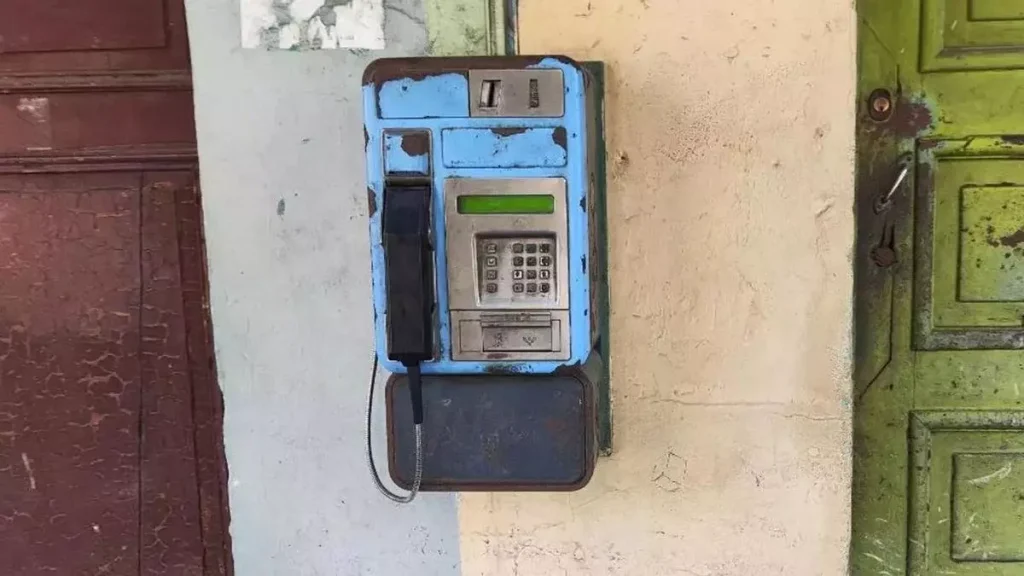
 14ymedio, Havana, Generation Y, Yoani Sánchez, May 3, 2026 — Every May 3rd carries a different weight when you practice journalism in a country where press freedom is not a right, but a daily battle. This is not a date for celebration, at least not in the most comfortable sense of the word, but for taking stock: of what has been won through hard work, what has been lost along the way, and what still needs to be built. In Cuba, being an independent journalist is not just a profession; it is a form of resistance.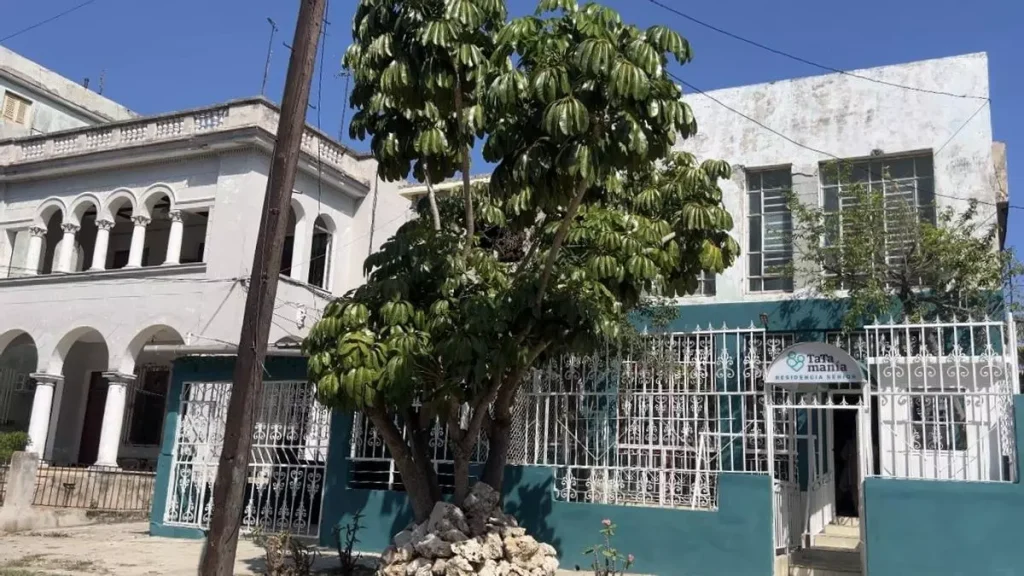
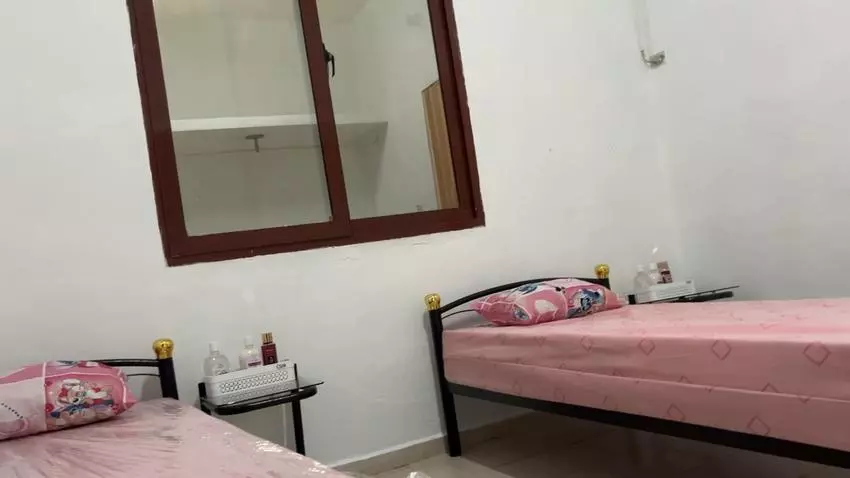
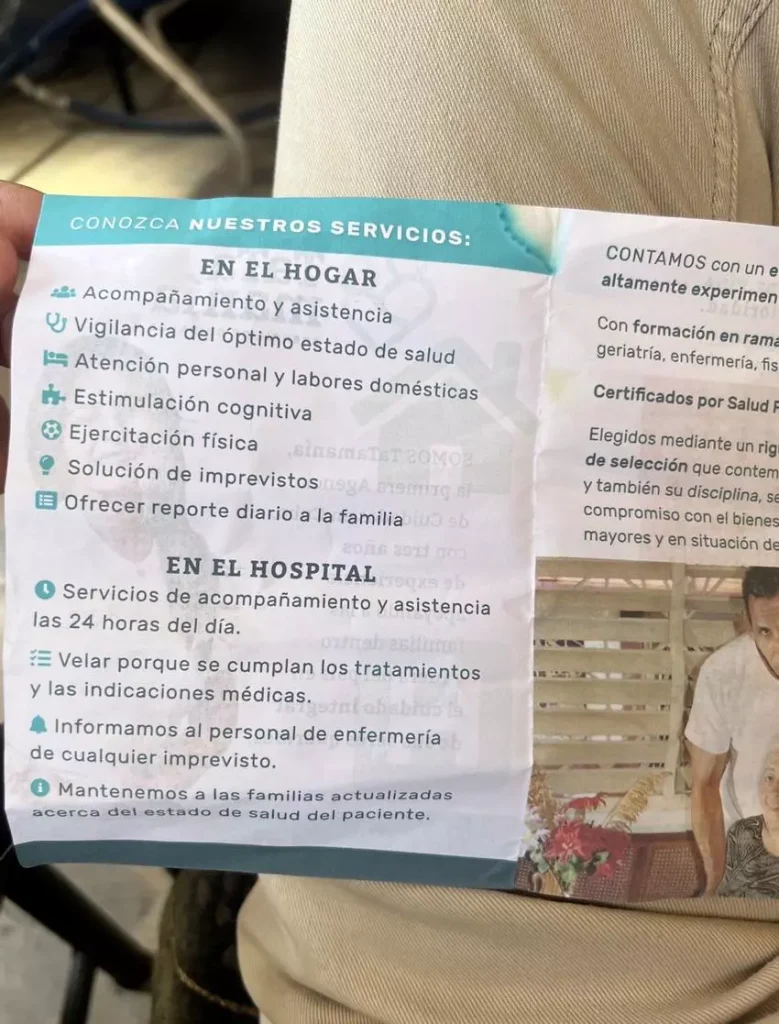

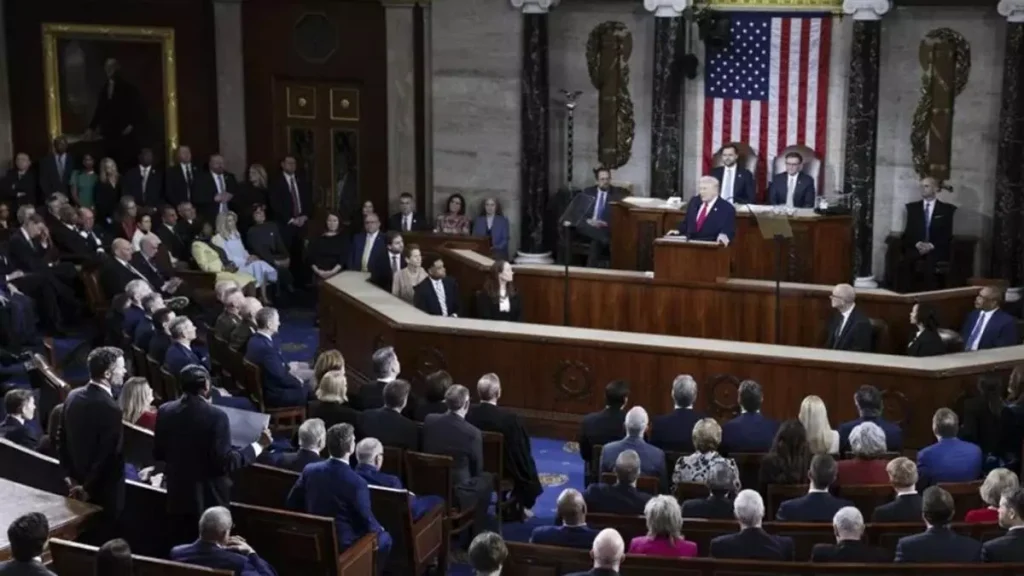
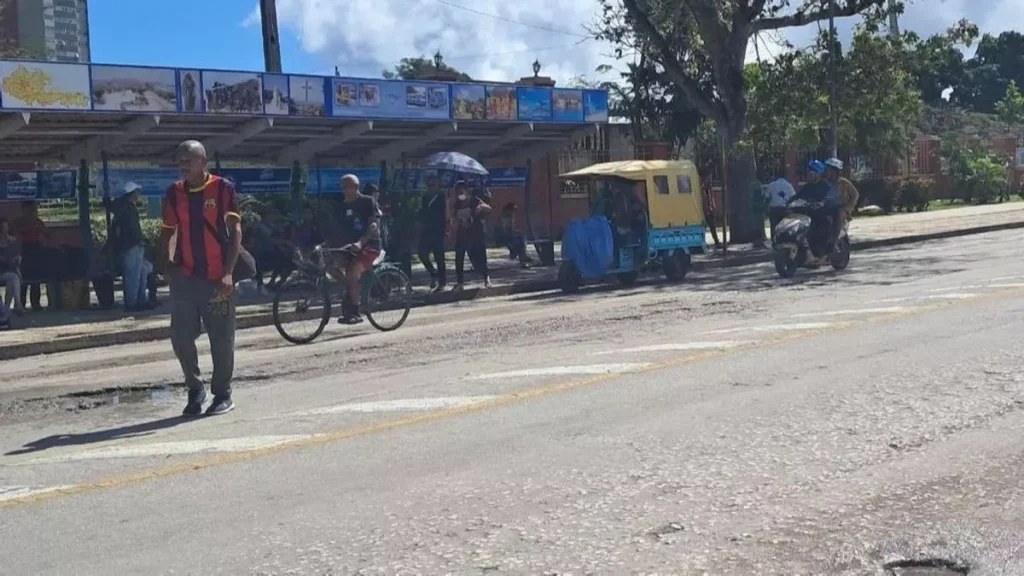
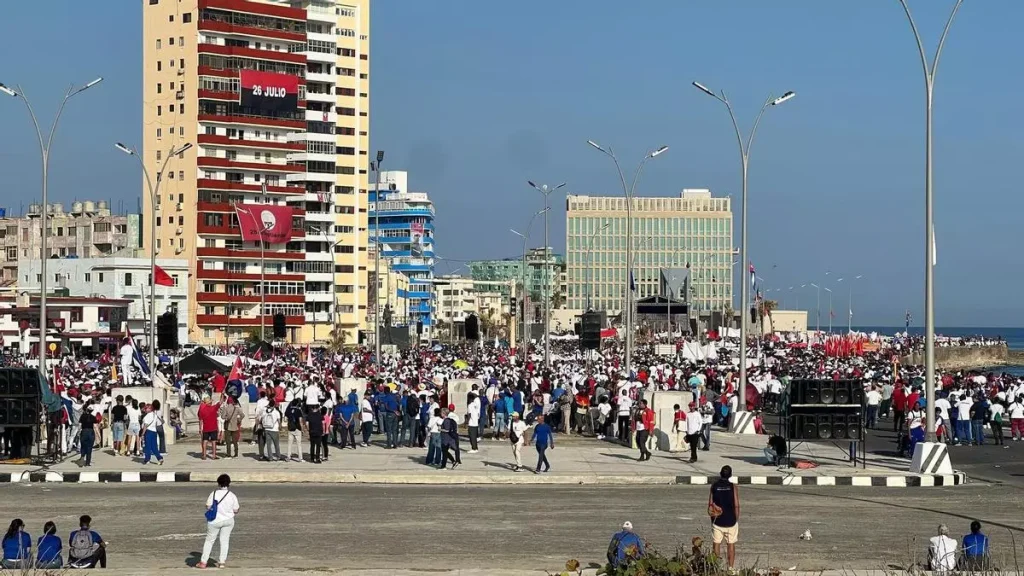
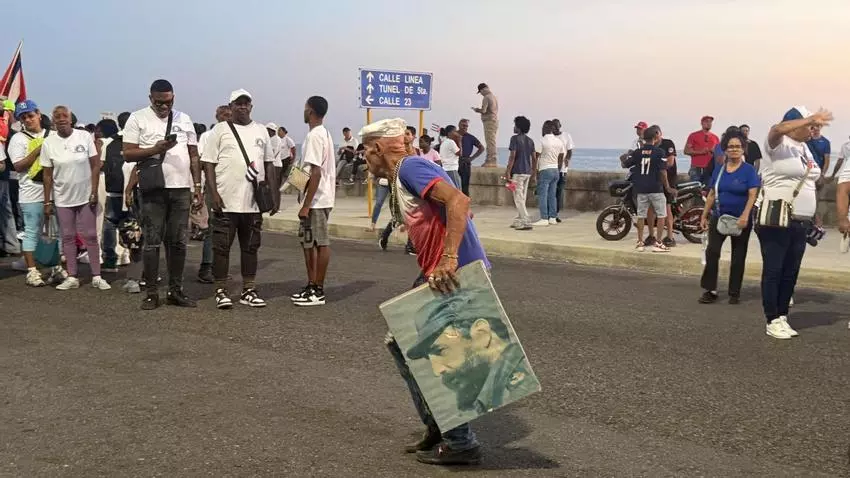

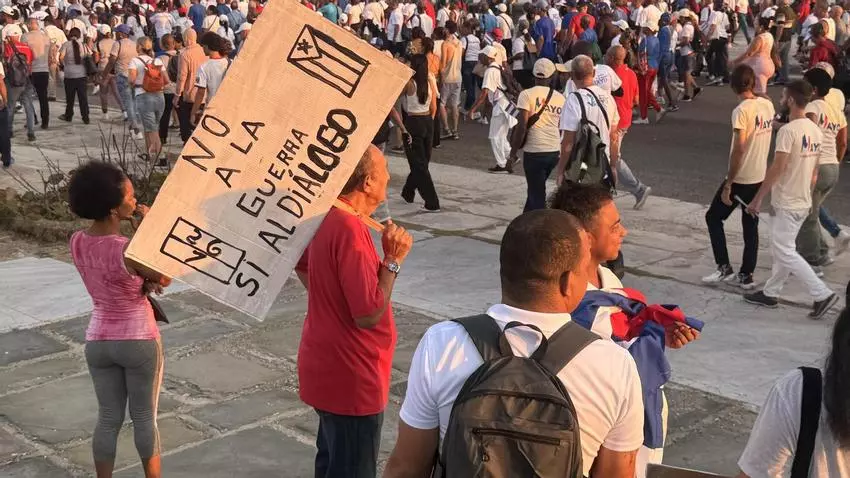
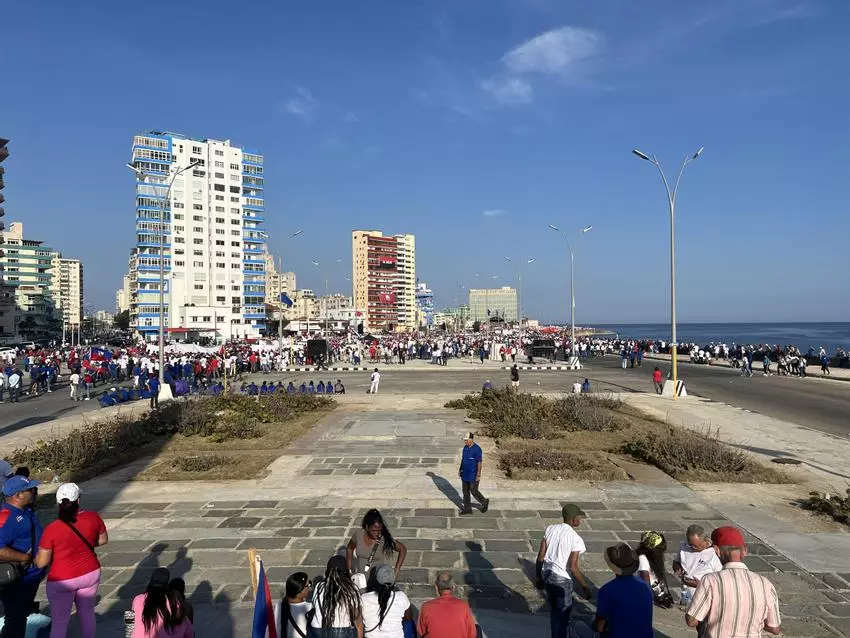
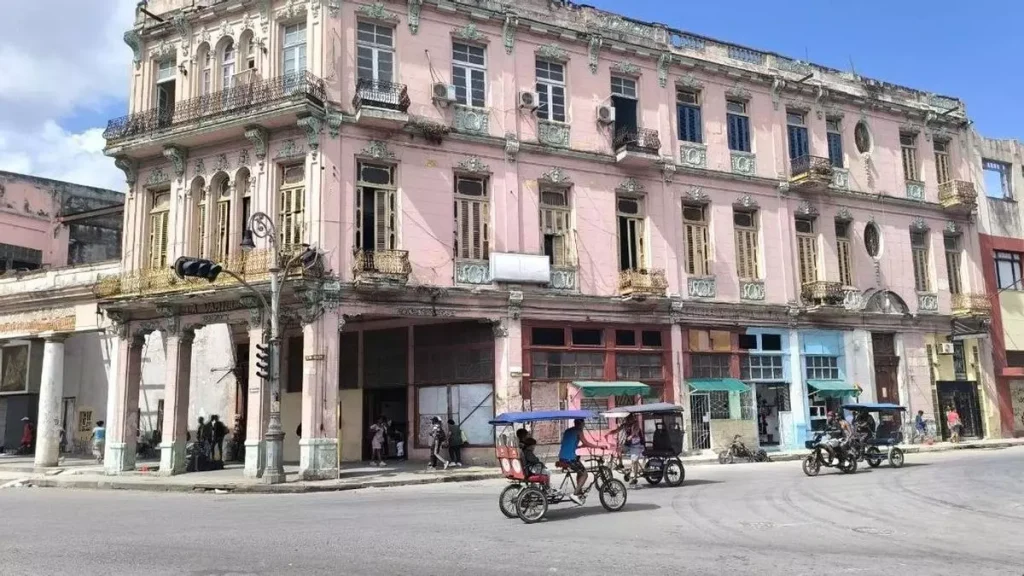
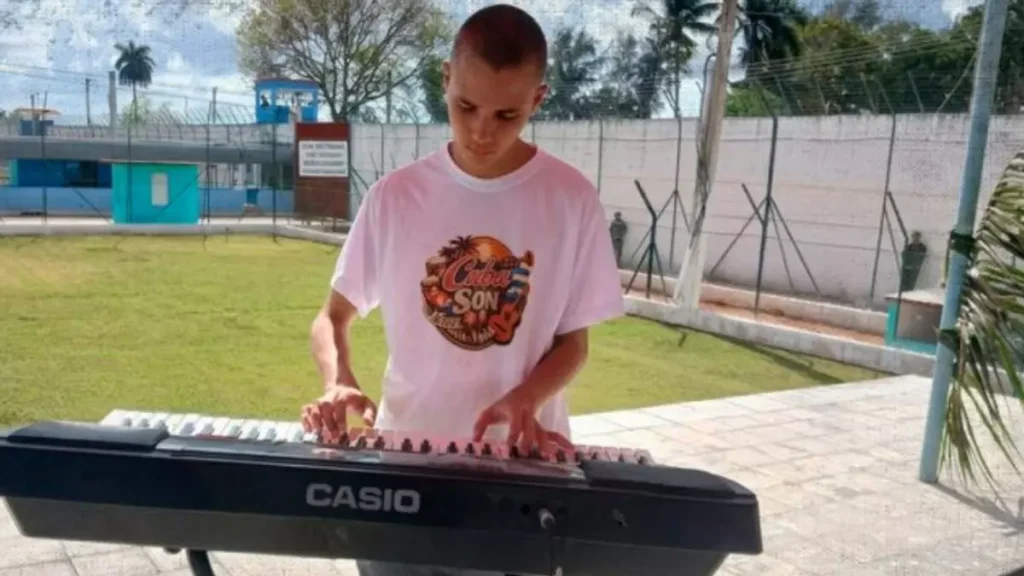
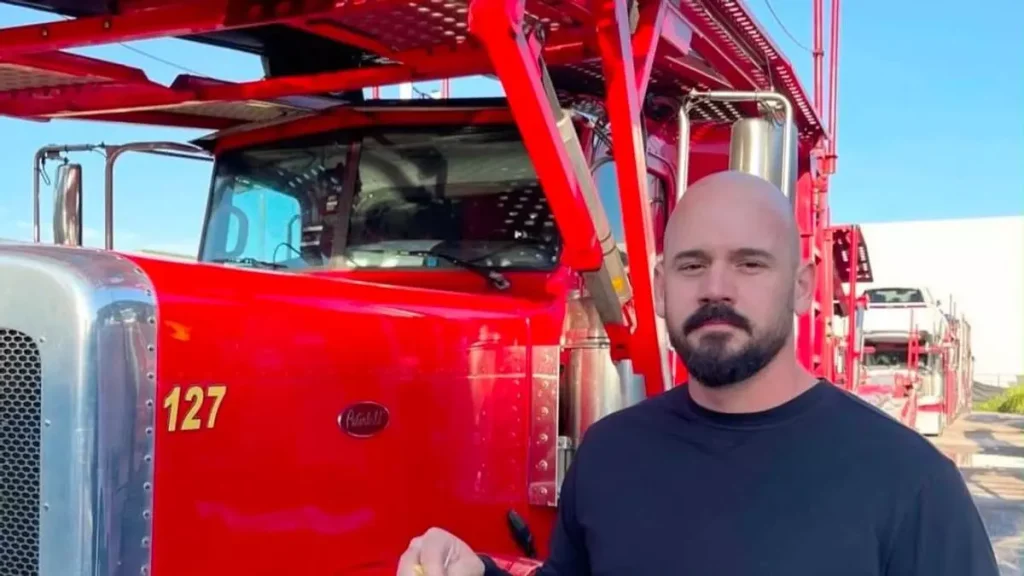
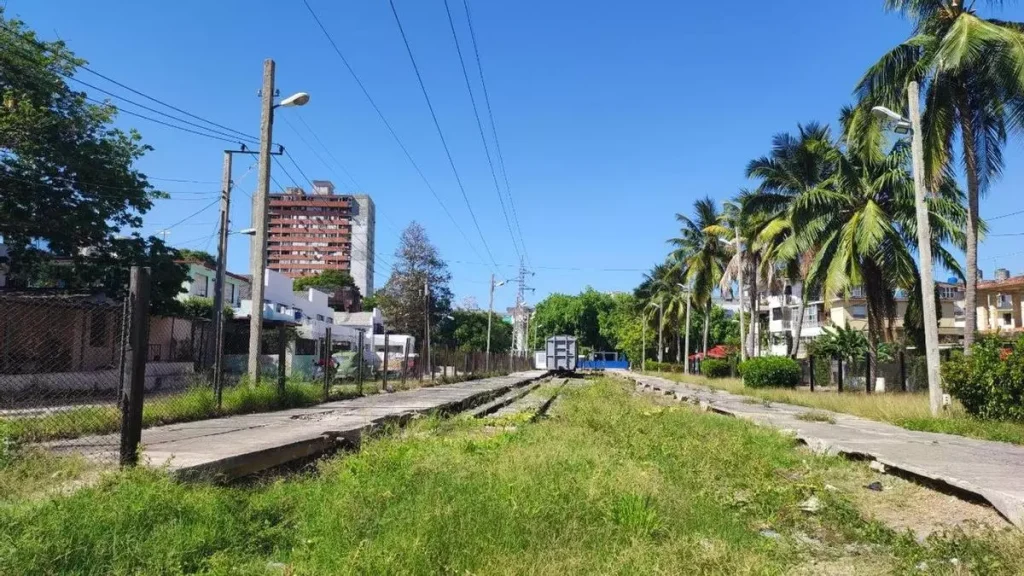
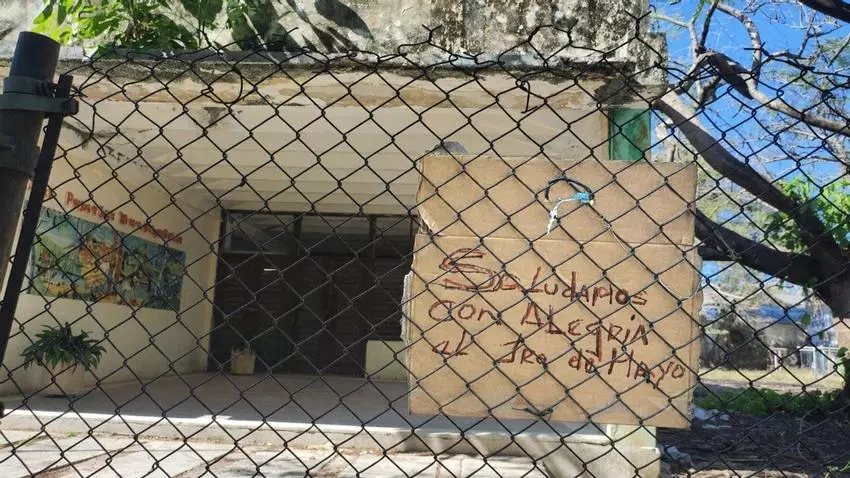
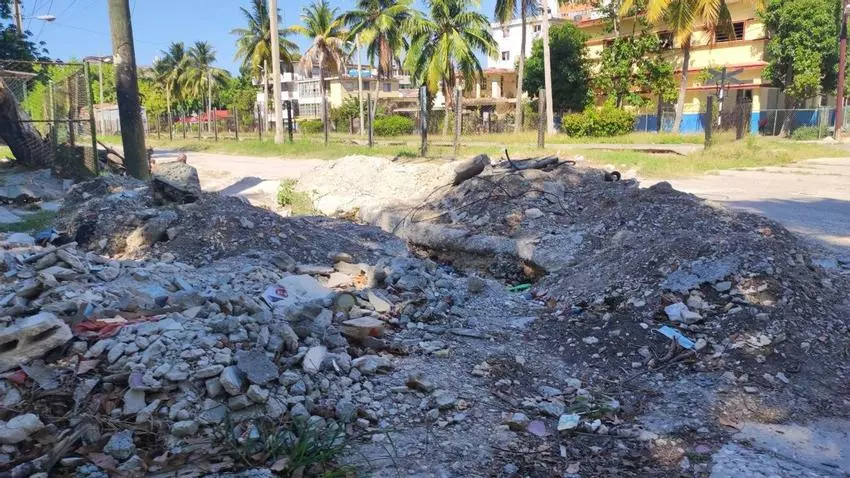
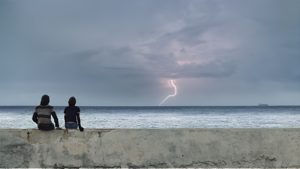
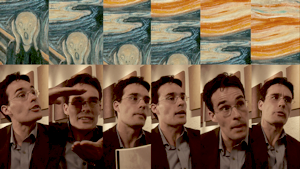
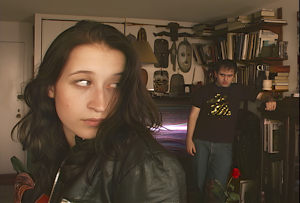
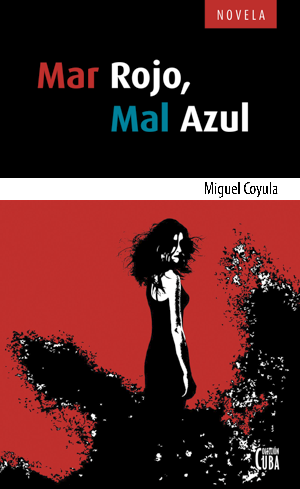


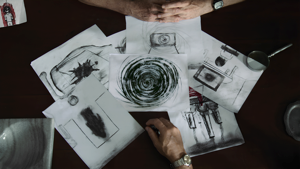


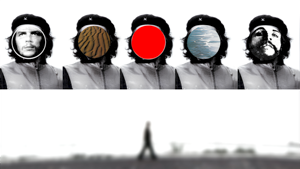


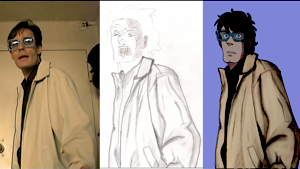
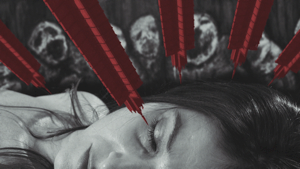
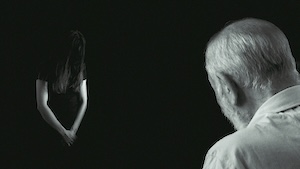
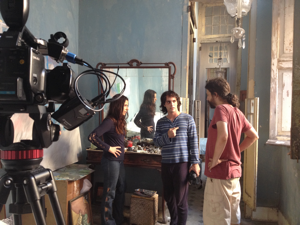
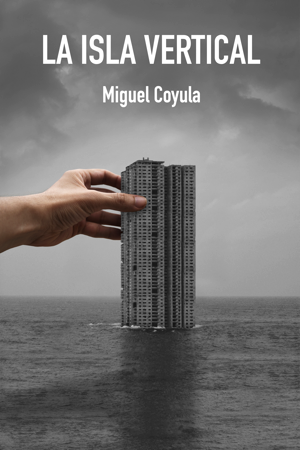
 Álvarez, the presenter, published a text pointing out the problematic sentences about the opposition celebrity figures referenced in the novel, among which was also the artivist Tania Bruguera. But the text gave prominence to Lumoa, a character inspired by the mutation of Charles Manson and Luis Manuel Otero Alcántara (LMOA). The novel has several narrative voices. In his description of Lumoa, the narrator in question, was accused by Álvarez of being sexist and classist. Interestingly, Álvarez thought this a more serious offence than the incest, violence and murder committed by the protagonists in the rest of a novel where the narrator himself is also “the very expression of uncertainty and failure.”[12] Then, Álvarez makes reference to an excerpt about machismo: “he always kept a brood of women around him,”[13] which rang even more strange since LMOA himself has publicly confessed: “Yes, I care about having money, dressing in my own style, traveling, having women… the good life.”[14] Álvarez also failed to mention that when the book’s protagonist visits Lumoa, he discovers that, in reality, his “brood of women” keeps him doped up in a bed, and one of them informs him: “There is no single leader here. We are a collective.” (La Isla Vertical)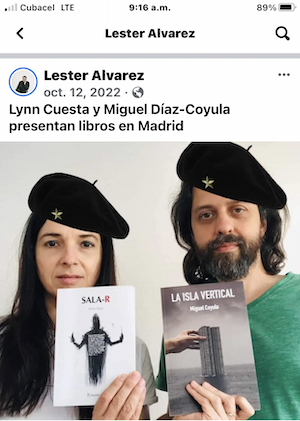
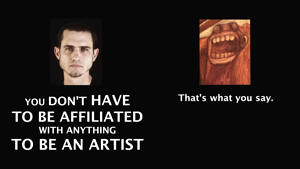
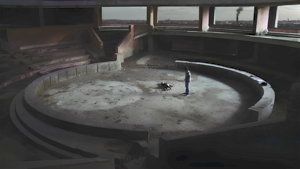
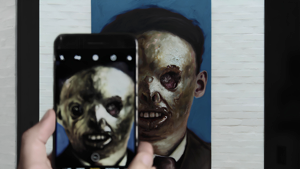 I turn off the monotony of social networks. The virtualities of the postmodern world do not inspire me. On desolate streets, people wander terrified by the new penal code. The science of the future has failed on the island. Some claim that poetry has been buried. Others continue to wait for a new messiah. But I am not into ideologies, parties, religions, political corrections, movements, sects, guilds, herds, or crowds. I could say that one of my creative gratifications is to burn the ships down over and over again. Only I have never needed other people’s ships. The material world is not a priority for me. I know that such an attitude can complicate life, but it facilitates creation. And that is my raison d’être. I am attracted to protagonists who are misfits for a number of reasons that include destabilizing narrative perspective. A good number of audience members expect a film to reinforce their political convictions and are rarely interested in a debate with themselves.