The moral dilemma of those of us who aspire to democratic change on the Island

 14ymedio, Madrid, Yunior García Aguilera, April 2, 2026 – A large part of the world looks toward Cuba without fully understanding what is happening on the Island or the moral tensions that run through its citizens. Some are scandalized that there are Cubans who come to wish for foreign intervention to escape the regime. Others do not understand how there are still people willing to defend, even with their lives, a system that has ruined the country and can only offer misery, surveillance, and calls to battle. There are also those who view Cuba as an abstract symbol, a stage of sacrifice useful for feeding others’ ideological nostalgias.
In Abdala, written when he was barely 15 years old, José Martí defined love for one’s homeland as a bifurcation of angers: “the invincible hatred of those who oppress it” and “the eternal resentment toward those who attack it.” More than a century and a half later, the Cuban drama remains trapped in that same emotional logic, though distorted by history.
A portion of Cubans who long for a free Cuba concentrate their moral energy on invincible hatred toward the dictatorship; that is, toward the apparatus of control, fear, and servitude that Castroism turned into a system. Another portion, made up of regime loyalists or those still trapped in its worldview, cling to eternal resentment toward the United States: its threats, its real or imagined grievances, and the ever-invoked hypothesis of intervention. Between hatred and resentment, Cuba risks never becoming a true project of freedom but merely an endless battlefield of grievances.
In countries where free elections, alternation of power, and institutional channels exist, it would be absurd to wish for a foreign army to enter and overthrow the government
It must be said plainly: I do not want bombs to fall on the land where I was born. But neither do I want a regime that has destroyed the nation and represses its inhabitants to remain in power, condemning us to a slow extinction. That is my moral dilemma.
From consolidated democracies, this may be difficult continue reading
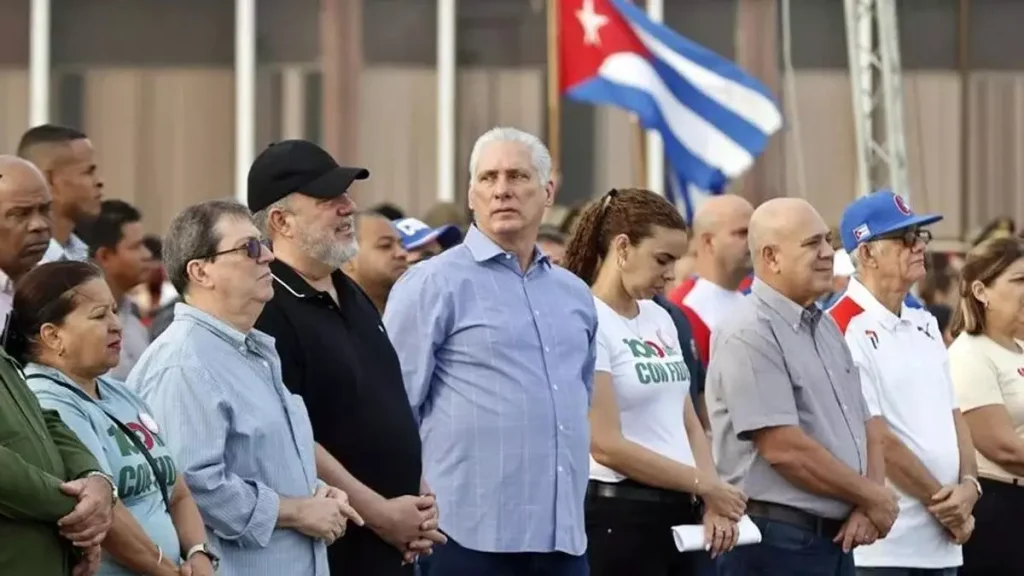
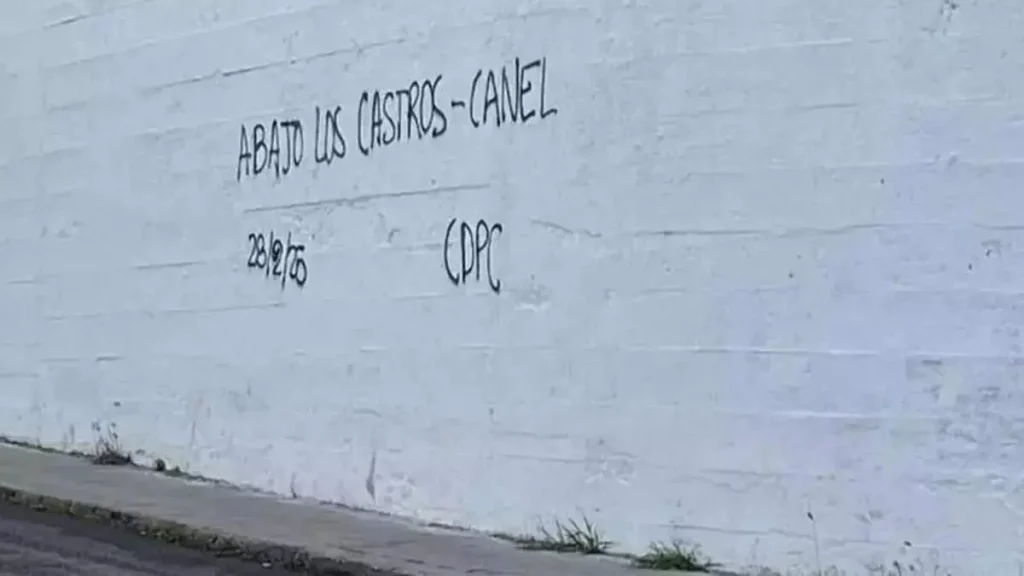
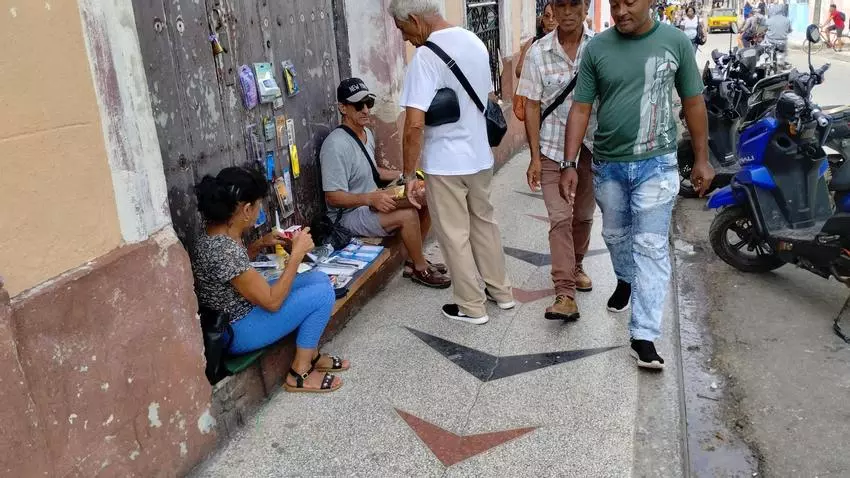
In Cuba, the electoral system is hijacked by the Candidacy Commissions and State Security. There is not a single deputy who represents the opposition, even though its weight within society is already undeniable. The ballot used by the National Assembly in 2023 to “elect” the president contained a single name: Miguel Díaz-Canel. To call such a procedure an election is a mockery. If Cubans cannot organize politically, compete at the polls, protest in the streets, or express themselves without risk on social media, then the question becomes inevitable: what real options do we have left to remove the tyrants from power?
Cuban civil society has attempted even the most peaceful and civic avenues imaginable within a dictatorship. Opponents such as Oswaldo Payá died under never-clarified circumstances. Others were exiled. Many are imprisoned or subjected to constant harassment. It should not be surprising, then, that ideas once considered marginal, such as foreign intervention or annexation, have gained ground. Those of us who oppose such outcomes must at least recognize that they are a direct consequence of the Revolution’s failure as a national project. When a regime closes off every internal avenue for change, the temptation of an external solution stops seeming like an extravagance and becomes a symptom of disaster.
Almost no one can seriously defend the “achievements of the Revolution” anymore, because little remains of them but rubble
Meanwhile, part of the international left celebrates our misery as if it were a badge of dignity. From comfortable stages, scarcity, repression, and immobility are exalted as proof of resistance against the Empire. We are expected to preserve the authoritarian system intact to satisfy the nostalgia or ideological fascination of those who would not have to suffer its consequences.
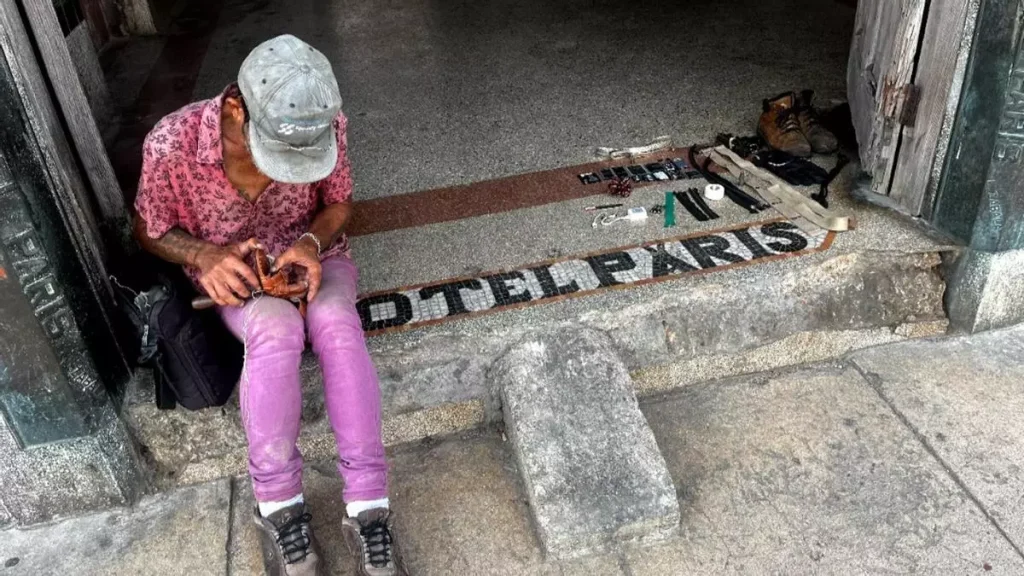
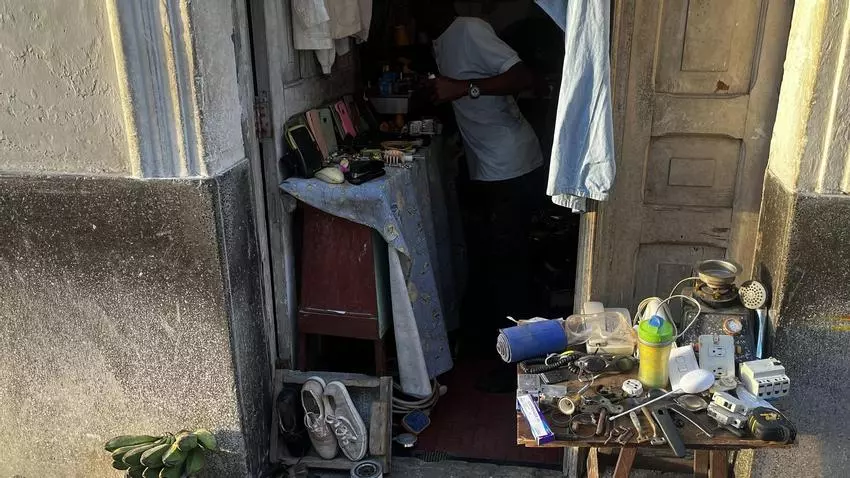
Many of these admirers only know Cuba from hotels, ruins turned into photographic scenery, or the screens of their phones. Almost no one can seriously defend the “achievements of the Revolution” anymore, because little remains of them but rubble. Yet the embargo continues to be invoked as a universal excuse. It is forgotten that when Cuba received nearly unlimited resources from the USSR, it did not use them to modernize the country but for military and ideological adventures abroad. It is also forgotten that the Venezuelan subsidy did not correct the model’s structural flaws. The problem was never a lack of resources. The problem has been, above all, the system.
That is why the metaphor of Cuba as a “new Numancia*” -used to praise its supposed resistance- is so perverse. Numancia does not symbolize abstract dignity, but siege, hunger, degradation, and extermination. Presenting Cuba as Numancia amounts to suggesting that its greatness lies in enduring suffering indefinitely.
In Cuba, those in power seem more willing to negotiate with external actors capable of pressuring them than with their own citizens, whom they treat as subjects
Talking about solutions requires abandoning both naïve epic narratives and providential superstition. It is unlikely that Cuban civil society, alone and without fractures within the power structure, can defeat the regime through open rebellion. Asking an unarmed, impoverished, and surveilled citizenry to overthrow a police state willing to fire on its people resembles an invitation to sacrifice. This does not make civil society irrelevant. Without an active citizenry, there is no real transition. But almost no recent transition from authoritarianism has occurred without a combination of internal resistance, fractures within the elite, and external pressure.
History shows that authoritarian regimes do not usually yield through moral persuasion alone. They do so when the cost of staying in power becomes unbearable. In Cuba, moreover, those in power seem more willing to negotiate with external actors capable of pressuring them than with their own citizens, whom they treat as subjects. Recognizing the possible role of external factors does not mean calling for occupation or renouncing sovereignty. It means accepting that, when all internal channels have been closed, international pressure can open space for a transition.
But that transition should not repeat the worst vices of our history. Cuba carries a traumatic legacy of coups, armed solutions, and messianic leaders. We have already paid too high a price for the temptation to replace politics with epic narratives, law with exception, and citizenship with obedience to the savior of the moment. The goal cannot be to replace one command with another, nor to move from one form of tutelage to another. The goal must be to rebuild the republic on civil, pluralist, and legal foundations.
Cuba does not need the miserable immortality of a symbol. It needs the concrete life of a country. It does not want to be admired for enduring. It wants to stop enduring. It does not want to remain an emblem of others’ sacrifice. It wants, like any mature nation, the basic right to live in freedom.
*Translator’s Note: Numancia was an ancient city in Spain that resisted the Romans for 20 years, a symbol of stubborn and hopeless endurance.
Translated by Regina Anavy
______________________
COLLABORATE WITH OUR WORK: The 14ymedio team is committed to practicing serious journalism that reflects Cuba’s reality in all its depth. Thank you for joining us on this long journey. We invite you to continue supporting us by becoming a member of 14ymedio now. Together we can continue transforming journalism in Cuba.