The anguished testimony of Juan, who fears losing the $1,650 ticket he bought to travel to Managua
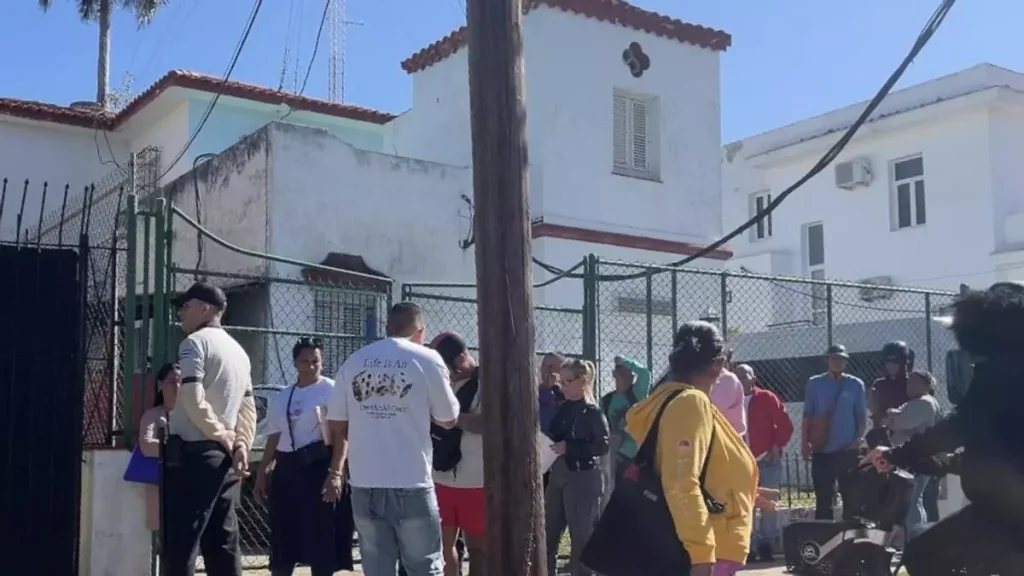
 14ymedio, Havana, April 2, 2026 – Thousands of Cuban citizens who purchased airline tickets to Nicaragua before the abrupt imposition of a visa requirement last February now have their visa applications stalled. “Every time people go to ask, they tell us we have to wait,” Juan—an assumed name—tells 14ymedio. He is an artist employed by the Ministry of Culture who was supposed to fly more than a month ago and still sees no end in sight.
He bought a ticket with the Venezuelan airline Conviasa for $1,650 and says around 3,000 fellow citizens are in the same situation. “They haven’t granted visas to any Cuban since they introduced the new requirements on the website,” he claims. Although, he notes, the airline has decided to keep the tickets open for one year, he is not willing to wait much longer: “I’d rather leave through a cultural exchange to another country even if I lose the money, because I think they’re not going to grant anything: they just want to keep the money.”
The same is stated by a Cuban resident in Nicaragua whose relatives on the Island had planned to travel to Managua. “No flights have been able to leave because hardly anyone is being granted a visa,” he confirms. According to his statememt, many passengers fear losing the money invested in tickets. “And the worst part is that Conviasa is not refunding the money,” he adds.
The uncertainty began after a new policy took effect on February 8, once again requiring Cubans to obtain a consular visa to travel to the Central American country. Although free of charge, the measure, formalized through provision 001-2026 of Nicaragua’s Ministry of the Interior, reclassified Cuban citizens with ordinary migration category “A” passports, which since November 2021 had allowed visa-free entry, to category “C,” corresponding to a “consulted” visa.
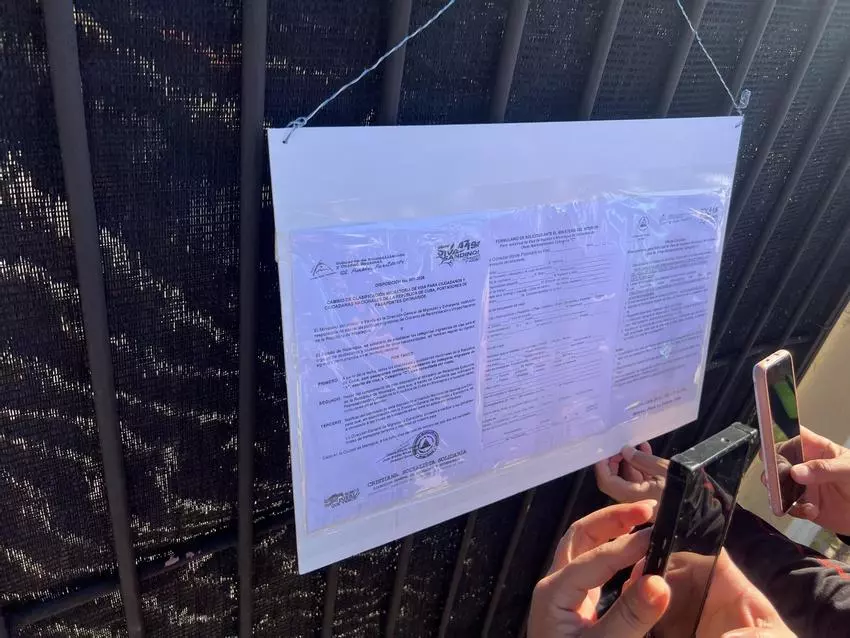
According to statements collected by the Nicaraguan media in exile, the Nicaraguan Embassy in Cuba indicated that applications should be sent by email and promised a free process of about 35 business days, waiving requirements such as criminal records or proof of financial solvency for those who already had tickets.
Hundreds of Cubans began the process trusting those conditions. However, after an initial issuance of about 70 visas in mid-February, complainants told Confidencial that the process stopped without clear explanation. “We don’t know whether our applications are still being processed,” said one of those affected in a complaint sent to the Nicaraguan media.
In addition to the halt in consular procedures, confusion has been compounded by Nicaragua’s own immigration system. At the end of February, the Ministry of the Interior enabled a digital platform to process electronic visas. This new system included requirements from which those who bought tickets before the policy change had initially been exempt.
Among the documents requested on the platform are bank statements to prove financial solvency, updated criminal background checks, proof of employment, and a confirmed accommodation reservation.
Those affected are asking Managua to allow travel for those who purchased tickets before the migration policy change
The Nicaraguan Consulate informed applicants that use of the digital platform was optional and that applications submitted by email would remain valid. However, those affected say that so far there have been no reports of visas approved through that system.
The group is asking Managua to allow travel for those who purchased tickets before the migration change or, at least, to establish a mechanism that guarantees the validity of tickets bought under the previous conditions.
The visa-free regime was announced by the government of Daniel Ortega on November 22, 2021. Although it was presented as a measure to promote commercial and family exchange, in practice it turned Managua into one of the main departure routes for Cubans attempting to migrate to the United States.
The tightening of measures by Donald Trump in his second term starting in January 2025, which included sealing the border to prevent any irregular migrants from entering, largely eliminated the Central American country as a “springboard,” though not as a destination. Over the past year, and even before the new migration measures, a new wave of Cubans, discreet and silent, have arrived in Nicaragua to build a new life.
Translated by Regina Anavy
______________________
COLLABORATE WITH OUR WORK: The 14ymedio team is committed to practicing serious journalism that reflects Cuba’s reality in all its depth. Thank you for joining us on this long journey. We invite you to continue supporting us by becoming a member of 14ymedio now. Together we can continue transforming journalism in Cuba.