Havana concentrates the majority of the 1,245 protests recorded in March in Cuba
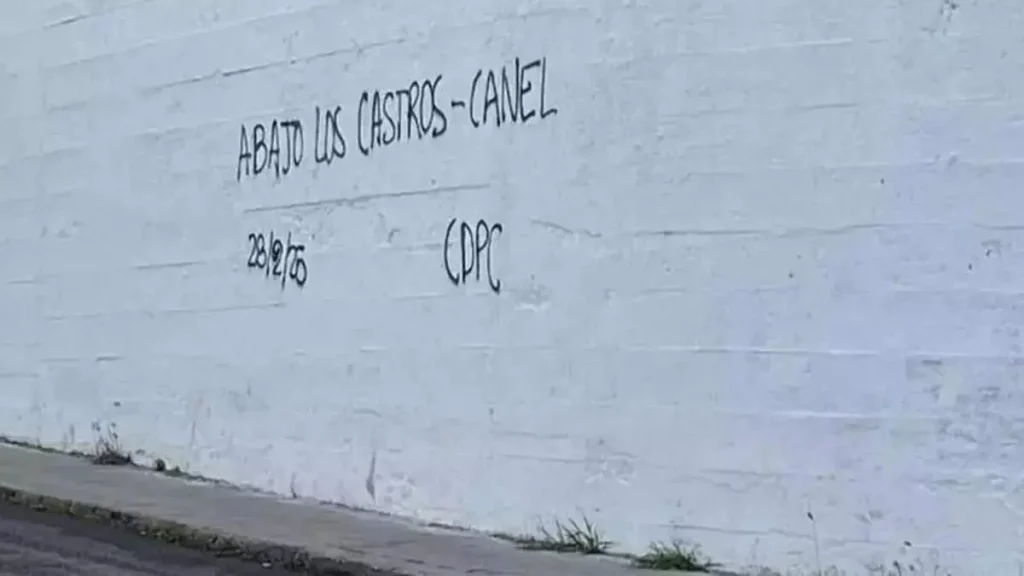
 14ymedio, Havana, April 1, 2026 – Social discontent in Cuba manifested itself throughout nearly the entire month of March on the Island. For three consecutive weeks, Cubans protested night after night, in the darkness caused by blackouts, with pots and pans in hand, bonfires, and shouts of “freedom!” highlighted the Cuban Observatory of Conflicts (OCC) in its most recent report published this Wednesday. It notes that last month there were 1,245 protests and 70 anti-government graffiti incidents across the country.
The observatory describes power outages, lack of water, fuel shortages, insecurity, and rising food prices combined with a repressive response from the State, generating a situation of maximum tension in the streets.
The report emphasizes the protests recorded in Morón, Ciego de Ávila, on March 13, when demonstrators entered the local headquarters of the Communist Party (PCC). Once inside, they threw furniture and documents into the street before setting them on fire. The OCC classified that episode as one of the “556 challenges to the police state” recorded during the month, a figure that far exceeded the 432 in February and exposed the increase in direct confrontation with authorities, amid the worsening conditions Cubans face day to day.
The rise in the number of mobilizations, 4.8% more than the 1,185 in February, and nearly 80% more than those recorded in the same month last year, prompted an intense response from authorities. The observatory documented 159 repressive acts, with the detention of more than 40 protesters, including the case of the minor Jonathan David Muir Burgos, 16 years old, who is suffering “inhumane conditions” in prison.
The observatory documented 159 repressive acts, with the detention of more than 40 protesters
In addition, a new wave of detentions and summonses targeting journalists and activists was recorded, such as the case of influencer Anna Sofía Benítez Silvente, who was placed under house arrest and received threats of up to five years in prison following a State Security operation aimed at curbing her activity on social media. “The state apparatus was exposed grappling with a brave and petite young girl,” the report describes.
A similar pattern was denounced by members of the digital project Fuera de la Caja, a group created by young Cubans that produces political content on social media from the Cerro municipality in Havana. In a video, the project released on March 11 an audio recording of the father of Amanda Beatriz Andrés Navarro, one of the members, in which he states that he was intercepted by two officers from the Ministry of the Interior at his workplace.
“It turns out that when I arrived at my workplace there were two State Security agents waiting for me, and they began to intimidate me about my children, saying that they were committing crimes, inciting constitutional disorder, encouraging delinquency, and that if they continued they would put them in prison,” the audio says.
The OCC indicates that 27 murders were reported on the Island, almost one per day, “as a result of social, criminal, or gender-based violence”
Another trigger for the mobilizations was insecurity in the country. The OCC indicates that 27 murders were reported on the Island, almost one per day, “as a result of social, criminal, or gender-based violence.” The report notes that in seven of those deaths the perpetrators were family members, “and in several cases the events occurred during blackouts.” It also mentions the two minors murdered in one week, aged 7 and 14, “who were killed after being sexually abused.” Likewise, “26 robbery-related crimes were compiled, with reports highlighting an increase in assaults by organized and armed criminal groups.”
The mobilizations found their epicenter in Havana, the observatory reports. The capital recorded 461 protests last month (an average of 15 per day). It was followed by Matanzas, with 137; Holguín, with 72; Santiago de Cuba, 69; Guantánamo, 41; and Villa Clara, which recorded 34.
Translated by Regina Anavy
______________________
COLLABORATE WITH OUR WORK: The 14ymedio team is committed to practicing serious journalism that reflects Cuba’s reality in all its depth. Thank you for joining us on this long journey. We invite you to continue supporting us by becoming a member of 14ymedio now. Together we can continue transforming journalism in Cuba.