A Mayor Expels Fidel Castro and Che Guevara from the Mexican Capital

Neither of them asked permission to settle in Cuba or in the Tabacalera park, explained Alessandra Rojo.


A backhoe removes the statues of Fidel Castro and Che Guevara from the Tabacalera Garden in Mexico City. / Cuauhtémoc City Hall

14ymedio bigger14ymedio, Havana, 17 July 2025 — Fidel Castro and Che Guevara are, for the time being, prohibited from sitting on the bench in Mexico City’s Jardín Tabacalera park. As if they were patients in intensive care, the heavy statues of both men seated were carried in the arms of several workers on Wednesday and removed from the site, after years of controversy over their “irregular” installation.

“Neither Che nor Fidel asked for permission to settle in Cuba… nor in the Tabacalera,” posted Alessandra Rojo de la Vega, the combative mayor of Cuauhtémoc, one of the 16 territorial demarcations into which Mexico City is divided and where the monument was located.

According to the politician, elected by a coalition opposed to the ruling party in the capital and the country, the placement of the figures in 2018 lacked the necessary documentation from the Committee on Monuments and Works of Art in Public Spaces, and the installation process was never completed. She added that her mayor’s office does not have “a single document” authorizing the statues’ presence in the park and “they are under the irregular custody of a mayor’s employee without any legal basis for doing so.” This led the district’s Urban Services department to remove the monuments.

“That’s not how things are done,” criticized the Mexican mayor and businesswoman, alluding to the “personal whims” of those who continue reading

governed the district in 2018, despite requests from Cuauhtémoc residents to recover the park bench that housed the Cuban and the Argentine.

This isn’t the first time Castro and Che Guevara have been deprived of their seats. / Fil

This isn’t the first time Castro and Che Guevara have been deprived of their seats. In 2019, the statues were reinstalled in the same location after being removed due to irregularities in the process, but the correct procedure wasn’t followed then either. Now, the mayor’s office announced, they will be put in storage and a consideration will be given to sending them to another location.

On X, the mayor’s announcement sparked all kinds of controversy and comments between those who see the measure as an offense and assured that “Che and Fidel will be back,” and those who celebrate the eviction of those “responsible for the misery a people as beautiful as Cubans are experiencing today.”

Others, jokingly, proposed sending the statues to regions governed by Morena, the party of Andrés Manuel López Obrador and Claudia Sheinbaum, which controlled Cuauhtémoc when the bronze sculptures were placed.

Known as the Encounter Monument, the figures of Guevara and Castro—tobacco in hand, both already in their post-1959 military uniforms—commemorated their exile in Mexico, where they met before sailing to Cuba aboard the yacht Granma. Since its installation, it has been the target of complaints among those who frequent the Tabacalera Garden, not only for representing a totalitarian power, but for being an obstacle to urban harmony.

Known as the ’Meeting Monument’, the figures of Guevara and Castro commemorated their exile in Mexico.

Rojo was nominated last year as the mayoral candidate for Fuerza y Corazón por México [Power and Heart for Mexico], a coalition made up of the three main opposition parties. Before winning the election, her vehicle was shot at five times by an individual who later confessed he had been hired to “scare” the politician. In the election, she won against the candidate of the ruling Morena party, Catalina Monreal— daughter of Ricardo Monreal, the former mayor of Cuauhtémoc — who tried to overturn the election result by accusing Rojo of alleged electoral irregularities. The statues were installed during Monreal’s term as mayor.

In July 2024, 14ymedio published a report on the Encuentro Monument, located in a central area of the capital, which has been vandalized (covered in white paint) and served as a clothesline for those washing in the park’s fountain.

“For me, it’s an aberration to have these statues here. We have countless national heroes, so why would we have these individuals if Castro was a dictator?” a neighborhood resident told this newspaper at the time. Another, drawn into the conversation, replied: “Shouldn’t they be somewhere else? In Cuba, for example?”

For the moment, however, Castro and Che rest in some storeroom at city hall. An empty bench and two stains on the crossbars remain in the park: they are the trace, neither epic nor heroic, of the expulsion.

For the moment, however, Castro and Che rest in some storeroom at city hall. / Expediente

____________

COLLABORATE WITH OUR WORK: The 14ymedio team is committed to practicing serious journalism that reflects Cuba’s reality in all its depth. Thank you for joining us on this long journey. We invite you to continue supporting us by becoming a member of 14ymedio now. Together we can continue transforming journalism in Cuba.

With Their Pension, Cuban Retirees Will Be Able To Buy One Carton of Eggs a Month

Instead of 1,528 pesos, the monthly payment will be 3,056 pesos for about 430,000 people.

[In Cuba, more than a quarter of the Cuban population is aged 60 or over. / 14ymedio
14ymedio bigger14ymedio, Havana, July 16, 2025 — The Cuban government announced this Wednesday an increase in the minimum pension for about 430,000 retirees starting in September, as confirmed by the prime minister, Manuel Marrero Cruz, before Parliament. State aid will increase from 1,528 Cuban pesos (about $12.70 at the official exchange rate) to 3,056 pesos ($25.40), a figure that, although it represents twice the current amount, is still well below informal market prices.

Marrero justified the measure after a recent meeting of the Central Committee of the Communist Party of Cuba (PCC), where the “complex situation of pensioners’ incomes” was assessed. According to the head of government, the adjustment will benefit 79 per cent of all retirees in the country — about 1.3 million people — who currently receive less than 4,000 pesos. “We are still looking for solutions, but I think it is fair that, although now we cannot cover everyone, we have started with 1.3 million because they are the most vulnerable,” said Marrero.

The Government did not specify where the resources will come from to cover this sum.

The measure will have an estimated tax cost of 22,000 million pesos per year (about 916 million dollars at the official exchange rate for companies), although the Government has not specified where the resources will come from to cover this sum. Marrero only advanced that “a group of measures” will be implemented to finance the expenditure, without providing details.

However, beyond the official rhetoric, the real impact of this adjustment on pensions is limited. In a country where one carton of 30 eggs can exceed 3,000 pesos, the new minimum would barely cover a single commodity, leaving pensioners unprotected against the rest of continue reading

everyday expenses, from medicines and transport to electricity, water and food. As manyindependent economists have warned, the problem is not only the low level of income, but the continued devaluation of the Cuban peso and the galloping inflation that has pulverized purchasing power.

More than a quarter of the Cuban population is aged 60 or over.

According to recent data from the National Bureau of Statistics and Information (ONEI), more than a quarter of the Cuban population is aged 60 or over. Between 2021 and 2023, the number of people over 60 grew from 2.3 million to 2.4 million, an increase of 3%. In contrast, the 15-59 age group fell by almost 12 per cent from 6.7 million to 5.9 million. This demographic change poses enormous challenges for a social security system that is increasingly supported by fewer contributors and more dependents.

The situation is compounded by deteriorating health services, chronic drug shortages and the collapse of the primary care system for older adults. In provinces like Guantanamo and Granma, homes for the elderly survive on donations, while many retirees must rely on remittances from relatives abroad, barter or informal jobs to survive. In recent reports, 14ymedio has documented how retirees sell coffee, soap and cigars on the streets, collect plastic bottles or take care of houses for tourists as their only means of subsistence.

The announcement looks more like a gesture of restraint than a substantive solution.

In addition, while the Government announces these partial reforms, it offers no guarantees of transparency or mechanisms for citizen control over the use of the state budget. The increase in pensions comes without being accompanied by a comprehensive economic reform plan or a coherent fiscal policy that addresses the structural roots of the crisis: unproductivity, bureaucracy and unbridled inflation. Nor have immediate relief measures such as the opening of markets in national currency or the liberalization of individual imports without customs barriers been considered.

In the midst of this panorama, the announcement seems more a gesture of restraint than a substantive solution. The population is aging, families are emigrating, and the generation that built the Revolution today is forced to subsist on pensions that do not cover even one lunch. With the currency in free fall, undersupplied markets and stagnant wages, doubling the minimum pension is at best a bandaid on an open wound.

Translated by Regina Anavy

____________

COLLABORATE WITH OUR WORK: The 14ymedio team is committed to practicing serious journalism that reflects Cuba’s reality in all its depth. Thank you for joining us on this long journey. We invite you to continue supporting us by becoming a member of 14ymedio now. Together we can continue transforming journalism in Cuba.

The Caballero de París and the Homeless That Don’t Exist

It’s true that the problem of begging was not born with the Revolution, but it is a direct result of the demagogy and cynicism of pretending to serve the poor.

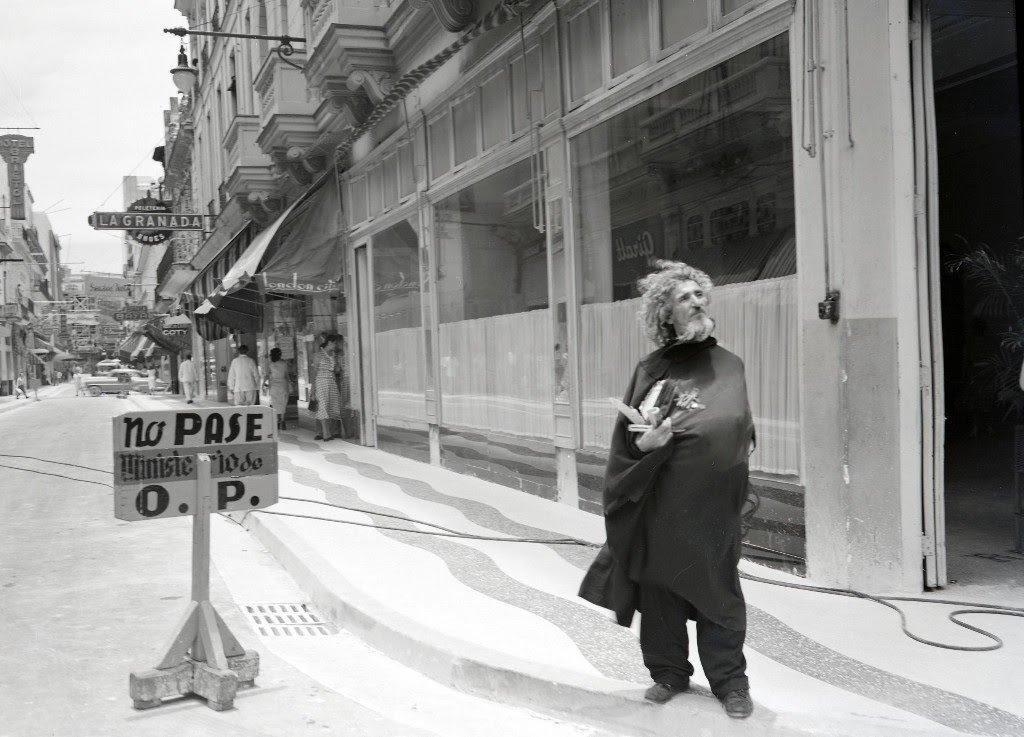
José María López Lledín was born in Spain in 1899 and emigrated to Cuba as a child.  / Gaspar, El Lugareño

14ymedio bigger14ymedio, Yunior García Aguilera, Madrid, 17 July 2025 — In the collective memory of Cubans, there are figures who, without having held official positions, are more remembered than most ministers. One of them is José María López Lledín, better known as El Caballero de París, the Knight of Paris. His image — with prophetic beard, white mane and an unbreakable dignity wrapped in rags — still inhabits the imagination of Havana residents. Despite being a wanderer, a “street madman” to many, he became a myth, an urban legend and a symbol of the Cuban contradiction between marginality and popular respect.

López Lledín was born in Spain in 1899 and emigrated to Cuba when he was just a child. He is said to have worked in hotels, restaurants and even as a bank clerk. But it was the street that eventually took him in. For decades he wandered through Havana with a flowery speech, greeting those he met with nineteenth-century courtesy, pronouncing philosophical phrases, improvising speeches, collecting papers, sometimes writing in the air. His wandering made him part of the urban landscape, a kind of living statue that roamed the city without restrictions. He died in 1985, in the Psychiatric Hospital of Mazorra.

The official story has tried to turn him into a romantic eccentricity of the past. He has even been carved in bronze in front of the convent of Saint Francis of Assisi, as if the country had to settle its debts with the homeless only after death. But what is most annoying is not that kind of late symbolic redemption. What’s irritating is that the same system that tried to cover up the problem of begging by locking up wanderers now continue reading

disguises itself as “sensitive.”

What’s irritating is that the same system that tried to cover up the problem of begging by locking up wanderers now disguises itself as “sensitive.”

The Minister of Labor and Social Security, Marta Elena Feitó, has “resigned” after generating a scandal by saying that “there are no people living on the street,” only “people who disguise themselves as beggars.” The regime first tried to erase the videos of her speech. Then, when they understood that it was too late and the indignation almost reached the doors of the Parliament, they decided to “disappear” her. Her speech, worthy of a libretto by Ionesco, exposed a Revolution that swore to be humble but ended up accommodating a caste that never lowers the windows of its cars.

It’s true that the problem of begging was not born with the Revolution, nor was corruption, opportunism or poverty. Cuba, like any country in the world, has always had its marginalized population. But what is the direct fruit of the regime is the demagoguery and cynicism of
pretending to serve the poor, but instead multiplying them. For decades, “madmen” and beggars were hidden in institutions such as Mazorra or “social rehabilitation” centers, just as they also tried to hide homosexuals, believers and the ideologically confused. The city had to look clean, disguised only by workers and militants.

The Knight of Paris, with all his elegance and delirium, represents something uncomfortable for power: the dignity of the homeless.

Today, economic decline, runaway inflation and loss of meaning in a country with no visible future have dramatically increased the number of homeless people. You only have to go for a walk through Centro Habana, Matanzas, Santa Clara and Santiago. And yet, the official speech insists on the mirage that “no one will be left behind.” Social networks, counter-revolution and imperialism are blamed for the real image of the country, while a parallel narrative is produced where Cubans have a hard time only “in the movies.”

The Knight of Paris, with all his elegance and delirium, represents something uncomfortable for power: the dignity of the homeless, the untitled intelligence, the madness that tells truths. His figure, idealized by some, reminds us that social problems are not solved with bronze statues, denial or falsely empathetic speeches, but with concrete policies.

Today we do not have a Knight of Paris, but we have thousands of Cubans sleeping on cardboard, escaping from hunger and dodging the police, “inventing” to survive. Meanwhile, the statue in front of Saint Francis of Assisi seems to ask, in silence, why those who come to pay homage to him today do not want to look at those who continue, like him, to wander the streets of an unremembered Cuba.

Translated by Regina Anavy

____________

COLLABORATE WITH OUR WORK: The 14ymedio team is committed to practicing serious journalism that reflects Cuba’s reality in all its depth. Thank you for joining us on this long journey. We invite you to continue supporting us by becoming a member of 14ymedio now. Together we can continue transforming journalism in Cuba.

A Cuban Repressor Who Attacked Protesters on 11J Has Been Deported From the US Back to Cuba

The former Interior Ministry official was directly involved in the repression of mass protests four years ago.

Daniel Morejón García, in an image of his arrest released by U.S. immigration authorities. / X/@HSI_Miami

14ymedio bigger 14ymedio, Havana, 16 July 2025 — Daniel Morejón García, who appears on the list of repressors of the Foundation for Human Rights in Cuba (FHRC), was deported to the island, according to journalist Mario J. Pentón. The migrant had been detained by the U.S. Immigration and Customs Enforcement (ICE) since April.

“The former Interior Ministry official was directly involved in the repression of the mass protests on July 11, 2021,” Pentón stated on his X account. Morejón has been in Cuban territory since May 30, the reporter added. For its part, this newspaper attempted to contact Morejón’s daughter several weeks ago to confirm his deportation, but she never responded.

The repressor arrived in Havana in a group of 130 migrants, 106 men and 24 women who arrived through José Martí International Airport.

According to a statement issued by ICE shortly after his arrest, the 57-year-old Cuban was “administratively” arrested at his home in Miami after it was established that he had lied upon entering the country. continue reading

“Law enforcement officers obtained official Cuban government documents and information from reliable sources indicating that Morejón García had not disclosed his affiliations,” that is, his immigration application had failed to include his membership in the Cuban Communist Party and the Ministry of the Interior.

There is evidence, the text then asserted, that Morejón García attacked protesters during the massive protests of 11 July 2021.

There is evidence, the text asserted, that Morejón García attacked protesters during the massive Island-wide demonstrations of 11 July 2021 (11J) “as part of his duties.” The former agent was president of the National Defense Council in the province of Artemisa and a member of the Rapid Response Brigades, the text indicates, explaining that these are groups “composed of civilians trained and organized by the government” and “designed to assist authorities during incidents of social unrest, protests, or riots.”

The information provided by ICE coincided with that found on the FDHC website, which indicates that, as seen in a video, during the 11 June demonstration in Las Cañas, Artemisa, Morejón got off his motorcycle and attacked Armando Martínez Luis. Now a political prisoner, Martínez Luis suffers from hypertension and paranoid schizophrenia, and was sentenced to eight years in prison.

Two other protesters arrested at the same location, Rolando González Arévalo and Richael Cantún Morales, were sentenced to six and seven years, respectively. All three are serving prison sentences in Guanajay prison (where artist and San Isidro Movement leader Luis Manuel Otero Alcántara is also being held).

Based on a complaint, the Foundation reported that the former agent, who was also director of the Las Cañas feed factory, was living at his daughter’s house in Miami.

Based on a complaint, the Foundation reported that the former agent, who was also the director of the Las Cañas feed factory, was living with his daughter, Dhayma Morejón, in Miami. Another complainant, according to the foundation’s file, claimed he was a State Security agent who “walks around armed” and in Cuba was the manager of Almacenes Universales, a subsidiary of the Gaesa military conglomerate.

The former official also appears on the list that Cuban-American Congressman Carlos Giménez sent last March to the Department of Homeland Security (DHS), along with more than 100 people who, the Republican politician alleged, “previously supported the brutal policies of the Castro dictatorship and have taken advantage of U.S. immigration laws to enter our country.”

Until his deportation, Morejón García was held at the Krome Detention Center in Miami-Dade County. ICE has asked anyone with “information regarding alleged human rights violators traveling to or entering the United States” to report this situation, which can be done anonymously.

____________

COLLABORATE WITH OUR WORK: The 14ymedio team is committed to practicing serious journalism that reflects Cuba’s reality in all its depth. Thank you for joining us on this long journey. We invite you to continue supporting us by becoming a member of 14ymedio now. Together we can continue transforming journalism in Cuba.
With the Tarifazo, Etecsa Has Multiplied Its Income in Dollars by 54

Exiles pay the internet expenses of their relatives on the Island

The figure represents an astronomical increase in the company’s collection of hard currency. / 14ymedio

14ymedio bigger14ymedio, Havana, July 16, 2025 — In the little more than one month since the tarifazo [huge price increase] came into force – 46 days, to be exact — stirring up Cuban universities and putting the state telecommunications monopoly in a bind — Etecsa has managed to raise more than 24,839,866 dollars. The data, revealed by Prime Minister Manuel Marrero in front of Parliament on Wednesday, confirmed what the students had been criticizing for weeks while the company denied it: Etecsa is prioritizing the collection of foreign currency over its users.

The figure represents an astronomical increase in the collection of hard currency by Etecsa of 5,300 percent, averaging $540,000 per day. Before, said Marrero, it was barely $10,000 (54 times less). Exports also grew by 3.5%, he said, although without giving specific figures. According to him, the revenues will be used to improve the Island’s telecommunications infrastructure, which has one of the worst internet connections in the world.

Marrero dismissed the “just complaints” caused by the “political and communication strategy of the company.”

The prime minister dismissed the “just complaints” caused by the “political and communication strategy of the company” and said that the claims have been “attended to.”

Announced by Marrero himself in 2023, the tarifazo was implemented in June amid protests and criticism, mainly from the country’s university students, because the new prices limit refills in national currency to 6 GB monthly for 360 pesos, while extra packages beyond that are sold at exorbitant prices.

Last June in the podcast Desde la presidencia, hosted by Miguel Díaz-Canel, the Etecsa’s president Tania Velázquez Figueredo acknowledged that limiting consumption was a deliberate strategy to push customers to seek international refills. In practice, it is the Cuban exile that pays for their relatives’ internet on the Island, and which, in the last month, has fattened the company’s coffers. continue reading

She also categorically denied that there was any conflict with the students.

Then, she also categorically denied that there was any conflict with the students, a position that has been maintained by the government, even when the university students threatened to carry out a student strike. The “high indebtedness” of the company, repeated again and again by its managers, forced Etecsa to raise its rates without any possibility of reversing the measure.

In order to appease the students, an Additional Plan was created whereby 2 GB can be purchased for 1,200 pesos – added to the basic 6 GB for 360 pesos  – “once a month and with a duration of 35 days.” There is also a Sector-based Plan, intended exclusively for students, which offers an additional 6 GB for 360 pesos.

The company’s “high debt” forced Etecsa to raise its fees.

In the official press release of mid-June, Etecsa acknowledged that 38% of users in Cuba consume more than 8 GB. “Our company is aware that there are sectors with greater consumption needs and that this Additional Plan will be insufficient for them; but in the current conditions, it is the solution that can be provided to increase the level of connectivity of our customers.”

In no time at all Cubans again found themselves uneasy, but once again the monopoly justified itself: “Etecsa reiterates its commitment to the search for solutions to overcome current challenges, working hand in hand with the people, supporting education and the construction of the Cuban digital society.”

Translated by Regina Anavy

____________

COLLABORATE WITH OUR WORK: The 14ymedio team is committed to practicing serious journalism that reflects Cuba’s reality in all its depth. Thank you for joining us on this long journey. We invite you to continue supporting us by becoming a member of 14ymedio now. Together we can continue transforming journalism in Cuba.

US Deports a Cuban Gang Member and Four Other Convicts to the African Kingdom of Eswatini

The spokesperson for the African country says that Roberto Mosquera Del Peral and those expelled from Jamaica, Laos, Yemen and Vietnam are in transit.

Roberto Mosquera Del Peral Cuban, is among the five fugitives who were detained in prison in Eswatini. / EFE

14ymedio bigger14ymedio, Havana, 16 July 2025 — The US government resumed deportation flights to third countries on Tuesday with the expulsion to Eswatini of Cuban Roberto Mosquera Del Peral and four other migrants from Jamaica, Laos, Yemen and Vietnam. Because of their criminal records, they were not accepted by their countries of origin.

According to Undersecretary of National Security Tricia McLaughlin, “murderers and a rapist, all convicted” were on the flight that landed in the African country, the former Swaziland.

Among those expelled is the 58-year-old Cuban, Mosquera, who was arrested last June. The US authorities point him out as a member of the Latin Kings gang, which emerged in the city of Chicago in the middle of the last century and is considered by the FBI to be “a serious threat” to the country. He also has “a conviction for murder and aggravated assault on a police officer with a weapon” in Miami. continue reading

The Eswatini Government confirmed the landing of the deportees and said that they do not pose a threat to national security.

The Eswatini Government confirmed the landing of the deportees and said that they do not pose a threat to national security. The migrants were detained in isolated units inside penitentiary centers, “where similar offenders are held,” interim spokesperson Thabile Mdluli said. However, he specified that criminals expelled by the US “are only in transit” and insisted that they will be repatriated to their respective countries of origin.

“Eswatini and the United States have had fruitful bilateral relations for more than five decades. Therefore, each agreement reached is carried out with meticulous attention and putting the interests of both nations first,” Mdluli said.

Since his return to the White House in January, Trump has pushed for express expulsions to countries like El Salvador, South Sudan and now Eswatini as part of his mass deportation campaign, one of his main campaign promises.

Earlier this month, the US government sent eight migrants of various nationalities, including two Cubans and a Mexican, to South Sudan after a court lifted restrictions on sending people to countries with which detainees have no ties.

Eswatini has a population of about 1.2 million people who are predominantly rural, and 60% are living on resources below the poverty line, according to data from the World Bank.

The Washington Post reports that an ICE memorandum instructs immigration officials to keep immigrants in detention “for as long as their deportation process lasts.”

King Mswati III, head of state since 1986 and leader of the last absolute monarchy in Africa, holds executive and legislative power, and although the country holds elections every five years to elect members of the lower house of parliament, these only play the role of advisors to the monarch.

The deportation flights are taking place while The Washington Post reports that an ICE memorandum instructs immigration officials to keep immigrants in detention “for as long as their deportation process lasts.”

Vanessa Dojaquez Torres, practice and policy advisor to the American Association of Immigration Lawyers, denounced policies that keep people in detention longer. “The Government’s goal of detaining and deporting more people is growing.”

The Cubans with form I-220A, Jhon Eduardo Hernández, Denis Durán Dávila and Hermes Sánchez López, were arrested last week after going to court in Miami. They were admitted to Alligator Alcatraz without the option to post bail.

Translated by Regina Anavy

____________

COLLABORATE WITH OUR WORK: The 14ymedio team is committed to practicing serious journalism that reflects Cuba’s reality in all its depth. Thank you for joining us on this long journey. We invite you to continue supporting us by becoming a member of 14ymedio now. Together we can continue transforming journalism in Cuba.

Mexico and Cuba Seal an Alliance To Protect and Study Their Biosphere Reserves

Officials say that the mountains of Manantlán and Rosario “are recognized as sisters.”

They will study the connectivity between natural spaces and the effects of climate change. / EFE

14ymedio biggerEFE (via 14ymedio), Mexico City, July 16, 2025 — Mexico and Cuba signed a collaboration agreement on Wednesday to conserve, protect and study the Sierra de Manantlán Biosphere Reserve in Mexico and the Sierra del Rosario Biosphere Reserve in Cuba, the Ministry of Environment and Natural Resources (Semarnat) reported.

By signing at the Orquideario de Soroa Botanical Garden in Cuba, Lelieth Feyobe Sandoval, director of the Cuban reserve, and Carlos Alberto Gallegos Solórzano, head of the Mexican Sierra, agreed to “the rebirth of a biocultural family, where the mountains of Cuba and Mexico are recognized as sisters,” according to a statement describing the relationship.

They will study the Biosphere Reserve Youth Network

The Partnership and Action Plan Agreement will seek to cooperate in areas of agro-biodiversity and agricultural production systems; biological corridors and connectivity between natural spaces; studies on climate change impacts; and issues of ecosystem management and services, in addition to working on the Biosphere Reserve Youth Network. continue reading

This twinning occurs three decades after the first agreement, symbolizing “the continuity of a shared history and the renewal of a joint commitment to biodiversity, communities, and ancestral and scientific knowledge,” presented by the National Commission of Protected Natural Areas in Mexico.

The setting of the signing also served to raise the importance of mountain areas for the resilience of coastal basins, through the panel ’Ecological research in both Protected Natural Areas (ANP)’.

They raised the importance of mountain areas for coastal basin resilience.

At the Sierra del Rosario Ecological Station, institutional presentation sessions, working tables, collaborative mapping and cooperation agreements were held to establish a common vision of the challenges and opportunities of the spaces.

The Sierra de Manantlán is a biosphere reserve located between Jalisco and Colima (in the west of the country), known for its biodiversity and its wild corn.

For its part, the Sierra del Rosario was the country’s first biosphere reserve, characterized by its tropical ecosystems.

Translated by Regina Anavy

____________

COLLABORATE WITH OUR WORK: The 14ymedio team is committed to practicing serious journalism that reflects Cuba’s reality in all its depth. Thank you for joining us on this long journey. We invite you to continue supporting us by becoming a member of 14ymedio now. Together we can continue transforming journalism in Cuba.

The Minister Resigns, but the Government Still Refuses To Acknowledge Poverty in Cuba

In Cuba, no one is allowed to resign from their position; disgrace and dismissal always come from “the top.”

A disabled man searches for something to eat in a garbage container in Havana. / 14ymedio

14ymedio bigger14ymedio, Yoani Sánchez, Generation Y, 16 July 2025 — Blackouts, inflation, and the economic crisis have ceased to be the talk in the streets in Cuba, at least for a few days. The focus of social anger has turned on the Minister of Labor and Social Security, Marta Elena Feitó, who launched a bitter tirade last Monday against people who beg for money in public or rummage through garbage to find food. The outrage has reached a point where the official resigned, a cosmetic move in a regime that refuses to acknowledge the extent and severity of poverty on the island.

Before Parliament, Feitó lashed out at those people “disguised” as homeless people who extend their hands to beg for bills, clean windshields at a traffic light to extract a meager payment, or plunge their hands into trash cans filled with garbage and then shove a piece of bread or a piece of nearly rotten fruit into their mouths. The minister accused all these Cubans living in extreme vulnerability, many of whom were homeless, of being drunks, deceivers, and illegal immigrants. Before dozens of parliamentarians, she unleashed her insults without receiving any criticism, without anyone raising their hand to ask to speak and rebut her.

Luckily, we have social media. Shortly after that disastrous intervention, Feitó’s brief moments in front of the microphone went viral on the internet. There was no way to defend her words, not even from a regime accustomed to closing ranks around the nonsense uttered by its leaders. For a system that prides itself on being “of the humble and by the humble,” the contemptuous tone of the Minister of Labor, specifically toward the poorest, was indefensible. The damage control strategy then began to unfold, culminating in Feitó’s departure from the ministry. But the reasons that led her to assert that homeless people are “people who have found an easy way of life” remain.

Recognizing the misery in which a large part of the population lives or continuing to boast that 66 years later the scourge of homelessness has been eradicated, that is the dilemma

The island’s authorities are trapped in a dilemma with a difficult solution. Acknowledge the misery in which a large part of the population lives in an attempt to alleviate these hardships, or continue boasting that 66 years after that January of 1959, the scourge of poverty has been eradicated in Cuba, making our political and economic model superior to its capitalist nemesis. Putting numbers on the unprotected and needy would be admitting that the system has failed in one of its initial objectives and that the loss of civic and individual freedoms has not been worth it if it has not even managed to reduce the number of homeless people.

In Cuba, no one is allowed to resign. The fall into disgrace and dismissal always come from “on high,” an order from the highest leadership, capable of sacrificing any party cadre to protect itself. This is what happened on this occasion. Officialdom is now trying to counter Feitó’s nonsense with the words of President Miguel Díaz-Canel, who, hours after the minister’s blunder and without mentioning her name, asserted that “the Revolution cannot leave anyone behind.” But the essence of the social security policy has been exposed. For Castroism, the poor are an annoying presence that reminds them and exposes their failure.

This may be the first time that a Cuban minister, in the last half-century, has resigned due to popular pressure stemming from publications in the independent press and dissemination on social media. The regime is no longer running solo on the path of the public narrative, and its stumbles, blunders, and profound reactionary nature are increasingly evident.

Editor’s Note: This article was originally published on DW and is republished with the author’s license.
_________________

COLLABORATE WITH OUR WORK: The 14ymedio team is committed to practicing serious journalism that reflects Cuba’s reality in all its depth. Thank you for joining us on this long journey. We invite you to continue supporting us by becoming a member of 14ymedio now. Together we can continue transforming journalism in Cuba.

The Regime Dismisses the Minister Who Said There Were No Beggars in Cuba, Only People “Disguised” as Beggers

In fact, Marta Elena Feitó’s words reflect the official policy of denying poverty.

Marta Elena Feitó Cabrera, dismissed as Minister of Labor on Tuesday. / Facebook/Presidency of Cuba

14ymedio bigger14ymedio, Madrid, 16 July 2025 — “The lack of sensitivity in addressing vulnerability is highly questionable. The Revolution cannot leave anyone behind; that is our motto, our militant responsibility.” President Miguel Díaz-Canel’s comment on his X account on Tuesday morning referred, without naming her, to the remarks made by Labor Minister Marta Elena Feitó before Parliament on Monday. His comment was the prelude to the official’s dismissal, made public a few hours later.

In a brief statement, the Ministry announced that Feitó was “released from her position” after the Party and the government “analyzed” the minister’s remarks at the meeting of two working committees of the National Assembly. During the meeting, she stated that in Cuba “there are no beggars,” but rather citizens “disguised as beggars.

La compañera acknowledged her mistakes and submitted her resignation,” the report says, adding that her dismissal—which was never referred to as such, but rather as “liberation”—resulted “from the lack of objectivity and continue reading

sensitivity with which she addressed issues that are currently at the center of political and governmental management, focused on addressing real phenomena that our society never wanted.”

The dismissal arose “from the lack of objectivity and sensitivity with which she addressed issues that are central to current political and governmental management.”

Feitó had argued before the Permanent Commissions for the Assistance to Local Bodies of People’s Power and for Children, Youth, and Women’s Equality that those who roam the streets in precarious conditions do not suffer from extreme poverty, but rather opportunistically feign it. She called them “drunkards, deceivers, and illegals” and asserted that the role of the State is not to recognize structural poverty, but rather to “prevent social opportunism” and “combat it.” According to the minister, the social deterioration the country is experiencing is not explained by failures of the economic system, but by “individual selfishness” and a “lack of values.”

The minister said that those who clean windshields at traffic lights are not homeless, but rather “people who have found an easy way of life,” and even denied that hunger existed on the island: “Divers? No, divers are in the water. Those people in the garbage cans are looking for cans.” She added: “They’re not looking for food. That’s not true either. These are the patterns they’re trying to impose on us. They’re self-employed illegals who are violating the treasury.”

She offered no figures, plans, or solutions to address the precariousness affecting millions of Cubans, nor did she address the deteriorating pensions or the helplessness of thousands of retirees, much less the runaway inflation that has turned state salaries into a dead letter. Her remarks focused on rejecting the images of poverty circulating in independent media, reducing the phenomenon to “something out of the movies” or “a perception imposed from abroad.”

Johana Tablada expressed her “outrage” over “the insensitive, unacceptable, and condemnable statements made by a high-ranking official in my country.”

A wave of indignation immediately arose among Cubans both on and off the island. It was not limited to those typically critical of the regime, such as economist Pedro Monreal, who accused the minister of making “the most insolently reactionary speech of the current regime.” Although 24 hours late, the hand-picked president spoke out against the incident.

Johana Tablada, deputy director of the United States Directorate at the Ministry of Foreign Affairs, also expressed her “outrage” at “the insensitive, unacceptable, and condemned statements made by a high-ranking official of my country.” In a lengthy commentary on Facebook, she alluded to Díaz-Canel’s opinion on social media and confessed: “I would like someone else to lead such a sensitive responsibility as Cuba’s Labor and Social Security. There are urgent, systemic, and important tasks that deserve the best.”

She then launches into a lengthy diatribe against government critics, suggesting they are subservient to the United States. “How sweet are those who make a post every 10 minutes pretending to care about poverty in Cuba but don’t speak out or criticize the atrocities there out of hypocrisy, fear, or complicity,” Tablada writes.

Alejandro Fernández Feitó, the son of the former minister, has been living in the US since last year, where he arrived thanks to humanitarian parole.

However, Tablada and the other officials had never until now criticized the numerous statements made by regime representatives against the “homeless,” such as those made by a high-ranking official in the Matanzas provincial government last May, which reflect the abandonment of the poor in a situation of profound social crisis.

Hypocrisy, precisely, is what is shown in the news revealed, also this Tuesday, by Martí Noticias journalist Mario Pentón: the son of the now former minister, Alejandro Fernández Feitó, has been living in the US since last year, where he arrived thanks to humanitarian parole, and is in the process of obtaining his residency through the Cuban Adjustment Act.

In his note, Pentón points to Fernández Feitó’s LinkedIn profile, which states that he worked in Cuba as an Information Technology Manager at the travel agency Cubatur, which belongs to the military conglomerate Gaesa, and that he was an engineer at DATYS, the state-owned company that produces digital certificates for the Ministry of the Interior, “where he participated in the development of reporting systems for border control on the island.”

____________

COLLABORATE WITH OUR WORK: The 14ymedio team is committed to practicing serious journalism that reflects Cuba’s reality in all its depth. Thank you for joining us on this long journey. We invite you to continue supporting us by becoming a member of 14ymedio now. Together we can continue transforming journalism in Cuba.
“For Every 100 Cattle Thefts, Only One or Two Are Cleared Up,” Confesses a Deputy From Santiago De Cuba

Private producers hold 84.5% of the livestock mass, but the Government continues to prioritize the State sector.

“I sleep with a gun next to me, keeping watch 24 hours a day. This is not business; it’s passion and sacrifice” / EFE

14ymedio bigger14ymedio, Havana, 15 July 2025 — There is no more precise metaphor to describe the situation of Cuban livestock than the image of a skinny cow, chased by rustlers in the early hours, locked up before sunset to avoid becoming meat, and poorly fed by bureaucracy and improvisation. That portrait, as sad as it may seem, is very close to the panorama that the Agrofood Commission of the Cuban Parliament released on Monday, a session that purported to be a road map to rescue the sector and ended up being a collective confession of impotence.

The official narrative, as usual, invoked the “blockade,” recent rains and financial constraints. But the data are more stubborn than the slogans. Livestock, far from advancing, has decreased without pause since 2019, in milk and meat. And it does so in the midst of a monumental paradox. Private producers hold 84.5% of the livestock mass, but the Government continues to prioritize the State sector, unable to guarantee even the shade under which its cows graze.

“What is this idea of prioritizing State enterprises?”

The economist Pedro Monreal was right in his criticism. He pointed out that the parliamentary discussion revealed the fundamental inconsistency of continue reading

trying to fit a private activity within a State regulatory corset designed for a centralized economy and without real incentives. “What is this idea of prioritizing State enterprises?” he asked on X.

But the nonsense goes further. The plan to save livestock includes dollarizing some of the scarce, if not symbolic, milk and meat production
and genetic material in a clumsy attempt to attract foreign exchange. “We have the regulation, the idea, the approval, but then we get stuck in the implementation… everything is complex for us,” admitted Deputy Nidia Montes de Oca. The example she used to illustrate this disorder could not be more revealing: genetic procedures that in the private sector are solved with an invoice and nitrogen, get lost in the State’s bureaucratic maze without an exit.

Parliament, in a rare moment of frankness, acknowledged the structural inefficiency and Kafkaesque slowness surrounding the implementation of any policy. “In a country where a liter of milk costs 200 pesos on the street, and the State wants to pay only 30, where do producers get any incentive to continue milking their cows for the official system?” questioned another MP.

“This is not solved just by Agriculture or the Minint; we all have to unite.”

One of the most alarming revelations of the session was the mention of a scourge that is little talked about in official media: the theft of livestock. The deputy for Contramaestre (Santiago de Cuba), Víctor Manuel Montesinos, warned: “For every 100 cases, only one or two are clarified.” And he added: “This is not solved just by Agriculture or the Minint [Ministry of the Interior]; we all have to unite.”

Monreal quipped: “Where is the State? Did it give up its most basic function, that of ensuring security in the countryside? Or is it preparing to install its own version of a Wild West sheriff?”

Insecurity, coupled with lack of inputs, deteriorating infrastructure and uncompetitive prices, has placed private producers in an unsustainable position. Some, like Rolando Benítez Fernández, a resident of Remedios, said without exaggerating: “Today those who keep livestock are heroes. I sleep with a gun next to me, keeping watch 24 hours a day. This is not business; it’s passion and sacrifice.”

“I sleep with a gun next to me, keeping watch 24 hours a day.”

In the meantime, the 63 measures adopted for the development of the sector remain in the drawer. The so-called Livestock Promotion and Development Law has been unable to promote anything or develop anything beyond discourse. As another parliamentarian pointed out: “What we are seeing here today is not promotion or development; it is the decline of livestock farming.”

This decline is not only economic. It is also moral. It is the symptom of a model that insists on ignoring that without real incentives, without respect for the laws of the market, without simplification of formalities and without legal or physical security for producers, the famous “glass of milk for every Cuban” that Raul Castro promised two decades ago will never be a reality.

Translated by Regina Anavy

____________

COLLABORATE WITH OUR WORK: The 14ymedio team is committed to practicing serious journalism that reflects Cuba’s reality in all its depth. Thank you for joining us on this long journey. We invite you to continue supporting us by becoming a member of 14ymedio now. Together we can continue transforming journalism in Cuba.

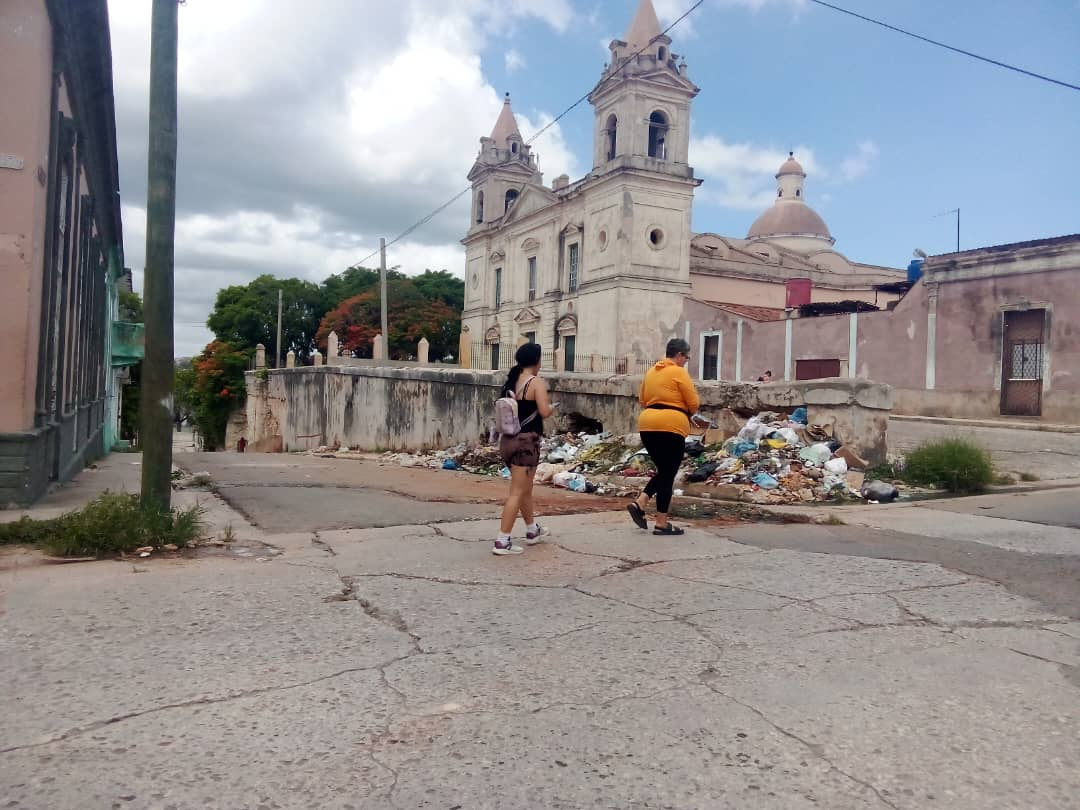
The Mountain of Garbage Around a Church in Matanzas Reaches Levels of Heresy

“The Community Services Company has left all this dirt on purpose,” complains a member from the parish of San Pedro Apóstol.

Passing bystanders try to avoid getting their shoes dirty and take small jumps to dodge the water. / 14ymedio

14ymedio bigger14ymedio, Julio César Contreras, Matanzas, July 13, 2025 — “May the Lord protect us from so much garbage.” The phrase, pronounced by an elderly man who raises his gaze to the bell tower of the parish of San Pedro Apóstol, summarizes the concern about the debris that accumulates next to this church in Matanzas. The panorama is repeated throughout the city, but the mountain of waste reaches levels of heresy around the majestic building.

“I come to mass every Sunday, and the bad smell is very unpleasant,” says Lydia, a Catholic from the neighborhood of Versalles who considers the parish her “second home.” With more than seven decades of life, the resident from Matanzas claims to have “seen everything.” She lived through the days of anti-religious extremism, when scapulars were torn from the necks of those who publicly maintained their Catholic faith.

If in those years, Lydia had to put away the picture of the Sacred Heart that her grandmother had hung in the house and fill herself with courage to attend the Sunday service, she must now overcome the waste to be able to sit on the long wooden benches inside the building designed by Italian architect Daniel Dall’Aglio.

“I think the Community Services Company has left all this dirt on purpose, because no collector has picked it up,” she says, complaining about the lack continue reading

of containers nearby and the ups and downs in waste collection. “We have sent letters to the Government and the Office of Religious Affairs of the Central Committee of the Party. They promise to clean up the area, but it’s nothing but words.”

“I think the Community Services Company has left all this dirt on purpose, because no collector has picked it up.” / 14ymedio

As the priest loudly repeats fragments of the Bible, the stench of rotting garbage comes to the noses of the assembled parishioners. From the mountain of bags thrown on the sidewalk, which now reaches into the street, a putrid stream springs that continues spreading its miasmasdownhill. Passing bystanders try to avoid getting their shoes dirty and take small jumps to dodge the water.

Most of the countless Catholic churches on the Island are located in very central and densely populated areas. Hence, with the collapse of the garbage collection service, the image of waste that grows around the walls of churches, monasteries and convents is becoming more common. But the extent of the evil does not console parishioners, who believe that there is a more marked official neglect of these buildings.

“The garbage is piled on the wall of a building that has the status of a National Monument,” comments another resident in the vicinity of San Pedro Apóstol. “There is nothing left of the sidewalk that leads to the door.” The man reports that the municipal trucks assigned to the area do not meet the scheduled collection cycles, with the excuse that there is a shortage of fuel, personnel and spare parts.

Municipal trucks assigned to the area do not meet the scheduled collection cycles. / 14ymedio

Although he recognizes that the responsibility for dumping waste in the area lies with the neighbors, he justifies the attitude by the lack of sufficient containers to deposit household waste. “If they had to collect what the tourists throw away when they take pictures of the church they would have bought containers and they’d sing a different song,” he says.

The angry resident does not fail to notice that the problem is not repeated with the same magnitude in the vicinity of the main official institutions of the province, such as the headquarters of the Communist Party or the premises of the National Assembly. “There is no interest in churches looking more beautiful and people being happy to come to mass, that’s clear.”

Translated by Regina Anavy

____________

COLLABORATE WITH OUR WORK: The 14ymedio team is committed to practicing serious journalism that reflects Cuba’s reality in all its depth. Thank you for joining us on this long journey. We invite you to continue supporting us by becoming a member of 14ymedio now. Together we can continue transforming journalism in Cuba.

Artex Has a Lot of Income but Does Not Pay Cuban Musicians and Artists

The provincial branch of Matanzas collected 257 million pesos in 2024: “The money enters the box office and the talent is forgotten.”

If the profits were so significant, where is the salary of the artists? / Ricardo López Hevia

14ymedio bigger14ymedio, Pablo Padilla Cruz, Matanzas,15 July 2025 — Various voices of the cultural guild linked to Artex S.A. -the State trading company responsible for marketing Cuban culture- complain about delays of three to six months for delivery of their salaries. According to the statements of artists from different provinces, the payment they should receive for concerts in venues, hotels and festivals simply does not materialize.

“Three months of waiting, and they say the money is there, but it never arrives,” says José, a night club worker in the city of Matanzas. “There are colleagues with six months in this situation. Imagine, a salary is never enough to live on, much less without receiving tips.”

Joseph’s testimony is no exception. Efrén, a musician hired by a hotel in Varadero, says that he worked his shifts on time, but he has not been paid anything. “I started playing at the agreed time, but if I ask for my salary and they say ’not yet’. That’s how it’s been for two months.” continue reading

Artex’s branch in Matanzas closed the year 2024 with more than 257 million pesos in gross revenues.

In the annual balance sheet of the provincial Artex branch in Matanzas, it was announced that the entity closed the year 2024 with more than 257 million pesos in gross revenues. This positioned the territory as the second highest-earning branch in the country. For these results they received the status of “national vanguard” for the thirteenth time. If the profits were so significant, many question, where is the salary for the artists?

The same is true in Havana. The persistence of these defaults has led artists like Yanairis Fernández, director of the metal band Bonus, to warn that they will stop performing in centers such as Submarino Amarillo and Jardín del Mella if they do not receive their remuneration before July. His decision has also affected rock bands like Pyra and Green Beans, who have been claiming arrears since March. On social networks like Facebook, some directors have announced the sending of open letters calling on musicians to stop their performances until Artex complies.

The president of Artex posts more political propaganda on his social media than artistic promotion

Artex is a complex State trading company with headquarters, agencies, divisions and branches throughout Cuba. Its commercial network includes shops, cultural centers and promotion of products and services in both Cuban pesos and foreign currency. Its catalogue includes entities such as Bis Music (recording and publishing), Ediciones Cubanas, Clave Cubana, Musicalia, d’Arte, Paradiso (cultural tourism) and Soy Cubano (export of cultural products and services). Artex manages festivals, hotel events, tours and contracts with Cuban artists.

A glance at the X profile of Artex’s national president, Eladio Marrero Florido, reveals an extensive campaign to promote political figures such as Fidel Castro and Miguel Díaz-Canel, as well as attacks on Marco Rubio and Donald Trump. But it is almost impossible to find promotions, comments or allusions to the work of Cuban artists, much less a report on the fulfillment of payment dates for their work.

Artex “has money,” but the concept of “paying for talent” does not seem to be part of its priorities.

Musicians, sound technicians and artistic directors consulted by 14ymedio report that Artex “has money,” but the concept of “paying for talent” does not seem to be part of its priorities. “They promote festivals in Varadero paid in dollars and have huge advertising campaigns, but those of us who work directly at these events are waiting, without a clear explanation,” says Efrén. Sound technician Yoangel, in another hotel in the same area, says that signing a contract with Artex is like “playing Russian roulette.” After two months without pay, he decided to quit to avoid getting trapped in an endless wait.

“How many more months do you plan to leave us without pay?” asks a musician who threatens to boycott performances in venues linked to Artex. The proposal for a standstill is presented to a company which, without issuing official apologies or explanations, continues to operate and sell culture without paying the creators. The pressures extend to requesting the intervention of the Ministry of Culture and the Public Prosecutor’s Office, denouncing a supposed structural exploitation: “The money enters the box office and the talent is forgotten.”

In a country where the average wage barely covers the basics, these defaults are a daily tragedy. Artists like José, Efrén and Yoangel divide their time among concerts, private classes and informal jobs to survive. “I live on what I sell to tourists, records and tips; but I can’t go on like this anymore,” one admits. For families who depend on their work in culture, these unpaid months mean losing shelter, food and medicine.

Bars, restaurants and even small private cafes have become the alternative for artists.

Others have begun to present themselves in private venues, aware that the State is increasingly lacking in resources to meet its commitments. Bars, restaurants and even small cafes have become the stage for singers, magicians and comedians, who, tired of waiting for their salary, prefer to close a deal with an entrepreneur and support themselves with tips from customers.

Artex’s reputation is faltering under the shadow of this wage crisis. The question that resonates in the guild is clear: can a sustainable culture maintain itself on broken promises? Artists and workers demand immediate payments, transparency in financial management and a genuine commitment from the institution. If not, they warn, the silence could become louder than any song.

Translated by Regina Anavy

____________

COLLABORATE WITH OUR WORK: The 14ymedio team is committed to practicing serious journalism that reflects Cuba’s reality in all its depth. Thank you for joining us on this long journey. We invite you to continue supporting us by becoming a member of 14ymedio now. Together we can continue transforming journalism in Cuba.

Florida Lawmakers Report 750 Migrants in Cages at Alligator Alcatraz

“The images you have seen do not do justice to the place. They are essentially crammed into cages,” they say.

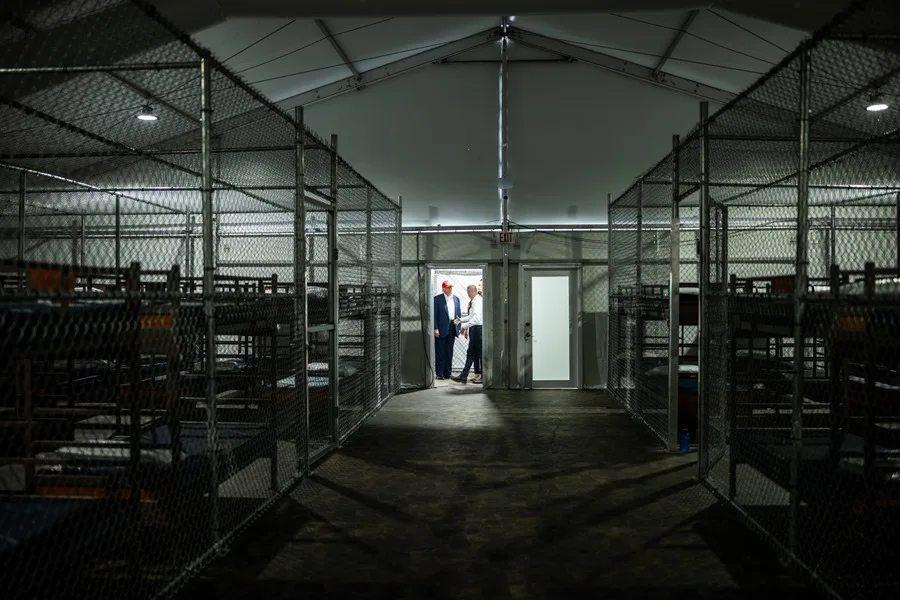
Florida opened the site to Democratic legislators, but not to the press. / EFE

14ymedio biggerEFE (via 14ymedio), Florida, June 13, 2025 — Florida federal and state lawmakers reported on Saturday, after their first visit, that there are 750 migrants in cages at the new Alligator Alcatraz immigration detention center. They called it an “internment camp” and an “expensive political publicity stunt” of the Trump administration and the Florida state government. The center opened last week at an abandoned airport in the middle of the Everglades, a natural area west of Miami surrounded by swamps, alligators, snakes and panthers.

“I just left the immigration detention camp in the Florida Everglades. There are 750 humans in cages. We were not allowed to speak with the detainees. We did not walk through occupied areas. There are immigrants in there with no criminal record,” said state senator Carlos Guillermo Smith.

Florida opened the site to Democratic lawmakers, though not to the press, after the first immigrants detained at Alligator Alcatraz denounced to local media the “sub-human” conditions in the makeshift tents, with “suffocating” heat and humidity, a shortage of water and rotting food.

Federal congresswoman Debbie Wasserman Schultz said after walking through the center that there are up to “32 detainees per cage,” with only a few bunks and bathrooms, so they “get water to drink and wash their teeth where they defecate, in the same unit. They are using cages. These detainees are living in cages. The images you have seen do not do justice to the place. They are essentially crammed into cages,” she told the media outside the continue reading

center.

Federal legislator Darren Soto questioned the cost of the detention facility, estimated at almost $500 million

Federal legislator Darren Soto questioned the cost of the detention center, estimated at nearly $500 million, in addition to being built in a flood-prone area during the current Atlantic hurricane season, which runs from June 1 to November 30. He argued that the site “endangers” not only those detained by the Immigration and Customs Control Service (ICE), but also federal agents and the Florida National Guard.

“Sadly, we see that President Trump is taking away the legal status of nearly one million Cuban, Venezuelan, Haitian and Nicaraguan immigrants in our state, and now he’s deporting relatives of millions of Florida citizens in the most inhumane way possible,” he said.

After the tour, the Democrats argued that full and constant monitoring is needed on site, which the Florida government opened last week with a projected capacity of up to 5,000 migrants following a visit from Trump. The criticism has also been joined by the Archdiocese of Miami, which labeled the new detention center as “corrosive” and “inappropriate.”

Translated by Regina Anavy

____________

COLLABORATE WITH OUR WORK: The 14ymedio team is committed to practicing serious journalism that reflects Cuba’s reality in all its depth. Thank you for joining us on this long journey. We invite you to continue supporting us by becoming a member of 14ymedio now. Together we can continue transforming journalism in Cuba.
Performances Interrupted in Cinemas and Theaters by Blackouts, Another Frustration for Cubans

The screenings end abruptly and the spectators, resigned, leave the theaters.

Seeking emotional refuge in the cinema or theatre has become, for many, an additional source of frustration. / 14ymedio

14ymedio bigger14ymedio, Darío Hernández, Havana, July 13, 2025– On a Sunday that appeared to be a cultural normality, the Teatro Trianón in Havana had a day that crudely reflects the energy crisis that has become embedded in the daily life of Cubans. An adaptation of The Hound of the Baskervilles was again a victim of the blackouts. Saturday had already been canceled, and on Sunday, a video captured the dismay of the attendees: “Again?” they complained from the seats.

At the Trianon, actors rehearse in stifling heat. Hundreds of spectators brave the congested transport system, cross half the city, and sacrifice an entire afternoon to finally face the uncertainty of the electricity grid. Fortunately, the performance was able to resume that Sunday afternoon, albeit more than half an hour late.

In the provinces, the situation is often even more critical. Just a few weeks ago, in Santiago de Cuba, the Hermanos Saíz Association website bluntly announced: “The Teatro El Portazo performance at the Santiago Theater Council has been canceled tonight due to a power outage. We apologize for any inconvenience.”

In Camagüey, the Teatro del Viento [Theater of the Wind] has also suffered prolonged power outages that have paralyzed its performances. Its director, continue reading

Freddys Núñez Estenoz, denounced on social media that they had been “living in hell for weeks with blackouts ranging from 17 to 23 hours a day.” On July 3, he wrote: “We still can’t offer dates or times for performances. We can’t even guarantee that we’ll have performances. We’re waiting for something as simple as finding out the blackout schedule for the circuit where the theater is located. And we’re not the only ones. The Camagüey Ballet is also waiting for the premiere ofDracula.”

A screening of an adaptation of “The Hound of the Baskervilles” was once again affected by the power outages. / 14ymedio

Under such conditions, theatrical creation becomes an act of resistance. Rehearsals are interrupted, premieres are postponed, performances are canceled. This is what happened with the play Fibra [Fiber], which the Camagüey-based collective planned to premiere on its 26th anniversary but it was postponed due to the impossibility of lighting the stage and setting up the installation.

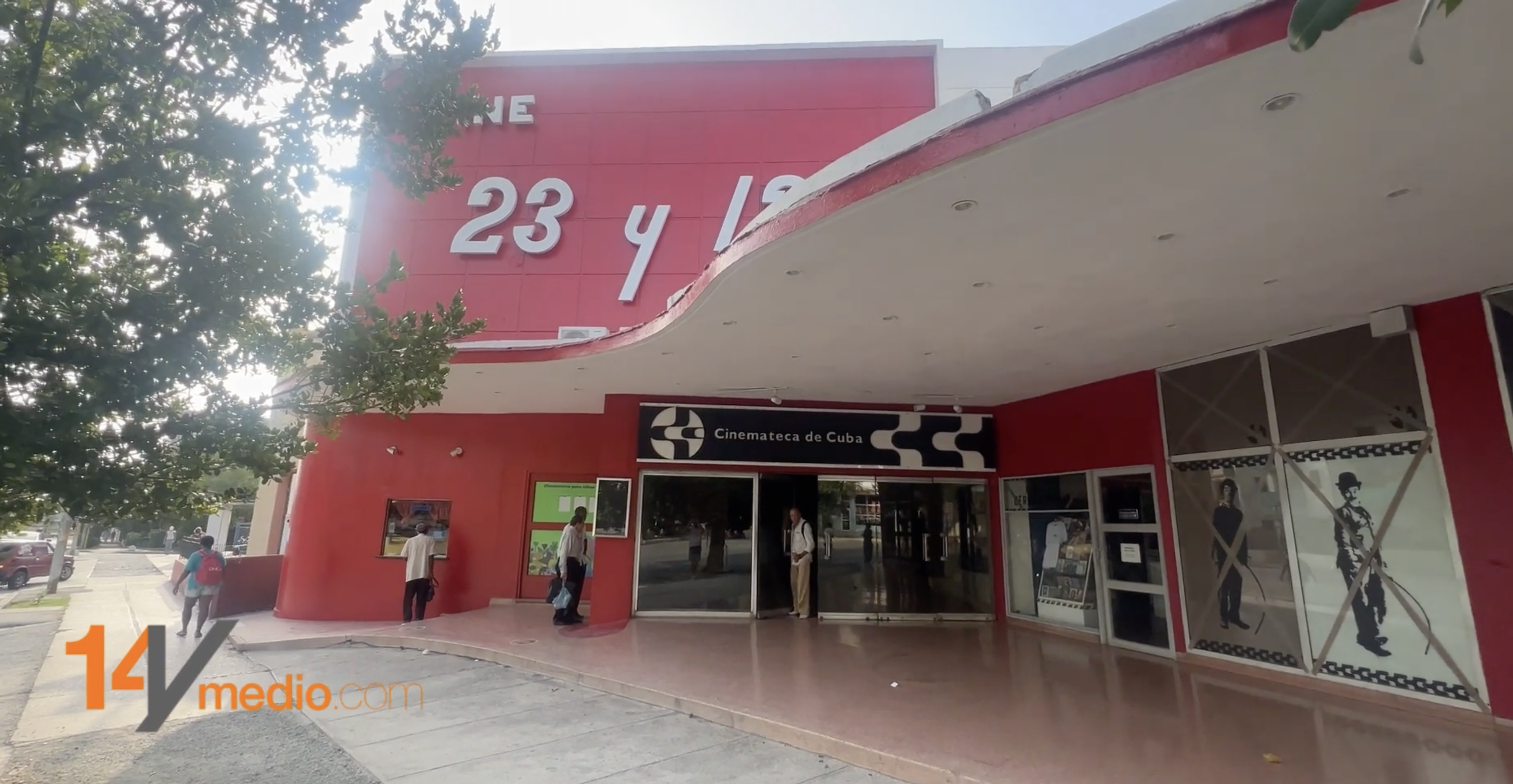
The situation is no different in movie theaters. Last Sunday, in theaters 23 and 12, they were showing a series of favorite films by the late president of the Cuban Institute of Cinematographic Art and Industry, Alfredo Guevara. But Jacques Becker’s Cascos de Oro was only halfway through when the theater went completely dark, and the screening ended abruptly. Resigned, viewers left the theater with no clear destination, adding yet another disappointment to the national routine. Seeking emotional refuge in the movies or theater has become, for many, an additional source of frustration.

The blackouts plaguing the country are not just incidental. With outages of up to 22 hours a day in several regions, even events planned months in advance are not spared. During the International Festival of New Latin American Cinema, multiple screenings were canceled due to the power outages.

In theaters 23 and 12, the film was only halfway through when the theater went completely dark, and the resigned viewers left the theater. / 14ymedio

A Cuban filmmaker described that edition as an “organizational disgrace”: dark theaters, absent signage, and makeshift restrooms on 23rd Avenue in Vedado, with an unbearable stench. The reduced capacity, last-minute cancellations, and endless lines have become an inseparable part of the country’s cultural landscape.

The only show free of blackouts, it seems, was the premiere of La Colmenita, which was attended by Raúl Castro, Díaz-Canel, and almost the entire staff of the Ministry of Foreign Affairs. Propaganda never lacks power.

In a Cuba where even art is forced to wait for the lights to come back on, theater director Freddys Núñez summed up the general feeling with a lapidary phrase: “What’s the point of continuing to play the game that something is working, when in reality everything is screwed up…? Nothing works. Nothing.”

Translated by Regina Anavy

____________

COLLABORATE WITH OUR WORK: The 14ymedio team is committed to practicing serious journalism that reflects Cuba’s reality in all its depth. Thank you for joining us on this long journey. We invite you to continue supporting us by becoming a member of 14ymedio now. Together we can continue transforming journalism in Cuba.
Havana-Ciego de Ávila, a Trip in Apaguistan*

The Viazul bus travels through ghost towns, where passengers get on and off by the light of their cell phones.

Viazul station in Havana, without electricity or air conditioning. / 14ymedio

14ymedio bigger14ymedio, Olea Gallardo, Havana – Those without fans waved cardboard with their hands this Monday at the Viazul restaurant in the Havana municipality of Plaza de la Revolución while waiting for their buses to depart. “How cheeky! Of course we always had air conditioning before,” protested a woman with a ticket to Santiago de Cuba, fanning herself. “Now we have to make do with the air that comes in through the open windows.” One flimsy fan for the entire room was useless even though it was turned on.

The fact that the transportation company serving foreign tourists—or Cubans with families abroad who can afford the ticket in foreign currency—can’t even air-condition its facilities in the capital is just one of the many symptoms of the dire situation of the national electricity system (SEN) during this peak season. In the provinces, despair prevails.

Those traveling to the eastern part of the country experienced this in a radical way upon arriving in Santa Clara. “We only knew we had arrived because the bus made a left turn. Everything was blacked out!” a Havana resident spending a few days on vacation in Ciego de Ávila with her family told this newspaper. “It was just darkness everywhere: in the terminal, people were stumbling, we were almost scared. There was no light but the cell phones, even in the bathroom.”

“A woman got out in total darkness and a frightening silence, as if the town had been abandoned.”

The young woman wasn’t pleased to hear a joke from a Cuban who seemed to be visiting: “We’re in Apaguistan*, he said, as if expecting laughter, but I didn’t find it funny because the imagery is so powerful, it feels like you’re in the middle of a dystopian movie.”

The same scene was repeated in Cabaiguán: “A woman got off in total darkness and a frightening silence, as if the town had been abandoned.” At the next stop, she says, “All I could see were the silhouettes of buildings, so continue reading

much so that I got lost: I didn’t know where I was, whether I had already passed Guayo and was I in Sancti Spíritus or what.”

And worse was to come, with yesterday’s shutdown for maintenance of the Antonio Guiteras power plant in Matanzas, the largest in the country.

Authorities estimate the work will last four days, although it was initially planned to last one less. According to official press reports , there will be three days of construction work and one day for the start-up and synchronization process. The first days will include repairing a leak in the boiler and a faulty feed pump, cleaning the regenerative air heaters, and repairing and replacing valves.

A precarious fan for the entire Viazul waiting room was displaying its uselessness despite being turned on. / 14ymedio

No fewer than 140 employees from the Cienfuegos, Felton, Santa Cruz, and Mariel thermoelectric plants (CTE) have been called in for maintenance at the Guiteras plant, which reflects the magnitude of the work. “At this time, all the workers and resources are scheduled,” boasted Román Pérez Castañeda, technical director of the Matanzas plant.

Along with Guiteras, five other units are out of service: two due to breakdowns—Felton Unit 2 and Renté Unit 3—and three for maintenance: Santa Cruz Unit 2, Cienfuegos Unit 4, and Renté Unit 5. This represents a deficit of 294 megawatts (MW) in energy generation.

Due to a lack of fuel, 75 distributed generation plants (662 MW) and 9 motors (150 MW) of the 12 of the Suheyla Sultan, the Melones patana [floating turkish power plant], are stopped, although the report this Tuesday from the Cuban Electric Union (UNE) predicts that 80 MW of the first plants as well as one hundred percent of the motors of the floating plant will come on during the hour of maximum demand, in the afternoon-evening.

According to the state-owned company’s report, during that peak period, an estimated 1,970 MW of available power is expected to meet a demand of 3,670 MW, resulting in a deficit of 1,700 MW. The actual impact will be 1,770 MW, almost half of the country’s energy needs, a figure higher than yesterday’s 1,673 MW.

“We are on the path to independence from imported fossil fuels.”

Given this, the statement made by the Minister of Energy and Mines, Vicente de la O Levy, this Monday almost sounds like a joke. “We are on the path to independence from imported fossil fuels,” he said before Parliament’s Industry, Construction, and Energy Committee.

The minister was referring, of course, to the solar farms that have been proliferating on the island with the help of China, which are, he insisted, “a viable strategy to recover the national electricity system.” The 21 already operating, however, currently provide only 544 MW at most, and only during full sun hours.

Vicente de la O Levy welcomed the fact that “an average of five photovoltaic parks are being installed per month” and “with resources already in the country,” but acknowledged that “the security of fuels continues without a sustainable solution.”

He also referred to the Turkish floating power plants, whose final departure from the country due to nonpayment was expected last June and which are still holding on by the skin of their teeth. “We had up to eight barges in the country, and five have been removed,” the minister recalled. “With scarce financial resources, minimum payments have been made to keep the barges generating through July and August.”

“With scarce financial resources, minimum payments have been made to keep the trucks generating during July and August.”

Without a hint of self-criticism, but presenting a picture just as bleak as other committees, such as the Economy and Health committees, De la O Levy said that the main causes of the energy shortage are the increase in imported household appliances – 17 million in recent years, he indicated – the lack of liquefied gas and the low “electricity rates that do not encourage savings.”

In second place, he cited the decline in domestic crude oil production (from 3.6 million to 2.1 million tons) and the decrease in fuel oil and diesel imports due to a lack of foreign currency. Regarding generators, he stated that “there is no progress due to a lack of access to financing,” and regarding transformers, of which the country needs 12,000 annually, they are also at a critical point.

Regarding the crimes suffered by the SEN, he said they are primarily thefts of cables, fuel, transformer oil, and various accessories, as well as “misappropriations” at gas sales points.

“In the life of a country, 60 years are nothing, but in the life of a person, they are everything.”

Ordinary Cubans don’t need the minister’s dire statistics to know how things are. On the bus to Santiago de Cuba, like someone traveling in the depths of the night, the air conditioning is barely noticeable, there are seats that don’t recline, and the ticket numbers are repetitive.

A few tourists mingled with Cubans, most of them emigrants. A Cuban woman and her Belgian partner were talking about visiting her family, laden with gifts. They were the only ones not ranting about the country, along with another Cuban woman from the east. Their topic of conversation: the misinformation on social media about violence in Cuba, which only “spreads lies.” The eastern woman boasted about having “a floor plan for the whole house,” a house she made available to the couple she was talking to.

Another passenger, carrying all her luggage up to her seat, complained about not being able to leave it downstairs. “It was all full,” she said. “But I don’t understand: a little while ago, three people arrived with a pile of suitcases. They handed a dollar bill to one of the lounge employees, but they didn’t get on. Maybe that pile of suitcases was for shipping.”

A university professor spoke bluntly and directly against Fidel Castro. “In the life of a country, 60 years are nothing, but in the life of a person, they are everything,” he lamented. In his diatribe, he proposed, directly, “rebuilding the nation from scratch.” Cubans, he continued, are “people without values” and “deeply damaged” by a system for which the current president, Miguel Díaz-Canel, was now being blamed. The responsibility, he asserted, “comes from before: Fidel was a mentally ill person who tried to compete even with God and lost in every way.”

Already in Ciego de Ávila, the young Havana woman reported only two hours of daylight that night. “Everything seems so depressing to me, people are so sad, what we’re all experiencing in Cuba isn’t life.”

*A play on words: ‘Outage-stan’

____________

COLLABORATE WITH OUR WORK: The 14ymedio team is committed to practicing serious journalism that reflects Cuba’s reality in all its depth. Thank you for joining us on this long journey. We invite you to continue supporting us by becoming a member of 14ymedio now. Together we can continue transforming journalism in Cuba.