Families are reducing their purchases as the national currency loses value, while small businesses struggle to avoid bankruptcy.
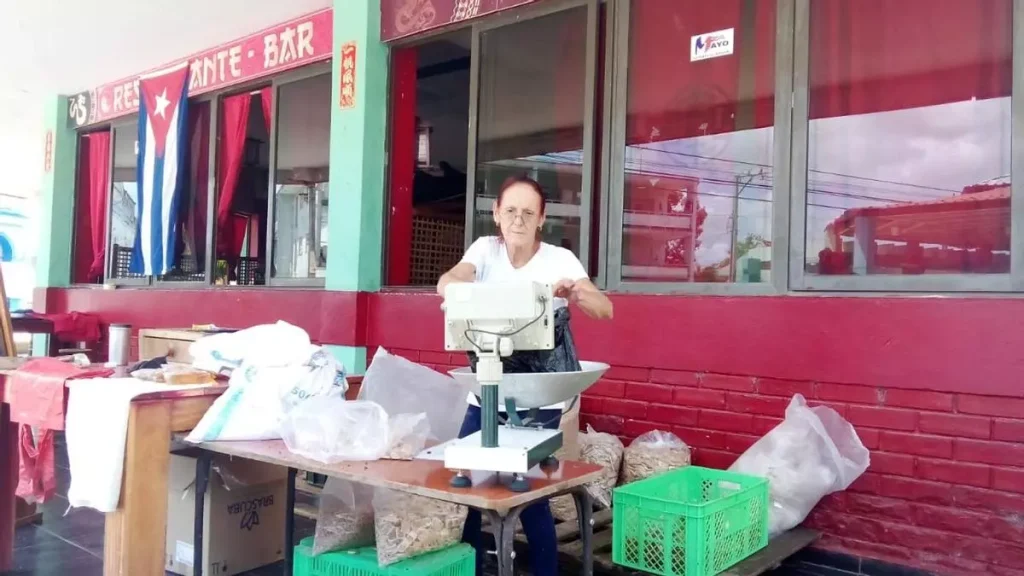
 14ymedio, San José de Las Lajas (Mayabeque), Julio César Contreras, June 16, 2026 – By mid-morning, activity in the small private shops of San José de Las Lajas increasingly resembles a scene of shared uncertainty. Customers come in, ask the price of a product, do the math in their heads, and often leave empty-handed. On the other side of the counter, vendors do not have definitive answers either: they know how much the merchandise cost a week ago, but they cannot say for sure how much it will be worth in a few days.
The dizzying rise of the dollar in Cuba’s informal market has turned even the simplest purchase into a daily exercise in household arithmetic. In a municipality where, as in the rest of the country, salaries are paid in pesos while many products are imported and paid for in foreign currency, every jump in the exchange rate triggers a new wave of price increases in national currency.
At a cafeteria near the main park, a young woman checks the contents of her wallet several times before deciding what to buy. Behind the counter, beneath a chalkboard with hand-written prices, pastries and candies wait for customers who are buying less and less.
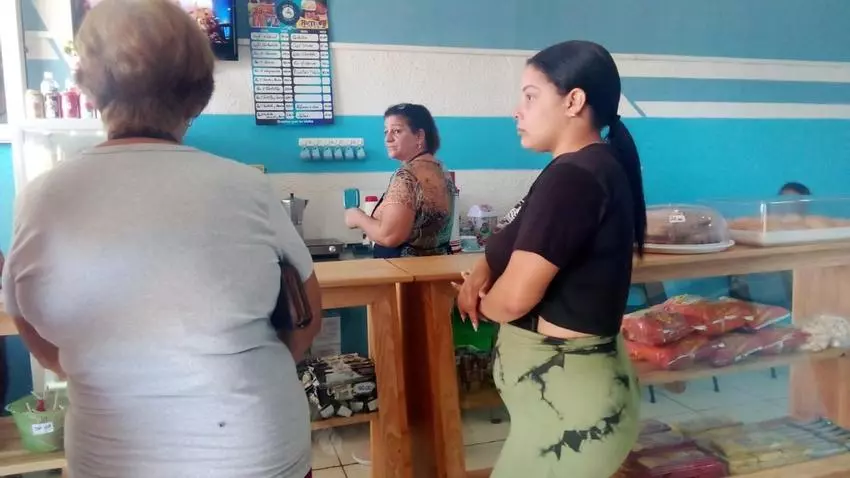
“The tube of mortadella that cost 500 pesos less than a month ago was 600 last week and today it’s 650. I used to rely on that a lot for my children’s snacks. However, everything has become so expensive that I’m only giving them a small piece of bread with whatever I can find. It breaks my heart,” laments Yaritza, as she tries to manage the money she has available to buy the most urgent necessities.
A single mother and teaching assistant, she says she no longer knows which small private business to turn to for cooking oil or meat products that have not increased by at least 50 pesos over the last month.
“At the current exchange rate, my salary doesn’t even reach 10 dollars a month. I say this because, while it’s true that the most basic things are still priced in pesos, the real value of food and essential goods has to be measured in dollars, since that is how private merchants pay for them.”
Although she describes herself as bad at math, Yaritza has mastered an operation that millions of Cubans perform every day: mentally converting the price of every product into its dollar value and comparing it to a salary that is rapidly losing purchasing power.
The situation is also hitting those who run businesses. A few meters from an elementary school, Abel manages a cafeteria whose regular customers are children and their relatives. For years, candies and sweets were a safe bet. Now, the constant rise in prices threatens the stability of his venture.
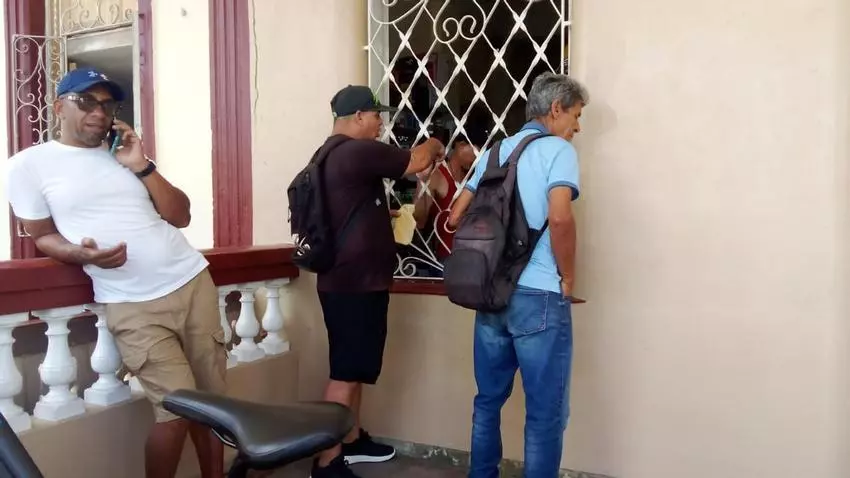
“Until now I’ve always had good profitability, but things are getting complicated because there is nothing worse for commerce than constantly changing product prices,” he explains to 14ymedio.
One of his star products was María cookies. “The kids used to run out of school and buy two or three packages each. Now a box of 24 units lasts me five days or more. What happened? I’ve been forced to raise the price because my suppliers have raised it on me too.”
Abel recalls that at the beginning of this year, with 500 pesos a customer could buy two packages. Today, it is barely enough for one, with some change left over that can hardly be spent on anything else. “I’m trying to find more affordable options so I don’t keep losing customers. My family’s livelihood depends on this cafeteria.”
In other businesses around the municipality, the concern is the same. Some owners have chosen to review their prices weekly to avoid losses caused by the depreciation of the Cuban peso.
“I restock my kiosk once a week. Then, depending on how the dollar is behaving, I raise the prices of certain products I sell to guarantee in advance a cost structure that allows me to remain profitable,” explains Delvys.
The merchant acknowledges that, from a conventional business perspective, changing prices so frequently is a mistake. “But in the harsh Cuban reality, it’s a way to avoid going bankrupt.” With a calculator always within reach, Delvys tries to stay ahead of fluctuations in the informal market.
“Putting myself in the customer’s position, I understand it’s difficult to buy a bottle of oil today for 1,300 pesos and see it cost 1,500 next week. People complain, and they are absolutely right.” He gives a recent example: Cristal beer, which a few days ago sold for 350 pesos and is now around 420. “If I don’t raise the price, with what money do I buy it again? How do I pay my employees, and where is my profit?”
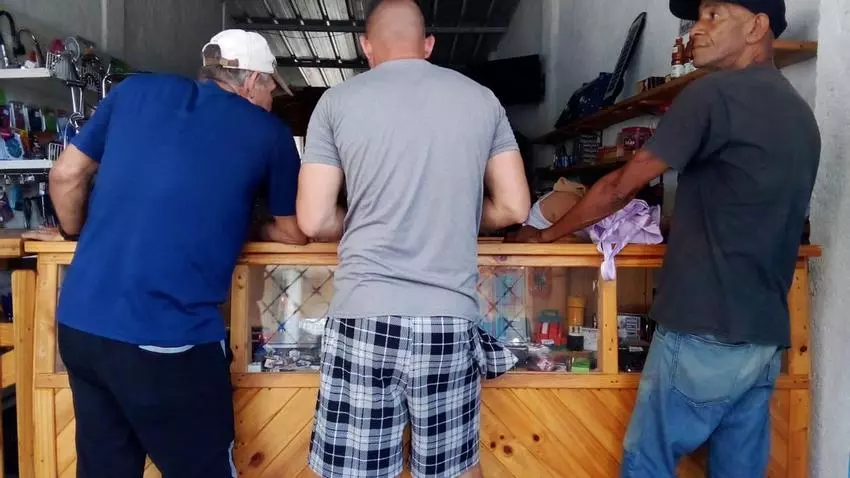
At the entrance of some businesses, customers wait their turn leaning against freshly varnished wooden counters. Others talk about the latest dollar exchange rate, which has become as common a topic as the weather forecast or the blackouts.
“In this roller coaster where we all buy from someone else, we’re constantly on the verge of losing money,” Delvys sums up. “There are no winners here.”
In San José de Las Lajas, the price of the dollar is no longer just an economic indicator. It is the exact measure of how much a family can eat, how long merchandise remains on a shelf, and how many times someone must think before taking any product home.
Translated by Regina Anavy
______________________
COLLABORATE WITH OUR WORK: The 14ymedio team is committed to practicing serious journalism that reflects Cuba’s reality in all its depth. Thank you for joining us on this long journey. We invite you to continue supporting us by becoming a member of 14ymedio now. Together we can continue transforming journalism in Cuba.