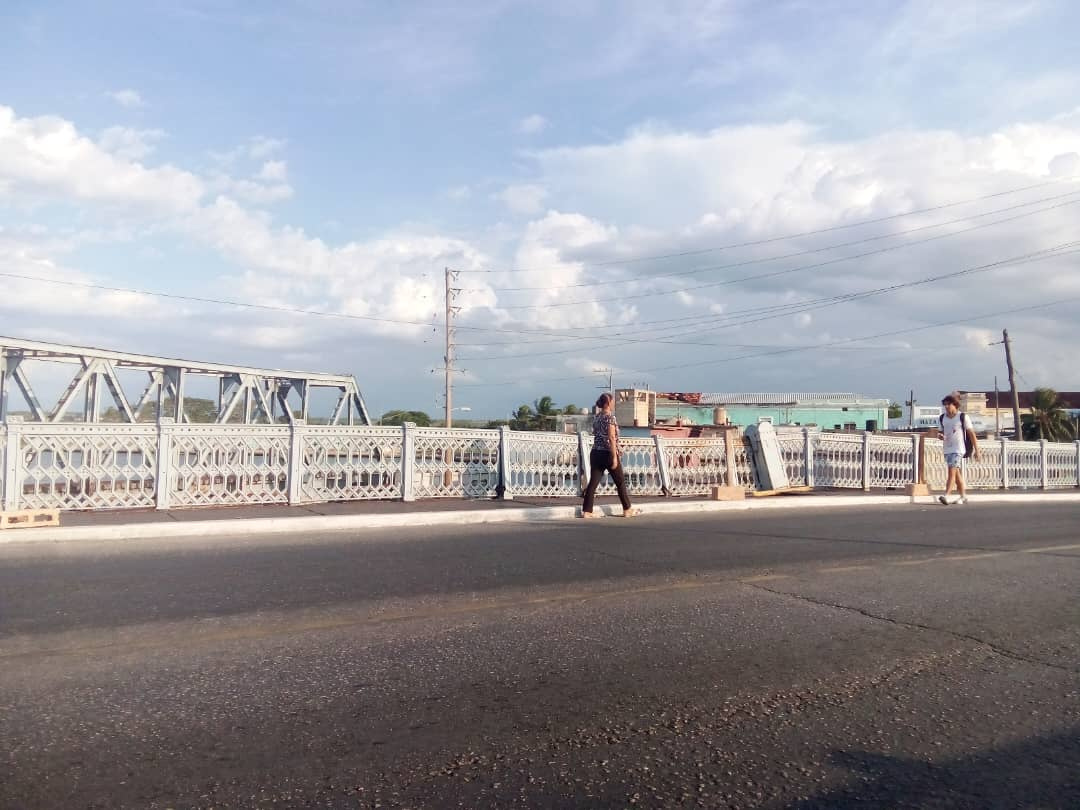
The Versalles Bridge in Matanzas, Cuba, Is Screaming for Urgent Repairs

“You only have to meet a heavily loaded truck on the way and you can feel it shudder,” says a resident of the city.

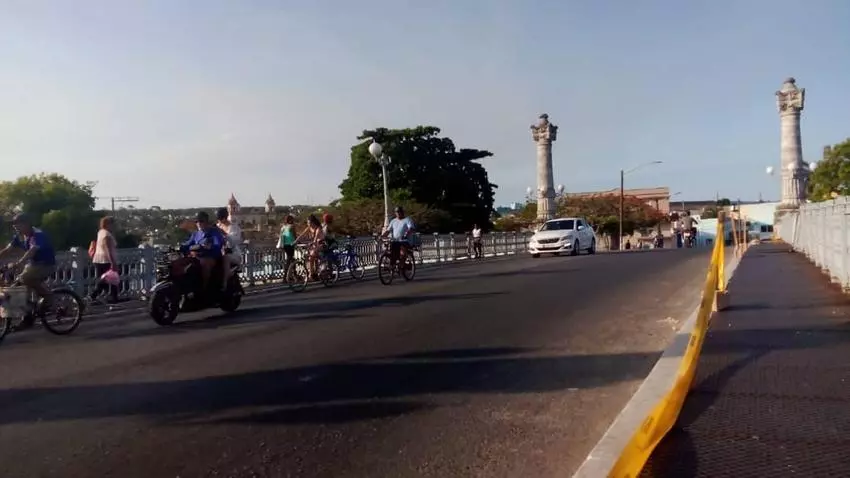
The metal structure of the bridge, also known as Lacret Morlot, was cast in the United States. / 14ymedio

14ymedio bigger14ymedio, Julio César Contreras, Matanzas, 31 May 2025 — The Concordia Bridge over the Yumurí River, a link that connects a large part of the city of Matanzas with the Versalles neighborhood, is essential for vehicles and pedestrians traveling in both directions. Complaints on social media about its deterioration have escalated, prompting authorities to take action and announce repairs that have yet to begin and are expected to be superficial.

Under the scorching sun, a high school student walked along the structure this Friday, avoiding the cars traveling across the bridge built in 1878. The yellow tape blocking one of the pedestrian paths forces him to step down onto the roadway with its moving traffic or cross to the other side, where the sidewalk is also in poor condition. “I try to cross quickly because if the driver is distracted, you’ll get a scare,” the teenager, who makes the same trip every day, told 14ymedio.

After images of the structure, damaged by the passage of time and lack of investment, circulated widely online, the newspaper Girón attempted to quell rumors of a possible bridge collapse by announcing a restoration process. Guillermo López-Calleja Pérez, head of the Comprehensive Project Management Department of Empai Matanzas, emphasized that vehicular access would not be affected by the construction, but pedestrian access has been severely reduced, hampering traffic flow.

Photos of its structure, damaged by the passage of time and lack of investment, circulate widely on the internet. / 14ymedio

“Walking on the road is dangerous, as everything from bicycles to buses and trucks constantly circulates,” explains Ileana, a Versalles resident who also uses the road daily. “But if I take the pedestrian crossing, it seems like one of the planks forming the walkway could come loose at any moment,” she says, pointing to the metal structures covering part of the sidewalk, which tremble as soon as she steps on them. continue reading

The metal structure of the bridge, also known as Lacret Morlot, was cast in the United States, while its four cylindrical stone columns are the work of architect Pedro Celestino del Pandal. “It looks like they’ll only be doing a little work on the roadbed and the railings, which are about to fall off,” laments Ileana, who had hoped for a more extensive intervention on this symbol of the city of Matanzas. The saltpeter, combined with the passage of heavy vehicles and the negligence of the authorities, have seriously affected the structure.

“You only have to meet a heavily loaded truck on the route and you can feel it shudder,” the woman explains. “Many trailers loaded with merchandise from the port pass through here,” she notes, a movement of products that was unthinkable in the nineteenth-century when Concordia was founded. From the horse-drawn carriages, fruit carts, and the occasional war artillery, we have moved on to a more industrial use that has left its mark.

Cracks, accumulated rust, dead streetlights, and deteriorating pavement are just the most visible scars. / 14ymedio

Cracks, accumulated rust, dead streetlights, and deteriorating pavement are just the most visible scars of this accumulated damage. Matanzas residents fear that the wounds left by time and neglect may become deeper and more dangerous.

____________

COLLABORATE WITH OUR WORK: The 14ymedio team is committed to practicing serious journalism that reflects Cuba’s reality in all its depth. Thank you for joining us on this long journey. We invite you to continue supporting us by becoming a member of 14ymedio now. Together we can continue transforming journalism in Cuba.

Cuba’s Foreign Ministry Summons US Chief of Mission Mike Hammer for “Inciting Cuban Citizens To Commit Criminal Acts”

Hammer is accused of using diplomatic immunity “as cover for acts contrary to the sovereignty and internal order of the country.”

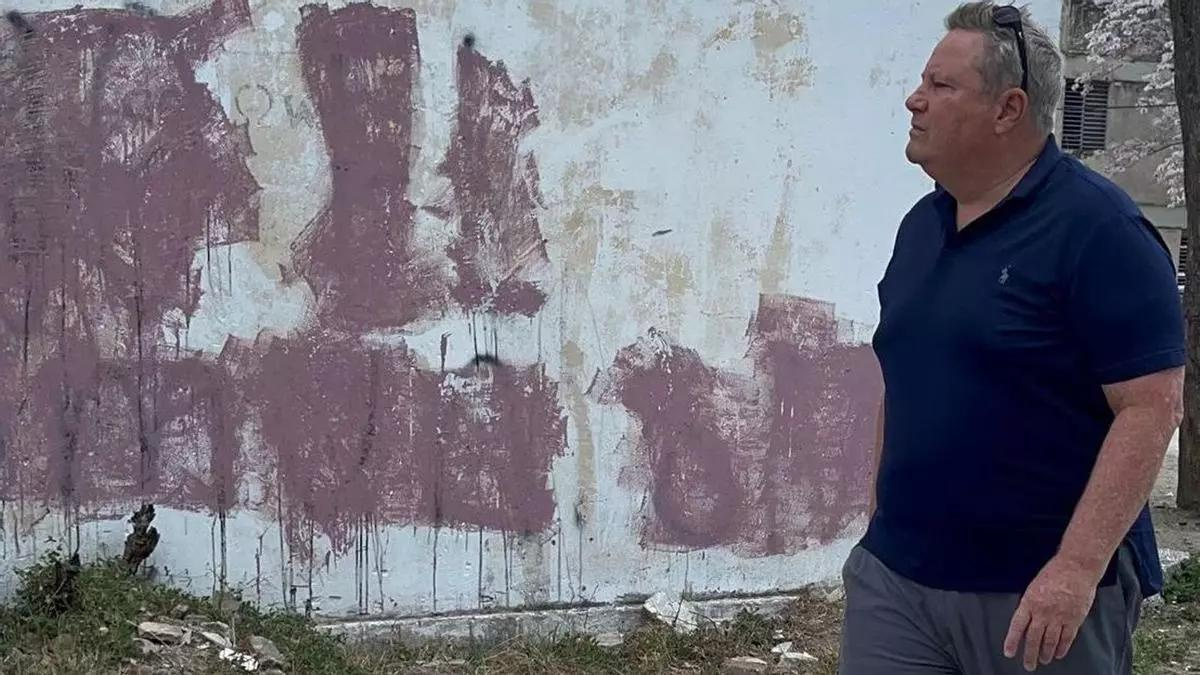
Mike Hammer, head of the U.S. mission in Cuba, in front of the defaced anti-government sign in the Lenin neighborhood of Holguín. / Courtesy/14ymedio

14ymedio bigger14ymedio, Havana, 30 May 2025 — The Chief of Mission of the U.S. Embassy in Havana, Mike Hammer, received a verbal note from the Cuban Foreign Ministry on Friday accusing him of inciting Cubans to commit serious crimes against the state. The diplomat was summoned to the Ministry of Foreign Affairs for his “interventionist and unfriendly behavior,” as the regime describes his extensive schedule of visits to opponents and entrepreneurs.

In statements to Martí Noticias, a U.S. State Department official backed the diplomat’s actions: “Chief of Mission Mike Hammer and the U.S. Embassy proudly represent President Trump implementing an ’America First’ foreign policy and holding the Cuban regime accountable for its malign influence in the Americas.”

“We will continue to meet with Cuban patriots, religious leaders, and those fighting for Cuban freedoms,” the State Department added, emphasizing that the regime’s “corrupt, inept, and failed” policies are causing unrest among Cubans.

Alejandro García del Toro, a diplomat in Washington for several years and now director of bilateral affairs with the US, was in charge of reading Hammer the riot act “once again.” The Foreign Ministry argues that the US representative has violated the Vienna Convention and the Agreement on continue reading

the Restoration of Diplomatic Relations signed between Havana and Washington.

A statement from the Foreign Ministry stated that the conversation was “emphatic” and that Hammer was accused of “inciting Cuban citizens to commit serious criminal acts, attacking the constitutional order or encouraging them to act against the authorities, and demonstrating in support of the interests and objectives of a hostile foreign power.”

García del Toro told the US representative that he could not use diplomatic immunity “as cover for acts contrary to the sovereignty and internal order of the country” and could not sustain “provocative and irresponsible behavior.”

He also criticized Hammer’s allusions to José Martí, which the Foreign Ministry considers a sign of “public and insulting manipulation.” In a video of his visit to the Santa Ifigenia Cemetery in Santiago de Cuba on May 19—the anniversary of the hero’s death in combat—the diplomat referred to Martí as “the Apostle of the homeland.”

Hammer quoted a phrase that the regime finds problematic: “Respect for the freedom and thoughts of others, even those among the most unhappy, is in me fanaticism. If I die or am killed, it will be for that.” The verbal note asserts that the diplomat is unaware, in quoting this thought, of Martí’s “anti-imperialism” and emphasized—with arguments valid in the 19th century, but in no way applicable to the current situation—that the US is a “danger” to the island.

As a kind of symbolic counterattack, García del Toro gave Hammer a copy of Martí’s unfinished letter to Manuel Mercado, cited countless times to justify Fidel Castro’s hostile stance toward Washington.

Since his arrival in Cuba, Hammer has been a stone in the shoe of the Foreign Ministry.

Since his arrival in Cuba, Hammer has been a a stone in the shoe of the Foreign Ministry. Untouchable due to his position, affable in his dealings with the country’s inhabitants—opponents, but also entrepreneurs and all kinds of Cubans—and accurate in his assessments of the crisis on the island, the diplomat’s popularity on the streets is directly proportional to the regime’s animosity.

Last week, Hammer held a press conference in Miami in which he made clear the US position on Cuba and, furthermore, his willingness to support the Cuban people. One of his statements that most resonated in Havana was this: “The Administration is determined to sanction the repressors. There will be consequences for their actions, and I cannot anticipate further measures that will come, but they will come, I can assure you of that.”

Knowing that State Security is following him wherever he goes, he took the situation with humor. “Obviously there’s a lot of traffic; you see Ladas everywhere. If we turn right, they turn right. I don’t like going left, but hey, if we go left, they go with us. They’re constantly filming me.”

____________

COLLABORATE WITH OUR WORK: The 14ymedio team is committed to practicing serious journalism that reflects Cuba’s reality in all its depth. Thank you for joining us on this long journey. We invite you to continue supporting us by becoming a member of 14ymedio now. Together we can continue transforming journalism in Cuba.

Cuba Receives 130 Irregular Migrants Deported by the United States

Another 193 people were returned by Washington to Venezuela, including eleven children.

The flight carried 106 men and 24 women / Minint Hoy/Facebook

14ymedio biggerEFE (via 14ymedio), Havana, 31 May 2025 — Cuba received on Friday 130 irregular migrants deported by the United States by air in the fifth operation of this type carried out since the second term of President Donald Trump began, on January 20 of this year. The return of 106 men and 24 women was carried out “in accordance with bilateral migration agreements” between the governments of Havana and Washington, according to a note from the Ministry of the Interior, which has been published in official media.

Among the returnees are five who “were transferred to the investigative body because they were on probation at the time they illegally left the country,” says the report. With this new operation, 19 people have been returned from different countries in the region so far in 2025, with a total of 587 people.

The Cuban authorities stressed that they remain “firm” in their commitment to “regular, safe and orderly” migration and reiterated the danger and life-threatening conditions that illegal departures from the country by sea represent. continue reading

The governments of Havana and Washington have a bilateral agreement that all migrants arriving by sea to US territory be deported to the island. Also, the deportation flights that were suspended since 2020 were resumed at the end of April 2023, mainly for Cubans considered “inadmissible” after being held on the border with Mexico.

Havana and Washington have an agreement that all migrants arriving by sea to the US territory be deported to the Island

According to data from the US Customs and Border Protection Office (CBP), during the fiscal period 2024, which ended on 30 September 2017, 217,615 Cubans arrived in the United States. In addition, a total of 8,261 Cubans were registered by the US border authorities last October, the first month of fiscal year 2025. The border agency added that more than 860,000 migrants from the island entered the territory of the US in the last four years.

In 2024, 93 returns were made from different countries in the region, with a total of 1,384 irregular migrants returning to Cuba, according to official sources.

Another 193 Venezuelan migrants deported by the United States arrived in their country on Friday, according to the Ministry of the Interior and Justice, which added that 11 minors arrived in the group. Through a post on Instagram, the ministry indicated that the Venezuelans came from Texas. “On this occasion 153 men, 29 women and 11 children returned to their country,” it added.

The ministry stated that the returning migrants were cared for by “the different organs of the Venezuelan state with the corresponding protocols on legal security, identification and health, among others.”

According to official figures, counting these 193 migrants, there are already 5,396 Venezuelans who have returned to the country, the vast majority deported by the Trump administration since last February, after an agreement signed in January by Caracas and Washington, which have been without relations since 2019.

On Thursday, a plane from the state-owned Conviasa, coming from Mexico, landed at Maiquetía Simón Bolívar International Airport in Caracas with 315 repatriated migrants, according to the Ministry of Interior and Justice. The institution noted, through Instagram, that of the total number of migrants, 146 were minors and 169 were adults.

This Friday, the US Supreme Court ruled in favor of allowing the Trump administration to withdraw the temporary legal protection granted by the previous Biden administration to 532,000 migrants from Venezuela, Cuba, Nicaragua and Haiti. The US Supreme Court has granted the emergency request by the Department of Homeland Security with a vote of seven judges in favor and two against: Sonia Sotomayor and Ketanji Brown Jackson, both Democratic appointees.

The Trump administration was trying to challenge a ruling by a federal judge — which is now without effect — of the state of Massachusetts, who considered that the government could not overturn humanitarian parole, which allowed beneficiaries to live and work temporarily in the US, without analyzing the procedure on a case-by-case basis.

Today’s is the second ruling by the Supreme Court this year in this area, after it authorized Trump 10 days ago to withdraw Temporary Protection Status (TPS) from some 350,000 Venezuelan migrants.

Translated by Regina Anavy

____________

COLLABORATE WITH OUR WORK: The 14ymedio team is committed to practicing serious journalism that reflects Cuba’s reality in all its depth. Thank you for joining us on this long journey. We invite you to continue supporting us by becoming a member of 14ymedio now. Together we can continue transforming journalism in Cuba.

Cuba’s Blackouts Are Due to a 25 Percent Drop in Electricity Production, Not to Excessive Consumption

In 2024, billed consumption was 13,985 GWh, a value close to what was produced, which makes the energy debacle even more incomprehensible.

A significant 3,742 GWh of consumption corresponds to Havana/ 14ymedio

14ymedio bigger14ymedio, Havana, May 31, 2025 — The Cuban energy debacle in the last four years fits into the 16-page report published this Friday by the National Bureau of Statistics and Information (ONEI). Among the “selected indicators” of the crisis, the fall of 25% of the national electricity generation in that period stands out, a decisive factor in the season of endless blackouts in which Cubans have been immersed for months.

In 2024, the generation of electricity in Cuba was only 14,334 gigawatt hours (GWh), a radical drop compared to what was generated in 2020, about 19,070 GWh. Of the annual total, most is produced by utilities -13,921 GWh last year- and a small percentage of only 284 GWh, which the ONEI calls self-producers – that is, non-State companies and other “independent” generators.

The other side of the coin is the invoiced consumption, whose total in 2024 was 13,985 GWh, a value close to what occurred, which makes the energy debacle even more incomprehensible. However, ONEI clarifies that the total consumption – including what is not invoiced by the Electric Company – reached 15,047 GWh. continue reading

Most of it is produced by utilities -13,921 GWh last year- and a small percentage, of only 284 GWh, by autoproducers

As was to be expected, invoiced consumption is concentrated around the country’s major cities. A significant 3,742 GWh of consumption corresponds to Havana, a figure that is not even close to Santiago de Cuba, with only 836.9 GWh.

However, Holguín (with a consumption of 1,188.4 GWh), Matanzas (1,131) and Villa Clara (1,016) are the provinces that consume the most electricity. For the remaining provinces, led by Camagüey as the largest consumer and Isla de la Juventud as the smallest (with 115 GWh), consumption is between 300 and 700 GWh.

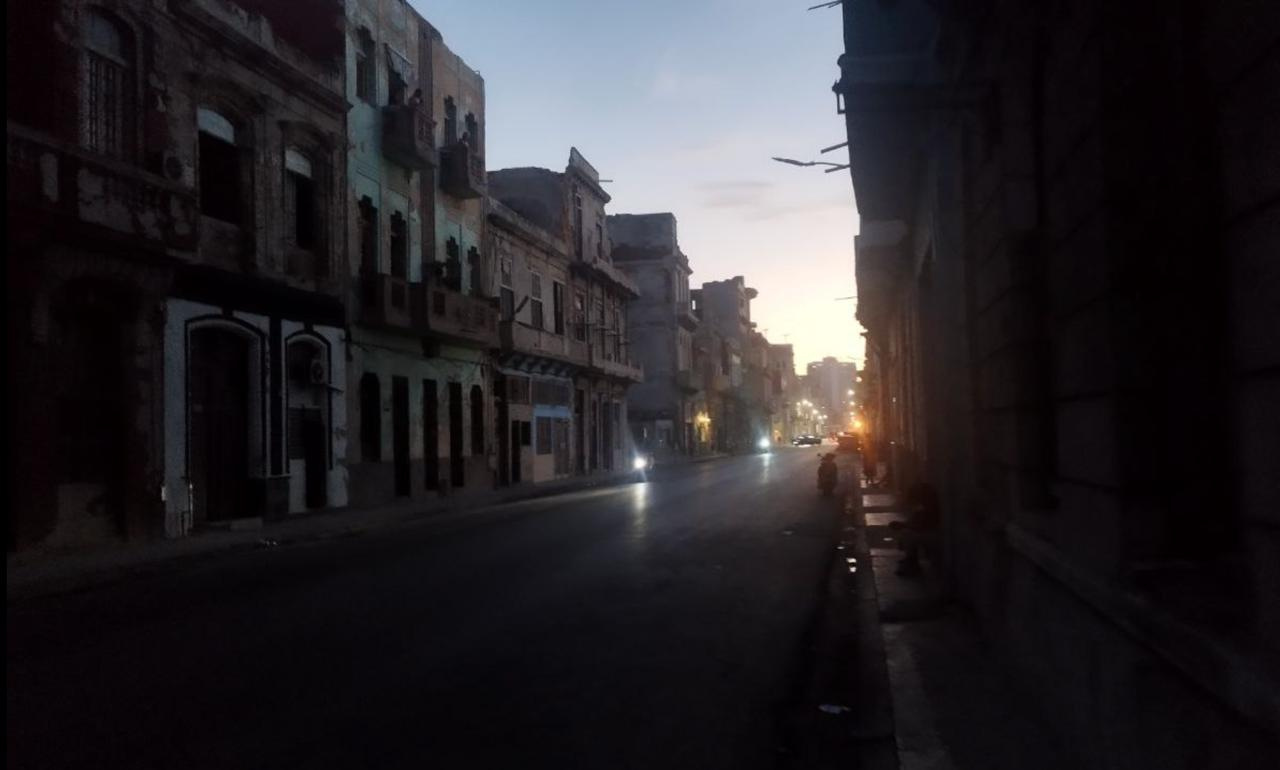
In the whole country, it is the private sector that consumed most in 2024, with 9,414 GWh – 8,843 of them by the residential sector- while the state consumed 4,570 GWh, of which just 170 went to the deteriorated public lighting system. Considering the ridiculous number, even with stable electricity, the streets of the island would be dark.

ONEI reports that the mobile generation from the floating power plants contracted to the Turkish company Karpowership, one of which could be about to leave the island if it is confirmed that the OK cargo ship has arrived in Havana to take the Suheyla Sultan away, in 2024 provided 3,647 GWh, 19% less than the previous year, 4,493 GWh.

The report devotes an important portion to distributed generation, whose production has also fallen significantly since 2021 – when it produced more than 5,900 GWh – up to 2024, with only 2,095, between generators operating on fuel oil and those operating on diesel.

With daily blackouts of around 18 hours in most of the country, Cuba has nothing to brag about in terms of energy

With daily blackouts of around 18 hours in most of the country, Cuba has nothing to brag about in terms of energy. Miguel Díaz-Canel dedicated a chapter of his podcast, From the Presidency, to comment on the situation, without daring to hope for any improvement except a “secret” plan with Venezuela to import more oil.

The president summed up the energy problem in the very high demand of the island and its contrast with the little fuel available. ONEI’s report this Friday refutes another of Díaz-Canel’s arguments: that the blackouts are due to the excessive consumption of Cubans. With its main energy fronts in crisis, the idea of a country without blackouts is further away as the summer consolidates, a season that brings as many power cuts as excuses from leaders.

Translated by Regina Anavy

____________

COLLABORATE WITH OUR WORK: The 14ymedio team is committed to practicing serious journalism that reflects Cuba’s reality in all its depth. Thank you for joining us on this long journey. We invite you to continue supporting us by becoming a member of 14ymedio now. Together we can continue transforming journalism in Cuba.

Etecsa, Cuba’s Communications Monopoly, Justifies Its ‘Tarifazo’ and Popular Indignation Increases

The president of the monopoly admits that they violated the contract to avoid “anxiety” and public action.

Various sectors of civil society and the Cuban exile are organizing a concrete response to the abusive price increase

14ymedio bigger14ymedio, Havana, 1 June 2025 — Despite the damage control operation launched by Empresa de Telecomunicaciones de Cuba S.A. (Etecsa) after announcing its latest price increase, which Cubans call the ’tarifazo’*, indignation among Cubans not only persists but has multiplied. Even official newspapers, such as the Matanzas Girón, published this Saturday an editorial with the flavor of protest. The Communist Party, with its usual arsenal of excuses, has ordered its cadres to justify the measure and organize “closed” meetings with various sectors, such as university students, in order to offer “specific solutions.”

The appearance this Saturday of the state monopoly directive on State TV’s Round Table program did not calm the waters. Randy Alonso acted more as the head of public relations for Etecsa than as a communicator. Faced with such a disconnection from reality, the regime activated plan B: Lázaro Manuel Alonso, the young face of officialdom with “license” to ask more incisive questions, although within the limits of the approved script.

The response of the president of Etecsa was a combination of corporate drama and revolutionary victimization]

“Why now?” asked the intrepid Alonso, alluding to the context of national weariness over blackouts, inflation, and a multisectoral crisis that is no longer worsening but is in its death throes. The response of Tania Velázquez Rodríguez, president of Etecsa, was a combination of corporate drama and revolutionary victimization: technological obsolescence, international frauds and unpayable debts. The full catalogue of the “good monopoly” manual in distress. continue reading

But if there is one thing that has not changed since the foundation of Etecsa, it is its financial opacity. Without competition, it can raise prices, offer questionable services and curb technological innovation without fear of retaliation. By the way, it reserves the right to cut off communications in case of protests, becoming the official fire-extinguisher of the regime. The problem is that so much abuse without competition also takes its toll, and not precisely in national currency.

Even other communist countries have preferred to open the cage a little

State monopolies like Etecsa are an endangered species. Andorra, with just 85,000 inhabitants, and Ethiopia (which has already sold 10% of its Ethio Telecom) are similar rarities. Even other communist countries have preferred to open the cage a little. Vietnam, for example, has operators like Viettel, MobiFone and Vinaphone, which compete with each other as good capitalist comrades. In China, although all companies are state-owned, they compete fiercely for the market. Even the paranoid North Korea has two operators: Koryolink (a joint venture with Orascom) and Kangsong NET, a state network launched in 2015.

Velázquez pulled out the excuse of “the cost of submarine cables.” The ALBA-1, launched in 2011 and operational since 2013, unites Cuba with Venezuela and Jamaica. Its 1,602 kilometers and 640 Gbps (gigabit per second) capacity cost 70 million dollars. More recently, the Arimao cable, 2,470 kilometers, linked the island with Martinique thanks to an agreement with the French Orange S.A. That’s a lot of fiber optics, yes, but with few visible results for ordinary Cubans who still depend on WiFi zones of the last century.

And no wonder: more than 85% of Etecsa’s infrastructure is obsolete, and more than half of its radio base stations lack energy backup. With the blackouts, the whole country can be disconnected. In addition, 10% of radio base stations have technical failures which, according to the directive, could not be resolved because of “lack of resources.”

Regarding the loss of foreign exchange, Velázquez admitted that the monopoly has ceased to capture “more than 60%” of what it used to receive from abroad. He also regretted that the “official channels” for recharging are “not being used as before.”

Velázquez, without blinking an eye, explained that this was not possible because “it would generate anxiety”

And then came the stellar moment: the justification of the violation of Etecsa’s own contract. Article 19 of the prepaid contract establishes the obligation to inform customers 30 days in advance of any price change. But Velázquez, without blinking an eye, explained that this was not possible because it “would generate anxiety” and possibly cause “actions” of the customers.

Etecsa, however, may have underestimated the reaction. This time it is not just complaints about being the last in line to buy chicken. Various sectors of civil society and the exile are organizing a concrete response. Between June 3 and 9, a campaign with the hashtags #BajenLosPreciosDeInternet, #EtecsaImpopular and #NoMasRecargasACuba will be deployed on X. The call sends a clear message: national patience is not infinite, let alone prepaid.

All this happens at the gates of summer, the season that in Cuba not only brings heat but also political commotion. If the regime has shown anything, it is that it fears a July with blackouts and disconnection more than any external sanction. What Etecsa did not calculate is that, with each rate increase, it is not only increasing its revenues, but also the chances of a new explosion.

*Translator’s note: The “azo” ending in Cuban Spanish is a ’magnifier’, in this case, roughly: “the gigantic price increase thing”

Translated by Regina Anavy

____________

COLLABORATE WITH OUR WORK: The 14ymedio team is committed to practicing serious journalism that reflects Cuba’s reality in all its depth. Thank you for joining us on this long journey. We invite you to continue supporting us by becoming a member of 14ymedio now. Together we can continue transforming journalism in Cuba.

Some 29 Percent of Cubans Only Eat Two Meals a Day, Denounces an NGO

According to Food Monitor, of the 2,400 respondents, 42.2% spend their entire salary on food and 21% suffer from food insecurity.

The report also focuses on water supply and the loss of purchasing power. / 14ymedio

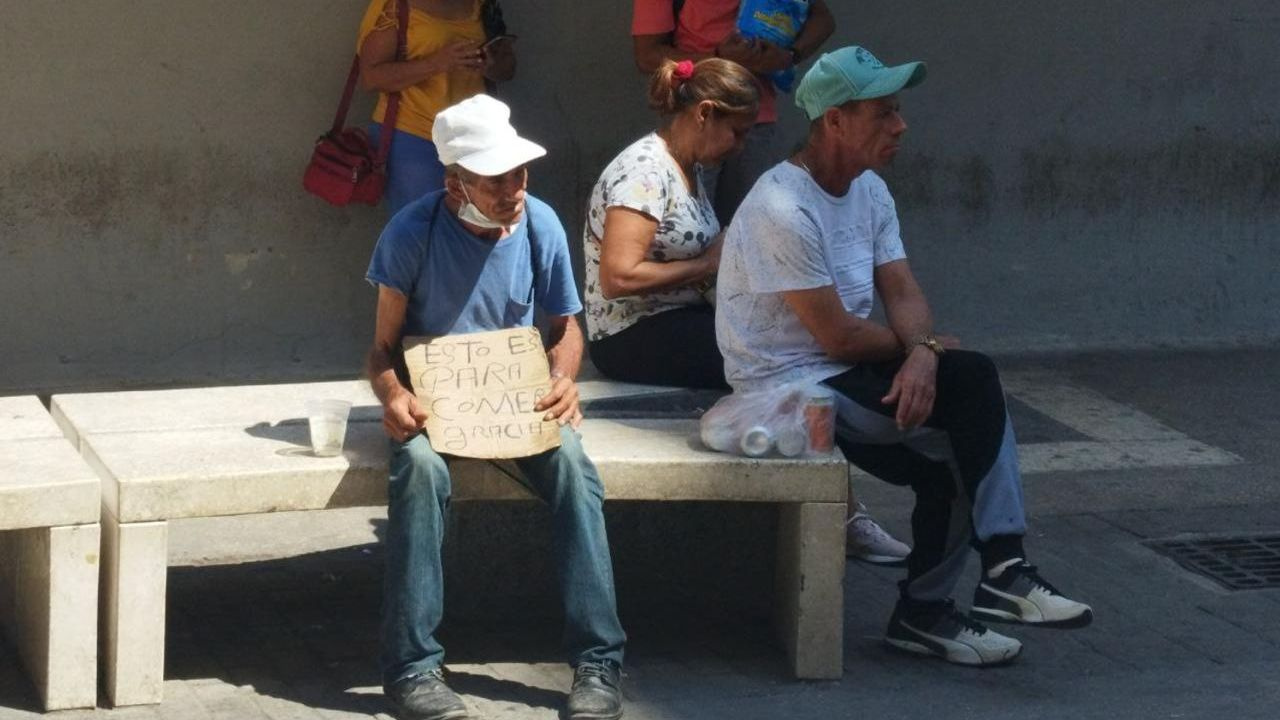
14ymedio bigger14ymedio, Havana, 31 May 2025 — The NGO Food Monitor Program described the food situation in Cuba as “alarming” and progressively declining on Friday during the presentation of a survey that places the proportion of the population suffering from food insecurity at 21%. According to the study, presented virtually, “there is a widespread shortage of all types of food products,” but the shortages are also compounded by prolonged daily power outages, difficulties with the water supply, and a sharp loss of purchasing power due to high inflation.

Given the current state of the meat industry, it’s not surprising that 7.1% of those surveyed said they never eat meat, and 19.3% said they could afford to eat it once a week. Last February, after ten months of inspections and raids against cattle rustlers in Cuba’s fields, the Ministry of Agriculture offered an overall result for the beef sector: 2,914,009 cows remain on the island. The figure is disastrous for a country that ten years ago had nearly four million cows, and which before 1959—with a population of six million—boasted almost one cow per person.

The pork and poultry industries are following suit. Just a week ago, authorities acknowledged that by the end of 2024, due to a lack of feed and food, some 120,000 chickens would be lost in Sancti Spíritus alone . Since then, both chicken meat and egg production have plummeted, only receiving relief when a Brazilian company and a Cuban SME prevented the food from disappearing completely from the provincial market.

According to the Food Monitor report, another 9.8% of respondents say they never eat vegetables.

According to the Food Monitor report, another 9.8% of respondents say they never eat vegetables, and 40.5% emphasize that they never consume dairy products. Likewise, 55.1% say they eat three meals a day, 29% say they eat two, 11.9% say they eat “more than three,” and 4% limit themselves to one. Furthermore, 24.6% said that some days they didn’t have enough food and went to bed hungry. continue reading

The shortage of basic supplies and foodstuffs, practically exclusive to dollar stores and with prohibitive prices, has led nearly 72% of those surveyed to change their diet and the recipes they usually prepare. Nearly the same number, 71.2%, report having suffered dietary problems due to power outages in the last three months.

With respect to the water supply, 38.9% say they have intermittent access to drinking water, 34% say they have access to it every day, and 24.7% say they have access to it “rarely,” according to the third annual edition of this study. Water has been another of the major headaches for Cubans in recent years, a situation that has been worsening and, in recent weeks has reached critical levels, due in part to the drought and in part, to obsolete supply systems. The Zaza Dam, the largest in the country which supplies water to several central provinces, reported at the end of May that its levels were at a worrying 12%, a record for that month in recent years.

Some 42.2% of respondents said they spend all their income on food, followed by those who spend up to 80% of their income (36.7%), those who spend up to 50% (17.4%), and those who spend up to 30%, just 3.6% of the population.

The study, titled “There is Hunger in Cuba 2024” and involving 2,400 participants, reported that 60.9% of Cubans believe they have suffered a “considerable” loss of purchasing power, while 31.1% maintain that their income has been “somewhat limited.”

60.9% of Cubans believe they have suffered a “considerable” loss of purchasing power.

Regarding state-run grocery stores (bodegas), the most common in Cuba, 88.9% considered the selection to be “incomplete” or “deficient,” and 74.6% rated the quality of the products as “regular” or “terrible.”

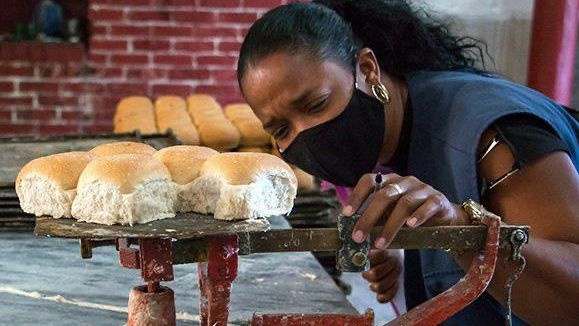
This issue became a source of controversy this week, when residents of Ciego de Ávila complained about the size of the bread sold at the La Especial grocery store in the city. After an inspection, authorities found that the establishment was selling rolls weighing between 35 and 42 grams, half and two-thirds, respectively, of the 60 grams each unit should weigh.

Of those interviewed by Food Monitor, 84.9% also stated that the ration book supply “decreases in quantity and quality every year,” and 96.6% emphasized that this subsidized food supply system does not meet their needs. Respondents identified “poor state administration” (64.1%) and “hoarding/corruption” (26.2%) as the main causes of food shortages in Cuba. Only 8% cited “the US embargo” as the cause of the shortages.

____________

COLLABORATE WITH OUR WORK: The 14ymedio team is committed to practicing serious journalism that reflects Cuba’s reality in all its depth. Thank you for joining us on this long journey. We invite you to continue supporting us by becoming a member of 14ymedio now. Together we can continue transforming journalism in Cuba.

A Bodega in Ciego De Ávila, Cuba, Is Fined for Reducing the Weight of Its Bread by up to 50 Percent

Although the product reached the population with 35 grams, authorities estimated that “the difference was not that noticeable.”

In September 2024, the government reduced the weight of bread from 80 to 60 grams. / Cubadebate

14ymedio bigger14ymedio, Havana, 29 May 2025 — Bread from Cuba’s ration system’s regulated basket has once again been the victim of a “serious violation,” which reduced its already meager weight from 60 to 35 grams (2.1 to 1.2 ounces) at the La Especial grocery store in Ciego de Ávila. Outraged by the abnormal size of the rolls, residents of the province complained to the authorities, and this Thursday, in an article published in Invasor, the response of the director of the Food Industry in the province is paraphrased: “Although the rolls were underweight, the difference was not that noticeable.”

In reality, the dough lost between a third and half of its intended weight, and the rolls reached the population weighing between 35 and 42 grams (1.2 and 1.5 ounces). “As insignificant as it may seem,” Invasor argues, the altered weight can “make a difference between one day and the next for the people of Ciego de Ávila,” especially for a product whose availability in the ration stores is also irregular.

Five fines of 8,000 pesos each were imposed, the outlet reports, without mentioning who was sanctioned, although it added that the administrator of La Especial, the master baker, and the “workers involved” will also be punished.

“Such a violation is even more serious considering the instability in production and the ever-questionable quality.”

“Such a violation is even more serious considering the instability of production and the ever-questionable quality. Despite this, the 75-centavos bread is an option for many compared to the high cost of non-state-run products,” he asserts. continue reading

Trying to excuse La Especial, the director of the Food Industry, Ramón Arrizabalaga, explained that the production process at the bodega has faced problems in recent times due to constant power outages and low-quality flour, which could have influenced the bread’s weight.

In addition, he said that other irregularities were found, such as the fact that the “specialists designated to oversee the weight did not perform their duties as required,” and promised to “intensify” surveillance of the remaining 11 bakeries in the city, as well as those throughout the province, where a situation similar to that at La Especial could arise.

It’s not unusual for Cubans to demand that heads roll over bread, a scarce but “settled” food, especially when weight fluctuations have been a problem they’ve been dealing with for years. “The issue of bread weight is an old one, and we shouldn’t wait for people to report it before inspecting it, because that’s what they’re there for. Even when the flour is good, the bread doesn’t have the right weight, and everyone knows that. When it’s not inspected regularly, anything happens,” complained one user at the bottom of Invasor ’s Facebook post .

In Ciego de Ávila, a 80-gram soft bread roll, sold on a limited basis, can cost between 18 and 35 pesos. / Onei

For a nominal price and despite its poor quality, the grocery store’s bread represents a significant relief for families who avoid paying for better, but more expensive, products. According to a price report published Wednesday by the National Statistics and Information Office, in Ciego de Ávila, a soft, 80-gram (2.8 ounces) bread, sold on a limited basis, can cost between 18 and 35 pesos.

The price doesn’t reach the 58 or 60 pesos that are paid for the same product in Havana and Santiago de Cuba, respectively, but it’s still prohibitive for Cubans.

The bakery industry is also in its most critical state in recent decades. Production, which experienced a 50% decline during the height of the Special Period and remained mediocre but upwardly mobile until 2012, is now even lower than it was in the 1990s.

In September 2024, the Food Industry was forced to announce a reduction in bread weight from the standard 80 grams to around 60, to ensure the product remained on sale despite the flour shortage.

____________

COLLABORATE WITH OUR WORK: The 14ymedio team is committed to practicing serious journalism that reflects Cuba’s reality in all its depth. Thank you for joining us on this long journey. We invite you to continue supporting us by becoming a member of 14ymedio now. Together we can continue transforming journalism in Cuba.

Cuba’s State Communications Company Etecsa Restricts Phone Refills in Pesos To Disguise the Dollarization of Its Services

There will be mini refills of 360 pesos for 30 days and others that cost up to 11,760 CUP.

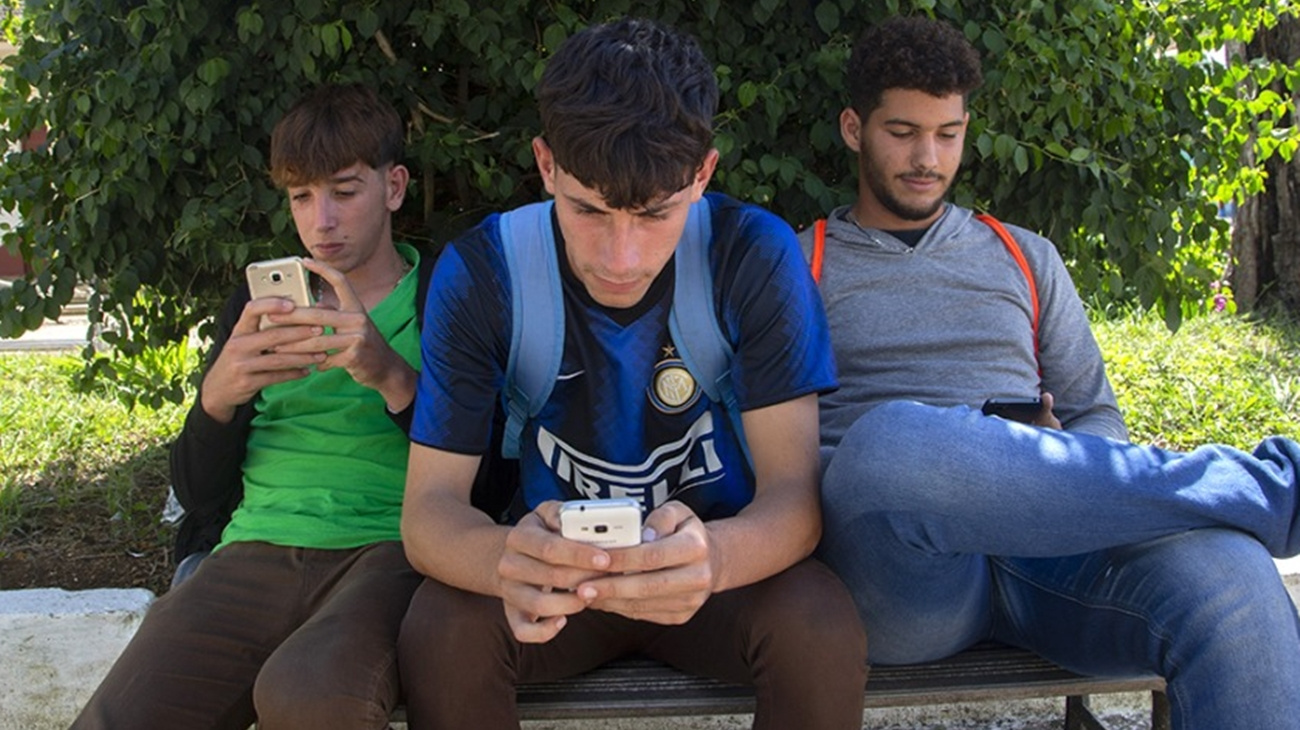
Young Cubans using cell phones in a park / X/Etecsa

14ymedio bigger14ymedio, Natalia López Moya, 30 May 2025 — Friday started badly for customers of Etecsa, Cuba’s state telecommunications monopoly. Etecsa has implemented, beginning May 30, new commercial measures that limit the refills of minutes in Cuban pesos and increase the price of web browsing, while encouraging the purchase of mobile balances from abroad to attract foreign currency, in the midst of the deep crisis that the company is experiencing.

At a press conference, Lidia Esther Hidalgo Rodríguez, vice president of sales for Etecsa, explained that customers of the prepaid mobile service will be able to top up their main balance to reach a total amount of 360 Cuban pesos over the course of 30 days. This restriction contrasts with the possibility that Etecsa customers had, until this Thursday, of buying refills in national currency without restrictions.

With a refill of 360 pesos for 30 days, consumers will be able to purchase, at most, a package with 6 gigabytes (GB) of web browsing, 60 minutes for making calls and the possibility of sending 70 text-only messages (SMS). As an improvement, Hidalgo explained that data plans can be used from any continue reading

network, unlike before, when the packages divided the offer into 3G and 4G.

Below the package of higher price and capacity are those of 4.5 GB of Internet connection for 240 pesos; another of 2 GB + 15 min and 20 SMS for 120 pesos, and one of 4 GB + 35 min and 40 SMS for 240 pesos. “Current data-based plan offerings are improved, guaranteeing more resources for less,” the official added. Customers will keep the balance they have accumulated so far and can use it to “continue purchasing unlimited plans or make as many balance transfers as they wish.”

Hidalgo’s enthusiasm did not manage to disguise the increase in costs that this new adjustment means for Cuban pockets.

However, Hidalgo’s enthusiasm did not manage to disguise the increase in costs that this new adjustment means for Cuban pockets. Once the client has exhausted the 360 pesos of the monthly refill allowed, he will have to enter the field of the so-called “Extras” that are offered. Among those options, the prices increase significantly.

Beginning this Friday, to purchase an extra package of 3 GB of web browsing you need 3,360 pesos, while to obtain 7 GB you have to pay 6,720, a figure that exceeds the average monthly salary, which in 2024 stood at 5,839 pesos. The jewel in the crown, the 15 GB package of data to connect to the Internet, is 11,760 pesos, a price that has caused a flurry of indignant comments on the official pages of the company. The “Extras” are for data only and do not include voice or SMS.

The difference in costs is no small thing. Until yesterday, without a limit on refills or net purchases in national currency, Cubans could purchase packages for the 4G network to connect to the Internet with prices ranging from 1 GB for 100 pesos, 2.5 GB for 200 pesos, and the higher capacity, 16 GB for 950 pesos. With the new tariffs, the price of GB increases by 1,229% or, in other words, is multiplied by 13.

In Cuba the majority of Internet users access the network via mobile telephones, given the low penetration of cable connections

On the island, where most Internet users access the network via mobile telephones, given the low penetration of cable connections, the limit of 360 pesos per monthly refill and the high prices of extra packages augur a drop in the presence of Cubans in cyberspace. The complaints that from the early hours of the morning began to fill the official sites denounce, rightly, this situation.

“Did you know that there are many university students like me who need to access audiovisual materials on the Internet?” asked a young man in the comments of one of the many publications that spread Etecsa’s measures as if they were a benefit to customers. “This change forces Cubans to have someone buy a refill from abroad, but what about those who don’t have anyone out there?” another commentator complained.

The new prices have been presented as part of a strategy announced by Prime Minister Manuel Marrero Cruz during the sessions of the National Assembly of People’s Power in December. The official then commented that a series of measures had been adopted to stimulate Etecsa’s foreign currency earnings and complained that “since it gave us more business to pay for the packages in national currency,” the company had practically stopped earning foreign currency.

Hidalgo said this Friday that “all offers will keep the 300 MB of national navigation” and stressed that the three main ways to add balances remain in force: national refills in pesos, transfers of balances between individuals, and refills from abroad that are paid in foreign currency. The latter are the most important for the state monopoly, which is facing a deep crisis in its infrastructure due to low investment and lack of resources.

“There is only one extra plan with data, SMS and international minutes, although most customers make international calls through messaging platforms,” explained Hidalgo

“There is only one extra plan with data, SMS and international minutes, although most customers make international calls through messaging platforms,” explained Hidalgo. In addition, he also spread the appearance of a new menu, which is accessed by dialing *222*732# and which will allow users to know the amount of refill allowed and the date from which the customer must reload.

Etecsa’s move has not surprised anyone. In January, an employee of the state monopoly commented to 14ymedio that “What happens now is that a mobile phone customer sometimes has thousands of pesos in balance and can buy any navigation package he wants. He can even make transfers of that money to others so they can also buy a connection package, and this will be more limited.” The worker was categorical: “Etecsa can do almost nothing with those Cuban pesos. It’s a dead fund in the face of investments and for the purchase of infrastructure.”

Translated by Regina Anavy

____________

COLLABORATE WITH OUR WORK: The 14ymedio team is committed to practicing serious journalism that reflects Cuba’s reality in all its depth. Thank you for joining us on this long journey. We invite you to continue supporting us by becoming a member of 14ymedio now. Together we can continue transforming journalism in Cuba.

The Famous Paseo Galleries in Havana Are Closed, the First Step Towards a Probable Dollarization

The stores in the complex, located on the Malecón, sold in hard currency and were out of stock.

“People came from all over the country because we had everything,” recalls one employee

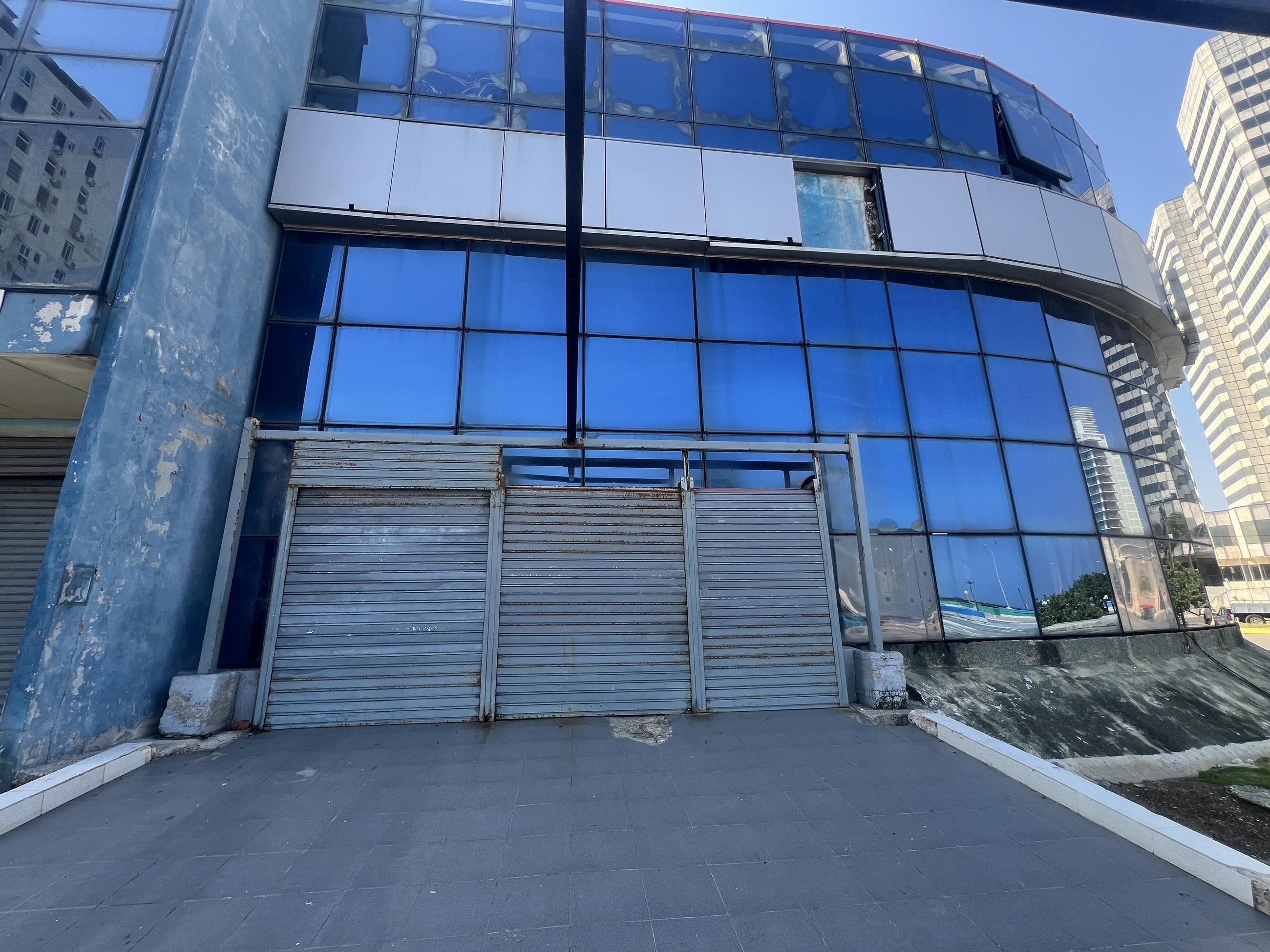
14ymedio bigger14ymedio, Havana, Natalia López Moya and José Lassa, 29 May 2025 — The sea is no excuse. This is well known to the residents of the Havana coast and also the customers who arrive these days at the Paseo Galleries, a few meters from the Malecón. Rust and neglect have taken over one of the most important shopping centers in the Cuban capital, a symbol of an economic upswing that fueled hopes at the beginning of this century. What’s left is a large empty store with littered floors full of rubbish.

Under this May’s sun, as hot as in August, a woman pushing a baby carriage advanced on Tuesday towards the doorway that was once full of taxi drivers, announcing trips to all the municipalities of Havana, and customers with their hands full of bags with newly purchased products. “They told me it was still open and that’s why I came,” grumbled the woman, who, instead of carrying a small child, used the carriage to carry some yuccas and a piece of pumpkin.

“This place is bare, they closed it down to fix it up and put it into hard currency,” ventures a passerby. / 14ymedio

“They closed it today because they’re fixing something with the electricity,” explained a resident in the vicinity who was passing in front of the pile of concrete and glass. “It’s empty; they also closed it for repairs and to turn it into a hard currency store,” ventured another passerby, who estimates that “before December” the new dollarized version of the store complex would be open. A few meters away, the “Magic World” sign on the old children’s store looked like it wouldn’t be able to last that long.

The closing also coincides with complaints on social networks about the poor state of the property and the shortage of goods on its premises. Images of empty refrigerators and dusty shelves raised a wave of indignation that seems to have contributed to the cancellation of service.

“It was one of the few places around here where you could still pay with MLC [freely convertible currency],” someone commented. That intangible currency, which barely a decade ago opened the doors of better-stocked markets, is now in full retreat on the island, although the authorities insist they will not eliminate it for the time being. The food market, with a butcher’s shop that alternated chorizos with pork loins, was often continue reading

frequented by the new rich who, finally, ended up packing their bags and emigrating.

Potholes forced customers heading to the market, located on the first floor, to walk carefully to avoid falls. / 14ymedio

With the same speed that the wealthiest buyers exchanged the corridors of the Galleries for the narrow airplane aisles, the building’s floor began to show gaps. The holes forced customers who went to the market, located on the first floor, to walk carefully to avoid falls. It also began to have a shortage of merchandise, and the boutiques were transformed into storehouses for ugly and smelly clothing.

But now, there is not even that. A young man emerged from his car and became another frustrated customer who came across a building that seems to have been abandoned and closed, waiting for dollarization to revive its spaces and refill its warehouses. “I came to buy some mosquito spray that they told me was here on the ground floor, but you can see that it’s not going to open today,” he said.

On the same ground floor, two decades ago, customers were delighted to see a well-stocked hardware store where the first single-handle faucets used by Cubans in their bathrooms were sold as a novelty. “People came from all over the country because we had everything,” recalls an employee who worked as a cashier in those years when the business center was synonymous with good taste and abundance. “We even had jacuzzis to sell,” she recalls.

The sliding doors, which previously only lowered when a hurricane was announced, are closed. / 14ymedio

Now, however, the sliding doors of the main entrance, which previously came down only when a hurricane was announced, are closed. The sea has left its signature on them, a rubric that is also seen on the reflective window panes that were once one of the architectural novelties of the property. Some are stained and others cracked, and the glass no longer reflects people and appliances, but only a deteriorated and empty environment.

“Home cleaning supplies,” can still be read on a part of the facade that once faced the Water and Soap chain, managed by the Italsav company throughout Cuba. The false ceiling that was partly collapsed, the completely empty shelves and not a soul inside the premises speak for themselves, even if no sign announces the closure of the business.

Contrast the fall into disgrace of this space with the central market that Berto Savina Tito, president of Italsav, has just opened; his relationship with Castroism has been known for decades. Last April, the firm opened Variedades Galiano Casalinda, in Central Havana, a showy store created by a joint venture with the Cuban state, offering “products for the home and the person” in dollars, with the Classic card or US bills.

Some stained and others cracked, the mirrored windows no longer reflect bodies or appliances, but rather the deteriorated and empty surroundings. / 14ymedio

Right in front of the hotel Cohiba, the Paseo Galleries have not yet had the luck to be able to collect hard currency, perhaps the cause of their current ruin. To go green, you need the greenbacks that have not arrived. That delay is bad news for guests of the hotel, directly across from the shopping complex, who used to cross the street to stock up at the food market or buy some sunscreen and flip-flops for the beach. Also to have fun in the evening at the Jazz Café.

But many of those travelers, who had planned to view the market from their hotel rooms, have now gone in the direction of the Dominican Republic or Cancun. And the new rich who went there now shop at Walmart or Home Depot, on the other side of the Florida Straits.

Translated by Regina Anavy

____________

COLLABORATE WITH OUR WORK: The 14ymedio team is committed to practicing serious journalism that reflects Cuba’s reality in all its depth. Thank you for joining us on this long journey. We invite you to continue supporting us by becoming a member of 14ymedio now. Together we can continue transforming journalism in Cuba.

Drought Threatens the Rice Paddies in Sancti Spíritus

The reservoir reached its lowest level in five years in May / Escambray

14ymedio bigger14ymedio, Havana, 29 May 2025 — Like last year, the Zaza reservoir is once again making headlines for its worrying storage levels, which have fallen below 12%. The disaster was seen coming from the beginning of the month, when the authorities blamed the drought for poor fishing, and, shortly after, 14ymedio reported the decline of the Yayabo river bed, which crosses the province and feeds the reservoir. Now, the official press admits, the reservoirs of the territory “are begging for water.”

Of the 1,020,000 cubic meters of water that can be stored, Zaza, the country’s largest reservoir, contains around 112,400, “the lowest figure recorded in the same period in the last five years.” In 2024 it also reached a critical 13%, but that was in June, one month later than this year.

The situation is similar throughout the province: the nine reservoirs in the territory amount to only 250.1 billion cubic meters of water, 21% of the total capacity. The authorities have been particularly concerned about the condition of the Zaza, which supplies other nearby provinces and numerous industries, as well as the rice fields of Sur del Jíbaro. continue reading

The reservoirs of Lebrije (49%), Felicidad (34%), Banao II (32%), Dignorah (22%) and Aridanes (9%) are also low in water volume

The situation is “tense,” recognizes Sancti Spíritus’ Escambray newspaper, which this Friday published the statements of Water Resources. According to José Carlos Hernández, the company’s specialist, the reservoirs of Lebrije (49%), Felicidad (34%), Banao II (32%), Dignorah (22%) and Aridanes (9%) also have low water volumes.

“Fortunately, the Tuinucú dam, which is responsible for ensuring water supply to the inhabitants of Cabaiguán and a large part of the provincial capital, stands at 73%, and the Siguaney reservoir, which is responsible for supplying the Sancti Spíritus industrial zone, shows 64% of its total capacity. Meanwhile, Higuanojo exceeds half of its total volume by 3%,” he added.

The manager called on people to save. “It is essential that people make rational use of water, given the low rainfall in the central region of Cuba.” As he explained, in Sancti Spíritus in May there has been only an average of 57.6 millimeters of rain, “when the historical number for this fifth month of the year is 176.2 millimeters,” he said.

Only two municipalities can be counted above this average: Fomento with 213.6 millimeters – even surpassing its historical May average – and Taguasco with 82.9.

The rest of the towns are in suspense, waiting for the rainy season to finally make its entrance. Especially in La Sierpe, also dedicated to the planting of rice – which requires moist land – and where not a single drop of rain has fallen this month.

At the beginning of May, another report from Escambray described the pitiful state of fishing in Zaza, which, due to drought and frenetic harvesting last year, has almost run out of fish. The situation, in turn, was a consequence of the huge drought that the reservoir suffered in 2024, to the point where on land, where there was water before, 14ymedio managed to photograph cows grazing. Then, said the press, for five years the reservoir did not open its spillway because it was not filled, even in the hurricane season.

The report published last week in 14ymedio on the Yayabo and Tuinucú rivers pointed out that with the small amount of rain, weeds and garbage have clogged the channels. The summer haze of the tropics makes them impassable, and, given the color of the water, it is unlikely that it can even be used for watering animals.

Translated by Regina Anavy

____________

COLLABORATE WITH OUR WORK: The 14ymedio team is committed to practicing serious journalism that reflects Cuba’s reality in all its depth. Thank you for joining us on this long journey. We invite you to continue supporting us by becoming a member of 14ymedio now. Together we can continue transforming journalism in Cuba.

Without Electricity or Gas to Boil Water, Matanzas, Cuba Suffers a Hepatitis A Outbreak

Faced with a lack of water supply in their homes, thousands of residents fill buckets from leaking pipes in public places.

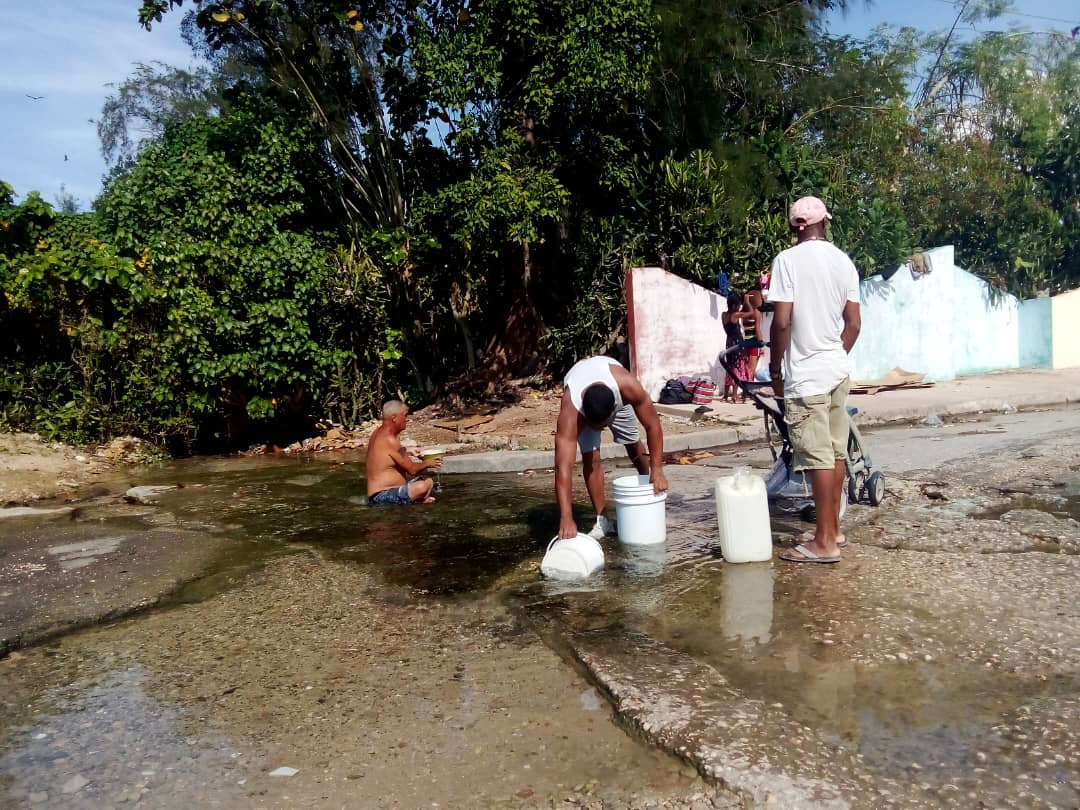
Faced with a lack of water in their homes, thousands of city residents rely on the so-called manholes. / 14ymedio

14ymedio biggerJulio César Contreras, Matanzas, 29 May 2025 — When the first signs of weakness appeared, Ana María, 68, thought it was due to the nutritional deficiencies she had been accumulating for years. Retired from the education sector, with a pension of no more than 2,000 pesos a month, this resident of the city of Cárdenas, Matanzas, didn’t immediately conclude that her discomfort was due to a virus, hepatitis A, and that it had been transmitted to her through the water.

In Ana María’s house, like in most homes in Cárdenas, the water coming through the pipes is dirty, sometimes brown in color and has an unpleasant odor. The solution families used for decades to counteract the poor quality was to boil and filter the water, but long power outages and the rising cost of cooking coal have forced them to abandon this healthy practice.

“I have a filter, one of those that claim to eliminate a lot of dirt, heavy metals, and bacteria, but it doesn’t seem to work for this,” Ana María tells 14ymedio. Despite defining herself as a “very cautious” person with everything she puts in her mouth to avoid diarrheal diseases, this time the hepatitis A virus evaded her hygiene protocols and now, from her liver, forces her to rest. continue reading

We should “consume quality drinking water, boiling it if possible,” but the lack of fuel makes this task difficult.

This retiree’s case is not an isolated one. The newspaper Girón recently confirmed the appearance of a hepatitis A outbreak in the 13 de Marzo neighborhood and the La Marina neighborhood in Cárdenas. The report warns that people should “consume quality drinking water, boiling it if possible,” but the lack of fuel makes this task difficult. Faced with the choice between using the limited amount of liquefied natural gas, firewood, or coal, which they can purchase at 1,300 pesos a sack, to heat food or water, most Matanzas residents opt for the former.

Hepatitis A, an infection transmitted through the fecal-oral route, usually through contaminated food or water, typically has a good recovery prognosis, and those who suffer from it acquire lifelong immunity. However, the aging population, malnutrition, and difficulties in resting and eating according to medical recommendations, and maintaining hygiene during illness, hinder the process of overcoming the virus.

“In this neighborhood, there’s an elderly woman who had to be taken to the hospital because she contracted hepatitis A and was already sick, bedridden, with bedsores, and alone,” explains Ana María. The exodus of children and younger relatives has left many elderly people in an extremely vulnerable situation. In the face of any health problem, they find themselves helpless, without home care, and lacking medication.

“The doctor couldn’t even give me instructions on what kind of diet I should follow because he says he knows I won’t be able to follow it.”

“They prescribed me rest and plenty of water. I know it’s a virus and there’s not much I can do, but the doctor couldn’t even give me instructions on what kind of diet I should follow because he says he knows I won’t be able to follow it.” Low fat, natural products, vegetables, lean proteins, and no alcohol complete the suggestions for those suffering from hepatitis A, precisely the food groups with the highest prices in the markets.

Others don’t even know if the fatigue they’re experiencing is due to the virus spreading through the province. Abel, 23, hasn’t been able to get out of bed for days. He blames his laziness on the water from a supply point in the city of Matanzas, across from the Transmetro bus station, a few blocks from the Simpson neighborhood. He also has intermittent fever and nausea, but the lack of reagents for the test delays the results, and he can only guess that he has hepatitis A.

The manholes are piles installed in a corner or some hole in the pipeline that spill their contents into a public space. / 14ymedio

Two of Abel’s friends have already been diagnosed with the virus. “They collect water from the small well next to Watkins Park Zoo, but it could all end up being contaminated,” warns the Matanzas resident. Faced with a lack of water supply in their homes, thousands of city residents flock to the so-called manholes, sinks installed on a street corner or a hole in the sewer that spills its contents into a public space, where they fill buckets, jugs, and tanks that they then haul back to their homes.

“The other day, a Public Health inspector, seeing us filling the buckets, warned us not to drink that water, but what can we do?” the young man reflects. His hope is that he hasn’t lost his appetite, one of the most common symptoms of hepatitis A, and that, therefore, his discomfort could be just a minor stomach infection. Acute diarrheal diseases are also hitting the province hard, and their prevalence is expected to increase as summer approaches.

“A Public Health inspector, seeing us filling the buckets, warned us not to drink that water, but what can we do?” / 14ymedio

“If I had the money, a courier would bring spring water to my doorstep,” reckons Abel, who wants to avoid future moments of uncertainty and fatigue. “What we’re doing at home is using different utensils to eat, but we’re forced to use the same bathroom, and most of the time, we don’t even have water to flush or wash our hands.”

Under the kitchen counter, Abel’s family keeps containers containing some of the water they carried for several blocks. This essential and vital liquid contains their greatest ally and perhaps their worst enemy.

____________

COLLABORATE WITH OUR WORK: The 14ymedio team is committed to practicing serious journalism that reflects Cuba’s reality in all its depth. Thank you for joining us on this long journey. We invite you to continue supporting us by becoming a member of 14ymedio now. Together we can continue transforming journalism in Cuba.

The Cuban Regime Imposes a Leader on Freemasonry and Will Freeze Their Bank Accounts if They Reject Him

Cuba’s Ministry of Justice replaces the unruly José Ramón Viñas with the ‘babalawo’ Lázaro Cuesta

José Ramón Viñas and Lázaro Cuesta, during a Masonic act in Havana / Facebook / Gran Logia de Cuba

14ymedio bigger14ymedio, Juan Izquierdo, Havana, May 29, 2025 — The man that the Ministry of Justice wants to command the Supreme Council for the 33rd Degree – the highest authority of Freemasonry in Cuba, next to the Grand Lodge – is Lázaro Cuesta Valdés. The play is unsettling. This is a veteran Masonic leader, used to getting along with the government, who is also the head of the independent Cuban Yorubas.

The proposal that the Babalawo (High Priest) Freemason take over the reins of the Supreme Council is only a side effect of the letter signed on 27 May by the Association Directorate of the Ministry. Its declared objective is to revoke the re-election of José Ramón Viñas, who has been critical of the regime and monitored by State Security for years.

The schism between the Supreme Council and the Grand Lodge has been the great internal consequence of the crisis in which, since January last year, Freemasonry has been immersed on the island. It was Viñas who blamed Mario Urquía Carreño, former leader of the Grand Lodge, for stealing $19,000 from his own institution and allowing political police interference. After a year and a half, the fraternity is still divided, the scandal remains active, and “excommunications” have not been lacking on either side. continue reading

Recently arrived at the fraternity, Cuesta seems to agree with the proposal of the Ministry of Justice

Recently arrived at the fraternity, Cuesta seems to agree with the proposal of the Ministry of Justice. A letter with his signature – the same one that usually initiates the Letter of the Year of the Miguel Febles Commission – also circulates among the Cuban Masons. If the Masons obey this external directive, the Supreme Council will have a leader willing to get on well with the regime. If they do not, the Ministry threatens to revoke their official recognition as an association and freeze their bank accounts.

The reaction of Cuesta, of total compliance with the Ministry, is surprising, given that last January – in connection with the publication of the Letter of the Year – he refused to answer CiberCuba’s questions about the Masonic crisis. “The Letter of the Year Organizing Commission does not have among its purposes the ability to deal with issues arising in institutions or organizations outside our faith. I think it would be disrespectful of me to generate criteria or opinions,” he said at the time.

On the horns of a dilemma, several members of the Supreme Council have protested. The writer and independent journalist Ángel Santiesteban, recently expelled from the Grand Lodge, attributed the move to State Security and summarized the most recent attempts by the Government to interfere in the order: the protection of Urquía Carreño after the robbery; the controversial appointment of Mayker Filema, now also in dispute, as his successor; the infiltration of numerous agents into the Masonic ranks and now the decision to recognize Cuesta as leader of the Supreme Council.

“Freemasonry has been unable to stabilize for two years because of the constant violations of laws that state agencies ignore and others get around or misinterpret, blatantly, as if Masons do not have the capacity for intelligence,” he said.

Santiesteban demanded respect for the two recent elections held by the Masons, in an attempt to resolve the schism

Santiesteban demanded respect for the two recent elections held by the Masons, in an attempt to resolve the schism: that of Alberto Kessel, on May 25, as Grand Master – a decision that Filema rejected in a statement – and that of Viñas as Commander of the Supreme Council.

Other Masons have expressed themselves, sometimes anonymously, to say that Cuesta has been a man of the regime and an “active member of the Ministry of the Interior since 1990.” Others accuse him of corruption and suspect that the same person who already leads the Miguel Febles Commission of the Yorubas aspires to lead a high Masonic body.

The Commission, initially opposed to the ruling Yoruba Cultural Association, has been dropping its critical tone under Cuesta’s leadership, and two years ago it waited for Cubadebate to publish the official Letter of the Year before releasing its own. Many have attributed the delay to complicity between the two groups.

For his part, Viñas maintains his usual public silence on matters concerning Freemasonry. As explained last year to 14ymedio, he prefers not to make statements to the independent press about a crisis whose solution he considers the province of the Masons, not suitable for “profane” debate.

The current Commander has been in office for nine years, a term that the Ministry of Justice considers excessive and illegal, so leadership must fall back, they argue, to the Masonic leader who occupied the post before Viñas, meaning Cuesta.

Translated by Regina Anavy

____________

COLLABORATE WITH OUR WORK: The 14ymedio team is committed to practicing serious journalism that reflects Cuba’s reality in all its depth. Thank you for joining us on this long journey. We invite you to continue supporting us by becoming a member of 14ymedio now. Together we can continue transforming journalism in Cuba.

Cubans Pay up to 500 Euros for a Free Appointment at the Spanish Embassy

A Spanish consumer association denounces “marketing” of visa appointments and other procedures.

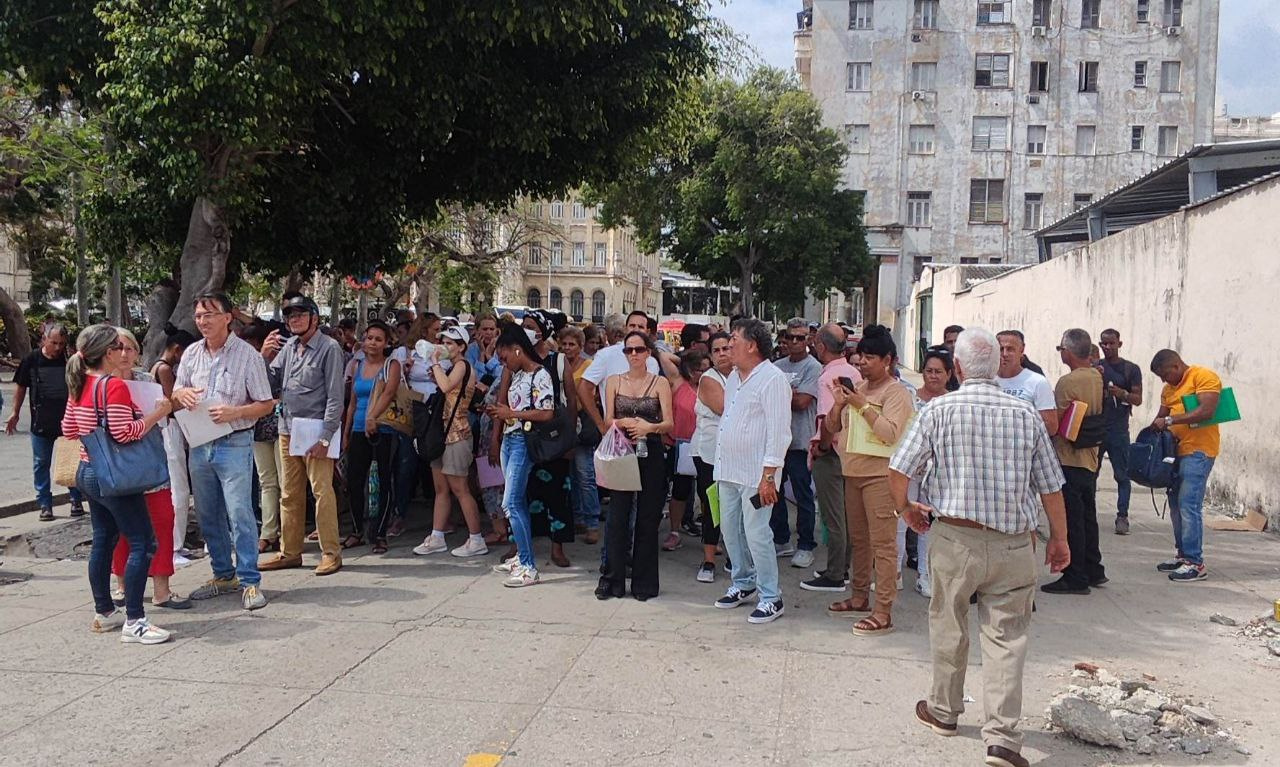
Queue at the Spanish embassy in Cuba last week / 14ymedio

14ymedio bigger14ymedio, Havana, May 27, 2025 — Some intermediaries are charging Cubans up to 500 euros for a free procedure at the Spanish Embassy in Cuba. One of the best-known consumer associations in Spain, Facua-Consumers in Action, denounced this practice to the Ministry of Foreign Affairs, European Union and Cooperation, which is responsible for the consulate.

Facua denounces the “slow and cumbersome” visa application process for entering Spain, which has caused discomfort among several users, including Cubans wishing to travel to the country and Spanish citizens residing on the island.

“Cubans, Spaniards, and anyone else who wants to access the services of the Consulate of Spain in Havana are experiencing constant delays in obtaining a prior appointment, which is required for completing the necessary bureaucratic procedures,” warns the association, which expresses concern about the “marketing” that the situation is generating.

“This delay in obtaining an appointment often causes the previously sent documentation to expire and lose its validity.”

Users must send the required documentation electronically to obtain an appointment. Then, the embassy generates an access code for the applicant to book his or her appointment online, but the appointments sell out in just minutes, making it difficult -if not impossible- to find available dates. “This delay in obtaining an continue reading

appointment often causes the previously sent documentation to expire and lose its validity, forcing users to start the process from the beginning,” regrets Facua.

At that moment, managers and other intermediaries step in, “taking advantage of the desperation of many users trying to obtain a visa,” demanding amounts that can reach up to 500 euros. To prevent such abuses, the association urged the Ministry to take measures to streamline the processes and make them more secure, “thus avoiding situations like those currently occurring in Cuba, where third parties exploit others’ needs for profit by managing procedures that should be free of charge.”

The association, as explained in its press release, has received a response from the undersecretary of the Ministry, who said he was confident that the new system of appointments and shifts that will soon be implemented will help to avoid problems of this type. The transition is part of the Consular Digitalization Plan, which began in 2023 and is scheduled to conclude in July, when all of Spain’s embassies will have migrated to the new platform of applications, infrastructure and content.

The Embassy in Cuba is immersed in this process, which includes the new electronic civil registry (DICIREG), which landed at the Havana headquarters this April. Although what keeps most people on tenterhooks is the implementation of the appointment platform, which will also affect applicants for Spanish nationality through the Law of Democratic Memory, whose deadline expires next October.

The diplomatic mission warned last week that on June 23, the credentials from the old system will be removed, making that the deadline for booking appointments using those credentials. Those who have not managed to do so will need to submit a new request using the new tool, which will be explained later.

“It is clarified that it is the booking operation that must be completed before June 23; however, the scheduled appointment can be set for a later date.”

“It is clarified that it is the booking operation that must be completed before June 23; however, the scheduled appointment can be set for a later date. Individuals are requested to attend their appointment with the reservation receipt,” the Consulate stated in a communiqué, also reminding that the application for Spanish nationality must be submitted before October 22, 2025, although—again—the appointment for the procedure may take place afterward.

The fever to obtain Spanish nationality has uncovered a multitude of abuses and frauds, both at the time of obtaining documents and appointments: a black market in which thousands of euros are moved.

Among the most well-known cases is the network that produced false certificates to certify Spanish ancestry for up to 2,000 or 3,000. Although cases of this kind are not uncommon, the volume of fraudulent documents in Cuba was so high that the consulate began requiring double verification from the Historical Archive of Ourense: the institution’s seal and the vicar’s signature, whereas in the rest of the world, only the seal is usually enough. The information was revealed on a local television program in the province, where a young diocesan archivist shared anecdotes about the heavy workload caused by the demand for documents, particularly from Latin America.

Translated by Gustavo Loredo

____________

COLLABORATE WITH OUR WORK: The 14ymedio team is committed to practicing serious journalism that reflects Cuba’s reality in all its depth. Thank you for joining us on this long journey. We invite you to continue supporting us by becoming a member of 14ymedio now. Together we can continue transforming journalism in Cuba.

Abraham Maciques Has Died: The Architect of a Parallel Economy That Kept Castroism Afloat

Maciques retired as he lived: without fuss, but with the certainty that his legacy had the friendship of Dalia Soto del Valle / Más Cuba

14ymedio bigger14ymedio, Yunior García Aguilera, Madrid, 29 May 2025 — One of the most powerful and discreetly feared men of Castroism has died: Abraham Maciques Maciques, the great administrator behind the scene. He was 95 years old and survived almost all the purges of Castroism. He died this Wednesday in Havana, after more than six decades of juggling currency, hotels, congresses and financial fugitives.

Maciques was not a minister, nor a general nor an ideologue. He was something more useful: a precision gear in the economic machinery of the regime. A bureaucrat with a head for business, without bragging or proclaiming anything, he wove networks of power through entities like Cubalse, Cubanacán S.A. and the all-powerful Palco Business Group, from where he pulled strings for the millionaires.

He was born in 1930, in Matanzas, to a family of Jewish origin. At the end of the 50s, he was a minor sub-delegate of Tourism in his province, when he crossed paths with a young bearded man who promised to redeem Cuba by shooting left and right. The chemistry was instantaneous. Fidel Castro sent him to the Ciénaga de Zapata to settle a minor matter with coal miners, and there he was surprised by the invasion of the Bay of Pigs. The fright became confidence, and the bond with Fidel and Celia Sánchez was forged. continue reading

A bureaucrat with a head for business, without bragging or proclaiming, he wove networks of power through entities like Cubalse, Cubanacán S.A. and the all-powerful Palco Business Group

From then on, Maciques became part of that small circle that did not need a uniform to exercise power. He presided over Cubalse – a kind of exclusive consumer holding for the nomenklatura – directed the construction of the Palace of Conventions and ended up as tsar of Cubanacán S.A., the spearhead of Cuban tourism in the 80s.

It was precisely at this time that Havana became the refuge of one of the most famous financial scammers of the 20th century: Robert L. Vesco, alias the pirate banker, a fugitive from the American justice system and star of the regime. “We don’t care what he did in America. We only care about his money,” said Fidel, words that should be chiseled into marble at the entrance to the Ministry of the Interior.

Vesco landed, grew a beard so he would fit in and called himself Tom Adams, as if that would erase his record. From Palco, with Maciques as a silent partner, they set up a network that included Donald Nixon Jr. – nephew of former President Richard Nixon – and José Antonio Fraga Castro – nephew of Fidel and director of Labiofam – to promote a miraculous HIV vaccine called Troxidal. They invested $30 million. It did not cure anything, but they made history: the fraud ended with Vesco sentenced in 1996 to 13 years in prison in Cuba. Maciques, of course, came out unscathed. Fidel took care of his own, especially if they knew how to keep quiet.

Maciques handled, for decades, what might be called institutionalized elitism

From his throne in Palco, Maciques handled, for decades, what could be called institutionalized elitism: exclusive hotels, houses for diplomats, restaurants invisible to the ordinary Cuban, free zones, special services for foreign companies. Palco was a lucky country within the country, a Cuba without blackouts or lines, reserved for those who were well connected.

The Soviet collapse turned those operations into pure gold. While the people lined up for bread, Maciques administered currency, international connections and incentive packages for foreign delegations. His real position never appeared in the Official Gazette, but his power was tangible: anyone who wanted to move money or set up a fat business deal had to go through him or stay out.

In June 2021, when the generals began to shake up the “historical founders without uniform,” Maciques was silently dismissed by Prime Minister Manuel Marrero Cruz. Palco was partially absorbed by Gaesa, the military emporium that devours what remains of the national economy. There was no scandal, only a dry official notice and discreet relief. Maciques retired as he lived: without fuss, but with the certainty that his legacy had the friendship of Dalia Soto del Valle, the widow of the first Castro.

The death of Maciques does not close a chapter: it closes a library

Miguel Díaz-Canel, in his usual necrological tone of ungracious official, lamented the loss and praised his “collaboration with Fidel and Celia,” as if he were remembering the receptionist of a hotel. Palco, for its part, dismissed him with honors, recognizing him as a “founder and essential figure.” No one said what he really was: the architect of a parallel economy that kept Castroism afloat when everything else was falling apart.

The death of Maciques does not close a chapter: it closes a library. He was a man who understood better than anyone else the Cuban alchemy of mixing ideology with business, confidentiality with privilege, revolution with reserve. He survived it all: Celia, Fidel, the sanctions, Vesco, sex tourism, blackouts, reforms, the Castro nephews and Gaesa itself.

His tombstone will say that he was the “founder of Palco.” In reality, he was something else: the steward of Castroism, but without the keys to the safe.

Translated by Regina Anavy

____________

COLLABORATE WITH OUR WORK: The 14ymedio team is committed to practicing serious journalism that reflects Cuba’s reality in all its depth. Thank you for joining us on this long journey. We invite you to continue supporting us by becoming a member of 14ymedio now. Together we can continue transforming journalism in Cuba.

Locked Up Awaiting Trial in the Combinado del Este, the Owner of the ‘Cuban Costco’ Fears For His Life

“They punished him for his success and copied the Diplomamarket model for state-owned dollar stores,” says a source close to Frank Cuspinera.

The owner of the “Cuban Costco” has been in the Combinado del Este for almost a year awaiting trial / 14ymedio

14ymedio bigger14ymedio, Havana, May 29, 2025 — Frank Cuspinera, the Cuban-American owner of the Diplomarket (known as the “Cuban Costco”), has been in the Combinado del Este prison for almost a year awaiting trial, accused of tax evasion, currency trafficking and money laundering. This newspaper has reported on the letter he sent from prison, requesting help from the international community, mentioning the arbitrary nature of the acts committed against him by State Security and saying that on June 1, he will go on a hunger strike. Now 14ymedio has received more information about his case.

It comes from a family member who requests anonymity for fear of reprisals: “We are afraid of what may happen; here anything having to do with these issues doesn’t respond well to pressure.”

According to this source – whom we will call “Luis” – Cuspinera’s wife, Camila Castro, is at liberty in Havana but also faces the same charges, as the owner of another company associated with her husband, Kmila-mart SURL. It all started, says Luis, the same day they were both arrested, on June 20 of last year, with the arrival at Diplomarket of the National Office of Tax Administration (ONAT).

“They thought it would be a matter of a misunderstanding and that they would let them open the companies after it was resolved”

“They had a complaint for tax evasion, without having done at any time a prior audit,” he says. These officials “reviewed everything,” and after them, the Technical Directorate of Investigations (DTI) was introduced. The entrepreneurs were arrested, and “immediately” their business licenses continue reading

were taken away from both Cuspinera SURL – the firm under which the supermarket operated – and Kmila-mart, leaving them “inoperable.”

For the couple it was, says Luis, a shock: “They thought it would be a matter of a misunderstanding, that they would let them open the companies after solving it and allow them to return the goods to some suppliers, or even that Frank could respond to the process on bail, but they have not agreed to any of this.” The authorities were, he says, “more severe and arbitrary as time went on.”

At the time of the arrest, the officials claimed “that the money from sales was not deposited in the bank and caused damage and discontent among the population,” says Luis. This is, in his view, “absurd,” since “neither State importers nor banks guaranteed the availability of dollars or transfers abroad for payments to suppliers even when the currency was deposited.”

“Here everyone knows that all the MSMEs engage in currency trafficking”

How is it that a successful businessman whose work was reported by the official press and who was even allowed to add his signature to ask the US president to lift the embargo, fell into disgrace? Luis dares to venture that it had to do precisely with the success achieved, and that the action of State Security demonstrates the arbitrariness they demonstrate with certain prohibitions.

“Here everyone knows that all the MSMEs* engage in currency trafficking, because when they made the law of private companies, it was done knowing that there would never be availability in the bank to obtain the currency legally. It is known that the largest percentage of everything traded in Cuba is imported products obtained with transactions in currency, because here nothing is produced, so you have to import to produce later,” he says. And he accuses them: “They let you run knowing that they have the power to take over when they don’t want you to run any more, and they choose businesses that got out of their hands in order to eliminate them.”

However, he observes, “the working model and way of operating of Diplomarket was totally copied: they implemented it in the current dollar stores, which opened in December with the store at 3rd and 70th. It was right after he gave them information at the Aldabó police unit in Boyeros about how he sold goods in dollars and maintained the replenishment cycle with his foreign suppliers by buying goods on consignment. If there is a legal way to do business in dollars with foreign suppliers, why was it forbidden to the private sector?”

What this source categorically denies is that Cuspinera was a front man for the regime

While confirming that Cuspinera had a license from the Office of Foreign Assets Control (OFAC) to export from the US to Cuba, Luis is clear: “Frank found the most legal way possible to do these transactions between Cuba and the US without going through any State institution, and that scared them and did not agree with them. Or he found the same way they use to do transactions with the US, because it is known that Cuba buys American chicken. Yes, it is possible to trade with the US directly for natural persons with a private business in Cuba, but they cannot allow it.”

What this source categorically denies is that Cuspinera was a front man for the regime or that he was associated with Raúl Guillermo Rodríguez Castro, alias El Cangrejo [The Crab], the bodyguard for his grandfather, Raúl. “They were not protected by anyone; if they were this would not have happened, but I am sure that State Security was aware of what Frank was doing,” he says.

About El Cangrejo, he speculates that, being the son of the late Luis Alberto Rodríguez López-Calleja, who was director of the Group of Business Administration (Gaesa), he could inherit his father’s business. “There are many companies that have been following the game for years, and it may be that Frank was competing with them,” he ventures. “Just imagine the parcel companies, for example, that felt threatened by a store that brings products directly from the American market. The clientele went to the Diplomarket for that reason.”

One hypothesis is that these companies, “already coupled with Gaesa to work here satisfactorily, exerted some pressure, and it was decided to dissolve Cuspinera’s business in this severe way.”

Frank has no history of illegal exit from the country or any criminal record

It is unfair, for example, to keep him in jail without bail because of the
risk that he will evade justice. “The reasons why bail was denied are absurd. Frank has no history of illegal exit from the country or any criminal record. In addition, his mother, father, uncles and wife live in Cuba. There are legal alternatives to restrict his release other than prison,” he says.

As for the lawyer Cuspinera pointed to in his letter, he says that he was not independent: “They hired him, but the lawyers here are not really committed to their client. The arrogance of the DTI and the Prosecutor made him consider that it was better to lower his head before causing trouble and losing a supposed prestige they believe he has. In addition, the laws of Cuba are designed to tie lawyers’ hands.”

In any case, the family can’t explain why, almost a year after being locked up in a maximum security prison like the Combinado del Este of Havana, “they still do not close the investigation.” They have not yet “made a report with some amount of debt that supports the crime of tax evasion.” They have not even returned what they confiscated: “They picked up everything – goods, equipment and vehicles,” which they say have been “taken” as evidence.

Luis insists to this newspaper that the “priority objective” of Cuspinera -“an American citizen since his twenties” – is to obtain international help: “He has not found another way out and fears for his life.” Luis also states that, despite the fact that the 48-year-old businessman suffers from diabetes and high blood pressure,” he still has the idea of starting the hunger strike on June 1 that he announced in his letter.”

What may await him can be serious: “At the beginning of a hunger strike, the prison first will take away his rights as a prisoner, and he won’t be able to make phone calls. They will take away his visits, which he says he has received every 21 days since February, and put him in an unventilated isolation cell without light or a bathroom, as punishment, to make him give up.” However, he is willing to go all the way: “He has decided to go on a hunger and thirst strike, which is even worse.”

*Micro, Small, Medium Enterprises [mipyme in Spanish]

Translated by Regina Anavy

____________

COLLABORATE WITH OUR WORK: The 14ymedio team is committed to practicing serious journalism that reflects Cuba’s reality in all its depth. Thank you for joining us on this long journey. We invite you to continue supporting us by becoming a member of 14ymedio now. Together we can continue transforming journalism in Cuba.