The study omits the responsibility of the regime, which has drained the health sector of capital to invest in the construction of hotels for tourists.
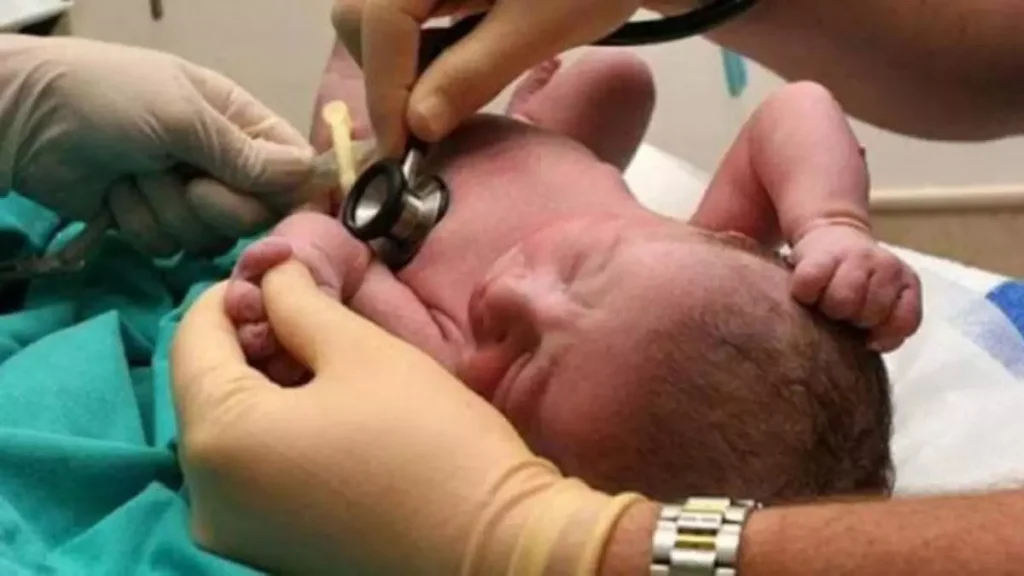
 A report by the Center for Economic and Policy Research (CEPR), based in the United States, published this Monday, asserts that the tightening of US sanctions against Cuba since 2017 “was probably the cause” of the dramatic increase in infant mortality on the Island, which went from 4 per 1,000 live births in 2018, to 9.9 in 2025 , an increase of 148%.
The study, which from its title echoes the regime’s mantra in the face of any problem the country faces (US Sanctions and the Sharp Rise in Infant Mortality in Cuba), quotes Alexander Main, director of International Policy at CEPR and co-author of the report, who asserts that “Trump’s maximum pressure policy on Cuba has caused the death of many babies and, although we do not yet have data for the last few months, it is very likely that more babies are now dying, even at a higher rate than last year, as a consequence of the current US fuel embargo against Cuba.”
The research center, considered left-leaning, supported by economists such as Joseph Stiglitz and Robert Solow, and largely funded by donations, asserts that if the mortality rate on the island had remained at its 2018 level, “approximately 1,800 fewer babies would have died between 2019 and 2025.” The CEPR compares Cuba’s figures with those of countries like Argentina, Brazil, Colombia, Mexico, and Jamaica, which, with the exception of Brazil, experienced declines or leveling off in their rates.
However, without emphasizing it, the report –replicated by Cubadebate on its front page this Tuesday– ends up attributing a good part of the impoverishment of Cuba’s health system to the pandemic –and not to the US embargo– noting that “the growth of the gross domestic product (GDP) per capita was -10.7% in 2020, one of the worst in the region .”
It ends up attributing much of the impoverishment of Cuba’s health system to the pandemic, and not to the US embargo.
“Unlike most other countries in the region and around the world, Cuba did subsequently experience a sizable post-COVID rebound during the years that immediately followed. Average annual GDP per capita growth from 2020 to 2024 was just 0.4 percent, as compared with the regional average of 3.2 percent. During this period, the quality of health care and access to health care services in Cuba sharply deteriorated amid widespread shortages of medicines and medical supplies and amid the departure of many health professionals,” the report states.
At no point do the authors point out that the Government continues to send thousands of doctors on international missions and that the sale of these services has served in the last decade to finance the construction of luxury hotels for a tourism sector in full decline, rather than dedicating those funds to improving the quality of health care.
For the preparation of the report, CEPR staff visited health centers in Cuba in the spring of 2024 “and observed firsthand some of the mounting challenges that the health care sector was experiencing. There were shortages of basic, critical medical supplies, such as syringes, inhalers, and even saline solution.”
“We met a young doctor who lamented being the only graduate from his class that was still practicing medicine in Cuba, and he attributed this to the shrinking wages for doctors.” Newly graduated doctors, can earn 5,060 pesos, insufficient for the most basic necessities, considering that a carton of 30 eggs can cost up to 3,000 pesos.
It attributed the problem “to the decrease in doctors’ salaries”
“At the National Oncological Institute we learned that medical staff were having great difficulty obtaining basic laboratory chemicals and were unable to access spare parts for radiotherapy equipment; as a result, they were unable to treat many cancer patients in a timely manner. The institute once had a total of 60 medical physicists (who were specialized in cancer treatment) and now had only 16. They previously had 16 anaesthesiologists and now had only five,” the center elaborated.
The report briefly reviews the chikungunya and dengue epidemic that struck Cuba last year, claiming the lives of mostly minors. “The severity of these outbreaks is likely a product of the sanctions,” the text states, omitting, first, the government’s dismissive attitude toward the initial reports flooding social media, including deaths, from mid-year onward, and its silence regarding the magnitude of the problem, which was only seriously addressed at the end of last year, almost four months after the outbreak began.
Nor does it mention that these arboviral diseases, which normally have a relatively low mortality rate, became a greater threat due to the country’s deteriorating hygiene, sanitation, and food conditions. The combination of epidemic outbreaks, a lack of medical resources, insufficient medicines, and the nutritional vulnerability of many children created a scenario that authorities now recognize as a public health emergency.
Another point not addressed by the CEPR is the consequences of government decisions, as the problems plaguing the healthcare system are not solely a result of the “blockade” or the pandemic. Dr. Ernesto René, who worked for 34 years in the Maternal and Child Health Program (PAMI) in Ciego de Ávila, warned as early as 2021 that experienced professionals were being lost “due to policies and decisions made by provincial directors that were completely misguided and lacked both scientific basis and experience.” He added that staff were not being cared for, and that “the lack of motivation has led to job abandonment, which has resulted in mortality rates unacceptable in the country for this century, leading to secondary problems such as depression among the families of those who lose a baby or their mother.”
The problems facing the health system have not only been a consequence of the “blockade” or the pandemic
The research center, in one of the report’s conclusions, points out that the current US fuel embargo, which has prevented almost all fuel shipments from reaching Cuba, “has further worsened an already critical situation.”
A country’s infant mortality rate is considered a key indicator of a population’s overall health and access to quality healthcare. Therefore, the country’s figures are disheartening, given that a decade ago, Cuba’s rate was among the lowest in the Western Hemisphere, even lower than that of the United States, at 4.3, compared to a regional average of 15.6 and a US rate of 5.8.
______________________
COLLABORATE WITH OUR WORK: The 14ymedio team is committed to practicing serious journalism that reflects Cuba’s reality in all its depth. Thank you for joining us on this long journey. We invite you to continue supporting us by becoming a member of 14ymedio now. Together we can continue transforming journalism in Cuba.