Domesticated reformers and Taliban clash as regime collapses
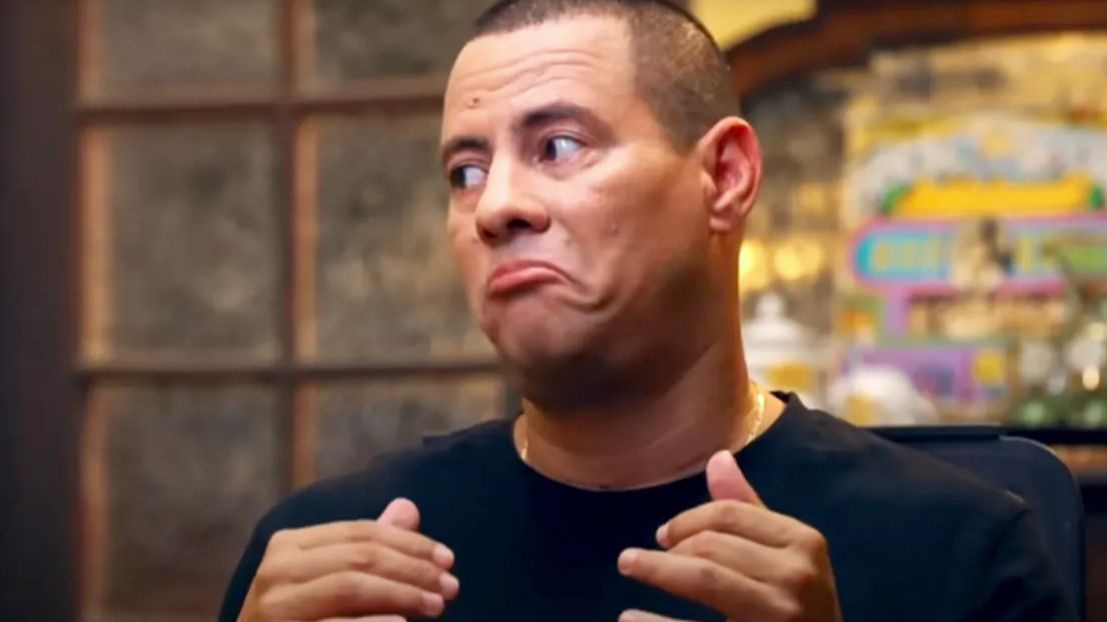
 14ymedio, Yunior García Aguilera, Madrid, 5 August 2025 — The recent interview with singer and composer Israel Rojas on the program La Sobremesa, on La Joven Cuba (LJC), has sparked intense controversy on both sides of the Cuban political spectrum. For some, it was an attempt to “whitewash” one of the most unpopular figures in the Cuban exile community; for others, especially those close to the regime, it was an unacceptable betrayal: how could Rojas possibly agree to appear on a media outlet “funded by the enemy”?
For years, there have been those who view La Joven Cuba as a sort of cultural supplement to the official newspaper Granma or a watered-down version of Cubadebate. Founded in Matanzas by Harold Cárdenas in 2010, it emerged under the wing of the so-called reformist ruling party. Over time, once outside Cuba, its writing began to shift between measured criticism and calculated winks that would allow it to maintain its status as a “valid interlocutor” for the island’s power.
That ambiguity worked for them. But the social uprising on 11 July 2021 marked a turning point.
During the Obama era and the thaw, that ambiguity worked for them. But the social uprising of 11 July 2021 marked a turning point. La Joven Cuba didn’t know how to—or didn’t want to—incorporate the historical weight of that rupture into their discourse. They clung to their narrative trenches as if the country were still the same as it was in 2010, when they were barely a university blog. It then, is no surprise that today they are judged harshly from both sides. Their lukewarmness is incomprehensible in a country where the streets and despair demand clearer definitions.
Their ambivalent strategy—outdated for some, opportunistic for others—lost them followers. Some prominent voices stopped writing in their pages. And their mocking, almost childish tone toward other media outlets that lost funding after the closure of USAID seemed like the final nail in their coffin. However, it must be acknowledged that La Sobremesa has been their resurrection, a “Lazarus, arise and walk” that has returned them to the center of debate and won them new followers.
The numbers don’t lie. The interview with Israel Rojas surpassed 50,000 views on YouTube, while the latest broadcast of Con Filo barely reached 7,000, fewer even than the army of cyber-speakers forced to inflate their metrics. It’s not the algorithm; it’s boredom. And it’s clear that Etecsa’s restrictions have also affected the “cyber-combatants.”
We saw a disenchanted, defeated Israel Rojas, transformed into a kind of Care Bear with selective amnesia.
On La Sobremesa, we saw a disenchanted and defeated Israel Rojas, transformed into a kind of Care Bear with selective amnesia. The poet of the “bulb” and the “ringworm” seems to have forgotten that he was present on November 27th, but not on the side of the artists, but rather locked in the offices of the Ministry of Culture. He also took to the streets on 11 July 2021, but not with the peaceful protesters, but after receiving the “combat order,” aligned with plainclothes police and military personnel. He arrived at the ICRT (Cuban Institute of Radio and television) ready to “beat the hell out of,” albeit late: they had already loaded us onto a truck of rubble headed for the Bivouac prison.
Now, Cubadebate —a self-proclaimed defender of sovereignty—is attacking him by hiring a foreign writer. Carlos González, an Asturian communist (not to be confused with Mentepollo, whose surname is Gonzalvo), accuses him of having fallen into “the trap of equidistance,” while resorting to the old and stale slogan of a besieged fortress. For this radical, the enemy is no longer the United States, but perfidious Norway. Shortly after, Michel Torres Corona—more eager to fly to Madrid than to defend the Revolution—echoes these words on Facebook and calls them “illuminating.”
The Cuban model is collapsing. And each of its fragments is competing to avoid being crushed in the collapse.
There are theories circulating that this is all part of a State Security operation: to restore some visibility to an artist faithful but without a muse, and to reposition La Joven Cuba as a victim of both extremes, thus renewing its legitimacy. Frankly, I don’t think they’re that clever.
The Cuban model is collapsing. And each of its fragments is competing to avoid being crushed in the collapse. Israel Rojas wants to tour internationally without having to sing for the benefit of the few in the venues of solidarity movements. La Joven Cuba needs to regain its audience and sustain its funding. Becoming the victim of cross-attacks suits them perfectly, as it allows them to appeal to that broad sector that, as in any society, prefers to avoid polarization.
Neither Donald Trump nor Xi Jinping would move a single aircraft carrier through Cuba.
The ideological Taliban, for their part, act as their nature dictates. Even though they feel the tremors beneath their feet, they must answer to their international allies, who are often more Castro-friendly than Castro himself. This radicalism guarantees them scholarships, trips, forums, positions, awards, fellowships, and red hearts, in the form of ‘likes’.
Ideology, in this context, seems to have reached unimaginable levels of prostitution. And in this great geopolitical brothel, neither Donald Trump nor Xi Jinping would move a single aircraft carrier through Cuba. That whiny, epic, and stale speech by Israel Rojas about “the besieged little island that resists more than anyone” no longer serves even as lyrics for a hit song.
The regime has failed. Everyone knows it: Buena Fe, La Joven Cuba, Díaz-Canel, Cubadebate. The only question is who clings to more bricks… while the building collapses.
____________
COLLABORATE WITH OUR WORK: The 14ymedio team is committed to practicing serious journalism that reflects Cuba’s reality in all its depth. Thank you for joining us on this long journey. We invite you to continue supporting us by becoming a member of 14ymedio now. Together we can continue transforming journalism in Cuba.