The Chic Area of ​​Matanzas, Cuba, is Today Barely a Memory

The decline of Varadero along with Covid ended the dream of the “Athens of Cuba” becoming a “creole Miami Beach”


A park with an immense sign was built in the city, but no one goes there, not even to take selfies. / 14ymedio

14ymedio bigger14ymedio, Pablo Padilla Cruz, Matanzas, 30 August 2025 — Matanzas has two nicknames: the “Athens of Cuba,” earned centuries ago as a cradle of poets and artists, and the “city of bridges,” thanks to the dozens of structures that cross the Yumurí and San Juan rivers.

With the advent of the new century, however, another less flattering nickname began to circulate: “The sleeping city.” The lack of night life and central recreation places plunged it into a silence that many attributed to the proximity of Varadero, that tourist magnet that absorbed all the investments and projects.

It wasn’t until 2016 that an attempt was made to reverse the inertia. First with the development of the Narváez promenade, turned into a boulevard, and soon after with a more ambitious project: the transformation of the neighborhood of La Playa, especially the area of Peñas Altas. The plan promised nearly two kilometers of bars, restaurants, shopping centers and nightclubs interspersed with residences -mostly luxury- and access to beaches: a Matanzas version of a kind of “creole Miami Beach.”

The shops are out of stock and the menus are poor. / 14ymedio

It worked for a while. Whole families found respite there after the work week. Andrés, known as El Piti, remembers it like this: “I worked as a security guard in Varadero. There was more money circulating than now, and on Sundays we went out in groups to enjoy ourselves. I had never seen so much movement in the neighborhood.”

The illusion was short-lived. Shops began to run out of supplies, menus became poor, and several places were subjected to dubious renovations. The Bellamar pizzeria, for example, closed for a second renovation in continue reading

less than a decade. Marielis, who has been employed there for more than 15 years, suspects that these works were more in the interests of managers and contractors than the needs of the public.

“We lost a lot of time because of this absurd remodeling,” recalls Andrés. “They set up a bar that made no sense. It only opened once a week, with beer and chicharritas. Then the pandemic came and we never recovered,” he added.

The deterioration of the premises even reached the Caracol store. / 14ymedio

The deterioration was repeated in other places: the Caracol store, the Bellamar service center, the La Sirenita shopping center – with its cafe still inactive – and even the old Dimar, subjected to several renovations and today in private hands.

Irene de la Caridad, a resident of the area, remembers those years with nostalgia. “On Saturdays and Sundays people met in the parking lot of La Sirenita before going to the discos. Now there is a park with a huge sign with the name of the city, but no one goes, not even to take selfies. With the heat and the tiles they put down, the reflection of the sun is blinding. I miss sitting in the cafe of La Sirenita, drinking a soda, facing the bay. I would choose between the terrace or the bar’s air conditioning… although now I don’t know with what electricity it would work.”

The final blow was given by the Covid pandemic. Added to this was the lack of interest of the State, the meaningless renovations and the arrival of private investors who manage premises at prohibitive prices. In the cafeteria of Playa Allende, for example, a soft drink costs 300 pesos and a beer 350.

What at the time was “the chic area” of Matanzas is today barely a memory. The city may not be as “sleepy” as before, but as Irene says, “in the evenings and nights you get bored… and that’s the truth.”

In the cafeteria of Playa Allende a soft drink costs 300 pesos and a beer 350. / 14ymedio

Translated by Regina Anavy

____________

COLLABORATE WITH OUR WORK: The 14ymedio team is committed to practicing serious journalism that reflects Cuba’s reality in all its depth. Thank you for joining us on this long journey. We invite you to continue supporting us by becoming a member of 14ymedio now. Together we can continue transforming journalism in Cuba.

Death of a 28-Year-Old Boy Struck by Lightning in Colón, Matanzas, Cuba

Adriel Ferrera was electrocuted while performing agricultural work 

Cuba records an annual average of 54 deaths from lightning strikes. / Facebook / Raúl Navarro

14ymedio bigger14ymedio, Matanzas, 30 August 2025 — Adriel Ferrera La O, 28 years old, died this Friday as a result of lightning in the town of Río Piedras, in Colón, Matanzas. The young man was electrocuted while performing agricultural work, the People’s Power Municipal Assembly reported on its Facebook page.

The neighbors tried to resuscitate him, but unfortunately Ferrera died before he could be taken to the hospital. He was the father of a two-year-old girl, according to several family members and friends in reports about his death.

Earlier this month, three children lost their lives in Manicaragua, Villa Clara, due to lightning during a storm. They were accompanied by 14-year-old Diamelis Delgado Granados, the only survivor of the group. She was hospitalized and fared well, according to the authorities.

The fatalities in that incident were: Andy Alberto Turiño González (13), Analía García Rodríguez (14) and Jorge Alejandro de la Coba Monteagudo (14), who had come from the United States to spend his holidays in Cuba. continue reading

Cuba records an annual average of 54 deaths from lightning strikes.

A few days later, on 10 August, a 42-year-old woman died after being struck by lightning. The incident also occurred in the municipality of Colón, Matanzas, when the victim was engaged in agricultural work, as was Adriel Ferrera La O.

Just two months ago, two other teenagers died under similar circumstances in Bauta, Artemisa. On June7, in the neighborhood of Pita (popular council Urban 2), Luis Antonio and Maicol -who were playing soccer outdoors- were struck by lightning.

In 2023, a lightning strike also killed Dunielkis Fonseca Borges, a worker at the Nickel Union Services Company in Moa, Holguín. In that incident, six other colleagues, who, like her, were waiting for transport to return home, were injured.

To date, Cuba has recorded an annual average of 54 deaths from lightning strikes, making it the leading cause of death from weather events. Between 1987 and 2017, 1,742 deaths were recorded, according to a study carried out by specialists from the Institute of Meteorology (Insmet).

According to recent estimates supported by NASA and other specialized sources, it is estimated that up to 24,000 people worldwide are killed annually by lightning strikes, and approximately 240,000 are injured. However, there is a lack of systematic official reports on the incidence of this type of phenomena in certain regions.

Translated by Regina Anavy 

____________

COLLABORATE WITH OUR WORK: The 14ymedio team is committed to practicing serious journalism that reflects Cuba’s reality in all its depth. Thank you for joining us on this long journey. We invite you to continue supporting us by becoming a member of 14ymedio now. Together we can continue transforming journalism in Cuba.

From a Very Poor Country That Received Aid From Cuba, Vietnam Is Now One of the Island’s Benefactors

  • “Cuba sent an annual aid of 10,000 tons of sugar, doctors and some advisers,” recalls a former ambassador of the regime in Hanoi
  • Díaz-Canel comes to Vietnam to beg for investments from state and private enterprises of a communist ally that practices a market economy
The general secretary of the Central Committee of the Communist Party of Vietnam, To Lam, with Miguel Díaz-Canel in Hanoi. / VNA

14ymedio, Madrid, September 1, 2025 — In the midst of Miguel Díaz-Canel’s official visit to Vietnam, a country that has been gaining ground in Cuba — even literally by turning one of its companies into a tenant of land on the island — Cubadebate publishes an interview with former ambassador Fredesmán Turró, which, unwittingly, is very revealing of how the two communist nations have followed diverging paths and come to opposite results.

From being a very poor country receiving economic aid from Cuba, Vietnam has opened itself to the market economy and has become a developing society that helps an impoverished Cuba that still clings to centralized planning.

“Cuba sent an annual aid of 10,000 tons of sugar, doctors and some advisors, and in the middle of the war two poultry genetic centers and a cattle genetic center were built,” says Turró, who arrived in Vietnam in 1968 -at just 18 years old- along with nine other students. The group was part of a commitment made by Raul Castro, then commander, during a visit to the country two years ago in which he met with Ho Chi Minh.

“It was really a very, very emotional visit. In his speech, Raul said that Cuba would even be willing to send volunteers to fight alongside the Vietnamese,” he said. The Asian leader, who died in 1969, never got to know Fidel Castro -who did not visit Hanoi until 1973- although, according to Turró, “There are countless anecdotes that show the affection, the respect they had. “The Cuban sent, he says, ice cream from Coppelia to the Vietnamese leader and “species of bull frogs for Uncle Ho to raise in the pond near the humble hut where he lived, in the service area of the Presidential Palace.” continue reading

“It was really a very, very emotional visit. In his speech, Raul said that Cuba would even be willing to send volunteers to fight alongside the Vietnamese”

The former ambassador relates, with feeling, Castro’s first visit to Vietnam, which occurred in the middle of the war; he was “the first foreign politician to visit liberated areas of the south, very close to the enemy.” The Vietnamese “remember it with much gratitude and admiration for the audacity of the Commander, because that was really dangerous, but also for the decision of the Cuban leader to build and donate a hospital to the area.” Cuban doctors are currently working there, although the regime has not specified recently how many of them make up the contingent. 

In the middle of the interview, the conversation revolves around Vietnam’s transformation from a poor country with no basic services to the emerging economy it is today. According to Turró, who admits that he does not know anything about economics and is limited to telling what he experienced, he says that the first mistake of the country was to try an industrialization similar to that of the countries in the socialist camp in Europe, when it lacked the necessary bases for this. Therefore, they decided to take another course.

They adopted a market economy with state control, not letting it “go wild,” while deciding to maintain social policies (…). In poor areas they built infrastructure, put in electricity and implemented new policies.

First visit of Fidel Castro to Vietnam, in September 1973. / Prensa Latina

The former official also touches on a sore point, which has long been claimed by self-employed producers and small entrepreneurs in Cuba. “One of the initial measures of that renewal process was to liberate the productive forces and develop them,” he says, although he also claims the importance of the Communist Party in the process and says that “Ho Chi Minh’s thinking remains the guide.”

The development of Vietnam, based on these changes in its economy, has led it, he emphasizes, to be “in recent years (…) fundamental for winning and overcoming the difficulties we have in Cuba. As we know, it is the second largest investor in the Mariel Special Development Zone (ZEDM) and the second largest trading partner in Asia.” He added: “Vietnam has helped and still helps us in several projects that are key, such as the planting of rice and corn. Its ZEDM companies produce basic necessities.” In addition, the country has now raised $14.8 million in donations for the island.

Turró, asked what measures Cuba could take to penetrate the Vietnamese market, recognizes that we must “have more initiatives, be more creative” and stresses that the Cuban side must understand that in Vietnam there is free competition, and it can cost a lot to do business. “If a Cuban company is going, for example, to sell coffee -which is not the case-, it must know that it will have to compete with several brands of Vietnamese coffee, including foreign coffee brands,” he says, while recalling that competition is in fact encouraged and fostered.

“The purchase of medicines in Vietnam is by tender. You have to go through a bidding process, and -this is no secret to anyone- those contracts are sometimes won by the big pharmaceutical multinationals, which dominate global trade,” he admits. 

Political will, however, partially opens the way for Cuba. That is why among the activities of Díaz-Canel in Hanoi has been the inauguration of the high-tech plant for the production of medicines of Genfarma, the joint venture resulting from an agreement between BCF S.A. -an entity of the state group BioCubaFarma- and the Vietnamese Genfarma Holdings.  

“We intend to produce blood products there in the short term. It will be another extraordinary fact that will give technological sovereignty to Vietnam, not just in the case of vaccines and biotechnological products, with very high added value,” said Mayda Mauri Pérez, president of BioCubaFarma. “It will have a decisively high impact on the health of the Cuban population, because everything we do with Vietnam will have a return to our basic list of medicines. With the participation of the Vietnamese we will have financial resources that will allow us to produce on a large scale and meet both the demand of their population as well as ours,” she added.

In Hanoi, Díaz-Canel stressed that “this is the fastest joint venture we have achieved,” as it had already been agreed during President To Lam’s visit to Cuba in September 2024.

In Hanói, Díaz-Canel stressed that “this is the fastest joint venture we have achieved,” as it had already been agreed during President To Lam’s visit to Cuba in September 2024, which demonstrates the efficiency of the Asians, who are also achieving some important advances in the cultivation of rice on the island. 

The Cuban side has undertaken to give preferential treatment to its Vietnamese partners, who had expressed their annoyance at the inefficiency of their counterparts on the island. In 2024, the company Agri VMA -with several businesses on the island, including its presence in ZEDM- sent a letter to three ministers of the Cuban government requesting access to 300,000 dollars frozen in their account at the International Financial Bank. The company claimed that it needed these funds to import raw materials and maintain its production, which had been reduced to 10 per cent due to a shortage of inputs, and it reminded Cuba of Vietnam’s role as a supplier of animal feed.

Shortly before Díaz-Canel’s arrival in Hanoi, the Cuban Deputy Minister of Foreign Trade and Investment, Deborah Rivas Saavedra, was in charge of smoothing the way and assured that Cuba “is open and ready” to adopt measures to facilitate Vietnamese investment projects.

Translated by Regina Anavy

____________

COLLABORATE WITH OUR WORK: The 14ymedio team is committed to practicing serious journalism that reflects Cuba’s reality in all its depth. Thank you for joining us on this long journey. We invite you to continue supporting us by becoming a member of 14ymedio now. Together we can continue transforming journalism in Cuba.

The New School Year Starts in Cuba With Full Classrooms, Few Teachers and Empty Backpacks

In the absence of uniforms, many young people wear casual clothing and even a garment until recently banned in schools, the ‘jeans of the Empire’.

“Faced with the lack of teachers, indiscipline and rumors of drugs around a school in Holguín, one mother preferred that her son return to his municipality.”/ 14ymedio

14ymedio bigger14ymedio, Havana, 1 September 2025 –The beginning of the school year in Cuba, this Monday, was far from the epic repeated by the state media, between promises of “celebration” and “commitment.” While official acts and triumphalist speeches were multiplying on television, in Sancti Spíritus a grandmother had to sell the Metformin she takes to control her diabetes to buy notebooks for her grandson. The mother of the child, who lives abroad, was not yet able to send the package with the school supplies, and the old woman chose to exchange her health for the materials.

It is just one of the stories that 14ymedio has collected about the beginning of classes. In Holguín, the driver of a private taxi recounts the experience of a passenger whom he transported this morning who moved from Buenaventura. “He did not even allow his son to go to the first shift of classes in the Alberto Sosa secondary school. It was enough for him to see the scene,” says the driver. “Faced with the lack of teachers and the indiscipline, without anyone being able to control it, the disorganization and the rumors of drugs in the vicinity, he preferred to return the boy to his village rather than leave him at that school.”

The problem of drug use also haunts the José Miró Argenter secondary school, in the periphery of Holguín. “Some parents have paid between 10,000 and 15,000 pesos to get their children transferred to schools that are more central and supposedly safer,” the taxi driver added.

The official speech wants to erase the image of the previous course, marked by the rebellion of students against the ‘tarifazo’ [huge rate increase] of the state telecommunications company Etecsa. / 14ymedio
The government had declared this beginning of the school year as a “top priority,” in the words of Miguel Díaz-Canel, although the president was not present because he is on a tour of Asia. Education Minister Naima Trujillo filled the gap with figures: more than 1.5 million students returned to school on the first of September. He had to bury the image of the previous school year, marked by the rebellion of the university students against the ‘tarifazo‘ — huge rate increase —  imposed by the state telecommunications company Etecsa.

Behind the official choreography, the country shows a bleak picture. Dozens of schools have been closed because of their deterioration, and classrooms continue reading

are overcrowded due to lack of teachers. The discourse is rife with euphemisms such as “assurances” and “optimization of resources.” But on the street, the most repeated phrase is another: “lack of everything.”

The lack of uniforms was evident from this first day. Photos taken by 14ymedio reporters show students dressed in casual clothes, including the jeans of the Empire, until recently banned from schools. Even the official cartoons made humorous allusions to the problem. In state stores, many families did not find the sizes they needed, and on the black market a single garment is sold for a price that very few can afford. Some parents resorted to bartering, exchanging shirts and blouses. Once again, the help of relatives abroad was the lifeline.

A state employee of Sancti Spíritus sums up the paradox: “It is cheaper to buy school supplies in Spain and send them, than to get them in Cuba.” And with shoes the drama is even greater. One mother paid the equivalent of more than two months’ salary, about 13,000 pesos, for basic shoes.

Some schoolyards were decorated with Venezuelan flags that had little to do with the occasion. / 14ymedio

The shortage is compounded by lack of sleep. Parents and teachers agree that the blackouts affect rest and learning. In Camagüey a power blackout since two o’clock in the morning is reported just before the opening of schools. A mother described on Facebook the irony of hearing the school talk about a “better future” after staying up all night. “My daughter already knows how things are,” she wrote on her Facebook page.

In the school yards, decorated in some cases with Venezuelan flags that had little to do with the occasion — as in the primary and secondary school José Luis Arruñada of Nuevo Vedado, in Havana — parents looked at the few materials delivered with distrust. They describe two pencils, badly copied notebooks and old books that many recognized as the same ones they used in their childhood.

The shortage of teachers, however, is the biggest obstacle. In Camagüey, 19 schools did not open their doors; in Holguín they speak of “zonification,” a technical term which in practice means crowded classrooms and longer journeys. The few teachers who resist must accept part-time contracts, split shifts and face overcrowded classrooms. Two decades ago the government boasted an “ideal” of 20 students per classroom and up to two teachers in some grades. That reform evaporated, and today’s classrooms inflate like balloons about to explode.

In Camagüey, 19 schools did not open their doors, and in Holguín they speak of “zonification”

The officials speak of “creativity,” but for most families that word implies mending used uniforms, improvising backpacks and finding desks on their own. For teachers, it means recycling notebooks, dictating notes instead of using books and photocopying guidelines with money out of their own pockets.

The opening act this Monday ended with the usual script: a ceremony that tried to disguise as celebration what is actually nostalgia. Parents know that the real test begins the next day, when the pencil is missing, the teacher can’t give attention to everyone and the notebook pages run out before November.

Translated by Regina Anavy

____________

COLLABORATE WITH OUR WORK: The 14ymedio team is committed to practicing serious journalism that reflects Cuba’s reality in all its depth. Thank you for joining us on this long journey. We invite you to continue supporting us by becoming a member of 14ymedio now. Together we can continue transforming journalism in Cuba.

Cuba Bought $205 Million in Food from the US Between January and May

US-Cuba Trade highlights the role of the private sector in the increase in vehicle and machinery purchases

Chicken once again led purchases for another month. / Cubadebate

14ymedio bigger14ymedio, Havana, 18 July 2025 — Continuing the upward trend experienced since the beginning of the year, imports of U.S. products to Cuba increased again by 7.6% this May compared to the same month in 2024. In total, the island purchased products worth $37.2 million that month. In the last five months, the figure has risen to $204,928,982, 16.6% more than the same period last year.

The data, published by the United States-Cuba Economic and Trade Council (US-Cuba Trade), put into practice what is no secret: the island is becoming increasingly dependent on imports from the enemy “empire” to feed the population, as national agricultural production has collapsed. As a result, food purchases continue to occupy the largest share of the basket.

For another month, chicken once again led the list of purchases, with thighs, rumps, and frozen meat valued at $15,782,351, representing 42.2% of total imports. continue reading

The island also acquired a significant amount of powdered milk, representing 12% of the import value.

The island also purchased a significant amount of powdered milk, representing 12% of the import value, valued at $4,430,000. Another $2,400,553 was used for fluid milk, $1,196,977 for rice, $812,317 for pre-prepared foods, $664,571 for religious hosts, and $479,420 for coffee (roasted, unroasted, and decaffeinated).

US-Cuba Trade also highlighted the import of motorcycles for $1,359,638, but no mention is made of the purchases of used vehicles, which in recent months, following an authorization from Washington, had become popular among business owners and private companies on the island. Humanitarian donations, meanwhile, amounted to $10,783,073, while purchases of medical and healthcare products amounted to a meager $52,281.

US vehicle and machinery sales to Cuba deserve special mention. From 2023 to the end of 2025, the report estimates, exports of all types of vehicles—new, used, electric, gasoline, motorcycles, and trucks—and their parts will exceed $115 million, to which sales of machinery and industrial products must be added, for a total of $140 million. US-Cuba Trade notes that the dynamism of the private sector has largely contributed to the increase in US exports.

In the first half of 2025, purchases abroad in this sector exceeded $1 billion.

The Cuban government recently recognized the participation of individuals in the economy and the importation of all kinds of products to the island. During parliamentary sessions, it stated that, in the first half of 2025, foreign purchases in this sector exceeded $1 billion, a 34% increase compared to the same period in 2024.

At the top of the list are SMEs, responsible for 70% of this amount, followed by self-employed workers (26%) and artisans, agricultural and non-agricultural cooperatives (4%).

Among the main imported products, added the Parliament’s Economic Commission, are raw materials and intermediate products (37%), food (22%), beverages (16%) and “machinery, appliances and their parts” (13%).

The Ministry of the Food Industry , which is facing a clear domestic production crisis and has a limited budget, also admitted that 25% of its production depends on its links with the private sector.

____________

COLLABORATE WITH OUR WORK: The 14ymedio team is committed to practicing serious journalism that reflects Cuba’s reality in all its depth. Thank you for joining us on this long journey. We invite you to continue supporting us by becoming a member of 14ymedio now. Together we can continue transforming journalism in Cuba.

Trump, the Strategic Playing Board and the Cuba Effect

If Venezuela falls, the financial source of 21st-century socialism and the island’s economic lifeline will collapse.

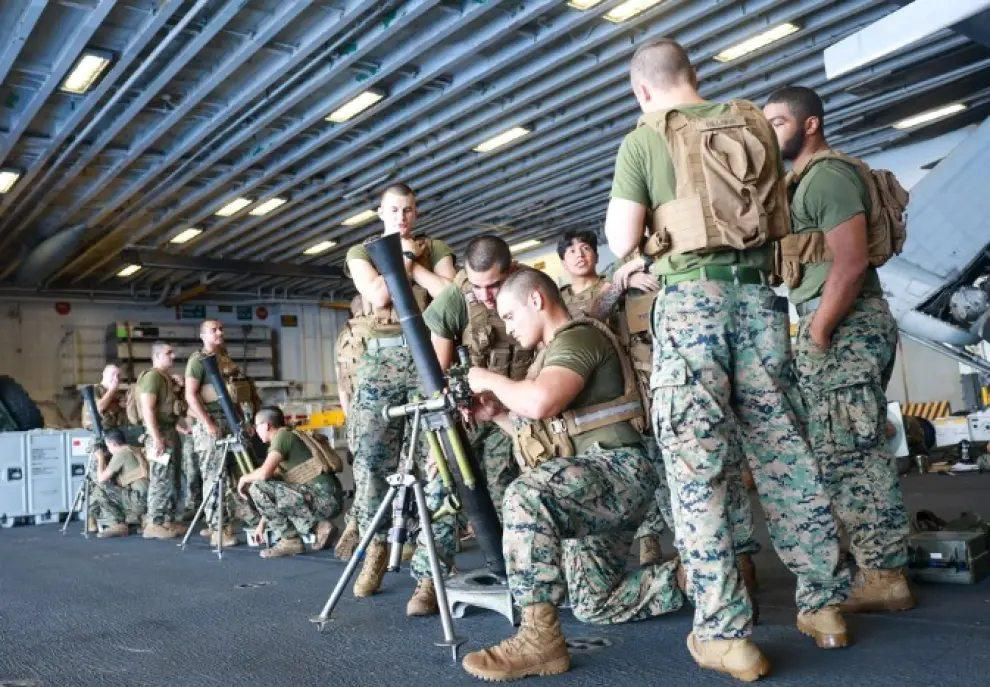
Images of the US military deployment near Venezuela. / US Navy

14ymedio bigger14ymedio, Jorge L. León, Houston (Texas). 29 August 2025 — The chess game of American geopolitics is back in play. Between sanctions, alliances, and veiled threats, the confrontation between the United States and Venezuela is not just a local standoff, but an episode of continental scope. On that board, Cuba appears as both a key piece and, at the same time, the most vulnerable target of a strategy that revives the Monroe Doctrine through the prism of the 21st century.

I’m no witch doctor when it comes to predicting the future, but I do have a certain sense of smell. And what we’re experiencing today in the confrontation between the United States and Venezuela isn’t an isolated incident: it heralds a highly consequential outcome, not only for Caracas, but for the entire American continent.

The fall of Nicolás Maduro is a matter of time. The path to that end admits two probable routes: an internal breakdown of the regime that would hand over its leader, or a swift surgical removal operation with the help of internal factors. Historical experience shows that Washington has repeatedly used this type of maneuver when its hemispheric interests have been at stake—from Panama in 1989 to covert operations in the Caribbean and Central America.

The Cunning Pressure

What we’re seeing isn’t improvisation, but rather part of a strategy of escalating pressure: financial sanctions, diplomatic isolation, control of supply networks, pursuit of drug trafficking, and, at the same time, the display of U.S. military might as a deterrent.

Trump’s “maximum leverage” doctrine seeks to reduce Maduro’s maneuverability through economic and diplomatic siege

Trump’s “maximum leverage” doctrine—very much in line with Marco Rubio’s vision—seeks to use the economic and diplomatic siege to reduce Maduro’s maneuverability until he is forced to resign. The cleverness of this pressure lies in the fact that, while publicly announcing the desire to avoid open armed conflict, the credible threat of lightning action remains.

According to analyst Michael Shifter, president of the Inter-American Dialogue: “The Maduro regime is supported by an external framework—Russia, China, Iran, Cuba—that shields it. But that network cracks when international pressure is accompanied by fractures within the Armed Forces.”

Russia, China and Iran in the Caribbean

The continent is invaded by powers hostile to Washington. The Venezuelan regime has served as a gateway for them, through lucrative contracts with Moscow and Beijing, which secure strategic resources (gold, oil, and gas) in exchange for political and military support. Iran, for its part, has woven networks of illicit financing and cooperation in intelligence and terrorism.

This scenario makes a 21st-century re-examination of the Monroe Doctrine inevitable. “America for Americans” ceases to be a slogan and becomes a strategic imperative: curbing the influence of external actors seeking to turn the continent into a playground for blackmail and pressure.

The Fall of Venezuela and the Coup Against Cuba

The equation is clear: if Venezuela falls, the financial source of 21st-century socialism will collapse. Cuba, which since the days of Hugo Chávez has turned Caracas into its economic lifeline, will be left unprotected. According to estimates by economist Carmelo Mesa-Lago, the island received more than 35,000 barrels of subsidized oil per day from Venezuela, as well as millions in aid in soft loans and opaque agreements. Without this support, Cuba’s systemic crisis cannot be masked with slogans

The “explosion of democracy” sweeping through Latin America will mean the end of more than six decades of communist control for Cuba.

In fact, Havana knows it is on the brink of a precipice. The repressive apparatus is intensifying because the leadership perceives that a democratic explosion in Venezuela would have an immediate domino effect on the island. The “explosion of democracy” sweeping across Latin America will mean the end of more than six decades of communist control for Cuba.

The Board in Transformation

The red has begun to fade across the continent: Argentina, Ecuador, Bolivia, and now Venezuela itself are putting an end to the project of 21st-century socialism. What’s emerging is a geopolitical realignment where this century’s anti-communism aligns with North American pragmatism: defeating terrorism, cutting off drug trafficking, and blocking the path for Russia, China, and Iran.

On that strategic board, Donald Trump—with all the criticism and controversy he provokes—has set the pieces in motion. And the final checkmate could inevitably be the most severe blow to the Cuban dictatorship.

History teaches us that no regime sustained by repression and external dependence lasts forever. Venezuela sets the pace, but Cuba represents the outcome. The collapse of 21st-century socialism will not only be the fall of an unviable economic model, but also the defeat of an ideological hegemony that has poisoned the region for decades. And in this scenario, US pressure, reinterpreted by Donald Trump, could become the final blow that closes a cycle and opens, with all its tensions and challenges, a new era for the Americas.

Translated by Regina Anavy

____________

COLLABORATE WITH OUR WORK: The 14ymedio team is committed to practicing serious journalism that reflects Cuba’s reality in all its depth. Thank you for joining us on this long journey. We invite you to continue supporting us by becoming a member of 14ymedio now. Together we can continue transforming journalism in Cuba.
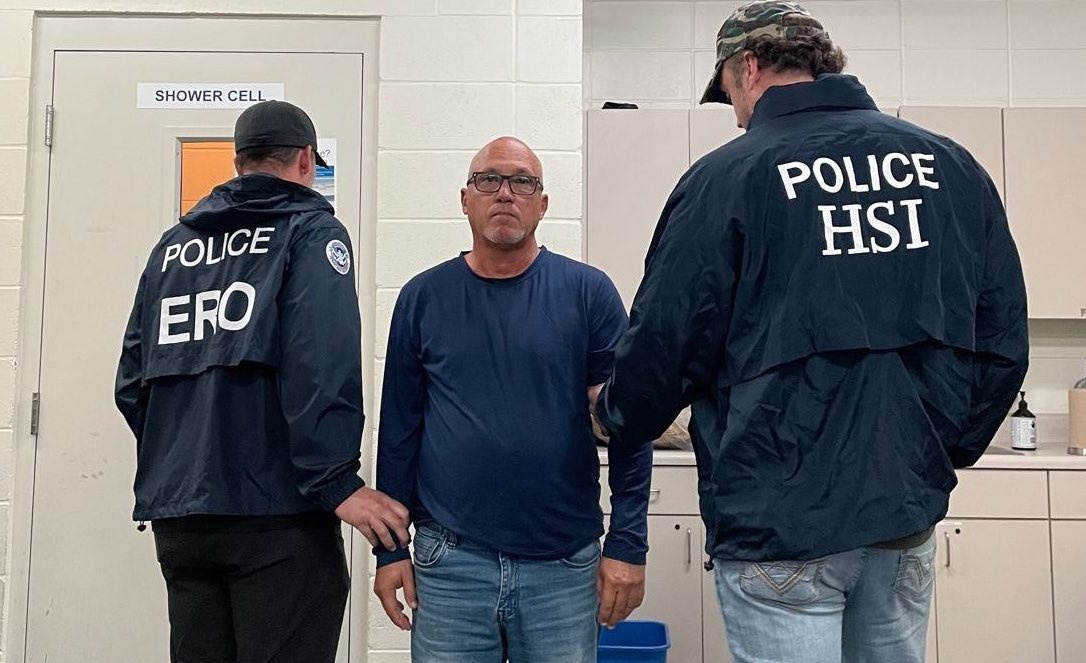
Former Cuban Regime Jailer Jorge Luis Vega Receives Deportation Order From the US

He entered Florida on parole in January 2024 and was reported after beginning the process to qualify for the Adjustment Act.

Image of Cuban repressor Jorge Luis Vega García, detained in the US, shared by Senator Carlos Giménez. / X/@RepCarlos

14ymedio bigger14ymedio, Madrid 29 August 2025 — Former Interior Ministry Lieutenant Colonel Jorge Luis Vega García, known as Veguita, was arrested on August 5 in the United States by Immigration and Customs Enforcement (ICE) after being identified by some of his victims on the island as a cruel repressor. He now has a deportation order to Cuba. The decision was signed by a Miami immigration judge last Monday, although it grants an appeal period until September 24.

If he loses, he will be returned to Havana, which can accept or reject the deportation. In similar situations, Martí Noticias points out, the US usually opts for returns to Mexico or other countries willing to receive former Cuban officials.

Vega García legally entered the United States on January 20, 2024, through Tampa International Airport in Florida, along with his wife and son, under the Humanitarian Parole Program. He was later eligible for the Cuban Adjustment Act, and during that process, his involvement in the island’s criminal justice system was not detected.

At the end of July, several former political prisoners, including Benito Ortega Suárez, Pablo Pacheco Ávila, Blas Giraldo Reyes, and Fidel Suárez Cruz, identified him as “one of the regime’s most feared repressors,” responsible for orchestrating physical and psychological torture against continue reading

opponents in the Agüica and Canaleta prisons in Matanzas.

At the end of July, several former political prisoners described him as “one of the regime’s most feared repressors.”

“Veguita is one of the many murderers Cuba has,” Fidel Suárez told journalist Mario J. Pentón. Suárez claimed that, along with other officials, Vega beat him 19 times in a single month, leaving him with permanent scars. Pablo Pacheco, convicted during the Black Spring of 2003, remembered him as a man with a “short, Nazi-style haircut” whose “evil you could see in his face.”

The deportation order comes less than a month after the arrest, revealing the Trump administration’s willingness to expedite these types of cases. Cuban-American Congressman Carlos Giménez formally requested his deportation at the time, in a letter to Secretary of Homeland Security Kristi Noem, in which he included documentary evidence of his involvement in the repressive apparatus. The matching signatures on several documents signed by Vega in Cuba in 2010 and in the United States in 2024 confirmed his identity.

Vega’s case adds to other recent ones, such as that of Jorge Javier Rodríguez Cabrera, also linked to the Cuban regime and detained by ICE in recent months. Daniel Morejón García, who appears on the Foundation for Human Rights in Cuba’s list of repressors, was also arrested and subsequently deported to the island in May.

Another case is that of former Cuban judge Melody González Pedraza, known for her role in the trials against protesters from the Island-wide protests of 11 July 2021 (’11J’), and detained upon arrival in the US despite having been accepted under the Humanitarian Parole Program. After being rejected, the former official requested political asylum, alleging pressure from the regime to issue certain sentences, but her request was dismissed, and she received a deportation order in May.

She was expected to arrive on the island on the U.S. return flight this Thursday, but her name continues to appear in the records of the Richwood immigration center in Louisiana, where she remains detained by ICE.

More than 100 names appear on a list submitted by Giménez to the Department of Homeland Security, including alleged repressors residing in the United States.

____________

COLLABORATE WITH OUR WORK: The 14ymedio team is committed to practicing serious journalism that reflects Cuba’s reality in all its depth. Thank you for joining us on this long journey. We invite you to continue supporting us by becoming a member of 14ymedio now. Together we can continue transforming journalism in Cuba.
For the New School Year in Cuba, Everything is Missing and Some Schools Will Not Open Their Doors

Authorities admit on Cuban Television that uniforms will only be available for students in the initial years.

Authorities have promised to be more flexible regarding the use of other clothing by students who did not receive uniforms. / Periódico 26

14ymedio bigger14ymedio, Havana, 29 August 2025 — On the Round Table TV program this Thursday, Cuba’s Education authorities who, until now, only only offered glimpses of the problem to the official press, finally acknowledged the magnitude of the delays in preparations for the school year, which begins on Monday. The problem is particularly critical in the case of school uniforms, of which no fewer than 1.3 million pieces remain to be manufactured.

The figure was provided by Mirla Díaz Fonseca, president of the Light Industry Business Group (Gempil), who explained that the total demand for the 2025-2026 school year was 3.6 million pieces, but only 2.3 million pieces were financed. The solution—one already used in past academic years—was to prioritize the initial grades, that is, those starting a new level of education who are, therefore, unable to reuse clothing from their previous year.

“We decided, like in other years, to prioritize the early grades because those children have no alternatives. It’s true that it’s very difficult in the continuing grades, where they won’t have uniforms. It’s difficult because they grow and gain weight; so it becomes more complex,” explained Díaz Fonseca.

The Minister of Education, for her part, bluntly admitted: “This is the second consecutive year in which we haven’t been able to provide, let’s say, the continuity uniforms, which is beginning to have a stronger impact on families.” In fact, she acknowledged that only 20% of the enrollment will have new uniforms.

Uniforms for all the initial grades are guaranteed either: “Of the six initial grades, only three,” she stated. The rest, if all goes according to plan, could receive their first piece by the end of October. continue reading

The clothes they obtain on their own must still adhere to certain requirements, such as “respecting the colors of the educational level.”

Breaking new ground with regards to a strict rule in Cuban schools, the minister asserted that the use of uniforms has been “relaxed” so that students who don’t meet the requirements can attend school without problems in other attire. However, the clothing they obtain on their own must still meet certain requirements, such as “respecting the colors of the educational level.”

“We know that for Cuban families, the uniform has extraordinary symbolism. It represents equality within the school; and also savings, because when you have the uniform—even if we have to wash it from time to time—it’s not the same as dressing the children in appropriate clothing every day,” said the minister, romanticizing the outfits.

But behind the symbolism lies the economic reality. A recent report published by 14ymedio exposed how this shortage fuels an informal market that has gained momentum. In Matanzas, for example, school uniforms that should be sold in state-run stores for 75 pesos are being resold in Telegram, Facebook, and WhatsApp groups for prices ranging from 150 to 600 pesos, depending on the condition, size, and urgency. In Havana, this figure can even triple.

The problems don’t end there. In addition to uniforms, the well-known teacher shortages across all levels, and the closure of schools not mentioned 0n the Round Table program, educational institutions, as the Ministry itself acknowledged, are working with a “tight standard” for school supplies. Rolando Ruiz Peraza, Director General of Planning and Assurance for the ministry, explained: “The term ’tight standard’ gives the impression that it’s not ideal, but it solves the problem.” Last year, students received only 50% of their notebooks and pencils. This year, the major improvement is that each student will receive two pencils per month, although the number of notebooks will remain at a minimum.

____________

COLLABORATE WITH OUR WORK: The 14ymedio team is committed to practicing serious journalism that reflects Cuba’s reality in all its depth. Thank you for joining us on this long journey. We invite you to continue supporting us by becoming a member of 14ymedio now. Together we can continue transforming journalism in Cuba.
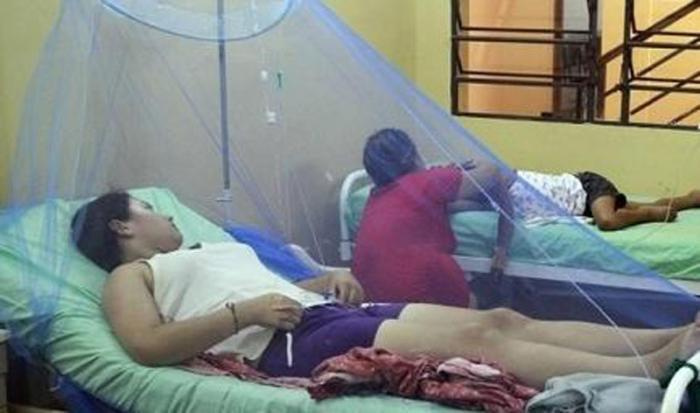
Due to a Lack of Reagents in Hospitals, Cubans Do Not Know if They Have Oropuuche or Dengue Fever

The spread of both viruses is advancing throughout most of the country amid a lack of diagnosis and the proliferation of mosquitoes.

Doctors used to visit the homes of dengue patients. Now that practice has been lost. / Archive/Granma

14ymedio bigger14ymedio, Mercedes García, Sancti Spíritus, 28 August 2025 — Oropouche or dengue? The question has been on Dayana’s mind for a week. For the a 35-year-old resident of Sancti Spíritus, the conclusion is always the same: “I’ll never know, because the clinic doesn’t have any reagents.” The young woman is just one of the many victims of the malaise caused by both viruses, which has spread throughout her neighborhood, among her acquaintances, and, according to the island’s authorities, throughout the country.

“That,” “the virus,” or “whatever’s going around” are the new names Dayana and many other Sancti Spiritus residents have given to the symptoms common to both illnesses—fever, malaise, joint pain—due to the lack of resources at health centers to determine which one they suffer from. In reality, she confesses to 14ymedio, the diagnosis doesn’t matter because “here, everyone already knows they should rest and use home remedies: lots of cherry or guava leaf decoctions, gelatin, chicken foot broth and water, lots of water.”

Both diseases have spread in recent weeks, especially oropouche, which, according to epidemiologist Francisco Durán’s report on Cuban Television on Wednesday, is now present in 11 provinces. Dengue has spread to seven, but presents a more complex “condition” than oropouche. Four patients are reported to be in intensive care, two diagnosed as seriously ill and two as critically ill. continue reading

The United States Embassy on the island published two alerts warning its citizens about the risks

The spread of the virus has even set off alarm bells at the U.S. Embassy on the island, which issued two alerts on Wednesday warning its citizens of “an increase in the number of cases of dengue, chikungunya, and oropouche virus throughout Cuba,” as well as hepatitis A, the latter primarily in Havana.

“Hepatitis A is primarily transmitted through contaminated food and water. Areas with inadequate water supply systems, ineffective garbage collection, and an abundance of flies pose a particularly high risk of transmission. These conditions persist in several areas of the city,” the statement said.

For Dayana, however, life goes on with or without the virus. “It’s been a week or so since I had ‘it,’ and so has my mom, and a lot of people in the neighborhood. Yesterday I went to work and my boss and the finance department were there, but everyone keeps working like this, everyone keeps doing their things despite the illness,” she says.

In hospitals, she says, it’s not given much importance either. “I went to the clinic myself when I started feeling ill, and after telling me there was no lab test, the doctor told me: ’That’s dengue or oropouche. Rest and drink plenty of water,’” she says.

In years past, she recalls, “when people had these symptoms, a doctor would come to see you and tell you that you had to stay home, that you couldn’t go out. The mosquito team [Epidemiology] would also come and check your yard to see how your water was. Now they don’t do anything; no one takes care of it,” she laments.

“There’s also the problem of garbage. There are many [formal and informal] dumps throughout the city that haven’t been collected in a long time.”

To make matters worse, she says with annoyance, viruses are transmitted by mosquitoes, and in Sancti Spíritus “they’re a daily occurrence.” “Here, water comes twice a day, and with the huge number of leaks, it spills and accumulates everywhere,” she complains.

When water starts to flood the pipes, she explains, “my own neighbors leave the tank open, and the water runs all over my yard. There’s also the problem of garbage. There are many dumps throughout the city, long uncollected, with basins where water accumulates every time it rains.”

The panorama and ditches make the city the perfect breeding ground for the proliferation of Aedes aegypti, Culex , and “a host of other pests” that transmit diseases. In Dayana’s opinion, it’s a miracle that her neighborhood doesn’t also have an outbreak of hepatitis, which is transmitted through contaminated water and food.

On Cuban Television, where the island portrayed is very different from the real one, Durán recommended always going to health centers to receive a diagnosis. “In Cuba, everyone is a doctor,” the epidemiologist joked, referring to those who self-diagnose, impose treatments on themselves and their families, or resort to home remedies, despite the fact that there is nothing health workers in hospitals can do for their patients.

____________

COLLABORATE WITH OUR WORK: The 14ymedio team is committed to practicing serious journalism that reflects Cuba’s reality in all its depth. Thank you for joining us on this long journey. We invite you to continue supporting us by becoming a member of 14ymedio now. Together we can continue transforming journalism in Cuba.
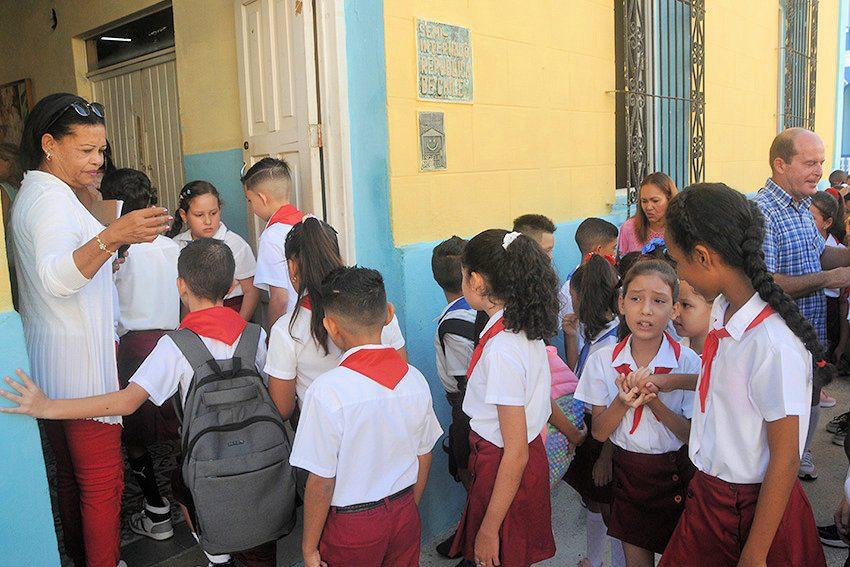
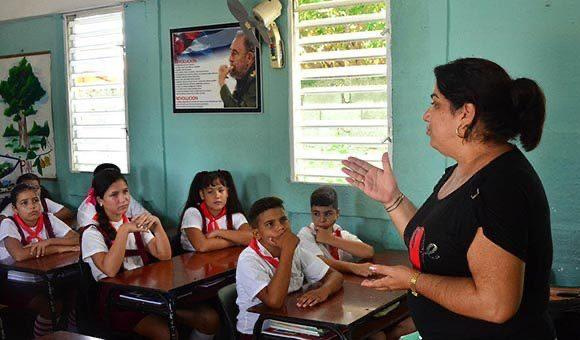
Sancti Spíritus Has the Highest Teacher Shortage in Cuba

In the province of Camagüey, 19 schools were closed to “optimize resources” due to the massive exodus of teachers.

There is also a delay in sales of uniforms. / ACN

14ymedio bigger14ymedio, Havana, August 24, 2025 — Aware that they are in the final stretch of the summer, parents have one last week of despair looking for everything necessary so that on September 1, when school begins in Cuba, their children can enter the classroom with everything ready. The State, on the other hand, is unable to follow its own timetable and is still behind in the sale of uniforms. Above all, many classrooms are without teachers.

In Sancti Spíritus, one of the most affected provinces in the country, teacher coverage is barely 68.2%, a figure that reflects a worrying shortage. The Minister of Education herself, Naima Ariatne Trujillo Barreto, during a recent visit to the province, acknowledged that completing school staff is the “greatest challenge” facing the territory.

The minister called for “exhausting all possible alternatives” to attract more teachers but did not propose a concrete plan. Although the press does not mention it, the reasons — no matter how many teachers graduate from pedagogical schools — for the teacher shortage is clear: mass exodus, low wages — less than 6,000 pesos — and poor working conditions.

Many, after graduating, don’t even teach. “My niece graduated as a history continue reading

teacher and left school straight away. She didn’t think twice,” Eliany, 36 years old and living in Placetas, Villa Clara, tells 14ymedio.

With a daughter in fourth grade and another child about to enter first grade, the mother has also become an expert on “school mishaps.”

With a daughter in fourth grade and another child about to enter first grade, the mother has also become an expert on “school mishaps.” According to her, the previous school year was a headache for the family. Her daughter’s school has few pupils, no more than 20 per classroom, and teachers are “even rarer” than students. “Every day her father and I sat down with the girl to help her with homework, especially math, because she went two months without a teacher until a new graduate was hired at the school,” she recalls.

Eliany is not only concerned about the quality of the classes that her daughter receives, but she also fears having the same headaches again this year and twice as much, since “my boy also starts primary school, and as far as we know, there are no first-grade teachers.”

The problem is repeated to a greater or lesser extent in all the provinces of the country. In Camagüey, which has 716 schools and 98,000 students, the situation is not encouraging either. Teacher coverage is 75.5%, with a deficit of 2,468 teachers, reported the local press.

To address this gap, authorities have announced the hiring of more than 1,000 teachers who will be paid per hour of work, and schools were also reorganized and merged, resulting in the closure of 19 institutions to “optimize resources” and improve teacher coverage. However, there is still a shortage of staff specializing in key subjects such as mathematics, physics, English and political culture.

Only Santiago de Cuba, with a staff almost 99% covered, seems to be an exception in the middle of the teacher crisis.

In Havana, Prime Minister Manuel Marrero Cruz headed an Extraordinary Council where the municipalities of El Cerro, La Lisa, Boyeros, Diez de Octubre and Guanabacoa were identified as those most affected by lack of educational coverage, especially in secondary and pre-university education.

Only Santiago de Cuba, with nearly 99% of staff covered, seems to be an exception in the middle of the teacher crisis. However, neighboring Holguín has a shortage of 20% of the teachers it needs to offset the deficit and plans to incorporate senior pedagogy students into classrooms. According to the authorities, secondary and technical education as well as mathematics and English are particularly affected.

Although it is undoubtedly the most worrying issue, the lack of teachers is not the only problem of education. The delays in the sale of uniforms is another point criticized by Eliany. According to her, the whole process of making and marketing uniforms should start earlier, so that parents have time to “find a seamstress” or mend their own uniforms, “which, no matter how good the fit, are never well made.” But Education has other plans, and at least in the case of Eliany, she has received only some of the pieces that she needs for her children, and the rest “will be delivered later.”

The sale of uniforms to preschool, fifth and seventh graders remains a pending issue in Sancti Spíritus.

Meanwhile, the mother received some shorts -now too small for her son- from a neighbor and bought white sweaters for her son to wear instead of shirts. As for her daughter, “a skirt is the hardest thing to get. The girl still has the one from last year and can use it for a while, but when she grows a little more she’ll burst her buttons.”

Sancti Spíritus also experiences a “complex” situation with the uniforms, to use the favorite word of the official press. The sale to preschool, fifth and seventh grade students remains an outstanding issue. A director of Commerce, Odelys Domínguez Valdivia, explained to the Escambray newspaper that marketing has only started in some municipalities, and that the sizes and available parts are insufficient, which has generated discomfort among families. The lack of fabric and blackouts in clothing workshops, which happens every year, are the main obstacles.

Translated by Regina Anavy

____________

COLLABORATE WITH OUR WORK: The 14ymedio team is committed to practicing serious journalism that reflects Cuba’s reality in all its depth. Thank you for joining us on this long journey. We invite you to continue supporting us by becoming a member of 14ymedio now. Together we can continue transforming journalism in Cuba.
Only Some 20 Tobacco Growers Accepted Tabacuba’s Offer To Exchange Their MLC for a Car

Some 300 producers were consulted: six chose Mercedes-Benz, about 15 opted for Foton rural vehicles, and the rest rejected the “stimulus.”

The vehicles were delivered at the Mercedes-Benz headquarters. / Tabacuba/Facebook

14ymedio bigger14ymedio, Havana, August 27,2025 — Tabacuba staged the delivery, this Tuesday, of six modern Mercedes-Benz to two Cuban tobacco growers to “encourage tobacco production.” In the announcement, the State did not admit, of course, that it is the farmers themselves who pay — out of their pockets and in freely convertible currency (MLC) — for the “privilege” of having a car.

In a short statement, Tabacuba was extremely brief about the vehicles, which were “provided” by the company and “purchased” by six “exemplary” farmers. Not only are there no data on them, but it is also not known who they are or which region they belong to, although they probably come from the tobacco production areas par excellence, like Pinar del Río.

Asked about the sale of vehicles, a tobacco grower of that province confirmed to 14ymedio that Tabacuba offered the deal to some 300 producers from all over the country months ago. At the moment, he believes, the offer has not been very successful. “The quantities of vehicles sold, as shown, speak for themselves,” he says, although he adds that the deal — which offers them a very favorable exchange rate — will eventually attract the farmers who want to get rid of their MLC.

What happens, he explains, is that Tabacuba pays for the cars in dollars but charges the farmers in MLC, at the official exchange rate, while the informal market pays twice the virtual one. For the farmers, this seems initially beneficial, especially given that the MLC has depreciated rapidly in continue reading

recent weeks, and paying the value of the vehicle in dollars would be impossible or extremely expensive. The catch is that, for a sector that generates so much currency and profit for the State, the producers are paid in a virtual currency without purchasing power, and not in the dollars generated by their crops.

https://www.facebook.com/GTabacuba/posts/797867976140861

“In addition to supporting the value of the MLC, Tabacuba is also responsible for buying the vehicles abroad and paying for them, something that natural persons would have to do on their own,” he explains. The State has also guaranteed another 5% discount on the import taxes for the vehicles.

However, the perk is not for everyone. When the announcement was made, recalls the farmer, Tabacuba specified that it could benefit “the producers with two or more hectares of sun-on-stick tobacco and those who over-fulfill in the collection.” For these “exemplary” tobacco farmers, a stimulus of 10% in national currency of the gross value of the sale had already been promised.

He believes that the company does not care about the difficulties of the tobacco growers, who must use the MLC they earn to pay for materials, insecticides, fertilizers and workers’ salaries for the next campaign. “I am considering buying [a vehicle] with a loan in order to have cash to start the next campaign,” he says. But his case, he points out, is not the same as that of other producers who “do have money.”

At the bottom of Tabacuba’s notice on the delivery of Mercedes, a user who claims to be legal advisor to the tour operator Cuba Travel, said that it is a payment to growers for “meeting the requisite requirements” during the tobacco campaign 2023-2024. The amount for vehicles comes from the MLC that was paid to the producers last year for the harvest.

The cars, he states, were “chosen at the pleasure of the producer,” while others “opted for a two-seater tractor made by Foton and a semi-trailer for the development of their tobacco farms and the production of various crops.” Foton is one of the Chinese brands of vehicles that have begun to circulate in Cuba in recent times. They enter the island through MCV Comercial, an importer that is the official representative of Mercedes-Benz in Cuba, with headquarters in Havana, where the six cars were delivered to the tobacco growers.

In total, the consultant says, “more than 20 vehicles have been contracted, some of them imported or manufactured outside the country.”

Among the readers, some considered the sale of vehicles to the farmers positive, but others denounced it as a reward system that could only work in a country like Cuba: “In any other part of the world, a farmer, without being “exemplary,” could buy a car and pay for it without needing a great initiative of some company.”

Others questioned the ability of such lucrative companies as Tabacuba to offer similar incentives to their workers. “Why can’t BioCubaFarma do the same with scientists? After 32 years of creating Trofin [an anti-anemic drug] and its product line, my 80-year-old father still asks for help with his car, a Lada. Help that has been missing for almost 20 years,” criticized Elizabeth González Aznar, daughter of the drug’s creator, who has already denounced on social networks the institutional neglect towards her father, Raúl González Hernández. “The 1% of sales of Trofin in those 32 years is enough to help him, but no. Isn’t this theft? Is this logical in a socialist country? No. Meanwhile, we see the sons, stepchildren and nephews of high leaders in the latest model cars.”

This is not the first time that Cuba has provided so-called incentives that the producers themselves have to buy. One year ago, in June 2024, Marino Murillo, president of Tabacuba, gave the Pinar del Rio tobacco growers 13 Yto-X904 Chinese tractors for $26,000 each. Payment had several conditions: it must be in MLC and earned from the production of tobacco.

For those who still had not been paid for that year’s campaign, explained a local producer to 14ymedio, there was the option of obtaining the tractor and not receiving the money. “Ten years ago, buying a tractor was a joke. A thousand letters and requirements were needed. But now Murillo was clear: if you have the money, you can buy the tractor. According to them, the government doesn’t ’win’ anything for the tractor. What they are interested in is producing more tobacco. I will not deny that this is a certain improvement,” he said.

Translated by Regina Anavy

Cuban Shot Putter Emanuel Ramirez Escapes in Paraguay

The athlete joins the ’defections’ of Robert Landy Fernández, Félix Puente Batista, Keiler Ávila Núñez, Suannet de la Caridad Nápoles and Jonathan Delgado.

Counting shot putter Emanuel Ramirez, six escapes have been recorded in the Pan American Junior Games in Paraguay  / Deporcuba

14ymedio bigger14ymedio, Havana, 26 August 2025 — While the National Institute of Sports, Physical Education and Recreation (Inder) was celebrating because it “achieved its goal” in the Junior Pan American Games in Paraguay with the award of 47 medals (19 gold, 13 silver and 15 bronze) “adjusted to the forecast,” the escape of shot putter Emanuel Ramirez was confirmed this Sunday.

This Sunday the vice-president of Inder, Raúl Fornés Valenciano, and the general director of Deportes para Todos, José Cedeño Tamayo, received part of the group of athletes at the Havana airport. “We are proud of their performance, for being Cubans and having fulfilled the mission with which they all went to Paraguay, where our athletes were appreciated,” said Fornés without touching on the issue of the desertions.

According to the specialized media Deporcuba, the athlete “decided to leave the Cuban delegation” before boarding the flight back to the island. Ramírez, considered a “talent who aimed to strengthen himself in the shot put tests, left behind his career in the institutional field, joining the list of figures looking for a future outside the sports structures of Cuba.”

A group of Cuban athletes received by Inder authorities at the Havana airport / Jit

The shot putter was part of the team of 44 athletes, 20 women and 24 men, who traveled to Asunción for the event that concluded on August 23. He was a standout in the specialty. “Emanuel raised his historic high to 18.62 meters in the shot put during the X Confrontation Test of the National Team in Havana,” published the official Periódico Girón. The record placed him 13th in the history of this event in Cuba.

Ramirez’s flight is a severe blow to Cuban sports. Last July, he had an outstanding participation in the Luxembourg Rally. In August last year, with a mark of 18.42 meters, he gained tenth place at the Under-20 World Championships in Athletics. He was the third Cuban in a shot putt final in this type of event.

Ramirez joined the escape of the bronze medallists in Asunción: rowers Robert Landy Fernández, Félix Puente Batista and Keiler Ávila Núñez, who still have not approached the National Commission for Stateless Persons and Refugees (CONARE) to begin their asylum process.

In addition, the whereabouts of handball player Suannet de la Caridad Naples and judoca Jonathan Delgado are so far not known. At the end of the Junior Pan-American Games, the Tenth Police Station in Asunciòn ended its search for the athletes who left the Cuban delegation.

Translated by Regina Anavy

____________

COLLABORATE WITH OUR WORK: The 14ymedio team is committed to practicing serious journalism that reflects Cuba’s reality in all its depth. Thank you for joining us on this long journey. We invite you to continue supporting us by becoming a member of 14ymedio now. Together we can continue transforming journalism in Cuba.
Flight Carrying 118 Cubans Deported From the US Lands in Havana

During the first six months of 2025, more than 600 Cubans were repatriated by air.

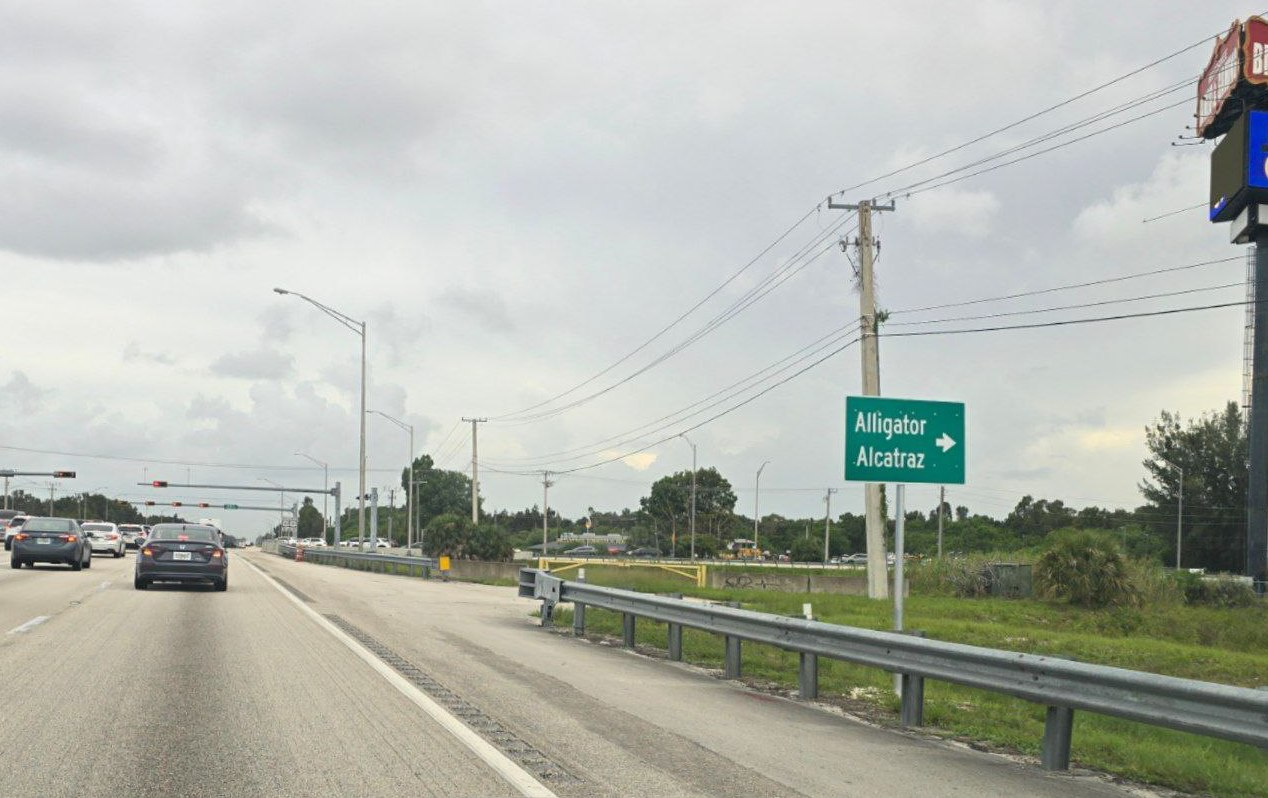
Road sign for the controversial migrant detention center Alligator Alcatraz in Florida. / 14ymedio

14ymedio bigger 14ymedio, Havana, 31 July 2025 — The seventh deportation flight of Cuban migrants from the United States so far this year occurred this Thursday. According to the Ministry of the Interior’s official site on X, 118 persons — 96 men and 22 women who had left the country illegally — had been returned to the island. Three of those individuals were transported to the investigative agency for allegedly committing “criminal acts” before leaving the country. This now marks the 27th operation in 2025, during which a total of 833 citizens have been repatriated to Cuba from different nations in the region.

During the first six months of 2025, more than 600 Cubans were returned on flights, according to the Department of Homeland Security (DHS) statistics cited by independent sources. On earlier flights, as on the June 28th flight, up to 130 persons were repatriated on a single trip. In the meantime, reports by the Cuban authorities consist only of brief notes from the Ministry of the Interior or the National Customs Service of the Republic of Cuba.

This Thursday’s operation is part of a wave of unprecedented deportations since the Trump administration resumed power. In June alone, the United States carried out 209 deportation flights to various countries, a record since the year 2020, according to data from the organization Witness at the Border. These flights, coordinated by Immigration and Customs Enforcement (ICE), have been mostly carried out by Global Crossing Airline, which specializes in the transportation of prisoners under federal custody. continue reading

In June alone, the United States carried out 209 deportation flights to various countries, a record since the year 2020.

The Cubans who’ve been deported form part of a growing list of people who, after entering the US through the southern border, face expedited deportation orders or have been unable to adjust their status. In many cases, they are seeking asylum, a process which has been disrupted or denied as a result of new executive orders. The use of expedited proceedings, known as “removal proceedings,” has limited access to legal representation and has cut short the deadlines for appealing decisions, leaving hundreds of migrants without protection.

One of the most criticized aspects by activists and human rights organizations is the lack of transparency of the process. ICE does not publish passenger lists, nor does it provide previous notice of flights, and barely responds to requests for information under the Freedom of Information Act (FOIA). “We do not know if there are individuals with a credible fear of persecution among those deported, nor if basic protocols of health and safety have been followed,” Human Rights Watch recently stated.

For Cubans, the situation is especially dire. In a country with no guarantees of civil or political rights, many of those repatriated face reprisals, surveillance, and in some cases, immediate detention upon their arrival. Since 2023, organizations like Cubalex and Prisoners Defenders have documented dozens of cases of deportees who have been interrogated, booked, or even sent to detention centers under vague accusations, such as “spreading epidemics,” or “disobedience.”

At the same time, the Cuban government has been hardening its discourse against illegal migration. The official narrative insists that many of the deportees are “common delinquents” or “disrupting the peace,” although it rarely provides evidence. In the meantime, the Cuban people are witnessing with a mixture of fear and skepticism how compatriots who had sold everything in order to flee must now rebuild their lives in a country with barely any food or energy, and only a modicum of liberties.

The United States administration continues to justify the flights in the name of “border security and law enforcement.”

The psychological impact of the deportations has likewise been underestimated. Several testimonials gathered through independent sources reveal the trauma of those who’ve been separated from their families, returned to surroundings where they face persecution or stigmatization for having “failed” in their attempts to emigrate. Some cannot even count on a support network on the island, given that they have sold properties and cut ties upon their departure. The return not only means material loss, but also an emotional burden that, in an environment as hostile the current one in Cuba, can translate into depression, unemployment, or marginalization.

Despite criticism, the United States administration continues to justify the flights in the name of “border security and law and order.” ICE asserts that its operations prioritize those who have criminal records or represent a threat to national security, although the data show that many of the deported have no criminal history. The Cuban government, meanwhile, accepts the deportees in accordance with bilateral agreements while remaining silent about the follow-up of individual cases.

Translated by Cristina Saavedra

____________

COLLABORATE WITH OUR WORK: The 14ymedio team is committed to practicing serious journalism that reflects Cuba’s reality in all its depth. Thank you for joining us on this long journey. We invite you to continue supporting us by becoming a member of 14ymedio now. Together we can continue transforming journalism in Cuba.

At the Calle Cuba Store in Camagüey, the Dollar Has Free Rein

“If that store is in dollars, I can’t enter,” complains an elderly Party activist.

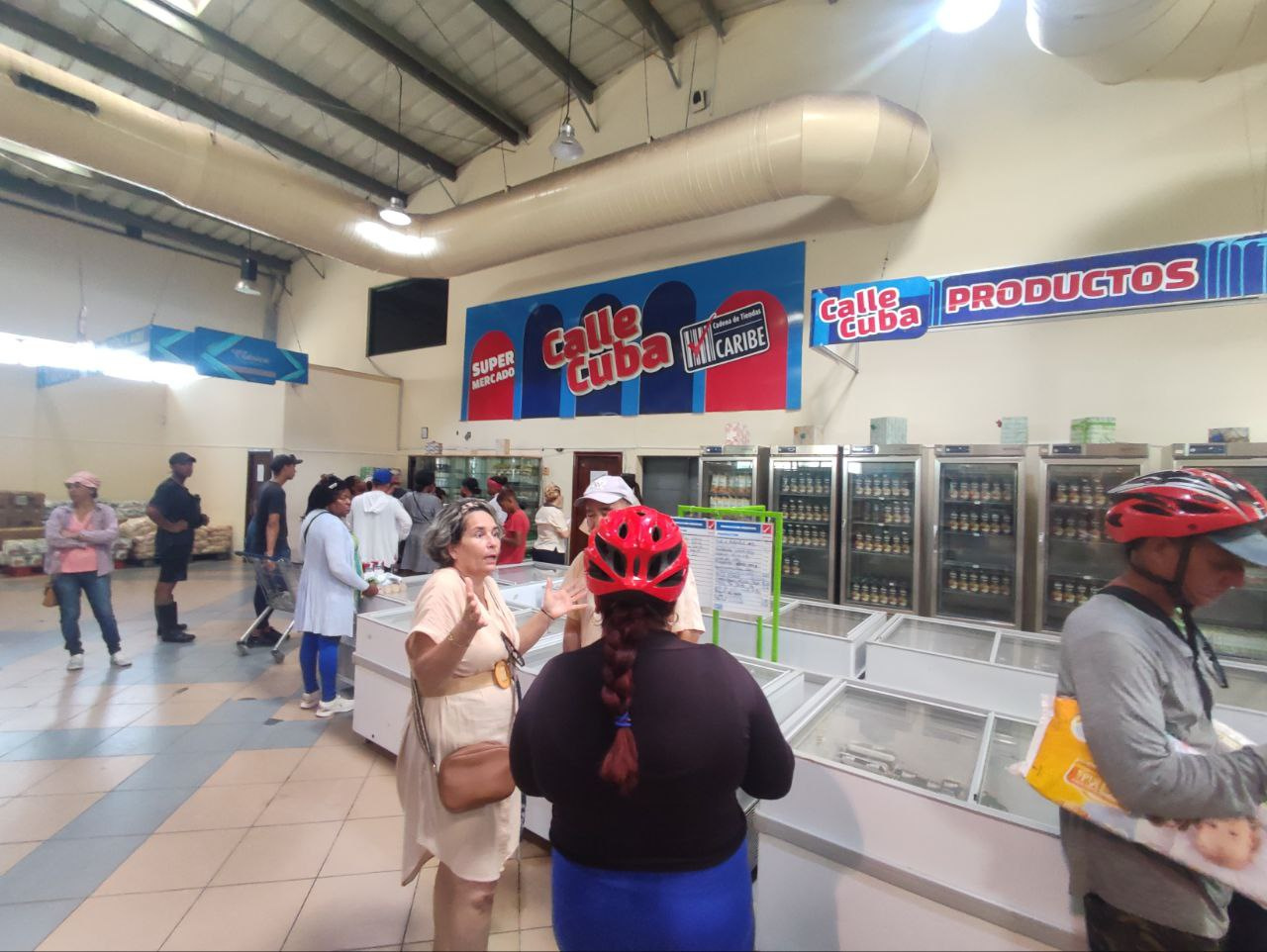
Customers who lined up this Monday in different parts of the Calle Cuba store in Camagüey are “people with access to hard currency.”/ 14ymedio

14ymedio bigger14ymedio, Mercedes García, Camagüey, 26 August 2025 — Cubans who handle dollars are distinguished by certain outfits and attitudes. Many wear branded clothing, gold chains and use perfumes that remain in the air after they have already left. Shops in US currency also have an obvious stamp. Well lit, with shelves full of products and even shopping carts, the Calle Cuba market in the city of Camagüey fits perfectly into the new image that the green bills give the State shops.

On the outskirts of the premises, a custodian clarifies to the clueless customers that “this is no longer in MLC,” the freely convertible currency that is in free fall and worth only 195 pesos against the 405 dollars exchanged on the informal market. But the employee’s warning is not necessary. It is enough to look inside and see the shelves loaded with packaged sweets, grains, sauces and legumes to realize that in the Calle Cuba, the “fula” (US dollar) has a clear path with no brakes. Even the customers who lined up this Monday in the area of the butcher shop are “people with access to currency,” a curious man who only entered “to look into the future,” says sarcastically.

Façade of the Calle Cuba store, in Camagüey, where everything is sold in dollars / 14ymedio

Managed by the chain Tiendas Caribe, the central market is located right on the street that bears the name of the country. A coincidence that has not been overlooked by the most critical members of the Communist Party with the dollarization that advances on the island and that had its beginning in the inauguration, last January, of the 3rd and 70th Supermarket in Havana. “If that store is in dollars, I can’t enter,” says a dismayed elderly Party militant, paraphrasing a verse by Martí and wary of official explanations to boost trade with US currency.

“I don’t have dollars and I don’t want them,” she says. Her look also fits the stereotype of Cubans who only use the national currency: clothes bought in the rationed market of industrial products more than 30 years ago and a sneer of frustration. She has a cloth bag on her shoulder and is waiting to find something to buy with the Cuban pesos she receives as her pension.

Translated by Regina Anavy

____________

COLLABORATE WITH OUR WORK: The 14ymedio team is committed to practicing serious journalism that reflects Cuba’s reality in all its depth. Thank you for joining us on this long journey. We invite you to continue supporting us by becoming a member of 14ymedio now. Together we can continue transforming journalism in Cuba.