The spread of both viruses is advancing throughout most of the country amid a lack of diagnosis and the proliferation of mosquitoes.
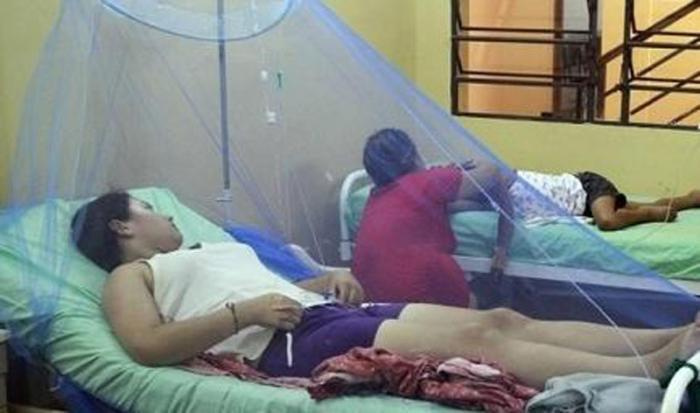
 14ymedio, Mercedes García, Sancti Spíritus, 28 August 2025 — Oropouche or dengue? The question has been on Dayana’s mind for a week. For the a 35-year-old resident of Sancti Spíritus, the conclusion is always the same: “I’ll never know, because the clinic doesn’t have any reagents.” The young woman is just one of the many victims of the malaise caused by both viruses, which has spread throughout her neighborhood, among her acquaintances, and, according to the island’s authorities, throughout the country.
“That,” “the virus,” or “whatever’s going around” are the new names Dayana and many other Sancti Spiritus residents have given to the symptoms common to both illnesses—fever, malaise, joint pain—due to the lack of resources at health centers to determine which one they suffer from. In reality, she confesses to 14ymedio, the diagnosis doesn’t matter because “here, everyone already knows they should rest and use home remedies: lots of cherry or guava leaf decoctions, gelatin, chicken foot broth and water, lots of water.”
Both diseases have spread in recent weeks, especially oropouche, which, according to epidemiologist Francisco Durán’s report on Cuban Television on Wednesday, is now present in 11 provinces. Dengue has spread to seven, but presents a more complex “condition” than oropouche. Four patients are reported to be in intensive care, two diagnosed as seriously ill and two as critically ill.
The United States Embassy on the island published two alerts warning its citizens about the risks
The spread of the virus has even set off alarm bells at the U.S. Embassy on the island, which issued two alerts on Wednesday warning its citizens of “an increase in the number of cases of dengue, chikungunya, and oropouche virus throughout Cuba,” as well as hepatitis A, the latter primarily in Havana.
“Hepatitis A is primarily transmitted through contaminated food and water. Areas with inadequate water supply systems, ineffective garbage collection, and an abundance of flies pose a particularly high risk of transmission. These conditions persist in several areas of the city,” the statement said.
For Dayana, however, life goes on with or without the virus. “It’s been a week or so since I had ‘it,’ and so has my mom, and a lot of people in the neighborhood. Yesterday I went to work and my boss and the finance department were there, but everyone keeps working like this, everyone keeps doing their things despite the illness,” she says.
In hospitals, she says, it’s not given much importance either. “I went to the clinic myself when I started feeling ill, and after telling me there was no lab test, the doctor told me: ’That’s dengue or oropouche. Rest and drink plenty of water,’” she says.
In years past, she recalls, “when people had these symptoms, a doctor would come to see you and tell you that you had to stay home, that you couldn’t go out. The mosquito team [Epidemiology] would also come and check your yard to see how your water was. Now they don’t do anything; no one takes care of it,” she laments.
“There’s also the problem of garbage. There are many [formal and informal] dumps throughout the city that haven’t been collected in a long time.”
To make matters worse, she says with annoyance, viruses are transmitted by mosquitoes, and in Sancti Spíritus “they’re a daily occurrence.” “Here, water comes twice a day, and with the huge number of leaks, it spills and accumulates everywhere,” she complains.
When water starts to flood the pipes, she explains, “my own neighbors leave the tank open, and the water runs all over my yard. There’s also the problem of garbage. There are many dumps throughout the city, long uncollected, with basins where water accumulates every time it rains.”
The panorama and ditches make the city the perfect breeding ground for the proliferation of Aedes aegypti, Culex , and “a host of other pests” that transmit diseases. In Dayana’s opinion, it’s a miracle that her neighborhood doesn’t also have an outbreak of hepatitis, which is transmitted through contaminated water and food.
On Cuban Television, where the island portrayed is very different from the real one, Durán recommended always going to health centers to receive a diagnosis. “In Cuba, everyone is a doctor,” the epidemiologist joked, referring to those who self-diagnose, impose treatments on themselves and their families, or resort to home remedies, despite the fact that there is nothing health workers in hospitals can do for their patients.
____________
COLLABORATE WITH OUR WORK: The 14ymedio team is committed to practicing serious journalism that reflects Cuba’s reality in all its depth. Thank you for joining us on this long journey. We invite you to continue supporting us by becoming a member of 14ymedio now. Together we can continue transforming journalism in Cuba.