In a Triumphalist Report, Canal Caribe Inflates the Data for Oil Production in Cuba

An engineer admits it will not be enough to “solve the generation deficit”
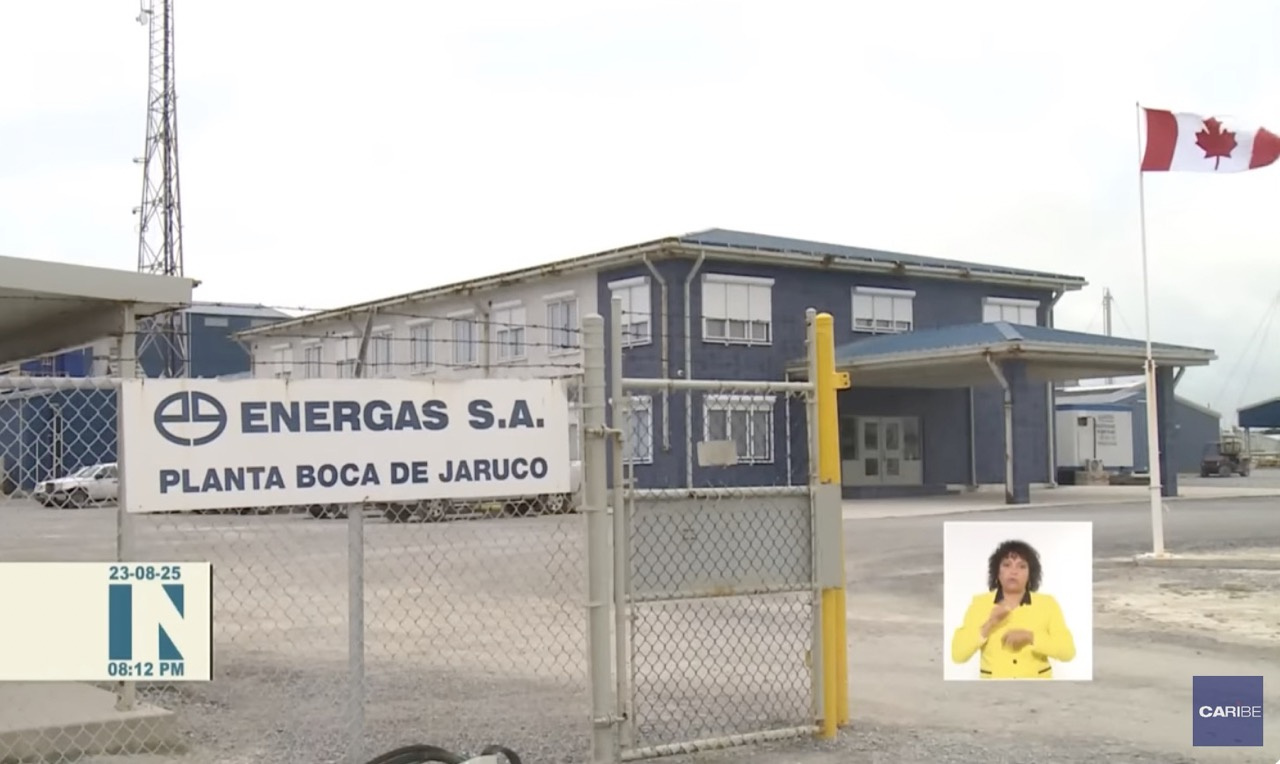

Energy plant in Boca de Jaruco, Mayabeque, operated in collaboration with Sherritt International, a Canadian company/ Canal Caribe (stock photo)

14ymedio bigger14ymedio, Madrid, 27 August 2025 — “Energas has become the largest thermoelectric power plant in the country at the moment.” Statements to Canal Caribe by Luis Rolando Eres Grass, engineer of the Western Oil Drilling and Extraction Company, show the importance for Cuba of the gas plants in Boca de Jaruco (Mayabeque) and Varadero (Matanzas), which supply the national electricity system (SEN) with 400 megawatts (MW) daily, no less than 12% of the domestic demand in high consumption season, as is the case now.

The technician is one of the experts interviewed to give a statement that the official media disseminated with enthusiasm: Cuba-Petróleo Union (Cupet) has reached two million tons of crude oil equivalent thanks to the oil and gas extracted mainly in deposits in the province of Matanzas. He himself, however, lowers the expectations of the data. “Two million tons of oil equivalent will not solve the generation deficit,” he said, adding that they represent a value of more than one billion dollars “that the country stopped investing to generate electricity” and with which diesel can be purchased “for distributed generation.”

What Canal Caribe emphasizes is not the 98% of national production, which is in the northern strip -Mayabeque, Varadero, Cárdenas- and gives a crude oil of worse quality, but the hopes placed in new deposits. Nor does it mention that the Chinese company Great Wall makes the work possible. The report speaks of the “scientific and technological feat” that involves the horizontal drilling of eight kilometers to reach “deposits located below the seabed, reached from land.” continue reading

Experts never mention that Energas’ achievement is due to collaboration with Canadian mining giant Sherritt

This new well, belonging to the Fraile block, is expected to yield around 120 cubic meters (750 barrels) of oil per day by the end of the year, a small contribution for recovering national production, which at the end of 2024 had decreased by 138,028 tons compared to the forecast.

At no time did the experts mention that Energas’ achievement was due to collaboration with Canadian mining giant Sherritt, although at the end of the TV report -just when they are talking about “reducing dependence on imported fuels” and a “gain in energy sovereignty”- the flag of Canada clearly appears next to that of Cuba and the emblem of the state gas company.

The enthusiasm with which the news is communicated through official media, in any case, contrasts with the results of Sherritt itself. The company recently acknowledged that its situation in Cuba is critical, and Archivo Cuba published just a few days ago a report denouncing the scheme of “human trafficking” carried out by the regime with workers sent to the Canadian refinery of Fort Saskatchewan, in the province of Alberta.

But above all, it contrasts with the true energy situation of the island. For this Wednesday, the Electric Union of Cuba (UNE) again predicts a deficit that is on the way to 2,000 MW at peak hours. At the peak of demand, late-night, 3,780 MW will be required and 2,080 MW will be available. The deficit of 1,720 MW will result in a real allocation of 1,790 MW.

The figures are similar to yesterday’s 1,746 MW, well above the initially planned 1,660 MW. This Tuesday, says the UNE, ” service was affected for 24 hours and remained affected throughout the morning today.”

The 26 new photovoltaic solar parks, which contributed a maximum of 562 MW during daytime hours, still do not compensate for the calamitous state of the SEN. A total of six units in thermal power plants are down for failure or maintenance, and 38 distributed generation plants are not operating due to lack of fuel.

Translated by Regina Anavy

____________

COLLABORATE WITH OUR WORK: The 14ymedio team is committed to practicing serious journalism that reflects Cuba’s reality in all its depth. Thank you for joining us on this long journey. We invite you to continue supporting us by becoming a member of 14ymedio now. Together we can continue transforming journalism in Cuba.

Venezuela Sent Twice As Much Oil to the U.S. Than to Cuba in August

Cuba received 29,000 barrels per day (bpd) while China took 85% of the 900,000 bpd exported by PDVSA

In total, 60,000 bpd from Venezuela arrived in the U.S.

14ymedio bigger14ymedio, Madrid, September 4, 2025 — In August, Cuba received an average of 29,000 barrels per day (bpd) of Venezuelan crude oil, a quantity slightly below what arrived the previous month (31,000 bpd), although still far from the agreements signed 25 years ago by Hugo Chávez and Fidel Castro. In addition, it is half of what the state-owned oil company PDVSA sent to the U.S. this month.

Washington gave a respite by issuing a partial license to Chevron to operate in Venezuela and export its oil, which has allowed PDVSA to exceed 900,000 barrels per day, the highest volume of the year. The White House announced in July the granting of this “restricted” authorization without giving details, although it is believed that one of the conditions for using it is that the money from the sale of oil cannot be transferred to the government of Nicolás Maduro, something very complex to guarantee. In total, 60,000 bpd from Venezuela arrived in the U.S.

In total, 60,000 bpd from Venezuela arrived in the U.S.

This, together with the increase in exports to China — which took 85% of the country’s crude outflows — has left record figures for PDVSA’s coffers. The quantities of oil and its derivatives also soared, as Venezuela exported about 275,000 metric tons, compared to the 227,000 tons shipped in July. On the other hand, the country had to increase imports of light oil and naphtha, which it needs to dilute its extra-heavy oil and produce exportable crude, from 58,000 bpd in July to 99,000 bpd. continue reading

According to Reuters, which provides these data on a monthly basis, “the stability of production and the absence of interruptions in the refining process and mixing plants of the Orinoco Belt” were other factors that increased inventories and exports.

The data come amid strong tensions between the U.S. and Venezuela, which rose to a new level on Tuesday with an alleged naval attack on a drug boat in Caribbean waters. Despite this, the oil business is still standing, and as Chevron CEO Mike Wirth had predicted, “a limited amount of oil” began to flow in August, with expectations of a positive economic impact for the company in the third quarter.

Venezuela exported about 275,000 metric tons, compared to the 227,000 tons shipped in July.

Although Cuba has not received the amounts provided for in the agreements with Caracas for months, Miguel Díaz-Canel himself commented that there was an undisclosed “formula” between the two governments -“so that they do not pursue it”- through which to continue cooperation. According to some analysts, one of the solutions could be triangular agreements with Mexico.

The country has exported large quantities of crude oil to Cuba in the past two years — an estimated $1 billion so far this year — through a subsidiary of state-owned Pemex, Gasolinas Bienestar S.A. de C.V., which claims that it is complying with the U.S. embargo laws on Cuba. So far it is not known whether this is a donation, sale, barter or if Venezuela pays something to Mexico to compensate for the lack of shipments from PDVSA to the island.

Despite the fact that oil continues to flow towards Cuba, the blackouts persist, and the electricity deficit seems to increase vertiginously, having now adapted to a daily loss much higher than 1,500 megawatts (MW), reaching more than 2,000 this summer, equivalent to more than 50% of domestic demand. “The considerable increase in demand due to high temperatures and the departure of generating units due to failures and fuel shortages are the determining factors for the fact that the generation deficit in the country is higher than planned,” the State newspaper Granma said on Wednesday in a report about the energy situation of the country.

Despite the fact that the oil does not stop flowing towards Cuba, the blackouts persist and the electricity deficit seems to increase vertiginously.

On Tuesday, Energas Jaruco and unit 5 of Antonio Maceo (Renté), Santiago de Cuba, where a worker previously suffered serious burns in an accident, returned to the national electrical system (SEN). However, three more units were damaged (3 and 6 of Renté and 2 of Felton), besides two others being in “prolonged maintenance” (2 of Santa Cruz del Norte and 4 of Carlos Manuel de Céspedes, in Cienfuegos). To make matters worse, the preparation prior to capital maintenance has begun for the largest thermoelectric plant in Cuba, the Antonio Guiteras, Matanzas, which is estimated to be completed at the end of the year.

However, Lázaro Guerra Hernández, director of Electricity at the Ministry of Energy and Mines, attributed most of the deficit to the lack of fuel and lubricants, so that 703 MW were not provided, a situation that is repeated day after day.

In the midst of this situation, work is progressing at the Matanzas Supertaker base thanks to China. This Monday it was announced that a group of experts from that country placed the dome on tank 49-1, which has a capacity of 50,000 cubic meters (13,208,603 US liquid gallons). The aluminum cover is 74 meters (243 feet) in diameter and weighs 68 tons.

The work should be completed in 2026, when the construction of this tank has been completed along with tanks 86, 87 and 88, which will add up to 200,000 cubic meters (52,834,411 US liquid gallons) lost in the fire of August 2022 that left 17 dead, many of them young people who were performing military service and were sent without experience to put out the fire.

Translated by Regina Anavy

____________

COLLABORATE WITH OUR WORK: The 14ymedio team is committed to practicing serious journalism that reflects Cuba’s reality in all its depth. Thank you for joining us on this long journey. We invite you to continue supporting us by becoming a member of 14ymedio now. Together we can continue transforming journalism in Cuba.
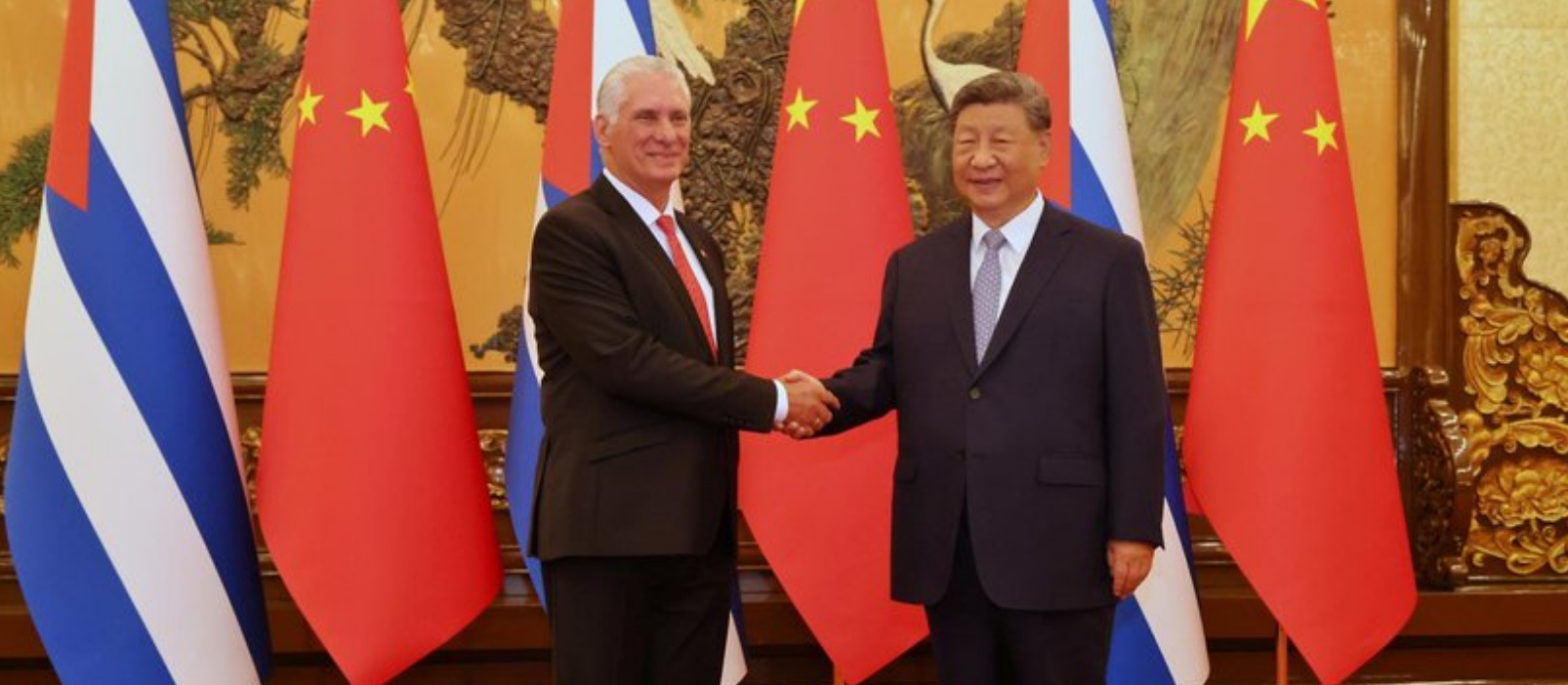
Díaz-Canel Promises China a ‘Better Business Environment’ in Cuba, as He Did With Vietnam

Xi responds to the president that his country “is willing to continue providing assistance and support to Cuba, to the extent of its ability”

[Xi spoke of the “iron friendship” between the two countries and assured that his country “will continue to firmly support Cuba in its just struggle against interference and the blockade.”
14ymedio bigger14ymedio, Havana, 4 September 2025 — Miguel Díaz-Canel made a promise to Xi Jinping this Thursday during their meeting in Beijing: “Cuba is ready to provide a better business environment for Chinese companies,” said the Cuban leader. It is the second time he commits this week, after saying the same thing in Hanoi to the Vietnamese authorities; however, China is not a country with strong growth like Vietnam, but the second world power.

More skillful than his counterparts, Xi gave a measured response: His country “is ready to continue providing assistance and support to Cuba, to the extent of its ability.”

The Chinese president called for “strengthening the integral strategic cooperation and continuing coordination and cooperation” between Beijing and Havana, according to a statement issued by state agency Xinhua. At the same meeting, the two leaders also signed bilateral agreements on agriculture, territorial cooperation, artificial intelligence, traditional medicine, infrastructure, press, cinema and television.

They also signed bilateral agreements on agriculture, territorial cooperation, artificial intelligence, traditional medicine, infrastructure, press, cinema and television

But beyond that, it was all words. Xi spoke of the “iron friendship” between the two countries and assured that his country “will continue to firmly support Cuba in its just struggle against interference and the blockade.” There was nothing new that, for the moment, suggests such good results as those obtained by Díaz-Canel in his December 2022 tour, when he obtained a donation of 100 million dollars and the cancelation of the debt. continue reading

Díaz-Canel thanked China for “its selfless support and assistance to the economic and social development of Cuba.” The Chinese ambassador in Havana, Hua Xin, already made it clear in an interview this Wednesday with the official weekly Workers that the aid of his country has a more strategic than economic reward. “Cuba is the starting point of relations between China and Latin America and the Caribbean, the cradle of the China-Celac Forum and a bridge for relations in the area,” he said.

In Beijing, Díaz-Canel attended the military parade commemorating the 80th anniversary of the end of World War II in the Pacific, together with other leaders – the Russian, Vladimir Putin, and the North Korean, Kim Jong-un, in addition to Xi himself, who reviewed the troops.

Putin and Kim had the preferred place for escorting the Chinese host, but Díaz-Canel had to settle for a discreet fifth row in the line of followers.

Following his meeting with Xi and the signing of documents, including those relating to the Belt and the Silk Road Initiative, political consultations, practical cooperation, cultural exchanges and the Global Security Initiative, the Cuban leader went to the Monument to the Heroes of the People, where he presented a floral offering. The memorial is located on Tiananmen Square, where in August 1989 there was a serious crackdown and massacre of students protesting against the communist regime.

There, Díaz-Canel placed a floral arrangement inspired by the same one that Fidel Castro placed in 1995. “To the memory of the heroes of the Chinese people, in the name of the Cuban people, Communist Party and Government,” indicates the commemorative ribbon, with the colors of the national flag.

The Cuban leader also met with Li Xi, a member of the Standing Committee of the Political Bureau of the Central Committee of the Communist Party of China, recently in China. Also in the entourage were Chancellor Bruno Rodríguez Parrilla, the head of international relations of the Communist Party of Cuba, Emilio Lozada García, and the Cuban ambassador to China, Alberto Blanco Silva.

The meeting was attended by some of the other ministers most interested in getting something from China, including Oscar Pérez-Oliva Fraga, of Foreign Trade and Investment; Vicente de la O Levy, of Energy and Mines; Mayra Arevich Marín, of Communications; and the president of the Central Bank of Cuba, Juana Lilia Delgado.

In the early afternoon, the Cuban leader also met with comrade Han Zheng, vice-president of the People’s Republic of China.

At the end of this visit, Díaz-Canel will leave for Laos on what will be the last stop of his Asian tour before returning to the Island.

Translated by Regina Anavy

____________

COLLABORATE WITH OUR WORK: The 14ymedio team is committed to practicing serious journalism that reflects Cuba’s reality in all its depth. Thank you for joining us on this long journey. We invite you to continue supporting us by becoming a member of 14ymedio now. Together we can continue transforming journalism in Cuba.
The World Sees “What We Are Suffering” in Cuba, Says Lady in White Berta Soler

In conversation with ’14ymedio’, the leader of the Ladies in White says she will support political prisoners with a portion of the Lech Walesa Prize.

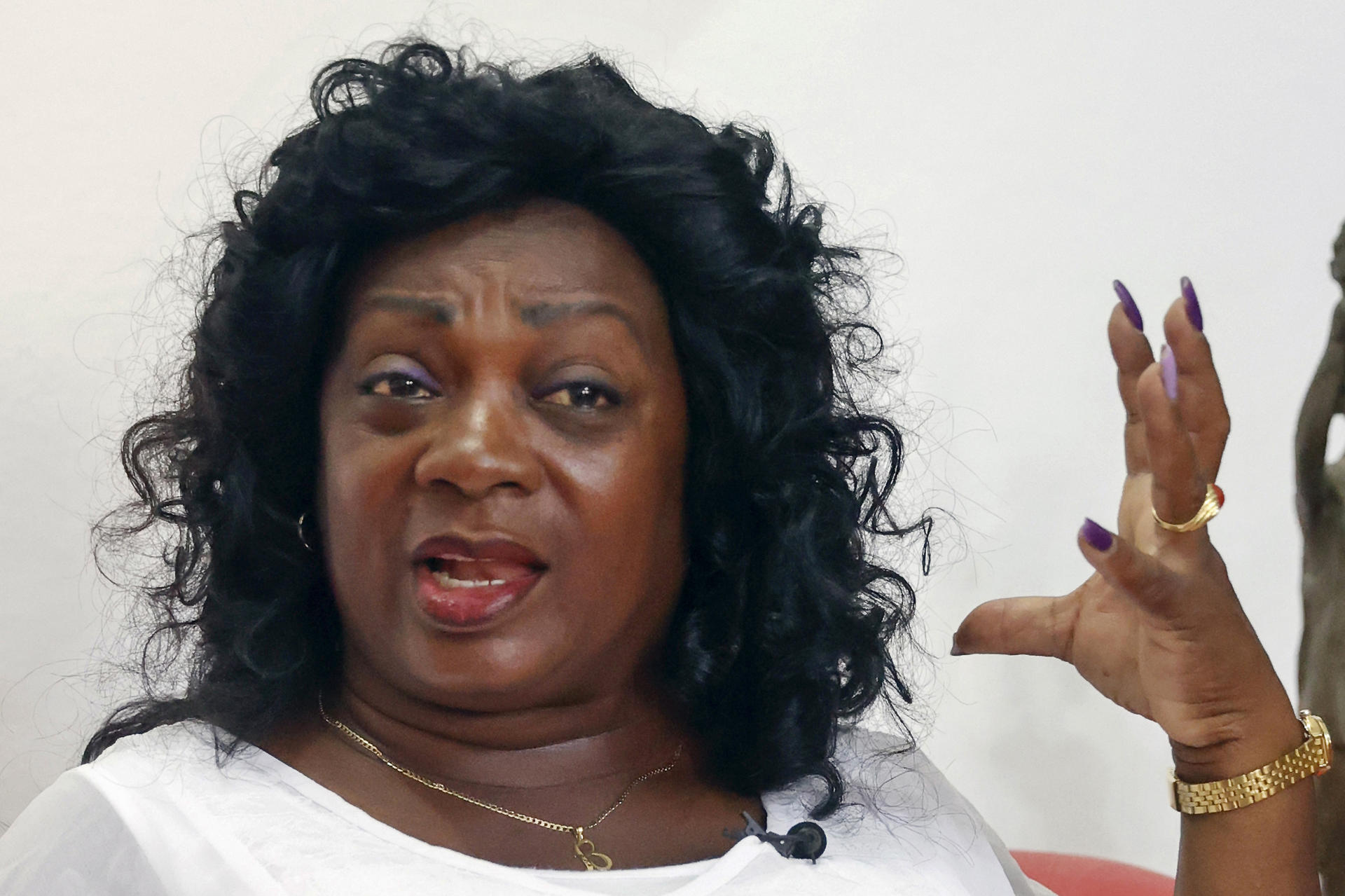
Activist Berta Soler, leader of the Ladies in White / EFE

14ymedio bigger14ymedio, Havana, 3 September 2025 — The 2025 Lech Walesa Solidarity Award, presented to Berta Soler, the leader of the Ladies in White, this Tuesday in Miami, “is one more way of knowing that we are not alone.” Speaking with 14ymedio , the activist asserts, “We have people in Europe, in America, or anywhere else who are watching what we are doing inside Cuba, and we are suffering.”

Soler says she feels “honored and grateful” for the award after “22 years of fighting in Cuba for the freedom of all political prisoners and also for the rights and freedoms of all” in the country.

She adds that the award—which recognizes individuals and organizations that promote democracy and civil liberties around the world—is also a way to honor “the 66 years we have been fighting against communism and the Cuban regime.”

The award is also a way to honor “the 66 years we have been fighting against communism and the Cuban regime.”

The activist was unable to attend the ceremony to collect the award because she is “regulated” and cannot leave the country. However, her voice was heard via video at the event, which was presided over by Polish Foreign Minister Radoslaw Sikorski and U.S. Secretary of State Marco Rubio. continue reading

“I couldn’t be there because the Cuban tyranny is conditioning my departure, imposing a departure with no return, a condition I truly don’t accept, and I’m staying in Cuba,” she told this newspaper.

She adds that the funds provided by the prize ($275,000) “will be used to strengthen aid for political prisoners; another portion will be shared with the Damas de Blanco and, of course, with my family.”

This is the second internationally significant recognition received by the Ladies in White or their leader, following the Sakharov Prize for Freedom of Thought, awarded in 2005 by the European Parliament.

Soler has become a poster child for the harassment of dissidents on the island. Since 2022, almost every Sunday when she tries to attend Mass at the Santa Rita Church in Havana, the 62-year-old activist has been detained, in some cases for only a few hours, although in recent months it has been as long as three days.

Since 2022, almost every Sunday when she tries to attend mass at the Santa Rita church in Havana, the 62-year-old activist has been detained.

The leader of the Ladies in White is not the only member of the group to have experienced such State Security surveillance. Last April, the head of the U.S. Embassy mission in Cuba, Mike Hammer, escorted Soler to Mass as a show of support, although seven members of the group were detained for several hours while attempting to attend the chapel.

The Ladies in White movement emerged from the initiative of a group of women relatives of the 75 dissidents and independent journalists arrested in March 2003. The activists arrested during those days were sentenced to lengthy prison terms during the so-called Black Spring. From then on, the wives, mothers, and other relatives of those prisoners identified themselves by always wearing white and, after attending mass at a Catholic church, began holding Sunday marches to demand their release.

____________

COLLABORATE WITH OUR WORK: The 14ymedio team is committed to practicing serious journalism that reflects Cuba’s reality in all its depth. Thank you for joining us on this long journey. We invite you to continue supporting us by becoming a member of 14ymedio now. Together we can continue transforming journalism in Cuba.
The Cuban Miracle in Trigueros Comes at a Disturbing Price

Is it appropriate to hide the suffering of a people in the name of culture?

The audience, enthralled, hummed, clapped, and danced. / 14ymedio

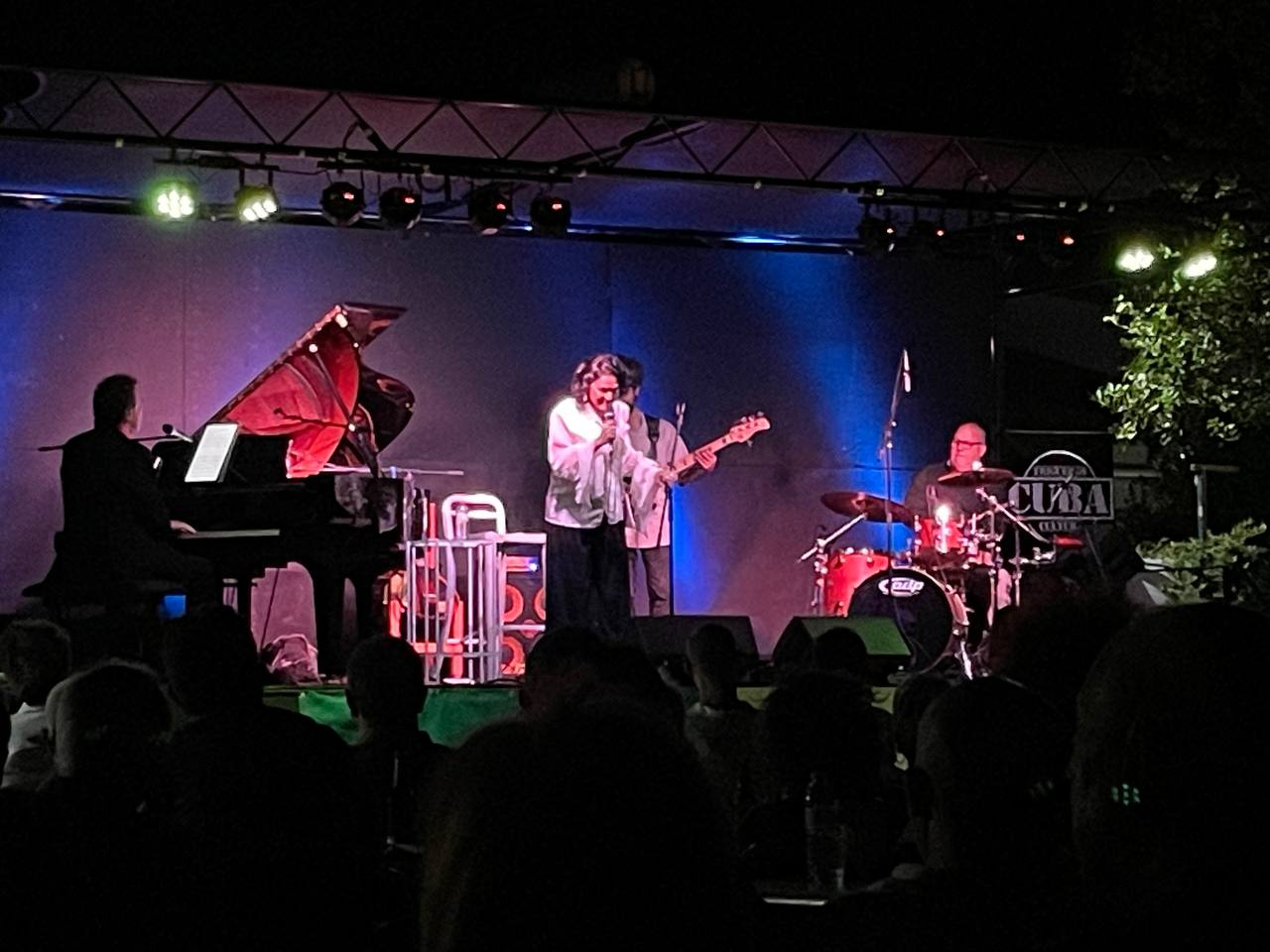
14ymedio bigger14ymedio, Yaiza Santos, Huelva (Spain) — The voice of Gema Corredera and the piano of Roberto Carcassés transformed the Spanish village of Trigueros, in Huelva, into a haunted place on Tuesday. In the garden of the Harina de Otro Costal Art Center, sheltered by its giant fig tree, the fresh country breeze—even in August—enveloped the concert that kicked off the CubaCultura 2025 festival, now in its twelfth edition and scheduled to end on the 26th.

The performance featured mainly old songs, those themes of the Vieja Trova buried by the Revolution and rescued by foreign producers at the end of the 20th century, along with lyrics by Marta Valdés, to whose memory, as well as to that of flamenco guitarist José Luis de la Paz, the artist, musicologist and former member of the emblematic duo Gema y Pavel, the recital was dedicated to.

The audience, enthralled, hummed, clapped and danced, not without a certain ‘agallegamiento’ (sway) in the beat.

Earlier, Mirta Ibarra took to the stage, the star of the film series that will be shown during the festival, with the films Hasta cierto punto (1983), Fresa y chocolate (1993) and Guantanamera (1995), all of them directed by her life partner, Tomás Gutiérrez Alea, the last two together with Juan Carlos Tabío. continue reading

The actress spoke about the milestone that Fresa y chocolate represented – in a macho society like Cuba’s, “inherited from the Spanish” – and about the Casa de Titón y Mirta, the center dedicated to the filmmaker’s memory, to which the then Havana Historian Eusebio Leal provided a space in Old Havana and which now requests donations of equipment for its film production project.

The cultural authorities from both the Huelva Provincial Council and the Trigueros City Council also spoke

The cultural authorities from both the Huelva Provincial Council and the Trigueros City Council, which fund the event, also spoke, praising the large turnout, which grows every year, and the quality of the guests.

Over the years, musicians such as Haydée Milanés, Kelvis Ochoa, Ernán López-Nussa, and Javier Ruibal have passed through the venue, as well as the writer Leonardo Padura, who stayed in Trigueros for a whole week in 2022, and the actor Vladimir Cruz.

The festival began in 2014 at the instigation of Cuban actress Laura de la Uz, her husband, photographer Héctor Garrido, originally from Huelva, and the couple formed by painter Juan Manuel Seisdedos, born in Trigueros, and Lourdes Santos. This renowned Andalusian artist and his wife had already been catalysts for culture in the municipality since 2011, when they converted an old factory not only into their home but also into the Harina de Otro Costal center.

“It’s 20 euros, 10 for those who live in Trigueros,” Santos herself informed the attendees arriving at the venue. “This is a private event, and we have to give a significant portion to the musicians.”

Indeed, the organizers are the family-run businesses Volumen Huelva (which manages Harina de Otro Costal) and ARTeHOTEL Calle2, the boutique hotel owned by De la Uz and Garrido in Havana, right in the heart of Vedado. It also appears that the ICAIC (Cuban Institute of Cinematographic Art and Industry) is “collaborating,” as in previous years.

That a cultural festival dedicated to Cuba in a remote village in southwestern Spain has not only survived for more than a decade, but has appeared on the summer calendar as a must-see event, is nothing short of a miracle. But the miracle seems to come at a price: not talking about politics.

A single comment from Gema Corredera, when the lights went out momentarily on the stage, alluded to the reality that the Island is experiencing today.

A single comment from Gema Corredera, when the stage lights briefly went out, alluded to the current reality on the island: “We don’t want the power to go out; there are already enough blackouts in Cuba.” And only the most discerning could see the declaration of principles implied by presenting a pre-revolutionary repertoire from a marginalized artist like Valdés. Beyond that, nothing. A spectator might well think, in fact, that this cultural exchange is with a normal country.

A normal country where wonderful artists flourish and prosper. A place with freedom of the market and of thought, of association and political choice. A fertile place, as it once was, full of movie theaters, sugar, and dairy cows. A place where basic services are guaranteed, with education, healthcare, water, and electricity. A place where people aren’t debased by poverty or driven mad by the vigilance of neighbors.

Firmly believing, as I do, that an artist is not an activist, that culture saves and unites, that spaces far removed from the noise of polarization are necessary, and that art is not a bad place for the beginning of a future democratic Cuba, I continue to torment myself. Is it appropriate to hide the suffering of a people in the name of culture?

____________

COLLABORATE WITH OUR WORK: The 14ymedio team is committed to practicing serious journalism that reflects Cuba’s reality in all its depth. Thank you for joining us on this long journey. We invite you to continue supporting us by becoming a member of 14ymedio now. Together we can continue transforming journalism in Cuba.
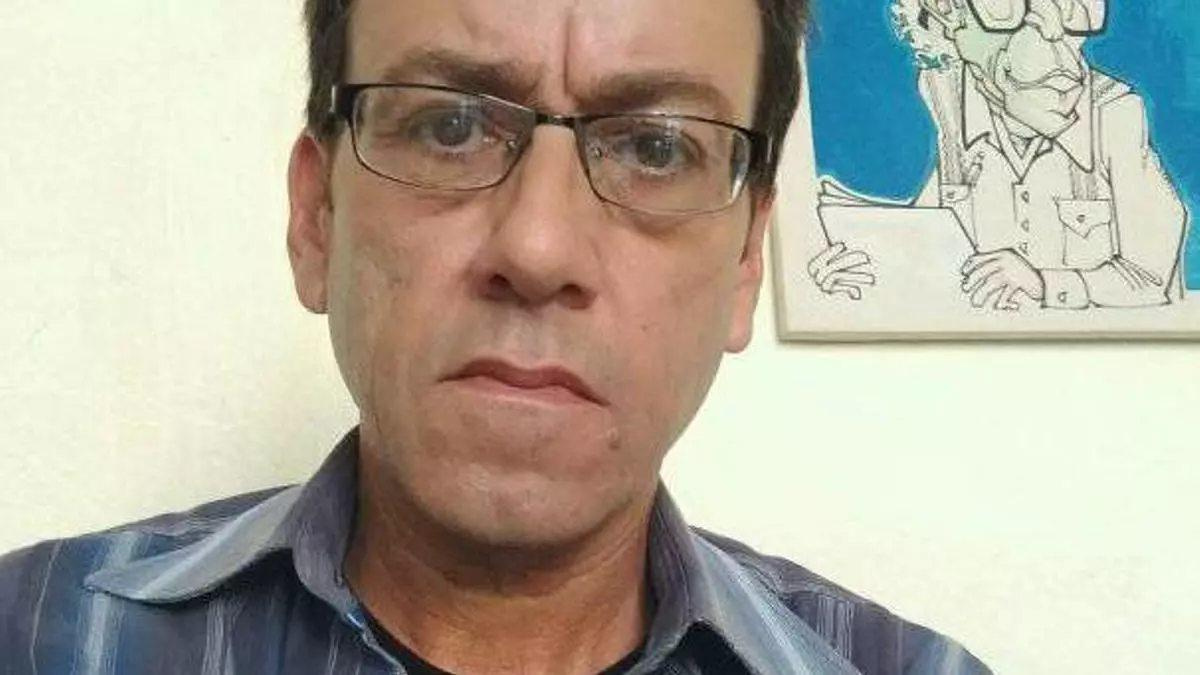
Cuban Journalist José Gabriel Barrenechea is Facing a Six-Year Sentence Requested by the Villa Clara Prosecutor’s Office

Former political prisoner Ángel Cuza was also arrested and transferred to Combinado del Este.

Barrenechea has been in prison since November 2024. / Facebook

14ymedio bigger14ymedio, Havana, 31 July 2025 — After eight months of being held in “provisional detention,” the Prosecutor’s Office finally submitted a request to the Provincial Court of Villa Clara for sanctions against Cuban journalist and 14ymedio contributor José Gabriel Barrenechea. In the document, signed on June 25 and to which this newspaper had access, prosecutor Ayrebi Miranda Pérez requests a six-year prison sentence for the crime of public disorder.

According to a relative of Barrenechea, the writer’s defense now has 26 business days to “study the case.” “Then we will be notified of the trial,” he added.

The petition submitted by the Prosecutor’s Office, which includes the names of the other defendants accused of protesting against the blackouts in the municipality of Encrucijada in November 2024, describes Barrenechea’s crime: having shouted “Turn on the power, we want the power,” in chorus with other protesters, and “thoroughly urging that the people present not desist from their actions.”

The document also refers to the journalist as a citizen with no criminal record, but who “associates with people of poor moral character and social conduct, and has no recognized employment relationship.” continue reading

They are also asking for sentences of four to nine years for the other five protesters arrested during the protest.

Nine years are also being sought for Yandri Torres Quintana and Rafael Javier Camacho Herrera, five for Rodel Bárbaro Rodríguez Espinosa and Marcos Daniel Díaz Rodríguez, and four for Yuniesky Lorences Domínguez, all of whom participated in the protests along with dozens of other residents of the municipality.

Recently, the Foundation for Human Rights in Cuba included the prosecutor in the case, Ayrebi Miranda Pérez, on its list of repressors for “requesting severe and unjust prison sentences” for the Encrucijada protesters. “The prosecutor has nothing else to describe in his provisional conclusions except that the defendants carried and touched cauldrons and shouted ’we want electricity,’” the platform criticized.

José Gabriel Barrenechea was arrested on November 7 in Encrucijada after protesting, and three days later, his family had no news of his whereabouts. He had been held at the Santa Clara Police Investigation Unit, where he was interrogated. Initially, authorities attempted to charge him with sedition, but the journalist himself reported that they had dropped the charge and instead charged him with “public disorder.”

Last June, the Provincial Court of Villa Clara rejected a request for release for Barrenechea, who had already spent several months in pretrial detention awaiting trial at La Pendiente prison. During his time in prison, Barrenechea suffered the death of his mother , who was dependent on him, and he was only allowed to attend her funeral for an hour and a half.

Police confirmed the accusation against Cuza: “He is in prison because a projectile was found on him,” clarified a political police officer.

Another political prisoner, Ángel Cuza, released last May after completing his sentence and re-arrested last Friday, now faces new charges. The activist, according to the Cultural Rights Observatory, was arrested during “the repressive campaigns unleashed by State Security around the pro-government celebrations for July 26th” and transferred to the Vivac detention center in Havana. According to activist Anamely Ramos, in addition to his complaints about the case on social media, “they want to accuse him of possessing explosives or something similar. And it’s all because of a small bullet he carried around and has had for years.”

In a call to the police station where he was detained before being transferred to Vivac, activist Keilylli de la Mora confirmed the accusation: “He’s in prison because a bullet was found on him,” an officer told her. Currently, several activists and organizations have reported, Cuza remains in Combinado del Este.

According to De la Mora, the object “is a bullet he’s had for a long time and used as a safe. He even had it from his previous incarceration.” Ramos said something similar, noting that bullet casings are often used as souvenirs. “Ángel has eaten very little since his arrest, because at the time he was detained, he hadn’t eaten. They haven’t let him have practically anything yet,” he added.

Cuza was released from prison last May after serving a year and a half in Combinado del Este prison in the capital. The artist had been arrested in December 2022 outside a store in the capital, while waiting in line to buy chicken. He was accused of “disturbing public order” for carrying “sticks and stones,” a charge both he and eyewitnesses denied.

____________

COLLABORATE WITH OUR WORK: The 14ymedio team is committed to practicing serious journalism that reflects Cuba’s reality in all its depth. Thank you for joining us on this long journey. We invite you to continue supporting us by becoming a member of 14ymedio now. Together we can continue transforming journalism in Cuba.
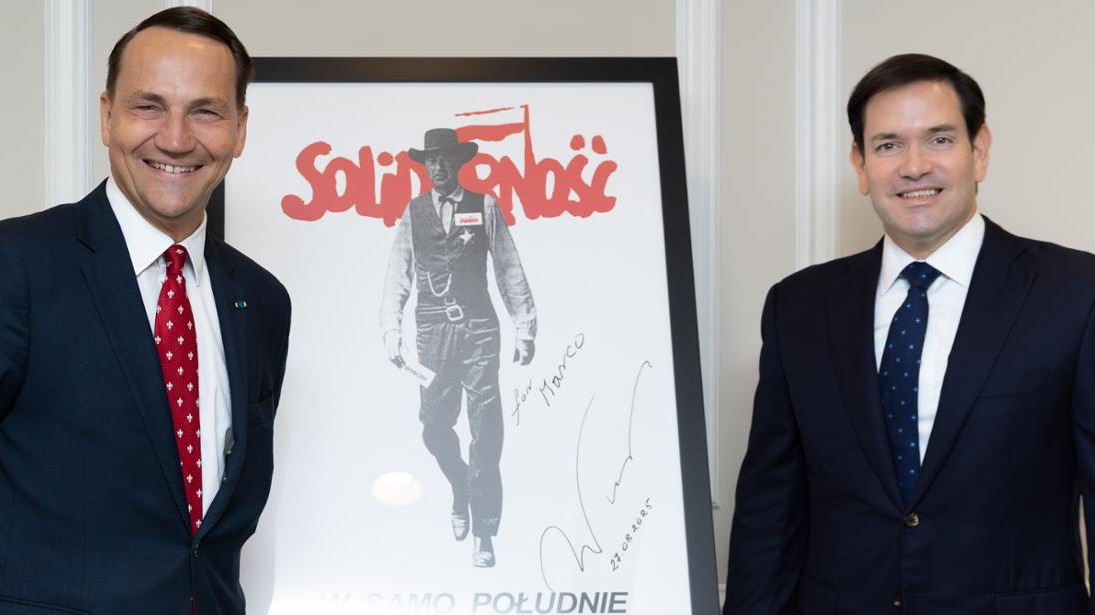
The Foreign Ministers of Cuba and Poland Clash on Social Media Over the Award Given to a Cuban Dissident

 Cuba’s Foreign Minister Bruno Rodríguez accused Poland on Thursday of submitting to Washington.

Cuban Foreign Minister Bruno Rodríguez accused Poland on Thursday of submitting to Washington. gov.pl

14ymedio biggerEFE (via 14ymedio), Havana, 4 September 2025 — Cuban Foreign Minister Bruno Rodríguez accused Poland on Thursday of submitting to Washington after Warsaw bestowed an award on the historic Cuban dissident Berta Soler, leader of the Ladies in White.

Rodríguez, on an official visit to Beijing with Cuban President Miguel Diaz-Canel, responded on social media to a comment from his Polish counterpart, Radoslaw Sikorski, following the presentation of the Lech Walesa Solidarity Award.

“Minister: We Cubans have lived in freedom and democracy since January 1, 1959 (the day of the Triumph of the Revolution), even though the United States government has been trying to subjugate us for 66 years, just as it has been able to do with others,” Rodríguez wrote, in an apparent reference to Poland.

Sikorski had previously responded to a message on Rodriguez’s social media account, stressing that the award was given to those who “peacefully fought for freedom and democracy” and adding that Cubans also “deserved” both. continue reading

Sikorski wrote that the award was given to those who “peacefully fought for freedom and democracy.”

The Polish Foreign Minister also clarified that, despite having been announced at a joint event with US Secretary of State Marco Rubio, the award was a Polish initiative fully funded by that European country.

In his message, Sikorski cited a previous reaction from Rodríguez in which the Cuban foreign minister claimed that the prize was part of Rubio’s “corrupt and anti-Cuban agenda” and seemed to suggest that the award was “US taxpayer money.”

The Polish Ministry of Foreign Affairs recognized Berta Soler on Tuesday with the Lech Walesa Solidarity Prize, worth one million Polish zloty (approximately $273,400), which is awarded to “support the actions of those who, by fighting for solidarity and democracy, change the course of history.”

Soler later told EFE that the award is “the result of 22 years of struggle in Cuba for the freedom of all unjustly imprisoned political prisoners and for all Cuban rights” with the Ladies in White.

The movement Soler leads emerged from the initiative of a group of women, all of them relatives of the 75 dissidents and independent journalists arrested and sentenced to lengthy prison terms in March 2003 during the period of repression known as the Black Spring.

From then on, the wives, mothers, and other relatives of those prisoners identified themselves by always wearing white, and after attending mass at a Catholic church, they began holding Sunday marches to demand their release, becoming a symbol of dissent.

In 2005, the Ladies in White received the Sakharov Prize for Freedom of Thought from the European Parliament.

____________

COLLABORATE WITH OUR WORK: The 14ymedio team is committed to practicing serious journalism that reflects Cuba’s reality in all its depth. Thank you for joining us on this long journey. We invite you to continue supporting us by becoming a member of 14ymedio now. Together we can continue transforming journalism in Cuba.

Leonardo Padura Presents a Novel in Madrid That Portrays the Disaster of Cuba

The writer describes a country where the poverty of pensioners and the opulence of the new rich coexist

Padura acknowledged that the “control industry” is still standing and called the judicial repression following the protests “brutal.”/ 14ymedio

14ymedio bigger14ymedio, Yunior García Aguilera, Madrid, 3 September 2025 — The most-read living Cuban writer on and off the island, Leonardo Padura, presented his latest novel this Tuesday in Madrid. Morir en la arena (Dying in the Sand) (Tusquets Editores, 2025) has been described by the author himself as “the saddest” he has published so far, a stark and almost fatalistic portrait of national reality. Some 200 readers gathered at the Espacio Fundación Telefónica to listen to the creator of the famous Mario Conde, and to buy his book and renew that imaginary photograph that many keep of Cuba.

Padura is not a gold coin. In exile he is often reproached for his ideological ambiguity and his silence in the face of political repression. Within the island, on the other hand, he is perceived as an uncomfortable author, too independent for official institutions and too famous for the taste of cultural curators. He does not belong to the chorus of “gratefuls,” those who claim to owe everything to the Revolution. He recognizes that his success is due in large part to the luck of obtaining a contract outside the country. And he himself complained, during the presentation, that his last books have not come out in Cuba, because, according to the authorities, “there is no paper.”

With or without criticism, it is impossible to deny his international recognition. Receiving the Princesa de Asturias de las Letras award in 2015, translated into more than 30 languages and a regular on the lists of best sellers in Spain and Latin America, Padura is today an indisputable reference. This Tuesday, he appealed to a metaphor that could well define him: a character who refuses to be heads or tails, and who insists on being on “the edge of the coin.”

Hundreds of readers gathered in the Espacio Fundación Telefónica to hear the creator of the famous Mario Conde. / 14ymedio

Morir en la arena stems from a real parricide in a family close to the writer. Although the story takes place in 2023, the narrative covers half a century of national changes, such as the war in Angola, the fall of the Berlin Wall, the crisis of the 90s and the current disaster. continue reading

The pages reflect today’s enormous social divide, from the poverty of pensioners to the opulence of the new rich. It is no longer the music of Silvio Rodríguez or Pablo Milanés that accompanies the landscape, but the reparto,* a penetrating wave that floods everything. Padura even knows by heart the lyrics of one of those songs, saturated with “beatings” and “asses with authority.”

The scientist and writer Eduardo López-Collazo, present at the meeting, asked him if he thought Cuba had a solution. Padura avoided a direct response. He defined himself as an observer, not a politician or sociologist. But in his eyes Cuba is a country in decline, with two million emigrants in recent years and doctors unable to survive on their salary.

Another attendee, Spanish by his accent, spoke plainly of the repression on the island. Padura spoke of the fear, and he agreed that Cuba needs profound transformations in all spheres: economic, political and social. He also acknowledged that the “control industry” is still standing and called the judicial repression following the protests “brutal,” when too many young people received sentences of eight or ten years for breaking a window. “If all those who break a window in demonstrations were imprisoned in France, no one would be left on the street,” he said.

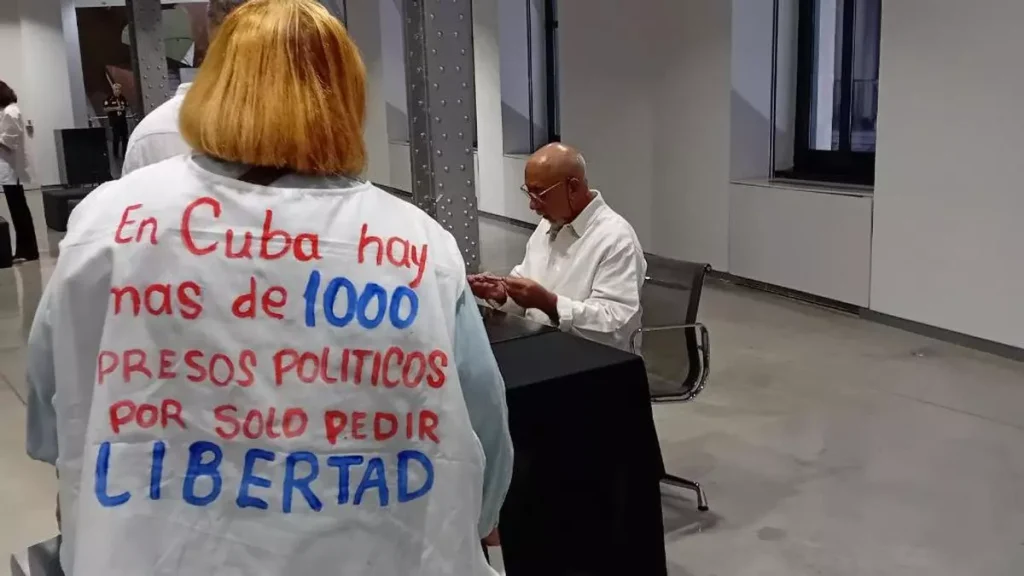
A Cuban woman wore a sign on her back alluding to the Cuban political prisoners. Everyone noticed and took pictures of the message. / 14ymedio

A Cuban woman wore a sign on her back alluding to the Cuban political prisoners. Everyone noticed and took pictures of the message. / 14ymedio

The writer Berna González Harbour moderated the conversation and thought she saw Padura himself in one of the characters in Morir en la arena. He denied it. He only intended to satirize a genre of his youth, the “revolutionary police novel,” which, he said, had “much of Revolution, little of police and no novel.” Although he did not advance the correlation, he did confess his interest in vindicating that character.

“What keeps Cubans singing and writing?” asked another voice from the audience. The most ingenious answer came from the Nicaraguan Gioconda Belli, who recalled the joke of a poor driver who, to the same question from a diplomat, replied: “in addition to living in poverty, you also want it to be sad?”

At the end, among the audience, a Cuban woman wore a sign on her back alluding to the Cuban political prisoners: “In Cuba there are more than 1000 political prisoners just for asking for freedom.” Everyone noticed and took pictures of the message. She came up with her book, received an elegant dedication and a photo with the writer. For many, this afternoon was the first time they heard Padura speak publicly about the island’s repression, unjust convictions and the urgency of political change. Perhaps, after all this swimming, it is not obligatory to die in the sand. 

*Urban musical genre similar to reggaeton 

Translated by Regina Anavy 

____________

COLLABORATE WITH OUR WORK: The 14ymedio team is committed to practicing serious journalism that reflects Cuba’s reality in all its depth. Thank you for joining us on this long journey. We invite you to continue supporting us by becoming a member of 14ymedio now. Together we can continue transforming journalism in Cuba.
The Cuban Regime Remains Silent on the Deaths of Two Recruits Serving in Havana

In both cases, the causes of death are unclear and relatives are demanding answers from the authorities.

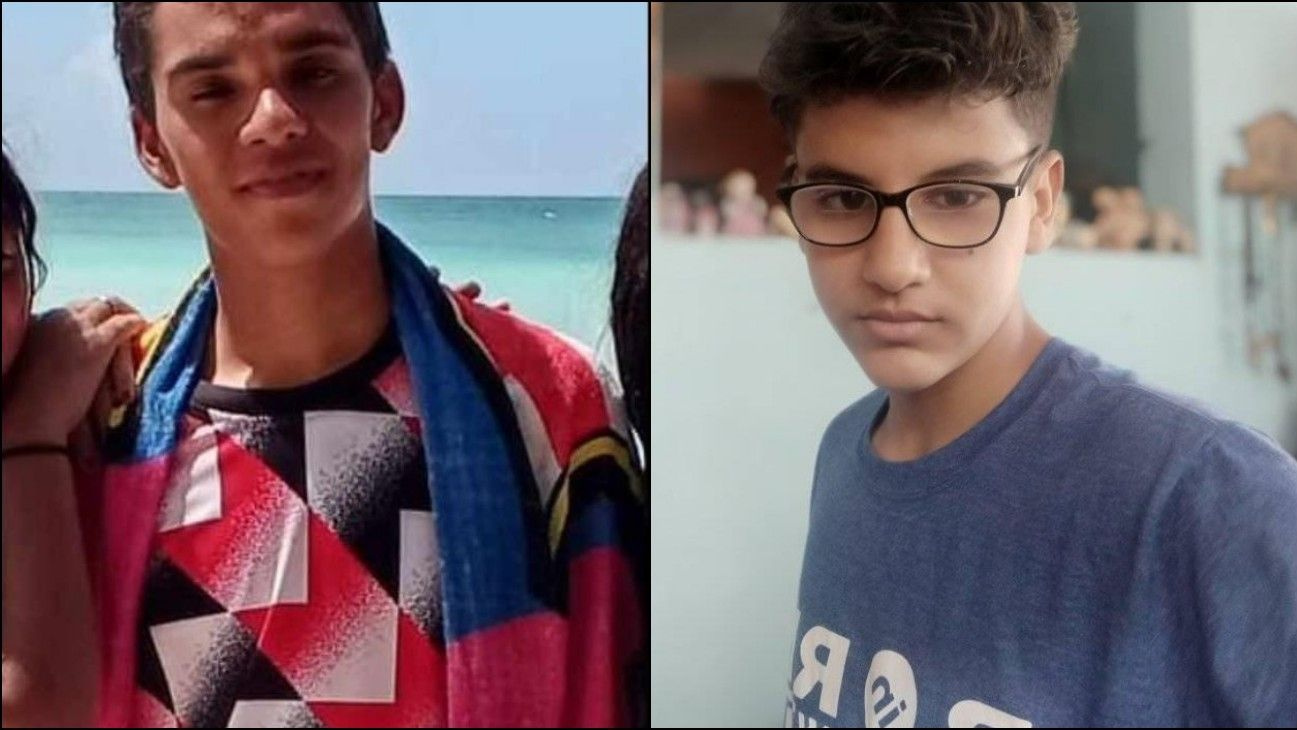
Lázaro Daniel Monteros (left), 19, and Antonio Rassi Roque (right), 18. / Collage/Facebook

14ymedio bigger14ymedio, Havana, 24 August 2025 — In ​​less than a week, two young recruits died while undergoing mandatory military service, which the regime imposes on all Cuban males. The fatalities were Antonio Rassi Roque, 18, and Lázaro Daniel Monteros, 19. Everything known about the boys’ deaths is from social media published by family members and acquaintances. The official press, as usual in such cases, has ignored the news.

Rassi’s death was reported first, on August 18 at the El Calvario military unit in Havana, where he resided. According to the father of another recruit from the same unit, who later told Cubanet, the rest of the recruits were told he had shot himself, although it is unclear whether it was an accident or on purpose.

“The last week, Antonio hadn’t bathed. They required him to, but he smelled bad. It was clear his mental health was deteriorating. No one notices this, and many young men strongly reject military service. What’s worse, they give him a weapon without being qualified or analyzing his psychological situation,” the source criticized.

On social media, one of Rassi’s aunts posted: “Today we are holding a wake for my nephew, Antonio Rassi, at the Infanta funeral home, La Nacional. He entered this military service, and we still don’t know the cause [of death]. He was only 18 years old.” continue reading

“Really, the only one who knows what happened is the child. We don’t know the reasons because he was a child who had everything.

Last Friday, another relative confirmed the boy’s death to Martí Noticias and denounced the lack of transparency regarding the cause of the shooting. “Really, the only one who knows what happened is the boy. We don’t know the motive because he was a child who had everything: affection, love. As far as we know, he shot himself. His mother is the one asking for justice,” he said.

He also explained that Rassi “didn’t want to enter military service. That much we do know. The military has already given all the information to the parents and also attended the wake.”

Just a few days later, news broke of the death of Lázaro Daniel Monteros, a resident of Ciego de Ávila who was serving at the El Morro unit in the capital. His death, also reported on social media, raised even more suspicions than Rassi’s, as the cause of death is unknown, and the family has been given varying versions of the incident. The young man supposedly had only a few days left until completing his service.

Comments under posts about the deaths of these young men incessantly called for the abolition of military service, a field in which dozens of young people have died in recent years. One of the most notorious accidents occurred on January 7 in Melones, in the municipality of Rafael Freyre, Holguín.

The comments at the bottom of the posts about the deaths of these boys incessantly called for the abolition of Military Service.

That day, several explosions at a military base in the town alarmed residents, who shared videos and images of the fire and smoke rising from the unit. A total of 13 people died in the incident, nine of whom were military recruits.

The fire at the Matanzas Supertanker Base in 2022 is another of the episodes Cubans remember most sadly, in which 17 people died and dozens were injured. Most of the deceased were also recruits undergoing training alongside firefighters and sent to fight the blaze.

These two events are just the ones that shocked the country the most, but the history of military service on the island is full of similar cases. Last May, for example, two recruits standing guard at a checkpoint in the Mariel Economic Development Zone died after being struck by a bus .

Months earlier, in June 2024, Leandro Muñoz Zamora , 20, a resident of Santa Clara, committed suicide by jumping off a moving bus that was taking him to the Matanzas unit where he was to serve.

____________

COLLABORATE WITH OUR WORK: The 14ymedio team is committed to practicing serious journalism that reflects Cuba’s reality in all its depth. Thank you for joining us on this long journey. We invite you to continue supporting us by becoming a member of 14ymedio now. Together we can continue transforming journalism in Cuba.

While the Rest of the World Is Experiencing a Tourism Boom, Cuba’s Revenues Are Falling by Almost 21 Percent

The tourist occupancy rate in the first six months of the year was only 21.5%.

Almendrones [classic American cars] waiting for customers in Havana’s Central Park. / 14ymedio
14ymedio bigger14ymedio, Havana, 25 August 2025 — Cuba is in no way included in the flourishing figures on global tourism revenue reported by the World Travel and Tourism Council (WTTC), which forecasts new records for this year, even surpassing the levels of 2019, before the COVID-19 pandemic. On the contrary, the most recent data published by the National Office of Statistics and Information (ONEI), corresponding to the first six months of 2025, continue to show, for Cuba, the sector’s debacle.

The declines are “notable,” as Cuban economist Pedro Monreal has pointed out, in four “crucial indicators,” especially the “extremely low occupancy rate,” at just 21.5% (compared to 28.4% for the same period last year). “Billions of dollars poorly invested,” the U.S.-based specialist added, referring to one of the sectors that, in fact, receives the most money from the public coffers on the island (almost 20% in the first few months of this year, surpassed only, and for the first time, by investment in energy).

Along with this, there is the sharp decline in international travelers. Through July, only 1,123,987 international visitors arrived, representing a 23.2% drop compared to 2024. The island has received 338,922 fewer tourists than last year, with a general decline from all the countries that traditionally contribute to the sector. continue reading

Between January and June of this year tourists did not reach one million (981,856), 25% less than in the same period in 2024.

According to the Office of National Statistics (Onei) semiannual report, between January and June of this year, revenues fell below one million pesos (981,856), a 25% decrease compared to the same period in 2024 (1,309,655). Consequently, revenues plummeted by 20.6% (from almost 71 million pesos to just over 56 million). Applying the rate of 24 pesos per dollar, this represents a drop from 2,950,741,875 pesos to 2,343,539,083 dollars.

Onei does not provide net income after deducting operating costs, which are very high in the tourism sector. In Cuba’s case, operating costs are estimated to represent 70% of gross income, which would result in a net income of $703 million, in the best-case scenario.

The fact that revenues have decreased slightly less than tourist arrivals and overnight stays, on the other hand, would indicate that tourists are staying less time on the island, but spending slightly more. In 2025, each tourist spent an average of $2,387 in Cuba, up from $2,253 the previous year.

In contrast, the global outlook is very different. Last May, the WTTC predicted that global international visitor spending will break all records this year , reaching $2.1 trillion, $164 billion more than the pre-pandemic peak of 2019.

Tourism’s total economic contribution is projected to reach $11.7 trillion this year, representing 10.3% of global GDP, while jobs in the sector are expected to increase by 14 million (to a total of 371 million worldwide), “more than the entire population of the United States,” the organization noted.

____________

COLLABORATE WITH OUR WORK: The 14ymedio team is committed to practicing serious journalism that reflects Cuba’s reality in all its depth. Thank you for joining us on this long journey. We invite you to continue supporting us by becoming a member of 14ymedio now. Together we can continue transforming journalism in Cuba.
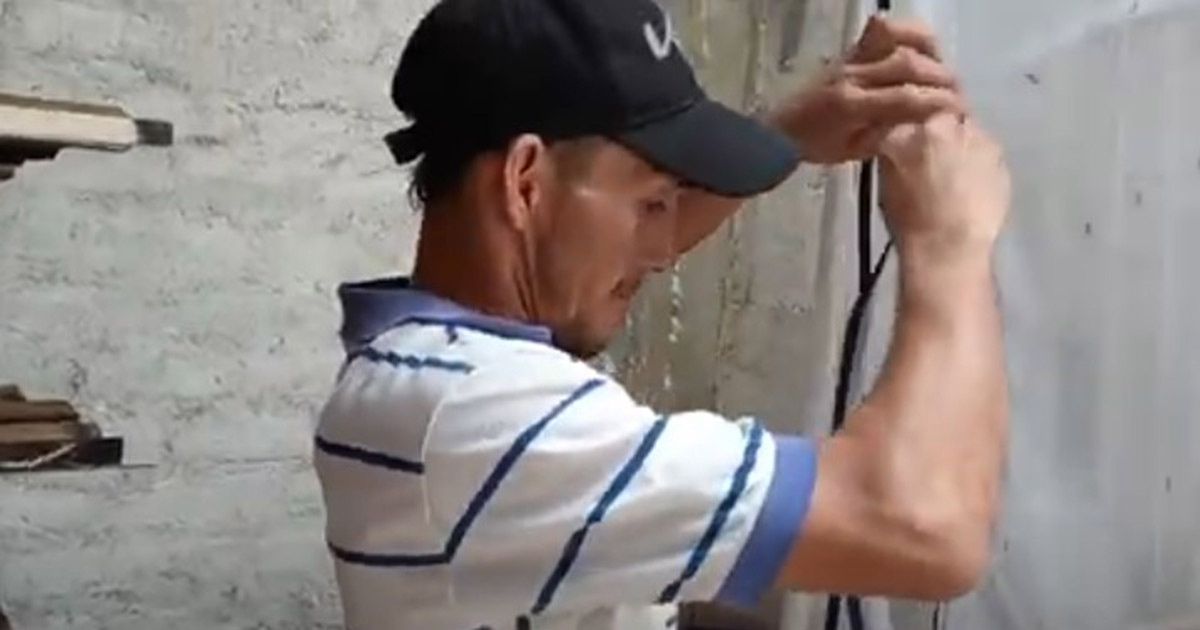
In Cuba, a Doctor Earns More Money Breeding Flies Than Practicing His Profession

In his workshop on the outskirts of Havana, Yodermis Díaz Hernández estimates that he will earn 450,000 pesos from this business this year.

Black soldier fly breeding facility. / Video capture/Rodrigo Morales

14ymedio bigger14ymedio, Havana, 15 July 2025 (delayed translation) — Last year, the physician Yodermis Díaz Hernández earned 157,500 pesos raising black soldier flies, whose larvae can be used as animal feed for cats, dogs, pigs, and chickens. He earned more than double what he earned annually practicing medicine on the island for 20 years.

Díaz told the Associated Press News that a friend gave him the idea in 2019. This year, he hopes to surpass his production and reach a ton, which would earn him 450,000 pesos. “We turn that garbage into protein, into gold for the animals, and the waste into fertilizer,” the retired doctor says. “We also help the environment.”

The fly incubation is carried out in a workshop on the outskirts of Havana, where Díaz made most of the equipment and tools.

“Over the past decade, initiatives in France, the Netherlands, the United Kingdom, and other countries have invested in the cultivation of black soldier flies. Ferocious waste eaters, the larvae consume urban and agricultural biological waste, forming masses of protein-rich, squiggly larvae that can be processed for use in animal and pet food.” continue reading

At the La Candelaria farm in Ciego de Ávila, the cultivation and use of a native insect was announced. “The rainy days in mid-2023 were enough: more than a thousand larvae emerged to the surface of the sancocho [food waste] tanks” there, reported the newspaper Invasor.

Image of a black soldier fly breeding site. / Video capture/Rodrigo Morales

The project is led by Miguel Ángel Iparraguirre Cruz, PhD in biological sciences. He stated that in the larval stage, black soldier flies have a high protein content, ranging between 40 and 60%. “To the point that it has been proven that they replace all the components of currently known feeds,” the scientist stated.

As part of his research, he has also found that “the larva is capable of eliminating harmful microorganisms and bacteria such as Salmonella and Escherichia coli .”

Last year, producer Alexander Ramírez Marrero highlighted the benefits of black soldier flies in the official Granma newspaper as “a biological control agent and an ally in reducing different types of waste, since they feed on them.” He also stated that “they could also feed on the excrement of cattle, poultry, pigs, and fish.”

In La Candelaria, for now, efforts are focused on the intensive cultivation of the fly, which feeds on the mini-industry’s own waste, spoiled fruit, and some cafeteria waste.

____________

COLLABORATE WITH OUR WORK: The 14ymedio team is committed to practicing serious journalism that reflects Cuba’s reality in all its depth. Thank you for joining us on this long journey. We invite you to continue supporting us by becoming a member of 14ymedio now. Together we can continue transforming journalism in Cuba.

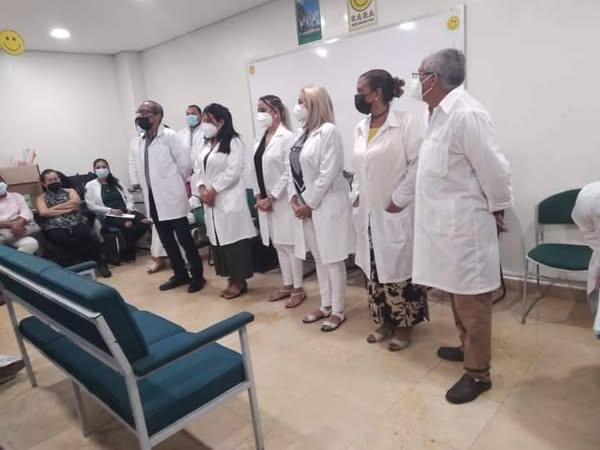
Cuban Specialists Treat Patients in Oaxaca Without Accreditation in Mexico

The doctors were introduced as pediatricians, internists, gynecologists and otorhinolaryngologists [ENTs]

A group of Cuban doctors at the Matias Romero Hospital in Oaxaca. / Facebook/Information and News from the Isthmus of Tehuantepec

14ymedio bigger14ymedio, Havana, 19 August 2025 — At least 27 Cuban specialists hired to provide care at six Oaxaca hospitals “are not certified and lack professional certification,” reported the newspaper El Universal. The union representative at the San Pedro Tapanatepec hospital, Geovan I Casilla Cano, stated that the health workers are working as general practitioners, treating patients with simple ailments.

A source told 14ymedio that the island’s doctors are sent to the Mexican states while their professional certification is being validated. However, he warned, “these specialists should not prescribe until they have the proper certification.”

According to the same official, who requested anonymity, “internal records” highlight the work of Cuban critical care and intensive care specialists Yanet Roxsana Ramírez González and Orlando Ramírez Alfaro, although she did not provide details of their roles at the Salina Cruz general specialty hospital.

The newspaper El Universal reports that 27 pediatricians, internists, gynecologists, and otorhinolaryngologists [ENTs] from the island are located in the Isthmus region, spread across the hospitals of San Pedro Huamelula, Santiago Astata, Salina Cruz, Juchitán, San Pedro Tapanatepec, and María Lombardo de Caso.

At the Ciudad Ixtepec hospital, union representative Martín Ramírez said the arrival of uncertified Cubans was rejected at the assembly held last February, but they were nevertheless sent. continue reading

At the Ciudad Ixtepec hospital, union representative Martín Ramírez said that the arrival of uncertified Cubans was rejected at the assembly held last February.

Ramírez accused the Mexican Social Security Institute for Welfare (the free healthcare agency created in 2022 by the self-proclaimed Fourth Transformation government, led by then-President Andrés Manuel López Obrador, to replace Seguro Popular) of giving preference to Cubans. The union representative stated that the agency “does not want” to hire Mexican doctors so as to make room for doctors from the island.

In early August, it became clear that Mexican health agencies “lack mechanisms” to evaluate the performance of Cuban doctors, for whom 92,525,569 euros (107,905,224 dollars) were paid between July 2022 and May 2025.

In April, a source from the Health Department told 14ymedio that everything related to doctors is coordinated through the Cuban Medical Brigade, headed by Cuban Alfredo González Lorenzo, who reports to Neuronic Mexicana, which in turn reports to Neuronic SA Cuba. Since 2018, this company has represented the products and services of the island’s biotechnology and pharmaceutical industries and is headed by the Cuban Tania Guerra.

The initial contract with Mexico was through Comercializadora de Servicios Médicos Cubanos SA de CV, a Cuban company accused internationally of human trafficking.

____________

COLLABORATE WITH OUR WORK: The 14ymedio team is committed to practicing serious journalism that reflects Cuba’s reality in all its depth. Thank you for joining us on this long journey. We invite you to continue supporting us by becoming a member of 14ymedio now. Together we can continue transforming journalism in Cuba.
Outside Havana, Cubans Live an Existence Without Electricity, Exhausted and Sleepless

Many families cook on their porches with coal or firewood and the air becomes unbreathable due to the smoke.

A makeshift wood-burning stove on a street in Sancti Spíritus. / 14ymedio

14ymedio bigger14ymedio, Mercedes García, Sancti Spíritus, 29 August 2025 — In the Cuban provinces, when the power returns after a daily blackout of about 20 hours, a frenetic flurry of activity begins, regardless of whether it is day or night. Residents don’t exactly know when that moment will come, but they know they have very little time to do all the things the regular power outages haven’t allowed them to do.

“We only find out when it comes, and we know we have two, three, or four hours ahead of us,” says Alicia, a resident of Sancti Spíritus who doesn’t quite understand the electricity rationing “schedule” the central province is under. “The only thing that’s certain is that we have to run and turn on the washing machine, or put some rice in the crockpot.”

On Monday, it happened at one in the morning: “At that time I started preparing breakfast for the family to have in the morning, because my husband had to go to work and the power would be out by then.”

Residents of Camagüey report a similar situation. In the 36 hours spent in the city by a Havana resident visiting relatives, “if there were six with electricity, it was a lot,” he told 14ymedio. “When the power comes on, it’s a race against time to try to use the appliances: running the washing machine, charging cell phones, freezing some meats, turning on the water pumps to store it in the tanks. continue reading

“People are already so mentally exhausted that they just say ’the power went out,’ and they already know that more heat is coming without a fan and they’ll have a hard time.”

The most surprising thing for him is how “they’ve adjusted their lives to an existence without electricity.” Inés, a native of Sancti Spiritus, shares the same sentiment: “People are so mentally exhausted that all they say is ’the power’s out,’ and they already know that even hotter weather is coming without a fan and they’ll have to struggle to cook, but they’ve found their own way of surviving; they no longer care whether there’s electricity or not.”

There are professionals who continue to work by candlelight, or by a rechargeable lamp. A few days ago, this is how a veterinarian in Ciego de Ávila treated patients, with a light bulb attached to a headband. Tired, he and an assistant shared the urgent cases that came into the office, while looking up at the ceiling and whispering, “Long live the Cuban Revolution!”

The survival instinct even makes people respond, “Everything is normal,” in a city like Holguín, where, according to the Electric Company’s latest schedule, they only have seven hours of electricity out of 24, and that every other day. The next day, they “enjoy” three more hours. However, according to the 14ymedio correspondent in the area, “in some places, electricity is leaving earlier than usual and arriving later.”

Those who can cook with wood or charcoal, so the streets in a country that prides itself on investing in clean energy are filled with unbreathable air. “At eight o’clock at night, you can’t go out because you suffocate,” Alicia confirms. “Everyone is cooking with wood in their doorways or patios. The smoke covers everything.”

But not even these primitive methods are affordable for everyone. “Those who can cook with firewood,” says a resident of Santiago de Cuba, “because a can of charcoal costs 300 pesos and a sack, 1,200.”

“If it’s in the morning, the workers go to the city to deal with things and come back, but if it’s after three in the afternoon, they all go home.”

In Santa Clara, the power is also constantly cut off, Roniel says. “If it’s in the morning, the workers go to the city to resolve issues and come back, but if it’s after 3:00 p.m., they all go home.” They know that in two hours, the time left until the end of the workday at 5:00 p.m., the power won’t be restored. The man laments, resigned: “Tell me how a country like this can be productive.”

The inconvenient hours also prevent people from getting rest, something already difficult with the summer heat and the mosquitoes that proliferate without fans. “You can’t sleep, because when the light comes on, you have to get up and get things done,” says Inés. Thus, disturbed, stressed, and deranged individuals wander the streets from lack of sleep. Many are visibly drunk; alcohol and drugs are their only escape.

For this Friday, the Cuban Electricity Union forecasts a deficit of 1,565 megawatts (MW) during peak hours—for a demand of 3,750 MW and an availability of 2,215 MW—which will result in an actual shortage of 1,635 MW. This is a “low” figure in a week in which a shortage of no less than 1,700 MW has predominated.

Inés has been suffering from nervousness for months, she says, without being able to see a doctor. “There’s no time to get sick here,” the haggard woman says. “I’m waiting for the doctor to come back from vacation and give me pills to feel better.”

The scene unfolds before the attentive eyes of the neighborhood’s residents. The lack of distractions—not to mention the lack of internet service almost all day long—means everyone is absorbed in other people’s conversations and arguments. Inés then lowers her voice: “I realize I live in an impossible place. When I think about it, what I want is to die, to disappear, because I don’t know what the future holds.”

____________

COLLABORATE WITH OUR WORK: The 14ymedio team is committed to practicing serious journalism that reflects Cuba’s reality in all its depth. Thank you for joining us on this long journey. We invite you to continue supporting us by becoming a member of 14ymedio now. Together we can continue transforming journalism in Cuba.

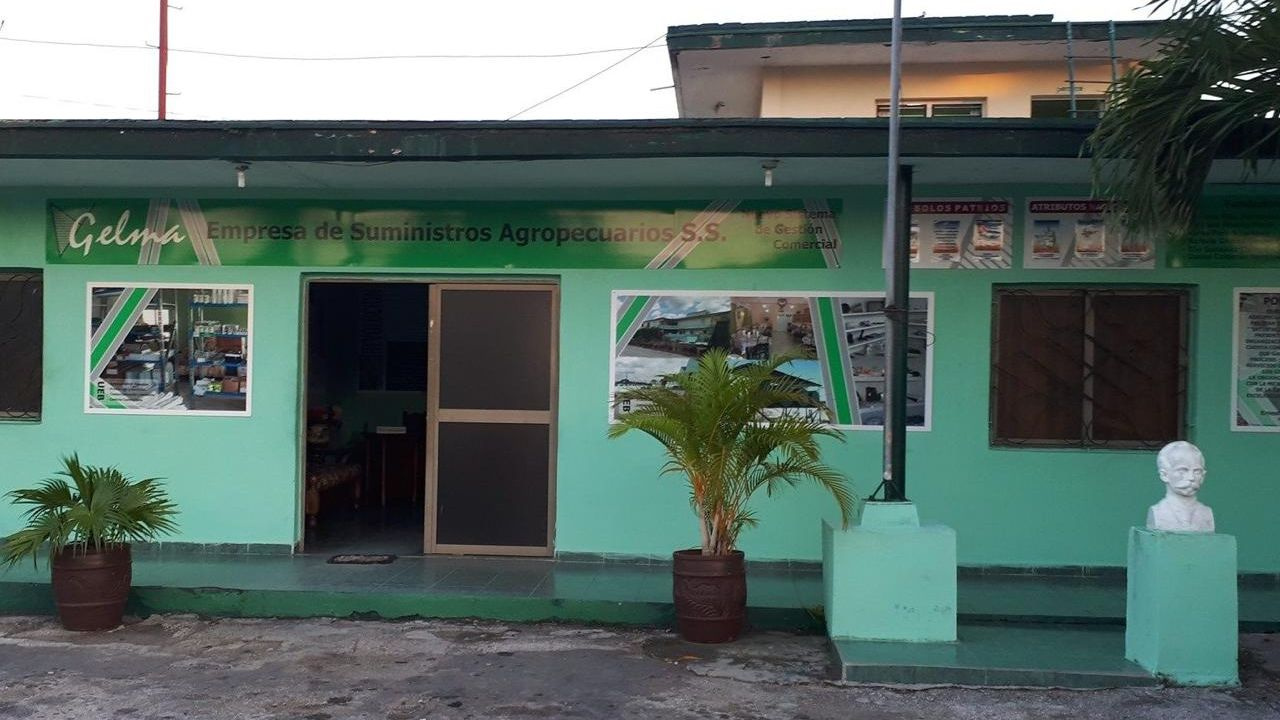
Family Members Defend the Director of a State Company Convicted of Embezzlement

The daughter points out that her mother was on sick leave when the crime was committed and that the company was a victim of a con man who fled from Cuba

Image of the Sancti Spíritus Agricultural Supply Company / Facebook

14ymedio bigger14ymedio, Havana, 29 August 2025 — The convictions of directors of the Agricultural Supply Company of Sancti Spíritus for corruption, reported by the official press this week, have generated unusual reactions among Cubans who have read the news.  Although the majority call the officials “predators” and “thieves,” several people close to the accused have come to their defense claiming that they are at least partly innocent.

The most striking comment was posted on 14ymedio’s Facebook page by someone who identified herself “D.S.,” the daughter of a director, who received the longest sentence with 20 years in prison. “Everyone who knows the case knows very well that I’m talking about my mother, the director. Just like any human being she has the right to get sick, and she was ill with a reactive hepatitis which made it impossible for her to do her job for four months,” she claims.

During that time, “sales were made in the company behind their backs,” she says in reference to the marketing of state goods by a self-employed worker, who, according to the Escambray newspaper, turned out to be a con man. According to the local newspaper, the man appeared “disguised as a representative of a so-called Local Development Project,” and, after making not one but several purchases from the company, left the country without paying. The contract, she adds, required payment to be made “in a timely manner.”

In addition to being sick, the daughter adds, the fact that the company was robbed of 94 million pesos is an element in favor of her mother and the other defendants. “They were tried for embezzlement without taking any money; they only sold the goods to a guy who never paid and left the country. Now I wonder: is it ethical for a human being to be so demonized without knowing exactly what happened?” continue reading

She also said that the director’s family “will appeal and go as far as it has to for the truth to be recognized.”

She also said that the director’s family “will appeal and go as far as it has to for the truth to be recognized.”

At the bottom of the publication of Escambray’s note on social networks, the woman scolded several users who asked for more severe punishments or insulted the leaders who were tried. “Easy to say, ma’am, without really knowing what happened. Read it well before speaking. Nobody took anything; they were conned by a guy who bought all the merchandise and then left the country without paying.”

Other netizens, apparently close to the case, also endorsed several of the woman’s comments. “I am a witness of her illness, as I am also a witness of the great woman that she is and will continue being. She has spent many years defending the Revolution. Now, in my view, they have committed a great injustice. Everyone knows what happened, many know the reality, but there are wars that you will never win even if you are right. A good understanding, a few words are enough,” one of them predicted.

Another added on her own Facebook page: “There would be much to add, but I limit myself to one fact: a good friend from my time at Santa Clara high school is imprisoned, right now, for embezzlement, corruption, and I do not know how many more charges. They asked for 20 years. But to those who have us stealing and inventing, in order to live poorly in this demonic country, we pay homage and let them continue fattening themselves with impunity before our very eyes. Out of fear, indolence, apathy… who knows?” she criticized.

In response to the promise of the daughter to pursue the case to the end, another person added: “I hope so, then the truth will come out and they will have to bite their tongues and swallow poison. Enough of this circus: that person has a family.”

The director of the company was tried along with four other senior officials on August 22 and 23 by the Criminal Chamber of the Provincial Court 

The director of the company was tried along with four other senior officials on August 22 and 23 by the Criminal Chamber of the Provincial Court. Although her sentence was the harshest, the rest were also given long sentences: the director of the company’s Basic Business Unit (UEB) Marketing and Services, sentenced to 18 years in prison; the commercial director, 16 years; the legal adviser, 10 years; and the former director general, who took office in 2023, two years and six months of deprivation of liberty, “subsidized by correctional work with internment for the same term.”

In addition to being conned, they were also accused of “breach of duty to preserve property in economic entities.” According to Escambray, on two occasions the refrigerator for the meat, intended for “internal feeding,” broke and consequently did not reach the level of cold needed to conserve the food inside.”

The directors, “despite knowledge of the situation, did not implement effective actions” to save the meat products, which caused a loss of more than three million pesos,” says the official newspaper. The director’s daughter didn’t make any argument about this crime.

Whether it is the version of the state or the family, both are incomplete, and many aspects remain to be clarified. Who authorized the sale to a private con man? Why was his identity not verified? And, ultimately, where were those responsible for monitoring and auditing the company’s assets?

Translated by Regina Anavy

____________

COLLABORATE WITH OUR WORK: The 14ymedio team is committed to practicing serious journalism that reflects Cuba’s reality in all its depth. Thank you for joining us on this long journey. We invite you to continue supporting us by becoming a member of 14ymedio now. Together we can continue transforming journalism in Cuba.
A Study Identifies 108 Marine Species at Risk of Extinction in Cuba

Of these, 29 are listed as”critically endangered”

A shark diving team in Cuban waters. / Online Tours

14ymedio bigger14ymedio (via EFE), Havana, 30 August 2025 — A study by a team of 30 Cuban scientists identified 108 marine species in the country at risk of extinction, of which 29 are listed as “critical endangered,” reported the state press on Saturday.

Corals lead the species in being “critically endangered,” followed by sharks, rays, bony fish and turtles, according to the project Threatened Marine Species in Cuba, coordinated by the Institute of Marine Sciences of the Ministry of Science, Technology and Environment.

The results of the initiative, published in the State newspaper Granma, warn that of the total threatened, 26 are categorized as “endangered” and 53 as “vulnerable.” As for mangroves, seagrasses, macroalgae, sponges and molluscs, although none was assessed as threatened by international criteria, 25 species were categorized under a preliminary threat criterion,” the report added.

The research involved 30 marine biologists from various Cuban institutions and was carried out between January 2021 and December 2024. The information gathered will serve as a basis for the Red Book of Marine Species in Cuba, which is expected to be continue reading

published by the end of 2026, according to the official press.

The research involved 30 marine biologists from various Cuban institutions and was carried out between January 2021 and December 2024

The loss of biodiversity is the main environmental problem in Cuba and is related to pollution, the use of unsustainable production practices, poaching, illegal trade and the introduction and spread of alien and invasive species, according to the study. Of the approximately 36,700 listed species, 35% are threatened with extinction, and it is estimated that up to 75% of mammals could disappear. Plants are also severely affected: 580 plant species are critically endangered, along with 16 amphibian species. In addition, 70% of amphibians, of which 71 species (94% endemic) identified on the island, are threatened.

This deterioration is mainly due to illegal hunting, intensive agriculture, mining, deforestation and pollution, which has eroded natural habitats and drastically reduced local fauna. However, the attention of the State also plays an essential part in a context of economic crisis, in which tourist enjoyment is prioritized over the protection of natural reserves.

Translated by Regina Anavy

____________

COLLABORATE WITH OUR WORK: The 14ymedio team is committed to practicing serious journalism that reflects Cuba’s reality in all its depth. Thank you for joining us on this long journey. We invite you to continue supporting us by becoming a member of 14ymedio now. Together we can continue transforming journalism in Cuba.