
To Keep the ‘Ninja’ Children Away, Several Restaurants in Havana Create a Private Security Agency

The police declared themselves unable to control the flood of minors dedicated to stealing. (14ymedio)

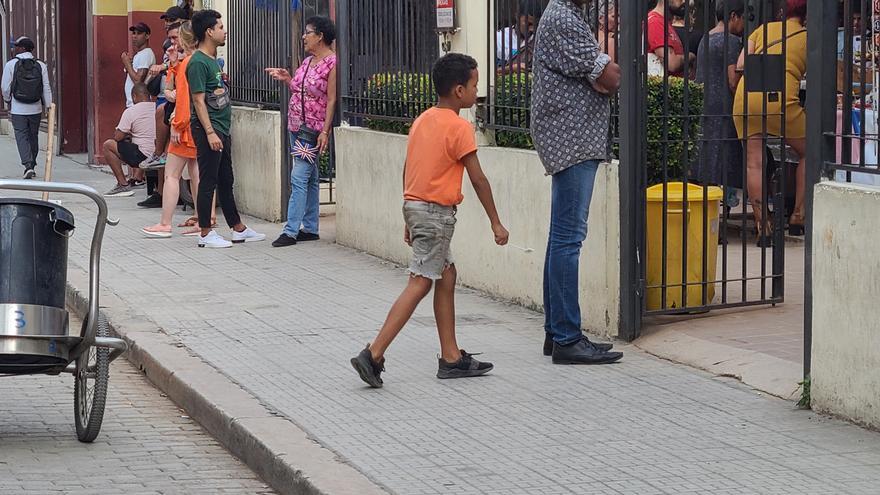
14ymedio bigger14ymedio, Nelson García/Juan Izquierdo, Havana, 11 November, 2023 — Several burly men, with black pullovers, guard the restaurants on the alley of Espada, on Peña Pobre Street in Old Havana. Their mission: to prevent the beggars, crazies and undesirables of the mythical Angel neighborhood from disturbing the clientele, usually foreigners, and they keep an eye on the children, true ninjas when it comes to stealing a wallet or picking the pocket of a distracted tourist.

Antojos, 7 de Espada and Chacón 162 – three of the most expensive and well-known Havana restaurants – decided to pay attention to a situation that was already beyond the hands of the police. “They are children and we can’t do anything,” the officers alleged when a robbery was reported on the terraces. Hardened by poverty, at only 9 or 10 years old, the children of the area prepare to accept a candy while reaching out to someone else’s pocket, or to ask for alms with all kinds of stories and tricks.

“It all started with a nine-year-old boy who lives in this neighborhood. His father is in prison and he lives with his grandparents. He is the one who supports everyone at home,” a member of the staff of Antojos tells 14ymedio, whose administration is the one that provides the security service to the neighboring premises. continue reading

As the police declared themselves unable to control the flood of minors dedicated to looting – and also “recommended” a quick solution to the problem – the restaurant owners took it upon themselves to find one. First, the waiters and clerks tried to expel the boys, but this “affected the service,” says a source in Antojos. “People stopped coming, and we had to look for a security team,” he adds.
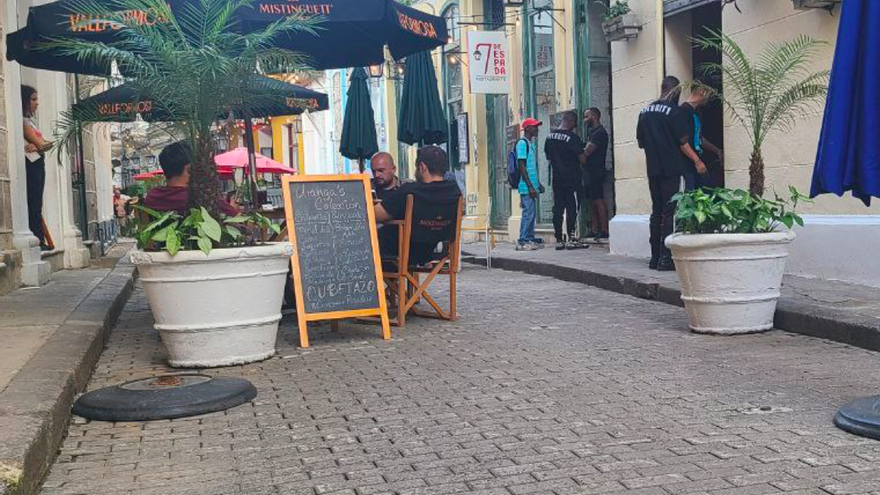
The results of the security personnel are evident: they have “scared off” the beggar children. (14ymedio)

Although not as effectively as children, other beggars used to ask for money from those who come to eat at the “loma del Ángel,” as that corner of Old Havana is known. Now the job is more than difficult: stationed at the door of the premises, the guards prevent the beggars from even stepping past the ornamental pots at the entrance to the terraces. If anyone manages to reach a table, the security officer will have no qualms about grabbing him by the arm and escorting him out of the place. Whether or not they take him out violently or calmly depends on the beggar.

The results of the security personnel, who charge about 2,000 pesos for each day of work – in addition to tips and money to watch over the diners’ cars – are evident: “Security has ’scared off’ the children,” acknowledges a member of the Antojos staff. The beggars know where to look. Antojos as well as 7 de Espada and Chacón 162 have astronomical prices. Only those who can afford to pay dine there. In Chacón 162, a ceviche is sold at 1,300 pesos, beef carpaccio at 2,300 and a few croquettes at 530.

And those are just the starters. A lobster prepared “to your taste” costs 2,800 pesos, while the shrimp is 2,450. The most exclusive, without a doubt, is the octopus dish – a rarity in Havana – which in Chacón 162 is sold at 4,800 pesos.

“Now the clientele is quite balanced between Cubans and foreigners, because tourism is a little dead,” says a source to this newspaper, who prefers not to reveal the identity of the owner of  the Antojos restaurant, someone known as “Reinaldo” and related by marriage to a high military official.
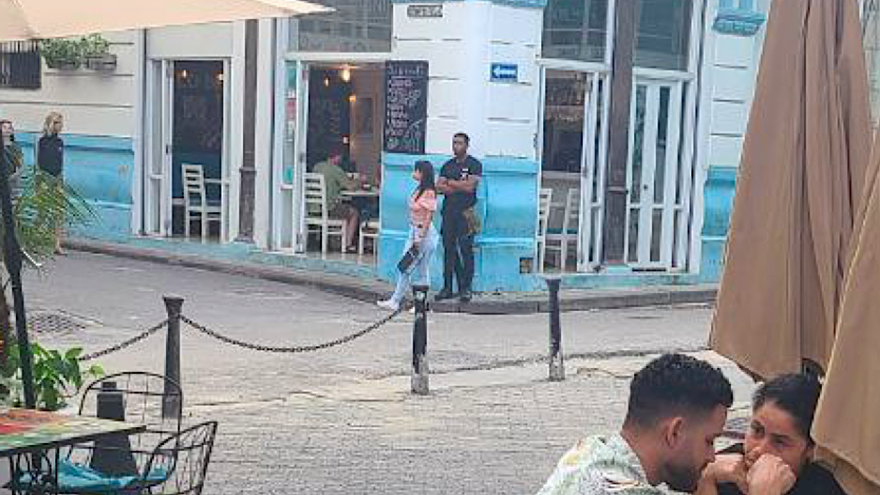
Placed at the door of the premises, the guards prevent the beggars from even getting past the ornamental pots at the entrance to the terraces. (14ymedio)

As for Chacón 162, its owner is José Héctor Argiles Agüero, who is proud on social networks of the visit to his premises of international figures such as the Spanish actor Mario Casas and the Mexican Gael García Bernal, the chef Pepe Rodríguez – presenter of the show Masterchef Spain – and the Cuban artists David Blanco, Raúl Paz and Carlos Acosta.

The comment that someone from the leadership of the regime protects the owners of the restaurants in the Espada alley is recurrent. Their ease of getting food – Antojos operated even during the pandemic, at home – and their decorations, with allusions to Republican Cuba, have been arousing suspicions among the poor neighbors of the Angel neighborhood for years.

Calling attention at the entrance to Antojos is a gigantic mural with the image of Celia Cruz – flanked by Benny Moré and Compay Segundo – whose music is still banned on Cuban stations. A sign with the word “Azúcar!”, which the singer made famous on the international stage, receives the diners.

“This area is for people with power,” acknowledges a staff member of Antojos to 14ymedio. The severity of the muscular guards, who guard the street once famous for the novel Cecilia Valdés, prove him right.

Translated by Regina Anavy

____________

COLLABORATE WITH OUR WORKThe 14ymedio team is committed to practicing serious journalism that reflects Cuba’s reality in all its depth. Thank you for joining us on this long journey. We invite you to continue supporting us by becoming a member of 14ymedio now. Together we can continue transforming journalism in Cuba.
Motorcycles, Mopeds and Pedestrians Have Been Involved in 55 Percent of Accidents in Cuba During 2023

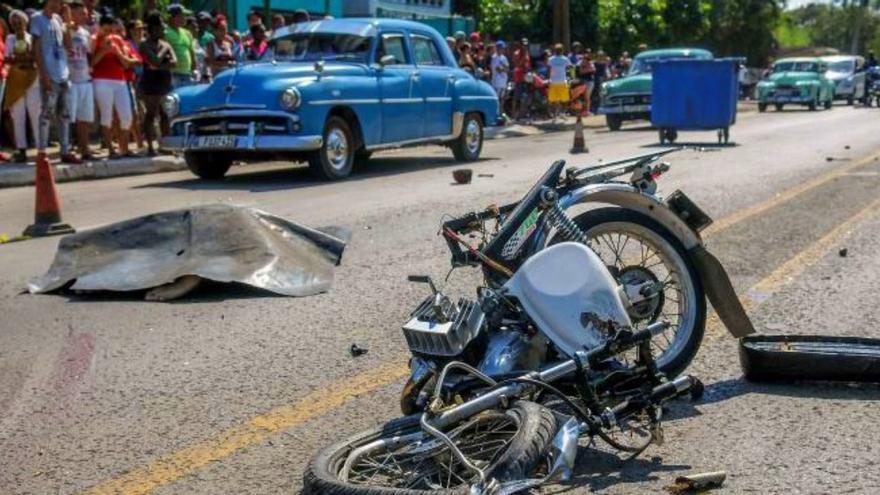
The human factor determines 90% of traffic accidents in Cuba, according to the Police. (Granma)

14ymedio biggerEFE (via 14ymedio), Havana, 11 November 2023 —  Motorcycles, mopeds and pedestrians have been involved in 55% of the accidents recorded in Cuba between January and October 2023, the Island’s traffic authorities said this Friday.

The head of the specialized transit agency of the Police, Colonel Roberto Rodríguez, said in statements to national television that these three actors have accounted for 59% of the deaths and 50% of those injured in the accidents that occurred in that period.

In the first ten months of this year, 6,965 traffic accidents have been recorded in the country, which left 562 dead and 5,643 injured, according to official data. continue reading

Traffic authorities indicated that accidents decreased by more than 1,000 on Cuban roads and highways compared to the same period of 2022, when 8,187 were reported.

Among the main causes of accidents were violations of the right of way, speeding and driving under the influence of alcohol

But they stressed their concern about the increase in the danger of the accidents that have involved mopeds, whose circulation has grown to about 400,000 on the Island.

Among the main causes of accidents were violations of the right of way, speeding and driving under the influence of alcohol, a situation in which 1,327 people were detected.

To this are added the distractions caused by listening to music with high volume, using a mobile phone or eating food, the technical imperfections of the vehicles and the poor condition of the roads.

In the case of pedestrian collisions, the head of traffic said that there was a “discreet decrease” although the number of deaths increased – 30 more in 2023 (159) – than the 129 reported the previous year.

He stressed that the human factor is determining 90% of traffic accidents in the country and considered that the main factor is the discipline of drivers.

Translated by Regina Anavy

____________

COLLABORATE WITH OUR WORKThe 14ymedio team is committed to practicing serious journalism that reflects Cuba’s reality in all its depth. Thank you for joining us on this long journey. We invite you to continue supporting us by becoming a member of 14ymedio now. Together we can continue transforming journalism in Cuba.
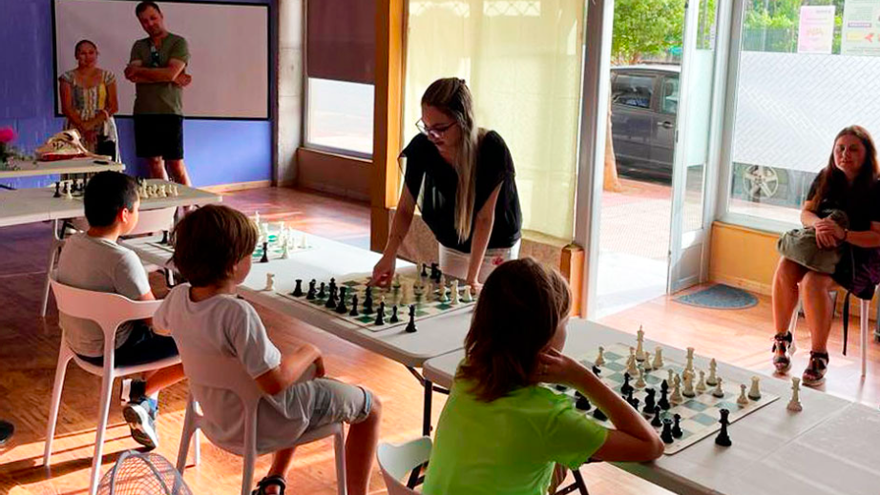
‘With Chess We Teach Children How To Manage Frustration and Defeat’

Riojaque is a training center in Spain that provides resources to stimulate the creativity of children from an early age, says Magariño. (Riojaque)

14ymedio bigger14ymedio, Xavier Carbonell, Salamanca, 11 November 2023 — In the language of chess, Cuba is still a key word. Despite the historic ups and downs, the precariousness – and politicization – of the teaching and the exile of its best players, the Island continues to produce outstanding chess players. This is the case of the teacher Daylin Magariño Carralero (b. Puerto Padre, Las Tunas, 1999), who emigrated to the Spanish community of La Rioja in 2020 to found her own academy and play under the flag of her adopted country.

A “noble and simple” childhood, the chessboard – which she handled with ease at the age of six – and an environment like the Cuban one, where the passion for the game has survived everything, were enough for Magariño to start a promising career in Las Tunas.

In Cuban classrooms, the teaching of chess is an option, sometimes mandatory, and although it is a copy of the Soviet system – intended to prove the “intellectual superiority” of the new man of communism – there is a more powerful reason why Cubans are proud of the sport: José Raúl Capablanca, the only world champion (1921-1927) from the Americas, other than the American Bobby Fischer. continue reading

However, Magariño tells 14ymedio, at present the Cuban chess players – despite the fact that several of the “big ones” have left – have not lost their standards. “In my opinion, the strongest Cuban teachers are Leinier Domínguez, Lázaro Bruzón, Carlos Daniel Albornoz and Lisandra Ordaz.”

A recent measure by the Cuban Chess Federation prevents Domínguez – who occupies the 13th place among the best in the world and is considered the symbolic “heir” of Capablanca – and Bruzón from playing in Cuban tournaments. The reason: being critical of the ruling party and belonging to other federations.

Magariño prefers not to allude to the tensions of the Island and alleges that, beyond the basics, she doesn’t know the situation of the education in the game in her country

Magariño prefers not to allude to the tensions of the Island and alleges that, beyond the basics, she doesn’t know the situation of the education in the game in her country of origin. Her life, she says, is now in Spain, a country in which she always wanted to live because of its “language, culture and chess tradition,” and to which she traveled with her husband. “The welcome they have had for me has been wonderful. I have had the opportunity to play in several tournaments, meet important sports figures and start my studies in psychology,” she says.

The young woman says that in La Rioja she has achieved her two great dreams: “Playing and teaching chess.” Her project, the Riojaque academy, offers courses to children and adults in different learning modalities.

“Riojaque is a training center that also provides resources to stimulate creativity and imagination in children from an early age; it’s not just to pass the time,” says Magariño.

Together with a partner “musician, teacher and writer,” they develop one of the areas in which Spain leads worldwide: educational chess. “We teach children to manage frustration, defeat and reinforce discipline and order,” she defines.

Being in Spain has also allowed Magariño to find other Cuban teachers who have arrived on the Peninsula, such as Arián González – also affected by the prohibition of the Cuban Federation – and Renier Vázquez. With them she played in the absolute individual championship of Spain and says that both are “well known and recognized by their Spanish colleagues,” with whom they now share a flag.

Magariño – champion of La Rioja in classic and fast chess in 2022 – has several immediate goals: to continue with Riojaque, to be in charge of the official Women’s and Chess Commission in La Rioja and to complete her psychology studies. About the Island, to which she has returned only once since she emigrated, she has a rather dispassionate opinion: “Like all countries, Cuba has good things and could improve others. What I like about my country is that people love chess.”

Translated by Regina Anavy

____________

COLLABORATE WITH OUR WORKThe 14ymedio team is committed to practicing serious journalism that reflects Cuba’s reality in all its depth. Thank you for joining us on this long journey. We invite you to continue supporting us by becoming a member of 14ymedio now. Together we can continue transforming journalism in Cuba.
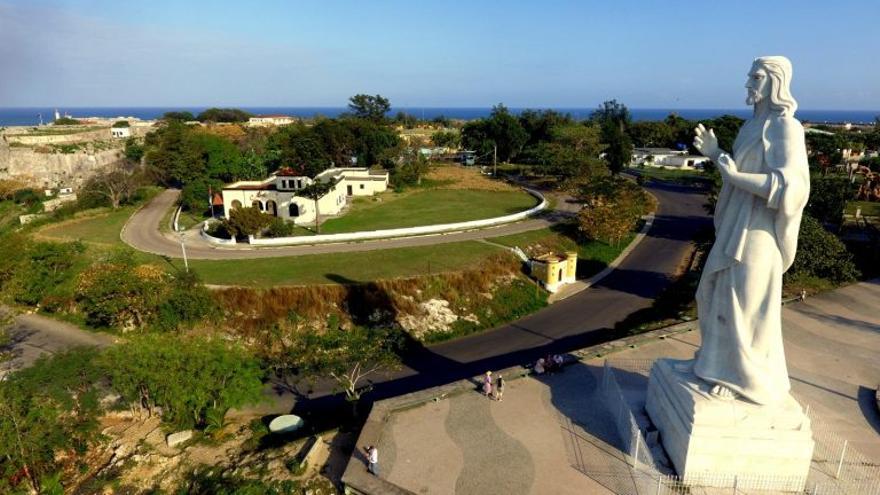
‘While Doing Military Service in La Cabana, Three Recruits Committed Suicide From the Statue of Christ’

The statue of Christ was inaugurated a week before Batista’s escape, on December 24, 1958. (Secret Nature/Facebook)

14ymedio bigger14ymedio, Juan Izquierdo, Havana, 9 November 2023 — Adrián González will never erase from his memory the suicide attempt in 1983 by one of his colleagues in the military service. Both were recruits in the military unit of La Cabaña, in Casablanca, on the other side of Havana Bay, when their friend climbed to the top of Christ, the colossal work of Jilma Madera, and jumped into the abyss shouting “I am Superman!” The fall was 20 meters (65 feet).

The young man survived, but was left one-armed and had to remain hospitalized for months. “He wanted to appear crazy and thus get out of the service,” says González, who today lives in New York, and whose memories of military unit 3074, located in La Cabaña, still keep him awake at night. “Until I left there, in 1986, there were at least three ’successful’ suicides. They all jumped off the Christ,” he tells 14ymedio.

At that time, he adds, the access to Christ, inaugurated a week before Batista’s escape, on December 24, 1958, was prohibited – “Fidel Castro did not like people going to pray there” – and he had it guarded, a single recruit, shotgun in hand. For many, the guard duty was a break from the continue reading

oppressive environment of the unit, but many ended up overthinking and descending into depression, he says.

Another young man stole a rifle from the arsenal and shot himself in the head. His desperation had reached a point of no return and he no longer cared about getting out, but rather about killing himself. “The officers told us then that he had problems with his father, but we all knew what had happened: the boy was never able to adapt to the service,” González says.

“I told them that I wanted to kill myself. They didn’t believe me. Then they tried to put me in prison for repeated absences, because I was from El Vedado and I ran away every night”

Unable to physically harm himself, González also starred in an episode of “madness” to try to leave the unit sooner. “They took me to the psychiatrist at the Naval Hospital after I faked severe depression. I told them that I wanted to take my life. They didn’t believe me. Then they tried to put me in prison for repeated absences, because I was from El Vedado and I ran away every night.”

He ended up being evaluated by a team of doctors in Mazorra – the gloomy asylum in Havana – and after the diagnosis “they recognized that I had depression, but it was not enough to discharge me. In the end I completed my service, I spent three years and three months in that unit, but at least I got out of prison,” he says. His assessment, four decades later, is similar to that of any Cuban who has been at the mercy of the Armed Forces: “I am miraculously alive.”

A recent study by the organization Archivo Cuba (Cuba Archive) described Cuban military service as “human trafficking with a lethal cost” that has cost the lives of at least 54 young people — that were able to be documented — since its establishment by Law No. 1,129, of 26 November 1963. Only the Island and North Korea force minors under 18 years of age to train in Armed Forces facilities, with a program with strong ideological overtones that underlines the need for blind obedience to the regime.

The causes of death recorded by the Cuba Archive are several: suicides, negligence by superior officers, medical neglect, imprudent orders – such as the young recruits who died at the Matanzas Supertanker Base — and disappearances and deaths in unclear conditions.

“My son said he would rather die under Ukrainian bombs than from hunger and sadness here”

In 2021, the number of young people in Cuba of military age – between 15 and 29 years old – was 1,033,123, according to official data. They are “a large captive reserve,” the report assessed, “submerged in poverty and hopelessness,” which is why they looked for any opportunity, including military means, to leave the country.

The clear – and most serious – example is the presence of young Cubans in the Russian Army, participating in the invasion of Ukraine. Their motivation, many admitted, was economic. With 26,000 euros a year, the salary promised to some of the Cuban mercenaries, they intended to help their families and later manage to take them to Russia.

The report, signed by María Werlau, documents how the presence of Cubans in the Russian ranks was known and consented to by the leadership of both countries, whose military and political rapprochement has been consolidated in the last year. Werlau highlights the case of the two young people from the Island who reported having been “deceived” and “mistreated.” According to a video released by several media, they had signed a contract that did not stipulate their direct presence on the front, and yet they had been forced to participate directly in the war.

“My son said he would rather die under Ukrainian bombs than from hunger and sadness here,” the mother of one of the recruits had revealed, according to the document.

“Medical care is scarce and food is very poor and people even go hungry, which affects minors who are still growing the most.”

The report also dedicates a section to the most traumatic antecedent of the struggle of young Cubans on foreign battle fronts: Angola. “According to official figures, Cuba’s participation involved 377,033 soldiers and 50,000 civilian collaborators,” for whom the African country paid up to $1,000 for each member, it points out.

For Werlau, the conditions of military service in Cuba could not be more deplorable. “Many of the recruits are sent to remote units far from their families,” she says. “Medical care is scarce and food is very poor and people even go hungry, which affects minors who are still growing the most.” In addition, young people are prohibited from leaving the country.

The “ordeal of sorrow” that military service entails leaves a psychological – and often physical – toll that lasts a lifetime. González knows this well, having met his friend again years after his “jump” from the Cristo. When González congratulated him for having “earned” his exit, the other showed him his hands, still broken from the impact: “Your luck was better,” he said, “I regret it. Look how I turned out.”

____________

COLLABORATE WITH OUR WORKThe 14ymedio team is committed to practicing serious journalism that reflects Cuba’s reality in all its depth. Thank you for joining us on this long journey. We invite you to continue supporting us by becoming a member of 14ymedio now. Together we can continue transforming journalism in Cuba.
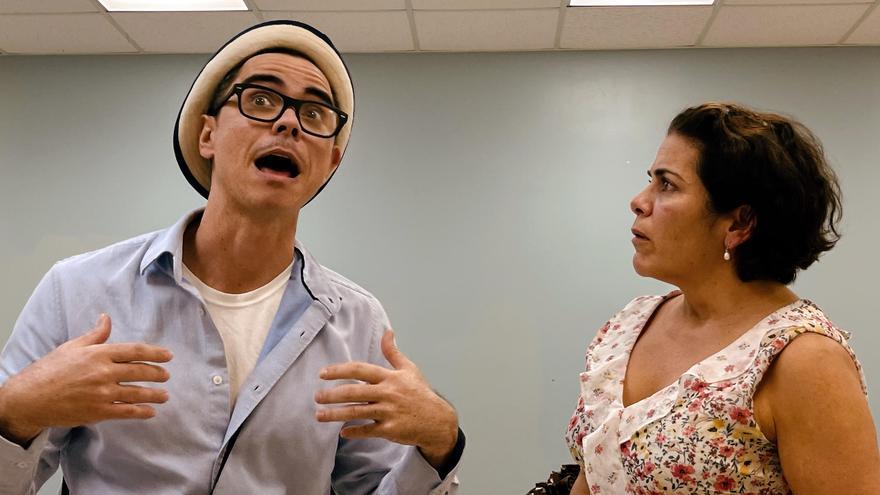
Castro’s ‘Ten Million Ton Harvest’ Comes to Miami Theater by the Hand of Nilo Cruz

Photograph by Arca Images of a scene from the play Un parque en mi casa (A Park in my Home) by Nilo Cruz. (EFE/Arca Images)

14ymedio biggerEFE (via 14ymedio), Jorge I. Pérez, Miami, November 9, 2023 — The so-called 10 Million Ton Harvest of 1970, one of Fidel Castro’s first megaprojects, served as a historical backdrop for the Cuban-American playwright Nilo Cruz to write and direct Un parque en mi casa (A Park in my Home), whose Spanish premiere will be this Thursday in Miami with a “very simple and symbolic scenery”: a prop house.

Cruz, the first Hispanic to win the Pulitzer Prize for theater with Anna in the Tropics (2002), says in an interview with EFE that “writing about 1970, a year that changed my life, was a way to rescue a moment that I didn’t fully understand at the time.”

In Un parque en mi casa, according to the promotional notes for the new play, five relatives of an improvised Cuban family are waiting for the arrival of a Russian who will live with them as part of an international exchange program.

Each character, he adds, must fight with a life “full of changes and uncertainties, a divided country and an uncertain future, while working to continue reading

meet the objectives of the ten million ton sugar harvest,” a production goal set by Castro in 1970 that ultimately was not achieved.

About the cast, the playwright points out that he has two veteran actors that he admires very much, Carlos Acosta Milián and Gretel Trujillo

Castro’s ambitious project, which mobilized almost the entire country, was not achieved but marked a spirit of possibility that Cruz has used from the point of view domestic intimacy.

“My father, a former political prisoner in several prisons in Cuba, including the Castle of San Severino and the Isle of Pines Prison, Puerto Boniato, was one of those victims forced to cut cane for the 10 Million Ton Harvest,” Cruz explains.

“In my house,” he explains, “we saw how he arrived despondent after doing his work in the cane fields. I remember that because of the brutal and extensive work he developed a chronic pain in his back.”

With four performances starting this Thursday in the Miami-Dade County Auditorium, Un parque en mi casa presents these characters “through a background of sadness and loss.”

They “carry in themselves a remarkable source of humor, healing and strength,” says the program notes of Arca Images, the company in charge of the editing and, according to its website, one of the main producers of bilingual Hispanic theater in South Florida.

I remember that due to the brutal and extensive work he developed a chronic pain in his back

About the cast, the playwright points out that he has two veteran actors that he admires very much, Carlos Acosta Milián and Gretel Trujillo.

Four actors who are working with him for the first time are also part of this production: Claudia Tomás, Daniel Romero, Guillermo Cabré and Ricky Saavedra.

Cruz, who in addition to the Pulitzer has received numerous awards, including those from the Kennedy Center Fund, the American Theatre Critics and the Humana Festival for New American Plays, wrote Un parque en mi casa, his original title, on a commission in 1995 by the McCarter Theater company, of Princeton, New Jersey.

“They invited me to participate in a festival of short plays based on the theme of the home. After having lived for many years in the United States, the subject made me travel through memory and write about my childhood in Cuba,” explains the playwright, who arrived in this country at the age of nine.

According to Cruz, the Russian who appears in the play “is a fictional character who functions as a detonator and at the same time a catalyst, who demystifies the revolutionary socialist romance of that time.” “He makes them all see a very different reality from what they imagined about the system,” he points out.

At the Miami showing, the public will see “a very simple scenery” that serves “to suggest an old house, underpinned by its poor condition. These wooden struts not only work to hold walls, but also as a symbol of sustaining the structure of a revolution that is crumbling.”

After having lived for many years in the United States, the subject made me travel through memory and write about my childhood in Cuba

According to Lillian Guerra’s Visions of Power in Cuba: Revolution, Redemption, and Resistance, 1959-1971, the 10 Million Ton Harvest between 1969 and 1970 was “the government’s attempt to revive popular euphoria through massive mobilizations to cut sugar cane and produce a record harvest to defeat underdevelopment.”

But the massive 1970 harvest did not reach ten million tons and damaged the island’s global economy, which was neglected.

“I think many will possibly identify with the loves, dreams and disenchantments of these characters, and the double life they undergo to survive,” Cruz predicts shortly before the premiere.

“The disillusionment, the disappointment continues to be repeated in all parts of the world, but we continue to attach ourselves to the arrogance of hope. The only thing we can’t lose is faith in the good and exercise that power within us and in all our actions,” he said.

Translated by Regina Anavy

____________

COLLABORATE WITH OUR WORKThe 14ymedio team is committed to practicing serious journalism that reflects Cuba’s reality in all its depth. Thank you for joining us on this long journey. We invite you to continue supporting us by becoming a member of 14ymedio now. Together we can continue transforming journalism in Cuba.
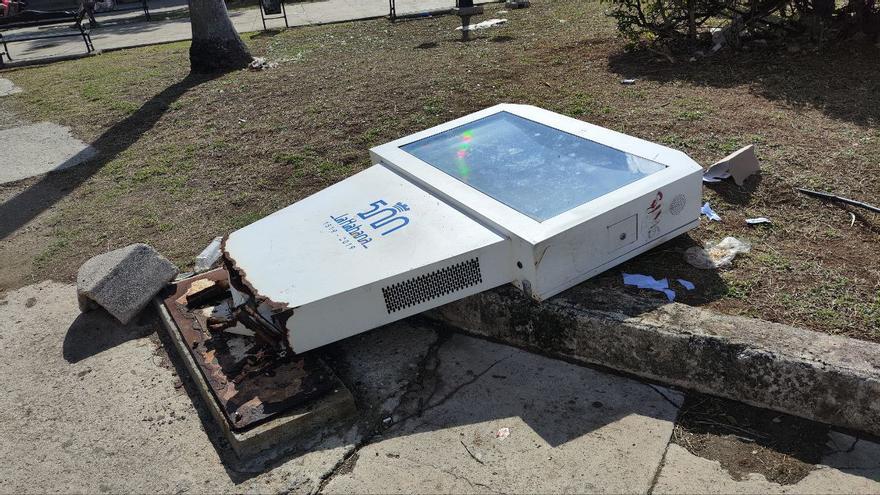
Little Remains of the Bright Screens that Celebrated Havana’s 500th Anniversary

Its base rusted away, it fell over, perhaps from a gust of wind or a knock from some passer-by. (14ymedio)

14ymedio bigger14ymedio, Juan Diego Rodríguez, Havana, 8 November 2023 – It’s not as if the brightly lit screens located in various parts of Havana for its 500th anniversary in 2019 were of much use to anyone. Apart from the few messages that did have any use – those about traffic, cultural events, or Covid – most of them were just slogans, like “Cuba, the Best”, or idyllic photos of the capital that didn’t reflect any sort of reality.

Installed by the Ministry of Culture, they were announced with the same pomp and ceremony as all the other activities that commemorated the capital’s five hundred years, notable events which its historian Eusebio Leal promoted with special determination before his death. Soon, just as with other initiatives for the fifth centenary – like the tourist bicycles – the screens were neglected and, one by one, stopped working. continue reading

Soon, just as with other initiatives for the fifth centenary – like the tourist bicycles – the screens were neglected and, one by one, stopped working 

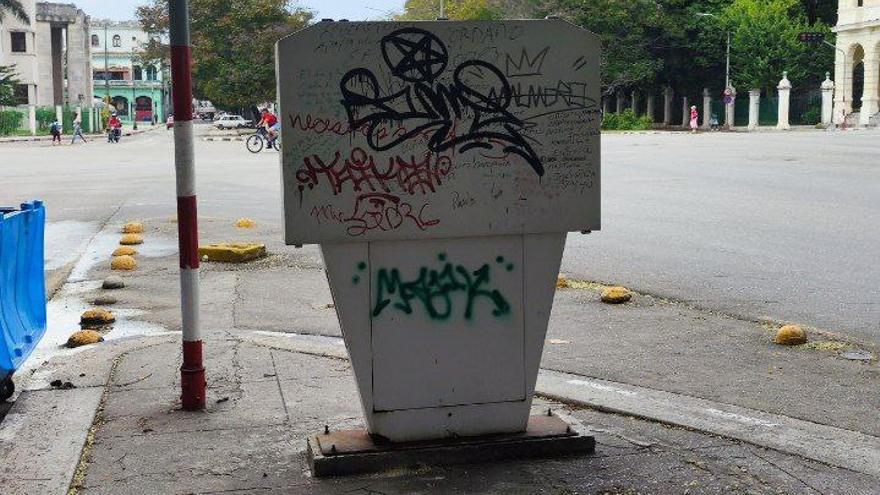
One of the few that did continue to work is in Carlos III and Infanta Avenue, but you can barely make out what it’s showing because it has lost contrast and the strong sunlight on the glass doesn’t help either, in making out the details in the picture. The back of its casing is all covered in graffiti. Another screen, on Belascoaín and Carlos III, in Karl Marx park, wasn’t so lucky. Its base all rusted away, it fell over this week, perhaps from a gust of wind or a knock from some passer-by.

Reduced to wreckage on the ground this Wednesday, it presented a vivid image of all that now remains of those celebrations which claimed to modernise Havana.

The back of the screen on Carlos III and Infanta is all covered in graffiti. (14ymedio)

Translated by Ricardo Recluso

____________

COLLABORATE WITH OUR WORKThe 14ymedio team is committed to practicing serious journalism that reflects Cuba’s reality in all its depth. Thank you for joining us on this long journey. We invite you to continue supporting us by becoming a member of 14ymedio now. Together we can continue transforming journalism in Cuba.
Nicaragua’s Government Removes Taxi Drivers From the Business of Transporting Cuban Migrants

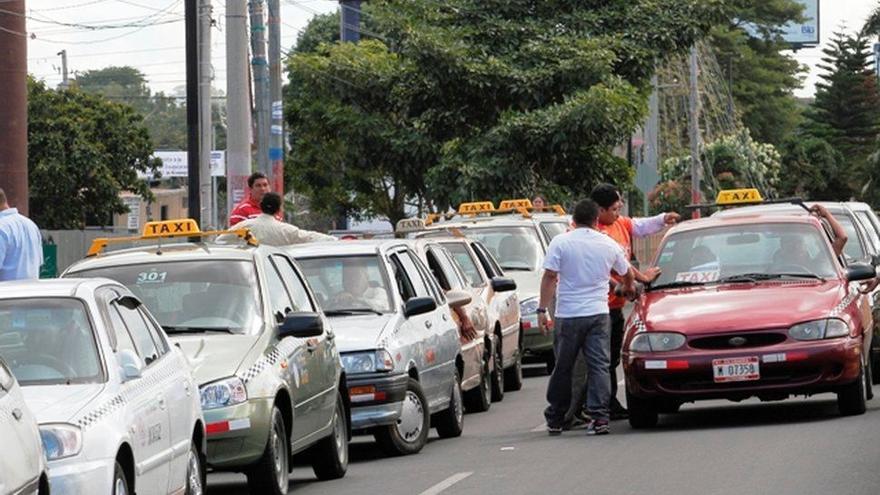
Taxi drivers have established routes and prices for the transfer of migrants to the border with Honduras. (El Nuevo Diario)

14ymedio bigger14ymedio, Havana, 9 November 2023 — Nicaraguan authorities have prohibited taxi drivers from transporting migrants from Cuba, Haiti and African countries from Augusto César Sandino airport, in Managua, to the border with Honduras. According to the newspaper La Prensa, the drivers say that this is another strategy of the Government to “take private business out of the game” and monopolize the income generated by the passage of migrants.

“What I know informally from my neighbor, who has been dedicated to those trips for more than a year, is that yes, indeed, since last week, airport staff is preventing them from taking people to the border,” confirms Julio, a collaborator of 14ymedio in Nicaragua, who has been following the situation.

“They are even being prevented from accessing the gas station in front of the airport, which is where Cubans used to board the vehicles,” he adds.

Julio explains that the measure does not surprise him. “It’s not just now; in any case what they are doing is removing the private taxis, because since continue reading

the exodus began the Government has been directly involved in the transfer of migrants,” he says.

“It’s not just now; in any case what they are doing is removing the private taxis, because since the exodus began the Government has been directly involved in the transfer of migrants”

Interviewed by the newspaper La Prensa, many of the taxi drivers were annoyed with the sparse explanations of the agents who expel them from the surroundings of the air terminal. “Now the police send patrols around, looking for how to fine you. You can’t make the trip, you can’t go to the airport, if you park two kilometers away and want to enter on foot they won’t let you, they’ll remove you. They tell you that you have to leave, that you have no permission, and the only thing they know how to say is that ’they have higher orders’ and are doing their job,” says one of the drivers.

According to the taxi drivers, the police authorities, the Ministry of Infrastructure and the Transport Regulatory Institute maintain that everything is due to “relaxation” with the transportation of migrants and complaints from taxi drivers who officially operate in the terminal. “It’s not like that, they are doing their job,” refutes one of the drivers.

Actually, they say, they are displacing them because “the Government or I don’t know which officials are looking for how to seize that income. They want to provide buses; they want to take over and that’s why they give us so many excuses and restrictions,” he adds.

The taxi drivers explained that the authorities are exaggerating the situation because, although it is true that many drivers did not leave until they found a safe trip with migrants, in reality they were all working without causing problems.

“Everyone made their best offer and since there were many of us, it seemed okay. Now we are all harmed and figuring out how to solve the problem,” he said.

“The taxi drivers’ union has not wanted to protest because there is fear; there is fear that they will put you in jail,” he continues. However, it becomes increasingly difficult to get customers, and when they manage it and are discovered, they pull them out of the taxi.

The drivers explain that, as an alternative, they have had to look for private places to park, usually restaurants where they eat some food to justify parking and then walk to the airport in search of customers.

The taxi drivers’ union has not wanted to protest because there is fear; there is fear that they will put you in jail

“They are taking away the daily bread for our families, because that generated money for us. This harms us financially because living in Nicaragua is not cheap,” they say. Normally, each taxi driver made between three and four trips a week to the border to transfer migrants and charged 50 dollars per person to Africans, Haitians and Cubans.

In Nicaragua, numerous businesses have been created to offer transport, accommodation and food services where almost all the  customers are migrants in transit through the country. This is the case with the taxi drivers, who have established routes and prices for the transfer to the border with Honduras.

“They commonly go to Ocotal, Las Manos and sometimes Guasaule,” they say, but even this path has become difficult. “They stop you, and you don’t have to present your documents but you do have to pay 100 pesos for each police checkpoint. Imagine if there are six checkpoints. They don’t have to stop you because the migrants entered Nicaragua through the airport legally; we weren’t doing any kind of human trafficking, we’re just providing transportation,” they explain.

Translated by Regina Anavy

____________

COLLABORATE WITH OUR WORKThe 14ymedio team is committed to practicing serious journalism that reflects Cuba’s reality in all its depth. Thank you for joining us on this long journey. We invite you to continue supporting us by becoming a member of 14ymedio now. Together we can continue transforming journalism in Cuba.
Marrero Proposes Direct Flights Between Cuba and China To Facilitate Bilateral Trade

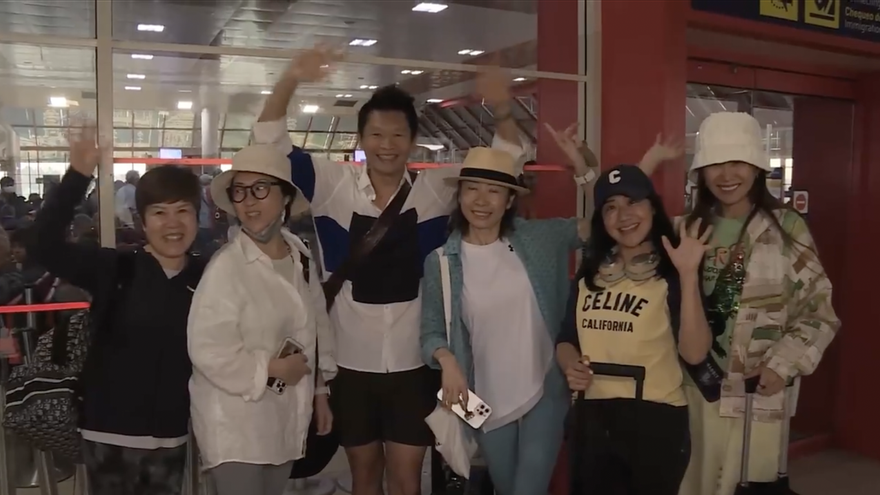
Chinese tourists spend a lot of money, and although  they are still scarce in Cuba, the authorities seek to attract them. (Capture/Xinhua)

14ymedio biggerEFE (via 14ymedio), Beijing, 8 November 2023 — The Prime Minister of Cuba, Manuel Marrero Cruz, expressed his interest in establishing direct flights between Beijing and Havana, a measure aimed at facilitating trade and business between both nations. “I wish we could launch a direct flight tomorrow. But unfortunately we still don’t have a clear schedule. But I think it could start next year,” Marrero said in statements made on Tuesday during a business forum in Beijing.

This proposal arises as economic and commercial cooperation between China and Cuba intensifies, generating a growing demand for direct flights, said Marrero, according to the official newspaper Global Times.

The Cuban leader also emphasized the importance of attracting foreign investment and improving autonomy in food production

The Cuban leader also emphasized the importance of attracting foreign investment and improving autonomy in food production. In addition, he stated that Cuba is working on the transformation of its energy system, including wind and solar energy projects, and on the digitization of Cuban television in collaboration with the Chinese telecommunications giant Huawei.

Regarding his meeting on Monday with the president of China, Xi Jinping, Marrero stressed the “special relationship of unbreakable friendship” between the Island and the Asian giant and the progressive growth of these ties. continue reading

In turn, the Cuban prime minister expressed his gratitude for China’s continued support and reiterated his opposition to the United States embargo.

“I can guarantee, and I can say with confidence, that without a blockade, Cuba would be a country that would have achieved a lot in economic development,” Marrero said. This is Marrero’s first visit to China since he was appointed prime minister in 2019.

The Cuban leader began his official trip to China in the megalopolis of Shanghai (east), where he attended the VI International Import Exhibition of China this weekend and met with his Chinese counterpart, Li Qiang.

After his stay in China, Marrero is expected to travel to Belarus, where he will remain until November 12, according to the Cuban Foreign Ministry

The Prime Minister’s visit follows that made by the president of Cuba, Miguel Díaz-Canel, in November last year, in which Xi told his Cuban counterpart that China “will do everything possible to provide support” to Cubans in the face of the “great challenges” they face.

Cuba has been in one of its worst crises for several years due to, among other factors, the inefficiency of its centralized economic system, translated into shortages of fuel, food, medicines and other basic products.

Cuba and China, with diplomatic ties since 1960, maintain close political, economic and commercial relations, and the China stands out as one of the main allies of the communist Island.

After his stay in China, Marrero is expected to travel to Belarus, where he will remain until November 12, according to the Cuban Foreign Ministry.

Translated by Regina Anavy

____________

COLLABORATE WITH OUR WORKThe 14ymedio team is committed to practicing serious journalism that reflects Cuba’s reality in all its depth. Thank you for joining us on this long journey. We invite you to continue supporting us by becoming a member of 14ymedio now. Together we can continue transforming journalism in Cuba.
Cuba’s Iconic Ice Cream Parlor Coppelia Closes Because ‘There is No Ice Cream, No Milk, No Sugar’

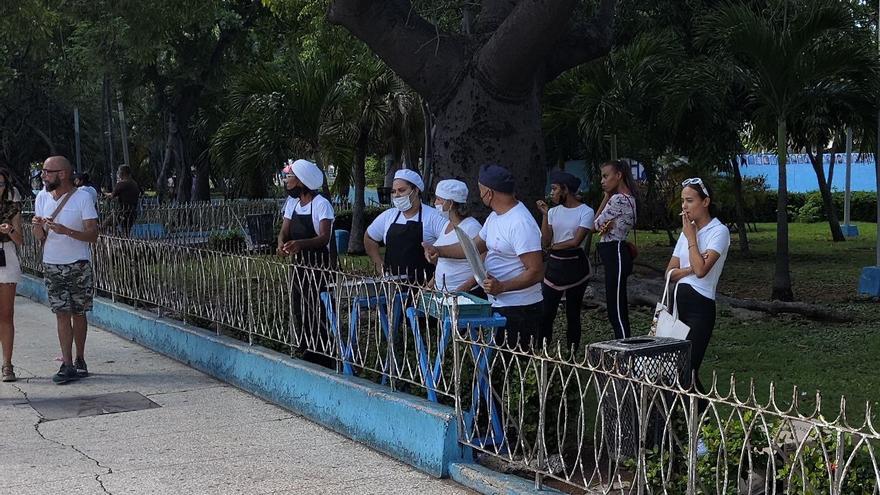
All Coppelia employees are on the street, selling the sweet treats they have left in stock. (14ymedio)

14ymedio bigger14ymedio, Juan Diego Rodríguez, Havana, 9 November 2023 —  The emblematic Coppelia ice cream parlor, located on L and 23, in the heart of Havana’s El Vedado, is closed on all four sides this Thursday, with the lights off and the tables cleared. Again, as was the case earlier this year, there is no ice cream.

A novelty, this time, is that all the employees are on the street, selling the sweet treats they have left in stock. Only marquesitas and capitolios, rough and tasteless, for 50 pesos. “There is no ice cream, there is no milk, there is no sugar, there is nothing,” one of the workers proclaimed with humor, responding with another question when asked when the establishment would reopen: “Oh, my love, in what country do you live?”

Other employees responded, dragging their feet, but suggesting that it won’t be soon: “It’s not known,” “This is for a long time,” “It won’t be around for a long time.”

A worker from the Coppelia ice cream factory itself, who asks to remain anonymous, confirms to this newspaper the dramatic situation in which the industry finds itself. “I know of colleagues who resold some of the ice cream we produced, but they hadn’t for months, because the product was of such poor quality that it wasn’t sold, it looked more like durofrío [popsicles] than ice cream.”

“We were quite indignant, they were letting us try that so that we would remember what real ice cream was”

According to the same source, last September, on the occasion of the G-77 Summit in Havana, a limited edition of Coppelia ice cream was made for guests at the official event and hotels. “They practically militarized the factory to prevent the employees from stealing some of the ice cream,” he says. “The day they were going to move the product, they allowed us workers to try a little dish of ice cream. We were quite indignant, they were letting us try it so that we would remember what real ice cream was.”

Called in Cuba the “cathedral of ice cream,” Coppelia was inaugurated in 1966 with the utopian objective that the Revolution would produce more and better flavors than in capitalist countries. Its splendor was brief, although not even during the crisis of the Special Period, in the 90s, when the quantity and quality of its offering drastically decreased, did the endless lines at its counters subside. Being the little that still functioned, the influx was enormous, and, once the circulation of the dollar was allowed, it was common to see foreigners entering with their currencies, to a better stocked area, without having to wait in line.

Its remodeling four years ago aroused much expectation, but could not stop the decline of the place. Since the covid-19 pandemic, when it was also closed due to measures to avoid contagion, it has not raised its head. The poor quality of the product and the high prices have been putting the final nails in the coffin of one of the symbols of triumphant Castroism.

____________

COLLABORATE WITH OUR WORKThe 14ymedio team is committed to practicing serious journalism that reflects Cuba’s reality in all its depth. Thank you for joining us on this long journey. We invite you to continue supporting us by becoming a member of 14ymedio now. Together we can continue transforming journalism in Cuba.
In Cuba, Tourists Distrust Prepaid Hard Currency Cards and Prefer to Pay in Cash

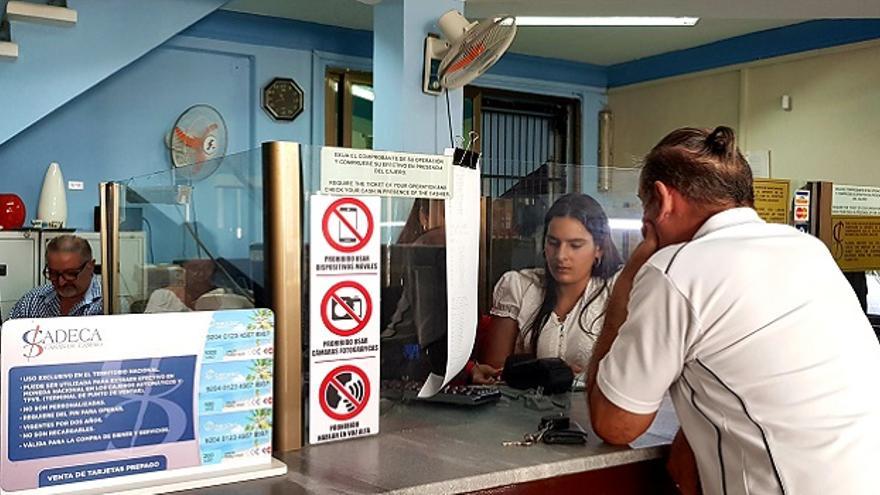
Prepaid cards in hard currency can be purchased at airports, hotels and currency exchanges (Cadecas). (5 de Septiembre)

14ymedio bigger14ymedio, Natalia López Moya, Havana, 8 November 2023 — With seven years in the United States and a butcher’s trade, Yoandy returned to Cuba this October to spend a few days with his family. In addition to their embrace, this 46-year-old from Villa Clara encountered serious problems when it came to paying for products and services. The worst part of the experience was the lack of prepaid cards with low hard currency denominations.

“I stayed a couple of nights at my family’s house in Havana, but my wife preferred to go to a hotel in El Vedado,” Yoandy tells 14ymedio. The accommodation, managed by a foreign company, is one of those used by American tourists and Cuban-Americans who travel to the Island to avoid paying at the ones that the U.S. Treasury Department has blacklisted for their ties to the military.

“The third night I went to the hotel with my wife and every day we had a different problem, eating at the hotel restaurant or having a few drinks at the bar, because you can’t pay in dollars in cash; they are forbidden to charge in cash,” he recalls. “All expenses have to be paid with magnetic cards, but in Cuba those issued by the U.S. banks don’t work.” continue reading

“Everything looks very beautiful in the advertising for these cards, but in practice they are more of a stumbling block”

To circumvent that restriction, the Cuban authorities began to market, from June 2021, prepaid cards in freely convertible currency (MLC) that can be purchased at airports, hotels and Cadecas (exchange houses) throughout the Island. They can be used to pay for hotel reservations, excursions, plane fare, in stores, to rent a car and to eat in restaurants.

Tourists pay for the cards in dollars, euros, yen or pounds sterling and then can recharge them by adding more currency, but when returning to their country they will not be able to recover the foreign currency that remains on the card. They can only extract Cuban pesos from ATMs – at the official rate of 120 CUP per dollar – or transfer the amount in MLC to the account of a relative or friend on the Island.

“Everything looks very beautiful in the advertising for these cards, but in practice they are more of a stumbling block,” Yoandy reasons. Without the owner’s name embedded in them and with a validity of two years, the banking authorities assure that the buyer can keep the card to use on another trip to the Island, but Yoandy thinks those are advantages that he will not use. “This is the first time I’ve returned in seven years,” he says.

At first, the lowest denomination of the prepayment cards was 200 MLC, but then the 50 and 100 MLC cards were put into circulation. “It was much better to have these, because tourists don’t want to take a risk and buy one of 500 or 1,000 the first time, because they don’t know how much they’re going to spend. Some come with all-inclusive packages and you only use the card for dinner at a paladar (private restaurant),” acknowledges an Infotur employee in Old Havana.

“They definitely lose money because they’re not flexible. The worst thing is that as soon as the tourists learn about the twisted mechanism they have created, they have already experienced several annoyances

“What we noticed when they came to ask us about the cards is that most preferred to buy 50 or 100 MLC and then recharge them to the extent that they needed to have more funds,” the state worker explains to this newspaper. “But to achieve that you have to always make the entire range of cards available. If someone wants to be cautious, buy the 50, and if someone wants to take a risk, buy the 1,000.”

But, the employee concludes, “the 50’s and the 100’s are always in demand.” The lack of them brings countless losses to the hotels, in the words of the Cuban-American Yoandy: “We got frustrated in the hotel  because they only had cards of 500 and up, so we went out, walked around the block and ate at a paladar that accepted dollars in cash.”

In several calls to two hotels in El Vedado and another three in Old Havana, this editorial office confirmed that now the cards for sale are “the ones with more than 200 MLC.” An employee said that they were waiting for the cards with denominations “between 50 and 100” for this week.

Yoandy finds it difficult to understand that what arose to solve a problem for the tourist has ended up hindering the service at the official hotels and restaurants. “They definitely lose money, because they’re not flexible. The worst thing is that when the tourists learn about the twisted mechanism they have created, they have already experienced several annoyances.”

His wife, of American origin, “can’t believe what she saw,” the man points out. “She couldn’t understand that the hotel restaurant had food, was full of waiters, the bar full of bottles, and we couldn’t be taken care of because we couldn’t pay in dollars and refused to buy an MLC card for 500 bucks.”

Prepaid cards cannot be requested by Cuban nationals or permanent residents in Cuba. Since the cards aren’t registered to a particular person, “I also didn’t want to risk buying one at a higher price and leaving it to my mother so that she could spend the MLC when I left,” he says. “Because in foreign exchange stores they ask people for their identity card or passport to verify that the owner of the card does not live in Cuba.”

In his case, as in the case of so many others who face the same difficulty, the solution to having dinner or a few drinks has been to go to private businesses. “Dollars, euros, Cuban pesos and MLC, here we accept all those currencies,” insistently repeats the employee, who this Wednesday appealed to potential customers at the doors of a paladar near the Bay of Havana.

Translated by Regina Anavy

____________

COLLABORATE WITH OUR WORKThe 14ymedio team is committed to practicing serious journalism that reflects Cuba’s reality in all its depth. Thank you for joining us on this long journey. We invite you to continue supporting us by becoming a member of 14ymedio now. Together we can continue transforming journalism in Cuba.
Energy Contingents Prepare to Detect ‘Illegalities’ of Consumption in Cuba

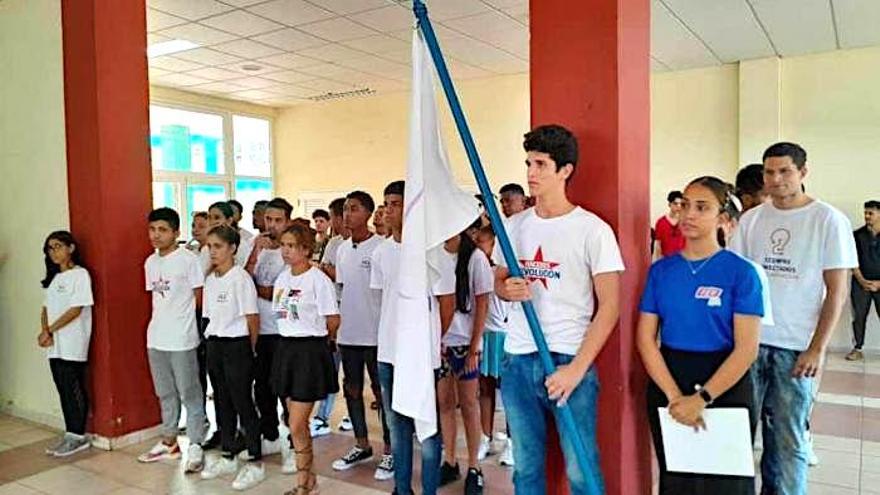
After the “registration” of the contingent, this Wednesday, its members will be distributed throughout several territories. (Tribuna de La Habana)

14ymedio biggerWith their fists held high and shouting slogans, on Wednesday the members of the University of Havana Energy Contingent received a mission from the authorities: to launch a campaign of “timely detection of illegalities,” monitor “residences, state and private entities,” and admonish – door to door – those who appear on the “list of high consumers” of the capital.

The brigade, made up of members of the University Student Federation (FEU) and the Union of Young Communists, are under orders from the Electric Union (UNE) to “transmit a fresh message” of “energy control.” On Cuban Television, young people allowed themselves to be recorded entering homes, examining meters and filling out a thorough record of appliances to verify that the expense “that they are reporting to the Electric Company really corresponds to what they have in the houses.”

In their task, the young people said that they will not wait for “indications to act for what is fair,” and considered – in the words of Yanara Sosa, president of the FEU at the University of Havana – that they are carrying out a “transcendental process” whose rigor will not spare the “state or the residential sector.” continue reading

After this Wednesday’s “registration” of the contingent, its members will be distributed throughout several territories, although they will be supervised by the UNE offices in the capital. During the past month, similar activities have been carried out in other provinces of the country, where the universities have also formed brigades of student “inspectors.”

The University wants the contingent to effect a radical change in consumption and defines its work as “preventing” illegalities

In the case of the Central University of Las Villas (UCLV), one of those that first and most enthusiastically took on the task, the contingent is made up of students from the Electrical Engineering and Telecommunications careers, in addition to UNE workers. Its task: “planning the charges” – a cryptic expression that designates the comparison of what the consumer declares and what he pays, with special attention to the “new economic actors,” the province’s small private businesses.

Villanueva University hopes the contingent will effect a radical change in consumption and defines its work as “preventing”  illegalities. The measure arrives at a good time, said the directors of the UNE, since Santa Clara is at the forefront of electricity consumption in the country, along with Havana.

As in the capital, the “registration” of the UCLV brigade also had ideological overtones, and its members were urged to carry out each inspection with an eye on the benefit that the “task” is lending to the Revolution. “The university is going to ’embrace’ the people,” said the dean of the Faculty of Electrical Engineering, Yunier Valeriano, to soften his speech on energy control.

Despite the enthusiasm of the Energy Contingent, Cuban university students have been the first to suffer the country’s electrical instability. The suspension of entire weeks of classes, the long delays in scholarships and the effects of transport are part of the student routine in all the provinces.

The brigade and the UNE speak of a resounding “crisis” but don’t mention at any time that Cuban ports continue to receive oil tankers or the lack of transparency of the Government about these operations. This Wednesday, for example, the Cuban tanker Delsa was anchored in the terminal of the Mexican state-owned Pemex, located in the port of Pajaritos, in the state of Veracruz. As reported to 14ymedio by University of Texas researcher Jorge Piñón, the ship “has already docked in the port” and is ready to “load crude oil,” which it will then transport to the Island.

The brigade and the UNE speak of a resounding “crisis” but don’t mention at any time that Cuban ports continue to receive oil tankers

The Government of Mexico has been involved in a controversy about the conditions of oil deliveries to Cuba, without clarifying whether they were donations, sales or barter. On Tuesday, the Mexican Undersecretary of Foreign Trade, Alejandro Encinas, assured that there is no such “commercial relationship” in the energy area with Cuba. The comment, offered during the Havana International Fair, contradicts the movement of oil tankers in recent months between the two countries.

According to data from the Energy Institute of the University of Texas, the Mexico sent about 750,000 barrels to the Island in October. From March to September, Mexico sent 2.8 million barrels to Cuba, valued at around 200 million dollars, according to the figures collected by the U.S. university.

Havana has never clarified where this fuel goes and why it does not contribute to alleviating the country’s energy crisis, which the UNE reports every day. This Wednesday, its official Facebook profile announced that at 1:00 pm a “shot” from the Renté thermoelectric plant in Santiago de Cuba left that province and Guantánamo province without electricity. So far, electricity has only been able to be restored “gradually.” The announcement, as usual, caused a flood of comments from disgruntled users.

None of these arguments, however, will be on the lips of the members of the University Energy Contingent, whose declared function is to monitor “compliance with the measures,” not to explain the inconsistencies of the Electric Union.

Translated by Regina Anavy

____________

COLLABORATE WITH OUR WORKThe 14ymedio team is committed to practicing serious journalism that reflects Cuba’s reality in all its depth. Thank you for joining us on this long journey. We invite you to continue supporting us by becoming a member of 14ymedio now. Together we can continue transforming journalism in Cuba.
Complaints of Cuban Migrants Detained in Mexico, Including Children, Are Increasing

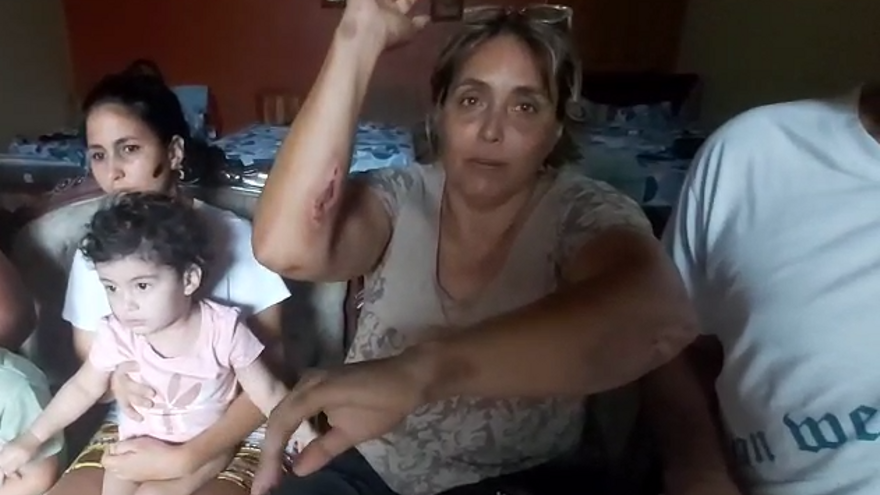
Mayelín Díaz Vargas, one of the Cubans injured in Chiapas, was arrested this Wednesday in Mexico City. (Image capture)

14ymedio bigger14ymedio, Mexico, 8 November 2023 — Migration Agents arbitrarily arrested Mayelín Díaz Vargas on Wednesday, one of the Cubans injured in the traffic accident in Pijijiapán (Chiapas) where 10 migrants from the Island died. This 51-year-old woman from Havana was informed that the protection order she showed to the officers “was not valid” at the International Airport of Mexico City, where she was about to board a flight to the city of Tijuana, on the border with the United States.

Díaz Vargas was ” transferred against her will” to the Las Agujas station, in Mexico City, activist and lawyer José Luis Pérez Jiménez tells 14ymedio. After the woman sent him a message alerting him about her situation, she was “incommunicado,” the lawyer denounces.

According to the activist, this person “has no impediment to transiting the country.” However, the agents “violated the human rights of the migrant and ignored the disposition of a judge.” continue reading

The staff of the Las Agujas station refused to offer reports to this newspaper about Díaz Vargas. “If he is not family, he cannot be given information about the person he is asking about,” said the Migration representative at the access door.

Pérez Jiménez denounced the continued arbitrary detention of Cubans in Mexico. “They are being stopped and locked up with the imminent threat of deportation, which they are covering up by calling it ’assisted return’.”

After the woman sent him a message alerting him about her situation, she was “incommunicado,” the lawyer denounces

Reinier Martínez, one of the first of the 138 Cubans deported by the Government of Andrés Manuel López Obrador since mid-October, denounced the irregularities committed daily by immigration agents and the Mexican administration. “You have to sign to be able to leave,” an agent at the Siglo XXI Migration Station told him. Not knowing what it was about, the man said that they took his fingerprints and passed him several papers. Shortly after, he was returned to the Island.

On the other hand, complaints against Migration for separating families have also grown. Lawyer José Luis Pérez Jiménez points out that on October 31, two families of Cubans, who were traveling with children, were arrested in the state of Puebla. Iriela Pérez González, 36, who was traveling with her son Edgar Lediam Cárdenas Pérez, 17, and daughter Melissa Laura Cárdenas Pérez, 9, was assured by an officer that while she was in detention, the minor and the teenager would be taken to another place, without giving details of the location.

The migrant defense lawyer emphasizes that Pérez Gónzalez was transferred to Tuxtla Gutiérrez, in Mexico City. However, the whereabouts of the minors are unknown, so an amparo (protection order) has been processed demanding their immediate release.

Based on article 160 of the Amparo Law, an ex officio suspension was used so that “no assisted return or deportation order is executed against this family of Cubans.

In the same situation is the Cuban migrant Erianny La O Camejo, 35, who was separated from her children, Janna María Luis La O, 12, and Javier Alejandro Luis La O, 15, in addition to Heriberto Torres Jiménez, 29, and Daviel Hernández Mondeja, 32.

Translated by Regina Anavy

____________

COLLABORATE WITH OUR WORKThe 14ymedio team is committed to practicing serious journalism that reflects Cuba’s reality in all its depth. Thank you for joining us on this long journey. We invite you to continue supporting us by becoming a member of 14ymedio now. Together we can continue transforming journalism in Cuba.
Cuba’s ‘Peacemaker’

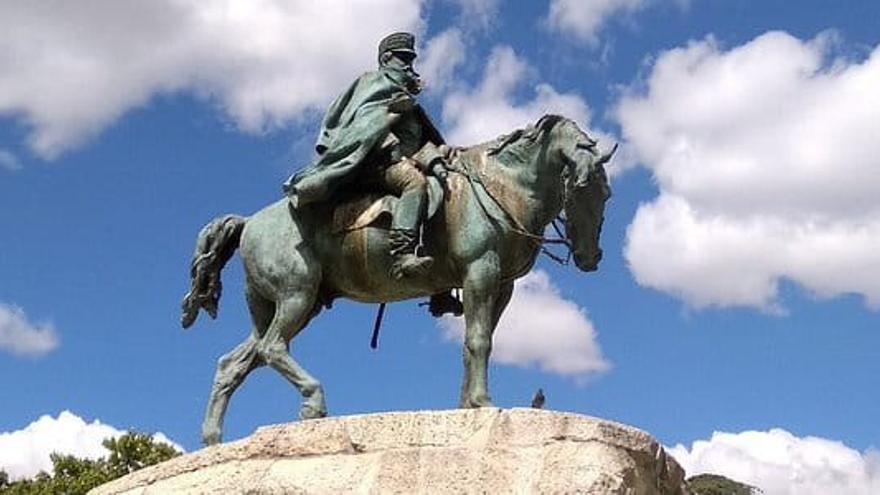
Martínez-Campos returned to Cuba in 1876 with the mission of achieving peace. (14ymedio)

14ymedio bigger14ymedio, Yunior García Aguilera, Madrid, 8 November 2023 —  In 1895, when almost all of the rest of Latin America had already achieved its independence, we Cubans were still a colony of Spain. All previous attempts had failed: the Big War and the Little War. And Martí’s War, as Máximo Gómez called it, began with the early and unnecessary death of its principal brain.

The captain general of Cuba at that time was Calleja, who had some 14,000 soldiers throughout the island and did not attach much importance to the new uprising. He believed that the conflict would soon die down due to lack of fuel. But in Spain all the alarms bells went off. Almost immediately, Calleja was replaced by the man from Zanjón, “the most prestigious military man in Spain”: Arsenio Martínez-Campos Antón.

For most Cubans, Martínez-Campos is only remembered for the Baraguá Protest. And from this event we only have two sentences: “Guard that document,” and “We don’t understand each other.”

In Retiro Park, in Madrid, there is a solemn equestrian sculpture dedicated to the Spanish general. When I saw it for the first time, I thought about how little we Cubans know about a character who had a major importance in our history. For most Cubans, Martínez-Campos is only remembered for the continue reading

Baraguá Protest. And from this fact we are left with only two sentences: “Guard that document” and “We don’t understand each other.”

For the Spain of 1895, the Segovian was a figure of the first order, with extraordinary military, theoretical and political experience. He had returned from his first stay in Cuba with the rank of brigadier. He later participated in the Carlist wars and was the architect of restoring the Bourbons to the throne, becoming “the man from Sagunto” for the Spanish. In 1876 he returned to Cuba with the mission of achieving peace.

Much is said about Maceo and his protest against Zanjón, although in reality, the Bronze Titan, as he was known, had to leave the country shortly afterwards with a safe conduct. However, little is known about another great Cuban and another act of resistance: Ramón Leocadio Bonachea and the Jarao Protest. This was the last mambí left fighting in Cuba and the only one to reach the rank of division general in the war of 1868. And although he was also forced to go into exile, he returned in 1884, and was arrested and executed one year later.

Martínez-Campos returns to Spain as “the peacemaker” of Cuba. He held the position of president of the Council of Ministers and Minister of War. He then took charge of creating the General Military Academy. It is said that the decision to send him again to Cuba in 1895 did not unleash the general’s joy. The queen regent, at his farewell, saw him disheartened and pessimistic, and she was convinced that he was not the man to lead that war. It is also said that before setting sail, he murmured: “Who knows! What is now is not what was then. The pitcher can only go to the fountain so many times…”

The fall of Martí in the Dos Ríos skirmish did not diminish the morale of the Mambises, as the Spaniards expected. In June, Máximo Gómez crossed the Jobabo River, entering Camagüey against all odds. This depressed Martínez-Campos to the point of his wanting to resign. But later he would defeat Maceo in his attempt to take Bayamo with twice as many men, something that gave him back a bit of optimism.

In June, Máximo Gómez crossed the Jobabo River, entering Camagüey against all odds. This depressed Martínez-Campos to the point of his wanting to resign

However, doubt gnawed at the 64-year-old general. He was convinced that his attempts to negotiate peace were fruitless, because the parties had lost influence; because Spain had not finished applying the Abarzuza reform law of 1895, finally granting autonomy; and because the mass of the population supported the insurgents. He was aware that it would be inevitable to isolate the towns, reconcentrate the families and cut off supplies to the mambisado. But his Christian principles and character prevented him from such cruelty. He even said: “I think I don’t have the conditions for the case. In Spain, only Weyler has them.”

In November, Gómez harangued his troops, speaking of “the hard and merciless war,” in contrast to that “generous and brief war” that Martí preached. He had 3,000 horsemen to cross the trail that divided the island in half, and they succeeded. The Spanish spoke of a “fugitive offensive,” since the purpose of the invading column was to flee forward, avoiding confrontations and burning everything in its path. Martínez-Campos offered himself as bait, to provoke a direct confrontation, but Gómez and Maceo “wobbled,” leaving the Spanish general with all the desire, “fighting against fires and hurricanes.”

In February 1896, Valeriano Weyler was appointed captain general. But Weyler… Weyler is another story.

____________

COLLABORATE WITH OUR WORKThe 14ymedio team is committed to practicing serious journalism that reflects Cuba’s reality in all its depth. Thank you for joining us on this long journey. We invite you to continue supporting us by becoming a member of 14ymedio now. Together we can continue transforming journalism in Cuba.
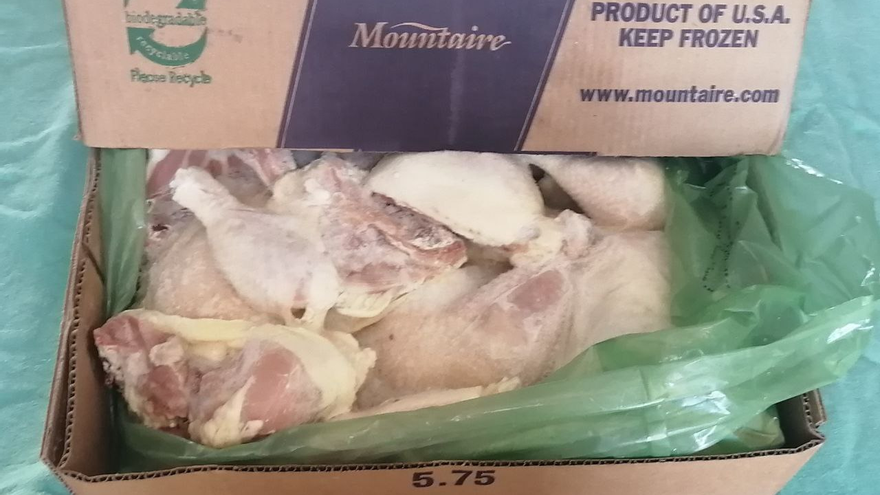
U.S. Chicken Imports Fall by 66 Percent and Cubans Already Pay a Fortune for a Single Chicken Breast

The price of a kilo of chicken imported from the United States rose by 15% in September compared to August. (14ymedio)

14ymedio bigger14ymedio, Madrid, 8 November 2023 — Chicken is sought after in the streets of Havana. After a few months when the increase in private businesses had improved the availability of chicken meat, one of the most coveted foods on the Island after people had to give up first beef and then pork, things have gotten worse again. The product can found, but the most requested parts are scarce.

The complaint spreads by word of mouth in the capital: chicken quarters are often seen, but the breast or the whole animal are not easy to find. It is not known if there is a causal relationship, but the economist Pedro Monreal, who monitors imports of chicken from the United States, announced on Tuesday a collapse in purchases consistent with the perception of a decrease among the population.

In September, the United States sold 11,954 tons of chicken meat to the Island, an amount that includes the share that goes to the State and the share bought for resale by the MSMEs [private enterprises]. This is 66% less than the previous month, when the US exported 35,117 tons. The value totaled $14.4 million, 61% less than in August, when $37 million was spent. continue reading

“Three days ago I saw a box of chicken breast at 110 MLC (freely convertible currency),” says Miriam, scandalized. “Of course, I was dying laughing; no one pays that

The price has risen considerably compared to the previous month, by 15.2%, when a kilo cost $1.05 dollars. In September, its value at the port of embarkation amounted to $1.21 per kilo.

There was no chicken being sold in the bodegas (State ration stores) this Wednesday. “A short time ago it was still possible to get it in MSMEs, at fairs and so on, at about 250 pesos a pound,” Miriam, a housewife from Havana tells 14ymedio. “Coincidentally, yesterday I bought it in a private business, in Parque Trillo at 275 a pound, but in other MSMEs it’s up to 350 or 360,” she says, exhausted.

In recent months, Cubans noticed a slight decrease in the price of chicken that was even reflected in the public accounts. The September Consumer Price Index reflected the reduction in the amount of this product, by -1.39%, in that month’s inflation. But the effect, also caused by the increase in the number of people deprived of other imported food, could have its days numbered.

“Three days ago I saw a 15-kilogram box of chicken breast at 110 MLC (freely convertible currency),” says Miriam, scandalized. “Of course, I was dying laughing; no one pays that.”

Translated by Regina Anavy 

____________

COLLABORATE WITH OUR WORKThe 14ymedio team is committed to practicing serious journalism that reflects Cuba’s reality in all its depth. Thank you for joining us on this long journey. We invite you to continue supporting us by becoming a member of 14ymedio now. Together we can continue transforming journalism in Cuba.
Mexico Gets Entangled in Its Explanations About Shipments of Oil to Cuba

Vilma, an oil tanker with the Cuban flag, has made several trips between Mexico and Cuba since July. (Vesselfinder)

14ymedio biggerEFE (via 14ymedio), Havana, 8 November 2023 — The Government of Mexico “has no commercial relationship” in the energy sector with Cuba, despite oil shipments from Mexico to the Island, the Mexican Undersecretary of Foreign Trade, Alejandro Encinas Nájera, said on Tuesday in Havana.

Speaking to EFE during the National Day of Mexico at the International Fair of Havana, Encinas argued that, consequently, “there would be no reason” for companies such as the state-owned Petróleos Mexicanos (Pemex) to be sanctioned by the United States for negotiating with Cuba. “Mexico is a sovereign country that has to diversify its trade relations,” the undersecretary said.

On October 16, Mexican president, Andrés Manuel López Obrador, denied that there were adverse reactions from the United States and lenders over the sale of Pemex crude to Cuba. Similarly, the C.E.O. of Pemex, Octavio Romero Oropeza, denied that the oil company, the most indebted in the world, had donated crude oil to Cuba. continue reading

So far it is unknown why Mexico agreed to send oil to the Island, which depends on imports from countries such as Russia and Venezuela to jumpstart its flimsy electrical system.

Furthermore, the United States Export and Import Bank (Exim) denied in October that it had canceled financing to Pemex for sending oil to Cuba, as reported in some media.

According to data from the University of Texas Energy Institute, to which EFE had access, Mexico sent about 750,000 barrels to the Island in October.

According to data from the University of Texas Energy Institute, to which EFE had access, Mexico sent about 750,000 barrels to the Island in October

From March to September, Mexico sent 2.8 million barrels to Cuba, valued at about 200 million dollars, according to the figures collected by the university. Last month, the Mexican Foreign Minister, Alicia Bárcena, said that her country is evaluating “options” to charge Cuba for the fuel it sends.

“In every way we can, we will help the people of Cuba. We will do it so that they no longer have any doubts, including about oil, because they are a people that is suffering an inhuman, unjust blockade, and we cannot turn our backs on the people of Cuba,” López Obrador said in mid-October.

Translated by Regina Anavy

____________

COLLABORATE WITH OUR WORKThe 14ymedio team is committed to practicing serious journalism that reflects Cuba’s reality in all its depth. Thank you for joining us on this long journey. We invite you to continue supporting us by becoming a member of 14ymedio now. Together we can continue transforming journalism in Cuba.