
Cuba Receives an Avalanche of Negative Reports Before Its Human Rights Review at the UN

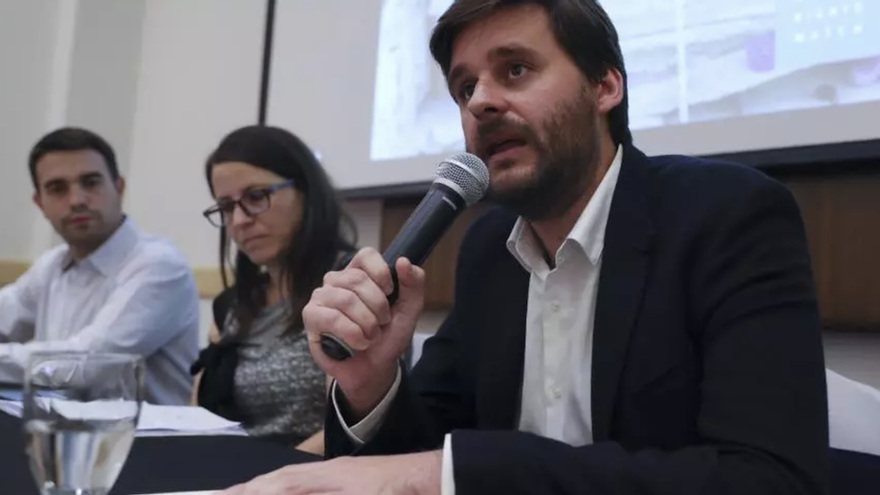
Juan Pappier, deputy director of the Division of the Americas of Human Rights Watch (HRW), in an archive photograph. (EFE/Gustavo Amador)

14ymedio bigger14ymedio, Havana, 14 November 2023 — It has been more than five years since Cuba last underwent the Universal Periodic Review (UPR) carried out by the UN in Geneva, and the deterioration of the situation within that period – in which Cuba has been twice elected a member of the Human Rights Council – is evident. The repression of the anti-government protests of 11 July 2021 (“11J”) will undoubtedly mark the analysis that will be carried out this Wednesday.

Cuba is experiencing a human rights crisis. In addition to the systematic repression of critics and dissidents, there is a severe economic crisis that impacts economic and social rights,” the deputy director of Human Rights Watch (HRW) for the Americas, Juan Pappier, told the Spanish agency EFE.

The numbers of detainees and political prisoners are chilling. According to the organization that emerged in the heat of the Justice 11J protests, 1,878 people were arrested for political reasons and about 700 sentenced to prison sentences of up to 30 years. The Madrid-based NGO Cuban Observatory of Human Rights (OCDH) estimates that 11,000 arbitrary arrests have been made since May 2018, when the Island underwent its last UPR.

Meanwhile, Prisoners Defenders (PD), also from Spain, puts the number of political prisoners currently in Cuba at 1,062, five more than in October. The cascade of negative data accumulates. continue reading

“Cuba has expanded its sophisticated machinery of control over freedom of expression and assembly” and resorted to a “culture of fear”

Amnesty International (AI), which sends the committee a report with its analysis of the situation, states that there are at least 13 prisoners of conscience, which include the artists of the San Isidro Movement Luis Manuel Otero Alcántara and Maykel Castillo Osorbo and the leader of the Patriotic Union of Cuba (Unpacu), José Daniel Ferrer.

They are just the tip of the iceberg for AI, which warns of a “massive incarceration” of protesters in addition to Internet restrictions. “Cuba has expanded its sophisticated machinery of control over freedom of expression and assembly” and resorted to a “culture of fear” through the criminalization of protests, the text states.

For Pappier, the next UPR is “an opportunity to make this crisis visible and call for concrete improvements, such as the release of political prisoners,” although it is not the only moment that can be taken advantage of, since a week later, on November 23 and 24, the special representative of the European Union for Human Rights, Eamon Gilmore, who a few days ago met with Cuban opponents residing in Europe, will visit Cuba.

Although there is no planned agenda for this trip, the official is expected to hold meetings with members of the Government (ministries of Justice and Interior), and also with members of civil society. His arrival in Cuba was agreed during the visit to the Island of the EU’s High Representative for Foreign Policy, Josep Borrell, last May.

On that trip there was a meeting between the European chancellor and people from civil society, including the intellectual Alina Bárbara López Hernández, who faces a trial on November 28 for disobedience that may mean a year in prison.

“More than worried, I arrive eager to see how they are going to fix the problem that they themselves have created. I haven’t violated any law”

“More than worried, I arrive eager to see how they are going to fix the problem that they themselves have created. I have not violated any law,” said the historian, who is claimed to be on the left but has defied the regime during the last year. As she explained to the agency, she is willing to “face risks” for “coherence and dignity.”

“Since 11 July 2021, action has been taken without measuring consequences,” said the teacher from Matancera, who is confident that the trial she will face will help to highlight the “type of State” that operates on the Island.

The NGO DemoAmlat has asked Cuba, in the face of the UPR, to eliminate several laws that limit the exercise of human rights and freedom of expression, in addition to allowing plural elections and guaranteeing the freedoms of the press, assembly and demonstration.

“The Universal Periodic Review at the UN Human Rights Council on November 15 is an opportunity for the international community to demand that Havana stop the barbarism against human rights activists and independent journalists, release the more than 1,000 political prisoners and make the structural political and economic changes that the country needs for the Universal Declaration of Human Rights to be fulfilled,” the OCDH says in a statement preceding the evaluation.

Despite the overwhelming pronouncements and calls for attention from organizations of all kinds, the regime considers that “Cuba honors its commitments and obligations” under the 44 international human rights instruments it has signed (of the 61 recognized by the UN), according to its permanent representative in Geneva, Juan Antonio Quintanilla.

“Cuba continues to strengthen its legal and institutional framework for the promotion and protection of human rights,” the official added.

Translated by Regina Anavy

____________

COLLABORATE WITH OUR WORKThe 14ymedio team is committed to practicing serious journalism that reflects Cuba’s reality in all its depth. Thank you for joining us on this long journey. We invite you to continue supporting us by becoming a member of 14ymedio now. Together we can continue transforming journalism in Cuba.
Independent Platforms Confirm Two New Femicides in Cuba, For a Total of 75 in 2023

The femicide of Maylin Fernández Sánchez occurred on the outskirts of Güines, Mayabeque, between November 4 and 5. (DC)

14ymedio biggerEFE/14ymedio, Havana, 13 November 2023 — The Cuban independent feminist platforms Alas Tensas and Yo Sí Te Creo (YSTC) verified this Monday two new sexist murders in Cuba, bringing the number of femicides in the country so far in 2023 to 75, according to the list maintained by 14ymedio.

The organizations reported the murder of Maylin Fernández Sánchez, aged about 43, which occurred between November 4 and 5 in Güines, Mayabeque, and that of Ana María Laria, aged 62, which occurred in Playa de Guanabo, Havana, on November 22. September.

“Elements that allow defining the type of femicide have not yet been verified, but gender bias has been corroborated by the extreme violence exerted, allegedly at the hands of an ex-partner or acquaintance,” the platforms said about the first case.

The alleged perpetrator of the second feminicide is the victim’s husband. “These facts were published by the press, citizens and activists, and verified by joint efforts,” stressed the two platforms, which have contact numbers for victims of sexist violence. continue reading

The femicides recorded to date by these independent groups – in the absence of official statistics – represent more than double the total of those quantified in 2022, a total of 36.

The femicides recorded to date by these independent groups – in the absence of official statistics – represent more than double the total of those quantified in 2022 (36)

On October 31, they confirmed the sexist murders of Aracelis Cala Pérez, 32 years old, in Pinar del Río; Yesica García Duany, 28 years old, in Santiago de Cuba, and Yubisleydis Gamboa Ricardo, 34 years old, in Granma.

The work of these feminist groups and their dissemination in the independent media has contributed to highlighting the cases of sexist murders and disappearances of Cuban women in recent years.

The activists insist that a “state of emergency due to gender violence” must be declared, and regret that the Government has not taken measures in this regard.

In addition, they advocate for a comprehensive law against gender violence (sexist murder is not classified in the Penal Code) and the implementation of protocols to prevent these events, as well as the creation of shelters and rescue systems for women and their children in danger.

Cuban president Miguel Díaz-Canel, this year, called for “zero tolerance” of sexist violence and assured that in Cuba any criminal act is “exaggerated” and, in particular, those of gender violence, in his opinion for a “manifesto imperial effort to create a climate of insecurity and mistrust” on the Island.

In June, the official Federation of Cuban Women presented the Cuban Observatory on Gender Equality, which includes statistics of “women who have been victims of intentional homicide as a consequence of gender violence in the last 12 months.”

This registry counted 18 cases in 2022, the same figure provided by the Supreme Court when referring to the number of convictions for femicides, all with penalties – for the crime of murder – above 25 years in prison.

____________

COLLABORATE WITH OUR WORKThe 14ymedio team is committed to practicing serious journalism that reflects Cuba’s reality in all its depth. Thank you for joining us on this long journey. We invite you to continue supporting us by becoming a member of 14ymedio now. Together we can continue transforming journalism in Cuba.

‘What He Wants is Green,’ Not Cuban Pesos

The copper makeup does not hide the living statue’s displeasure when Cuban pesos are placed in the chest. (14ymedio)

14ymedio bigger14ymedio, Juan Diego Rodríguez, Havana, 10 November 2023 —  The sullen face, the revolver in his belt and a straw sombrero converted into a tricorn hat: the living statue of the pirate on Calle de los Oficios does not need to set up an ambush to fill his chest. The one dollar bill that he carries in the lid of his piggy bank, like a talisman, says it all: the secret to getting the buccaneer to move – like everything in Havana – is money.

Not even the copper makeup can hide his displeasure when a naive person drops Cuban pesos into the chest. Based among the old Havana cannons, the pirate barely changes his position. “Don’t even think of saying anything else to Jack Sparrow,” one observer sarcastically comments, alluding to the bandit in the film Pirates of the Caribbean. “What he wants is green.”

The buccaneer, who tries to make a living under the tropical sun, is another sign that Old Havana has seen better times. Like the so-called “heritage stores” – which sold any souvenir at a very high price to tourists – or the Obispo bookstores, street art was one of the projects with which the Office of the Historian aspired to breathe life into the historic center and, thus, fill its own coffers.

Now, however, Eusebio Leal himself has ended up becoming a statue – and not a living one – while the Office, without a historian and under the control of the Government, has been unable to sustain its cultural and financial projects in the city center. This is attested to by the scarcity, if not continue reading

the total dismantling, of the initiatives that depended on Leal’s skill and personal contacts.

A solid fence prevents walkers from entering the small Oficios park, on the corner of Sol. (14ymedio)

A solid fence prevents walkers from entering the small Oficios park, on the corner of Sol. Leaves, garbage and poorly maintained plants are what can be seen between the bars of what was once a recreational space for Havana residents. Years ago, an artificial stream ran through its canals that filled several fountains, and the elderly people of the area sat on its benches to sunbathe.

A herd of tourists, who do not pay much attention to the ruins, wander through the Havana port, cross the Plaza de Armas and go up Obispo in search of the bookstores indicated on the map on their phones. Total disappointment: La Moderna Poesía, which was once the most famous bookstore in Cuba – the young Lezama Lima held his gatherings there – is now in the most regrettable abandonment.

Only in the Fayad Jamís, whose wooden façade has not been varnished for years, are there books, but few are Cuban. Most of them are Venezuelan titles that are of little interest to the reader, and some of Leal’s books translated into English and French, which are sold as a kind of sentimental tourist guides to Havana.

There is not much to expect from the “heritage stores” either. The once formidable Havana branch of Cuervo y Sobrinos – the Cuban watchmaker founded in 1862 and nationalized by Fidel Castro – which managed to resurrect its prestige thanks to Swiss investors, has now withdrawn its luxury watches from the capital. Instead, they sell straps and bracelets.

The Obispo troubadour-beggar tries, in vain, to gain a tip from a Russian by singing in her language. (14ymedio)

Completing the panorama of the high tourist season are numerous beggars and other “hunger artists” who, guitar in hand, try to extract a few dollars from the visitor who observes them. When a Canadian or an Italian arrives there is luck, but if he plays to a Russian, not even singing to him in his language – as the troubadour-beggar does in Obispo – he might manage to get a ruble.

With that thunder, on the island of pirates and ruins the only thing left to do is sneak over to the Plaza Vieja and look on the map for a bar where you can quench your thirst. The visitor’s final disappointment awaits him there: there is no beer even in the Casa de la Cerveza. “Havana is closed!” they shout at him, without him knowing very well where the voice is coming from.

____________

COLLABORATE WITH OUR WORKThe 14ymedio team is committed to practicing serious journalism that reflects Cuba’s reality in all its depth. Thank you for joining us on this long journey. We invite you to continue supporting us by becoming a member of 14ymedio now. Together we can continue transforming journalism in Cuba.

Due to Lack of Resources, Cuba Only Treats Foreigners Affected by a Hereditary ‘Evil’

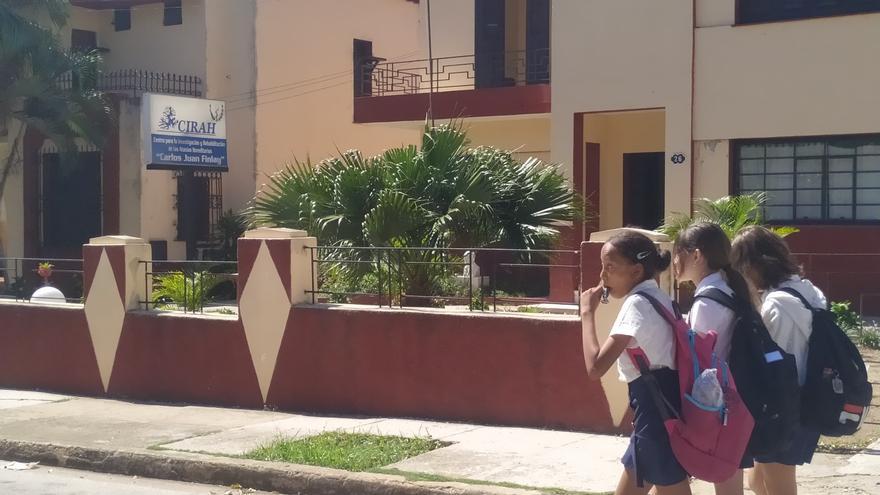
Hereditary Ataxia Research Center (Cirah), in Holguín. (14ymedio)

14ymedio bigger14ymedio, Lucía Oliveira, Holguín, 10 November 2023 — Putting a spoon in his mouth, combing his hair or writing are actions that Ramón has not been able to do for a long time. From being an active farmer, hauling oxen in the fields of the community of El Mijial, in Holguín, this Cuban, now 42, depends on his children and his wife for everything. An ataxia has been turning off his mobility and has condemned him to bed.

One day while he was in the field, Ramón felt that his arms did not respond to him. “I couldn’t keep the plow steady, but I thought it was just tiredness,” he tells 14ymedio. However, as soon as he returned home and told his wife about it, she became worried. In the town of El Mijial there are numerous cases of spinocerebellar ataxia type 2 (SCA2) and Cuba is the country with the highest concentration of patients in the world.

The worldwide prevalence of this type of ataxia is between three and five cases per 100,000 inhabitants, but in Holguín there are places like Báguanos where this figure reaches 129 per 100,000 people. Nearly 1,000 patients have been diagnosed throughout the country , grouped into more than 200 families, and there are about 10,000 descendants at risk of developing the disease.

Nearly 1,000 patients have been diagnosed throughout the country, grouped into more than 200 families and there are about 10,000 descendants at risk of developing the disease

When Ramón began to suffer continuous falls, he went to a clinic and the doctors, knowledgeable about the illness that afflicts some 43 people per 100,000 inhabitants in Holguín, quickly knew what it was about. “After confirmation of the diagnosis, follow-up consultations and work with the physiotherapist began,” Ramón’s mother details to this newspaper. “They also recommended exercises to do at home,” but the patient’s deterioration was rapid. continue reading

Although ataxia can occur after suffering a trauma, or come from damage to the brain for unknown reasons, Ramón’s is genetically inherited and manifests itself more strongly in communities where endogamy — intermarriage within a group — is highly present. The type that is mostly suffered in Holguín affects the cerebellum and especially damages balance and coordination of movements.

Along with the initial symptoms, Ramón began to have difficulties speaking and swallowing. His eyes also made involuntary movements and the lack of a wheelchair meant that his family could not take him to all the appointments. Added to this, in recent years, was the arrival of the pandemic and the deterioration of the Cuban Public Health system.

“It has been some years now, especially since Covid-19, that he has not received regular medical care nor do we see prospects for when the disease becomes even more disabling,” explains Ramón’s wife. Assistance to these patients is now provided by telephone and they are taught physiotherapy with household implements. “We feel abandoned,” summarizes the woman.

It has been some years now, especially after Covid-19, that he has not received regular medical care nor do we see any prospects for when the disease becomes even more disabling.

Although patients from Holguín represent 96.4% of those affected by hereditary ataxias in Cuba — and of them 95.6% suffer from its molecular form SCA2 — the majority of patients treated by the Hereditary Ataxias Research Center (Cirah ) from this province are foreign tourists.

Through the Cuban Medical Services Marketing Company (SMC), the center offers rehabilitation programs for international patients with neurodegenerative diseases. Among these services is the clinical and molecular diagnosis of different types of spinocerebellar ataxias, Huntington’s disease and amyotrophic lateral sclerosis.

International patients can opt for two complementary programs in addition to the diagnosis: one for evaluation and another for rehabilitation. Both include non-medical services such as transportation to and from the airport, hotel accommodation for the patient and a companion, as well as daily transportation to the clinic.

After two weeks of neurological, electrophysiological and cognitive evaluation, the patient has a prognosis and an action plan. Afterwards, they can enroll in a second two-month rehabilitation program that includes complete medical studies, several psychomotor rehabilitation sessions, magnetic and ultrasound therapies. All this, after payment in foreign currency.

For Ramón, who does not have a foreign passport or dollars, the outlook is very different. “Four years ago he frequently received therapies and psychological assistance, but currently the consultations have been much more spaced out, the therapies are not done regularly and we are only recommended physical therapy exercises to do at home,” details his wife.

Resources are prioritized for foreign patients since the current situation of the country requires economic entry over the expenditure of resources. A doctor and former Cirah worker who prefers to remain anonymous tells this newspaper that “resources are prioritized for foreign patients since the current situation in the country requires financial income over the expenditure of resources.”

In the municipality of Báguanos, the story of Lídice, 38 years old, is similar to what Ramón has experienced. After giving birth to her second child, one day she noticed that it was difficult for her to take the baby in her arms and hold it firmly. “I already knew what it was because in my family we have several cases,” she says. “My mother detected it in my eyes, she says that I had the same lost look as her sister, who died at 45 from ataxia.”

Knowing about the illness, however, did not prepare Lídice for what was to come. Her marriage could not withstand the physical deterioration that she suffered, she had to depend on her parents to bathe, take care of her two children, and feed her. In less than five years she went from being a very active and smiling housewife to staying in bed or in a chair almost every day. Her greatest fear is that one of her children has also inherited what she calls “the evil.”

Almost bedridden and with her parents retired, Lídice lives mired in lack of resources. An economic situation that prevents her from strengthening her health with good nutrition or occupational therapies: “Most of the time I can’t do them because I don’t even find the resources to follow them.” Although she can still communicate fluently, the young woman from Holguin fears that her ataxia will leave her locked in her own body.

Travelling, getting married, having children or carrying out a certain occupation are actions that are limited when the disease enters its phases of greatest physical deterioration

“I live each day very aware that tomorrow I may not be able to say a complete sentence,” she says. Reading on the Internet about other patients in other parts of the world and researching the disease on her own has helped her to foresee what is coming and try to prepare her children for her physical deterioration. “I almost can’t hug them anymore, but I can still give them a kiss.”

Suffering from ataxia also carries a great emotional burden. Patients not only have to say goodbye to the person they were before showing the first symptoms, but they are also forced to give up many of their future plans. Traveling, getting married, having children or carrying out a certain occupation are actions that are limited when the disease enters its phases of greatest physical deterioration.

For families, the psychological and economic burden is also immense. With a patient bedridden or unable to move, the closest relatives feel overwhelmed by household chores and frustrated by not being able to get everything from disposable diapers to a variety of foods to keep them comfortable and cared for.

In Báguanos, Lídice no longer has official treatment. “My children have made me balls and a stool so that I can continue exercising my hands and I also try to maintain the movement of my feet,” she says. “Even though it’s hard for me, every day I try to do some exercise sitting in the chair and keep my head busy with plans.”

Her dream: that a treatment for spinocerebellar ataxia type 2 is discovered or that, in the absence of a cure, “the Center will once again care for Cuban patients and we will not be as abandoned as we feel now.”

____________

COLLABORATE WITH OUR WORKThe 14ymedio team is committed to practicing serious journalism that reflects Cuba’s reality in all its depth. Thank you for joining us on this long journey. We invite you to continue supporting us by becoming a member of 14ymedio now. Together we can continue transforming journalism in Cuba.
Murderer Confesses His Crime to the Victim’s Family and Surrenders to Cuban Police in Camajuani

On the left, the victim, Carlos Javier Pérez López, and on the right the alleged aggressor, José Luis Astencio García, who surrendered to the Camajuaní Police. (Facebook/Carlos Javier/José Astencio)

14ymedio bigger14ymedio, Havana, 13 November 2023 — Carlos Javier Pérez López, age 30 and a resident of the municipality of Camajuaní, in Villa Clara province, died this Saturday at the hands of another young man from the same town. The victim worked in a state butcher shop on central General Naya Street and was stabbed after an altercation with his alleged attacker, José Luis Astencio García, who, after notifying Pérez’s family, turned himself in to the Police.

“The fight occurred while the scaffolding was being prepared for an Álex Duval concert in Andrés Cuevas Square, known as La Pista, in the vicinity of the butcher shop,” a source close to the victim’s family tells 14ymedio.

“José Luis, a boy more or less the same age as Carlos who works for a MSME [small private business], wanted to put up a tent to sell things in front of the butcher shop,” he adds. “Carlos came out to tell José Luis that he couldn’t set up the kiosk there, because he was waiting for the meat delivery [for the ration store] and he was going to block the way for the truck.”

According to this newspaper’s source, the alleged murderer was always “problematic” and has a history of violence against his own family

According to this newspaper’s source, the alleged murderer was always “problematic” and has a history of violence against his own family. “He didn’t like that Carlos told him no and during the argument he threw a can of beer at him. Then he went to his motorbike, took out a knife and stabbed him in the chest. He didn’t have time to do anything, Carlos immediately fell dead,” added the source. continue reading

“Then he cleaned the knife, got on the motorcycle and went to tell Carlos’s family that he had killed him. From there he went to the police station on Independencia Street and turned himself in,” the source concludes. “At the funeral there were a lot of people, and the procession covered about three blocks full of people. The whole town is in mourning.”

Pérez’s murder was also reported by Fuerza del Pueblo, a Facebook profile related to the Ministry of the Interior. Two other murders and an attempted femicide were also reported on Facebook pages linked to the regime, although, as usual, neither the official press nor the authorities offered their version of the events.

Also in Villa Clara, the murder of Ailén García Jimenez became known. She was trying to stop a fight between two girls when a woman identified as María Teresa slit her throat with an awl. The attack took place in Ojo de Agua, a rural community near the town of Calabazar de Sagua (municipality of Encrucijada).

According to the Facebook profile of her son, Eriel Lara, who reported the event, García was a teacher. The causes that motivated the aggressor, as well as her relationship with the girls or the victim, are unknown.

The death of a police officer in Holguín has also been a cause for alarm this weekend. According to the pro-government profile Realidades desde Holguín, after the local police received an emergency call reporting an “alteration of order” in the Ibero-American district, a 30-year-old agent was sent to attend to the case and was mortally wounded.

The officer was taken to the hospital, where he died shortly after. According to the official account, three individuals involved in the event, including the alleged murderer, have already been arrested and are being prosecuted.

Iván Quevedo Pérez, a man accused of shooting his ex-wife, was arrested on November 10th

In the Lenin district, also in Holguín, Iván Quevedo Pérez, a man accused of shooting his ex-wife Eliannis Obregón in the head and fleeing, was arrested.

The Facebook profile of the Ministry of the Interior agent Cazador Cazado, which reported the attack, claims that Quevedo was captured in less than eight hours, with a self-inflicted gunshot wound to the foot. The weapon, which was confiscated by the Police, “belongs to a legal possessor,” they add, without clarifying whether it belonged to any agent – ​​since the possession of firearms is prohibited in Cuba – or how Quevedo obtained it. As for Obregón, she has been admitted to a hospital, although no details have been released about her state of health.

The wave of violence that has been unleashed throughout the country is keeping citizens awake at night. With two months left until the end of the year and with 73 femicides recorded, 2023 is on track to triple the number of women murdered by sexist violence in 2022 (34). Added to this are the numerous reports of livestock theft, assaults in the streets and altercations that the authorities are unable to resolve.

In a note published last June, the Ministry of the Interior assured that 90% of the cases in which firearms were used – the number of which was not provided – had been resolved with the arrest and charging of the perpetrators. However, it admitted that only 60% of crimes without firearms have been solved and the Prosecutor’s Office does not have enough personnel to process the avalanche of cases that arrive at its headquarters.

____________

COLLABORATE WITH OUR WORKThe 14ymedio team is committed to practicing serious journalism that reflects Cuba’s reality in all its depth. Thank you for joining us on this long journey. We invite you to continue supporting us by becoming a member of 14ymedio now. Together we can continue transforming journalism in Cuba.
The Progressives, the Cubans and Israel

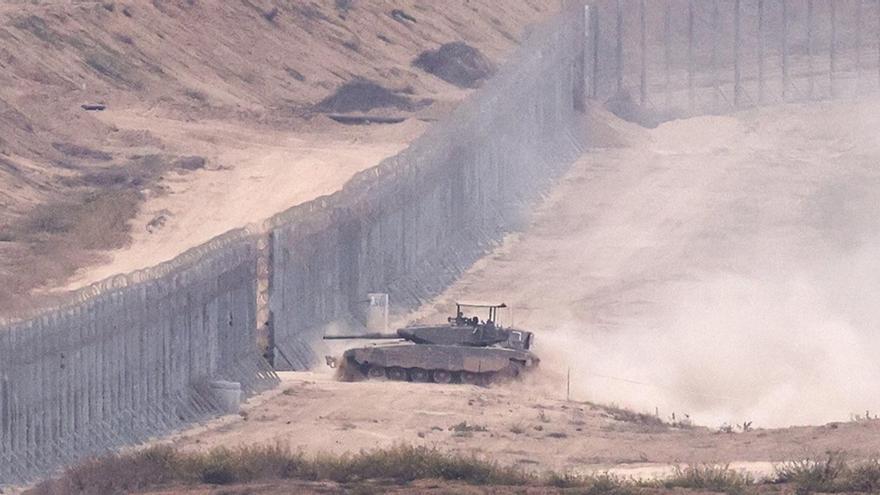
An Israeli tank on the border with Gaza on November 12, 2023. (EFE/EPA/Neil Hall)

14ymedio bigger14ymedio, Pedro Corzo, Miami, 12 November 2023 — While the totalitarian regime that has prevailed in Cuba for 65 years, minus two months, has almost always enjoyed favorable public opinion, the only democracy in the Middle East, Israel, is still the target of many of those who defend Castroism.

Cuban democrats, like Israelis, are, in the mentality of these groups and organizations, targets to be destroyed. However, they represent just causes that have never had the necessary international support to achieve the objectives that encourage them.

Their enemies, who consider themselves progressive, liberal and leftist, do not care that the Jewish nation promotes democracy and the rule of law. They simply share with the Nazis the hatred of a people who defend civil and religious freedoms, where the norm is between absolutism and military dictatorship.

They prefer to ignore that Israel is a free geographical and cultural space, in a region where authority is based on  military might or religion. Without being perfect, Israel should be an example for those continue reading

who defend freedom and human rights. The Israeli State is concrete evidence of material progress and well-being for those who reside in its territory.

Cuban Democrats, like Israelis, are, in the mentality of these groups and organizations, targets to be destroyed

However, it is a country that suffers permanent harassment from its neighbors. Israel has been subjected to true international isolation and frequent military conflicts, with the aim of eliminating it as a nation, as advocated, among others, by the theocratic State of Iran.

The terrorist actions against Israel, such as those of last October 7, are a brutal reflection of the hatred advocated by the serial killer Ernesto Che Guevara: “The intransigent hatred of the enemy, which pushes beyond the natural limitations of the human being and turns him into an effective, violent, selective and cold killing machine.” This phrase could have inspired the executioners of the Tribe of Nova festival.

Complicity with Guevara is not exceptional. It shows the frivolity and hypocrisy that reign in some international organizations, non-governmental organizations and famous universities that present themselves as standard-bearers of justice but have placed themselves at the service of the worst causes.

Guevara defended violence out of conviction. It was the instrument in concentration camps for homosexuals in Cuba. There are hundreds of testimonies about the murders he ordered, and, however, this did not prevent the UNESCO World Memory Program, in all its categories, from accrediting and rewarding his work, in addition to the fact that Guevara and Fidel Castro were proud of their cemeteries. As Guevara said at the United Nations, in 1964: “We have executed, we have shot, and we will continue to kill as long as is necessary.”

These actions are incomprehensible and force us to unearth the moment when Yasser Arafat, leader of the Palestine Liberation Organization, spoke in 1974 at the United Nations with a gun on the table in front of him.

I do not dispute the fairness of the Palestinian cause, but the beheading of children and indiscriminate murder should not be protected or silenced, as some sectors claim

Ideological commitments lead to omitting or changing the facts. When the Chilean dictator Augusto Pinochet died, the headline of the newspaper El País said: “Chilean dictator Augusto Pinochet dies.” However, when the Cuban autocrat died, the headline read: “Fidel Castro, the last revolutionary, dies”, as if he had not been another dictator with a horrendous criminal record.

I do not dispute the fairness of the Palestinian cause, but the beheading of children and indiscriminate murder should not be protected or silenced, as some sectors claim. Nor should persecutions be justified by race or religion, as the enemies of the Jews are doing in many parts of the world. They are acts repudiated by the United Nations itself and should be severely punished.

Cuban totalitarianism also inspires the progressives  to misrepresent the facts. On the Island, citizens’ rights are systematically violated; those who profess ideas contrary to the official proposal are imprisoned; total censorship of the media is practiced and bloody events such as those of the unforgettable tugboat massacre on March 13 occur, with dozens of deaths, including children. However, his allies present Castro totalitarianism as a victim of the United States and of the exile community.

They speak of a blockade or embargo, which has more holes in it than gruyere cheese, without alluding to the vileness of the rulers and the true blockade of Castroism.

Translated by Regina Anavy 

____________

COLLABORATE WITH OUR WORKThe 14ymedio team is committed to practicing serious journalism that reflects Cuba’s reality in all its depth. Thank you for joining us on this long journey. We invite you to continue supporting us by becoming a member of 14ymedio now. Together we can continue transforming journalism in Cuba.

Leaves and Grass

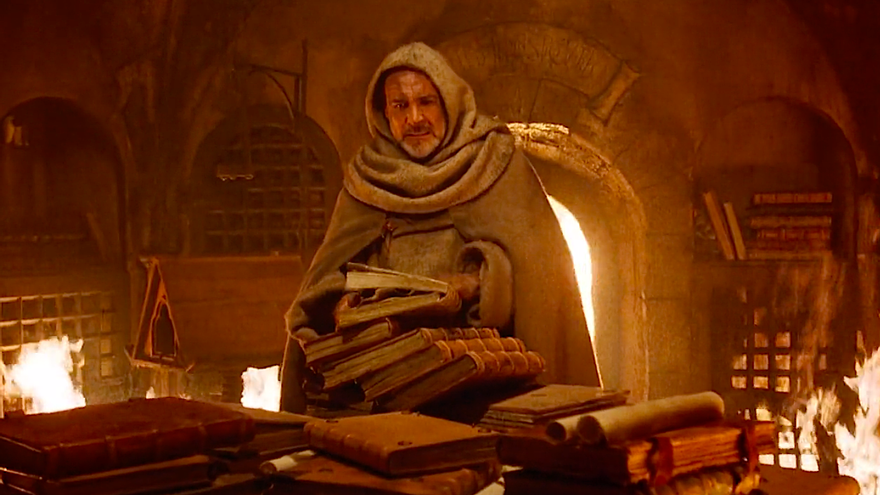
Sean Connery as William of Baskerville in The Name of the Rose.

14ymedio bigger 14ymedio, Xavier Carbonell, Salamanca, 5 November 2023 — Only two types of objects travel, almost covertly, from my old country to my current home: books and tobacco. I spent years collecting first editions, haggling over prices with booksellers, wandering around every day — what else was there to do? – perusing open-air markets, abandoned houses, collections of exiled relatives, estate sales and dead people’s trunks. When I managed to score something, I celebrated with a smoke. Thus the page and the puro would, together, always bring forth life and memory.

The business of recovery has always been arduous and for several reasons. The first is technical. It has become increasingly difficult to find a contact on the island willing to handle these two problematic commodities. A more or less old edition – something published in the latter part of the 19th century or before 1959 – can have problems getting through customs if the inspector understands books (I know I am assuming a lot here), while cigars, especially those that are loose and not in shiny sealed boxes, have always been at risk of confiscation or rationing.

That’s why when I tear open the packaging my books come in and light a fresh cigar, I thank the gods and the impish spirits who populate the airport scanners for the benefit of travelers. They passed, they flew, they landed. Now, I read or smoke them as if nothing in Cuba had been lost. continue reading

Rescuing a library is a lot like managing a refugee camp. The Schindler of the tropics cannot save them all

Nevertheless, rescuing a library is a lot like running a refugee camp. The Schindler of the tropics cannot save them all. And only from time to time is the courier also a friend or family member. This makes the audacity of it – shall we say — tolerable. The audacity of asking  someone to carry in his or her luggage a few kilograms of — to paraphrase Walt Withman — leaves and grass.

That is why the second obstacle that rescuers face is sentimental in nature. We leave something behind, it crosses the ocean and, by the time we lay our hands on it again, it is a relic. As the bolero tune goes, “Today, I represent the past.” The object is also an émigré, a survivor. In some sad, sweet way it represents us. We are also that dusty cover, that binding, that dedication that was salvaged.

A long time ago, I was presented with a solution but I rejected it: Don’t accumulate books and smoke the tobacco quickly. Don’t save, don’t preserve, don’t make friends or fall in love, or buy a house, or adopt a cat, because everything here is uncertain and tomorrow you will almost certainly leave. Except for not buying a house – where would I have gotten the money? – I ignored all this advice. Not doing so would have meant admitting that life in Cuba was not life. Or that the decades I lived there were a sub-life, a non-life, or in any case merely survival. That no one who exists on the island should believe they belong to the realm of the living but rather that they are ghosts. And that is unjust.

As I unpacked a small shipment of readable and smokeable material, I felt a fondness for what now seems like a former life, in the Buddhist sense of the word

Despite the fact that every piece of news from my country – my old country – portrays it as tired and haggard, I think I enjoyed each of my expeditions in search of books, my meals with friends, the spent cigars and the words spoken. So this morning, as I unpacked a small shipment of readable and smokeable material, I felt a real fondness for what now seems like a former life, in the Buddhist sense of the word. And it was not just any old thing but the legendary first edition of Paradiso. There was also first edition of The American Expression, Lezama’s 1957 lectures that begin with his famous line, “Only that which is difficult is stimulating.” Lastly, there was In Peace as in War by a young, myopic Cabrera Infante. Among the many books, there were also cigarillos as thin as pencils.

When I left Cuba, I found a quote by Sergio Ramírez that captivated me: “A library is a forest. I have lived within that forest and I can only find my orientation when I am inside it. Only I know where every book is, and I can go straight to it and find it. Right now, from Madrid, I can walk through it blindly. Everything in that forest is silent now. The shelves in the shadows, in the closed area, waiting for the hand that brings them back to life. My life, which I have lived among them, happy in their company. They are exiled too, in their own solitude.”

The quote, which once gave me comfort, now depresses and challenges me. The truth is that I no longer want to go to my abandoned library. Instead, I want to extend my hand –  like Ramírez’ resurrecting hand – to dismantle my old shelves and enrich the new ones. Without remorse, with the spirit of a rescuer or a privateer but for my own benefit. In any case, when it comes to resupplying ourselves with leaves and grass, or souvenirs for that matter, you stop caring about plunder. As the Romanian philospher Emil Cioran said, “The country that was ours no longer belongs to anyone.”

____________

COLLABORATE WITH OUR WORKThe 14ymedio team is committed to practicing serious journalism that reflects Cuba’s reality in all its depth. Thank you for joining us on this long journey. We invite you to continue supporting us by becoming a member of 14ymedio now. Together we can continue transforming journalism in Cuba.
There are Now 21 Cuban Athletes Who Have Not Returned to the Island After the Pan American Games

The hockey players were divided into three groups after leaving the Cuban delegation in the Pan American Games. (EFE)

14ymedio bigger14ymedio, Havana, November 9, 2023 —  The euphoria with which Miguel Díaz-Canel celebrated the conquest of 30 gold, 21 silver and 17 bronze medals at the Pan American Games in Santiago, Chile is being buried by the escape of 21 of the 412 members of the Cuban delegation: six hockey players, a basketball player, a hurdler, three rowers and five athletes without details about their specialties. The other five “could be in Chile doing tourism,” speculated the Minister of the Interior, Carolina Tohá, accepting that the authorities do not know with certainty their location, but they have confirmed that they have not left the country.

The official confirmed that this Wednesday, in addition to the seven athletes who are represented by the Cuban lawyer Mijail Bonito and a basketball player, five others “approached the authorities to ask for refuge.” She stressed that because they have started a process “they cannot reveal the identities.” Likewise, “we cannot comment on the basis of your request, as they must be subjected to careful analysis.”

This Wednesday the Radio Cooperativa journalist, Cristofer Espinoza, published on his social networks that in the rowing team, made up of 20 athletes, only 17 showed up to return to the Island. continue reading

As the days go by, details of the escapes of the hockey players Yunia Milanés, Jennifer Martínez, Yakira Guillén, Lismary González, Helec Carta and Geidy Morales are revealed: According to La Tercera, the athletes spoke in Havana, six days before traveling to Chile, about the possibility of taking advantage of the Pan American Games to escape despite the consequences that this could bring.

The journalist from Radio Cooperativa, Cristofer Espinoza, published on his social networks that in the rowing team, made up of 20 athletes, only 17 showed up to return to the Island

The escape would not be easy, the Cuban lawyer said, because in events outside the Island, the “totalitarian dictatorship” keeps an eye on the athletes and takes away their passports to exercise “greater control.”

After leaving the delegation, the hockey players divided into three groups. Some traveled to Iquique, others went to O’Higgins and one is in Concepción. These people are with “friends, national and foreign,” said lawyer Mijail Bonito.

With these escapes, there would be 71 Cuban athletes who have abandoned contracts or delegations during 2023.

Santiago Ford, the Cuban who gave Chile a gold medal in the decathlon event, asked for support for the escaped athletes. In relation to the hockey players, he told the local television station TVN that “every athlete, every time he leaves Cuba, thinks twice because one says ’I have a future’, but it is complicated.”

He said that he found ot there were “many mixed feelings because we come from the same place. Only athletes know why they make that decision. We are no one to judge or criticize. We are going through a difficult time and the decision is made by each person.”

____________

COLLABORATE WITH OUR WORKThe 14ymedio team is committed to practicing serious journalism that reflects Cuba’s reality in all its depth. Thank you for joining us on this long journey. We invite you to continue supporting us by becoming a member of 14ymedio now. Together we can continue transforming journalism in Cuba.
Trillo Park in Havana, Where Food and Garbage Go Hand in Hand

The centrally located park does not seem to be among the priorities of the Communal Services Company of the Cuban capital. (14ymedio)

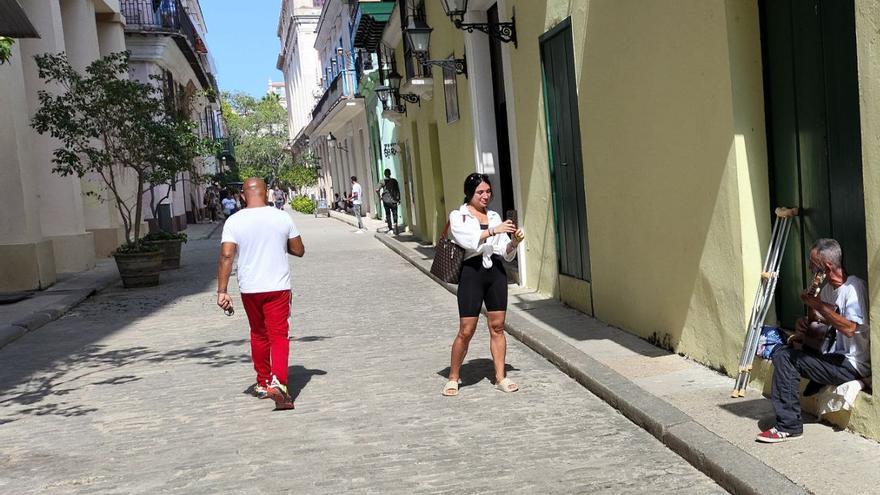
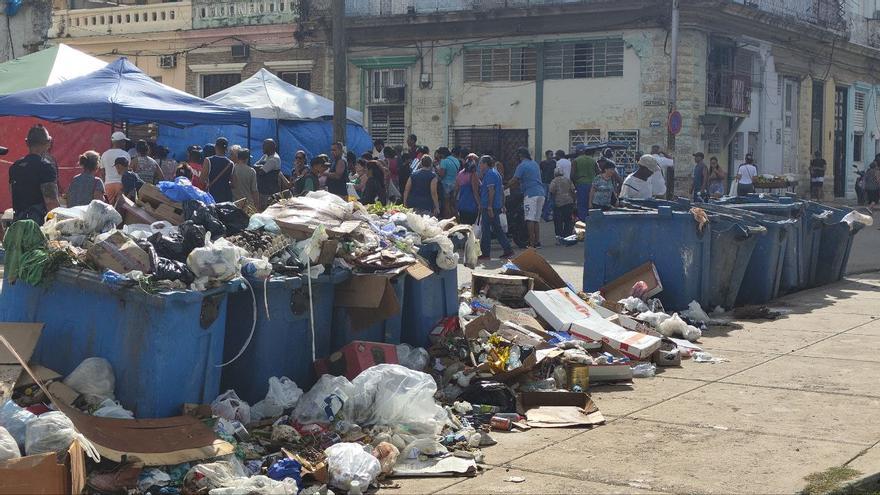
14ymedio bigger14ymedio, Juan Diego Rodríguez, Havana, 11 November 2023 — “They are not going to pay me for this!” shouted a man Saturday morning, as he was throwing part of the garbage that was overflowing a few meters from a container of the agricultural fair at Parque Trillo, in Central Havana. In the same space, bananas and garbage bags almost bump up against each other. The line for rice snaked past a mountain of waste. The flies went back and forth, again and again, from the pallet of a small private business with cheese and powdered milk to the filth accumulated on the street.

The centrally located park, far from the main avenues and in an area with low-income residents, does not seem to be among the priorities of the Communal Services Company of the Cuban capital. The neighborhood is not among those that benefit from the removal of more than 17,000 cubic meters of garbage that, according to Havana authorities, is carried out daily, “a figure that does not approach half of the total trash generated by the city’s municipalities.” continue reading

In the nearest row, shoppers chose to shake off flies and some put a handkerchief or hand to their nose to avoid the stink

Shortly after the first kiosks were set up this morning, the proximity of the waste and its bad odors caused complaints from sellers and customers. A few minutes later, a man with a dark cap and a shovel tried to lift some of the trash into a rickety blue container that was only partially full. Reluctantly and grumbling, he clarified that this was not his responsibility and that he was not going to receive a single cent for such a thankless task.

But a few shovelfuls of filth hardly alleviated the problem. In the nearest row, shoppers chose to shake off flies and some placed a handkerchief or hand over their nose to ward off the stench. “Here in Havana we are going to have to use the masks again, but not because of the Covid, but because of the stench that is everywhere,” a woman complained. The new pandemic that hits the Cuban capital is not a virus, but the crisis. It is spread through laziness, its breeding ground is the lack of fuel, and it also affects the human beings who inhabit the city.

____________

COLLABORATE WITH OUR WORKThe 14ymedio team is committed to practicing serious journalism that reflects Cuba’s reality in all its depth. Thank you for joining us on this long journey. We invite you to continue supporting us by becoming a member of 14ymedio now. Together we can continue transforming journalism in Cuba.

A Dozen Women Block a Street in Old Havana After Several Days Without Water

This type of protest is increasingly common in Cuba where the lack of a water supply affects 450,000 people throughout the country. (EFE/Felipe Borrego)

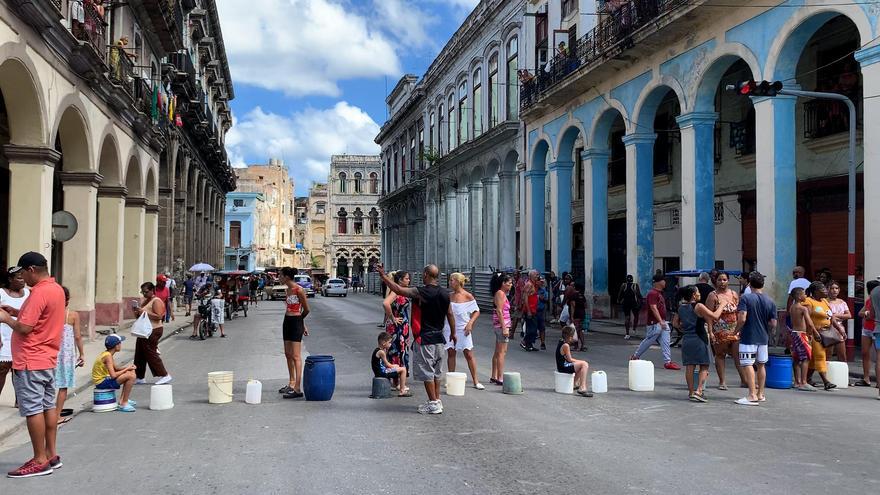
14ymedio bigger14ymedio/EFE, Havana,12  November 2023 — With buckets, tanks and other containers, a dozen women with their children blocked the way for vehicles on Monte Street on the corner of Agramonte Street in Old Havana. After several days without any water supply, residents in the area decided to cut off traffic this Saturday in protest of the situation they are suffering.

“We are not doing anything illegal, we are demanding our right,” said one of the neighbors through a video broadcast by the CubaNet news portal. “When the water truck comes we’ll leave,” said another.

The women sat along the street and remained in place for about half an hour until the police arrived. The agents took the names of several of the protesters and asked some people who were recording the scene for identification. continue reading

According to CubaNet, a short time later three tanker trucks with water arrived in the neighborhood.

The agents took the names of several of the protesters and asked some people who were recording the scene for identification

This type of protest is increasingly common in Cuba where the lack of a water supply affects 450,000 people throughout the country, of which more than 156,000 lack adequate access due to the poor state of hydraulic infrastructure and other problems.

Last September, the residents of Dragones Street, between Rayo and San Nicolás, in Central Havana, built an improvised barricade that forced the authorities to transport a tanker truck to the neighborhood suffering from lack of water. The improvised wall, made of buckets, plastic tanks and other household items, prevented the passage of vehicles and police patrols for hours.

The constant breakdowns of pumping equipment, the poor state of the pipe network and the drought have combined to aggravate the water supply situation in the Cuban capital.

The Havana Water Company has recognized the poor situation of supply services throughout the capital, more serious in areas such as Cerro, Plaza de la Revolución, Diez de Octubre, Centro Habana and Habana Vieja.

In the last twelve months, 88% of the average historical rainfall has been recorded, which has caused a reduction in stored water and groundwater.

A report from the Institute of Meteorology (Insmet) indicated that the drought affected 27% of Cuba during May, June and July due to the deficit in accumulated rainfall of more than 60%.

The report from the specialized organization, corresponding to the end of the summer, specifies that the most affected provinces were Pinar del Río, Artemisa, Havana, Mayabeque and Matanzas (all in the west of the country).

Insmet added that continued low rainfall, known as “meteorological drought,” predominated in that region.

About 59% of the country’s 168 municipalities presented a “moderate to extreme” drought in the period, according to the report presented on the Insmet website.

In the last 12 months, 88% of the average historical value of rainfall has been recorded, which has caused a reduction in stored and groundwater. Cuban experts predict more “recurrent and intense” droughts due to the effects of climate change.

“Around 2,070,000 people receive [water] service every 3 days or more, and there are 478 population settlements with more than 2,000 inhabitants that do not have – totally or partially – aqueduct networks,” indicated the president of the National Institute of Hydraulic Resources ( INRH), Antonio Rodríguez cited in the official newspaper Granma.

The INRH director mentioned that last June alone, more than 260 breakdowns were reported that affected more than 380,000 people.

A group of neighbors demand water at Monte and Agramonte, Havana. Mario J. Pentón 

____________

COLLABORATE WITH OUR WORKThe 14ymedio team is committed to practicing serious journalism that reflects Cuba’s reality in all its depth. Thank you for joining us on this long journey. We invite you to continue supporting us by becoming a member of 14ymedio now. Together we can continue transforming journalism in Cuba.
With a Forecast of More Than 180,000 Travelers in 2023, Russian Tourism in Cuba Continues To Grow

Russia plans to operate new flights during the peak tourist season in Cuba to increase the number of travelers. (14ymedio)

14ymedio bigger14ymedio, Tourismo, Havana, November 10, 2023 — The Association of Tour Operators of Russia reported, this Thursday, that between January and October, about 146,305 tourists from that country arrived in Cuba, a 3.5 times greater than for the same period in 2022. According to the Association, arrivals are expected to exceed the 178,000 received in 2019, which was one of the best years for tourism before the pandemic.

This organization collects the data through the Russian Embassy in Havana and predicts that by the end of December travelers will exceed 180,000. Just “with the existing air traffic volumes and the occupation of flights (reserved tickets) from Russia to Cuba in the first half of December, the record of 2019 was reached,” it says.

Despite the fact that the alliance between Havana and Moscow has among its objectives the increase in the flow of visitors, the arrival of Russians is well below that of other nationalities. In August, the National Bureau of Statistics and Information (ONEI) reported that first place is still occupied by Canada, with 675,996 tourists, followed by Cubans residing abroad, with 241,115, and travelers from the United States, with 111,100. continue reading

Since the beginning of this year, several Russian airlines have announced the reestablishment of their direct routes with Cuba. This is the case of Aeroflot, whose flights to Cayo Coco and Varadero resumed last July.

According to the Association, it is estimated that each passenger spends about 132,000 rubles (1,430 dollars) on round-trip tickets on New Year’s flights

A direct connection was also established between Moscow and those two destinations operated by Nordwind after the direct route to Havana was suspended in 2022 due to sanctions against Russia after the invasion of Ukraine.

In addition, the tour agency Pegas Touristik plans to connect the Russian city of St. Petersburg with Cayo Coco from December 31. The flights will be every ten days and will continue until next April.

According to the Association, it is estimated that each passenger spends about 132,000 rubles (1,430 dollars) on round-trip tickets on New Year’s flights. When the season ends, the rates will drop to 78,000 rubles ($845), although the injection of capital will continue to be significant.

All-inclusive packages of nine nights are also offered with departure from Moscow for a minimum price of 330,000 rubles ($3,576) and a maximum of 380,000 ($4,118 dollars). In other seasons, a similar tour, for two people, would have an average cost of 240,000 rubles ($2,600).

However, the efforts of the Cuban authorities to reach 2.5 million tourists in 2023 have little chance of bearing fruit, even with the help of the Russians. As of September, the global number of foreign visitors barely reached 1.8 million and, despite having recognized that the estimated total would fail, the Government has refused to update it and has launched a campaign to attract as many visitors as possible in the last days of the year.

Cooking competitions, music festivals in the exclusive hotels of the northern keys and dinner in the exclusive Dîner en Blanc restaurant in a Havana experiencing shortages have been the last desperate measures to get the Island’s tourist sector out of its inertia.

Translated by Regina Anavy

____________

COLLABORATE WITH OUR WORKThe 14ymedio team is committed to practicing serious journalism that reflects Cuba’s reality in all its depth. Thank you for joining us on this long journey. We invite you to continue supporting us by becoming a member of 14ymedio now. Together we can continue transforming journalism in Cuba.
On a Visit to Cuba, the Head of the Nicaraguan Army Celebrates the ‘Union of Our Armed Forces’

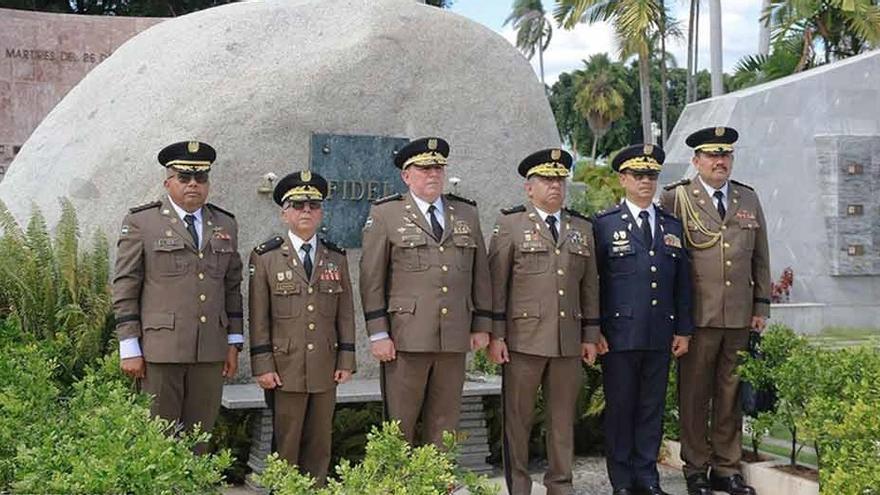
The delegation placed flowers at the funeral “monolith” of Fidel Castro and the “founding fathers of the Cuban revolution.” (Prensa Latina)

14ymedio bigger14ymedio, Havana, 11 November 2023 — The international tour of General Julio César Avilés, head of the Nicaraguan Army, took him to Cuba this Thursday, where he was received with honors after returning from Russia and China. The authorities of both regimes have not hidden the intention of the visit: to celebrate the “union of our armed forces,” according to Rosario Murillo, vice president of the Central American country and wife of the Sandinista dictator Daniel Ortega.

Avilés, who travels with several members of his General Staff, landed in Santiago de Cuba and placed flowers at the funeral “monolith” of Fidel Castro and the “founding fathers of the Cuban revolution,” Céspedes and Martí. According to an official press release from the Nicaraguan authorities, the general travels with the “mission” of strengthening the ties of their country’s Army with  those of its allies.

The journey has been criticized by several of Ortega’s opponents, such as former liberal councilor Alfredo Gutiérrez, who says that Avilés “seeks political and military support from extra-regional powers,” and adds that “he intends to hasten the Chinese promises of strategic projects for Nicaragua, such as the construction of the Punta Huete airport.” (In the 1980s, during the conflict between the Sandinista regime and the contra guerrillas, the Soviets built an airstrip in Nicaragua to receive huge military continue reading

planes loaded with weapons, which made a previous stopover in Cuba.)

Avilés stressed the commitment of the Nicaraguan regime to Moscow and its “firm support” of Vladimir Putin’s invasion of Ukraine

For its part, the Cuban press has been very discreet about the visit and has limited itself to reporting the visit of Avilés to the tomb of Antonio Maceo in El Cacahual, located in Havana. There the Nicaraguan soldier was received by the Cuban Minister of the Armed Forces, Álvaro López Miera, but no details were offered about their meeting.

The few words of Avilés that Granma quoted refer to the “bonds of friendship and cooperation” that unite both armies, and to celebrating the good health of their bilateral agreements. Although other authorities, like Miguel Díaz-Canel, are expected to meet with the Nicaraguan military delegation, the fact that the visit began in the east of the Island arouses suspicions about the possibility of a secret interview with Raúl Castro, as already happened last August with the visit of the second man of the Venezuelan regime, Diosdado Cabello.

During his trip to Russia, Avilés stressed the Nicaraguan regime’s commitment to Moscow and its “firm support” of Vladimir Putin’s invasion of Ukraine. According to Prensa Latina, both senior officials evaluated their bilateral mechanisms in terms of “defense, security and technical-military cooperation,” in which Managua enjoys “high levels of confidence” from its partners in the Kremlin.

Beyond the usual statements against U.S. “imperialism,” little was published about Avilés’ visit to China. Last June, after the American newspaper The Wall Street Journal denounced China’s plans to open an espionage base in Cuba, numerous media and public figures warned about the intentions of Beijing and Moscow to strengthen their influence in Latin America through their allies in the region: Cuba, Venezuela and Nicaragua.

Avilés, ratified as commander-in-chief of the Army for the period 2020-2025, is one of Ortega’s main men, although some independent analysts assess that he is not a “close friend.” The general is on the list of senior officials sanctioned by the U.S., along with several members of his general staff.

Translated by Regina Anavy

____________

COLLABORATE WITH OUR WORKThe 14ymedio team is committed to practicing serious journalism that reflects Cuba’s reality in all its depth. Thank you for joining us on this long journey. We invite you to continue supporting us by becoming a member of 14ymedio now. Together we can continue transforming journalism in Cuba.

Freedom of the Press Continues To Deteriorate in Cuba Due to High Level of Repression

Independent journalist Lázaro Yuri Valle Roca, being repressed by State Security agents, in a 2020 image. (Facebook)

14ymedio biggerEFE (via 14ymedio), Mexico City, November 10, 2023 — Freedoms of press and expression “continued to deteriorate” in Cuba, where in recent months multiple independent journalists have been arrested, harassed and assaulted, denounces the Inter-American Press Association (IAPA).

According to a preliminary report scheduled to be approved this Sunday by the Press Freedom Commission of this organization in its biannual assembly, the ecosystem of the island’s unofficial media continues to suffer a “high level of repression.”

This materializes, the text details, through “arbitrary detentions,” “house arrests,” “surveillance” and “harassment through subpoenas,” pointing out these as “the most common forms of repression against independent journalism.”

The document highlights the situation of Lázaro Yuri Valle Roca and Jorge Bello, independent journalists who have been imprisoned for two years.

Valle Roca was sentenced to five years in prison for the crime of continued enemy propaganda, and his health problems are not being properly addressed. Bello is serving 15 years in prison for contempt, after continue reading

participating in the anti-government protests of 11 July 2021.

The organization also includes four cases of Cubans in prison “for recording or broadcasting live protests” and four house arrests or detentions

The organization also includes four cases of Cubans in prison “for recording or broadcasting live protests” and four house arrests or detentions, including those of Camila Acosta – from Cubanet – and Henry Constantín, director of the independent media La Hora de Cuba and regional vice president of the IAPA.

The text also records the “detentions for hours or days” of 22 people – including journalists (Yoani Sánchez*, Reinaldo Escobar*), writers (Jorge Fernández Era) and intellectuals (Alina Bárbara López) – and the “physical and psychological assaults” on five individuals, including those suffered by YouTuber Yoandi Montiel, known as El Gato de Cuba.

The report also highlights that Internet cuts to independent journalists continue to be used with “profusion” by State Security and cites more than thirty affected professionals.

The report also documents a dozen Cuban journalists who are prohibited from leaving the country “for exclusively political reasons,” including Acosta, Escobar and Constantín.

The IAPA mentions in its file on Cuba the serious crisis in which the country has been immersed for more than two years: “In this period the precarious living conditions were accentuated.”

It specifically quoted “increasing inflation,” which “continues to pulverize the value of state wages and pensions,” the “chaos” in public health, the increase in public transport prices due to the lack of fuel, frequent blackouts and the lack of running water in some municipalities.

In Venezuela, “for many years,” the “constant and systematic regime of censorship” that “generates self-censorship among the media” is maintained

Similarly, the IAPA affirmed that in Venezuela, “for many years,” the “constant and systematic regime of censorship” that “generates self-censorship among the independent media” is maintained.

According to a preliminary report, in Venezuela, “at least two stations go off the air every month” by order of the State regulatory body, the National Telecommunications Commission (Conatel), to whose “discretionary opinion” television and radio media are subject.

It points out that “Conatel also continued to censor and close spaces of the independent print media that were forced to migrate to web platforms,” where blocks are also recorded.

“Journalists are besieged by the regime and are harassed and threatened when they try to cover social protests or report irregularities and corruption,” the IAPA said.

The document mentions some violations of press freedom that have taken place so far in 2023 and cites a report from the Institute of Press and Society (IPYS) of Venezuela, which revealed that between May and August of this year there were 117 violations of freedom of expression that affected 68 press workers.

As a positive aspect, the IAPA highlighted the release of journalist Roland Carreño, arrested since October 2020 and released on October 18, as part of a new negotiation between the Government and the opposition.

However, it said that the journalist “was a victim of forced disappearance, and on six occasions humanitarian measures were requested for health problems.” In addition, the Working Group on Arbitrary Detention of the UN Human Rights Council declared his detention arbitrary and “warned that incarceration is a systematic practice in the country.”

The report exposes at least 22 specific cases of press persecution, including the closure of stations and news spaces within them, the intimidation of journalists and media by public officials and the blocking of digital portals.

The IAPA, a non-profit organization dedicated to defending and promoting freedom of the press and expression in the Americas, is made up of more than 1,300 publications in the Western Hemisphere.

*Translator’s note: Yoani Sánchez and Reinaldo Escobar are the creators and publishers of 14ymedio.

Translated by Regina Anavy

____________

COLLABORATE WITH OUR WORKThe 14ymedio team is committed to practicing serious journalism that reflects Cuba’s reality in all its depth. Thank you for joining us on this long journey. We invite you to continue supporting us by becoming a member of 14ymedio now. Together we can continue transforming journalism in Cuba.
An ‘Apparatchik’ is Appointed President of Cuba’s Film Institute to Deal With the Rebellion of Cuban Filmmakers

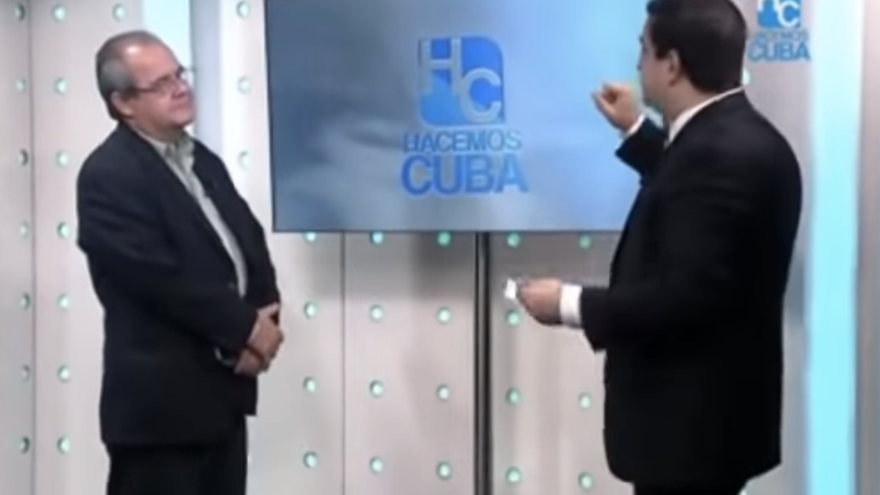
Alexis Triana, left, with Humberto López, in the ’We Make Cuba’ program on January 28, 2021. (Screen capture)

14ymedio bigger14ymedio, Madrid, 10 November 2023 —  On Thursday, the official journalist Alexis Triana was named as the new president of the Cuban Institute of Cinematographic Art and Industry (Icaic) by the Ministry of Culture. The position had been vacant since Ramón Samada Suárez was dismissed in July, after the filmmakers protested the showing of the documentary La Habana de Fito on national television without the consent of its director, Juan Pin Vilar.

In a statement made public yesterday, the institution explains that “Triana assumes the presidency of Icaic at a time when the institution is working together with the creators in the preparation of the proposals that are being presented to the Temporary Working Group for attention to development of Cuban cinema.” In addition, the statement notes that the communicator, who graduated in Journalism from the University of Havana, “accumulates a long history as a cultural manager and promoter.”

His career begins as president of the Hermanos Saíz Association of Holguín, and he has also been president of the Provincial Council of the Performing Arts and provincial director of Culture in that province for 13 years. The Ministry recognizes his “achievements” such as the founding of the International Festival of Artists and Cultural Promoters Romerías de Mayo and the vice presidency of the International Festival of Poor Cinema in Gibara. continue reading

Triana was also vice president of the National Council of Performing Arts in Havana and national coordinator of the Corazón Adentro Culture Mission in Venezuela. At the same time, he is the founder of the Multimedial Studio and the CREARTV digital channel and the Cuban Streaming Chain in the Ministry of Culture, defined as “a network at the service of culture with the participation of several audiovisual production companies and direct transmission of their contents by the Caribbean Channel and through social networks.”

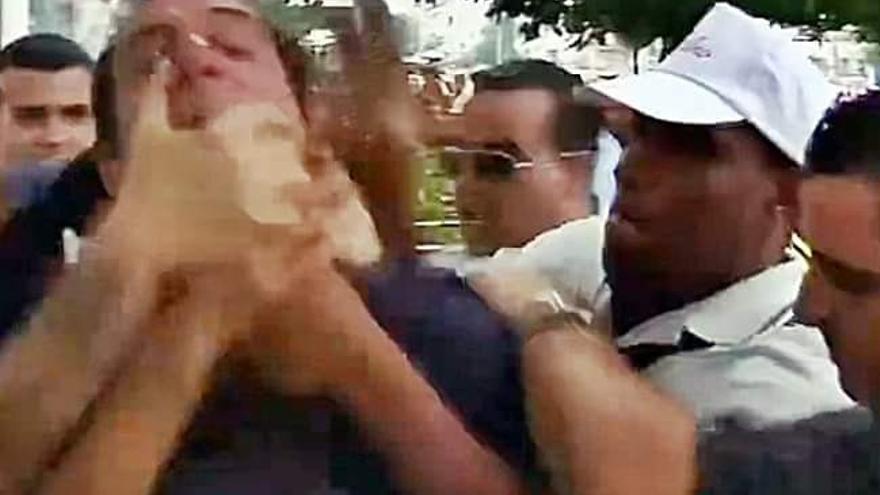
The statement does not mention Triana’s role in trying to minimize the aggression of Ministry of Culture officials against the artists who were demonstrating at its door on January 27, 2021

The statement does not mention Triana’s role in trying to minimize the aggression of Ministry of Culture officials against the artists who were demonstrating at their door on 27 January 2021. The next day the journalist intervened in the program of the repressor Humberto López, We Make Cuba to disqualify the words of those attacked and the information that appeared in the independent media.

At the end of April, dozens of Cuban filmmakers attacked the “cultural institutions” for suspending the screening of Fito’s Havana, a documentary directed by Juan Pin Vilar, along with the audiovisual Existence by Fernando Fraguela and Yulier Rodríguez, and The Manager, by Ricardo Figueredo, at the headquarters of the El Ciervo Encantado theater group.

The filmmakers were reproached for “not offering public and satisfactory information about this decision,” in addition to the fact that “an unfinished copy of the documentary was later presented on a Cuban television program, ignoring the refusal of its director and producer, and with the explicit purpose of discrediting them.”

The artist Sergio Benvenuto specified that what happened to Samada was a “dismissal,” that “at this political moment, it is an act of irresponsibility by the Ministry of Culture.”

The unrest of the filmmakers led to more than a hundred directors, scriptwriters and actors holding a meeting with leaders of the Ministry of Culture and the Communist Party at the end of June to address the controversy unleashed by the censorship against Pin Vilar.

Subsequently, the film director Miguel Coyula broadcast several fragments of the meeting with officials, including Alpidio Alonso and Fernando Rojas, minister and vice minister of Culture, respectively, as well as the vice prime minister Inés María Chapman and the head of the ideological department of the Party. Communist, Rogelio Polanco.

____________

COLLABORATE WITH OUR WORKThe 14ymedio team is committed to practicing serious journalism that reflects Cuba’s reality in all its depth. Thank you for joining us on this long journey. We invite you to continue supporting us by becoming a member of 14ymedio now. Together we can continue transforming journalism in Cuba.
Concern in Nicaragua Over the Purchase of Tobacco Farms by Alleged Cuban Businesspeople

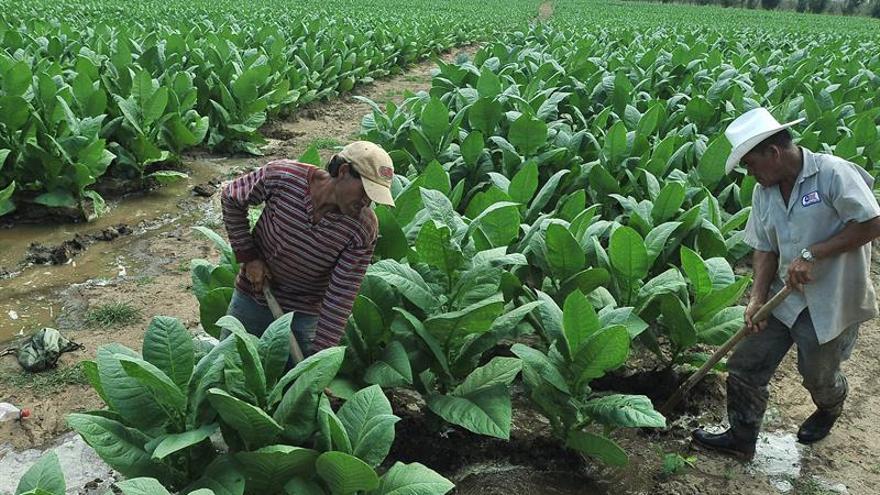
Tobacco growers in the municipality of Estelí in northern Nicaragua. (EF)

14ymedio bigger14ymedio, Havana, 10 November 2023 —  At least nine tobacco farms in the municipality of Estelí, in Nicaragua, are being repaired or operating under the command of alleged Cuban businesspeople. According to a report published this Wednesday by Nicaragua Investiga, local producers and farmers fear that, with the relations between both regimes, “new and uncomfortable investors” will enjoy privileges that unbalance competition.

The most widespread suspicion among the Estelí cigar growers, according to the press, is that these Cuban businesspeople who have recently arrived in Nicaragua have come as “front men.”

“After 30 or 40 years in this market, we all know each other, none of these new investors is someone with a known name, if anything they are workers in Cuban tobacco companies, they are people who only lend their names, there is the country’s capital there, people from that Government,” one of the workers told Nicaragua Investiga on condition of anonymity. continue reading

The guajiros, tobacco farmers, are sure that the Cuban investors — some associated with Cubatabaco, the company that controls the sector on the Island – arrived “hand in hand” with the Government of Daniel Ortega, and have been situating themselves in farms purchased from other businesspeople or that were abandoned after having been interfered with by the State.

The Guajiros are sure that the Cuban investors, some associated with Cubatabaco, arrived “hand in hand” with the Government of Daniel Ortega

“This property belonged to people who were prosecuted for alleged links with organized crime and investigated by the State, and afterwards they were found guilty and sentenced to several years in prison. Now some people appear, supposedly Cuban businesspeople, investing in [the property]” said one of the interviewees about a farm that years ago belonged to some Guatemalans.

According to what he says, the farm is located near the Estelí School of Agriculture and Livestock, also known as the Catholic University of the Dry Tropics, which was also confiscated this year by the State in its offensive against the Catholic Church.

The farmers have seen multi-story facilities built on the land for the processing of cigars and work has been carried out on the land for the cultivation of the leaf. They are also looking for employees and say they came with ideas to help the community. “Some neighbors have been asked what the community’s needs are,” say the cigar growers.

Another of the farms where the Cubans have been seen is located on the side of the Pan-American Highway and, they explain, the owners abandoned it because the soil was contaminated by volcanic matter. “The material was extracted, such as stones that were used for asphalt, and now the new owners are cleaning it to rehabilitate the farm,” said a resident of the area, located several kilometers from Estelí.

In the last decade, the Nicaraguan cigar has become popular in the international market, sharing with Cuba favorite buyers such as China and other European countries, in addition to having the advantage of trading with the United States, where the sale of Cuban tobacco is prohibited under the embargo. “That explains these movements,” said a producer convinced that Cuba has been pursuing these opportunities.

In Estelí, they emphasize, they are building “large complexes and modern factories” that they cannot have on the Island. “We know that in Cuba there are serious problems in sustaining this sector due to constant energy failures and high production costs, and the blockade that the country suffers,” they argue.

The farmers and businesspeople cited by Nicaragua Investiga are not so much concerned about the appearance of the investors as the impact of their relations with the Ortega regime, which may end up favoring newcomers and disrupting “healthy competition.” “Unfair competition would cause annoyance,” they say.

Another fear of the tobacco growers is that the Government will decide, in order to establish a monopoly in the sector controlled by four hands with the Island, to confiscate businesses and properties, a strategy in which it already has a long history.

“We know that in Nicaragua there is no legal security with properties. There are companies that have been in this industry for years and have invested in their facilities, there is truly a lot at stake. At the slightest bad sign, these companies could leave the country and the ‘the loss is to the people because the jobs are lost’,” they lament.

According to data from Nicaragua Investiga, since 2018 Ortega has closed 3,500 NGOs, appropriating all their assets. “The seizures of the assets of the newspaper La Prensa, the Central American Institute of Business Administration (Incae) and the Fundación del Río alone was a theft amounting to 51.5 million dollars,” the platform highlights.

The Central American University, also investigated, had more than half a dozen scientific facilities and several square kilometers of land confiscated. Another 316 properties have been seized from political prisoners, lawyers, journalists and other professionals, and important institutions such as the Nicaraguan Academy of Language have been closed.

____________

COLLABORATE WITH OUR WORKThe 14ymedio team is committed to practicing serious journalism that reflects Cuba’s reality in all its depth. Thank you for joining us on this long journey. We invite you to continue supporting us by becoming a member of 14ymedio now. Together we can continue transforming journalism in Cuba.