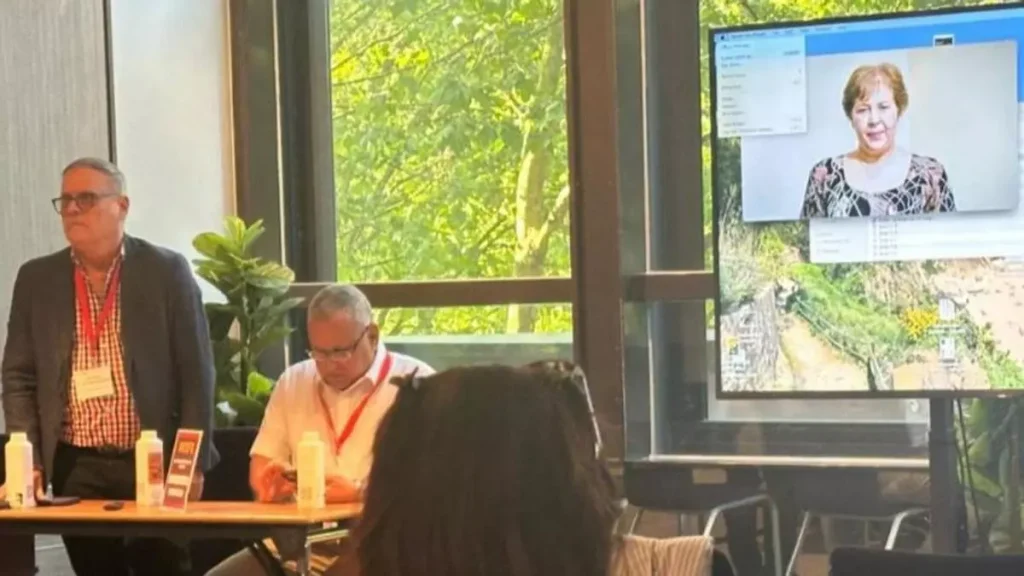
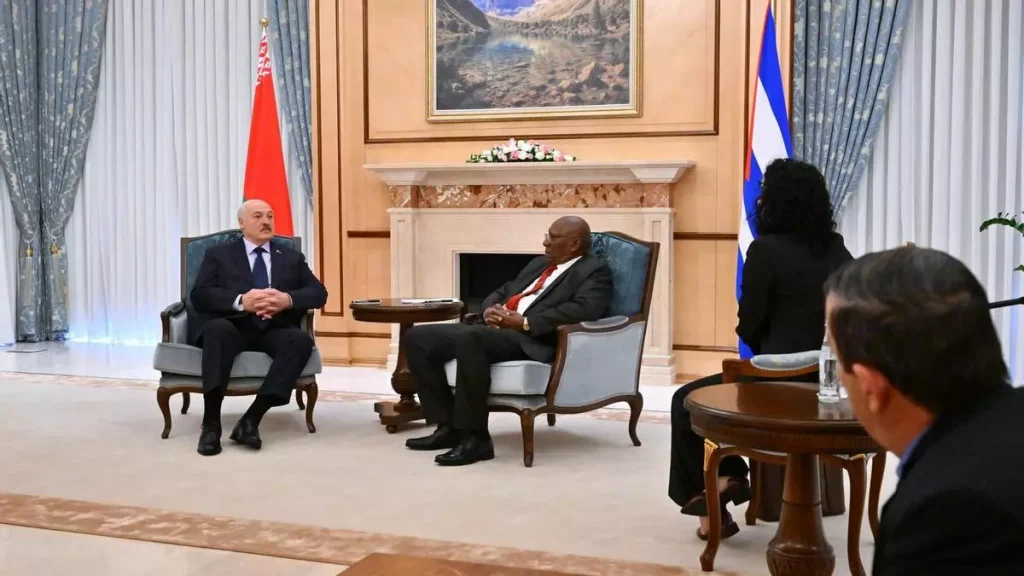
An independent journalist and nuclear engineer, he was sentenced to 20 years in prison in 2003 and refused for years to accept exile as the price of his release.
Héctor Maseda, after his release in 2011, alongside his wife, Laura Pollán, leader of the Ladies in White. / Euronews
14ymedio Héctor Maseda Gutiérrez, an independent journalist, Cuban dissident, and one of the political prisoners of the Group of 75, died this Saturday in exile, according to journalist Camila Acosta. Members of the Cuban American National Foundation confirmed his death in Miami at the age of 83. His name became linked to one of the harshest chapters of Castro’s repression, the Black Spring of 2003, and also to the history of the Ladies in White, the movement that his wife, Laura Pollán, helped found and led for years to demand the freedom of those imprisoned.
A nuclear engineer by training, Maseda was born in Havana on January 18, 1943. Before becoming a leading voice in independent journalism, he worked in the scientific field until his lack of “political credibility” prevented him from pursuing a professional career within state institutions. In the mid-1990s, he began collaborating with the non-official press and was a founding member of the Decoro Working Group, an independent news agency persecuted by the regime.
His life changed forever in March 2003, when Fidel Castro’s regime launched a wave of repression against dissidents, librarians, independent journalists, and human rights activists. Maseda was arrested along with 74 other dissidents and sentenced to 20 years in prison. He was 60 years old at the time. The operation, known as Black Spring, sought to decapitate the peaceful opposition and send a warning message to any voice that deviated from the official narrative.
“I will withstand whatever comes”
In prison, Maseda was held in several penitentiaries, including Las Alambradas de Manaca, La Pendiente, and Agüica, according to records released by the Ladies in White. His file within the movement also included a phrase that characterized him: “I will resist whatever comes.”
During those years, Laura Pollán ceased to be merely the wife of a political prisoner and became one of the most recognizable figures of the Cuban dissident movement. Along with other women dressed in white, she walked every Sunday along Fifth Avenue in Miramar after attending Mass at continue reading
the Santa Rita Church. The image of those wives, mothers, and daughters with gladioli in their hands became unbearable for a regime accustomed to repression without witnesses. Pollán died in October 2011, a few months after her husband’s release, leaving behind a legacy of peaceful resistance that transcended the island.
From prison he wrote ‘Buried Alive’, a testimony about Cuban political imprisonment that circulated clandestinely
Maseda was released from prison on February 12, 2011, on parole, after nearly eight years behind bars. He refused the forced exile that the regime negotiated with the Catholic Church and the Spanish government to empty the prisons without acknowledging the innocence of those convicted. Reporters Without Borders emphasized at the time that his release did not overturn the 2003 sentence and that Maseda was part of the group of dissidents who refused to leave Cuba as a condition for their release.
In 2008, while still imprisoned, he received the International Press Freedom Award from the Committee to Protect Journalists. From prison, he wrote Buried Alive, a memoir about Cuban political imprisonment that circulated clandestinely and whose title encapsulated the experience of those condemned for exercising basic rights.
Maseda belongs to a generation of opposition figures who confronted Castroism without social media, with slower international coverage, and under a much more restrictive surveillance system. His case encapsulated several of the regime’s obsessions: the fear of independent journalism, the suppression of civic autonomy, and the desire to make exile an extension of imprisonment.
The former Cuban defense minister has many crimes for which he could be tried in the US
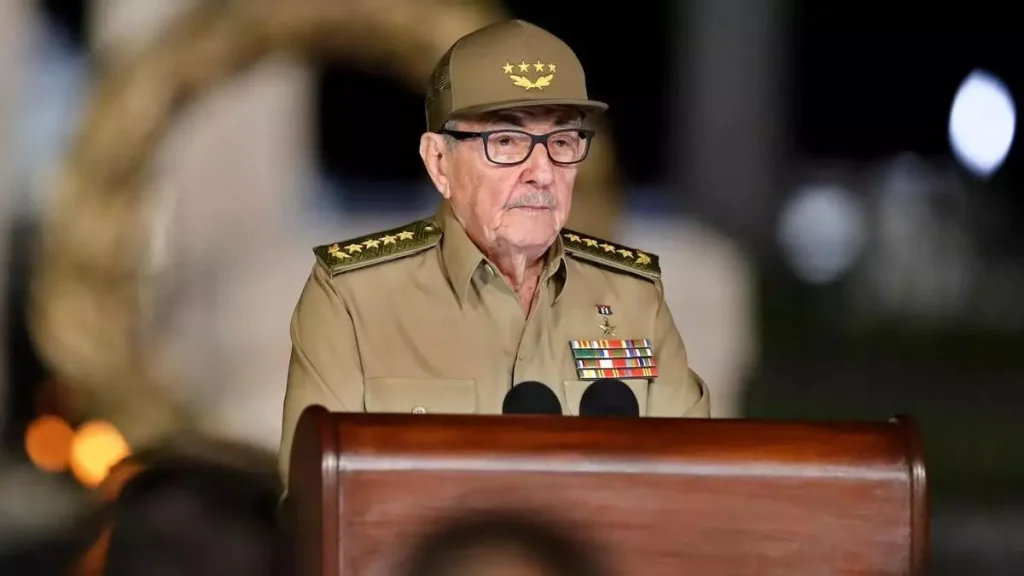
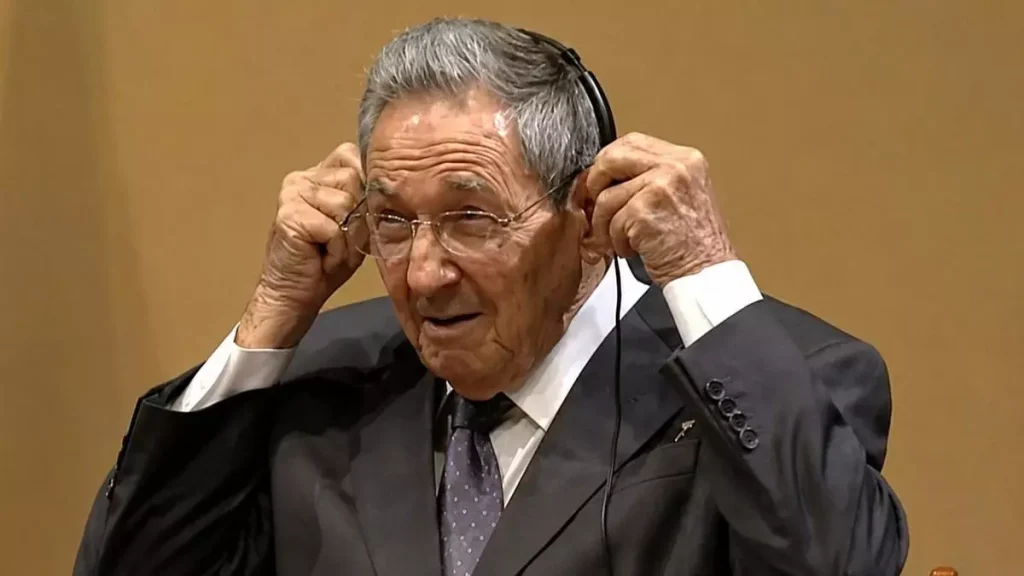
File photo of former Cuban President Raúl Castro. / EFE
14ymedio, Miami, Pedro Corzo, May 31, 2026 / I confess that few things would please me more than seeing Raúl Castro dressed in the orange jumpsuit of ordinary US prisoners, serving his sentence in a more severe prison. Although I doubt that a US prison of that kind would be any harsher than the less malevolent Castro regime’s prisons.
For 67 years, there has been no shortage of Cuba experts who emphatically assert that the younger Castro brother, the more organized, familial, and even condescending, compared to his brother, the greatest criminal in Cuban history, thankfully now deceased. While I have no evidence to refute most of the labels applied to Raúl, I can assure you that he is anything but tolerant, because I vividly recall one of the photos of this man published in early January 1959, showing him hanging a peasant in the Sierra Maestra mountains during the insurrection.
He then ordered hundreds of executions, including the San Juan Hill massacre in Santiago de Cuba, which occurred 11 days after the insurrection’s triumph, in which 71 men were summarily executed in a single night. They even used bulldozers, in true Hitlerian style.
Raúl was without a doubt Fidel’s most loyal servant. It is true that there have been stories of disagreements between the two autocrats, but even if they were true, the pair’s shared interests prevailed, to the great misfortune of the Cuban people. continue reading
Unfortunately, the most numerous and horrendous crimes of Castro’s totalitarianism have been against the Cuban people.
Raúl Castro, the serial killer Ernesto “Che” Guevara, and the “Butcher of Artemisa,” Ramiro Valdés, chose from the very first days of the revolutionary victory to assume the role of the most intransigent defenders of the process led by Fidel Castro. This bloody triad, headed by the criminal Raúl, was the one that, obeying the orders of the supreme leader, directed the spiritual and material destruction of a country that, with all its flaws, was at the forefront of many of the most important areas of development in Latin America.
I confess I haven’t the faintest idea how the trial will unfold against the man who gave the order to shoot down two unarmed planes flying in international waters, with the sole objective of saving lives in danger. The former Cuban Minister of Defense said, “I said, well, shoot them down in the sea when they appear and don’t ask questions,” a statement very similar to Guevara’s, who advised his henchmen, “Kill him, ask questions later,” or another, more institutional one, from the serial killer: “To send men to the firing squad, judicial proof is unnecessary.” Of Ramiro Valdés, there are no expressions, only murders.
Unfortunately, the most numerous and horrendous crimes of Castro’s totalitarian regime have been committed against the Cuban people within the country’s borders, but those crimes will have to be judged by their own citizens when the political situation in Cuba changes. For now, we must welcome the fact that the current US government has decided to take legal action against a self-confessed murderer like Raúl Castro, just as it did against the drug trafficker Nicolás Maduro, for a crime that could also be attributed to the second-in-command in the destruction of Cuba.
Raul Castro has many crimes for which he can be tried in the United States
According to a Miami Herald article, Raúl Castro met with Colombian drug traffickers in 1980 and authorized them to use Cuban ports for their drug trafficking to the US, in exchange for providing weapons and ammunition to the M-19 guerrillas. Years later, he met with one of Manuel Antonio Noriega’s men to mediate a dispute the Panamanian general was having with Colombian drug traffickers.
Manuel de Beunza, a former major in the Castro regime’s intelligence services, testified at a Senate hearing in Washington that Raúl Castro ordered Generoso Escudero replaced as head of the naval unit in Cienfuegos because he refused to cooperate in the deployment of speedboats transporting cocaine to the southern coast of Cuba. Furthermore, John Jairo “Popeye” Velásquez, a close associate of Pablo Escobar Gaviria, stated that the fugitive general maintained close ties with the Medellín cocaine cartel and protected drug shipments passing through Cuba en route to the southern coast of Florida.
Raul Castro has many crimes for which he can be tried by the United States.
______________________
COLLABORATE WITH OUR WORK: The 14ymedio team is committed to practicing serious journalism that reflects Cuba’s reality in all its depth. Thank you for joining us on this long journey. We invite you to continue supporting us by becoming a member of 14ymedio now. Together we can continue transforming journalism in Cuba.
Island residents report dismissals from jobs, obstacles to renting housing, and social rejection following an altercation in Supermanzana 23.
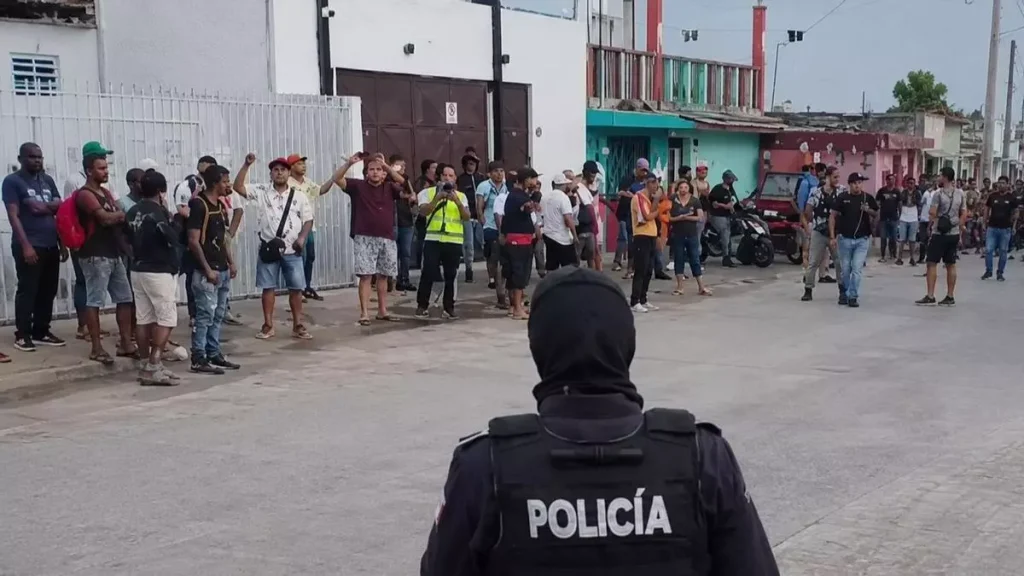
Local media reported that the case began with a neighborhood dispute related to a dog bite and ended with strong public backlash. / Screenshot
14ymedio, Havana, May 31, 2026 — Cubans living in Mexico have called on Cuba’s Foreign Ministry and its Consulate in Cancún to issue a public response to what they say is a climate of hostility that has been unleashed against the Cuban community in Quintana Roo following a recent incident in the Supermanzana 23 neighborhood of Cancún. In a statement circulated on social media, the signatories denounce the diplomatic mission’s silence in the face of discrimination that, they say, has gone beyond online debate and has begun affecting the daily lives of Cuban families unrelated to the events.
The text, titled The Need for Active and Impartial Consular Representation expresses the Cuban residents’ “deep concern” over “the lack of an official statement from Cuba’s Foreign Ministry” after the case sparked a strong reaction on social media and, according to those making the complaint, led to “real episodes of exclusion and discrimination” in the state of Quintana Roo.
The source of the tension was an altercation in Cancún’s Supermanzana 23, where Cubans Rigoberto “N” and Yudelmis “N” were detained by Mexican authorities and turned over to the National Migration Institute. Local media reported that the case began with a neighborhood dispute involving a dog bite and ended with the intervention of security agents, damage to a home, and strong public condemnation of those involved. From that point on, outrage directed at two individuals evolved, according to migrant-support organizations, into a broader reaction against Cubans living in the area.
The complaint is directed specifically at the Cuban Consulate General in Cancún, located in Supermanzana 20, just a few blocks from where the crisis unfolded
“Unfortunately, we watched with alarm as this online climate spilled over into daily life, affecting our hardworking families who were completely unrelated to those events,” the statement says. It cites reports from Cisvac — International Council Adding Venezuela — a foundation for the defense of human rights, which works with migrants and says it has documented “multiple daily cases” of Cubans who have lost jobs, faced rental disputes, or experienced direct workplace exclusion following the incident.
The complaint points directly to the Cuban Consulate General in Cancún, located continue reading
in Supermanzana 20, only a short distance from where the crisis occurred. For the signatories, that proximity makes the lack of a public position even more difficult to understand. “We find it paradoxical and incomprehensible that our Consulate in Cancún has maintained absolute public silence,” the text states.
The absence of a response, they add, has left the community “in a position of clear social and media vulnerability.” The criticism goes beyond the Cancún case. The document links that silence to broader concerns about Cuban consular work in Mexico, a country that has become a transit point toward the U.S. border, a waiting area, or a destination for forced returns for thousands of Cuban migrants deported from the United States.
Residents perceive a diplomacy that is absent when it comes to defending nationals who are not part of organizations aligned with the Cuban Government
In recent years, Mexico has been one of the main routes for Cubans seeking to reach the United States, but it has also become a bottleneck for those who fail to cross, are detained, or are returned from U.S. territory. Added to that are those stranded in southern Mexico, at immigration offices, or along the northern border, without documents, stable employment, or a clear path forward.
“A considerable number of our compatriots are stranded at various borders throughout Mexico, facing a severe migratory limbo,” the statement warns. It also refers to Cubans “deported or returned from the United States to Mexican territory,” who are left “in conditions of extreme vulnerability.”
The signatories argue that, given this situation, there should be “energetic, high-level consular engagement” with Mexican immigration authorities to ensure dignified treatment of Cubans in transit or facing forced return. However, residents’ perception is the opposite: a diplomacy absent when it comes to defending nationals who do not belong to organizations aligned with the Cuban Government.
“Meetings are frequently organized at the Cuban Embassy in Mexico exclusively for groups of residents who maintain a direct affinity with the official discourse”
The statement touches on one of the most sensitive aspects of the relationship between the regime and its diaspora: selective representation. The signatories recall that consular protection and assistance “are not political concessions, but inalienable rights,” protected by international law and the Vienna Convention on Consular Relations. In that regard, they question the fact that the Cuban Embassy in Mexico frequently organizes meetings with resident groups aligned with the official narrative while ignoring a broader, more diverse community that may be critical of, or simply uninvolved in, those circles.
“Meetings are frequently organized at the Cuban Embassy in Mexico exclusively for groups of residents who maintain a direct affinity with the official discourse,” they state. This practice, they add, “reinforces an unrealistic narrative that attempts to project the idea that all of us abroad support the Government, while deliberately rendering invisible the immense majority of our community.”
The text insists that the most vulnerable Cubans generally do not belong to those favored associations. They are precisely the people facing “migratory limbo, border returns, or labor discrimination.” For them, the signatories argue, consular assistance should be provided “strictly, impartially, and without ideological bias of any kind.”
The statement concludes with three specific demands: that Cuba’s Foreign Ministry issue a public declaration regarding the vulnerability of the Cuban community in Cancún; that it establish transparent communication channels with civil organizations working directly with migrants; and that it assume “an active, inclusive, and equitable diplomatic role in defense of all its nationals, without political conditions.”
Translated by Regina Anavy
______________________
COLLABORATE WITH OUR WORK: The 14ymedio team is committed to practicing serious journalism that reflects Cuba’s reality in all its depth. Thank you for joining us on this long journey. We invite you to continue supporting us by becoming a member of 14ymedio now. Together we can continue transforming journalism in Cuba.
During an event organised by Unesco, former Republican-era palaces converted into state offices revealed stained glass, marble, staircases – and sealed-off areas
“The hardest thing is the contrast with the rest of Havana, which is falling apart.” / 14ymedio
14ymedio, Havana, Darío Hernández, 31 May 2026 — The first thing they ask of you before entering is not silence, nor respect for the heritage, nor care for the old floors. It is your identity card. At the entrance to each building, an official photographs visitors’ documents, as if a visit to a heritage property were also a bureaucratic formality – or entry to the Embassy of the Past. Only after that gesture, so routine in a Cuba under surveillance and so ill-suited to a cultural outing, does the tour of several Vedado mansions begin, opened to the public for the Open Doors Day organised by Unesco.
There were quite a few people. Families, curious passers-by, students, neighbours who had spent years walking past those facades without ever being able to cross the threshold. Some stared upwards, as if trying to take in all at once the cornices, balconies, columns and black ironwork. Others walked with the discretion of someone entering a stranger’s home – even though that home no longer has a visible owner, only acronyms, custodians, offices and official portraits of Raúl Castro and Miguel Díaz-Canel.
The Mansions of Vedado Open Their Doors, But Not All Their Secrets
In each building, students and professors of Art History were on hand to explain mouldings, stained glass, styles, dates and materials. At times the tour felt like a living lesson in Republican-era architecture; at times, like an excursion through the inventory of a private wealth converted into state heritage. The guides’ voices tried to impose order upon the beauty, but visitors could not help looking also at what was not being explained.
“The hardest thing is the contrast with the rest of Havana, which is falling apart,” murmured a man as he crossed one of the reception rooms. Outside, the city peels, is propped up, collapses, or survives patched together with breeze blocks, corrugated zinc and miracles. Inside, by contrast, there remain chandeliers, sweeping staircases, interior courtyards, gardens and high ceilings – that sense of spaciousness which today seems almost obscene in a capital where so many families live crammed together amid leaking roofs and power cuts.
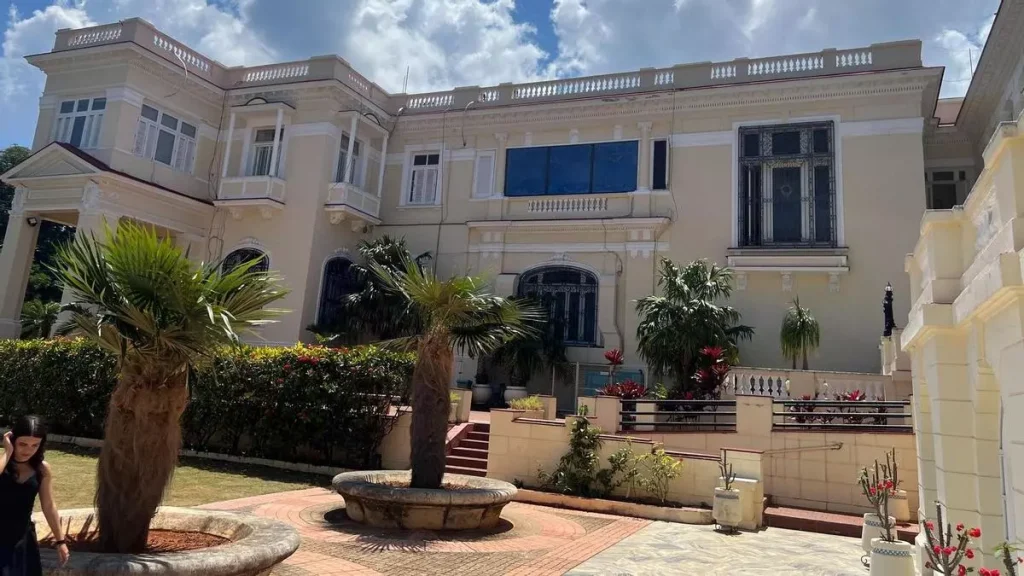
Some were expropriated; of others it is said, with the convenient formula of the official narrative, that their owners left the country and “left no heirs.” / 14ymedio
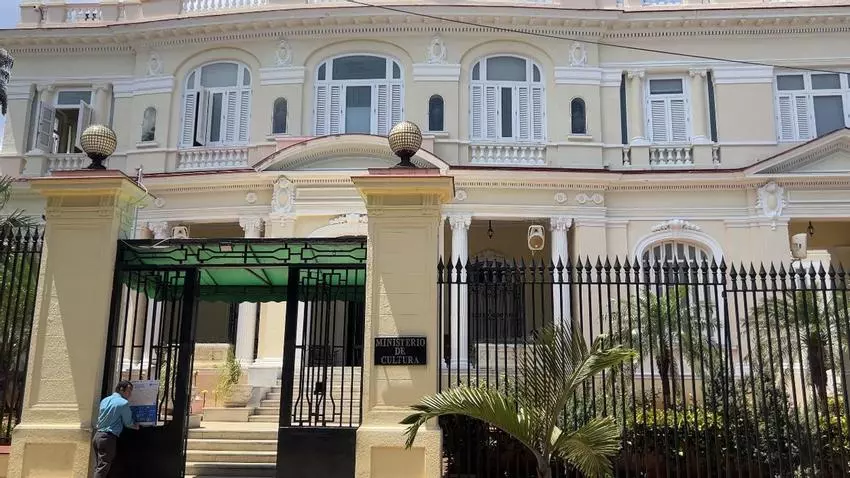
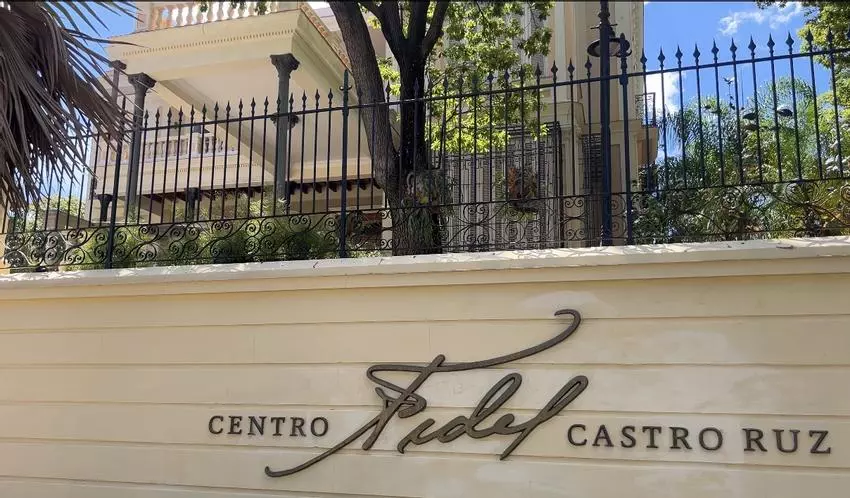
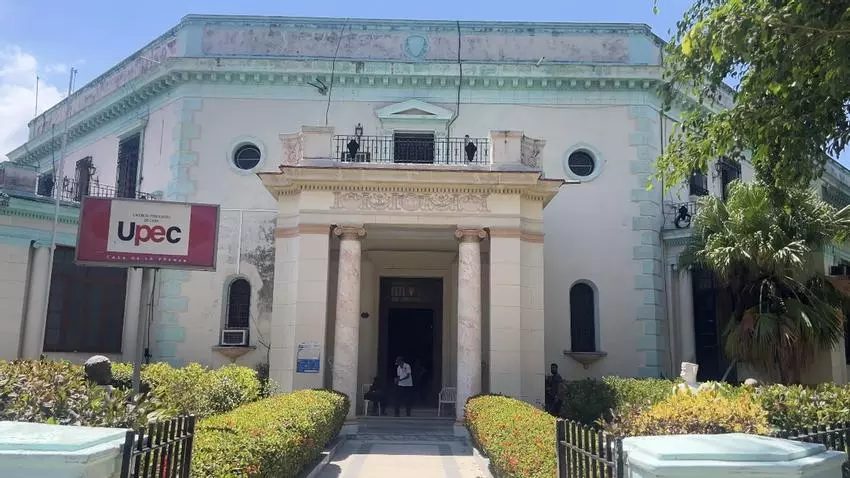
The route included some of the most imposing mansions in Vedado: the headquarters of the Ministry of Culture; the Federation of Cuban Women (FMC), on Paseo and 13th Street; the Casa de la Prensa, headquarters of the Union of Cuban Journalists (Upec), on 23rd and I; and the Fidel Castro Ruz Centre. All share the fact that they were built or inhabited by wealthy families during the Republic – many of Spanish origin or descent from Spaniards – and after 1959 passed into the hands of the new power. Some were expropriated; of others it is said, with the convenient formula of the official narrative, that their owners left the country and “left no heirs.”
At the headquarters of the Ministry of Culture, the former home of Ernesto Sarrá and Loló Larrea commands attention even before one enters. It occupies almost an entire block and still retains the air of a family palace it must have had when the owner of one of Cuba’s largest pharmaceutical fortunes lived there with his wife. From the street, the building promises a novel of money, parties, alliances, servants, china and automobiles pulling through the gateway. Inside, however, the mansion no longer functions as a home. It is a collection of offices from which the culture of the island is administered – and kept under watch.
“What beauty, and what a waste not to be able to see it in its entirety,” commented a woman as she left one of the rooms. / 14ymedio
Many areas were closed to the public. Some because they are offices; others because they are “not in a fit state.” This was a constant throughout the tour: half-open doors that could not be passed through, staircases leading nowhere, sealed-off corridors, or areas that the guide mentioned without showing them. Visitors could barely reconstruct, from fragments, the scale of what once was.
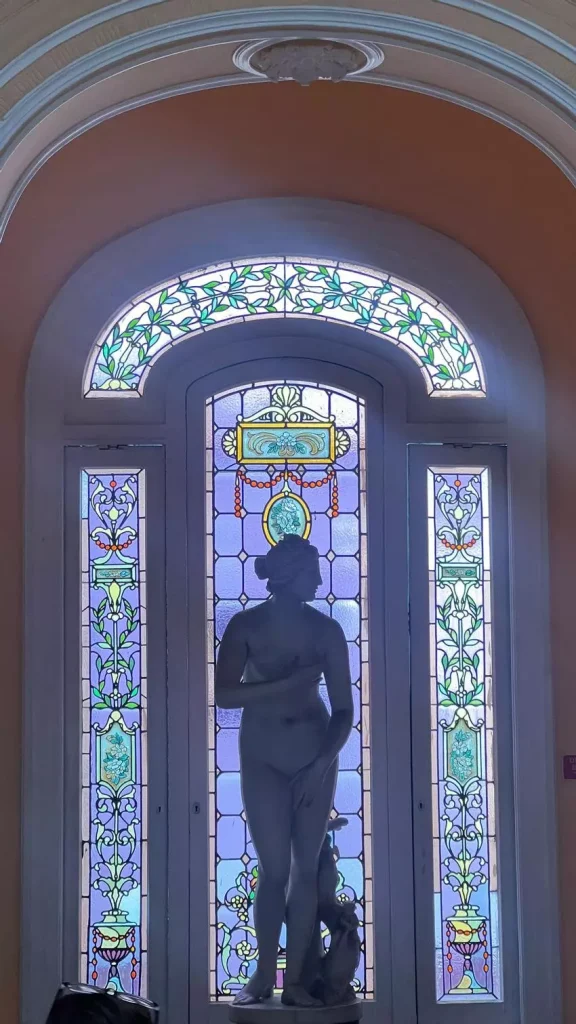
At the FMC headquarters, amid stained glass windows, a female sculpture and rooms altered by bureaucratic use, the guide explained ornamental details while visitors raised their eyes to the ceilings, the doors and the columns. “What beauty, and what a waste not to be able to see it in its entirety,” commented a woman as she left one of the rooms. The remark hung in the air with an unintentional precision. The heritage is shown, but with caution; conservation is spoken of, but the history of ownership is barely touched upon.
The Casa de la Prensa, headquarters of Upec, preserves an uncomfortable memory for official journalism. The building on 23rd and I is associated with the García Osuna family, connected to Republican-era politics. From 1963, the organisation that brings together pro-government journalists was installed there. In its salons, where private life, receptions and family conversations once took place, propaganda subordinated to the single Party is now produced. The architecture, with its ornate iron grilles and its old-world elegance, seems to retain more freedom than the institution that occupies it.
The former mansion of the Conill family has become a civic temple to the leader who governed the country in which properties such as this one were confiscated. / 14ymedio
The starkest contrast appears at the Fidel Castro Ruz Centre. The former mansion of the Conill family, with its restored grandeur, its well-kept gardens and its museum-style displays, has become a civic temple to the leader who governed the country in which properties such as this one were confiscated, seized or absorbed by the State. Official sources acknowledge that the house belonged to the Hidalgo de Conill family and that Enrique Conill Rafecas was a captain in the Liberation Army. They also admit that, after 1959, the family left the country and the property was put to uses connected with the Ministry of the Interior.
Here the paradox achieves an almost theatrical clarity. A Republican-era palace, born of private wealth, converted into a shrine of the Revolution. A building that must once have held family albums, china, bedrooms, parties and inheritances, now transformed into the stage set of a single, carefully illuminated memory. “You spend your whole life walking past this place and you have no idea what’s inside,” said a visitor standing before the mansion in which Fidel Castro’s Mercedes-Benz is displayed as if it were a relic.
That detail alone would be enough for a different tour – less ornamental and more honest: one that passes not only through the columns, the stained glass and the ironwork, but through property records, nationalisations, exiles, emptied houses and the official versions that explain too much with too little. Who exactly were the owners? What became of them? What documents prove the transfer of ownership? Was there confiscation, abandonment, donation, seizure, litigation? Where are those archives? On the visit, that part appeared only as a footnote, as if the social history of the mansions were less important than the marble.
Many entered in amazement; others, with a mixture of curiosity and suspicion.
The public, however, did not seem indifferent. Many entered in amazement; others, with a mixture of curiosity and suspicion. They walked slowly, photographed stained glass, discreetly touched a banister, lingered before a staircase, looked up at the ceilings as if discovering a hidden city above the visible one. For decades, a large part of the Republican residential heritage has remained behind railings, custodians, ministries, mass organisations, embassies and state offices.
The Unesco open day has value because it allows one to look. And in Cuba, looking inward is already something. But looking is not enough. A country that prides itself on its heritage should also account for how that heritage came into state hands, who built it, who lived in it, who lost it and through what mechanisms. Without that information, the tour remains an incomplete postcard of a Havana that is beautiful, deteriorating and under surveillance – where the visitor hands over their identity card before entering and leaves with more questions than answers.
Translated by GH.
______________________
COLLABORATE WITH OUR WORK: The 14ymedio team is committed to practicing serious journalism that reflects Cuba’s reality in all its depth. Thank you for joining us on this long journey. We invite you to continue supporting us by becoming a member of 14ymedio now. Together we can continue transforming journalism in Cuba.
Around 14,390 Cubans became Spanish citizens in 2025, 79% more than the previous year, according to the INE
Nearly 300,000 people born in Cuba reside in Spain, according to INE data. / X/@monasterioR
14ymedio, Madrid, 31 May 2026 / Cubans ranked among the leading groups of foreigners to acquire Spanish nationality in 2025, according to data published last Thursday by the National Statistics Institute (INE).
A total of 14,390 Cuban-born citizens obtained Spanish citizenship during the past year, a figure that places Cuba as the sixth most common country of origin among new Spanish nationals, surpassed only by Morocco, Colombia, Venezuela, Honduras and Peru, and ahead of much more populous countries such as Ecuador, Argentina, the Dominican Republic and Nicaragua.
Compared to the 8,045 Cuban-born citizens who obtained Spanish nationality in 2024, last year’s figure represents almost double. Cubans represent one of the Latin American migrant communities with the greatest growth in Spain in recent years, a consequence of the wave of emigration triggered by the economic and political crisis on the island.
Cubans are the sixth most frequent nationality among ‘new Spaniards’
Cubans – among nationals of Ibero-American countries – enjoy advantages when it comes to obtaining Spanish citizenship, as they may apply for it after two years of legal residence, compared with the ten years generally required. In addition, many benefit from the so-called Democratic Memory Law, which allows descendants of emigrated Spaniards to obtain nationality. This law has had a particular impact in Cuba, where more than 600,000 people have begun or completed the process through continue reading
this route.
At the start of 2025, there were 252,290 residents born in Cuba living in Spain, according to INE reports. In the subsequent months, a further 43,300 arrivals from the island were recorded, according to the Continuous Population Statistics, as of 1 April 2026.
At the start of 2025, there were 252,290 residents born in Cuba living in Spain. In the subsequent months, a further 43,300 arrivals from the island were recorded.
According to the Jesuit Refugee Service, in 2025 there were 88,367 residents born in Cuba who retained Cuban nationality, and 61,209 held a residence permit. This is a population group that is “growing notably,” the organisation noted. Based on data from the start of 2025 provided by the Foundation of Savings Banks (Funcas), the centre estimated that the number of Cubans in an irregular situation in Spain stood at around 16,000, while 72,270 had legal or “quasi-legal” residency.
14ymedio has reported on several occasions on Cuba’s demographic collapse. The government acknowledges a population of fewer than 10 million inhabitants, while demographer Juan Carlos Albizu-Campos argues that the effective population may be around eight million – 24% less than just four years ago. Between 2021 and 2024, Cuba lost more than one million inhabitants to emigration.
In total, Spain granted nationality to 299,732 foreigners in 2025, the highest figure in the past decade.
In total, Spain granted nationality to 299,732 foreigners in 2025, the highest figure in the past decade. This represents an increase of 18.7% on the previous year.
The majority of the new citizens were of Latin American origin.Most of the grants were made on the grounds of residency. Of the nearly 300,000 applications resolved favourably, 253,836 corresponded to this procedure. The report also notes that the most common year of arrival among those who obtained nationality was 2019, indicating that the full process from arrival to the granting of citizenship took around six years in the majority of cases.
Catalonia, with 70,933 new Spanish citizens, and the Community of Madrid, with 69,566, together accounted for nearly half of all nationalisations recorded across the country.
Translated by GH.
______________________
COLLABORATE WITH OUR WORK: The 14ymedio team is committed to practicing serious journalism that reflects Cuba’s reality in all its depth. Thank you for joining us on this long journey. We invite you to continue supporting us by becoming a member of 14ymedio now. Together we can continue transforming journalism in Cuba.
The “builders, far from merely meeting deadlines and budgets, are called upon to be the foremost guardians of the fragile island ecosystem,” Invasor urges.
The project, which will cover 8.5 hectares, will create “heat islands” that could lead to the loss of forest. / Invasor
14ymedio, Havana, May 31, 2026 – The construction of the first of two photovoltaic solar parks planned for the Jardines del Rey region of Cayo Coco, in Ciego de Ávila, could impact the already “fragile” local ecosystem. Antonio García Quintas, a doctor in Community Ecology and associate researcher at the Center for Coastal Ecosystem Research (CIEC), warns that the project, which will cover 8.5 hectares, “will harm local wildlife, including endemic and threatened species, while migratory birds would be affected by the construction.”
An article published this Sunday in Invasor warns that the installation of the panels, a plan envisioned 10 years ago but only now moving forward, will create “heat islands,” leading to the “loss of a well-preserved evergreen forest that, paradoxically, forms part of the buffer zone that should be protected” in El Bagá Natural Park.
The risk is considerable. According to Raúl Gómez Fernández, a CIEC specialist, in these territories “it is difficult to draw on a map the exact line” separating anthropized zones where human activity has transformed the environment from areas that have not been disturbed.
In response, the specialists consulted by Invasor offer viable alternatives in locations with “secondary vegetation or areas continue reading
converted into solid waste dumps, at higher elevations, less prone to flooding, with lower salt exposure, and located much closer to generating units or electrical substations.”
“What is being proposed is not to halt the investment, but to do it properly, in a place where established forests are not sacrificed”
Because of the impact the project could have, it has undergone modifications since 2016. The site initially selected—western Cayo Coco—was part of non-anthropized ecosystems. Shortly afterward, the Provincial Directorate of Territorial Planning and Urban Development of Ciego de Ávila evaluated the project’s impact there and denied construction in order to protect the flora and fauna. It was then decided that the solar parks would be installed in the eastern part of the cay, although on a smaller area than originally planned, since the initial proposal called for the use of 13 hectares.
“What is being proposed is not to halt the investment, but to do it properly, in a place where established forests are not sacrificed, where existing infrastructure can be utilized, degraded areas rehabilitated, and where construction and maintenance costs would be significantly lower,” Invasor states.
Marialina Herrera Riera, director of investments for the Ciego de Ávila Electric Company, assures that the construction of the photovoltaic solar park will be carried out “under the strictest compliance with all established regulations, without violating any legal provisions.” According to the official, the goal is “to minimize possible impacts on the environment.”
Nevertheless, the provincial newspaper emphasizes that “the solar energy the country so desperately needs, and which is increasingly necessary to generate on the cays themselves where tourism development exists, deserves to be installed in locations that are technically and environmentally justified, not in places that condemn it to greater expenses, accelerated deterioration, or conflict with protective legislation.”
“The solar energy the country so desperately needs, and which is increasingly necessary to generate, deserves to be installed in locations that are technically and environmentally justified”
For this reason, Invasor states in a demanding tone, “its builders, far from merely meeting deadlines and budgets, are called upon to be the foremost guardians of the fragile island ecosystem, protecting wetlands and respecting native wildlife corridors, especially the migratory birds that nest there, ensuring that every panel, every cable, and every movement of earth is carried out with the smallest ecological footprint possible.” Only in this way, it adds, “will this project cease to be a simple renewable-energy undertaking and become a true symbol of coherence.”
The appeal stems from cases such as El Bagá Park, “a themed natural park that existed and disappeared more quickly than it took to build,” because “sustainability is not determined by the type of technology used, but by the way it is integrated into the territory. From the mistakes of the past should finally emerge the wisdom not to repeat them in the present.”
“Today, those same decisions are being paid for through irreversible environmental damage and maintenance costs that no one calculated at the time. This is not about stopping development but about understanding that a poorly located project is not development. It is a legacy of problems for future generations,” the article insists.
The authorities’ strategy for trying to address the country’s energy crisis, with blackouts exceeding 20 hours in several parts of the Island, is the massive installation of solar panels. The program is expected to be fully completed provided the planned schedule is met: within 24 years, by 2050.
Translated by Regina Anavy
______________________
COLLABORATE WITH OUR WORK: The 14ymedio team is committed to practicing serious journalism that reflects Cuba’s reality in all its depth. Thank you for joining us on this long journey. We invite you to continue supporting us by becoming a member of 14ymedio now. Together we can continue transforming journalism in Cuba.
The unusual meeting between Francis Donovan and Roberto Legrá Sotolongo addressed “operational security” around the perimeter of the U.S. naval base
Image shared by the U.S. Southern Command on its Twitter account to report on the meeting. / @Southcom
14ymedio/Agencies, Havana, May 29, 2026 — The head of the U.S. Southern Command, Francis L. Donovan, met this Friday with Cuba’s Chief of the General Staff, Roberto Legrá Sotolongo, at the perimeter of the Guantánamo Bay Naval Station, in an unusual meeting between senior military officials from the two countries.
According to EFE, the meeting was confirmed by the Southern Command itself in a brief statement, which noted that the generals held “a brief exchange on operational security matters.” The discussion also addressed issues related to the safety of military personnel and their families, as well as the operational readiness of the base, together with officers stationed in Guantánamo.
“The Guantánamo Bay Naval Station constitutes a vital operational and logistical hub that supports United States military efforts to counter threats that undermine security, stability, and democracy in our hemisphere,” the Southern Command said in its statement.
Donovan also conducted an assessment of the “perimeter security of the naval base.”
The discussion also addressed issues related to the safety of military personnel and their families
In a brief statement published on social media, Cuba’s Ministry of the Revolutionary Armed Forces confirmed continue reading
that the meeting took place “by agreement of both parties.”
It also stated that the two “delegations considered the meeting positive, where issues related to security around the perimeter dividing the military enclave were discussed,” referring to the naval base. It further added that there was agreement “to maintain communication between both military commands.”
Reuters, which first reported the meeting citing a U.S. official speaking on condition of anonymity, noted that Donovan’s visit to Cuba is the first remembered in recent years involving a Southern Command chief and senior Cuban military leaders. The agency placed the contact in the context of growing concern in Havana about the possibility of U.S. military action against the Isand.
The meeting comes after the unusual visit to Havana on May 14 by the Director of the CIA, John Ratcliffe, amid increasing pressure from Washington on the Cuban regime.
Guantánamo, where the meeting took place, is one of the most sensitive points in relations between the two countries
The military contact comes at a particularly tense moment in bilateral relations. The administration of Donald Trump has hardened its policy toward Havana and placed Cuba among its foreign policy priorities in the hemisphere.
On May 20, Washington formally charged former president Raúl Castro with four counts of murder for the 1996 shootdown of civilian aircraft operated by Miami exiles. The charges were presented as a new step in the United States’ judicial and political offensive against figures within the Cuban leadership.
Guantánamo, where the meeting took place, is one of the most sensitive issues in relations between the two countries. The United States has maintained a naval base there since the beginning of the twentieth century.
In March, Donovan told U.S. lawmakers that the Southern Command was not preparing an invasion, although he stated that its forces were ready to defend the Guantánamo base, protect the U.S. Embassy in Havana, and support a potential response to a large-scale migration crisis.
Translated by Regina Anavy
______________________
COLLABORATE WITH OUR WORK: The 14ymedio team is committed to practicing serious journalism that reflects Cuba’s reality in all its depth. Thank you for joining us on this long journey. We invite you to continue supporting us by becoming a member of 14ymedio now. Together we can continue transforming journalism in Cuba.
Official data show that the deterioration of the system is not due to the embargo
The UNESCO warning does not reveal a new problem but rather validates, through an international institution, what thousands of Cuban families have been experiencing for years. / 14ymedio
14ymedio, Havana, May 29, 2026 — “Education in Cuba is at risk because of the current energy crisis.” The phrase, spoken by Anne Lemaistre, director of UNESCO’s Regional Office in Havana and the organization’s representative on the Island, describes the impact of blackouts, fuel shortages, and the deterioration of basic services in Cuban schools.
In a statement circulated on social media, the diplomat warned that the situation “makes it difficult for teachers and students to attend classes, learn effectively, and enjoy a normal social life with their friends.” The problem, she added, “jeopardizes the future of an entire generation, with long-term consequences.”
The official newspaper Granma, however, reacted immediately with its customary reflex. In its headline, the Communist Party’s newspaper added a phrase to Lemaistre’s quote that was not part of her main statement: “resulting from the blockade.” In this way, the paper transformed a warning about the daily collapse of classrooms into another piece of the official narrative, according to which every Cuban crisis has an external cause and a single culprit: Washington.
Before protecting classrooms, the State has protected tourism, hotel investments, political events, propaganda, and mechanisms of control
UNESCO itself, in February, had called for international cooperation to ensure that Cuban children could continue learning and that educational institutions remained safe spaces. In that appeal, Lemaistre said that “every day without fuel compromises school meals, transportation for teachers and students, and the electricity necessary to sustain continue reading
educational programs.” She also concluded with a statement that should make the Cuban Government uncomfortable: “For us, a functioning society begins with the school; it is the first thing that must be restored.”
But in Cuba, schools do not appear to be a government priority. Before classrooms, the State has protected tourism, hotel investments, political events, propaganda, and mechanisms of control. In April 2025, amid the economic crisis, education had already become a secondary issue. Investment in the sector was reduced by about 400 million pesos compared to the previous year. Health and Education combined accounted for barely 3% of the state budget, compared with 37.4% allocated to tourism.
That figure undermines any attempt to portray the educational catastrophe as an unavoidable accident. A country that invests far more in hotels, surveillance and repression than in classrooms has made a political decision. It can blame the embargo, hurricanes, or fuel shortages, but its priorities are reflected in its budget.
“We promote children to the next grade without providing them with sufficient knowledge”
The signs of collapse continue to accumulate. By March 2025, education in Cuba had become “optional” in several schools, which were forced to reduce schedules and hold classes only in the mornings or from Monday through Thursday. A mother in Placetas, Villa Clara, reported that her third-grade daughter was barely receiving instruction and that the school itself had established a Monday-to-Thursday week, forcing the family to find someone to care for the child while the adults worked.
Blackouts affect more than classroom lighting. In Cienfuegos, parents and teachers were already speaking in 2024 about children arriving tired and sleepy, without breakfast, after nights of ten to sixteen hours without electricity. A teacher admitted at the time that schools had been forced to adjust lesson plans because of power outages and low attendance. “We promote children to the next grade without providing them with sufficient knowledge,” she lamented.
The energy crisis has been compounded by the exodus of teachers, which had already raised alarms before the current school year began. In Sancti Spíritus, one of the hardest-hit provinces, teacher staffing reached only 68.2%. In Camagüey, with 716 schools and 98,000 students, there was a shortage of 2,468 teachers, and 19 schools were closed to “optimize resources.” The official formula for plugging the gap has been to hire part-time teachers, merge schools, and overcrowd classrooms.
Education is at risk because the State abandoned schools while continuing to inaugurate hotels, organize political rallies, and harass students who have participated in protests
Authorities also admitted that there was a shortage of 1.3 million uniform items and that only 20% of students would receive new clothing. In classrooms, parents found few materials, poorly photocopied notebooks, and outdated textbooks. For families, the “creativity” demanded by the Government means patching uniforms, improvising backpacks, and obtaining supplies on their own. For teachers, it means reusing notebooks, dictating notes, and paying for photocopies out of their own pockets.
The UNESCO warning does not reveal a new problem but rather validates through an international institution what thousands of Cuban families have been experiencing for years. Education in Cuba is at risk, but not only because of the energy crisis or solely because of the embargo. It is at risk because the State abandoned schools while continuing to inaugurate hotels, organize political rallies, and harass students who have participated in protests.
In Cuba, the future of a generation is not being lost for lack of speeches. It is being lost because the Government decided that education is not a priority.
Translated by Regina Anavy
______________________
COLLABORATE WITH OUR WORK: The 14ymedio team is committed to practicing serious journalism that reflects Cuba’s reality in all its depth. Thank you for joining us on this long journey. We invite you to continue supporting us by becoming a member of 14ymedio now. Together we can continue transforming journalism in Cuba.
The UNE forecasts a 2,072 MW shortfall during Saturday’s peak hours after a full day of blackouts
The “lack of raw water” now joins the peculiar catalog of explanations that the National Electric System (UNE) has used to justify the repeated shutdowns of the Guiteras plant. / Periódico Girón / Archive
14ymedio, Havana, May 30, 2026 — The Antonio Guiteras thermoelectric plant, the largest single generating unit in Cuba, has once again gone offline from the National Electric System (SEN) for a reason that encapsulates the deterioration of the country’s basic infrastructure: a “lack of raw water.” The shutdown occurred shortly after the plant had been reconnected to the grid, forcing the Electric Union (UNE) to acknowledge that Friday’s power deficit exceeded projections “due to the emergency shutdown” of the Matanzas facility.
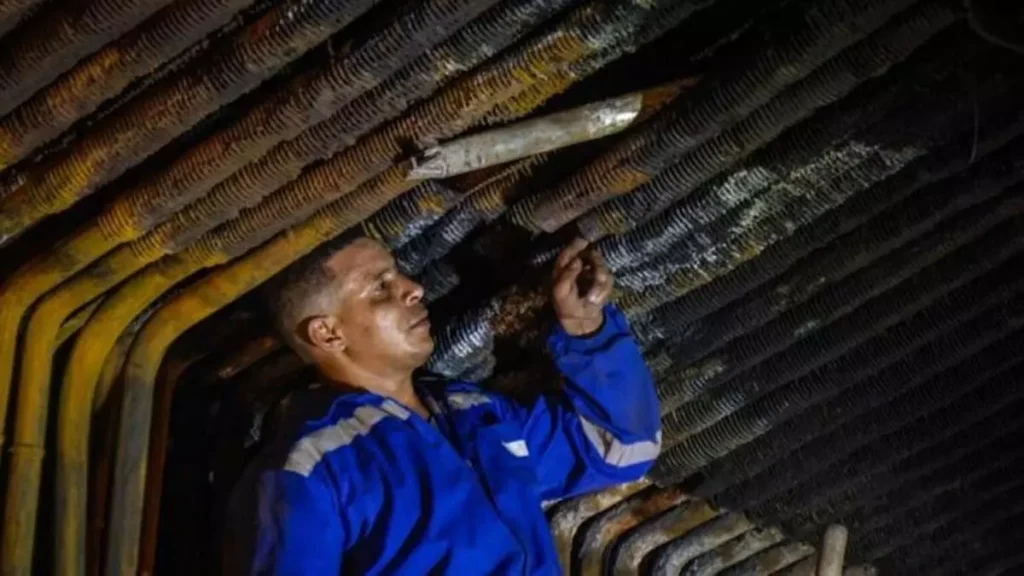
The “lack of raw water” now joins the peculiar catalog of explanations that the UNE has offered for the Guiteras plant’s repeated outages, a list that increasingly seems written for Cuba’s brand of dark humor. Added to “unavoidable maintenance” are such causes as “control valve malfunction,” a “false superheated steam signal,” and the famous “boiler puncture”: expressions that have transformed technical jargon into popular satire.
The latest shutdown came at a particularly delicate moment. The Guiteras had synchronized with the grid on Thursday at 7:48 a.m., after spending several days out of service due to a “small hole in the economizer,” a failure that forced the unit offline on May 24. Its return provided only a few hours of relief before the plant continue reading
once again went out of operation.
For peak demand hours, when solar energy no longer contributes to the SEN, the state utility is forecasting a deficit of 2,072 MW, one of the most severe figures of recent days
Although authorities typically present each outage as an isolated incident, the pattern of recent weeks shows that Cuba’s main thermoelectric plant is operating at its limits, with partial repairs, brief restarts, and recurring shutdowns. Every disconnection has an immediate impact on blackouts, because the Matanzas facility can contribute more than 200 megawatts (MW) when operating steadily, although that is still far below its original installed capacity of 330 MW.
The national situation on Saturday confirms the continuing deterioration. At 6:00 a.m., SEN availability was only 1,113 MW against demand of 2,720 MW. At that time, 1,562 MW were already affected, and the UNE estimated a 1,600 MW deficit by midday.
The nighttime outlook is even worse. During peak demand hours, when solar generation contributes nothing to the grid, the state company forecasts a shortfall of 2,072 MW, one of the highest figures recorded in recent days. The only generation expected to come online for the evening peak is Unit 3 of the Renté thermoelectric plant, contributing 45 MW, far too little to alter the overall situation.
The list of breakdowns leaves little room for optimism. In addition to the Guiteras, Unit 2 of the Lidio Ramón Pérez thermoelectric plant in Felton and Units 3 and 5 of the Antonio Maceo plant in Renté remain out of service due to failures. Unit 5 in Mariel, Unit 6 in Renté, and Unit 5 in Nuevitas are under maintenance. Added to this are 318 MW unavailable due to limitations in thermal generation.
Solar generation drops as night approaches, precisely when residential demand rises and blackouts intensify
Fuel shortages continue to worsen the situation. The UNE reported that 106 distributed-generation plants are out of service for lack of fuel, removing 890 MW from the system. Also idle are the Regla floating power plant, the Mariel fuel-oil plant, and the engine facilities in Moa. In total, the company acknowledges that 1,203 MW are unavailable due to fuel shortages.
Not even solar power can offset the collapse in thermal generation. The country’s 54 new photovoltaic parks produced 3,643 MWh on Friday, reaching a maximum output of 526 MW around midday. The UNE presented the figure as a source of relief, but solar generation falls sharply as evening approaches, exactly when residential demand increases and blackouts become most severe.
For ordinary Cubans, however, the technical explanations matter less than the outcome. This will be another Saturday of prolonged power outages, with entire provinces subjected to increasingly difficult rotating blackout schedules. The government continues to manage the crisis through daily reports, but each new bulletin confirms that the system has no real reserve capacity. When one unit comes online, another goes offline; when demand falls, a boiler breaks down; when fuel becomes available, there is a shortage of “raw water.”
Translated by Regina Anavy
______________________
COLLABORATE WITH OUR WORK: The 14ymedio team is committed to practicing serious journalism that reflects Cuba’s reality in all its depth. Thank you for joining us on this long journey. We invite you to continue supporting us by becoming a member of 14ymedio now. Together we can continue transforming journalism in Cuba.
The Island faces in 2026 the same structural crises that the US military occupation found in 1899. A thorough review of what that administration did reveals a historical parallel so precise that it is difficult to ignore
Nations are sustained by educated citizens, not by ignorant subjects. / Archive
14ymedio, Rolando Gallardo, Alicante (Spain), May 30, 2026/ The image is the same, even though the century has changed. In the Havana of 1899, US sanitary brigades moved through neighbourhoods devastated by war, destroying breeding grounds of the Aedes aegypti mosquito and fumigating homes to combat the yellow fever that was decimating an exhausted population. In the Havana of 2026, those same neighbourhoods accumulate tonnes of refuse on every corner, while dengue, chikungunya and the Oropouche virus spread unchecked under the same vector that Cuban physician Carlos J. Finlay identified more than a century ago. The mosquito has not changed. Nor has the neglect.
This parallel is not a metaphor: it is a diagnosis. Cuba today faces the same structural urgencies that the US military occupation found when it landed in January 1899, when General John R. Brooke inherited a territory in absolute ruins. The war of independence and the scorched-earth tactic had displaced hundreds of thousands of peasants towards the cities and shattered the Island’s economic foundations. Infrastructure was destroyed, public finances were non-existent, and institutional order was an aspiration more than a reality. What that administration had to build from scratch, incredibly in 2026, a third US intervention in Cuba would have to do exactly the same thing.
Brooke’s successor, General Leonard Wood, was a physician by training. He understood from the first day that no political order is sustainable over a sick population. Drawing on Finlay’s theory – who had spent decades trying to convince the scientific world that yellow fever was transmitted by mosquito bite – the Army organised an unprecedented environmental sanitation campaign: drainage of pools, destruction of Aedes aegypti breeding grounds, fumigation of homes, closure of insanitary cemeteries, construction of sewerage systems in Havana. The result was historic: in September 1901, the city recorded its last indigenous case of a disease that Spanish colonial rule had been unable to eradicate in four hundred years.
Drawing on Finlay’s theory, the US Army organised an unprecedented environmental sanitation campaign on the Island. / Archive
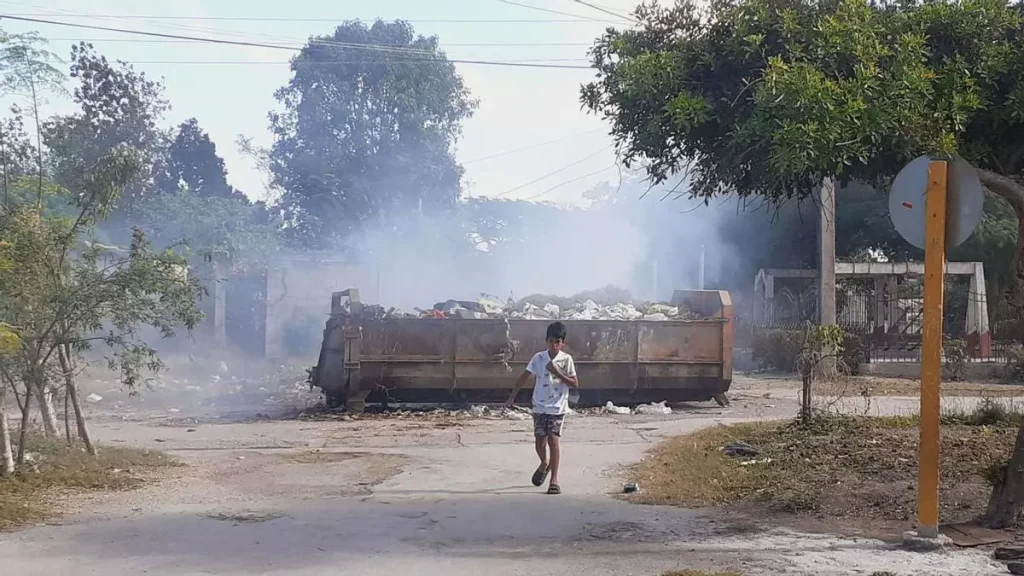
Today, the water and sewerage networks modernised in the early years of the revolution and left to their fate since the 1990s have collapsed in most provinces. The unofficial rubbish dumps that the State lacks the operational capacity to clear are feeding arbovirus outbreaks that spread without restraint. Any external stabilisation would have to launch, from day one, exactly the same all-out offensive that Wood and Dr Walter Reed carried out with the tools of 1900: elimination of breeding grounds, mass public hygiene, reconstruction of sanitary infrastructure. The difference is that in 1899 there was a three-year war to account for the destruction. In 2026, there are six decades of socialism and mismanagement.
The war had destroyed bridges, ripped up rails and left the roads in a state that made it impossible to move agricultural produce to the ports. The Wood administration undertook the repair and expansion of the rail network, restoring the continue reading
connections between the sugar-growing zones and the export ports. The logic was impeccable: without logistics there is no economy, and without economy there is no republic.
Cuba’s roads in 2026 are, across wide stretches of the interior, obstacle courses where metre-deep potholes coexist with stretches that are simply non-existent. The railway, which at the beginning of the twentieth century was one of the most modern in Latin America, today operates with Soviet rolling stock from the 1960s and 1970s on routes that take double or triple the reasonable journey time when they manage to function at all. A new administration could not repair this infrastructure: it would have to rebuild it. The accumulated deterioration far exceeds what a three-year war caused; it would demand an effort proportional to what Wood carried out, but incomparably more complex in technological and budgetary scale.
One of the least celebrated – but perhaps most decisive – chapters of that occupation was the dissolution of the Cuban Liberation Army
The Cuban sugar industry – the most sophisticated in the world in its day – had been dismantled by the conflict. The occupation administration actively fostered foreign investment to rebuild the sugar mills and modernise the machinery. Sugar began to flow again, and with it the fiscal revenues that would finance the rest of the reforms. In parallel, Wood reorganised the banking system and laid the groundwork for a currency that would be, in the following decades, on a par with the dollar: a reflection of an economy that, when operating under predictable market rules, was capable of generating real prosperity.
Cuba’s sugar output today does not reach 150,000 tonnes, compared to the ten million that the great epic harvest of 1970 attempted without success. The financial system operates with a schizophrenic monetary duality that has destroyed any external investor confidence. A hypothetical stabilisation would have to open to private capital – both domestic and international – the only sector with a proven track record of performance, while unifying and restoring credibility to a currency whose worth is not decreed: it is built with institutions that function.
One of the least celebrated – but perhaps most decisive – chapters of that occupation was the dissolution of the Cuban Liberation Army. Heroic in war, dysfunctional in peace, it was discharged in an orderly fashion, with compensation payments that allowed soldiers to reintegrate into civilian life. In its place, professional armed forces were built, sized to meet the real needs of the republic rather than the political appetites of strongmen. A nation cannot build democracy when it has an army that surpasses it in actual power.
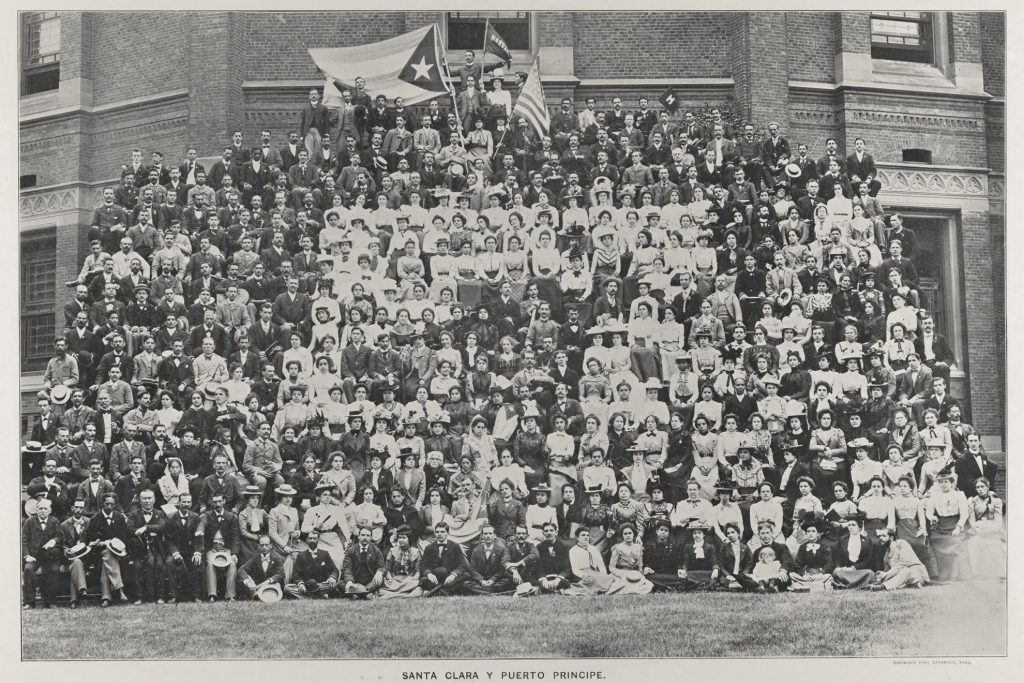
More than a thousand Cuban teachers travelled to Harvard in the summer of 1900 to be trained in modern pedagogical methods. / Archive
The current Armed Forces, together with the Ministry of the Interior and the constellation of repressive entities that sustain the regime, are oversized relative to any real defensive need. They constitute, in practice, an apparatus of political control rather than an instrument of national defence, and a budgetary burden that the economy simply cannot bear.
A new administration would have to undertake, as Wood did with the Liberation Army, an orderly discharge process with the civilian reintegration of personnel. This chapter also has a geopolitical dimension that deserves to be named: Cuba is a North Atlantic nation, was an ally of the United States in the Second World War, and its position at the entrance to the Gulf of Mexico makes it a strategic actor of the first order. A professional, modern Cuban army aligned with democratic standards could, in the medium term, present solid arguments for integration into the security architecture of the Western Hemisphere.
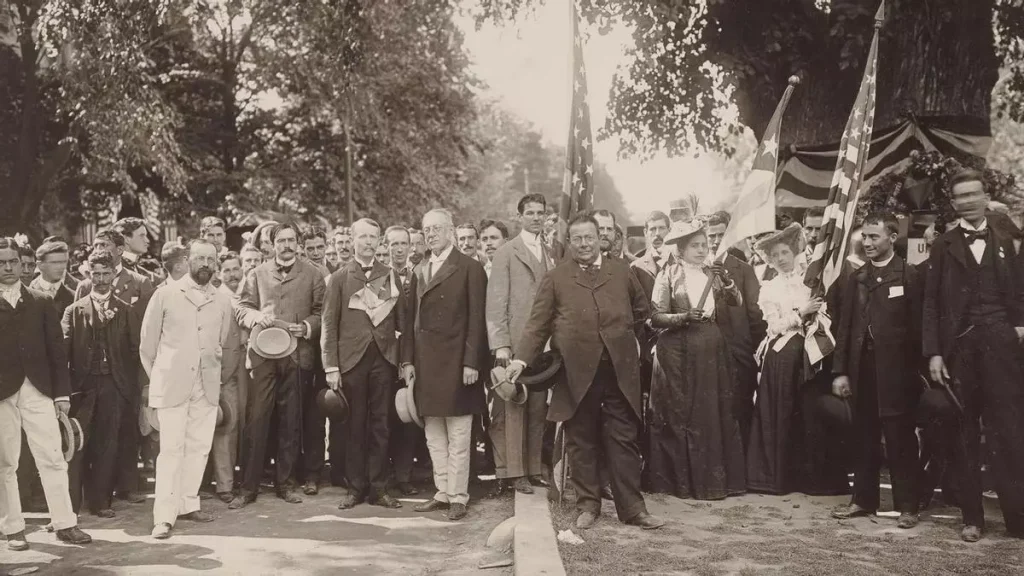
Wood imported the US educational model with an ambition unprecedented in the region. Cuba went from having barely a few hundred operational schools to more than two thousand in three years. More than a thousand Cuban teachers travelled to Harvard in the summer of 1900 to be trained in modern pedagogical methods. It was the most lucid wager of the entire occupation: nations are sustained by educated citizens, not by ignorant subjects.
A nation that in the twenty-first century faces the same structural urgencies as in the nineteenth century has paid an extraordinary historical price for its political experiments
The paradox of 2026 is that the revolution achieved high literacy rates only to then produce decades of single-party thinking, intellectual hollowing-out and a brain drain that has left the Island without its best-trained generations. More than two million people have left Cuba between 2020 and 2024, a proportion of the population without precedent in peacetime. The reconstruction of a free, pluralist education system connected to international standards would be, as in 1900, the most worthwhile investment of any process of national reconstruction.
To name this scenario is not to desire it. It is to measure honestly the depth of the accumulated failure. A nation that in the twenty-first century faces the same structural urgencies as in the nineteenth century – the same diseases transmitted by the same mosquito, the same broken infrastructure, the same dependence on an external order to provide what the State cannot – has paid an extraordinary historical price for its political experiments.
The Cuban republic was born under the tutelage of a power that knew how to act as the adult when the Island could not yet be one. It grew up denouncing that tutelage as an affront, without ever building the institutional consensuses that make guardians unnecessary. And it reached old age – more than six decades of revolution – with the same shortcomings of its infancy, magnified by the pride of one who has not learned from its mistakes.
The true emancipation of Cuba will not come from any occupation or any tutelage, however well-intentioned. It will arrive on the day when its society, with its own institutions and its own democratic consensus, is capable of providing its citizens with the clean water, electricity, healthcare and freedom they have been waiting for across generations. Until then, history will continue doing what it does best: repeating itself, with a faithfulness that no longer surprises, but that still hurts.
Translated by GH.
______________________
COLLABORATE WITH OUR WORK: The 14ymedio team is committed to practicing serious journalism that reflects Cuba’s reality in all its depth. Thank you for joining us on this long journey. We invite you to continue supporting us by becoming a member of 14ymedio now. Together we can continue transforming journalism in Cuba.
Prosecutor Yara Klukas did not rule out further action against other regime officials. / EFE
14ymedio, Havana, 30 May 2026 / The Federal Prosecutor’s Office for the Southern District of Florida maintains that the indictment against Raul Castro for the shootdown, 30 years ago, of the Brothers to the Rescue light aircraft is not symbolic and that it is seeking to bring him before a Miami court. “We are waiting for Raul Castro. This was not a show,” said prosecutor Yara Klukas, second in command of that office, in an interview with Telemundo 51.
The official went further, stating that the former Cuban leader, aged 94, is considered a “fugitive” by the US justice system. The reason, she explained, is that he has not appeared before the court after an arrest warrant was issued against him and the other defendants in the proceedings. Klukas maintained that Washington has several avenues open to secure his appearance before a South Florida jury, though she did not specify what concrete mechanisms have been activated.
The indictment, declassified on 20 May by the United States Department of Justice, revisits one of the most serious episodes in recent history between Havana and Washington: the shootdown, on 24 February 1996, of two civilian light aircraft belonging to Brothers to the Rescue by MiG fighter jets of the Cuban Air Force. Four people were killed in the attack – three US citizens and one Florida resident, all of Cuban origin: Carlos Costa, Armando Alejandre Jr., Mario de la Pena and Pablo Morales.
The charges include conspiracy to kill US citizens, destruction of aircraft, and murder
The planes, the Prosecutor’s Office contends, were flying over international waters and were unarmed. Havana, by contrast, has maintained for three decades that it acted in response to violations of its airspace. That has been the crux of the diplomatic and legal dispute ever since, but the new indictment seeks to move the case beyond the political debate and place it on criminal grounds. continue reading
Raul Castro is not the only defendant. The case file also names the MiG crew members Lorenzo Alberto Perez-Perez, Emilio Jose Palacio Blanco, Jose Fidel Gual Barzaga, Raul Simanca Cardenas, and Luis Raul Gonzalez-Pardo Rodriguez. The charges include conspiracy to kill US citizens, destruction of aircraft, and murder. If convicted, some of the defendants could face life imprisonment or even the death penalty.
The Prosecutor’s Office places Raul Castro at the centre of the military chain of command that, according to Washington, made the attack possible. In 1996, Castro was Minister of the Revolutionary Armed Forces and had authority over the Cuban military apparatus, including the Revolutionary Air Defence and Air Force. For the prosecutors, that position directly links him to the operation that resulted in the shootdown of the aircraft.
Klukas stressed that the indictment was presented before a federal grand jury and that an active arrest warrant exists
The court document also maintains that the Cuban regime infiltrated Brothers to the Rescue through agents of the Wasp Network, who sent information about the organisation’s flights to Havana’s intelligence apparatus. According to the Prosecutor’s Office, that data was used by the Cuban authorities to prepare the military response against the light aircraft.
One of the elements that has reactivated the case is the presence in the United States of Luis Raul Gonzalez-Pardo Rodriguez, a former Cuban military pilot who was convicted in Florida for immigration fraud. Klukas avoided confirming whether he is cooperating with the Prosecutor’s Office, but acknowledged that having “a pilot on this side” in custody opened up new lines of investigation. Once his immigration case is concluded, he will be transferred to Miami to face proceedings for the shootdown.
The case carries a strong symbolic weight for the Cuban exile community, but the Prosecutor’s Office insists it is not merely a political gesture. Klukas stressed that the indictment was presented before a federal grand jury and that an active arrest warrant exists. She also confirmed that her office is working on investigations related to Cuba and did not rule out further action against other regime officials.
The case comes at a time of toughening US policy towards Havana and of growing pressure on figures within the Cuban regime. For Miami, the case represents the possibility of reopening a wound that never healed. For Havana, it poses the threat that one of its most prominent historical figures may suffer the same fate as Nicolas Maduro.
Translated by GH.
______________________
COLLABORATE WITH OUR WORK: The 14ymedio team is committed to practicing serious journalism that reflects Cuba’s reality in all its depth. Thank you for joining us on this long journey. We invite you to continue supporting us by becoming a member of 14ymedio now. Together we can continue transforming journalism in Cuba.
Leaving us out in the sun rather than allowing us into the air-conditioned room feeds the custodian’s authority and might even give him a dopamine rush.
The first thing is to make it clear to her that the country she remembers no longer exists. / 14ymedio
14ymedio, Yoani Sánchez, Havana, May 28, 2026 / After more than two decades in Stockholm, a childhood friend has recently returned to Havana. The death of her grandmother brought her back to an island where she had only spent a few days on vacation since emigrating. Acting as a guide for a Cuban living abroad is a bitter task. The first thing is to make it clear that the country she remembers no longer exists, that the nation she cherishes in her memory disappeared long ago.
For the first few days, my friend enjoyed everything. She told me she felt relieved to barely be able to communicate on the internet and hardly at all by phone, after years of overexposure to social media in Sweden. She savored a mamey and felt like she was in heaven. She tasted a cherimoya and fell into a trance. But that naive joy soon ended. Reality seeped like corrosive acid through the cracks of her illusion.
Empowered with a foreign bank card, my friend decided to go shopping for groceries to prepare a family dinner. I reluctantly accompanied her, knowing that frustration is the most common commodity found in those stores that operate in dollars. We walked up the hill on Tulipán Street and then down to La Mariposa. Inside, all the refrigerators were empty. There was no meat, no butter, no sausages, and certainly no fish. My friend pouted like a Swede in distress.
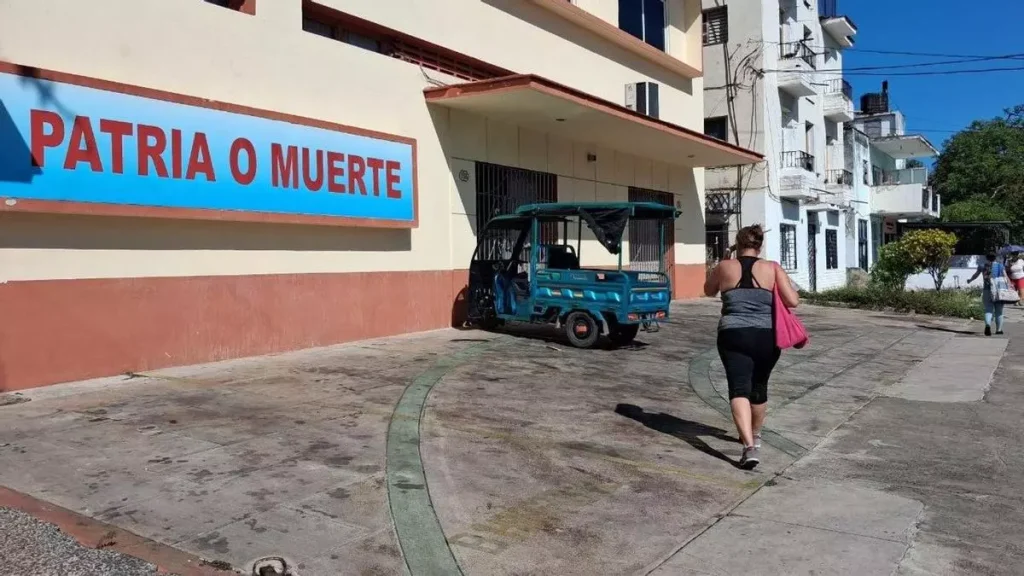
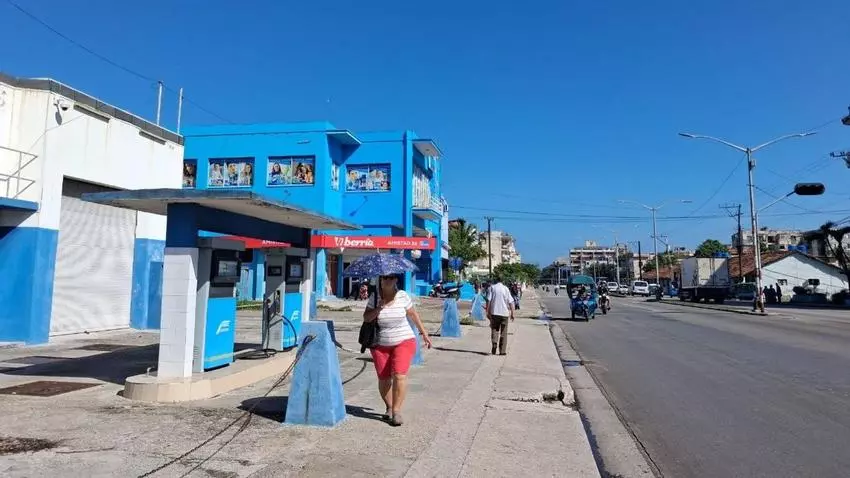
Across from the building that was once Raúl Castro’s home, a bright blue facade marks the dollar market in that neighborhood. / 14ymedio
Then, with that indefatigable energy that comes from eating well for the last quarter of a century, she told me we should go to a market on 26th Street. “I read online that it has Spanish products and is well-stocked,” she explained to me. My face responded with a skeptical expression. We passed the Acapulco movie theater, and then she told me that’s where she had her first kiss with her high school sweetheart. The dark lobby, the marquee without advertisements, and a faint whiff of urine wafting from under the door brought her back to the present.
Near the Chinese cemetery, a man under 30, dressed in rags, caught up with us and gave each of us an azalea flower. “Something to eat,” he said immediately after handing us the fragile, purple petals. My friend didn’t have any cash, but she gave him a bag containing a can of soda and a ham and cheese sandwich. The young man started crying like a child, and she couldn’t tell if it was from emotion or because she had offended him by giving away her snack. “Those are the tears of hunger,” I had to explain continue reading
to her.
Across from the building that was once Raúl Castro’s home, an intense blue facade marks the dollar market in that neighborhood. A dozen people crowded around the small doorway. There wasn’t room for another soul in the shade, so we waited outside. No one was going in, no one was going out. “They’re inputting yesterday’s sales into the cash register because they didn’t have electricity and had to process them by hand,” an elderly woman who was also waiting explained to me.
Reality seeped like corrosive acid through the cracks of her illusion
After about half an hour, several people waiting to enter decided to leave. My friend’s face was bright red; I don’t know if it was from the blazing sun or from the frustration caused by all the nonsense. Then the power went out. Everything inside went dark. An employee came out to explain that they couldn’t process card payments anymore because “when there’s no power, the reader doesn’t work.” The Cuban-Swedish woman next to me looked like she was fuming.
In most of the dollar stores that the Cuban military has opened across the country, sales made with debit cards are canceled when the electricity goes out. The explanation, after inquiring with employees and managers, boils down to the fact that the POS (point-of-sale) terminal loses power and cannot communicate with the bank to process the transaction. The cash registers also shut down, and each purchase must be recorded by hand on endless forms with an original and a copy.
I do a quick calculation. A battery to power the POS and the cash register for several hours would cost, at most, a few hundred dollars. In other words, Gaesa loses tens or hundreds of thousands of dollars every day by not investing in small backup power plants. This mix of rapacity and stinginess has characterized the military conglomerate for decades. Quick to squeeze foreign currency out of people’s pockets, it’s also profoundly inefficient at improving its services. Greed and negligence; predation and incompetence, all together and packaged in an olive-green uniform from which the businessman’s tie awkwardly peeks out.
In El Laguito, they must be having nightmares about a mob storming through the gates of the dollar markets, the ministerial offices, and the government palaces.
Then my friend and I walked to another store, the same kind, in El Vedado. A security guard closed the door right in front of our faces. Inside the store there wasn’t a single customer, but we had to wait outside for more than ten minutes. Everyone with any power in Cuba tries to squeeze every last drop of that power out of others. Leaving us out in the sun rather than letting us into the air-conditioned store feeds their authority and maybe even gives them a dopamine rush. Prohibiting, blocking access, and scolding reinforce the small sphere of control held by the security guards, doormen, and the CVP (Surveillance and Protection Corps).
I sit on the curb to wait. I notice that of all the wide glass doors this market used to have, only one small one is open. The rest have been boarded up, and some are covered with metal plates to protect them from stones. Castro’s regime has always been afraid of the people. In El Laguito, they must have nightmares about a mob storming through the gates of the dollar markets, the government offices, and the presidential palaces. Blocking the flow of the masses means walling off every space through which a crowd could enter.
My friend lets out a roar of desperation. I look at her; her eyes are narrowed, she’s biting her lower lip, and she’s about to swear—no one knows if in Swedish or in the Spanish of La Timba, where she was born and raised. “Let’s go, I can’t take it anymore,” she begs me. I haven’t had to explain much. Reality itself has made it clear that the country she remembers no longer exists.
COLLABORATE WITH OUR WORK: The 14ymedio team is committed to practicing serious journalism that reflects Cuba’s reality in all its depth. Thank you for joining us on this long journey. We invite you to continue supporting us by becoming a member of 14ymedio now. Together we can continue transforming journalism in Cuba.
Economic changes will not be possible in Cuba without international humanitarian intervention
Between 2020 and 2024, 24% of the Cuban population has left the country and they are not coming back In 2025, the number of births fell to 68,000 – below what can be estimated for the year 1899
Interview with Juan Carlos Albizu-Campos
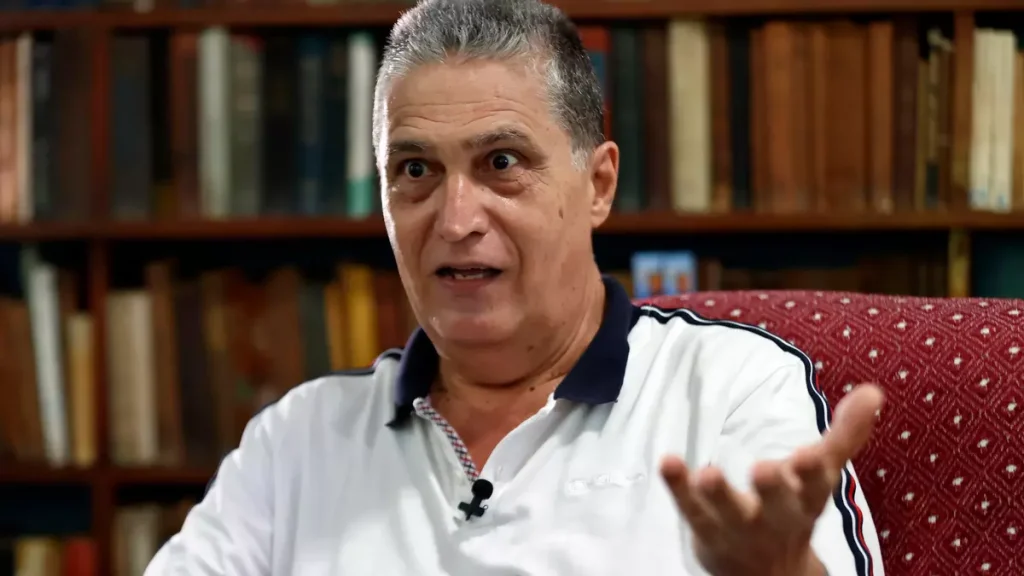
14ymedio, Rosa Pascual, Madrid, 29 May 2026 – Juan Carlos Albizu-Campos (1963) describes himself as a child of the Cuban baby boom – that generation now facing a serious short-term threat that nobody knows how to resolve: retirement. That is one of his greatest concerns, alongside concepts such as what he calls “demographic hollowing-out” and the Malthusianism of poverty.
A graduate in Industrial Economics from the University of Havana, he is one of the foremost experts in demography – which he also studied in Costa Rica and Paris – to the point that his is now considered the most reliable count, putting the Cuban population at 8,025,624, far from the official figure of 9,748,532. He argues, however, with full conviction that Cuba does not have a population problem, but rather a population with problems.
He believes that change in Cuba is “inexorable” and is optimistic that recovery could be faster than expected, though when pressed on timescales he warns it could take no less than four years. Even so, he returns to the same point more than once during the conversation: “Remember, I could always be wrong.” And laughs.
Question. Talking to a demography expert, it’s inevitable to start by asking your opinion on the new Migration Law, which has finally just been published.
Answer. It’s still very early, but I can see things I don’t like. First of all, this invention of “effective residence.” That smells just as bad as the changes made in 2013. Cuba started showing positive net migration balances, as if more people were coming in than leaving. But that was because they had changed the method of tracking. Now, since they’ve spent so long denying the migration figures and so long trying to mask the exodus, what it seems to me is that this “effective residence” concept is going to help mask the figures. Imagine that if you happen to spend 180 days in Cuba for whatever reason, you’re already an effective resident. If a population count or census is carried out at that moment, the person would show up as a permanent resident.
There’s something here that strikes me as incoherent with respect to the Constitution, because the Constitution is clear that Cuban nationality is unique. Multiple nationality is not provided for at a constitutional level. How can a decree be issued that accepts multiple nationality when the Constitution explicitly prohibits it? That is completely unconstitutional.
How can a decree be issued that accepts multiple nationality when the Constitution explicitly prohibits it? That is completely unconstitutional.
Q. I wanted you to talk to me in historical terms. Cuba went from a strong immigration movement in the first half of the twentieth century to having…
A. First third, first third.
Q. Yes, and then to having nothing.
A. Well, Cuba is quite a singular case. The thing is, it emerges from a process of “demographic depression” linked to the last war of independence, in which it loses around 300,000 inhabitants. In that war, a tactic of the Cubans was to destroy Spain’s economic base – the sugar industry – and the Spanish side responded by concentrating the rural population in the cities, in very poor living conditions, to deprive the liberation army of its social base. That ended up driving mortality rates to completely unprecedented levels. What has been estimated is that infant mortality in 1895 – the opening year of the war – reached 380 per thousand live births.
Cuba enters the twentieth century with a population of between 1.6 and 1.8 million, but then, when this new period of pacification arrives – American administration, organisation, restoration, sanitary clean-up and all that – the Cuban population has a sort of mini baby boom between 1899 and 1910. From there, Cuba’s birth rate begins a sustained decline, until reaching 1957, when the real Cuban baby boom begins, lasting until 1963.
In those years there were very strong emigration flows in many European countries, most notably Spain and Italy. In Cuba’s case, the majority of arrivals were Spanish. Bear in mind that all those who came between 1900 and 1930 or thereabouts – because the 1931 census already shows this phenomenon – essentially doubled the population through migration alone. And it’s interesting, because the metropolis that had opposed independence ended up repopulating the country. Eighty per cent of those migrants were of Spanish origin – young single men who married native women and passed on a pattern of fertility reduction, because you don’t migrate to have children, but to settle down and build a decent life.
Eighty per cent of those migrants were of Spanish origin – young single men who married native women and passed on a pattern of fertility reduction, because you don’t migrate to have children, but to settle down and build a decent life.
Families with fewer children found it easier to cope with the economic crisis of 1929-1933, because looking after ten children is not the same as looking after five. And that is an effect that has finally been described in more recent literature as the Malthusianism of poverty. That is to say: if you have few resources, the only option left is to reduce the size of your offspring, because every child born means an investment cost for their survival. And that’s happening now too – the latest measurement puts it at 1.29 children per woman.
Q. Yes, well, it’s similar here in Spain.
A. Of course, but in developed countries the fertility transition was driven by families with higher income levels and greater economic means – the same ones who most readily adopt new behaviours when it comes to family planning. But in Cuba’s case – and this contradicts the official line – what’s happening is a consolidation or a hardening of the fertility pattern of Malthusianism of poverty. And that explains the brutal falls in the number of births: since 2024 the figure stood at 71,300-odd, and last year it dropped to 68,000-odd – a birth figure that is below what can be estimated for the year 1899. Did you hear that right? 1899. People sometimes say “no, you’ve got the wrong date.” No – it’s 1899.
From around 1933-1934, Cuba’s migration balance reverses and it starts to become a country of emigration, not only to the United States but also within the region: Venezuela with the oil boom of the 1950s, Mexico, Puerto Rico…
Q. You argue that by 2030 the entire Cuban baby boom generation will be retiring. What can be done? Because this calls for an urgent solution and the outlook isn’t very encouraging.
A. And nobody mentions it! I’ve been battling with that issue for years. First of all, because since 2010 the economically active population has stopped replacing itself – more people are leaving than entering. And that’s before the latest wave of emigration. Moreover, Cuba was historically a country with very low utilisation of its workforce. People think the Special Period began in the 1990s, but the first time Cuba’s GDP actually falls is in 1985 – that’s when it starts, and it’s been going ever since. There has been a sustained decline in fertility since 2012 and also in life expectancy, and the process of demographic ageing has become entrenched – demographic ageing as a population structure concept, not just “getting old” – because of the 24% of the population I’ve calculated to have left, 80% of those people are aged between 15 and 59.
Q. Right, but so what would the solution be?
A. The solution has to be a change of model. In the second half of the 1980s, Vietnam was confronted with a famine, which led it to carry out the reforms it has been implementing since 1989. Within three years it had become the world’s biggest rice exporter. The Chinese did something similar – Deng Xiaoping began his reforms around 1980, and we all know how the Chinese economic story turned out. Whatever we may think or say about the political model, that is the reality. What happened to the Chinese and Vietnamese pension systems is that they are economically sustainable. Cuba’s is not.
If what needs to change hasn’t changed, we’re going to have a very hard time, because the State – which is already broken socio-economically – would have no option but to abandon people to their fate. In fact, it’s already happening in terms of healthcare collapse, food crisis… which gives the measure of a population being abandoned to its fate.
Q. Given all the expectations right now, do you think anything is actually going to change?
A. Look, the change is going to be inexorable. It will change because the system is heading towards a point of implosion. And that is unstoppable. It’s going to happen. And the ruling class is going to be smart enough to realise that if the situation implodes, they too will disappear. There’ll be no way out for anyone, and you could get a social explosion like July 11th, when the regime already made clear what its attitude would be.
The ruling class is going to be smart enough to realise that if the situation implodes, they too will disappear.
On top of that, this could happen in a context of migration closure – which is the other issue. Cuban emigration has been slowing down not because there are fewer people who want to leave, but because there are fewer opportunities, for example with a migration market as large as the American one. Though routes still exist: there are currently 135,000 Cubans with work permits in Guyana alone, and there are other corridors – Central American, South American, North African… I have a list of around 20 migration routes where a Cuban presence has been detected. The population drain will continue in this process I’ve called hollowing-out – an accelerated depopulation that moreover happens over a very short period of time.
Up to 31 December 2024, I have calculated the departure of around 24% of the population relative to 2020, in the absence of war – because this sort of thing is recorded in countries in full armed conflict, particularly in Africa. It’s a genuine displacement crisis.
Q. We’ve recently seen the US President say he knew many Cubans who were happy in the United States, but that now that Cuba was going to change they would return. Do you think that’s true?
A. So has Trump put the cherry on the cake of demographic theory? [laughs] Those return flows have never happened, and there might be people who want to go back to see where they used to live. What there could be is people interested in investing – that’s true – because some people say that even the investment process that’s needed is not all that complex or costly: that Cuba is very small (which was actually a factor in the demographic transition and modernisation in the first half of the twentieth century), that it’s a long narrow country where distances are very short, and where what’s needed is a level of resources that could be substantial initially, but will gradually reduce, just as they will be recovered as an investment.
The problem is whether the necessary legal framework exists to make that possible. Because what can’t happen is that you expect lots of people to come and invest in Cuba and then have their money taken away from them.
But emigration is now “the canary in the mine.” In the nineteenth century, miners took a canary down with them. If there was a gas leak, the canary would stop singing, or pass out, or die – and everyone would run. That’s what demography is doing: sounding the alarm, denouncing the action, the effect, the impact of factors that are not demographic in nature, but that affect it enormously. The question is: who wants to invest in fixing all that? That’s why the role of international organisations will be so important, because no private businessman is going to solve this on his own.
People will keep leaving, because if things change today that doesn’t mean there’ll automatically be jobs for everyone tomorrow, or that all the healthcare infrastructure will be completely renewed with brand-new equipment…
Q. How long do you think a degree of recovery might take?
A. I think there needs to be a stabilisation process of at least four years, in which many things are sorted out that necessarily have to contribute to development – restoration of transport, communications, social, economic and energy-production infrastructure. Because when the electricity goes, it doesn’t just go for me – it goes for the factory too.
I think there needs to be a stabilisation process of at least four years, in which many things are sorted out that necessarily have to contribute to development.
But one of the things that has to change is the legal framework of the system, because if you want to protect private investment, state investment, whatever kind of investment – you have to build a legal structure that makes that protection possible. And when you change the legal basis of the system, you are changing the system politically. Laws, the legal order… these are nothing other than the will of the ruling class. You have to change it politically. There’s no other way, because it’s a system – all the dimensions are connected.
Q. Do you think that change will come under the tutelage of the United States?
A. I’ve always said, since 2021 – since COVID – that Cuba needs an international humanitarian intervention. A humanitarian intervention like those in Syria, Kosovo, Haiti… There are intervention forces that have also brought with them what’s called an interposition force [like the Blue Helmets], which protects the population from violence. In fact, economic changes won’t be possible without that. Look at Haiti…
Haiti hasn’t managed it. And that could be… Well, there’s a great Cuban economist, Mauricio de Miranda, who talks about the “Haitianisation” of Cuba as a real, already-occurring process. And indeed, when you look at productivity indicators in the economy, Cuba ends up in last place… and if you’re in last place for labour productivity in the Americas, you’re in last place in the Western Hemisphere. Immediately below whom?
Q. Haiti.
A. Exactly. And if you take, for example, Hanke’s annual misery index, in 2021 Cuba was already in first place. Its position on the human development index has fallen to level 95. When the Tarea Ordenamiento* [the monetary reordering exercise] was implemented, I estimated inflation at 1,850%, Pérez-Castellanos at 1,840%, Hanke at 1,220%… We’re talking about four-digit inflation.
I remember once an American professor who came in the 1990s, when the boom in American university groups started – they would come for academic semesters. And this one brought his doctoral group along, saying: “In Cuba, students can see what happens when things are done badly. And no school of economics in the world teaches that.”
*English sources generally refer to it as “The Ordering Task”
This text was produced in collaboration with Cuba Siglo 21 as part of the project “Cuba: Stabilize and Develop”.
Translated by GH
______________________
COLLABORATE WITH OUR WORK: The 14ymedio team is committed to practicing serious journalism that reflects Cuba’s reality in all its depth. Thank you for joining us on this long journey. We invite you to continue supporting us by becoming a member of 14ymedio now. Together we can continue transforming journalism in Cuba.
The academic says the authorities are keeping her legal case “filed away” to avoid the political cost of sending her to prison
Dr. Alina Bárbara López Hernández during her virtual intervention at the LASA congress. / Facebook/Alina Bárbara López Hernández
14ymedio, Madrid, May 29, 2026 — Dr. Alina Bárbara López Hernández, co-director of the Cuba Section of the Latin American Studies Association (LASA), denounced that the Cuban regime prevented her from attending the organization’s annual congress being held this week in Paris.
In a post on her Facebook profile, she explained that despite her important position within LASA’s Cuba Section, “the Cuban Government did not allow me to attend because of the (i)legal process in which I am charged together with Jenny Pantoja, although my travel restriction dates from long before that judicial process.”
López Hernández has been under a travel ban imposed by Cuban authorities since June 2023, despite the intellectual having denounced the arbitrariness of this State decision, which contradicts the Constitution of the Republic itself.
The academic noted in her Thursday post that the prohibition makes her the first co-president of a LASA section in Cuba who is an intellectual under repression and that “this says a great deal about changing times… and about the repressive nature of the Cuban State. Even more than any continue reading
declaration could say.”
“This says a great deal about changing times… and about the repressive nature of the Cuban State. Even more than any declaration could say.”
López and Pantoja are accused of the crime of assault stemming from events that occurred on June 18, 2024, when they were repressed by agents trying to prevent the peaceful protest they carry out on the 18th day of every month. In May 2025, the Prosecutor’s Office requested four years of deprivation of liberty for the intellectual, to be replaced by correctional labor without imprisonment, while for the anthropologist it requested three years, also with the option of substitution by correctional labor.
Interviewed this Friday by Martí Noticias, the academic declared that Cuban authorities are not only preventing her from leaving the country, but are also keeping her legal case and Pantoja’s shelved in order to avoid the political cost of a trial that could send the academic to prison. López Hernández stressed: “Because I am not going to accept correctional labor without imprisonment. I am going to prison, and they know it, that I will not yield on that because of ethics, conviction, and conscience.”
According to the doctor, other Cuban academics from different institutions were able to attend the event, some of them already retired. López Hernández could only share a message with the LASA congress virtually. In the post, the academic thanked colleagues in the session for the debate generated, “where it became clear that studies on Cuba will not respond to political agendas nor can they be conditioned by particular interests.”
“I am not going to accept correctional labor without imprisonment. I am going to prison, and they know it, that I will not yield on that because of ethics, conviction, and conscience.”
14ymedio had already reported this month on the leak of an internal discussion within LASA’s Cuba Section, revealing disagreements over critical positions within the association. The debate originated from a declaration proposed by lawyer and academic Raudiel Peña Barrios, urging the Cuban Government to accept dialogue with citizens who dissent from official economic, political, and social agendas. Figures such as sociologist Aurelio Alonso rejected the proposal, calling it “unacceptable” because they considered it a condemnatory statement. Alina Bárbara López was one of the voices defending the proposal, arguing from her own position as an intellectual suffering repression from State Security.
Since its founding, LASA had been a space close to the Cuban regime’s narrative within the international academic sphere, but after the July 11 protests, the State’s repressive response and the organization’s silence generated discontent among Cuban researchers and led to resignations by members both inside and outside the Island.
In July 2024, more than fifty LASA members requested that the Executive Committee explicitly condemn the “political repression” in Cuba following reports of police violence against Dr. López Hernández and Jenny Pantoja.
Translated by Regina Anavy
______________________
COLLABORATE WITH OUR WORK: The 14ymedio team is committed to practicing serious journalism that reflects Cuba’s reality in all its depth. Thank you for joining us on this long journey. We invite you to continue supporting us by becoming a member of 14ymedio now. Together we can continue transforming journalism in Cuba.
Salvador Valdés Mesa met in Astana with the presidents of Kazakhstan and Belarus during the Eurasian Economic Union summit
In his meeting with Valdés Mesa, Lukashenko assured that Minsk “is aware” of what is happening in the “friendly country.” / X / Salvador Valdés Mesa
EFE / 14ymedio, Astana, May 29, 2026 — Cuban Vice President Salvador Valdés Mesa met this Friday in Astana with the presidents of Kazakhstan, Kassym-Jomart Tokayev, and Belarus, Alexander Lukashenko, on the sidelines of the Eurasian Economic Union (EAEU) summit, a bloc in which Havana participates as an observer country.
During the meeting with Tokayev, the parties discussed the development of bilateral relations, especially in the field of artificial intelligence, according to a statement from the Kazakh presidency. The president explained to Valdés Mesa the steps being taken by the largest country in Central Asia to introduce new technological solutions and expressed his willingness to share that experience with Cuba.
In addition, both leaders highlighted the potential for expanding cooperation in “promising” sectors such as medicine and the pharmaceutical industry. They also examined opportunities to deepen trade, cultural, and humanitarian ties.
The closeness between Cuba and Belarus is not limited to the commercial sphere
In his meeting with Valdés Mesa, Lukashenko assured that Minsk “is aware” of what is happening in the “friendly country.” “We are willing to do everything possible for Cuba and everything the continue reading
situation allows,” said the Belarusian leader, one of Moscow’s closest allies.
Lukashenko added that his country would strictly comply with the agreements reached within the framework of the EAEU and invited Havana to present “additional proposals” to improve bilateral cooperation, which would be considered by Minsk.
The closeness between Cuba and Belarus is not limited to the commercial sphere. In recent years, both countries have strengthened military contacts, with visits by high-ranking Cuban Armed Forces officials to Minsk and Belarusian military chiefs to Havana. In 2023, the defense ministers of both countries discussed military and technical-military cooperation; afterward, the Belarusian press reported Cuban interest in systems such as the Polonez-M missiles, while new “negotiations” and visits linked to air equipment, combat drones, and air defense systems have been documented.
Valdés Mesa invited business leaders from the regional bloc nations to participate in the Havana International Fair scheduled for November
Cuba and the EAEU, made up of Russia, Kazakhstan, Belarus, Kyrgyzstan, and Armenia, agreed this Thursday on a roadmap to strengthen cooperation in the economic, commercial, and scientific sectors.
Among the areas with business opportunities on the Island, Valdés Mesa pointed to the Mariel Special Development Zone, biotechnology, tourism, the sugar industry, and agriculture.
The Cuban vice president also described to his hosts the complex situation the country is going through, which he attributed to the “tightening of the U.S. economic and oil embargo” and to “Washington’s threats of military aggression against the Island.”
In addition, he invited business leaders from the nations of the regional bloc to participate in the Havana International Fair scheduled for November, where new business deals could be finalized.
Translated by Regina Anavy
______________________
COLLABORATE WITH OUR WORK: The 14ymedio team is committed to practicing serious journalism that reflects Cuba’s reality in all its depth. Thank you for joining us on this long journey. We invite you to continue supporting us by becoming a member of 14ymedio now. Together we can continue transforming journalism in Cuba.
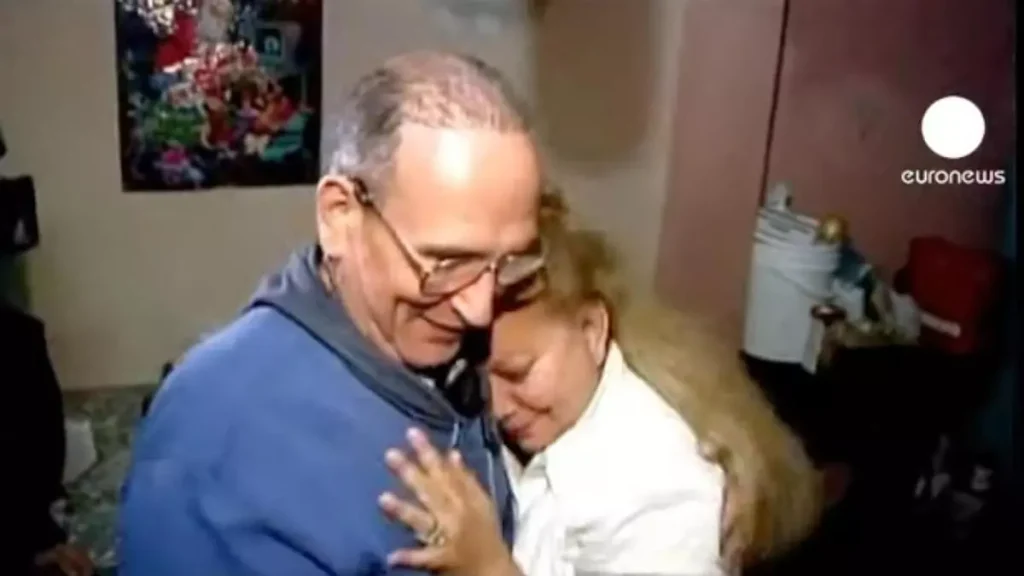
 14ymedio Héctor Maseda Gutiérrez, an independent journalist, Cuban dissident, and one of the political prisoners of the Group of 75, died this Saturday in exile, according to journalist Camila Acosta. Members of the Cuban American National Foundation confirmed his death in Miami at the age of 83. His name became linked to one of the harshest chapters of Castro’s repression, the Black Spring of 2003, and also to the history of the Ladies in White, the movement that his wife, Laura Pollán, helped found and led for years to demand the freedom of those imprisoned.