The numerical disproportion between those who cling to the current model and those who want political openness is overwhelmingly in favor of the latter.
The hope that this difficult moment will give way to “a free Cuba” has taken root in the collective imagination. / 14ymedio
14ymedio, Yoani Sánchez, Generation Y, Havana, 11 February 2026 — Next to me in the shared taxi, a young man is listening to a YouTube video at full volume on his cell phone. The video harshly describes Alejandro Castro Espín, mentions the word “dictatorship” several times, and denounces the repression of the Cuban regime. No one bats an eye. No one tells him to turn off the device. No one confronts him ideologically. A few minutes later, in a long line outside an office of the Etecsa monopoly, a woman is listening to a song by Los Aldeanos that criticizes Castroism. The state employees aren’t even bothered, and some people in line are even singing along to the chorus
When I get home, a neighbor who for years has been an obvious informant for the political police approaches me to say that “something has to happen, because this can’t go on.” On the stairs to the 14th floor, without electricity and with the elevators out of service, another neighbor jokes that the fictional character Cuco Mendieta, a Cuban supposedly a member of the U.S. Delta Force who participated in the capture of Nicolás Maduro, is about to arrive in Havana on a mission very similar to the one in Caracas. We laugh, and the climb becomes easier.
Never before has the Cuban government been criticized so openly. I don’t recall a single moment in our recent history when criticism of the Communist Party was so widespread, so corrosive, or so loud. “Gusanear,” that verb borrowed from official insults, is the daily practice of millions of people on this island. They “gusanear” at bus stops, at workplaces, and in lines to deposit a few dollars onto that Clásica card that allows them to buy what little gasoline remains in the country. They “gusanear” at the rationed bodega, at school meetings where they announce the suspension of in-person classes, and on the bus terminal platform, empty of vehicles and hope.
‘Gusanear’, that verb taken from official insults, is the daily practice of millions of people on this Island.
Defenders of the system are at a significant disadvantage in Cuba. Nothing remains of the ideological fervor they once displayed. Many are silent, scanning the horizon for the change that is inevitably approaching, while others continue reading
have joined the ranks of the critics at a surprising speed. Masks are falling away, medals are being hidden, and patting the neighborhood opposition member on the back is a way of making one’s position clear. The numerical disparity between those clinging to the current model and those who want political opening is overwhelmingly in favor of the latter. We are, in the end, the majority, and “they” know it.
In the face of this panorama, Cuban President Miguel Díaz-Canel should think twice before asking for sacrifices and calling for “creative resistance.” His ability to rally support is at an all-time low, the Party he leads is experiencing a period of extremely limited backing, and those who until yesterday were preparing for the front lines will no longer answer the call to self-sacrifice. Not only has fear shifted sides, given the regime’s dwindling numbers, but the hope that this difficult moment will give way to “a free Cuba” has taken root in the collective consciousness. “It won’t be long now,” another neighbor tells me from her balcony. “We’ll get rid of them this time,” she adds before hanging up the sheet she washed by hand, amidst the blackout.
____________
COLLABORATE WITH OUR WORK: The 14ymedio team is committed to practicing serious journalism that reflects Cuba’s reality in all its depth. Thank you for joining us on this long journey. We invite you to continue supporting us by becoming a member of 14ymedio now. Together we can continue transforming journalism in Cuba.
The arrest of Ernesto Medina and Kamil Zayas is a warning to Cubans under 40: emigrate before repression catches up with you
El4tico has shown a country where the Communist Party’s unpopularity is growing, patience is running out, and the imposed political model is garnering less and less support. / Facebook/Cultural Rights Observatory
14ymedio, Yoani Sánchez, Generation Y, Havana, 7 February 2026 — My generation has packed its bags. And the few of us who remain on the island have had to learn another kind of heartbreak: saying goodbye to our children. Watching them leave not only with a backpack on their shoulder, but with the certainty that staying means the risk of being silenced, perpetual poverty, or prison. Young Cubans today face a cruel dilemma: remain in the country where they were born, silenced and subjected to a crisis with no end in sight, or leave for places where everything starts from scratch, but where at least one can speak without fear. The arrest yesterday, Friday, of Ernesto Medina and Kamil Zayas, members of the El4tico project, is a stark warning directed at Cubans under 40: emigrate before the repression catches up with you
“If you are seeing or reading this, it is because they have finally found a way to silence me, to try to temporarily muzzle me,” Zayas says in a message written before his arrest and released this Saturday. “I am not being arrested for theft, assault, drug trafficking, or any common crime,” he clarifies. “I am being arrested for the only ‘crime’ that a dictatorship cannot tolerate: daring to look directly and say aloud what we all notice: its egregious failings, its chronic inefficiencies, its systematic injustices, and the oppression that crushes the dignity of an entire people.”
Standing in front of an old blackboard and with a fan that seems more intent on stirring up social inertia than blowing air, Medina and Zayas have connected with an audience fed up with slogans.
This testimony is not mere rhetoric, but rather an accusation. In a country where too many young people are trapped in the clutches of elquímico [the chemical], others spend hours sitting on sidewalks with nothing to do, and a majority dream of throwing themselves into the sea or boarding a plane to get them out of here as soon as possible, these two men from Holguín have chosen the most dangerous path: to stay and speak out. With their videos, they have unsettled the authorities because they have abandoned coded language, fear, and self-censorship. In front of an old blackboard and with a fan that seems more intent on stirring social inertia than providing air, Medina and Zayas have connected with an audience fed up with slogans and in need of stories grounded in real life.
While official channels insist on clinging to the tired slogan of “creative resistance,” El4tico has shown a country where the Communist Party’s unpopularity is growing, patience is wearing thin continue reading
, and the imposed political model is garnering increasingly less support. Where Miguel Díaz-Canel takes hours to string together clumsy phrases that provoke a prolonged national yawn, Medina and Zayas have opted for a direct, approachable, even engaging style. Their videos are devoid of posturing and scripted phrasing: they offer spontaneity, irony, and a sincerity that the system doesn’t know how to handle.
“Speak louder. Be dignified. Because history does not pardon those who remain silent out of convenience,” Zayas wrote before a police operation culminated in his and his colleague’s arrest. That phrase resonates today in a society marked by absences, by empty seats at family tables, and by the fear of ending up behind bars for an opinion, a social media post, or a criticism spoken aloud.
Repression doesn’t just imprison bodies; it also forces people into exile, cancels their future, and empties the country of its youngest voices. Every arrest like this confirms that speaking the truth remains, in Cuba, the most dangerous and most necessary act.
____________
COLLABORATE WITH OUR WORK: The 14ymedio team is committed to practicing serious journalism that reflects Cuba’s reality in all its depth. Thank you for joining us on this long journey. We invite you to continue supporting us by becoming a member of 14ymedio now. Together we can continue transforming journalism in Cuba.
The fuel crisis is forcing bus routes to be reduced, the sugar harvest to be halted in Sancti Spíritus, and an international congress with 1,500 participants to be canceled.
Line to buy fuel at a gas station in Sancti Spíritus this Friday. / 14ymedio
14ymedio, Havana, Olea Gallardo, February 6, 2026 – A critical shortage of basic medicines, the cancelation of surgeries, and the suspension of transport for outpatient patients: This is, for now, the situation in many hospitals in Cuba in the face of an unprecedented fuel crisis, which the regime has not even named this time. “Contingency or emergency, I don’t know,” a provincial Public Health employee told 14ymedio, asking for anonymity. “Because the president talked and talked but said nothing. He was asked everything and dodged everything, and said that other people would be in charge of explaining the energy issue.”
She was referring to Miguel Díaz-Canel’s appearance this Thursday, when the president stated that the government has designed a plan to deal with the fuel shortage that has worsened since the U.S. intervention in Venezuela on January 3. But he did not specify any concrete measures beyond voluntarist promises and the usual victimizing slogans against the “imperial government” and the “enemy.” “We are going to live through difficult times,” he limited himself to saying, betting on overcoming obstacles with one of his favorite phrases, “creative resistance.”
Díaz-Canel did announce that “a group of ministers and vice ministers will gradually provide information” about the measures, approximately “in a week,” but in some institutions the restrictions are already being made known. This is the case in Health, as the worker detailed to this newspaper.
“They’re discharging a lot of inpatients,” she says, “and gathering all the information on available resources to see where savings can be made.”
“All surgeries and the transportation of patients from other municipalities are canceled due to a lack of fuel,” she reports, asking that the name of the hospital where she works be withheld, where a “contingency” has been in effect since yesterday. “They’re discharging many of the hospitalized patients,” she adds, “and compiling all the information on available resources to see where cuts can be made.”
The list lays out the panorama. “We have diesel for 160 hours, and the boilers are covered for two days. We have propane for 47 days, but the incinerator has almost no burning capacity, just enough for 1.8 days,” she recounts. The shortage of medicines is also striking: “There is no pethidine to relieve labor pains, no analgesics in general, no antihypertensives, no hydration serum, no catheters, no gauze: it’s all at zero.” continue reading
As for antibiotics, she continues, coverage is also “very low”: Encomed, the Medicines Marketing Company, promised a delivery, but “didn’t have fuel to bring it and nothing has arrived.” For patients undergoing hemodialysis, they have concentrate for three days, and hospital disinfectant for seven.
As for food, she says they have rice and grains for about 15 days, but “protein is almost gone. There’s ground meat for two days and chicken for three.” Although the employee trusts that “they’ll come up with something, because we’re not going to die,” there is still uncertainty about possible solutions.
In the absence of government statements, information passed by word of mouth is proliferating. A healthcare worker at a polyclinic in Ciego de Ávila told 14ymedio that they have been warned that only the emergency ward will be maintained and that doctors must bring “their rechargeable lamp to work.”
On social media, reports say that several hotels in the Keys have been closed and their guests relocated to other establishments
The sugar harvest in Sancti Spíritus, already meager, has been halted, according to an employee at the Melanio Hernández mill. “They ordered state transportation and everything in general to stop,” the man says.
Likewise, on social media, it is reported that several hotels in the Keys have been closed and their guests relocated to other establishments.
“This was the message that guests at the Valentin Perla Blanca hotel in Cayo Santa María received this morning,” wrote Adelth Bonne Gamboa on social media this Thursday, illustrating the post with an image of the letter distributed by the customer service team. “Not even the employees themselves know the reason for the closure,” the activist explained; “they were simply informed this morning that the facilities would stop operating at 4:00 pm today.”
Officially, for now, very few agencies have published concrete measures. One of them is the Provincial Directorate of the Isle of Youth, which, among nearly twenty points, calls for leaving “only indispensable administrative personnel” at workplaces and decrees the “total shutdown” of electricity service in state buildings throughout the weekend, including Friday, as well as the closure of boarding schools and “recreational areas and bars.”
In addition, the authorities say, “one hundred percent of investments in the territory are halted,” including those of the Electric Company, Agriculture, and Fisheries. This contrasts with Díaz-Canel’s words yesterday, when he explained that if there were areas with more blackouts, specifically in Havana and during the day, it was because resources were being prioritized for actions that would activate the economy.
As for the territory’s connection with the rest of the country, it remains up in the air: the statement indicates that the departure of the ferry Perseverancia is “being evaluated” “once or twice a week depending on fuel availability and the guarantee of transportation from Batabanó to Havana.”
In Las Tunas, as of this Friday, national bus departures to Camagüey, Holguín, and Santiago de Cuba have been suspended “due to the worsening availability of fuel in the country.” Only one route to Havana remains, the 9:00 pm “express,” and the alternate route to Matanzas is also suspended. It will not be the only measure, reported Tiempo 21, but the next ones to be announced—“related primarily to national passenger transportation, especially rail service”—are being studied.
In addition, the authorities say, “one hundred percent of investments in the territory are halted,” including those of the Electric Company, Agriculture, and Fisheries
For its part, the University of Havana has decreed, among other resolutions, the “postponement” of the international congress that was to be held in just a few days, which was expected to bring together more than 1,500 delegates, 500 of them from 32 countries, and the extension of the “hybrid modality to all degree programs and Higher University Technician programs,” starting this Friday and for 30 days.
If one looks to the official press for information on the measures, only reporter Elsa Ramos of Escambrayasks relevant questions: “How is priority established for distributing the little fuel that reaches service stations? Why are sales in dollars prioritized? Why are cards topped up and charges made if there is no backing in cash? To what extent is it true that the sale of gas, when it appears, will be in dollars?”
The official she interviews, Camilo Pérez Pérez, coordinator of Government Programs and Objectives in Sancti Spíritus, doesn’t fully answer everything, but he is forced to offer some details. For example, the order for the Dairy Company to transport milk “in different thermoses” to reduce vehicle mileage, or the rehabilitation of ovens at the Food Company to produce bread “with firewood.”
In Education, Pérez indicates, without details, that “alternatives are being applied” both for student transportation and food preparation, “mainly in boilers,” where “savings can be made.”
Likewise, the official acknowledged that “at this moment there is no guarantee for private carriers linked to passenger transportation, since only state vehicles are being prioritized due to restrictions.” He did, however, rule out the feared “zerooption” that has been on everyone’s lips in Cuba in recent weeks: “We have never been at zero. It has been fairly responsible work, above all by all the consuming entities, and with good communication and alerts about the difficulties we may have in each place. Decisions have been made and services have been guaranteed.”
Translated by Regina Anavy
____________
COLLABORATE WITH OUR WORK: The 14ymedio team is committed to practicing serious journalism that reflects Cuba’s reality in all its depth. Thank you for joining us on this long journey. We invite you to continue supporting us by becoming a member of 14ymedio now. Together we can continue transforming journalism in Cuba.
It is another sign of the Cuban regime’s concern over public discontent and pressure from the United States.
The program promises to graduate recruits, through this fast-track training, with the rank of second lieutenant. / 14ymedio
14ymedio, Havana, February 6, 2026 – Cuba’s National Revolutionary Police published a call on social media this Wednesday aimed at young people between 18 and 35 years old to train as officers through a six-month basic police training course followed by an eleven-month upper secondary–level program. The initiative promises to graduate participants, through this accelerated training, with the rank of second lieutenant and also grant them direct access to a Bachelor’s degree in Law at police university campuses, without the need to take an entrance exam.
Reactions on social media were swift. “How things have changed. Fifteen years ago I really struggled to reach the second rank of non-commissioned officer through good behavior, but oh well, I wish the new ones success,” commented user Yanet Rivas on the official Facebook post. The call also sparked much more critical reactions, such as that of user Luciana de Lara: “I wouldn’t become a police officer even if I were crazy, because they go through the same hardships as the people and can’t say anything.”
As noted by Cuba x Cuba magazine, citing a similar call published in 1990 by the newspaper Juventud Rebelde, police training at that time lasted two years and was structured in two stages: a first year of common core training and a second year of specialization.
The loosening of requirements to enter the police force reflects the lack of demand to join the regime’s main repressive body, compounded by population decline. For more than four years now, following the repression unleashed after the nationwide protests of July 11, there has been a massive exodus of young people of working age. According to a study by independent demographer Juan Carlos Albizu Campos, Cuba’s population has shrunk by 24% in just four years. continue reading
The force’s poor image due to the arbitrariness of its actions and the ignorance of its members is also not negligible.
The force’s poor image due to the arbitrariness of its actions and the ignorance of its members is also not negligible. It is well known that in Havana most police officers—or “pitufos” [smurfs], as they are colloquially called—are young people, generally with limited resources, who arrive from the eastern provinces, often without even knowing the capital.
On January 28, for example, amid this escalation of repression against activists and independent journalists, Yoani Sánchez, director of this newspaper, was detained on the street by a young man in civilian clothes, no older than 25, who was unable to tell fellow officers his location when requesting backup.
In the midst of the deep structural and energy crisis gripping the country, the urgency to rapidly expand the police force is striking. This Thursday, at a press conference, Díaz-Canel stated that the country is preparing for a “wartime scenario,” asserting that the entire defense system and State institutions are gearing up in response to an alleged attempt at aggression, and announcing plans for political mobilization and communication designed for that context. According to a report published this Thursday by Prisoners Defenders, the Island is currently setting a historical record for political prisoners, with a total of 1,207, with 18 detained so far in 2026 alone.
Translated by Regina Anavy
____________
COLLABORATE WITH OUR WORK: The 14ymedio team is committed to practicing serious journalism that reflects Cuba’s reality in all its depth. Thank you for joining us on this long journey. We invite you to continue supporting us by becoming a member of 14ymedio now. Together we can continue transforming journalism in Cuba.
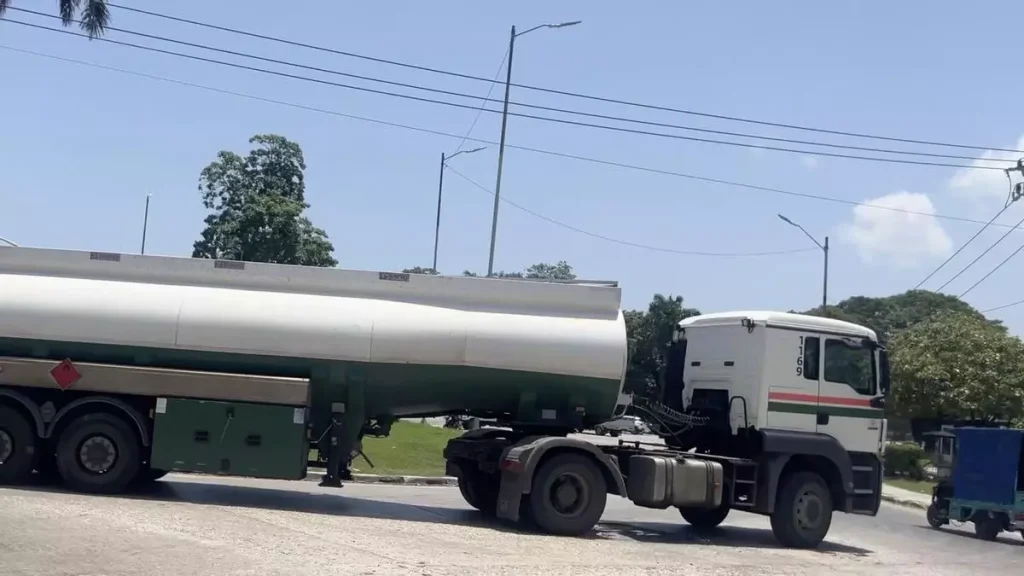
It has now become nearly impossible to obtain fuel on the black market, where it’s sold at 1,000 pesos per liter.
The availability of gasoline becomes more critical every day. / 14ymedio
14ymedio, Darío Hernández, Havana, February 6, 2026 — The main partner to the shortage, corruption, has colonized the sale of gasoline at a dizzying rate. The under the table sale is a minor thing: they are now even selling turns to buy gas at service centers in dollars, and the price is no small issue. The ten dollars that it costs to move ahead in the line are, at the informal exchange rate (490 as of Thursday), more than double the minimum wage in Cuba.
“It’s no secret to anyone, and the eyes are useless when the mind is blind, fuel is extremely limited,” warned Pedro Garcés, organizer of the service stations of El Vedado and of the social group Gente del Barrio, this Wednesday, to introduce new regulations around the sale of gasoline. All service stations now deal in dollars, he explained, “a measure which we should understand the importance of in order to, in the middle of this siege, continue paying the least amount possible,” added the man who regularly brags about his loyalty to the Revolution.
Garcés explained that, for right now, the waiting lists on the Ticket app for sales of gasoline in pesos are closed, given that they are unable to serve “those that are in them, whose numbers surpass the thousands.”
One can spend up to five hours in line for gas, just to have to leave without any in the end.
The organizer insisted that the corporation Cimex – controlled by the military conglomerate Gaesa and in charge of, among other things, the management of gas stations– accepts the contributions that he himself sends based on the demands of the population. Despite this, “they are searching for solutions to avoid the long lines and the waste of time to obtain fuel in dollars, a situation which today generates growing continue reading
illegalities,” he lamented. More than the price of 10 dollars to get a turn, Garcés affirmed that the liter is being sold under the table at 1,000 pesos, more than double the price tag that it carries in dollars on the legal market.
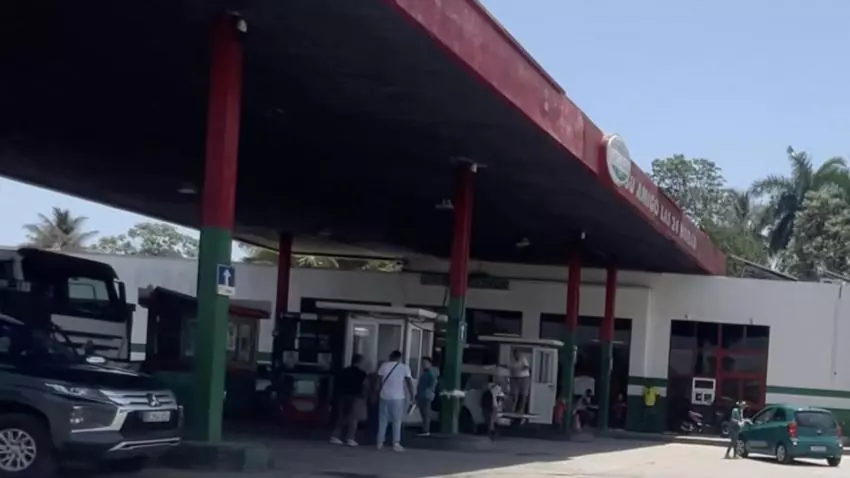
The situation is an open secret on the streets of the capital. Regular gas in service stations costs $1.10 (equivalent to 539 pesos on the black market) and premium $1.30 (637), and now there is no way to get it in pesos on the Ticket app. “Now I don’t see the group nor the app,” said a man posted in the service station on Zapata and 4th, in Guanabacoa. “Everything is a shameless mess. The line doesn’t move. And, of course, it’s only in the gas stations in Zapata, of Línea & E, and Riviera: all in dollars. If you want to pay in pesos, pay the street rate of 1,000. If you’re lucky and you find it…” he said this Wednesday while waiting in a long line guarded by two officers. Resigned to wait hours or days to get gas in dollars.
A few meters away, in the same line, another man assured 14ymedio that the day before he spent five hours waiting for his turn and, at the end, he had to leave empty-handed because there was none left. The shortage is so bad that where before there were generators to fix the light issues they have started to install new solutions, like the purchase of electric generators, which take 2 or 3 hours to charge.
They continue dispensing fuel to state vehicles without reductions, for now.
In Vedado, they only dispense for sales in dollars, while in Tángana and the service stations at 25th & G and L & 17th they don’t have a drop of fuel. Furthermore, in Guanabacoa two gas stations are selling, but only on the surface, given that instead of the long line that would be expected in that case, there have barely been two or three vehicles, a fact that quickly raised suspicions among passers-by.
“Now with 750 or 800 pesos you can’t afford a liter,” admits another aspiring customer. “If anyone has it, in a few hours it’s already run out. It’s selling for 1,000 pesos, for example, on the Santa Fe bridge,” they added.
“My neighbor, who used to sell regularly, now doesn’t have any,” confessed another driver. “He has huge barrels in his house and people come with containers of all kinds. Cans of 1.5L, 5 liters, etc. I couldn’t tell you where he gets the gas, I only know that his daughter works with something to do with Cupet. I guess that it would be from there.”
In the gas station at Vía Blanca, the line was the usual: only state vehicles. The discomfort is heightened among the drivers, who complain that those cars still don’t have restrictions. “They haven’t cut their rations, nor reduced them. They hope that they soon will, including a 50% reduction, but until this moment, they haven’t done it. They are the only ones that you see in these gas station lines,” protested another.
Translated by Logan Cates
____________
COLLABORATE WITH OUR WORK: The 14ymedio team is committed to practicing serious journalism that reflects Cuba’s reality in all its depth. Thank you for joining us on this long journey. We invite you to continue supporting us by becoming a member of 14ymedio now. Together we can continue transforming journalism in Cuba.
With 35,000 followers on Facebook and 50,000 on Instagram, the creators of El4tico appeal to a generation raised amid scarcity, censorship, and a lack of prospects.
Unlike the image of a grateful youth the regime tries to project, the members of the project break away from the submissive mass the authorities aspire to. / Screenshot / Facebook
14ymedio, Havana, February 6, 2026 – This Friday in Holguín, police and State Security detained Ernesto Medina and Kamil Zayas, members of the El4tico project, during an operation that included surrounding a home in the Piedra Blanca neighborhood. From 6:33 a.m., neighbors confirmed the presence of two patrol cars and a police truck. The deployment looked like a raid against armed and dangerous criminals, although the young residents’ “crime” is something else: publicly expressing what they think.
They are members of an independent space for audiovisual creation and political opinion with a strong presence on social media. The harassment by repressive forces was recorded and shared by the communicators themselves on their digital stories. The action confirms a hardening of police pressure against a group that has gained visibility for its critical and direct discourse against the Cuban regime.
In the video, just a few minutes long, several agents—at least one in uniform and others in plain clothes—are seen stationed at the entrance of the home. The officers display their usual arrogance, though this time they are aware they are being watched by a phone camera broadcasting live. From inside the house, the project’s members repeatedly ask about the legal basis for the operation, even though they know that in Cuba, State institutions act under directives from the single party and its control apparatus. continue reading
The detainees were taken to the Criminal Investigation headquarters in the city of Holguín, popularly known as “Everybody Sings”
According to sources close to El4tico’s members, Medina was detained and taken away in handcuffs. During the operation, agents confiscated his electronic devices. Doris Santiesteban, who also lives in the house, remained there, though cut off from communication. Zayas, another member of the project, was arrested at his own home, where authorities likewise seized his work equipment.
The detainees were transferred to the Criminal Investigation headquarters in Holguín, popularly known as “Everybody Sings,” an allusion to the methods used during interrogations.
El4tico was launched by these young people from Holguín who decided to turn a room in their home into an improvised studio to produce videos for social media. From there they publish political messages, civic analyses, and calls for citizen responsibility. Their style is blunt, without metaphors or euphemisms, and speaks directly to a generation raised amid scarcity, censorship, and a lack of expectations.
Unlike the image of a grateful youth the regime tries to project, the project’s members escape the applauding, submissive, or silent mass the authorities aspire to. Their content lays bare the moral degradation of the system from within, doing so with a transparent, raw aesthetic, without affectation. That combination has allowed them to amass more than 35,000 followers on Facebook and surpass 50,000 on Instagram, in addition to a growing audience on platforms such as TikTok and YouTube.
This is not the first time El4tico’s protagonists have faced harassment by the authorities. In recent months they have reported verbal summons, informal warnings, and repeated police visits. According to their accounts, the aim is not to investigate a specific crime, but to intimidate, wear them down, and force silence, a practice widely documented against activists, independent journalists, and content creators who are inconvenient for those in power.
They have understood that documenting the harassment and making it public is both a form of protection and a denunciation
The episode comes just one day after President Miguel Díaz-Canel, at a press conference reserved for friendly media, repeated the word “youth” 28 times to underscore the role of new generations. Judging by the facts, the young people of El4tico are not among those whom the president asked to be treated “as the important people they are within our society,” nor among those who “continue to have confidence because they know that life projects are more possible here than elsewhere.”
The problem for the regime is that these young people belong to a generation that no longer waits for permission to speak and is not easily intimidated by the uniform. They have understood that documenting harassment and making it public is, at once, a form of protection and a denunciation.
Since the capture of Nicolás Maduro in Caracas, a tightening of repression has been recorded in Cuba. In January alone, the Cuban Observatory of Human Rights (OCDH) documented more than 400 repressive actions nationwide, including police summons,, arbitrary detentions, acts of repudiation, and threats against activists, journalists, and content creators. In that context, a recent report by the Foundation for Human Rights in Cuba notes the direct participation of Communist Party and Young Communist League cadres in acts of intimidation, including those directed against the U.S. chargé d’affaires on the Island, Mike Hammer.
By recording and sharing the scene, El4tico’s members move the conflict from the private sphere to the public digital space, where the State loses control of the narrative. The camera exposes what power prefers to happen in silence and shows the world the hypocrisy of a regime that casts itself as a victim of threats from a foreign power while harassing, besieging, and repressing its own dissenting citizens.
Translated by Regina Anavy
____________
COLLABORATE WITH OUR WORK: The 14ymedio team is committed to practicing serious journalism that reflects Cuba’s reality in all its depth. Thank you for joining us on this long journey. We invite you to continue supporting us by becoming a member of 14ymedio now. Together we can continue transforming journalism in Cuba.
The Spanish outlet cites anonymous sources in the Mexican government regarding meetings between Raúl Castro’s son and U.S. representatives
Alejandro Castro Espín, at the presentation of his book United States: The Price of Power (2015). / Razones de Cuba / Screenshot
14ymedio, Havana, February 5, 2026 – The front page of ABC this Wednesday expands on information previously reported by independent Cuban journalists such as Carlos Cabrera. Citing Mexican officials as sources, the Spanish newspaper reports that Havana is holding “discreet” talks with Washington aimed at guaranteeing the political survival of Castroism through economic concessions, with General Alejandro Castro Espín, the son of Raúl Castro, acting as the intermediary.
According to the report, he has been leading talks in Mexico City with U.S. intelligence agents, mediated by the government of Claudia Sheinbaum, in an attempt to negotiate a “transition” without the Cuban regime being overthrown.
The first exchanges have revolved around the possible easing of the embargo, which has intensified in recent weeks. This easing could occur by negotiating the entry of U.S. companies into important sectors of the economy, such as energy, tourism, banking, and communications. According to sources among Mexican officials consulted by ABC, a possible initial gesture would be the authorization of sales of American crude oil to Cuba in quantities sufficient to sustain its energy system, which needs between 100,000 and 150,000 barrels continue reading
per day.
A possible initial gesture would be the authorization of sales of American crude oil to Cuba in quantities sufficient to sustain its energy system
This exchange occurred while, in statements to CNN, Cuban Deputy Foreign Minister Carlos Fernández de Cossío denied the existence of a formal bilateral dialogue between Cuba and the United States, although he did acknowledge occasional contacts through messages. The official position of the Cuban government contradicts this, as do the statements of Donald Trump himself, who affirmed that negotiations are underway between the two countries.
President Miguel Díaz-Canel declared in his press conference this Thursday that “Cuba is willing to engage in dialogue with the United States,” on the condition that “we do not address issues that we could interpret as interference in our internal affairs.”
Since the U.S. capture of then-Venezuelan President Nicolás Maduro on January 3 and the subsequent interruption of oil shipments to Cuba from Venezuela, Mexico has become the Cuba’s sole fuel supplier. However, increased pressure from Washington and the threat of tariffs appear to have deterred President Claudia Sheinbaum from sending more crude oil. Trump’s threats could deepen the humanitarian crisis on the island, at a time when Trump insists that the Castro regime is exhausted.
The potential opening sought through negotiations led by Alejandro Castro seems more like a maneuver by the regime to ensure its political continuity than a step toward democratization or genuine liberalization. The possibility of gaining access to U.S. oil is intended to avert what is known within Cuba’s own power structure as “Option Zero”—the complete paralysis of the country due to a lack of fuel, with no allies capable of sustaining the government—a scenario that has been looming over Cubans in recent days and that President Díaz-Canel appeared to allude to during his appearance this Thursday when he stated that the government is preparing a plan for an “acute fuel shortage” in response to pressure from the United States.
Translated by Regina Anavy
____________
COLLABORATE WITH OUR WORK: The 14ymedio team is committed to practicing serious journalism that reflects Cuba’s reality in all its depth. Thank you for joining us on this long journey. We invite you to continue supporting us by becoming a member of 14ymedio now. Together we can continue transforming journalism in Cuba.
The NGO denounces inhuman conditions and the lack of guarantees for detainees
The year 2026 begins with 18 new political prisoners, according to the latest report by Prisoners Defenders. / EFE
14ymedio, Havana, February 5, 2026 – The year 2026 has begun with 18 new political prisoners, according to the latest report by Prisoners Defenders, published this Thursday, and marks a historic record of 1,207 political prisoners in total. Of these, 436 are seriously ill and 42 suffer from mental disorders without receiving medication.
The Madrid-based NGO specifically denounces the death, on January 22, of Lázaro García Ríos, who died without having received medical assistance. The man, who was detained without an arrest warrant and sentenced to 20 years in prison for throwing Molotov cocktails at the Archive of the Central Havana People’s Court, had repeatedly reported the penitentiary system’s refusal to provide him with medical care.
The report also provides details about the new political prisoners, most of whom were deprived of their liberty for peacefully expressing their opinions on social media. Such is the case of Ankeyli Guerra Fis, who was charged with “propaganda against the constitutional order” following messages posted after the capture of Nicolás Maduro.
Most of the people were deprived of their liberty for peacefully expressing their opinions on social media
On January 20, Prisoners Defenders released another report denouncing the alarming digital surveillance system that the regime has built to suppress dissent. Based on 200 statements, this first comprehensive report on digital surveillance in Cuba concluded that 60% of respondents were detained and interrogated just hours or days after making critical posts against the continue reading
regime. In addition, 46.5% of those interviewed also reported having suffered direct interference in their conversations on applications such as WhatsApp.
A group of Cuban women activists submitted a citizen petition this Wednesday to promote an amnesty law before the National Assembly in order to free political prisoners. Led by Yenisey Mercedes Taboada Ortiz—mother of political prisoner Duannis León Taboada—along with Jenny Pantoja and Miryorly García Prieto, the initiative For an Amnesty Now! has so far gathered more than 1,500 verified signatures of the 10,000 required to request the drafting of a law. Of these, 59% correspond to people living on the island.
The issue, however, is repeatedly avoided by the authorities. Asked about it by the EFE news agency, Deputy Foreign Minister Carlos Fernández de Cossío said that the government “sees no reason to talk about the issue of political prisoners.”
As a point of comparison, there is the case of Venezuela, and the recent proposal by acting president Delcy Rodríguez for a General Amnesty law for political detainees held from 1999 to the present.
Translated by Regina Anavy
____________
COLLABORATE WITH OUR WORK: The 14ymedio team is committed to practicing serious journalism that reflects Cuba’s reality in all its depth. Thank you for joining us on this long journey. We invite you to continue supporting us by becoming a member of 14ymedio now. Together we can continue transforming journalism in Cuba.
The president of the Council for Democratic Transition in Cuba advocates for a “sovereign” transition to democracy, piloted “from within” and “from the center,” without external interventions or “extreme” actors.
Opposition leader Manuel Cuesta Morúa believes that US measures to prevent oil from reaching Cuba are counterproductive. / EFE
14ymedio (via EFE), Juan Palop, Havana, February 4, 2026 – Cuban opposition leader Manuel Cuesta Morúa is convinced that “90%” of his country “wants change” and that, in his opinion, is the basis of a “sovereign” transition to democracy, piloted “from within” and “from the center,” without external interventions or “extreme” actors.
In an interview with EFE, he advocates for getting out of the “geopolitical trap” in which the Cuban government has placed the country, although “unfortunately” he does not see the Executive prepared to start negotiating “fundamentally, with the Cubans and, of course, also with the United States and the international community.”
“Listening to what they say, they don’t seem ready and prepared for that conversation,” says the newly elected president of the Council for Democratic Transition in Cuba (CDTC), the main opposition platform on the island.
Regarding a possible negotiation between the governments of Cuba and the United States, he adds that although some sectors of power in Havana may have “enough pragmatism” to pursue it, he does not believe that this is the majority internal position, because they lack “of vision of State” and “responsibility.”
Nor does he believe that what happened in Caracas could happen in Havana, where the United States took advantage of internal differences to stage a coup by capturing Venezuelan President Nicolás Maduro and forcing political and economic changes in the country.
Cuesta Morúa does not perceive “a fissure” in Cuba between “factions of power” nor people in the Government who can lead a new agenda: “I absolutely do not see a Delcy Rodríguez continue reading
in Cuban reality, in the Cuban elite.”
Washington’s role, in his opinion, should be one of accompaniment, respecting Cuban national sovereignty. “If negotiations begin between Cubans, then the United States should support them, encourage them, and do everything necessary to ensure the process is successful,” he recommends.
Looking at the example of Caracas, Cuesta Morúa also asks the Cuban opposition not to cede autonomy to the United States: “What Venezuela is demonstrating right now is that those who bet most strongly on a transition by ceding sovereignty are out of the game of the transition.”
“What Venezuela is demonstrating right now is that those who bet most heavily on a transition by surrendering sovereignty are out of the transition game.”
“Definitely, the intervention in Venezuela demonstrates that the democratic process in a country cannot be defined from the outside,” he points out.
He believes that a democratic transition should be sought from “the center,” which means “maintaining certain existing structures in the country” and “seeking certain agreements with those in power, those who understand that it is necessary to open up and that mechanisms must be gradually established to achieve democracy.”
The opposition leader is also critical of Washington’s strategy to prevent oil and fuel from reaching Cuba through successive measures, as the country needs to import two-thirds of its energy needs.
“I don’t think that tactic of strangling Cuba will lead to the harbor and the direction in which we believe the country should be headed. Provoking an explosion only strengthens the repressive machinery of the State,” warns this opposition member who fears “a humanitarian situation worse” than the current “general collapse.”
He also rejects the possibility of a military intervention, because it “would not respond to the great demands” of Cubans “to democratize the country,” forming a “rule of law” with full “respect for human rights.”
“I don’t believe that tactic of strangling Cuba will lead to the harbor and the direction in which we believe the country should be headed. Provoking an explosion only strengthens the repressive machinery of the State.”
Cuesta Morúa advocates for a “humanitarian solution”: “That message is much better, while at the same time exerting political and diplomatic pressure in the most appropriate direction, which is to release political prisoners, establish a negotiating table with the Cubans and open up the economy.”
At this point, he criticizes the bellicose responses from the Cuban government: “Engaging in a war will not solve the country’s problems. We may end up, or they may end up, with an epic adventure, but a nation will be destroyed, and that nation deserves to be recovered.”
His optimism, despite everything, stems from the “tacit consensus” among the general population that Cuba “cannot continue on its current path.” “The country has to open up, and that is my hope, that is my optimism, which I try to convey to the international community,” he explains.
“Perhaps we don’t have all the strength of a mature civil society. That’s true. Perhaps we are not used to all the mechanisms that democracies use to resolve their internal conflicts. That’s also true. But there is hope within Cuban society that the country must change,” he argues.
____________
COLLABORATE WITH OUR WORK: The 14ymedio team is committed to practicing serious journalism that reflects Cuba’s reality in all its depth. Thank you for joining us on this long journey. We invite you to continue supporting us by becoming a member of 14ymedio now. Together we can continue transforming journalism in Cuba.
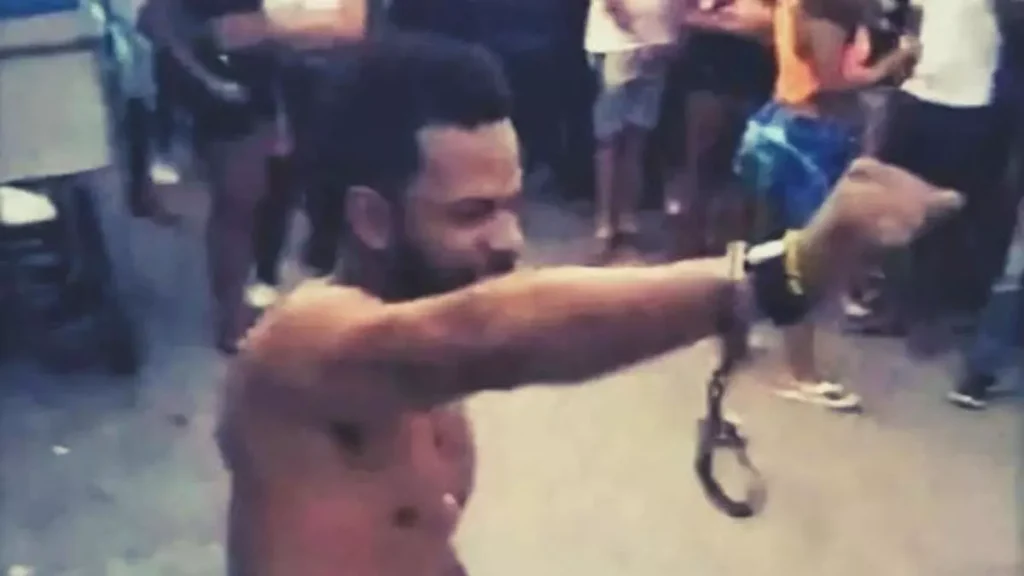
Lacking a sense of humor, vengeful towards anyone who dared to challenge him, Fidel Castro’s image is at an all-time low in the social imagination.
In the centennial year of Fidel Castro, Cuban authorities are doing everything possible to resurrect a legacy that popular will insists on burying. Tet on the fence: “I am Fidel” / EFE
14ymedio, Yoani Sánchez, Generation Y, Havana, February 4, 2026 — Her photo with Fidel Castro hung in the living room for decades, and Rita proudly displayed it. But a few years ago, the frame was used to hold a portrait of her newborn granddaughter, and the snapshot, faded by time, ended up in a drawer. A retired engineer enduring more than ten hours of daily power outages, this 80-year-old Cuban now feels a mixture of shame and annoyance every time she comes across that image where a man in military uniform is pinning a medal on her.
In the centennial year of Castro’s birth, Cuban authorities are doing everything possible to resurrect a legacy that the popular will insists on burying. The man who ruled the destiny of millions on this island has become synonymous with everything that must be avoided in the nation’s future. Uncompromising voluntarism, hatred of those who are different, revolutionary bravado, and contempt for dissent were not only his personal hallmarks but also the defining characteristics that shaped his domestic policy and international diplomacy for more than half a century.
The “This is your house Fidel” signs only remain in the memory of a few, and those diplomas where his signature was written on the paper have been stored away from prying eyes.
Lacking a sense of humor, incapable of even the slightest bit of dancing, vengeful towards anyone who dared challenge him, averse to personal affection, and prone to tantrums when he didn’t get his way, Fidel Castro’s image is at an all-time low in the public consciousness. Despite the display of his photographs in government offices and the calls to celebrate the centenary of his birth, the man born in Birán in 1926 has been more than buried by most Cubans, who avoid even mentioning his name, as if it were a spell that could bring him back to life.
Few family living rooms still display his photographs, the “This is your house, Fidel” signs only survive in the memories of a few, and those diplomas bearing his signature have been tucked away, out of sight. Grandparents avoid mentioning him, emigrants swear they could never stand him, and even those named after him insist their parents actually chose it in honor of an uncle who died young. No one wants that bearded shadow cast over their life. continue reading
A century later, Cubans are trying to completely bury the man who attempted to leave his mark on every second and every millimeter of national life. He’s so absent from public discourse that he’s no longer even mentioned in curses.
____________
COLLABORATE WITH OUR WORK: The 14ymedio team is committed to practicing serious journalism that reflects Cuba’s reality in all its depth. Thank you for joining us on this long journey. We invite you to continue supporting us by becoming a member of 14ymedio now. Together we can continue transforming journalism in Cuba.
The initiative has verified more than 1,500 signatures out of the 10,000 required by the Cuban regulation.
The documents were delivered this Wednesday by Yenisey Mercedes Taboada Ortiz, Jenny Pantoja, and Miryorly García Prieto. / Facebook
14ymedio, Havana, February 4, 2026 — A group of Cuban activists formally delivered a petition to the National Assembly in Havana on Wednesday, calling for an amnesty law to be passed, with the aim of freeing the nearly 1,200 political prisoners in the country. The documents, delivered by Yenisey Mercedes Taboada Ortiz—mother of political prisoner Duannis León Taboada — Jenny Pantoja, and Miryorly García Prieto, include a legal brief and a citizen petition that has so far gathered 1,535 verified signatures.
To support their claim, the campaign points out that Law 131 of 2019 “grants members of parliament the power to propose bills,” and citizens the right to submit petitions. This initiative is similar to the one promoted by opposition leader Oswaldo Payá, who in 1998 presented his Varela Project based on Article 88 of the then-current Constitution, which allowed Cubans to propose laws if a minimum number of citizen signatures were gathered.
Current law allows Cuban citizens to petition the National Assembly to draft a law, requiring a minimum of 10,000 verified signatures, each accompanied by the signatories’ national identity numbers. In response, the “For Amnesty Now!” campaign has emphasized that “this petition can be signed by any Cuban citizen, whether residing in the country or not, as we all have the ethical and moral right to demand the freedom of our compatriots.” continue reading
59% of the total signatories in this first round declare that they maintain their permanent residence in Cuba
As of February 2nd, 2,514 signatures had been collected, although only 1,535 signatories provided their complete data or were completed and verified.
In a statement, the organization indicates that approximately 59% of the total signatories in this first round declare that they maintain their permanent residence in Cuba, and notes that 6% of those who subscribe are relatives of political prisoners.
The “For Amnesty Now!” campaign announced that the petition remains open to continue collecting signatures, which, “after verification of the completeness and credibility of the data, will be gradually delivered to the Assembly.” To this end, they have linked to a document so that citizens can sign and fulfill the requirement.
“The freedom of our political prisoners, amid the humanitarian crisis the country is experiencing, is an urgent issue that calls upon the responsibility, sense of justice and humanism of every Cuban today, and is also a point that has managed to bring together a very broad spectrum of opinions,” the statement indicates after the delivery of the documentation.
“This is not only a petition protected by law and the exercise of a right, but a symbolic and civic action that allows the expression of the will of the citizens to accompany the pain of hundreds of families and prevent that wound from remaining open, due to the non-acceptance of dissent, in the soul of the Cuban nation,” he adds.
In Cuba, “only one Amnesty Law has been drafted, in 1955, promulgated by the dictator Fulgencio Batista for the attackers of the Moncada Barracks.”
On the website collecting the signatures , the activists point out that the petition stems from “the urgent need for justice and the humanitarian importance of addressing it now, five years after the unjust imprisonment of many Cubans following the peaceful demonstrations of July 11 and 12, 2021 , which resulted in the death of only one protester, who was shot in the back by a police officer and has not received justice.”
“From then until now,” the text elaborates, “the situation of political prisoners in Cuba has continued to worsen. The arrests and convictions of innocent Cubans who have only persisted in exercising their right to free thought, free expression, and other fundamental human rights such as the right to association and demonstration, enshrined in our Constitution, have prevailed.”
The document recalls that in Cuba “only one Amnesty Law has been drafted in 1955, promulgated by the dictator Fulgencio Batista for the attackers of the Moncada barracks, using humanitarian criteria, which was made possible thanks to the popular support of the Cuban citizenry and the efforts led by the relatives of the political prisoners and other civil society organizations.”
In light of this, they point out that “it is at the very least contradictory from a historical, political and human point of view, that in a project founded and still directed by the beneficiaries and continuers of that popular support and that law, today the popular will and the arguments that the relatives of our current prisoners have to offer to the Assembly and the government of this country, with the intention of demanding a gesture of justice and humanism, are ignored.”
____________
COLLABORATE WITH OUR WORK: The 14ymedio team is committed to practicing serious journalism that reflects Cuba’s reality in all its depth. Thank you for joining us on this long journey. We invite you to continue supporting us by becoming a member of 14ymedio now. Together we can continue transforming journalism in Cuba.

There will be no releases of prisoners, nor political or economic reforms. There is no dialogue with the United States, although “messages have been exchanged.”
The Government announces more sacrifices for Cubans, who are already living at the limit. / 14ymedio
14ymedio, Havana, February 4, 2026 – A new Special Period? Another Ordering Task*? The “reorganization process that we have planned (…) and have been preparing” does not yet have a name. “It is not something simple; it is something difficult for government management and something very difficult for the population as a whole.” This is the message the Cuban regime is conveying to international media through one of its lesser spokespeople, Vice Foreign Minister Carlos Fernández de Cossío.
In an interview with EFE, the number two at the Ministry of Foreign Affairs once again denies statements by U.S. President Donald Trump about the existence of dialogue between the two countries. However, he qualifies this by saying that “messages have been exchanged” since the January 3 capture of Venezuelan President Nicolás Maduro.
In any case, “the Government of the United States knows perfectly well what Cuba’s position is regarding its willingness to hold a dialogue and has not rejected it,” adds the diplomat, who also denies that there could be indirect contacts through intermediaries such as Mexico or the Vatican.
The official insisted that, in addition to ruling out political and economic reforms, the release of prisoners cannot be “part of the bilateral dialogue between two countries”
The official insisted that, in addition to ruling out political and economic reforms, the release of prisoners (there are around 1,000 political prisoners in Cuba) cannot be “part of the bilateral dialogue between two countries,” unlike what is happening in Venezuela. continue reading
In the interview, Fernández de Cossío categorically rejected even the possibility that there might be a “traitor” to the regime, as, according to sources from The Wall Street Journal, the United States is allegedly seeking, in a manner similar to what occurred in Venezuela. “If one is thinking that there is fragmentation within the Cuban Government, fragmentation within the political forces in Cuba, and a willingness by a small group to give up Cuba’s sovereign rights—the prerogative of our country—and to capitulate in the face of the pressure and aggressiveness of the United States, unjustified and immoral, that is a mistaken interpretation,” he asserted.
The statement aligns with what Russia’s ambassador to the UN, Vasily Nebenzia, said this week,“That little act won’t work in Cuba,” but also with what some U.S. officials have stated regarding the matter. Ricardo Zúñiga, a former U.S. official who played a key role in the thaw and who has also worked with the Trump Administration, told the outlet: “These guys are much tougher to crack. No one would be tempted to collaborate with the United States.”
The vice foreign minister, on the contrary, claims that the Island is “preparing for defense,” to “resist a military aggression,” and believes that the Government’s responsibility is to defend the population “as Cubans, not as subjects of the United States.”
“The Government of the United States must know that a military aggression against Cuba is not simple, despite the absolutely asymmetrical superiority that the United States has over Cuba (…). But they would have to ask themselves what the goal is: to bomb and destroy Cuba and leave everything a desolate land, or to try to put soldiers in Cuba and wage a war here against the Cuban people,” he warned.
Fernández de Cossío said that Havana’s objective is for Washington to “understand the danger of an extreme military action on the Island”
Fernández de Cossío said that Havana’s objective is for Washington to “understand the danger of an extreme military action on the Island” and to “not listen to some politicians who have made a career and profited from hostile conduct toward Cuba.”
However, the message of resistance seems aimed more at the population than at Washington, since the Government announces more sacrifices for Cubans, who are already living at the limit, with blackouts of up to 24 consecutive hours, no fuel, food shortages, and catastrophic deterioration of the public health system.
“We have limited options and we also have a need for reorganization in the country that implies it will cost us a great deal of work and will require a lot of creativity.”
The vice foreign minister announced that in the coming days the contingency plan will be communicated to the population: “a reorganization process” that is going to be “very difficult” for the population, he insisted.
*Translator’s note: The Ordering Task was a collection of measures that included eliminating the Cuban Convertible Peso (CUC), leaving the Cuban peso (CUP) as the only national currency, raising prices, raising salaries (but not as much as prices), opening stores that take payment only in hard currency, which must be in the form of specially issued pre-paid debit cards, and a broad range of other measures targeted to different elements of the Cuban economy
Translated by Regina Anavy
____________
COLLABORATE WITH OUR WORK: The 14ymedio team is committed to practicing serious journalism that reflects Cuba’s reality in all its depth. Thank you for joining us on this long journey. We invite you to continue supporting us by becoming a member of 14ymedio now. Together we can continue transforming journalism in Cuba.
The prelates will be in Rome, for the traditional ‘Ad Limina’ visit, between February 16 and 20.
The Pope urged “all those in positions of responsibility to promote a sincere and effective dialogue, to avoid violence and any action that could increase the suffering of the Cuban people.” / EFE
14ymedio, Havana, February 3, 2026 — The Bishop of Holguín, Emilio Aranguren, confirmed this Monday on Radio Ángulo that the Catholic bishops of Cuba will meet with Pope Leo XIV for the first time during his upcoming trip to Rome, between February 16 and 20. This is the traditional Ad Limina Apostolorum visit, the meeting that the prelates make every five years at the Vatican, during which they present a report on the situation of their dioceses and make a pilgrimage to the tombs of the apostles Peter and Paul, as established by the Code of Canon Law.
However, the meeting is generating special anticipation at a moment when the Pope has spoken out about the escalating tensions between Cuba and the United States. From St. Peter’s Square, the Pope urged “all those responsible to promote a sincere and effective dialogue, to avoid violence and any action that could increase the suffering of the Cuban people.” He also invoked the Virgen de la Caridad del Cobre [Our Lady of Charity of El Cobre] to protect the citizens of the island.
The day before, the Cuban Episcopal Conference issued a statement warning that in the last six months, “the situation has worsened and anguish and despair have intensified” in the country. In a message on their website, the Cuban bishops indicated that, given the current situation, changes “are increasingly urgent.” continue reading
Both circumstances suggest that the Church may once again play a mediating role between Havana and Washington
Both circumstances suggest that the Church may once again play a mediating role between Havana and Washington, as has recently occurred with the distribution of aid for Hurricane Melissa or the release of political prisoners in 2025.
The last Ad Liminavisit by Cuban bishops took place in 2017, during the pontificate of Francis. At that time, Cuba was experiencing a diplomatic rapprochement with the United States, which did not lead to significant structural changes.
Cuban bishops, for their part, tend to stay within established parameters when criticizing the government, but the same cannot be said of many Catholic priests, who have not only spoken out but have also suffered the consequences. Last December, Mexican priest José Ramírez, of the Congregation of the Mission, left the island after ringing the bells of Our Lady of the Miraculous Medal parish during a protest against power outages. Ramírez coordinated social programs in his parish, including visits to the elderly, home care for the sick, and a free school for children with Down syndrome.
COLLABORATE WITH OUR WORK: The 14ymedio team is committed to practicing serious journalism that reflects Cuba’s reality in all its depth. Thank you for joining us on this long journey. We invite you to continue supporting us by becoming a member of 14ymedio now. Together we can continue transforming journalism in Cuba.
Without proper clothing to go outside and with freezing houses, Cubans are having a very hard time, especially those with joint problems from chikungunya.
People bundled up in warm clothing at the Delio Luna Echemendía market in Sancti Spíritus, on Sunday. / 14ymedio
14ymedio, Olea Gallardo, Havana, February 3, 2026 — If it doesn’t rain iguanas in Cuba , as it does in Florida, making the old winter saying a reality, it is because there aren’t that many, because the cold these days is similar to that of the U.S. peninsula and reaching historic lows. This Tuesday, specifically, the lowest temperature ever recorded on the island was 0° Celsius (32° F), according to data from the Institute of Meteorology (Insmet). It occurred in Indio Hatuey, Matanzas, at seven in the morning.
As many as 32 weather stations reported temperatures of 10°C or lower, according to the report issued by the state agency at 10:00 a.m., which noted that the early morning was “very cold throughout the country and even noticeably cold in inland areas.” The thermometer registered an all-time record low temperature in Aguada de Pasajeros (Cienfuegos), at 3°C, and equaled the February record in the city of Pinar del Río, at 6.9°C.
The report indicates that it had never been so cold in February in several places, such as 6º in the city of Sancti Spíritus, 7.3º in Veguitas (Granma), 7.4º in Florida (Camagüey) or 8º in Palenque de Yateras (Guantánamo).
Over the past two days, hardly anyone has ventured out on the streets across the entire island, and those who do are participating in a unique “poor man’s carnival,” dressed in whatever clothing they can find to ward off the cold. Ignoring custom and the usual color combinations, their attire ranges from European football team sweaters to American university coats, French berets, and Russian hats with earflaps. continue reading
“It’s not the monkey whistling [esta chiflando el mono*], it’s the orangutan,” says a Havana resident with a touch of irony, having left his house in search of milk and chocolate to at least “warm himself up.” The chocolate, he says, “flew off the shelves at the small businesses,” despite being incredibly expensive: “more than a thousand pesos for a small package.” Powdered milk is no less than 2,000 CUP per kilogram. “People are scrambling to find something, but there are people who don’t even have enough to make soup or broth.”
From Holguín, a young man who works as a private driver with his electric tricycle says that yesterday he was only able to pick up one passenger. “The air cuts you, it feels like a knife, my eyes burn, my nose itches, I have runny noses, my hands go stiff,” he explains. During his commute, he saw doors and windows closed like never before in Cuba, where the weather usually keeps residents out in the street. “Last week, everyone was cooking with firewood outside, and now it’s like nobody’s home.”
“Even the animals are trembling,” says Sandy from Holguín, who has her six dogs wearing “little sweaters” and yet they still hide under the blankets.
“Even the animals are trembling,” says Sandy from Holguín, who has her six dogs wearing sweaters, and yet they still hide under the blankets. / 14ymedio
“Even the animals are trembling,” says Sandy, from Holguín, who has her six dogs wearing sweaters, and yet they still hide under the blankets. “I feel sorry for the stray dogs. I even made a little bed for one of them, the one I usually feed, out of old rags, because he seemed so weak. We also hear the kittens crying.”
In Sancti Spíritus, the situation is very similar. “Around five in the afternoon, everyone is gone from the streets, holed up in their homes,” says Ernesto, who asserts that the worst part is the wind, which “is really hitting hard” and makes you feel a cold “that chills you to the bone.” At 40 years old, and having never lived anywhere else, he doesn’t remember ever having felt anything like this before.
The houses, built for a year-round tropical climate and designed for airflow to keep them cool, are like iceboxes these days. “The cold is coming in from everywhere, a horrible cold that you can’t escape,” Ernesto laments.
“Last week, everyone was cooking with firewood outside, and now it’s like nobody’s around.” / 14ymedio
Having suffered from chikungunya a few months ago, Ernesto finds the pain intensifying with the current temperatures the worst part. A strong man in his prime, he reflects: “Older people, so vulnerable, living alone, with no one to offer them any help, must be going through hell, because they don’t have adequate shelter, proper clothing for this cold, or even enough food.”
Thousands of Cubans have been left with lasting effects from the arbovirus, especially joint problems, and these days they are suffering even more, if that were possible. “I’m locked in my room, covered with every rag I can find, in a lot of pain,” confesses María, a retiree from Luyanó (Havana), who also recently contracted the disease. This Tuesday, she refused to buy medicine from a street vendor who passed through the neighborhood. “I didn’t even want to ask the prices, because I know I can’t afford them.” And she sighs: “Everything we have to live through in Cuba is a disaster.”
To make matters worse, the energy crisis is adding to the problems. Without electricity for most of the day, the cold showers that Cubans are normally forced to take are unbearable, so many haven’t had one for days. “The little oil and coal that can be found is reserved for cooking,” explains Luis, another Havana resident, who has also seen his muscle pain worsen as a result of the arbovirus. “The pain and the cold keep me from sleeping.”
*The monkey whistling [esta chiflando el mono] – An expression meaning it’s very cold
____________
COLLABORATE WITH OUR WORK: The 14ymedio team is committed to practicing serious journalism that reflects Cuba’s reality in all its depth. Thank you for joining us on this long journey. We invite you to continue supporting us by becoming a member of 14ymedio now. Together we can continue transforming journalism in Cuba.
Frankis Carol Marzo was the team’s second-best scorer, while Rafael Capote added eight goals and two assists
Frankis Carol Marzo records four titles in five participations at Asian Championships with Qatar / Instagram
14ymedio, Matanzas, Andy Lans, February 03, 2026 – Qatar’s handball team, with the Cubans Frankis Carol Marzo and Rafael Capote, finished second in the Asian Championship after losing their eighth consecutive final of the tournament with a score of 29-26 to Bahrain.
In this edition of the competition, held in the United Arab Emirates during the second half of January, Qatar beat Oman (27-15) and South Korea (32-31). Then, the Main Round gave them a pair of wins against Saudi Arabia (32-25) and the host country (25-20), but with a defeat against Bahrain itself (31-28). These results allowed them to enter the semi-final, where they won 27-26 against Kuwait.
Carol and Capote, both 38-year-old wing players, were able to bring Qatar into this edition of the competition. Carol Marzo was the team’s second-best scorer, with 29 goals, for a 57% ERA. He also recorded eight assists and three steals. His most outstanding match was in the Main Round against Bahrain, with 11 goals. In the case of Capote, with participation in five out of seven games played, he scored eight goals and two assists. However, it is worth noting that these Caribbean continue reading
exponents have already come a long way in this national team.
Frankis Carol Marzo signed for Catarí handball in 2021, after a decade at Sporting de Portugal. He currently plays in the Kuwait league. With the selection of Qatar he records four titles in five participations in Asian Championships, in addition to presence in the Worlds of 2019, 2021 and 2025.
Rafael Capote escaped from the Cuban national team during the Pan American Games Rio de Janeiro 2007
For his part, Rafael Capote escaped from the Cuban national team during the 2007 Pan American Games in Rio de Janeiro. He played professionally in Brazil, Italy and Spain until he moved to the Catarí league in 2013. There he was nationalized in 2014 to become a key part of that selection. With the Arab team he has participated in seven Asian Championships, between 2014 and 2026, of which he was champion six times; he attended six Worlds, with a final reached in 2015, and in some Olympic Games in 2016, again in Rio.
Years ago, the deliberate nationalizations of players by Qatar sowed controversy in public opinion of handball. The nation hosted the organization of the 2015 World Cup, and based on the naturalized players, set out to put together a representation full of stars. European elite ballers were usually lured into the Qatari league with exorbitant sums of money, and if they agreed to represent Qatar, they received extra bonuses for becoming nationalized. Over time, the International Federation tightened its eligibility rules for selections to regulate this phenomenon. Thanks to this, and the long-term investment in its internal infrastructure, today there are more Qataris by birth in its national pool.
For many, a selection of Qatar full of nationalized handball players was a serious alteration of the nature of competitions between countries, in which each seeks to bring the best of themselves. However, it is not uncommon for an athlete to come to feel genuinely grateful to and identify with a nation that can value him more than the land where he was born.
Translated by Regina Anavy
____________
COLLABORATE WITH OUR WORK: The 14ymedio team is committed to practicing serious journalism that reflects Cuba’s reality in all its depth. Thank you for joining us on this long journey. We invite you to continue supporting us by becoming a member of 14ymedio now. Together we can continue transforming journalism in Cuba.