
The Long Arm of Cuba’s Political Police Reaches Amelia Calzadilla in Spain

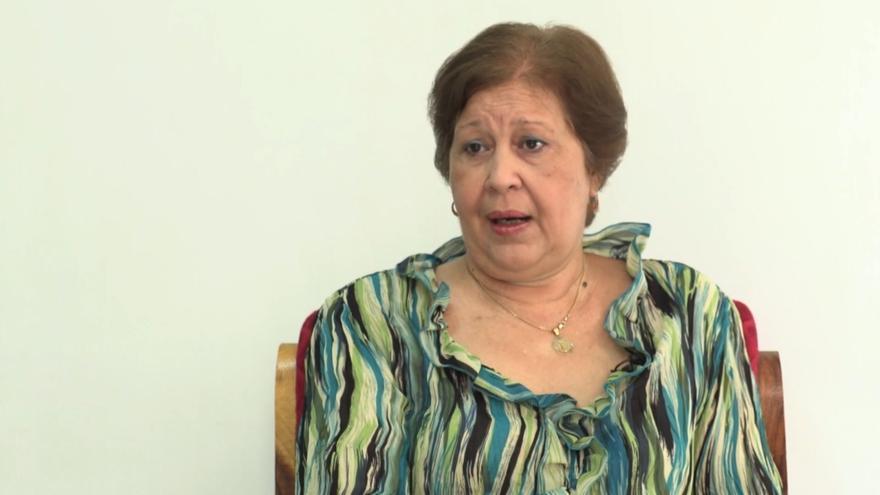
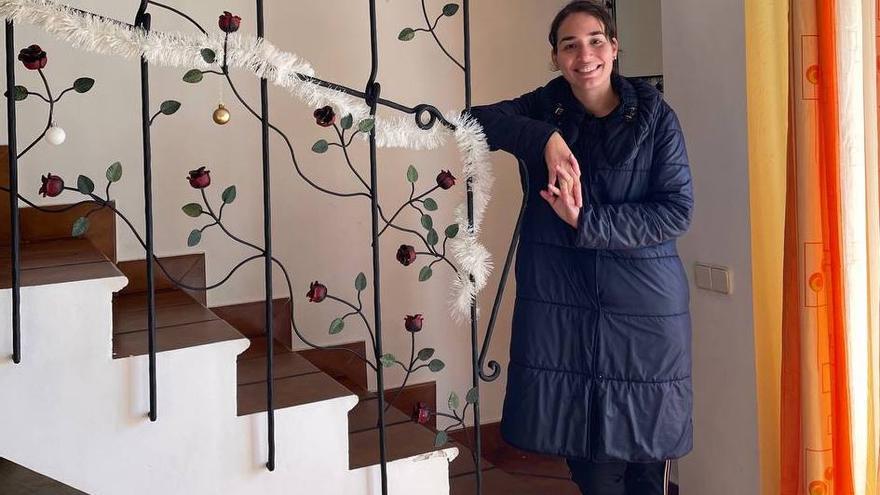
Amelia Calzadilla, in the house where she lives with her husband and three children in Spain. (14ymedio)

14ymedio bigger14ymedio, Yaiza Santos, Madrid, 24 December 2023 — Intending to violate the 7,500 kilometers of distance between Havana and Madrid, a message from State Security arrived last week for Amelia Calzadilla and her husband, Antonio Díaz. Both are regulated — the regime’s term of choice to mean ’forbidden to travel’ — and will not be able to return to Cuba. The communication did not arrive by regular mail or by e-mail, nor on letterhead, with an official seal and firm signature. It was a simple WhatsApp from Major Luis, the political police agent who attended to the couple until they left the Island, she with her three children last month, he in September.

Amelia tells 14ymedio almost at the end of a conversation that takes place between her house and a walk, in the quiet town on the outskirts of Madrid where the family now lives, and, for the first time, her eyes glaze over: “They know that it is a very harsh punishment, because I don’t have anyone in Spain, my whole family is in Cuba.” But she immediately recovers: “It’s hard, but nothing, it’s a punishment for telling the truth.”

For her, the decision of the political police was the direct result of the network broadcast she made on December 10, in which, once again, she expressed solidarity with other mothers on the Island who do not have a way to feed their children and denounced not only the economic management that has plunged the island into disaster but also the lies of the regime “that no one believes anymore.”

“They know that it is a very harsh punishment, because I don’t have anyone in Spain, my whole family is in Cuba”

“I was talking to the mothers, and to them that empathetic speech that we women manage to have, especially when we are mothers, that sensitivity that exists in the word when you are a mother and another mother understands you and you can put yourself in her place, it terrifies them, and continue reading

then they take these types of measures,” she explains.

Serene and calm, Amelia Calzadilla differed greatly in that video from that other one, in June 2022, from her home in the municipality of Cerro, a video ignited with indignation and the hope of a new citizen protest in Cuba. Almost a year had passed since the massive demonstrations of 11 July 2021, and unease had settled on the Island after the repression and the open mass exodus via Nicaragua as an escape valve. And there was this mother of three small children, raised in the middle of the Special Period — after the collapse of the Soviet Union and the loss of its subsidies to Cuba — a woman who graduated in the English Language, beside herself, giving the highest government officials a shout-out for not delivering for the people they had so promised to serve.

She immediately became a target of State Security, which tried to discredit her through the official press. “In the space of 72 hours, with all the discredit campaign they created in my name, I was forced to do a second direct to vindicate my image, because what was happening didn’t make any sense.”

After that, she was summoned to the municipal government of Cerro by the authorities. When leaving the meeting, at that time, she said that they simply promised to solve her problems with the gas supply. Now, in this exile that they did not seek but that they are grateful for, both Amelia Calzadilla and Antonio Díaz, sitting in the dining room of their house, tell what really happened that day. “There they talked about everything except gas,” Antonio begins. “It was, by the book, an intelligence interrogation. There was a representative from the Ministry of Energy and Mines and all the others were military dressed as civilians.”

“They were not careful to show me that they were there, because they needed to intimidate me,” continues Amelia, who, as the daughter of a soldier, attended high school at an Army academy and “recognized the pattern.”

“It was, by the book, an intelligence interrogation. There was a representative from the Ministry of Energy and Mines and all the others were military dressed as civilians”

Before reaching the municipal government building, where they were surprised by the number of foreign journalists stationed in front, they already noticed something strange. In the populous neighborhood where they live, there was not a soul that morning. “They had a police force, the streets were closed,” says Antonio, who also remembers “a truck of special troops and a chain of police officers on the avenue.”

That “conversation” was, Antonio asserts, “to do a psychological profile.” As Cubans who have been subjected to harassment and repression within the Island know, those first approaches pass calmly, and with those mentioned they play at being good police officers. “What you are is confused,” Amelia repeats about what they told her. “Your problem is an ideological confusion, but obviously you are not against the Revolution.” It was, she repeats, “by the book”: “There is never a recognition of the problems that the country has, because it would be succumbing to the idea that socialism does not solve the social problems of a nation.”

As clear as the outlook was, Amelia, however, confesses that she was not prepared for the role that, unintentionally, she already played. “They automatically considered me as an opponent and I didn’t see myself that way, but as a person dissatisfied with the economic and social reality that the country was experiencing,” she says. “Also because of a maturity problem in terms of politics. Nobody starts out like I started, like that, sitting in front of the phone, screaming.”

That intimidation, whatever it was, achieved its objective, and Amelia did not broadcast again for several months. The following October, she was at it again, claiming that authorities were trying to falsely frame her for stealing some neighbors’ electricity. That reason was just the last straw. In the time that she was “silent,” there were what she calls “unfortunate actions,” which were “nothing in particular” but which “could not be coincidences.”

During the time she was “silent,” there were what she calls “unfortunate actions,” which were “nothing in particular” but which “could not be coincidences”

After the interrogation in Cerro’s government, the entire family fell ill with Covid-19. The couple is convinced that among those who attended the meeting, there were people with the virus there on purpose. As a result, Amelia developed pneumonia. Later, in a neighborhood where there were no cases of dengue, she and two children suffered from it. Amelia, with the hemorrhagic variant, which left her with an inflamed liver for half a year. “Every time there was a government visit, we got sick,” says Antonio. “And the last thing was the contamination of the cistern water,” continues Amelia, who saw how the children came down with gastroenteritis. “While I was recovering from hepatitis, the electric company workers came to the house to accuse me of stealing some neighbors’ electricity and I said: this is enough.”

In that direct message in which she resumed the complaints, she also said that they were trying to hinder her from traveling to the Spanish city of Salamanca, to pursue a master’s degree in translation for which she had obtained a scholarship. “That was one of the unfortunate events that I think they had something to do with,” Amelia narrates. She had been examined for those studies before taking any direct action.

A week after publishing her first video, the results were published: she had been selected. As she presented all the documentation, the problems arose: “First, the Spanish Consulate did not send me credentials to be able to apply for the visa, it took about two months, and when I received the credentials to go to the visa appointment, with all the paperwork, family roots, the letter from the university, everything, they denied my visa. Very strange.”

Likewise, for both Antonio and her, job doors were closing. “I had the possibility of continuing to work with individuals, but neither of us were hired, both of us being professionals – he has a degree in Economics, I as a translator. No one wanted to give us work because they were very afraid of pointing themselves out to the Security of the State.” They said it explicitly, hse specifies: “We prefer to give you money directly than to give you work, because they already came to knock on our door and ask us why you come here so much, why you come here.”

At this point, Amelia becomes indignant again: “If they really did surveillance work, they would know that people are involved in nothing, that they are not associated with anything, that they are simply disenchanted, that they are disappointed, that they can’t take it anymore, that there comes a time when they say this is unsustainable and it must be changed, inevitably.”

  If they really did surveillance work, they would know that people are involved in nothing, that they are not associated with anything, that they are simply disenchanted, that they are disappointed, that they can’t take it anymore

At the same time, the young mother began to be strongly attacked by the most strident part of the exile in Miami, especially the influencer Alexander Otaola, she still does not know why. “Criticism is very affecting when it is unfair,” she says sincerely. “There were opponents who attacked me saying I had to take a position, saying either you are with me or you are against me,” which, in her opinion, “is a mistake.” However, it was not her intention to confront the activist. “It was unintentional. It wasn’t my intention to attack him, but well, it’s over. He had messed with me on other occasions. And look, if I wasn’t going to put up with Díaz-Canel’s nonsense, who could put me behind bars, am I going to put up with Otaola?”

She wasn’t willing to shut up. Direct to direct, her position “was already beginning to be a little clearer.” And she was losing her fear, until she published a video in which she expressed solidarity with Nelva Ortega, wife of José Daniel Ferrer, and asked for proof of life of the leader of the Patriotic Union of Cuba, imprisoned since the 11J protests.

“I didn’t even know about the situation of political prisoners the day I made my first statement,” she confesses. “I began to learn about the human rights problems associated with ideology within Cuba later.”

And she explains: “The same social and economic climate prevents you from being able to connect with another type of mentality, from being able to analyze all the legal problems we have, the problems of human rights, freedoms, commercial freedom. You can’t think about it because you are all time thinking ’I have to buy chicken, I have to buy chicken, I have to buy chicken’. This is also a mechanism to entertain yourself. That absolute misery is a mechanism to keep you in control, because you are in the basics. You can’t think beyond it.”

  “That absolute misery is a mechanism to keep you in check, because you are in the basics. You can’t think beyond it”

Weren’t there people who approached Calzadilla after her first broadcasts to join some opposition cause? “There were people, yes, but in a personal capacity, not organizations,” she responds. “My private mailbox was jammed for a long time, with messages of all kinds. From people who wanted to help me, send me money. I immediately refused to let anyone give me a peso because I didn’t know where that money came from. Furthermore, I wasn’t asking for money. It was a message that I also tried to convey to the people of Cuba: the problem of our society is not related to the purchasing power.”

Before that video showing solidarity with Nelva Tamayo, she says, she was surprised that they never went looking for her: “I think it was a very intelligent game. On the one hand, to show the opponents that I could be playing at two ends and that it discredited me in front of the opposition. On the other hand, it had the objective of disproving the image that they attack those who oppose them.”

But Ferrer is a huge issue for the regime, which put an end to Amelia Calzadilla. They didn’t stop her at first, but they stopped Antonio on the street for an alleged irregularity with the car he was driving. While Major Luis was holding him in the fourth unit of Cerro, she, who had already warned online that she was going to look for her husband, was detained two blocks from her house. “They throw me into the boat like that, literally, a patrol car, an operation, wow, of Osama bin Laden.” Amelia takes it with humor, but her story does not hide the violence.

“When they detained me, my mother insisted on going with me. There were many stories of people who said that relatives disappeared and that terrified her. In fact, it was that in my case. Everyone knew that I was going to the fourth unit from Cerro, but my family called all the police stations, all of them, and in all of them they told them that they had no arrest report on me. They took me to a unit as far away as they could find. If they could have to take me to Matanzas, they would have taken me there. They spent the world’s fuel and more going around all over Havana.”

I wasn’t asking for money. It was a message that I also tried to convey to the people of Cuba: the problem of our society is not related to the purchasing power

After all this, her father showed up at the unit where Antonio was. The old soldier, “an 82-year-old oak,” as Amelia describes him, was told the truth, although only half: “She is detained. We had to move her from here because she thought of posting on social media that she was already coming over here.” Nothing to do with what had happened because she never arrived at the Cerro unit.

Where they were holding her, they locked her in a cell while they entertained her mother. “They didn’t tell me anything, neither the reason for which I was detained, nor if I was arrested. Of course, they couldn’t put me in jail because they didn’t have an arrest warrant against me. They put me in a very unpleasant cell, because it was a corridor that had cells with men. In my cell I was alone, but in front of me I had a man who was masturbating. You always have that thing that it can’t be coincidence.”

When it seemed like enough confinement, they took her to an office, where they began what they do not call a conversation or an interrogation, but rather an “intimidation process.”

She tried to maintain a phlegmatic attitude, but inside she was sick. “I told myself, my God, if I don’t get out of here today, what are they going to say to my children? If I end up in prison, I’m going to scar my children for life, because in Cuba the prisoner’s family is banned. “How to demand that they be good human beings and at the same time explain that because I am a good human being I am imprisoned. Those things go through one’s mind.”

 In my cell I was alone, but in front of me was a man who was masturbating. You always have that thing that cannot be coincidental

In the office, with all the detours and circumlocutions to which they are prone, they gave her to understand that with her public speech she was “calling on people for a national strike,” which could imply a crime of “inciting to commit a crime.” That is, if she continued with her broadcasts, she would end up in prison. Before leaving, they forced her to sign a document putting in her own handwriting what she agreed to.

“I didn’t want to be sarcastic, but that’s what language is for. I told them that I was committed to maintaining the same social behavior that I had had all my life. They are very frustrated by ambiguity. I know that it kills them, because it is the room that intelligence gives you to make fun of them, and that really upsets them.”

They let her out at six in the afternoon and took her home. “In a military car. I imagine that they also did it with the objective of sowing doubt in others about who I worked for. After that came a sequence of calls that supposedly had the objective of demonstrating that they were fully prepared to help me with any problem I had, but it was something very grotesque, because I knew it was a mechanism of control, of siege. And that’s how it was until I left.”

The arrest was the point of no return. “Somehow, you start to feel a little small and you start to feel a bit alone too. You get disappointed, because you feel like only you are putting yourself at risk.”

Antonio had just obtained Spanish nationality under the new Democratic Memory Law and the whole family began to pressure them to leave, especially for the children. “Before, with the issue that I couldn’t work, we had thought about it, but I didn’t want to leave Cuba. In fact, I have suffered a lot leaving Cuba, a lot. There are days when I get up, look at the ceiling and say “What am I doing here? It gives me back the certainty that I had to emigrate to see my daughters, who love this country, who are happy.”
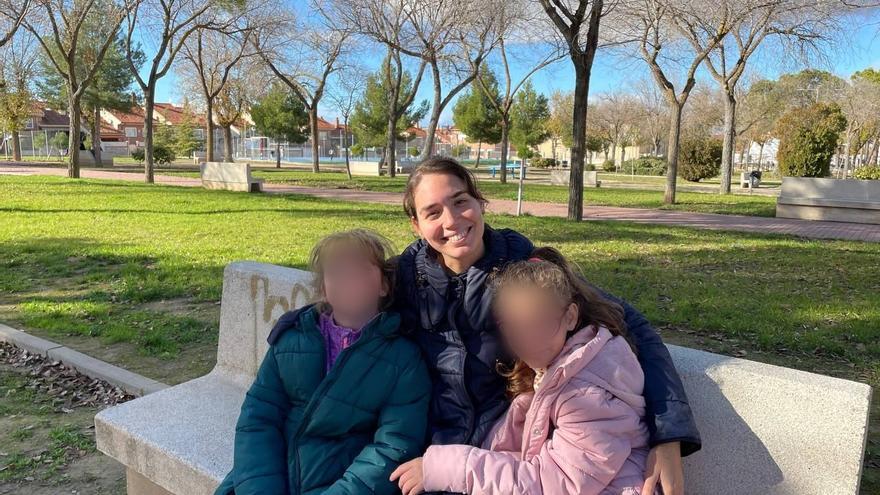
Amelia sees her children frolicking in the park: “I think they still can’t understand that this is for life, that it is not a walk.” (14ymedio)

At the door of the children’s new school, a large enclosure, with several doors and buildings, and music to encourage the children to leave, another Cuban father approaches to greet them. And if they came to this town, small and far from the center of the capital, surrounded by vineyards and olive trees, with a Renaissance church, it was because of a compatriot friend of Antonio’s, who had been living here for more than ten years. As usually happens with migratory movements, there is a large community of citizens of the Island in the place. “When I arrived here, to my surprise, the Cubans at school knew me from the networks,” Amelia says with a smile. “They saw me and immediately told me ’mija, but what are you doing here, we’re going to help you’, and they helped me with everything, to get settled.”

There are things about Spain that she is “perplexed” about, such as the school her children, almost 10, 7 and 4 years old, go to. “It is a public school where there is no blackmail for being public,” she explains, because in her country “there is a process of imposing ideology.” In this regard, she gives a beautiful example, the day that her first-born daughter, studying history, asked her: “But mami, who came to Cuba first, Christopher Columbus or Fidel Castro?”

Safety is another of the fundamental elements why she is glad to have left. She comments on it happily while a local agent walks in front of her: “The Police here are something else. Besides, for me they are selected in a modeling casting call.” And Christmas! “It’s so beautiful how people live it and decorate everything, regardless of whether they believe or not.”

“I think that they still cannot understand that this is for life, that it is not just a trip, because sometimes they say ’oh, mami, this is something to take with me to my room in Cuba’.”

After school, on the days that Antonio is free from work – he is a clerk at a tobacco and cigarette store in the center of Madrid – the five of them go to the park before eating. Amelia sees them frolicking: “I think they still can’t understand that this is for life, that it’s not just a trip, because sometimes they say ’oh, mommy, I’ll take this to my room in Cuba’.”

It is a beautiful day. “The day I arrived there was a sun like that, so beautiful, but at the same time it was cold,” and she repeats what she told her mother on the phone: “Mami, in Spain the sun is a yellow light bulb: it shines but warmth, it warms up, nothing.” When Amelia talks about her mother, her expression saddens. “I miss her a lot and she misses me too. I am an only child and my mother is a very devoted mother. It’s not that I don’t have the possibility of bringing her, it’s that at the moment I can’t, including because of the economic factor.”

I think on many occasions that despite any intellectual capacity I may have, I am going to end up cleaning floors and windows. They make you doubt your ability”

Amelia, in all seriousness, speaks of the psychological damage that a dictatorship causes, a damage that “few people talk about, which is even more cruel than any other type of damage that is done to you,” and which is responsible for an almost anthropological insecurity.

“It has affected me. I am a professional, in a non-English speaking country, where I have opportunities, because not many people speak English, and even so, it is difficult for me to believe that I can function in this society as a professional. I think on many occasions that despite any intellectual capacity I may have, I am going to end up cleaning floors and windows. They make you doubt your ability. And then they keep you ignorant in so many ways, that going out into the world is like walking for the first time, alone. That’s how I feel, like I’m learning to walk alone.”

Amelia, in all seriousness, speaks of the psychological damage that a dictatorship causes, a damage that “few people talk about, which is even more cruel than any other type of damage that is done to you”, and which is responsible for an almost anthropological insecurity. “It has affected me. I am a professional, in a non-English speaking country, where I have opportunities, because not many people speak English, and even so, it is difficult for me to believe that I can function in this society as a professional. I think on many occasions that despite any intellectual capacity I may have, I am going to end up cleaning floors and windows. They make you doubt your ability. And then they keep you ignorant in so many ways, that going out into the world is like walking alone for the first time. That’s how I feel, like I’m learning to walk alone.

____________

COLLABORATE WITH OUR WORKThe 14ymedio team is committed to practicing serious journalism that reflects Cuba’s reality in all its depth. Thank you for joining us on this long journey. We invite you to continue supporting us by becoming a member of 14ymedio now. Together we can continue transforming journalism in Cuba.
The Habanera was Born in the Middle of the Nineteenth Century, Long Before Spain ‘Lost’ Cuba

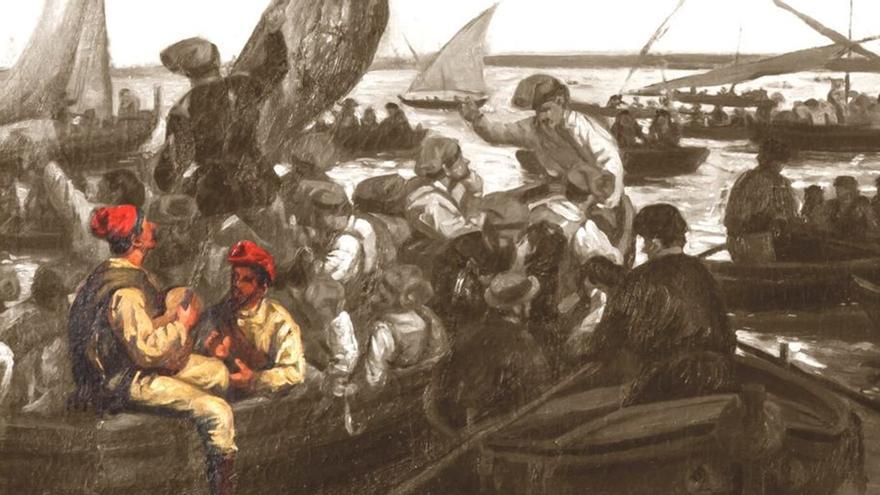
Detail from the cover of the book: ’The First Habaneras in Catalonia’. ((Rafael Dalmau Editor)

14ymedio biggerEFE (via 14ymedio), Barcelona, 9 December 2023 – Research, conducted by the musicologists Anna Costal, Joaquim Rabaseda and Josep Gay, has established the boom and the popularisation of habanera music as happening almost half a century before the Cuban War of Independence.

The research, collected together in the book, The first Habaneras in Catalonia (Rafael Dalmau, Editor), shows that “The habaneras passed through Madrid before arriving in Catalonia, and, coinciding with elation for the 1859 War of Africa, they became a gesture of national pride for the maintenance of Imperial Spain’s public image – the idea of a powerful kingdom, bellicose and colonial”.

The authors add that the habaneras also became a national symbol in Catalonia.

When, in 1881, the opera Carmen was performed in Barcelona for the first time, the main protagonist in the story grabbed the audience’s attention through her performing to the rhythm of the habanera.

Célestine Galli-Marié, the same mezzosporano who had premiered the opera six years earlier in Paris, enchanted the audience, and her powerful continue reading

stage presence was made even greater by “a rhythm which Catalans had known, had sung, and had danced to for decades”, the musicologists write.

When, in 1881, the opera Carmen was performed in Barcelona for the first time, the main protagonist in the story grabbed the audience’s attention through her performing to the rhythm of the habanera

Although, in the collective imagination, the habanera had been connected with the loss of Cuba, they nevertheless became enormously popular in the middle of the nineteenth century: “Fishermen would indeed sing them, but also factory workers, characters in light operas, professional singers, street musicians, the children of the ruling classes”.

Before Cuban independence, the war had already been a topic of habaneras, along with: Catalan soldiers, the unsettling sensuality of foreign women, and everything connected with the idea of romantic love.

The research collected together in the book shows that “The habaneras passed through Madrid before arriving in Catalonia”. (Rafael Dalmau Editor)

The habanera, known in Catalonia by the name of “Americana”, was the invitation to a slow dance, and its particular rhythm intensified the intimacy of the couples who danced to it – in theatres, dance halls, marquees, streets, and in town squares – and because of this, it was “associated with the idea of sinfulness, with social transgression and rebelliousness”.

The book presents the habanera as “an urban and contemporary phenomenon”, demarcated in the Catalan culture of the romantic era, and an active participant in the new mechanisms for creating, editing and distribution, in the world of nineteenth century show business.

The work describes the profiles of some of the composers of Catalan habaneras of the era: “musicians who had never been to Cuba and who were, generally, members of opera theatre orchestras and dance orchestras”.

The book presents the habanera as “an urban and contemporary phenomenon”, demarcated in the Catalan culture of the romantic era

It also puts into relief the role of women in the interpretation and diffusion of the early habaneras.

The authors make connections between the first habaneras sung in Catalan and Barcelona’s lyrical theatre, which was connected to the federal republicanism of the six-year democracy (1868-1874) and the acceptance of the abolition of slavery.

The current edition is the result of research promoted by the Ernest Morató Foundation, whose objective is the investigation, conservation, diffusion and promotion of the habanera genre.

Doctors of Musicology at the Autonomous University of Barcelona, and teachers at the Catalonia High School for Music, Anna Costal, Joaquim Rabaseda y Joan Gay have been working together on various aspects of Catalan music heritage for fifteen years, combining their study and revelations in a global reach.

Translated by Ricardo Recluso

____________

COLLABORATE WITH OUR WORKThe 14ymedio team is committed to practicing serious journalism that reflects Cuba’s reality in all its depth. Thank you for joining us on this long journey. We invite you to continue supporting us by becoming a member of 14ymedio now. Together we can continue transforming journalism in Cuba.
The Mythical Cuban Orchestra Los Van Van Presents the Album ‘Modo Van Van,’ Its First in 3 Years

The Los Van Van orchestra during a performance in Mexico City in May 2023. (14ymedio)

14ymedio biggerEFE (via 14ymedio), 23 December 2023 — This Friday in Havana the mythical and multi-award-winning Cuban orchestra Los Van Van presented its most recent album, Modo Van Van, its first album in three years, dedicated to its recently deceased bassist Juan Carlos Formell. This is the fourth album released by the orchestra – which in 2023 celebrated 54 years since its foundation. Los Van Van’s previous album was released in 2020 with the title Mi songo, a journey through the five decades of the orchestra.

Speaking at a press conference, Samuel Formell, director of the group and son of Juan Formell, the group’s founder, said that the work, with nine songs written and recorded by Juan Carlos Formell before his death in May, “was made for dancing, to enjoy, and is a gift for the world.” “(In all our songs) he will always be present,” said the current director, percussionist, arranger and composer of the group.

This is the fourth album released by the orchestra since the death of Juan Formell in 2014

The band, founded by composer and guitarist Juan Formell (1942-2014), is, despite the passage of time, the preference of several generations of Cuban dancers, who follow the musical proposals of a group nicknamed El tren de la música cubana. This year, Los Van Van did a tour of cities in Spain, Germany, the United States and Japan. continue reading

The band also confirmed its participation in the 40th edition of the National Salsa Day of Puerto Rico, to be celebrated on March 17.

Los Van Van has an extensive recording history that brings together more than 40 albums, many of them nominated and awarded, such as the Latin Grammy for the best salsa music album received in 2000 for its title Llegó Van Van.

Translated by Regina Anavy

____________

COLLABORATE WITH OUR WORKThe 14ymedio team is committed to practicing serious journalism that reflects Cuba’s reality in all its depth. Thank you for joining us on this long journey. We invite you to continue supporting us by becoming a member of 14ymedio now. Together we can continue transforming journalism in Cuba.

Five Dead in an Accident With a Cupet Vehicle in the Cuban Province of Matanzas

According to the official press, the van lost control trying to dodge, unsuccessfully, a third passenger transport vehicle. (TV Yumurí)

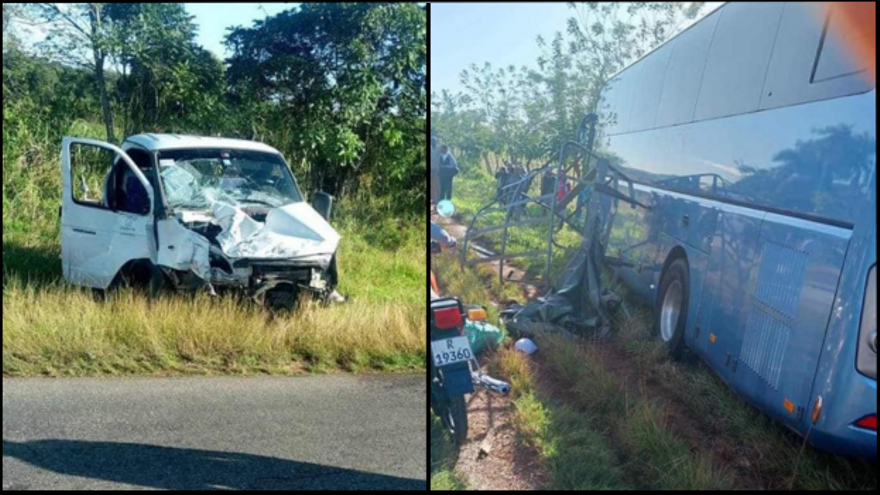
14ymedio bigger14ymedio, Havana, December 23, 2023 — At least five people died and another 20 were injured after the collision between a bus and a van of the state-owned Unión Cuba-Petróleo (CUPET) on a road in the municipality of Limonar,  in Matanzas province According to the official press, the van lost control trying to dodge, unsuccessfully, a third passenger transport vehicle.

The accident occurred on a curve between Limonar and another town, Caoba, and was witnessed by several residents in the area. The Girón newspaper reported, in its most recent article on the situation, that 13 of the 20 injured are under treatment at the Faustino Pérez de Matanzas hospital. Two of them, according to health personnel, present “danger to life”; another four suffer from “injuries that require immediate attention” – fractures and bruises – and another 7 have minor injuries.

The accident included a 10-year-old, injured and reported in serious condition. According to the directors of the Provincial Pediatric Hospital of Matanzas, the child is “on a ventilator, and a CT scan was performed to continue reading

continue treatment.”

Three of the five deceased died at the scene of the event, Lieutenant Colonel Eddys Estevez Rodríguez informed the official press

Three of the five deceased died at the scene of the event, Lieutenant Colonel Eddys Estevez Rodríguez, head of  Matanzas Traffic, told the official press. The other three patients died in the hospital.

Cuba recorded a total of 6,965 traffic accidents between January and October of this year, an increase of 12.8% compared to those that occurred in the same period of 2022 (6,175), according to official data.

Among the main causes of the accidents are speeding, distractions and lack of respect for traffic rules, according to the head of the specialized traffic body of the General Directorate of the Police, Colonel Roberto Rodríguez.

Translated by Regina Anavy

____________

COLLABORATE WITH OUR WORKThe 14ymedio team is committed to practicing serious journalism that reflects Cuba’s reality in all its depth. Thank you for joining us on this long journey. We invite you to continue supporting us by becoming a member of 14ymedio now. Together we can continue transforming journalism in Cuba.
Six Cuban Medalists Are Among the 77 Athletes Recorded as Leaving Cuba This Year

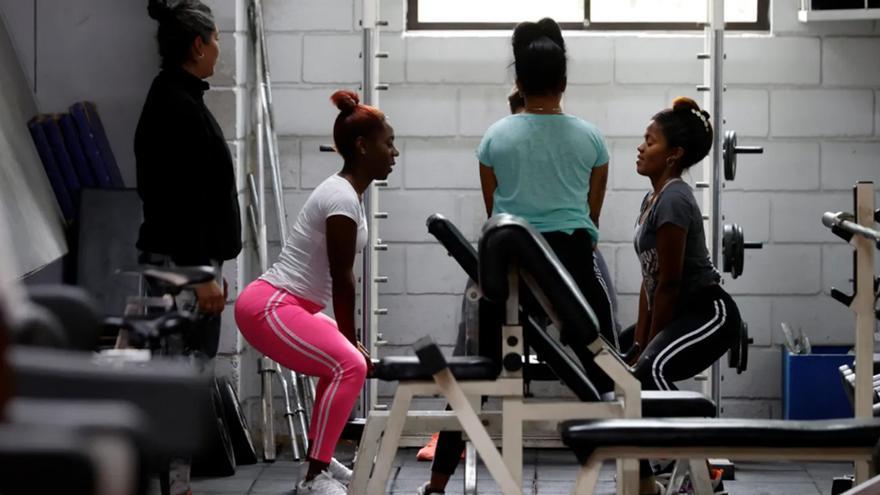
The grass hockey players Yunia Milanés, Jennifer Martínez, Yakira Guillén, Lismary González, Helec Carta and Geidy Morales stayed in Chile after the Pan-American Games. (EFE)

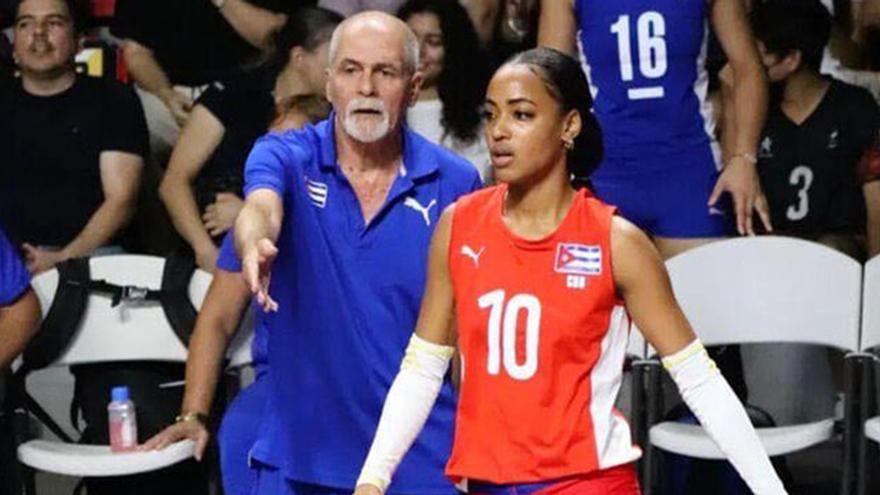
14ymedio bigger14ymedio, Havana, 23 December 2023 — Six medalists were part of the group of 77 athletes in international events who decided to break with Cuban sports in 2023. On the list, published by Cubalite, is Yoenlis Hernández Feliciano, double world champion in boxing in the 165-pound category. There is also the judoka Arnaes Odelín, winner in the 125-pound category at the Central American and Caribbean Games in San Salvador.

In addition Hangelen Llaanes, another gold medalist in the Salvadoran event, left the team’s training in Paris in September before traveling to Serbia. The escape of the habanera, who last year was distinguished as one of the most outstanding athletes in the discipline, left Cuba without the possibility of a medal in the 150-pound category in the Pan-Americans.

Ellemay Santa Miranda, with university studies in Physical Culture and Sports Sciences, stayed in Canada. (Facebook/Ellemay Santi Miranda)

Another of the blows that the regime received was the escape, in June, of the discus thrower Denia Caballero. The athlete broke relations with the Island after winning the silver medal at the Meeting Diputación de Castellón (Spain), with a throw of 207 feet. Journalist Francys Romero indicated that, since the beginning of this year, the Cuban Athletics Federation has “hindered” the athlete’s negotiations with Portugal.

In June, the bronze medalist at the Central American and Caribbean Games (Barranquilla 2018) and at the Pan American Games (Lima 2019), Arisleidy Márquez, escaped along with Yudisaday Rodríguez, Melisa Arias and Geidy Maceo. The athletes, handball representatives, left the training in France. continue reading

In addition, Yoao Illas Puentes, Pan-American bronze medalist in the 1,300-feet hurdles, took advantage of his stay in Chile last November to desert. The native of Bahía Honda, in the province of Pinar del Río, in April of this same year won the gold medal in the V ALBA Games (Venezuela) in the 4×1,300-feet test in mixed relay alongside Roxana Gómez, Lisneidy Veitía and Yoandys Lescay.

Hangelen Llanes was included by coach Filiberto Delgado in the team of 11 athletes who carried out their training in France in September. (Video/Jit capture)

In Chile, grass hockey players Yunia Milanés, Jennifer Martínez, Yakira Guillén, Lismary González, Helec Carta and Geidy Morales also fled. These athletes, according to journalist Francys Romero, “left the training … after completing the game for fifth place against Uruguay (3-0)” in the Pan-Americans. They were joined by handball representative Lidier Vergara.

In the same event, the blind swimmer Yunerki Ortega left the Pan-Americana Villa where the athletes were staying. “Passers-by helped him take a taxi to a service center near the National Stadium,” said T13 news in Chile.

The regime accepted in October that the desertions of athletes and coaches have affected Cuban sports, as recognized by the general director of High Performance of the National Institute of Sport, Physical Education and Recreation (INDER), José Antonio Miranda, speaking on State TV’s Round Table program.

The blind swimmer Yunerki Ortega left the Pan-American Village in Chile last November. (Jit)

Between 2022 and September of this year, 191 athletes broke their relationship with the sports authorities of the Island, the official said. As usual, according to the Cuban authorities, the main cause of the desertions is the American “blockade,” to which Miranda added the “complex economic scenario” that the country is going through.

The figures on the escapes of Cuban athletes are devastating. In January, the official weekly Trabajadores counted the abandonment of 862 athletes in a decade, of whom 635 were baseball players. By adding the recent data offered by INDER, there are now 1,053 athletes who have left the Island.

Translated by Regina Anavy 

____________

COLLABORATE WITH OUR WORKThe 14ymedio team is committed to practicing serious journalism that reflects Cuba’s reality in all its depth. Thank you for joining us on this long journey. We invite you to continue supporting us by becoming a member of 14ymedio now. Together we can continue transforming journalism in Cuba.
Vima Foods, Spanish Emporium which Sells Low-Quality Items for High-Quality Prices

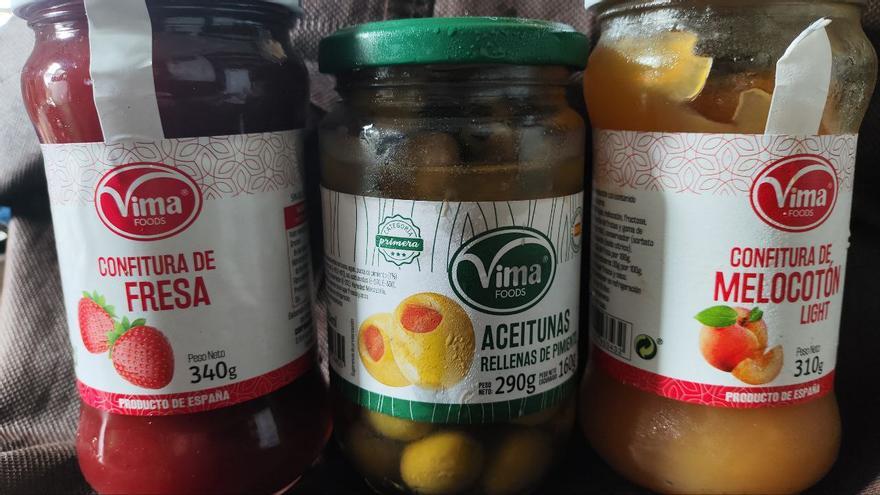
Vima’s products are prominently displayed on all the retail websites where customers overseas can make purchases for delivery in Cuba. (14ymedio)

14ymedio bigger14ymedio, Olea Gallardo, Havana, December 14, 2023 — The wedding last weekend in Havana of Víctor Moro Morros-Sarda and Alexandra Lacorne made the news in Spain’s gossip columns for having brought together several figures who frequently make appearances on their pages. Among the 400 guests were Tamara Falcó, Marchioness of Griñón, daughter of Isabel Preysler and sister of Enrique Iglesias; and her cousin, Álvaro Falcó, Marquis of Cubas. They were accompanied by their respective spouses, Íñigo Onieva and Isabelle Junot, the daughter of Philippe Junot, former husband of Princess Caroline of Monaco.

Only readers of Hola! and similar magazines would be interested in such an event were it not for two things: the luxurious wedding, which lasted several days, took place at a time when Cuba is going through one of its worst crises of the last quarter of a century, and the groom is the son of Víctor Moro Suárez, founder of Vima Foods, a brand of imported products which have been omnipresent in Cuban hard-currency stores for decades.

The company is described by Vanitatis as “an international food group” and by El Debate as “a multi-national distributor of food products with offices in Havana, New York, Coruña and other locations.” For the island’s residents Vima Foods is synonymous with low-quality at high prices.

I can only imagine that Vilma’s ham croquettes must be the worst in Spain because there’s nothing in them. They’re just flavored flour

“They seem like a scam to me,” says Mariam, a Havana native who has not bought any of the company’s products for two years after falling ill from eating a can of Vima tuna which she bought at a hard-currency store. “They are third or fourth-class products sold for high-class prices.” continue reading

Mayonnaise, mustard, tomato paste and other sauces, a wide variety of canned goods, cured meats, frozen foods (vegetables, fruits, meat, fish and shellfish, and even bread) pre-cooked foods, cheeses of various sizes, jams, syrups, powdered milk, yogurts, olives, cooking oils, legumes and grains are just some of the many Vima items for sale on the Island, all of them imported.

These products are prominently displayed on all the retail websites where overseas customers can make purchases for delivery in Cuba.

One of their most popular items is their croquettes. But Mariam has nothing good to say about them either: “I can only imagine they must be the worst in Spain because their ham croquettes have nothing in them. They’re just flavored flour.”

When people in other countries were asked how they perceived the brand, Carlos — who emigrated from Cuba two years ago — said, “I don’t know anyone in Spain who buys it. Fortunately, I myself have never seen it in a supermarket because I remember it was the worst.”

Vima World describes itself as a “family-run company founded in 1994” and a group “whose origens began in Galicia’s fishery sector.” On the same website it claims it operates not only in Spain but in forty other countries as well, and that it also has offices in Panama, the Domincan Republic, Mexico, the United States, China and Cuba.

Its founder has never hidden his ties to the island. Victor Moro Suarez (son of Victor Moro Rodriguez, who died in 2021) was a politician during Spain’s transition to democracy. He also headed a frozen food conglomerate. He spent more than twenty-five years in this country, where he served as president of the Association of Spanish Businessmen in Cuba.

What is murkier are the origins and expansion of his multimillion-dollar business. The so-called Panama Papers, a series of leaked documents obtained from the database of the Mossack Fonseca law firm by the International Consortium of Investigative Journalists (ICIJ) in 2016, revealed that Vima World was on the list of companies which had been registered in tax havens.

“I found a work niche in the Caribbean, starting in Cuba, and that circumstance led me to form this group of companies.” The ICIJ search engine indicates it was founded in January 1994 in the British Virgin Islands. However, Moro Suarez himself acknowledged in an interview with the local Galician press almost two decades ago that his empire started in Cuba. When asked by the journalist how he ended up with one hundred and sixty employees serving twenty million meals around the world, the businessman responds, “I found a work niche in the Caribbean, starting from Cuba, and that circumstance led me to form this group of companies.”

An article in La Voz de Galicia (The Voice of Galicia) four years earlier confirmed, “Vima was created in Havana in 1994 to take advantage of the opening of the Cuban market to tourist investment and became the main supplier to hotels and restaurants.” It reporthed that, in 2002, Vima World, “a distributor based in Vigo and 100% owned by Galicia’s Moro family” was the sector leader in Cuba, with control of 15% of food distribution and 25% of supplies to hotels. It is said to have earned 25 million euros in 2001.

How was a foreigner able to launch and then head a business in Cuba in the mid-1990s and achieve these results in just seven years? It is one of Vima’s unknowns. It is especially striking given that its appearance on the island happened to coincide with the Special Period — after the fall of the Soviet Union and the loss of its subsidies to Cuba — a time of  dollarization and despair.

Also puzzling is how a firm like Vima World S.L., which has been around for almost thirty years, did not show up on the National Registry of Foreign Commercial Ventures until this past October.

The fact that official news outlets such as Cubadebate have reported that its Havana office is in the  Berroa neighborhood — also home to the mysterious Diplomarket — traditionally under the control of Gaesa, the all-powerful business consortium run by the Cuban armed forces, only reinforces the the idea that it is well connected with officials in the highest echelons of power. The author of that article noted that, according to his sources, Moro Suarez has been seen seated alongside figures such as Fidel Castro and Cuban singer/songwriter Pablo Milanés.

The media outlets that reported on the Moro-Lacorne wedding mentioned none of this. They focused instead on other details such as the most recent photo of Moro-Suarez next to his wife, Mariquita Morros-Sarda, in the traditional Spanish mantilla worn by maids of honor.

The usual syrupy, superfluous prose was all about dresses and extravagant waste. Staying at the Gran Hotel Manzana Kempinski, one of the most expensive in the city, the guests enjoyed a “pre-wedding” party at the Tropicana cabaret, reserved solely for them for the occasion. They moved around in glittering vintage cars and attended a ceremony held in the Havana cathedral itself. Many of the guests, like the influencer Belén Barnechea, shared relaxed images of the streets of the capital, day and night, with shots that in no way illustrated the true and calamitous state of the city. A lavish Havana of glossy paper under the canopy of Vima Foods.

____________

COLLABORATE WITH OUR WORKThe 14ymedio team is committed to practicing serious journalism that reflects Cuba’s reality in all its depth. Thank you for joining us on this long journey. We invite you to continue supporting us by becoming a member of 14ymedio now. Together we can continue transforming journalism in Cuba.
Las Tunas, an ‘Ungovernable’ Cuban Province Due to Corruption, Inflation and the Economic Debacle

Jaime Chiang, governor of the province, reported to Parliament this Friday. (Periódico 26)

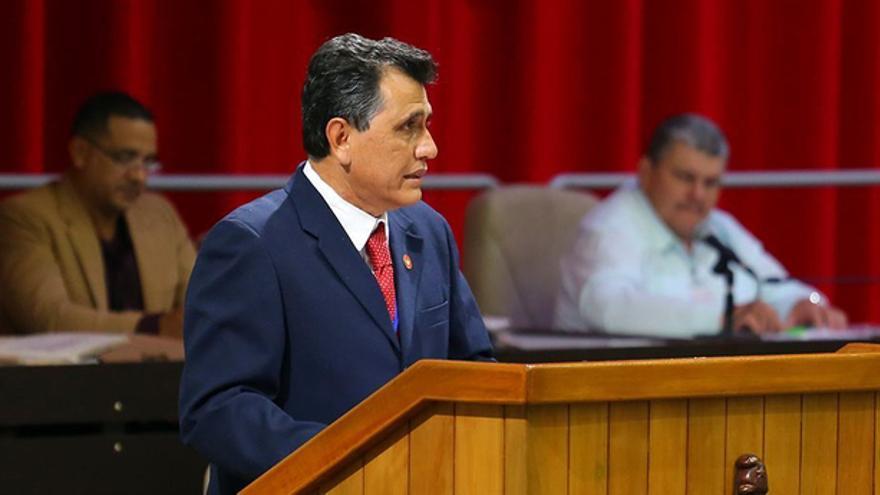
14ymedio bigger14ymedio, Havana, 23 December 2023 — The governor of Las Tunas reported to Parliament this Friday that 2023 has been one of the most disastrous years for the province in economic, health and social matters. With a contrite face and a thick report in his hand, Jaime Chiang translated into numbers the alarming infant mortality rate, state corruption, inflation and crime.

But not everything has been the fault of his administration, the politician warned, but also of the “situation of ungovernability and disobedience in the population” caused by the “enemies of the Revolution,” also responsible for the blockade and the “energy contingency,” he insisted. Hence, Las Tunas will lack 1,481 million pesos to fulfill its total net sales plan in the first half of the year, which remained at 5,289 million.

There are 34 entities responsible, the report specifies, due to “lack of demand, rigor and responsibility on the part of some cadres.” Among the recurring problems are the “deficient management of collections, “the “chain of non-payments” and the “insufficient economic and financial administration.”

Las Tunas, in short, spent 185 million pesos more than the state budget allowed, about 3,511 million

Food insufficiency, whose production was neglected by the provincial government, was especially serious for raw sugar, rum for export, corn and beef. Chiang complained that all these products had to be guaranteed by the continue reading

province under “order of the State,” and they couldn’t be. The production of another 99 “articles” also failed, almost all linked to the food industry and many to construction.

Las Tunas, in short, spent 185 million pesos more than the state budget allowed, about 3,511 million. Once again, Chiang was able to point out the specific culprits of the spending: the municipalities of Las Tunas, Puerto Padre, Manatí, Jesús Menéndez and Amancio. Forty-eight “disciplinary measures” were also applied, including three dismissals and multiple fines and warnings.

But it is in Public Health where the outlook is most worrying. The province’s infant mortality rate in 2023 was 7.83 per 1,000 live births, which represents an increase over the previous year, when a rate of 6.96 per 1,000 children was recorded. The cause of death in 73% of the cases was low birth weight.

As for health and education, Chiang was more vague and said that he hoped that next year 85 percent of teaching activities would have a “good” level, although for that a lot of “improvement” is needed.

Transport, another of the sectors in crisis, met only 37% of its plan. Of the more than 13 million “passengers to be transported” in the province during 2022, only 4.92 million were moved. The situation did not change in the first half of 2023, even with the modest target of 6 million: they only transported 2,495 million, not only because of the shortage of fuel but also “because of the lack of batteries and tires.” The domino effect was felt in the distribution of the basic family basket, especially in those areas of the province where people have to go by rail or boat.

But Las Tunas has won the title this year for being “the driest province in the country.” About 16 communities, which total 9,640 inhabitants according to the official report, are still without water, and when they receive it, it’s only thanks to the Communal Services watertrucks. Chiang did not say if the provincial government will take measures, next year, to resolve the situation once and for all.

About 16 communities, which total 9,640 inhabitants according to the official report, are still without water, and when they receive it, it’s only thanks to the Communal Services water trucks

More than 20,300 homes in the province are in poor condition, 10 percent of the province’s constructions, the report continues. In the 41 vulnerable neighborhoods registered, 829 families live in a situation that the State considers precarious. Here, once again, the provincial government apologizes but accuses the pandemic and the “insufficient supply of materials” available. “The main causes of non-compliance with the plan were the lack of cement, steel, finishing elements, sand and other dry materials, flooring and wood,” he added.

The one  success in Las Tunas – as in the whole island – is in the “confrontation of crime,” which has proven to be a gold mine for the state coffers. About 8,488 “control actions” to collect overdue fines and detect financial irregularities contributed to raising 15,531 million pesos. But at this point Chiang could not claim victory either: “Despite the increase in all the indices of confrontation and imposition of fines, the directives have not been effective.”

Translated by Regina Anavy

____________

COLLABORATE WITH OUR WORKThe 14ymedio team is committed to practicing serious journalism that reflects Cuba’s reality in all its depth. Thank you for joining us on this long journey. We invite you to continue supporting us by becoming a member of 14ymedio now. Together we can continue transforming journalism in Cuba.

Cuba Receives 45 Rafters Returned by the United States, Bringing the Total to 5,210 From Several Countries

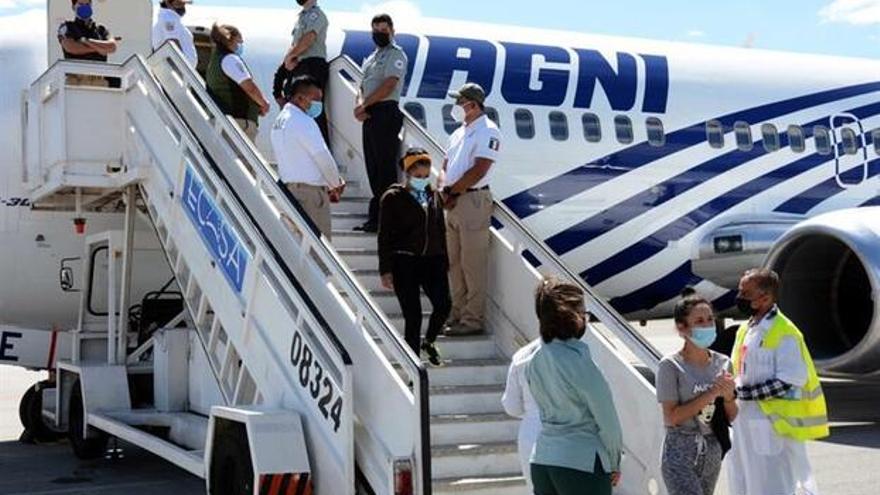
At the end of 2022, Cuba and the United States agreed to resume deportation flights for ’inadmissible’ people detained on the border with Mexico. (Prensa Latina)

14ymedio biggerEFE/14ymedio, Havana, 23 December 2023 –The U.S. Coast Guard Service (USCG) returned 45 Cuban rafters this Friday along with 5,210 irregular migrants deported to the Island from several countries in the region so far this year, according to official media.

This group includes 39 men and six women who left illegally from the province of Matanzas, according to the Ministry of the Interior on the social network X (formerly Twitter). The report indicates that the rafters were intercepted at sea by the U.S. Coast Guard and that this is the 129th repatriation operation of migrants from different nations in 2023.

The Cuban authorities assure that they stand “firm” in their commitment to a “regular, safe and orderly” migration, while warning of the danger and life-threatening conditions posed by illegal departures from the country by sea. Cuba and the U.S. have a bilateral agreement that all migrants arriving by sea will be returned to the Island.

Flights were added at the end of 2022, after Cuba and the U.S. agreed to resume deportation flights for “inadmissible” people detained at the border with Mexico. continue reading

During the last fiscal year, which began on October 1, 2022, more than 6,800 Cubans have been intercepted by the USCG on trips to the coast of Florida, according to official data.

During the last fiscal year, which began on October 1, 2022, more than 6,800 Cubans have been intercepted by the USCG on trips to the coast of Florida

This year, Cuba also received migrants deported from the Bahamas, Belize, the Cayman Islands, the Dominican Republic and Mexico.

Cuba is experiencing an unprecedented migratory wave both for the volume of migrants and for its temporary extension due to the serious economic crisis it suffers with a great shortage of basic products (food, medicines and fuel), galloping inflation, frequent power outages and a partial dollarization of the economy.

It is estimated that in 2022, around 4% of the Cuban population left the country, and this year’s figures could be similar according to those accumulated to date

Also, U.S. immigration authorities arrested more than 242,000 migrants and asylum seekers at the southern border in November, according to figures published this Friday by the Customs and Border Control Office (CBP).

The data for the month of November represent a slight increase, less than 1%, compared to October, but they maintain the trend of the high arrival of migrants on the border with Mexico that has been evident in recent months.

In fact, November was the third month with the most arrests of migrants at the border in the last 14 months, according to CBP data.

Most of the people arrested, more than 191,000, tried to cross into U.S. territory irregularly, according to the data.

The interim commissioner of CBP, Troy Miler, said in a statement that his agency faces a “significant challenge” and asked the U.S. Congress to approve more resources to “improve border security and national security.”

“The levels of migration are still historically high,” the statement stressed. In November, CBP recorded more than 64,811 arrests of people of Mexican nationality, followed by Venezuelans with 34,063 arrests and Guatemalans with 26,299.

According to the statistics for the end of November 2023, published by CBP, 20,076 Cubans arrived in the United States through border points

Since the middle of the year, when a migration restriction that had been imposed by the COVID-19 pandemic was lifted, the Democratic Administration has enacted a series of rules to try to limit the arrival of migrants at the border and restrict access to asylum.

According to the statistics for the end of November 2023, published by CBP, 20,076 Cubans arrived in the U.S. through border points, 72% at the Mexican border. This represents a record number of Cuban irregular migrants in a month, 44,079.

The report points out that during last November, 14,502 Cubans entered irregularly through the southern border of the United States. The number of Cubans who have reached American soil during fiscal years 2022 and 2023 is 650,000, to which are added more than 50,000 since Joe Biden assumed the presidency.

In addition, more than 60,000 Cubans have traveled to the U.S. through the humanitarian parole program, while the number of those who arrived through the CBP One appointments, where Haitian, Mexican and Venezuelan applicants lead, is not revealed.

Cuba is experiencing an unprecedented migratory wave both for the volume of migrants and for its temporary extension due to the serious economic crisis it suffers with a great shortage of basic products (food, medicines and fuel), galloping inflation, frequent power outages and a partial dollarization of the economy. It is estimated that in 2022, around 4% of the Cuban population left the country.

Translated by Regina Anavy

____________

COLLABORATE WITH OUR WORKThe 14ymedio team is committed to practicing serious journalism that reflects Cuba’s reality in all its depth. Thank you for joining us on this long journey. We invite you to continue supporting us by becoming a member of 14ymedio now. Together we can continue transforming journalism in Cuba.

Barely 50 Percent of Public Transport Operates in Santiago de Cuba

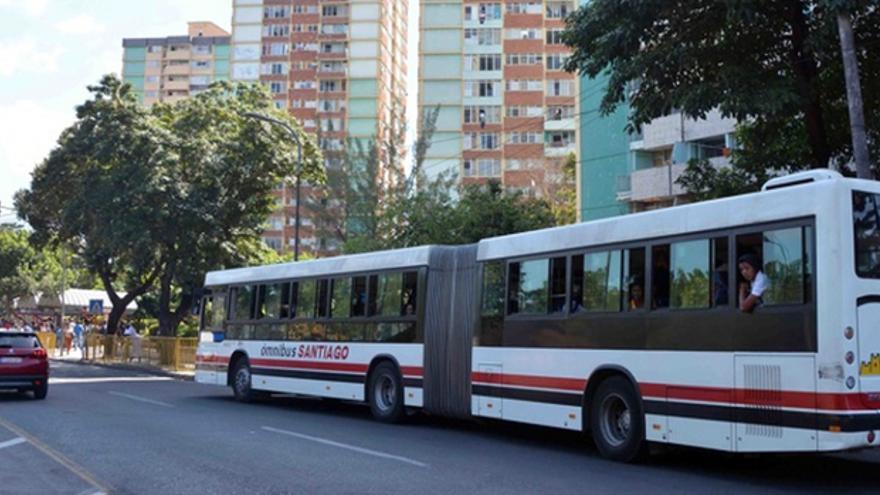
Articulated buses cover the most popular routes in the city. (Sierra Maestra)

14ymedio bigger14ymedio, Havana, 18 December 2023 — Only half of the public transport vehicles operate in Santiago de Cuba, mainly because of lack of fuel, according to the official newspaper Sierra Maestra, as reported by Yariannis Carrión, a specialist of the Provincial Transport Company.

The situation, however, is not recent. Last June, the same newspaper reported that only half of the vehicles were providing service due to a lack of spare parts, resources and fuel. The authorities, for their part, only succeed in putting pressure on state companies to use their own buses for their workers to transport passengers.

The article also explains that in December only five buses of the main routes are in operation – half of those available in the province – and of the Diana buses, of Chinese manufacture and assembled in Cuba, barely 18 out of a total of 36 are operational.

The local government also asked the inspectors – previously known as “yellows” and now called “blues” – to contribute to flagging down cars to pick up riders

The local government also asked the inspectors – previously known as “yellows” and now called “blues” – to contribute to flagging down the cars of state companies to collaborate in the transport of people. However, the authorities have pointed out that the drivers, on many occasions, ignore the signal to stop or lie about their final destination. continue reading

“All companies, whether Transport or not, have rented vehicles, and it’s expected that by 2024 this figure will increase and the fuel situation will improve,” Carrión added, although he did not offer any explanation about how much the costs of this type of transport have risen.

Traditionally in Santiago de Cuba, motorcycles have been a palliative to the critical situation of urban transport. However, the cost of spare parts and gasoline on the black market have raised the price of tickets to 100 pesos in short sections. For slightly longer distances, such as the 3.7 miles that separate Ferreiro Park from the town of El Caney, the price is around 300 pesos, always up to the driver.

On the other hand, the well-known pisicorres (old cars adapted to transport passengers), have prices established at 20 pesos, but the drivers try to circumvent the limit, increasing the rate to 50 pesos if there are no inspectors in sight.

This September, the local newspaper Escambray acknowledged that both rural and interurban routes were paralyzed in Sancti Spíritus

In other provinces the situation is similar. This September, the local newspaper Escambray acknowledged that both rural and interurban routes were paralyzed in Sancti Spíritus, and that there were hardly any buses in the provincial capital.

There have also been readjustments in Holguín. Speaking to the official newspaper Ahora!, Wilmer García Ramírez, director of the Transport Company in the province, said that the 21 routes that exist in the city remain operational, “but with fewer cars,” which reduces the frequency during the day.

Last February, the Minister of Transport, Eduardo Rodríguez Dávila, announced on State TV’s Round Table program that the Island was facing one of the worst moments of public transport in recent years.

Rodríguez Dávila explained that the Government does not have foreign currency to repair the means of transport: “It takes between 40 and 45 million dollars to maintain passenger transport services, not counting the money needed for new investments, and those figures cannot be guaranteed.”

In addition, the official admitted that to the difficulties in obtaining gasoline and oil is added the ruinous state of the roads throughout the country, which contributes to the rapid deterioration of the vehicles.

Translated by Regina Anavy

_______________

COLLABORATE WITH OUR WORKThe 14ymedio team is committed to practicing serious journalism that reflects Cuba’s reality in all its depth. Thank you for joining us on this long journey. We invite you to continue supporting us by becoming a member of 14ymedio now. Together we can continue transforming journalism in Cuba.
Razors and Balsams

Picture of a barbershop in the 1920’s in Camajuaní, Villa Clara. (Author’s archive)

14ymedio bigger14ymedio, Xavier Carbonell, Salamanca, 17 December 2023 – It is much easier for a boy to be friends with his grandfather than with his father. The older one understands you, he has time on his hands once again, he plays – dominoes, chess, cards – and he rereads the books he bought when he was a young man. An old man is just a boy, with ailments. A father shapes his son’s character through opposition, making war with him; a grandfather does it through being close to him, and by giving advice. The father is master of his time, he calculates it, knows how to use it well and how to dominate it. For the boy and his grandfather time does not exist. One is entering into life, the other is exiting. That’s why they play together.

My maternal grandfather was a barber and a musician; my paternal one was a pharmacist. These humble professions are often present in the books that I have written, they are ’of the people’. I would have liked also to have had for a grandfather a scissor-sharpener, an aviator or a ship’s captain, or a mortuary photographer – there were plenty of those on the island – or an antiquarian. Nevertheless, life was generous enough in offering me three worlds: those of barbers, chemists and municipal bands.

In 1944, when my great grandfather got married, he had already been working as a barber for years. I know the reason why, in the newspaper which announced the wedding – I still have the cutting – the newspaper’s delivery man wrote the word “barbershop” next to his name in impeccable calligraphy and took the trouble of highlighting the announcement in blue ink. (The best news of the day, I have to say, because the rest of the paper is dedicated to describing developments in the Second World War, and to asking the youth of the town to report to the recruitment committee and march on Europe).

 In 1944, when my great grandfather got married, he had already been working as a barber for years

As soon as his son could manage a comb and a pair of scissors, he too took up the trade. I look at him now, formal, concentrated, white shirt and beige trousers. The photo, I estimate, is from the mid-sixties and it wasn’t long before he himself was called up for military service. Seated, and covered in a sheet, there is a man having a razor haircut. The locks are falling into his lap. A Guajiran man behind him leaves his own chair to check on the younger man’s handiwork. No one speaks, perhaps because of the presence of the camera. There’s a certain tenderness in the way in which the photo is taken. Translucent and ochre, the image feels more like a memory than a print. I’ve always thought that the person behind the camera lens must be my grandfather, proud of his new recruit.

In my village there was a detailed inventory of barbers, pharmacists and everything else. “At first the barbers practised like dentists”, remembers a writer in 1943. In the “1800’s”, he adds, one black man called Juan Rojo had arrived with his razor blades and shaving cream, and later on a Spaniard called Bruno Claraco, and it wasn’t long before the appearance of “Delfín Miranda, who had no qualification, and Delfín Barrena, who did have one”.

I don’t know when my great grandfather arrived but I do remember his last barber shop, the one he left to his son. There was a Koken swivel-chair – which later, after the death of the old man, made me sad, seeing it in the hands of another barber. It was in a bright and white room with a big mirror fixed to a structure that was fitted with little drawers. I’ll never forget the buzz of his electric clippers as it ploughed its way through grey hair and curls, and fleeces and manes and emerging bald patches and mops. Head shaving has always had something of a cleansing ritual about it: one attends the barbershop like one goes to confession or visits the doctor. One pays dearly for being unfaithful: the barber will always be able to detect someone else’s handiwork and knows how to punish an infidelity by leaving a “cockroach”, or one sideburn longer than the other.

Where the barbershop was all party-like, all cigarette smoke and conversation, then the pharmacy was all severity, and mystery 

A barbershop is full of stories. Whilst my grandfather was describing how to shave the head of a priest – you put a circular cap over the crown, mark the tonsure with the razor and shave round the bald patch – it wasn’t considered wrong to interrupt him in order to look out of the window if a woman who looked a bit like Sofia Loren or Kim Novak (and knew how to move like them) happened to be walking by. They were different times, less toilsome ones.

Where the barbershop was all party-like, all cigarette smoke and conversation, then the pharmacy was all severity, and mystery. In another photograph – there’s no limit to my archives – my paternal grandfather manipulates his test tubes and his pestle and mortar. At that time, pharmacies were a paradise of coded names, powders and resins that one always took to be poisons. The shelves were full of porcelain jars, with names marked in indigo blue ink: agrimonia, phecula patata, folium eucaliptus, angelica, dens leonis. Chemists, and my grandfather was no exception, kept recipes for numerous unguents in a book with black covers. A book which was inaccessible to me, like any grandfather’s things, right up until he died.

Both worlds – no need to mention the band: music needs no explanation – have so much connection to writing, which only now, far away from the ghosts of that village, do I actually realise. Barber or pharmacist, both have to cut, clear, mix, find the right measure, make poisons or conjure up balsams. In any event, the occupations of each of those old men are not forgotten.

Translated by Ricardo Recluso

____________

COLLABORATE WITH OUR WORKThe 14ymedio team is committed to practicing serious journalism that reflects Cuba’s reality in all its depth. Thank you for joining us on this long journey. We invite you to continue supporting us by becoming a member of 14ymedio now. Together we can continue transforming journalism in Cuba.
Cases of Theft and Slaughter of Livestock in Cuba Have Increased by 360 Percent in Two Years

The theft and slaughter of livestock has caused the number of animals to decrease in an accelerated way. (14ymedio)

14ymedio bigger14ymedio, Madrid, 22 December 2023 — It was expected that, among the results analyzed by Parliament, those of the agricultural sector would be the most regrettable. But expectations were, once again, exceeded, in particular when the collapse of livestock was known due to theft and slaughter, almost twice as much as last year and 360% higher than in 2021.

In 2022, the consequences of this practice already left very worrying figures. Throughout the Island, there were 82,445 cases of theft and slaughter, which meant 22 million fewer pounds of meat. Compared to the 33,690 head of cattle lost in 2021, the figure was already 2.5 times higher (145% more). But in a rapid acceleration, in 2023 the loss amounted to more than 155,000 animals, to which are added an indeterminate number of those who die and those not born due to “deterioration of the food base and the delay in the incorporation of the female into reproduction.”

The State, which owns almost 80% of the land, barely provides 22% of rice, 16% of food and 8% of fruits. Private individuals contribute, with less than 40% of the land, more than 70% of food, corn and beans, 40% of rice (more than the State and cooperatives) and 80% of the fruits

The report presented yesterday by Ramón Aguilar Betancourt, president of the Agri-Food Commission, did not skimp on harsh words and described the deterioration as “accelerated,” with a number of animals that “has been decreasing for years, and all the indicators present alarming results.” The official stressed that the animals spend too much time without enough food and water, and frequent irregularities are repeated: undeclared births and continue reading

unregistered reports of sex and category, among others.

To top it all off, the other animal protein  is also in sharp decline. Pig production is limited and with “very high prices,” while poultry is scarce, including eggs that don’t hatch and chicks that don’t grow. When the chicks do survive they must be killed, because of “the lack of food for them,” the report says.

With such data, it is not surprising that the state livestock group has one of the worst results, along with the Agricultural, Agroforestry, Gelma and Acopio. They lead the losses of the agri-food system, which has negative results of more than 2,385 million pesos.

In agriculture, as expected, there was no room for hope either. The president of the commission was very clear: “The necessary transformations that could have an effect on the food for our people and on the economic development of the country have not been achieved.” Of course, he exempted the Ministry of Agriculture and the Government from any responsibility by pointing out that the bad results happened “despite” his recommendations and actions. However, he did not hesitate to ask the highest officials to take on a task that is too much for the department.

The official stressed that the animals spend too much time without enough food and water, and frequent irregularities are repeated: undeclared births and unregistered reports of sex and category, among others

“An important part of the problems affecting the Cuban agricultural sector exceed the scope of the capacities and powers of the Ministry of Agriculture, requiring more comprehensive attention from the Government of the Republic,” says the report, which suggests that more time should be devoted to a sustainable development strategy rather than to such concrete measures as the search for raw materials.

The outlook is discouraging, with only two of the 14 products considered essential meeting with the projections. Corn and vegetables escape, and paradoxically, the bean improves compared to last year, despite the fact that the figures and prices show its scarcity.

The document presented to the deputies makes it clear that “it is necessary to look for financial alternatives that allow access to basic inputs for grain production technologies, where investments have been made that are currently underutilized, with deterioration due to lack of exploitation.” And, as Aguilar Betancourt acknowledged, some of the worst practical problems of the Cuban countryside date back to the 90s, he said, referring to the obsolescence of the machinery and the lack of inputs, although not to the absence of policies aimed at carrying out a new direction.

An important part of the problems affecting the Cuban agricultural sector exceed the scope of the capacities and powers of the Ministry of Agriculture

It was stated, for example, that “in recent years investments in the agricultural sector do not exceed 5%” and it is surprising that this is not pointed out as one of the causes of the gigantic crisis of the sector and a serious incongruity with the message that the priority is food security, compared to investments of more than 30% in the hotel sector.

The comments that were made regarding coffee, described as a “cultivation of great relevance for the country” for being exported and, at the same time, replacing imports for domestic consumption – which is mixed 50% with peas, in that case – make it clear that the perspective is never to assume mistakes. “Despite the investments made to recover the areas and improve the technological processes in the industry, it is not possible to achieve the projected results. During the years 2012-2022, more than 15,000 acres were planted, but technological indisciplines, the effects of climate change and the limitations of inputs have affected agricultural yields, which on average reach 0.54 tons per acre,” they point out.

Exports, despite everything, were not so bad. Forecasts were met by 75% in 2022, and in the first half of the year they reached 92%, which is not catastrophic for the percentages that the authorities usually manage. Other disastrous data correspond to the workforce. In 39 cooperatives there is no president, and in 92 an economic representative is missing. The report confirms that the costs associated with the workforce are high and, in addition, the workforce is decreasing, not to mention those who do not carry out their activities “within the framework of legality.”

Other disastrous data correspond to the workforce. In 39 cooperatives there is no president, and in 92 an economic representative is missing

The document also speaks of an oversizing of state and business structures, as well as a growing number of cooperatives with problems. However, it does not mention, as Cuban economist Pedro Monreal points out, the private sector, “the component,” he explains, “of a significant part of Cuba’s food security.”

In the professor’s opinion, “agricultural policy must put aside the cooperative direction and focus on what it should: the national private sector.” The data show that private individuals contribute, with a percentage of land use of less than 40%, more than 70% of food, corn and beans, 40% of rice (more than the State and cooperatives) and 80% of the fruits. Meanwhile, the State, which owns almost 80% of the land, barely provides 22% of rice, 16% of food and 8% of fruits.

“All that narrative of ‘liberating productive forces’ should start by officially supporting a modern private agriculture that replaces the scheme of small commercial production of ’natural people’ with a diverse institutional model,” says the economist.

Translated by Regina Anavy

____________

COLLABORATE WITH OUR WORKThe 14ymedio team is committed to practicing serious journalism that reflects Cuba’s reality in all its depth. Thank you for joining us on this long journey. We invite you to continue supporting us by becoming a member of 14ymedio now. Together we can continue transforming journalism in Cuba.
Flooded and Full of Rubbish, Havana Prepares Itself For More Storms this Weekend

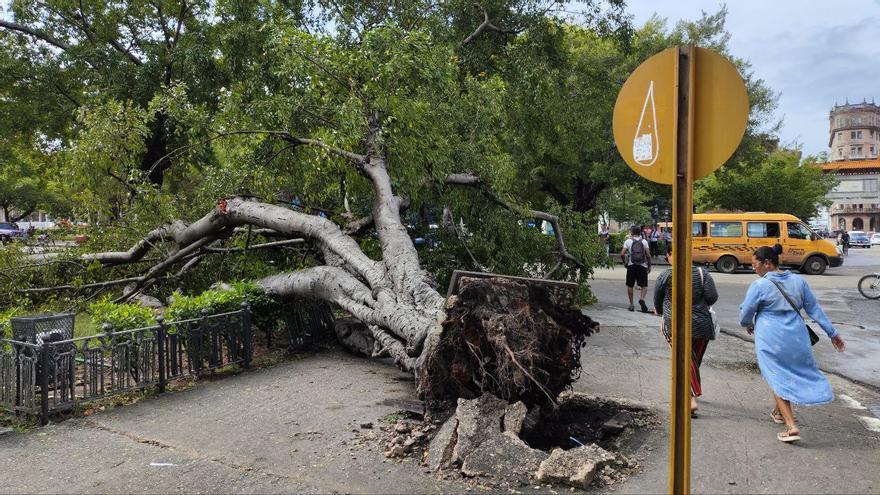
This week’s winds took down one of the emblematic trees in Brotherhood Park. (14ymedio)

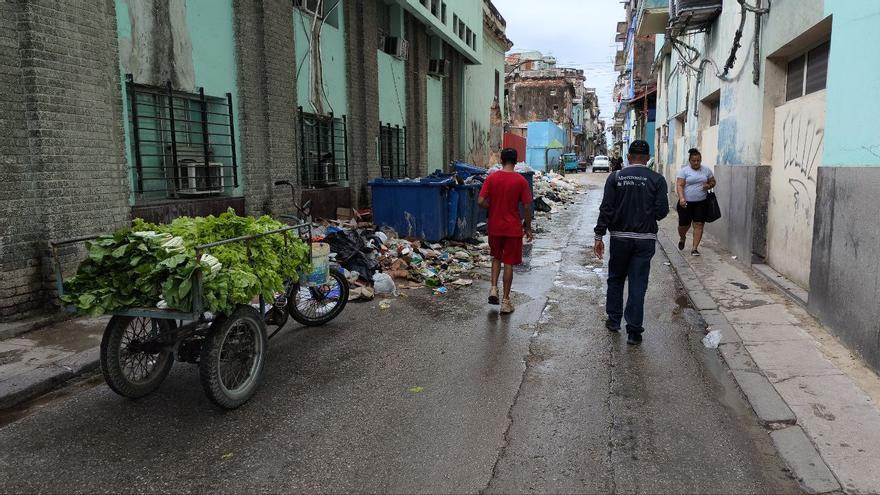
14ymedio bigger14ymedio, Natalia López Moya, Havana, 15 December 2023 – After the dearth of any official information or warnings prior to last weekend’s heavy rains, the Cuban authorities have been under pressure to put out warnings that this coming Saturday and Sunday there will be storms in the west of the country, and especially in Havana. In the capital, flooded after several days of rain, and with rubbish bins overflowing, residents were trying to prepare themselves, on Friday, for several coming days of being confined indoors.

In Central Havana one can see evidence of the continuous rainfall of the last few days. People queued outside bakeries, food ration stores and state-run shops that sell the so-called “free modules” which offered only detergent, vegetable oil, cigarettes and chicken picadillo. People have to get the rest of their provisions on the informal market or from private shops, at extremely higher prices.

In Plaza de Carlos III, the biggest shopping centre in the neighbourhood, the queue stretched right around the corner and one could see the desperation on the faces of many of those who were waiting. “They say things are going to get ugly”, one elderly woman feared as she waited to buy her family’s module, which is also called a “combo”. The institute of meteorology has forecast heavy coastal rain, with possibly very intense rainfall, for the weekend.

People have been becoming more worried as the morning has progressed: many fear that the city is defenceless in the face of any inclement climate effect. “All that rubbish which has accumulated over there, there’s no time to collect it, and not even bringing in the army could get rid of it in time before the weather gets worse”, says Javier, a resident who lives on the continue reading

corner of Royo and San Martín in central Havana, where a mountain of waste has been collecting over several weeks.

Rubbish on Royo and San Martín, Central Havana, on Friday. (14ymedio)

On San Francisco and San Rafael the picture is the same – the rubbish mounts up and spreads out from the corner to almost half way across the block. Much of it also blocks the drainage grates which ought to be carrying the rainwater away – another cause for concern for the locals. Although their principal fear continues to be the possibility of building collapses.

“We’re going to my mother’s house because this roof is in a very bad state”, Yamilé, a resident of Gervasio/Laguna (San Leopoldo) tells 14ymedio. “Here, there’s always the danger of seawater ingress”, notes a woman who lives just 100 metres from the Malecón sea wall. “But this time we’re leaving not because of that but because we fear the heavy rain”.

“Water up there and water down here, a terrible combination”, adds Yamilé, who lives in a building dating from the 1920’s. “As we live on the first floor*, the seawater affects us mainly by contaminating the water tank, but if it’s also raining for days on end then it’s certain that the roof is going to be leaking as well”.

The streets, awash from all the rainfall, and having faulty drains as well, wouldn’t appear to be able to take any more water if the rain continues. “I’ve had to keep trying to dodge the puddles but it’s difficult because they’re everywhere”, says a worker from a state business premises on Calle Infanta.

This week’s winds took down one of the emblematic trees in Brotherhood Park, a key passenger transport hub, given the number of bus stops and private taxi ranks nearby. “It’s been like that for more than 24 hours and they haven’t come to clear it up”, complained a local resident who not only feared even further and greater damage but she also believed that “this tree could still be saved”.

After midday, the situation became worse and the winds grew stronger across the city, which coincided with the meteorological forecast of an imminent arrival on the island of an extra-tropical cyclone.

*Translator’s note: The ’first floor’, in Cuba as in much of the world, means the floor above the ’ground floor’.

Translated by Ricardo Recluso

____________

COLLABORATE WITH OUR WORKThe 14ymedio team is committed to practicing serious journalism that reflects Cuba’s reality in all its depth. Thank you for joining us on this long journey. We invite you to continue supporting us by becoming a member of 14ymedio now. Together we can continue transforming journalism in Cuba.
A Woman is Murdered in Front of her Four Children in Cuba’s Pinar del Rio Province

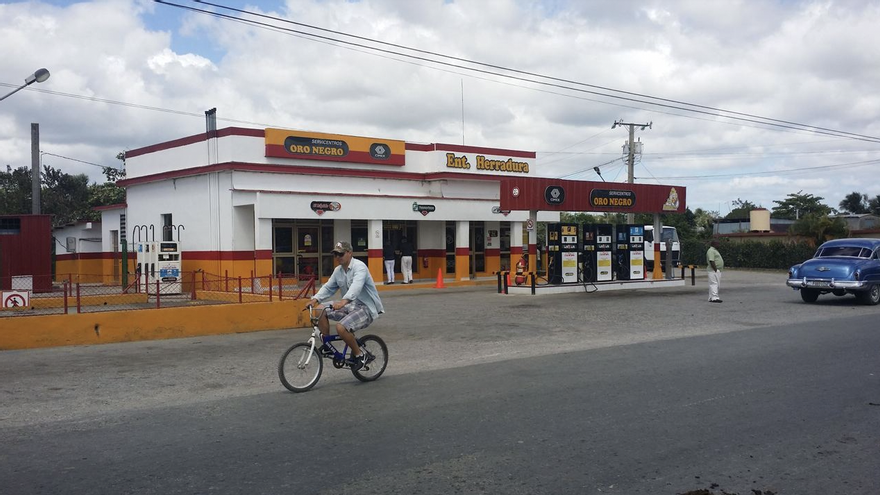
Entronque de Herradura, a town in the Pinar del Río municipality of Consolación del Sur. (Facebook/Horseshoe Junction)

14ymedio bigger14ymedio, Havana, 22 December 2023 — The independent platforms Alas Tensas and Yo Sí Te Creo en Cuba (YSTC) confirmed this Friday a new femicide. The name of Misleidis Díaz, murdered on December 19 in Pinar del Río, is added to the painful record of femicides in 2023 on the Island, which already amounts to 85 cases.

According to the platforms, Díaz, 46, was murdered by her ex-husband in front of the four children they had in common in Entronque de Herradura, a town in the Pinar del Sur municipality of Consolación del Sur.

The activists also allege that the victim had reported violent treatment and death threats by the alleged aggressor to the police on previous occasions, but the authorities ignored her complaints.

The threats were so many and were so credible that four days ago Misleidis went to the PNR Unit to file a complaint.

“The threats were so many and they turned out to be so credible, that four days ago Misleidis went to the PNR Unit to make the complaint,” a source who claims to have known Díaz declared on social media. “They didn’t even draw up a report, they sent her back to her house,” she added, alleging that the authorities considered the attacker’s threats to be just “talk.” continue reading

On Thursday, the severity of violence against women on the Island has motivated a group of independent organizations and platforms to address an open letter to the Cuban Government. Their demands: that the State and the relevant institutions offer clear data on femicides and violence against women on the Island. The methods of the authorities, defined in the text as “patriarchal” and “authoritarian,” keep more people in danger of violence, specifically 16,116 Cuban women and girls, the activists denounced.

The document also highlights the constant efforts of these independent organizations to collect information on cases of femicides and violence against women, about which the State refuses to reveal official data or offer police collaboration.

The latest statistics presented by the authorities in this regard quantified 117 femicide murders on the Island in a period of three years, since 2020, while independent media and observatories have recorded almost the same number in the last two years alone.

The activists also noted the hundred women who remain imprisoned on the Island “for political reasons,” in most cases separated from their children and family and suffering inhuman treatment in prisons.

This is the case of Lizandra Góngora, separated from her five-year-old son, and Lázara Karenia, who will be sent to prison when her baby turns one year old. The report also reported on Brenda Díaz, a transsexual woman held in a men’s prison, and Aymara Nieto, a Lady in White accused for the second time after allegedly starting a riot in the prison.

Other names, such as those of the Garrido sisters, Sissi Abascal and Sayli Navarro, also appear in the list of women imprisoned by the regime for their role as activists and opponents in recent years, although they were not mentioned in the document.

Establishing and guaranteeing compliance with a Comprehensive Law against Violence is also one of the requests of these groups

It is necessary to take “effective prevention measures such as (the creation of) specialized police stations, gender prosecutor’s offices, shelters, comprehensive protocols and anti-racist programs,” continues the letter, which also questions the role of the Cuban authorities in controlling violence against women in the country, taking into account that this year 85 femicides have been recorded without the State having made mention of any of them or expressed its will to resolve the cases.

Establishing and guaranteeing compliance with a Comprehensive Law against Violence is also one of the requests of these groups, who have been demanding for years the appropriate inclusion and classification of violence against women in the Penal Code.

“A new stage cannot be opened for Cuba, of supposed confrontation with violence against women, if the criminalization of all civic activism in the country persists,” continues the report, which insists that Cuba must return the “right of association, of assembly, of demonstration and of expression to all the organizations of the Cuban civil society.”

The call for “seriousness” and “transparency” of institutions, especially those in charge of protecting the integrity and rights of women, such as the Federation of Cuban Women, was another of the points discussed by the activists.

Two weeks before the end of the year, the independent registry of femicides in Cuba has 85 cases of women murdered in Cuba because of their gender, generally by their partners or ex-partners, and generally violently. The bloody list also includes the names of teenagers who were under 18 years old, and elderly women over 65. In many cases, the aggressors also attacked family members of the victims.

All of this despite the Government’s efforts to appear to have an inclusive policy and concern for these cases, which led it to form, this year, an Observatory to record “in real time” incidents of violence against women and femicides. So far, the contribution of official figures to the improvement of this situation on the Island, which is getting worse day after day, is zero.

____________

COLLABORATE WITH OUR WORKThe 14ymedio team is committed to practicing serious journalism that reflects Cuba’s reality in all its depth. Thank you for joining us on this long journey. We invite you to continue supporting us by becoming a member of 14ymedio now. Together we can continue transforming journalism in Cuba.
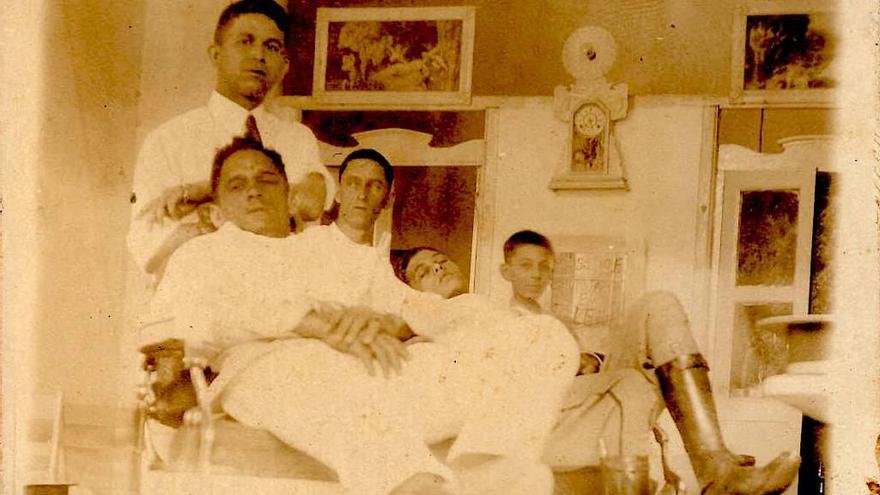
LASA Condemns ‘Political Repression in Cuba’ in the Case of Alina Barbara Lopez

Alina Bárbara López Hernández during an interview in April 2023. (EFE)

14ymedio bigger14ymedio, Madrid, 12 December 2023 — After a couple of weeks of hesitations, the Latin American Studies Association (LASA) has taken the step expected by many of its Cuban members with the publication of a statement that “condemns political repression in Cuba” in general terms, as well as “in particular” in the case of the historian Alina Bárbara López Hernández, declared guilty of the crime of disobedience by a court in Matanzas on November 28.

“For several months, Dr. Alina López Hernández has been the subject of acts of repression and intimidation by the authorities of her country,” it states in the text, released through the website of the institution, based in the United States.

LASA specifically accuses Cuba’s Police, State Security and the Prosecutor’s Office of violating the human and citizen rights of the Matanzas intellectual, listing several instances including harassment on social networks, physical attacks, suspension of internet service, a travel ban and pressures on her immediate environment.

LASA specifically accuses the Police, State Security and the Prosecutor’s Office of violating the human and citizen rights of the Matanzas intellectual.

The association describes as “illegitimate and unconstitutional” the summons that the authorities issued to López Hernández and to which she refused to attend, a fact for which she was accused and placed under house arrest in June of this year. “The oral hearing took place in a militarized and continue reading

intimidating context, with clear demonstrations of force by the authorities, arbitrariness and violations of due process rights, both on the person of Dr. López Hernández and on the citizens who paid attention to the act,” it adds.

The text is accompanied by various media reports that document the “persecution” against the intellectual, specifically pointed out by the Spanish-based NGO Prisoner Defenders, the Cuba Próxima organization and the exiled in Mexico historian Rafael Rojas, brother of Cuba’s Vice Minister of Culture Fernando Rojas. Lasa describes all of them and others who have denounced the situation as “relevant intellectuals and organizations of Cuban and international civil society.”

“Consequently, LASA denounces and condemns the political persecution against the historian Alina López Hernández and against all those people who dissent from the policies of the Government of Cuba,” closes the text, adding that it reiterates its “commitment to freedom of expression and teaching, essential for intellectual and academic work.”

The Latin American Studies Association, with more than 12,000 members (around 60% residing outside the United States), is the largest professional association in the world and integrates people and institutions dedicated to the study of Latin America and the Caribbean. Historically, the organization has been considered close to the Cuban Government.

In 2015, 14ymedio published a column by Cuban politician Manuel Cuesta Morúa who, after attending the association’s 49th annual congress, was satisfied with the “turn towards ideological plurality” that LASA had taken. In his opinion, the process had begun in 2011, when it began to “open itself to criticism of the left in power from the intellectual left.” The conclave in San Juan de Puerto Rico marked a before and after for him, when Cubans of all tendencies met without any incident occurring, among other reasons.

However, in May 2021 , a large group of at least 300 people signed an open letter criticizing Lasa’s lukewarmness in its statement against the repression of the imprisoned artist and activist Luis Manuel Otero Alcántara and several other Cubans.

“It is clear now, to us, that LASA has aligned itself, as far as Cuba is concerned, with illegal repression, threats and gags,” they said at that time

The academics demanded that the organization make a statement “against the continuous repression of freedom of thought” suffered by several compatriots, but the response took 20 days to arrive, a fact that caused indignation among several members who resigned from continuing to be part of LASA, among them them Mabel Cuesta, Guillermina de Ferrari, Walfrido Dorta and José Raúl Gallego.

“It is clear now, to us, that LASA has aligned itself, as far as Cuba is concerned, with illegal repression, threats and gags,” they said at that time.

In 2022, the association once again became the protagonist of a controversy in the same sense, when journalist José Raúl Gallego denounced that LASA had invited a “repressor” to a meeting about the anti-government protests of 11 July 2021. “Colonel Abel Enrique González Santamaría is not only a high-ranking officer of the Ministry of the Interior, but he was one of the closest people to Alejandro Castro Espín, son of the dictator Raúl Castro, in the powerful and now disintegrated Defense and National Security Commission,”  it denounced.

____________

COLLABORATE WITH OUR WORKThe 14ymedio team is committed to practicing serious journalism that reflects Cuba’s reality in all its depth. Thank you for joining us on this long journey. We invite you to continue supporting us by becoming a member of 14ymedio now. Together we can continue transforming journalism in Cuba.
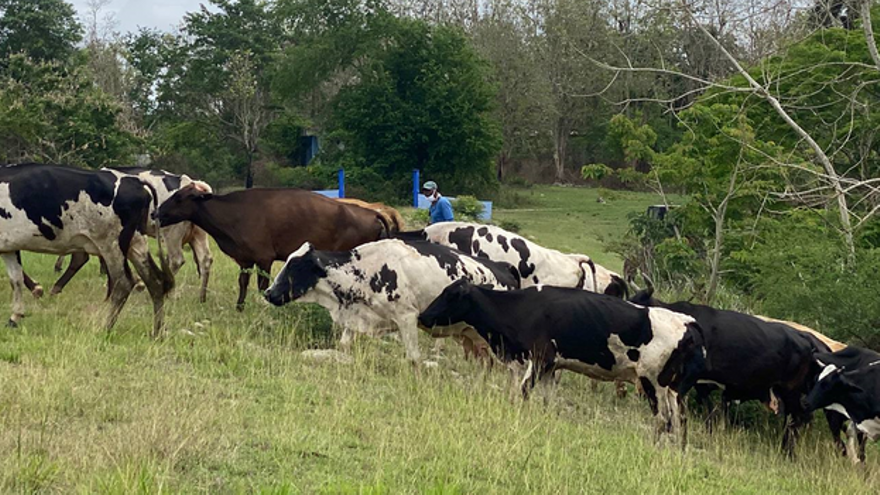
The Cuban Regime’s ‘Evidence’ Against the Miami ‘Terrorists’: A Jet Ski and Three Pistols

The official spokesperson Humberto López at a moment during the broadcast of the program on Cuban Television. (Razones de Cuba/YouTube/Screen capture)

14ymedio bigger14ymedio, Havana, December 10, 2023 — This Saturday in his usual space on the Cuban Television’s main news program, presenter Humberto López denounced Manuel Milanés Pizonero and Miguel Gómez Bartulo, Miki Terrori, for financing acts of sabotage on the Island. The report comes a few days after the National List of Terrorists was published in the Official Gazette, a list which includes both exiles.

López tried to show evidence of how, from the state of Florida, subversive actions are financed on the Island. The official spokesperson assured that a Cuban resident in the United States had arrived on the coast of Matanzas on a jet ski with a ’shipment’ of weapons and ammunition. According to the images presented, there are actually three guns and some bullets.

López tried to show evidence of how, from the state of Florida, subversive actions are financed on the Island

The audiovisual material, during which it was mentioned several times that the investigation is still in process, included interviews with two detainees for their alleged involvement in the plan. Those arrested, residents of Cuba, claimed to have received money to burn cane fields and tobacco storehouses, and even to attack public officials. continue reading

The two witnesses, despite being detained and subject to criminal proceedings, presented excellent appearances and communication skills in front of the camera. They insisted that those who direct them from “abroad” are Cubans residing in the United States: Manuel Milanés Pizonero and Miguel Gómez Bartulo.

López also exhibited the alleged criminal files of Milanés Pizonero and Gómez Bartulo, as well as those of Amijail Sánchez González and Michel Naranjo Riverón, known as Kiki Naranjo. The presenter also resorted, as he usually does, to morally discrediting those involved.

Manuel Milanés Pizonero is a Cuban influencer with more than 150,000 followers on his YouTube channel. In his programs he analyzes the Cuban reality and denounces acts of corruption by regime officials.

In his report of the alleged destabilization plans, López also included possible sabotage against the electro-energy system, which is currently going through a serious crisis due to fuel shortages and the poor state of the thermoelectric plants.

The spokesperson reinforced his complaint by assuring that, despite the destabilizing actions, Cubans are going to celebrate the end of the year “because they deserve it and it is tradition.” Cubans’ Christmas celebrations, however, are marked in 2023 by the lack of food, rampant inflation and mass exodus.

Politician Orlando Gutiérrez Boronat, journalist Ninoska Pérez and presenter Alex Otaola are some of the 61 names from the National Terrorist List

Last Thursday, in an extraordinary Official Gazette, the Government published a list of Cuban residents in the United States whom Havana accuses of “stimulating, financing and carrying out acts of sabotage” and “promoting, organizing and carrying out activities against the functioning of public institutions.”

The politician Orlando Gutiérrez Boronat, the journalist Ninoska Pérez and the presenter Alex Otaola are some of the 61 names on the National Terrorist List. The inventory also includes 19 organizations “that carry out actions against State security,” whose members, we are warned, are “wanted by the authorities.”

____________

COLLABORATE WITH OUR WORKThe 14ymedio team is committed to practicing serious journalism that reflects Cuba’s reality in all its depth. Thank you for joining us on this long journey. We invite you to continue supporting us by becoming a member of 14ymedio now. Together we can continue transforming journalism in Cuba.