
Former Colombian Drug Trafficker Carlos Lehder Recounts His Meeting with Raul Castro in Cuba

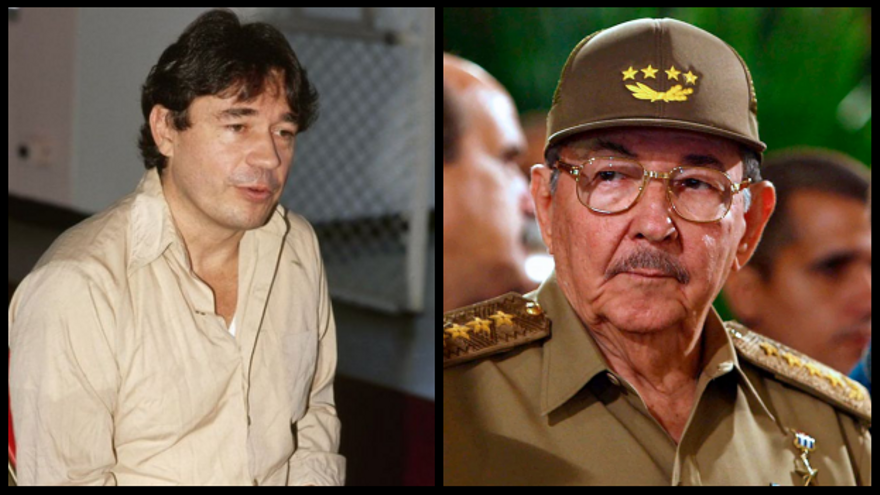
Carlos Lehder and Raúl Castro. (Collage)

14ymedio bigger14ymedio, Clara Riveros, Miami, 14 January 2023 — The complicity between drug lords and the political leaders of Latin America and the Caribbean, particularly Cuba, was key to the rise, positioning and expansion of the Colombian cartels in the decade of the 1980s, as extracted from Vida y muerte del cartel de Medellín  [Life and Death of the Medellín Cartel], the book published by Penguin Random House, with the memoirs of one of its former bosses, Carlos Lehder.

At just 24, Lehder had resources and capital beyond money, that is, education, culture, command of other languages, an American visa, and the ability and knowledge of how to move internationally. After almost 50 years, including 33 years in a United States prison, the Colombian with a German father now resides in Frankfurt: “contrite, rehabilitated, obedient to the laws and, at last, free,” he says.

Carlos Lehder, one of the most visible actors in the Medellín cartel, gives an account, for the first time, of the million-dollar economic relationships that he and his partners established with the Governments of Cuba, Panama, Nicaragua and the Bahamas. The leaders of these nations did not hide their desire for dollars and their eagerness to participate to some extent in the great drug business and its benefits. The cartels bought the revolutionary complicity of Castro’s Cuba and Sandinista Nicaragua. continue reading

Carlos Lehder reports, for the first time, on the million-dollar economic relations that he and his partners established with the governments of Cuba, Panama, and Nicaragua and Bahamas

The young drug trafficker understood early on the importance of relationships with power to expand the business and extend the criminal empire through the conquest and domination of territories through “drug diplomacy” and the seduction of political power. Lehder had his kingdom in the Bahamas and Pablo Escobar in Panama. Later, Nicaragua became a better destination, much safer thanks to the emerging revolutionary government.

For almost eight years, Lehder was the master of drug trafficking in the Bahamas, according to the memoirs of the one time narc in the Colombian magazine Semana. It was President Ronald Reagan’s declaration of war on drugs that fractured his alliance with the authorities of that archipelago just 170 kilometers from Miami. He returned to Colombia and advanced with Fidel Castro’s Cuba. In Havana they opened the doors for him and, practically, spread out a red carpet for him: “we need dollars,” they told him.

The Cuban power was associated with Pablo Escobar and Gonzalo Rodríguez Gacha, alias El Mexicano, thanks to the negotiating skill of Lehder, who narrates that “the Castro dictatorship, through the intelligence and special operations agency of Havana” extended him “a formal invitation to visit the island, with all expenses paid by the Government.”

He was greeted on his first “business” trip by “a group of plainclothes officers.” He says: “In a waiting room we met the heads of this mission, led by Colonel Antonio de la Guardia, head of the Cimex Corporation, the ’special operations’ agency of the Castro dictatorship.”

Lehder clarified that he needed Cuba to smuggle drugs and the response was immediate. They opened the door for that immense business: “For now, I can only confirm that we need all the dollars we can get,” Tony de la Guardia supposedly told him.

They authorized him to use “Cayo Largo, an island twenty kilometers long, with a good landing strip, located forty kilometers from the port of Cienfuegos.” Cimex “needed to receive five million dollars in cash to cover the Government’s expenses.” In exchange, they offered him “the rooms required on the second floor of the hotel to reside there with your workers; in addition, we will open the kitchen. We do not know how much cocaine you will bring to the island, but the more, the better; we would only have to negotiate the price per kilo landed.”

Lehder wanted a direct relationship with the Castros and asked to be introduced to Raúl, then Minister of Defense. Before the meeting he received instructions: “Protocol requires strict respect for time. There are four minutes maximum for handshakes, a courtesy phrase and farewell. You will not mention your own name.”

They took his passport, took him to a room and, after being announced, “a man with glasses appeared who, looking at me shrewdly and intently, said: ’Nice to meet you, welcome to Cuba Libre’, greeted me and extended his cold hand to me.” with the glacial gesture of the potentate who greets a shoeshine boy,” Semana quotes.

Raúl Castro’s laconic words, which apparently had nothing to do with the business, closed the mafia deal. “Here in Cuba we have achieved many advances in education, medicine and agriculture. Our trade is growing, despite the Yankee blockade; the Cuban Revolution is invincible. Enjoy your stay. You can leave,” is an extract from Lehder’s memoirs.

Raúl Castro’s laconic words, which apparently had nothing to do with the business, closed the mafia agreement

Many shipments were made to the Island. Colonel De la Guardia transported them from there to the Bahamas. Lehder maintained contacts and complicity with political power in both places. The business flourished with the direct participation of Fidel Castro’s entourage, until the suspicions of the United States intelligence services forced the regime to suspend these operations. The dictator himself decided to prosecute and execute, in 1989, four of the officers involved, including General Arnaldo Ochoa and Tony de la Guardia.

Ten years earlier, Lehder began to take an interest in Nicaragua, where the Sandinista guerrillas, led by Daniel Ortega and supported by Havana, took power. In Managua he was given diplomatic treatment at the highest level. He was received by Tomás Borge, one of the nine commanders of the Revolution and powerful Minister of the Interior.

Later, in 1987, Pablo Escobar betrayed Lehder and facilitated his capture by Colombian authorities, who extradited him to the United States.  He was sentenced to two life sentences, but served only 33 years after negotiating a reduced sentence in exchange for his testimony against former Panamanian dictator Manuel Antonio Noriega in a drug trafficking trial in 1992 in federal court in Miami.

____________

COLLABORATE WITH OUR WORKThe 14ymedio team is committed to practicing serious journalism that reflects Cuba’s reality in all its depth. Thank you for joining us on this long journey. We invite you to continue supporting us by becoming a member of 14ymedio now. Together we can continue transforming journalism in Cuba.
Castro’s Broth, Symbol of Cuba’s Decline

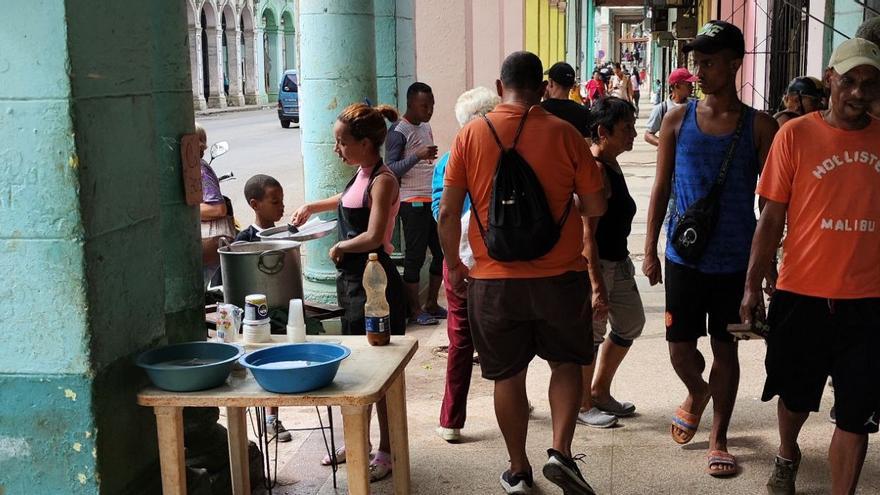
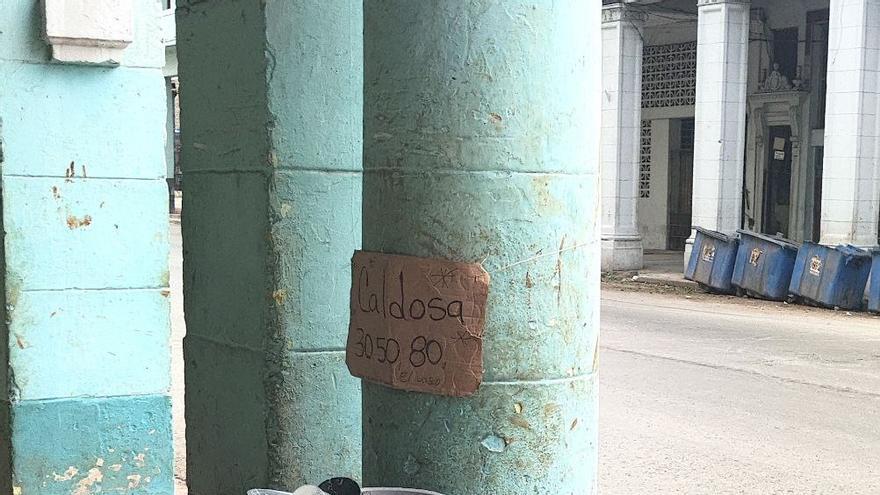
The lady drank everything in one long drink and crossed the street, avoiding the puddle of sewage right in front of the improvised food service point. (14ymedio)

14ymedio bigger 14ymedio, Juan Diego Rodríguez, Havana, January 12, 2024 — The woman quickened her pace until she reached the corner of Reina and Manrique streets, in Centro Habana. In front of a table with flimsy legs with a pot on top, she ordered “a broth for 30 pesos.” The vendor served her a pale liquid in which small pieces of something floated. The lady drank everything in one long drink and crossed the street, avoiding the puddle of sewage water right in front of the improvised food service point.

The ethnologist and jurist Fernando Ortiz defined Cuban culture as an ajiaco — a rich chicken stew made with three types of potatoes — because it mixed African, Spanish and indigenous, plus countless customs of those who migrated to the Island from different latitudes. Dense and made from rich meats and vegetables, this Creole dish could “raise a dead man,” as described by the elders, but its preparation is very difficult today, with its ingredients missing from the market platforms or extremely expensive.

There are levels and levels of broth. (14ymedio)

Instead, it is more common to find its poor cousin: broth. A lot of water, no corn and, instead of cassava or malanga, they barely add bananas or a few portions of sweet potato, which are cheaper and easier to find. The main menu of the official celebrations every September 27, the eve of the continue reading

anniversary of the Committees for the Defense of the Revolution, this is identified with the bungling and crisis that characterize the Cuban system, which is why it has become the signature recipe of Castroism.

However, there are levels and levels of broth. The one that was sold this Thursday in a doorway on Reina Street, just outside a small agricultural market, had gone down a few more steps in quality and respect for the consumer. Without any aroma coming out of the pot, with the stench of sewage accumulated a few centimeters away and made from very few components, the recipe had degenerated until it looked like warm water with shells.

Today’s Cuba is more like a broth than an ajiaco. Gripped by the exodus, the lack of culinary references and the economic disaster, its formula has become as impoverished as the reality. Better to swallow it quickly and holding your breath, so that it fills the stomach but does not harm the palate, as did the woman who today, in Central Havana, asked for the smallest serving because she did not dare to take the largest glass, at a price of 80 pesos.

____________

COLLABORATE WITH OUR WORKThe 14ymedio team is committed to practicing serious journalism that reflects Cuba’s reality in all its depth. Thank you for joining us on this long journey. We invite you to continue supporting us by becoming a member of 14ymedio now. Together we can continue transforming journalism in Cuba.
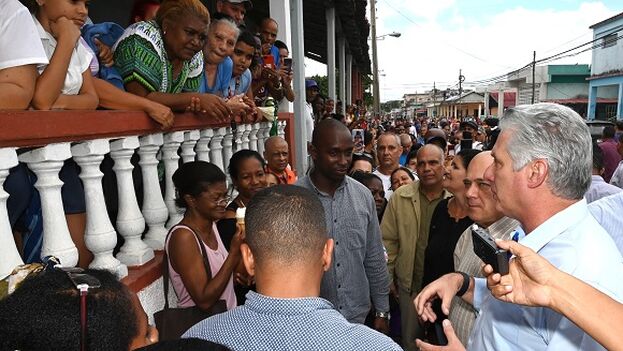
Diaz-Canel Begins a National Tour to Defend the Measures that Terrify Cubans

Díaz-Canel visited a high school, a day-care center, an agro-sugar company and a food processing center in Bahía Honda. (Cubadebate)

14ymedio bigger14ymedio, Madrid, 12 A little more than 10 kilometers from the place from which thousands of Cubans flee the Island in boats and precarious vessels and where 14 months ago seven rafters died after being attacked by the Border Guard Troops, Cuban President Miguel Díaz-Canel began this Thursday by failing to tell the truth in his  first tour of the Island  in 2024. The president stated in Bahía Honda, Artemisa, that the government measures to “invigorate the economy” “have been announced and none have been applied.”

The president thus ignored the fact that on January 1 some of them came into force, the (yes, expected) salary increases for Education and Health personnel, and the tax increases, which put an end to tax exemptions on imports of consumer products by private companies, although they are maintained for raw materials.

Díaz-Canel may claim that he was referring to the increases in the price of supplies and some basic services – electricity, gas, transportation and fuels – which are the ones that have most agitated the population, but in that case he was not right either. “Nothing has changed. The other thing is that each measure will be applied when the conditions are created,” he specified. continue reading

Unless the Government reverses its announcements, these increases already have a designated schedule to go into effect

Unless the Government reverses its announcements, these increases already have a designted schedule to go into effect. On February 1, the new fuel prices come into force, which represent increases of around 500%, while increases in the prices of electricity, gas and transport  will do so from March 1, as reported on television by the ministers of each area, who allegedly spoke to clarify doubts for the population.

But their boss’s words call into question whether the desired clarity has been achieved. “There is a lot of talk with the economic measures, and I know that this is creating a lot of uncertainty; and above all the counterrevolution is greatly detracting from the measures,” he added, while he was the one who sowed doubt about something that seemed clear to date.

“Each measure, even those that have to do with increases in rates or prices, will have a treatment for the people who could be most affected,” he explained while asking the population to have “confidence in the way the Government is going to take the measures, because there is a lot of counterrevolution building and distorting the content.” Díaz-Canel stated, however, that the measures are harsh but they must be applied “because if not, we will not put the economy in order.”

The president once again trod ground that raises countless issues by saying that “the vulnerable will always be taken into account,” a message that has been insisted on from the first moment, without knowing what criteria will determine if a citizen is in that category, how a record will be maintained, whether it will be stratified or how compliance with standards will be verified in a population accustomed to living on the black market and fleeing the radar of the authorities.

Díaz-Canel focused on being specific only about those elements where the plans are already in place, such as the increase in electricity prices, which will affect “few people,” by specifically targeting those who consume the most — more than 500 kWh in a month — 6% of the population

“All measures – he insisted – will have differentiated treatment for the vulnerable. And what we ask of you is that you be very attentive to what is explained.”

On his journey through Bahía Honda, the leader visited a high school, a ‘children’s house’ — a kind of daycare center but one where the children must go home for lunch — an agro-sugar company and a food processing center while, according to the official press, “the people were waiting in the street, with expressions of support and firmness.”

“You have to work. You have to work and you have to produce, and you have to create wealth and distribute it as equitably as possible,” said the president, for whom “that is social justice and that is socialism”

After the usually calculated mass events, Díaz-Canel met with the territory’s authorities, to whom he insisted on the importance of the harvest and food production in a province that exports more than any other.

Roberto Morales Ojeda, a member of the Political Bureau and Secretary of Organization of the Central Committee of the Communist Party, who accompanied the leader, called attention to the need to “rectify a group of deviations related to indiscipline and phenomena that have nothing to do with what what is wanted for a better society” and thus the first visit was completed, with a dose of ‘voluntarism’ — that is relying on voluntary action for implementation.

“This year we have to do better. But we have to do better by working hard ourselves. We must work. You have to work and you have to produce, and you have to create wealth and distribute it as equitably as possible,” said the president, for whom “that is social justice and that is socialism.”

“In this country there is enough dignity, talent and will,” he added, and went back to the Palace of the Revolution.

____________

COLLABORATE WITH OUR WORKThe 14ymedio team is committed to practicing serious journalism that reflects Cuba’s reality in all its depth. Thank you for joining us on this long journey. We invite you to continue supporting us by becoming a member of 14ymedio now. Together we can continue transforming journalism in Cuba.
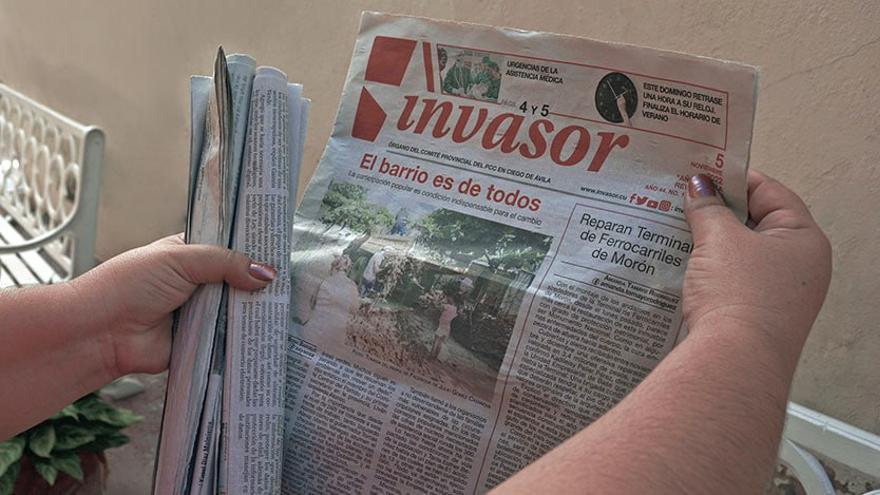
A Cuban Newspaper in Ciego de Avila, ‘Invasor’, Leaves the Fold

Si bien es cierto que no es el único y tiene en 'Escambray', el diario de Sancti Spíritus, a su mejor alumno, el avileño es el más atrevido de su clase. (Invasor)
While it is true that it is not the only one and in the Sancti Spíritus Escambray it has its best student, the Avileño paper is the most daring in its class.

14ymedio bigger14ymedio, Havana, 30 December 2023 — Subject to close control, the official Cuban media have historically been fundamental instruments of revolutionary propaganda, with Granma, the official organ of the Cuban Communist Party, as the spearhead. Eppur si muove, “and yet it moves,” a phrase attributed to Galileo; somewhat far from the capital, Ciego de Ávila’s newspaper, Invasor, is the best example, although not the only one.

The newspaper has published some of the most critical articles against the Government, from its own ranks, and continues to provide valuable material that allows the independent press to work with data and statements that are impossible to access from a medium considered illegal by the regime. While it is true that it is not the only one and in the Sancti Spíritus Escambray it has its best student, the Avileño paper is the most daring in its class.

We have been observing in recent years in 14ymedio that some provincial media dare to be more critical of power than those considered national media , but the milestone was reached this October 2023 Invasor in its article Silences, respect and pending communication, in which the author, Sayli Sosa Barceló, accuses different institutions of lack of transparency, deliberate delays in responding to journalists and even rudeness to media teams that prevent the press from fulfilling its obligation to keep the public informed.

continue reading

The article referred to another with similar characteristics, published in the summer by Escambray with a harsh title – Keep quiet and then inform – by the very official Dayamis Sotolongo, who cried out against the new policy of the Ministry of Tourism that forces the media through a bureaucratic mechanism to request information that, in the end, caused a delay in publications. In her own words: “Every trip in access to information is one more step towards censorship.”

The official provincial press has not only occasionally stood out for denouncing some behavior of the authorities, it has also revealed useful data to the independent press and the citizens themselves. A recent case is that of Girón, which this November broke the ban on reporting violence against women in Matanzas; and again Invasor, which in April warned the Government about the mistake it was making by allocating resources to the meager tourism and subtracting them from food; or Bohemia magazine, which just three weeks ago offered an extensive report with data on the increase in violence on the Island and how its citizens perceive it.

We have been observing in recent years that some provincial media dare more to be critical of power than those considered national media

It cannot be said, definitively, that there are legal media in Cuba that can display an editorial line contrary to the system that prevails in the country. The Constitution itself prevents it. Most of them tend to settle for attacking middle positions or company directors and rarely reach higher positions, as also happened in April in an opinion article published – once again – by Invasor in which its author, the journalist about Mario Martín Martín cried out against the mantra of voluntarism — i.e. relying on volunteers to do the work and solve problems. “The path is plagued with immobility, inertia, slowness and disdain, ‘paved’ by those who seek to repeat sterile formulas and remain static to continue plowing in the sea,” he wrote.

None of these newspapers has reached the point of questioning the State model, but the mere fact of opening a crack through which a hint of Cuban reality appears is no small thing in a country subjected to strict control of information for 60 years.

____________

COLLABORATE WITH OUR WORKThe 14ymedio team is committed to practicing serious journalism that reflects Cuba’s reality in all its depth. Thank you for joining us on this long journey. We invite you to continue supporting us by becoming a member of 14ymedio now. Together we can continue transforming journalism in Cuba.
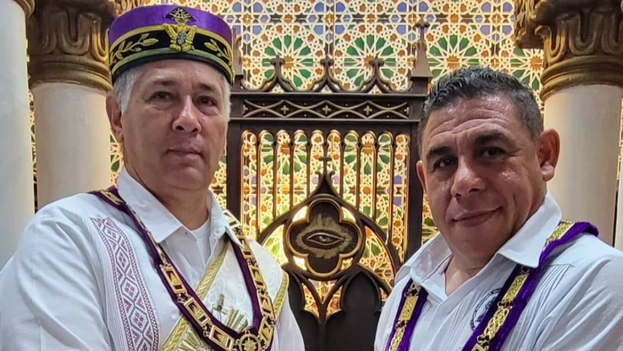
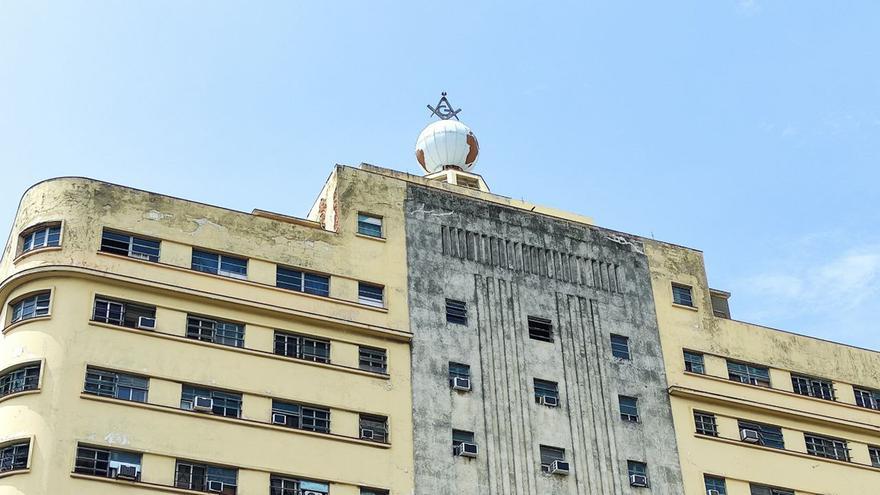
Grand Master of Cuban Masons Assumes Responsibility for a Theft of 19,000 Dollars

On the left, the Sovereign Grand Commander José Ramón Viñas Alonso, to whom Urquía (right) confessed the theft of the money. (Facebook/Grand Lodge of Cuba)

14ymedio bigger14ymedio, Madrid, January 12, 2024 — The Masonic Grand Lodge of Cuba reported at the Zanja police station, in Central Havana, the loss of a sum of 19,000 dollars (more than five million pesos in the informal currency market) which were stolen from the safe of Mario Alberto Urquía Carreño, grand master and co-president of the Board of Trustees of the Masonic Asylum.The money is the donations from the Freemasons to pay salaries to staff and finance the activities of a nursing home. The account of what happened, as read in a statement released by the institution, makes clear the distrust of the Board of Trustees in the Grand Lodge, to whom it had entrusted the care of the money and points, as can be deduced from the content, to an internal theft, since the Grand Master has agreed to assume full responsibility.

Sources close to the institution consulted by CubaNet said that there were no signs of violence or any sign that indicated that the door had been forced.

According to the Board of Trustees, an amount of 21,000 dollars was in their possession, news that began to spread by word of mouth on social networks, generating alarm among its members, who decided to move the money to a safer place considering that La Güinera, where its headquarters is located, has a “population highly prone to commit criminal acts.” continue reading

The decision, adopted unanimously, was to leave 2,000 dollars and take the remaining amount to the Grand Master’s office, in the historic building on Carlos III Street. The treasurer of the Board of Trustees, Ernesto Valdés García, and the director of the Asylum, Raúl Acosta, were in charge of the deposit, and they had three witnesses to the delivery operation in which minutes were drawn up and the money counted.

Last October, one of the members of the Board of Trustees asked that its treasurers and those of the Grand Lodge make a monthly count, at which point the Grand Master, upset by the mistrust, told them that the money was “in a safe in his office.”

The Grand Lodge admitted the lack of money in a meeting with the Board of Trustees on the roof. (14ymedio)

On 9 January 2024, the Asylum agreed to ask for $1,000 upon realizing its “delicate situation with food,” for which they contacted the Grand Master, notifying him of a visit along with several members of the institution for the withdrawal of the amount.

According to the version of the Board of Trustees, Urquía Carreño argued that the building’s elevator was broken, so he would carry the money himself. However, they rejected the proposal and indicated that the procedure would be as planned.

“The Grand Master accepts, but says that he will call later to inform them of the time they could proceed,” the story continues. Finally, Urquía Carreño and the grand treasurer of the lodge meet with José Ramón Viñas Alonso, the Sovereign Grand Commander and President of the Board of Trustees, to whom they confess that there has been a theft of the money.

“The Sovereign, surprised, exclaims that it is a very serious situation and asks why four days have passed and he has not been informed of this fact, given his hierarchy as Sovereign and as President of the Board of Trustees,” the statement said, adding that the reason given was to avoid worries. The reason, however, also annoys the Board of Trustees, which demands to know if the Police have been informed and receives the answer that they have not, because it could damage the image of Freemasonry.

“The Sovereign, surprised, exclaims that it is a very serious situation and asks why four days have passed and he has not been informed of this fact, given his hierarchy”

“Before the Grand Master leaves, the Sovereign tells him that he has to process all the information, because the facts are extremely serious, and he has to make a determination,” the text states. Once the decision was made to gather the institution, they say, Urquia Carreño asks that it not be done “because that is not in anyone’s interest.”

At the meeting, which was held despite the opposition of the Grand Master, the decision was made to denounce the theft and make a report to to the Freemasons, a decision before which the Grand Master requests “time of silence to be able to replenish the money”, a demand rejected by the Board of Trustees.

“The Grand Master stated that he was responsible for what happened and undertakes to replace the stolen money. Additionally, when the members of the Board of Trustees learn that the Grand Master would soon travel abroad, they recommend that until this situation is resolved, he should not should travel outside the country,” the text adds.

The Sovereign, Viñas Alonso, who is taking this situation very seriously, is in the crosshairs of State Security after sending a letter to Miguel Díaz-Canel in which he offered “his opinion on the call for confrontation between Cubans that he made this when everything was worse,” in reference to the repression that followed the mass protests of 11 July 2021 (’11J), of which he was very critical. From that moment on, the political police tried to get him to recant and even ’regulated’* him to prevent him from going abroad.

*Translator’s note: The Cuban Government has chosen the term ‘regulated’ to refer to those who are forbidden to leave the Island.

____________

COLLABORATE WITH OUR WORKThe 14ymedio team is committed to practicing serious journalism that reflects Cuba’s reality in all its depth. Thank you for joining us on this long journey. We invite you to continue supporting us by becoming a member of 14ymedio now. Together we can continue transforming journalism in Cuba.
Diana Rosa Cervantes, First Femicide Victim in Cuba in 2024, Was Murdered in Camaguey

Cervantes lived in the Edén neighborhood, in the municipality of Camagüey. (Facebook/Diana Rosa Cervantes Mejías)

14ymedio bigger

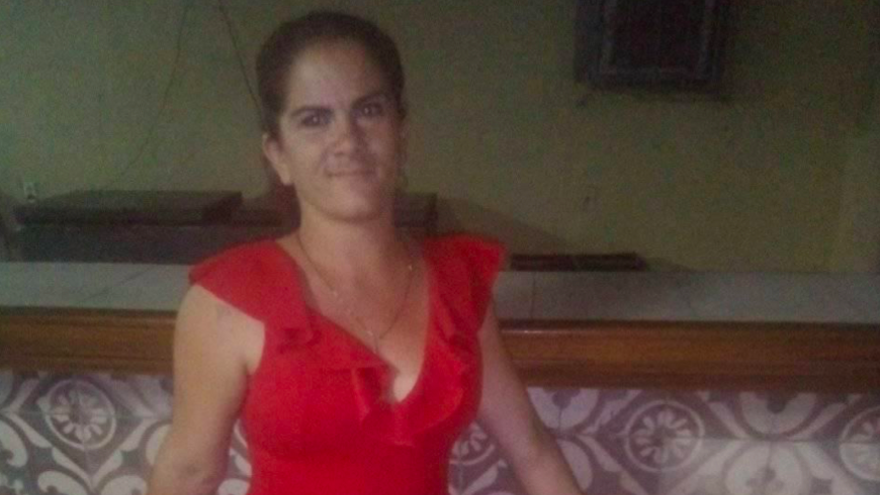
14ymedio, Havana, 4 January 2024 — The new year has already claimed its first victim of fatal violence against women in Cuba. With the murder of Diana Rosa Cervantes Mejías this Tuesday, in Camagüey, the list of femicides opens just three days into 2024.

The attack on Cervantes has not yet been confirmed by independent observers, but several publications on social networks by acquaintances of the victim, collected by CiberCuba, indicate that the alleged aggressor was her partner, who killed her with blows to the head “out of jealousy”.

According to the same sources, Cervantes was the mother of a young child and a resident of the Edén development in the municipal capital of Camagüey province.  Her age is not known.

This Monday, the femicide of Nurisbel Guerra, a nurse residing in the Granma municipality of Cauto Cristo, who was on vacation from a medical mission in Venezuela, also made the news. After returning for a short vacation, on December 24 she was murdered by her husband, who committed suicide after cutting her throat. The aggressor, identified as Orestes Tamayo, from whom she intended to separate, was a worker at the province’s Electric Company, the independent media reported. continue reading

According to the same sources, Cervantes was the mother of a young child and a resident of the Edén development, in the municipal capital of the province of Camagüey

This December, the official press broke its usual silence to report the femicide of Ohanis Soto in the town of Lincoln, province of Artemisa. After a “domestic altercation” that took place at 6:00 pm on December 28 and which “ended in a fatality”, Soto was stabbed several times by her partner, Osmar Frómeta.

As revealed by the newspaper El Artemiseño, after killing the victim, Frómeta turned himself in to the Police to avoid an alleged “settling of scores” by the Soto family.

So far, Guerra is listed as the last victim of fatal violence against women of 2023, but observers’ attempts to resolve several unconfirmed cases so far, could continue to add to the list.

For their part, both the official press and the authorities maintain their distance from femicide cases, and their promises to prevent and quantify cases of violence against women in real time remain unfulfilled.

The year that just ended closed with a total of 87 confirmed victims of femicide, more than double the figure (36) registered in 2022 by independent observers, who always make mention in their reports the “under-recording” of femicides.

Translated by Norma Whiting
____________

COLLABORATE WITH OUR WORKThe 14ymedio team is committed to practicing serious journalism that reflects Cuba’s reality in all its depth. Thank you for joining us on this long journey. We invite you to continue supporting us by becoming a member of 14ymedio now. Together we can continue transforming journalism in Cuba.
The Delay in Grinding the Sugar Heralds Another Calamitous Harvest in Cuba

The late start of the grinding, the inefficient repairs, the weather conditions and the lack of inputs for the machinery mean that the industry is not functioning. (Adelante)

14ymedio bigger14ymedio, Madrid, 13 January 2024 — The 2023-2024 sugar harvest has just begun in Cuba, but the regime cannot hide that, once again, it will end in a debacle. None of the Ciego de Ávila sugar mills, for example, have begun to grind. In an article published this Friday, the newspaper Invasor says that the delay is due to “different inconveniences,” without giving details, and adds that “compliance with the economic-productive indicators of the territory is in danger.”

At the end of November, the official press announced that of the 25 sugar mills that would be used in the current campaign, only two – Ciro Redondo, in Ciego de Ávila, and November 10, in Artemisa – due to repairs, would begin to grind late, on January 10 and in February, respectively. The others would begin in December. But this has not come to pass.

In Sancti Spíritus, according to an extensive article published on Wednesday by Escambray, they had “an unstable start,” in the words of Antonio Viamontes Perdomo, director of the Melanio Hernández sugar mill, where, they say, the collective “is performing magic to fulfill the plan.” continue reading

The Melanio Hernández sugar mill started six days later than expected, on December 26, but two days later it stopped because of the “cold” brought by the rains

The milling started six days later than planned, on December 26, but, two days later, it stopped because of the “cold” brought by the rains. After resuming its work on January 2, it was only operational for four days, because “we had to stop again to fix a crack in the supply pipes to the boiler.”

Viamontes Perdomo unraveled to the provincial newspaper his litany of problems: “When you stop for many hours everything is complicated because the industrial process uses sugary materials that determine timing and conditions; we do not yet have the bagasse [fibrous residue from the sugarcane stalk] to provide all the steam needed; there is moisture in the fields; there are 13 combine harvesters that have not been incorporated due to the lack of fuel, and those that are working suffer breakdowns. Because of all that, it is very difficult to get concrete data on the industry’s efficiency, but the workers do what is necessary to stabilize the sugar harvest.

Escambray reports that this year only 40% of the planned cane has been planted (1,984 acres of the 4,992 announced). Despite this, the article ends optimistically: “An unstable beginning doesn’t always end badly.”

Las Tunas, for its part, is also late. As reported by the regime, in this eastern province the Antonio Guiteras sugar mill hasn’t yet started. It’s waiting for the coming visit of “a commission designated to accredit the readiness of the system to start grinding.”

In the same territory, it was not until last Sunday that the Majibacoa sugar mill started up, and it is planned to produce 61,500 tons of sugar. As if that were not enough, in the first few days only 66% of the mill’s capacity was ground, according to its director, David Puig Brito, who also pointed out “an interruption as a result of failures in the supply pump of the boilers.”

Las Tunas is also late. The Antonio Guiteras sugar mill has not yet started and is waiting  for the coming visit of “a commission designated to accredit the readiness of the system to start grinding

“It’s terrible to start the harvest so late and then have cane coming from Puerto Padre, Menéndez and Yara, in Granma Province,” a local source tells this newspaper. “Having to bring cane from so far away lowers the output a lot.”

In Villa Clara, the official newspaper Vanguardia reports that the harvest has started “in difficult conditions, with material limitations and organizational deficiencies.” In an article published this Thursday, the newspaper mentioned the visit of the first secretary of the Communist Party in the province, Osnay Miguel Colina, to the three sugar mills in Villa Clara that are working. He warned of  “deficiencies” and “emphasized the need to have an efficient harvest, despite the limitations of resources and the delays, given the late start of the three mills due to lack of inputs.”

What is happening and will happen with the sugar this season, however, is no surprise. Already in September, the authorities of Sancti Spíritus predicted a harvest even worse than the previous year, because the cane had barely been planted. In June, in that province, only 30% of the harvest plan of the more than 123,553 acres available had been met.

In 2022-2023, the harvest reached only 350,000 tons, according to an official report at the time, compared to 473,720 in 2021-2022, which had meant a disaster. The result of that campaign barely exceeded half of what was expected – 911,000 tons – and was not enough to cover domestic demand, 500,000 tons, or export commitments, 411,000 tons.

Translated by Regina Anavy

____________

COLLABORATE WITH OUR WORKThe 14ymedio team is committed to practicing serious journalism that reflects Cuba’s reality in all its depth. Thank you for joining us on this long journey. We invite you to continue supporting us by becoming a member of 14ymedio now. Together we can continue transforming journalism in Cuba.
Colombia Counts on Cuba’s Vote in Its Attempt To Regain the Venue for the Pan American Games

Press conference led by Gustavo Petro, along with several sports managers, after his meeting about the Pan Americans. (Presidency of Colombia)

14ymedio bigger14ymedio, Havana, 13 January 2023 — The participation of the Cuban Professional Baseball Federation (Fepcube) in the Intercontinental Professional Baseball Series is subject to “not singing the National Anthem or using the flag” of Cuba, nor the name “Fepcube Patria y Vida” during the event that is scheduled from January 26 to February 1 at the Edgar Rentería stadium in Barranquilla (Colombia), journalist Yordano Carmona said on his social networks.

“The use of these symbols,” he warned the governing body of Colombian sport, “would be interpreted as a clear violation of Cuba’s constitutional and sports rights.”

Carmona asked if the participation of the Independent Cuban team, Pelota Cubana USA, in the Intercontinental Series was in jeopardy? The Ministry of Sports “has neither a voice nor a vote” in the organization of a “private tournament” such as the series organized by Team Rentería USA, owned by the former U.S. Major League player, Edgar Rentería, and his brother Edinson. continue reading

The Ministry of Sports of Colombia has decided to support the Government of Cuba by rejecting this team of exiles

However, the Ministry of Sports of Colombia has decided to offer its support to the Government of Cuba by rejecting this team of exiles, and this is due to its attempt to recover the venue for the Pan American Games in Barranquilla 2027, which it lost due to the non-payment of 8,000,000 dollars, for “the right of organization” and “the granting of media rights.”

Prior to the trip of the president of Colombia, Gustavo Petro, to Chile, to meet with Neven Ilic, president of the Pan American Sports Organization (Panam Sports) – in charge of designating the venue for the Pan American Games – “somehow the National Institute of Sports, Physical Education and Recreation (Inder) has put pressure (on Colombia),” Carmona denounced.

“It will take the vote of the countries of the area to resume the Pan American Games,” the journalist anticipated about the event in which Peru and Paraguay have also shown interest. “Somehow Cuba has already started with that blackmail,” noting that “they (Colombia) will need that support.”

The Colombian Ministry of Sports deauthorized, on January 9, the event of Team Rentería USA, specifying that “it is not organized by the Colombian Baseball Federation, nor is it part of the events of the World Baseball and Softball Confederation, the only organization endorsed by the International Olympic Committee.”

The athletes see no impediment to complying with the prohibition of using national symbols in exchange for participating

The athletes see no impediment to complying with the prohibition of using national symbols in exchange for participating. “If we have to have a minute of silence, we will do it. If we have to kneel on the floor, we will do it. This is a Cuban exile team. We don’t need either the flag or the anthem; we carry them in our hearts,” stressed Yunel Escobar, a member of the Patria y Vida group, at the end of this Thursday’s training at Miami Dade College.

Days before, Escobar expressed to journalist Francys Romero the “honor” he felt when he was playing with the (Cuban) baseball players who are outside the country and “representing the political prisoners and the people who died at sea, who have suffered the Cuban dictatorship”

In the Fepcube Patria y Vida team are Aledmys Díaz, Alay Lago, Albert Lara, Alex de Goti, Alejandro Rivero, Josuán Hernández, Lázaro Rivera, Luis Avilés Junior, Rangerl Ravelo, Yandy Díaz and Yuli Gurriel. Among the catchers are Edgar Quero, JC Escarra and Harold Vázquez. The outfielders are Henry Urrutia, Lourdes Gurriel Junior, Peter O´Brien, Leonys Martín, Andy Martín, Jorge Soler and Sergio Barthelemy.

Among the pitchers are Aroldis Chapman, Yennier Cano, Cionel Pérez, Daysbel Hernández, Odrisamer Despaigne, Jorge Martínez, Yoanner Negrín, Jesús Balaguer, Pedro Echemendía, William Gastón, Raidel Orta, Yuniesky Maya, Yordan Nodal, Yusniel Padrón and Edilberto Oropesa.

The series will be developed with six guest teams from countries such as Curaçao, the United States, South Korea, Japan and Colombia, who will be represented by Caimanes de Barranquilla, the last champion of the Colombian League.

Translated by Regina Anavy

____________

COLLABORATE WITH OUR WORKThe 14ymedio team is committed to practicing serious journalism that reflects Cuba’s reality in all its depth. Thank you for joining us on this long journey. We invite you to continue supporting us by becoming a member of 14ymedio now. Together we can continue transforming journalism in Cuba.

Electricity Thefts and Blackouts Go Hand in Hand in Cuba

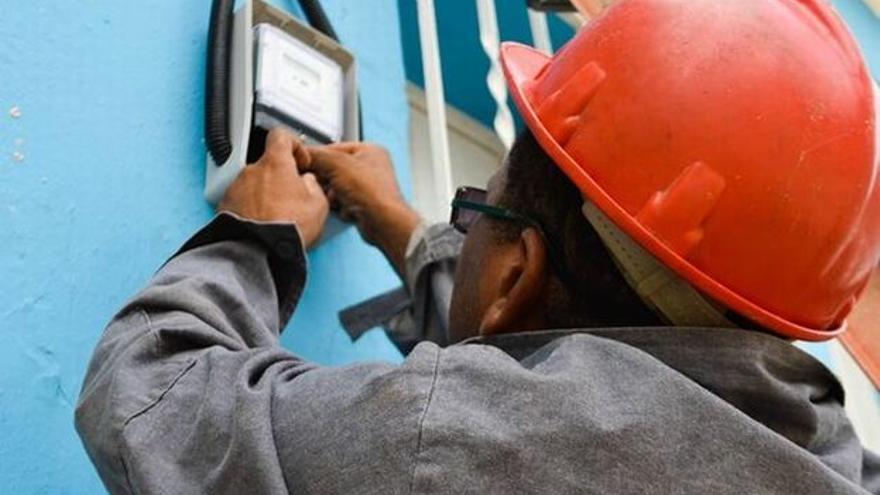
Most of the frauds for electricity theft are carried out with the participation of workers of the Electric Union. (Escambray)

14ymedio bigger14ymedio, Natalia López Moya, Havana, 13 January 2024 — Camila, 52 years old, checks the number on the meter up to three times a day. She leaves her apartment in the Wajay neighborhood in Havana, reaches the common area where all the devices of the five-storey building and dozens of apartments are located and takes a photo of the number shown on the screen before returning home. Four weeks ago she dropped out from a mechanism to steal electricity in complicity with an employee of the Electric Union (EU).

“When you get out of this business they punish you,” she tells 14ymedio. “I had been paying “on the left” [the informal market] for two years to get a much lower reading, but I am no longer interested in continuing. Now they are going after electricity frauds, and I don’t want to get stuck in this.” Another reason not to continue with illegal payments in exchange for a receipt with lower wattage: “My two children have emigrated, and my husband and I no longer consume so much electricity.”

For more than three years, Camila was one of the many Cubans who, in collaboration with UNE workers, received an electricity bill well below the amount of energy she actually used. “It wasn’t so much to save money, because at the end of the day I was paying; it was so I wouldn’t be noted as a high consumer,” she says. “My husband has an official position, and it is not convenient for him to get a very high reading.” continue reading

Time passed, and the couple decided to drop out of the fraud, but they fear that the employee involved in the agreement will penalize them. “When you tell him that you don’t want to continue, the next few months a high reading will arrive. It is how they can make you return to the contract and throw you to the inspectors, who suddenly see a strange increase in consumption.”

“A few weeks ago some inspectors descended on us, and it turns out that there was a cable that didn’t go through the meter clock and that we were getting our electricity from it”

Others, like Ismael, 34, entered the list of energy offenders without knowing it. “My mother and I moved from Central Havana to a larger house with a patio in the Cotorro,” he explains. “A few weeks ago some inspectors descended on us, and it turns out that there was a cable that didn’t go through the meter clock and that we were getting our electricity from it.”

Ismael says that it has nothing to do with the illegal installation of the cable. “It was left by the previous owners of the house; we didn’t even know that it existed.” But the fine came anyway. “The oversight cost me 8,000 Cuban pesos, and I did well, because in this neighborhood there are people who have had to pay more. Mine wasn’t so serious because I showed the papers for the permuta (house swap), and they saw that I had been in this house for a short time.”

Like Camila, every now and then Ismael checks his meter because he fears, this time, that some nearby neighbor will “create a bridge” and steal the electricity that he now pays for watt by watt. The crystal case, the numbers that fall as the energy passes to the house and the figure that he writes down with discipline in a notebook keep him attentive. But he warns that “in this area there are many who steal electricity by agreement with the UNE workers than those who do it on their own.”

This Friday, the official newspaper Granma revealed that 266,000 electrical crimes were detected in Cuba in 2023

This Friday, the official newspaper Granma revealed – citing the Minister of Energy and Mines Vicente de la O Levy – that 266,000 electrical crimes were detected in Cuba in 2023. “What is being stolen from the country by electrical fraud is almost as big as what is generated by the Antonio Guiteras thermal power plant, one of those with the largest generation capacity on the Island.”

The complaint came from an announcement that this Saturday there will be blackouts throughout the Island, especially in the “peak hours of night,” due to a deficit of 821 megawatts in the generation. The UNE reported that unit 5 of the thermoelectric plant of Mariel, the 1 of Santa Cruz, the 5 of Diez de octubre, the 1 and the 2 of the Felton and the 5 of the Renté were damaged, a series of key points in the electrical network throughout the country.

Determined to show the “human face” of the UNE official, the official press interviewed the technical director of the company, Lázaro Guerra, who offers a daily report on the situation in front of the cameras of the island’s information system. Graduated from the pre-university vocational Lenin school, from Havana, and with a degree in Electrical Engineering, Guerra was also a leader of the Union of Young Communists.

The official took advantage of the interview to exalt the “exceptional work” of the UNE and said that he had experienced situations of extreme difficulty as a manager. “The most tense moments in my career have come when the system has crashed. This has happened on some occasions due to the passage of cyclones and, in others, due to different causes.”

However, the most memorable line of the interview was his answer to the question of why he was “so serious” on Cuban Television: “I don’t think I can announce a blackout with a smile; I don’t think I can do it.”

Translated by Regina Anavy

____________

COLLABORATE WITH OUR WORKThe 14ymedio team is committed to practicing serious journalism that reflects Cuba’s reality in all its depth. Thank you for joining us on this long journey. We invite you to continue supporting us by becoming a member of 14ymedio now. Together we can continue transforming journalism in Cuba.

A Week Without Water in the Cuban Province of Sancti Spiritus Due to a ‘Dangerous Leak’

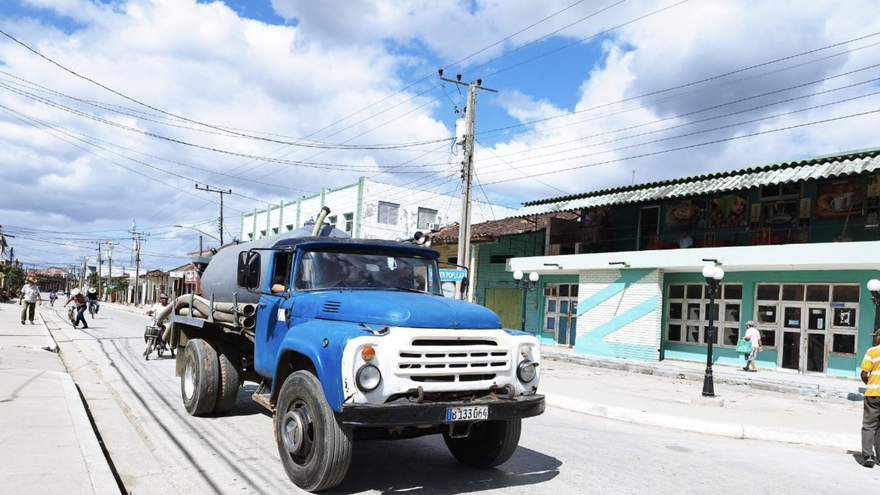
The authorities assure that they have two water trucks ready to supply hospitals and schools. (14ymedio)

14ymedio bigger14ymedio, Havana, January 10, 2024 — A leak in a water pipe in Sancti Spíritus that broke last Thursday leaves the residents of the municipality of Cabaiguán and the capital city without drinking water. The authorities of the province, who initially declared that the supply would be stabilized in two days, no longer know how to explain the delay in the repair to the neighbors, who have been without service for a week.

“Days ago they said that there was a break in the Macaguabo aqueduct, which feeds the northern part of the city, and that they were going to do work to repair it that would take up to two days,” Noelia, 37, tells 14ymedio.

We were without water for a couple of days and suddenly it arrived, and we all assumed that the pipe had been repaired”

“We were without water for a couple of days and suddenly it arrived, and we all assumed that the pipe had been repaired. However, the water had little force, and many people couldn’t save much, as was my case, and when it turned off again we were left without reserves,” she said.

According to Noelia, as the days go by the situation becomes more desperate, and the small water storage tanks have begun to run out. “In my house things are tight. The tank was only half full when the water came, and now my children are tired of me telling them to save, that there is no water.” continue reading

But her situation, she admits, is not the worst: “I know people who are going to the factories to get water, who have their own reserve in wells, tanks or cisterns. Another friend of mine has been taking a bath at work these days because at home the water is for cooking and drinking.”

The patience of the residents is exhausted, she says, and the last update from the authorities declared that they still do not know “at what time the work can be finished, because the pipe is being welded and it will take a long time.”

A few days ago, interviewed by Radio Cabaiguán, Alexei Hidalgo Leiva, director of Aqueduct and Sewerage in the municipality, explained that “on January 4, pumping at the Manaquita reservoir was stopped to suppress two large leaks: one at the entrance of pump three and the other at the exit of the pumping station.” The one at the exit could be repaired, but the one at the pump, he said, could not be finished due to the bad condition of the pipe. “When we started the work on the leak, we discovered that the pipe is rotten. It could not be welded, and it caused that section of the pipe to deteriorate more.”

Since then, the situation only got worse, because the province did not have the pipes and other materials necessary to do the repairs

Since then, the situation only got worse, because the province did not have the pipes and other materials necessary to do the repairs. “We had to close the outlet valve of the dam, because if that pipe goes, it would end up flooding the pumping station, where there is 440 volt electricity, pumps, operators and personnel. It is an imminent danger for the workers there, so the leak has been going on for days,” added Hidalgo, who couldn’t give a tentative date for the completion of the work.

At the moment, he said, in an attempt to give relief to the population, “we have the fuel and two water trucks activated to cover hospitals and state centers, including schools and childcare centers.” However, the Macaguabo Water Plant provides water for 62% of the population in the province.

The umpteenth promise of repair was offered this Tuesday by the official press. “It is expected to finish around 9:30 or 10:00 tonight, Tuesday,” Escambray announced. The reality is different. This Wednesday Sancti Spíritus continues with its reservoir closed while the Aqueduct and Sewerage company says that its workers have spent the last 48 hours repairing the leak.

Translated by Regina Anavy

____________

COLLABORATE WITH OUR WORKThe 14ymedio team is committed to practicing serious journalism that reflects Cuba’s reality in all its depth. Thank you for joining us on this long journey. We invite you to continue supporting us by becoming a member of 14ymedio now. Together we can continue transforming journalism in Cuba.
The Theft of Seeds Leaves Five Cuban Provinces Without Onions and Cabbages

The robbery occurred on August 28 in the Frigorífico 800 warehouse of Sancti Spíritus. (Escambray)

14ymedio bigger14ymedio, Havana, 9 January 2024 — About 5.75 quintals [1 quintal=220 pounds] of onion seeds of the Caribbean 71 variety and 40 pounds of cabbage seeds were stolen last August from the Frigorífico 800 warehouse of Sancti Spíritus. The official press, which revealed the event five months later, does so with its usual objective: to warn State workers that cases of corruption will not be tolerated. The eight involved, meanwhile, are awaiting trial and several years in prison, he emphasizes.

The local newspaper Escambray was precise in the profile of the thieves. “They had a bad social conduct, prone to the commission of criminal acts, and two of them had a criminal record for robbery with force.” Two others were the custodians of the refrigerator.

To steal the “very important booty,” six men entered the entity on August 28, cut the fence with a hacksaw, accessed the number nine refrigerated chamber and broke into a small vault that contained “onion seeds and other quality vegetables that would be used in the current cold season.” “They had bet on the expertise of two former workers of the entity, who acted as guides of the crime,” the media said. continue reading

They had bet on the expertise of two former workers of the entity, who acted as guides of the crime,” the media said

The penalties imposed on the custodians for “the crime of non-compliance with the duty to preserve the property of the State” and on the rest, accused of robbery with force – which is punished in the current code with seven to 15 years of deprivation of liberty – will not be slight. Their greatest transgression, the authorities say, was to steal what belongs to the population. For the time being, the six thieves remain in pre-trial detention, and the ’security agents’ were allowed bail.

“In truth, we feel very concerned, and I’m not talking only about monetary value, but about the fact that the producers were left without seeds, and in the end the population pays the price,” said Orestes Ramírez, director of the Base Business Unit Semillas Sancti Spíritus.

Another situation, however, influences the fact that there is no need to plant this season. “A large number of acres couldn’t be planted in the country, because the onion seed couldn’t be imported this year, given the limitations that we all know, and the Caribe 71 seed was going to be used,” he explained.

The seeds were reserved for the provinces of Pinar del Río, Mayabeque, Granma, Camagüey and Ciego de Ávila

As for the seeds, which were reserved for the provinces of Pinar del Río, Mayabeque, Granma, Camagüey and Ciego de Ávila, the Ministry of the Interior said it had recovered 5.34 quintals of the onion seeds  and 26 packages of cabbage seeds. However, the potential planting of these products could not be carried out.

“The seeds were found in the weeds of a farm where they had hidden them without taking into account the refrigeration measures, so, once returned to the corresponding entities and the laboratory analyses done, it was determined that they had lost germination ability, which brought with it an impact of 1,508,204 pesos to the country’s economy,” Escambray reported.

Weeks ago, in December, the official press dusted off the file of a crime committed in 2020 in Sancti Spíritus. The punishment of the officials who facilitated the theft of more than 23,775 gallons of soy yogurt from the UEB Pasteurizadora contains the same moral as the article on the theft of seeds: the State will not tolerate outrageous behavior in its institutions.

On that occasion, among senior managers of the companies involved, including drivers and warehousemen, 15 people were prosecuted and several of them are currently in prison. The robbery occurred on August 28 in the Frigorífico 800 warehouse of Sancti Spíritus. (Escambray)

Translated by Regina Anavy

____________

COLLABORATE WITH OUR WORKThe 14ymedio team is committed to practicing serious journalism that reflects Cuba’s reality in all its depth. Thank you for joining us on this long journey. We invite you to continue supporting us by becoming a member of 14ymedio now. Together we can continue transforming journalism in Cuba.
The Cuban Government Will Pay Farmers More for Potatoes

A pound of potatoes in Havana reached 300 pesos this Tuesday and 200 pesos in Holguín. (14ymedio)

14ymedio bigger14ymedio, Havana, 10 January 2024 — The Cuban State will pay more money to farmers this year for every quintal (220 pounds) of potato it buys, a measure whose real benefit – in light of inflation and the difficulty of obtaining agricultural inputs – is difficult to calculate. What will remain stable in 2024, according to the resolution of the Ministry of Agriculture published this Wednesday in the Official Gazette, is the price of potatoes in the retail market, which will continue to cost 11 pesos per pound.

Potatoes harvested with national seed will be paid at 1,204 pesos per quintal (26,175 pesos per ton), while the one grown with imported seed will cost 839 pesos per quintal (18,240 pesos per ton), the authorities reported. The cause: “the increase in prices of the essential inputs for potato production.”

The State cannot afford the luxury of generating “losses” or granting subsidies to producers

The State cannot afford the luxury of generating “losses” or granting subsidies to producers, it adds, so it empowers the Ministry to modify the prices which Acopio – the State Procurement and Distribution Agency – pays for food from the farmers. “The margin for the wholesale marketing of the potato will be shared between the parties by mutual agreement,” says the resolution, repeating the measure of past years. continue reading

This Wednesday, the Ministry’s website published a comment on the resolution in which it recalled its forecasts for the 2023-2024 potato harvest. The goal, they explained, is to plant 12,998 acres of potatoes to obtain an “estimated production” of 107,014 tons. Of the projected acreage, 2,224 will have national seed, and the rest will have imported seed.

“The country’s yields in the last five campaigns exceeded 21.53 tons, considering all the origins of the seed to be planted and the destinations of the production,” says the text, adding that in 40 years, since 1983, 29,564 acres of potatoes have been planted in Cuba.

In 2023, the price of potatoes in the retail market doubled, as it did in the previous year. Until then, a potato cost five pesos; through another resolution, the ministry argued that the increase in production costs forced drastic measures to be taken.

Potatoes harvested with national seed were then paid at 19,261.64 pesos per ton, while those obtained with imported seed had a lower cost, 15,174.52 pesos per ton.

In 2001, the record of 373,682 tons of potatoes was reached in Cuba, high quantities that were maintained for several years

In 2001, the record of 373,682 tons of potatoes was reached in Cuba, high quantities that were maintained for several years until, in 2010, the sale was liberalized. However, in 2015 bad data were recorded, with a harvest of 123,000 tons, which forced the Government to import potatoes to cover demand, mainly from the Netherlands and Canada. In 2017, potatoes returned to rationing, although those bad figures from the middle of the previous decade can be considered even enviable today.

Meanwhile, the black market is unfazed. A pound of potatoes in Havana reached 300 pesos and 200 pesos in Holguín on Tuesday, according to this newspaper. Even so, it is difficult to find the tuber, and, if the buyer succeeds, he encounters small, blackened and wet lumps, “as if the potatoes had been frozen.” This new variety, which the pushcart vendors sell on the street, is called “potato seed” by the people of Havana.

Translated by Regina Anavy

____________

COLLABORATE WITH OUR WORKThe 14ymedio team is committed to practicing serious journalism that reflects Cuba’s reality in all its depth. Thank you for joining us on this long journey. We invite you to continue supporting us by becoming a member of 14ymedio now. Together we can continue transforming journalism in Cuba.
The Plaza de Cuba International Jazz Festival Will Receive Up To 92 Artists From the United States

The Plaza de Cuba International Jazz Festival will be celebrated in Havana and Santiago de Cuba. (EFE)

14ymedio biggerEFE (via 14ymedio), Havana, 10 January 2024 — The 39th edition of the Plaza de Cuba International Jazz Festival, which will be held from January 21 to 28, will receive hundreds of international artists, including 92 from the United States, its organizers reported on Tuesday.

With the slogan “Pa’que flujazz,” the most important event of the genre in the country –  in which more than 60 groups will participate – will be dedicated this year to the 50 year artistic career of the Cuban Joaquín Betancourt.

Likewise, the festival will be held, as usual, both in Havana, with 184 performances, and in Santiago de Cuba, with 74. continue reading

With the slogan “Pa’que flujazz,” the most important event of the genre in the country will be dedicated this year to the 50 year artistic career of the Cuban Joaquín Betancourt

Among the most important international figures who will participate is the American saxophonist and composer Ted Nash; the Mexican arranger Arturo O’Farrill and the American pianist Aaron Goldberg.

“It has grown so much (the Jazz Plaza), that we can say that it is a festival larger than ourselves, and the number of prominent musicians from different countries gives a measure of how, in 2024, Cuba continues to be a center for jazz,” Bobby Carcassés, first president of the Festival, told EFE.

One of this edition’s novelties will be the union of dance and jazz, with two shows. One will feature both Ted Nash and the Cuban collectives Acosta Danza and Malpaso, while at the closing of the Festival, the Cuban pianist Roberto Fonseca will perform together with the National Ballet of Cuba, featuring the director and first dancer, Viengsay Valdés, and the Muñequitos de Matanzas, exponents of the rumba.

Translated by Regina Anavy

____________

COLLABORATE WITH OUR WORKThe 14ymedio team is committed to practicing serious journalism that reflects Cuba’s reality in all its depth. Thank you for joining us on this long journey. We invite you to continue supporting us by becoming a member of 14ymedio now. Together we can continue transforming journalism in Cuba.
Two Thieves Rob the Owner of a Private Business in Holguin and Kill Him With a Machete

Frómeta had a vehicle repair and sales business, in addition to a café. (Facebook/Pedro Frometa)

14ymedio bigger 14ymedio, Havana, 8 January 2024 — Pedro Luis Frómeta, owner of a private business in Holguín, was murdered at his home in the course of a violent robbery in the early hours of Sunday. A source close to the family told 14ymedio that the victim was taken to the Vladimir Ilyich Lenin General Hospital at 3:00 am, bleeding and with fatal injuries caused by a machete.

According to Hortensia, a woman from Holguin who was in the Guard Corps and heard about what happened from Frómeta’s family, the altercation must have occurred between 12:00 and 2:00 am on Sunday morning. “It seems that Frómeta heard noises, his dog was barking , and he got up to see what was happening. He encountered two thieves, and while he struggled with them, his wife attempted to ask for help by phone.”

One of the criminals took the phone away and locked her in a room, says Hortensia

One of the criminals took the phone away and locked her in a room, says Hortensia. “It seems that there was another phone inside, because she managed to call and ask for help. Unfortunately, by the time it arrived, the thieves had already escaped and Frómeta was dead.”

The holguinera explains that the thieves managed to take several items, although she did not give details, and that the victim was left disfigured, with a “cut ear and and his head slashed down the middle.” “He bled to death,” she says and adds that the robbery could have been motivated by “people who knew that he had money.” continue reading

Other versions, such as the one disseminated by YouTuber Niover Licea, indicate that Frómeta had just sold a vehicle and the thieves were looking for the money, so they could be people who knew about it. He also stressed that the victim had been stabbed seven times and that the assailants did not take any objects from the house.

Hortensia, on the other hand, has not heard “anything about a car,” but agrees that the thieves “went after the money” of Frómeta, who was dedicated to the repair of vehicles for sale in addition to running a café in his home. “He had a very nice house on the outskirts of Holguín, before you come to a military unit and very close to the cabaret El Nocturno,” she explains.

“Frómeta lived very well, and his house had good security: padlocks, alarms and, I think, even cameras. The thieves managed to dodge all that,” says Hortensia.

The age of the victim, as well as the name of the business he owned are not known, although some posts on social networks suggest that he was 57 years old.

That is not the only case of violence that has occurred in Holguín. Just yesterday, a woman was assaulted in the cemetery in the city center

“That is not the only case of violence that has occurred in Holguín. Just yesterday, a woman was assaulted in the cemetery in the city center at 9:00 am. The criminals were on a motorbike,” says Hortensia. As she explains, gangs have recently been created in the city of “young boys who go on electric motorcycles assaulting people. They are organizing,” she regrets.

This Sunday in Holguín, a young man was robbed of a motorcycle near the tobacco factory. According to the victim’s wife, who reported it on social networks, three men threatened him with a knife in order to steal his vehicle. “One had a tattooed cross on his face,” she said.

Last December, in a speech to Parliament, Juan Carlos Poey, Minister of the Interior, warned that “in the adverse scenario” of the Island, it is very likely that “crime will evolve to a higher level of organization,” more complex than gangs or small networks of traffickers.

The leader assured that the police would be prepared to face any situation. However, the work of the authorities to stop the wave of violent crimes in recent years makes many doubt: “If they aren’t protecting us now, what can we expect later?”

Translated by Regina Anavy

_______________

COLLABORATE WITH OUR WORKThe 14ymedio team is committed to practicing serious journalism that reflects Cuba’s reality in all its depth. Thank you for joining us on this long journey. We invite you to continue supporting us by becoming a member of 14ymedio now. Together we can continue transforming journalism in Cuba.