
What Doesn’t Work in the Cuban Countryside

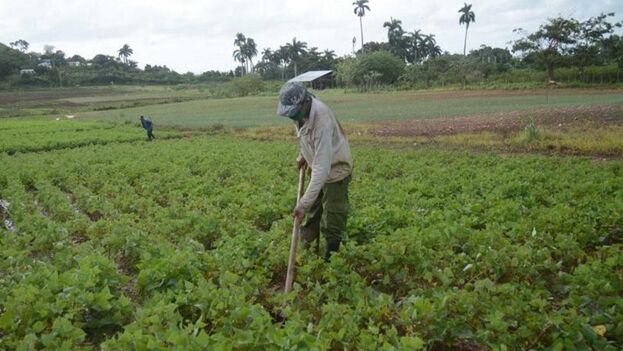
The private sector already leads agricultural production in many food groups. (Escambray)

14ymedio bigger14ymedio, Elías Amor Bravo, economist, 18 January 2024 — Communists continue to bet on the same policies as always that have shown, again and again, their failure. What is serious is that the State press does the unspeakable by trying to justify them. This is what happened with a joint exercise of control of the possession, use and legality of land and livestock, which, according to them, aims to achieve the transformation of production systems to increase food production. The experiment is carried out in 22 municipalities as part of a pilot program by the General Directorate of Land Control of the Ministry of Agriculture.

The belief that “putting order in the field guarantees greater food production,” is not only wrong but is a good example of what it means to put political and ideological decisions before productive and efficient technical decisions. Luckily, the announced “pilot program ” will be carried out in only 22 municipalities. If it were extended to the entire territory, as it seems that they intend, the famine would be fatal.

Every time the Cuban communists intervene in the agricultural production system, they end up destroying it. The first example was the so-called “land reform law” that collapsed the private farm system. Another example was the “10 million ton sugar harvest” that was never achieved. I insist, putting ideology before rational economic principles is fatal for any economy, but especially for the agricultural sector. The Cuban example is good for those who want to investigate objectively. continue reading

Because, in addition, what this experiment aims at is something that cannot be achieved with communist order and control, quite the opposite. If it is intended to increase agricultural production by promoting a decrease in the area of idle lands by improving the efficiency of those currently leased. Communist control leads to failure, because the bases of the productive system, which are the property rights of the land, are not removed.

The Vietnamese, faced with a similar scenario, had courage and launched the Doi Moi to generalize private farming property. What came next is known, a greater production of food that not only served to guarantee the food and nutritional security of the country, but also to export the surplus. The suppression of communist structures in the countryside of the Asian country caused economic agents, empowered by their property rights, and without communist controls like those that Cuba now wants to put in place in 22 municipalities, to launch mass production to increase their profits, and an end to communism in the Vietnamese countryside.

In such conditions, one would have to ask why the regime of Fidel and Raúl Castro is unable to do the same, and now they propose a reactionary return of communist inspiration to develop, they say, “an integrated work to organize local food systems.” They also announce that this experiment will be extended to all municipalities next March. We hope that before this decision is made they will be able to evaluate the failure that is going to happen, which is nothing more than a waste of time, efficiency and concentration on the technical-productive tasks that are what make production grow.

The ministry’s director of land control said that “the delivery of land in usufruct [a form of leasing] to natural and legal persons who request it is a priority, and main attention is given to young people who graduate from active military service, as a source of employment, and to those who do not have work.” And someone should remind her that the same thing has been done since he was authorized by Raúl Castro as soon as he came to power, and here are the results almost two decades later. The solution is not the delivery of land, but private property.

And of course, no one in their right mind at this point of Castroism can think that a solution to increase production is the delivery of land to the organizations, for the self-consumption productions of the workers and their families. Another example of waste and failure.

In line with strengthening control over the countryside, the director asked the relatives of land lieutenants who have died, “to update their situation in the records for which they have a period of 90 days, extendable for 90 more days, to carry out the procedure for the award of inheritance of land and agricultural assets,” while she again conveyed the fateful message that everyone expected: “the sale of land is between owners and renters is illegal.” And here we go again.

Another line that they are testing from the Ministry of Finance and Prices to increase production is contained in Resolution 303/2023, which includes tax measures for the calculation, payment and additional settlement of the Personal Income Tax, through the presentation of the affidavit for the agricultural sector. This regulation establishes a reduced tax rate of 2% for personal income tax, when the general tax rate is 5%. The difference in the percentage does not seem to have served as a stimulus for agricultural activity on the Island, which depends much more on other technical productive factors and property rights that the authorities will not modify. In fact, another threat has been the entry into force of Resolution 308/2023 of the Ministry of Finance and Prices, on the application of the tax on the idleness of agricultural and forestry lands, which requires the efficient production of the land to guarantee food for the population.

Translated by Regina Anavy

____________

COLLABORATE WITH OUR WORKThe 14ymedio team is committed to practicing serious journalism that reflects Cuba’s reality in all its depth. Thank you for joining us on this long journey. We invite you to continue supporting us by becoming a member of 14ymedio now. Together we can continue transforming journalism in Cuba.
Lower Taxes for Cuban Farmers Will Not Stimulate Agricultural Production

Cuba reduces the tax on farmers to stimulate agricultural production. (Cubadebate)

14ymedio bigger14ymedio, Havana, January 17, 2024 — The Cuban Government announced on Tuesday the reduction from 5% to 2% of the tax on the wages of private ranchers and farmers. The measure, announced on State TV’s Round Table program by the directors of the National Tax Office (ONAT), responds to a strategy to stimulate the depressed agricultural sector of the Island, which imports about 80% of the food it consumes.

Juan Carlos Vilaseca Méndez, deputy head of the ONAT, explained that, as stated in the Official Gazette, the reduced tax will be applied to the gross income of landowners and usufructuaries [leasers] of State land, as well as to landless livestock holders and other private food producers, including sugarcane farmers. That is, once the expenses have been subtracted – as long as 80% of these can be justified – from the taxes and the tax withholdings that the farmers had throughout the year, then another 2% can be deducted.

The tax on retail sales of agricultural products in municipalities and popular councils where the authorities have centralized prices will also fall from 10% to 5%. The “bonus,” as stated in the law, aims to convince producers and merchants to sell in the State market rather than in the informal one.

Two years after the creation of the private enterprises, the communists set out to increase the revenue, jeopardizing the viability of many of these entities that are still weak

The ONAT authorities alluded to the new measures as something revolutionary that will allow the Cuban economy to be channeled, especially at a time of great reforms. However, in an analysis of the new tax and budgetary rules of the State, the Cuban economist Elías Amor offered a
completely different assessment of the perks to producers. According to him, the difference between what was paid before and what the producers continue reading

will deliver this year “will in no way stimulate agricultural production.”

The Official Gazette also confirms the end of tax exemptions for the private enterprises and non-agribusiness cooperatives at the end of six or 12 months. This was mentioned at the time that the benefit was implemented in 2021, which was intended to promote the creation of these companies.

The personnel hired by these entities will also be incorporated into the regular contribution plan and “will be taxed under the same rules as workers in the State sector.” The ONAT directors present this as an advance in “terms of tax equity.”

Employees of local development projects, on the other hand, will pay taxes according to the Special Social Security Contribution, which applies to self-employed workers.

“Two years after the creation of the private enterprises, the communists set out to increase the collection, jeopardizing the viability of many of these entities that are still weak,” Amor said, while the ONAT officials assert that these companies “have demonstrated contributory capacity.”

Despite the importance of these measures, the ONAT officials devoted most of their attention to the State budget. They said that the country is implementing policies “for the prevention and confrontation of tax indiscipline, non-compliance and evasive behavior,” something that Amor described as an attempt to “increase the income of the State budget, tightening the screws on State entities and, above all, on the new economic actors,” to “keep the economy controlled and inert.”

In short, [they are] measures introduced by surprise to raise more and impose discipline in the processes of raising resources in favor of the [State] budget

To those who pay their taxes on time, the State will give bonuses, such as the 5% discount offered to the owners who pay their taxes before next February 28. “If you also pay by Transfermóvil, another 3% is discounted for the use of electronic channels,” added Belkys Pino, another ONAT director who spoke on Cuban Television.

On the other hand, those who fail to comply with the deadlines will be treated with severity. “During 2023, more than 3,000 authorization withdrawals were made and 2,600 establishments were closed, temporarily or definitively. Likewise, we had more than 8,700 account seizures, 2,667 ’regulations’ of exits from the country and 2,444 taxpayers with debts who remain regulated (not allowed to travel). Those who paid all of their debts were able to travel without problems,” Pino explained.

The officials also reported that since January, a campaign of Declaration and Payment of Taxes began on the Island, “which represents one of the most important processes conducted by the Tax Administration and which requires mandatory compliance for taxpayers.” In 2023, 94.4% of natural persons and 99% of legal entities paid taxes on time, and this year the managers say that “indicators are higher in both cases than those reached before,” adding that 64% of the State budget depends on these taxes.

The ONAT leaders did not hesitate to allude to the moral values of taxpayers who demonstrate their “discipline,” their “responsibility, honesty and commitment to society.” They also stressed, despite the poor condition of the Island’s institutions, that these funds will go to vital sectors such as Public Health, Education and Social Security.

Elías Amor’s assessment, however, was not so positive. “In short, [they are] measures introduced by surprise to raise more and impose discipline in the processes of raising resources in favor of the [State] budget. They have nothing to do with the well-being of the people, nor with social justice or the necessary economic development, but rather with Marxist and Leninist postulates based on the distribution of wealth that only impoverish the Cuban people more and more.”

Translated by Regina Anavy

____________

COLLABORATE WITH OUR WORKThe 14ymedio team is committed to practicing serious journalism that reflects Cuba’s reality in all its depth. Thank you for joining us on this long journey. We invite you to continue supporting us by becoming a member of 14ymedio now. Together we can continue transforming journalism in Cuba.
The Shark… and Chicken instead of Fish

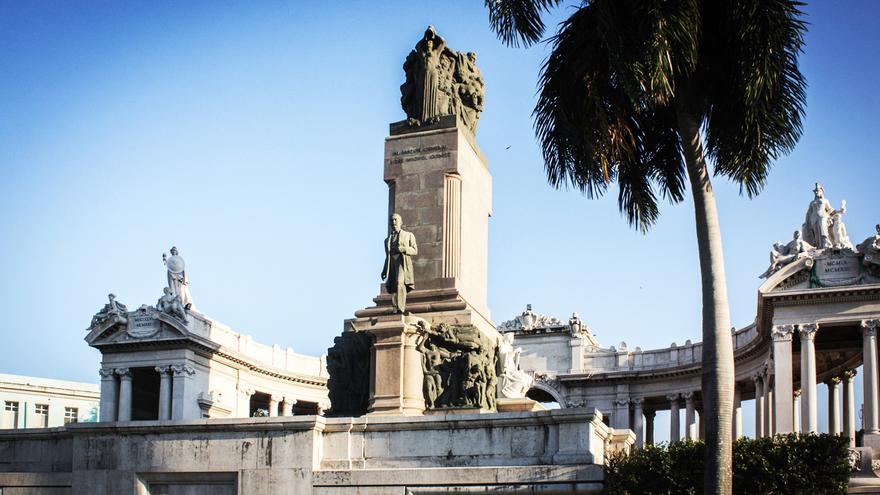
In 2012, controversy arose over whether it was appropriate to preserve or demolish the gigantic sculptural complex at G and 29th streets.

14ymedio bigger14ymedio, Yunior García Aguilera, Madrid, January 17, 2024 — The Cuban president with the biggest monument is perhaps Jose Miguel Gomez. In 2012, controversy arose over whether it was appropriate to preserve or demolish the gigantic sculptural complex at G and 29th streets in Havana. It all started with a song by the group Obsesión.

“Tear it down,” they rapped, “and don’t tell me this is about heritage / that it can’t be taken down because it belongs to Eusebio* / this is not a polite request / it is a demand from the people.” Some see the monument as a tribute to a racist, a man responsible for the massacre of independence fighters of color, which occurred a century earlier. For others, Gomez represents the personification of corruption. The only thing most Cubans know about our second president, however, is his nickname: Tiburón (the Shark). So obvious was his corruption that it was said of him, “When he swims, he splashes.”

Indeed, the ‘guajiro’ president was corrupt. There were several scandals during his tenure, such as a land exchange between Villanueva and Arsenal

Indeed, the guajiro president was corrupt. There were several scandals during his tenure, such as a land exchange between Villanueva and Arsenal. No one can deny that he emptied the coffers and left office with his pockets full. But the shark seems more like a sardine if we compare his appetite with those of the Castro brothers, who ended up taking over an entire country, spent decades destroying it, and gave us chicken instead of fish.

He was also a general in three wars of independence, a teenager who left school to take up arms, and an insurgent who rose through the ranks not from an armchair or hammock but on the battlefield. continue reading

By the time the Battle of Jíbaro ended, he was a major general and its hero. After the signing of the Treaty of Paris, which officially ended the Spanish-American War, he was one of nine generals invited to attend the handover ceremony. He later accompanied General Calixto Garcia on his visit to Washington. He was a member of the constituent assembly which drafted the country’s first constitution in 1901. He was appointed governor of Las Villas by U.S. General John Brooke and was later elected to that post by popular vote. By then, he was clearly one of the country’s most important figures, someone said to be “presidential material.”

As governor, he proved to be an excellent manager, building roads, improving agriculture and livestock, and investing in education. But perhaps his most notable achievement was the enormous popularity he gained among Afro-Cubans after appointing several black and mixed-race Cubans to posts in his government. Back then, absolutely no one considered him a racist.

To vote at that time, one had to be at least 21-years old, have a net worth of 250 pesos and be able to read. Members of the Liberation Army did not have to meet the last two requirements. And given the fact that most members of that army were of African descent, the black vote became a matter of utmost importance.

José Miguel wanted to be president so, with elections approaching, he launched an insurrection against the incumbent, Tomás Estrada Palma. For his part, Estrada Palma sought American military help, which led to a three-year period of U.S. occupation. In 1908, Gómez defeated Mario García Menocal, with 60% of the vote, to become president. His Liberal Party gained an absolute majority in Cuba’s House of Representatives. Though he and his allies would control the Senate, they had to deal with a new party: the Independents of Color (PIC).

The Liberals split into two factions: the nationalists, headed by Vice-President Alfredo Zayas, and the republicans, led by José Miguel

The Liberals split into two factions: the nationalists, headed by Vice-President Alfredo Zayas, and the republicans, led by José Miguel. One anecdote illlustrates the level of animosity between the two men. As the story goes, during the victory banquet, cigars were being passed around. Around the cigars were paper bands were images of both men printed on them. Gomez took one with the image of his vice-president on it, lit it and, in a jocular tone, said, “As for Zayas, I am smoking him.” El Chino, as Zayas was known, was not a smoker, so he responded in kind by saying, “And as for José Miguel… I am putting him in my pocket.”

Then came 1912. The PIC had been banned two years earlier. The Morúa Amendment, sponsored by a mulatto patriot, outlawed parties made up of a single racial group. The decision may have been controversial but it was fair, and several black patriots supported it. However, both conservatives and annexationists began adding fuel to the fire, seeking the overthrow of the liberals and end the American occupation. Faced with the uprising of the independents of color, Gomez acted with a heavy hand, one that was too harsh. More than 3,000 Afro-Cubans were slaughtered. ​

No, José Miguel was not a mackerel. He was a shark. But there was more than one culprit in that massacre.

*Translator’s note: a reference to the late Eusebio Leal, official historian of Havana, whose office was responsible for the restoration of the city’s historic center.

____________

COLLABORATE WITH OUR WORKThe 14ymedio team is committed to practicing serious journalism that reflects Cuba’s reality in all its depth. Thank you for joining us on this long journey. We invite you to continue supporting us by becoming a member of 14ymedio now. Together we can continue transforming journalism in Cuba.
Remittances Collapsed in 2023 As the Cuban Exile Dedicated Its Money to Helping Migrants

While the continent experienced a 9.5% increase in remittances, “Cuba moved in the opposite direction,” says researcher Emilio Morales. (14ymedio)

14ymedio bigger14ymedio, Havana, January 16, 2024 – Between investing in the private companies promoted by the regime or launching a “great rescue and family reunification operation,” Cuban emigrants have opted for the latter. This is clear from the Cuba Siglo 21 center, based in Madrid, which in its most recent report estimates that in 2023, the diaspora spent between 1.8 and 2.2 billion dollars on the procedures, travel and maintenance costs of the 560,868 Cubans who left the country for the United States, more than 200,000 of them illegally.

In contrast, remittances experienced a “shocking decline” in the same period: emigrants sent just under 1.973 billion dollars to the Island, the same amount as in 2010. This is a decrease of 3.31% compared to the amount in 2022 – when 2.34 billion dollars were sent – and a scandalous 46% decrease, taking into account the figure of 2019 (3.716 billion dollars). “It is a strong warning sign that the country is losing one of its main sources of income,” says researcher Emilio Morales, author of the report and director of the Havana Consulting Group in Miami.

“Emigration is growing, but remittances are sinking,” Morales summarizes in a formula that was already announced in another of his reports, last October, which commented on the ineffectiveness of the State-run private companies to seduce Cuban-American investors. Without money from abroad, with very little margin of economic freedom and with a spurious task – to provide oxygen to the coffers of the Regime – the destiny of the private companies is to languish until they disappear completely, Cuba Sigla 21 explained at the time. continue reading

This massive exodus not only represents the reunification of Cuban families but also the loss of human resources on an unprecedented scale

“This massive exodus not only represents the reunification of Cuban families but also the loss of human resources on a scale unprecedented in the history of Cuba. The lack of confidence in internal policies, the preference for removing family members from the country rather than risking investing in the Island and the rejection of the regime’s abuse have contributed significantly to the decline of remittances,” says Morales.

The news cannot come at a worse time for the regime, the report points out. Inflation brought the value of the dollar in the informal market to 280 pesos, while the official rate remains at 120, and the “monumental desertion” of thousands of professionals – almost all young – has left the country without a workforce.

An “archaic mafia” model, denounced on numerous occasions by Cuba Siglo 21, is the only economic alternative left to the regime for its survival. But, Morales adds, placing their agents, repressors and trusted businessmen as owners of the private companies has been of little use.

“The purpose of overcoming the crisis with migratory therapies did not work on this occasion,” says Morales. The mass exodus – promoted in complicity with the Governments of Nicaragua and Venezuela – was, on the contrary, a “kick in the butt.” Experiencing disaster after disaster, the regime’s “parasitic economic dependence” with respect to exile ended up reaching a dead end.

Online stores for food and basic necessities, as well as private companies, are an “emerging” and unsuccessful strategy, and will not offer financial stability

Online stores for food and basic necessities, as well as private companies, are an “emerging” and unsuccessful strategy that will not offer the financial stability desired by the leadership or end the poverty in the country, says Morales.

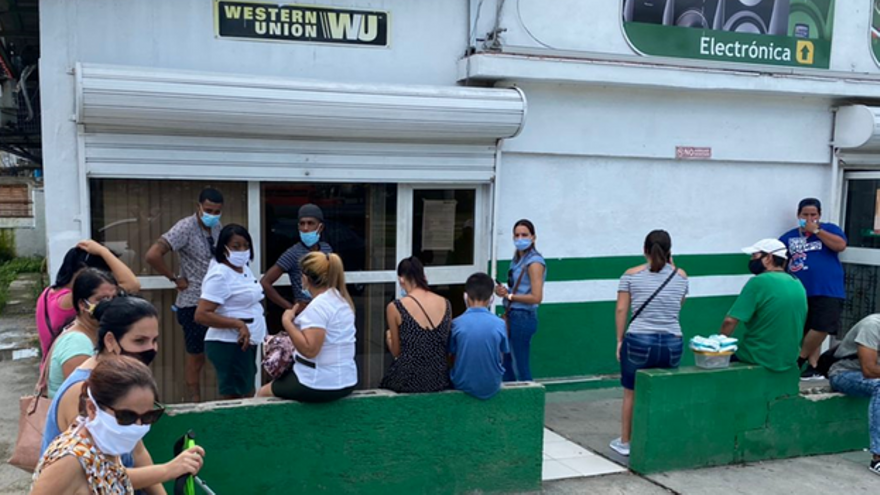
The most alarming consequence for Havana of that “disinterest” of emigrants in the Island’s economy now translates into the low volume of remittances, at a time when Latin America enjoys an injection of money from its emigrants. While the continent experienced a 9.5% increase in remittances, Morales notes, commenting on a report from the Inter-American Development Bank (IDB), “Cuba moved in the opposite direction” despite the “facility” offered by the Biden Government to the financial companies Orbit S.A. – “which operates in an opaque way with Gaesa,” the business monopoly of the Cuban Army – and Western Union.

Last November, the IDB published a report on the record number of remittances that arrived in the region in 2023 – about 155 billion dollars – that did not include data about Cuba. However, the Havana Consulting Group reported then that, despite the emigration, the Island was one of the countries that benefited from the money of its emigrants.

The IDB report explains that the highest increase occurred in Central America, with 13.2% more than the previous year, especially to Nicaragua, which grew by an impressive 59% compared to the previous year, most of the money coming from the United States. Last year, 73.5% of remittances to the Caribbean and Central America came from the United States, while Spain appears as the second source in importance, although far behind with only 11.4%.

There was also no data in the report from Venezuela, with 7,000,000 expatriates. The IDB, however, estimates that the amount received was 2.5 billion dollars.

Translated by Regina Anavy

____________

COLLABORATE WITH OUR WORKThe 14ymedio team is committed to practicing serious journalism that reflects Cuba’s reality in all its depth. Thank you for joining us on this long journey. We invite you to continue supporting us by becoming a member of 14ymedio now. Together we can continue transforming journalism in Cuba.
Three More Baseball Players Leave Cuba To Try Their Luck in the U.S. Major Leagues

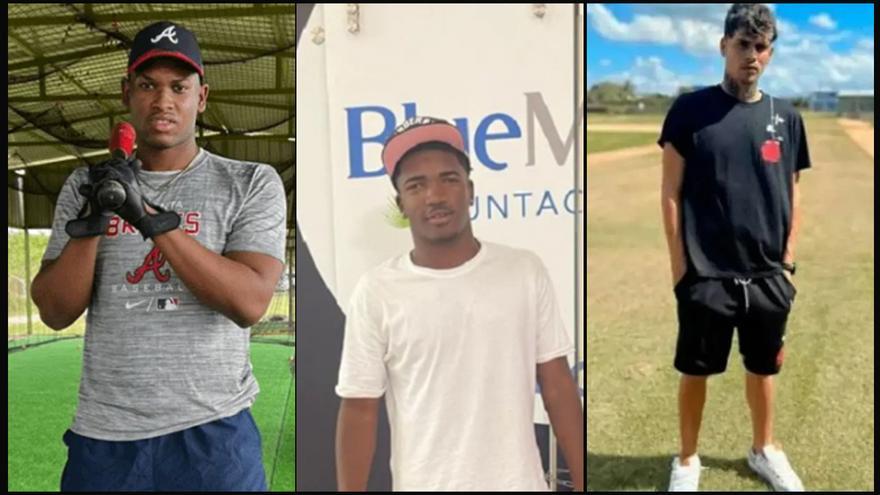
Cuban baseball players Danger Casi, Yandro Hernández and Jorge Luis Manzolo are now in the Dominican Republic. (Collage)

14ymedio bigger14ymedio, Havana, 15 January 2024 — Cuba is running out of young baseball players. On different days in the first two weeks of January, Danger Casi, Yandro Hernández and Jorge Luis Manzolo took flights to the Dominican Republic with the aim of looking for an opportunity in a Major League team of the United States.

At age 22, Danger Casi, from Guantánamo, decided to emigrate after being removed from the roster of the national team competing in the Pan American U-23 Games last November. His family denounced the “exclusion” of the athlete despite the fact that he had been the leader in batting, extra bases and doubles in the U-23 National Championship.

“Surprisingly, Casi was not included on the payroll,” journalist Francys Romero said on his social networks. The athlete was also part of the pre-selection that attended the U-23 World Cup in 2022.

Romero highlighted Casi’s statistics with the Indios of Guantánamo in the 62nd National Series. “He has an excellent physique,” but it will depend on the conditioning and the most demanding workouts he will have to undergo. continue reading

Johan Rodríguez announced his contract with the Cleveland Guardians. (X/@francysromeroFR)

At just 18 years old, outfielder Yandro Hernández, whom Francys Romero considers the best batter of the U-18 class of 2023 in Cuba, has also emigrated. “He is equally good in contact, swing speed and understanding of the zone,” stressed the specialized journalist.

Yandro is the son of Stayler Hernández, a former member of Metros and Industriales. In the Dominican Republic, he will seek to improve his batting technique. He has a batting average of .463  (80-37) and was the leader in hits with 37.

Jorge Luis Manzolo also chose the Dominican Republic for his  training. On January 10, the right-handed picher, from Báguanos, Holguín, was confirmed as staying in the Dominican Republic.

“Manzolo easily dominated the level within the youth category. His straight reached 91 miles, and he has command in his repertoire,” FR! Baseball stressed.

The best-paid agreements and contracts are a magnet for these Cuban athletes, who in the Dominican Republic are signed by talent scouts. On Monday, a new period of international signings began, and some arrangements began to be confirmed.

Boris Sarduy, a Cuban who joined the Under-12 in 2019, signed with the San Francisco Giants. The agreement guarantees him a bonus of $30,000.

Ambidextrous hitter Christian Saez signed with the San Luis Cardinals with a $150,000 bonus. (X/@francysromeroFR)

Johan Rodríguez, who left the Island at the age of 15 in 2022, formalized his hiring with the Cleveland Guardians. This baseball player, represented by Edgar Mercedes and Born to Play, was guaranteed by the team a bonus of $350,000. The team also benefited from the services of Edelvis Pérez, who will receive a $415,000 bonus.

Erik Matos is another promising player who emigrated last year. This young man is also represented by Edgar Mercedes and Born to Play, who managed to place him on the Oakland Athletics roster with a $700,000 bonus.

In December 2021, Christian Sáez left Cuba. Age 14, this native of Cienfuegos arrived as an “ambidextrous hitter,” which doubled his value, according to specialists.

The best batter of the U-12 World Cup in 2019 is now one more member of the Cardinals of San Luis with a bonus of $150,000.

Translated by Regina Anavy

____________

COLLABORATE WITH OUR WORKThe 14ymedio team is committed to practicing serious journalism that reflects Cuba’s reality in all its depth. Thank you for joining us on this long journey. We invite you to continue supporting us by becoming a member of 14ymedio now. Together we can continue transforming journalism in Cuba.

In Manzanillo, the Windows of Hard Currency Stores Are Covered Against Stones

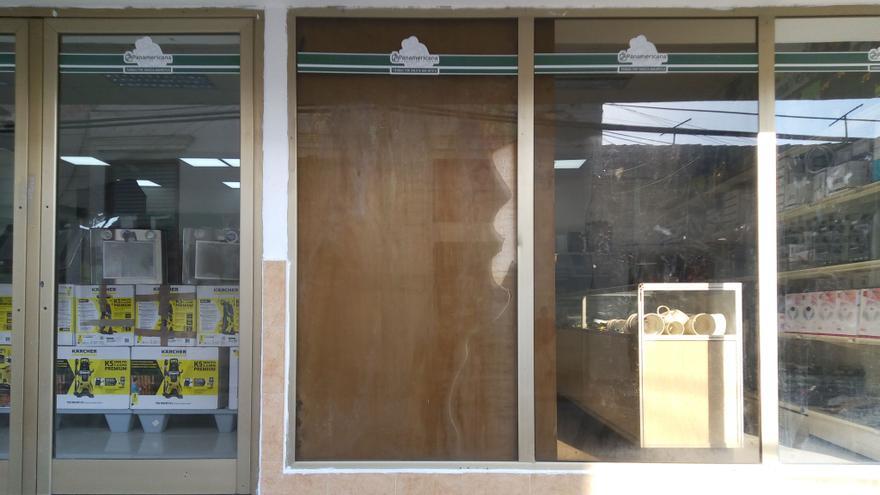
In the Primavera store, on Martí Street, belonging to the State Panamericana chain, the traces of these attacks can be seen. (14ymedio)

14ymedio bigger14ymedio, Juan Matos, Manzanillo, January 16, 2024 – The authorities of Manzanillo, in the province of Granma, have covered the windows of the stores in freely convertible currency (MLC). In recent months, stone attacks on these shops have increased, because of the population’s discontent.

Covering the windows is a temporary measure that seeks to protect the premises and prevent damage to State property, official sources say. In the Primavera store, on Martí Street, belonging to the State Panamericana chain, the traces of these attacks can be seen: a piece of wood covers a broken window.

Now, with part of the outside light cut off, the premises look smaller and darker. This Tuesday, the customers of the El Dandy store, its windows covered by metal plates, walked around in semi-darkness in the rows of water dispensers and Chinese Cheerday beer, very little valued by consumers but one of the most abundant brands in those stores. continue reading

“The covered windows in the MLC stores show how afraid they are, because they know that at any moment a stone might kill them”

One of the street vendors who spent the night in the doorway of the El Dandy store, on Loynaz Street at Martí said “the covered windows in the MLC stores show how afraid they are, because they know that at any moment a stone might kill them.”

In addition to the violent incidents, foreign exchange establishments have seen another phenomenon proliferate: the lack of customers. What at first — when in July 2020 they approved the sale of food and other basic necessities — were corridors full and shiny with imported products, today are empty shelves, with a gloomy atmosphere. “People don’t have dollars, and we get our salaries in pesos, not in MLC [freely convertible money],” a neighbor tells 14ymedio.

“The covered windows in the  MLC stores shows how afraid they are,” said a street vendor in the doorway of El Dandy. (14ymedio)

People’s lack of money, explains another resident of Manzanillo, is the main reason for the failure of these stores. “Salaries are not enough to cover basic needs and much less to allow superfluous expenses in stores of this type,” the man says. “I prefer to spend the little I have in new ventures, not in State stores.”

However, it is not only the lack of resources that justifies the few customers of foreign exchange stores and their restricted offers. It is enough to immerse yourself in some Facebook groups in Manzanillo to find some of the merchandise that informal merchants have bought in these places and then resell. Flat-screen TVs, freezers of various capacities, washing machines, kitchens and refrigerators crowd the ads.

This Tuesday, the customers walked around in semi-darkness in the El Dandy store, whose windows are covered by metal plates. (14ymedio)

The small packages of cookies “have run out in the stores, but here they have large quantities,” complained a netizen in one of those virtual markets. The response of the group’s administrator was vehement: “Yes, señora, but this is for people who don’t have MLC; it’s for those who only have pesos. They have to buy with us because the State doesn’t sell them any of this.”

The skillful merchant failed to add a detail. Those buying and selling groups on Facebook don’t have to protect themselves from stones. In addition, the products are displayed in full light and color, their windows are the immensity of the internet, and their main customer is the Cuban in need and without foreign currency.

Translated by Regina Anavy

____________

COLLABORATE WITH OUR WORKThe 14ymedio team is committed to practicing serious journalism that reflects Cuba’s reality in all its depth. Thank you for joining us on this long journey. We invite you to continue supporting us by becoming a member of 14ymedio now. Together we can continue transforming journalism in Cuba.

At the Gas Stations in Guanabacoa, Cuba, Women Rule, and Not Always by Good Means

One just has to go to the Corral Falso and Los Paraguas Service Centers, in Guanabacoa, to take the pulse of the drivers’ discomfort. (14ymedio)

14ymedio bigger14ymedio, Havana, 11 January 2024 — While a group of Havana residents observe him, a senior officer of the Armed Forces parks his motorcycle next to a pump at the Los Paraguas Service Center in Guanabacoa. He doesn’t waste time on questions and goes directly to the gas station attendant. After a very brief conversation, and before the displeased looks of those present, the soldier returns to the vehicle, activates the hose and fills the tank.

The anger of those present has an explanation: before buying, each of them had to fight for the “privilege” of being included in a meticulous list of customers that the local government ordered to be drawn up during the fuel crisis of June 2023, and that has been reactivated a few days before the announcement of the increase in fuel prices for next February. The soldier, whose uniform opens doors for him, is above these formalities.

One just has to go to Los Paraguas or the other service center in Guanabacoa, Corral Falso, to sense the drivers’ discomfort. Dozens of sullen faces gather around a woman who gives blunt instructions to those who want to buy: “You have to sign up for the Telegram group.”

The speaker is the person in charge of making the daily list of buyers through the messaging application. On Telegram she identifies herself simply as Esther, although there is a team behind her – also with simple nicknames, such as Yanet or Carilda – which claims to be “directed by the continue reading

government of Guanabacoa.” Her mantra, which she repeats when a client questions her authority, is: “This is not anarchy, it is queue control, avoiding hoarding, profits, queues, etc.”

The soldier, whose uniform opens doors, is above formalities. (14ymedio)

The Falso SC C. group had 4,025 members this Thursday; the one at Los Paraguas, 5,046. Every morning, about 20 users join. At approximately six in the morning, Esther tells the group that she is “awaiting information.”  As the day progresses, the woman organizes the flow of clients through the client list of each service center, prepared in Excel.

Esther demands name, surname, license number, vehicle license plate and a telephone number. On more than one occasion she has stated that the list “is the same as in 2023” and that the names “were jealously guarded.” “The ones that don’t show up is because they were never there,” she alleges, and she invites the ones she does not know to “stand in line” to make their purchases after those who do show up.

However, this newspaper received a complaint from a reader who detected numerous irregularities in the customer inventory. The Los Paraguas Excel document lists 3,688 clients, of whom 114 are repeated up to four times and 77 do not have badges – a requirement that Ester always demands. In the case of Corral Falso, where 2,855 names are registered, there are 168 that are repeated up to four times and 40 without plates. Some 1,003 clients are on both lists.

No matter how much they accuse her, in groups and – according to her – privately, Esther keeps repeating that she does not have to give explanations. Next to her, a man in shorts and flip-flops acts as a bodyguard. Desperate, due to the lack of gasoline or the slowness of the queue, many customers tend to “get annoying.”

This Wednesday, Esther suspended the queue “until the police arrived and acted against three motorists who were threatening,” she told the group. “They got the wrong idea of the place. This is not a jungle.” Hours later, the woman narrated her outcome: a “person from town” “persuaded” her to resume the queue. “It bothers me that men do not respect a lady,” she summarized, especially when “this activity – the organization of the queue – is directed by women.”

Employees at Los Paraguas also refer to the group and Esther’s authority as the only way to obtain fuel. (14ymedio)

In one of her many explanations since both Telegram groups were reactivated, Esther explained why “the government of Guanabacoa took control of the queue.” “Reason: the paid line standees proliferated with their usual act of making money from human needs and no one reported them,” she argued. But there was more: “For anyone who interrupts this process, there are relevant bodies to make them understan.”

Esther develops a kind of chiefdom over both groups. The stability of the queue, the power to stop the process and her apparent direct connection with the authorities are all in her hands. She often complains that, during the early hours of the morning, those “summoned” don’t dare to go to the gas station. “Do we run or hide?” She then rebuked the clients who, given the growing lack of safety on the streets, don’t leave their house before sunrise.

Other times, she has outbursts of anger, especially when she is accused of corruption or manipulating the queue: “It’s enough for someone to react inappropriately to this comment to remove them from the group,” she threatened, after stating that she was not afraid of accusations or “attacks,” as she calls them.

Gas station employees also refer to the group and Esther’s authority as the only way to buy fuel. “You have to sign up between eight and nine, when they open the group. Meanwhile, you can’t write,” a worker at Los Paraguas service center tells 14ymedio .

As for the new prices, the employee is not happy either. “Hopefully, there will be a debate and that will change. We agree that they increase for tourists, but for self-employed persons, when you raise the cost of gasoline, the result is that they will increase their prices. If they charged 100 pesos for something before, now they will charge 500. To me, they are finished,” period.

“Hopefully, there will be a debate and that will change. We agree that they should go up for tourists, but for self-employed persons, when you increase the cost of gasoline, the result is that they will increase their prices”

 The truth is that, from the seat of Government, the outlook is not rosy either. The expert from the University of Texas (USA), Jorge Piñón, explained to this newspaper that one of the causes of the current national gasoline crisis is that Cuban refineries – particularly the one in Havana – have been out of service.

The researcher, who analyzes the behavior of gasoline, diesel and liquefied petroleum gas consumption in the country, has noted that in the last five years with official figures (2017-2021) there has been an increase of 40% in demand for gasoline in Cuba. In 2022, adds Piñón, providing his own data, the country consumed 335,000 tons, an incredible amount, if one considers that only 240,000 tons were consumed in all of the previous year. However, in 2023 there was a drop of 23% from the year before: 258,000 tons.

On the other hand, the movement of tankers through Cuban ports does not stop. The ships Ocean Mariner, Vilma and Delsa are anchored in terminals in Mexico and about to set sail for Havana. María Cristina, Alicia, Lourdes, Petion and Esperanza are waiting in Venezuela.

“What is the true cost (cash flow) of these volumes? We know that shipments from Venezuela are in exchange (barter) for products and services provided by Cuba, but there has to be an accounting statement that shows the economic impact (cash flow) in the State budget,” argues Piñón. “Same as supplies from Mexico: what is the cost of these barrels?”

“Loose tongues” is the state that best defines Cubans’ discomfort. In the huge lines of vehicles waiting their turn at the Cupet, in the masses that gather at taxi stands, in taxis, increasingly hard to pay, people emphasize: “We have to rob these people. Fuel, oil, petroleum, whatever.”

For Ernesto, age 58, the dilemma already has an answer. “I’m going to sell the car,” he tells this newspaper. Owner of an old Cadillac that he has used for years to transport passengers, this Havana native who worked for decades at an official radio station had the vehicle in the workshop months ago for bodywork. “I’m not even going to take it out of there, I already told the owner of the place that it is for sale.”

“Loose tongues” is the state that best defines the unrest of the Cubans at taxi stands. (14ymedio)

“I did a quick calculation after the Round Table [program on State TV] and it showed me that if I don’t charge the entire trip at more than 300 pesos to each passenger, I can’t pay for the fuel and keep the car running. And if I charge that, I’m going to spend every day in the street wrapped up and hearing insults, so I better stay at home,” he summarizes.

Yogurt, cheese and pork make up the offering that Iván, a resident of Alquízar, province of Artemisa, frequently takes to sell in Havana. Although he sometimes makes the trip on the train that connects the Cuban capital with San Antonio de los Baños, he also alternates trips with his son-in-law, who drives a Lada. Now, after finding out about the rise in prices, he has been “doing the math” for hours.

Between raising the price of his merchandise or suspending his merchant route, Iván, for the moment, prefers “not to promise anything” to clients, until he can verify, in practice, how much he must invest to get his merchandise to the Cuban capital. “There is always a chance that these people will back down because this is going to be a very unpopular measure,” is his hope.

____________

COLLABORATE WITH OUR WORKThe 14ymedio team is committed to practicing serious journalism that reflects Cuba’s reality in all its depth. Thank you for joining us on this long journey. We invite you to continue supporting us by becoming a member of 14ymedio now. Together we can continue transforming journalism in Cuba.
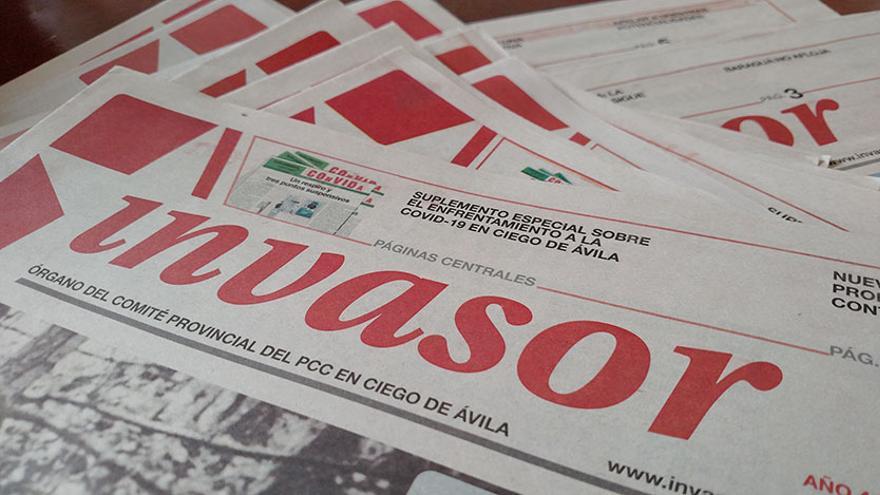
Ciego de Avila Newspaper ‘Invasor’ Once Again Questions the Transparency of the Cuban Authorities

Invasor is the newspaper where some of the most critical texts against the Government have been published in the last year. (Invasor)

14ymedio bigger14ymedio, Havana, January 15, 2024 — The official newspaper Invasor published this Sunday, for the second time in four months, a warning to the officials of the Island. The reason: the lack of transparency of the authorities in the face of requests for information and solutions by the media and citizens. “People have the right to complain, and institutions have a duty to respond,” the newspaper said.

With the statistics from two of its sections, “Speaking Plainly” and “Open Letters,” Invasor gives the measure of the problem. Of the 104 notes published in 2023 in the first section, 93.2% were complaints, and the authorities responded to only 78.3%. In “Open Letters,” out of 13 letters received, only three were answered by officials or institutions.

Transport, Housing, Aqueduct and Sewerage, Communal Services and the Cuban Postal Service are some of the institutions the text mentions

Transport, Housing, Aqueduct and Sewerage, Communal Services and the Cuban Postal Service are some of the institutions that the text mentions, which have evaded on several occasions the newspaper’s requests to respond to the population, showing “non-compliance with the State’s responsibility to the citizens.”

Freeing itself from all responsibility, the official media clarifies that these situations are the “result of poor implementation of the Social Communication Policy, not the lack of insistence of this newspaper.” continue reading

“It is no less true that there are entities and institutions that are in the vanguard when it comes to sensitizing themselves to the problems of the population and will not be concerned, while others will recognize themselves here and some, perhaps, will find out that they have not acted as they should,” says the State media. They also highlight that in the “Speaking Plainly” and “Open Letters” sections, several recognitions were given to “those who have made an effort and want to satisfy the demands of the people, destroying obstacles such as bureaucracy, inefficiency, insensitivity and lack of commitment to the citizens.”

To those who have responded to the complaints without satisfying them, Invasor also dedicates a few lines: “The responses received reveal, in many cases, that the impossibility of the solution is not justified by transparent, logical and convincing  information,” which also constitutes irresponsibility on the part of the authorities.

In a similar article published last October, the media launched its first diatribe against the authorities

In a similar article published last October, the media launched its first diatribe against the authorities. “It was our intention to inform the public [about passenger transport], but at least four times, the managers of the Provincial Transport Company have left us waiting,” it said at the time.

As a shield against possible calls for attention, the media took refuge in the words of Miguel Díaz-Canel: “In the face of a certain situation that is negatively impacting the population, the responsible public servants are obliged to report immediately and by any means possible. For its part, it is up to the press to report first, and responsibly, on any sensitive information.”

Invasor is the newspaper where some of the most critical articles against the Government have been published in the last year. However, the reports always indicate that it is a particular authority, and not the system, that makes “mistakes.”

Translated by Regina Anavy

____________

COLLABORATE WITH OUR WORKThe 14ymedio team is committed to practicing serious journalism that reflects Cuba’s reality in all its depth. Thank you for joining us on this long journey. We invite you to continue supporting us by becoming a member of 14ymedio now. Together we can continue transforming journalism in Cuba.
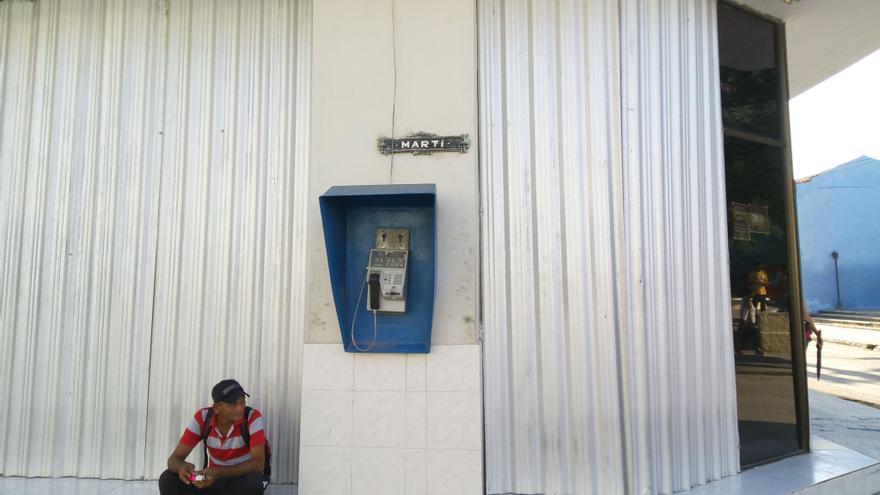
Not Even the ‘Integrated’ Neighborhoods in Cuba Are Saved From Garbage Piles Everywhere

The volume accumulated in the containers is such that it would take several days of work and trucks to clean it up completely. (14ymedio)

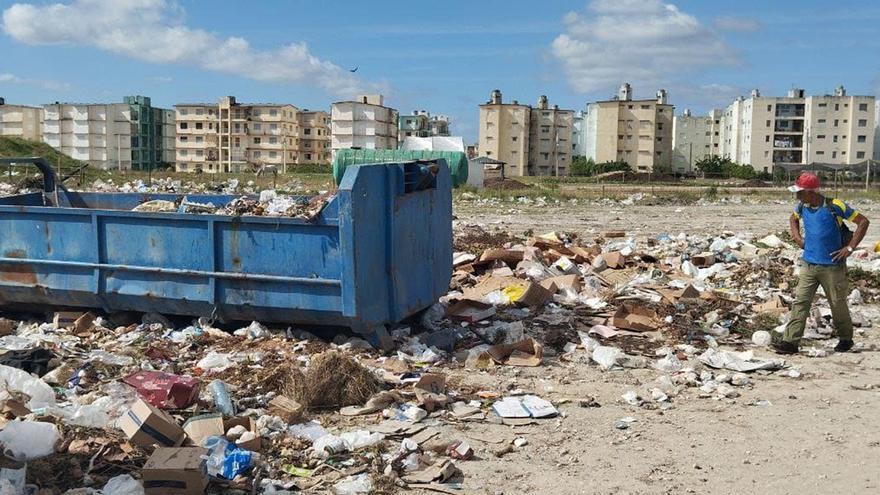
14ymedio bigger14ymedio, Miguel García, Havana, 15 January 2024 — Not even the Cuban military are saved from the mountains of garbage that are seen everywhere on the Island. The neighborhoods of Villanueva 2 and Villanueva 3, in the city of Holguín, where hundreds of workers of the Ministry of the Interior reside, is about to be swallowed up by the mountains of waste that accumulate around it. Despite the fact that a few days ago the Comunales [Communal Services] company collected part of the waste, the accumulated volume is such that it would take several days of work and countless trucks to clean it up completely.

Bags flying in the wind, several vehicle beds full of waste and a rotten smell that floods the air is the panorama facing the neighbors in the morning when they leave their homes. “You can’t even have the windows open because the flies get everywhere,” complained a resident in the area, located behind the Pedro del Toro Polyclinic of the Pueblo Nuevo People’s Council. “This started as a little bit of garbage but now it already occupies the space of several buildings.”

The nearby buildings, most of them five floors erected by residents, are of recent construction, and in them, in addition to members of the Ministry of the Interior, live some doctors and people from Holguin who lost their homes during the passage of Hurricane Ike  in 2008 and had to wait more than ten years for a new home. “This is a very politically integrated neighborhood, and people are fuming because we have been abandoned,” a neighbor explained to 14ymedio. continue reading

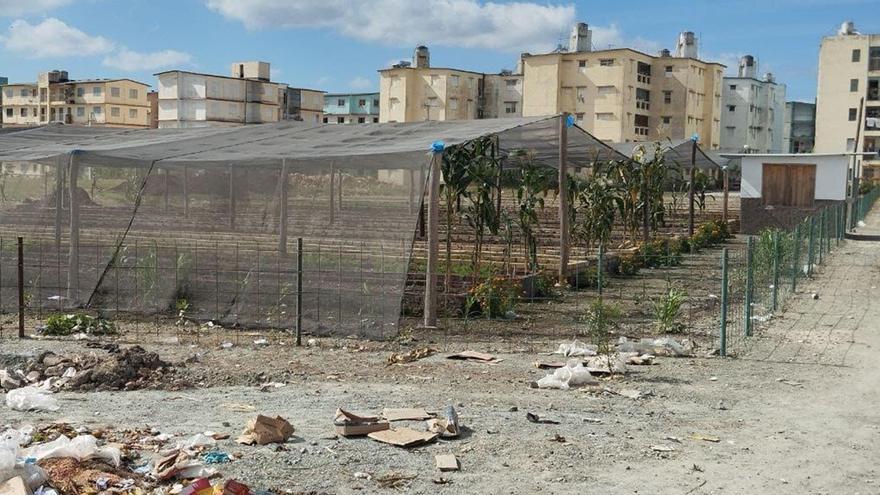
A few meters from the garbage dump, the facilities of an organoponic nursery languish due to the lack of supplies and the absence of personnel interested in working there due to the low salary. (14ymedio)

“When we moved here, this was supposed to be a neighborhood that was going to have special attention but everything has  deteriorated,” claims the holguinera. A few meters from the garbage dump, the facilities of an organoponic nursery languish due to the lack of supplies and the absence of personnel interested in working there due to the low salary.

In March 2021, a report on official television boasted of the resurgence of the organoponics system in the province. The report attributed the revival to the new economic measures, which allowed wages to go above 2,000 pesos and, in addition, the division of profits resulting from the sale of products. In the images disseminated there was no shortage of lettuce, radishes and chives, all freshly grown and available to customers.

Two years later, an entourage led by Ernesto Santiesteban Velázquez, first secretary of the Communist Party in Holguín, visited the surroundings of Villa Nueva 3 where an organoponic nursery was built that would be baptized with the optimistic name of “New Dawn.” The official inspected the areas for the cultivation of vegetables and fruits.

However, this January, instead of the promised cucumbers and kidney beans, the most common product on the lands adjacent to Villa Nueva 2 and 3 was garbage. The harvest of filth is the only one that seems to grow stronger and over-fulfill the plans for this neighborhood.

Translated by Regina Anavy

____________

COLLABORATE WITH OUR WORKThe 14ymedio team is committed to practicing serious journalism that reflects Cuba’s reality in all its depth. Thank you for joining us on this long journey. We invite you to continue supporting us by becoming a member of 14ymedio now. Together we can continue transforming journalism in Cuba.

While the Country Is Sinking, the Cuban Regime Renews the Code of Ethics for Its Cadres

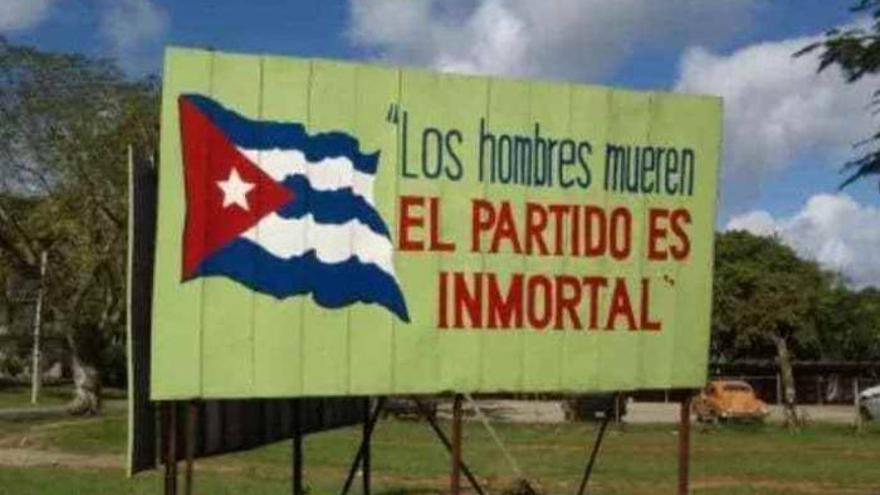
“Men die, the Party is Immortal” – The 2024 Code of Ethics of the Cuban Communist Party (PCC) replaces the previous one, in force since 1996. (laicismo.org)

14ymedio bigger14ymedio, Madrid, 16 January 2024 — After 18 years, the list of rules of conduct known as the Code of Ethics of the State Cadres already has a new version, which entered into force this Monday after its publication in the Official Gazette. The rule emphasizes aspects such as “the honor and duty to defend the socialist homeland, anti-imperialist conduct, the willingness to have permanent accountability and to submit to public scrutiny; and the duty to promote the mastery of the regulations that govern the development of society.”

The framework under which 118,000 people should be governed, according to Miriam Marbán González, a member of the Central Committee of the Communist Party and one of those responsible for the preparation of the document, is shorter than the previous one, which had 27 “precepts” after the preamble, and it has changed its name to the Code of Ethics of the Cadres of the Cuban Revolution, since it also applies to the managerial positions of mass organizations.

The new Code contains the definitions of 17 words that should govern the behavior of the cadres, starting with patriotism, understood clearly as a defense of the Revolution. Those subject to the regulation have the obligation to love the country, its symbols and to put Cuba ahead of themselves, defending it – in line with the Constitution – with weapons if necessary. continue reading

The subjects of the regulation have the obligation to love the country and its symbols and to put Cuba ahead of themselves, defending it – in line with the Constitution – with weapons if necessary

According to the preamble of the Code, the aforementioned guidelines “cultivate the dignity and sensitivity of the people from Marxist, Leninist, Martian [following José Martí] and Fidelist positions, in correspondence with the most noble values in the evolution of the homeland’s history, exposed in a masterful synthesis in the Concept of Revolution expressed by Commander in Chief Fidel Castro Ruz.”

The text asks for reliance on the so-called historic generation and calls for updating “the country’s development model,” taking into account that it is in the middle not only of the “blockade” but also of the “ideological war” that must be fought with “exemplary behavior and “revolutionary concern.”

It is precisely anti-imperialism that is the second guideline to follow, according to the curious regulations which have the rank of law. This concept requires “maintaining vigilance and rejection towards actions that seek the political, economic, technological and cultural expansions lor domination of imperialist powers” and includes attitudes such as denouncing Havanatur’s Santa Claus ads or getting the private restaurant San Pepper’s Burger de Holguín to take down their poster.

This section also contemplates the importance of “basing friendships on coincidence and respect for principles and revolutionary morality,” avoiding neighborhoods such as that of the Ecobios, the series of cartoons that recounted the discussions and affections of two Cubans as diverse as they are similar.

Next, the list outlines a whole series of virtues associated with honesty, honor, professionalism, altruism, humanism and solidarity, although the discipline makes it clear again that everything is subject to following the guidelines of the Communist Party, without being allowed at any time to question or offer any alternative within the system itself. “Promote conscious respect and loyalty to the Communist Party of Cuba, contribute with your performance to compliance with the programs, guidelines and agreements approved by its Congress and other party leadership bodies.”

The document calls for “probity” to be observed, assuming an integral attitude that helps to “foresee, combat and denounce any manifestation of indiscipline, illegality, crime and corruption in the administrative sphere” and “to take into account that corruption denigrates both those who incur it and those who tolerate it,” a section in which the Government has severe problems, since the situations in which the ruling party itself is accused of corruption of a public official are innumerable.

The document warns that non-compliance with the statutes will imply submitting to a “disciplinary analysis” in which responsibilities will be required depending on the severity

The situation has reached such heights, pushed by the denunciations of the independent press and the networks, which prevent containing what was previously barely circulating, that the regime has created its own profiles on Facebook to mention cases of corruption in its own ranks that were punished, but avoiding any analysis of what leads the average citizen to systematically break the law.

The regulations also ask for exemplary behavior in two complicated areas. First, transparency, something that the official press itself is already saying should be intrinsic to the system. Second, austerity in the sense of “refusing privileges and accommodation,” for which the citizens reproach the cadres of the Party whose privileges increases as they climb the ladder.

The document warns that non-compliance with the statutes will imply undergoing a “disciplinary analysis” in which responsibilities will be required depending on the severity.

“The bosses will be responsible for the education of their subordinates and the training of future generations, so that anyone who assumes a management role knows that these principles come first, even above other requirements and the competence that we demand,” said Miguel Mario Cabrera Castellanos, head of the Directorate of State and Government Cadres. He said that this document, which has the rank of law, applies to all those who “professionally work in management positions of political, mass and social organizations. It also applies to state, governmental and administrative spheres, and to those appointed as representatives of the Cuban State in mixed capital companies.”

Translated by Regina Anavy

____________

COLLABORATE WITH OUR WORKThe 14ymedio team is committed to practicing serious journalism that reflects Cuba’s reality in all its depth. Thank you for joining us on this long journey. We invite you to continue supporting us by becoming a member of 14ymedio now. Together we can continue transforming journalism in Cuba.
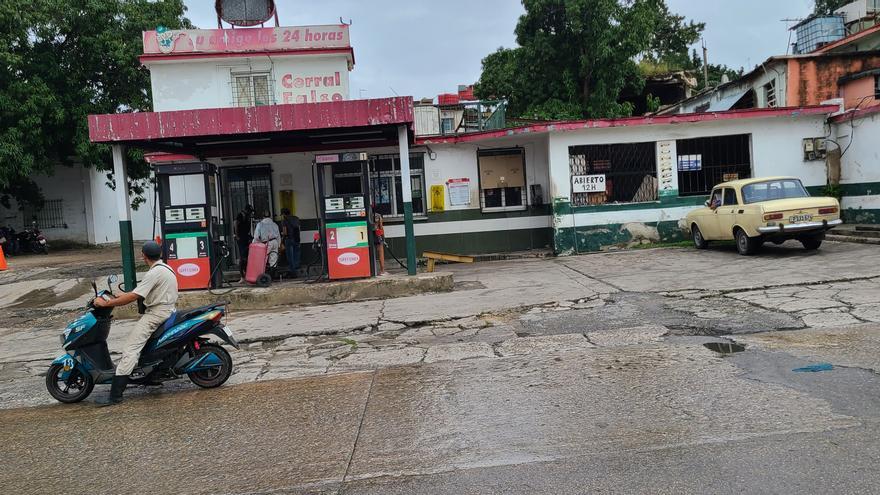
Two Children, Aged 10 and 15, Die in a Truck Crash in the Cuban Province of Granma

The injured were transferred to the Carlos Manuel de Céspedes hospitals, in Bayamo, and Celia Sánchez Manduley, in Manzanillo. (Radio Bayamo)

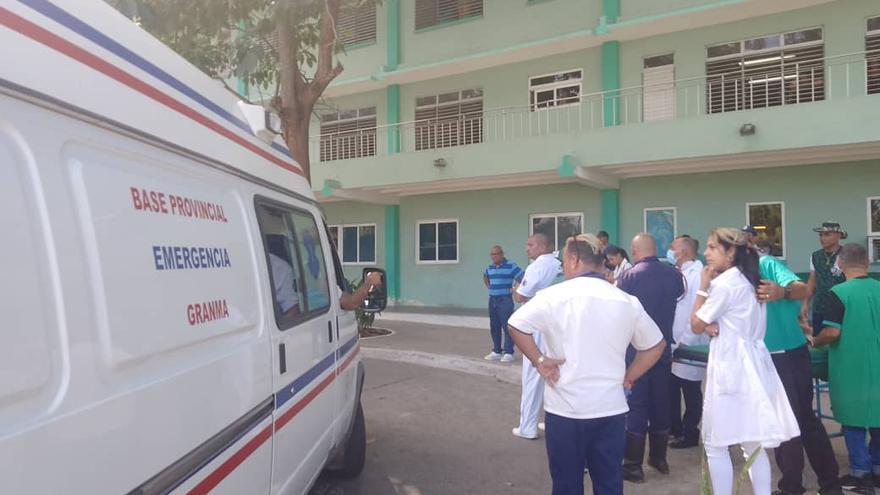
14ymedio bigger14ymedio, Havana, January 15, 2024 — At least two minors died and 13 people were injured in a truck crash that occurred on Monday in the municipality of Bartolomé Masó, in the province of Granma. According to the official press, the crash occurred when a passenger transport truck suffered a breakdown while climbing the Loma del Albergue and fell backwards downhill.

The state station Radio Bayamo identified the two deceased minors as Braudis Pujol Pérez, 10 years old and resident in Frío de Nagua, and Yerlis Solano Peña, 15 years old and a neighbor of Unit 4 of Caney de Las Mercedes, both towns in the Granma municipality.

According to the information offered by Eduardo Ramos Reyes, second head of the Police in Bartolomé Masó, a “leased truck” that was transporting passengers this morning from Frío de Nagua to the municipal capital suffered damage to the transmission, could not continue the climb and stopped halfway up the hill. Both the driver and some passengers tried to “maneuver” and stop the recoil of the vehicle “by placing wedges in the wheels,” but the truck ended up rushing backwards, the manager explained. continue reading

The injured were transferred to the Carlos Manuel de Céspedes hospitals, in Bayamo, and Celia Sánchez Manduley, in Manzanillo.

They have not revealed if it was a state company that leased the truck or if this was one of the converted vehicles that often suffer “flaws”   

The authorities have not revealed, however, if it was a state company that leased the truck or if it was one of the converted vehicles that often suffer “flaws” on the roads of the Island.

Crashes reported in the mountainous areas of the east of the country are becoming more frequent. Last September, in the town of La Juanita, in Granma, a truck that transported the workers of the provincial Construction and Assembly company broke its chassis, causing the driver to “lose control” and finally overturn. Two people died and 23 were injured, the authorities revealed at the time.

Also in August, a crash on the Loma La Mariana, in the municipality of San Antonio del Sur, in Guantánamo, left 21 injured. As explained at the time by the newspaper Venceremos, a converted truck for the transfer of passengers belonging to the provincial bus company went off the road and down a ravine.

Days before, the same thing had happened in Santiago de Cuba, when a vehicle of the Armed Forces overturned and caught fire in the municipality of Songo-La Maya, with one dead and 16 injured.

These provinces, due to their geographical peculiarities of abundant hills and roads in steep areas, constitute the region with the highest number of massive crashes, often of converted trucks or passenger vehicles that do not have the conditions to travel on the twisting and narrow roads of the Sierra Maestra. In most cases, the authorities attribute the cause of the crash to the “loss of control over the vehicle” by the driver.

Translated by Regina Anavy

____________

COLLABORATE WITH OUR WORKThe 14ymedio team is committed to practicing serious journalism that reflects Cuba’s reality in all its depth. Thank you for joining us on this long journey. We invite you to continue supporting us by becoming a member of 14ymedio now. Together we can continue transforming journalism in Cuba.
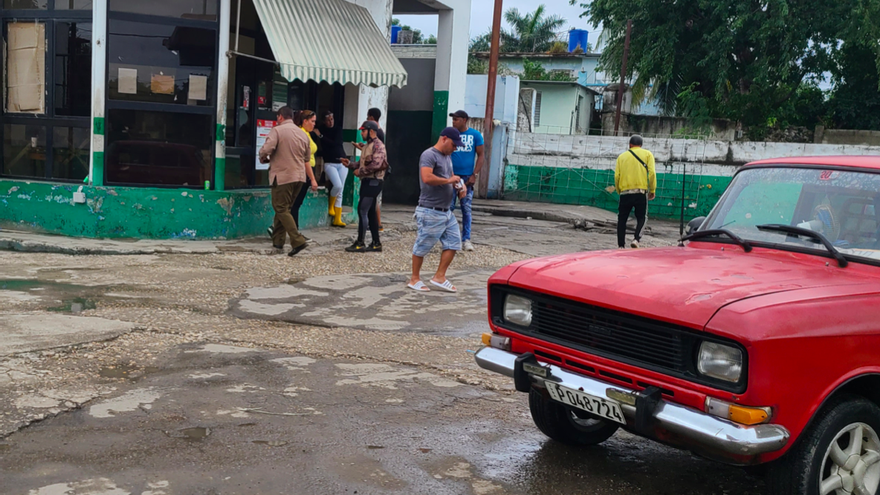
Facing a Cement Shortage, Cubans Resort to Alternative Home Building Materials

The only town in Granma province that met the state’s housing goal was Pilón, which built houses out of wood. (Granma)

14ymedio bigger14ymedio, Havana, January 8, 2024 — On Sunday, Cuba’s Ministry of Construction  added Granma to the list of provinces that failed to meet the government’s 2023 housing goals. According to official news outlets, only 737 (or 45%) of the planned 1,636 houses were built. Provincial officials blamed the “low manufacturing output” and public resistance to “alternative materials.” They admit, however, that the real problem is reduced deliveries of steel and cement, products that are not available locally.

Officials told the newspaper Granma that only 184 (28%) of the homes the ministry had planned as part of its housing initiative were actually built. For their part, state-owned companies, which invest a portion of their profits in workers’ housing, managed to build only 553 (57%) of the proposed 965 homes.

The biggest delay in the province, however, involves state financial and material subsidies for families in precarious housing situations. It was estimated that this aid would have allowed construction of 409 units. Instead, only 84 houses (15%) were built. continue reading

Local development projects, Tejeda complained, have not focused on the use of “alternative” building materials   

Michel Tejeda Acuña, the provincial government’s coordinator, explained that, in addition to a shortage of cement and steel, the “limited” prodution of provincial companies also makes it difficult to carry out the plan. Furthermore, regulations also preclude local materials such as stone, wood or clay from being used.

Local development projects, Tejeda complained, have not focused on the use of “alternative” building materials either, nor do they take into account the region’s capabilities. Only one of these projects, which was managed by private individuals and built in Bayamo from clay bricks with help from the state, seems have come close to meeting expectations.

Privately owned, and often illegal, artisan businesses have for years provided customers with inexpensive building materials they cannot find through state sources. The chronic shortage of construction materials has led many people to substitute bricks for concrete blocks, something the state itself has had to do to deal with its own shortfall.

Since potters began supplying the Ministry of Construction, hand-made brick production is the only thing that is going well. Their contribution, however, is not still not enough. “About five million bricks are produced in Granma annually. This is estimated to grow to about seven million but, to meet the housing policy’s target, we need more than twelve million a year,” explained Tejeda.

The only good news from the province comes from Pilón, a town with a policy of “more home-grown solutions and zero waste” and the only municipality to comply with the housing plan. It did this by substituting wood for cement. The homes, which were built with a type of wood that had not been specified, will be given to residents whose homes were destroyed by hurricane.

In Pinar del Río, Granma reported that this strategy has allowed some municipalities in the province to reach the goal of building homes at the rate of one per day. However, this does not include installing electricity or other items which rely on deliveries from a national distribution network. The concrete block industry is facing a similar challenge. In Vuelta Abajo it has the capacity to produce at “four to five times” the national average but only if cement and aggregate are delivered in a timely manner. “In other words, for a long time the program has been relied on resources that are not available in the province, and that, therefore, do not ensure its sustainability,” explained Jesús Nilo Soca, the regional government coordinator.

Here again, bricks are being use in place of concrete blocks. Until last November, Pinar del Río produced 800,000 bricks. “We produced more in eleven months than we had in five years, said Yalexis León, director of the Provincial Maintenance and Civil Construction Company. She estimates that production levels will reach two to two-and-half million annually in 2024.

Clay, a resource that is readily available, is used in the production of many alternate materials

Clay, a resource that is readily available, is used in the production of many alternate materials. That is, at least, how Delilah Diaz Hernandez, director general of materials for the Ministry of Construction, described it on an episode of the TV interview show Mesa Redonda (Roundtable) last June. She explained that Cuban marble, which commands a higher price, would be exported in order to finance housing construction.

Local production of building materials has been government policy for years. According to Granma, in 2010 there were 55 workshops of this type in the country versus 465 now. It concluded, “[This] means that more than 80% of the resources required for a home can be obtained locally.” Reality clearly demonstrates otherwise.

The steep increase in prices for building materials in recent years has made the dream of owning a house in Cuba unrealistic. Even with subsidies, people often complain that just building a wall is impossible without governmental assistance due to the high cost of rebars, concrete blocks and gravel. To make matters worse, these resources can no longer be found even at sites that sell building supplies.

Things are much the same with businesses and the Ministry of Construction itself, whose budget covers less and less An article published in 2022 by the magazine Invasor raised the possibility of the government purchasing houses for sale on the real estate market, something that — given the current drop in prices due to the large number of people leaving the country – would mean savings in the millions for the state in terms of materials, personnel and time. The proposal, however, fell on deaf ears.

____________

COLLABORATE WITH OUR WORKThe 14ymedio team is committed to practicing serious journalism that reflects Cuba’s reality in all its depth. Thank you for joining us on this long journey. We invite you to continue supporting us by becoming a member of 14ymedio now. Together we can continue transforming journalism in Cuba.

Cuba Celebrates the Day of the Power Plant Worker After a Deficit of 800 MW

The UNE claimed that there was a breakdown in a patana — a floating generator — but the newspaper Trabajadores attributed the failure of the generator to the lack of fuel. (14ymedio)

14ymedio bigger14ymedio, Madrid, 15 January 2024 — Power plant workers celebrated their day this Sunday with a lot to do. In unit 1 of the Lidio Ramón Pérez thermoelectric plant, from Felton (Mayarí, Holguín), synchronization had to be achieved to reduce Saturday’s scandalous deficit, when at least 800 MW were missing in peak hours. And the reason is still unknown.

That day there were breakdowns in unit 5 of the thermal power plant of Mariel, unit 1 of Santa Cruz, unit 5 of Diez de Octubre, and unit 5 of Renté, in addition to the two of Felton. To that should be added two more units in maintenance, unit 8 of Mariel and unit 3 of Cienfuegos. Although the entry of two more sections was expected (in Renté and Nuevitas), an unforeseen event happened with three engines of the patana (floating generator) of Melones and several other generators.

If you look back, five days ago all the plants were working, and there was a reserve of more than 400 MW. Today, five days later, almost all the plants have broken down

“At 09:04 pm there was an internal failure in the patanas of Santiago that triggered service exits of the 110 kV lines of the provinces of Santiago de Cuba and Guantánamo, and at 10:25 pm service was restored. The root cause of the failure in the patana is being determined for its subsequent service,” said the Electric Union of Cuba (UNE) in a statement. continue reading

While this version appeared as official, the newspaper Trabajadores explained that the paralysis of the patana was due to the “lack of fuel.” “The UNE and all its infrastructure are a real disaster. If you look back, five days ago all the plants were working and there was a reserve of more than 400 MW, and today, five days later, almost all the plants are in breakdown, and there’s a deficit of more than 800 MW. It’s like a case of Tras la Huella (Follow the Crime),” said a customer, referring to a detective show on Cuban television.

On Sunday, things had improved and a lack of 227 MW in peak hours was expected, attributed to the “deficit in the distributed generation.” Thus, the Minister of Energy and Mines, Vicente de la O Levy, tried to breathe encouragement into the workers in his area. “Our congratulations, recognition and gratitude to the women and men of the electricity sector. Linemen, operators, technicians, managers, from the anonymous to the most visible, who every day, in difficult conditions, make the power continue to reach all of Cuba. We will win!” he wrote on his social networks.

On social networks, the opinions varied. “The electricity and the blackouts reach all of Cuba,” a user responded on Facebook. There were many that encouraged the employees, who, even in the most difficult conditions and with very poor salaries, have little responsibility for the mismanagement of the country, but many customers lost patience. “Every 20 minutes the current goes out here in Santiago, what a joke,” someone responded to the dozens of posts published on the electricity company’s networks to celebrate the day.

All the provinces had their celebratory events, their delivery of symbols and even their chants for the selfless workers, who are fewer and fewer every day

All the provinces had their celebratory events, their delivery of symbols and even their chants for the selfless workers, who are fewer every day. Last Saturday, the technical director of the UNE, Lázaro Guerra Hernández, gave an interview to the official press in which he declared his pride for dedicating himself to the profession and thanked the dedication of the employees. “And so, to the more than 50,000 workers, each one deserves recognition, and I am one of them. Simply put, I don’t see myself doing anything else but working in electricity.”

It is not yet known how many workers left the sector in 2023, but the worst is feared after more than 15,000 left their jobs between 2021 and 2022. Two years ago, 8,089 workers quit in the first nine months, and it was expected that there would be 10,000 by the end of the year. In 2021, 6,612 power plant workers left their jobs. Many of them did it to leave the country, but there were also a large number who left to look for a job that paid better.

In 2023, the average salary of a power plant worker was between 4,000 and 8,000 Cuban pesos a month. As announced by Pedro Alberto Sánchez Torres, general director of the Fuel Oil Generator Generation and Maintenance Company, in 2023 salaries rose by about 3,000 pesos on average. This is the approximate cost of a carton of 30 eggs in the informal market.

Translated by Regina Anavy

____________

COLLABORATE WITH OUR WORKThe 14ymedio team is committed to practicing serious journalism that reflects Cuba’s reality in all its depth. Thank you for joining us on this long journey. We invite you to continue supporting us by becoming a member of 14ymedio now. Together we can continue transforming journalism in Cuba.
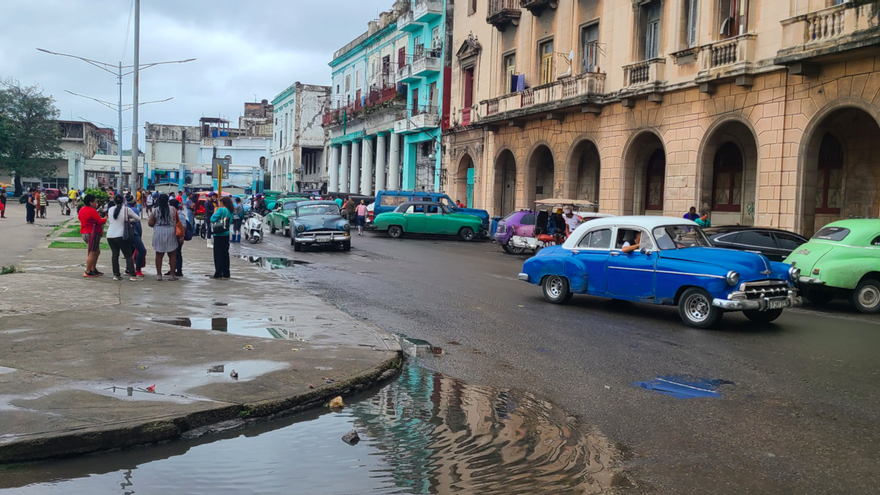
Cuba: The Dollar Breaks a New Record on the Black Market at 275 Pesos

For most people on the Island, the informal market is where they stock up on dollars. (14ymedio)

14ymedio biggerEFE (via 14ymedio) Havana,15 January 2024 — The US dollar set a new record in Cuba on Monday by trading at 275 pesos on the informal foreign exchange market, which deepens the strong depreciation of the local currency since the economic reform of 2021.

This new maximum – recorded by the independent media El Toque – comes after the announcement, in mid-December, of a large macroeconomic adjustment program by the Cuban Government.

Among the measures announced, such as the 500% increase in the price of gasoline and diesel, is the implementation of a new official exchange rate

Among the measures announced, such as the increase of 500% in the price of gasoline and diesel, is the implementation of a new official exchange rate, which since 2021 stands at 24 pesos per dollar (1.045% lower than the informal rate) for companies and 120 for individuals (129% lower than on the black market).

A few days after Prime Minister Manuel Marrero announced the plan in Parliament, the informal rate registered a slight drop to reach 265 pesos per dollar. But in 2024 it has risen again to the levels prior to the announcement, until it broke the record this Monday. continue reading

The need to import 80% of what the country consumes, the strong migratory pressure and the uncertainty due to the serious crisis are some of the main factors that explain the current partial dollarization of the Cuban economy and the consequent depreciation of the Cuban peso.

The Government has recognized on several occasions the failures in the design and implementation of the 2021 reform, called the OrderingTask,* which has not met the objectives of ending the monetary duality of the Island, which used the national currency and the convertible peso (CUC), equivalent to the dollar.

In state exchange offices only up to 100 units of the US currency are sold per person per day

Many people stock up on dollars in the informal market due to restrictions on buying them at state exchange offices, where only up to 100 units of the US currency are sold per person per day, and only if there is availability.

The El Toque index – harshly criticized by the Government for stirring up “speculation” – takes as a reference about 2,000 daily ads for the sale of foreign exchange on several Cuban websites to establish its reference exchange rate, according to this independent media.

In the absence of another type of official indicator, this index has become the benchmark on the street and for economists who study the situation in the country.

*Translator’s note: The Ordering Task is a collection of measures that include eliminating the Cuban Convertible Peso (CUC), leaving the Cuban peso (CUP) as the only national currency, raising prices, raising salaries (but not as much as prices), opening stores that take payment only in hard currency, which must be in the form of specially issued pre-paid debit cards, and a broad range of other measures targeted to different elements of the Cuban economy.

Translated by Regina Anavy

____________

COLLABORATE WITH OUR WORKThe 14ymedio team is committed to practicing serious journalism that reflects Cuba’s reality in all its depth. Thank you for joining us on this long journey. We invite you to continue supporting us by becoming a member of 14ymedio now. Together we can continue transforming journalism in Cuba.
Activist Diasniurka Salcedo Goes Into Exile Forced by the Cuban Regime

Salcedo Verdecia shared this image in the plane seat with the two children she was allowed to take with her. (Facebook/Diasniurka Salcedo)

14ymedio bigger14ymedio, Havana, 14 January 2024 — Diasniurka Salcedo Verdecia made public her departure from Cuba last Thursday after being sentenced to eight years of deprivation of liberty, she said. The Cuban activist published on her Facebook account the details of her forced exile and the harassment she suffered until boarding the flight at Havana International Airport.

In the sentence, handed down by the Municipal Court of Alquízar, where Salcedo Verdecia resided, she is charged with the crimes of enemy propaganda, instigation to commit a crime, insult to national symbols and defamation against a public figure. The document adds that the sentence would be served in the penitentiary institution determined by the Ministry of the Interior.

She is charged with the crimes of enemy propaganda, instigation to commit a crime, insult to national symbols and defamation against a public figure

“I had to leave Cuba, I had to leave most of my children behind. Only two options for me: leave Cuba, my homeland, my land, the one I love and for which I have fought head-on for more than 14 years, or enter to prison to serve an unjust sentence of 8 years, despite the appeals. I had to leave Alain despite having a ticket for him, the dictatorship told me NO,” she wrote on her profile on the social network. continue reading

In the videos that Salcedo Verdecia shared from the airport, her ticket shows that she would board flight AG 931 on Aruba Airlines, which covers the route Havana-Managua, capital of Nicaragua. According to the ticket seen in her hands, she left on January 11, although the activist did not offer details of the date or the destination of the aircraft.

Salcedo Verdecia points out that she was only allowed to leave with two of the five minors who have been in her custody for four years, children of abusive parents or those who are in prison. Apparently her husband Jorge Hernández Ramos also remains on the Island, and has suffered harassment from the regime for systematically denouncing human rights violations on the Island.

Among the signs of support that Salcedo Verdecia has received through Facebook, the one from Amelia Calzadilla, a Cuban activist now based in Madrid, stands out. Calzadilla was also forced into exile for her repeated complaints about the painful situation currently being experienced in the Island.

Among the signs of support that Salcedo Verdecia has received through Facebook, the one from Amelia Calzadilla, a Cuban activist now based in Madrid, stands out

“I know how much she regrets having to leave Cuba, I even know that it destroys her to walk away from those children who, not being her biological children, she loves with the same intensity that I love the ones I saw born from my womb,” Calzadilla posted on her profile.

On December 8, Salcedo Verdecia denounced that she was the victim of a discredit campaign by the regime, whose final action was to threaten her with withdrawing custody of the minors in her care. However, a week later, at the hearing held in the Municipal Court of Alquízar, she was granted custody of the children.

However, the activist described that as “the worst of her days” because she considered the trial as a way to intimidate her for having participated in a protest with several mothers in front of the Ministry of Public Health. Women demanded quality medical care for their chronically ill children.

____________

COLLABORATE WITH OUR WORKThe 14ymedio team is committed to practicing serious journalism that reflects Cuba’s reality in all its depth. Thank you for joining us on this long journey. We invite you to continue supporting us by becoming a member of 14ymedio now. Together we can continue transforming journalism in Cuba.