
Cuban Government Announces Delivery of Chicken Destined for Ration Stores

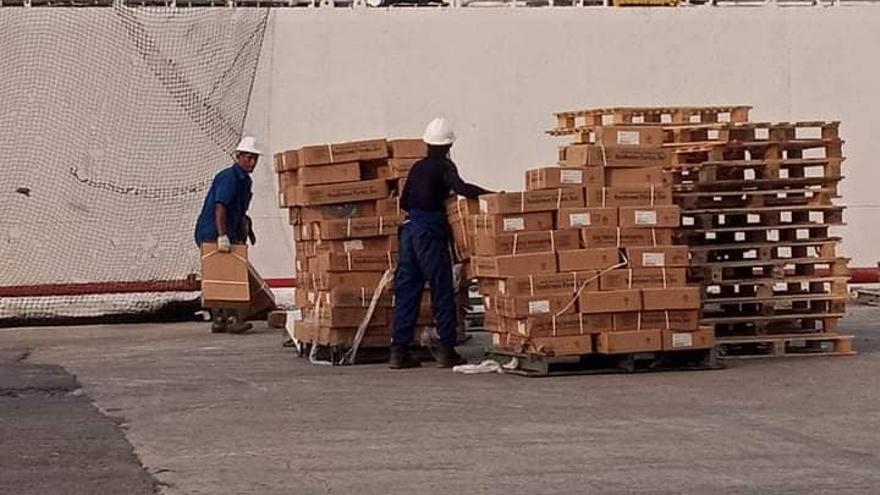
The arrival on Monday of a boat carrying chicken, presumably intended for sale at Cuban stores selling rationed items. (Ministry of Domestic Commerce)

14ymedio bigger 14ymedio, Madrid, 16 January 2024 — Just as the government was triumphantly boasting of the arrival of a ship laden with chicken destined for distribution to consumers through Cuba’s ration system, figures on poultry imports from the United States in November were being released. After two months of steep declines, sales in this sector doubled, from 8,126 tons in October to 16,648 the following month.

Though the wholesale price decreased slightly in November to $1.26 per kilogram, it remains high as economist Pedro Monreal pointed out on his X account, where he posts monthly import figures.

The previous month’s price of $1.30 per kilogram was higher but, since the volume purchased increased considerably, the overall expenditure in November was much greater. While it cost $10.63 million to import chicken from the United States in October, the November figure was more than $21.33 million, more than double. The amount purchased was also very large compared to September’s $14.4 million. continue reading

While it cost $10.63 million to import the product from the United States in October, the November figure was more $21.33 million, more than double

“Despite the monthly rebound, chicken imports from the United States, when measured by weight (16,648 tons), were lower in November than the 21,878 ton-average reported for the first ten months of 2023,” writes Monreal. He notes that this is the total figure, not a sales figure, and does not indicate how much of it was sold by the government or private entities.

Complaints about shortages at state-owned stores in December proliferated on social media after the Ministry of Commerce announced the arrival of the cargo ship. “It must be for all of last year because, in Villa Clara at least, there was no rationed chicken to be had. They were only selling it in hard currency stores. It’s been a long time since we’ve gotten any,” read one post.

There were similar complaints across the island, with people reporting they had not seen chicken being sold for Cuban pesos in three months. “The MSMEs* have already gotten hold of it. We’re screwed. Anyone who wants to eat chicken will need to come up with at least 3,000 pesos,” decries another.

Nevertheless, chicken still accounts for the bulk of import spending. Of the total value of food and agricultural imports, which amounted to $28.64 million, only $7.31 million were for other products according to data from the US-Cuba Trade and Economic Council (CubaTrade).

The monthly report indicates that November exports from the United States to Cuba fell 13.4% compared to the same month in the previous year. The total in 2022 was $33 million while a year earlier it was $27.70 million.

Besides chicken parts and a significant amount of eggs (more than one-million dollars’ worth), other import purchases included fresh and processed pork, pork fat, shellfish, black beans, cocoa, coffee, cheese, rice, juices, infant formulas, soy, gelatin, water and popcorn.

At a total of almost two-million dollars, the export of used vehicles stands out among non-food purchases

Among non-food exports from the United States, the purchase of used vehicles stands out. The transactions were carried out by businesses licensed by the U.S. Treasury in conjunction with companies that handled the transfer.

Other products included detergents, soaps and toilet paper, towels, bidets, scaffolding, stoves, air conditioners, shovels, ambulances, and other vehicles such as trucks and motorcycles.

According to Cubatrade figures, $297.4 million dollars’ worth of goods were imported from the United States as of December 1, 2023. That is slightly more than in the same period the previous year, when it amounted to $289.1 million. Under the terms of the U.S. embargo, Cuba has been allowed to import American products worth a total of slightly over $7.2 billion since 2001 not including transportation costs, bank fees and other expenses.

*Translator’s note: Micro, small and medium-sized business, typically privately owned, which often expect payment in hard currency.

____________

COLLABORATE WITH OUR WORKThe 14ymedio team is committed to practicing serious journalism that reflects Cuba’s reality in all its depth. Thank you for joining us on this long journey. We invite you to continue supporting us by becoming a member of 14ymedio now. Together we can continue transforming journalism in Cuba.

Trying To Put Out a Small Fire in Humboldt National Park, in Eastern Cuba

A fire in April 2021 left more than 3,700 acres burned. (X/Venceremos)

14ymedio biggerEFE (via 14ymedio), Miami, 20 January 2024 –The Cuban Ranger Corps is trying to put out a small fire in Alejandro de Humboldt National Park, declared a UNESCO World Heritage Site in 2001, one of the most important protected areas in the country, the official press reported on Saturday. The fire began last Wednesday and has since affected about 10 acres, in the area known as Ojito del Aguain, located in eastern Cuba, according to Cubadebate.

The fire broke out near the towns of Tres Fiebres and Alto de Cruzata, in the municipalities of Moa, in Holguín, and Yateras, in Guantánamo, respectively, according to the report.

In April 2021, a large-scale forest fire broke out in the National Park for more than 10 days and left between 3,700 and 7,400 acres of forest burned.

The Alejandro de Humboldt National Park has the greatest plant diversity in the Cuban archipelago and the Caribbean islands.

The park concentrates three varieties of forest classified as mesophytic evergreen, broadleaf and pine, and has 905 endemic species of flora, almost 30% of all those on the Island.

After becoming a UNESCO World Heritage site, it received a National Conservation Award in 2011.

Translated by Regina Anavy

____________

COLLABORATE WITH OUR WORKThe 14ymedio team is committed to practicing serious journalism that reflects Cuba’s reality in all its depth. Thank you for joining us on this long journey. We invite you to continue supporting us by becoming a member of 14ymedio now. Together we can continue transforming journalism in Cuba.
Cuban Worker: ‘For That Salary I Prefer to Clean Windshields at a Traffic Light’

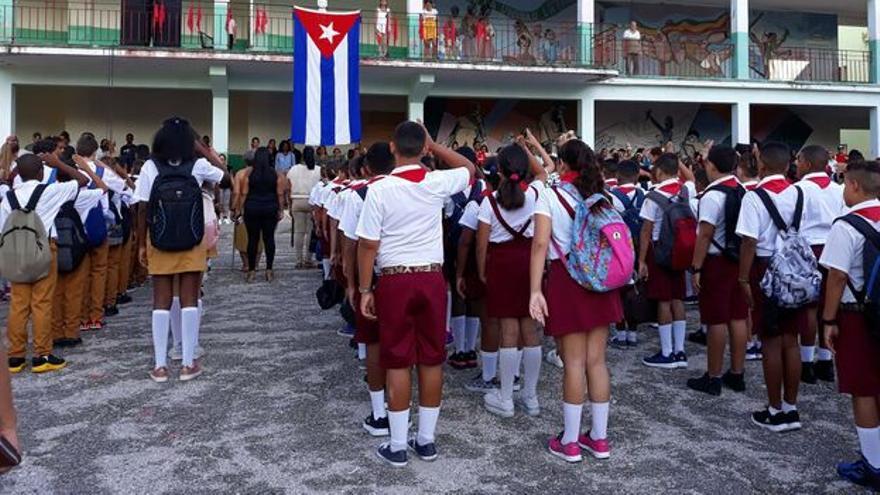
In addition to several administrative positions, teacher vacancies are offered at the job fair. (14ymedio)

14ymedio bigger14ymedio, Juan Diego Rodríguez, Madrid, January 20, 2024 — Desperate to recruit candidates for their many vacant positions, on Saturday morning managers and teachers from several schools in Havana were anxiously awaiting potential workers to fill positions in the educational sector. The “job fair,” however, barely attracted any interested parties, as confirmed by 14ymedio in a tour of these educational centers.

The catalog for the vent included event included a wide range of positions ranging from maintenance workers, through administrators to teachers. But the salaries, which at their peak barely exceeded 5,000 pesos*, failed to attract potential candidates and the outlook at the fair was bleak.

“One or two people have come but we are going to remain open until 11 in the morning in case someone arrives at the last minute,” acknowledged an employee outside the Felipe Poey Aloy Unified School on Zapata Street. “A girl and a retired man are the only ones who have come. She said that she was inquiring about a friend from the province who was coming to live in Havana.” continue reading

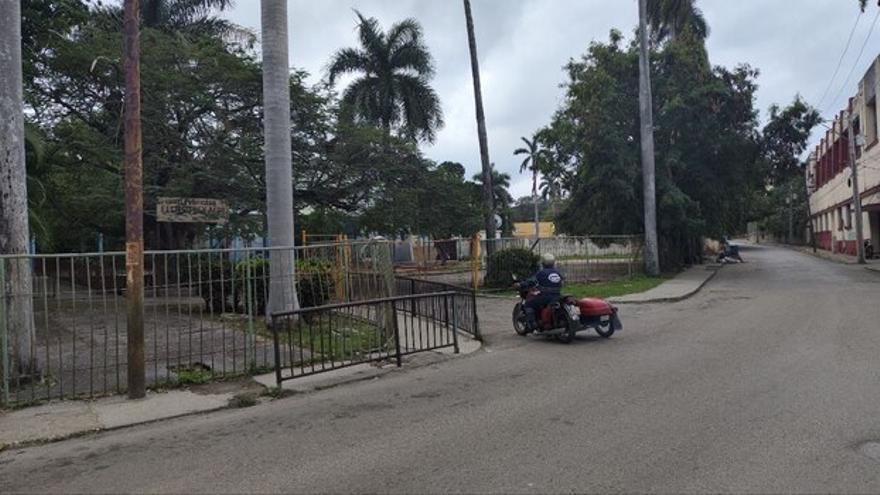
This Saturday at the entrance of the Felipe Poey Aloy Unified School, on Zapata Street in Havana. (14ymedio)

The information offered by directors and teachers was completely oral. “There is no paper to take with you with the information, no brochure that later allows you to calmly read all the offers. You have to ask about what interests you and they tell you the positions and salaries, so no one can remember anything,” lamented a young man, a Computer Science graduate, who approached to inquire about a position as a teacher in his subject.

At the entrance to the Rubén Martínez Villena high school, next to the Habana Libre hotel, a receptionist waited impatiently for the arrival of someone interested in knowing the list of available places. “We have everything and, furthermore, there is soon going to be a salary reform in Education and salaries are going to rise quite a bit,” she snapped at a young woman who approached to inquire.

Once inside the educational center, with numerous current workers participating in the fair but very few people interested in the positions, the woman turned to the Director. “We have several positions, from qualification courses and also places in day care centers, in primary schools, basic secondary schools and, if the person has a degree, we quickly place them.”

“The current salary for a teacher is 5,600* pesos more or less, but a salary reform is coming. They are finalizing the resolution, although we do not have details yet, we only know that seniority will be counted for the raises,” said an employee of the school. “All the years you have worked in Education must be uninterrupted or they will not be counted towards the raise.”

“We have several positions, from qualification courses and also places in day care centers, in primary schools, basic secondary schools and, if the person has a degree, we quickly place them”

In the municipality of Plaza de la Revolución, where the Rubén Martínez Villena secondary school is located, there are “three technological positions, one related to mechanics and automotive, another in computer science and a third in commerce and gastronomy that need teachers as soon as possible because there are many empty places” explained the center worker. “We write it down and the person starts working next week, we can’t wait.”

The long-awaited reform that the sector has been waiting for, after the recent salary increase for Public Health workers, should be a hook to attract new employees. However, the rampant inflation suffered by Cubans means that what until a few years ago seemed like high salaries have now become pennies in the face of the skyrocketing prices of basic products.

Liuba, 29, one of the few interested people who made it to the secondary school located on Línea and 4 streets in El Vedado, told 14ymedio ,”A carton of eggs, a bottle of oil and two pounds of beans,” that is what she would work for with a whole month in front of a classroom. “I came because my parents told me about the Fair, but I prefer to clean windshields at a traffic light.”

In another nearby school, a group of smiling employees took a photo for social networks. “We have to publish how the fair is going, we have to keep our Facebook account alive,” one preached. For the snapshot, they captured a young woman passing by, oblivious to the salaries in Education and the extensive drama of classrooms without teachers.

*Translator’s note: At current prices, a carton of 30 eggs sells for roughly 3,000 pesos.

____________

COLLABORATE WITH OUR WORKThe 14ymedio team is committed to practicing serious journalism that reflects Cuba’s reality in all its depth. Thank you for joining us on this long journey. We invite you to continue supporting us by becoming a member of 14ymedio now. Together we can continue transforming journalism in Cuba.
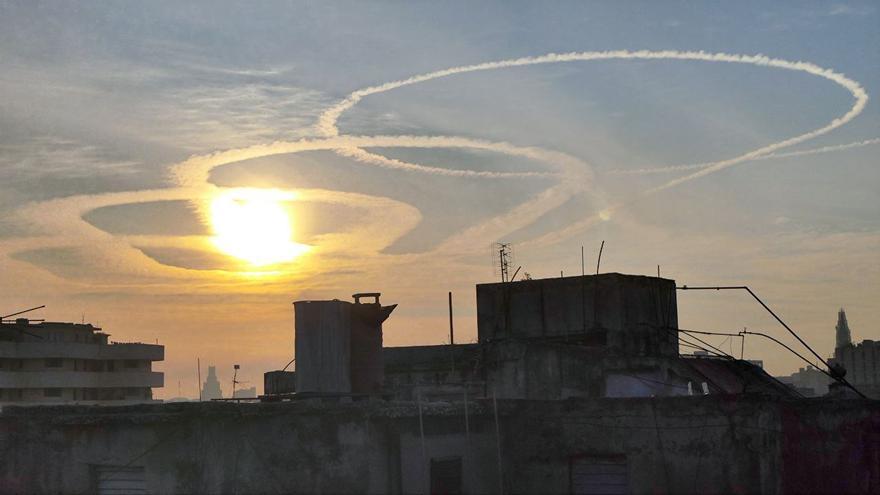
Strange White Circles in the Sky above Havana Were Not Extraterrestrial

The phenomenon left a group of Luyanó residents stunned and groping for answers. (14ymedio)

14ymedio bigger14ymedio, Juan Diego Rodriguez, Havana, 19 January 2024 — Some unusual formations in the sky early Friday morning led to a mixture of surprise, excitement and fear among Havana residents. At first glance, they looked like an airplane’s contrails but what made them suspicious was their shape. The string-like cloud, high in the troposphere, looped around three times before trailing off in a straight line towards the horizon.

“What a strange pattern. And it’s so big.” The phenomenon left a group of Luyanó residents stunned and groping for answers. “E.T. is here!” one of them said jokingly. “Aliens or Americans. It can’t be anything else,” answered another. “Girl, what do you mean aliens or Americans? It’s some Russian or Chinese plane that they’re testing here,” a third replied. A fourth feared the apocalypse was at hand while a fifth responded, “Take me now.”

The trail was clearly visible from all points in Havana, including from 14ymedio’s editorial office in Nuevo Vedado. Residents here looked for a more rational explanation. “It must be a natural phenomenon caused by humidity or some temperature differential in the upper atmosphere,” said a young man from Tulipán Street. “I think it’s an optical illusion,” said the friend accompanying him. continue reading

A pilot provided a straight answer: “It’s from a plane circling around because it can’t land, no question.” José Martí International Airport was closed at that time of day due to meteorological conditions. An employee, who asked to remain anonymous, explained that it was caused by a Wingo passenger jet en route from Bogotá that ultimately had to be diverted to

Terror in Venezuela

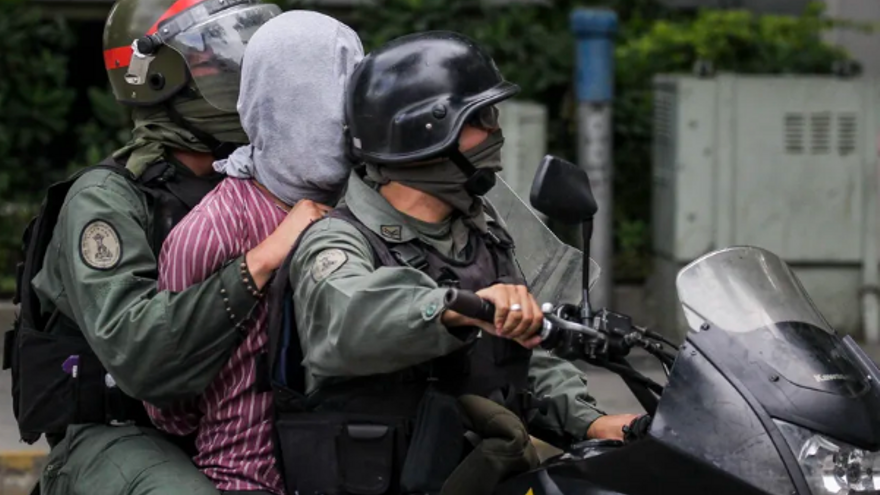
Citizens live in fear that a group of hooded men in the early hours of the morning will kidnap them from their homes. (El Nacional)

14ymedio biggerEl Nacional (via 14ymedio), Miguel Henrique Otero, Madrid, 19 January 2024 — There is a model of power – the Police State – that has its starting point at the time of the creation of the political police in communist Russia, ordered by Lenin in 1917. With Stalin’s coming to power in 1922 and until his death in 1953 – more than three decades – the entity of the political police grew to become the very core of power.

The idea that prevailed during Tsarism, that the police – the famous Okrhana – was a mere instrument in the hands of the tsar or his ministers, was discarded and replaced by the communists with another concept: police power. And what is the nature of police power? It thinks, plans, makes decisions and executes operations on the thesis that every person is, by definition, suspicious. Specifically, suspected of being a political enemy, an enemy of the Regime, and therefore a person who must be watched, threatened, coerced. A person turned into a file. A person who, as an enemy, can be arrested, prosecuted, tortured, disappeared or openly murdered. Without having committed any crime. Without a reason to explain or justify it.

It is with Stalin that the political police acquires omnipresent power, total and unlimited, structurally unpunished, governed by criteria of arbitrariness, unilaterally, disproportionate use of force, secrecy and opacity. It is with Stalin that the political police merges with the State, which acquires the proportions of a police state, one of terror. It is with Stalin that the political police, merged with the Party and the State, reached stages of delirium when they were ordered to fulfill quotas of detainees, who were prosecuted and executed. Death quotas became goals and generated competition between the different police units, and they hunted anyone with the aim of reaching and exceeding the goals, in order to receive flattery and awards from the chief murderer. continue reading

It is with Stalin that the political police acquires omnipresent power, total and unlimited

That State, with the variants and nuances that have taken place in more than seven decades, is the state of terror with which Russia now governs, under the mandate of the war criminal Vladimir Putin. And it is that model that was reproduced in the communist countries of Eastern Europe, which engendered monsters such as the Securitate in Romania, the Stasi in East Germany – which fortunately disappeared – and the Security Service of Poland. In the early sixties it was the model for Cuba, where it is maintained today with the ferocity that is its trademark, and it is the model that, with indisputable success, now exists in Venezuela and Nicaragua.

The Venezuelan police state, like the Cuban and the Nicaraguan, is also militaristic. The scenes where military and police act together are constant, and it is shown that in their methods there are common patterns: the DGCIM (General Directorate of Military Counterintelligence), SEBIN (Bolivarian Intelligence Service), SFAES (special Action Forces), CONAS (Anti Extortion and Kidnapping Command), National Guard units, PNB (Venezuelan National Police) and more: all have been trained to chase, kidnap, arrest, prosecute and torture to death. That they share procedures is predictable, because they work for the same boss. They are agents of the same project and have the same assignment: to establish terror.

But terror – this is fundamental – not only spreads by exercising state violence, illegal and widely, but also by communicating terror. And it must communicate it in all its extremes to show the arbitrariness, the sadism, the wickedness, the perversity of the treatment given to citizens. It must show the officials themselves and the victims that, no matter how crazy and atrocious an action is, nothing will happen to those responsible. Only in this way will it plunge the citizens into a spirit of impotence. Only in this way will the feeling that we all live in danger spread. Only in this way will the conviction be imposed that whoever denounces or protests will inevitably be punished.

They work for the same employer, they are agents of the same project, they have the same assignment: to establish terror

The Venezuelan nation is a territory occupied by military or police or paramilitary units or by members of collectives or civilians dedicated to espionage, by groups that listen to phone calls, by informants, by surveillance and denunciation networks, by snitches that observe and tell supervisory officials any fact that can be interpreted as contrary to the interest of the dictatorship.

How effective has the establishment of a state of terror been in Venezuela, in which – let no one forget it – all public powers are constituent elements of it? Does it weigh on everyday life? Do citizens feel it in their daily development? Do they limit their free action? Does it prevent them from exercising essential rights such as the right to express themselves, to be informed, to give their opinion, to protest, to circulate freely, to stop on a street to observe what is happening? Does it prevent any Venezuelan who approaches a beach from seeing with the naked eye how much fuel has been spilled in a natural area of which he is a legitimate inhabitant? Does it prevent them from photographing or filming the events that occur at the roadblocks distributed throughout the territory, where they arbitrarily arrest citizens, where they are robbed, beaten, drugged or killed? Does it prevent them from meeting and protesting? Does it prevent them from attending rallies called by the opposition? Does it prevent them from greeting María Corina Machado, Andrés Velásquez or Freddy Superlano when they walk down any street or stop for a coffee in any corner of the country?

That’s what the terror in Venezuela is about: fear, citizen impotence, the impossibility of exercising constitutional rights, fear that, at the most unexpected moment (Venezuelan terror has a range of two hours, between 2:00 and 4:00 am, which is, in their vision of the world, the right time to reach a home where everyone sleeps, and knock down the door with kicks), a commando of hooded people, with long weapons, shouting and stealing, without an arrest warrant, will arrive, drag and kidnap you, a brutal scene that begins the worst nightmare.

Editor’s Note: This article was originally published in El Nacional and reproduced with the author’s permission.

Translated by Regina Anavy

____________

COLLABORATE WITH OUR WORKThe 14ymedio team is committed to practicing serious journalism that reflects Cuba’s reality in all its depth. Thank you for joining us on this long journey. We invite you to continue supporting us by becoming a member of 14ymedio now. Together we can continue transforming journalism in Cuba.
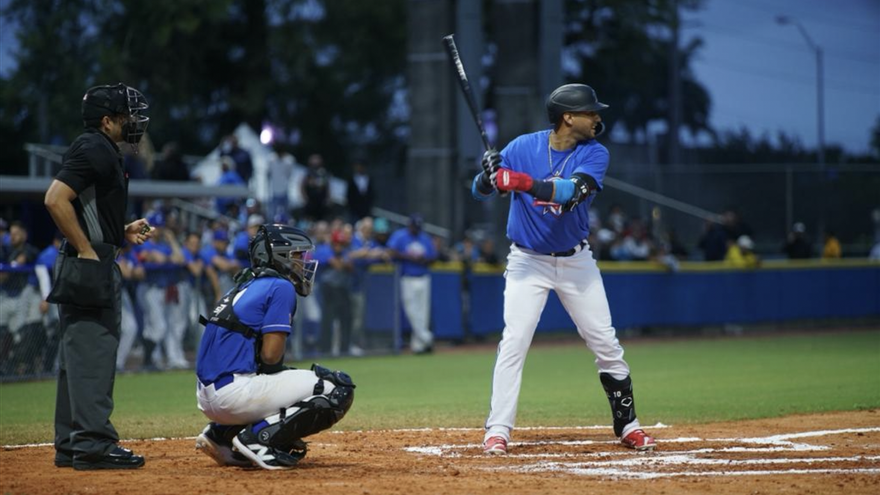
The Dream Team of Cuban Players Overcomes Colombia’s Fiasco and Plays in the United States

In their first game, the Dream Team beat the Miami Dade College Sharks 3-2. (@Fepcube)

14ymedio bigger14ymedio, Havana, 19 January 2024 — Despite the cancellation of the Intercontinental Baseball Series in Colombia this January, the Dream Team team of exiled Cuban baseball players of the Cuban Professional Baseball Federation (Fepcube) continues to play exhibition matches in the United States. After a first “premiere” match this Wednesday against the Miami Dade College Sharks, which they defeated 3-2, the team will face the Houston Apollos next Monday. The tournament against the Texans, who were also going to participate in Colombia representing the United States, was announced by the Dream Team on their X account.

Fans of the team, made up of exiled athletes, including some who play in the U.S. Major Leagues, soon took the announcement as a response to the Cuban regime, to which many attribute diplomatic pressure to cancel the competition in Colombia, which was scheduled from January 26 to February 1 at the Edgar Rentería Stadium in the city of Barranquilla.

The Cubans have not yet announced the place or time in which the game with the Apollos will take place

The Cubans have not yet announced the place or time in which the game with the Apollos will take place, but the empathy of the American team has not gone unnoticed. “Everything indicates that this is a meeting that serves as a sign of solidarity with the Dream Team over the cancellation of the tournament in the face of the common pressures of the Colombian and Cuban governments,” said El Nuevo Herald. continue reading

Days earlier, in the confrontation with the Sharks, another event attracted the attention of the public. The team did not go out to play with the caps that carried the “Patria y vida” sign – a name that the team first took and then changed to “Dream Team” -, allegedly because the musician Yotuel Romero, co-author of the song of the same name, banned the use of the brand. The information was confirmed on X by sports journalist Yordano Carmona, who covered the first game of the Fepcube team.

The cancellation of the event in Colombia that would host teams from the United States, Japan, South Korea and Curaçao in addition to the Cuban American team, was reported on Tuesday by the company Team Rentería USA. The company had requested financial support for the event, something that the Ministry of Sport said it had rejected for not complying with the formalities. According to the Colombian rule, for this type of public-private collaboration to exist, plans must be presented to the national sports federations, something that, according to the statement, was not done.

“The leagues, teams and entities involved have all expressed their willingness for the Series to be carried out,” said the text. In addition, the money for the tickets already sold would be refunded,  and they have worked with the affiliated leagues so the competition could take place in another country.

Both the Ministry’s allegation and the previous prohibition of baseball players from using the Cuban anthem and flag were pointed out by the fans

Both the Ministry’s allegation and the previous prohibition of baseball players from using the Cuban anthem and flag were pointed out by the fans and the players themselves as being a result of the pressure from the Cuban Government on Colombia.

Camona recalled that, after losing the headquarters for the Pan American Games, the Latin American country would try to recover the right of organization, and for this “it will need the vote of the countries of the area.” “Somehow Cuba has already started with that blackmail,” noting that “they are going to need that support,” he said.

“This is a decision that offends and mocks democracy and freedom, which comes in addition from a totalitarian regime that systematically represses its citizens,” Fepcube said, attributing the suspension entirely to the pressure of the Cuban Government against its participation.

“It has been both the media and the civic and political impact of the Fepcube team that forced the Cuban dictatorship to extend its tentacles outside its borders to prevent our participation in the Intercontinental Series,” it concluded.

Translated by Regina Anavy

____________

COLLABORATE WITH OUR WORKThe 14ymedio team is committed to practicing serious journalism that reflects Cuba’s reality in all its depth. Thank you for joining us on this long journey. We invite you to continue supporting us by becoming a member of 14ymedio now. Together we can continue transforming journalism in Cuba.
Despite the Massive Arrival of Canadians and Russians, Tourism Has Not Picked Up in Cuba

There have been considerably fewer European tourists in recent years. (14ymedio)

14ymedio bigger14ymedio, Madrid, January 17, 2024 — Cuba closed the year 2023 certifying its inability to recover the tourism it had before the COVID-19 pandemic. With a final figure of 2,436,980 international visitors, the Island achieves 151% more than in 2022, but 42.8% less than in 2019. In addition, if compared to its aspirations, 3.5 million arrivals, the percentage is 31% lower.

The worst forecasts of the Cuban economist Pedro Monreal are almost fulfilled. In April 2023, given the data of the first quarter, he warned the Cuban authorities of the importance of making a correction to its  forecasts. “A simple exercise of scenarios – not a forecast – that could certainly be improved, would indicate a possible range between 2.3 and 3.1 million, with an intermediate scenario of 2.9 million,” the professor wrote nine months ago. His most pessimistic figure is quite close to reality.

The data were released on the same day that Brussels confirmed that the European Union exceeded by 1.6% the overnight stays in tourist accommodation in 2019, with Spain, which registered 483 million tourists, in the lead, followed by France (456 million) and Germany (433 million). In the specific case of the first, 32.3 million more nights were achieved than a year earlier. continue reading

 The data were released on the same day that Brussels confirmed that the European Union exceeded the overnight stays in tourist accommodations of 2019 by 1.6%, with Spain in the lead

In addition to Spain, which also has a strong commitment to sun and beach tourism, there are other countries that compete even more directly with Cuba, such as the Dominican Republic, which closed the year surpassing the record of 10 million international travelers, and Mexico, which received 17 million tourists, 13.8% more than in 2019.

The poor figures for Cuba occur despite the fact that its main market, Canada, does not seem to have weakened after the government in October issued a precautionary alert about travel to the Island due to the “scarity of basic necessities, including food, medicines and fuel.” Although the warning has been renewed occasionally, Canadian tourism is recovering little by little, and 39,421 Canadians were received in October. A month later 73,849 arrived, and in December the number was 113,611. The annual total amounts to 936,436, although we have to go back to 2015 to talk about the record, with more than 1,300,000.

Figures for Russia, which becomes the third country to send tourists, also rise, behind the Cuban-American community, which with 358,481 travelers remains stable over the years, with the exception of 2016 and 2017 – during the thaw – when 400,000 and half a million were exceeded, respectively.

The Cuban Government and Moscow placed a lot of emphasis on the tourist market for Russians, and 184,819 arrived last year on the Island. This figure was expected and surpassed that of 2019, when an absolute record was reached, with 178,000.

The growth of travel from this nation is very significant, since in 2015 the Island barely exceeded 44,000 Russian tourists, who since then have only multiplied, surpassing the bad patch that occurred not only during COVID-19, but in 2022, when European sanctions for the invasion of Ukraine led to the total suspension of flights between Russia and Cuba. The political will to resolve that situation has managed to turn the figures around.

Spain, with 89,285 tourists, and Germany, with 69,475, are the next priority markets, but it is enough to look back to see the collapse. In 2017, 168,949 Spaniards and 243,172 Germans spent a vacation on the Island.

The growth of travelers from that nation is very significant, since in 2015 the Island barely exceeded 44,000 Russian tourists who since then have only multiplied

Despite everything, the Island has not even paused what it still considers a locomotive for its economy, and investments in hotels do not cease. Last week, Prime Minister Manuel Marrero, head of Tourism for more than a decade, inaugurated a new establishment of the Spanish hotel company Meliá. “In Trinidad, the importance of the development of tourism and its impact on economic and social life has materialized, manifesting itself in the generation of employment and the substantial increase of new economic actors,” the official said on X.

“As part of the 510th anniversary of the foundation of the Villa, we inaugurated the Meliá Trinidad Peninsula Hotel, a facility that will mark a before and after in the tourist development of this municipality,” said the prime minister in reference to the new five-star accommodation.

According to the data, the Government of Cuba dedicated 16 times more of its budget in 2022 – more than 1 billion dollars – to this sector than to Health or Education.

Translated by Regina Anavy

____________

COLLABORATE WITH OUR WORKThe 14ymedio team is committed to practicing serious journalism that reflects Cuba’s reality in all its depth. Thank you for joining us on this long journey. We invite you to continue supporting us by becoming a member of 14ymedio now. Together we can continue transforming journalism in Cuba.
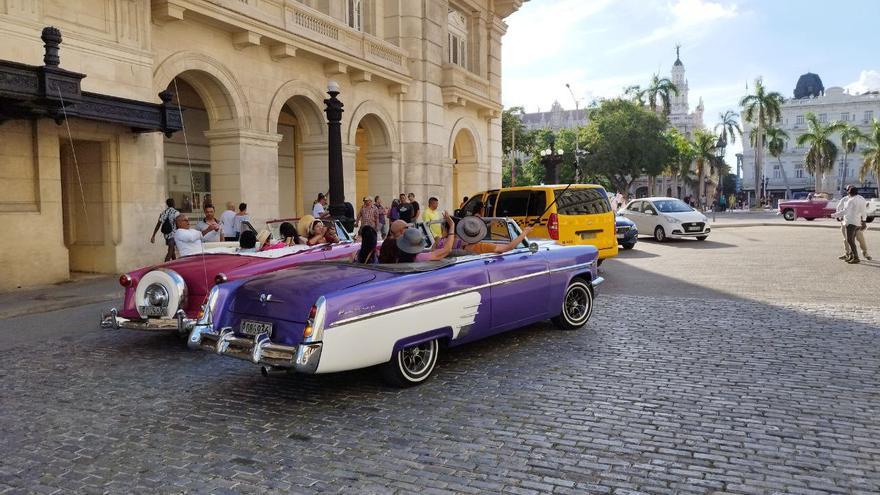
Cuban Regime Attributes the Decline of Tourism to the Fact That ‘It Became a Political Weapon’

Tourists on Obispo Street, in Old Havana. (14ymedio)

14ymedio bigger14ymedio, Madrid, January 19, 2024 — With the final tourism data in 2023 fresh out of the oven and certifying a failure on the forecasts, the Cuban Government has just announced its projection for 2024, when it estimates that 3.23 million visitors may arrive as international travelers to the Island. The figure shows some containment, after two years of major errors in their calculations

At the beginning of 2022, the authorities aspired to achieve 2.5 million tourists, although in October they lowered the expectation and stayed at 1.7, which they also did not achieve (the year closed with 1.6 million). Despite this, in 2023 an extremely positive improvement was announced: the objective of 3.5 million, which has remained at a meager 2.4.

To reach the proposed mark for 2024, despite being much more modest than that of a year ago, the Island needs to attract almost 800,000 more travelers

To reach the proposed mark for 2024, despite being much more modest than the from a year ago, the Island needs to attract almost 800,000 more travelers in a context that does not invite optimism, although it will have to wait until the end of the first quarter to evaluate the trend. continue reading

In the article published in Cubadebate this Friday with the new goal, the figures for the year that has just concluded are analyzed, among which it is worth highlighting the concentration of the origin of travelers. 70% of arrivals come from just five markets: Canadians, Cubans who permanently reside abroad, Americans, Russians and Spaniards.

The article is a response to the independent press and international agencies that have insistently pointed out that Cuba is not able to recover its pre-pandemic numbers while its competitors, both in the Caribbean and in other popular destinations such as Spain and France, reach records as they leave behind the debacle caused by covid-19.

To do this, it digs up data from two decades ago. “If the indicators of international arrivals are analyzed, between the years 2004-2013 arrivals increased by 803,447 international visitors, an average year-to-year growth of 3.7%; while in the period 2013-2018 visitors increased by 1,016,098 for an average annual growth rate of 10.65%,” the article states.

The article argues that “for the Cuban case, it is not valid to get involved in ‘recovering’ the indicators of 2019, so-called pre-pandemic; but rather to ‘rebirth’ tourism, with new strategies and ways of doing things in a new era, but under difficult financial conditions and restrictions, which date back to before the pandemic.”

The note attributes the fall in tourism to the increase in US sanctions, in particular travel restrictions for 2017

The note attributes the fall in tourism to the increase in US sanctions, in particular travel restrictions for 2017, data that contrasts with the reality that in both 2017 and 2018 record figures in tourism were achieved, specifically 4.6 million in 2017, and 4.7 million the following year when the United States “issued a level 3 travel alert to Cuba,” the article emphasizes. The article also mentions that year’s closure of consular services, ignoring that the use of the headquarters in Havana affects Cubans who want to go abroad, not international travelers who arrive on the Island.

“Cuban tourism became a ‘political weapon’,” says the editor, reviewing the measures taken in 2019: suppression of educational and people-to-people trips, as well as cruises and charter flights, which caused a wave of cancellations. That year, in fact, the number of tourists was lower, 4.3 million, but despite everything that Cubadebate claims, it was a very good figure, above the 3.5 and 4 million in 2015 and 2016, respectively, the years of the ‘thaw’.

The note, in any case, anticipates a new failure and believes that the electoral panorama coming this year (there will be elections in some 70 countries that include half of the world’s population), as well as the “economic situation” can lead “towards new emerging destinations in the Mexican Caribbean, Central America and the Dominican Republic where the offes will be concentrated,” but calls for optimism.

____________

COLLABORATE WITH OUR WORKThe 14ymedio team is committed to practicing serious journalism that reflects Cuba’s reality in all its depth. Thank you for joining us on this long journey. We invite you to continue supporting us by becoming a member of 14ymedio now. Together we can continue transforming journalism in Cuba.
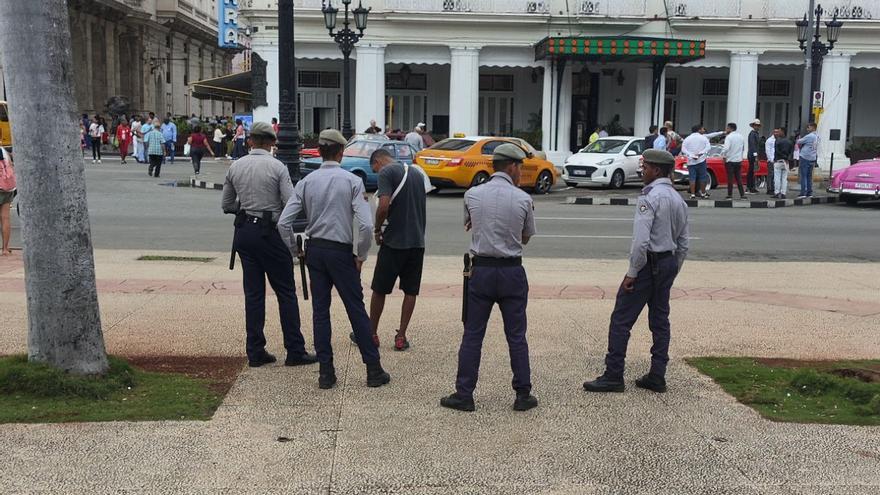
New Batches of Uniformed ‘Smurfs’ Arrive in Havana From the East

This Thursday, the sidewalks of the Havana Capitol were guarded by agents whose faces the residents had not seen before. (14ymedio)

14ymedio bigger14ymedio, Juan Diego Rodríguez, Havana, 18 January 2024 — Many agents of the National Revolutionary Police (PNR) are called Palestinians because they are usually transferred from Cuba’s Eastern provinces – Granma, Guantánamo, Holguín, Las Tunas, Santiago de Cuba – to other places, especially Havana, in the cunning strategy that the dictatorship always carried out to fuel hatred between the repressors and the repressed.

There is nothing better for this than to take advantage of the xenophobia that is assumed – whether true or not – among the residents of the capital and inhabitants of the center of the Island in relation to eastern Cubans, and vice versa. They are also called smurfs, because of the color of their uniforms, although it is certainly darker than that of the Belgian cartoons that give them their name.

Not only do their physiques and origins generate derision. The lack of knowledge of the city they patrol causes them to fall into countless tragicomic situations. Like those eastern police officers who, according to popular legends, asked for reinforcements for “Callello” street after reading the sign for “110th Street” [Calle110] on a corner marker. continue reading

Today, short of officers, and with its young members having been born smaller due to chronic malnutrition, not even the PNR is free from the traces of exodus and misery in Cuba

Unaware of the capital’s geography, crammed into shelters and with a poor diet of claria and rice, the dream of many of them is to “meet a Havana woman,” get married and so be able to qualify for the necessary residency permit to be able to stay and live in the big city. Others quickly learn to ask for bribes and turn a blind eye if they are slipped a bill. Many do not even continue wearing the uniform a few years after their arrival.

This Thursday, the sidewalks of the Havana Capitol were guarded by uniformed men whose faces the neighbors had not seen before. “Looks like a new batch of smurfs arrived,” a woman commented sarcastically after passing them. “But they bring these Palestinians, weaker and weaker, answered an old man sitting on a bench in Fraternity Park.

Today, short of officers, and with its young members having been born smaller due to chronic malnutrition, not even the PNR is free from the traces of exodus and misery in Cuba.

____________

COLLABORATE WITH OUR WORKThe 14ymedio team is committed to practicing serious journalism that reflects Cuba’s reality in all its depth. Thank you for joining us on this long journey. We invite you to continue supporting us by becoming a member of 14ymedio now. Together we can continue transforming journalism in Cuba.

The Death of a 21-Year-Old Cuban Mercenary Fighting for Russia in Ukraine is Confirmed

Raibel Palacio Herrera, in an image shared on his social networks. (Facebook)

14ymedio bigger 14ymedio, Madrid, 17 January 2024 — A 21-year-old Cuban, Raibel Palacio Herrera, a volunteer for Russia in the war in Ukraine, died last week in the city of Kherson. As reported this Tuesday by Univisión, with a source in the family itself, the young man was recruited last November by a Russian woman, who covered all the travel expenses – passport and plane ticket – in addition to offering him a monthly payment of 200,000 rubles (about $2,200).

They promised him this money, according to the American network’s report, in exchange for construction work, but, the family denounces, they actually deceived him and sent him to the front.

“What those people are doing is scamming us. We thought one thing and another turned out,” Palacio Rivera himself sent in an audio to his wife, Melissa Flores, who tells the camera: “They had told him that they were going to war, but they weren’t going to fight or anything, it was to dig trenches.” continue reading

They had told him that they were going to war, but that they were not going to fight or anything, that it was to dig trenches

The couple has two girls in common, one of them newborn, whom her father never saw. The family resides in precarious conditions in the municipality of Songo la Maya, in Santiago de Cuba.

“What I want to know is where they have my son, where they have him, because they told me that they were going to send me the body, that they were going to contact the Cuban Embassy in Russia, with the Russian Embassy here, and we don’t see anything clear,” declared the young man’s mother, Danelia Herrera.

The woman showed Univision the messages received by another young man named Gilberto Herrera Shuman last Saturday, which read: “With immense pain I must inform you that today they brought us the news that Raibel was hit by a drone resulting in his death. My deepest condolences and that of all the colleagues who are here.”

In his networks, Herrera Shuman states that he is a Cuban from Havana and lives in the city of Vysókoye, in the south of Russia.

On January 9, the youtuber Alain Paparazzi confirmed that Yansiel Morejón, a former boxer from Santa Clara, had died at the age of 26, also on the front

The case of Raibel Palacio is the first case of a Cuban dying in the war in Ukraine that has been reliably confirmed. On January 9, the YouTuber Alain Paparazzi confirmed that Yansiel Morejón, age 26, had died also on the front, a former boxer from Santa Clara.

The young man’s family did not respond to this newspaper, but another close friend did, who explained via social networks that the “official” version that Yansiel Morejón’s entourage is giving is that he died “of a heart attack,” although “he really died in the war.”

“The family has not talked about this because they do not want him to be called a mercenary,” said the same source, who insists that “the boy traveled knowing that he was going to war.” His death had occurred days ago, and although they had promised the family to have his body in 10 days, they still did not have a date to receive it.

These deaths demonstrate, once again, that the Russian Army continues to recruit volunteers on the Island to fight in invaded Ukrainian territory. Palacio Herrera’s trip, in November, occurred two months after the Cuban regime detained 17 people for belonging to a “human trafficking network,” thus trying to disassociate itself from the recruitment of nationals to fight on the Russian side in the war in Ukraine.

A group of hackers has been leaking, through the InformNapalm page, the data of more than 250 Cuban combatants in Ukraine, who supposedly received salaries exceeding $2,000 and all kinds of advantages for the soldier and his family members.

____________

COLLABORATE WITH OUR WORKThe 14ymedio team is committed to practicing serious journalism that reflects Cuba’s reality in all its depth. Thank you for joining us on this long journey. We invite you to continue supporting us by becoming a member of 14ymedio now. Together we can continue transforming journalism in Cuba.
“Cuban State Security Has Always Opted To Weaken Cuban Freemasonry”

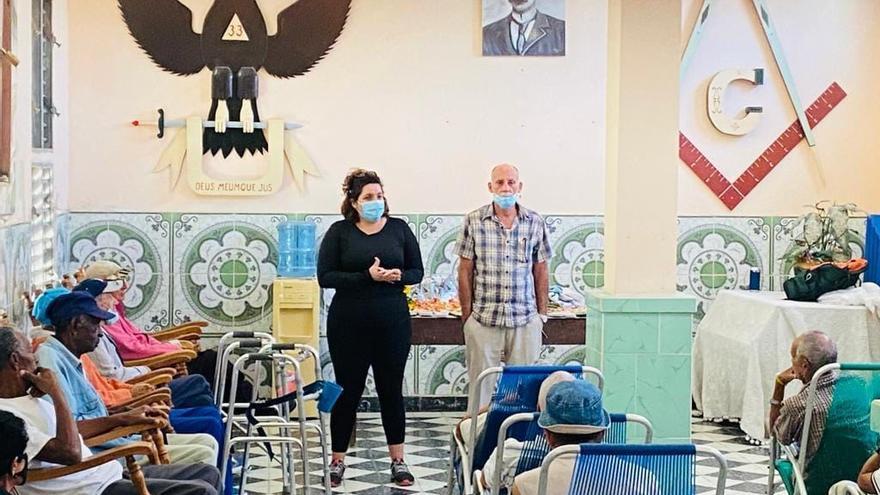
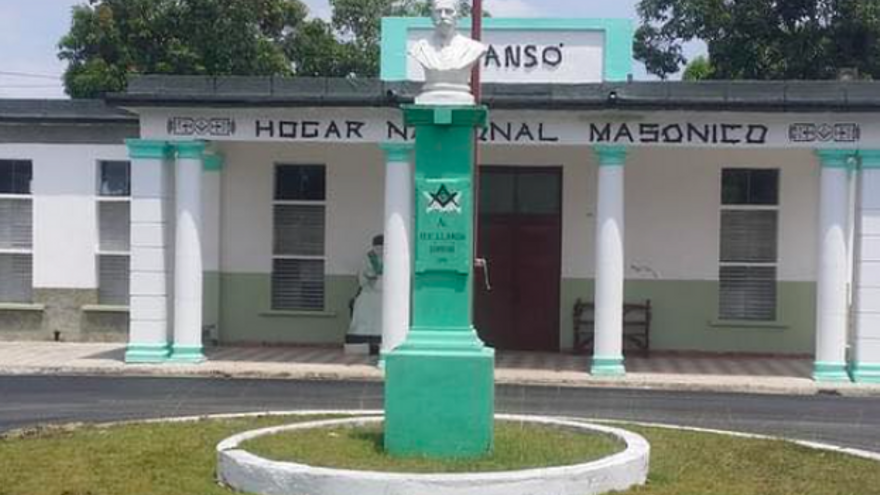
A large part of the maintenance of the elderly at the Llansó National Masonic Asylum, in the municipality of Arroyo Naranjo, depended on the lost money. (Facebook/Asilo Llansó)

14ymedio bigger14ymedio, Havana, 17 January 2024 — After the theft of some $19,000 from his office, Grand Master Mario Alberto Urquía, leader of the Cuban Freemasons, has entrenched himself against those demanding his resignation. Measures to reinforce his authority have been drastic: he dismissed senior Masonic officials who questioned him and issued an urgent “call to order.” As the crisis progresses, hopes decline that the money will appear, money on which a large part of the maintenance of the elderly at the Llansó National Masonic Asylum, in the municipality of Arroyo Naranjo, depends.

The writer Ángel Santiesteban Prats, a 33rd degree Mason – the highest step in the order’s hierarchy – and independent journalist, has been present in each phase of the process and agreed to detail it for 14ymedio. “The Board of Trustees had a sum of 21,000 dollars, between euros and dollars,” recalls Santiesteban, who is also one of the twelve members of the Board of Trustees of Llansó Asylum, the entity in charge of making decisions about the administration.

“The Grand Master says that I suggested it to him. That is not the case. I have consulted with other members of the Board of Trustees who do not recall that I had asked him to keep the money in the Grand Lodge. But he was one of the most concerned because the money was over there.” The writer describes the precariousness of the fence that leads to the “little house” of the Asylum where the money was kept. “I was obsessed with the possibility that someone would try to steal the money and hurt the workers.”

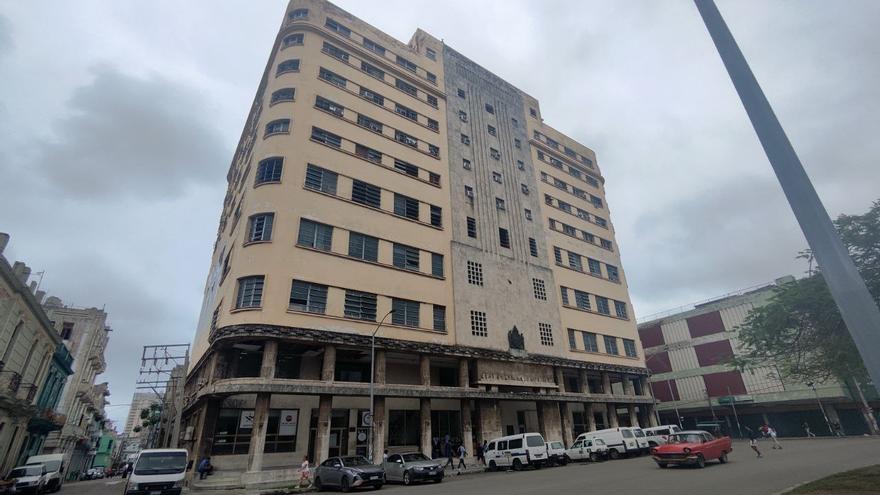
According to Santiesteban, in September 2023 Urquía took the money to the headquarters of the Grand Lodge, on Carlos III Street, Centro Habana. “At the Board of Trustees we questioned whether having that amount outside the bank was a crime. He answered no. The treasurer of the Grand Lodge, continue reading

who is a lawyer, did a whole dissertation to prove that it was not illegal,” he explains.

The arguments for keeping the sum in the Charles III building were clear: unlike the Asylum, it was a protected place. (14ymedio)

The arguments for keeping the sum in the Carlos III building were clear: unlike the Asylum, it was a protected place – Santiesteban confirms this – and it had a safe. In October, during the monthly meeting of the Board of Trustees, Santiesteban himself proposed making a calculation between the treasurer of the Asylum and that of the Grand Lodge. “There we found out that the money was not held by the Grand Treasurer, but rather that Urquía was personally guarding it.”

Urquía kept the sum in unacceptable conditions: “a small box,” belonging to his own family, “which he later put on a shelf without any type of security” and which was going to be unprotected during the Grand Master’s vacation.

In January, due to State delays in distribution, the usual supplies for the elderly in the Llansó Asylum did not arrive. “There is an alarm on the 9th, and at 11:00 am the director of the Asylum calls the Sovereign [José Ramón Viñas Alonso], who presides over the Board of Trustees. The Sovereign responds that he will immediately go to the Grand Lodge to look for 1,000 dollars to buy food in a MSME and notifies Urquía.

Urquía’s response, from his office on the eleventh floor of the building, was that “the Grand Lodge elevator is broken.” And he offered to take the requested amount to the offices of the Supreme Council of the 33rd Degree – at number 164 Jovellar Street – where the Sovereign works. Viñas, on the other hand, said that he preferred to go with him and climb the stairs and thus, in the process, “count the cash,” says Santiesteban. Urquía resigned himself, but warned Viñas that he would be the one to call him when he was ready to receive him.

Urquía’s response, from his office on the eleventh floor of the building, was that “the Grand Lodge elevator is broken

He didn’t call him all day. At 7:00 pm, the Sovereign finally receives the notice from the Grand Master, who asked him to go to his house. There, Urquía admits that on Friday, January 5, he “discovered that he had been robbed.” When Viñas demanded an explanation for the fact that Urquía had promised to bring the $1,000 that the Llansó Asylum required, he alleged that he had done so “to avoid talking about the matter on the phone.”

“The Board of Trustees must be convened,” urged Viñas. The twelve members, including Santiesteban, decided that a report of the theft must be made. The meeting took place at 4:00 pm on Tuesday, January 9.

“We went to the Zanja Police Station and they didn’t help us until four in the morning,” says Santiesteban. When the investigating officer finally arrived, he snapped at them: “Don’t waste my time.” Santiesteban asked him if with that phrase he was suggesting the possibility that it was a self-theft. The policeman nodded.

During the investigation, he wanted to know more details about the keys and locks of the Grand Lodge. “Urquía then began to ’draw conclusions’, such as that other grandmasters had the same keys or that someone could have made a copy,” says Santiesteban, who highlights one point: the agent asked why it had taken him so long to report the theft. “The prints could have been there then, but by now they will have been erased,” the agent explained.

In January, a delay in state deliveries caused the Llansó Asylum to request funds from the Grand Lodge to purchase supplies. (Facebook/Asilo Llansó)

Urquía’s initial position was to admit responsibility – although not guilt – for his “negligence,” before the Board of Trustees and the Sovereign, he points out. “He said that he was going to replace the money, that they should give him until March.” Where he was going to get the stolen 19,000 from, Urquía did not say. The Grand Master, Santiesteban notes, is the owner of a MSME that is dedicated to construction.

“The Deputy Grand Master [Gerardo Cepero Díaz] and several officials asked for his resignation. They are not accusing him, at no point does the letter say that he stole the money. What they tell him is that he acted wrongly, and that his action has resulted in a negative image for the Grand Lodge. His reaction should be to resign, but he refuses.” In fact, he dismissed all those who signed the letter and sent them to the Masonic Court, “where they can be sanctioned or expelled,” says Santiesteban.

At the moment, the Board of Trustees is waiting for what the Police say, which – Santiesteban believes – will not be relevant. Cuban Freemasonry, he estimates, is going through its worst moment since Grand Master Manuel Collera Vento, who led the Cuban Freemasons in 2000, was revealed in 2011 as Agent Gerardo of State Security and a “valuable collaborator” of the regime, within the order since 1975.

The situation could be seen coming from the escape to the United States – via Mexico – of Urquía’s predecessor in office, Grand Master Francisco Javier Alfonso Vidal

In front of the world, “Cuban Freemasonry is in discredit,” laments Santiesteban. The situation could be seen coming from the escape to the United States – via Mexico – of Urquía’s predecessor in office, Grand Master Francisco Javier Alfonso Vidal. “He said that State Security pressured him to leave and that they wanted to force him to accuse Sovereign Viñas” for his criticism of the Government.

Viñas, in fact, is the common factor in the latest incidents that have disrupted the normal performance of the fraternity. After the massive protests of July 11, 2021, the Sovereign wrote a letter in which he rebuked the Government and asked for the resignation of Miguel Díaz-Canel, for instigating a civil war. “They do not forgive him. He has become a ‘counterrevolutionary’. They have detained him at the airport, State Security summons him to both Villa Marista – his headquarters – and to police stations, they visit him at his home,” Santiesteban lists. This newspaper has contacted Viñas, who has preferred “not to answer questions about the institution,” alleging his usual discretion regarding internal Masonic matters.

The theft, the pressure, the escapes, the infiltrations for decades, are symptoms of the same – and very old – objective, according to the writer: “State Security has always opted to weaken Cuban Freemasonry.”
____________

COLLABORATE WITH OUR WORKThe 14ymedio team is committed to practicing serious journalism that reflects Cuba’s reality in all its depth. Thank you for joining us on this long journey. We invite you to continue supporting us by becoming a member of 14ymedio now. Together we can continue transforming journalism in Cuba.

Cuba Monopolizes Mexican Medical Students on Scholarships to Study Abroad and Charges More Per Student Than the United Kingdom, France and the United States

Medical students at the IPK Hospital Center. (X/@IPKCuba)

14ymedio bigger14ymedio, Mexico, January 18, 2024 — Mexico pays Cuba 27,914 dollars in foreign currency (484,041 Mexican pesos) annually for each of the 428 students studying medical specialties on the Island. The figures reveal, according to a report published this Thursday in El Universal, that the education of these scholarship recipients on the Island is more expensive for the Administration of Andrés Manuel López Obrador than, for example, in the United Kingdom, where it pays just over $21,000 for each student.

Scholarships are, in fact, one of the mechanisms for injecting money into the Cuban regime, according to data collected in the same newspaper. While the number of places for medical studies on the island increased, the National Council of Humanities, Sciences and Technologies of Mexico (Conahcyt) drastically reduced the aid in other countries. Without going any further, scholarships granted for master’s degrees went from 1,793 in 2015 to 148 in 2022, while those for doctorates suffered a plummet from 813 to 103, in the same period.

The Mexican newspaper also denounces that due to excessive payment for these studies “master’s or doctoral degrees are not obtained.” The information obtained from the database of postgraduate scholarship recipients reveals that it is cheaper for Mexico to have a scholarship student in the United States (currently there are 285), for whom it pays 20,970 dollars annually, 7,000 less than in Cuba. In other countries, the cost is lower, if possible: in the Netherlands (71 scholarship recipients), $20,389; in Spain (149), $18,666; in Canada (316), $18,415; in Germany (110), $17,379, and in France (86), $16,689.

“A scholarship in Germany costs 61.7% of what Cuba charges. France costs continue reading

59.2% of what it costs to go to study on the Island,” highlights El Universal.

A group of 172 Mexican medical students arrived in Cuba two years ago to study a specialty. (Capture)

In October of last year, a Health official, who asked that her name be withheld, confirmed to 14ymedio that “Mexico began to limit places to study in the United States, Germany, Spain and the United Kingdom and opened them in Cuba.”

The figures published by El Universal do not address the issue of desertions, which according to the official, were several due to the “lack of transparency” of the positions. “Cuba does not attract like the United Kingdom, Germany, the United States and Spain. There were many who denounced the lack of infrastructure,” she acknowledged at the time.

Given the possibility of more desertions, in 2022, Conahcyt received approval to deliver 1,500 euros as “one-time additional support” to Mexican medical students who agreed to continue their scholarship on the Island. The money, paid in a single installment, is added to the $1,100 that is deposited monthly to scholarship recipients without financial dependents and $1,400 to those who have children or are married.

Between 2021 and 2023, this same source recalled, Conahcyt has awarded scholarships to Mexican students to study their specialty at the University of Medical Sciences of Havana, the Ministry of Public Health or the Medical Surgical Research Center.

The person in charge of receiving payments for the 428 medical students on the Island is the Comercializadora de Servicios Médicos Cubanos, SA, the state company accused internationally of human trafficking and forced labor for keeping most of the salaries (between 70 % and 90%) of Cuban health personnel serving on the missions deployed in numerous countries.

____________

COLLABORATE WITH OUR WORKThe 14ymedio team is committed to practicing serious journalism that reflects Cuba’s reality in all its depth. Thank you for joining us on this long journey. We invite you to continue supporting us by becoming a member of 14ymedio now. Together we can continue transforming journalism in Cuba.
The United States Does Not Plan for Now To Allow Cuban ‘MSMEs’ Access to Its Banking System

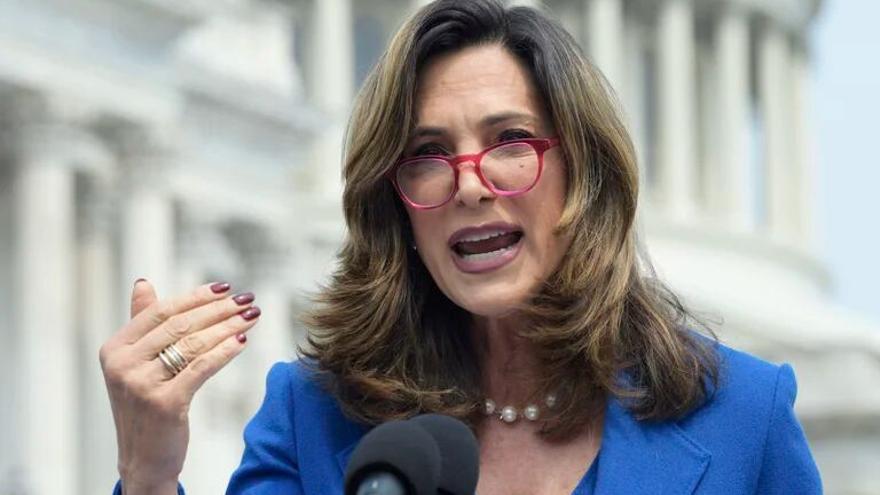
Republican Congresswoman María Elvira Salazar warned that many of these businesses are owned by people linked to the Cuban Government. (EFE)

14ymedio biggerEFE (via 14ymedio), Washington, January 18, 2024 — The United States does not plan for now to allow Cuban Micro, Small & Medium Enterprises [MSMEs] access to the US banking system, a senior State Department official said on Thursday. Eric Jacobstein, deputy undersecretary of Latin American affairs, was questioned in a congressional committee about the rumors that the U.S. Government would be considering allowing Cuban entrepreneurs to open accounts in American banks.

“At the moment I have no information about specific regulatory changes,” the official replied.

However, Jacobstein assured during his speech that the Biden Administration is committed to “supporting the Cuban people” and facilitating “the growth of the private sector” on the Island.

The deputy undersecretary stated that the “Cuban communist experiment failed,” so in 2021 the Government of Cuba had to authorize the creation of micro, small and medium-sized private companies. continue reading

The deputy undersecretary affirmed that the “Cuban communist experiment failed,” so in 2021 the Government of Cuba had to authorize the ’MSMEs’

He said that Cuban entrepreneurs “see the United States as a source of inspiration” and claimed that Washington must support them so as not to leave room for the influence of China and Russia.

In that sense, he vindicated the measures carried out by the Biden Administration, such as the lifting of the remittance limit for Cubans and the restoration of the family reunification program.

During the hearing, the Republican congresswoman of Cuban origin María Elvira Salazar warned the official that many owners of these new businesses are actually people linked to the Cuban Government, which she defined as “the Hamas of the continent.”

“Be sure to send the State Department the message that (opening the US banking system to Cuban MSMEs) would not be a good idea because it would violate the embargo,” Salazar said.

For his part, Democratic Congressman Joaquín Castro said that the “isolationism” imposed on Cuba is “impoverishing” its population and that the embargo should be lifted to allow the growth of its economy and the private sector.

Translated by Regina Anavy

____________

COLLABORATE WITH OUR WORKThe 14ymedio team is committed to practicing serious journalism that reflects Cuba’s reality in all its depth. Thank you for joining us on this long journey. We invite you to continue supporting us by becoming a member of 14ymedio now. Together we can continue transforming journalism in Cuba.
The Body of the Missing Cuban Resident in the United States Is Found in Mayabeque

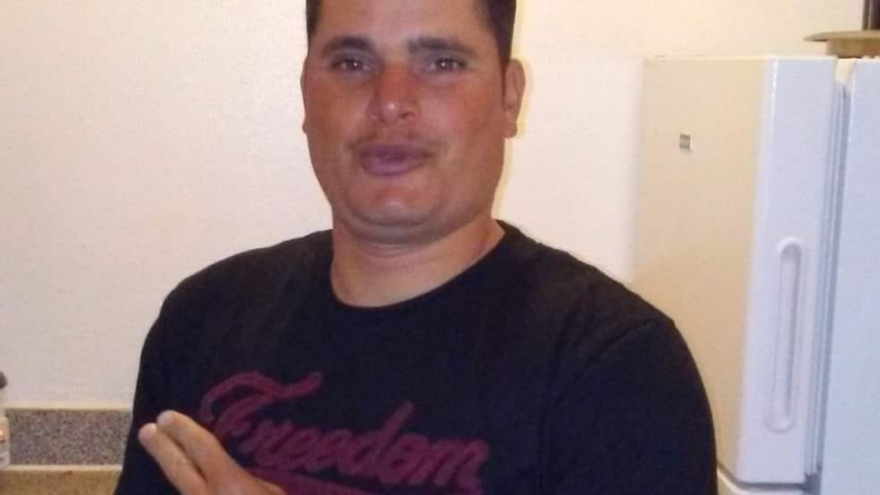
Yorjelguis Bolaños Fernández had been living in the United States for eight years. (Facebook)

14ymedio bigger14ymedio, Havana, 18 January 2024 — Yorjelguis Bolaños Fernández, the Cuban resident in the United States who disappeared on January 7 in Madruga (Mayabeque), was found dead this Wednesday. The news circulated for hours on social networks and was finally confirmed by his partner, Saray Calvo Marrero, through her Facebook profile.

“My darling, I will never forget you, this will affect me all my life.  I was more than your wife; it was you and I against the world,” she said in the early morning of Thursday with a heartfelt message asking that his death not go unpunished. “RIP my darling. I will always miss you.”

According to unconfirmed information, the body was found buried near the Institute of Animal Science (ICA), in San José de las Lajas, and the cause of death was stabbing. continue reading

According to unconfirmed information, the body was found buried near the Institute of Animal Science (ICA), in San José de las Lajas, and the cause of death was stabbing

The disappearance of Bolaños Fernández, 41 years old and father of three daughters, held the entire population of Madruga and its surroundings in suspense. Neighbors and relatives had joined an active search, going so far as to offer a reward of 3,000 dollars to anyone who had news about his whereabouts.

Bolaños, who lived in San Antonio (Texas) and whose mother had recently denied that he had U.S. nationality despite residing in that country for the last eight years, routinely traveled to the Island to visit his family. On January 7, he left his mother’s house around 11:00 pm, driving a blue vehicle from the 50s with registration P194951, which, according to information disseminated on social networks, later appeared completely dismantled and with blood stains.

The news was spread through social media, and photographs of people allegedly linked to the crime began to circulate. According to those rumors, on the 13th a woman was arrested – a friend of Bolaños – whose clothes appeared burned in the vehicle and who pointed to her own partner and another acquaintance, arrested this Wednesday.

The family had insistently asked that images, comments and unconfirmed news stop being shared on social networks, in particular to avoid harm to his daughters, all minors. “Have a little pity and put yourself in our place, what we want most is to have him with us again,” they requested without too much success.

He put up a kiosk for his mother and on Sunday at 11 p.m. went to make a sale, a relative told Martí Noticias   

“He put up a kiosk for his mother, and on Sunday at 11 p.m. went to make a sale” a relative told Martí Noticias. He was in his car, and it seems they were waiting for him; until today we hadn’t seen him.” The relative was convinced that robbery was the main motive for the disappearance, which had a fatal result.

At the moment, there is no official information regarding the case. The State media are waiting for the results of the investigation to make a report. This is what happened in 2022, when professor Santiago Morgado was murdered in Sancti Spíritus. The professor was the victim of a violent robbery and ended up dead after being beaten with a stick and stone. His body was found in a well three meters deep when his attackers had already sold the motorcycle they took from him for 200,000 pesos.

The independent press reported the disappearance and death of Morgado, which was reported in detail by the official media after the murderers were already in prison.

Translated by Regina Anavy

____________

COLLABORATE WITH OUR WORKThe 14ymedio team is committed to practicing serious journalism that reflects Cuba’s reality in all its depth. Thank you for joining us on this long journey. We invite you to continue supporting us by becoming a member of 14ymedio now. Together we can continue transforming journalism in Cuba.
A Young Cuban Mother, 21 Years Old, Is Murdered by Her Ex-Partner in Camaguey

Talía Labañino, only 21 years old, was murdered this Wednesday in Nuevitas. (Facebook)

14ymedio bigger14ymedio, Havana, 18 January 2024 — Talía Labañido Figueredo, 21, is the second woman from Camagüey murdered by her ex-partner so far this year and the fifth in Cuba. Her family reported the femicide to the independent media La Hora de Cuba. It happened this Wednesday in Nuevita, and Yendri Rodríguez, who separated from the victim a month earlier, has been arrested.

Labañido Figueredo was born in Guáimaro, where her alleged murderer, a native of Sibanicú, went to look for her at her grandparents’ house. According to this information, revealed by an anonymous source, not finding her there, he then went to Nuevitas around 7:00 pm, where hours later a friend found her stabbed to death in the house they shared. Despite her youth, Labañido Figueredo was the mother of a little girl.

Although the alleged murderer tried to flee, the police arrested him on the outskirts of the town.

Labañido Figueredo was born in Guáimaro, where her alleged murderer, a native of Sibanicú, went to look for her at her grandparents’ house

On January 2, another woman from Camagüey, Diana Rosa Cervantes Mejías, 29, inaugurated the list of victims of fatal violence against women of 2024. The event occurred in the Juruquey neighborhood in the capital city, where her ex-partner beat her to death. According to the young continue reading

woman’s relatives, the murderer was on bail and awaiting trial for having assaulted a co-worker “with a machete.”

To them are added Yanilsa Zamora Miranda, murdered by her partner on January 9 in her house in the Santiesteban neighborhood in Holguín, and Dailene Fernández Carasa, between 32 and 34 years old, also at the hands of her partner and at home, on January 11, in Alamar, Habana del Este.

The most recent up to now was Aliuska Carmenate, also in Holguín, in Mayarí. Her murder took place last Sunday, January 14, and the aggressor – her husband, according to social networks – was arrested by the police.

Translated by Regina Anavy

____________

COLLABORATE WITH OUR WORKThe 14ymedio team is committed to practicing serious journalism that reflects Cuba’s reality in all its depth. Thank you for joining us on this long journey. We invite you to continue supporting us by becoming a member of 14ymedio now. Together we can continue transforming journalism in Cuba.