Cuban Exile Leaders and Musicians Unite Against Communism and for Freedom on the Island

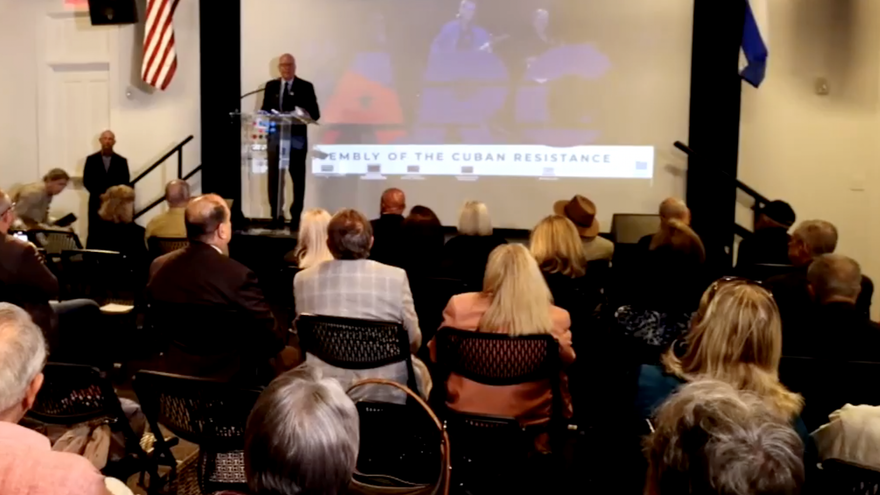
The Freedom and Unity campaign, for democracy and against communism, took place at the American Museum of the Cuban Diaspora. (Capture)

14ymedio biggerEFE (via 14ymedio), Miami, 24 January 2024 — The Assembly of the Cuban Resistance (ARC), a platform of opposition organizations from inside and outside the Island, presented this Tuesday in Miami a campaign to promote freedom with the premiere of the video of the song La Marcha Anticomunista (The Anticommunist March), recorded by Paquito D’Rivera and Frankie Marcos & Clouds.

The Freedom and Unity campaign, for democracy and against communism, which took place at the American Museum of the Cuban Diaspora, brought together a large audience and leaders of the exile community, in addition to 20 musicians who were given an award in recognition of their defense of freedom.

This meeting “goes beyond our geographies and latitudes and calls on all of us to work in favor of freedom and democracy and against communism

This meeting “goes beyond our geographies and latitudes and calls on all of us to work for freedom and democracy and against communism,” Sylvia Iriondo, president of Mothers and Women against Repression, one of the member organizations of the ARC, told EFE. continue reading

As the “shocking” video of the song says, the objective of this campaign that has just begun is to warn society that “communism is the cancer of humanity,” a chorus that La Marcha Anticommunista insistently repeats with “images and testimonies of people who are victims of that evil,” said Iriondo, one of the speakers at the event.

The premier of the video, in Spanish and English, was attended by musicians from inside and outside the Island and from other countries, including Amaury Gutiérrez, Marisela Verena, Carlos Oliva, Luis Bofill, El Funky, Marichal, Los 3 de la Habana, El B de los Aldeanos and Greg Jackson, an American, among others.

The ARC, made up of 50 Cuban groups, received multiple messages of solidarity during the event from deputies belonging to the European Union, Latin America and different political parties.

It is an international effort for “freedom, the unity of democratic forces and against communist regimes such as Cuba,” added the leader of the exile.

This campaign is a “step in the right direction, because this evil that plagues humanity (communism) is the responsibility of all of us,” to achieve the “solidarity that the Cuban people and others deserve,” he said.

The official video of the song points out that its message is aimed at “a confused world, exposed to socialist and leftist propaganda

The official video of the song points out that its message is aimed at “a confused world, exposed to socialist and leftist propaganda, as well as at those who have been influenced by the deceptive promises of these ideologies.”

“Ultimately, our goal is to provide support to those people who defend human rights, political freedom and global justice on a daily basis,” says the text of the song by Frankie Marcos & Clouds, Paquito D’Rivera and Greg Jackson.

Translated by Regina Anavy
__________________

COLLABORATE WITH OUR WORKThe 14ymedio team is committed to practicing serious journalism that reflects Cuba’s reality in all its depth. Thank you for joining us on this long journey. We invite you to continue supporting us by becoming a member of 14ymedio now. Together we can continue transforming journalism in Cuba.
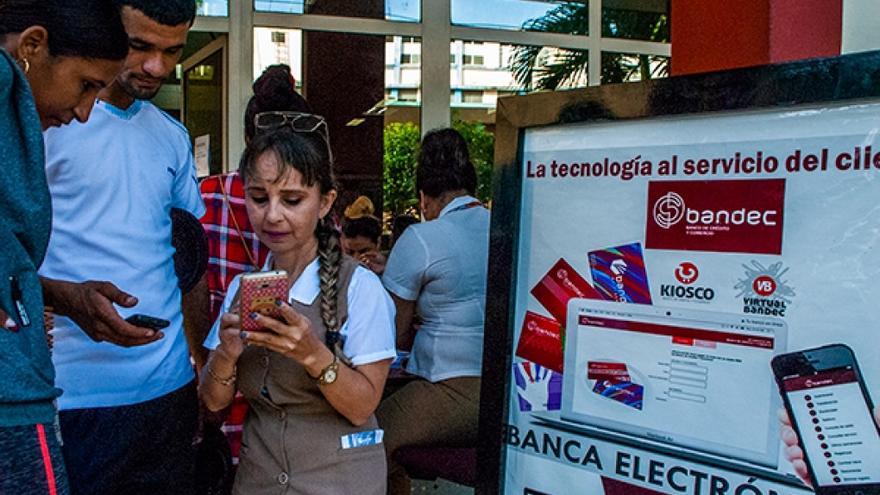
The Central Bank of Cuba Admits That the Country Is Not Ready for Electronic Payment

The Central Bank of Cuba admits that many of the Island’s ATMs are in poor condition. (14ymedio)

14ymedio bigger14ymedio, Havana, 24 January 2024 — The Central Bank of Cuba’s (BCC’s) report on the banking process was explained this Wednesday by Cubadebate. The conclusions are not optimistic: the country is not prepared to have electronic collection devices in all businesses, state and private.

The fiasco is even more visible in the case of the MSMEs (micro, small and medium-sized enterprises) and other private businesses, which have been perfecting strategies for months to avoid the obligation to deposit their money in the banks and pay taxes. In fact, they insist, the amount of cash circulating on the Island increased in 2023 compared to the previous year, although inflation is also responsible.

“The growth and emergence of new economic actors has led to more entities to deal with and more monetary circulation. At the same time, a greater number of people go to the bank to deposit and withdraw cash,” explains Cubadebate, but the intention to enable ATMs for the population has not had the desired effect, as banking institutions are not able to absorb the growing volume of transactions.

However, the report points out, at the end of 2023, the BCC noted a decrease in cash withdrawals and an increase in the use of electronic channels by 21.1% in December, compared to September. In the same period, 595,005 digital operations were carried out for a value of 1,745 million pesos. continue reading

Likewise, at the end of the year, operations in accounts associated with payment cards that do not involve cash were 68.3% of the total, 4.9% more than a year earlier.

Of the 364,705 “economic actors” that exist in the country, only 67.8% have been trained

Cubadebate says that the government has implemented bonuses of 6% and 10% for each electronic operation carried out, depending on the service they pay, and has created an extra cash service – the possibility of extracting cash from a bank account in a state ration store. The government has also trained workers and companies in the implementation of digital payment systems, which has contributed to the greater use of that method. However, the media acknowledges, the efforts remain insufficient.

Of the 364,705 “economic actors” that exist in the country, only 67.8% have been trained, and every day new MSMEs arise (there are already about 10,000) that increase demand. There is no cash availability either, as most ATMs are in poor condition and banks are experiencing a serious shortage of employees. “Havana is feeling the largest impact, with a 26% turnover of workers,” the newspaper added.

In 2023, the National Assembly of People’s Power set up  commissions to evaluate the service in the banking and financial systems and found it deficient. The worst part, the report indicated, pertained to farmers and the elderly, who do not have the means or the time to get around the banking bureaucracy.

The farming cooperative sector is still not in a position to face banking at the level that the country need”

 The same conclusion was reached by Rafael Pridas La O, president of the National Association of Small Farmers in the municipality of Nueva Paz, in the province of Mayabeque: “The farming cooperative sector is still not in a position to face banking at the level that the country needs.” The main cause, in addition to the advanced age of many, he argues, is that most people have cell phones that are good at capturing coverage in precarious service areas but are not modern enough to make electronic payments.

Also, “it is difficult to leave the farm to spend the whole day lining up in a bank to withdraw cash, even more so with the critical situation of transport and the distance between the popular councils that make up the municipality. Today we have cooperatives with more than two million pesos in their accounts that can’t be withdrawn,” Pridas explained.

Also, with workers who charge up to 1,000 pesos per day and demand cash, “farmers need the money immediately,” he continued. The banks have tried to be flexible and allow withdrawals of up to 700,000 pesos if they are given advance notice, “but I have farmers with 50 workers who must be paid 50,000 pesos every day,” and what the bank allows you to take out, after expenses, makes it “tight,” he says.

Another problem is obtaining raw materials, or foreign exchange to buy them in the MSMEs, when sellers mostly want to be paid in cash. If farmers are pressured to pay with transfers, they will try to look for other ways to obtain physical money “by diverting goods to the black market, which would affect, among other things, the increase in the price of food,” Pridas explained.

There are economic actors who do not accept electronic payment, not even with low-denomination cash”

In everyday life, paying for food or services is not easy either. “There are economic actors who do not accept electronic payment, not even with low-denomination cash. Others keep the QR code out of sight of customers. Even in some ration stores they don’t know how to use the system and make excuses for not providing the service,” a habanera tells Cubadebate.

Other merchants simply refuse to pay for transfers or set differentiated prices, the cash payment being cheaper. Sending money to personal accounts and not to those of companies is another way for sellers to avoid paying taxes.

In the case of prepaid cards to buy fuel, says a customer, sometimes you arrive at the gas station and there is no connection. The long lines to acquire these cards are also a problem, he adds. “Iinstead of shortening the process, it takes longer.”

In a context in which even the sellers in state companies are reluctant to accept electronic payments, the conclusion of the report is clear: “The infrastructure does not yet have the development required by the process – especially in the interior of the country – and non-state economic actors do not have a formal market where they can acquire foreign currency, so they continue to accumulate cash and demand payment by that route from their customers.” However, banking “continues ahead.”

Translated by Regina Anavy

____________

COLLABORATE WITH OUR WORKThe 14ymedio team is committed to practicing serious journalism that reflects Cuba’s reality in all its depth. Thank you for joining us on this long journey. We invite you to continue supporting us by becoming a member of 14ymedio now. Together we can continue transforming journalism in Cuba.

A Cuban Bank Offers New Prepaid Cards in Dollars for Cubans and Foreigners

The cards can be recharged in any of the foreign currencies circulating on the Island. (Facebook/Bandec)

14ymedio bigger14ymedio, Havana, 23 January 2024 — A group of “selected branches” of the Banco de Crédito y Comercio de Cuba (Bandec) will begin selling prepaid cards in dollars for domestic and foreign customers starting this Wednesday. Similar to those already marketed in hotels, the new cards offer advantages over their predecessors: they are valid for five years instead of two and can be used to purchase fuel in the gas stations authorized to sell in foreign currency.

Bandec’s statement, published this Tuesday on Facebook, clarifies that the cards will be available, in addition to bank branches, in the Casas de Cambio (Cadecas) of the Island and, contrary to the previous ones, “they can be acquired by foreign and national natural persons resident or not in the national territory, micro, small and medium-sized enterprises (MSMEs), non-agricultural cooperatives, self-employed workers, individual farmers (private)” and “the general population.”

The minimum amount to deposit to acquire a card will be 50 dollars or its equivalent in any of the currencies circulating on the Island, from which the bank will deduct four in terms of payment for the card, only the first time.

“It is rechargeable through cash deposits with the foreign currencies authorized to circulate and by transfers from abroad, with no limit on the amount,” said the bank, which did set a limit for the withdrawal of cash. “The cardholder, at the time of his departure from the country, can be reimbursed for the unused amount up to a maximum of 100 US dollars or its continue reading

equivalent in another available currency, after presenting his boarding pass,” the statement explains.

It is rechargeable through cash deposits with the foreign currencies authorized to circulate and by transfers from abroad, with no limit on the amount

The bank did not clarify, however, whether the cards could be purchased initially at fixed prices, of 50, 100, 200, 500 or 1,000 dollars for example, such as those that are already traded on the Island and that are part of the regime’s strategy to retain at all cost the foreign currencies that enter the country, in any amount it can.

The new option seems to be designed for American and Cuban-American tourists who arrive on the Island and cannot use their bank cards on national territory due to the restrictions imposed by the embargo. For travelers from other countries, such as Europe, Canada and Latin America, the use of their Visa or Mastercard cards continues to be more direct and effective.

Days ago, the Cimex company also announced the launch of a foreign currency card with which fuel could be purchased in the gas stations in dollars, and even to import goods to the Island. Plastic, the corporation said at the time, can be used in all shops on the Island that have a point of sale (POS) terminal, whether in retail or wholesale stores. However, contrary to the card issued by Bandec, the Cimex card obliges customers to extract in pesos the money they have left at the time of leaving the country.

The card can also be requested from abroad, does not require a minimum deposit to be activated – except for its initial cost of four dollars – and will work with a numeric key, so customers will not have to identify themselves when using it.

And now you’re telling me that I have to pay you four dollars for a prepaid card because the cards that Bandec has given me up to now aren’t going to work?”

Despite the enthusiasm with which the banks shared their “initiative,” customers did not have the same reaction. Several users complained on Tuesday morning, at the bottom of Bandec’s announcement, about the lack of clarity of the institutions and the Government regarding the use of these cards, especially by residents of the Island.

“I’m Cuban and have been a Bandec customer for many years with accounts in different currencies, and now you’re telling me that I have to pay you four dollars for a prepaid card because the cards that Bandec has given me up to now aren’t going to work to cover all my needs?” a reader questioned.

Other customers bombarded Bandec with more practical concerns: Can transfers be made with the new card? Can they be used to buy in wholesale markets? Why can’t I use my MLC card (freely convertible currency) to pay for fuel directly? The only thing that the announcement makes clear, a user said, is that “the MLC is not currency, it is a bonus that depends on products and services,” for which they have forced Cubans to pay despite the fact that salaries are still in pesos.

Nor has it been a good experience for travelers from other countries who bought these cards in Cuba. A report published by this newspaper last November reported on the difficulties of a Cuban-American faced to acquire products and services when he traveled to visit his family on the Island.

Nor has it been a good experience for travelers from other countries who bought these cards in Cuba

“They lose money (the Government), without a doubt, because they are not flexible. The worst thing is that when the tourist learns about the twisted mechanism they have created, now he’s upset,” Yoandy said at the time, referring to the low availability of small denomination cards and the refusal of hotels and establishments to receive foreign exchange in cash.

“She (his wife) could not understand that the hotel restaurant had food, it was full of waiters, the bar full of bottles, and we could not be taken care of because we could not pay in dollars and we refused to be sold an MLC card for 500 dollars,” he complained.

An Infotur employee then told 14ymedio that both he and his colleagues had noticed that customers preferred to buy cards of 50 or 100 dollars that they could then recharge “to the extent that they needed to have more funds.” However, he added, those denominations are always in “search and seizure.”

At this rate and with how difficult it has become to pay for everything, said a resigned netizen in the Bandec publication, “it is better that they dollarize everything.”

Translated by Regina Anavy

____________

COLLABORATE WITH OUR WORKThe 14ymedio team is committed to practicing serious journalism that reflects Cuba’s reality in all its depth. Thank you for joining us on this long journey. We invite you to continue supporting us by becoming a member of 14ymedio now. Together we can continue transforming journalism in Cuba.

The Cuban Regime Calls on Recent Journalism Graduates To Move to Havana

A group of journalism students with the flag of the Faculty of Communication of the University of Havana. (Facebook/Faculty of Communication, UH)

14ymedio bigger14ymedio, Lucía Oliveira, Havana, January 24, 2024 — They call it the Ñico López delegation – since its members will stay there, at the Communist Party School – and it touches down this January 26 in Havana. That day the regime will gather in the capital all the new journalism graduates from the universities of Oriente, Holguín, Camagüey and Las Villas to assign them a position in the official press, where it is more noticeable every day that there is no one to fill the positions.

“It was decided that recent graduates who wished could join that contingent for Havana. It was a decision of the Cuban universities, based on a proposal from the Central Committee of the Party, appealing to proposals formulated in the XI Congress of the Union of Journalists of Cuba (Upec),” says a professor at the Central University of Las Villas, on condition of anonymity.

How voluntary the situation is, however, is not so clear. There is an order, he says, that all students graduating in 2023 reinforce the meager roster of journalists in the regime’s media in Havana.

The official press has published different calls in at least the last year that, judging by the frequency with which they are re-disseminated, are not being well received. Demotivation due to the lousy salaries in the state sector – 5,060* pesos plus “monthly stimulation payment,” Cubadebate promises – and the lack of enthusiasm for rigid media in which there is barely an inch for dissent have not helped, and the graduates continue reading

themselves who will arrive in Havana on Friday make their intentions clear.

 In Havana they will give us accommodation and we will have access to more hours of electricity and a more active social life

“This opportunity is very good for me, I am from a municipality and in my area there is not much cultural life. In Havana they will give us accommodation and we will have access to more hours of electricity and a more active social life. I would like to try and see if it is possible for me to settle in better and get a part-time job or perhaps opt for the private sector once established,” says one of the graduates.

Initially, those summoned had been assigned to the local press where they live, while rumors about the transfer to Havana spread like wildfire. It was only last week when the rumors were confirmed.

“We were all a little lost. A lot was said, but nothing official. Then a list with our names and work locations in Havana was leaked; I was assigned to the Granma newspaper. I was calling the provincial PCC board and contacted by the person responsible for the process in the province, Neisi. On January 19, they officially confirmed to us that the rumors were true,” says a graduate from Holguin.

A professor in charge at the University of Oriente and consulted by 14ymedio affirms that the delay in communicating this decision does not have the slightest importance, since the majority were happy about traveling to the capital. However, she asks the big question that worries the Party and Upec. “It was presented to the kids as an option, little by little we dropped the possibility and the reaction was favorable. All or almost all want to look for better opportunities in Havana. Now, the question I have is: how many of them will really stay working working in the assigned media?”

“We were all a little lost. A lot was said, but nothing official. Then a list with our names and work locations was leaked”

“Right now I don’t have the opportunity to emigrate to another country and I don’t want to watch my life pass in the local environment in which I was initially placed,” says one of the recent graduates. “This trip to Havana allows me to expand my world and opportunities for development. My goal is not to work permanently in a national media outlet, but this allows me to arrive and have a certain stability in which I can get other opportunities.”

This problem, which is already a headache for the regime, seems to have no bottom. Already in 2019, Randy Alonso Falcón, director of the Multimedios Ideas group, which brings together Cubadebate and other journalistic companies, placed the coverage of positions in official media at 40%. “The current enrollment numbers in the university degree will not cover this pronounced deficit even in the medium term. Professional reorientation courses (…) have over time become the main way to fill positions in the sector,” he wrote.

A few years ago, to access the degree it was required to pass the three entrance exams to higher education. In addition, an aptitude test in three phases (comprehensive general culture, writing and interview) and a high grade average are required. A study of the environment of those selected is also carried out to detect their political qualities.

The shortage of students has led to the flexibility of admission and currently a student only has to complete their last year of high school at a University College authorized by their corresponding university. Despite this, there is no way to meet the demand.

“In the last aptitude tests it was necessary to lower the difficulty of the exams – which are not difficult from the start – due to the low preparation level of the candidates. Another recurring problem is the lack of journalists in municipal media, which is why priority is given to admission, even if the preparation is not ideal,” says a professor of the degree at the University of Oriente who, like all those consulted, asked to remain anonymous.

An old study, published in 2016 – when the worst years had not yet arrived – on the professional trajectories of graduates from the Faculty of Communication of the University of Havana between 2010 and 2014 revealed that 14.4% of students from these promotions had emigrated. Of the remaining 85.6%, 95.6% were in the capital. And the most alarming point: they all said they were disenchanted after five years in the profession. From 70.4% who marked the answer “very motivated” at the beginning of the career, only 23% continued to have that spirit.

The truth is that I don’t like any official media, I don’t have a preference nor do I aspire to work in a specific one.

This attitude has predictably worsened, but what is certain is that it has not improved. “The truth is, I don’t like any official media, I don’t have a preference nor do I aspire to work in a specific one,” another graduate told 14ymedio. “I prefer writing in an agency because then no one sees me. I have no other choice and that’s why I go. I want to explore and see if it’s possible for me to get something that has nothing to do with journalism because the truth is that the clash with the practice has made me disgusted.”

The ideological factor also weighs heavily in that experience. Those interviewed revealed that they had to actively participate in networks and in person in acts of support for the regime and, if not, face the consequences.

“They began to harass me for not wanting to be part of this,” says a young journalist. “Then they proceeded with threats to invalidate my degree. The problem ended with surprise ’meetings’ at my workplace with a lieutenant who was ’attending my case’ and he knew my entire history on social media, meetings with my parents at their workplace, extortion attempts, and a warning letter.”

Finally, her superior told her that it would be best for her to get a false sickness certificate so she could stop going to work. Only the intervention of a lawyer could get her out of that situation.

“When I arrived with the lawyer, they immediately released me from my position, because they knew that what they were doing was illegal. That’s why I didn’t reintegrate into social service and now I work as a freelance journalist. Then I found out that the same thing happened to one of my classmates,” she adds.

“In Cuba, if you practice journalism within the official media, you feel like a puppet repeating propaganda, which ends up demotivating you professionally, without addressing the issue of salary. If you practice it outside then you run the risk of receiving retaliation,” says another. A panorama that only leaves journalists with the same path as hundreds of thousands of Cubans of any other profession, exile, although “it is very difficult to revalidate the degree in another country.”

“I am passionate about journalism, but after seeing the difficulties that my teachers and colleagues are going through I decided that I do not want to practice it in Cuba. I did not apply for social service because if you go one day then it is very difficult to leave. I cannot tell people that everything is fine when I know that reality is very different. I prefer to work as an individual while I receive unemployment benefits.”

*Translator’s note: At current prices, a single carton of 30 eggs costs 3,000 pesos.

____________

COLLABORATE WITH OUR WORKThe 14ymedio team is committed to practicing serious journalism that reflects Cuba’s reality in all its depth. Thank you for joining us on this long journey. We invite you to continue supporting us by becoming a member of 14ymedio now. Together we can continue transforming journalism in Cuba.

‘From Mexico They Ask Is for 10,000 Dollars in Exchange for Proof of Life’ Denounces the Aunt of a Cuban

Images of Alexander Aleaga Ramírez sent to the family by an alleged kidnapper from Mexico. (X/@irma_broek)

14ymedio bigger14ymedio, Havana, January 19, 2024 — “We are going to collect money from the dude. We are going to give him permission [to murder] and we are going to send them a video so that they can see that here in Mexico we do not play games.” This was one of the six intimidating audio messages that the aunt of Cuban Alexander Aleaga Ramírez received, from whom they demanded $10,000 in exchange for a video to prove his health.

The young man, 24 years old, left his home in Güines, in the province of Mayabeque, on January 6, to go to a party in the company of a friend and since then they have not known the whereabouts of any of them, the aunt of the missing person told 14ymedio.

Since there was no news of Aleaga, his aunt reported his disappearance on social media. She asked Irma Broek, administrator of the Facebook group Denouncing the Crimes in Cuba, to “make the case visible.” On Thursday morning, hours after the publication, they contacted the missing person’s family through a cell phone call.

A man told her that her nephew was “detained” in Veracruz (Mexico), and that he needed to know “who was going to be responsible for him.” She demanded that he take down Alexander’s photos from social media. “I need you to eliminate all that because if you don’t, you’re only going to harm him,” she warned. continue reading

“They tried to extort us,” stresses Alexander’s aunt. “It’s impossible for him to be in Mexico,” she stresses, and the photo of the knife appears to be a montage

The young man’s aunt asked for proof of life. “Alexander had no money nor did he plan to leave Cuba,” she tells 14ymedio. At the insistence of a video call to verify that it was him, they sent her two images of her nephew. In one of them he appears kneeling and with the message: “help me,” while a person holds a knife against the young man’s neck.

“They tried to extort us,” emphasizes Alexander’s aunt. “It’s impossible for him to be in Mexico,” she emphasizes, and the photo of the knife seems like a montage.

Meanwhile, the family continues the search. There is no indication that the young man could have left by any means.

Irma Broek’s publication recalled the case of Karildi Caridad Marín, a young woman from Havana who disappeared on December 14 of last year. Yoandri Marín, brother of the 24-year-old girl, reported that a week after reporting her absence, she received a call from Mexico demanding a ransom.

Yoandri indicated that he has received other calls “trying to scam them,” so he suggested to Alexander’s aunt not to be fooled.

____________

COLLABORATE WITH OUR WORKThe 14ymedio team is committed to practicing serious journalism that reflects Cuba’s reality in all its depth. Thank you for joining us on this long journey. We invite you to continue supporting us by becoming a member of 14ymedio now. Together we can continue transforming journalism in Cuba.

What for Cuba’s Phone Company Was a Year of Achievements, for Cubans Was an Ordeal

In Havana only 22 people out of every 100 inhabitants have landlines. (Havana Tribune)

14ymedio bigger14ymedio, Havana, 18 January 2024 — The Cuban state Telecommunications company (Etecsa) celebrated this Wednesday, among other “achievements,” having reached some 39,000 families in Havana in 2023 with Nauta Hogar, one of services worst valued by its clients. At the bottom of the laudatory article, however, commentators were quick to complain about the company’s poor service. Nauta Hogar, a connection through ADSL technology, was initially announced as an option for home and professional navigation with high speeds. However, over the years and despite the installation of fiber optic cables in numerous neighborhoods of Havana, it has remained a privilege that is offered only to a few, among them officials, managers and personnel of state entities who can justify the need to access the web from home.

According to reports, in the capital only 22 people per 100 inhabitants have landline, a service that in much of the world has gone into the background, but on the Island, due to high prices and poor quality of service mobile and internet, continues to be an important communication channel. “The growth plan proposed for this indicator was not fulfilled due to the lack of resources for the operation,” the Havana subsidiary justified.

  “Many of these lines end their life cycle and are not reactivated by users within the established time”

There was also a decrease in the number of active mobile lines, something that the publication explained by saying that “many of these lines reach the end of their life cycle and are not reactivated by users within the established time.” continue reading

What the company does not clarify is the reason for this drop, which is partly a consequence of the mass exodus. During 2023, more than half a million Cubans left the Island, which translates into fewer recharges from abroad and more people inheriting or purchasing their lines in the informal market without having to purchase one at official points of sale. Hence, customers not only do not increase, but are becoming fewer and fewer.

However, the service most questioned by Internet users was internet and mobile data. According to Etecsa statistics, about 1.9 million Havana residents have cell phone service, and 70% of them access the Internet with it, but very few are satisfied with the service.

“I am [a] client quite affected by the Internet. I navigated quite well on 3G, the situation is 4G, which is terrible and it is not only in the home, but also on the street,” said a resident in La Víbora who claims that when he calls the customer service number the operator insists that it is a problem in the area in which he resides. “If the company does not have the infrastructure to provide a service with 4G quality, please do not sell more packages combined with 4G. It is abusive to have so many gigabytes, there are already 80 accumulated, and be barely be able to use them,” summarized the Internet user.

Another user recalled the Arimao submarine cable that the company installed, in collaboration with the French company Orange, between the province of Cienfuegos and the island of Martinique in 2022. According to a company statement, when this line went into operation the internet service on the Island improved. “It is assumed that this investment was made among other things to improve connectivity, but there really has not been any appreciable improvement,” complained the Internet user, who claimed to have not heard any other news about the investment since then.

Although Etecsa did not reveal the date on which the work would be completed, it did explain that “the physical structure” of the cable would be ready by 2023. The reality, however, has been different, and Cuba remains connected only to ALBA-1, the Venezuelan cable that has supplied internet since 2012, while for Cubans making a call, sharing photos and accessing their social networks has become an ordeal.

____________

COLLABORATE WITH OUR WORKThe 14ymedio team is committed to practicing serious journalism that reflects Cuba’s reality in all its depth. Thank you for joining us on this long journey. We invite you to continue supporting us by becoming a member of 14ymedio now. Together we can continue transforming journalism in Cuba.

Havana Man is Murdered to Steal His Motorcycle

The murder of Walter Mulgado occurred on January 13, but has just now been made public. (Facebook)

14ymedio bigger14ymedio, Havana, 18 January 2024 — The drip drip drip of murders does not stop in Cuba. This Thursday the news of the death of Walter Mulgado, 51, became known; he was attacked with machetes in Havana to steal his electric motorcycle. His stepdaughter, Claudia Estrada, has questioned, through her Facebook account, the insecurity on the Island: “How long will this violence last?”

Mulgado, a resident of the El Rocío neighborhood, near Expocuba in Calabazar, was attacked on January 13, but the news just became known. “He was brutally murdered all to take away his electric motorcycle, a piece of plastic as they say,” Estrada wrote online, demanding justice and that “they find those who took the life of this great human being, this excellent man.”

This January is especially bloody in Cuba, with the femicide of at least five women in just two weeks, and the discovery this Wednesday of the lifeless body of Yorjelguis Bolaños Fernández, a Cuban resident in the United States who was visiting the island. He disappeared on January 7 in Madruga, in the province of Mayabeque. The motive for the crime appears to have been the theft of the money he was carrying and his vehicle. continue reading

“He was brutally murdered all to take away his electric motorcycle, a piece of plastic as they say”

At the end of last year, the disappearance of a young man in Mayarí, Holguín province, mobilized his neighbors and family. Eugenio García, 25 years old, had left his house carrying 1,300,000 pesos with him planning to buy foreign currency in the informal market. On December 28, García’s body was found with obvious signs of violence.

Insecurity has spread throughout the island and Cubans demand greater efficiency from the police after reports of disappearances or reports of domestic violence. Pressure is also growing to toughen laws against murderers and other violent criminals.

At the moment, there is no official information regarding Mulgado’s case, but the murder is reminiscent of that of teacher Santiago Morgado, who was assaulted in Sancti Spíritus in July 2022. The teacher was the victim of a robbery with violence and ended up dead after being beaten with a stick and a stone. His body was found in a well three meters deep when his attackers, who ten months later would be sentenced to life imprisonment, had already sold the motorcycle they took from him for 200,000 pesos.

The independent press reported from the beginning the disappearance and death of Morgado, which was only reported in detail by the official media when the murderers were already in prison.

____________

COLLABORATE WITH OUR WORKThe 14ymedio team is committed to practicing serious journalism that reflects Cuba’s reality in all its depth. Thank you for joining us on this long journey. We invite you to continue supporting us by becoming a member of 14ymedio now. Together we can continue transforming journalism in Cuba.

Cancun and the Mayan Riviera Want To Attract Russian Tourists Who Visit Cuba

Russian tourists at the Cancun airport, in Mexico. (EFE)

14ymedio bigger14ymedio, Madrid, 23 January 2024 — Mexico is trying to recover Russian tourism through Cuba. The new effort consists of offering tourist packages that sell both Caribbean destinations together, as detailed by Darío Flota Ocampo, of Enjoy Travel Group, which specializes in this sector.

“A phenomenon is happening in Cuba; it is receiving European travelers, specifically Russians, who due to the conditions of the flight blockade in Canada and the United States no longer come to Cancun but are arriving in Cuba. With a daily air connection between Havana and Cancun, there is a good possibility that Russian wholesale agencies will find a way to get to Cancun from Havana,” said Flota Ocampo, who was also director of the Tourism Promotion Council of the state of Quintana Roo.

The Russians are, in his experience, a market with high purchasing power, but the invasion of Ukraine and subsequent sanctions have made it difficult for Russians to travel abroad due to the reduction in flights

The expert explains that the Russians began to arrive in Cancun years ago, causing a real tsunami in the tourism sector, which began to hire guides who spoke Russian and to translate their promotional material into Russian. Even the restaurants translated their menus, he says. continue reading

The Russians are, in his experience, a market with high purchasing power, but the invasion of Ukraine and subsequent sanctions have hindered their trips abroad due to the reduction of flights, in addition to some other measures linked to banking.

“We want to recover this important market for Mexico, since the Russians stopped coming but now are traveling again. However they prefer going to Cuba, because they know the place, but since it’s a long trip for them, they can take advantage of another destination in the Caribbean,” he insists.

To do this, the travel agency is developing in parallel the promotion in Cuba of the Mexican Caribbean destination and a “multi-destination program” to go from the Island to Mexico, extending their trip. Russians, according to the tour operator, usually stay for a long time when they fly to the continent, at least three weeks on average, which makes a package of this type an attractive idea.

Flota Ocampo explained that, for the moment, workers are being trained to market these trips. “There has already been a first familiarization trip for company personnel to different countries. Online training is underway to explain the destinations, so that they know what Isla Mujeres, Cozumel, Playa del Carmen, Tulum and Cancún have to offer to travelers. This year is expected to be the year for the consolidation of these markets, and the flow of foreign visitors who arrive through their stay in Havana can be increased,” he said.

Although Russia has put a lot of effort into achieving a mutual visa exemption program with all Latin American countries, some still resist. In Mexico, however, a more flexible authorization system has been implemented – the SAE electronic visa – for Turkish, Ukrainian and Russian citizens.

Already in July, the plans of the state-owned Intourist to launch joint trips to Cuba/Mexico and Cuba/Dominican Republic were revealed, “due to the great acceptance within the Russian market of these three Latin American and Caribbean destinations,” according to a report cited by the news agency Tass.

To do this, it is intended to take advantage of the direct routes open between Moscow and Havana and other tourist centers on the Island. In October 2022, Nordwind Airlines resumed flights from the Russian capital to Varadero and Ciego de Ávila, using the northern route that borders the Arctic to the North Atlantic, capable of avoiding European airspace, which has Russian companies sanctioned.

In 2023, Rossiya, an Aeroflot subsidiary, also resumed connections with Varadero in the summer and with Havana in December. The determined commitment to this market, favored by political relations, has allowed the Russians to be the only market that recovers and even improves the pre-pandemic levels of tourism in Cuba.

In 2015, only 44,000 Russians traveled to the Island, but momentum soon picked up, reaching 178,000 in 2019. This record has been surpassed this year, with 184,819, which has not been enough to recover the entire sector, especially due to the serious loss of the European markets.

Like the good Cubans we are, we have the resistance and desire to continue fighting so that the country continues to have and increases its good relations with Europe and other markets

Minister Juan Carlos García Granda presented the Cuban proposals at the International Tourism Fair at the embassy in the Spanish capital, which begins this Wednesday in Madrid and will last until Sunday, and praised the Spanish persistence in betting on the Island. “We feel proud and admire the bravery of Spanish investors, especially the families that have been investing in Cuba for many years. Europe is full of brave people, and there are more than the Spanish,” he said.

García Granda referred in Madrid to the “difficulties” that the Island has compared to other competitors, but resorted to the usual voluntarist discourse. “Like the good Cubans we are, we have the resistance and desire to continue fighting so that the country continues to have and increases its good relations with Europe and other markets,” he insisted, after emphasizing that the Island’s new challenge is more environmentally sustainable tourism.

This Monday, Gabriel Escarrer, CEO of Meliá, gave an interview to announce that this year the company will open “at least 20 hotels” in the world, half of them luxury. The manager explained that he will put “special emphasis on Mexico and Cuba,” in addition to Southeast Asia, where he has the most room for growth due to last year’s failure. In this sense, Escarrer was optimistic about the good results of 2023, except in the case of occupancy, “4% below due to the poor evolution of its hotels in Cuba and Asia.”

Translated by Regina Anavy

____________

COLLABORATE WITH OUR WORKThe 14ymedio team is committed to practicing serious journalism that reflects Cuba’s reality in all its depth. Thank you for joining us on this long journey. We invite you to continue supporting us by becoming a member of 14ymedio now. Together we can continue transforming journalism in Cuba.

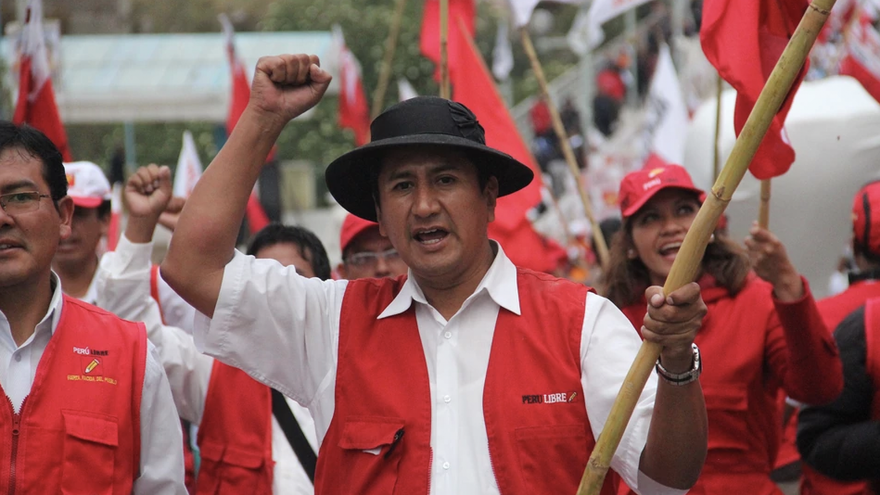
Peru Threatens To Break Relations With Cuba if It Protects the Fugitive Vladimir Cerron

Vladimir Cerrón still has not been captured by the Peruvian authorities. (CC)

14ymedio bigger14ymedio, Havana, 24 January 2024 — “High-level” sources cited by the Peru21 media point to the fact that Cuban counterintelligence agents are protecting Peruvian politician Vladimir Cerrón Rojas, who has been a fugitive from justice since October 2023, when he was sentenced to three years in prison for corruption. The Foreign Minister of Peru, Javier González-Olaechea, explained to the local press on Tuesday that, if the help of “external agents” is confirmed, the country could break relations with Cuba.

If it is verified that a foreign government has intervened, a cooling-off period is advisable, and at most, there is the possibility of a breakdown in diplomatic relations,” González-Olaechea told Peru21.

Cerrón lived in Cuba for more than 10 years, where he graduated as a doctor in 1997. Since then, he has maintained close relations with the Island’s regime.

According to the media, in recent weeks the police confirmed that two Cuban citizens approached two members of the Perú Libre party

According to the media, in recent weeks the police confirmed that two Cuban citizens approached two members of the Perú Libre party, of which the politician is a member – in addition to the imprisoned former president Pedro Castillo – and a third person of Acción Popular to “coordinate plans concerning Cerrón.” “Traitor” agents of the Peruvian Police are also continue reading

involved, the authorities say.

“Why would Cuba, through its ambassador Carlos Gallo Zamora, risk its relationship with Peru to protect a politician like Cerrón? This newspaper obtained information that the Cubans (…) would have already told him that if the situation gets complicated, they would distance themselves from the operation,” Peru21 alleges.

Despite his status as a fugitive, Cerrón has responded to the accusations of the authorities through social networks using a VPN that prevents his exact location from being known.

After he was associated with Cuba, Cerrón replied to the accusations on his X account: “According to exGEIN [Special Intelligence Group], Cuban Intelligence is better than the Peruvian. Listen to yourself,” the politician said ironically.

Cerrón, the leader of Perú Libre, served as governor of the Junín region from 2011 to 2014 and then resumed office in 2019 until he was accused of corruption and money laundering in his previous term. Although that first case was dismissed, the politician was again summoned before a judge. After a trial in October, for irregularities in the construction of an airfield in Junín, where there was already another airport, Cerrón was sentenced to three and a half years in prison and fled.

Since then he has remained active on social networks, mocking police actions aimed at finding him, asking for the release of Pedro Castillo and disapproving of the management of the current president, Dina Boluarte.

According to the police, Cerrón was about to be arrested this January, when his VPN failed and he was located in an Asia Beach condominium [in Peru], in the district of the same name. The place coincided with the one that had been accidentally revealed by the Cuban agents and discovered by the police. On that occasion, despite the fact that the information was true, Cerrón was not arrested and remains a fugitive.

A month earlier, in December, Peruvian intelligence received information that the politician was trying to reach the Bolivian embassy in Lima to apply for asylum

A month earlier, in December, Peruvian intelligence received information that the politician was trying to reach the Bolivian embassy in Lima to request political asylum from the Government of Luis Arce, an ally of Havana. The leader of Perú Libre denied on social networks that he planned to leave the country. However, the Peruvian police deployed an operation to prevent the arrival of the politician at any of Bolivia’s diplomatic facilities in the country.

“Why insist on what the rich want? Who would it suit for me to  leave the country? We are going to fight here in our homeland. Perú Libre will return with the force born of the people,” Cerrón said in his X account.

Cerrón’s lawyers have so far presented two applications for habeas corpus, but he has not presented himself before the judge in recent months or made his whereabouts known.

The presence of Cuban agents has been reported on multiple occasions in several South American countries, generally coinciding with riots to provoke political changes, as happened in Chile in 2019 and in Colombia in 2021.

Last December, the Government of Javier Milei in Argentina confirmed the presence of Cuban and Venezuelan “agitators” who have the mission of sowing chaos in that country. The Argentine Minister of Security, Patricia Bullrich, then identified these groups in a statement to national television as a “noisy minority” that would receive the full weight of the law.

Translated by Regina Anavy

____________

COLLABORATE WITH OUR WORKThe 14ymedio team is committed to practicing serious journalism that reflects Cuba’s reality in all its depth. Thank you for joining us on this long journey. We invite you to continue supporting us by becoming a member of 14ymedio now. Together we can continue transforming journalism in Cuba.

To Do Business in the United States, Some Cuban ‘MSMEs’ Disassociate Themselves From the Government

Some consider the ’MSMEs’ to be responsible for inflation, which has run wild in Cuba. (14ymedio)

14ymedio biggerEFE/14ymedio, Havana, January 23, 2024 — The owners of the MSMEs (micro, small and medium sized enterprises, mipymes in Spanish) are trying to disassociate themselves from their links to the Cuban Government, which the exile community, the opposition and the Cuban population attribute to them. In a press conference on Monday at the headquarters of a food production and import company in Havana, some of these new entrepreneurs asked the U.S. for the same ability to engage in business that the private sectors of other countries have, which are also sanctioned by the U.S. State Department.

The press conference followed a speech in the U.S. Congress Western Hemisphere subcommittee hearing in which the Republican María Elvira Salazarse, born in Cuba, spoke about the Cuban private sector.

The representative from Florida said that many owners of the MSMEs, which now exceed 10,000, are actually people linked to the Government of the Island, which she defined as “the Hamas of the continent.”

Oniel Hernández, co-founder of the consulting firm Auge, asserted that Salazar’s speech was an “attempt to tie the hands of the Administration” of Democratic President Joe Biden

Oniel Hernández, co-founder of the consulting firm Auge, said that Salazar’s speech was an “attempt to tie the hands of the Administration” of Democratic President Joe Biden in his policy towards Cuba and assured that the private companies on the Island “are real.” continue reading

“It is impossible for a sector where 1.6 million people are employed to be fully linked to the Government or the leaders of the Communist Party,” he defended.

Eric Jacobstein, deputy undersecretary in the Office of Latin American Affairs of the State Department, also spoke at the hearing, saying that Washington does not plan for now to allow the MSMEs access to the U.S. banking system, which is a relief for congressmen such as Salazar, who warned that doing so would “violate the embargo.”

For Carlos Miguel Pérez, partner of a software company and a Cuban deputy, the hearing “was very regrettable.” He also warned that Congresswoman Salazar’s position coincides with the “Cuban ultra-left” that is against the private sector on the Island.

Considered by some specialists as the great energizers of the economy, others blame the MSMEs for the high inflation and say the high prices for their products have deepened the social differences in the country.

Some 19.6% of the MSMEs are engaged in manufacturing activities and 12% in the production of food and beverages. This sector employs more than 15% of the country’s workers and contributes just under 14% of GDP, according to official figures.

Among those who have maligned the emerging private sector’s ties with the Regime is Havana Consulting Group, which considers that their creation was intended to build a facade of fake economic freedoms that do not really exist on the Island. “To be approved, the MSMEs must go through several filters, from local and provincial governments to the Ministry of Economy and Planning, plus the hidden filters of counterintelligence and the Communist Party. This method of selection is fertile ground for discriminatory exclusion for ideological reasons and for corruption,” he said in one of his reports.

Pavel Vidal: “A part of officialdom that does not want reforms will be very happy today with the pessimistic vision that seems to be widespread about the MSMEs”

Emilio Morales, a researcher in charge of the report, also warned of the possibility that the U.S. Government will end up favoring these companies to stop the migratory wave. “It is understandable that the Biden Administration looks for formulas that offer incentives to Cubans, so that they remain on the Island and do not undertake the risky departure from the country to emigrate to the United States. However, it is the Cuban regime itself that prevents this empowerment with its gag laws, with its relentless repression and with its perennial ban and persecution of the generation of wealth.”

At the opposite pole, the Trotskyist organization Communists of Cuba has criticized the regime for favoring a private sector that, in its opinion, encourages capitalism. “The Cuban ruling bureaucracy that once was proud of the advance of food production and  industrialization, publishing the results in the media, now, on a monthly basis, discloses the growth of the capitalist companies under the euphemism of the MSMEs.”

On the contrary, other economists, such as Pavel Vidal, ask that the blame for Cuba’s economic ills stop being put on the MSMEs. It’s the fault of the Government. “A part of officialdom that does not want reforms will be very happy today with the pessimistic vision that seems to be generalized about the mipymes,” he argues.

Translated by Regina Anavy

____________

COLLABORATE WITH OUR WORKThe 14ymedio team is committed to practicing serious journalism that reflects Cuba’s reality in all its depth. Thank you for joining us on this long journey. We invite you to continue supporting us by becoming a member of 14ymedio now. Together we can continue transforming journalism in Cuba.

Yotuel Romero and Fepcube Admit Their Disagreement on the Use of ‘Patria y Vida’

Romero added that he decided to disassociate himself from the baseball players “so as not to damage the ’Patria y Vida’ movement.” (EFE)

14ymedio bigger14ymedio, Havana, 22 January 2024 — The musician Yotuel Romero and the Cuban Professional Baseball Federation (Fepcube) differ in their version about the use of the “Patria y Vida” brand by the team of exiled Cuban baseball players Dream Team. While the players claim to have agreed with the artist to deliver a percent of the profit of the merchandise sold with the slogan, Romero alleges that he doesn’t want Fepcube profiting from the brand.

The change of the name of the Patria y Vida team to Dream Team was an exclusive decision of the Federation, the artist said in a Facebook post. “It is important to clarify that Fepcube is looking for financing in an open way, using all available means (…). However, we were never informed that they would use the name ’Patria y Vida’ for that purpose (selling merchandise),” he explained.

After insisting that the brand “has never been associated with collection operations or economic contributions since its creation,” Romero added that he decided to disassociate himself from the players “so as not to damage the ’Patria y Vida’ movement.” The artist points out: “Contrary to what has been mentioned, Fepcube’s use of the name ’Patria y Vida’ was granted by mutual agreement and without any form of remuneration.” continue reading

The design proposals with the slogan, the Federation explained, were sent to the singer’s company for approval

In another statement published on X this Sunday in response to Romero’s statements, Fepcube said that “Fepcube’s extensive contractual agreement with YB Entertainment LLC – Romero’s company – and its legal team includes, among other things, a percentage of profits for the ’Patria y Vida’ brand in case of selling merchandise where it is part of the design,” a version that differs from what the artist said. The design proposals with the slogan, the Federation explained, were sent to the singer’s company for approval.

“The pressure on the Colombian government by the Cuban regime, far from the sports, forced us to remove the name of the team” and rename it Dream Team, the statement underlines. “This change was agreed and approved by Yotuel, who showed total understanding and support,” he adds.

After the cancellation of the Intercontinental Baseball Series, which was to be held in Barranquilla, Colombia, from January 26 to February 1, Fepcube is going through a tense moment. In addition to the controversy about the brand, one of its players, former Major League player Yunel Escobar, announced this Sunday that he was leaving the project.

“I want to make it clear that my decision is not related to any player or member of the management. It’s a genuinely personal decision,” said the player. His reasons, he explains, come from his changed feelings about the team. “I originally gave myself to this cause with the belief that we would have a firm and confident attitude towards a collective goal,” said the athlete. He added that although he was abandoning the project, he continued to represent the Cuban exile and wished them luck in the future. Fepcube has not spoken about the matter.

In its short existence, Dream Team has experienced more controversies than matches

In its short existence, Dream Team has experienced more controversies than matches. After the failure of the event in Colombia where it planned to premiere, the team agreed last Wednesday on a first confrontation with the Sharks of Miami Dade College, whom it defeated 3-2. For January 29, the team has already scheduled another exhibition game against the Houston Apollos, who were also going to participate in the frustrated Series on behalf of the United States.

For their part, the Cuban authorities announced this Sunday in the ’official’ media Jit that they plan to hold a Star Series after the end of the II Elite League of Cuban Baseball to take advantage of “the effervescence that the fans have about the play offs.”

“We have identified, as part of our dialogues with federations in the area, the intention that one or two teams can join, which would assign an international character to the appointment,” Juan Reinaldo Pérez Pardo, president of the Cuban Baseball Federation, told Jit. So far, teams from Nicaragua, Venezuela, Mexico and Colombia have been invited, although they have not yet confirmed their presence, added Prensa Latina.

Translated by Regina Anavy

____________

COLLABORATE WITH OUR WORKThe 14ymedio team is committed to practicing serious journalism that reflects Cuba’s reality in all its depth. Thank you for joining us on this long journey. We invite you to continue supporting us by becoming a member of 14ymedio now. Together we can continue transforming journalism in Cuba.

Excluded from Millions of Dollars in FIFA Funds, Cuba’s La Tropical Stadium Languishes

Weeds from the nearby Almendares River threaten to engulf the stadium. (14ymedio)

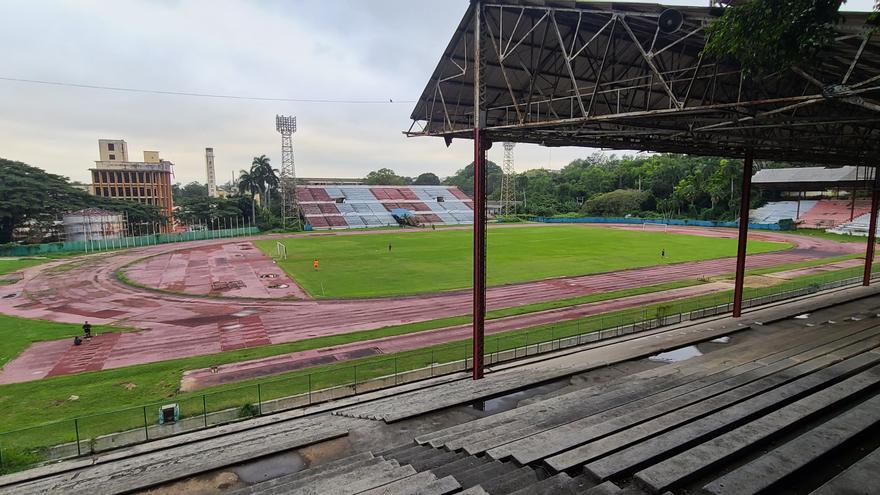
14ymedio bigger14ymedio, Pedro Espinosa, Havana, 18 January 2024 — “It’s a pasture,” says the athletic coach as he contemplates the desolation of the Pedro Marrero stadium in Havana’s Playa district. The soccer field originally belonged to the old Tropical Brewery. Maradona once played here but it is about to turn 100 years old and looks its age. Though the grass is worn and and the track is full of potholes, the coach’s students run wild here.

There is no trace of the eight million dollars that the International Federation of Association Football (FIFA) gave Cuba between 2016 and 2022 to improve its facilities.

It was never a high-end stadium but at least it was well maintained and had some moments of fame. Like that day in June 2000 when the Argentine soccer player scored a goal right before checking himself into a Cuban drug addiction clinic at Fidel Castro’s urging. Times have changed. “No one plays soccer here anymore,” the coach tersely admits. continue reading

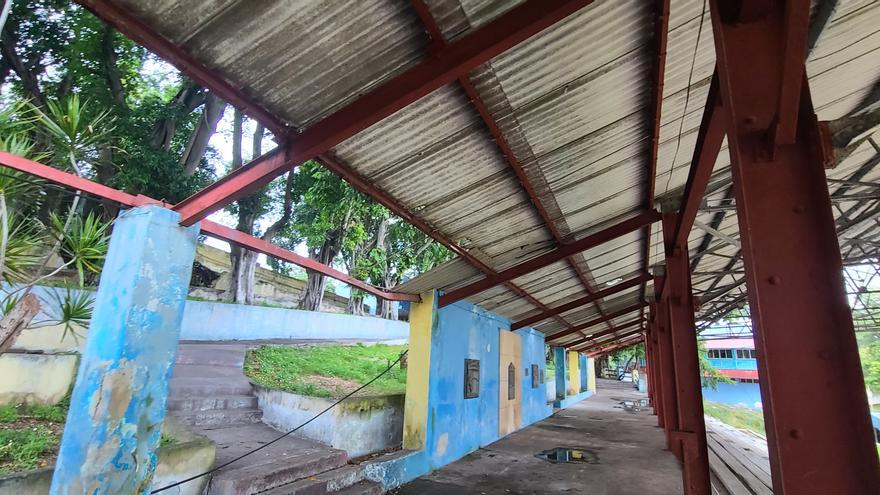
The fragile zinc roof totters on rusty columns covered in graffiti, the walkway walls need painting and chunks of the stone benches are missing

His colleagues in the provincial athletics program are waging a small battle with the National Sports Institute (INDER). Athletes need a space to train, they argue, and no one has played at Pedro Marrero for years. They prefer the slightly less precarious facilities of the Pan-American Village. The only good to come out of it, the coach says, is that officials finally turned it over to the people who actually use it.

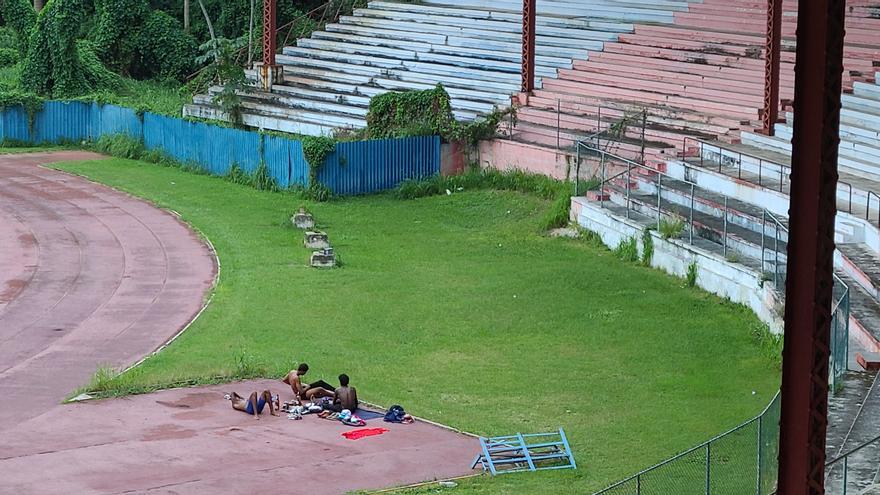
At the moment those are chamacos, street kids who come here to play, and teenage athletes whom their coach cajoles from the stands. On the field, the boys do what they can. The rain has left the grass sticky and wet, and water gathers in potholes on the track. It is impossible to have a clean race. They avoid the puddles by jumping over them.

If the field and the track are bad, the stands are not much better. The fragile zinc roof totters on rusty columns covered in graffiti, the walkways need painting and chunks are missing from the stone benches, which look like they have been hit with a sledge hammer. In the distance, the moldy green scoreboard displays two numbers — three and two — from the last time someone was in charge of keeping time and keeping score.

The stadium is used by street kids and teenage athletic students. (14ymedio)

In February 2023, FIFA officials visited several Havana stadiums and decided to prioritize the restoration of the Polar field over Pedro Marrero. At the time, they were deciding how to invest the international subsidy for the development of Cuban soccer through FIFA’s Forward 3.0 program.

Luck was not on Pedro Marrero’s side. The officials limited themselves to “analyzing possible projects” and announced that soon – they did not give a date – a master plan to refurbish the facilities would be finalized. “The project is not as far along as that of Polar, on which work is about to begin, but we are aware of the interest and support the local government in carrying it out,” they said. Nothing else.

Pedro Marrero’s walkways are in a precarious condition. (14ymedio)

In December, a FIFA report revealed that the organization had invested eight million dollars in Cuba between 2016 and 2022. The announcement raised several questions. With stadiums like the Pedro Marrero still in terrible condition, what did the Cuban federation do with that money? The official response was that the money went towards events, salaries, training of managers and the repair of the Antonio Maceo stadium in Santiago de Cuba, where artificial turf was installed. The explanation did not convince anyone and raised other, more disturbing questions about FIFA’s complicity in misspending of these funds.

Some half-hidden clues on the walls of the stadium provide some indication of what it was like in its early days. A plaque, signed by US Major League players, acknowledges the “altruism” of the directors of the New Havana Ice Factory for having built the stadium in 1929. Originally known as the Grand Tropical Brewery Stadium, it could seat  28,000 spectators. It was also where, in 1930, the Central American Games were first played. ​

The Tropical’s “hall of fame” displays commerative plaques dedicated to various Cuban sports figures and benefactors.

There is also a plaque from 1956 to one particular benefactor who was also the heir to the brewery, Julio Blanco Herrera, along with another that commemorates the first amateur baseball game to be played in Latin America, in 1939.

When it came to renaming the sports complex after 1959, however, the memory of hundreds of Cuban athletes who had played there meant less than the name of Pedro Marrero, a participant in the assault on the Moncada barracks and a kind of patron saint of brewers. The official encyclopedia Ecured defines him as a “hero of food workers” for having been a driver at the Cristal brewery.

All that is in the past. Weeds from the nearby Almendares River threaten to swallow up the stadium. With the advancing vines and moss, it will  soon cease to be a “pasture” and become a ruin like so many other iconic facilities built in Havana, and in the rest of the country, before 1959.

____________

COLLABORATE WITH OUR WORKThe 14ymedio team is committed to practicing serious journalism that reflects Cuba’s reality in all its depth. Thank you for joining us on this long journey. We invite you to continue supporting us by becoming a member of 14ymedio now. Together we can continue transforming journalism in Cuba.

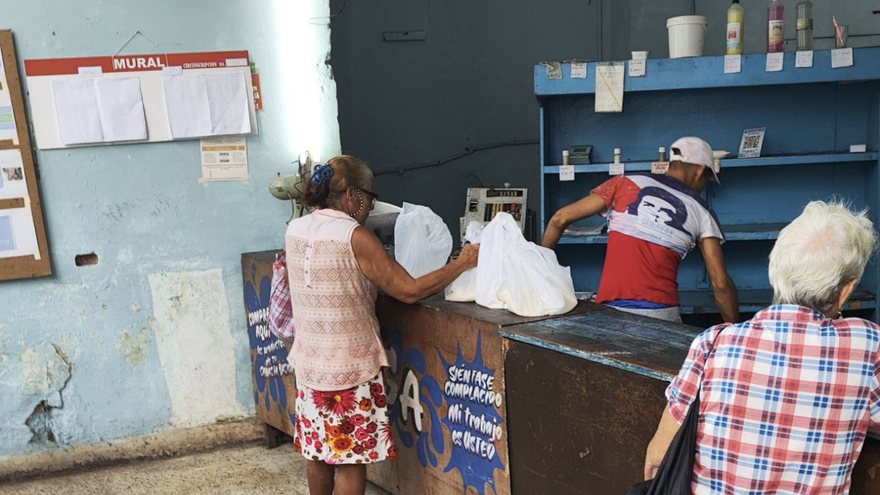
Despite the Poor Quality of the Rice, Cubans Are Distressed by Its Uneven Distribution in the Ration Stores

Authorities have said that the rice will be delivered to the ration stores in a staggered manner. (14ymedio)

14ymedio bigger14ymedio, Juan Diego Rodríguez, Havana, 22 January 2024 — At this point in January, when it is not long before the end of the month, the two pounds of rice per person that remain to be delivered to the ration stores have not yet arrived. “Only a few peas, cooking oil and kitchen detergent.”

“People are desperately asking about the rice, and the storekeeper says that it should arrive today or tomorrow,” Sandra tells 14ymedio. “They gave us a pound when the year began and then four, but I wouldn’t be surprised if what was missing doesn’t arrive.”

The coffee has not appeared either, nor the new ration book, delayed due to lack of paper, which the authorities have promised before March 30. “The chicken that arrived a few days ago is the one they owed from last year,” says a friend of Sandra’s, who reiterates: “No rice; you know, it’s at the North Pole.” continue reading

“Neither rice nor oil has arrived yet; even the cat is waiting,” a customer says sarcastically, nine days before the end of the month.

In the Havana municipality of Arroyo Naranjo, the scene is similar: “At the beginning of the month they gave us a pound of rice and two pounds of sugar per person, and two days ago they sold us the rest of those products but nothing else,” a resident tells this newspaper.

The customers of the ration store located at Hospital and Jesús Peregrino, in Central Havana, are luckier, since their rice allocation is complete, but that is not the case in other nearby establishments, such as the one on Reina Street. “Neither rice nor oil has arrived yet; even the cat is waiting,” a customer says sarcastically, nine days before the end of the month.

In Nuevo Vedado, the rice arrived at some ration stores last Friday along with “some chicken,” while for others it didn’t arrive until late Saturday night.

In short, they are distributing the products of the basic family basket to the neighborhoods and municipalities of the capital in an irregular manner. “They do it in a staggered way, as they say, and “staggered” means, for example, that the rice didn’t arrive until Friday,” explains a resident of the Luyanó neighborhood.

In the provinces it’s not much different. In San Antonio de los Baños, Artemisa, of the seven pounds of rice that correspond to the basic basket, so far five have been given. In Holguín, they gave six pounds, and the other one is missing.

On the Ministry of Internal Commerce’s website, where the delivery of chicken destined for the “normal family basket and social consumption” of Santiago de Cuba is reported, users take the opportunity to complain about the shortage of the moment: “It’s January 20, almost the end of the month, without even a pound in the ration store, and we have to pay 170 pesos a pound [in a private store] with such low wages. Please think of this town and leave off with the speeches. I am not an opponent or anything like that, but really this situation is unbearable,” explains a reader.

While consumers complain about the quantity, the quality of the rice is terrible

While consumers complain about the quantity, the quality of the rice is terrible. “Here the only rice that can be eaten is sold in the private stores, but that costs between 160 and 220 pesos a pound, and not everyone can afford it,” says Sandra, who fears having no choice but to spend the money.

Last Thursday, the Ministry itself warned of the “problems in the fulfillment of the distribution cycles” of the rationed food, especially rice. The official explanation: “financial restrictions and operational problems, which have caused delays in the arrival of imports, production and transportation,” without giving further details.

The guaranteed “deliveries” of oil and peas correspond to January and February, “because inventories are available.” As for sugar, which is also being distributed “in a fractional way,” it will be completed “in correspondence with the advances of the crop, and the four pounds per capita will be insured.”

Other products that are delayed are salt and coffee, according to the official report. The same goes for milk, which is also distributed “fractionally, in correspondence with the arrivals and fulfillment of the collections of fresh milk.” The ministry reports that this month Cuba will distribute a donation from the UN World Food Program, “with free delivery in some territories.”

Translated by Regina Anavy

____________

COLLABORATE WITH OUR WORKThe 14ymedio team is committed to practicing serious journalism that reflects Cuba’s reality in all its depth. Thank you for joining us on this long journey. We invite you to continue supporting us by becoming a member of 14ymedio now. Together we can continue transforming journalism in Cuba.

December Rumors in Cuba: ‘Catfishing’, Police Brutality, Casinos, Corrupt Spies

For Etecsa, Cuba’s State communications monopoly, 2024 will be the year of “cybersecurity.” (Ministry of the Interior)

14ymedio bigger14ymedio/Yucabyte, Havana, 22 January 2024 — The recruitment of cyberclarias (catfishers)* – the digital infantry of the Cuban regime – a hypothetical legalization of protests and the increase in clandestine gaming have stood out among the rumors collected in December by associates of 14ymedio and Yucabyte. The discontent of Cubans has been expressed openly on social networks, and the regime is now paying attention.

With instructions from the Communist Party, a squad of Public Health leaders – alleges a rumor that circulated as a WhatsApp audio – held several meetings in medical schools and hospitals in Holguín and Ciego de Ávila. The agenda: to attract workers willing to “share revolutionary content” in their personal accounts in the face of the well-known “media war” that keeps the regime up at night.

Other rumors on the subject indicate that, in parallel, the Communist Party has reactivated hundreds of anonymous profiles and computer programs to flood the internet with hashtags favorable to the Government

Other rumors on the subject indicate that, in parallel, the Communist Party has reactivated hundreds of anonymous profiles and computer programs to flood the internet with hashtags favorable to the Government. Cyberclarias are also given training courses to better develop their work, along with “cyber defense” workshops. continue reading

For Etecsa, the State communications monopoly, 2024 will be the year of “cybersecurity.” Interviewed by the official press, its Business Director, Daniel Ramos, announced with great fanfare that the first class of engineers in Cybersecurity, a recent career taught at the University of Computer Sciences, is active. The educational center, which has always served as the regime’s headquarters for digital affairs, will lead a “fight against cybercrime” in the face of the alarming increase in incidents recorded by Etecsa, more than 2,600 last year.

Social disagreement will overflow the networks at some point, and it won’t take long to reach the streets, some rumors imply. The Government has planned for it, they add, and therefore is planning to legalize popular protests. Aware of Havana’s mode of operation, many commentators have warned that the origin of the rumor may be the Government itself, which tests public opinion and tries to “hunt” potential demonstrators.

Others say that the National Assembly had a “Demonstration and Meeting Law” on its schedule for 2022, which was never debated openly and was removed from the plan in 2023, without any explanation.

December, a “hot” month when it comes to violence and insecurity, brought abundant rumors about murders, disappearances and violent robberies. The images about police brutality were not far behind: agents beating individuals already immobilized, comments on arbitrary confiscations and harassment of pushcart sellers and farmers were just some of the incidents reported.

The end-of-year parties, users alleged, were nothing to celebrate: fairs understocked and with rotten food, inability to get food and inaction in the face of crime were the only things that the Government offered to Cubans, they criticized. The tension increased with the rumor, at the end of the year, that the ration book, indispensable for the poorest on the Island, was disappearing.

The Ministry of Internal Trade denied these rumors, but the so-called economic package – officially announced – promises a year of maximum austerity for Cubans, after a critical 2023.

The return to the public sphere of diplomat Manuel Rocha and former American analyst Ana Belén Montes, two former spies in the service of Havana, generated a series of rumors about Cuban intelligence services

The growing activity of the burles – informal and illegal casinos – is a symptom of the need of Cubans to obtain money quickly and at all costs. In many of these businesses, several users complain, it is common for children to get involved, “with money in hand” and alcohol, in the organization of the games.

The return to the public sphere of diplomat Manuel Rocha and former American analyst Ana Belén Montes, two former spies in the service of Havana, generated a series of rumors about the Cuban intelligence services. According to several users, the arrest of Montes in 2001 at the hands of the FBI and the disclosure of the links of Rocha, former deputy director of the U.S. Interests Section in Havana, with the regime, testify to the state of corruption of Cuban espionage.

The Directorate of Intelligence of the Island has numerous flaws, and its negligence – they add – made it easier for the United States to access information to expose Rocha and Montes. When newspapers around the world made headlines with both former spies, Javier Milei, the President of Argentina, announced that Cuban and Venezuelan agents living in Argentina had instructions to instigate a protest.

A few days later, several rumors claimed that the Argentine authorities had captured an alleged Cuban spy: Alejandro Odriozola Diez, head of Intelligence of the Cuban Embassy in Buenos Aires.

*Translator’s note: ’Catfishing’ is pretending to be someone else online, stealing someone’s identity.

Translated by Regina Anavy

____________

COLLABORATE WITH OUR WORKThe 14ymedio team is committed to practicing serious journalism that reflects Cuba’s reality in all its depth. Thank you for joining us on this long journey. We invite you to continue supporting us by becoming a member of 14ymedio now. Together we can continue transforming journalism in Cuba.

Thirty Sorolla Paintings that Cuba Refused to Loan to Spain Reappear in Havana

Last September Sorolla’s works were moved, with little fanfare, from their usual spot in the Universal Art building to the Trocadero site, located between Zulueta and Monserrate streets.

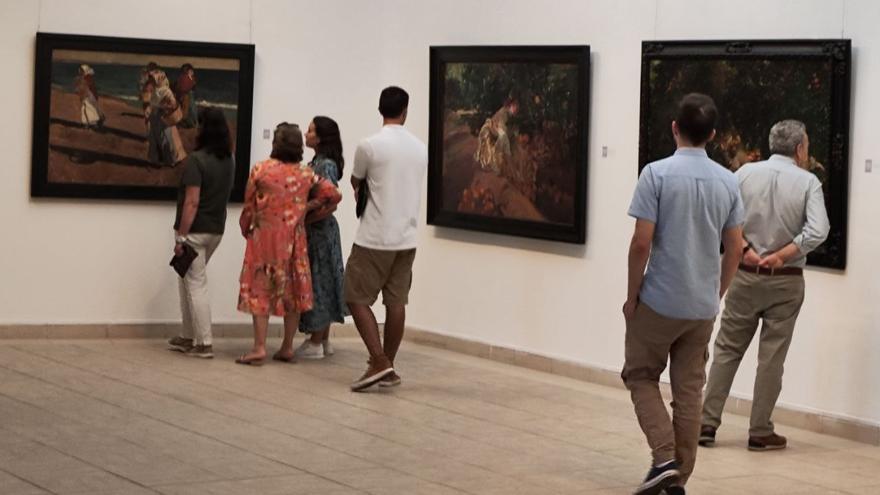
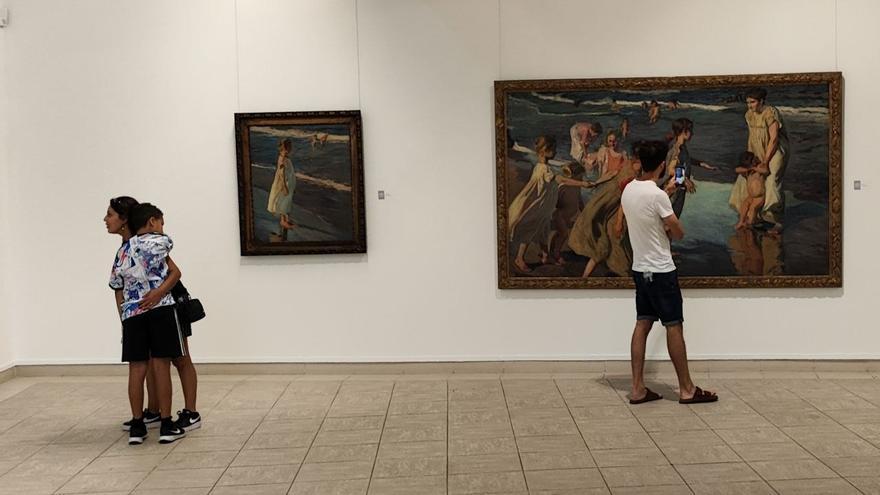
14ymedio bigger14ymedio, Havana, January 19, 2024 — Thirty paintings by Spanish artist Joaquín Sorolla (1863-1923), which the Cuban government refused to lend to Spain last April for the centenary of the artist’s death, are now on display in Havana. The exhibition, which includes major works by the artist as well as sketches and other, less significant works, will be removed on Sunday from Cuba’s National Museum of Fine Arts.

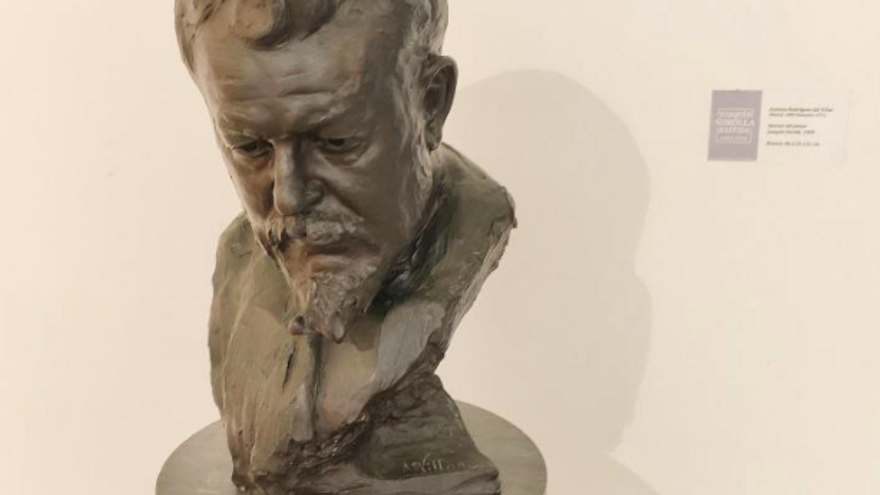
The exhibition includes important canvases such as “Summer” (1904), “Going to Sea” (1908), “The Watermelon Boy” (purchased in 1920 from Sorolla himself by the then director of the museum, Antonio Rodríguez Morey), “Portrait of the Marchioness of Balboa” (commissioned by a Cuban client in 1894) and a bust of the artist made by the Spanish sculptor Antonio Rodríguez del Villar.

Last September Sorolla’s works were moved, with little fanfare, from their usual spot in the Universal Art building to the Trocadero site, located between Zulueta and Monserrate streets. The logistics were handled by the Genesis, a state-owned company that manages galleries and sales of Cuban art to foreign buyers. continue reading

Cubans admiring “Girl” and “Summer,” two iconic Sorolla paintings. (14ymedio)

Organized by art curator Manuel Crespo Larrazábal, head of the museum’s Spanish collection, the exhibition is the island’s belated response to the centenary of Sorolla’s death. When important art galleries around the world were paying tribute to the painter in a big way, Havana reneged on a loan that it had promised to Valencia’s government eight years ago.

The reason: Fear that the legitimate owners of paintings that were seized by Fidel Castro after 1959 — specifically a family of Cuban exiles, the Fanjul Gomez-Menas — would file suit for their return from the Spanish institutions which would be exhibiting them. Carmen Amoraga, the Valencia government’s cultural director, then announced that the request had come to a dead end due to the “international situation” that had boxed the regime into a corner and that her office did not want comment on the matter.

Last April the High Court of Justice in London issued a ruling against the National Bank of Cuba in a case involving 72 million euros in unpaid debt. The Cuban government then decided not to risk further litigation over the Sorollas as happened in the 1990s when the Fanjuls filed several lawsuits in international courts in an effort to stop organized art trafficking on the island. In 2009 the family launched another legal battle, claiming violations of trade restrictions under the Helms-Burton Act, after Havana quietly lent two Sorollas to Madrid’s Prado Museum.

Bust of Sorolla by Spanish sculptor Antonio Rodríguez del Villar. (14ymedio)

Amoraga has said publicly that there is a possibility, at least in theory, that the government will change its mind and allow the island’s paintings to travel to Spain as part of its Sorolla Year celebrations. That is not happeninng and, though it got off to a late start, the exhibition at the National Museum of Fine Arts confirms this.

Cuba is believed to have the third most important collection of Sorollas in the world after Spain and New York. The Valencian artist was the faovored painter of the island’s millionaires at the end of the 19th century, when he did portraits of several members of the Caribbean nobility.

In the introduction to the exhibit’s catalogue, Crespo Larrazábal explains that “Sorolla’s work was more widely collected in Cuba after the painter’s death, continuing until the 1950s.” In 1921, a work by the artist was exhibited publicly in Cuba for the first time. In regards to “Portrait of the Mexican Tiple Esperanza Iris,” however, the curator claims not to know the identity of former or current owner of the painting, which believes to be lost.

Crespo Larrazábal surmises that Cuba, which experienced a true “Sorolla fever” in the first decade of the 20th century, must have had many more examples of the artist’s work than the thirty paintings at the National Museum of Fine Arts. But given the secretive nature of the Ministry of Embezzled Assets and the personal ambitions of many of its leaders, what happened to these paintings after 1959 remains a mystery.

______________

COLLABORATE WITH OUR WORKThe 14ymedio team is committed to practicing serious journalism that reflects Cuba’s reality in all its depth. Thank you for joining us on this long journey. We invite you to continue supporting us by becoming a member of 14ymedio now. Together we can continue transforming journalism in Cuba.