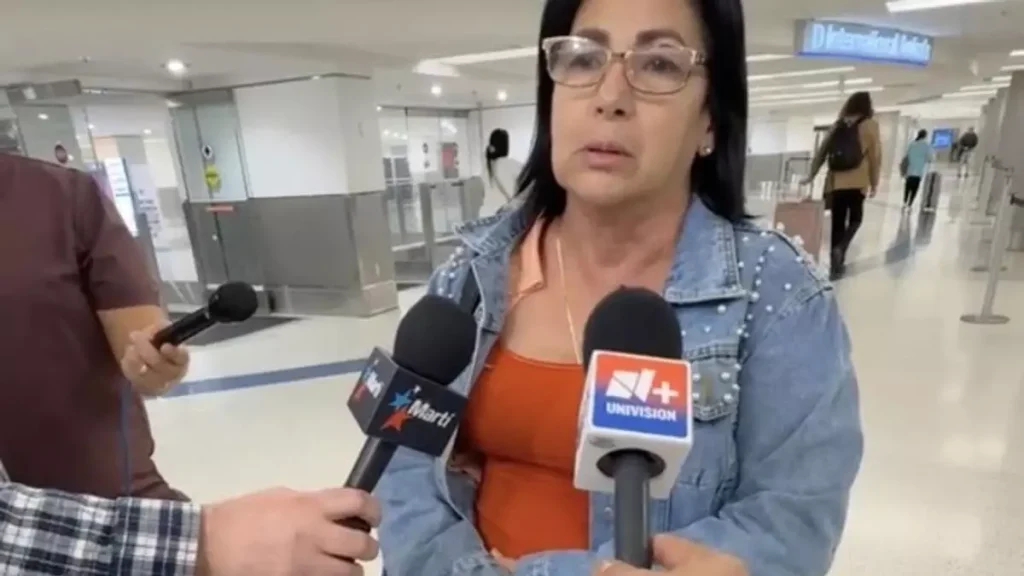
Lines Overflow in Havana to Buy Liquefied Gas Cylinders

In the absence of electricity, this has become an essential resource for cooking in neighborhoods without piped gas.
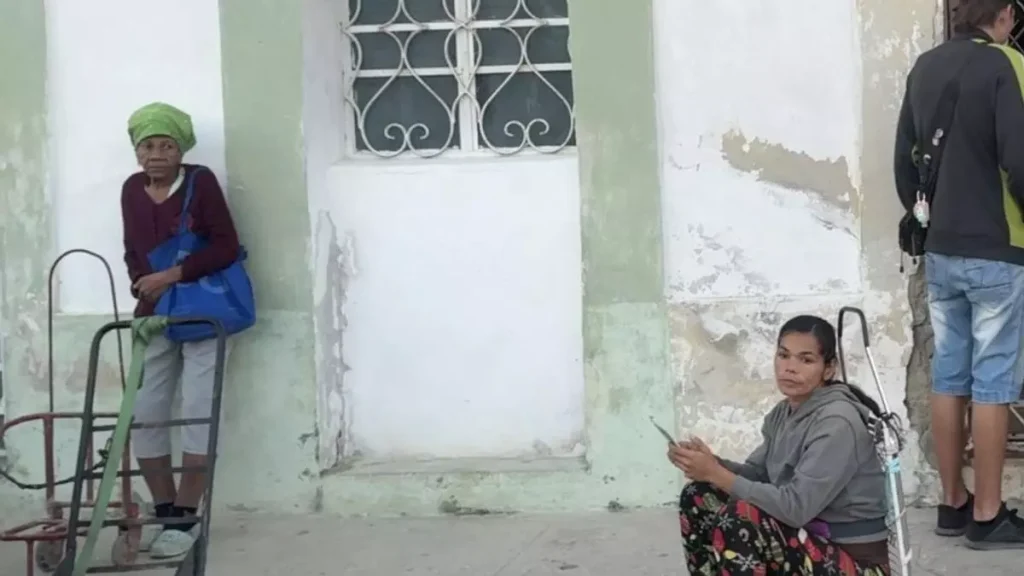

Most of those waiting to buy a small gas cylinder at Cupet establishments are elderly people. / 14ymedio

14ymedio bigger14ymedio, Havana, Darío Hernández, February 13, 2026 – As the sun begins to set in Regla, under a red sky, people remain crowded in a line that started forming well before 3:00 in the afternoon. Most of those waiting to buy a small gas cylinder at Cupet outlets are elderly; many use the empty tank or the small cart used to transport it as a seat to ease their fatigue.

At 6:00 in the evening, the truck loaded with gas arrives, and finally, two hours later, the crowd slowly begins to move forward amid arguments and commotion.

Not all lines in the capital are the same: some are better organized than others. A young woman scrolling through Facebook on her phone while she waits says loudly that “my mother in Cerro got her cylinder at 1:00 in the afternoon, just imagine,” without taking her eyes off the screen.

The protocol, published in a Telegram group, states that priority in line should be given to those who have gone the longest without refilling their cylinder; in this case, those whose last refill was in August. But in reality, organization depends on the judgment of the workers at each sales point. For example, on Obispo Street in Guanabacoa, “a huge commotion broke out,” neighbors told 14ymedio, because it was decided that only 150 gas cylinders would be sold to the first people who arrived. “Many of them have been marking their place for days or are messengers, so those from August were left without continue reading
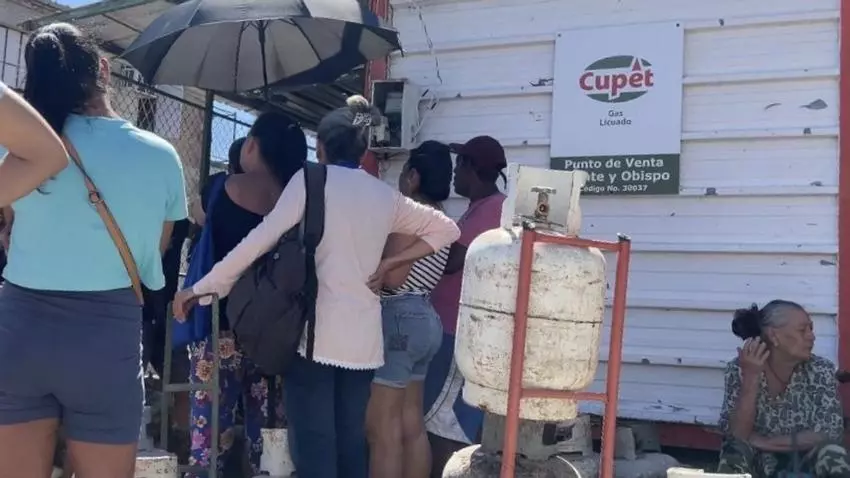
a cylinder once again.”

The protocol, published in a Telegram group, states that priority in line should be given to those who have gone the longest without refilling their cylinder / 14ymedio

This Tuesday, the Liquefied Gas Company (GLP) announced the distribution of cylinders for residents of the provinces of Havana, Artemisa, and Mayabeque, with a projected 15,000 units per day, to be distributed “equitably,” supposedly prioritizing by geographic location the areas with the highest customer density. The document stipulates the sale of only one cylinder per contract, the organization of sales points based on customer records, and the date of the last purchase. Registered delivery agents would only be authorized to buy one cylinder per customer per day. However, the reality seen on the streets is far from what is established and reveals chaos well removed from the protocol.

Yamila, a resident of Nuevo Vedado who spoke with 14ymedio, feels very fortunate not to have to endure that “calvary”: “Luckily, the piped gas is working well; I don’t know if it’s because it’s domestically produced. It doesn’t cover the whole city or anything close to that, but for those of us who have it, it’s a blessing to count on that service.”

The growing demand for small gas cylinders, which on the informal market can now reach prices of up to 30,000 pesos, has surged over the past month as the energy crisis has worsened. Faced with shortages of both gas and electricity, many people have begun turning to charcoal and firewood for cooking, a practice long common in eastern Cuba but now increasingly frequent in some Havana neighborhoods.

Jamaica has traditionally supplied liquefied gas to Cuba, but after sanctions imposed by the Trump administration starting January 30 on any country supplying fuel to the Island, shipments were interrupted. On February 1, the Cuban tanker Emilia returned empty to the port of Cienfuegos after a failed attempt to purchase LPG in Kingston.

Translated by Regina Anavy

____________

COLLABORATE WITH OUR WORK: The 14ymedio team is committed to practicing serious journalism that reflects Cuba’s reality in all its depth. Thank you for joining us on this long journey. We invite you to continue supporting us by becoming a member of 14ymedio now. Together we can continue transforming journalism in Cuba.

https://www.facebook.com/14ymedio?ref=embed_video

Cubans in the U.S. Speed Up Aid Shipments to the Island but Ask Trump for More Restrictions

Dozens of exiles line up with boxes and bags filled with food, toilet paper, and other basic goods at shipping companies in Miami’s Little Havana.

Cuban citizens wait beside boxes and bags containing food and essential supplies to send to their relatives on the Island this Friday in Miami, Florida. / EFE/Alberto Boal

14ymedio bigger14ymedio, Miami, Pedro Pablo Cortés (EFE), February 13, 2026 – Cubans in the United States are accelerating shipments of food and medicine to their families as the crisis on the Island deepens, where many depend on this aid to survive. At the same time, they told EFE they support President Donald Trump increasing restrictions if it means that “the regime falls.”

Dozens of exiles stand in line with boxes and bags containing food, toilet paper, and other essential goods at shipping companies in Little Havana, motivated by power cuts in Cuba and the sense that events may unfold quickly. Among them is Manuela Labori, who sends aid to her 90-year-old mother.

“What she’s eating is thanks to the children she has here—there are three of us—and the medicines she uses, we have to send them from here. She can’t even walk because of her knees; the cartilage is gone, it’s bone on bone, and in the hospitals there’s nothing to give her relief or to perform surgery,” she told EFE.

“It should be a total blockade, where everything is shut down, not even allowing us to send this, because that’s the only way the communist regime will fall.”

The UN Human Rights Office warned Friday that Washington is “failing to comply” with international law through the sanctions decreed in January to prevent the supply of oil to Cuba, which are causing the “dismantling” of the food, health care, and water supply systems. continue reading

But Labori, who has lived in Florida for more than 40 years, considers Trump’s measures “excellent” and calls for more, even if that means no longer being able to send aid to her family.

“It should be a total blockade, shutting everything down, not even allowing us to send this, because that’s the only way the communist regime will fall. Communism has no place anywhere. It should be ended forever,” she exclaimed.

U.S. humanitarian donations to Cuba nearly doubled in 2025, reaching an estimated value of $130.9 million compared to $67.8 million the previous year, including food, medicine, and clothing, according to a report by the U.S.-Cuba Trade and Economic Council.

Although many on the Island “depend heavily” on the exile community, former political prisoner Ángel de la Fana, leader of the group Los Plantados*, noted that “the vast majority do not have relatives in exile who can send them help.”

“Pressure must be increased because it’s not enough for those of us in exile to send aid to family. What we need is for the Cuban people to be free, to have the freedom to create wealth, to produce food,” he argued.

Cuban-American lawmakers from Florida have asked Trump to ban remittances to Cuba, flights, and licenses for companies “doing business with the regime,” while the cities of Miami and Hialeah are investigating hundreds of companies with possible ties to the Cuban government, including shipping agencies.

José Daniel Ferrer, a Cuban opposition leader who arrived in the United States last October, believes that shipments of “basic supplies” should “still be allowed”

José Daniel Ferrer, a Cuban opposition leader who arrived in the United States last October, believes that shipments of “basic supplies” such as “food, medicine, and hygiene products” should “still be allowed” because “many people need them,” but he calls for banning other items considered “luxury, entertainment, or pleasure.”

During a visit to several shipping agencies, employees and immigrants declined to speak with EFE out of fear of reprisals from the Cuban government or U.S. authorities.

Others, like Usmara Matamoros, fear that U.S. restrictions will not bring change to the Island and will only mean their relatives are left without the products sent from Miami.

“No, I don’t agree because just imagine how they’re going to live,” she told EFE. “Without us, they have nothing.”

Some send whatever they can regardless of the political context or specific requests for help, like Teresa Martínez, who sends “medicine, rice, milk, anything that can serve as food” whenever she has the chance.

“They don’t ask me; I send it because I know they need everything, and there are two little children I send things to every month,” she says through tears.

*Translator’s note: “Plantado’ — literally ’planted’ — is a term with a long history in Cuba and is used to describe a political prisoner who refuses to cooperate in any way with their incarceration.

Translated by Regina Anavy

____________

COLLABORATE WITH OUR WORK: The 14ymedio team is committed to practicing serious journalism that reflects Cuba’s reality in all its depth. Thank you for joining us on this long journey. We invite you to continue supporting us by becoming a member of 14ymedio now. Together we can continue transforming journalism in Cuba.

Cuba Returns to a Soccer World Cup for the First Time in 35 Years with Its Under-17 Team

A draw against Belize placed the Island’s team at the top of Group F with seven points.

“It’s my first World Cup,” coach Sandro Sevillano told the newspaper El Gráfico after the match against Belize. / Cubadebate

14ymedio bigger14ymedio, Havana, February 12, 2026 – Cuba is returning to a soccer World Cup after 35 years of frustrated attempts, although not in the senior category. The achievement came this Wednesday when the Under-17 national team secured a scoreless draw against its counterpart from Belize at Cementos Progreso Stadium in Guatemala City. The feat was accompanied by a first-place finish in the group with seven points. The Island’s team joined Costa Rica, Haiti, Panama, and the United States, which had previously secured their qualification for Qatar 2026.

“It’s my first World Cup,” coach Sandro Sevillano told El Gráfico at the end of the match, emphasizing: “The key was that we focused the group’s mindset on the goal of qualifying for the World Cup.”

The Artemisa native, who has led the U-17 team since 2022, was instrumental in Cuba’s 1–0 victory over Curaçao thanks to a goal by Deibi Borrell. The team also defeated El Salvador 2–1 with a brace from Yankarlos Iglesias, a result that allowed them to reach the final match with an advantage in the standings. The draw against Belize secured the single point needed to confirm their ticket.

“Today it was our turn,” added the strategist, acknowledging that El Salvador also had a chance to advance but finished with six points, one behind the Island in Group F.

The Island’s team joined Costa Rica, Haiti, Panama and the United States, which had previously secured their qualification to Qatar 2026. / Cubadebate

In 1989, Cuba became the first Caribbean country to qualify for a U-16 World Cup (Scotland). Two years later, it did so again at Italy 1991. continue reading

Independent media outlets highlighted the Island’s accomplishment. “History has been made today in Cuban soccer. A dream come true,” published Por La Goma LLC.

Several of these young players have trained in the “ruins” of Pedro Marrero Stadium, part of Cuba’s National Soccer School, the Cuban National Soccer Team page denounced on Facebook earlier this February. According to the post, the youngsters “have to hang their belongings out to dry” in the stands and train in grass that reaches “above their ankles.”

Regarding the match, the same outlet acknowledged that against Belize “it wasn’t an attractive game,” but it was played intelligently. “Belize put up a fight, their goalkeeper Lucas Gallego had an inspired night, and Cuba couldn’t find the goal but they didn’t need it. The 0–0 tasted like glory, like qualification, like a World Cup.”

Translated by Regina Anavy

____________

COLLABORATE WITH OUR WORK: The 14ymedio team is committed to practicing serious journalism that reflects Cuba’s reality in all its depth. Thank you for joining us on this long journey. We invite you to continue supporting us by becoming a member of 14ymedio now. Together we can continue transforming journalism in Cuba.

Dozens of Young People Gather Outside the Court in Holguín Cuba in Support of the Creators of El4tico

Kamil Zayas Pérez and Ernesto Ricardo Medina face charges of “propaganda against the constitutional order” and “incitement to commit a crime”

People gathered outside the Holguín court this Thursday. / 14ymedio/Courtesy

14ymedio bigger14ymedio, Holguín, Miguel García, February 12, 2026 – More than 50 people, including relatives, friends, and activists, have gathered since the early hours of Thursday in front of the Provincial People’s Court of Holguín, where a hearing is being held in the case of the young creators of the independent project El4tico. The hearing responds to a habeas corpus petition admitted by the court itself on behalf of Kamil Zayas Pérez and Ernesto Ricardo Medina, who were detained on February 6.

Coinciding with the growing number of people gathered outside the court, internet outages occurred in the area, interrupting the arrival of messages and reports from the scene, while Zayas and Medina remained inside the building.

On its Facebook page, the Holguín Provincial Prosecutor’s Office justified its decision to open criminal proceedings against the platform’s creators. They are accused of “propaganda against the constitutional order” and “incitement to commit a crime” through posts that allegedly encouraged the public and members of the Armed Forces and the Ministry of the Interior to change the constitutional order and that “defamed state institutions.” The statement notes that Medina and Zayas are being held under the precautionary measure of pretrial detention while “investigative procedures continue to obtain evidence.”

The court day was preceded by a new act of harassment

The judicial session was preceded by a new act of harassment. Activist Yanet Rodríguez Sánchez, who filed the habeas corpus petition on February 9 on behalf of the detainees, attempted to leave her home this morning to go to the court, but agents of the political police prevented her from doing so. At least two police patrol cars and a motorcycle were stationed outside her house, and two plainclothes agents blocked her from heading to the court. continue reading

Rodríguez Sánchez has also received intimidating phone calls and messages in recent hours. Since Thursday morning, she has remained cut off from communication and arbitrarily confined to her home, a form of de facto detention that Cuban authorities frequently use to prevent activists from participating in public demonstrations.

The admission of the habeas corpus petition by the First Criminal Chamber of the Holguín Provincial Court constitutes an uncommon event within the Cuban judicial system, where such petitions rarely succeed in cases involving politically motivated detentions. In Cuba, there is no real separation of powers, and the courts, like the rest of the public institutions, operate under the “guidelines” of the Communist Party, the only legal party.

The contrast with other recent cases is evident. In Havana, for example, a habeas corpus petition filed on behalf of Ankeilys Guerra Fis, a 23-year-old detained since January 14, 2026 and held incommunicado at Villa Marista, the headquarters of State Security, was denied. Guerra was violently arrested at his home for alleged critical expressions on social media. The court rejected the petition, citing the lack of information about the alleged crime, case number, or exact place of detention, information that the authorities themselves systematically refuse to provide.

The hearing requires the Prosecutor’s Office to formally present the charges, justify the legality of the detention, and explain the conditions under which the detainees are being held

In Holguín, relatives and close associates of Zayas and Medina have expressed concern both about the lack of official information and about the conditions of detention at the province’s Criminal Investigation Unit, a facility popularly known as “Todo el mundo canta” (“Everybody Sings”) due to the violence reportedly used during interrogations there. During the operation that led to their arrest, State Security agents confiscated computers, mobile phones, cameras, and other work equipment used by the young men to produce audiovisual content critical of the country’s political and social reality.

Thursday’s hearing obliges the Provincial Prosecutor’s Office to formally present the charges—if any—to justify the legality of the detention, and explain the conditions of confinement, as part of the judicial review resulting from the habeas corpus petition. The process has drawn the attention of human rights organizations, independent journalists, and activists inside and outside the Island, who view the case as a direct violation of freedom of expression and due process.

In recent hours, messages of solidarity have multiplied on social media under the hashtag #TodosSomosEl4tico, calling for the immediate release of the young men and denouncing judicial arbitrariness. In contrast, party authorities, including the first secretary of the Communist Party in Holguín, Joel Queipo Ruiz, joined a public smear campaign, calling the young men from El4tico “mercenaries” and “traitors,” among other insults common in official discourse.

Outside the court, the atmosphere remains peaceful, though tense and filled with expectation. Family members, including Doris Santiesteban Batista, Ernesto’s wife, continue to await news from inside the courthouse, hoping the day will mark a turning point in a case that once again highlights the use of Cuba’s judicial system as a tool of political control and punishment of dissent.

Translated by Regina Anavy

____________

COLLABORATE WITH OUR WORK: The 14ymedio team is committed to practicing serious journalism that reflects Cuba’s reality in all its depth. Thank you for joining us on this long journey. We invite you to continue supporting us by becoming a member of 14ymedio now. Together we can continue transforming journalism in Cuba.

Without Reason, Cuban State Security Is Once Again Besieging Journalists

There is another operation by the political police in the basement of our building to prevent us from leaving our homes.

Police patrol outside the home of Wilber Aguilar Bravo, in La Güinera (Havana). / Facebook

14ymedio bigger14ymedio, Havana, Yoani Sánchez, 3 February 2026 — The cold is the talk of the town in Havana. But dictatorships don’t understand low temperatures or freezing winds. This Tuesday, there’s a political police operation in the basement of our building to prevent us from leaving our homes. What’s the reason for this blockade that restricts our freedom of movement and condemns us to not being able to buy food or take out the trash? We don’t know. It is not a significant date on the official calendar, we are not invited to any diplomatic reception, and in our neighborhood, no visitors are expected other than the battalion of flies and mosquitoes that buzzes around the mountains of garbage.

A neighbor told us it might be the Cuban regime’s nervousness in the face of pressure from Washington and the events that have been unfolding in Venezuela for the past month. However, I struggle to define what danger my husband and I could pose on this international political chessboard where we are, at best, tiny, defenseless presences. Is some official coming to inaugurate a project amidst the dirty, dilapidated streets of this area? Is a military exercise about to take place in the trenches formed by the potholes in the sidewalks that surround us? Is the stench emanating from the garbage piled up on the street corners about to multiply in the coming hours?

With the thread of internet we have, we confirm that other journalists and activists suffer the same harassment at their homes.

We have no answer, because Cuban State Security behaves with impunity, failing to explain to citizens the reasons for violating their rights. continue reading

With the thread of internet we have, we confirm that other journalists and activists suffer the same harassment at their homes: Dagoberto Valdés in Pinar del Río, Wilber Aguilar Bravo in La Güinera, and Camila Acosta and Ángel Santiesteban in central Havana. From Camagüey, reports indicate the arrest of Henry Constantín, director of La Hora de Cuba , and Alejandra García, whose whereabouts remain unknown.

When a state blocks defenseless people from walking freely through a city, it demonstrates its fear. That repressive forces must spend hours stationed outside our building, disrupting our daily lives, reveals the fragility of a power that fears a couple of journalists armed only with their words.

____________

COLLABORATE WITH OUR WORK: The 14ymedio team is committed to practicing serious journalism that reflects Cuba’s reality in all its depth. Thank you for joining us on this long journey. We invite you to continue supporting us by becoming a member of 14ymedio now. Together we can continue transforming journalism in Cuba.

More Than 22,000 Cubans Fled the Island to Settle in Uruguay in 2025

Last year also marked a historic record for Cuban nationals receiving Uruguayan ID cards: 13,852

Never before had so many Cubans entered Uruguay as last year, more than 22,000. / Unicef

114ymedio bigger4ymedio, Madrid, February 10, 2026 – Never before had so many Cubans entered Uruguay as last year—more than 22,000—nor had so many obtained the South American country’s national ID card, 13,852. According to data from the National Directorate of Migration (DNM), reported by local media, this latter figure places Cuban nationals as the largest group receiving identity documents, apart from Uruguayans themselves, quintupling Argentines (2,635), Brazilians (2,564), and Venezuelans (2,042).

The number of arrivals represents a significant jump compared to the previous year. In 2024, 13,118 Cubans entered Uruguay, according to the DNM. That year, 2,092 Cuban nationals obtained Uruguayan residency.

The organization Uruvene, which assists migrants arriving for the first time in that country, reported that in 2025 they assisted 942 Cubans, far ahead of Venezuelans, at 300. “We have noticed that they arrive in groups of five per family, entire family units,” said Yanitze Gutiérrez, a member of the organization, in statements to Telemundo Uruguay. “The situation in Cuba has become unbearable,” she added. “It’s not just going more than 14 hours without electricity and without access to food, but also that the money, even with what relatives send, is no longer enough.”

The migration route taking Cubans to South America has become firmly established in recent years

The migration route taking Cubans to South America has become firmly established in recent years amid growing difficulties in emigrating to the United States or transatlantic countries such as Spain. The journey does not carry the same dangers as the maritime route across the Florida Straits, organized crime in countries like Mexico or Guatemala, or the harsh Darién jungle, although it is not without risk. continue reading

As Globo reported a few days ago, since last November some 200 Cubans have been victims of a human trafficking organization operating on the Brazil–Guyana border that has since been dismantled by police. The number, sources told the local outlet, is believed to be higher, as the group had reportedly been operating for at least a year.

That total corresponds to Cubans who remained for three months in a clandestine hostel with more than 30 beds. Initially, those involved used their own homes to house migrants. As the flow increased, investigators indicated, a larger structure was set up.

Investigations suggest that the victims were recruited in Cuba and entered Brazil through the state of Roraima, passing through Lethem (Guyana) en route to Boa Vista.

Cuban nationals, as 14ymedio has reported, either remain in Brazil or continue farther south to Uruguay and, to a lesser extent, to Chile.

Translated by Regina Anavy

____________

COLLABORATE WITH OUR WORK: The 14ymedio team is committed to practicing serious journalism that reflects Cuba’s reality in all its depth. Thank you for joining us on this long journey. We invite you to continue supporting us by becoming a member of 14ymedio now. Together we can continue transforming journalism in Cuba.

Hammer Suggests Díaz-Canel Is Unaware of ‘Talks With Someone Very High Up Within the Cuban Regime’

The head of U.S. diplomacy in Cuba says there is a “Delcy Rodríguez” on the Island and that negotiations should bear fruit within weeks

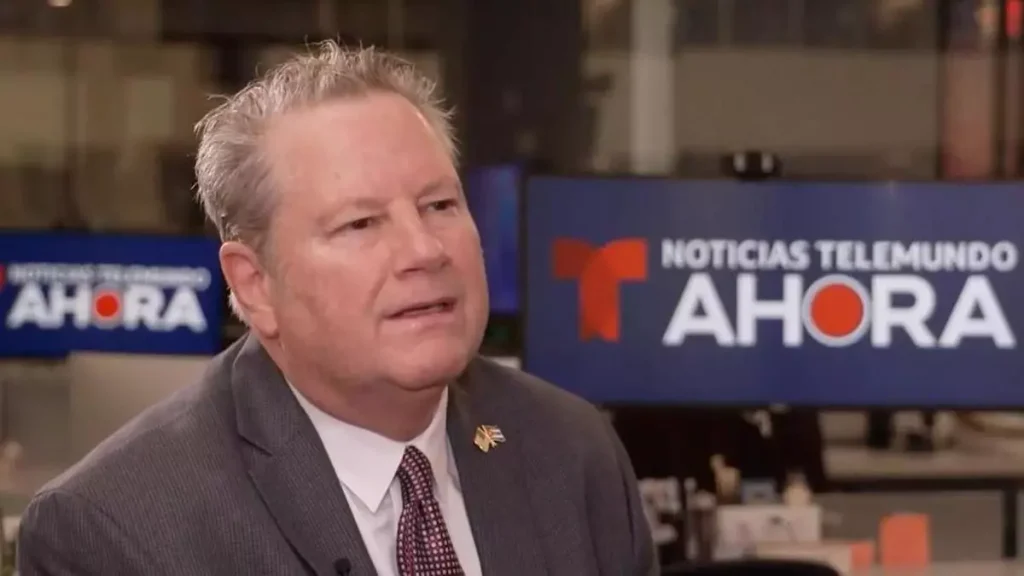
Mike Hammer during Tuesday’s interview on Telemundo. / Screenshot

14ymedio bigger14ymedio, Madrid, February 11, 2026 – The head of the U.S. Diplomatic Mission, Mike Hammer, insisted this Tuesday in an interview with Telemundo in Miami that talks are taking place with representatives of the Cuban government and even hinted that parts of the regime are unaware of them. The diplomat went so far as to claim that Washington already has a Delcy Rodríguez on the Island.

“Obviously there are conversations with some very high-ranking people within the regime. Others may not be aware,” Hammer said. “There are some who come out and make a statement: ‘No, no, no, there’s nothing.’ And then suddenly, a day or two later, they say: ‘Well, I mean, this has to be done the way we’re doing it.’ I’ll just give you the example of Venezuela,” he emphasized.

The idea aligns with what U.S. President Donald Trump himself has repeatedly insisted. In mid-January and just a few days ago, the president maintained that dialogue was underway and that there would be news soon. On both occasions, the Cuban regime responded by denying that anything was being discussed beyond the usual matters on which both nations regularly exchange views: migration and drug trafficking.

“Good question, I appreciate it. A good journalist, we’re not going to get into… Yes, there is a Delcy Rodríguez,” he stated bluntly

Cuba’s deputy foreign minister, Carlos Fernández de Cossío, has maintained in several interviews with international media that there is a willingness to talk, but based on mutual respect, and has asserted that Washington’s comments about possible negotiations are malicious, intended to sow distrust. “If it is being suggested that there is fragmentation within the Cuban government (…) and a willingness by a small group to surrender Cuba’s sovereign rights and give in to pressure (…) that is a mistaken interpretation,” he told continue reading

EFE last week. The Spanish newspaper ABC had just reported, citing sources in Mexico, that dialogue does exist and that the intermediary is General Alejandro Castro Espín, son of Raúl Castro.

Hammer declined to confirm any names, even when Telemundo journalist Damià Bonmatí pressed him to identify who the Cuban Delcy Rodríguez might be. “Good question, I appreciate it. A good journalist, we’re not going to get into that… Yes, there is a Delcy Rodríguez,” he said flatly. “I’m not even going to touch the subject in that sense, just that anyone within the leadership who sees that their children and grandchildren no longer want to be in Cuba because the situation is so miserable, that they go abroad to study, that they’re living the good life in other countries… they know this is coming to an end,” he concluded.

Asked about the timeframe for these talks and how long he believes the Cuban regime has left, Hammer avoided committing to specifics, although his reference to the Venezuelan case and his renewed mention of 2026 as a horizon made clear that the U.S. is thinking in terms of months. “If it doesn’t move forward in weeks, there will be a Plan B,” he said. The diplomat recalled that last November Trump offered dialogue to Nicolás Maduro and talks took place that led nowhere. “There was a call with Maduro and six weeks later he fell. We have to imagine similar timelines,” he noted.

The diplomat also declined to specify what alternatives might exist if the alleged talks do not succeed, but said the priority is to find a “peaceful solution.” “No one wants to see bloodshed, but it is very important that change takes place and that the rest of the world also wake up and help move this process forward,” he asserted.

“No one wants to see bloodshed, but it is very important that change takes place and that the rest of the world also wake up and help move this process forward”

Bonmatí also asked Hammer to what extent the United States bears responsibility for Cuba’s extreme weakness since it has been prevented from acquiring oil, but the diplomat spoke of prior deterioration and avoided any mention of recent weeks. The executive order signed by Trump on January 29 to impose tariffs on countries that deliver oil to the Island has led the Cuban regime to adopt emergency measures.

“The embargo does not place any restrictions on food. The embargo does not place any restrictions on medicine. Cuba can trade with any country in the world, and it does. You go to any of the markets run by SMEs—small and medium-sized enterprises, as they say—and you can buy whatever you want there,” he insisted. Nevertheless, those goods are beginning to remain stranded in ports due to a lack of fuel for distribution.

The diplomat insisted that the U.S. helps the population and cited food shipments valued at three and six million dollars sent by Washington and distributed through Caritas for those affected by Hurricane Melissa. Cuban authorities have described it as “hypocritical to apply draconian coercive measures that deny basic economic conditions to millions of people and then announce soup and canned goods for a few.”

Hammer said that in a potential democracy there could be reconstruction plans in Cuba with the help of emigrants and other foreign investors—plans that will be very costly to finance, since the electrical system alone requires some $10 billion and, as the interviewer reminded him, money does not spring from the ground in Cuba as it does in Venezuela.

Finally, Hammer spoke about his personal situation and the acts of repudiation he has faced from government supporters, as well as the warmth of the population who receive him and share their problems with him.

Translated by Regina Anavy

____________

COLLABORATE WITH OUR WORK: The 14ymedio team is committed to practicing serious journalism that reflects Cuba’s reality in all its depth. Thank you for joining us on this long journey. We invite you to continue supporting us by becoming a member of 14ymedio now. Together we can continue transforming journalism in Cuba.

Russia Sentences a Young Cuban Man to More Than Eight Years in Prison for Drug Trafficking

Hugo Alberto Formes Romero entered Moscow on a tourist visa in September 2025

The Cuban Hugo Alberto Formes Romero entered Russia in September of last year. / Unified Press Service of the Courts of the Volgograd Region

14ymedio bigger 14ymedio, Havana, February 10, 2026 – The Cuban national Hugo Alberto Formes Romero was sentenced in Volgograd, Russia, to eight years and six months in prison for attempting to illegally sell narcotics through information networks and for being part of a criminal network. The 20-year-old must serve his sentence in a maximum-security penal colony.

Although an appeal is possible, five days after the sentencing no legal challenge has been filed.

The Volgograd Prosecutor’s Office accuses Formes of entering Russia to work as a drug trafficker. “Following instructions from his contact, the young man attempted to prepare a stash containing 0.946 grams of mephedrone, but was detained by police,” the office stated as part of the investigation.

Mephedrone, or 4-MMC, also known as “meow-meow,” is a synthetic drug that has flooded Moscow. According to a BBC News report last September, “Russia is mired in a narcotics epidemic that many compare to the fentanyl crisis in the United States.”

Formes entered the country on a tourist visa on September 19, and four days later was detained in an intoxicated state by anti-drug officers in the Traktorozavodsky district. At the police station, he refused to undergo a toxicology test to determine whether he had consumed any drugs in addition to alcohol.

Authorities referred the Cuban’s case to the District Court, where he denied drug use and claimed he was tired from traveling. His arguments were dismissed, he was found guilty, and his deportation was ordered.

Image of the Cuban Hugo Alberto Formes Romero / Main Directorate of the Ministry of Internal Affairs of Russia for the Volgograd Region

However, authorities kept the investigation open, and in less than 24 hours he went from facing expulsion from the country to being charged as a drug trafficker. An officer told the portal V1.RU that Formes’s case is like that of many foreigners, including Cubans, who enter Moscow to commit crimes. continue reading

“Criminals deliberately fly to Volgograd to carry out drug-trafficking activities,” the officer said. In his experience, “these people find information about earnings through messaging apps and arrive with this purpose.”

The official emphasized to the same outlet that “if someone knowingly takes a risk, the law establishes responsibility. That is how his employment ended.” The officer stressed that drug trafficking, “even in a small quantity, but with other indicators, already constitutes a serious crime.”

This is not the first case of Cubans imprisoned in Russia in connection with drugs. Many are recruited through social media with job offers. Last November, a man surnamed Espinosa Rodríguez was placed in pretrial detention in St. Petersburg, in western Russia, for the crime of “large-scale illegal distribution of narcotics.”

The man arrived in the country in October of last year in St. Petersburg after accepting a job offer that “did not specify what it would involve,” reported the local outlet Forpost.

“There they received him and told him he would have to pick up drug packages from designated locations, transport them, and photograph the shipments, sending reports through a messaging system.”

Espinosa Rodríguez remains in pretrial detention. The Cuban stated that he was born and raised on the Island, where he worked as a laborer earning about $209. He added that “an acquaintance offered him part-time work in Russia,” prompting him to travel to the country.

Translated by Regina Anavy

____________

COLLABORATE WITH OUR WORK: The 14ymedio team is committed to practicing serious journalism that reflects Cuba’s reality in all its depth. Thank you for joining us on this long journey. We invite you to continue supporting us by becoming a member of 14ymedio now. Together we can continue transforming journalism in Cuba.

Cuban Migrants Detained at the Guantánamo Naval Base Are Returned to the United States

They were placed in the Adams County Correctional Center in Natchez, Mississippi

The Cubans were held in Camp 6, a prison that for years housed jihadists / EFE

14ymedio bigger14ymedio, Havana, February 10, 2026 – After weeks stranded at the Guantánamo naval base, the group of around 50 Cubans detained by the United States was finally returned to U.S. territory. All of them were placed in the Adams County Correctional Center in Natchez, Mississippi, except for one who was sent to Houston, Texas, to receive medical care. The most recent episode of this story was revealed over the weekend by The New York Times (NYT), which has followed the case since last December.

Relatives of these migrants quoted by the New York daily say the men were returned to the United States on a charter flight of Immigration and Customs Enforcement (ICE), operated by the airline Global X, on a 175-seat aircraft.

Many of these Cubans, aged between 20 and 50, accepted deportation at the end of last year believing they would return to Cuba before Christmas to reunite with their families. According to the report, several of them had been detained in the United States for months, some with work permits and asylum applications still pending. Faced with uncertainty in their cases, several agreed to return to Cuba, never imagining that the flight would end at the naval base.

On December 14, after ICE facilities at Guantánamo had remained empty for weeks, a first group of 22 people arrived, five of whom were considered “high-risk illegal aliens.” U.S. Department of Homeland Security officials said the deported Cubans had “criminal records” for homicide, kidnapping, assault, injury, obstruction of law enforcement, and cruelty to a minor, although they provided no details. Over the following weeks, other flights brought more Cubans, raising the total to around 50 people.

U.S. Department of Homeland Security officials said the deported Cubans had “criminal records”

At the time, their relatives reported that several had been transferred “under false pretenses,” held incommunicado for days, handcuffed, and treated like criminals, even though many had no criminal record.

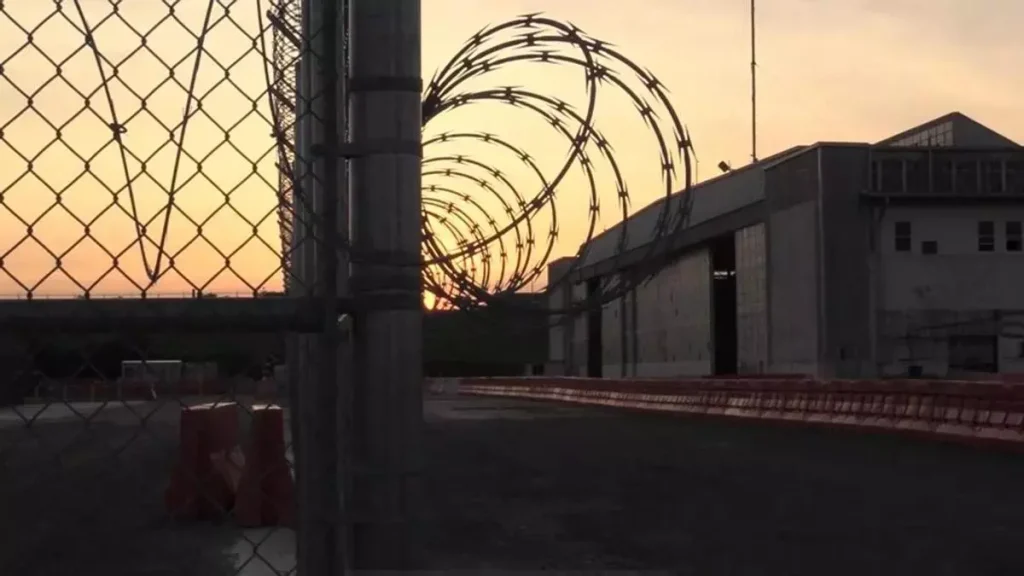
In Guantánamo, the Cubans were confined in military facilities, first in former barracks and later in Camp 6, a prison that for years housed jihadists.

The original plan for these migrants, detained in the United States last year, was for them to be transported from Guantánamo to a U.S. airport, probably in Puerto Rico, and then sent on to Havana, something that ultimately did not materialize.

The main obstacle is the severe restrictions on flights from the base to the rest of the country. For one of these men to reach Cuban soil, he would first continue reading

have to fly to a U.S. city and from there board another plane to Cuba.

The Department of Homeland Security authorities have not publicly explained why these Cubans were selected

For now, Department of Homeland Security authorities have not publicly explained why these Cubans were selected to be sent to Guantánamo, nor why they were returned to Mississippi, in the midst of a process described by critics as a costly political spectacle.

“The fact that the Trump Administration sent dozens of Cubans to Guantánamo for weeks, only to then bring them back to the United States, reveals the absurdity of the government’s Guantánamo policy,” said Lee Gelernt, an attorney with the American Civil Liberties Union, quoted by The New York Times. “Quite simply: it is political theater designed to scare immigrants.”

From the Cuban side, there were no official statements from the government, nor were there visible efforts to speed up their return.

The NYT suggests that the Cubans may be trapped in a political standoff between the two governments, at a time when the Trump Administration has also intensified its pressure on Havana, including the U.S. oil squeeze.

The migration operation that took the Cubans to Guantánamo stemmed from an order signed by President Trump

The migration operation that took the Cubans to Guantánamo stemmed from an order signed by President Trump in January 2025, instructing that the base be prepared to receive up to 30,000 deportees. A year later, the actual number is far from that goal. According to The New York Times itself, only 780 people have passed through the base under this scheme, without the U.S. government demonstrating that most had criminal records.

In this regard, CBS reported on Monday that six out of seven migrants detained by ICE in the first year of the current Donald Trump Administration have no history of violent crime, based on a Department of Homeland Security (DHS) document.

In addition, nearly four out of ten detainees held by ICE had no criminal record at all, and some were only accused of civil immigration offenses, such as living illegally in the United States or overstaying their permitted time in the country.

It was also reported on Monday that at least two migrants have been infected with tuberculosis and another 18 with COVID-19 at Camp East Montana in El Paso, Texas, which is considered the largest migrant detention center in the United States, according to The Texas Tribune.

Reports of these infections come a week after the United States closed another detention center—the only one that holds migrant families, also in Texas—due to a measles outbreak.

Translated by Regina Anavy

____________

COLLABORATE WITH OUR WORK: The 14ymedio team is committed to practicing serious journalism that reflects Cuba’s reality in all its depth. Thank you for joining us on this long journey. We invite you to continue supporting us by becoming a member of 14ymedio now. Together we can continue transforming journalism in Cuba.

Panic Spreads Among Canadians As All Flights to Cuba Are Cancelled

Airlines commit to repatriating thousands of tourists stranded on the island due to the suspension of fuel supplies to aircraft


Despite the decline, Canadian tourists remained the main nationality travelling to Cuba. / 14ymedio

14ymedio bigger“It’s total chaos.” That’s how the owner of a travel agency in Lamèque, in the east of the country, described the situation of Canadian tourists in Cuba on Monday. “We didn’t think it would come to this, but the worst nightmare happened last week when we started getting calls from customers who said they had seen on social media that hotels were closing,” said agent Lisette Cormier-Noël in an interview with local broadcaster Radio-Canada.

As he explained, Air Canada announced to workers in the sector on Friday that some flights would be cancelled, and the reaction was unstoppable. “People were calling us; it was total panic. ‘What do we do? Should I go? Shouldn’t I go?'” Things got worse on Monday after Cuba issued a NOTAM (Notice to Airmen) explaining that there would be no jet fuel for international flights for at least a month. All Canadian operators have already cancelled the high season and beyond.

Air Canada’s announcement of cancellations – stating that it was prepared to repatriate some 3,000 tourists – by 1 May was followed hours later by Air Transat (until 30 April) and WestJet and Sunwing (both until 25 April).

Air Canada’s announcement of cancellations – stating that it was prepared to repatriate some 3,000 tourists – until 1 May was followed hours later by Air Transat (until 30 April) and WestJet and Sunwing (both until 25 April).

The first of these began with a more optimistic message. Despite being forced to cancel two flights on Monday, to Holguín and Varadero, Air Canada’s initial reaction was to state that it intended to maintain its service. Within a few hours, there was a change of heart. “Due to the shortage of jet fuel announced by the Cuban authorities and the recent developments in the situation, Air Transat is temporarily suspending all flights to Cuba until continue reading

30 April 2026. Air Transat will contact all affected customers directly. We understand how important your travel plans are and sincerely apologise for this disruption,” the company said on its website shortly after 8:30 p.m.

The airline said that those who had planned to travel to the island on the affected dates will receive a full refund, while those who are stranded in Cuba will be repatriated in the coming days under a plan yet to be finalised. “We understand that this situation can be worrying and we want to assure you that our top priority is to get you home,” they stressed.

For their part, WestJet and Sunwing – both belonging to the same group – stated this morning that operations would continue. “All flights will carry sufficient fuel to ensure a safe departure without relying on local fuel availability. At this time, there are no safety concerns for our guests.” But they also changed their minds.

“To ease pressure on local resources, starting today, WestJet will depart Canada with empty aircraft to support the organised return of travellers currently on holiday in Cuba,” the airline wrote in a statement in the evening.

The situation is not surprising. Canadian operators have released a list of the hotels they work with that are affected by the closures in order to save resources. Three of them are in Cayo Santa María (Valentin Perla Blanca, Sol Cayo Santa María and Melia Buenavista), five in Cayo Coco (Iberostar Origin Playa Pilar, Gran Muthu Imperial Cayo Guillermo, Iberostar Origin Daiquiri, Tryp Cayo Coco and Hotel Mojito), one in Varadero (El Patriarca) and another in Holguín (Gran Muthu Ensenada).

In addition, tour operators have had to organise a flexible booking and cancellation plan that allows travellers to reschedule their trip or change their destination with financial assistance. “At least they have implemented measures to ensure that customers do not lose their money,” said Cormier-Noël, who recognises a much worse situation: that of the citizens. “There are people who have no electricity, no food and no drinking water,” he admits.

On social media, travel agents are overwhelmed and ask customers for patience as hundreds of customers try to contact them without success. Requests for patience and thanks for it alternate with complaints against Donald Trump – whom they accuse of preventing oil from reaching the island – and apologies to Cubans. “I am devastated for all of us who love Cuba and have no idea how to support the people,” said one customer. “If the airlines are flying, no one should cancel. Cuba needs us now more than ever,” said another, before learning of Air Transat’s final decision.

“I am devastated for all of us who love Cuba and have no idea how to support the people,” said one customer.

And yet there are those who, despite everything, remain ignorant of the geopolitical context. “We’re leaving tomorrow morning and I’m really looking forward to it,” Eric and Francine, a Canadian couple, told Radio-Canada before the cancellation of all flights was announced. The couple travel to the island every year, which means they are among the 754,010 tourists who chose the island from Canada in 2025, the main nationality, although 12.4% less than the previous year. In the first two months of the year alone, Cuba welcomed 176,611 Canadians – 88,980 in January and 87,631 in February – although this was already significantly lower than the same period last year, when there were 261,009. The number of tourists currently in Cuba has not been disclosed, and it is not known exactly how they will return home, but there are thousands scattered across various parts of the island.

These figures have been affected by warnings from the Canadian government, which in October 2023 raised its travel alert for Cuba from green to yellow – the second level of risk out of five possible levels – and just last week warned that “the situation is unpredictable and could worsen, affecting the availability of flights at short notice”. However, Eric and Francine remained undeterred yesterday. “We’re not too concerned about the oil shortage. It’s a bit stressful to think about whether or not we’ll have to return. But whatever happens, happens. And we’ll come back if we have to. It’s not the end of the world,” they said. Before the measures announced at the last minute were, surely, the end of their holiday.

Translated by GH

____________

COLLABORATE WITH OUR WORK: The 14ymedio team is committed to practicing serious journalism that reflects Cuba’s reality in all its depth. Thank you for joining us on this long journey. We invite you to continue supporting us by becoming a member of 14ymedio now. Together we can continue transforming journalism in Cuba.

Cuban Bishops Cancel Their Trip to the Vatican Due to a Lack of Jet Fuel for Airplanes

The meeting scheduled with Pope Leo XIV will not take place because of the risk of being unable to return to the Island

Like the prelates, many travelers are wondering what to do about their trips to Cuba. / EFE

14ymedio bigger14ymedio, Havana, February 10, 2026 – The Cuban Conference of Catholic Bishops has canceled the trip to the Vatican it had announced for February 16, due to the possible mass cancellation of flights to the Island caused by the critical fuel shortage. They announced their decision on Sunday, one day after the Cuban government stated that, starting February 9 and for an entire month, the country would not have enough jet fuel to refuel aircraft arriving on the Island.

The prelates’ visit was the traditional Ad Limina Apostolorum, during which every five years they present the Supreme Pontiff with a report on the situation of their dioceses, but on this occasion it had raised many expectations. First, because it would have been the first meeting with the new pope, and second, because of the situation in Cuba, under pressure from the United States. Pope Leo XIV himself expressed his concern about Cuba last week from St. Peter’s Square and called on both countries to engage in “sincere and effective dialogue.”

The Cuban bishops themselves had warned that, over the past six months, the country’s situation has deteriorated

The Cuban bishops themselves had warned that, over the past six months, the country’s situation has deteriorated and that anguish and hopelessness have spread among the population. It was therefore expected that they would take directly to the Vatican a message about the seriousness continue reading

of the social and economic scenario the Island is going through. There was also an expectation within the Church that the meeting would help strengthen a more active role of mediation and international accompaniment, as has occurred at other times, when the Catholic Church in Cuba has taken part in humanitarian efforts, in processes leading to the release of political prisoners and in channeling aid through Caritas.

Like the prelates, many travelers are wondering what to do about their trips to Cuba. There are currently about 4,000 Russian tourists on the Island, so Russian and Cuban authorities are in talks. Some airlines, such as Air Canada, have canceled all their flights to Cuba, while others, like Iberia and Air Europa, have sought alternatives such as refueling in the Dominican Republic to maintain their routes to Cuba. In any case, the outlook is uncertain, and embassies such as those of Sweden, Spain, Mexico, and the United States have issued alerts to their citizens due to the deterioration of living conditions on the Island.

Translated by Regina Anavy

____________

COLLABORATE WITH OUR WORK: The 14ymedio team is committed to practicing serious journalism that reflects Cuba’s reality in all its depth. Thank you for joining us on this long journey. We invite you to continue supporting us by becoming a member of 14ymedio now. Together we can continue transforming journalism in Cuba.

The Regime Prohibits Lady in White Leticia Ramos From Entering Cuba, Her Country of Residence

IAPA condemns arrests of Ernesto Medina and Kamil Zayas, members of El4tico project

Cuban activist Leticia Ramos at Miami Airport, Florida, on Monday. / Facebook/Javier Díaz/Captura

14ymedio bigger14ymedio, Miami, 9 February 2026 — Lady in White Leticia Ramos was forced to return to the United States on Monday after the Cuban regime denied her entry to the island. The activist, who had travelled to Cuba accompanied by her mother, whom she was unable to say goodbye to, arrived at Miami Airport (Florida) without her suitcase, which had been confiscated in Havana, and was visibly upset. “It’s unfair that they won’t let me into my own country, that they treat you like you’re an animal, a nobody, that you have no rights,” she commented to several media outlets waiting for her at the terminal.

In that same impromptu appearance, she said that upon arriving in Havana, immigration authorities sent her “to a small room” and told her she had “problems” with her documents, which she denied. “If I had had problems with my documents, the American government would not have let me through immigration,” she explained.

According to her account, she had a heated “exchange of words” with the State Security officers who attended to her, which escalated to the point where they threatened to sedate her if she did not “shut up”. continue reading

“They didn’t even let me kiss my mother goodbye,” said the activist, on the verge of tears. “That’s something you have to experience; I’m still in a lot of pain.”

After being informed that she would not be allowed to enter her country, Ramos asked to say goodbye to her mother, Amada Rosa Herrería, who at 86 is the oldest Lady in White in the opposition organisation, but she was not allowed to do so. “They didn’t even let me kiss my mother goodbye,” said the activist, on the verge of tears. “That’s something you have to experience. I’m still in a lot of pain,” she added.

The political police also prevented her from taking her belongings with her. “They took everything,” she complained, pointing to her handbag and saying, “This is all I have. They didn’t let me take my luggage. It was very frustrating, very difficult and very hard.”

When asked why she wanted to return to the island, given the critical fuel shortage that is forcing the government to take drastic measures to save fuel, Ramos said: “Anyone who knows me knows that I have wanted to return for days. I want to be in my country for whatever happens, I want to be part of that change, of that freedom we so long for.”

After nine years of restrictions, unable to leave the island, the Lady in White received a five-year humanitarian visa last year to seek treatment in the US for health problems. “I was here for treatment and, thank God, I have improved a lot,” she also told reporters. “If I had stayed in Cuba, I might not be telling this story now, because there they gave me a different diagnosis.”

“I want to be in my country for whatever happens, I want to be part of that change, of that freedom we so long for.”

However, she reiterated her desire to return to her country, refusing to use the word “exiled”. “I am not going to seek asylum or refuge,” she said. “I am going to demand and protest for my right to return to my country, because that is where I am going to live.”

Ramos is convinced that “change is coming” and stated that “they”, referring to the regime, are trying by all means to prevent anyone who could be an obstacle to them on the island from entering.

In the midst of an unprecedented energy crisis in the country, the regime has responded by stepping up repression. One example was the operation carried out by the police and State Security last Friday in Holguín to arrest Ernesto Medina and Kamil Zayas, members of the independent digital project El4tico.

The arrests of these young people were denounced on Monday by the Inter-American Press Association (IAPA), which stated that the arrests constitute “a new violation of the human right to freedom of expression” and called for “the immediate release and cessation of persecution against those who peacefully exercise their right to inform, express their opinions and promote critical thinking on the island”.

“Repression is not a good backdrop for negotiations.”

For its part, the Cuban Human Rights Observatory (OCDH) also condemned in a statement the repression of the founders of El4tico, as well as the ongoing harassment of Berta Soler, leader of the Ladies in White.
“The repression of freedom of expression, demonstration and religion must cease,” urged the Madrid-based NGO. “Repression is not a good backdrop for negotiations. Cuba can no longer be a prison island. International solidarity is essential to stop this tyranny now.”

In its most recent report, corresponding to January 2026, the OCDH recorded at least 390 repressive actions against the civilian population, including 42 arbitrary detentions, 112 police raids on homes, 85 threats and 78 police summonses. This upturn, the organisation concludes, “reflects the regime’s hysteria in the face of the economic and social crisis”.

Translated by GH

____________

COLLABORATE WITH OUR WORK: The 14ymedio team is committed to practicing serious journalism that reflects Cuba’s reality in all its depth. Thank you for joining us on this long journey. We invite you to continue supporting us by becoming a member of 14ymedio now. Together we can continue transforming journalism in Cuba.

Air Canada Cancels Its Flights to Cuba Due to Fuel Shortages

Spanish airlines Iberia and Air Europa announce technical stops to refuel in the Dominican Republic

Air Canada operates, on average, 16 weekly flights to four destinations in Cuba / Facebook

14ymedio bigger14ymedio, Havana, February 9, 2026 – The Canadian airline Air Canada suspended its flights to Cuba this Monday due to the country’s critical shortage of jet fuel. In a statement, the company said the measure will directly affect around 3,000 passengers stranded on the island, for whom it will send empty planes to transport them back to their country.

“Air Canada made this decision following notices issued (NOTAMs) regarding the unreliability of aviation fuel supplies at Cuban airports,” the statement said. The company added that, as of February 10, aviation fuel will no longer be available for purchase at the island’s airports. “For remaining flights, Air Canada will carry additional fuel and make technical stops to refuel on the return journey if necessary,” it explained.

The message from Cuban authorities to pilots and air traffic controllers specifies that the jet fuel shortage affects all of Cuba’s international airports. The nine affected terminals are José Martí in Havana; Juan Gualberto Gómez in Varadero; Jaime González in Cienfuegos; Abel Santamaría in Santa Clara; Ignacio Agramonte in Camagüey; Jardines del Rey in Cayo Coco; Frank País in Holguín; Antonio Maceo in Santiago de Cuba; and Sierra Maestra in Manzanillo. The notification is valid for one month, from February 10 through March 11. continue reading

The jet fuel shortage affects all of Cuba’s international airports.

As a result, the airline reported that flights to Holguín and Santa Clara are canceled “for the remainder of the season,” while flights to Varadero and Cayo Coco, which operate year-round, are currently suspended “with a tentative restart, pending review, on May 1.”

In total, Air Canada operates an average of 16 weekly flights to four destinations in Cuba from Toronto: four weekly flights to Cayo Coco, two to Holguín, four to Varadero, and one weekly flight to Santa Clara; and from Montreal, three weekly flights to Cayo Coco and two to Varadero.

Other Canadian airlines have issued their own travel alerts or implemented more flexible cancellation options. Air Canada, WestJet, Air Transat, and Sunwing announced rebooking or cancellation options without penalties. In its advisory, WestJet cited “power outages” as the reason for an alert covering all flights to and from Cuba from Sunday through February 26, 2026.

From Spain, Iberia and Air Europa reported on Monday that their flights traveling from Havana to Madrid will require a technical refueling stop in Santo Domingo, Dominican Republic. The measure mirrors what has occurred in similar previous situations in Cuba—both during the Special Period in the 1990s and during temporary “bottlenecks” in recent months—when airlines addressed the problem by rerouting departures from the island with extra stops to refuel in Mexico or the Dominican Republic.

However, the measures taken by Canada are the ones that hit the country hardest and could ultimately bring down one of the sectors the government clings to. Tourism from that country—the island’s historically largest source of visitors—has improved slightly in recent months but continues to register significant losses compared to the past. In 2025, 754,010 Canadian visitors were recorded, 12.4% fewer than the previous year, and a tragedy when compared to the 1.3 million in 2015. The situation is relatively similar to Russia’s, where a massive advertising push sought to reach 200,000 travelers after recent successes, but fell to a paltry figure: 131,882, 29% fewer than in 2024.

Cuba closed 2025 with just 1,810,663 international visitors, far from the 1.9 million forecast in Parliament in mid-December and even worse compared to plans made a year earlier. The projection then was 2.6 million, 30.3% more than what was ultimately achieved.

The U.S. oil squeeze has also led governments in the Americas and Europe to issue warnings to potential travelers. The messages follow a similar pattern, urging caution due to worsening shortages of electricity, fuel, and basic necessities—including food, water, and medicines—which can also affect tourist facilities.

These announcements come amid complaints on social media that several hotels have been closed and their guests relocated to other establishments.

Against this backdrop, Kremlin spokesperson Dmitry Peskov said Monday that Russia is seeking solutions together with Cuban authorities and will do what it can to help address the airport crisis and facilitate the return of Russian tourists. “Through diplomatic channels as well as other avenues, we maintain intense contacts with our Cuban friends,” Peskov said during his daily phone briefing, noting that “the situation in Cuba is truly critical.”

Translated by Regina Anavy

____________

COLLABORATE WITH OUR WORK: The 14ymedio team is committed to practicing serious journalism that reflects Cuba’s reality in all its depth. Thank you for joining us on this long journey. We invite you to continue supporting us by becoming a member of 14ymedio now. Together we can continue transforming journalism in Cuba.

Up to 20 Years in Prison Could Await Cuban Ballplayer Yasiel Puig for Illegal Betting

The former Los Angeles Dodgers player is accused of perjury and obstruction of justice in the United States

Yasiel Puig in an image from his time playing baseball in South Korea. / Instagram

14ymedio bigger14ymedio, Havana, February 8, 2026 – Yasiel Puig, also known as El Caballo Salvaje (The Wild Horse), was found guilty of obstruction of justice and perjury in an illegal betting case. The Cuban ballplayer faces up to 20 years in prison, with his sentencing scheduled for May 26.

The charges against Puig stem from a videoconference interview with investigators in January 2022, during which he allegedly lied about his involvement in sports betting.

“Authorities say that he denied having bet with Wayne Nix, the ringleader of an illegal gambling network, despite evidence showing that he placed 899 bets on American football, basketball, and tennis events between July and September 2019,” journalist Francys Romero reported.

“It’s sad. From a sporting standpoint, Puig is among the 10 most talented ballplayers of the last 10 or 15 years,” Romero said. The player had “an innate ability to make things happen” on the field. “It shouldn’t have ended this way,” he lamented.

During the trial, which lasted 13 days in a Los Angeles court, Puig’s lawyers tried to prove his innocence, arguing that there had been “a misunderstanding during the interview, poor handling of the language, and issues of attention deficit disorder,” emphasized the journalist, who has closely followed the case.

However, testimony from Major League Baseball officials and from Donny Kadokawa, a baseball coach in Hawaii through whom Puig placed his bets, proved decisive in determining the guilt of the native of Cienfuegos. continue reading

“I want to clear my name,” Puig said in a statement in 2022. / Instagram

In addition, the court considered Puig’s breach of a plea agreement with prosecutors from August 2022. The ballplayer had agreed to one count of making false statements and to pay a fine of at least $55,000. Puig acknowledged a total of $280,000 in losses from illegal bets placed through a third party, former minor-league pitcher Wayne Nix.

“I want to clear my name,” Puig said in a statement months later. “I never should have agreed to plead guilty to a crime I didn’t commit,” he added at the time. Three years later, the defendant posted a statement on the platform X asserting: “This story is not over yet, and they didn’t tell you the whole story the first time.”

Authorities clarified during the trial that Yasiel Puig’s name emerged from a 2017 investigation into Wayne Nix for money laundering and concealing income from the Internal Revenue Service.

Nix pleaded guilty to one count of conspiracy to operate an illegal sports betting business and one count of filing a false tax return. He is awaiting sentencing.

Puig played seven seasons with the Los Angeles Dodgers, Cincinnati Reds, and Cleveland Guardians, and also spent time playing baseball in South Korea, Mexico, the Dominican Republic, and Venezuela.

Translated by Regina Anavy

____________

COLLABORATE WITH OUR WORK: The 14ymedio team is committed to practicing serious journalism that reflects Cuba’s reality in all its depth. Thank you for joining us on this long journey. We invite you to continue supporting us by becoming a member of 14ymedio now. Together we can continue transforming journalism in Cuba.

‘Compacted’ Hotels To Regroup the Few Tourists and Deserted Streets: This Is What Cuba Looks Like Without Fuel

Many travelers are left stranded by the suspension of most national bus routes

The regime has begun closing hotels and relocating tourists to other facilities. / 14ymedio

14ymedio bigger14ymedio, Havana, February 8, 2026 – Nearly empty streets, with barely a few cars moving about, and hotels where only a handful of windows remain lit in the Havana night. That is the image captured by 14ymedio reporters following the measures announced by the Cuban government to confront the current crisis. The Island’s economy, which had been in free fall long before, is now bordering on total collapse after the loss of its Venezuelan benefactor and the entry into force of an executive order by U.S. President Donald Trump that blocks the arrival of oil to the country.

The package of decisions, presented as a “contingency plan,” has had an immediate impact on daily life. The drastic reduction in fuel consumption has emptied the streets, limited transportation, and reinforced the sense of paralysis. The capital, traditionally the last stronghold to feel the harshest cutbacks, now appears plunged into a gloom the rest of the country has endured for years.

Many passengers who traveled to other provinces to visit family members have been left stranded, uncertain about how or when they will be able to return home. This is the case of Amalia, a resident of Havana who was in Sancti Spíritus, in the center of the Island. In the WhatsApp group where she was trying to secure a seat, the bus driver warned that if he could not fill the available seats, the trip would be canceled. “There’s no fuel in all of Santa Clara,” he wrote. “If we don’t leave today, it’s possible we won’t be able to leave at all.”

One of the hardest-hit sectors is tourism, for years presented as the engine of the economy. The regime has begun closing hotels and relocating tourists to other facilities, an unprecedented decision in the middle of the high season. Vice Prime Minister Óscar Pérez-Oliva Fraga spoke on state television about “compacting” the tourism infrastructure to reduce energy consumption, but without offering clear details. In practice, sources in the sector anonymously confirmed to EFE the closure of facilities and the transfer of visitors starting this Saturday, especially in Varadero and the northern cays.

The package of decisions, presented as a “contingency plan,” has had an immediate impact on daily life. / 14ymedio

The measure directly affects foreign hotel chains operating on the Island, including Spain’s Meliá and Iberostar, as well as Canada’s Blue Diamond Resorts. The scene of half-empty hotels and darkened hallways contrasts with the official discourse continue reading

that insists on shielding tourism as a strategic sector, even at the expense of other areas of the economy.

The figures confirm that the problem is not temporary. In 2025, Cuba closed with barely 1.8 million international visitors, the worst figure since 2002 if the pandemic years are excluded. Hotel occupancy fell to 21.5% in the first half of the year, and the main source markets, Canada and Russia, also declined. Far behind are the 4.7 million tourists reached in 2018 during the thaw with the United States.

The energy crisis is the immediate trigger of this new collapse. Since mid-2024, constant breakdowns at obsolete thermoelectric plants and the lack of hard currency to import fuel have pushed the system to the brink. Added to this was the geopolitical blow in January from the U.S. military operation in Caracas, which cut off a vital supply for Havana, and the subsequent executive order by Donald Trump threatening sanctions against countries that sell oil to the Island.

To face this scenario, the government has turned to a familiar manual: fuel rationing, prioritization of telework, hybrid classes at universities, and the suspension of scheduled surgeries in hospitals—a sign of how far the energy crisis has already reached into essential services. This is accompanied by an explicit appeal to Fidel Castro’s “guidelines” during the Special Period. His successor in power, Miguel Díaz-Canel, even revived the concept of “option zero,” that survival plan designed for a scenario of “zero oil.”

The economy is exhausted, the productive fabric devastated, and the population lacks the resilience it had in the 1990s. / 14ymedio

However, more than three decades later, the context is different and, in some respects, more fragile. The economy is exhausted, the productive fabric devastated, and the population lacks the resilience it had in the 1990s. The result is a society subjected to forced contraction, where every “temporary” measure is perceived as the prelude to something worse.

Adding to this panorama is another collapse: that of the Ticket platform, used for fuel distribution, which can only be purchased with dollars at Cimex service stations. The inclusion of new virtual waiting rooms caused congestion that left thousands of users without clear information or effective access to the service. Informal channels are now trying to organize the chaos, confirming that even the State’s digital solutions buckle under the magnitude of the crisis.

The video of semi-dark hotels in Havana is the most faithful representation of a country entering survival mode, where tourism shrinks, transportation disappears, and night advances over buildings that once symbolized a luxury reserved for the privileged. Against the official discourse of resilience and opportunity, reality shows that collapse is no longer merely announced. It is seen and felt on every street of the Island.

Translated by Regina Anavy
____________

COLLABORATE WITH OUR WORK: The 14ymedio team is committed to practicing serious journalism that reflects Cuba’s reality in all its depth. Thank you for joining us on this long journey. We invite you to continue supporting us by becoming a member of 14ymedio now. Together we can continue transforming journalism in Cuba.