“You can’t bring down a system like this with old pots and dented ladles, it’s impossible,” laments Alina Fernández.
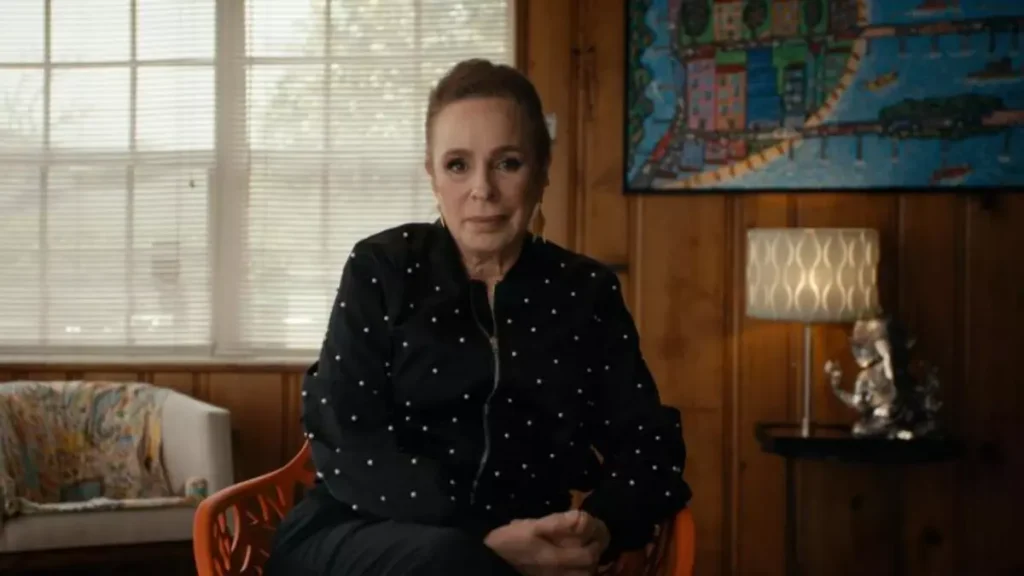
 Alina Fernández was 20 years old when she dared to ask her father, Fidel Castro, why the police were arresting artisans who traded in Cathedral Square. “Why? Explain to me why these people, who are doing us a favor, have to be arrested,” she said in the first argument she remembers with the leader. She soon realized that “conversations with him were useless. He had a monologue; he liked to listen to himself, and of course, he wasn’t someone who would accept being questioned.” The leader told her that the State could never lose its monopoly on trade. “That’s what Cuba is to this day,” she laments.
It’s one of the many small anecdotes that the daughter of Fidel Castro and Naty Revuelta’s shared with the newspaper El País in an interview where these brief glimpses reveal far more about her paternal family than her answers—direct, undoubtedly—to more obvious questions. Radically critical of Castroism since childhood, Fernández expresses her views on the current political climate, though she doesn’t hide her fear that things might not end well.
“I dare to have hope, though I also have the feeling that I’ve had hope many times before and had to swallow it. What is lacking is change. By any means necessary. People in Cuba need to breathe, to enter the 21st century, to give their children a life, they need hope, and freedom is needed for all of this,” she explained. Castro’s daughter is speaking from Miami, where she has lived for years, and where the documentary La hija de la Revolución [The Daughter of the Revolution], in which she appears, was recently presented at the film festival.
“What is needed is change. By any means necessary. People in Cuba need to breathe, to enter the 21st century, to give their children a life, they need hope, and freedom is needed for all of this.”
Fernández speaks about how he sees the island at this time. “If this critical situation of no electricity continues, if this drags on, I don’t know what might happen,” she wonders. In her opinion, a “push” will be needed to topple “a dictatorship” that she considers entrenched in its position, even more so than her father would be if he were alive today. “You can’t bring down a system like this with old pots and dented ladles, it’s impossible.”
“I see that throughout this whole time, there hasn’t been the capacity to admit that the battle was lost. I don’t know if Fidel would have been able to say, well, indeed, I lost the battle, and I’ll see what benefit I can gain from an orderly and elegant defeat. I imagine that would have been the position, not the entrenched one they’re currently taking,” she reflects. She confesses that she doesn’t know if her paternal family has more power than that granted to them by Gaesa, Cuba’s military conglomerate, but she is convinced that the current president’s resignation is irrelevant. “Focusing on Díaz-Canel, who is a person who has borne the brunt of the unpopularity of this madness, doesn’t solve any problems.”
Alina Fernández states that she has never had any contact with the Castros, although she reveals that this is an absolute constant within the family. “One of Fidel’s strangest characteristics as a person was that he didn’t want his children to associate with the rest of the family, and he kept them isolated until they grew up and were able to leave the nest a little, but we didn’t have much contact,” she recounts. Things went even further, as even cousins weren’t allowed to meet. “One day, Raúl’s son (now General Alejandro Castro Espín) and one of Fidel’s sons happened to be together, and immediately there was an order that they couldn’t interact. A very peculiar thing, and also, for me, inexplicable,” she adds.
In Fernández’s opinion, as well, the revolutionary leader was particularly determined to ensure that no one overshadowed him, which is why it was her uncle—not her father—who unsuccessfully tried to promote Fidel Castro’s son as a deputy. She confesses that, although she has no contact with Sandro Castro, she is often asked about him, and she believes—from a generational perspective—that his message is valid. “I think that anything said about the need for change is useful. However you say it, however timidly, or with a good or bad joke, it’s important,” she says.
Fernández, who calls her father a “narcissist,” makes it clear that Castro treated the family the same way he treated the country. Despite their irregular relationship, with relatively frequent visits but little enthusiasm, the leader had sudden bouts of paternalism that he resolved through authoritarian means. This was the case with her wedding, when she was still young. “He was hurt, he felt guilty about having a 16-year-old daughter getting married, practically a child. (…) He stipulated that if I postponed the wedding, he would take care of everything. It was a rather modest wedding, considering it was being subsidized by the king of Havana. I waited a few months, finally turning 17, and he went and signed the authorization for the wedding. Even though he wasn’t my legal father. He was whatever he wanted to be,” she recalls.
“It was a rather modest wedding considering it was subsidized by the King of Havana. I waited a few months, finally turning 17, and he went and signed the authorization for the wedding. Even though he wasn’t my legal father. He was whatever he wanted to be.”
She also states that she never wanted to use his surname, even though her mother—who was always in love with Fidel—insisted on it to legitimize her. Although Castro consented, he didn’t show much interest, and nothing came of it. What the late leader did do was modestly contribute to the household’s food supply. “My mother was so strict that she said buying an egg on the black market wasn’t revolutionary. Everyone was living off the black market, but my mother resisted; she tried to adapt to what the Revolution provided. Fidel, at some point, started to help occasionally with a little milk, or something else.”
Fernández severed ties with her biological father for good after her daughter was born. “In the end, he was a terrible burden. When my daughter was born, I asked him not to visit her at home; every visit from him caused a commotion. When I was little, when he frequented my house, people would come with letters for me to give to him; that was a sad experience too. People knew he visited us and would deliver letters with very sad stories, and I would try to give them to him. I read many tragedies,” including those from families of those executed who were asking for permission to leave the country.
She believes that those primarily responsible for the tragedy are dead, but many accomplices remain, especially those resentful of the exile community, which provides so much assistance to the country. She maintains that the entire nation, both those on and off the island, will have to heal from these wounds. “At some point, we will have to reach an agreement in order to coexist, to rebuild. There is too much pain.”
______________________
COLLABORATE WITH OUR WORK: The 14ymedio team is committed to practicing serious journalism that reflects Cuba’s reality in all its depth. Thank you for joining us on this long journey. We invite you to continue supporting us by becoming a member of 14ymedio now. Together we can continue transforming journalism in Cuba.