“Requesting Voter Certification Is Not Playing Into the Hands of the Cuban Dictatorship”

Manuel Cuesta Morúa / EFE

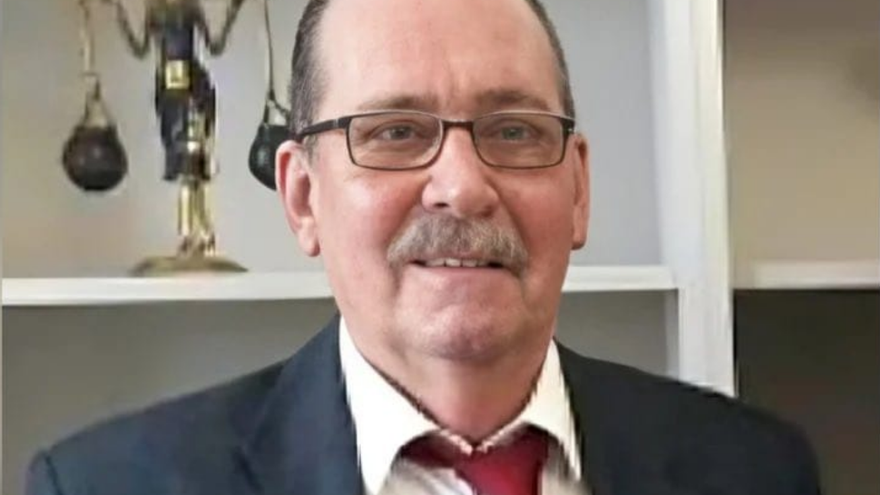
Manuel Cuesta Morúa talks to 14ymedio’s Reinaldo Escobar about Parliament’s rejection of an amnesty law for political prisoners

14ymedio bigger14ymedio, Manual Cuesta Morúa/Reinaldo Escobar,  Havana, 21 February 2024 — The Cuban Parliament recently rejected a request to process an amnesty law promoted by dozens of relatives of political prisoners. From that request, which the National Assembly classified as “inadmissible,” a broad debate was generated about the relevance or not of appealing to the Cuban regime’s own laws to promote change on the Island.

Manuel Cuesta Morúa talks about this with this newspaper. The opinion of this veteran dissident, based on the Island, addresses several of those aspects that we share with our readers.

Reinaldo Escobar/14ymedio: To legitimize or not to legitimize? Can you live under an authoritarian regime and refuse to accept all its official regulations and protocols?

Manuel Cuesta Morúa: It might seem cynical to say that the process of legitimizing dictatorships begins with the acceptance of the institutions that manage our existential or social condition. The misnamed “supply book” [ration book], the identity card and the passport are among those institutions through which the dictatorship regulates, controls and limits us, but which we accept. And not because we want to, but for two reasons: dictatorships are possible only if they institutionalize all social life. They are also obliged to incorporate language and certain democratic tools.

The misnamed “supply book” [ration book], the identity card and the passport are among those institutions through which the dictatorship regulates us.

RE/14ymedio. Why do they have that obligation?

MCM. Otherwise they have a serious problem of both internal and external legitimation. They have to appear to themselves and to others. For this reason, the legal and constitutional spaces that are left to the population so that they can become citizens are only conditions, almost inevitable obligations that dictatorships impose on themselves in order to be able to cross with a certain impunity the field and the game of appearances.

RE/14ymedio. So is it like a game of mirrors?

MCM. Exactly. They are not conditions that they impose on us, but rather institutional realities that they have no choice but to assume if they want to be accepted in some way. The dictatorship imposes some things on us by law, such as Article 5 of the Constitution, and others, the majority, outside continue reading

or manipulating the law.

RE/14ymedio. An example of some of those conditions within the law?

MCM. The requirement to have a voter certification to file a petition before the National Assembly, which may be similar to any other citizen authentication requirement in any genuine democracy. However, in the case of Cuba, this is an excessive barrier. However, it can be skipped if we impose on ourselves the exercise of strong citizenship.

RE/14ymedio. So do you recommend requesting voter certification?

MCM. Yes, I believe that applying for it is a step in our becoming civic citizens. We would not be playing into the hands of the dictatorship, which is not interested in appearance becoming reality, but in ourselves. They don’t even disseminate these legal paths.

RE/14ymedio. Do you think that the regime itself hides the existence of these channels?

MCM. Exactly. Does the Government speak on any radio or television program about laws such as 131, which includes the possibilities of civic responsibility? Do they systematically print the Constitution to distribute it — not sell it — in workplaces or schools?

RE/14ymedio. But wouldn’t using those paths be “playing into the hands” of the regime?

MCM. Judging by the responses to the Varela Project or the proposal for independent candidates in the elections for local People’s Power delegates, the Government did not believe, not even remotely, that it would play into its hands. The test of authenticity of civic alternatives lies in their ability to legitimize themselves, both within their own rules and within the conventional rules of society and the State. The real problem with dictatorships is that they always feel constrained when it comes to the rules of the game.

RE/14ymedio. You are among the promoters of a project that recommends using these paths. At what point is that project right now?

MCM. The process began in 2022 with the help of the Council for Democratic Transition in Cuba and the D Frente platformJulio Ferrer, an independent lawyer, warned us that in March 2020 Law 131 had come into force, which regulates how signatures must be collected for any citizen initiative. A person has to start by going to the National Electoral Council to request certification of their voter status.

As cumbersome as it may seem and be, this is a step forward compared to the time of the Varela Project, when, once the first 11,000 signatures were delivered, the Government demanded the requirement that each signature had to be authenticated before a notary.

Before each incursion of ours, they raised the fence of the requirements to make our civic exercise more difficult.

RE/14ymedio. And have these certifications been achieved?

MCM. Obtaining them has been an odyssey. We start by going to the Municipal Electoral Councils. In some, after consulting with their superiors, they accepted our request and signed a copy as acknowledgment of receipt, others did not. It was all very irregular and that is why we went to the National Electoral Council, first to Ferrer to insist and finally obtain the first voter certification delivered in Cuba. Later, I investigated why the rest of the requests made in different provinces had not been processed.

RE/14ymedio. What did they answer?

MCM. A legal advisor told us that the processing had to be done in each Provincial Electoral Council. That’s what we set out to do, only to find out that it wasn’t at that level either. Before each of our incursions, they raised the hurdle of requirements to make civic exercise more difficult for us. So far, eight voters have received their certification among a dozen applications.

RE/14ymedio. Between criticism from your own side and bureaucratic obstacles from the other, the result seems quite uncertain?

MCM. Our determination is to continue jumping hurdles. From law to law, and from below, that is still the best path.

____________

COLLABORATE WITH OUR WORKThe 14ymedio team is committed to practicing serious journalism that reflects Cuba’s reality in all its depth. Thank you for joining us on this long journey. We invite you to continue supporting us by becoming a member of 14ymedio now. Together we can continue transforming journalism in Cuba.
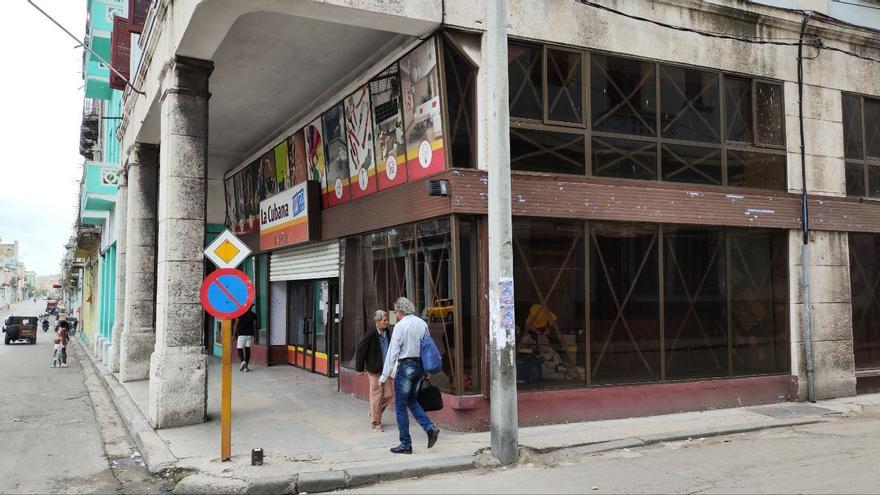
In Search of ‘Feito’ and Cabezon, the Founders of Cuba’s Most Famous Hardware Store

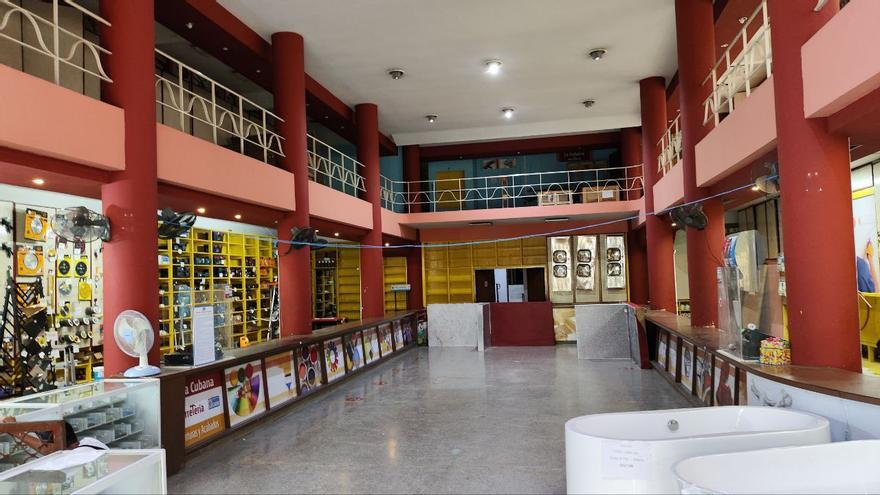
The hardware store is located on the corner of Reina and Lealtad, in Centro Habana. (14ymedio)

14ymedio bigger14ymedio, Havana, 18 February 2024 — No one calls the hardware store on the corner of Reina and Lealtad in Centro Habana by its official name: La Cubana. For all those who know the business, which was in its time the most important of its kind in Cuba, the place is called Feíto y Cabezón. The surnames of its founders, with some slight colloquial variations, transcended the nationalization, the plummet of the store’s offerings and even its reconversion to the current sales in freely convertible currency.

The documentary Cabezones, directed by the writer Luis Enrique Valdés Duarte, resident in Spain, and the actor Alberto Maceo, who lives in Germany, approaches the story of Nicolás Cabezón, a Spanish migrant who arrived on the Island with nothing but the clothes on his back and ended up creating the most famous hardware store in Havana. On February 24, the documentary will premiere at the Zorrilla Theater in Valladolid, Spain, and its filmmakers have responded to questions from 14ymedio. Both the words and the images captured in the short film speak of travel, entrepreneurship, dreams and absurdities, but also of stubborn, extremely “headstrong” people.

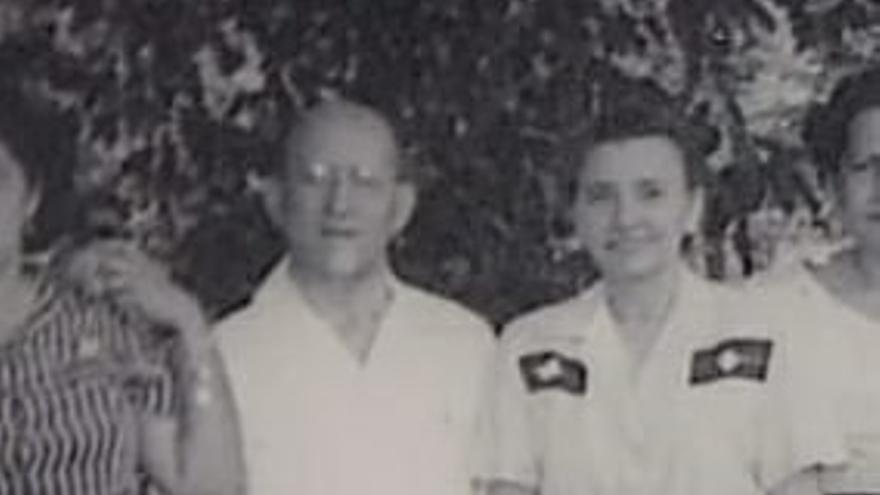
Nicolás Cabezón, in the center wearing glasses, along with his wife, Nena, and his two children, Mari and Pepito on his farm in Havana. (Courtesy)

Question. Screws, washers and nuts. Isn’t this documentary a little far from the topics that both of you have dealt with previously, closer to art, literature and theater?

Answer. In reality, it’s a documentary about memory, emigration, the effort involved in leaving your land and raising your head in another, about injustices and freedom. They are topics that interest us a lot and can be discussed, because they take place among the screws, washers and nuts, as well as between grooves and curtains or on the docks of a shipyard. It is true that we seem to have moved away from our destiny, but we have not betrayed it: this is a documentary about the emotions awakened by all the topics mentioned. continue reading

Q. Where did you begin to unravel the theads of this story? From entrepreneurship to emigration, or did it begin with suitcases and continue towards the business world?

A. Curiously, the reason was in the name of that hardware store. Every time we passed by there we asked ourselves the same thing: why is it called Feíto and Cabezón if it is on Reina and Lealtad?, assuming that perhaps it came from the name of its corner, as was the case with so many Havana businesses. We had a theory that perhaps the hardware owner had those physical characteristics (cabezón means a “big head”) and didn’t mind being called that affectionately. But nothing could be further from the truth.

Several of the descendants of Nicolás Cabezón were interviewed for the documentary. (14ymedio)

One day, now living in Urueña (Valledoid Province) we looked it up on the internet; it wasn’t easy to find something, but we did, and we were surprised: the founder of that store, whose last name was Cabezón, had been born in the next town, which you could even walk to. He had gone to Cuba in the hard years of the Spanish post-war as a poor child. There was a story to tell. There are only three or four inhabitants left in the town, but we managed to locate the descendants of Don Nicolás Cabezón, now older. What they told us, based on their faithful memories, gave substance to the film. They started with the suitcase, yes. And it was all very hard!

Q. Despite the years, the confiscation, the nationalization and the changes, people continue to call the hardware store on Reina Street “Feíto and Cabezón”. Why this popular persistence? Sound of the name or quality of the work they carried out?

A. We believe it’s both. It is striking how many places in Havana have preserved their original name. Reina Street itself is never called by its current name. The same thing happens with certain products and equipment: they have continued to be called after their most prominent and popular brands when they were in Cuba. Anyway, we know that what they built there was an empire through work.

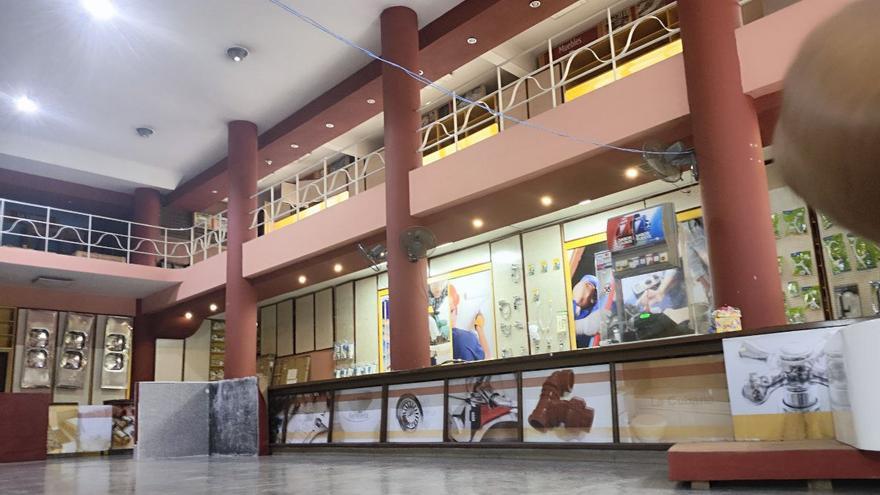
This is what the hardware store currently looks like inside. No one calls by its official name: La Cubana. (14ymedio)

The hardware store became a reference for Havana society. If you couldn’t find something in Feíto and Cabezón, it didn’t exist. The reason is everything: indeed, the name is sonorous and even funny to say. Note that the surname “Feito” doesn’t have an accent on the “i”. It comes from northern Spain and means “done,” but since “Feito” was followed by “Cabezón”, Cubans added that funny accent and have resisted calling the hardware store by its current name. The store was actually called Feito y Cabezón.

Q. What were some of the surprises that appeared during the research for this documentary?

A. The first was that simple accent that changes everything in the name. From there came many others: the great impact the significant prosperity with which, twenty years later, Nicolás returned to his town had on his family; the relationships he had established with the highest strata of Cuban society; his way of traveling… Then, his spectacular loss, so painful and so unfair, after the times he held out his hand to so many people. The greatest surprise was his family, so lucid and kind, with such clear memories. They even remember the name of the ship that brought them back to Spain for the first time. And, finally, his stubbornness, perhaps what we have admired the most: his immense will to stand tall until the end.

Q. What should viewers expect? A documentary focused on the past? Any clues about the Cuban future?

A. Look, categorical knowledge of the past is fundamental for the progress of any nation, for the most accurate understanding of the present and, above all, because it contains, without a doubt, many ways to find the solution to our current problems. We are not the ones to say. José Martí said it more clearly, in a “criticism of society and education”: “The past is the root of the present. We must know what it was, because what was exists in what is.”

On February 24, the film will premiere at the Zorrilla Theater in Valladolid, Spain. (14ymedio)

However, we know that great damage is happening to the Cuban people every day, and that is the biggest key, the main reason to react once and for all.

What the viewer will see, in any case, will be an act of deep respect for these people from the Castile countryside who did not give up, even in the hardest years, in their commitment to maintain their principles, to fight for a better future, to save their dignity, to make their way wherever they went, to face disgrace with their eyes open. It is a round trip: that of any emigrant who one day left everything behind. It is, therefore, a mirror, the mirror of our grandparents’ house in which we have looked at ourselves again. And nothing more!

Translated by Regina Anavy

____________

COLLABORATE WITH OUR WORKThe 14ymedio team is committed to practicing serious journalism that reflects Cuba’s reality in all its depth. Thank you for joining us on this long journey. We invite you to continue supporting us by becoming a member of 14ymedio now. Together we can continue transforming journalism in Cuba.
Anchored in Regla, the Mysterious Sixth Turkish ‘Patana’ Contracted by Cuba Is Called ‘Erol Bey’

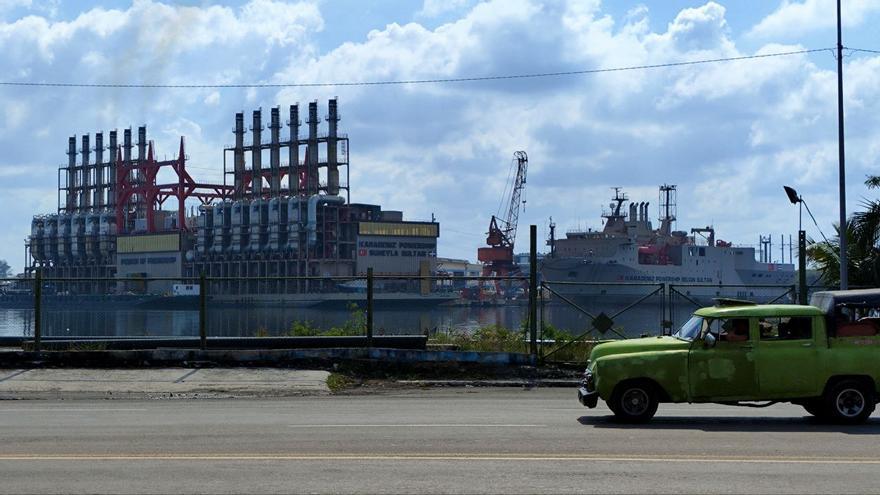
Suheyla Sultan, the most visible Turkish patana in Havana, generates 240 megawatts. (14ymedio)

14ymedio bigger14ymedio, Juan Izquierdo, Havana, 15 February 2024 — Anchored in the inlet of Guanabacoa and protected from the curiosity of habaneros, the exact location of the Erol Bey Turkish floating power plant — commonly called a ’patana’ — with its four chimneys, is not known. Located next to an industrial area, a 1,476-foot esplanade separates it from the Regla generator group to which it seems connected.

The Erol Bey, which appeared on Wednesday as the “patana of Regla,” provides 63 megawatts (MW) to the Electric Union. It is the third ship of the Turkish company Karpowership currently installed in Havana, along with the very visible Suheyla Sultan, with 240 MW, and the Belgin Sultan, with 15 MW. Silos, warehouses and flour mills surround the pier where the Erol Bey is anchored, and it can be reached by Nuestra Señora de la Caridad Street, in the municipality of Regla.

According to the National Office of Statistics and Information (ONEI), the patanas contributed 2,591 gigawatt-hours (GWh) in 2022, which represents 14% of the country’s total generation (18,323 GWh).

The Erol Bay, seen from Havana, is accessible only from the industrial area that surrounds it, something only possible for those who work in the surrounding factories, as a reporter from 14ymedio was able to verify. continue reading

Neither the records of Karpowership nor its project in Cuba, where it installed floating power plants for the first time in 2019, allude to the Erol Bey

The satellite images, on the other hand, clearly show the ship, smaller in size than the Suheyla Sultan, located in the port of Havana, and with four chimneys that, this Thursday, emitted a weak smoke.

Neither Karpowership’s records nor its project in Cuba, where it installed floating power plants for the first time in 2019, allude to the Erol Bey. A report by the Turkish media Deniz Haber Ajansi mentions the acquisition, by Karpowership, of a Norwegian oil tanker manufactured in South Korea, which it called – as an “example of loyalty” – Erol Bey, in honor of the then president of the Maritime Council of Turkey, businessman Erol Yücel.

However, it is not known if this ship, transformed into a patana, is the same one that is anchored in Havana. An argument in favor of this change is that, along with this ship, Karpowership bought another “twin” oil tanker that it did turn into a patana. This is the Esra Sultan, which, in 2023, was in the Dominican Republic. For both ships, the Turkish company paid 14 million dollars.

Maritime tracking applications have not given news of the Erol Bey’s location since 2017.

The Cuban government has been hermetic about the contracting of Turkish floating power plants. To achieve estimate of the cost, this newspaper searched for the information in the Dominican Republic, which contracted for two patanas – including the Esra Sultan – for which it paid 40 million dollars for a duration of 42 months. Applying the same calculation to Cuba, the cost would be 109 million for the same period, or 31 million per year.

However, if Karpowership and Havana share anything, it is the lack of clarity about their transactions, and it is impossible to know how much the Island is paying for them. This is not only an economic issue but also an environmental one. The patanas, as the Cubans in Havana know very well, are pollution bombs.

Immersed in an energy crisis, the country suffers constant blackouts, and its facilities go from breakdown to breakdown. Given the lack of fuel, the regime turns to its allies, who do not stop sending oil tankers to Cuban ports, often at the risk of non-payments.

An emblematic case is Mexico, whose oil company, Pemex, according to the newspaper El País, has accumulated a debt of 106 billion dollars, says the credit rating agency Moody’s.

“Cuba and Mexico have not made public the financing agreement for the more than 5.5 million barrels of oil sent by Pemex to Cuba during 2023, with an estimated market value of 390 million dollars,” University of Texas expert Jorge Piñón explains to this newspaper. The quantities sent in “January and February of this year indicate that the supply of Mexican oil to Cuba will not only continue, but could also increase,” he says.

To prove it, the expert says, there are the trips from Mexico to Cuba of the ships Vilma, Ocean Mariner and Delsa – which  transported 1.1 million barrels in January and February, and the Esperanza, which joins the route. The Esperanza, one of the ships that traveled between Venezuela and the Island, is abandoning its old route in favor of Mexico. “Is this a sign of fewer supplies from Venezuela or a simple rotation of tankers?” asks Piñón.

Another important player in Cuba’s oil energy destination is Russia, whose chancellor, Sergey Lavrov, will visit Cuba soon. The diplomat will have numerous topics of conversation with Havana. Among them, the estimated debt of 566 million dollars for shipments of 7 million barrels of oil during 2022, and 1.6 million in 2023.

From that visit, Piñón concludes, many decisions will come out that will affect the geopolitical balance of the region, in particular of Venezuela and Mexico, with tense elections ahead in 2024, and of Cuba, which depends on its allies to survive.

Translated by Regina Anavy

____________

COLLABORATE WITH OUR WORKThe 14ymedio team is committed to practicing serious journalism that reflects Cuba’s reality in all its depth. Thank you for joining us on this long journey. We invite you to continue supporting us by becoming a member of 14ymedio now. Together we can continue transforming journalism in Cuba.
A ‘Ponchero’ Manufactures Blood Pressure Monitors With Tires To ‘Save Money’ for Cuban Healthcare

Arturo Batista has delivered hundreds of rubber-based automotive parts for blood pressure monitors in Las Tunas hospitals. (Periódico 26)

14ymedio bigger14ymedio, Havana, 31 January 2024 — With truck engine casings  and tire valves, a Las Tunas ponchero (tire repairer) manufactures and repairs blood pressure monitors. Given the lack of resources and the impossibility of replacing equipment, the hospitals of the province have begun to order the material from Arturo Batista, and now they give him materials so that he can produce more.

Interviewed by the State newspaper Periódico 26, Batista remembers the first time someone asked him to replace the latex  in a blood pressure monitor. “That was in 2004, and I did it based on my experience as a ponchero, and it worked and is still working after all this time.”

The story of the ponchero drew attention on social networks, and some users questioned whether the material intended for vehicle parts should be allowed in instruments for measuring blood pressure. “I am concerned about the rigidity of the bands used in this work. I am referring to the material and its thickness;  let’s remember that it will be inflated by doctors with their hand, not with a bicycle pump,” warned a user on Facebook.

We are also talking with self-employed workers who make plastic parts, to guarantee the equipment valves, a very deficient part that would be much better than the metal ones

However, anticipating the reluctance of the patients, Alberto Charles Martínez, director of the Provincial Center of Electromedicine of Las Tunas, told Periódico 26 that “the bands made by Arturo comply with the quality parameters, and we are now managing the delivery of thinner rubber bands so that he can continue his work.” continue reading

“We are also talking with self-employed workers who make plastic parts, to guarantee the equipment valves, a very deficient part that would be much better than the metal ones. The monitors would thus be more practical and of higher quality,” Charles added.

What the press has avoided mentioning at all costs is the payment given to Batista for each of the bands he manufactures when “he needs help,” because he makes them with few resources and pays high prices for the tire casings and the valves. “If I am helped with the thin truck casings and the valves, I can make them quickly, as they’re needed,” he said.

According to the newspaper, “at the moment (Batista) already has made more than 50 that are used in the municipality of Las Tunas, and he has more than 50 orders, since the entire province demands the equipment.”  The report added that Batista is waiting for more valves in order to complete the more than 150 blood pressure gauges required by the Ernesto Che Guevara hospital.

The official press doesn’t wonder why the State is not investing anything in this much-needed equipment

Since last December, the man has delivered another hundred monitors to Public Health, most of them destined for the polyclinic Guillermo Tejas, which has “saved” foreign currency for the country. The official press does not wonder why the State is not investing anything in this much-needed equipment.

Last September, another similar story was published in Periódico 26, that of Dr. Pedro Oliva, who has been manufacturing orthopedic prostheses in Las Tunas for years using the plastic of buckets and plumbing tubes. The lack of professional equipment in hospitals, which lengthens orthopedic waiting times for months and even years, was his motivation to start manufacturing them himself.

During the worst moments of the COVID-19 pandemic on the Island, the stories of people who manufactured plastic connectors so that more than one patient could be assisted with a single oxygen cylinder also became famous.

The crisis of supplies, equipment and personnel in Cuban hospitals is increasingly worrying, to the point that the Island’s own doctors sent to “missions” in poor countries of Africa have begun to send donations of syringes, gauze, gloves and all kinds of disposable material that, despite their low cost, are not frequently purchased by the Cuban Government.

Aid from countries such as Japan, Spain, Italy and several organizations such as the United Nations and UNICEF, has also been a lifeline for the destitute Cuban health system.

Translated by Regina Anavy

____________

COLLABORATE WITH OUR WORKThe 14ymedio team is committed to practicing serious journalism that reflects Cuba’s reality in all its depth. Thank you for joining us on this long journey. We invite you to continue supporting us by becoming a member of 14ymedio now. Together we can continue transforming journalism in Cuba.
15 People Are Accused in Cuba of International Drug Trafficking From the East of the Island

The detainees were seized with 300 pounds of marijuana. (Capture)

EFE (via 14ymedio), Havana, 17 February 2024 — The defendants are accused of the crimes of international drug trafficking, assault and illegal possession of firearms, in addition to other illicit acts that were not clarified.

All were tried in the Provincial Court of Santiago de Cuba on an unspecified date. The report also did not clarify when the court’s ruling will be announced.

The group, which was led by a Cuban residing abroad, tried to establish “a support base” on the Island to introduce cocaine and synthetic drugs by sea from the eastern side of the country.

The defendants are accused of the crimes of international drug trafficking, assault and illegal possession of weapons

The detainees were seized with 300 pounds of marijuana, a “large amount of money,” “satellite phones” and a “firearm.”

To avoid being detected on the roads, the accused used a car with a tourist plate, according to police information.

In recent days, Cuban officiadom has tried, through its news media and other means, to reinforce the idea that they are “cracking down” on the increased crime and “social indiscipline.”

Translated by Regina Anavy

____________

COLLABORATE WITH OUR WORKThe 14ymedio team is committed to practicing serious journalism that reflects Cuba’s reality in all its depth. Thank you for joining us on this long journey. We invite you to continue supporting us by becoming a member of 14ymedio now. Together we can continue transforming journalism in Cuba.
The Mexican Police Find 22 Cubans in a Drug Trafficking House

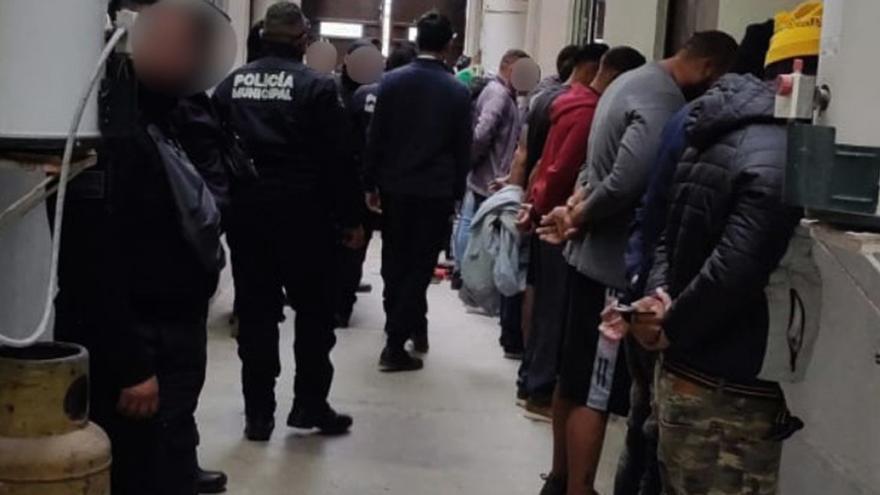
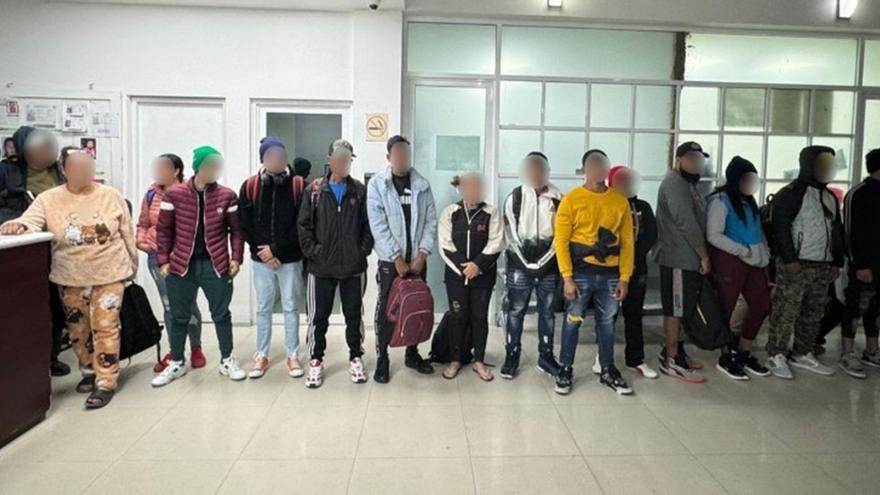
The Cubans were found during a search and seizure operation where drugs were being sold. (Municipal Police)

14ymedio bigger14ymedio, Ángel Salinas. Mexico, 1 February 2024 — A group of 22 Cubans in an irregular situation – seven women and 15 men – was found this Wednesday in a house located in Tultepec (State of Mexico), where drugs were also sold. On their journey to the United States, “the migrants sought protection in this area, not knowing that it is one of the most violent and where the sale of drugs, extortion from businesses and theft predominates,” municipal policeman Efraín Zamudio tells 14ymedio.

The officer specified that the migrants were found during a search of the house after an anonymous complaint about the sale of narcotics. The statement of the state prosecutor’s office confirms the “seizure of bags with narcotics.” Zamudio specified that “the drugs came from drug dealers who were not there at the time of the operation.”

One of the women said that they had arrived there a day earlier and paid 700 pesos for a three-day stay to someone named Fermín, who presented himself as the owner of the house. “We don’t know about drugs, we come from Tapachula,” the Cuban told the officers. continue reading

Zamudio mentioned that because drugs were found, medical tests were performed before the Cubans were handed over to the National Institute of Migration. “A simple protocol, which always respects the human rights of migrants,” stressed the official.

The municipal police of Tultepec delivered the Cubans to Migración on Wednesday, and they were transferred to the station in Las Agujas, in Mexico City, a place that several Cubans have denounced for attempts at extortion and threats by the agents.

After verifying that the Cubans were in good health, they were handed over to Migration. (Municipal Police)

Mayelín Díaz Vargas sent this newspaper a complaint last November against Jorge Rosalino Valencia, head of operational services in Las Agujas. The agent threatened her with promoting her transfer to the state of Tabasco for deportation to the Island if she did not remain silent. This woman had to pay $2,500 dollars for her release, despite the fact that she presented an amparo, which allowed her free transit.

In February of the same year, relatives of Luis Ángel Sánchez and Noelvis La O Pereira sent this newspaper information about the arbitrary detention of Cubans at Mexico City International Airport despite having safe-conducts granted by Migration. These people were kept for several days in Las Agujas.

An extortionist, pretending to be a lawyer, asked La O Pereira’s family for $5,000 in exchange for processing his release, arguing that he presented false documents. However, after several days and in the face of complaints in the media that stated that the agents were violating article 37 of the Migration Law. These people had a safe-conduct pass and also humanitarian parole for the United States, so they could not keep them imprisoned. Sánchez and La O Pereira were released and are now in the United States.

Translated by Regina Anavy

____________

COLLABORATE WITH OUR WORKThe 14ymedio team is committed to practicing serious journalism that reflects Cuba’s reality in all its depth. Thank you for joining us on this long journey. We invite you to continue supporting us by becoming a member of 14ymedio now. Together we can continue transforming journalism in Cuba.
Juan Carlos Herrera, Former Prisoner of the Black Spring, Dies in the United States

Juan Carlos Herrera Acosta lived in Syracuse, New York, United States. (Facebook)

14ymedio bigger14ymedio, Havana, 18 February 2024 — The former prisoner of the Black Spring and Cuban activist, Juan Carlos Herrera Acosta, died this Saturday of a massive heart attack at the age of 57, in the city of Syracuse, in the state of New York, United States. During his exile, the independent journalist maintained an intense activism against the Island’s regime.

Herrera Acosta, who in April 2003 was sentenced to 20 years in prison for his opposition to the Cuban regime, spent seven years and seven months in prison. During his stay in the Cubasí prison in Holguín and in the Combinado of Guantánamo, the dissident, who was also a reporter for the Eastern Free Press Agency, was subjected to severe punishment.

In August 2008, Herrera Acosta sewed his mouth shut in the Cubasí penitentiary center and remained in that condition for 12 days in protest against the violations of his human rights. Twenty opponents protested in Holguín in support of the prisoner; among them was Orlando Zapata Tamayo, who would die two years later after a long hunger strike. continue reading

In August 2008, Herrera Acosta sewed his mouth shut his mouth in the Cubasí penitentiary center and remained in that condition for 12 days in protest of the violations of his human rights

That same year, Herrera Acosta was transferred from the Cubasí prison to the Combinado of Guantánamo. “They brought me closer to my province, but they took me away from my family. What I have suffered is not enough for them,” he said when he learned of his imminent imprisonment in the prison known as “a den of terror.”

While in prison, the independent journalist suffered a family tragedy. On March 12, 2008, a bus traveling from Havana to Guantánamo was in an accident, and his only daughter, Lianet Herrera Disco, 14, lost her life, along with her mother, Elizabeth Disco Tito, 31, and her sister Elianet González Disco, 2 years old.

It would not be until August 19, 2010 that Herrara Acosta was able to leave prison and go into exile in Madrid after a negotiation among the Cuban regime, the Catholic Church and the Spanish Government. On that occasion, dozens of Black Spring prisoners and their families left the Island, in the middle of an operation that some classified as a “forced banishment.”

“I consider myself still a prisoner, because there are still many of my friends in Cuban prisons,” Herrera Acosta told the Committee for the Protection of Journalists on that occasion.

A year after his exile he settled in the United States and continued his activism for the freedom of Cuba. In May 2022, Herrera Acosta confronted Dangel, a defender of the Cuban regime who called himself “100% Fidel” on social networks and also lived in Syracuse. Acosta told Cubanet that the sympathizer of the Cuban regime had  “denounced the political prisoners and the Ladies in White*.”

This Saturday, after the activist’s death was known, several former prisoners of the Black Spring expressed their sorrow on social media and sent their condolences to the family. Among them was the Cuban dissident Pablo Pacheco Ávila, who defined him as a brother of the 75 opponents who were convicted in 2003.

This Saturday, after the death of the activist was known, several former prisoners of the Black Spring expressed their sorrow on social media and sent their condolences to the family

“It is with deep sorrow that I learned about the death of my friend and brother Juan Carlos Herrera Acosta, a brave man who dedicated his life to the struggle for freedom and human rights in Cuba,” the former political prisoner, Normando Hernández, told Martí Noticias.

“His departure leaves an indelible void in our hearts,” he added.  Hernández is the director of the Cuban Institute for Freedom of Expression and Press. Several colleagues recalled that Herrera Acosta maintained his denunciations of the Cuban dictatorship and the allied authoritarian regimes of Havana until the end of his days.

Just this Friday, a few hours before he passed away, he had accused Russian President Vladimir Putin of the death in prison of the opponent Alexei Navalny. “The world is witnessing the emergence of a new Stalin and a new Hitler,” Herrera Acosta warned in a video published on YouTube.

*Translator’s note: The Ladies in White — which demonstrates regularly for human rights — was started by the wives of the Black Spring prisoners, and continues its activities to this day.

Translated by Regina Anavy

____________

COLLABORATE WITH OUR WORKThe 14ymedio team is committed to practicing serious journalism that reflects Cuba’s reality in all its depth. Thank you for joining us on this long journey. We invite you to continue supporting us by becoming a member of 14ymedio now. Together we can continue transforming journalism in Cuba.

Russian Foreign Minister Sergey Lavrov Begins His Ninth Visit to Cuba in 20 Years

Raúl Castro and Miguel Díaz-Canel with Russian Foreign Minister Sergey Lavrov in April 2023, in Havana. (Presidency of Cuba)

14ymedio biggerEFE (via 14ymedio), Havana, 19 February 2024 — Russian Foreign Minister Sergey Lavrov made a brief visit on Monday to Cuba, one of Russia’s main allies in Latin America, with whom it has strengthened bilateral political and economic cooperation in recent months.

This will be Lavrov’s ninth visit to the Island since his appointment to the position in 2004, as highlighted by the chanceller’s office of Havana when announcing the trip of the Russian leader, who will later travel to Venezuela and Brazil.

The announced program – about twenty-four hours long – revolves around interviews with President Miguel Díaz-Canel and Foreign Minister Bruno Rodríguez.

Although the brief announcement of Lavrov’s second trip to Cuba in less than a year does not refer to the issues to be addressed in those conversations, they are expected to review the bilateral relationship, as well as current international issues such as the conflict in Ukraine. continue reading

The statement does not refer to the issues to be addressed, but it is expected that the bilateral relationship will be reviewed, as well as current international issues such as the conflict in Ukraine

They may also discuss preparations for a visit of Russian President Vladimir Putin to the Island in response to the invitation sent by Díaz-Canel at the end of 2022.

In his previous stay in Havana, in April 2023, Lavrov said he valued the “progress” in commercial exchange after President Díaz-Canel’s visit to Moscow a few months earlier.

Cuba’s worst economic crisis in decades, with shortages of food, medicine and fuel, is a vital subject for discussion, especially after the commitments endorsed last May to increase Russian financial and business presence on the Island.

At that time a bilateral business economic forum took place in Havana with the presence of more than 150 representatives of the private sectors of Russia and Cuba.

The head of Foreign Trade and Foreign Investment, Ricardo Cabrisas, confirmed that Russian capital would be present in strategic sectors such as transport, logistics, agriculture, sugar, tourism, construction and industry.

To encourage that presence, Havana would provide Russian businesses with “preferential treatment,” tax-free imports, the presence of Russian banks and currency exchange.

In recent months, in addition to the Russian Minister of Foreign Affairs, the president of the State Duma Vyacheslav Volodin, the presidential adviser Maxim Oreshkin and the deputy prime minister Dmitry Chernyshenko have visited the Cuban capital.

Lavrov thanked Cuba in 2023 for its “full understanding” of the Russian invasion of Ukraine, which is backed by Havana.

Last summer, several media outlets from outside the Island reported the presence of Cuban mercenaries fighting alongside Russian troops in the invasion of Ukraine, including testimonies from several of them and their relatives.

The Foreign Affairs Ministry then stated that “Cuba is not part of the war in Ukraine,” and rejected “mercenarism” and the participation of its citizens in “any conflict”

The Foreign Affairs Ministry then stated that “Cuba is not part of the military conflict in Ukraine,” and rejected “mercenarism” and the participation of its citizens in “any conflict.”

He also announced last September the dismantling of a network that allegedly recruited Cubans to fight in Ukraine, an operation in which 17 people were said to be arrested.

Cuba and Russia have promoted their bilateral relationship in recent years to try to restore the close cooperation they maintained until the disappearance of the Soviet Union in 1991.

Russia is one of Cuba’s top ten trading partners, and both governments define their association as “strategic.”

In November 2022, Díaz-Canel and Putin discussed development prospects for the Russian-Cuban strategic partnership in the political, economic, commercial, cultural and humanitarian spheres, as well as management of the debt that Cuba has with Russia. Several agreements were signed, including one concerning the supply of oil.

Díaz-Canel has declared his country’s “will” to take political dialogue and bilateral economic and commercial relations with Russia to “a higher level.”

Translated by Regina Anavy

____________

COLLABORATE WITH OUR WORKThe 14ymedio team is committed to practicing serious journalism that reflects Cuba’s reality in all its depth. Thank you for joining us on this long journey. We invite you to continue supporting us by becoming a member of 14ymedio now. Together we can continue transforming journalism in Cuba.

Two Cuban Wrestlers Are the First To Escape This Year in a Competition in Mexico

Susana Martínez and Santiago Hernández left the Cuban team in Acapulco (Guerrero). (Facebook)

14ymedio bigger 14ymedio, Mexico, 19 February 2024 — In just three days, two members of the Cuban wrestling team, Susana Martínez and Santiago Hernández, abandoned the team training in Acapulco, Mexico. These are the first two escapes of Cuban athletes so far this year, which numbered 77 in 2023.

Martínez and Hernández escaped just before the start of the Pan American Senior 2024 Championship, scheduled from February 21 to 25, and the Pan American Olympic Qualifier to Paris 2024, from March 1 to 3.

Martínez, according to coach Daniel Gómez on the Facebook page La Lucha (Wrestling), traveled to Mexico to support the training of Cuban athletes Yusneylis Guzmán (in the 100 lb category), Laura Herin (117 lb), Ángela Álvarez (126 lb), María Santana (137 lb) and Brenda Sterling (150 lb). continue reading

Gómez did not give details about Martínez, 23, beyond the fact that she fled on February 16. Her best result was in 2021, when she won a fifth place in the Pan American Cadet and Junior tournament, according to Cubalite.

So far there has been no pronouncement in the official Cuban press about the escape of the athletes

Roly Dámaso, who closely follows both tournaments, confirmed on Monday the escape of Santiago Hernández. “He didn’t even wait for the luggage to arrive and just went on the run,” he said. The athlete was part of the Cuban team that will participate in the 119 lb category in the 2024 Pan American Senior Championship.

“This abandonment of the wrestling delegation to the Pan American Championship is a hard blow to the aspirations to qualify in the 126 lb division for the Olympic Games,” said Daniel Gómez. “Cuba must participate in this division in the Pan American Championship to be entitled to participate in the Pan American Qualifier for the Olympic Games.”

So far there has been no pronouncement in the official Cuban press about the escape of the athletes, the first this year to abandon a national delegation.

In September of last year, the Island lost Hangelen Llanes, gold medalist at the XXIV Central American and Caribbean Games, in the 150 lb category. This competitor left the team training in Paris before traveling to Serbia.

Before Llanes, Yoannia Pérez and Liliana Duane, members of the wrestling team, fled during an international event. Last March, it was Roly Dámaso who spread the news of the desertion of both athletes during a stopover in Mexico. “In a few years, Cuba will be a country without young people. They are tired of all the socialism and the promises that never came true,” Dámaso added.

Translated by Regina Anavy

____________

COLLABORATE WITH OUR WORKThe 14ymedio team is committed to practicing serious journalism that reflects Cuba’s reality in all its depth. Thank you for joining us on this long journey. We invite you to continue supporting us by becoming a member of 14ymedio now. Together we can continue transforming journalism in Cuba.
Why Does an Intellectual Become a Communist? Six Writers Provide Some Insight

For writers, it was easy to get excited about Lenin’s victory in Russia. (Russia Beyond)

14ymedio bigger14ymedio, Xavier Carbonell, Salamanca, February 17, 2024 — Two communists are in Red Square, contemplating Lenin’s mummy, still fresh. At the dead man’s feet, a procession of grimy peasants shuffle past in veneration. One man says to the other, “I suppose you love Lenin.” The other nods. (Both had known Vladimir Ulyanov well.) “That being the case,” he continues, “how about we find two cans of gasoline and torch this dump along with the idol?” The other turns pale and begins to tremble. He suggests that his comrade forget such inflammatory ideas, drop the subject and, if possible, immediately leave the country.

One of the men – the jokester – is Ignazio Silone, founder of the Italian Communist Party and then a diehard believer. The other is Lazar Schatzky, leader of the Russia’s Communist Youth League, who was persecuted by Stalin and ended up being shot in 1937. Let’s suppose that the joke has a moral and that the moral comes a few pages later in Silone’s own words: “To judge a regime, it is very important to know what it is laughing at.”

Like the Italian, the five other great writers featured in The God That Failed were communists and lived to tell the tale. The book, which Moscow banned shortly after it came out in 1949, is now being rescued from obscurity by a Spanish publisher, Ladera Norte. Assembled by British parliamentarian Richard Crossman, the collection of essays contains accounts from Arthur Koestler, Stephen Spender, Louis Fischer, Richard Wright, André Gide and Silone.

In only a handful of countries is The God That Failed not a historical document but rather an instruction manual. Cuba is one of those countries. The stories of the six authors, who describe communism as either a religion that they renounced or a drug that almost destroyed them, will strike a familiar chord on the island. It is a drug because it produces addicts. It is a religion because it offers eternal life, expects obedience and provides nothing. No matter how much time passes. continue reading

Cubierta de 'El dios que fracasó', editado por Ladera Norte en España.
The cover of ‘El dios que fracasó’, published by Ladera Norte in Spain.

The idea for the book came from a conversation between Crossman and Koestler. The theme is the all-too-familiar disconnect between those who escape communism and those in from Western democracies who admire it. “Either you cannot or you do not want to understand,” summarized Koestler after recalling what led him to join the party in his youth only to leave it seven years later. Why does an intellectual become a communist when the regime is always so distrustful of writers, artists and philosophers? For Koestler, it is a matter of faith, not reason. Faith that a political doctrine can alter reality and end the world’s injustices, something that was easy to get excited about after Lenin’s triumph in 1917.

“All true faith is uncompromising, radical, purist,” warns Koestler. “The revolutionary’s utopia, which seems to represent a total break with the past, is always modeled after some image of Paradise Lost, of a legendary Golden Age.” Rebellion is the only way to believe in mythology again when one lives in “a disintegrating society thirsty for faith.”

On the other hand, there is the intrigue and secrecy, the false identities, the espionage, pamphlets and passwords, everything that constitutes – and Koestler’s analogy is a gem – “the mental world of the drug addict,” something difficult to explain to people who are not initiated. In the lethargic phase — when one has left all optimism behind, when all that is left is compliance — one discovers the necessary lie, the lie you want to believe, the lie that makes failure taste, rather unsuccessfully, less bitter.

Those who died, those who are dying in prison, is this what they sacrificed themselves for?

Silone, a man of a thousand stories, remembers an epiphany he had when locked up with a group of communists being persecuted by fascists: a fake painter, a fake tourist, a fake dentist, a fake architect and a fake young German woman. The long and incomprehensible story that Silone tells that night has a bitter end and begins with the injustices that he witnessed as a child. Maturity and the search for freedom led him to communist ideas but he became disenchanted after Stalin’s schemes to enforce his will. One night In Moscow, someone asked the question, “Those who died, those who are dying in prison, is this what they sacrificed themselves for? The unsettled, solitary, dangerous lives that we ourselves lead, foreigners in our own countries, is it all for this?”

Richard Wright, an African-American writer, was invited to meet some white communists from Chicago. His first reaction was one of suspicion but he decided to go anyway. After the initial idyllic phase, he discovered the factions, the struggles for power and the frustration of party members. Despite working as a street sweeper, a female comrade issued the verdict. “We keep a record of the problems we’ve had with intellectuals in the past,” she said. “It is estimated that only 13% of them remain in the party.”

We keep a record of the problems we’ve had with intellectuals in the past. “It is estimated that only 13% of them remain in the party.”

Gide, perhaps the best known of the writers in the book along with Koestler, was one of the pioneers in dismantling the Soviet myth. His essay, taken from his celebrated book Return from the USSR, was written after a 1936 trip to Moscow which opened his eyes. Officials hosted receptions and banquets that were designed to tempt him into saying flattering things about Russia. Meanwhile, people were going hungry and dying from the cold. The state, he wrote in his diary, exploited workers “in a very formal and twisted way so that they no longer knew whom to blame for their situation.” The conclusion did not earn him many friends in Moscow. “I very much doubt,” he wrote, “that there is any other country in the world, including Hitler’s Germany, that has so enslaved the intelligence and spirit, and that has terrorized more of its people, than the Soviet Union.”

Closing out the book are two pieces: one by the American writer Louis Fischer, who wrote a biography of Lenin; and Stephen Spender, who became disenchanted with communism after the Ribbentrop-Molotov Pact of 1939. Fischer explores how the party instilled a sense of guilt in its members (“How can you complain about the potato shortage when you were building socialism?”). Spender quickly soured on the “poetic purity” that Moscow promised.

A few years ago, a group of university students — some of whom were friends — thought they could reclaim the legacy of Jurassic communism that had excited Gide, and later Sartre and company. They venerated Leon Trotsky and Rosa Luxemburg, and even allowed themselves the luxury of idolizing Fidel Castro, their go-to talisman whenever problems arose, which says a lot about their mental state. They hated Cuba’s official party newspaper Granma and communist officials, starting with the current president Miguel Díaz-Canel. They languished between disciplinary councils and calls to order. It was they – whom I remember as ragged, smoking and spectral – who first came to mind as I was reading this book, which serves as an epitaph to them. Their god, in addition to failing, thrives on failure.

____________

COLLABORATE WITH OUR WORKThe 14ymedio team is committed to practicing serious journalism that reflects Cuba’s reality in all its depth. Thank you for joining us on this long journey. We invite you to continue supporting us by becoming a member of 14ymedio now. Together we can continue transforming journalism in Cuba.
The Urgency of Releasing Political Prisoners in Cuba and What We Can Do About It

The decision of Cuba’s Assembly of People’s Power should have been an intelligent response to move forward in the cause that we all want, which is the freedom of the political prisoners. (Capture)

14ymedio bigger14ymedio, Frank Calzón, Miami, 19 February 2024 –The decision of Cuba’s Assembly of People’s Power to ignore a petition for political amnesty was taken by the Communist Party of Cuba and must motivate the opposition within the country and free Cubans abroad to redouble their efforts, until the regime frees those in prison. In addition, those freed must be allowed to decide whether to stay on the Island or go into exile. We must address the press, civic associations, our representatives, the unions, etc.

The decision of the Assembly of the People’s Power should have had an intelligent response to advance our cause, which is the freedom of the political prisoners and, ultimately, of all Cuban citizens.

On the Island there are those who can contact embassies, addressing democratic governments. Others can urge the Church to offer masses for the freedom of the captives and to address cardinals and bishops around the world, asking them to add their voices to the campaign. And not just the Catholic Church. Also the evangelical Christian churches, the Methodists, the Presbyterians, the Baptists, Lutherans, the episcopals, the communities of the African faith and even the Masonic lodges could mobilize believers in Cuba and their co-religionists around the world. continue reading

Abroad, human rights organizations in exile with relations with international entities should go to them once again

Abroad, human rights organizations in exile with relations with international entities should go to them once again. It is time for civil society on the Island, the Cubans of the diaspora, and their many friends to insist together with democracies around the world so that they condition their diplomatic, economic, cultural and all kinds of relations with Havana on the release of the prisoners in Cuba.

In Washington, senators and congressmen could ask the White House to suspend all cooperation with Havana until it allows the entry of the International Red Cross and Amnesty International into the prisons.

We must address with brief and respectful messages the members of the European Parliament, foreign ministries and those who, as in Sweden and Lithuania, ask that Europe suspend, due to internal repression on the Island, the bilateral agreement with Havana that represents an infusion of millions of euros into tyranny.

For example, Tobias Billström, the Swedish Minister of Foreign Affairs said last August that he had access to “very worrying” reports of torture in Cuban prisons.

There is much more to do, and not only in the United States, because there are communities of Cuban patriots in many countries around the world. We all have something to contribute.

Castroite State Security tries to suppress these efforts by telling us that there is nothing we can do, that the regime will never release anyone, and some repeat the chorus of a very harmful disinformation campaign: they insist that nothing can be achieved until the exile is coordinated in its entirety. Until that happens, they proclaim that all efforts are destined to fail. They lie, as they always have and always will.

The Cuban regime wants to undermine efforts, convincing us of how useless it is to oppose its lifelong despotism, of how fanciful it is for Cubans to dream about freedom. State Security, in addition, promotes discord between pro-democratic organizations, spreads rumors without presenting evidence and on top of that tries to discredit the most effective opposition against them. Thus the tyranny tries to neutralize us.

Those who insist that Cuba is not free because very few pay attention to them, and that we must first get the unity of all the exiles to then develop “the strategy for victory,” achieve the opposite. The way to join efforts is not by defending those who do something, but by joining them, working with them, sharing the dangers, pains and anxiety.

Anyone who accuses Cubans of being “sheep,” of not having the necessary courage to be free, should now join the organizations that tirelessly direct all their arrows against tyranny

Anyone who accuses Cubans of being “sheep,” of not having the necessary courage to be free, should now join the organizations that tirelessly direct all their arrows against tyranny, denounce their crimes and help their victims.

Let them stop preaching hopelessness and lies to discredit those who are acting. Let them stop sowing division and slandering the patriots. If an accusation is made, it is essential to provide evidence.

They should stop insisting that anyone who develops an initiative different from their own is always wrong and acts in bad faith.

Cuba will be free, and every Cuban with decorum has a place in the movement to create a new Cuba. We can all approach the brother who suffers, the mother of a political prisoner, the dissident whom State Security has humiliated.

That is called solidarity, and it is fundamental to the cause of a free homeland on the Island. Because Cuba is more than a geographical term or a political dialectic. Cuba is each Cuban. Cuba is the millions of souls who deserve to be free and who never, throughout the bitter decades of dictatorship, have tired of denouncing the crimes of Castroism and claiming our imperative need for democracy and freedom.

Translated by Regina Anavy

____________

COLLABORATE WITH OUR WORKThe 14ymedio team is committed to practicing serious journalism that reflects Cuba’s reality in all its depth. Thank you for joining us on this long journey. We invite you to continue supporting us by becoming a member of 14ymedio now. Together we can continue transforming journalism in Cuba.
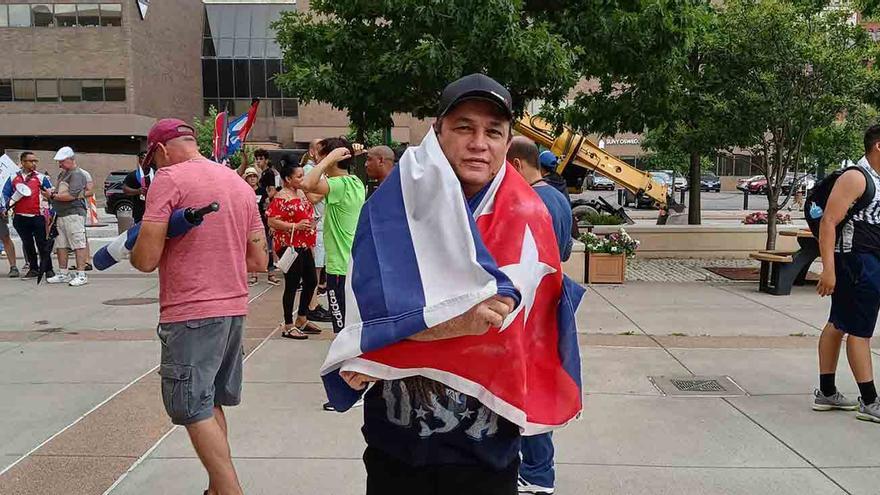
A Former Cuban Ambassador to Prague and Ukraine Dies Under Strange Circumstances in Havana

Félix León Carballo spent 40 years in the Foreign Service and was currently retired. (Facebook)

14ymedio bigger14ymedio, Havana, 19 February 2024 — Retired diplomat Felix León Carballo, ambassador to Belarus, Ukraine and the Czech Republic, among other charges, spent 40 years as an official of the Ministry of Foreign Affairs and died this Saturday in Havana under suspicious circumstances.

The Ministry of Foreign Affairs confirmed it this Sunday through a statement in which there is no mention of the cause of death, which was allegedly a homicide, according to a close friend, the Cuban ambassador in Djibouti, who was the source of the news.

“Felix León died on me… or rather ‘they killed him on me’. ‘Pacolo’ as we also know him (I refuse to talk about you in the past). So many years together! And some bastards got in the way of our plans. This is our last photo,” Caballero Torres wrote on Facebook, raising the alarm. continue reading

Félix León died on me… or rather ‘they killed him on me’. ‘Pacolo’ as we also know him (I refuse to talk about you in the past). So many years together! And some bastards got in the way of our plans

The post was deleted hours later, according to Café Fuerte, which was still able to capture some of the comments of those who reacted to the news. “I’m so sorry. They took brother Paco. Nor will justice calm our immense pain. There can be no impunity for that crime,” said Maura Quintero Dipotet, wife of the ambassador in Djibouti.

“Marcelo, how painful is Felix’s death. I can’t believe it yet,” wrote another acquaintance on the Facebook page of the Djibouti ambassador. “That’s life… sometimes it’s lost in the most fucked up and undeserved way,” he replied.

Several independent media cited Caballero Torres’ message as a source to report the violent death, but hours later the post had disappeared. Meanwhile, the Ministry of Foreign Affairs published a statement limited to reporting the death and offering condolences to relatives and colleagues.

In addition, the Ministry of Foreign Affairs said that León Carballo joined the Foreign Service in 1975 and worked in the Directorate of Europe and the Center for Information and Multimedia Services. “Let’s always remember his contribution to foreign policy and his eternal permanence in the Minrex family (sic.).”

The Ministry replicated the text on its social networks, where some acquaintances remembered the deceased, without anyone else mentioning the possible circumstances of the death. “I will always remember your sincere gratitude, your patience and determination to make us reflect. Your years of experience made you wise and a bearer of morality. Your revolutionary conviction was always an example and impetus for the whole group. RIP friend Felix,” the Embassy of Granada wrote on Facebook.

“Cuban diplomacy is in mourning. We have lost a valuable partner. Tremendous blow for all of us who knew him. Heartfelt condolences to his family and closest friends,” added diplomat Enrique Almeida.

“Cuban diplomacy is in mourning. We have lost a valuable partner. Tremendous blow for all of us who knew him. Heartfelt condolences to his family and closest friends”

“I deeply regret the death of our dear colleague and friend Félix León. Excellent diplomat, professional and human being, he will serve as an example to all those who embrace the Foreign Service of our Homeland,” the chain of messages continues.

On X, where it is not possible to delete the comments to your own publication, the situation has been different. The condolences for the death have been joined by critics of the Government who have demanded solidarity with other deceased allegedly due to negligence of the regime, and by those who demand that the events surrounding the death be revealed.

“Tell the truth. He was assaulted and killed in his home because the crime wave can’t be stopped,” demands a user.

At the end of November 2023, Bohemia magazine published an article entitled “Social violence in Cuba: Between Reality and the Idea.” From an unofficial digital survey, it found that 92.4% of participants said that violence has increased a lot on the Island. Forty-two percent said they had been aware of 10 or more violent crimes in the last six months, and almost half claimed that a family member or close friend had been a victim of violent crime.

In addition, a third of those affected did not report the crime, but among those who did, 73% did not get a resolution.

Translated by Regina Anavy

____________

COLLABORATE WITH OUR WORKThe 14ymedio team is committed to practicing serious journalism that reflects Cuba’s reality in all its depth. Thank you for joining us on this long journey. We invite you to continue supporting us by becoming a member of 14ymedio now. Together we can continue transforming journalism in Cuba.
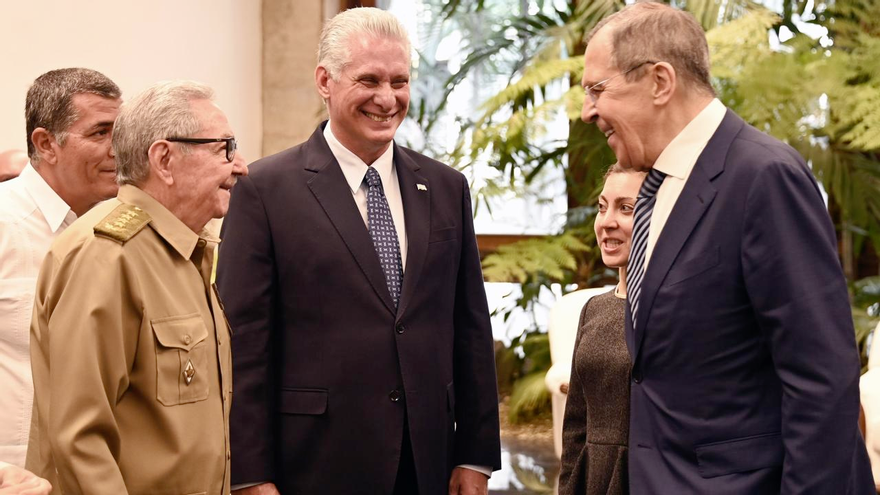
The Failure of Electronic Transactions in Cuba: Only 5 Percent of State Ration Stores Make Them

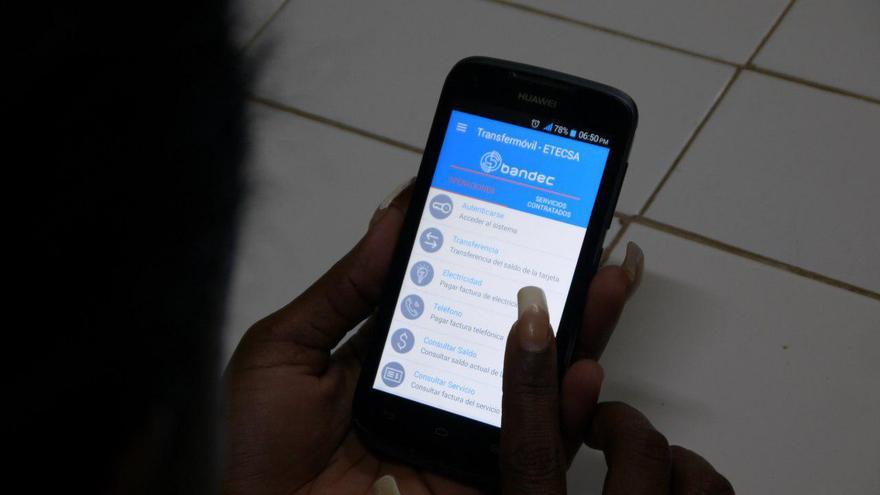
Readers were also asked about their preferred payment method, with Transfermóvil in the lead. (14ymedio)

14ymedio bigger14ymedio, Madrid, 19 February 2024 — “In our country, every new resolution is condemned to being violated before it is implemented, usually due to the ineffectiveness of those responsible for enforcing it.” This is one of the more than 100 comments made by readers who responded to the Cubadebate survey about the implementation of the regulations that oblige letting customers pay through any electronic means.

February 1 of this year was the day when all businesses had to have electronic payment available, under penalty of the suspension of their license, but in reality none of this has happened, and the authorities, the users insist, do nothing to solve it.

“I made a complaint more than a month ago about the non-compliance with the rule in the Coppelia [ice cream parlor], on the Presidency’s site,” a reader protests. “What protection do consumers really have when not even the Government is serious about citizens’ complaints? More than a month! And no one has bothered to give me an answer.” continue reading

The comments give life to what the note relates, written after verifying, with the votes of the survey, that private companies rarely comply with the provisions, although the situation in the State companies is not much better

The comments give life to what the comment relates, written after verifying, with the votes of the survey, that private companies rarely comply with the provisions, although the situation in the State companies is not much better. According to the results of the online survey – in which 2,839 people participated – in both sectors there are difficulties in paying electronically (67%), although 23% believe that there is more in the private companies, and 10% that it is worse in the State shops.

Some 80% of voters said that the regulations, approved last August as part of the banking process that sought to reduce the amount of cash movements due to the shortage of national currency banknotes and, at the same time, reduce the flow of informal operations, are not complied with. Of the 1,825 people who answered whether digital payment can be used correctly in the places where it exists, 63% said no.

Readers were also asked about their preferred payment method, with Transfermóvil in the lead (62%), followed by EnZona (19%) and the QR code (12%). The POS (card payment terminal) is the least used, with only 7%. As for the services where it works best – and, therefore, is used more – are paying bills for electricity (35%) and telephone service (33%) which are, by far, the ones that win. These are followed by gas stations (10%) and other services (7%), but the situation worsens with businesses, where more emphasis was placed.

The purchase of food in the State ration stores is paid for electronically on 5% of occasions, while in restaurants the figure drops to 4% and in bakeries it is null (0%).

Cubadebate’s article also cites those who participated in the debate opened by the media. The majority of those elected indicate the private companies as responsible for the situation, although officials against whom they throw accusations of corruption are not exempt from responsibility.

“They don’t give the option of paying by transfer and, when I inquire, they tell me that they are solving the problem with the inspectors,” says a quoted commentator. Among the most common barriers that private individuals have when accepting a transfer payment is the requirement of a minimum purchase value, but also the inefficiency of the administrations when it comes to providing the mechanisms.

“At the time of paying, the clerk said that they did not have a QR code, although they had requested it more than a month ago and it was not yet available”

“A reader identified as Arael refers to the service of an establishment located at 26 and 15, in Vedado, where he went days ago. At the time of payment, the clerk told him that they did not have a QR code, although they had requested it more than a month ago and it was not yet available. “To my great surprise, they told me to pay in cash, but they did not accept bills under 100 pesos,” he said.

The lack of visibility of the QR code is also one of the obstacles, either because it gives an error or because the employees try to hide it so that the customer gives up paying online. These obstacles are joined by the connectivity problems suffered by the entire Island, including Havana, which is the most advanced in this aspect. This situation causes confusion so buyers try to avoid it by paying in cash, since it is not uncommon for the connection to be interrupted in the middle of the operation, leaving in doubt whether or not the transfer has been completed and leading to non-payments or, on the contrary, duplicate payments.

There is also a significant group of Cubans, especially among the elderly, who do not have a smart phone or are reluctant to use one because of the complexities that this new technology holds for them. Having a QR reader, managing applications such as EnZona and Transfermóvil is a territory full of unknowns. In addition, the cost of the devices that support these tools is unreachable for the pocket of a pensioner who does not receive remittances from family abroad.

Translated by Regina Anavy

____________

COLLABORATE WITH OUR WORKThe 14ymedio team is committed to practicing serious journalism that reflects Cuba’s reality in all its depth. Thank you for joining us on this long journey. We invite you to continue supporting us by becoming a member of 14ymedio now. Together we can continue transforming journalism in Cuba.

At the Havana Book Fair, There Are Few Books, and You Can Look but Not Touch or Buy

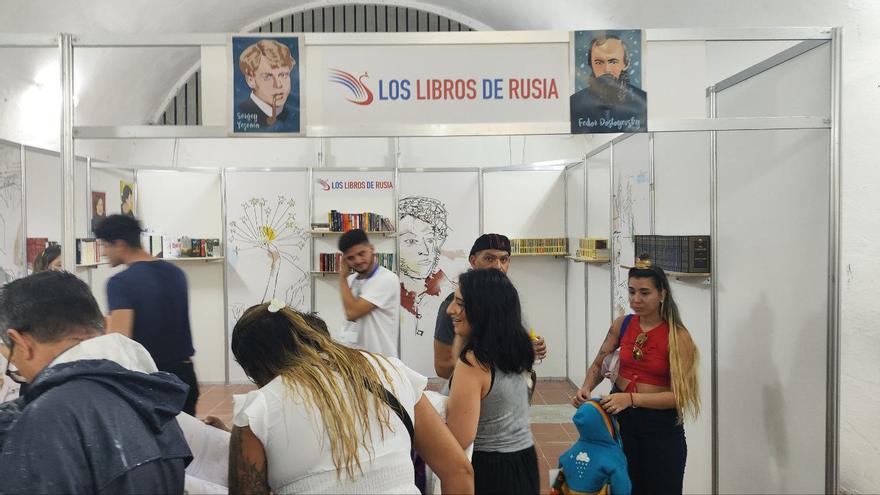
The Russian books at the fair were not for sale. (14ymedio)

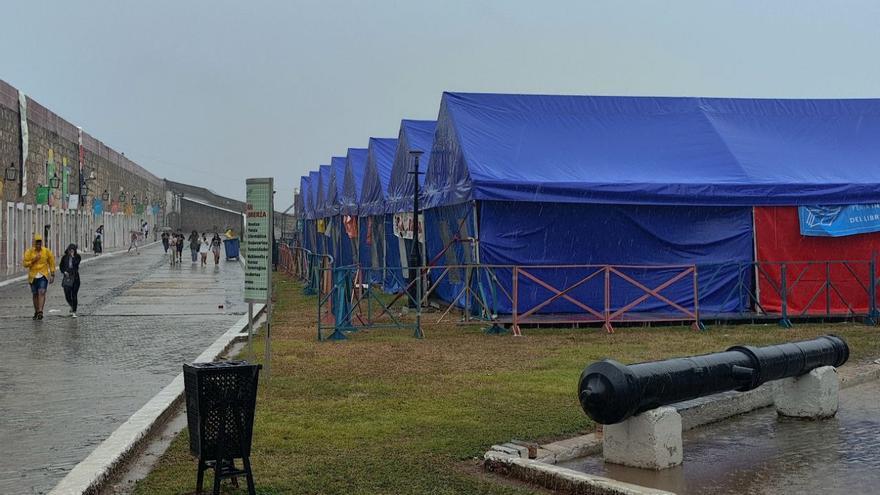
14ymedio bigger14ymedio, Juan Diego Rodríguez, Havana, 19 February 2024 — The Havana International Book Fair invited two countries this year: an official one, Brazil, and an “unofficial” one, Russia, whose booth, although small, is located at the same entrance of La Cabaña. This Sunday, however, neither of the two managed to satisfy the readers, who ended the day annoyed not only because of the bad weather, but because the few books they found – in Portuguese and Russian – were “only for display.”

Among the visitors, who were taking refuge from the downpour in the entrance, the irritation was evident: “They should have announced that this was going to be suspended today. Now we are here and can see that the tents are closed.” When the rain abated and the wet mass of people finally began to move towards the Russian pavilion – among others – the disappointment was even worse. “I thought I was going to find many more books. But what they sell is mostly stationery and office supplies,” complained a visitor.

Books from the Spanish publisher Everest, with stories adapted from Disney movies such as Pocahontas and The Ice Age, or from the DC Comics franchise – on several occasions described as “imperialist” and “subversive” on Cuban Television – accompanied the exhibition of Russian titles, guarded by three men who, when asked by some customers, debated whether they should sell the texts. “We should sell the books if no one is going to notice,” the manager told two women who accompanied him, although he did not clarify whose “permission” he needed. continue reading

Books from the Spanish publisher Everest, with stories adapted from Disney or from the DC Comics franchise – qualified as “imperialist” by Cuban Television – accompanied the exhibition of Russian titles

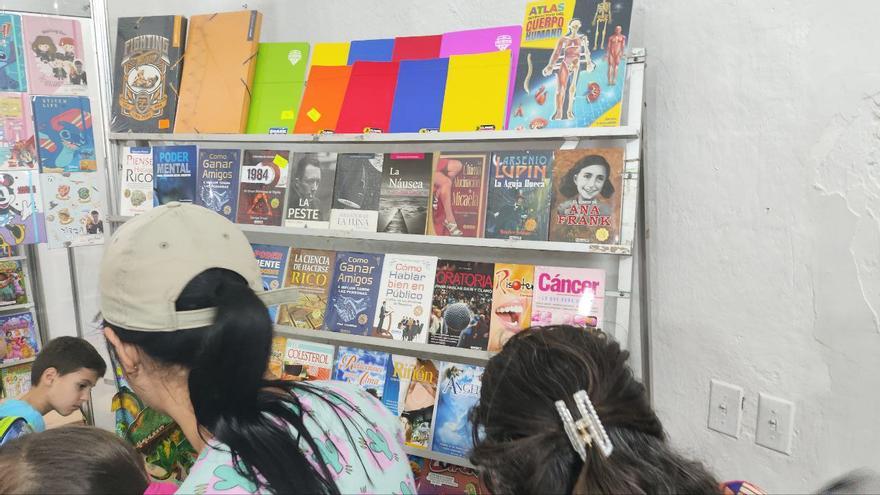
Further on, school notebooks, coloring books, children’s notebooks, crayons, felt-tip pens and pencils occupied several tables, where the majority of visitors crowded around. The reading material, with low-cost books and “gazette” paper, barely showed some classic foreign titles such as The Diary of Anne Frank, The Plague, by Albert Camus and 1984, by George Orwell, ignored by the clientele for their high prices. “The cheapest I’ve seen,” a reader said, “was one about Sherlock Holmes at 1,000 pesos.”

In the case of 1984, whose author was censored on the Island for several decades for his novels, which criticize totalitarian forms of government, there are only a few copies of a Cuban edition, published by the Colombian publisher, Globals Ediciones.

Further on, in the immense pavilion dedicated to Brazil, a presentation of a book in Portuguese barely attracted the attention of those who, more interested in taking refuge from the rain than in listening to the author, occupied the chairs. The exhibition of titles, here also, was one of “you can look but don’t touch,” according to two women.

The reading section, with low-cost books and “gazette” paper, barely showed some classic foreign titles such as The Diary of Anne Frank, The Plague and 1984. (14ymedio)

The main tent, which sold books from Cuban publishers with numerous titles dedicated to Fidel Castro and the defense of the regime, was closed. The same thing happened at the information checkpoints, whose custodians were frightened by the rain and left, or in the places where several presentations and events were scheduled for this Sunday.

“I came to fine inexpensive books (at state prices), but I have not been able to get anything I was looking for,” complained a young man who, angered by the rain and without books, was preparing to undertake the journey home.

The tents for Cuban books and publishers were closed. (14ymedio)

At a fair whose programming announced numerous events, presentations and a wide range of titles, this Sunday’s icing on the cake was a black backpack with the event logo, hung from the roof of one of the booths, which was selling for 7,000 pesos.

From a cafeteria, an employee was talking on the phone to one of his colleagues: “Don’t even hurry, this place is a disaster today. We haven’t sold anything, and anyone who happens to come by is running to avoid the rain. Don’t kill yourself to get here.” The food service on offer consisted only of a variety of corn dishes: boiled or fried ears and tamales.

Discouraged, visitors left the old fortress of La Cabaña as soon as they noticed the pitiful offers. “This year it seems that there is less transport, or maybe fewer people are coming,” reflected a woman with two children, carrying a bag of wet books. “It would have been better not to come.”

Translated by Regina Anavy

____________

COLLABORATE WITH OUR WORKThe 14ymedio team is committed to practicing serious journalism that reflects Cuba’s reality in all its depth. Thank you for joining us on this long journey. We invite you to continue supporting us by becoming a member of 14ymedio now. Together we can continue transforming journalism in Cuba.
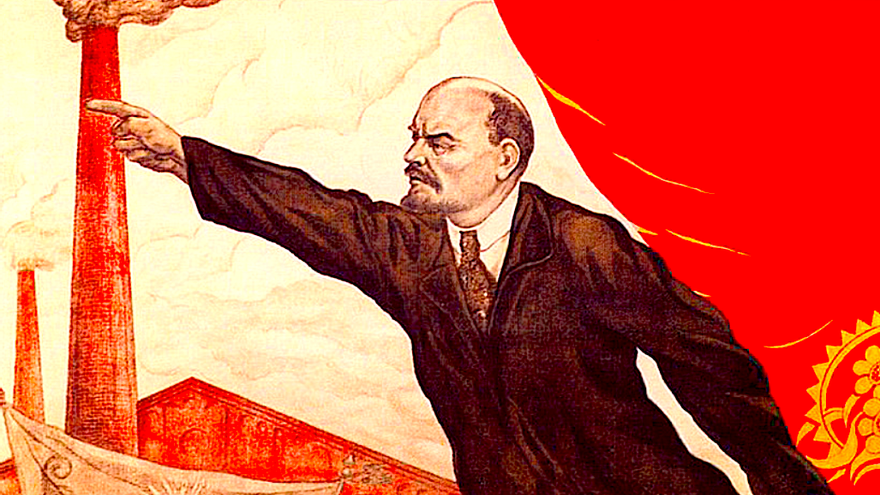
Cuba: The New Minority

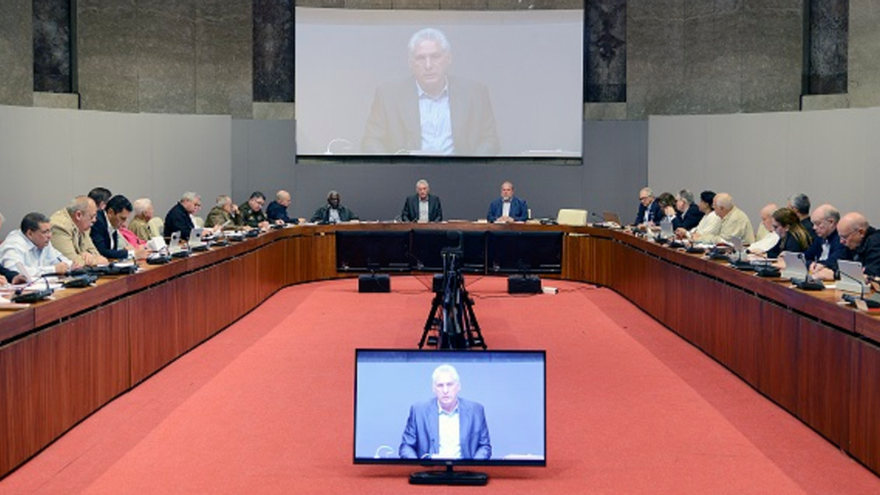
Meeting of the Council of Ministers chaired by Miguel Díaz-Canel in 2022. (Studies Revolution)

14ymedio bigger14ymedio, Reinaldo Escobar, Havana, 17 February 2024 — If it were possible to conduct a national survey without the participants being afraid to answer truthfully and with the guarantee that the results will not be manipulated, I dare to say that when asked, “Are you satisfied with the management of those who govern?”, we would see that the vast majority would mark the “no” box. If the question were more precise and investigated the popular will to carry out a profound change in the system, the same majority would mark the “yes” box.

I refuse to believe that all the people I talk to, those with who agree with me, in a bus, a taxi, a line or the privacy of their homes are lying when they show their disagreement with the rulers or when they project a new way of living in Cuba. In any case, if they were to lie, it would be to say that everything is fine and that socialism is the solution, but they would do it out of fear.

I have known many who believed in the project that was intended to build communism in Cuba and who today no longer believe in it, but I don’t know anyone who, having really been against it, have been convinced that the proposals of the only party allowed are the desired future for the country. There are many imposters among those who applaud, but the only ones who pretend are the State Security agents infiltrated into the opposition. continue reading

In any case, if they were to lie, it would be to say that everything is fine and that socialism is the solution, but they would do it out of fear

Communist Party militancy represents less than 9% of the Cuban population, but its presence in Parliament, in the Council of State and in the Council of Ministers exceeds 98%. These abysmal differences between a minority that rules and a majority that must obey are cemented in Cuba on apparent political differences, far from the entrenched divergences between Sunnis and Shiites that fractured Iraq or the ethnic conflicts between Tutsi and Hutu that ended with a genocide in Rwanda. Camagüey will never be separatist like Chechnya; the devotees of the Ocha Rule (UN Office for the Coordination of Humanitarian Affairs)* will not promote a massacre of Catholics; the war between blacks and whites that occurred in 1912** will not be repeated.

When those who occupy the seats in the spheres of power are a minority, they can only maintain their prevalence through force, expressed in the intimidating presence of repressive institutions, the political control of the judicial spheres and a network of collaborators dedicated to betraying and participating in acts of repudiation.

This structure can be corroded from below or from above.

Loyalty to historical nonagenarians is still the best currency to stay afloat

Here below you can see that, although many people continue to pay their fee as members of the Committees for the Defense of the Revolution (CDR), they only do it to keep appearances before a presumed “verification” to ascend at work, but no one is on night guard anymore, and the private businesses that pay better salaries than the State do not do verifications. The aspiration to emigrate, which entails the requirement to demonstrate a credible fear, far exceeds the ambition to be head of something in a State entity. The presidency of the CDR does not determine who is going to install a landline phone and, in short, with cell phones the communication issue is resolved.

“Up there” is where you can best see the masquerade dance. Loyalty to historical nonagenarians is still the best currency to stay afloat. But that minority that mostly occupies the positions in the chamber of power is composed of human beings who, no matter how cynical and opportunistic they are, realize that their commitment to those who rule is in contradiction to their responsibility to those they supposedly represent.

They are in the minority, and the majority realize it.

Translator’s notes:
*Resolution 46/182 and other resolutions affirm that UN humanitarian assistance must be provided in accordance with the principles of humanity, neutrality, impartiality and independence from political motivations.  
**The “Little Race War” in 1912 was a series of protests and uprisings in Cuba, in which the Cuban armed forces put down a rebellion by black Cubans in the eastern part of the country

Translated by Regina Anavy

____________

COLLABORATE WITH OUR WORKThe 14ymedio team is committed to practicing serious journalism that reflects Cuba’s reality in all its depth. Thank you for joining us on this long journey. We invite you to continue supporting us by becoming a member of 14ymedio now. Together we can continue transforming journalism in Cuba.