Cuban Authorities Promise To Fight Drugs With ‘Blood and Fire’

In 2024, more than 1,000 kilos were seized, mostly cocaine, and more than 1,100 people were sentenced to prison.

Anti-drug operation this week in Havana / Tribuna de La Habana

14ymedio bigger14ymedio, Madrid, 21 February 2025 — The authorities’ concern about the increase in the amount of drugs circulating on the Island is as evident as is its desire to spread the message that they are fighting on all fronts. This is demonstrated by apparently trivial details such as the fact that this Thursday Noticiero Estelar issued a brief report about a trial held in Havana against a 50-year-old man accused of drug trafficking for being in possession of a package in his name with 7.5 kilograms of cocaine from the Dominican Republic.

In a country where crime was previously not talked about and the circulation of narcotics was denied, the issue of drugs is very present lately in the official media, which are reporting this trial before the sentence is known.

The provincial newspaper Tribuna de La Habana has not missed a beat and this Friday had two news reports – one of them from the previous day – that also address the issue from different angles. One talks about the “confrontation” with several images of police operations in the capital and the offer of “support for young people at risk”; the other celebrates a workshop that was held at the Saúl Delgado Urban Pre-University Institute, in El Vedado, for the prevention and rejection of drugs.

The data offered by the Ministry of the Interior at the end of 2024 make it clear that the problem exists on all fronts of the Island. Last year, 1,051 kilos of drugs were detected in Cuba, mostly cocaine, in addition to marijuana, methamphetamine and cannabinoids. The maritime route continues to be the most active – or, at least, the one where most drugs were detected. There alone, the police seized 844.02 kilos (619.72 of cocaine, 222 of marijuana and 2.3 of hashish) in 133 landings. There were also nine searches in which 37.5 kilos of drugs were seized. continue reading

The data offered by the Ministry of the Interior at the end of 2024 make it clear that the problem exists on all fronts on the Island

The report, published this Friday in the State newspaper Granma, highlights the participation of other countries in these crimes and mentions several operations concerning speedboats that penetrated national territory from the US, Mexico, the Dominican Republic and Jamaica. Cuba cooperates with the authorities of these countries, including an investigation into “20 organizers abroad.”

Within Cuba, a case in Pinar del Río stands out in which three people – the organizer and two boat drivers – were arrested with more than 8 kilos of methamphetamine.

Detection from the air was lower, although the ministry points out that it has corroborated “the intention of foreigners and Cubans based abroad to introduce drugs to the national territory through several airports from ten countries in the region,” by way of mules, cargo or post.

“From the United States, synthetic cannabinoids (el químico – the chemical) are kept in their natural state – powder – and mixed with tobacco and methamphetamine,” says the report. This economical product is ravaging the streets of many cities on the Island and visibly worries the authorities, who have admitted the death of at least two people related to this product, as well as the addiction of countless young people.

In the airports, the information indicates, 94 people were arrested, 75 of them Cubans. In addition, more than 90 kilos of drugs were confiscated: 74 of cocaine, 7.8 of marijuana, 5.8 of synthetic cannabinoids, 2.6 of methamphetamine and 0.06 of ecstasy. Through Interpol, 59 Cubans and two foreigners are being sought for the crime of illicit drug trafficking.

Within the Island, the note adds, 157 interprovincial trafficking operations were hindered, with 267 detainees and more than 73 kilos of drugs secured. Most cases are concentrated in Havana, Camagüey, Holguín, Granma and Santiago de Cuba. The concentration of cases of dismantled cultivation in the east of the country is striking, since it only refers to those provinces when reporting the 105 cases found, with more than 49,000 plants and more than 207,000 seeds seized.

The ministry insists on international cooperation and says it is in contact with 37 foreign anti-drug services

The ministry insists on international cooperation and says it has contact with 37 foreign anti-drug services and has exchanged 105 messages with 24 countries.

Nor does it skimp on numbers when reporting on the “application of criminal and prison policy.” There are 1,237 drug trafficking files opened by the prosecutor’s office and 897 certified for possession. Of those accused, 92% go to pre-trial detention “because of their harmful nature.” In the courts there were 980 cases in which 1,193 people were judged, 97% of them sanctioned and 94% with deprivation of liberty. In addition, figures are given for hundreds of thousands of talks and debates in educational centers with the participation of hundreds of thousands of people. Also, it reminds readers that an organization dedicated entirely to this phenomenon, the National Drug Observatory, has been inaugurated.

In the midst of this panorama, Manuel Marrero also addressed the matter in a meeting with the authorities of the State and the Party in the Palace of the Revolution. There, the figures exposed by the Ministry of the Interior were reviewed, and the dangers of these substances were stressed, both for health when they are consumed and for national security when they are introduced into the country.

All the speeches underlined the importance of having the phenomenon under control and called it “a battle” to indicate that it is a war “against all those who are trying to contaminate society.” Marrero turned, at the end, to the leaders of the Revolution and, quoting Raúl Castro, said that drugs will be fought “with blood and fire.”

Translated by Regina Anavy

____________

COLLABORATE WITH OUR WORK: The 14ymedio team is committed to practicing serious journalism that reflects Cuba’s reality in all its depth. Thank you for joining us on this long journey. We invite you to continue supporting us by becoming a member of 14ymedio now. Together we can continue transforming journalism in Cuba.


With the Release of Four Political Prisoners, the Cuban Regime Resumes the Process Interrupted a Month Ago

These are the 11J protesters Ivan Mauricio Arocha Arocha, Brusnelvis Adrian Cabrera Gutierrez and Yaquelin Castillo Garcia and the activist Ohaurys Rondon Rivero

Iván Mauricio Arocha Arocha, one of the political prisoners released in the last few hours / Prisoners Defenders

14ymedio bigger14ymedio, Madrid, 27 February 2025 — Iván Mauricio Arocha Arocha and Ohaurys Rondón Rivero are the first two political prisoners that the Cuban regime has released since Donald Trump put an end to the agreement with the Vatican.

According to Prisoners Defenders (PD), Arocha Arocha, a demonstrator on 11 July 2021 in Santiago de Cuba, was released this Thursday from Boniato prison under “conditional parole .”

The 55-year-old man was arrested along with his son, Iván Arocha Quiala, who remains in prison. Both were sentenced to 10 years for the crimes of attack, public disorder, disrespect, resistance, instigation to commit crimes, defamation of institutions, “and organizations and heroes and martyrs,” and spreading epidemics.

According to Rondón’s own testimony, he was released along with 29 common prisoners

The case of Ohaurys Rondón, a member of the Opposition for a New Republic Movement, was confirmed by Martí Noticias, which reported that the activist was released from a forced labor camp in Havana. According to Rondón’s own testimony, he was released along with 29 common prisoners, all of them from the 1580 prison of San Miguel del Padrón, in Havana.

The activist was sentenced in November 2023 to two years in prison, for the crimes of “property damage and propaganda against the constitutional order,” breaking the windows of a pharmacy in the Havana municipality of Marianao and painting anti-government posters. The charges were dropped, and he was charged with the common crime of possession of a knife, explains Martí Noticias. continue reading

The organization Justicia 11J , which collects data on those imprisoned for the historic protests, was the one that reported on Thursday the other two cases placed on “conditional release”: Brusnelvis Adrián Cabrera Gutiérrez and Yaquelin Castillo García.

The Provincial People’s Court of Havana sentenced Cabrera Gutiérrez to 15 years in prison – which was finally reduced to 10 – after “proving” that the young man, then 21 years old, “showed up at the crowd of people riding a red moped, with which he joined those present, and made gestures with his hands and movements with his body inciting the population that was watching to join in the disorder.”

Castillo García, who participated in the La Güinera demonstrations on July 12, 2021, was sentenced to 11 years for sedition. NGOs denounced her situation, highlighting that she has a teenage son in the care of her aunts.

The Provincial People’s Court of Havana sentenced Cabrera Gutiérrez to 15 years in prison

With these four releases, the number of political prisoners released would total 214 under an agreement that the Cuban regime has always distanced itself from the United States, although it was announced less than an hour after Biden removed Cuba from the list of countries sponsoring terrorism. At the same time that, days later, Trump was sworn in and returned the Island to the blacklist, Havana halted the 553 promised releases.

With Arocha and Rondón, 212 political prisoners have now been released under an agreement that the Cuban regime insists has nothing to do with US policy, although it was announced less than an hour after Biden removed Cuba from the list of countries sponsoring terrorism. After Trump assumed power and returned the Island to the blacklist, Havana stopped releasing the 553 political prisoners.

In the same way, the Government hurried to clarify that the releases were “neither an amnesty nor a pardon,” but “benefits” that did not exempt those released from returning to prison if they did not comply with the “obligations.”

By then, historical opponents such as José Daniel Ferrer and Félix Navarro, and activists such as Pedro Albert Sánchez, Luis Robles and Lady in White Tania Echeverría were free. But there has been no news of the possible release of other dissidents including the artists Luis Manuel Otero Alcántara and Maykel Castillo, and Ladies in White Sissi Abascal and Sayli Navarro.

For Prisoners Defenders, the releases have been no more than “a macabre game of the regime.” The total number of released prisoners given by the Regime was “very symbolic,” said Javier Larrondo, president of PD, because it is the same estimate given by both his organization and other demonstrators arrested after 11 July 2021. “What they have done is, subliminally, let us deceive ourselves into thinking that they are all 11J prisoners,” he told this newspaper on January 24.

The number of political prisoners in Cuba has risen to 1,150, according to PD. To contribute to their most urgent needs, the Council for the Democratic Transition in Cuba presented an initiative on Tuesday called “Neither Forgetting nor Abandonment: Let’s Save Cuban Political Prisoners.” With it, they hope to raise money for food, medicine and personal hygiene items for those imprisoned for ideological reasons.

“In Cuba, a family needs at least 50 to 100 dollars a month to support a political prisoner. Every contribution, however small, can make the difference between life and death in the regime’s prisons,” he said in a statement, recalling that at least 50 people died in the island’s prisons last year.

“No cause can prosper if those who have been imprisoned on the front lines for defending freedom, democracy and human rights are abandoned. Justice and human dignity cannot be just abstract principles; they must be translated into action,” they ask in the document, in which they claim the phrase popularized during the Holocaust: To save one life is to save all humanity.

Translated by Regina Anavy

____________

COLLABORATE WITH OUR WORK: The 14ymedio team is committed to practicing serious journalism that reflects Cuba’s reality in all its depth. Thank you for joining us on this long journey. We invite you to continue supporting us by becoming a member of 14ymedio now. Together we can continue transforming journalism in Cuba.

The Cuban ‘Mules’ That Travel to Margarita, Venezuela, Are a Source of Dollars for the State-Owned Cubatur

Nearly 30,000 Cubans have flown to the Venezuelan island to shop since the program was launched

The Cubatur agency office located at 23 and L, in Havana, where travel packages to Margarita, Venezuela, are sold. / 14ymedio

14ymedio bigger14ymedio, Havana, 27 February 2025 — Margarita has become one of the favored destinations for Cubans. The numbers are already incontestable: almost 30,000 people have traveled from the Island since a program was created in 2022 to encourage commercial tourism in the Venezuelan state of Nueva Esparta.

The data was released on Wednesday by the Venezuelan Ministry of Tourism, which applauded the fact that the local airport, Santiago Mariño, received more than a thousand travelers between February 17 and 23 of this year alone. Of these, 224 were Cubans and 709 Polish, the two nationalities with the most travelers in total, with 29,324 and 20,703, respectively. Trinidad and Tobago, with 11,394, is the third nationality.

The program has undoubtedly been a commercial success for the Venezuelan government. In the first year alone, Cubans spent around 17 million dollars there to “purchase various items,” said the president of the Nueva Esparta Chamber of Commerce, José Gregorio Rodríguez, who estimated that there were 5,000 visitors from the island since August 2023. The success was such that the organizers decided to start chartering cargo planes to increase the volume of purchases by passengers. continue reading

In the first year alone, Cubans spent around 17 million dollars there to “purchase different items,” said the president of the Nueva Esparta Chamber of Commerce.

But there is another party that profits from this obvious business for Cuban mules and that is the Havana regime. Travel packages to Margarita Island are managed by Cubatur and the Gira Agency, which is also represented on the island by the state-owned company. To no one’s surprise, the trips, which until mid-2024 were sold in national currency and foreign currency, have become available exclusively in dollars. In addition, in just one month, prices have risen from $610 in January to $860 announced for this February. In March, the price will be close to $700.

“At the Habana Libre, tickets to [Margarita] Island can be paid for in dollars in cash,” reported an agency employee on the Telegram channel set up for the occasion. There are more than 2,700 people subscribed to this network where commercial advertising invades the screen and complicates the lives of those who are only looking for information.

“We are waiting for you at Nirvana Intima with the best prices and the best service on the island,” announces a company with dozens of photos of underwear. “We offer you the best prices and quality in Paraná,” says another. “Novelties Nina, with the best price on soft drinks on the island,” promotes another company. Shoes, sandals, sweaters, 43-inch televisions, Redmi phones for 110 dollars, cables of all kinds and solar plants…” The bazaar is huge and the possibilities of purchasing items and reselling them on the Island are very attractive.

According to data from the Venezuelan Minister of Tourism in 2023, Cubans spent 5,000 dollars in Margarita, although the president of the Chamber of Commerce lowered the amount to 3,400. Today, many of these travelers estimate the amount needed to be around 3,000. “It all depends on the amount of luggage you are going to bring and the merchandise you buy, obviously not everything has the same price. On my first trip I packed everything: six suitcases, two with toiletries, food and medicine, and four with miscellaneous items. I needed about 2,900 dollars,” says one mule .

“On my first trip I packed everything: six suitcases, two with toiletries, food and medicine, and four with miscellaneous items. I needed about 2,900 dollars”

Customs allows the free importation without limits of food, medicines and toiletries, something that travelers are very aware of, but – they know – it is very important not to mix products. “If you mix medicines, toiletries, soft drinks, there are no problems. What you cannot do is mix a single product, if they declare it as commercial,” recommends a regular, although there is not always an Official Gazette to cling to. “They are only allowing five kilos per product. The rest is up to the customs officer on duty.”

Travel packages in national currency, which once cost around 114,500 pesos and were already difficult to find, are history, but there are still some options to pay in MLC. However, some buyers say that achieving this is almost a miracle. “Are there no more offers in MLC?” asked one buyer to the agency. “Yes, but the POS (for card payment) has been broken for a long time,” they replied. The price does not include the special visa for purchases, which at the beginning of the program cost 30 dollars and has risen to 50.

That price is the same as what Panama demands to enter the Colon Free Zone, one of the destinations with which Margarita competes, but which remains the preferred destination for Cubans – even more so since the violence in Haiti has cornered that market. The latest available data, from the first quarter of 2024, indicate that 4,172 buyers from the Island arrived in Colon.

____________

COLLABORATE WITH OUR WORK: The 14ymedio team is committed to practicing serious journalism that reflects Cuba’s reality in all its depth. Thank you for joining us on this long journey. We invite you to continue supporting us by becoming a member of 14ymedio now. Together we can continue transforming journalism in Cuba.

Despite Their Profits in Cuba, a Spanish Luxury Hotel and a Canadian Hotel Refuse To Pay Extra to Their Staff

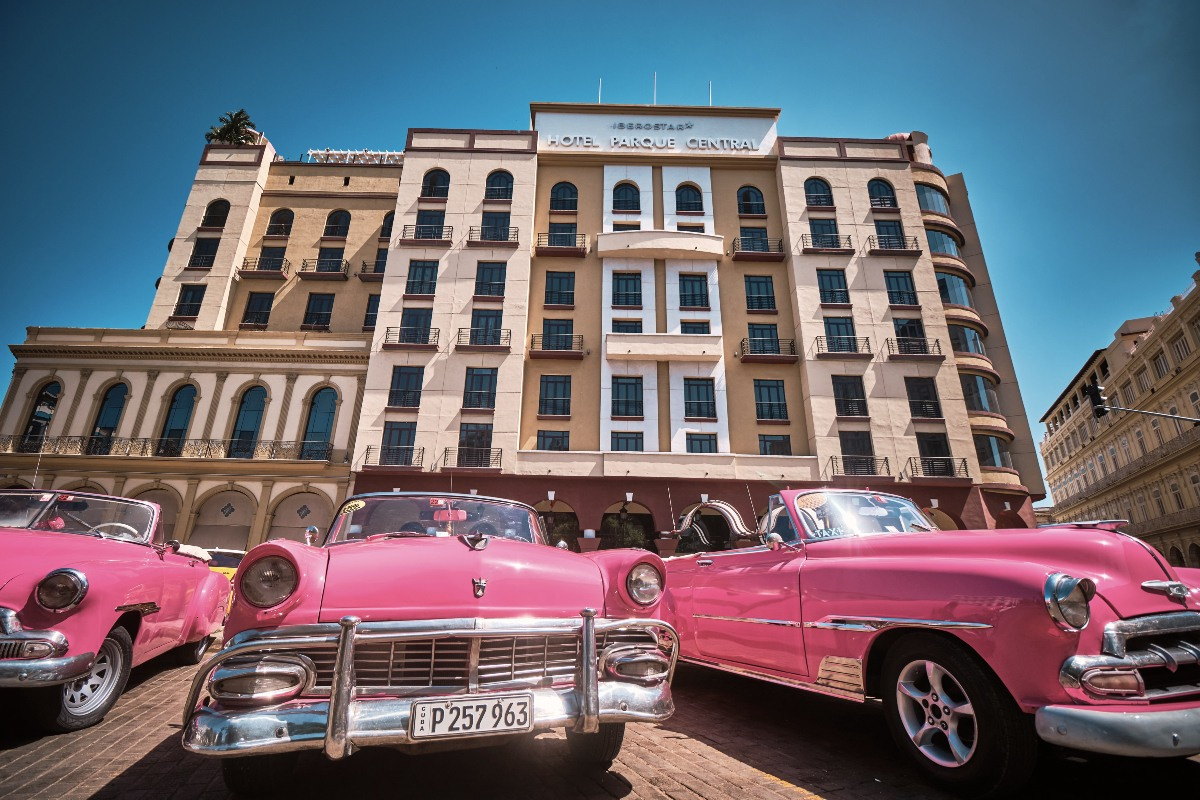
Facade of the Iberostar Selection Parque Central, in Havana / Facebook / Iberostar

14ymedio bigger14ymedio, Madrid, 24 February 2025 — The workers of at least two hotels managed by foreign firms, the Iberostar Selection Parque Central, in Havana, and the Royalton Hicacos, in Varadero (Matanzas), have been demanding a wage stimulus for two years, which has been denied despite the companies’ profits. An article in the newspaper Trabajadores pointed out last week that the shareholders’ 2023 and 2024 meetings of both establishments “decided not to approve the creation of the Economic Stimulus Fund (ESF).” It is likely, the text ventures, that the same thing will happen in 2025.

“As expected, the discontent became a regular customer of two key facilities in tourist operations in the country, both for its weight in the amount of income in foreign currency and for the efficiency in operations concluded with profits,” regrets the article, included in a lengthy special dedicated to wage incentives on the Island.

That refusal of the companies, the report clarifies, is protected by current legislation, specifically the Foreign Investment Law of 2014, which “leaves it up to the parties to create said Fund.”

The complement in CUC to their meager salaries in pesos was one of the main attractions for workers in tourist facilities

With the Ordering Task*, which led to the disappearance of the Cuban convertible peso (CUC) at the beginning of 2021, the incentives in this currency were eliminated for the employees. It wasn’t something minor. The complement in CUC to their meager salaries in pesos was one of the main attractions for workers in tourist facilities. This helped them not only retain their employees but also stopped the theft of supplies, something common.

According to Trabajadores, based on the “monetary and exchange ordering,” workers were promised “an attractive monthly payment of 2% or 3% of the profits.” They “dreamed about” having jobs in joint venture hotels. continue reading

That payment happened again in 2022, although “a very low percentage corresponding to 2021 was distributed then.” The amounts, the text continues, increased considerably in 2023 and 2024, but both the Iberostar Parque Central de La Habana, belonging to the Spanish hotel, and the Royalton Hicacos de Varadero, of the Canadian Blue Diamond, did not grant incentives.

“Other joint ventures did award 3,784 employees of the Cubanacán business group,” the report states. Although for more than two years, “the union has been promoting the idea of looking for some way to protect the right to be rewarded for the wealth created,” says the report, “the matter is still pending solution, with the cost of a marked exodus of the labor force and a negative impact on the quality of tourism processes.”

The hope is that the obligation of the ESF in joint ventures will be included in an upcoming reform of the Foreign Investment Law, scheduled for 2026.

The distribution of stimulus payments from the profits creates “concern” during the first three months of the year

Also, says Trabajadores, several debates are taking place about the distribution of company profits, which must be done by March 31. First, two fundamental requirements must be met: “We cannot talk about wealth distribution if it has not been created before; nor should we talk about a distribution of income generated by it that is not compatible with the individual participation of workers.”

The distribution of stimulus payments from the profits, says the newspaper, creates “concern” during the first three months of the year, when financial statements are released.

Already in the last weeks of December, when the year begins to close, “people have more or less an idea of the “size of the ball,” as we say, about whether or not they will get that additional income. What they don’t know is how much, and sometimes their impatience about when they will receive it comes to the surface.”

Agility in this process, says Trabajadores, is fundamental: “An entanglement in the accounts, an uncertainty in the calculations, can lead to a delay in the distribution of profits among workers.” The trade union organizations, it continues, must participate in the decision-making of the management councils. “The ability of the unions to negotiate, based on the preparation of their leaders, will determine the success of the distribution of profits.”

In the case of the Iberostar Parque Central and the Royalton Hicacos, the unions have not been successful so far.

*Translator’s note: The “Ordering Task” [Tarea Ordenamiento] was a collection of measures that include eliminating the Cuban Convertible Peso (CUC), leaving the Cuban peso as the only national currency, raising prices, raising salaries (but not as much as prices), opening stores that take payment only in hard currency which must be in the form of specially issued pre-paid debit cards, and a broad range of other measures targeted to different elements of the Cuban economy.

Translated by Regina Anavy

____________

COLLABORATE WITH OUR WORK: The 14ymedio team is committed to practicing serious journalism that reflects Cuba’s reality in all its depth. Thank you for joining us on this long journey. We invite you to continue supporting us by becoming a member of 14ymedio now. Together we can continue transforming journalism in Cuba.

US Secretary of State Marco Rubio Extends Visa Restrictions to Those Involved in the Export of Cuban Labor

US Secretary of State Marco Rubio states that Havana “continues to benefit from the forced labor of its workers”

In the case of medical “missions,” adds Rubio, ordinary Cubans are deprived of “the medical care they desperately need in their country” / Facebook/Cuban Medical Mission in Venezuela

14ymedio bigger14ymedio, Madrid, 25 February 2025 — The United States has expanded its visa restriction policy to people who are involved in forced labor on the Island. In a statement made public on Tuesday, Secretary of State Marco Rubio explains that the expansion affects officials or former officials, Cubans or those from other countries, “who are believed to be responsible for or are involved in the Cuban labor export program, in particular, Cuba’s medical missions abroad.

The restrictions will also apply, he adds, to the “immediate family” of those indicated. Rubio does not reveal their identities but says that the State Department has already taken “measures to impose visa restrictions on several people, including Venezuelans, under this expanded policy.”

In his statement, the head of US foreign policy says that the Cuban regime “continues to benefit from the forced labor of its workers” and that “the abusive and coercive labor practices of the regime are well documented.” In the case of medical missions, Rubio adds, ordinary Cubans are deprived of “the medical care they desperately need in their country.” continue reading

“The regime’s abusive and coercive labor practices are well documented”

The measure expands restrictions already established, as is the case of the 28 Cuban officials sanctioned in 2022 for intervening in the repression of the anti-government protests of 11 July 2021. In addition, it adds to other provisions issued by the current Trump administration, such as the reinstatement, on January 31, of the Restricted List of Cuba, a “black list” that vetoes certain transactions with companies under the control of the Cuban military, intelligence or security services, or that act in their favor. Among them is the financial company Orbit, which managed Western Union remittances.

Last Friday, the Government of the Island said that Washington had suspended “the application mechanism for a group of visa categories that are used for state officials and their agencies,” rejecting “dozens of passports.”

On that occasion, a source from the Cuban Foreign Ministry told the Associated Press agency, on condition of anonymity, that the refusal of visas is directly related to a 2020 United States provision that vetoes the delivery of visas to countries that do not cooperate with the migrant deportation process.

Translated by Regina Anavy

____________

COLLABORATE WITH OUR WORK: The 14ymedio team is committed to practicing serious journalism that reflects Cuba’s reality in all its depth. Thank you for joining us on this long journey. We invite you to continue supporting us by becoming a member of 14ymedio now. Together we can continue transforming journalism in Cuba.

In Cuba, a Television Series Highlights the Sexist Violence That the Regime Minimizes

Sexual assaults; femicides; transphobia; pedophilia and the fear of victims to report are topics addressed in ‘ Cats, Masks, Shadows’

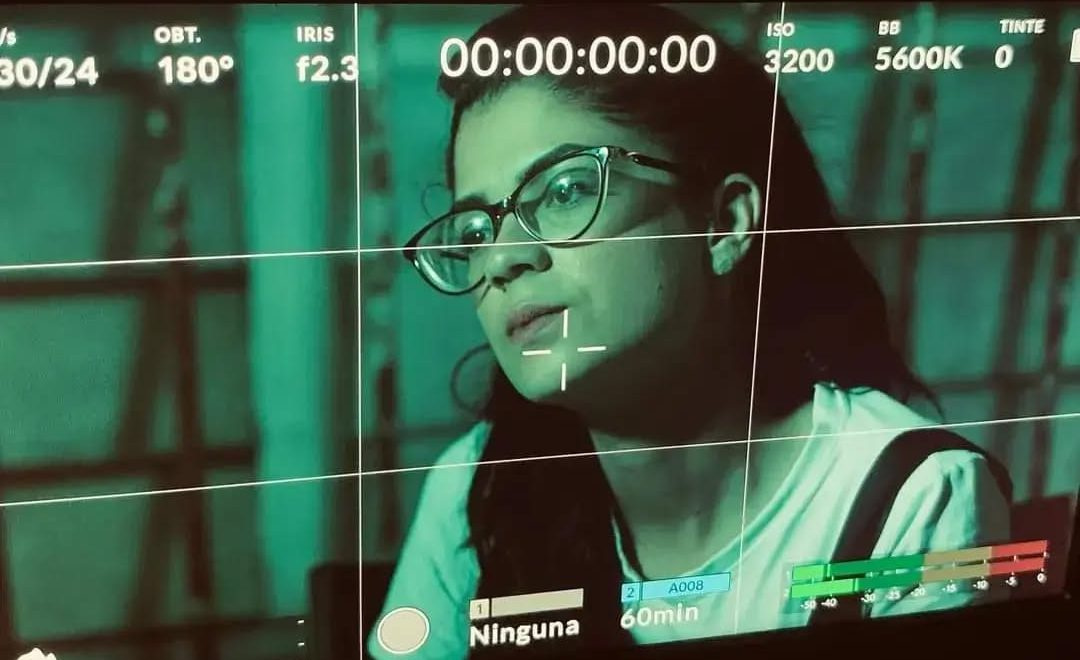
The series of 12 episodes follows Laura, the psychiatrist for a group of victims of sexist violence / Cubavision

14ymedio bigger14ymedio, Raquel Martori, Havana, 24 February 2025 — Sexual assaults, femicides, transphobia, pedophilia and the fear of victims to report are some of the topics addressed by the Cuban series Los Gatos, las máscaras, las sombras [Cats, Masks, Shadows], the first dramatized material that addresses these evils so directly on state television.

In an interview with EFE, its director and screenwriter, Elena Palacios, says that the vision of Cats, Masks, Shadows, whose team is almost entirely female, is “to offer a genuine look from a human point of view.”

“I tried to focus on the conflict in each story. I preferred to concentrate on a specific violence, to show it in a calm, suggested way,” she emphasizes.

Lisy, Amelia, Sandra, Chelo, Verónica and Inés personify the stories that have a common thread through Laura, the psychiatrist for a group of victims of sexist violence and the protagonist of the series.

Lisy, Amelia, Sandra, Chelo, Verónica and Inés personify the stories that have a common thread through Laura, the psychiatrist for a group of victims of sexist violence

Palacios took over the task after receiving a commission from Cubavisión. For the director and screenwriter, sexist violence “is a universal problem” that is based on “inequality or a power imbalance” that ranges from the violent – “death” – to “psychological” – micro violence and “micro continue reading

machismo.”

For the screenwriter, the comments on social networks about the series is something she considers “a success.” The favorable ones are mainly from women, but “there are also very good analyses and criticisms from men.”

In fact, Palacios believes that audiovisual products “can contribute much more than any social orientation program, campaign or theoretical event, because people enjoy fiction, and it has the power to influence emotions and make people think in a direct and deep way.”

The first episode presents the case of Lisy, a young woman who lives in fear with a violent partner. Palacios thought that the story was “dramatically exploitable” given that it takes place during the pandemic, which was “a trigger for domestic violence.”

In another episode, the character of Amelia appears, who exposes the “colonizing attitude” of a European man towards a Cuban woman. Palacios emphasizes to EFE the care she had to use with the case of a pedophile grandfather and his granddaughter: “That happens more than you might imagine.”

Chelo, says the director, is the trans woman, who in the series represents those who “face a lot of daily violence,” so her intention was to “sensitize the viewer” with “the familiar and acceptance.”

Cats is an artistic license of mine, because I like cats. Some characters in the series have them, and that has allowed me to show that one of the first manifestations of violence is reprisals against pets or property,” Palacios points out.

The masks are related to “the image and the roles that women try to fulfill like the professional and the mother.” The psychiatrist defines the shadows as “a psychoanalytic element. It’s that dark side of human beings, things that are hidden, guarded.”

She defines the shadows as “a psychoanalytic element. It’s that dark side of human beings, things that are hidden, guarded”

But she warns that some shadows, like those of the abusers, are “more dangerous,” especially when they reach their “worst moment” in the series. The sixth episode will be broadcast this Sunday in Cuba.

Cats, Masks, Shadows arrives on Cuban television at a time when sexist violence has been placed at the center of discussion on networks and, although at a slower pace, in official circles and media.

The Government has declared “zero tolerance” for gender violence and has launched the No More campaign, focused on the prevention and response to aggression against women. However, feminist associations still insist that not enough is being done, and they denounce, among other things, the lack of a comprehensive law against sexist violence.

Last year, according to the registries of the independent activists of Alas Tensas, Yo Sí Te Creo and this newspaper, a total of 54 femicides were recorded, mostly committed by the partners or former romantic partners of the victims.

Translated by Regina Anavy
____________________

COLLABORATE WITH OUR WORK: The 14ymedio team is committed to practicing serious journalism that reflects Cuba’s reality in all its depth. Thank you for joining us on this long journey. We invite you to continue supporting us by becoming a member of 14ymedio now. Together we can continue transforming journalism in Cuba.

When Havana Was on the Posters for Tours by Great Musicians

In the vast circuit of world music venues, Cuba no longer competes. It lacks any material attraction.

Joaquín Sabina during a presentation in Mexico in early February 2025. / jsabinaoficial/Instagram

14ymedio bigger14ymedio, Generation Y, Yoani Sánchez, Havana, 25 February 2025 — Last Saturday, in Miami, thousands of spectators sang along with Joaquín Sabina’s best-known songs. The city of Florida hosted the concert of the Spanish composer on his farewell tour of the stage. Among the audience were many of those Cuban fans who once enjoyed his performances in Havana. Now, they are migrants in a foreign country and it is unlikely that the author of Hola y adiós will be allowed back into the Island.

In 2022, the Úbeda-born artist made his position clear: “I was a friend of the Cuban revolution and of Fidel Castro. But I am no longer, I cannot be.” Those words cost him a place on a list that the Castro regime constantly updates with artists who have dared to criticize its political model, the character of its leaders or the Communist Party. The list is very long and has changed over the years. It not only contains exiled Cuban musicians but once included figures such as José Feliciano, Roberto Carlos, Julio Iglesias, Raphael, Carlos Santana, more recently Fito Páez and even the Beatles themselves.

“I was a friend of the Cuban revolution and of Fidel Castro. But I am no longer one, and I cannot be one”

Among those censored were also songs by Joan Manuel Serrat, Mercedes Sosa and Miguel Ríos. Sometimes the scissors came because of the performer’s public attitude, other times, simply because the lyrics of one of their songs irritated the rigid Cuban commanders and generals. However, despite so many controls and suspicions, in those years performing in Havana, Varadero or Santiago de Cuba continued to be an aspiration of many international musicians, so being excluded from those concerts was considered a punishment.

However, time passed and everything changed. Now, performing in our country is of little interest to most of the great artists of the moment. Colombian Shakira is on the world tour Las mujeres ya no lloran [Women No Longer Cry] and the Cuban capital is conspicuous by its absence among the chosen destinations. Bad Bunny has not given any sign that he will rock, in the short or medium term, the seats of the Karl Marx theater or the Ciudad Deportiva de La Habana. The voices of Rosalía, Ed Sheeran, Lady Gaga or Taylor Swift have not been heard live in any of the concert halls continue reading

on the Island.

Now, performing in our country is of little interest to most of the great artists of the moment.

The reason for these absences is not only the political exclusions carried out by the regime. There is also an economic motivation. In the wide circuit of musical venues worldwide, Cuba no longer competes. It lacks any material appeal. In what currency should tickets be charged so that the artist can collect some income from their show? The Island has also lost its appeal as a stopover to gain prestige or a name; rather, it is quite the opposite. Singing at the National Theater or the Martí can now be seen as an act of blindness to the excesses of a dictatorship and an act of gross complicity with a government that has more than a thousand political prisoners.

That is why, and for many other reasons, Joaquín Sabina sang in Miami and not in Havana last Saturday: not only because they might not let him enter the island, but also because most of his audience is already abroad.

Editor’s note: This article was originally published in Deutsche Welle in Spanish.

____________

COLLABORATE WITH OUR WORK: The 14ymedio team is committed to practicing serious journalism that reflects Cuba’s reality in all its depth. Thank you for joining us on this long journey. We invite you to continue supporting us by becoming a member of 14ymedio now. Together we can continue transforming journalism in Cuba.

Likes & Dislikes

Disapproving of Trump is not sympathizing with the Democrats or subscribing to the ’Communist Manifesto’, but rather hating a style of doing politics

For Trump, there is only one country, and I’m not even sure it’s the United States. / EFE

14ymedio bigger14ymedio, Xavier Carbonell, Salamanca, 23 February 2025 — Who can forget the tedious English classes in high school, when the teacher asked for a paragraph – a composition, she would say, as if one were Mozart – that listed pleasures and annoyances, hobbies and chores, likes and dislikes. Writing a column about Trump feels like that. An exam, a strange duty, before a world that has accepted reasoning with the viscera (the guts, teacher!) and not with the brain. I have thought a lot, so much, about him. Since the first day and with both hemispheres. But what is coming has a lot to do with the stomach.

I don’t like Trump, I don’t like the fanaticism of Cubans for Trump, I don’t like that he is in the news every day, it’s not healthy, I don’t like the politics of harassment and corporate aggression, I hate the way he manages – like a farm, like Birán [the Castro family estate] – what for us was the country of freedom. I don’t think he understands what a democracy is. I don’t think he understands it or knows how to preserve it. In that he is like us.

Disapproving of Trump is not sympathizing with the Democrats or subscribing to the Communist Manifesto. Disapproving of Trump is hating a style of doing politics that has already had – please remember – four years to show what it could and could not do. Trump, the man who today makes whispered deals with Putin and Maduro, is “the hero who will save the Trocha”? What did Trump do for us in his first term? What is his duty against that insignificant dictatorship, Olympically ignored by 13 administrations, from Eisenhower to Biden? What commits him? The Florida vote? Please. continue reading

What is his duty against this insignificant dictatorship, completely ignored by 13 administrations, from Eisenhower to Biden?

To see a Cuban rave about him, celebrate his victory, throw a pathetic little party, a pathetic little cake with blue, white and red meringue, is to re-enact that orgasmic militancy that he once felt for Fidel Castro. Another “The Man”? Another “The Horse”? Another “My Commander”? Again “This is your house, Fidel”? No, thank you, whoever it is. A politician is an administrator, not a messiah.

I arrived in Europe without knowing what I was going to eat for the next month. I was assigned a number. I know what it is like to be a number or an illegible card, and I am not remotely alone. This country welcomed me, life made its way through mountains of bureaucracy, regulations, paperwork and uncertainty. What kind of human being would I be if I approved – or worse, if I voted! – for a policy that gives the green light to the hunt for migrants, hundreds of them my fellow citizens.

No, Biden’s immigration policies have not solved anything, but that does not justify thousands, perhaps millions of people living in total uncertainty since January 20. Not uncertainty, but fear. That is not the America we believed in. That is not freedom.

But Cubans are never afraid. Cubans, who do not live in a country but in a bubble of exceptionality, do not take it personally. Trump, my friend, the people are with you. One of the lowest hours of Cuban exile was traveling to Washington, to the doors of the White House, and asking for absolutely everything – some already saw themselves in a B-1 Lancer dropping bombs on Point Zero, with the Ride of the Valkyries in the background – except clemency for migrants from Venezuela, Nicaragua and Haiti, three countries as screwed as we are, perhaps more so. And the Afghans? And the Ukrainians? And the others?

Many pro-Trump friends, who are now beginning to moderate their enthusiasm, have told me: “I never imagined it would turn out like this.” I reply that there was nothing to imagine, because Trump may be a cruel, authoritarian guy and a compulsive liar in almost everything, but that when it came to migrants he was more transparent and sincere than the Virgin Mary. You like Trump, but he doesn’t like you.

I don’t like the fact that any Cuban who expresses the slightest displeasure with Trump – which ultimately is not just hating that ugly, orange-haired old man, but the values ​​he proposes – is met by a school of patriotic piranhas on social media. One leaves Cuba to speak, think and defend whatever one wants. Be a Trumpist, I respect that right. But cancelling and censoring, putting all the nuances in the same bag, simplifying, insulting, defaming, those are Villa Marista tactics that we have assimilated by dint of suffering them.

Trump will not help us build a country. No one is going to fix it for us or gift it to us.

Trump will not help us build a country. Nobody is going to fix it for us or gift it to us. For Trump, there is only one country, and I am not even sure it is the United States. The politicians who accompany him, whom the press calls Cuban-Americans, are Americans even if they have Latin surnames. They are concerned about a nation, their own, not that of their parents, and with good reason. Cuba – Kiuba – is a word that must sound very exotic in Washington.

I cannot speak about the end of aid to the independent Cuban press, because I have run out of space. To understand the impact of this news, one only has to take a look at the happiness that is felt in Cubadebate, Granma, the Party and the Foreign Ministry.

Well, Donnie, we’re done (I’ll leave Musk for another day). These are my dislikes, with zero likes because I don’t have Facebook or X. Brain and stomach and an arsenal of patience for the future. I feel free, freer than ever, as every Cuban migrant should feel, and the rest is literature. “Let Trump cook,” one wrote recently. Let him cook, the Kingdom is his. But with what ingredients, with whose sweat, at the cost of what values, with what allies, the Cubans? Like in Woody Allen’s joke, I no longer dare to belong to any club where there are people from my country.

At the end of this tunnel of tension that is about to become a roller coaster, we are ants trying to live our lives in the age of Trump, extras in an episode of House of Cards or Succession, a poorly drawn drawing in the background of the comic strip. Gray and forgettable people. But tell me, at the end of the day, isn’t that a little comforting?

____________

COLLABORATE WITH OUR WORK: The 14ymedio team is committed to practicing serious journalism that reflects Cuba’s reality in all its depth. Thank you for joining us on this long journey. We invite you to continue supporting us by becoming a member of 14ymedio now. Together we can continue transforming journalism in Cuba.

The Cuban Police, Left Without Staff, Try To Recruit Their Retirees

 Crime surge blamed in part on shortage of officers

Many ask for leave and go to work in State stores and private businesses / 14ymedio

14ymedio bigger 14ymedio, Juan Diego Rodríguez, Havana, 23 February 2025 — Rolando retired from the police a decade ago. All his life he was an office worker and patrolman in Havana, and after retiring, he looked for small jobs, finding gas and standing in line for the neighbors who hire him. He hadn’t felt linked to the Ministry of the Interior for some time, and, therefore, the call he recently received from a unit of the municipality of Diez de Octubre, asking him to return to work, left him perplexed.

“They asked me if I was working and if I wanted to do something with them again because they lack staff,” the retiree, whose name was changed for this article, tells 14ymedio. Rolando thought for a moment about his answer, not because he wasn’t clear about it but because it’s always better to choose your words carefully with the authorities: “I’m old now, and I don’t have what it takes for that kind of work.”

While it is true that his 75 years have not passed in vain, his age is not the only reason why he declined the offer, although it was the only one he gave out loud. “I will work for anyone but the State. The costs of transportation and living are too high for me to work in a police unit. What does the State offer that is worth that sacrifice?” he asks.

On the other side of the phone they insisted that he come back. “They told me that they could pay me 6,000 and up to 7,000 pesos. They asked me what I was doing for work and even offered me a position as a duty officer. It’s a pretty simple job, because you spend the day sitting, although you’re continue reading

usually on call 24 hours and then off for 48. But no, I don’t want to do anything with the State,” he says.

On the other side of the phone they insisted that he come back. “They told me that they could pay me 6,000 and up to 7,000 pesos”

It is not the first time that they tried to recruit Rolando to be a police officer again. “In 2023, Transportation called to offer me a position issuing fines. When I turned it down, they even said that they would help me, I’m not sure if that meant with resources or with the work, but I refused again,” he recalls.

As he explains, the lack of personnel in the police units is critical. “Recently they had a meeting in that same unit of Diez de Octubre looking for sector heads, officers on duty and even file clerks and receptionists, he says. And he adds: “the units are bare.”

Although without specific data, the Ministry of the Interior has acknowledged on several occasions that it lacks staff. In interviews on Cuban Television and with the official media, some managers have attributed the increase in crime in part to the shortage of police. For Rolando, that is another weighty reason to categorically refuse the offer from the Ministry.

“Because of that shortage of officers, the streets are very dangerous. I can’t go back to the police at my age. I wouldn’t be able to defend myself. I could kick someone, but that’s about it,” argues the habanero, who knows that in terms of danger, younger people also think like him. “People ask for leave and go to work in stores, where they are paid between 5,000 and 6,000 pesos, or to MSMEs, where they can earn even more depending on the work,” he says.

“Because of that shortage of officers, the streets are very dangerous. I can’t go back to the police at my age. I’m old and can’t defend myself”

At this point, the police are desperate to hire people, explains Rolando. In the middle of last year, the Ministry of the Interior offered several courses that were shared by local governments and the State press, for anyone who wanted to join their ranks in Pinar del Río.

From enrolling in a Law Degree to being a patrolman, the offers for those who accepted a one-year course were broad and the requirements minimal: “Must be between 17 and 40 years old, with 12-years’ education and a degree completed, and in good physical and mental condition.”

A 75-year-old retired officer “is now working with them,” says Rolando. “But what the hell! Don’t let them count on me!”

Translated by Regina Anavy

____________

COLLABORATE WITH OUR WORK: The 14ymedio team is committed to practicing serious journalism that reflects Cuba’s reality in all its depth. Thank you for joining us on this long journey. We invite you to continue supporting us by becoming a member of 14ymedio now. Together we can continue transforming journalism in Cuba.

Cuba: Waste of Light in the Dollar Store, Black as Pitch in the MLC Store

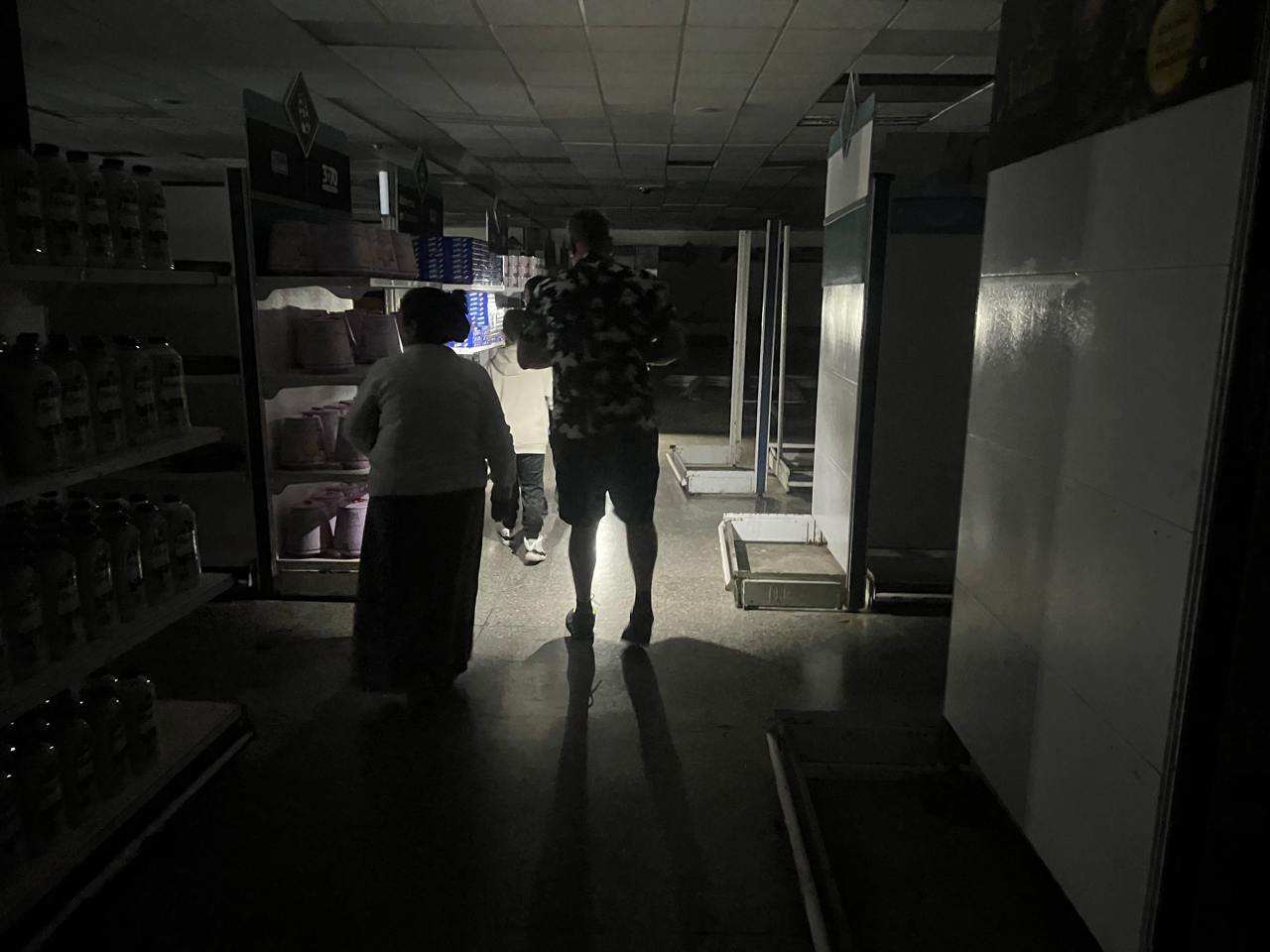
When the 3rd and 70th Free Currency Store went dark, customers had to rely on flashlights on their phones to get out.

An MLC store this Friday, in the midst of a blackout / 14ymedio

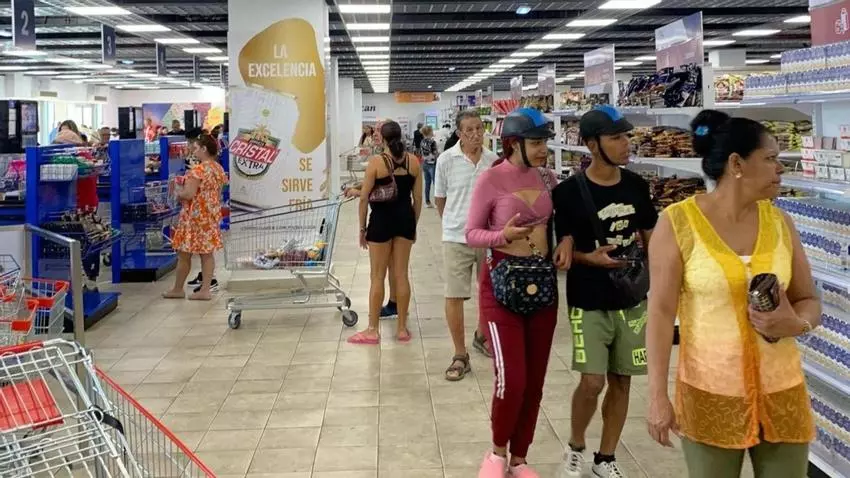
14ymedio bigger14ymedio, José Lassa, Havana, 23 February 2025 — The dollar store at 3rd and 70th in Miramar, Havana, has been crowned the king of all the shops of its kind on the Island. Compared to its sister stores, opened in other provinces, and, above all, to the outdated stores in MLC (freely convertible currency), the luxury and privileges of this commerce are difficult to emulate in Cuba. The waste of light that was exhibited this Friday, while neighboring buildings suffered a blackout, says it all.

Located at the foot of the luxury hotel Gran Muthu Havana, customers in the dollar store calmly chose the products from well-stocked shelves. The refrigerators full of minced meat or ham, the red shopping carts and the long, well-lit corridors contrasted with the total darkness of the MLC store, on the same corner but on the sidewalk in front, after the power was cut off.

In the dollar store, with no blackout, the customers continued shopping / 14ymedio

Soon the place near 3rd and 70th emptied, and only the privileged customers remained who, greenbacks in hand, carried rice cookers and the indispensable rice packages, in addition to cooking oil, cookies, beer and pasta. There were lines at the refrigerators and the checkout counters, and Cuba – at least during that privileged moment in a stocked and clean supermarket – did not seem like a country in absolute crisis.

Without dollars to buy the products most in demand or even enjoy electrical service, customers in the MLC store reached for their phones to turn on the flashlight. continue reading

At the checkout counters, the saleswomen organized the payments received before the power cut and waited for the last customers, uttering insults, to leave the maze of shelves. Only they, when they reached the street, understood – in the words of a sweaty woman who left the store – what it is to buy in “Socialist Cubita.”

Translated by Regina Anavy

____________

COLLABORATE WITH OUR WORK: The 14ymedio team is committed to practicing serious journalism that reflects Cuba’s reality in all its depth. Thank you for joining us on this long journey. We invite you to continue supporting us by becoming a member of 14ymedio now. Together we can continue transforming journalism in Cuba.

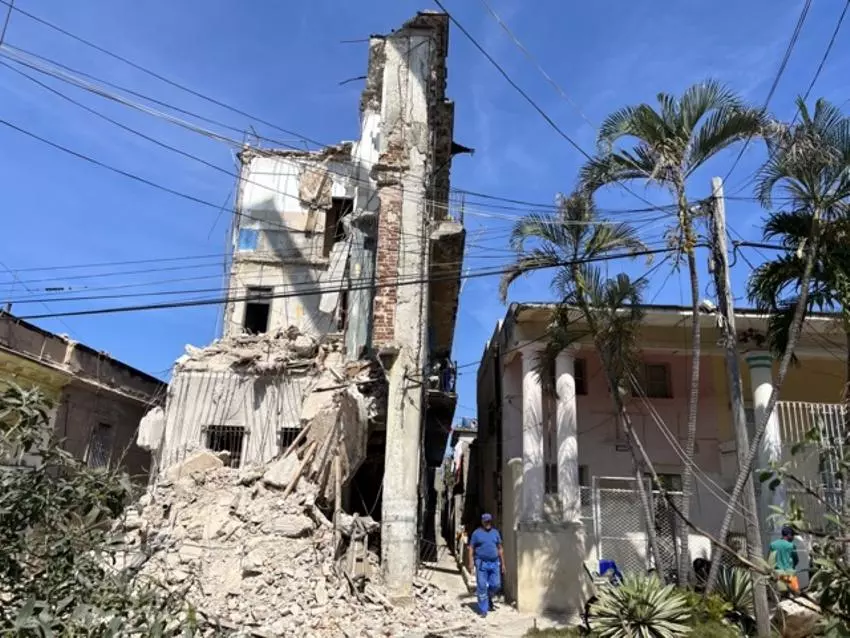
‘That Was My Home!’ Cry the Ten Families Who Were Victims of a Building Collapse in Havana

It was a three-story building located in Santos Suárez and declared uninhabitable years ago.

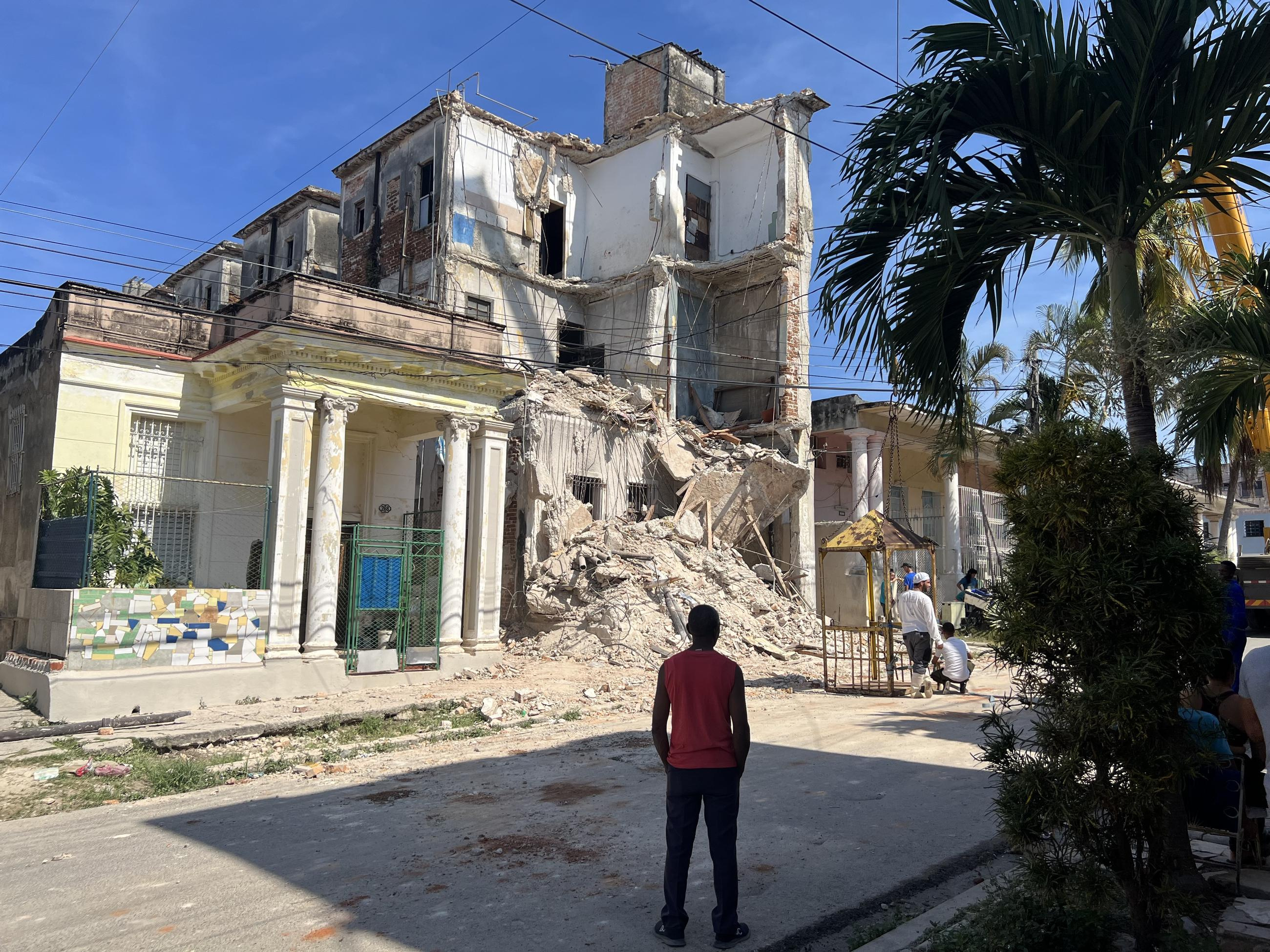
The building collapsed at the weekend leaving ten families without a roof over their heads. / 14ymedio

14ymedio bigger14ymedio, José Lassa, Havana, 17 February 2025 – Steel girders exposed to the sun, the front of the building turned into rubble, and dozens of distressed residents standing around it, this was the scene on Monday morning at the building in Calle San Bernardino between Durege and General Serrano, in the Havana suburb of Santos Suárez in the Diez de Octubre district. The building collapsed at the weekend leaving ten families without a roof over their heads.

Sitting in a wheelchair on the pavement out in front, one resident of the collapsed building pointed to the ground floor and said “That was my home!” Around twenty people had brought onto the street the few belongings that they had managed to find among the chunks of wall and twisted metal: a cushion, a washer, and a few pictures which had once adorned the living room walls of those homes which no longer existed.

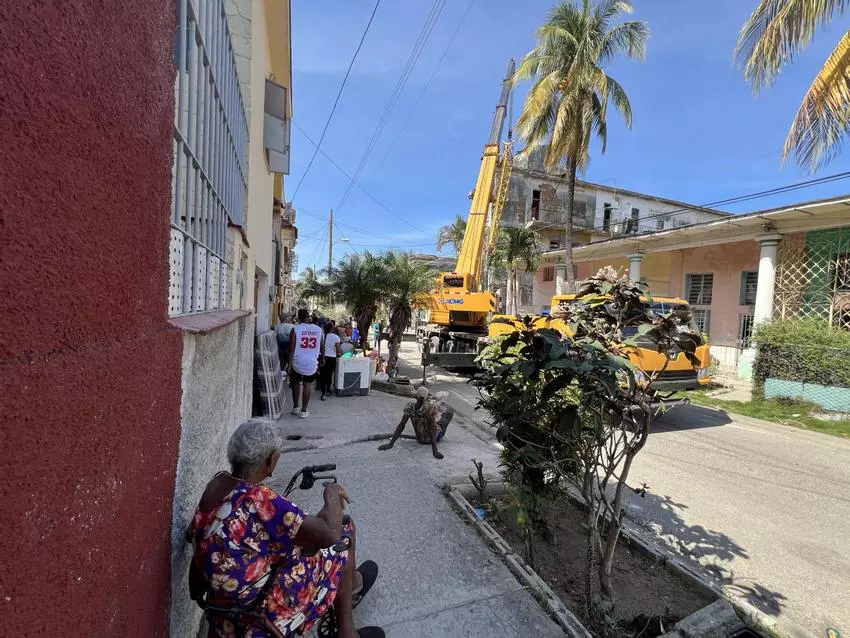
A group of public workers equipped with a crane spent some hours pulling down the remaining bits of the three-storey building – which had been declared uninhabitable for years but in which a number of families still lived. Down onto the stopped traffic, and onto the neighbourhood itself – braced against every sledgehammer blow to the walls – the yellow dust drifted down and covered everything. “At first they said that they were only going to demolish the top floors but now they’re saying they’ll have to demolish it all”, the woman in the wheelchair explained to 14ymedio.

“My home was on the ground floor”, she said, and pointed towards an area of the building in which the tops of the windows themselves were barely still visible, being surrounded as they were by a mountain of rubble. While she spoke, the crane was lifting a worker upwards so that he could help to bring various belongings down from the upper apartments. Every rescued item was greeted by the residents with cries of jubilation, but also with some concern: “I don’t know whether I’ll be able to rescue my bed”, expressed one young woman with a child in her arms. continue reading

“At first they said that they were only going to demolish the top floors but now they’re saying they’ll have to demolish it all”. / 14ymedio

Disregarding warnings not to enter, some residents attempted to get access via the doors in a side passage, in order to try and bring out kitchen appliances, a purse, or family photos kept in a drawer. They came out a short while later with something in their hands but with shocked expressions on their faces. “It’s terrible in there, it feels like it’s going to carry on collapsing”, said one man who had managed to bring out various pairs of shoes and an electric stew pot.

The uncertainty about what will happen after the demolition was also a topic of conversation. “They’ll probably send us to a hotel or who knows where now”, speculated one of the victims who hadn’t managed to recover even one object of value from within the collapsed walls. Until now, neighbourly solidarity had provided them with water and something to eat, but those affected knew that they couldn’t remain indefinitely out on the street in front of the ruin overnight.

“It’s terrible in there, it feels like it’s going to carry on collapsing”.

Building collapses are a frequent reality in the Cuban capital, especially when the rains and the bad weather soften the mortar in structures which are already in danger of collapse. At the end of June last year, when Havana experienced several days of storms, at least 19 buildings suffered from either partial or complete collapse, according to a 14ymedio source who preferred to remain anonymous.

Video footage of the collapse of a villa in Calle 26, between 27 and 29 in Playa district, filmed by various passers-by and neighbours, was one of the most widely shared videos at that time – an incident which was estimated to have claimed at least one life and caused a number of people to be injured.

Translated by Ricardo Recluso

____________

COLLABORATE WITH OUR WORK: The 14ymedio team is committed to practicing serious journalism that reflects Cuba’s reality in all its depth. Thank you for joining us on this long journey. We invite you to continue supporting us by becoming a member of 14ymedio now. Together we can continue transforming journalism in Cuba.

Despite the Deportations, Many Cubans Continue To Trust Trump To Regularize Their Situation

“Biden left the White House without solving our problem,” complains Pedro, who arrived three years ago

Migrants in line at a Social Security office in Florida / 14ymedio

14ymedio bigger14ymedio, Alejandro Mena Ortiz / Yaiza Santos, Miami/Madrid, 12 February 2025 — Pedro, from Havana, arrived in the United States almost three years ago by the “route of the volcanoes,” from Nicaragua, and does not yet have legal residence. But if he could, he would have voted for Donald Trump. The tightening of the new president’s immigration policies, which include increased surveillance, the power granted to agents to detain foreigners in any city in the country and the mass deportations that are already taking place, do not frighten him.

“I identify much more with right-wing policies than with left-wing policies,” says the young man, 35, who worked as a chef on the Island and now, in Florida, has a job in a kitchen, in addition to driving trucks. Beyond his political opinions, he explains that Trump has not disappointed him, while the Democrats, with former President Joe Biden at the head, have. “Greatly,” he says.

“The Biden Administration indiscriminately gave some Cubans [Humanitarian] Parole at the southern border. Other Cubans were given I-220A and even I-220B, which is worse,” he says, referring to the different types of documents that Cubans could receive when arriving on foot at the border; in his case, through McAllen, Texas. “It was practically a game of chance, depending on where and what day you entered. I fell into the I-220A group.”

“At first the lawyers gave us a lot of hope but not now. They say that everything depends on the judge we get in court, on the particular case”

Although it has allowed Pedro to stay in the country and request a hearing in the Immigration Court, the I-220A, a “provisional release order,” does not guarantee a ruling in his favor. He, in fact, has been waiting for his court date since he arrived in April 2022. “I never understood why Biden had those guidelines for Cubans, because the Cuban Adjustment Act protects us, and we can legally obtain our residence in the US after a year and a day,” he says. “Three years after I entered, Biden left the White House without adjusting our situation, which he could have done with a stroke of the pen. He didn’t, he wasn’t interested.”

“Maybe,” he ventures, “it’s a kind of punishment, because most Cubans support Donald Trump.” When Trump took office, all their hopes were reborn. “I think the day when I can be a resident will not be very far off, and above all I trust that we have a Secretary of State who identifies himself as Cuban,” he says referring to Marco Rubio, an American born to parents originally from the Island. “That, for me, causes tremendous pride, to know that a Cuban has come so far in the most powerful country in the world.” continue reading

In the same case as Pedro, but with an appearance date in the Immigration Court – in September 2025 – is Liliana, who entered the United States with her boyfriend in July 2022, having spent, like the thousands of Cubans who take the route through Nicaragua, about 10,000 dollars per head. She is also disappointed with the Biden Administration. Why? “For letting us pass irregularly and then, once here, never regularizing our cases and continuing to let so many people pass, giving so many Paroles, while those of us who have been here for so many years are in migratory limbo.” Thus, she is a supporter of Trump and hopes that the current Administration will regularize her situation.

Liliana is convinced that the Trump Government will do “the right thing for us”

Liliana, who, like her partner, was a doctor on the Island and was sanctioned in Cuba for having deserted her mission in Venezuela, is convinced that the Trump Government will do “the right thing for us, those of us who are working, those of us who declare taxes, those of us who have not committed a crime and those of us who also received political asylum.”

Their legal representatives, however, are prudent. “At the beginning, lawyers did give us a lot of hope, but now they don’t. They say that everything depends on the judge we get in court, on the particular case.”

A crack, in any case, is felt among the Cubans who arrived in the United States in the exodus of the last four years. Although they all express very similar reasons for having left the Island – lack of freedom and the desire to prosper – they are divided by their way of seeing things according to how they arrived and the document they received to to stay on US territory. Some irregularly and others legally; some, in the hands of mafias that transported them by land, crossing four countries in several weeks, and others, without that suffering; some spending an average of 10,000 dollars, some one tenth as much.

The fact that through Biden’s measures, known repressors of the Cuban regime have been able to establish themselves in US territory – 135 according to the Foundation for Human Rights in Cuba – only increases the resentment towards the previous US Administration about their I-220A status.

“We made the difficult decision to leave Cuba after constant threats, harassment, persecution and fear”

Dayana arrived in the United States in January 2022 with her husband and has an I-220A court date. “We made the difficult decision to leave Cuba after constant threats, harassment, persecution and fear,” says this woman, about 40 years old, who participated in the demonstration of 11 July 2021 in Havana.

“We went out into the streets to protest, to demand freedom, democracy, free elections, to shout down communism, and we had to run and hide, because there was a huge deployment of the police, of the repressive apparatus. We saw many people get hit, many arrests, just for peacefully protesting and asking for freedom,” she recalls. “They went to look for me at my house; they interrogated me all night, and since they could not find witnesses or evidence and there was no recording in which I was present, they released us – after threatening us, of course.”

Until then, both she, an economist by training, and her husband lived by being mules, selling merchandise that they bought in Panama. But those days marked a turning point in their lives. “They have a mechanism created so that at any time, whenever they decide, they can invent a reason for you, crimes that you have not committed and make you look like a criminal, like scum, and they can arrest you whenever they want, and that’s why we left. After all the fines and harassment, the next step would have been prison.”

Dayana recounts the hardships she suffered: “We crossed Nicaragua, Honduras, Guatemala, Mexico, risking our lives, putting ourselves in the hands of unknown people, with much fear, a lot of stress, with many worries, crossing land, rivers, seas, deserts, but with much, much desire to be free.”

In addition to expressing her gratitude to the United States for welcoming them, she is forceful in her opinion about the current president. “We value this country immensely, and that is why we are supporters of Trump’s policies. I consider the decisions he is making regarding migration to be correct. All the people who do not behave well in this country, who do not value the great opportunity given to us migrants, I think they do not deserve to be here,” she says. “The people who want to act for the good of the country, who want to behave, study, progress, offer the best for this country, like me. So yes, we hope that Trump will legalize our status.”

“The Cuban Adjustment Act does not specify anything about the type of ’parole’ you must have to be in the country, and, as is already known, the I-220A is a conditional ’parole’.”

Christian Benítez, in the United States since February 2022 and with a court date, thinks the Trump Administration has a solution to the I-220A. “The Cuban Adjustment Act does not specify anything about the type of specific permit, the parole, that you need to be in the country, and, as is already known, the I-220A is a conditional parole,” he says. “The people who have come to this country are against the dictatorship, and we should be able to take advantage of a law that has been in existence for many years and from which so many Cubans who have escaped from that dictatorship have benefited, because nothing has really changed in Cuba. Everything remains the same; the dictatorship is the same and continues with the same plans as at the beginning: to massacre, humiliate and destroy society.”

Ariam is more skeptical. He also has an I-220A, but he arrived in December 2021 from Mexico, not by way of Nicaragua, thanks to a Schengen visa he had for being married to a Spanish citizen. His journey, then, cost a little less, although not that little: 7,000 dollars. “I was convinced that the Trump Government would mark a decisive moment towards Cuba and that I could change my status. However, since the beginning of his mandate, the news for migrants is not pleasant at all,” he says. “There was talk of mass deportations for criminals and people with a criminal record, but many people have been arrested for no apparent reason, just for not having a case of political asylum or for not having enough money to hire lawyers, which are so expensive in this country.”

Even so, he is optimistic about his court appearance next month. “The lawyers who represent us tell us to wait, not to be afraid of the measures taken so far, that sooner or later the Government must implement a law to gradually favor migrants with the I-220A status, and that the first thing I must do is defend my asylum case in Immigration Court.”

“The lawyers who represent us tell us to wait, not to be afraid of the measures taken so far”

Compared to those who fled Cuba through the path opened by the regime through Nicaragua at the end of 2021, the year of the massive protests on the Island, the panorama is very different for those who entered the US through the CBP One application, established by the Biden Government in January 2023, along with other measures such as Humanitarian Parole, in order to curb the migration crisis. Although most of them have already been able to take advantage of the Cuban Adjustment Act, having resided in the United States for a year and a day, others have recently arrived in the country. These are the ones who suffer the greatest fear about the new administration: a document leaked to the American press in January established Trump’s desire to deport all migrants with humanitarian parole or CBP One, even if they have accessed the country legally.

For example, Rolando, a 31-year-old from Holguín, entered the US last December from Colombia under the Safe Mobility refugee program. Although he is part of the last Cubans who managed to enter under the Biden Administration, he says he feels confident in his migration process so far. “I requested it from Bogotá, and they confirmed in a few months that I had been selected for the program. But I know other Cubans who were left waiting to be called, and when Trump came to power, everything fell apart,” he says. “On the same day, January 20, they eliminated everything.”

The young man hurried to get his work permit and his identity documents before the current president took power. Rolando’s driver’s license and work permit are valid for five years, but as soon as he passes one year and a day in the US, he will take advantage of the Cuban Adjustment Act and apply for residence.

“I have heard my mother and my aunt telling my brother in Cuba that there is a very big possibility that Trump will deport them”

Efrén, who entered Mexico with CBP One just three months ago, is in a similar situation. “Yes, I’m a little worried,” he acknowledges. “I already managed to have all the documents I’m entitled to through the program – work permit, driver’s license and all that – but anyway, with all the madness that there is with migrants, one always worries. The Government says it is focusing on illegals, to begin with, but we know that they have even arrested citizens. Until you confirm that you’re legal, you can have a bad time. People are afraid.”

Even those who have already applied for residence are afraid. Marlon entered the United States in December 2023 and planned to apply for it under the Cuban Adjustment Act if he could raise the necessary money. Seeing the aggressiveness of the current Administration toward migrants, he chose to borrow 3,000 dollars to complete the legal process. He did it a week after Trump arrived at the White House: “I had not been able to raise all the money because a family issue prevented me, but a friend was able to help me with a loan, and it’s better to be safe rather than living with the anxiety that you can be arrested,” says the 28-year-old.

Despite the confidence in immigration privileges for being Cuban, there is fear in the community, “even among people who should not have it,” says Pedro. “I heard my mother and my aunt telling my brother in Cuba that there is a very big possibility that Trump will deport them, even though I have told them a thousand times that they will not be deported, since they applied for residency months ago and will receive it once they arrive.”

Not to mention the non-Cuban migrants. The fear is palpable as soon as you step into the street. Pedro himself says that all the handymen who offered themselves at the doors of Home Depot to help in any home repair or construction activity have disappeared. An employee of the establishment was clear with him last Saturday: “I’m not even going to find them,” he told me, and not only in this Home Depot, but in all of them. They have left because they are afraid that Immigration will come and take them away.

Translated by Regina Anavy

____________

COLLABORATE WITH OUR WORK: The 14ymedio team is committed to practicing serious journalism that reflects Cuba’s reality in all its depth. Thank you for joining us on this long journey. We invite you to continue supporting us by becoming a member of 14ymedio now. Together we can continue transforming journalism in Cuba.

Cornered by the Energy Crisis, the Cuban Regime Promises a Firm Hand Against ‘Sabotage’

The official press is multiplying information on this subject to convey the idea that the authorities are prioritizing the generation of electricity.

Havana is not yet free of blackouts, although they are less prolonged than those in the provinces / 14ymedio

14ymedio bigger14ymedio, Havana, February 17, 2025 — The recipe of “zero tolerance” has spread in recent months to energy crimes. In the middle of a February, with blackouts that exceed 30 hours in a row, the authorities urgently seek to transmit a message of calm to contain a population that is increasingly tired and annoyed by the lack of electricity. The next ten days are expected to be key: on February 28 they must synchronize with the national electrical system (SEN) several of the solar parks that are being built in a hurry and running with Chinese help. Until that moment arrives, the slogan is to keep the population pacified.

There is a proliferation of information that supports the idea that the solution is near and that the Government is taking care of the main concern of Cubans. After dedicating the program Hablemos Cuba to this matter last week, Cubadebate on Monday reproduced a report published on Sunday by the official newspaper Invasor, from Ciego de Ávila, which highlights the measures taken against those who commit crimes that affect the country’s energy situation.

In the article, which takes the opportunity to show that the province has a “high level of electrification” and efficient agricultural irrigation systems, it is admitted that Ciego de Ávila is among the most affected territories “by the incidence of crimes against electricity generation.”

Keilyn González Varela, head prosecutor of the Department of Criminal Procedures, said that between 2024 and so far this year, there have been 43 criminal acts by 32 individuals. The media accuses them of being “connivers and opportunists,” who profit “from stealing diesel from transformers, fuel from electricity-generating sites and components from the photovoltaic solar parks.” continue reading

One of the cases cited by the official as an example is the theft of 6,625 liters of diesel in 2024 from the Cayo Coco electricity generator, which “could have caused the suspension of 10 hours of the electric service in more than three hotels of the Jardines del Rey tourist center,” she says, leaving some doubt.

As an almost secondary issue, this paragraph also raises uncertainty that the population “doesn’t escape harm, either,” since, by stealing the fuel, “numerous families in an urban or rural community would have suffered from prolonged blackouts, given the scarcity once the equipment collapsed.”

The report also mentions the theft of screws, washers and nuts from a photovoltaic park in Ciego de Ávila, which also occurred in Matanzas. This, also in the subjunctive, “would have been incapable of achieving the ability to generate about 21 megawatts (MW) for the electrical system, once the work is completed,” says the text, which blames the facts on the high prices paid for those materials on the black market, derived from the shortage.

“The Prosecutor’s Office has zero tolerance for this type of crime, which is shown by the sanction requested and the sanction to be imposed, including pre-trial detention for the sabotage and bribery,” warns provincial prosecutor María Victoria Sifonte Ayup, who announces severity and prevention policies in which mass organizations will collaborate with the police.

“The Prosecutor’s Office has zero tolerance for this type of crime, which is shown by the sanction requested and the sanction to be imposed, including pre-trial detention for the sabotage and bribery,”

Also aimed at calming the population seems to be the reiteration of a report that appeared for the first time in December 2024 and is repeated this Monday in official media. This is the aid offered by Russia, valued at two million dollars, to supply spare parts needed by thermoelectric plants. The interview, replicated in Rebelión, was duplicated in recent days by several media, and today Cubadebate repeats it, highlighting that among the projects is the “construction of a TPP (thermoelectric) energy unit of 200 MW, as well as the modernization of four existing units of 100 MW each.”

For this Monday, the forecast is again disastrous. With a demand of 3,280 MW and a generation of 1,450 MW, the deficit calculated for the peak hour is 1,520 MW. Unit 3 of Santa Cruz del Norte, Unit 6 of Renté and all of Felton, with its two units, are still damaged. In addition, unit 2 of Santa Cruz del Norte, 3 and 4 of Cienfuegos and 5 of Renté are under maintenance: a total of 293 MW in thermal electric generation.

Added to that is the lack of 330 MW in the distributed generation due to the lack of fuel. “The President said it from the first day,” joked a Cuban on social networks: ’we are continuity and we’re going for more.’ Obviously, he was referring to more blackouts, inflation and shortages of food and medicine. In short, more misery.”

Translated by Regina Anavy

____________

COLLABORATE WITH OUR WORK: The 14ymedio team is committed to practicing serious journalism that reflects Cuba’s reality in all its depth. Thank you for joining us on this long journey. We invite you to continue supporting us by becoming a member of 14ymedio now. Together we can continue transforming journalism in Cuba.

Cuba’ Healthcare: ‘As Medical Students, We Have to Clean Bathrooms and Change Lightbulbs’

A shortage of staff in Cienfuegos’s hospitals requires future doctors to do it all.

The Ministry of Public Health and Social Welfare lost 44,200 workers between 2022 and 2023, according to the latest yearbook. /14ymedio

14ymedio bigger14ymedio, Julio César Contreras, Cienfuegos, January 30, 2025 — When Lisbeth arrived at Paquito González Cueto pediatric hospital, toughened by her tenure at various polyclinics in Cienfuegos, she thought nothing in the Cuban health system could surprise her. A third-year medical student, she hoped, that one of the most prestigious institutions in the region would offer her a less harsh outlook, than that of other centers where she had completed her internship.

However, as a result of the drop in population, the lack of personnel is felt more acutely in the state sector with salaries that pale by comparison to those in private industry, and even more so in the health field, where the human factor requires an extra effort that isn’t rewarded at the end of the month. Public Health and Social Welfare has lost 44,200 workers between 2022 and 2023, according to the latest yearbook, published this year.

Of these, at least 32,000 are doctors, but the shortages are intersecting and student interns not only solve the shortage of doctors, but also resolve tasks for which they are overqualified.

Of those, at least 32,000 are doctors, but the shortages are intersecting and in practice the students not only make up for the lack of physicians but must also carry out tasks for which they are overqualified. continue reading

“During my shifts, I have escorted patients in wheelchairs and on stretchers. I’ve had to administer injections and even had to sweep the floor.

“During my shifts, I have escorted patients in wheelchairs and on stretchers. I’ve had to administer injections and even had to sweep the floor when no one else is taking responsibility for cleaning,” informs Lisbeth, who also cautions about a long-standing issue. Not only must the patients bring their own food if they expect to receive adequate nourishment, but so must the doctors, as she herself has during the months of her internship.

Unlike doctors or other health care providers, medical students cannot ask for leave or a transfer to another hospital if they don’t like where they are. Doing so could cost them their diploma or result in a serious reprimand. The obligation to remain wherever they’re sent also subjects them to excessive workloads and arbitrary orders from those in charge.

“Sometimes, after I’ve finished my shift, I can’t leave to go home and sleep, have a coffee or take a shower,” another young student interning at the University General Hospital Dr. Gustavo Aldereguía Lima told us. “As students we’re at the bottom of the pecking order; we’re asked to do everything from carrying buckets of water from the cistern to picking up food for the doctors.”

Lisbeth accuses her professional colleagues of trading patients for “bags of food and necessities.” / 14ymedio

Instead of encountering professional challenges that would help him grow, the young student has had to clean bathrooms, climb on chairs to fix a suspended ceiling so it doesn’t fall on a patient’s bed, or bring light bulbs from home so he can use the bathroom at daybreak. “Sometimes I think I’m going to graduate as a repair technician instead of as a doctor.”

For her part, Lisbeth accuses her professional colleagues of trading patients for “bags of food and necessities.” “It’s as if they are indifferent to the suffering of others,” she states. “If they have a case, they will prioritize those who are ‘recommended,’ those that have ‘clout’ or bring gifts,” she complains.

“When we are treating a patient, I’ve also noticed that some of our professors merely indicate a clinical procedure without explaining to us the cause of the illness and the reasons for their decision. We are practically doing the job of the nurses, basically learning through the literature, which is at times outdated,” she explains. “Some of my classmates ask me to be less combative, saying we just have to pass our exams, but I’m not satisfied with that.”

Lisbeth has a few more weeks left to finish her rotation at Paquito González Cueto, with its crumbling physical structure that serves as a metaphor for what is happening within its walls. Her greatest fear is that a truly ill patient will come in, a child whose treatment will not abide tricks or improvisations. “How can I provide the family of that child with assurances that the child will receive the highest standard of care?” she asks herself.

With a vocation for medicine since her childhood, the young student sums up the tragedy of studying medicine with this observation: Her profession is a noble one, but she was destined to pursue it in the wrong country.

Translated by Cristina Saavedra

____________

COLLABORATE WITH OUR WORK: The 14ymedio team is committed to practicing serious journalism that reflects Cuba’s reality in all its depth. Thank you for joining us on this long journey. We invite you to continue supporting us by becoming a member of 14ymedio now. Together we can continue transforming journalism in Cuba.

Faced With an Increase in Production and Broken Power Plants, Cuba Could Be Exporting National Oil

The Russian oil tanker ’Akademik Gubkin,’ sanctioned by the United States / Marine Traffic / Genggiz Tokgoz

14ymedio bigger14ymedio, 16 February 2025, Madrid — The Pozo Varadero 1012, located near Boca de Camarioca, Matanzas, and inaugurated by the Cuba Petroleum Union (Cupet) and the Chinese company Gran Muralla last March, already produces 350,000 metric tonnes daily. The data was released by the official journalist José Miguel Solís this Saturday from the information provided by officials of the Center Oil Drilling and Extraction Company in a meeting of the Ministry of Energy and Mines.

In a Facebook post, Solís says that this was possible “as a result of the implementation of incentive measures and greater availability of tank vehicles.” The production of hydrocarbons in Cuba, he said, grew in 2024 by 11% compared to the previous year, and the projections for this year “indicate the possibility of continued drilling in the so-called heavy crude oil strip, a region of promising horizons in terms of gas and crude.”

Dozens of comments immediately filled Solís’ post, among which a recurring question sneaks in: why, if oil production increases, are there blackouts and fuel shortages in the country? The official journalist hastens to note that national crude oil, with a high sulfur content, goes to the thermal power plants (CTEs), such as the Guiteras, and to cement factories. For vehicles and the Turkish patanas — floating power plants — and generators, refined oil is used, which has to be imported. continue reading

“And where is the oil from the thermoelectric plants that are shut down for breakage and maintenance?”

But another user then introduces an objection: “And where is the oil from the thermoelectric plants that are shut down for breakage and maintenance?” The question is not trivial and is asked by specialists such as Jorge Piñón, who worked for more than 30 years in the international oil industry and estimates that this surplus may be being sold outside the Island.

Already last December, in fact, the Australian oil company Melbana Energy, which has had permits from the regime to explore the Island’s deposits for a decade, announced that in 2025 it would export Cuban crude oil for the first time.

“More than half of Cuba’s CTEs that run on national crude oil are out of service, and the rest operate at an average of 60% of their installed capacity. Where does Cuba’s production of heavy crude oil go that is not being consumed as a result of this situation?” he wonders. Piñón shares that same reflection with this newspaper, and he calculates a total production of national oil on the Island of about 38,000 barrels per day (about 5,428 tonnes), more than a million barrels per month (almost 143,000 tonnes). Clarifying that he does not have an answer, the Cuban consultant living in Texas exposes a series of arguments that reinforce the hypothesis of export.

One of them is that despite the decrease in demand for its main customer – the Cuban power plants – the Government is aware that “closing an oil production well is not an option.” The Island’s shallow-water oil wells, Piñón explains, are “mature” fields, which have been producing for more than thirty years. “Closing a mature oil well in production carries the risk of significantly reduced production when it restarts, and it will potentially never return to its previous flow,” he says. “Changes in pressure in the deposit and the accumulation of deposits inside the well as a result of prolonged inactivity increase the chances of permanent damage and the need for expensive repairs to restart production.”

Singapore, continues Piñón, would be the best destination for Cuban crude oil 

Another argument is that Cuba’s storage capacity for crude oil is limited, especially since the fire at the Matanzas Supertanker Base in August 2022, in which the country lost “one million barrels of storage capacity.” The destroyed storage tanks are under reconstruction but far from being in operation soon.

Taking this into account, Piñón thinks that either “some of the Cuban-flagged tankers are temporarily being used as floating storage tanks,” or Cuba is exporting part of its heavy oil production “under the radar,” or both.

In this regard, the expert says: “The Russian-flagged oil tanker Akademik Gubkin, allegedly bound for Cuba and sanctioned by the United States, which transports more than 650,000 barrels of Russian crude oil, could be a timely candidate for a return trip exporting Cuban heavy crude.” Singapore, continues Piñón, “would be the best destination for Cuban crude oil.”

According to the specialist, Singapore has “a prominent oil storage and mixing industry, considered one of the world’s main centers for oil trade and refining, mainly due to its strategic location in Southeast Asia, its deep-sea port facilities and its solid infrastructure that allows efficient storage and mixing of various petroleum products to export them to the Asian market in general, with companies that actively mix different sources of oil, including the cheapest Russian oil, to create mixed products for sale worldwide.”

Translated by Regina Anavy

____________

COLLABORATE WITH OUR WORK: The 14ymedio team is committed to practicing serious journalism that reflects Cuba’s reality in all its depth. Thank you for joining us on this long journey. We invite you to continue supporting us by becoming a member of 14ymedio now. Together we can continue transforming journalism in Cuba.