These are the 11J protesters Ivan Mauricio Arocha Arocha, Brusnelvis Adrian Cabrera Gutierrez and Yaquelin Castillo Garcia and the activist Ohaurys Rondon Rivero
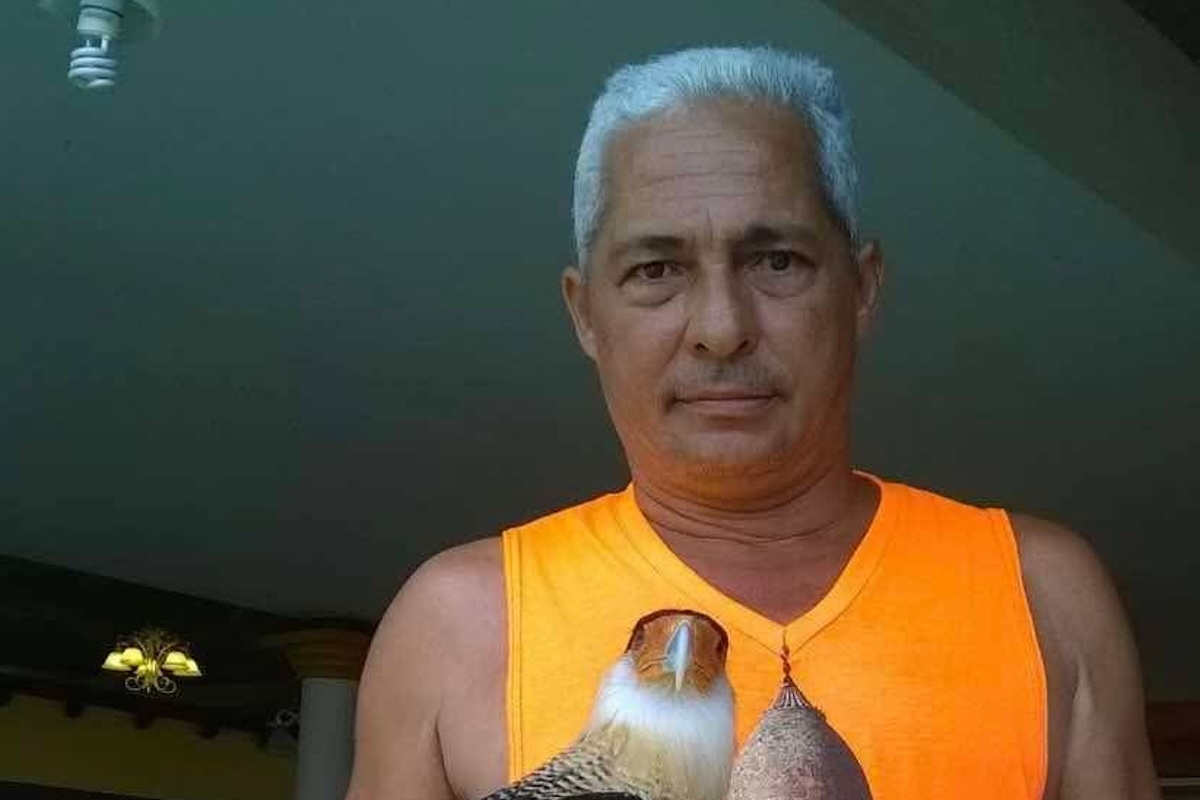
 14ymedio, Madrid, 27 February 2025 — Iván Mauricio Arocha Arocha and Ohaurys Rondón Rivero are the first two political prisoners that the Cuban regime has released since Donald Trump put an end to the agreement with the Vatican.
According to Prisoners Defenders (PD), Arocha Arocha, a demonstrator on 11 July 2021 in Santiago de Cuba, was released this Thursday from Boniato prison under “conditional parole .”
The 55-year-old man was arrested along with his son, Iván Arocha Quiala, who remains in prison. Both were sentenced to 10 years for the crimes of attack, public disorder, disrespect, resistance, instigation to commit crimes, defamation of institutions, “and organizations and heroes and martyrs,” and spreading epidemics.
According to Rondón’s own testimony, he was released along with 29 common prisoners
The case of Ohaurys Rondón, a member of the Opposition for a New Republic Movement, was confirmed by Martí Noticias, which reported that the activist was released from a forced labor camp in Havana. According to Rondón’s own testimony, he was released along with 29 common prisoners, all of them from the 1580 prison of San Miguel del Padrón, in Havana.
The activist was sentenced in November 2023 to two years in prison, for the crimes of “property damage and propaganda against the constitutional order,” breaking the windows of a pharmacy in the Havana municipality of Marianao and painting anti-government posters. The charges were dropped, and he was charged with the common crime of possession of a knife, explains Martí Noticias.
The organization Justicia 11J , which collects data on those imprisoned for the historic protests, was the one that reported on Thursday the other two cases placed on “conditional release”: Brusnelvis Adrián Cabrera Gutiérrez and Yaquelin Castillo García.
The Provincial People’s Court of Havana sentenced Cabrera Gutiérrez to 15 years in prison – which was finally reduced to 10 – after “proving” that the young man, then 21 years old, “showed up at the crowd of people riding a red moped, with which he joined those present, and made gestures with his hands and movements with his body inciting the population that was watching to join in the disorder.”
Castillo García, who participated in the La Güinera demonstrations on July 12, 2021, was sentenced to 11 years for sedition. NGOs denounced her situation, highlighting that she has a teenage son in the care of her aunts.
The Provincial People’s Court of Havana sentenced Cabrera Gutiérrez to 15 years in prison
With these four releases, the number of political prisoners released would total 214 under an agreement that the Cuban regime has always distanced itself from the United States, although it was announced less than an hour after Biden removed Cuba from the list of countries sponsoring terrorism. At the same time that, days later, Trump was sworn in and returned the Island to the blacklist, Havana halted the 553 promised releases.
With Arocha and Rondón, 212 political prisoners have now been released under an agreement that the Cuban regime insists has nothing to do with US policy, although it was announced less than an hour after Biden removed Cuba from the list of countries sponsoring terrorism. After Trump assumed power and returned the Island to the blacklist, Havana stopped releasing the 553 political prisoners.
In the same way, the Government hurried to clarify that the releases were “neither an amnesty nor a pardon,” but “benefits” that did not exempt those released from returning to prison if they did not comply with the “obligations.”
By then, historical opponents such as José Daniel Ferrer and Félix Navarro, and activists such as Pedro Albert Sánchez, Luis Robles and Lady in White Tania Echeverría were free. But there has been no news of the possible release of other dissidents including the artists Luis Manuel Otero Alcántara and Maykel Castillo, and Ladies in White Sissi Abascal and Sayli Navarro.
For Prisoners Defenders, the releases have been no more than “a macabre game of the regime.” The total number of released prisoners given by the Regime was “very symbolic,” said Javier Larrondo, president of PD, because it is the same estimate given by both his organization and other demonstrators arrested after 11 July 2021. “What they have done is, subliminally, let us deceive ourselves into thinking that they are all 11J prisoners,” he told this newspaper on January 24.
The number of political prisoners in Cuba has risen to 1,150, according to PD. To contribute to their most urgent needs, the Council for the Democratic Transition in Cuba presented an initiative on Tuesday called “Neither Forgetting nor Abandonment: Let’s Save Cuban Political Prisoners.” With it, they hope to raise money for food, medicine and personal hygiene items for those imprisoned for ideological reasons.
“In Cuba, a family needs at least 50 to 100 dollars a month to support a political prisoner. Every contribution, however small, can make the difference between life and death in the regime’s prisons,” he said in a statement, recalling that at least 50 people died in the island’s prisons last year.
“No cause can prosper if those who have been imprisoned on the front lines for defending freedom, democracy and human rights are abandoned. Justice and human dignity cannot be just abstract principles; they must be translated into action,” they ask in the document, in which they claim the phrase popularized during the Holocaust: To save one life is to save all humanity.
Translated by Regina Anavy
____________
COLLABORATE WITH OUR WORK: The 14ymedio team is committed to practicing serious journalism that reflects Cuba’s reality in all its depth. Thank you for joining us on this long journey. We invite you to continue supporting us by becoming a member of 14ymedio now. Together we can continue transforming journalism in Cuba.