US Secretary of State Marco Rubio states that Havana “continues to benefit from the forced labor of its workers”
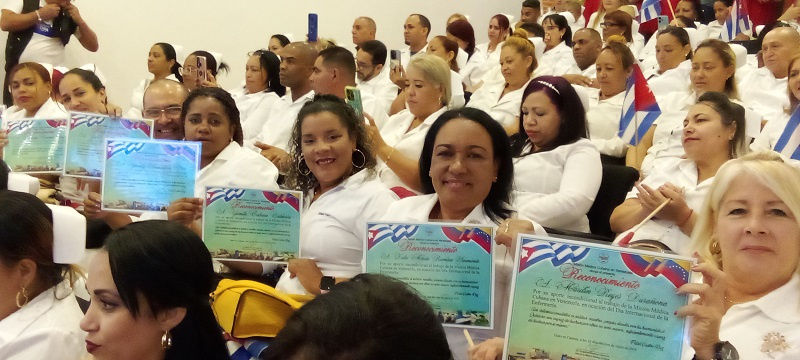
 14ymedio, Madrid, 25 February 2025 — The United States has expanded its visa restriction policy to people who are involved in forced labor on the Island. In a statement made public on Tuesday, Secretary of State Marco Rubio explains that the expansion affects officials or former officials, Cubans or those from other countries, “who are believed to be responsible for or are involved in the Cuban labor export program, in particular, Cuba’s medical missions abroad.
The restrictions will also apply, he adds, to the “immediate family” of those indicated. Rubio does not reveal their identities but says that the State Department has already taken “measures to impose visa restrictions on several people, including Venezuelans, under this expanded policy.”
In his statement, the head of US foreign policy says that the Cuban regime “continues to benefit from the forced labor of its workers” and that “the abusive and coercive labor practices of the regime are well documented.” In the case of medical missions, Rubio adds, ordinary Cubans are deprived of “the medical care they desperately need in their country.”
“The regime’s abusive and coercive labor practices are well documented”
The measure expands restrictions already established, as is the case of the 28 Cuban officials sanctioned in 2022 for intervening in the repression of the anti-government protests of 11 July 2021. In addition, it adds to other provisions issued by the current Trump administration, such as the reinstatement, on January 31, of the Restricted List of Cuba, a “black list” that vetoes certain transactions with companies under the control of the Cuban military, intelligence or security services, or that act in their favor. Among them is the financial company Orbit, which managed Western Union remittances.
Last Friday, the Government of the Island said that Washington had suspended “the application mechanism for a group of visa categories that are used for state officials and their agencies,” rejecting “dozens of passports.”
On that occasion, a source from the Cuban Foreign Ministry told the Associated Press agency, on condition of anonymity, that the refusal of visas is directly related to a 2020 United States provision that vetoes the delivery of visas to countries that do not cooperate with the migrant deportation process.
Translated by Regina Anavy
____________
COLLABORATE WITH OUR WORK: The 14ymedio team is committed to practicing serious journalism that reflects Cuba’s reality in all its depth. Thank you for joining us on this long journey. We invite you to continue supporting us by becoming a member of 14ymedio now. Together we can continue transforming journalism in Cuba.