Despite the Deportations, Many Cubans Continue To Trust Trump To Regularize Their Situation

“Biden left the White House without solving our problem,” complains Pedro, who arrived three years ago


Migrants in line at a Social Security office in Florida / 14ymedio

14ymedio bigger14ymedio, Alejandro Mena Ortiz / Yaiza Santos, Miami/Madrid, 12 February 2025 — Pedro, from Havana, arrived in the United States almost three years ago by the “route of the volcanoes,” from Nicaragua, and does not yet have legal residence. But if he could, he would have voted for Donald Trump. The tightening of the new president’s immigration policies, which include increased surveillance, the power granted to agents to detain foreigners in any city in the country and the mass deportations that are already taking place, do not frighten him.

“I identify much more with right-wing policies than with left-wing policies,” says the young man, 35, who worked as a chef on the Island and now, in Florida, has a job in a kitchen, in addition to driving trucks. Beyond his political opinions, he explains that Trump has not disappointed him, while the Democrats, with former President Joe Biden at the head, have. “Greatly,” he says.

“The Biden Administration indiscriminately gave some Cubans [Humanitarian] Parole at the southern border. Other Cubans were given I-220A and even I-220B, which is worse,” he says, referring to the different types of documents that Cubans could receive when arriving on foot at the border; in his case, through McAllen, Texas. “It was practically a game of chance, depending on where and what day you entered. I fell into the I-220A group.”

“At first the lawyers gave us a lot of hope but not now. They say that everything depends on the judge we get in court, on the particular case”

Although it has allowed Pedro to stay in the country and request a hearing in the Immigration Court, the I-220A, a “provisional release order,” does not guarantee a ruling in his favor. He, in fact, has been waiting for his court date since he arrived in April 2022. “I never understood why Biden had those guidelines for Cubans, because the Cuban Adjustment Act protects us, and we can legally obtain our residence in the US after a year and a day,” he says. “Three years after I entered, Biden left the White House without adjusting our situation, which he could have done with a stroke of the pen. He didn’t, he wasn’t interested.”

“Maybe,” he ventures, “it’s a kind of punishment, because most Cubans support Donald Trump.” When Trump took office, all their hopes were reborn. “I think the day when I can be a resident will not be very far off, and above all I trust that we have a Secretary of State who identifies himself as Cuban,” he says referring to Marco Rubio, an American born to parents originally from the Island. “That, for me, causes tremendous pride, to know that a Cuban has come so far in the most powerful country in the world.” continue reading

In the same case as Pedro, but with an appearance date in the Immigration Court – in September 2025 – is Liliana, who entered the United States with her boyfriend in July 2022, having spent, like the thousands of Cubans who take the route through Nicaragua, about 10,000 dollars per head. She is also disappointed with the Biden Administration. Why? “For letting us pass irregularly and then, once here, never regularizing our cases and continuing to let so many people pass, giving so many Paroles, while those of us who have been here for so many years are in migratory limbo.” Thus, she is a supporter of Trump and hopes that the current Administration will regularize her situation.

Liliana is convinced that the Trump Government will do “the right thing for us”

Liliana, who, like her partner, was a doctor on the Island and was sanctioned in Cuba for having deserted her mission in Venezuela, is convinced that the Trump Government will do “the right thing for us, those of us who are working, those of us who declare taxes, those of us who have not committed a crime and those of us who also received political asylum.”

Their legal representatives, however, are prudent. “At the beginning, lawyers did give us a lot of hope, but now they don’t. They say that everything depends on the judge we get in court, on the particular case.”

A crack, in any case, is felt among the Cubans who arrived in the United States in the exodus of the last four years. Although they all express very similar reasons for having left the Island – lack of freedom and the desire to prosper – they are divided by their way of seeing things according to how they arrived and the document they received to to stay on US territory. Some irregularly and others legally; some, in the hands of mafias that transported them by land, crossing four countries in several weeks, and others, without that suffering; some spending an average of 10,000 dollars, some one tenth as much.

The fact that through Biden’s measures, known repressors of the Cuban regime have been able to establish themselves in US territory – 135 according to the Foundation for Human Rights in Cuba – only increases the resentment towards the previous US Administration about their I-220A status.

“We made the difficult decision to leave Cuba after constant threats, harassment, persecution and fear”

Dayana arrived in the United States in January 2022 with her husband and has an I-220A court date. “We made the difficult decision to leave Cuba after constant threats, harassment, persecution and fear,” says this woman, about 40 years old, who participated in the demonstration of 11 July 2021 in Havana.

“We went out into the streets to protest, to demand freedom, democracy, free elections, to shout down communism, and we had to run and hide, because there was a huge deployment of the police, of the repressive apparatus. We saw many people get hit, many arrests, just for peacefully protesting and asking for freedom,” she recalls. “They went to look for me at my house; they interrogated me all night, and since they could not find witnesses or evidence and there was no recording in which I was present, they released us – after threatening us, of course.”

Until then, both she, an economist by training, and her husband lived by being mules, selling merchandise that they bought in Panama. But those days marked a turning point in their lives. “They have a mechanism created so that at any time, whenever they decide, they can invent a reason for you, crimes that you have not committed and make you look like a criminal, like scum, and they can arrest you whenever they want, and that’s why we left. After all the fines and harassment, the next step would have been prison.”

Dayana recounts the hardships she suffered: “We crossed Nicaragua, Honduras, Guatemala, Mexico, risking our lives, putting ourselves in the hands of unknown people, with much fear, a lot of stress, with many worries, crossing land, rivers, seas, deserts, but with much, much desire to be free.”

In addition to expressing her gratitude to the United States for welcoming them, she is forceful in her opinion about the current president. “We value this country immensely, and that is why we are supporters of Trump’s policies. I consider the decisions he is making regarding migration to be correct. All the people who do not behave well in this country, who do not value the great opportunity given to us migrants, I think they do not deserve to be here,” she says. “The people who want to act for the good of the country, who want to behave, study, progress, offer the best for this country, like me. So yes, we hope that Trump will legalize our status.”

“The Cuban Adjustment Act does not specify anything about the type of ’parole’ you must have to be in the country, and, as is already known, the I-220A is a conditional ’parole’.”

Christian Benítez, in the United States since February 2022 and with a court date, thinks the Trump Administration has a solution to the I-220A. “The Cuban Adjustment Act does not specify anything about the type of specific permit, the parole, that you need to be in the country, and, as is already known, the I-220A is a conditional parole,” he says. “The people who have come to this country are against the dictatorship, and we should be able to take advantage of a law that has been in existence for many years and from which so many Cubans who have escaped from that dictatorship have benefited, because nothing has really changed in Cuba. Everything remains the same; the dictatorship is the same and continues with the same plans as at the beginning: to massacre, humiliate and destroy society.”

Ariam is more skeptical. He also has an I-220A, but he arrived in December 2021 from Mexico, not by way of Nicaragua, thanks to a Schengen visa he had for being married to a Spanish citizen. His journey, then, cost a little less, although not that little: 7,000 dollars. “I was convinced that the Trump Government would mark a decisive moment towards Cuba and that I could change my status. However, since the beginning of his mandate, the news for migrants is not pleasant at all,” he says. “There was talk of mass deportations for criminals and people with a criminal record, but many people have been arrested for no apparent reason, just for not having a case of political asylum or for not having enough money to hire lawyers, which are so expensive in this country.”

Even so, he is optimistic about his court appearance next month. “The lawyers who represent us tell us to wait, not to be afraid of the measures taken so far, that sooner or later the Government must implement a law to gradually favor migrants with the I-220A status, and that the first thing I must do is defend my asylum case in Immigration Court.”

“The lawyers who represent us tell us to wait, not to be afraid of the measures taken so far”

Compared to those who fled Cuba through the path opened by the regime through Nicaragua at the end of 2021, the year of the massive protests on the Island, the panorama is very different for those who entered the US through the CBP One application, established by the Biden Government in January 2023, along with other measures such as Humanitarian Parole, in order to curb the migration crisis. Although most of them have already been able to take advantage of the Cuban Adjustment Act, having resided in the United States for a year and a day, others have recently arrived in the country. These are the ones who suffer the greatest fear about the new administration: a document leaked to the American press in January established Trump’s desire to deport all migrants with humanitarian parole or CBP One, even if they have accessed the country legally.

For example, Rolando, a 31-year-old from Holguín, entered the US last December from Colombia under the Safe Mobility refugee program. Although he is part of the last Cubans who managed to enter under the Biden Administration, he says he feels confident in his migration process so far. “I requested it from Bogotá, and they confirmed in a few months that I had been selected for the program. But I know other Cubans who were left waiting to be called, and when Trump came to power, everything fell apart,” he says. “On the same day, January 20, they eliminated everything.”

The young man hurried to get his work permit and his identity documents before the current president took power. Rolando’s driver’s license and work permit are valid for five years, but as soon as he passes one year and a day in the US, he will take advantage of the Cuban Adjustment Act and apply for residence.

“I have heard my mother and my aunt telling my brother in Cuba that there is a very big possibility that Trump will deport them”

Efrén, who entered Mexico with CBP One just three months ago, is in a similar situation. “Yes, I’m a little worried,” he acknowledges. “I already managed to have all the documents I’m entitled to through the program – work permit, driver’s license and all that – but anyway, with all the madness that there is with migrants, one always worries. The Government says it is focusing on illegals, to begin with, but we know that they have even arrested citizens. Until you confirm that you’re legal, you can have a bad time. People are afraid.”

Even those who have already applied for residence are afraid. Marlon entered the United States in December 2023 and planned to apply for it under the Cuban Adjustment Act if he could raise the necessary money. Seeing the aggressiveness of the current Administration toward migrants, he chose to borrow 3,000 dollars to complete the legal process. He did it a week after Trump arrived at the White House: “I had not been able to raise all the money because a family issue prevented me, but a friend was able to help me with a loan, and it’s better to be safe rather than living with the anxiety that you can be arrested,” says the 28-year-old.

Despite the confidence in immigration privileges for being Cuban, there is fear in the community, “even among people who should not have it,” says Pedro. “I heard my mother and my aunt telling my brother in Cuba that there is a very big possibility that Trump will deport them, even though I have told them a thousand times that they will not be deported, since they applied for residency months ago and will receive it once they arrive.”

Not to mention the non-Cuban migrants. The fear is palpable as soon as you step into the street. Pedro himself says that all the handymen who offered themselves at the doors of Home Depot to help in any home repair or construction activity have disappeared. An employee of the establishment was clear with him last Saturday: “I’m not even going to find them,” he told me, and not only in this Home Depot, but in all of them. They have left because they are afraid that Immigration will come and take them away.

Translated by Regina Anavy

____________

COLLABORATE WITH OUR WORK: The 14ymedio team is committed to practicing serious journalism that reflects Cuba’s reality in all its depth. Thank you for joining us on this long journey. We invite you to continue supporting us by becoming a member of 14ymedio now. Together we can continue transforming journalism in Cuba.

Cornered by the Energy Crisis, the Cuban Regime Promises a Firm Hand Against ‘Sabotage’

The official press is multiplying information on this subject to convey the idea that the authorities are prioritizing the generation of electricity.

Havana is not yet free of blackouts, although they are less prolonged than those in the provinces / 14ymedio

14ymedio bigger14ymedio, Havana, February 17, 2025 — The recipe of “zero tolerance” has spread in recent months to energy crimes. In the middle of a February, with blackouts that exceed 30 hours in a row, the authorities urgently seek to transmit a message of calm to contain a population that is increasingly tired and annoyed by the lack of electricity. The next ten days are expected to be key: on February 28 they must synchronize with the national electrical system (SEN) several of the solar parks that are being built in a hurry and running with Chinese help. Until that moment arrives, the slogan is to keep the population pacified.

There is a proliferation of information that supports the idea that the solution is near and that the Government is taking care of the main concern of Cubans. After dedicating the program Hablemos Cuba to this matter last week, Cubadebate on Monday reproduced a report published on Sunday by the official newspaper Invasor, from Ciego de Ávila, which highlights the measures taken against those who commit crimes that affect the country’s energy situation.

In the article, which takes the opportunity to show that the province has a “high level of electrification” and efficient agricultural irrigation systems, it is admitted that Ciego de Ávila is among the most affected territories “by the incidence of crimes against electricity generation.”

Keilyn González Varela, head prosecutor of the Department of Criminal Procedures, said that between 2024 and so far this year, there have been 43 criminal acts by 32 individuals. The media accuses them of being “connivers and opportunists,” who profit “from stealing diesel from transformers, fuel from electricity-generating sites and components from the photovoltaic solar parks.” continue reading

One of the cases cited by the official as an example is the theft of 6,625 liters of diesel in 2024 from the Cayo Coco electricity generator, which “could have caused the suspension of 10 hours of the electric service in more than three hotels of the Jardines del Rey tourist center,” she says, leaving some doubt.

As an almost secondary issue, this paragraph also raises uncertainty that the population “doesn’t escape harm, either,” since, by stealing the fuel, “numerous families in an urban or rural community would have suffered from prolonged blackouts, given the scarcity once the equipment collapsed.”

The report also mentions the theft of screws, washers and nuts from a photovoltaic park in Ciego de Ávila, which also occurred in Matanzas. This, also in the subjunctive, “would have been incapable of achieving the ability to generate about 21 megawatts (MW) for the electrical system, once the work is completed,” says the text, which blames the facts on the high prices paid for those materials on the black market, derived from the shortage.

“The Prosecutor’s Office has zero tolerance for this type of crime, which is shown by the sanction requested and the sanction to be imposed, including pre-trial detention for the sabotage and bribery,” warns provincial prosecutor María Victoria Sifonte Ayup, who announces severity and prevention policies in which mass organizations will collaborate with the police.

“The Prosecutor’s Office has zero tolerance for this type of crime, which is shown by the sanction requested and the sanction to be imposed, including pre-trial detention for the sabotage and bribery,”

Also aimed at calming the population seems to be the reiteration of a report that appeared for the first time in December 2024 and is repeated this Monday in official media. This is the aid offered by Russia, valued at two million dollars, to supply spare parts needed by thermoelectric plants. The interview, replicated in Rebelión, was duplicated in recent days by several media, and today Cubadebate repeats it, highlighting that among the projects is the “construction of a TPP (thermoelectric) energy unit of 200 MW, as well as the modernization of four existing units of 100 MW each.”

For this Monday, the forecast is again disastrous. With a demand of 3,280 MW and a generation of 1,450 MW, the deficit calculated for the peak hour is 1,520 MW. Unit 3 of Santa Cruz del Norte, Unit 6 of Renté and all of Felton, with its two units, are still damaged. In addition, unit 2 of Santa Cruz del Norte, 3 and 4 of Cienfuegos and 5 of Renté are under maintenance: a total of 293 MW in thermal electric generation.

Added to that is the lack of 330 MW in the distributed generation due to the lack of fuel. “The President said it from the first day,” joked a Cuban on social networks: ’we are continuity and we’re going for more.’ Obviously, he was referring to more blackouts, inflation and shortages of food and medicine. In short, more misery.”

Translated by Regina Anavy

____________

COLLABORATE WITH OUR WORK: The 14ymedio team is committed to practicing serious journalism that reflects Cuba’s reality in all its depth. Thank you for joining us on this long journey. We invite you to continue supporting us by becoming a member of 14ymedio now. Together we can continue transforming journalism in Cuba.

Cuba’ Healthcare: ‘As Medical Students, We Have to Clean Bathrooms and Change Lightbulbs’

A shortage of staff in Cienfuegos’s hospitals requires future doctors to do it all.

The Ministry of Public Health and Social Welfare lost 44,200 workers between 2022 and 2023, according to the latest yearbook. /14ymedio

14ymedio bigger14ymedio, Julio César Contreras, Cienfuegos, January 30, 2025 — When Lisbeth arrived at Paquito González Cueto pediatric hospital, toughened by her tenure at various polyclinics in Cienfuegos, she thought nothing in the Cuban health system could surprise her. A third-year medical student, she hoped, that one of the most prestigious institutions in the region would offer her a less harsh outlook, than that of other centers where she had completed her internship.

However, as a result of the drop in population, the lack of personnel is felt more acutely in the state sector with salaries that pale by comparison to those in private industry, and even more so in the health field, where the human factor requires an extra effort that isn’t rewarded at the end of the month. Public Health and Social Welfare has lost 44,200 workers between 2022 and 2023, according to the latest yearbook, published this year.

Of these, at least 32,000 are doctors, but the shortages are intersecting and student interns not only solve the shortage of doctors, but also resolve tasks for which they are overqualified.

Of those, at least 32,000 are doctors, but the shortages are intersecting and in practice the students not only make up for the lack of physicians but must also carry out tasks for which they are overqualified. continue reading

“During my shifts, I have escorted patients in wheelchairs and on stretchers. I’ve had to administer injections and even had to sweep the floor.

“During my shifts, I have escorted patients in wheelchairs and on stretchers. I’ve had to administer injections and even had to sweep the floor when no one else is taking responsibility for cleaning,” informs Lisbeth, who also cautions about a long-standing issue. Not only must the patients bring their own food if they expect to receive adequate nourishment, but so must the doctors, as she herself has during the months of her internship.

Unlike doctors or other health care providers, medical students cannot ask for leave or a transfer to another hospital if they don’t like where they are. Doing so could cost them their diploma or result in a serious reprimand. The obligation to remain wherever they’re sent also subjects them to excessive workloads and arbitrary orders from those in charge.

“Sometimes, after I’ve finished my shift, I can’t leave to go home and sleep, have a coffee or take a shower,” another young student interning at the University General Hospital Dr. Gustavo Aldereguía Lima told us. “As students we’re at the bottom of the pecking order; we’re asked to do everything from carrying buckets of water from the cistern to picking up food for the doctors.”

Lisbeth accuses her professional colleagues of trading patients for “bags of food and necessities.” / 14ymedio

Instead of encountering professional challenges that would help him grow, the young student has had to clean bathrooms, climb on chairs to fix a suspended ceiling so it doesn’t fall on a patient’s bed, or bring light bulbs from home so he can use the bathroom at daybreak. “Sometimes I think I’m going to graduate as a repair technician instead of as a doctor.”

For her part, Lisbeth accuses her professional colleagues of trading patients for “bags of food and necessities.” “It’s as if they are indifferent to the suffering of others,” she states. “If they have a case, they will prioritize those who are ‘recommended,’ those that have ‘clout’ or bring gifts,” she complains.

“When we are treating a patient, I’ve also noticed that some of our professors merely indicate a clinical procedure without explaining to us the cause of the illness and the reasons for their decision. We are practically doing the job of the nurses, basically learning through the literature, which is at times outdated,” she explains. “Some of my classmates ask me to be less combative, saying we just have to pass our exams, but I’m not satisfied with that.”

Lisbeth has a few more weeks left to finish her rotation at Paquito González Cueto, with its crumbling physical structure that serves as a metaphor for what is happening within its walls. Her greatest fear is that a truly ill patient will come in, a child whose treatment will not abide tricks or improvisations. “How can I provide the family of that child with assurances that the child will receive the highest standard of care?” she asks herself.

With a vocation for medicine since her childhood, the young student sums up the tragedy of studying medicine with this observation: Her profession is a noble one, but she was destined to pursue it in the wrong country.

Translated by Cristina Saavedra

____________

COLLABORATE WITH OUR WORK: The 14ymedio team is committed to practicing serious journalism that reflects Cuba’s reality in all its depth. Thank you for joining us on this long journey. We invite you to continue supporting us by becoming a member of 14ymedio now. Together we can continue transforming journalism in Cuba.

Faced With an Increase in Production and Broken Power Plants, Cuba Could Be Exporting National Oil

The Russian oil tanker ’Akademik Gubkin,’ sanctioned by the United States / Marine Traffic / Genggiz Tokgoz

14ymedio bigger14ymedio, 16 February 2025, Madrid — The Pozo Varadero 1012, located near Boca de Camarioca, Matanzas, and inaugurated by the Cuba Petroleum Union (Cupet) and the Chinese company Gran Muralla last March, already produces 350,000 metric tonnes daily. The data was released by the official journalist José Miguel Solís this Saturday from the information provided by officials of the Center Oil Drilling and Extraction Company in a meeting of the Ministry of Energy and Mines.

In a Facebook post, Solís says that this was possible “as a result of the implementation of incentive measures and greater availability of tank vehicles.” The production of hydrocarbons in Cuba, he said, grew in 2024 by 11% compared to the previous year, and the projections for this year “indicate the possibility of continued drilling in the so-called heavy crude oil strip, a region of promising horizons in terms of gas and crude.”

Dozens of comments immediately filled Solís’ post, among which a recurring question sneaks in: why, if oil production increases, are there blackouts and fuel shortages in the country? The official journalist hastens to note that national crude oil, with a high sulfur content, goes to the thermal power plants (CTEs), such as the Guiteras, and to cement factories. For vehicles and the Turkish patanas — floating power plants — and generators, refined oil is used, which has to be imported. continue reading

“And where is the oil from the thermoelectric plants that are shut down for breakage and maintenance?”

But another user then introduces an objection: “And where is the oil from the thermoelectric plants that are shut down for breakage and maintenance?” The question is not trivial and is asked by specialists such as Jorge Piñón, who worked for more than 30 years in the international oil industry and estimates that this surplus may be being sold outside the Island.

Already last December, in fact, the Australian oil company Melbana Energy, which has had permits from the regime to explore the Island’s deposits for a decade, announced that in 2025 it would export Cuban crude oil for the first time.

“More than half of Cuba’s CTEs that run on national crude oil are out of service, and the rest operate at an average of 60% of their installed capacity. Where does Cuba’s production of heavy crude oil go that is not being consumed as a result of this situation?” he wonders. Piñón shares that same reflection with this newspaper, and he calculates a total production of national oil on the Island of about 38,000 barrels per day (about 5,428 tonnes), more than a million barrels per month (almost 143,000 tonnes). Clarifying that he does not have an answer, the Cuban consultant living in Texas exposes a series of arguments that reinforce the hypothesis of export.

One of them is that despite the decrease in demand for its main customer – the Cuban power plants – the Government is aware that “closing an oil production well is not an option.” The Island’s shallow-water oil wells, Piñón explains, are “mature” fields, which have been producing for more than thirty years. “Closing a mature oil well in production carries the risk of significantly reduced production when it restarts, and it will potentially never return to its previous flow,” he says. “Changes in pressure in the deposit and the accumulation of deposits inside the well as a result of prolonged inactivity increase the chances of permanent damage and the need for expensive repairs to restart production.”

Singapore, continues Piñón, would be the best destination for Cuban crude oil 

Another argument is that Cuba’s storage capacity for crude oil is limited, especially since the fire at the Matanzas Supertanker Base in August 2022, in which the country lost “one million barrels of storage capacity.” The destroyed storage tanks are under reconstruction but far from being in operation soon.

Taking this into account, Piñón thinks that either “some of the Cuban-flagged tankers are temporarily being used as floating storage tanks,” or Cuba is exporting part of its heavy oil production “under the radar,” or both.

In this regard, the expert says: “The Russian-flagged oil tanker Akademik Gubkin, allegedly bound for Cuba and sanctioned by the United States, which transports more than 650,000 barrels of Russian crude oil, could be a timely candidate for a return trip exporting Cuban heavy crude.” Singapore, continues Piñón, “would be the best destination for Cuban crude oil.”

According to the specialist, Singapore has “a prominent oil storage and mixing industry, considered one of the world’s main centers for oil trade and refining, mainly due to its strategic location in Southeast Asia, its deep-sea port facilities and its solid infrastructure that allows efficient storage and mixing of various petroleum products to export them to the Asian market in general, with companies that actively mix different sources of oil, including the cheapest Russian oil, to create mixed products for sale worldwide.”

Translated by Regina Anavy

____________

COLLABORATE WITH OUR WORK: The 14ymedio team is committed to practicing serious journalism that reflects Cuba’s reality in all its depth. Thank you for joining us on this long journey. We invite you to continue supporting us by becoming a member of 14ymedio now. Together we can continue transforming journalism in Cuba.

Due to a Staff Shortage, Cuba’s Funeral Homes Are Turning to Inmates for Various Tasks

The situation in Ciego de Ávila is dramatic: coffins of poor quality and only 8 of the 19 assigned hearses are working

Two workers at the city cemetery in Ciego de Ávila. / Invasor

14ymedio bigger14ymedio, Madrid, 17 February 2025 — The funeral services in Ciego de Ávila are in chaos. Broken-down hearses, poor quality coffins, a flower shortage for making wreaths, and a lack of workers for maintenance and cleaning paint a bleak picture. It’s the province’s own Director of Communal Services, Luis Alberto Pérez Olivares, who provided this information to the provincial newspaper Invasor in an article published this Monday.

One of the ‘complaints from the public’ reported by the state-run newspaper is the poor quality of the coffins. The provincial director of Communal Services defends himself by explaining that they have a factory to meet the demand of the 21 existing funeral homes and it ‘works well,’ but the same can’t be said for the raw materials.

Contracts are established with the sawmills of the Forestry Company, but the wood quality is poor. Even though they try to select the best available, they often can’t get what they need. The official laments that they used to get a type of pressed cardboard that gave the coffins more sturdiness, but they haven’t received it in years. Now, they make coffins of different shapes with durable finishes, but they can’t guarantee a better appearance, nor can they provide glass viewing panels for each one, so they only use a small square of glass at the funeral home.

Additionally, they lack staff ’due to low wages,’ which forces them to turn to carpenters and dock workers ’from the Trust Task,’ meaning inmates. continue reading

There is a lack of staff because ’the wages are very low and not attractive enough

The lack of labor is worrisome throughout the entire area. The whole province has a total of 158 workers in funeral services, who share the tasks of cleaning the facilities, refurbishing and painting, as well as grave digging and coordination.

Pérez Olivares doesn’t mince words: ’There’s a lack of staff for cleaning funeral homes, and the task has to be taken on by coordinators and drivers because, being a budgeted entity, the wages are very low and not attractive.’ He therefore calls on those with cemetery plots to visit at least once a month to maintain those areas and not neglect their upkeep.

Another issue plaguing this service is the lack of hearses. For instance, two municipalities in Ciego de Ávila, Baraguá and Venezuela, don’t have any hearses available. Most of the vehicles that should be in service are out of order in the province: 11 out of 19. Only eight are currently working, according to the official.

Another three vehicles are ’proposed for disposal,’ meaning they’ll be scrapped, while the rest are being repaired at the Comprehensive Automotive Services Company (Eisa). Only two hearses are new, received last year, says Pérez Olivares, ’but the others are old and have numerous issues.’

They considered the possibility of having two small and medium-sized enterprises (MSMEs) that have the necessary conditions take over the repair of those vehicles.

The new hearses are reserved for ’transporting the deceased to other provinces, which happens frequently due to the characteristics of the local population,’ and for foreign tourists who pass away in the northern keys.

The state-run newspaper acknowledges that in Ciego de Ávila, ’there are many obstacles to overcome when requesting funeral services.’ It recalls a recent visit to the city by the Minister of Transportation, Eduardo Rodríguez Dávila, where they considered having two micro, small and medium-sized enterprises (MSMEs) that have the necessary conditions take over the repair of those vehicles that provide a highly sensitive service to the population.

However, the plan seems to be just that—a possibility. According to the director in his interview with Invasor, ’there is a command post set up at the provincial Communal Services headquarters to monitor the service and respond to the demands of the municipalities that don’t have hearses, as well as any breakdowns that occur during transport.’

All of this causes delays in the transportation of the deceased, which doesn’t seem to be resolved in the short term, although Pérez Olivares assures that one of the repaired vehicles will be assigned to Morón in the coming days.

Transportation, coffins, and labor aren’t the only things the deceased in Ciego de Ávila lack. There is also a shortage of flower wreaths, which the official blames on ’families requesting a much larger amount’ than the seven wreaths per deceased that Comcávila, the company that cultivates the gardens, can guarantee. Additionally, there is a lack of furniture in the funeral homes.

The director acknowledges that ’attending these services represents a painful moment for people’ and ’another discomfort due to quality issues should not be added to it.’

It’s not the first time that the precarious state of funeral services on the Island has made the news. From cemeteries, which get looted by bone thieves, to hearses, often crippled by fuel shortages and breakdowns.

Translated by Gustavo Loredo

____________

COLLABORATE WITH OUR WORK: The 14ymedio team is committed to practicing serious journalism that reflects Cuba’s reality in all its depth. Thank you for joining us on this long journey. We invite you to continue supporting us by becoming a member of 14ymedio now. Together we can continue transforming journalism in Cuba.
Amnesty International Denounces That the Process of Releasing Prisoners in Cuba Is ’Full of Irregularities’

The regime has also “not had the will to guarantee immediate and unconditional freedom for prisoners of conscience such as Luis Manuel Otero Alcántara, Maykel Castillo, Loreto Hernández, Roberto Pérez Fonseca or Sayli Navarro”

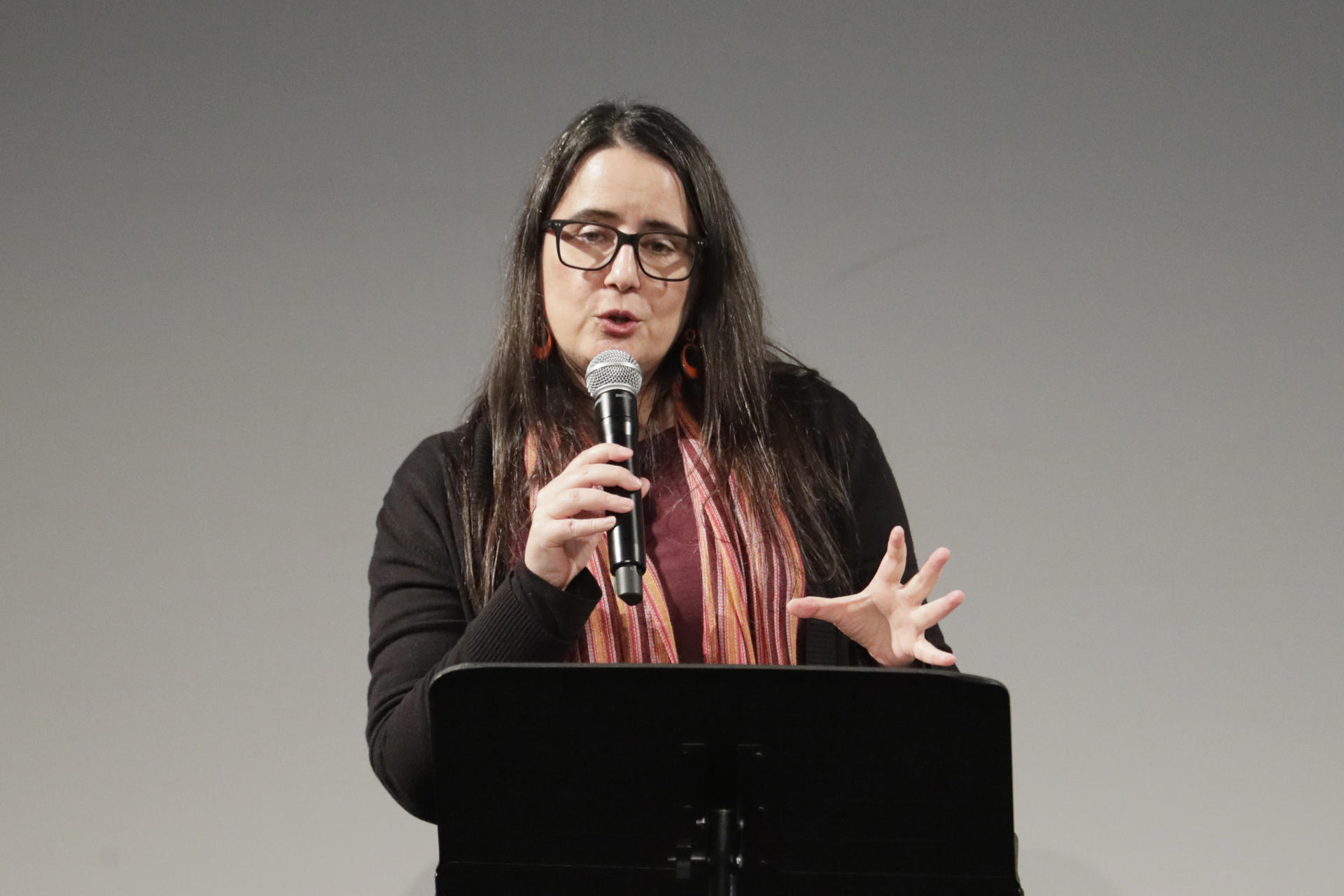
The director for the Americas of the NGO Amnesty International, Ana Piquer, during a conference in Bogotá (Colombia). / EFE/Carlos Ortega

14ymedio biggerEFE/14ymedio, Havana, 17 February 2025 — The NGO Amnesty International (AI) accused the Cuban government on Monday of “irregularities” and “lack of transparency” in the process of releasing 553 prisoners, which was announced following the agreement between Washington and Havana, mediated by the Vatican and announced in the last days of Joe Biden’s presidency.

In a statement by AI, the organization’s Director for the Americas, Ana Piquer, criticized that the authorities on the island “have not acknowledged the existence of people detained for political reasons” and have “not published a list of names of those who will be included in this process.”

Piquer stated that the regime has also “failed to show the willingness to ensure the immediate and unconditional release of prisoners of conscience such as Luis Manuel Otero Alcántara, Maykel Castillo, Loreto Hernández, Roberto Pérez Fonseca, and Sayli Navarro.”

Six days before leaving the White House, Biden removed Cuba from the list of state sponsors of terrorism. Hours later, the Cuban Ministry of Foreign Affairs confirmed that it would begin a process of releasing 553 people convicted of “various crimes.”

“People imprisoned for political reasons have once again been used in a dehumanizing manner.” continue reading

Officially, Havana has never linked the removal of Cuba from the list of state sponsors of terrorism with the release of prisoners—only Washington has mentioned an agreement—and it quickly rushed to clarify that those benefited were granted conditional release, so their sentences were not extinguished.

Various organizations, such as Prisoners Defenders and Justicia 11J, warned that the releases were halted over the weekend before Donald Trump took office on January 20th. One of the first decisions made by the current U.S. president was to reintroduce Cuba to the blacklist.

“The possible cancellation or pause of the releases is alarming, as it would seem to show that people imprisoned for political reasons have once again been used in a dehumanizing manner, as bargaining chips in a political game, without their lives, physical integrity, and rights being taken into account,” criticized Piquer in the statement.

According to the NGO, 172 prisoners have been released, and another nine have received some change in their legal status, mostly participants in the anti-government protests of July 11, 2021 (11J). Prisoners Defenders, for its part, counts 200 released political prisoners and has confirmed that some common prisoners have also been released.

Among those benefited are historical dissidents, such as Félix Navarro and José Daniel Ferrer, and activists like Pedro Albert Sánchez, Luis Robles, and the Lady in White Tania Echeverría. However, many prisoners considered political remain in prison, including some with international recognition, such as artists and activists Luis Manuel Otero Alcántara and Maykel Osorbo, who have been classified as prisoners of conscience by Amnesty International.

Translated by Gustavo Loredo

____________

COLLABORATE WITH OUR WORK: The 14ymedio team is committed to practicing serious journalism that reflects Cuba’s reality in all its depth. Thank you for joining us on this long journey. We invite you to continue supporting us by becoming a member of 14ymedio now. Together we can continue transforming journalism in Cuba.

Only 10 Liters of Fuel for Owners of Generators in Artemisa

Priority will be given to “those owners who collaborate in the charging of rechargeable equipment”

The purchase of a larger amount is not allowed,” the authorities warned / Facebook

14ymedio bigger14ymedio, Havana, 15 February 2025 — With the Island in check due to the “complex energy situation,” the national electricity system (SEN) cannot get a break. The deficit forecast for this Saturday, of 1,405 megawatts (MW), indicates that the work stoppage for non-essential industries and recreational activities throughout the country does not contribute decisively to mitigating the debacle.

In Artemisa, to “face the energy contingency,” the authorities have organized a sale of fuel for generators that will benefit 350 people. The operation, however, has its requirements: priority will be given to “those owners who collaborate in the charging of rechargeable equipment (cell phones, lamps, fans), who have been previously notified.”

They are 100 residents of the popular councils of Lincoln, Cayajabo and Corojal, in addition to 50 of Lavandero. “The remaining popular councils will benefit from the sale gradually,” explains El Artemiseño.

The “ideal,” it adds, is that those who come to buy the fuel have a Fincimex card, although it does not clarify what will happen if they don’t. continue reading

The plan is that in each area the inhabitants can find a spot where they can recharge their electronic equipment

The plan is that in each area the inhabitants can find a spot where they can recharge their electronic equipment. This gives the measure of what the authorities themselves expect from the next few days in terms of energy.

One more requirement makes the measure worrying: The sale will be made in the Cupet on March 13 at a rate of 10 liters per person,” warns the media, which concludes: “The purchase of a larger quantity is not allowed.”

The promised 10 liters will barely be enough for a few hours, but the Electric Union does not plan a significant recovery of the SEN for the time being. With the promise of incorporating three Mariel fuel oil engines by this afternoon, which would provide 110 MW, the deficit would still be above 1,000, a figure that has been normalized in Cuban reality because it’s been weeks since the deficit fell below that number.

The same would happen if the damaged unit of Santa Cruz del Norte, in Mayabeque, out of the game for a few days, or unit 1 of the Felton (Holguín), which is under repair, enters the SEN.

As for the sale of fuel for generators, the measure began last November in Havana, when the gas stations in the municipality of Plaza de la Revolución began to dispatch 20 liters for each customer with a generator that was authorized by the municipal mayor.

If you do not arrive at the time assigned to your group or do not see the notice, buyers must resign themselves to starting in the virtual line again

This type of management has spread in recent months throughout the Island, and in provinces such as Havana, Cienfuegos and Holguín, sales are organized through numbers delivered to buyers. With the list in hand, the service centers start calling those numbers at certain times, and the customers go to buy the fuel, which is separated from that intended for vehicle drivers.

If they do not arrive at the time assigned to their group or do not see the notice, buyers must resign themselves to starting in the virtual line again.

However, the fall in the individual quota from 20 to 10 liters reveals that the Island is experiencing a new period of shortages in oil. Last January, crude oil shipments from Venezuela – which used to be the main oil partner of the Island – fell to a historic low of just 10,000 barrels per day (bpd), 65% less than last December, when they reached 29,000.

The fuel shortage has hit all key sectors of the economy, including the sugar harvest

The fuel shortage has hit all key sectors of the economy, including the sugar harvest, half completed and now in precarious condition. In the province of Artemisa itself, it was not until this Friday that the November 30 sugar mill began grinding, three months after the start of the campaign was declared.

“From the start there are 31 days of harvest, and we should not have problems to fulfill the plan,” the directors of the mill explained to the press, “if the necessary fuel comes in.”

In a context of blackouts that last up to 20 hours or exceed a day, there is only one word for the Cuban regime: “saving.”

Translated by Regina Anavy

____________

COLLABORATE WITH OUR WORK: The 14ymedio team is committed to practicing serious journalism that reflects Cuba’s reality in all its depth. Thank you for joining us on this long journey. We invite you to continue supporting us by becoming a member of 14ymedio now. Together we can continue transforming journalism in Cuba.

Waldo Balart in the Fourth Dimension

Like almost all abstract art, the Cuban’s work is at the same time mystical, physical and philosophical.

Balart decided to lead “a marginal existence as the last bastion of personal freedom.” / Waldo Balart/Facebook

14ymedio bigger1ymedio, Xavier Carbonell, Salamanca, 15 February 2025 — After the death of Waldo Balart in Madrid, his little book ’Essays on Art’ began to circulate again, published in 1993 by Betania. A man of many lives, all of them hectic, it was logical that he asked for euthanasia as the only way to stop what seemed to be the beginning of his immortality. A drinking buddy of Pollock and Warhol, he had left Cuba carrying a surname comparable only in historical tension to the surname Castro.

Like almost all abstract art, Waldo Balart’s work is simultaneously mystical, physical and philosophical. His need to explain his paintings – sometimes through convoluted “propositions,” in the manner of Euclid – reveals how much of them are meditative. Purifying the spirit before holding a brush, illuminating oneself before the canvas, breathing, contemplating, classifying, creating.

The search for this alternative mystical meaning – neither Christianity nor yoga could give him everything he was looking for – led him to the physics of color and to the multiple and malleable idea of ​​the fourth dimension. From Einstein, Waldo Balart learned that time can be a substance, and that as a substance it can be represented. “Time heals everything,” he said. And also: “Time worries me.” And also: “Over the years I realize that time with me is wear and tear.” continue reading

From Einstein Waldo Balart learned that time can be a substance, and that as a substance it can be represented

In the oppressive Victorian society where the popular – but not physical – concept of the fourth dimension was born, the idea that there are worlds that our senses cannot grasp was a symbol of freedom. Flatland , a mathematical novel published in 1884 by Edwin Abbott, narrated the adventures of a square who discovers the existence of spheres.

In “flatland” there are only two-dimensional forms, and the appearance of this other being upsets everything. The sphere, on the other hand, does not conceive the possibility of a fourth, a fifth or an nth dimension. The idea was so attractive that it won thousands of followers, such as the bigamist writer Charles Hinton, who invented the tesseract – a hypercube with 24 faces and 32 edges, later painted by Dalí – and the theosophist Claude Bragdon, who aspired to redecorate New York following magical and numerical patterns.

For Waldo Balart, only abstraction – specifically Suprematism and Constructivism – had succeeded, after several failed attempts, in representing these new conceptions of time and space. This required a great deal of inner purification, similar to that of a saint or a hermit.

Pure color, pure form, mathematics and illumination together. A song to freedom that never ceases to have a profound resonance in history.

The Cuban’s affinity with these movements led him to shape his work according to the same search for purity. Pure color, pure form, mathematics and illumination together. A song to freedom that never ceases to have a deep resonance in history – and in his own history – a rebellion against politics and reality that seems to reach its climax in the photo that Rialta published in 2024 of his empty wheelchair. Clean lines, a scarf, paint stains on the floor, the absent body. It is the Heart Sutra of Buddhism: emptiness is form, form is emptiness.

“The needs for freedom and solidarity are born from an internal struggle within the creator,” writes Waldo Balart, “which drives him to become self-absorbed and thus be able to channel his energy from a personal perspective.” This idea is expressed much more clearly in his letter to the poet Gonzalo Rojas, where the painter claims to have succeeded in translating onto canvas the feeling of emptiness of Saint John of the Cross, the great Spanish mystic.

The perfect representation of the dispossesion was a black square like Kubrick’s – “it can’t be a circle, because then it would be a black hole” – because it was at the same time the absence of color and all colors, delimited by a solid form. “I consider it as nothingness, which is the only way to achieve communion with the Universe.”

Essays on Art‘ does not contain only essays on art. Waldo Balart foresaw the pressure of the Internet as early as 1987, when he attended an exhibition by the technological giant IBM in the Egyptian temple of Debod, transplanted in Madrid. He was shown the making of a chip and the future of computing. The situation was like walking through a labyrinth with an unlikely tour guide: the Minotaur. The artist saw in all this a danger for those who wish to lead “a marginal existence as the last bastion of personal freedom.” A prophecy fulfilled.

One of the most delicious texts in the anthology is ’Revolution’, the “outline of a history of the Cuban tribe, descendants of the Goths and the Lucumíes”

One of the most delicious texts in the anthology is ’Revolution’, the “outline of a history of the Cuban tribe, descendants of the Goths and the Lucumíes.” This comedy, which begins in 1492 and goes through the wars of independence and the Revolution of 1930 until reaching 1959, is his particular reading of the island’s past.

With Castro – his former-brother-in-law – a Russian flag is placed on the stage and “all the actors get into geometric-military formations, and begin to march like automatons repeating slogans in unison that the judges have ordered them: “blah burun gru puraca achán.” Waldo Balart senses the Cuban apocalypse, and after a season of “fights, killings and hangings” comes the great dispossession of all symbols. Only emptiness and a song by The Beatles remain.

What I like about Waldo Balart is not only his paintings, always with beautiful titles – Structure of Light, Axiomatic Orde, Longitudinal Knot Genesi, Proposition – but also that essential Cubanness that Castroism has always wanted to exterminate. The Island as a synthesis of the universal, as the zero coordinate to search for the rest of the universe. The Island, not as a closed-off state, but as a starting point.

The artist knew himself to be the custodian of this memory, which had “considerable weight” for him. That is why he liked to point out that the Revolution was only an accident – ​​with all the implications of that word – in a larger story. “Everything has been said,” he insisted with Gide, “but since no one listens, it must be repeated.”

Three steps into the void. / Xavier Carbonell

____________

COLLABORATE WITH OUR WORK: The 14ymedio team is committed to practicing serious journalism that reflects Cuba’s reality in all its depth. Thank you for joining us on this long journey. We invite you to continue supporting us by becoming a member of 14ymedio now. Together we can continue transforming journalism in Cuba.

Dining by Candlelight: Not for Valentine’s Day, but for the Blackouts

After several days of blackouts lasting more than 20 hours a day, the residents of Cienfuegos face this February 14 with little enthusiasm

In David and his partner’s home, it is very likely that tonight they will have a frugal dinner in the darkness of a blackout. / 14ymedio

14ymedio bigger14ymedio, Julio César Contreras, Cienfuegos, 14 February 2025 — There is no indication that this Friday will be a festive day for the people of Cienfuegos. After several days of blackouts lasting more than 20 hours a day, residents of the city face Valentine’s Day with little enthusiasm and limited consumer offerings. The candles lit tonight will not be to create a romantic atmosphere but to alleviate the darkness of the power cuts.

“My wife and I have a tradition of celebrating it because we met on February 14 at a party that some friends organized,” Alejandro, 45, told this newspaper. “Normally we would go out to eat at a restaurant, buy roses and then walk around the city for a while, but this year we’re going to stay at home, not spend money because everything is so expensive, and go to bed early.”

The economic crisis has dampened the passion surrounding the date. Since the beginning of the month, merchants have also remained cautious with the sale of all kinds of gifts and accessories. While a few years ago tables, shops and private kiosks were filled with stuffed animals, artificial or natural flowers, chocolates, heart-shaped accessories and all kinds of red or pink trinkets, in 2025 the options are reduced. continue reading

“This year, the initial investment was very expensive and we have no guarantees of recovering it.”

At the traditional craft fair that has been overflowing on San Fernando Boulevard since early February, merchants have now opted for caution. “At this time, my husband and I always put a special product on sale, but this year the initial investment was very high and we have no guarantee of recovering it,” explains Gina, a goldsmith from Cienfuegos who runs a sales point in the city centre.

Instead of her own themed products made of steel, copper and beads, she has preferred to stock a majority of her shop with timeless products, which “are just as good for Valentine’s Day as for a birthday,” she admits. “Many people come in, ask for prices and then leave without buying anything. This misery has taken away people’s desire to love each other.”

Her business experience tells her that those peaks in purchases around special dates are now history. “A seller who depends on celebrations is at risk of not even being able to recover the cost of the investment made,” says Gina. Inflation pushes families to cut spending on gifts and festivities to concentrate almost exclusively on survival.

The nightlife scene is not a great incentive to dig deep into your pocket either. “You can find a restaurant with seating and have a nice time, but then how do you get home? In the dark? That’s dangerous,” admits David, 28, who went out in the middle of his workday on Wednesday to buy a present for his wife.

After going around the shops near Villuendas Park, the young man realized that his goal would be complicated. “A simple postcard costs 300 or 400 pesos. No matter how much you love it, your pocket can’t handle such excesses.” After a long trip, David ended up spending more than 300 pesos on two loaves of bread that he managed to buy from an informal vendor. “Bread is missing, so given the choice, I opted to be able to have breakfast tomorrow.”

In David and his partner’s home, it is very likely that tonight there will be a frugal dinner in the darkness of a blackout and the main entertainment will be “watching some videos on the Internet if we have battery and connection left at that time.”

____________

COLLABORATE WITH OUR WORK: The 14ymedio team is committed to practicing serious journalism that reflects Cuba’s reality in all its depth. Thank you for joining us on this long journey. We invite you to continue supporting us by becoming a member of 14ymedio now. Together we can continue transforming journalism in Cuba.

Cuba: Faced with a Flour Shortage, Privately Run Bakeries Are Rationing Bread

Lines of customers outside a privately owned bakery on Cespedes Street in Sancti Spiritus. / 14ymedio

14ymedio bigger14ymedio, Mercedes García, Sancti Spirítus, 11 February 2025 — The line of people extends along both sides of the street. It grows longer on one side of the street, with more people joining as the morning progresses. The scene is almost identical on the other side. Residents from different parts of the city crowd outside a privately run bakery on Céspedes street in downtown Sancti Spíritus. “Right now, they’re only selling bread,” says an elderly man who has traveled here from the city’s Kilo 12 neighborhood.

The flour shortage and rolling blackouts have impacted many private businesses who need it to produce cookies, breads, desserts and pizzas. Some have found it necessary to restrict how much any one person can buy. On Tuesday, the bakery was limiting each customer to five items. Some of those who knew of the restriction beforehand brought along several family members in order to fill their shopping bags.

Some of those who knew of the restriction beforehand brought along several family members in order to help fill their shopping bags

“I have never seen this. I thought this only happened in state-owned bakeries,” said one woman. “Resellers show up with their brothers, sisters, children and even grandchildren to stock up.” Despite the discomfort and the sun that was beginning to sting her skin, she remained in line. She complained that the state-run bakery in her neighborhood had put up a sign saying “tthere is no bread because there is no flour.” Not even the “low-quality government bread,” which she uses to feed her chickens. continue reading

While the state charges just 75 centavos for a small loaf of bread, a bag with four better quality rolls goes for 200 pesos at private businesses. Meanwhile, a medium-sized loaf with a hard crust at a small or medium-sized business (MSME) in Sancti Spíritus can be had for between 100 and 130 pesos, while a bag of breadsticks can go for as much as 250. Current prices reflect an increase of between 15% and 25% compared to December 2024, according to data compiled by 14ymedio.

A 25-kilogram sack of imported Turkish flour costs from 9,000 to 10,000 pesos on the open market but suppliers are only willing to sell it in bulk. Small bakeries are struggling and would rather not buy large quantities of a product without knowing if it will produce a nice, crusty loaf.

“I live in Olivos and for a while bakers would hawk their wares in the neighborhood. You you would buy directly from them, almost fresh out of the oven,” explains José Pascual, a retiree who also had to go to the privately owned bakery downtown on Tuesday due to a bread shortage in his area. “They say it’s very difficult to get flour but the power outages also impact them. The bread often spoils once it’s in the oven because the electricity goes out.”

Most of the province’s privately owned bakeries use electric ovens due to a shortage of liquified natural gas, which would be more reliable and easier to use than wood or coal. “In my neighborhood there’s an individual who, until recently, baked bread using an oven on the roof of his house. For 85 pesos you could get a decent-quality medium-sized loaf,” adds José Pascual.

The bakery has been closed for several weeks. “The bread was getting sour because of the blackouts.” The aroma of freshly baked bread no longer wafts through the retiree’s neighborhood. Instead, some local residents can be seen heading out early towards the city center to get in line in front of the bakery on Céspedes Street.

____________

COLLABORATE WITH OUR WORK: The 14ymedio team is committed to practicing serious journalism that reflects Cuba’s reality in all its depth. Thank you for joining us on this long journey. We invite you to continue supporting us by becoming a member of 14ymedio now. Together we can continue transforming journalism in Cuba.

The Social Tragedy of Castroism

The failure has been so resounding that its prototypes of social miracles, Health, Education and Sport, have been removed from the shop window.

The Pan American Stadium in Havana. / 14ymedio

14ymedio bigger14ymedio, Pedro Corzo, Miami, 16 February 2025 — The only achievements that will survive the dynastic totalitarianism of the Castro brothers and their putative son, current president Miguel Diaz-Canel, are propaganda and their repressive efficiency, including the material and human destruction caused by the system.

The failure has been so resounding that its prototypes of social miracles, Health, Education and Sports, have been removed from the showcase that the regime, in its delirium, presented to those who wanted to drown in the sea of ​​happiness of Castroism.

Healthcare is a disaster. Hospitals do not have the means to meet the needs of those admitted. There is no bedding, food or medicine. Electricity is frequently cut off and hygiene is practically non-existent.

Infectious diseases hit the island several times a year. Bureaucrats systematically distort statistics. Lack of modern medicines and equipment, or at least in good working order, is more than frequent. There is a clear difference in the medical care received by the ruling class and foreigners on the one hand, and the population on the other. continue reading

Hospitals do not have the means to meet the needs of those admitted. There is no bedding, food or medicine.

Finally, there is the paradox that the medical power, as they like to call themselves, does not have enough professionals to care for the people because they rent them out to other countries in their eagerness to obtain multimillion-dollar payments that will allow them to partially solve the perennial economic crisis of the system.

Education, the starting point for the indoctrination of new generations, faces a serious problem due to the continuous exodus of teachers to other jobs that provide them with more benefits, affecting the quality of these services.

However, the biggest failure in education was the so-called Schools in the Countryside, an attempt to replace the family with ideological communes in which parents would lose all ability to influence their offspring.

Children and adolescents were uprooted. Far from their usual patterns of behavior, they behaved arbitrarily. The regime tried to impose military discipline in many of these centers and failed most of the time. The imposition of study and work to form the proposed New Man, a kind of enlightened servant trained to serve the project, only reaped disappointment.

Children and adolescents were uprooted. Far from their usual patterns of behavior, they behaved arbitrarily.

The Schools in the Countryside, one of Fidel Castro’s favorite plans, were, according to students of the time, a concentration camp in which methods of extreme severity were practiced along with the most absolute disciplinary neglect, favoring spaces for violence among inmates, perversities of different kinds, including sexual abuse.

The third screen of the regime was sport. For years, Cuba was one of the world powers in this activity, a feature that favored Castroism because the award-winning athletes in significant numbers gave all the credit to the government for their victories, and others, more servile than average, dedicated their laurels to the dictator in chief.

However, Cuba’s leading role in sport has been extinguished, mainly due to its inability to cover the huge expenses demanded by high-performance athletes. In addition, totalitarianism, although it retains power, suffers from widespread and massive exhaustion that will lead at some point to a death by consumption, similar to that suffered by the defunct Soviet Union.

The dictatorship skillfully mixed Health, Education and Sports with politics, achieving a propaganda cocktail of great force.

On the internal level, they favored the confusion and victimization of society for the sake of ephemeral glories.

Their successes in each of these sectors offered an image of progress, freedom and justice that was so far from the true national context that most international observers did not want to admit it because they were supporters of the regime or because they received benefits from a government that granted them goods and privileges that the Cuban people did not have access to.

Advances in each of these sectors provided the system with various international advances and benefits. At the domestic level, they favored the confusion and victimization of society for the sake of ephemeral glories. The much publicized social “achievements” were the result of the formidable Soviet subsidies and not of the productive capacity of an inefficient government that has led the country to misery and absolute indebtedness.

Totalitarianism has turned Cuba into a beggar state since 1959, to the point that it receives food donations of products such as sugar, the most important commodity in our economy before the disaster occurred, putting the survival of the nation at risk.

____________

COLLABORATE WITH OUR WORK: The 14ymedio team is committed to practicing serious journalism that reflects Cuba’s reality in all its depth. Thank you for joining us on this long journey. We invite you to continue supporting us by becoming a member of 14ymedio now. Together we can continue transforming journalism in Cuba.

Fatally Injured, Cuba’s Hard Currency (MLC) Stores Refute the Official Speech About Their Continuation

The dollar stores that Tiendas Caribe and Cimex have begun to open in the provincial capitals have given their final blow.

The Puentes Grandes Shopping Center, located on the corner of 26th and 51st streets / 14ymedio

14ymedio bigger14ymedio, José Lassa/Natalia López Moya, Havana, February 13, 2025 — “They have fans for sale in Roseland, hurry up,” writes a user in a WhatsApp group where hundreds of customers meet to monitor stores in freely convertible currency (MLC) in Havana. Following the trail of products in those State shops has become a full-time task due to the shortages that keep their refrigerators and shelves practically empty.

After touring several markets of this type in the Cuban capital, Yusimí, 43, arrived at one quite far from his home: the Puentes Grandes Shopping Center, located on the corner of 26th and 51st streets. “I haven’t been to this place for years, and it left me cold,” he said when he came across the holes in the floor at the entrance. That damage was only a part of the deterioration he found inside.

Practically empty of customers and products, the huge warehouse that once belonged to the Telva towel factory barely had a few cans of tomato sauce, some beach flip-flops and a few appliances with expensive prices and dubious quality. “This was a high-end store and now it’s scary to go inside; not even the lights work well,” lamented Yusimí, who, finally, “in order not to waste the trip” ended up buying a couple of cans of beets.

Damage to the floor was only a part of the deterioration inside / 14ymedio

The place was inaugurated as a shopping center in 2014, under the management of the military corporation Cimex. “The lines were constant because it was very well stocked,” recalls a former employee, who evokes those first years with nostalgia. “People came from all over Havana, because we had a very good supply of perfume and food. The hardware store also attracted a lot of customers, but the best thing we offered was the great variety of appliances.”

At that time, the authorities even announced that the market would have a web-browsing room and a Wi-Fi area that were never installed. “We even offered a gourmet assortment with good cheeses and very fine chocolates,” recalls the employee. It is difficult to reconcile that image of full shelves, well-dressed workers and customers who carried baskets full of goods with the empty refrigerators and listlessness of the employees today. continue reading

“When they removed the convertible peso in 2021, the decline began,” the woman says. The suppliers began to fail: “Cimex supplied sometimes yes and sometimes no, until only a few customers came every day.” The conversion of the store to sales in MLC (hard currency) initially seemed to revive it. “We thought that, since in the end they were dollars that people had deposited in the bank to make the purchase, the supply was not going to be lacking, since we were talking about hard currency.” Less than five years later, the only thing left of that splendor is the bright white paint on the facade.

The final push was given to the stores in MLC by the dollar shops that, through the network of Caribe and Cimex Stores, began to open in the capitals of each of the 15 Cuban provinces. The flagship of that process is the 3rd and 70th Supermarket, on the ground floor of the luxury Gran Muthu Habana hotel, which only accepts payment in that currency, both by card and in cash. While on the platforms of the brand new store there are plenty of goods, at 26th and 51st every day more products are missing.

The scene is repeated in another of the large MLC stores in Havana. The market of Boyeros and Camagüey has followed the same route as its cousin from Puentes Grandes. Recently several officials assured on national television that the freely convertible currency will be maintained, but there has been much speculation about the disappearance of the stores in MLC, and the owners of accounts in that virtual money have fewer and fewer options to spend it.

The old vitality of the business contrasts with the empty refrigerators and the listlessness of the employees / 14ymedio

What three years ago was a parking lot, where a space was barely empty for a few brief minutes before it was occupied by another vehicle, there is now an almost empty esplanade. On the outskirts of the store, this Wednesday, a custodian replied to a customer that they had no chicken or picadillo in the butcher shop. “They haven’t put it out this week, and we don’t know if they’re going to stock up in the next few days,” the worker explained vaguely.

Inside, the floors have holes in several areas, and the shelves are almost empty or filled with the same product. “I came to get olives and Castilian flour, but there isn’t any,” concluded a customer who finally bought a package of custard, family size, so as not to leave empty-handed. Away from the most central neighborhoods, buyers who have a vehicle arrive at Boyeros and Camagüey, a very small number in a city where getting fuel can take several days in line.

With many lights off, the interior of the store not only leaves an image of deterioration but also an unpleasant smell. “The light comes on, the light goes out; the refrigerator holds out for a while but not much, and the products are spoiled,” is how a worker in the storage area summarizes the situation. “There are many employees who have asked for leave, because working like this is not worth it.”

A couple walking down one of the aisles finally decides on a package of peas and a bag of imported sugar. The woman looks at her cell phone and tells the man that in the WhatsApp group where she is registered they have just published a new ad. “They have sausages and Gouda cheese in La Puntilla,” she says, and they leave at full speed to get to the Miramar neighborhood. There, another MLC store, out of stock, with broken floors and no lights, awaits them.

Translated by Regina Anavy

____________

COLLABORATE WITH OUR WORK: The 14ymedio team is committed to practicing serious journalism that reflects Cuba’s reality in all its depth. Thank you for joining us on this long journey. We invite you to continue supporting us by becoming a member of 14ymedio now. Together we can continue transforming journalism in Cuba.

With the Closure of the Riviera Hotel and the Progressive Death of the Habana Libre, Preparations Are Made for the Arrival of the Torre K

“Not even the fire extinguishers are ready,” says an employee of the Habana Libre

At the entrance to the Riviera, a guard and a woman watering the grass were the only “guests” in the accommodation. / 14ymedio

14ymedio bigger14ymedio, Jorge Lassa, Havana, 16 February 2025 — For decades, the Habana Libre hotel has been an element of beauty and glamour in the skyline of the Cuban capital. But behind its beautiful façade, the central building in El Vedado hides a panorama of deterioration and abandonment that drives away tourists and scandalizes tour guides. Its close cousins, the Riviera and the Colina hotel, are also not doing well in these times.

Carlos is dedicated to inspecting the security systems of hotels and recreational centers. With more than three decades in his profession, this Havana resident’s opinion is blunt: “The Habana Libre is a danger, it is very deteriorated and in the last inspection we did it practically failed in all parameters, not even the fire extinguishers are working,” he comments to 14ymedio.

“They have had to close many rooms and, right now, the hotel is barely functioning. In operation are the lobby and the 25th floor, where activities take place, but the rest of the facility is practically unused,” warns Carlos. “They have not decided to close it completely because it is a very emblematic place and they are also waiting for the opening of the K Tower, which has the capacity to absorb the clients who want to be in that area.” continue reading

“The rooms are terrible, the air conditioning barely works, there is barely any hot water in the bathrooms”

This is how the worker refers to the controversial new skyscraper at 23rd and K, which will house a luxury hotel managed by the Spanish company Iberostar, whose opening has not yet been finalized despite having been announced, first, for January 15 and, later, for February 1.

It is not necessary to delve into the bowels of the accommodation, as Carlos and his team do, to notice how breakdowns and neglect have taken over the former Habana Hilton, opened in 1958 and built with money from the retirement funds of the Cuban Union of Gastronomic Workers. Now, little remains of that former splendor of its early years, when it even housed Fidel Castro’s main office after he came to power.

“I was there in November,” says Marlén, a Cuban who works in the tourism sector. “The rooms are awful, the air conditioning barely works, there is barely any hot water in the bathrooms, leaks keep several rooms closed and everything looks very old.” In the hallways leading to each room, the smell of humidity seeps into your nose and damage accumulates in corners, lamps and surfaces.

In the hallways of the Habana Libre, the smell of humidity seeps into your nose and damage piles up in the corners. / 14ymedioThe lobby, where a few decades ago Latin American guerrillas protected by the Havana regime and intellectuals from all over the world exchanged greetings, is now a nearly empty area. But it is the nearby shopping gallery, also located on the ground floor, that most honestly shows the state of the entire hotel: with leaks in the ceilings, closed shops and few lights, it scares away customers instead of attracting them.

Last December, Raúl stayed at the Habana Libre thanks to an invitation from some relatives who had emigrated. “I stayed on the 21st floor. The elevators are gloomy, it’s scary to get in them because they creak as they move. The rooms are very outdated, you can see that they haven’t invested in modernizing them, the carpets are stained and everything smells old,” he tells this newspaper. “To use the hot water, I had to take it easy because between turning on the sink and the water coming out, just a little warm, I spent a long time. One of my wishes was to take a break from the low pressure and cold water in my shower at home, but I didn’t find what I wanted.”

The air conditioning was also poor, but at least the mild Cuban winter kept Raul from sweating in his room. “The breakfast buffet was missing a million things,” complained the guest, who had planned a wide variety of fruits, cereals, cheeses and other combinations. Instead, he was met with a poor offering, a lot of monitoring by employees to ensure that customers did not serve themselves more than they should, and poor quality food.

“It has become like an empty shell, the period furniture, the stylish lamps and all that atmosphere of the 50s have been lost”

With only four stars – it recently lost one – the worst thing about the Habana Libre, according to Raúl, is the way the staff treats national guests. “The service was very bad, especially at the door. Every day they asked me if I was staying at the hotel and that made me feel very uncomfortable. If the employees don’t have the ability to memorize faces, it’s better for them to give guests a bracelet, because the other thing is pure harassment.”

The problem of leaks from the ceilings has affected not only the rooms. “You get water on your head, whether it’s on the terrace in the middle, in the hallways, in the Ambassadors’ lounge, in the Presidential lounge or in the Latin American lounge. They all have leaks,” Raúl continues. “The buffet table next to the pool was closed when I went, so I had to sneak some bread from breakfast to have as a snack while I was in that area.”

Those who think that this symbol of Havana could not be worse off are shocked by the nearby Riviera Hotel. Last year, when the diving board of the hotel’s swimming pool collapsed, many people realized the ruin that had taken over the building, founded in December 1957 by the Riviera Hotel Company, owned by the mobster Meyer Lansky. Lack of investment and years of excess had been undermining the building, which in its design combined luxury and comfort.

Details of the deterioration of the Riviera, considered one of the most modern and luxurious hotels in the world when it opened in 1957. / 14ymedio

This week, at the entrance to the Riviera, a security guard and a woman watering the lawn were the only “guests” in the hotel. Behind them, large, broken windows, giving a view of scaffolding covered in dust from a restoration process that has clearly stopped, give the impression that the hotel is closer to being demolished than to being restored. The ceramic-covered dome, which once covered the casino area, has been losing pieces and color due to the harsh salt of the nearby sea and lack of renovation.

Despite the damage, the Riviera still stands out for its spacious terraces, its rationalist style and a structure that allowed guests to enjoy the sea breeze and the views over the city. But, according to a tour guide who frequently visited the place, “it has become like an empty shell, the period furniture, the style lamps and all that atmosphere of the 50s have been lost and now with this closure even more so.”

In its heyday, the Chilean writer Jorge Edwards stayed there , sent in 1970 by Salvador Allende to reopen his country’s embassy and who would end up recounting his experience in Persona non grata, a devastating book about the Castro regime.

“The staff’s attention is not good and the supplies are very unstable, one day they give you something for breakfast and the next day there isn’t any more.”

“If Lansky comes back to life, he’ll either die again or have to rebuild the Riviera,” says the guide, who fondly remembers the hotel lobby, the gym, the smoking area and the pool area. “When you got on the diving board, you didn’t even want to jump into the water because from up there the spectacle was sublime. You could enjoy the sea so close, the breeze and the hotel itself, which looked spectacular from that position.”

The younger brother of the Habana Libre and the Riviera, the Colina hotel shares the path of deteriorating services with them. Also located in El Vedado, a few meters from the University of Havana, the accommodation reopened last January after a renovation process that has not left a good taste among those who knew it. “It is now managed by the state chain Isla Azul, which is one of the worst in Cuba,” says Marlén, who also visited the establishment before its repairs.

Discreet to the eye, the Colina hotel has 80 rooms and from the beginning attracted a mid-range clientele looking for its central location and amenities. At the end of the last century, after the dollarization of the Cuban economy, the ground floor was used by local musicians who were attracted by its intimate atmosphere and the type of guests who came to the place, many foreign professors and academics who wanted to be close to university classrooms.

Discreet to the eye, the Colina hotel has 80 rooms and from the beginning attracted a mid-range clientele looking for its central location and amenities. At the end of the last century, after the dollarization of the Cuban economy, the ground floor was used by local musicians who were attracted by its intimate atmosphere and the type of guests who came to the place, many foreign professors and academics who wanted to be close to university classrooms.

Discreet to the eye, the Colina hotel has 80 rooms and has attracted a mid-range clientele since its inception. / 14ymedio

The reopening of the building, however, has not meant the return of those cultural moments. The Colina hotel now has the same standardized and characterless image as all the other accommodations managed by Isla Azul. That bohemian atmosphere of its beginnings, where writers, troubadours and merchants from the provinces would gather around the bar, remains only in the minds of the oldest residents. Nor has the retouching seemed to have restored the good service that characterized the place.

“The staff is not very attentive and the supplies are very unstable. One day they serve you something for breakfast and the next day they don’t have it anymore,” says Marlén. The employee dedicated to tourism promotion is blunt when evaluating the current situation: “Cuba is saved by the views, the sunrises and the nature, but not by the hotels.”

Unlike what usually happens in the rest of the world, where historic buildings are restored – as is the case of the Riviera and the Habana Libre – the Cuban government is spending hundreds of millions of dollars on the construction of new, larger, luxury facilities, despite the pessimistic outlook for the tourism sector.

____________

COLLABORATE WITH OUR WORK: The 14ymedio team is committed to practicing serious journalism that reflects Cuba’s reality in all its depth. Thank you for joining us on this long journey. We invite you to continue supporting us by becoming a member of 14ymedio now. Together we can continue transforming journalism in Cuba.

Power Cuts and Rationed Sales of Books Spoil the Havana Book Fair

’Cuentos negros de Cuba’, by Lydia Cabrera, will be presented two days before the closing ceremony

A group of soldiers in different uniforms participate in an event at the Fair. / 14ymedio

14ymedio bigger14ymedio, José Lassa/Juan Izquierdo, Havana, 15 February 2025 — Dozens of soldiers from the Armed Forces, in everyday uniform, entered this Saturday through the great gate of the Morro-Cabaña complex together with hundreds of Havana readers. The two colonial fortresses, whose walls were used for three centuries by firing squads and as a prison, serve every February as the venue for the Book Fair, held this year in the midst of a crippling energy crisis.

The most important cultural event of the year was inaugurated despite the total paralysis of the country this weekend. With several days of blackouts lasting more than 24 hours, climbing both castles was for Havana residents an escape from reality, rather than a love of reading. However, the fair has made mediocrity a habit and the sun, which reverberates off the pavement with a heat typical of August, makes the trip a torture.

The Fair’s directors were clear: to fill the pavilions, they had to “scrape” the warehouses of the Cuban Book Institute in search of copies printed even decades ago. New releases, only those that – thanks to the work and grace of the mules – are sold by individuals, with titles of dubious quality and always at exorbitant prices.

In the central pavilion, readers look for news under a warm blue canvas. / 14ymedio

For those who do want a book to take home, disappointment has been the rule for years. The pavilions have also been subject to rationing and only one copy per person can be taken home. The “star” of the event, the relaunch of the so-called Biblioteca del Pueblo, is for sale in a limited-edition: for 50 pesos, after much jostling and displeasure, one could buy a single copy of La Edad de Oro or Winnie the Pooh. continue reading

“It looks like a Spanish-Literature book from high school,” said a young woman who managed to “hunt down” Cuentos negros de Cuba by Lydia Cabrera, the most sought-after book at the event because it is by an author that Fidel Castro censored for decades.

Cabrera’s book is one of the 10 books on sale from the Biblioteca del Pueblo. Some will have presentations, like this one –on Friday, February 21, two days before the closing ceremony– at the José Martí Memorial, one of the sub-venues of the fair. “It is a book with special treatment,” commented the employee of Editorial Oriente.

It has become a habit to go to the Fair to get the school supplies that the children need. / 14ymedio

“This is nothing like what it used to be,” said an elderly woman who was leaving La Cabaña at full speed, with two school notebooks under her arm, at 11 in the morning. On the old drawbridge, others were waiting their turn to enter. “This is torture,” cried a woman who had already been waiting for 50 minutes in line under the overwhelming sun.

The guards are not bothered by the ever-increasing number of people gathering around the castle. Ready to withstand the siege, in uniform and immune to any pleas, they manage the line in dribs and drabs.

In the central tent – ​​where, in theory, the few new releases from the People’s Library are found – “there are only two cashiers, the others have not arrived due to transport.” That is the explanation that runs from voice to voice under the no less agonizing blue light of the canvas. Everyone wonders how a book industry can be financed whose most valuable opportunity to sell the product is wasted with little staff and few resources.

Nobody looks at what are jokingly known as “template copies,” those books that no one wants to buy because of their content – ​​generally memoirs of generals or anthologies of Fidel Castro.

The other “permanent” books are those brought by the embassies or the guest country of this years fair, South Africa, which are almost decorative or at prices that Cubans automatically discard. There were also pavilions for Venezuela, Guatemala, Vietnam, Iran and the Sahrawi Arab Republic.

To get to any stationery store you have to beat the lines and be patient. / 14ymedio

It has also become a habit to go to the Fair to get the school supplies that the children need and a box of crayons to pamper them. This year you can buy 10 notebooks at 250 pesos each. Erasers are 200 pesos. To get any of these stationery items you have to withstand the lines and be patient.

Readers feel the only place they can be at a book fair in the best-sellers pavilion. The language spoken there is the dollar. A novel by the American Stephen King or a Harry Potter volume – as well as countless self-help pamphlets – can cost almost 40 dollars. “13,000 pesos for a book!” translates one reader, bringing the price down to the humble national currency.

“It would have to be a special edition or hardcover to cost that much,” said a young woman, familiar with the book market abroad. “They sell you Stephen King books as if it were his latest success, and those books they are selling are 40 years old.”

When the tours of the castle esplanade are over, readers face the last challenge of the Fair: returning to Havana. The operation is, in fact, worthy of a King horror novel, and cannot be resolved even with all the magic of Harry Potter.

Returning to Havana from the Morro-Cabaña complex can become an overwhelming “adventure”. / 14ymedio

____________

COLLABORATE WITH OUR WORK: The 14ymedio team is committed to practicing serious journalism that reflects Cuba’s reality in all its depth. Thank you for joining us on this long journey. We invite you to continue supporting us by becoming a member of 14ymedio now. Together we can continue transforming journalism in Cuba.