‘USA Today’ confirms the information from ‘Axios’ and adds that a State Department official and Raúl Guillermo Rodríguez Castro had a private meeting in addition to the meeting of the delegations
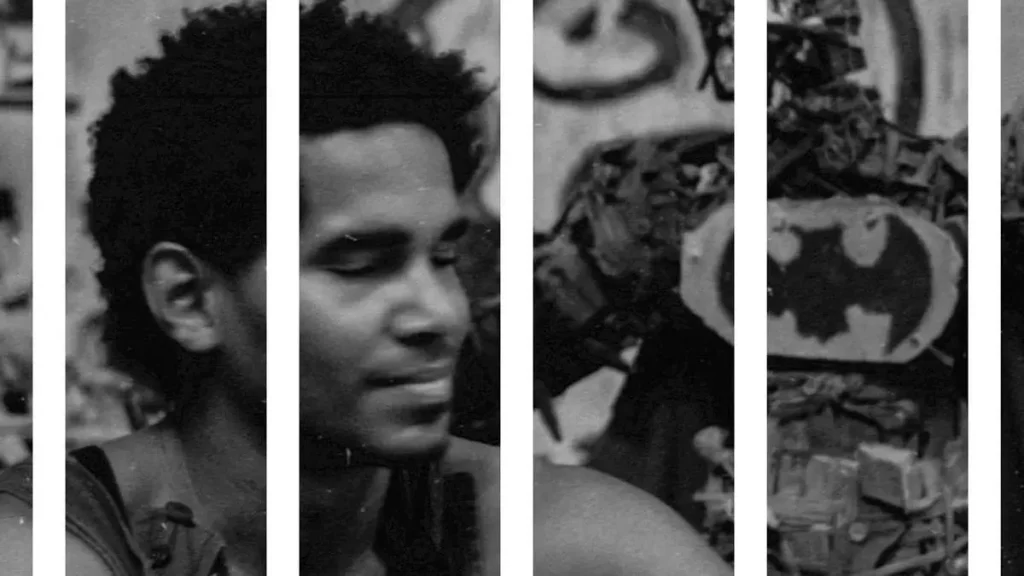
 14ymedio, Madrid, April 20, 2026 — Talks between the US and Cuba on April 10—revealed by Axios this Friday—included a deadline for the ultimatum reported by the US media outlet. According to USA Today, Washington has given Havana two weeks to finalize the release of “high-profile” political prisoners, including Luis Manuel Otero Alcántara and Maykel Castillo Osorbo, as a “gesture of goodwill.”
Both artists, members of the San Isidro Movement, have been in prison since 2021 and were sentenced in 2022 to five and nine years , respectively. Otero Alcántara’s sentence ends this July. A more significant gesture would be made in the case of Osorbo, who this May will have served five years in Kilo Cinco y Medio prison in Pinar del Río, but still has four more years to serve after being convicted of “contempt, assault, public disorder, and defamation of institutions and organizations, heroes, and martyrs.”
The meeting held in Havana between the Cuban and US delegations was confirmed to USA Today by a White House spokesman, who added that the government maintains its demand for the release of all political prisoners and suggested the regime “stop playing games while direct talks are underway,” as it has a limited timeframe to reach an agreement.
The meeting held in Havana between the Cuban and US delegations was confirmed to ‘USA Today’ by a White House spokesman, who suggested the regime “stop playing games while direct talks are underway.”
The demand to release prominent political prisoners was raised during that meeting, which was reported by Axios and also addressed other issues, as confirmed by USA Today . These included a proposal to bring Starlink internet service to the island, the swift and effective implementation of economic liberalization measures to incentivize foreign investment, and a thorough resolution to the confiscations of the 1960s. Additionally, the lifting of restrictions on political freedoms was discussed.
In addition to a meeting between the negotiating delegations from both sides, there was a private meeting between Raúl Guillermo Rodríguez Castro, ” El Cangrejo ,” grandson of the former president, and a State Department official. In these meetings, the U.S. side emphasized to the Cuban side that the economy is in a catastrophic state and that it is urgent to implement measures before the damage becomes irreparable.
They also stressed that Donald Trump’s intention is for there to be a diplomatic solution, but that if the Cuban leaders are not willing to take that step, he “will not allow” the paralysis to continue.
The events following that meeting came to light last week. Rodríguez Castro attempted to have Havana businessman Roberto Carlos Chamizo González personally deliver a letter to the White House in an effort to bypass the State Department and approach Trump directly. However, according to reports from Martí Noticias and the Wall Street Journal , the Cuban businessman was intercepted at Miami airport and denied entry to the country; his document, bearing an official seal, was also confiscated.
Later, USA Today published a report stating that the Pentagon was accelerating its plans for a possible intervention in Cuba. The institution stated that this did not mean an intervention was imminent, but rather that all options were being considered should the president decide to take such action.
The following day, Thursday, April 16, a US Navy drone flew over the island. The drone is part of the deployment over the Caribbean, established in late 2015, and in the days leading up to Nicolás Maduro’s capture, it was also conducting surveillance off the Venezuelan coast. The overflight has been interpreted as an intimidation tactic by Washington.
On March 12, the Cuban regime announced the release of 51 prisoners following an agreement with the Vatican, but only 27 of them were political prisoners, according to Prisoners Defenders. Furthermore, on April 2, another pardon was announced for 2,010 prisoners, in a “humanitarian and sovereign gesture of solidarity” for Holy Week. To date, all the prisoners released from that group have been common criminals.
This Sunday, the Cuban regime launched a nationwide campaign to collect signatures to reaffirm its commitment to “the unwavering vocation for peace, the essence of the Cuban nation” amid escalating tensions with the United States.
President Miguel Díaz-Canel launched the initiative, called “My Signature for the Homeland,” and it has been announced that the books will be available in all communities, workplaces, schools, and state entities.
President Miguel Díaz-Canel launched the initiative, called ” My Signature for the Homeland ,” and announced that signature books will be available in all communities, workplaces, schools, and state entities for citizens who wish to express their support for the Government’s Declaration, which last Friday denounced the “permanent siege” by the US and its “escalation of threats,” including “pretensions of military aggression.”
“We are calling on everyone, starting today and continuing in the coming days, to sign in support of this appeal, which will constitute a powerful demonstration of support against the genocide that the blockade represents and the deep desire of our people to build a prosperous future and live in peace,” stated Roberto Morales Ojeda, the organizing secretary of the Communist Party of Cuba (PCC).
“Cuba is living under the constant siege of the United States government, whose escalating threats have intensified in recent months,” the regime stated in its official declaration. Díaz-Canel has insisted in recent weeks that the country “does not aspire to war, but we do have the responsibility to defend ourselves against these threats, so that there is no surprise and no defeat.”
______________________
COLLABORATE WITH OUR WORK: The 14ymedio team is committed to practicing serious journalism that reflects Cuba’s reality in all its depth. Thank you for joining us on this long journey. We invite you to continue supporting us by becoming a member of 14ymedio now. Together we can continue transforming journalism in Cuba.