Official data show that the deterioration of the system is not due to the embargo
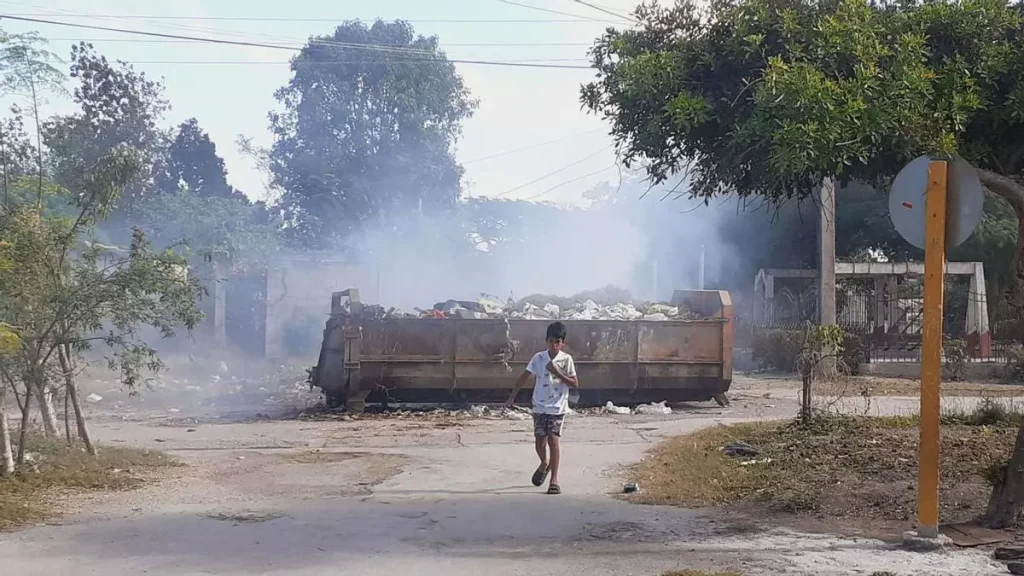
 14ymedio, Havana, May 29, 2026 — “Education in Cuba is at risk because of the current energy crisis.” The phrase, spoken by Anne Lemaistre, director of UNESCO’s Regional Office in Havana and the organization’s representative on the Island, describes the impact of blackouts, fuel shortages, and the deterioration of basic services in Cuban schools.
In a statement circulated on social media, the diplomat warned that the situation “makes it difficult for teachers and students to attend classes, learn effectively, and enjoy a normal social life with their friends.” The problem, she added, “jeopardizes the future of an entire generation, with long-term consequences.”
The official newspaper Granma, however, reacted immediately with its customary reflex. In its headline, the Communist Party’s newspaper added a phrase to Lemaistre’s quote that was not part of her main statement: “resulting from the blockade.” In this way, the paper transformed a warning about the daily collapse of classrooms into another piece of the official narrative, according to which every Cuban crisis has an external cause and a single culprit: Washington.
Before protecting classrooms, the State has protected tourism, hotel investments, political events, propaganda, and mechanisms of control
UNESCO itself, in February, had called for international cooperation to ensure that Cuban children could continue learning and that educational institutions remained safe spaces. In that appeal, Lemaistre said that “every day without fuel compromises school meals, transportation for teachers and students, and the electricity necessary to sustain educational programs.” She also concluded with a statement that should make the Cuban Government uncomfortable: “For us, a functioning society begins with the school; it is the first thing that must be restored.”
But in Cuba, schools do not appear to be a government priority. Before classrooms, the State has protected tourism, hotel investments, political events, propaganda, and mechanisms of control. In April 2025, amid the economic crisis, education had already become a secondary issue. Investment in the sector was reduced by about 400 million pesos compared to the previous year. Health and Education combined accounted for barely 3% of the state budget, compared with 37.4% allocated to tourism.
That figure undermines any attempt to portray the educational catastrophe as an unavoidable accident. A country that invests far more in hotels, surveillance and repression than in classrooms has made a political decision. It can blame the embargo, hurricanes, or fuel shortages, but its priorities are reflected in its budget.
“We promote children to the next grade without providing them with sufficient knowledge”
The signs of collapse continue to accumulate. By March 2025, education in Cuba had become “optional” in several schools, which were forced to reduce schedules and hold classes only in the mornings or from Monday through Thursday. A mother in Placetas, Villa Clara, reported that her third-grade daughter was barely receiving instruction and that the school itself had established a Monday-to-Thursday week, forcing the family to find someone to care for the child while the adults worked.
Blackouts affect more than classroom lighting. In Cienfuegos, parents and teachers were already speaking in 2024 about children arriving tired and sleepy, without breakfast, after nights of ten to sixteen hours without electricity. A teacher admitted at the time that schools had been forced to adjust lesson plans because of power outages and low attendance. “We promote children to the next grade without providing them with sufficient knowledge,” she lamented.
The energy crisis has been compounded by the exodus of teachers, which had already raised alarms before the current school year began. In Sancti Spíritus, one of the hardest-hit provinces, teacher staffing reached only 68.2%. In Camagüey, with 716 schools and 98,000 students, there was a shortage of 2,468 teachers, and 19 schools were closed to “optimize resources.” The official formula for plugging the gap has been to hire part-time teachers, merge schools, and overcrowd classrooms.
Education is at risk because the State abandoned schools while continuing to inaugurate hotels, organize political rallies, and harass students who have participated in protests
Authorities also admitted that there was a shortage of 1.3 million uniform items and that only 20% of students would receive new clothing. In classrooms, parents found few materials, poorly photocopied notebooks, and outdated textbooks. For families, the “creativity” demanded by the Government means patching uniforms, improvising backpacks, and obtaining supplies on their own. For teachers, it means reusing notebooks, dictating notes, and paying for photocopies out of their own pockets.
The UNESCO warning does not reveal a new problem but rather validates through an international institution what thousands of Cuban families have been experiencing for years. Education in Cuba is at risk, but not only because of the energy crisis or solely because of the embargo. It is at risk because the State abandoned schools while continuing to inaugurate hotels, organize political rallies, and harass students who have participated in protests.
In Cuba, the future of a generation is not being lost for lack of speeches. It is being lost because the Government decided that education is not a priority.
Translated by Regina Anavy
______________________
COLLABORATE WITH OUR WORK: The 14ymedio team is committed to practicing serious journalism that reflects Cuba’s reality in all its depth. Thank you for joining us on this long journey. We invite you to continue supporting us by becoming a member of 14ymedio now. Together we can continue transforming journalism in Cuba.