The Motorcycle of the Murdered Cuban Professor Santiago Morgado Was Sold for 200,000 Pesos

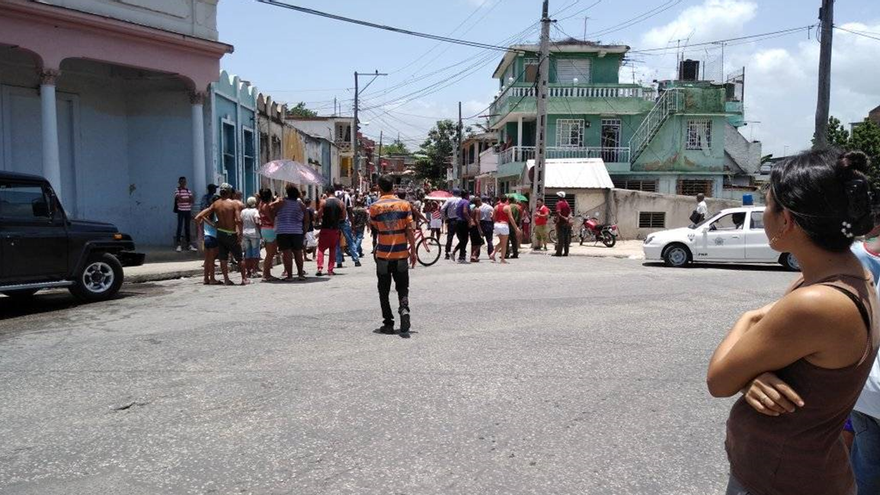
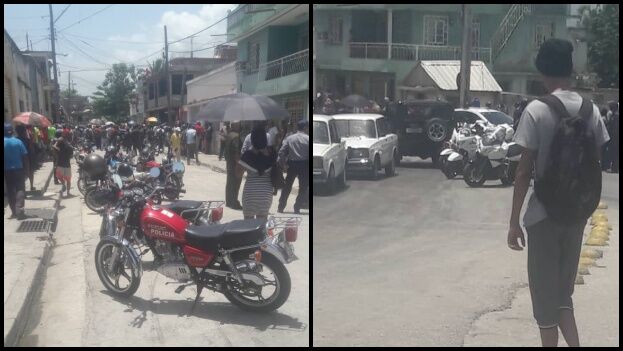
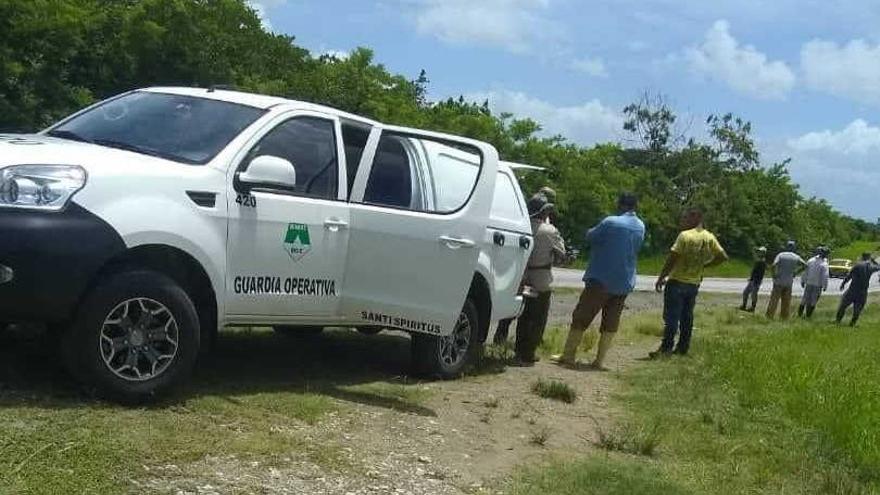
Photograph disseminated by the official press about the search for Santiago Morgado, in Sancti Spíritus. (Escambray)

14ymedio bigger14ymedio, Havana, 28 July 2022 — Professor Santiago Morgado was murdered for 200,000 pesos. It’s the price for which the Suzuki motorcycle that was stolen on July 1 at Sancti Spíritus was sold. The news was revealed along with other details of the crime by the official newspaper, Escambray.

According to the investigation, of the five involved in the death of the professor — all of them in pretrial detention since their arrest on July 11 — two were the material authors. One of them, apparently, habitually hired Morgado’s transport service and knew him well, so he sensed that it would be easy to take him to a point where he could perpetrate the crime.

The first of the alleged murderers led Morgado to El Capitolio, a town of the People’s Council of Banao, where, hidden among the undergrowth, the second man was waiting. The attackers used a stick and a stone, in addition to two pieces of agricultural machinery that they used to immerse the teacher’s body in a well up to three meters deep.

A third man was in charge of driving the red Suzuki to Vertientes, in Camagüey, where the fourth involved tried to sell it for 800,000 pesos, but finally had to make a considerable reduction. The fifth detainee was the intermediary of the sale. continue reading

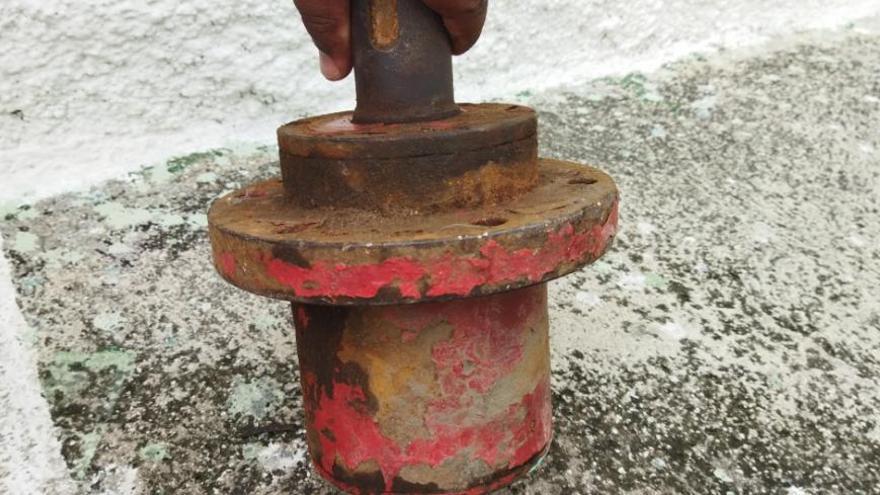
Metal piece with which the body was thrown into the well. (Yosdany Morejón/Escambray)

Sources from the investigation said that the trail of the helmet, found by the professor’s acquaintances, was decisive in reaching the well and finding the metal parts that helped clarify the case.

Of the five involved, between the ages of 28 and 45, three are residents of Banao, one in the same town, another in El Pinto and the third in El Capitolio. The other two are from Vertientes, from which it follows that the crimes occurred in places they knew well.

With the participation of the two direct authors, the reconstruction of the facts was carried out, a process in which it was demonstrated that they used the rental of the motorcycle with the intention of murdering its owner to steal it and subsequently sell it.

In Escambray’s note, the authorities insisted on admitting the relevance of citizen collaboration to clarify the crime. Family and friends carried out the first investigations and initially complained that the police were lagging behind.

Morgado, 62, disappeared at noon on July 1, and his acquaintances were the ones who found his biker’s helmet on the road through El Pinto. Three days later, on Monday 4, they found his glasses and a shoe near the well where, hours later, the firefighters recovered the body.

Although the official newspaper insists that Morgado’s murder was an “event that by its violent nature kept residents on alert,” it had been three days since the independent press reported the event when it was finally repeated in Escambray.

Translated by Regina Anavy

____________

COLLABORATE WITH OUR WORK: The 14ymedio team is committed to practicing serious journalism that reflects Cuba’s reality in all its depth. Thank you for joining us on this long journey. We invite you to continue supporting us by becoming a member of 14ymedio now. Together we can continue transforming journalism in Cuba.

Cubans Will be Able to Import Five Cell Phones, Three Computers and Two Motorcyles

On Thursday, the new rules for non-commercial imports made by natural persons were announced. (Granma)

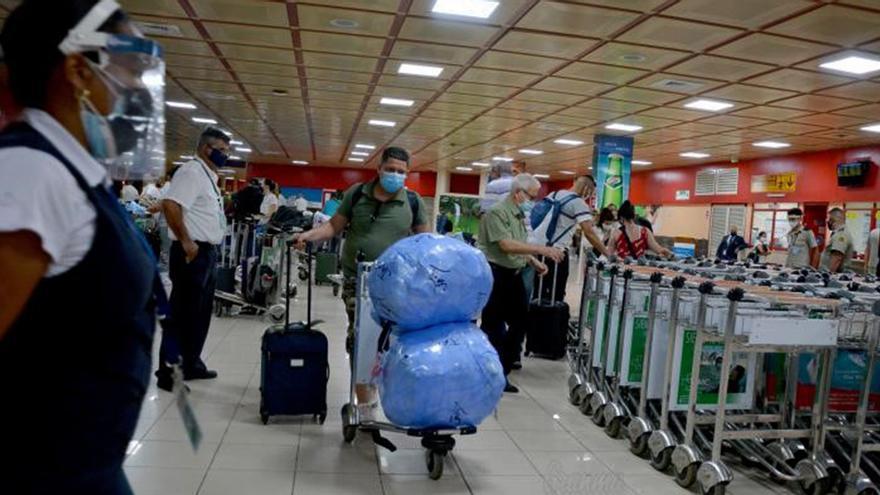
14ymedio bigger14ymedio, Havana, 28 July 2022 — The new provisions of the General Customs of Cuba on imports from individuals on a non-commercial basis have been announced this Thursday. The Official Gazette specifies that Cubans will be able to import up to five cell phones — versus the two that were allowed — two electric generators, two motorcycles, and a third if it is through the shipment of cargo, in addition to two electric bicycles.

“That doesn’t solve the big problem of the economy. The commercial character must be extended to all people who want to establish small and large businesses with all the freedom that exists in the world,” Pavel Otero, a musician from Havana, said in an article in the official media Cubadebate. “You have to think big and not little.”

As part of the provisions, which enter into force on August 15, the non-commercial nature of imports must have to do with “the functions of an article,” and the repetition of imports “must not show the purpose of trade.” In case this happens, General Customs can confiscate the products.

This measure is also a hard blow to ’mules’ traveling abroad to buy all kinds of products and resell them on the island’s black market. Despite the very high prices, this informal trade has given Cubans a break. Personal hygiene products, food and medicines are tax-free until December under a government resolution that freed them from paying taxes. continue reading

“What crazy people do: ’Non-commercial’ in a country that has nothing and doesn’t produce anything. Of course, most of those items will end up in ’garage sales’ and other sales. They have finished with opening completely and don’t give any more detours,” the netizen identified as Altair Urizen also commented in Cubadebate.

The new regulations ratified what Economy Minister Alejandro Gil Fernandez announced about the increase of the import limit through shipments, from 10 to 20 kilos, the decrease in the tariff per kilo imported, from 20 dollars to 10 dollars, as well as the exemption from the payment of taxes of up to three kilos for items to which the value-weight is applied, and the 30% reduction to customs tax, which is currently 100%.

Regarding the import of parts and accessories of motor vehicles, it is specified that the quantity “must not exceed that required by a vehicle for repair and maintenance.” In the case of tires, up to five light car tires, seven heavy vehicles and three motorcycle or moped tires are allowed.

Customs also allows up to three computers, laptops, tablets and network devices including the accessories or peripherals of computer equipment (mouse, keyboards or others). “For flash memories, parts and pieces of computers, mobile and fixed telephony, printers, photocopiers and other equipment, the value-weight alternative is used, and whenever there is diversity in the products.”

Customs classifies as “miscellaneous” footwear, clothing, food, personal and household toiletries, costume jewelry, perfumery and the like, and specifies that their import is allowed only if the products are of different types.

Translated by Regina Anavy

____________

COLLABORATE WITH OUR WORK: The 14ymedio team is committed to practicing serious journalism that reflects Cuba’s reality in all its depth. Thank you for joining us on this long journey. We invite you to continue supporting us by becoming a member of 14ymedio now. Together we can continue transforming journalism in Cuba.

In Camaguey, Cuba, Another Protest Against Blackouts While More Luxury Hotels are Announced

Protest in Nuevitas, Camagüey, this weekend. (Captura)

14ymedio bigger14ymedio, Havana, 1 August 2022 — Block 5 of the Nuevitas thermoelectric plant, in Camagüey, left the electrical system a few hours after it was incorporated. Official journalist Lázaro Manuel Alonso confirmed the news through his Facebook account and warned of the increase in the energy deficit that the new incident would entail.

“That unit synchronized last night,” recalled the reporter, who added that “they’re investigating why it happened.”

Unit 5 of Nuevitas, which had been out of service the previous days due to a breakdown, like unit 4 of the same plant, was synchronized on Saturday during peak hours, as announced by the Unión Eléctrica de Cuba. But the relative joy didn’t last even a day, and the 105 MW generated by that block are lost again.

For Sunday’s peak, the state company had predicted a 20% deficit in the generation, but the problem in Nuevitas worsened in the night, and the population took to the streets again. Several videos posted on Facebook record a protest in the city of Camagüey in which the slogan “turn on the power, pricks” that was born in the same province when the residents of the university campus exploded after more than 10 hours without electricity and hardly any water, was heard again.

Social networks are also serving as a thermometer to measure the state of a population more than tired of the power outages they have suffered this summer. “In Minas, Camagüey, the power has been off since before 5pm, and now there is nothing until dawn, with this heat and mosquitoes,” commented one user late at night.

“In Santa Cruz del Norte, Mayabeque, there was also a 6-hour blackout, but no one goes out to protest,” added another. “I am from Santiago de Cuba and my children are desperate and crying with the heat and mosquitoes,” said one mother. “The power has been off in Cienfuegos since this morning, for everyone,” claimed another. Messages come from all the provinces, and the discomfort is huge. continue reading

Meanwhile, in Camagüey itself where citizens cannot sleep, the reopening of the Valentín Cayo Cruz hotel, a luxury resort located in the north of the province, on an islet of just 26 square kilometers, has just been announced. The establishment, managed by the Spanish hotel company Iberostar, is receiving guests again with the arrival of the high season, on November 1.

The five-star hotel has 546 all-inclusive rooms and is for adults only. According to Radio Cadena Agramonte, the space “is part of the tourist development that is carried out in that important destination, and to contemporary design are added the recreational, cultural, gastronomic and sports proposals, always taking advantage of the benefits of the beach and the identity values of the island.”

The Ministry of Tourism has planned in the Jardines del Rey archipelago, to which Cayo Cruz belongs, the largest hotel project in the country, with more than 20,000 rooms, despite warnings from several economists about the pessimistic prospects of a sector that was, before the pandemic, Cuba’s third largest generator of foreign exchange after the sale of medical services — sending doctors abroad — and remittances.

Translated by Regina Anavy

____________

COLLABORATE WITH OUR WORK: The 14ymedio team is committed to practicing serious journalism that reflects Cuba’s reality in all its depth. Thank you for joining us on this long journey. We invite you to continue supporting us by becoming a member of 14ymedio now. Together we can continue transforming journalism in Cuba.

Someone is in a Hurry With the Rules for Non-commercial Imports by Natural Persons

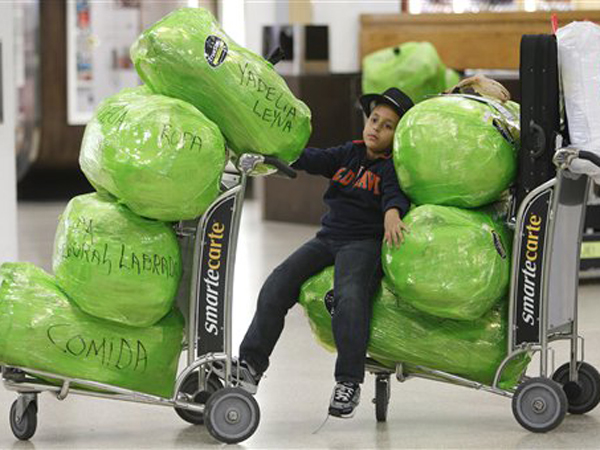
A young Cuban-American waits with his family’s luggage to board a plan to Cuba. (AP Photo/Lynne Sladky)

14ymedio bigger14ymedio, Elías Amor Bravo Economist, 29 June 2022 — They hurried. Said and done. The words of Minister of Economy and Planning Alejandro Gil Fernandez still resonated announcing to the National Assembly the 75 measures to “revitalize the economy” and the resolutions of the Ministry of Finance and Prices (MFP) and the General Customs of the Republic establishing the processes related to the flexibility of non-commercial imports by natural persons were already published in the Official Gazette.

The economic situation is tightening. Cubans are having a very hard time in this summer of 2022. So much so that some already see signs very similar to those of the so-called “Special Period,” and the immediate reaction of the people, once again, is to leave the country, losing confidence that the situation will change.

If the communist model imposed by the so-called revolution since 1959 in Cuba has failed in anything, it is trade. Private commercial intermediation was destroyed by communist reforms; Cubans don’t have freedom of choice and live overwhelmed by a permanent shortage of everything. They are forced to survive with an increasingly meager ration book or regulated basket of goods, and see how, on top of that, the only goods and services that abound have to be bought in well-stocked stores which accept only freely convertible currency or in informal markets, in dollars.

Therefore, taking into account the disaster of state supplies of goods and services, communists who won’t accept that private companies recover wholesale or retail commercial activity, have opened their hands to this formula of non-commercial import, known for a long time to the regime, and decide to extend over time rules that, in principle, were going to be for a short period of time.

And they are in a hurry to do it. The measures enter into force on August 15; that is, right now, with new tariffs to be paid by natural persons who receive non-commercial air, sea, postal and courier shipments in the national territory; as well as the rules for non-commercial imports made by natural persons. Everything is highly regulated and controlled, so that no one escapes. continue reading

There is everything in these measures. For example, according to MFF resolution 204/2022, natural persons who receive non-commercial air, sea, postal and courier shipments in the national territory are exempt from the payment of customs tax for the first 30 dollars of the value or its equivalent weight, on up to three kilograms of the shipment, in the value/weight ratio, established by Customs. With 30 dollars, little can be taken away. Seeing the packages that arrive at Cuban airports, three kilograms seem like little.

Therefore, the rule says that natural persons who receive items in excess of 30 dollars and up to a value of 200 dollars, will have a tariff rate of 30%, adding that the calculation of the customs tax to be paid is carried out by applying, to the import value, the established tariff rate, and its result is converted into Cuban pesos, according to the current exchange rate. At the official rate, of course, of 1×24.

For its part, Customs resolution 175/2022 develops the rules for non-commercial imports made by natural persons, “taking into account that these are carried out occasionally for their personal, family or household use, through luggage, shipments, household goods or other authorized charges.” Actually, that occasional use is quite questionable, since these imports are the ones that then make up the mercantile mass of goods and products that are traded informally in the country, but this is the least interesting thing to the regime.

The rule states that “items and products to be imported by natural persons will be admitted as long as they correspond to a non-commercial import; the quantities to be imported are declared transparently and varied; that their import does not exceed the limit of what is established as appropriate; and that the nature and functions of an article or the repetition of the imports made do not show the nature or commercial purpose of its import.”

Everything is so open and subjective that in this way you can bring practically everything into the country. Otherwise, as is always the case in these cases, it is up to Customs to decide whether the import is carried out on a commercial basis and to apply the sanction provided for in customs regulations.

The resolution establishes, under these conditions, that “when the customs authority determines that there is a commercial nature due to the repeated non-commercial imports, it notifies the infringer of the sanctioning decision and the period in which, from that act, his right to import is limited.” Now we will see who pays, and how much. The possibility of sanction is there, but in these cases, and in many others, the law is made, the trap is set.

The aforementioned resolution also establishes that when an item or product is not defined in the reference values, the referential price available, including that of sale in domestic commerce and in other origins, is taken as a basis, in accordance with the provisions of current legislation. Once again, it is Customs that is authorized to apply the value-weight alternative method for all those items that, due to their characteristics and value, can be valued by that method, as legislated.

To household appliances, computer and communications equipment and other durable items are applied, as a method of valuation, the Customs declaration, the purchase invoice or the reference value, without prejudice to applying the provisions of specific provision or what is requested by the person, in which case the acceptance of weighing it or not is evaluated.

On the other hand, Customs Resolution 176/2022 uses the value-weight alternative method for the determination of the Customs value of items that are classified as miscellaneous and others where, due to their characteristics, it is applicable, items that are imported non-commercially by natural persons through shipments, applying the equivalence of one kilogram equal to ten US dollars.

For the determination of the value of shipments through this alternative, values that are based on automated dispatch, in which the weight of the miscellaneous of the shipment is obtained, are taken into account. The items contained in the shipment for which the value-weight method is not applied are individually valued and considered within the established import limit.

The annexes to the resolution include specifications on the rules for non-commercial imports of natural persons, aspects to be taken into account in the classification of other items or products that are not considered miscellaneous and the list of reference values for non-commercial imports that are made by any means.

Finally, a list of reference values is published for non-commercial imports made by natural persons by any means, products that are not distributed by “legal” trade and that go through the vicissitudes of these Castro rules. Photographic products whose valuation is less than 50 USD: the value-weight alternative applies. Non-durable household and hardware items: up to five items of each type that are classified as hardware, provided that their value does not exceed 50 USD; and for those that exceed that value up to three are admitted. Paints, varnishes, pigments and thinners, provided that the total sum of the contents of their containers does not exceed 20 liters. Household appliances: provided that they are varied, accepting up to two items of the same type, provided that the sum of their values does not exceed the limit established for the importation of luggage. Computer and telecommunications equipment: up to three items related to telecommunications and network devices, including accessories or peripherals of computer equipment.

Cell phones or smartphones: up to five units.

Musical instruments: up to three items, in all cases in accordance with the import limit. Furniture: up to five items of each type that are classified as home furniture, as long as their value does not exceed 50 USD.

Motor vehicles, their parts, parts and accessories: it allows the importation as luggage of up to two items of the so-called electric mopeds of up to two seats or one by means of shipments. Bicycles, electric and pedal-assisted bicycles, electric skateboards or the like: up to two items.

Nothing is left to improvisation. A package of resolutions like this was already being drafted and in the process of being launched long before Minister Gil announced it in the National Assembly. The regime is aware of its failure and that it is in a terminal phase in which multiple anomalies that are impossible to solve with the communist economic model accumulate. The question is, will we see more in this torrid summer?

Translated by Regina Anavy

____________

COLLABORATE WITH OUR WORK: The 14ymedio team is committed to practicing serious journalism that reflects Cuba’s reality in all its depth. Thank you for joining us on this long journey. We invite you to continue supporting us by becoming a member of 14ymedio now. Together we can continue transforming journalism in Cuba.

Cuba, Summer 2022: Clay for Children or a Vaccine Against COVID-19?

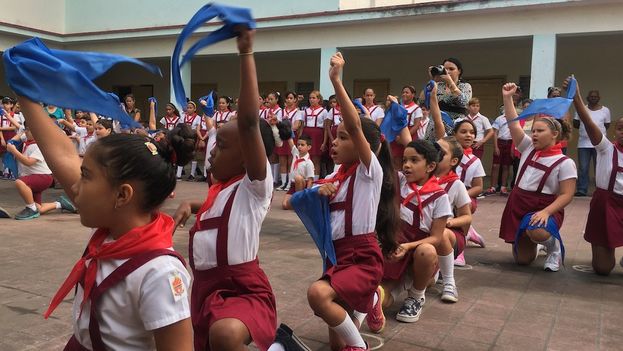
Cuban schoolchildren during the ceremony where they take on the red scarf. (14ymedio)

14ymedio bigger14ymedio, Elias Amor Bravo, Economist, 31 July 2022 — Cuba’s State newspaper Granma wants to leave behind this month of July, of accumulation of anomalies for the regime, with some news that aims to mean a return to normality. Not so much to justify that 10.9% GDP growth that Economy Minister Alejandro Gil Fernandez said occurred in the economy, but so that people breathe and can regain some calm after so many blackouts, lack of food, insecurity for the future and absolute loss of confidence in the leaders. The first news is that there is a return to the production of children’s modeling clay, with the manufacture of about 200,000 sets of colored clay intended for day care centers throughout the country. The Education Media Production Company (EMEG), after a period of difficulty, has assumed the delivery of this educational material to the Ministry of Education (MINED).

This return to normality has been possible “after part of the production process was stabilized with the entry of imported raw materials (whose availability was affected during the stage of confronting COVID-19 in Cuba).” Apparently, Cuban clay manufactured by EMEG depends on raw materials that can only be obtained outside the country, which affects its final quality. Since 1989, the company has been manufacturing a product with a better quality and longer lasting duration than other imported clay, but it depends on those raw materials that, apparently, no one has ordered to be manufactured in Cuba.

Clay, the national one, due to the vicissitudes of the moment, is only limited to commitments to MINED. If a child wants to play at home with this clay, he can’t do it, since the regime decided that it couldn’t be bought in stores. In this way, the authorities limit the growth possibilities of the state company that, if it could produce more, would do so at lower unit costs, be more competitive, meet unmet demands, and who knows if it wouldn’t be able to export its surplus to other countries in the area? If the clay is so good and no one doubts its quality, why not sell it to children in the Dominican Republic or Costa Rica? What does it matter, who cares about all this in Cuba? continue reading

And just like colored clay, Granma announces with great fanfare that the Center for Genetic Engineering and Biotechnology (CIGB) already has the Cuban vaccine candidate against the Omicron variant of SARS-COV-2 ready. Now it seems that it’s so, although you have a certain feeling of déjà vu when reading this news for the umpteenth time.

And as usually happens in these cases, the information was given by the member of the Political Bureau of the Central Committee of the Party and the General Director of the CIGB, Dr. Martha Ayala Ávila, during a technical meeting with the highest authorities of the BioCubaFarma Business Group. The party is always behind this kind of thing, even with the production of clay.

Apparently, it was also said that they will continue with preclinical and toxicological evaluations in animal models and then move on to the clinical trials phase, in conjunction with the Center for the State Control of Medicines, Equipment and Medical Devices (CECMED) and the Ministry of Public Health (MINSAP). In other words, in a few months we will have the vaccine ready again. As you can see, Dr. Ayala doesn’t answer to a board of directors, usually little given to this news of fireworks, but the regime is only interested in certain facts.

The world offered a master lesson in 2020 when the COVID pandemic broke out, and large drug manufacturers worldwide began a race to identify vaccines to curb the disease. And they did it, each country at its own pace and according to its needs. There was even plenty of international cooperation to fight COVID-19. The Cuban communist regime made its own decision to advance its vaccination candidates, and here we are. The new vaccine candidate is based on the RBD sequence; that is, the receptor binding domain of human cells, through which this type of coronavirus penetrates, which has already had extensive development and practical application in the millions of people vaccinated with the second and third doses.

In Cuba, immunogenicity is now being evaluated in animal models, to check if the vaccine has the ability to induce a high immunogenicity. From there to being in a position to address the development of this vaccine candidate and then decide when to use it in the population is a stretch, probably a long one. It was said that the CIGB has the capacity to produce this vaccine candidate in its plants, to link with AICA Laboratories and carry out clinical studies in coordination with MINSAP, always with the approval of the Cuban regulatory authority, which may mean that the regime is studying the possibility of marketing the vaccine abroad through more exports. To do this, it will need some type of WHO approval that, it should be remembered, still hasn’t happened for the first vaccines given to the population in Cuba.

That they get to it right now and that Granma turns it into a great announcement is smoke in the wind, and has a lot to do, like children’s clay, with that feeling of a terminal phase that the regime uses to counteract this warm and torrid summer for millions of Cubans. The distance of the population from the leaders is opening up more and more, and this type of news does nothing but increase the gap. There is little to celebrate for Raúl Castro to gain time, and in his 91 years he won’t have to see the collapse of the mammoth built by his brother and him. The end is near, even if it’s built out of clay. Granma doesn’t know what to say anymore.

Translated by Regina Anavy

____________

COLLABORATE WITH OUR WORK: The 14ymedio team is committed to practicing serious journalism that reflects Cuba’s reality in all its depth. Thank you for joining us on this long journey. We invite you to continue supporting us by becoming a member of 14ymedio now. Together we can continue transforming journalism in Cuba.

Residents Take to the Streets of Altamira in Santiago de Cuba to Protest Against the Blackouts

Protests at the Altamira People’s Council in Santiago de Cuba on August 1, 2022. (Facebook)

14ymedio bigger14ymedio, Havana/Santiago de Cuba, 1 August 2022 — A demonstration in the Luis Dagnes neighborhood, at the Altamira People’s Council, Santiago de Cuba, included several residents protesting the blackouts and the precarious economic situation which the city is experiencing. The rally quickly caused the presence of several military and law enforcement forces, while the demonstrators shouted phrases against the government.

“They are abusing us. All morning without light and the power went out again at 11 in the morning,” activist Aurora Sancho explains to 14ymedio. “It all started with a neighbor who began to make noise with an iron bar and complain. Little by little, others joined him. People couldn’t take it anymore today.”

“They shouted slogans against Miguel Díaz-Canel; they also demanded that they turn on the power,” she adds. “Then the police arrived, along with the Red Berets and State Security.” Sancho’s house was surrounded “with two patrol cars” to prevent her from leaving. One of them was car 575, she points out.

Some residents of the area report that, during the protests, the provincial authorities of the Assembly of People’s Power, led by its president, Beatriz Johnson, began a “revolutionary argument” to calm the demonstrators.

https://www.facebook.com/watch/?v=585194603242547

“They brought Beatrix Johnson to make a speech, and people shouted at her. And so they would applaud her, they brought members of a Rapid Response Brigade. So far they have not returned the electricity service to us, and this is still totally taken over by the police.” Sancho believes that “finally the people woke up.”

Several images circulating on social networks record the presence on site of several patrols, police and high-ranking officers of the Ministry of the Interior.

“They entered the neighborhood wanting to repress, but people were only demonstrating peacefully. They wanted to strike blows but the neighbors didn’t let them. They handcuffed a young man who was only watching the protest, and when they were going to take him away, the people themselves protested more strongly and forced them to release him,” the activist adds.

The demonstrators improvised a conga line with several slogans and “even shouted slogans against Fidel Castro,” she says. Among the slogans they chanted were: “Enough is enough,” “Turn on the power, pricks ,” “Díaz-Canel, singao [motherfucker].” The main focus of the protests was on Comancié Street, between Castillo Duany and Piñeira, in the Luis Dagnes neighborhood.

“Then the police arrived, along with the Red Berets and State Security,” said an activist. (Courtesy)

In a video broadcast on social networks by users supportive of the regime, Beatriz Johnson is heard asking the residents for “patience” and said that the blackout schedules in the area were going to be reviewed. She also said that the local media would inform “all the people of Santiago de Cuba of the effects,” the causes and “the distribution of the cuts.”

Popular protests motivated by long power outages have been frequent in recent weeks. In municipalities such as Jagüey Grande, in Matanzas, up to two such demonstrations have occurred in less than a month.

Other places such as Bauta, in Artemisa, Covadonga, in Cienfuegos and Nuevitas, in Camagüey, have also been the scene of hundreds of neighbors who have taken to the streets to bang on pots and pans, with anti-government slogans and demanding freedom.

The People’s Council of Altamira is located in one of the poorest areas of Santiago de Cuba. In recent years, these neighborhoods have experienced a constant police siege, given that some activists and opponents reside in them, in addition to being the headquarters of the Patriotic Union of Cuba (UNPACU).

Translated by Regina Anavy 

____________

COLLABORATE WITH OUR WORK: The 14ymedio team is committed to practicing serious journalism that reflects Cuba’s reality in all its depth. Thank you for joining us on this long journey. We invite you to continue supporting us by becoming a member of 14ymedio now. Together we can continue transforming journalism in Cuba.

Cuban Residents of Bauta, Jaguey Grande and Covadonga Protest in the Streets Against the Long Blackouts

Three protests over power outages occurred on July 30 in different provinces of Cuba. (Collage)

14ymedio bigger14ymedio, Havana, 31 July 2022 — At least three protests, in different provinces of the country, took place on Saturday night demanding the restoration of electricity service. The suburb, La Minina de Bauta, Artemisa; the community of Central Australia, in Jagüey Grande, Matanzas; and the Covadonga neighborhood in the municipality of Aguada de Pasajeros in Cienfuegos were the scenes of these popular demonstrations.

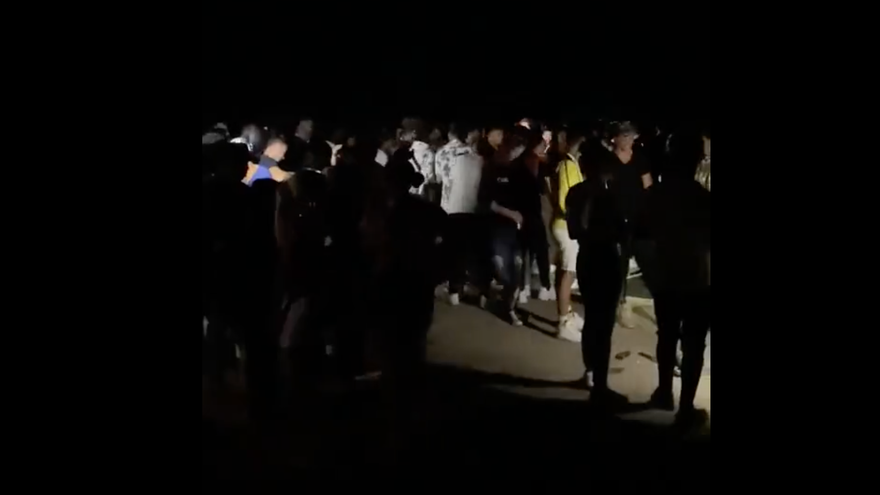
The protests at the Central Australia People’s Council, in Jagüey Grande in the province of Matanzas, are the second in less than a month to take place in that community. On this occasion, also after suffering a long blackout of more than ten hours, hundreds of residents took to the streets banging their pots and pans and shouting “Freedom!” and “Turn on the current, pricks!” This last one was first launched by students at the University of Camagüey last June.

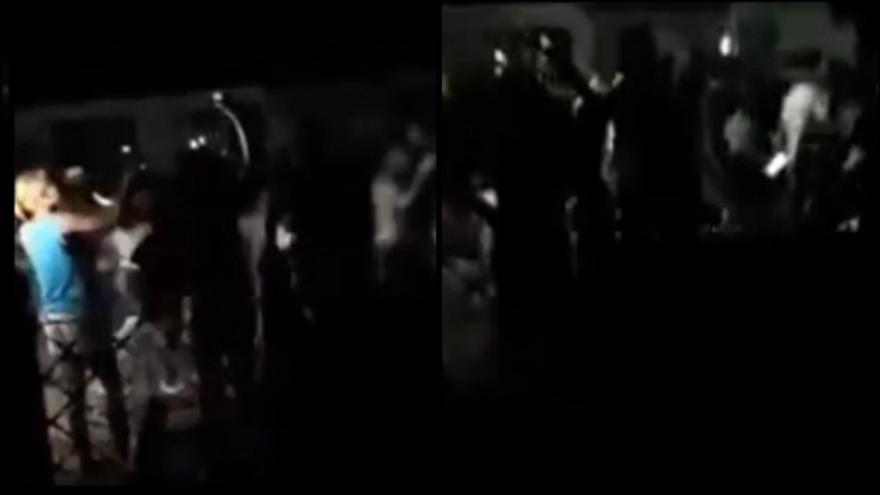
In several videos that have been disseminated through social networks, protesters are seen walking the streets in the dark, some illuminated by the light of their mobile phones. From inside several houses there were also cries of support, and several neighbors managed to broadcast live during the demonstration.

In Bauta, the scenes were similar. In the La Minina neighborhood of that municipality in the province of Artemisa, residents went out banging their pots and pans in the street in the middle of a long blackout. To the cry of “Turn on the power!” these neighbors also demanded the restoration of electricity. continue reading

A very similar protest also occurred in the neighborhood of Covadonga in the municipality of Aguada de Pasajeros, Cienfuegos. Immersed in darkness, neighbors protested in the streets of this community, which this Saturday also suffered a power outage of several hours. Several reports from the place say that in the middle of the demonstrations they broke the stained glass windows of a store that only takes payment in freely convertible currency [foreign currency] and took part of the products for sale.

This type of business has been the target of popular indignation in several demonstrations, and in the protests of July 11, 2022, several of these establishments were stoned and their goods looted. Since the sale of food and toiletries in foreign currency was inaugurated, this commercial network has had to deal with criticism, even among those who support the system.

So far, no official source has spoken out about these protests, although several netizens reported the arrival of several police officers when the demonstration was over. The uniformed men asked about the possible participants in the protests and, especially, about who had “lit the fire.”

The Government continues to ask for patience in the face of the problem of lack of electricity, which reaches unusual levels. The population is aware that there is no short-term solution, since the authorities themselves have said so, insisting that, at a minimum, the burden be shared equally among everyone.

Last week it was announced that power cuts will also begin to be implemented in Havana, a city that until now had benefited from the privilege of having fewer blackouts than other areas of the country.

Translated by Regina Anavy
____________

COLLABORATE WITH OUR WORK: The 14ymedio team is committed to practicing serious journalism that reflects Cuba’s reality in all its depth. Thank you for joining us on this long journey. We invite you to continue supporting us by becoming a member of 14ymedio now. Together we can continue transforming journalism in Cuba.

Felton, Cuba’s Largest Power Plant, Closes Again Due to a Breakdown

The Felton thermoelectric power plant’s Unit 1 stopped working on Thursday and they plan to reconnect it this Sunday. (Ahora!)

14ymedio bigger14ymedio, Havana, 30 July 2022 — The Felton thermoelectric power plant, located in Mayarí (Holguín), once again becomes a stressor for the Cuban government. This Thursday, a breakdown in the boiler of unit 1 caused its exit from the National Electrical System, while unit 2 remains disabled due to the large fire suffered at the beginning of July.

The energy colossus is again unusable, with the consequent balance of scheduled blackouts, without the officials who came to inspect the Felton plant agreeing on the date of a possible solution.

This Friday, the nonagenarian commander, Ramiro Valdés, and the Minister of Energy and Mines, Liván Arronte, along with the local governments, went to the plant to “confirm the causes of the breakdown in unit number 1” and know “the projections to put unit 2 into operation,” according to the provincial newspaper Ahora!

Valdés, who refuses to recognize the critical state of the plant, recommended “convening the best specialists in the country, mainly infrastructure builders, and having them full time in that function.”

He revealed the government’s annoyance with the delay in repairs and new incidents, which not only affect the population but also the administrative capacities of the State: “The nation invests one million dollars every three days in fuel to supply the generators that work before the exit of the thermoelectric plant,” he explained. continue reading

However, the head of Energy and Mines doesn’t share the urgency of Ramiro Valdés. Arronte assures that, since the fire of unit 2, “all the necessary companies” have been projecting repair schedules. So “we must not rush to give a time of completion.”

The minister admitted that, as for the unit destroyed by the fire, “virtually the entire boiler has to be dismantled; it’s a job that we have never done before.” To the difficulty of repairs is added the slow process of achieving the necessary “safety conditions,” since “the boiler was in a state of risk” that could lead to collapse.

According to Arronte, Felton already has 22 years of operation in its current state, which makes it necessary to do “a residual life study” of its machines. He added that numerous calculations and analyses are missing, in addition to a contact with the manufacturer of the boiler, to consider the total functionality of the thermoelectric plant.

Both Valdés and Arronte avoided detailing the recent breakdown of unit 1. However, the technical director of the thermoelectric plant, Euclides Rodríguez Mejías, explained to the local official press that “there was a leak near the upper thermal chamber, which is in the cooling process,” although, according to the operator, the causes of the breakage are not yet known.

“We predict that in the evening of this Friday or early hours of Saturday, that area can be accessed, because it’s a very warm area, with little air circulation, so you have to wait for it to cool down to make a diagnosis and then start the relevant work,” said Rodríguez Mejías.

Felton workers expect unit 1 to become operational this Sunday, while on Monday the dismantling of the boiler will begin, a “task that does not allow for errors,” due to the “damages that this gigantic structure already has.”

Slowness and precariousness at work characterize the repair process of Cuban thermoelectric plants, which aggravates the balance of blackouts already suffered by the population of the island. In the face of the crisis, local governments are implementing new programs to cut off electricity.

The governor of Havana, Reinaldo García Zapata, reported that new four-hour power outages are scheduled from 10:00 am to 2:00 pm, every three days. The cuts will be made to “save fuel” and thus guarantee “fewer blackouts in the rest of the provinces, where during these months the population has assumed that burden as a result of the generation deficit and fuel shortage, exacerbated by the intensified blockade,” García said.

There will be no blackouts, according to the official, in the circuits linked to continuous production, water pumping and public health. García added that in the state workplaces “the waste” of electricity is evident, which has led to disciplinary measures. He also admitted that these measures will not be enough if they aren’t linked to a pattern of economic development that the country doesn’t yet have.

Breakdowns, lack of parts, old machines and historically awkward management of the energy sector further heat up the summer in Cuba. Night protests, increasingly frequent, are the only way to channel the despair of citizens, who are also overwhelmed by the lack of food and growing police repression.

Translated by Regina Anavy

____________

COLLABORATE WITH OUR WORK: The 14ymedio team is committed to practicing serious journalism that reflects Cuba’s reality in all its depth. Thank you for joining us on this long journey. We invite you to continue supporting us by becoming a member of 14ymedio now. Together we can continue transforming journalism in Cuba.

Cuba’s New Laws, a Strategy for the Debacle / Dimas Castellano

Dimas Castellanos, 1 July 2021 —  To improve the image of Cuban laws — outdated with respect to the international legal system — the Supreme People’s Court (TSP) submitted four preliminary drafts to the National Assembly of People’s Power for approval: Law on the Courts of Justice, Code of Proceedings, Law on Administrative Procedure and Law on Criminal Procedure. According to the president of the TSP, Rubén Remigio Ferro, it is “the most innovative proposal and the one that most intensely impacts the rights and guarantees of citizens vis-à-vis the Administration.”

In the following lines I present three factors that call into question the statement of the president of the TSP: 1- The subordination of the judiciary, 2- The international covenants ,and 3- The reason for the preliminary draft laws

Subordination of the judiciary power 

Constitutionalism, the foundation of governance, emerged in history as a necessity to establish limits to power. In Cuba, although it debuted at the beginning of the 19th century, it took shape in the Constitution of the Republic in Arms (Guáimaro (1869), which adopted the type of republican government, deposited sovereignty in the people, endorsed the division of powers and prohibited attacking the freedoms of worship, the press, peaceful assembly, teaching and petition or any other inalienable right of the people. From that root the Mambise constitutions of Jimagüayú (1895) and the Yaya (1897) were nourished.

The 1901 Constitution incorporated the essence and spirit of habeas corpus (a legal institution that requires the detainee to be presented within a certain period of time before the Court, which could order his immediate release), freedom of expression, the rights of assembly and association and freedom of movement. For its part, the 1940 Constitution endorsed the division of public powers, declared punishable any act of prohibition or limitation of the citizen to participate in the political life of the nation and incorporated new instruments that made it a model of democratic legislation for its time throughout the continent.

In 1959, when the 1940 Constitution was replaced by provisional statutes that governed for 17 years (the Basic Law), constitutionalism suffered a setback that was endorsed in the 1976 Constitution: the division of powers, equality before the law, freedom of speech, of press, assembly, association and demonstration. Among other rights, freedoms were subordinated to the Communist Party (PCC), declared the highest governing force of society and the State. Since then, the Judiciary, exercised by the Supreme Court, has never enjoyed independence up to today.

International covenants

If, as the president of the TSP said, “it’s a proposal that impacts the rights and guarantees of citizens,” why are the pacts — signed by Cuba in 2008 — on Civil and Political Rights, and on Economic, Social and Cultural Rights of the United Nations, which would have a greater impact on citizens, not ratified? continue reading

Since the aforementioned covenants “are based on the recognition of the dignity and equal and inalienable rights inherent in all human beings,” the signatory States “commit to respect and guarantee to all individuals who are in their territory and are subject to their jurisdiction, the rights recognized” in them; therefore, once ratified they are mandatory, which requires national legislation to correspond to them.

The reasons for the non-ratification seem to be related to the fact that in 2008, Cuba, in addition to holding the presidency of the Non-Aligned Movement, was elected to the United Nations Human Rights Council (HRC). Failure to sign them constituted a flagrant contradiction with the exercise of such responsibilities. In other words, the signing was the result of a situation, not of a political will for the improvement of human rights.

Why the draft laws?

On three occasions (2009, 2013 and 2018), the Government of Cuba was the subject of the Universal Periodic Review (UPR), which is carried out by the HRC on the members of the United Nations. On all three occasions, along with the recognition of certain advances, the HRC made hundreds of requests and recommendations and urged the island’s authorities to suspend short detentions, harassment and other repressive measures against independent activists and journalists; to reduce government control over the Internet; to allow delegates of the International Committee of the Red Cross to visit Cuban prisons without restrictions; and to ratify the International Covenants signed by Cuba in 2008.

The European Parliament at its plenary session from June 7 to 10, 2021, issued a resolution on human rights in Cuba, in which it condemned the existence of political prisoners, political persecution, acts of harassment and arbitrary detention of dissidents; attacks against artists of the San Isidro Movement, peaceful dissidents, independent journalists, human rights defenders and members of the political opposition; urged the Cuban authorities to release all political prisoners and detainees arbitrarily for exercising freedom of expression and assembly; called for the repeal of laws that violate freedom of expression such as decrees 249 and 370; warned that 199 cases of political prisoners had been registered, in addition to 65 new cases of political imprisonment in the last 12 months.

The European Union, in its “Annual Report on Human Rights and Democracy in the World,” on June 28, recognized that in Cuba “freedom of expression, association and assembly continued to be subject to significant restrictions in 2020, with reports of numerous arbitrary arrests and detentions.” Freedom of movement “suffered new restrictions due to the Covid-19 pandemic, since strict measures to contain the spread of the virus were used against activists.” Freedom of the press was among the ten least free countries. Contempt and the spread of epidemics were used to restrict citizen information on social networks, while several journalists and bloggers were fined under Decree 370. The document referred to restrictions on domestic and foreign travel and measures that prevent individuals from leaving their homes, which amounts to house arrest. It concludes by saying that the Government “doesn’t usually support the recommendations coming from EU member states.”

These requirements and recommendations, previously ignored, in the face of the worsening of the crisis forced the Cuban Government to change the external image without altering its totalitarian nature, which explains that while the draft laws were presented, arbitrary arrests and accusations, abuses and harassment against those who make use of freedom of expression are maintained against members of the San Isidro Movement, of the 27-N and other opponents, journalists and activists.

The solution to the deep crisis in which Cuba is immersed — the worst in its history — calls for putting the legal norms in line with those of the rest of the world and with its own history. The strategy of putting on makeup is the road to disaster.

Translated by Regina Anavy

A U.S. Businessman Believes that Biden Will Allow Banking Relations with Cuba

First American Bank now has the accounts of the Cuban embassy in Washington and the Cuban mission at the UN. (FAB)

14ymedio bigger14ymedio, Madrid, 28 July 2022 – John Kavulich, the first entrepreneur to obtain a US Treasury license for a private business in Cuba, believes that the Biden government will allow banking relations between the two countries, something that he considers a “logical” step, taking into account that his case wouldn’t be the only one.

“It wouldn’t make sense for the Biden Administration to continue to require funds moving from the United States to Cuba to pass through banks in third countries, where they then charge a commission for each transaction,” Kavulich, who is also president of the United States-Cuba Economic and Trade Council, told El Nuevo Herald in a report about the transactions of the island’s embassy in Washington.

Kavulich, who, pending the approval of the Cuban Government, has not given any details about the company in which he plans to invest “up to $25,000,” explained that whoever intends to put his money in Cuban private businesses needs to “have a direct, efficient and transparent means” to send the funds and receive their investment income, dividends and loan payments.

At present, this mechanism doesn’t exist, since embargo laws prevent direct transactions between the two countries. During the time of the thaw, the government headed by Barack Obama authorized U.S. entities and companies to open accounts in Cuba, but not so that the Cuban side could do the same.

Relations between Cuba and the United States are now much more tense than then, and Joe Biden is at a time in his mandate – burdened by the consequences of the pandemic, the supply crisis and the invasion of Ukraine – in which it is doubtful that he will expose himself to a confrontation with Florida, where a banking correspondent (collaboration of entities from different countries) with the island would not be welcomed. continue reading

However, the license granted to Kavulich and the announcements of new policies that will include the expansion of electronic payments and support for the private sector give hope to those who aspire to invest in the island. Added to this is the statement made by Havana last week, when it opened the door to allow foreigners to put money in private companies in Cuba, an idea rejected outright by some Florida politicians.

The information from El Nuevo Herald explains how a bank founded by a Cuban exile has ended up being the manager of the regime’s accounts in the United States, specifically that of the Cuban embassy and the Cuban mission at the New York headquarters of the United Nations.

In 1974, Carlos Dascal founded Continental Bank, the first bank created by a Cuban-American in the United States. This entity was absorbed in 2019 by First American Bank, an Illinois-based bank that acquired Cuban accounts in June after Centennial Bank “cut off all business relations” with Havana for its support for Russia in connection with the invasion of Ukraine, according to sources in El Nuevo Herald.

Centennial Bank had managed the accounts of the Cuban Government since it acquired Stonegate Bank, an entity authorized for this purpose by the Treasury in 2015. According to the same source, which asked to remain anonymous, First American Bank is currently negotiating with the state-owned International Trade Bank to open a correspondent account in Cuba.

Translated by Regina Anavy

____________

COLLABORATE WITH OUR WORK: The 14ymedio team is committed to practicing serious journalism that reflects Cuba’s reality in all its depth. Thank you for joining us on this long journey. We invite you to continue supporting us by becoming a member of 14ymedio now. Together we can continue transforming journalism in Cuba.

The Mexican Government Will Pay $2,000 a Month for Cuban Doctors

A delegation of Cuban doctors with health authorities in the Mexican state of Nayarit. (Government of Nayarit)

14ymedio bigger14ymedio, Ángel Salinas, Havana, 27 July 2022 — The 500 Cuban doctors who were hired by the Government of Mexico to provide services in marginal areas of the country will receive a salary similar to that of Mexican health workers. “They will receive between 41,784 ($2,042) and 35,237 pesos ($1,722) per month,” an employee of the Institute of Health for Welfare (Insabi) told 14ymedio.

The source specified that, because doctors who are in the state of Nayarit have specialties in anesthesiology, general surgery, gynecology and obstetrics, internal medicine and pediatrics, they must receive $2,042 per month. Although “it’s not established whether the money will be received by them or will go through the Government of Cuba,” the official said.

“Housing and food will be covered by the municipal authorities [of the cities] where each hospital is located,” the source added, and also explained that “every 180 days the immigration permit will be renewed.”

The call issued by the Mexican Social Security Institute and Insabi indicates that the contract for doctors is temporary and will last for four months, and that the doctors will be entitled to benefits and training. Mexican President Andrés Manuel López Obrador said on Monday that Cuban health workers “will be protected” at work. continue reading

López Obrador said that after Nayarit, the next states will be Tlaxcala and Colima, plus the Sierra de Guerrero, a region that was initially pointed out by the president as the one with the greatest health need and to which the 500 doctors from the island would be sent.

On Wednesday, the health authorities of Nayarit confirmed to 14ymedio that 47 Cuban doctors were taken to the hospitals that are located in the rural towns of Las Varas, in the municipality of Compostela, Puente de Camotlán (La Yesca), Jesús María (Del Nayar), San Francisco and Tondoroque (Bahía de Banderas), and to the municipal capitals of Santiago Ixcuintla, Rosamorada and Ixtlán del Río. Seven doctors were incorporated into the staff of the central hospital of Tepic.

The Cuban medical missions that provided their service during the COVID-19 pandemic were criticized for the lack of preparation of their health workers and the high costs they represented for Mexico.

A report revealed that doctors from the island limited themselves to “making beds, taking vital signs, conducting surveys and passing sponges to patients to bathe,” while the Cuban authorities proclaimed that mortality rates had decreased during their stay in Mexico.

In March 2021 it was announced that the administration of Claudia Sheinbaum, head of Government of Mexico City, spent a total of 150,759,867 pesos ($6,986,091) on the hiring of 585 Cuban doctors who were working in the capital from April 24 to July 24, 2020, once 14,884,785 pesos ($689,749) were added for the accommodation and feeding of the doctors. For the other brigades that have arrived in the country, the amounts disbursed to the Cuban Government are not known.

On the same subject, the coordinator in the Mexican Senate of the opposition National Action Party, Julen Rementería, accused the Governments of Mexico and Cuba of orchestrating a fraud by paying,12,692,940 dollars for the hiring of 585 untitled health workers from the island.

Translated by Regina Anavy

____________

COLLABORATE WITH OUR WORK: The 14ymedio team is committed to practicing serious journalism that reflects Cuba’s reality in all its depth. Thank you for joining us on this long journey. We invite you to continue supporting us by becoming a member of 14ymedio now. Together we can continue transforming journalism in Cuba.

Dengue Fever Puts the Cuban Health System to the Test Yet Again

COVID-19 had left dengue fever in the background, but the disease is now spreading again on an island without supplies for prevention. (14ymedio)

14ymedio bigger14ymedio, Havana, 28 July 2022 — The Mario Muñoz Monroy hospital, in Colón, Matanzas, has been forced to open two rooms of 60 and 20 beds respectively to accommodate the “significant number of admissions” that dengue fever is bringing.

On Wednesday, the official newspaper of the province, Girón, reported an increase in fever consultations that is in line with the news coming from Sancti Spíritus, where the ruling party has recognized that fifty people are cared for daily for dengue fever, and that “some people have developed serious forms of the disease.” The worst cases in this province are concentrated in Cabaiguán and Trinidad.

In the case of Matanzas, the deputy director of Public Health, Andrés Lamas Acevedo, said that cases decreased in the last week in Colón, but from neighboring Calimete the visits of patients with complications are increasing. Jagüey Grande, Cárdenas and the main municipality are other towns that are the most affected.

Last week, the authorities recognized an incidence rate of 19.7 cases per 100,000. The Minister of Health himself, José Ángel Portal Miranda, admitted at a press conference the exponential growth of the disease in recent months and said that the worst is yet to come. In April, the incidence rate was 12.2 per 100,000 inhabitants, while in June it reached 46.3.

Health workers insist that the population must do everything possible to protect themselves because there are no insecticides such as Abate or diesel available to fumigate every six days, as established in the protocols. These limitations coupled with the summer heat and the long hours of blackouts are leading to the proliferation of a disease that had remained in the background during COVID. continue reading

In addition, it is estimated that the under-declaration of dengue fever is elevated. On one hand, many patients refuse to go to the doctor to avoid hospitalization due to the state of many centers throughout the island. On the other, there is a visible shortage of means for a correct diagnosis, and some patients claim that the required tests are not performed because the reagents are rationed for the most severe cases.

“We are alarmed,” an internist at a hospital in Havana told this newspaper, who said that more serious cases are occurring this year than usual. “In previous epidemics, perhaps approximately 10% of cases had warning signs (those that warn you that the patient is not progressing well), but now it is more than 30%.”

In recent weeks, networks have reported the deaths of several people due to dengue symptoms, but the authorities are reluctant to give numbers of deaths despite the demands of the population.

Translated by Regina Anavy

____________

COLLABORATE WITH OUR WORK: The 14ymedio team is committed to practicing serious journalism that reflects Cuba’s reality in all its depth. Thank you for joining us on this long journey. We invite you to continue supporting us by becoming a member of 14ymedio now. Together we can continue transforming journalism in Cuba.

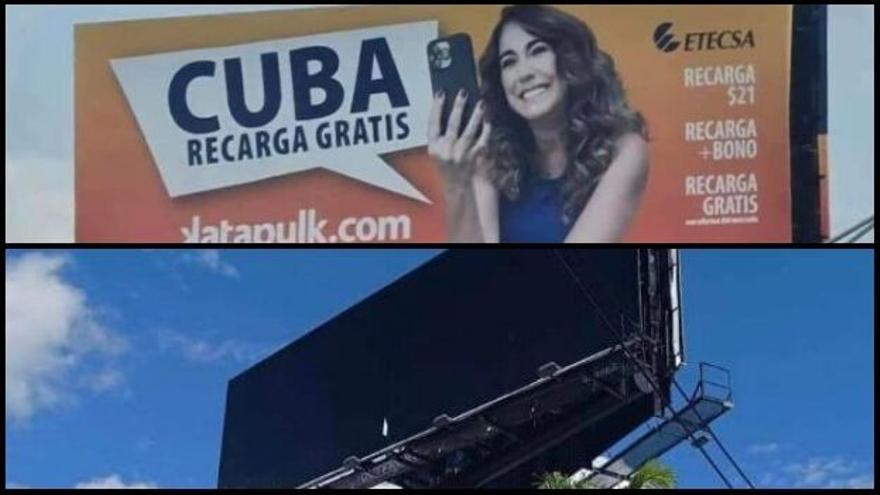
Cuban Exile Raises about $13,000 to Replace Etecsa’s Controversial Billboard in Miami

Proposal to replace the advertising space that advertised telephone recharges with the Etecsa logo in Miami. (Telemundo 51/Capture)

14ymedio bigger14ymedio, Havana, 25 July 2022 — “Cuban exile is respected!” will say the Miami billboard that briefly housed an advertising message from the Cuban state telecommunications monopoly Etecsa announcing its telephone recharges. “We don’t want more communist propaganda,” concludes the new text that its promoters want to put on the edge of the Palmetto highway when they get the funds to pay for the space.

The previous advertising poster was removed on July 14, after a campaign on social networks in which the content of advertising placed on one of the busiest highways in Hialeah, where a population mostly of Cuban origin lives, was described as an “insult.”

After the rejection of the community, activist José Alberto García called for fundraising in Miami-Dade County to place the new ad for one month at a cost of more than $11,000. “The initiative is for Cuban exile to unite and in this way give an answer to the front men of the Cuban dictatorship and let them know that we are here, and we are going to put up our anti-communist billboard,” García told Telemundo 51.

On the billboard that was removed, one could see the actress Tahimí Alvariño, the advertising face of the Katapulk company, which sells food and toiletries for emigrants to buy for their relatives on the island, in addition to telephone recharges from Etecsa, the Cuban State telecommunications monopoly.

“For me it was a mockery of exile and so many people who have sacrificed themselves and fled that dictatorship. Don’t let them come and put a sign in our face and stand idly by. That’s not going to be allowed,” García said. continue reading

The billboard advertised phone recharges to Cuba, but it was removed after pressure from opponents in Miami. (Collage)

Another phrase that will be put on the new billboard, for which more than $12,000 has already been raised, will be: “Down with the dictatorship. Homeland and Freedom” along with the hashtags #CubaPaLaCalle [Cuba[ns] into the Street] and #LibertadParaLosPresosPolíticos [Freedom for the Political Prisoners].

Cuban-American businessman Hugo Cancio, owner of Katapulk and one of the island’s emigrants who maintains closer commercial ties with the Havana regime, then responded to the controversy in a written statement sent to Telemundo, in which he stressed that Etecsa is not sanctioned by the U.S. Government: “This is an activity authorized by the regulations of OFAC (the U.S. Treasury office in charge of applying the embargo).”

“Etecsa is the telecommunications company in Cuba where all Cubans inside and outside the island process their recharges and buy their data packages for the use of the Internet and other services,” he said, adding that his company did not want to “cause attention or controversy… We decided to offer this much-needed service to our customers and, being new, we wanted to give legitimacy to this management.”

Katapulk belongs to Fuego Enterprises Inc., a company founded by Cancio on December 30, 2004 in Miami. Last year it was one of the entities authorized by the Cuban Government for registration in the registry of foreign companies that do business with the island.

Translated by Regina Anavy

____________

COLLABORATE WITH OUR WORK: The 14ymedio team is committed to practicing serious journalism that reflects Cuba’s reality in all its depth. Thank you for joining us on this long journey. We invite you to continue supporting us by becoming a member of 14ymedio now. Together we can continue transforming journalism in Cuba.

Yaime Perez Says Goodbye to her Discus and the Cuban Delegation While in the United States

In her first Olympic Games, Yaimé Pérez threw the discus 57.87 meters. (EFE)

14ymedio bigger14ymedio, Havana, 26 July 2022 — Cuban athletics continues to add defeats. To the sporting failure at the XVIII World Athletics Championships that was held in Eugene, Oregon in the United States, where the Cuban delegation didn’t win any medals, is added the escape of the Olympic medalist and world champion of the discus throw, Yaimé Pérez, according to Play-Off Magazine.

The Santiago woman, who won seventh place in the Eugene World Cup, made the decision recently, the same media said. With her there are three members of the Cuban team who left, including the javelinist Yiselena Ballar who left earlier, and the physiotherapist Carlos González Morales who left this Tuesday.

“She is the 19th athlete to abandon the team in international events during 2022. Pérez, 31, won two Diamond Leagues,” journalist Francys Romero said on his social networks: “The official press has blamed the cancellation of the Cuba-MLB agreement for the exodus of baseball players. But these exits in more than five sports prove that the exodus is mainly for survival rather than for a future in sports.”

Yaimé Pérez is number three in the world ranking in the event, according to the Olympics portal. Her personal best is 69.39 meters, which she got in France (2019). In Tokyo 2020, her third Olympic Games, she reached third place.

Her ability has also been demonstrated by winning the Continental Cup in Ostrava (2018) and the U20 World Cup (2010). She also won a silver medal at the Pan American Games in Toronto (2015) and, four years later, won the gold medal in Lima (2019).

Last Friday Mario Planchet, Christian Temprano and Leonardo Acevedo, members of the Futsal Sub 20 team, didn’t show up for Cuba’s semifinal match against Nicaragua in the Uncaf FIFA Forward tournament, which is held in Guatemala.

The delegation informed the Guatemalan authorities of the escape to prevent Cuban soccer players from leaving the country, Prensa Libre published.

Translated by Regina Anavy 

____________

COLLABORATE WITH OUR WORK: The 14ymedio team is committed to practicing serious journalism that reflects Cuba’s reality in all its depth. Thank you for joining us on this long journey. We invite you to continue supporting us by becoming a member of 14ymedio now. Together we can continue transforming journalism in Cuba.

Coyotes Kept Five Cubans Hidden in a Feed Store in Central Mexico

Angélica María Rodríguez Varela and Ismael Meléndez Castro are held incommunicado at the Las Agujas migration center. (Collage)

14ymedio bigger14ymedio, Ángel Salinas, Mexico, 25 July 2022 — A warehouse intended to store feed was used by coyotes as a hiding place for migrants. In the building located on an embankment far from the town of San Miguel de la Victoria, in the State of Mexico, 225 undocumented people were found last Saturday, five Cubans among them.

Angélica María Rodríguez Varela, Isael Meléndez Castro and Junier Blanco Hernández, all of Cuban nationality, were transferred to the Las Agujas migration center, in Mexico City. Migration agents told them that they would be deported.

Rodríguez and Meléndez, originally from Pinar del Río, and Blanco, from Havana, sent their testimonies to our editorial staff. The 26-year-old girl with Passport K523299 said she was afraid that she will be repatriated to the island where she has suffered threats for demonstrating against the regime.

Meléndez, who studies at the University of Computer Sciences, told us that he was forced to leave Cuba after the harassment he suffered for participating in the demonstrations of July 11, 2021. “They accused me with false testimony and wanted to put me in prison,” he told 14ymedio.

Blanco asks to be allowed to continue on their way to the United States, where “we can ask for asylum.” The habanero stressed that they have not committed any crime and that their only fault was not to wait any longer in southern Mexico to complete the application process for a free transit laissez-passer.

Minutes after they were arrested by members of the National Guard and Migration, the Cubans had their cell phones confiscated and are now being held incommunicado at the Las Agujas station. continue reading

The case reached the ears of migrant defense attorney José Luis Pérez, who processed an amparo* so that they can be released and avoid any attempt at extortion by Migration agents, which happens often with undocumented migrants, mainly Cubans.

The detention of Cubans in the Migration Center “has become a means of raising money for the coffers of officials,” stressed the lawyer, who is based in the border state of Chiapas.

A statement from the National Migration Institute indicated that the 225 undocumented migrants were overcrowded and waiting to be transferred by the coyotes to the U.S. border. “People were rescued from a place where there was no light, and several children were found among blankets and backpacks without any hygiene measures,” an agent told 14ymedio.

Among the migrants detained are 194 from Guatemala, 14 from Honduras, nine from Nicaragua and three from El Salvador. The Guatemalans and Salvadorans will be returned to the south of the country.

Since October 2018, and despite the tightening of surveillance on the southern border of Mexico, thousands of migrants from Central and South America, but also from Cuba, Haiti and various African and Asian countries have entered Mexican territory with the aim of reaching the United States.

Coyotes look for routes for foreigners and sometimes park them in the states of Chiapas, Tabasco, Veracruz, Oaxaca, Puebla and the State of Mexico as an intermediate stop on their journey to the United States.

The region is experiencing a record migratory flow to the United States, whose Customs and Border Protection Office has intercepted more than 1.6 million people so far in fiscal year 2022, which began last October.

In addition, Mexico received a record of more than 58,000 applications for asylum in the first half of 2022, an annual increase of almost 15%, according to the Mexican Commission for Refugee Assistance.

*Translator’s note: An ’amparo’ is a request for protection

Translated by Regina Anavy

____________

COLLABORATE WITH OUR WORK: The 14ymedio team is committed to practicing serious journalism that reflects Cuba’s reality in all its depth. Thank you for joining us on this long journey. We invite you to continue supporting us by becoming a member of 14ymedio now. Together we can continue transforming journalism in Cuba.