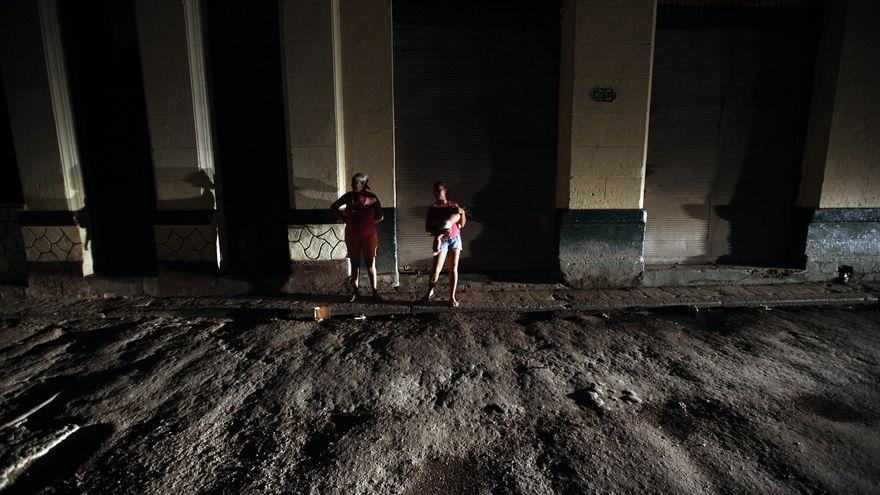
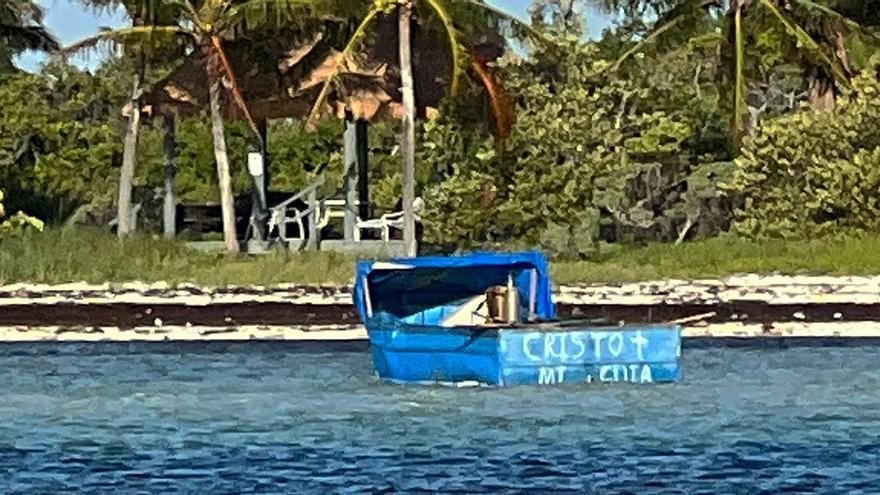
With Signs of ‘Freedom’ and ‘Christ, My Guide’, 108 Cuban Rafters Arrive in Florida in Two Days

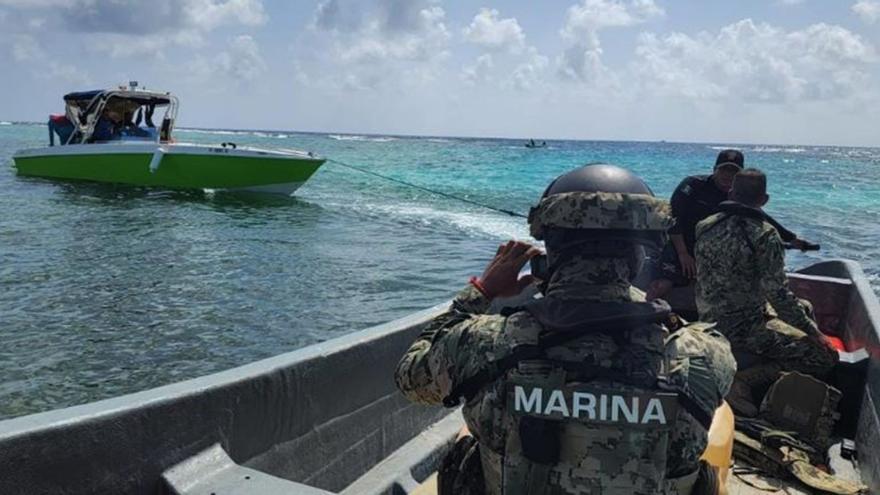
On Thursday morning, 31 Cuban rafters were reported by the U.S. Border Patrol. (Twitter/@USBPChiefMIP)

14ymedio bigger14ymedio, Havana, 5 August 2022 — The exodus of Cuban rafters to the United States seems to have no limits. In just two days, on August 3 and 4, 108 people from the island made landfall in the Florida keys. The Border Patrol recorded the 12 boats in which the Cubans arrived, most of them fishermen’s boats and rustic boats, with signs of “Freedom” and “Christ, my guide.”

Several agents arrested the migrants, who were taken into custody, according to Walter Slosar, head of the border police force, on Twitter. On Thursday morning, 31 rafters arrived aboard three fishing boats, with five individuals arriving at Playa Sombrero, in Marathon, 15 at Isla Valores, in Cayos Bajos, and another 11 at Cayo Largo.

The spokesman for the Monroe County Sheriff’s office, Adam Linhardt, indicated that this flow of rafters responds to the worsening of the humanitarian crisis on the island, with an intensification of repression and the economic crisis, which includes an increase in the cost of living, the devaluation of the Cuban peso and an increase in uncertainty about the future of the country.

On Wednesday, Officer Slosar reported the arrival of 25 rafters in a wooden boat lined with a tarpaulin, which they had adapted the engine of a vehicle that was refueled with two small drums, and in which oars were also found.

The group, coming from Artemis, was made up of three men and two women, who were placed in federal custody after a health examination. That same day, 20 more people arrived in two more rafts.

Faced with the number of landings, the Rescue Evangelical Church, based in Hialeah, used the study rooms it had available on its premises to provide shelter to the rafters. Thanks to the donations received by Pastor David Monduy, leader of the church, the dormitories have been provided with mobile showers, and other signs of support for Cubans are planned, according to Local 10 News.

Coast Guard data indicate that since October 1, 2021, crews have intercepted 3,739 Cubans.

The Cuban government insists on demanding that the Washington Administration comply with the migration agreements signed between the two countries. It attributes the increase in illegal migration to the United continue reading

States to the Cuban Adjustment Act of 1966, which allows island nationals to apply for permanent residence in the United States after a year and one day of staying in that country.  In reality, not everyone who manages to cross U.S. borders can apply this regulation.

In an attempt to prevent the exodus of Cubans, Lieutenant Mario Gil of the U.S. Coast Guard invited “families and friends to encourage their loved ones to seek a safe and legal path to the United States.”

Three Cuban rafters, who were sighted five miles from Isla Pérez in the Gulf of Mexico, were rescued by the Navy.

The Cuban exodus is also carried out by other means and is subject to many penalties. On Thursday, a fishing vessel sighted a raft with several people five miles from Pérez Island, in the Gulf of Mexico, a fact that they immediately reported to the Mexican Navy. Three of the rafters had signs of dehydration and hadn’t eaten in two days. The group was handed over to Mexico’s National Institute of Migration.

On the other hand, the Central American “bridge” continues to be one of the most frequent ways to get to the United States. The official figures offered by Honduras record the passage of 44,000 people, most of them from the island, who were fined $200.

On Thursday, the official newspaper La Gaceta announced that the Honduran government published a legislative decree that exempts migrants from the payment of this fine, which applied to any migrant who entered through unauthorized border points and to whom article 104, paragraph 1, of the Migration and Aliens Law was applied.

With this suspension, the Migration Institute of Honduras also ordered that necessary humanitarian assistance be offered to migrants passing through, in addition to identifying international protection needs for those groups that are in a vulnerable situation, such as women, children, LGBTIQ+ communities and the elderly.

Translated by Regina Anavy

____________

COLLABORATE WITH OUR WORK: The 14ymedio team is committed to practicing serious journalism that reflects Cuba’s reality in all its depth. Thank you for joining us on this long journey. We invite you to continue supporting us by becoming a member of 14ymedio now. Together we can continue transforming journalism in Cuba.

There Was No Show on the First Day of Cuba’s New Exchange Rate Initiative

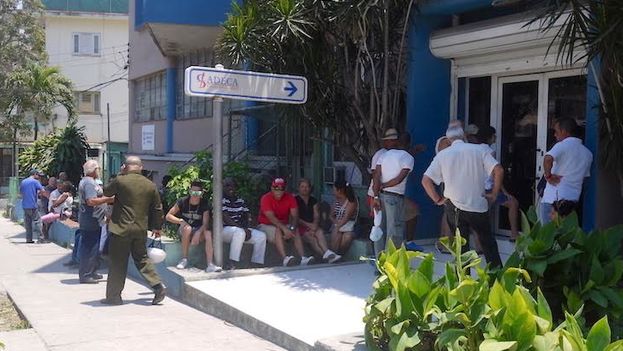
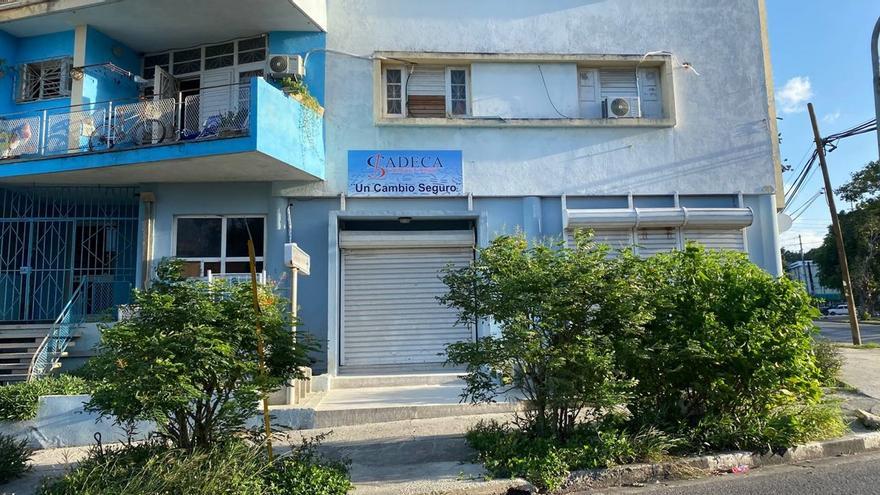
A line outside a currency exchange (Cadeca) in 2016, amid rumors of a reduction in the value of the Cuban convertible peso (CUC), which no longer exists. (14ymedio)

14ymedio bigger14ymedio, Elias Amor Bravo, Economist, 6 August 2022 — The regime’s state press was surprised to see that the first day of the new measure of foreign exchange buying by the State “passed calmly and as planned.” What did they think was going to happen? Perhaps they had imagined one of those shows that the communists like so much, with hordes of desperate citizens trying to sell their dollars or euros for whatever they could, or that at some point, even, a conflict would take place between the state entities that offer the exchange because they weren’t prepared. Anything in order to change the focus. It shouldn’t be forgotten that this exchange initiative comes at a time when Cuba is in total crisis. So no. There was no show. The measure, according to the minister who keeps pounding it in, is nothing more than “an important step in the purpose of establishing an exchange market to buy and sell foreign currency legally” to foreign visitors, the population and non-state economic actors. It was just one more day in which everything was absolutely normal on the city streets.

So the Cuban communists were left without the show and the first steps of the communist state as a buyer of foreign currency, including the US dollar in cash, of course with an exchange rate higher than that offered in the informal market, which had no reaction and, as expected, remained calm, operating efficiently as always and providing services to those who requested them.

The show was left for another occasion. Basically, because no matter how hard the authorities insist on dressing up a simple measure of authorizing currency exchanges as something relevant, it isn’t, and, best of all, this service has already been provided on a regular basis for a year and a half by people who have taken over the role of the financial system, at a time when it completely abandoned its function.

The directors of Economic Policies and Institutional Information and Communication of the Central Bank of Cuba (BCC) can say whatever they want and waste time with communication campaigns in the state press to try to convince people that Economy and Planning Minister Alejandro Gil’s measure “is an important step in the purpose of establishing an exchange market to buy and sell foreign currency legally to foreign visitors, the population and non-state economic actors.” It’s a waste of time, because continue reading

Cubans who need foreign exchange know where and how to get it without having to resort to the state.

So this first day of the process of exchanging currencies to the new rate with the 1×120 dollar has been normal, and it has passed without pain or glory, with the population going to carry out their currency exchange operations for cash in CUP, cash deposits on magnetic cards in CUP and cash withdrawals in CUP from foreign exchange accounts, as well as transfers from foreign currency accounts to accounts in CUP, all without large crowds or stridency despite the fact that all operations had to be carried out at windows. Everything is very quiet, and yes, by paying commissions in the form of a commercial margin that, in the informal market, many recalled, are not usually charged or are not so high.

The official press referred to the fact that the cash in Cuban pesos available in bank branches and exchange offices to meet exchanges was barely used, despite the fact that the regime had made strenuous efforts to guarantee the conditions and availability of cash in Cuban pesos in response to the advertised foreign exchange purchase service. Which, if you think carefully, is another miscalculation, because what Cubans are looking for are dollars and not Cuban pesos, which happens to be the weak currency, so that those who have dollars keep them, except in exceptional cases, waiting for their value to rise, which it will. The banks and chains were really empty this first day and will continue to be so until the sale is announced, and then we will see.

The exchange rate of 1×120 didn’t attract dollar owners. Perhaps because it isn’t the rate they deem appropriate (it stays at 110 with the commissions), or because the information from the informal market and social networks tells them that in the not-too- distant future they can achieve rates of 140 and 160. Some ads in the independent digital press already establish this rate for exchanges on credit.

The peso comes out very strong with this rate of 120, and once again, the regime will deny the obvious to Cubans, as in the Ordering Task* when it launched the 1×24 rate. It’s a shame, no matter where you look, that the regime is cornered in its exchange rate policy by a free and efficient market of supply and demand, which Cubans use satisfactorily and which is expected to continue to function, despite the veiled warnings of Minister Gil.

With no show to present to the state media, and with Cubans reserving the dollars for when the peso drops lower, the initiative of Minister Gil, who has given so much to talk about, starts off on the wrong foot, and we know what that means for the communists. They are like children who protest and make a lot of noise until they have the toy they crave, but once they get it, they forget about it and leave it in a corner of the attic. The same thing can happen here, and it would be for the best. Let them forget about the state exchange market, and let economic freedom and the informal market work. Cubans and everyone else would appreciate it.

*Translator’s note: The “Ordering Task” [tarea ordenamiento] is a collection of measures that include eliminating the Cuban Convertible Peso (CUC), thus leaving the Cuban peso (CUP) as the only national currency, raising prices, raising salaries (but not as much as prices), opening stores that take payment only in hard currency, which must be in the form of specially issued pre-paid debit cards, and a broad range of other measures targeted to different elements of the Cuban economy.

Translated by Regina Anavy

____________

COLLABORATE WITH OUR WORK: The 14ymedio team is committed to practicing serious journalism that reflects Cuba’s reality in all its depth. Thank you for joining us on this long journey. We invite you to continue supporting us by becoming a member of 14ymedio now. Together we can continue transforming journalism in Cuba.

Ten Dollars and Five Banks Later: a Cuban’s Dilemma in Selling His Foreign Currency

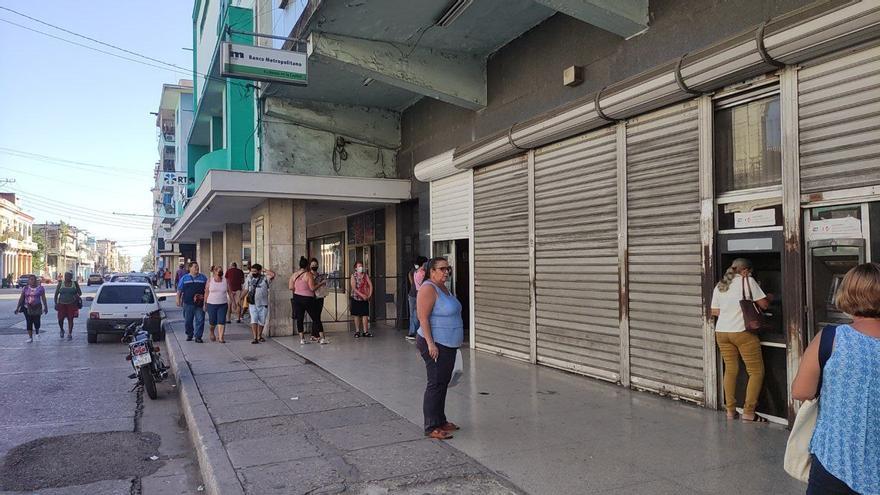
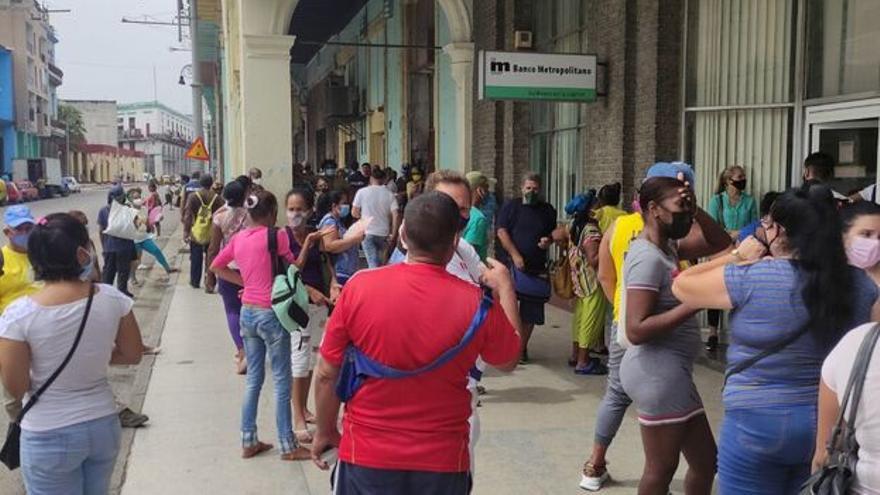
Like a monetary Eusebio Leal, I continued walking Havana up to Belascoaín and was received at the bank on the corner of Zanja by a distracted guard who didn’t even look up from his cell phone. (14ymedio)

14ymedio bigger14ymedio, Juan Diego Rodríguez, Havana, 4 August 2022 — I took to the streets of Havana with ten dollars in my pocket. A sweaty, fought-for bill, a miniature fortune in the country of bank surprises. I wasn’t forgetting the words of the Minister of Economy, serene as an executioner between the president of the Central Bank and the affirmative Randy Alonso [note: director of the State TV Roundtable program].

Wearing a tie and smartly dressed, Minister Alejandro Gil promised to exchange each of my dollars for 120 pesos, or something like that, because there would be a bite from the commission. I started walking towards Infanta wondering how many dollars Gil himself would sell, a man who claims to be always “in the concrete” and for whom “there are no magic recipes” when it comes to economics.

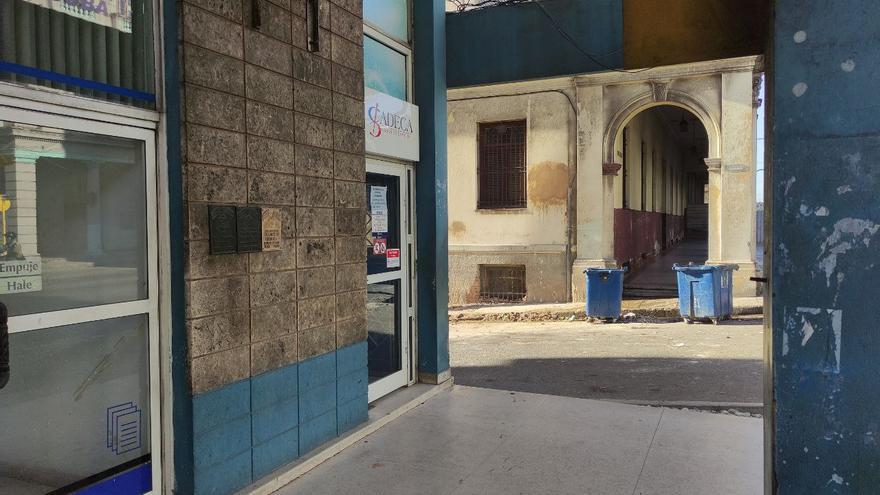
I arrived at the Cadeca currency exchange on Infanta, and I didn’t see any of the “talented young people” and the “professors of the academy” who enlightened the minister on managing this measure. I was greeted by a uniformed mulatto, older, who wore his uniform impeccably. “You saw the Roundtable yesterday, didn’t you?” he asked me kindly.

I answered yes and instantly the clerk appeared, nervous as a fire ant, and said to me: “Did you bring your identity card?” I couldn’t help but smile. So did Gil not only intend to open the banks as mousetraps to capture foreign currency, but also to learn who has dollars and how many they are willing to sell?

“I left it, compañera,” I said, and kept walking through Central Havana, willing to find out what other secret rules Alejandro Gil’s game would have in its first hours of operation. continue reading

I arrived at the Cadeca currency exchange on Infanta, and I didn’t see any of the “talented young people” and the “professors of the academy” who enlightened the minister on managing this measure. (14ymedio)

He who makes the law makes the trap, as the saying goes. However, here everything is slippery, dark and doesn’t obey logical rules, I thought, as I went up Infanta to another bank. It was deserted: a few workers, fugitives from their posts during working hours, so as not to subject themselves to longer lines in the afternoon.

“Who is last in line* to exchange?” I asked them. They looked up, overwhelmed by the heat and boredom, and pointed to the door of the establishment. “The system isn’t working yet,” they informed me inside.

Like a monetary Eusebio Leal, I continued walking Havana up to Belascoaín and was received at the bank on the corner of Zanja by a distracted guard who didn’t even look up from his cell phone. “There is no one to exchange,” the guy explained, “because there is no connection. The system is down, you understand?”

I looked at the line in front of the ATMs, which were working perfectly, and I found the excuse very strange. They depend on the same network. The Central Bank of Cuba hasn’t been able to guarantee a serious and effective structure for exchanging currency, even when they feign “despair” and “anger” in the face of the U.S. embargo, the usual apology for incompetence.

“Come in, come on, exchange!” one of the office workers from another bank in Belascoaín appealed to me. As a preliminary step to a financial wound, so much enthusiasm seemed dangerous. “Has anyone come to exchange yet?” I asked cautiously.

No,” the woman admitted, “but there is no problem. You know what these things are like at first. The system still doesn’t work well; we have to try it. So you will be the first brave man, come on!” “Wait a minute,” I said, and I saved myself by shooting out of there like a rocket.

Finally, at the bank on Galiano Street, I found several people lining up to exchange. The employee at the door, a portent of economic misinformation, assured us that the exact exchange rate for the euro was 121 pesos, when in reality it stays at 119 and a few cents after paying the commission.

In the line, the story was already famous about clueless customers who, when extracting Cuban pesos with their European Visa card at the ATM, received 24 Cuban pesos for every euro and not at the new rate. It was useless for them to complain. A foolish boy arrived asking how much he would have to pay for a dollar. “No, mi amor,” clarified the bank guard, “they are the only ones who can buy. And they will sell . . . when they tell us.”

It was deserted: a few workers, fugitives from their posts during working hours, so as not to subject themselves to longer lines in the afternoon. (14ymedio)

It’s almost noon, and Gil’s invention hasn’t convinced me, so I give up my place in Galiano’s line. Nor does it seem like a good deal for other Cubans. The minister has already imagined us in long lines to rid ourselves of foreign currency and destroy, with the same shot, the informal market.

I open my phone and consult the WhatsApp groups of buying and selling dollars, food, medicines and everything else. Contrary to Gil’s predictions, no one pays too much attention to the prodigious measure. Obviously, the exchange rate of the dollar is already exceeding that decreed by the government.

I note the contact for a boy who promises 150 pesos for every dollar. In the same group, someone says that they prefer to sell their dollars at 90 pesos rather than give them to the government. Since yesterday, both the euro and other freely convertible currency have been following the upward course of the U.S. currency, the favorite of the Council of Ministers.

I take my $10 bill out of my pocket and look at it almost fondly. What a job it will be for Alejandro Gil, the brilliant magician of the Cuban economy, to take dollars away from a Cuban.

*Translator’s note: When Cubans join a line they do so by asking “who’s last,” and in this way the line maintains its order without individuals having to stand exactly in place, in a line that might last hours.

Translated by Regina Anavy

____________

COLLABORATE WITH OUR WORK: The 14ymedio team is committed to practicing serious journalism that reflects Cuba’s reality in all its depth. Thank you for joining us on this long journey. We invite you to continue supporting us by becoming a member of 14ymedio now. Together we can continue transforming journalism in Cuba.

The Cuban Minister of Economy Declares War on the Informal Exchange Market. Who Will Win?

Today the Central Bank of Cuba began to buy foreign currency at a new exchange rate. (14ymedio)

14ymedio bigger14ymedio, Elías Amor Bravo, Valencia, 4 August 2022 — Finally, what was promised has been fulfilled. On July 21, Minister of Economy and Planning Alejandro Gil announced in the National Assembly a set of measures that, in his opinion, “within socialism will serve to strengthen the economy.” And yesterday, on State television’s Roundtable programtogether with the president of the Central Bank of Cuba, he confirmed one of the measures that had aroused the most interest, the implementation of an exchange market for the purchase and sale of foreign currency to the population with an “economically grounded exchange rate and where we can work with all currencies, including dollars in cash.”

In the words of the minister, “it’s expected that one of the main benefits will be the possibility for Cubans and travelers to be able to exchange currencies at a more attractive exchange rate and not have to go to an illegal market.” The minister has declared war on the informal exchange market. Who will win?

There’s no doubt that there is interest in knowing how this new foreign exchange market is going to be launched, with what exchange rate, and what effects the measure will have on the battered Cuban economy.

After explaining the differences between the secondary currency allocation scheme (implemented last May for food and manufacturing) and the foreign exchange market that is now intended to be launched, the minister gave the scoop of the night, announcing that today, August 4, mark this date, the foreign exchange market will begin to operate, at the official exchange rate of 1:120 in the upper band of the informal market. A devaluation of the peso with the dollar of 400%.

At the moment, the state exchange market starts with the purchase of foreign currency by the State, including the cash dollar. Later, the sale of foreign currency will begin, but it won’t be immediate. The minister acknowledged that work is still being done to create the conditions to do so later at points of the Cadeca exchanges, banks and airports.

Gil believes that the purchase of foreign currency at a higher exchange rate will mean an incentive to sell foreign currency to the State, in what can be understood as the regime’s decision to liquidate the informal market that has been operating since last year. It won’t be easy, and he will soon discover that in an economy there is room for everyone, and that those who focus their activity on meeting the needs of others manage to survive, even in difficult and dark times. continue reading

So the communist regime wants to do this immediately with the exchange business of the informal market, and for this, it has decided to allow the purchase of dollars in cash, although it still doesn’t authorize the placement of those dollars on a card in MLC [freely convertible currency] due to its impact on greater purchasing power that cannot be met under the current conditions. The minister doesn’t have them all with him. And of course, as it couldn’t be otherwise, the blame is on the ’blockade’ [i.e., the embargo] imposed by the United States, which he described as “an anomaly in the financial functioning of the country that has not moved a millimeter and doesn’t allow taking that step that would be favorable for the population.”

There is so much distrust posed by these measures, that Gil warned that the entry into operation of the foreign exchange market this Thursday will not affect the business system, where the 1×24 exchange rate is maintained, so that “the imports that enter do so with that rate, as well as the exports that are generated in the country.”

Señora Wilson, president of the Central Bank of Cuba, also present at the Roundtable, reported that rules have been established that facilitate the implementation of exchange market measures through the repeal of decrees 17 and 37 of 2021, and 62 of 2022, since they established a single exchange rate to operate in the national economy, and the publication of a new one, 63, which will allow different exchange rates to be established.

Based on this legal framework, Resolutions 126, relating to the issuance of several exchange rates, and 127, which establishes the purchase of foreign currency by the banking system, which is going to be implemented first, are issued. Specifically, the latter resolution establishes that banks and non-bank financial institutions will not accept US dollars in cash from natural and legal persons for deposits in bank accounts but only for purchase, justifying this decision by maintaining the conditions of the ’blockade’ and the difficulties in operating with dollars and exporting them in foreign trade operations.

Less optimistic than the minister, she acknowledged that “this foreign exchange market will not solve the problems of the domestic economy. The foundations must exist, for which we are working on new measures to provide the country with foreign exchange and the goods and services that lead to economic stability. This will allow us to go to the final objective, which is to establish a single exchange rate that allows balance in the economy and where the national currency is the currency with which everyone wants to do business.”

As of August 4, people can make the sale through transfers they receive from abroad, through accreditation to an account in national currency. Also by means of freely convertible currency accounts, with request for transfers to CUP (Cuban peso) accounts. Likewise, it can be done in cash.

The national currency will be received through deposits in CUP accounts, so that the margins are more favorable, since that is what they are promoting. Also through the delivery of cash, which will have a less stimulating margin. She added that, due to the situation of the economy, there is a very high demand for cash, but anything that is not issuing more banknotes and favoring electronic transactions will be encouraged. Likewise, she pointed out that these operations will be, for the time being, at the counter, and ATMs will soon be included as an option.

Where will this type of exchange be implemented? It will be in all provinces, in key municipalities, and, to the extent that demand allows, new conditions will be created. The service will also be provided at airports, hotels and tourist centers. The branches where this activity will be carried out will be published on the website of the Central Bank of Cuba.

At this point, the president of the Central Bank indicated that they have “considered the exchange rate of 120 CUP to 1 dollar” and that “this exchange rate is not the equilibrium rate of the economy, it’s the one for the beginning of this market.” The fixed exchange rate system established in the ordering task has passed to a better life.

Commercial banks will be guaranteed a margin for buying and selling, in accordance with an international standard. These margins are aimed at encouraging non-cash transactions and the purchase of non-dollar currencies. Specifically, a range between 2% and 9%. These margins, in the case of the purchase of foreign currency in cash and at airports, improve compared to the previous exchange rate of 1×24. Excessive margins will offer incentives to operate in informal markets that will surely refine the costs of their operations so as not to lose competitiveness.

The trading margin conditions of the operations are harmful. “If you go to the bank tomorrow and sell a euro, the bank would be giving you 119.69 CUP. For the dollar, the margin is 8%. If you sell a dollar to the bank tomorrow, you will receive 110.40 CUP.” The competitive advantage is in transfers from abroad; here the margin for the purchase of the currency will be zero, as well as for purchases or withdrawals of international cards and transfers of foreign currency accounts to CUP at the exchange rate of 1×120. For cash withdrawal through currency accounts, there will be a trading margin of 1%. For currency cash deposits in CUP accounts, it will be 1.5%, and the dollar will have a greater impact.

The president of the Central Bank reiterated that the foreign exchange market starts with the purchase operations, but at a certain time the sale will have to be implemented, because then it wouldn’t be a market. She again pointed out that the objective of the Central Bank is to defend the country’s national currency and try to ensure that all transactions are in that currency. And she recognized that, at the time, there was no choice but to implement a trade in a currency other than the peso, but that must be corrected, because it has brought distortions in the economy.

She concluded by pointing out that, in order to achieve the equilibrium exchange rate that the economy needs, it’s necessary to “produce goods and services that encourage the population to buy in the national currency and discourage the need to acquire freely convertible currency to meet their needs.”

Minister Gil was convinced that the exchange rate chosen, 1×120, offers a “reasonable guarantee so that there’s an incentive to sell the foreign currency to the state and the state can buy it.” All people who have foreign currency “can legally exchange it at an economically based exchange rate, which guarantees a return in national currency that, today, gives it a purchasing power above what those who have a salary receive. This creates a distortion in relative prices.

He also insisted that with this measure the prices of the ’regulated family basket’ (within the rationing system) or the prices of stores in Cuban pesos are not increasing; there is no growth in the price level of the economy at the level of the new exchange rate. And he stressed that “no one can say that he had to increase prices because at the Roundtable they said that they are going to buy dollars at 120 pesos. That has no impact. We are talking about buying foreign currency and giving Cuban pesos in return.”

The minister was convinced that to the extent that foreign currency can be captured, invested in the economy and offers increased in pesos, decisions can be made in the ordering of the markets, increasing offers in national currency. Some of these decisions were cited only in passing, when he referred to the concern about the control of the public deficit and the tax evasion that injects liquid into the economy that heats inflation. The minister’s distrust led him to say that “this isn’t a magical measure. It’s an indispensable measure. It’s a step in which we have to continue moving forward and incorporate the sale,” an argument that reminds us, a lot, of the Ordering Task*.

He recognized that the exchange rate of 1×120 is not equilibrium, nor market; it’s only for buying. When buying and selling operations begin, an exchange rate will be sought that balances supply and demand, and certain limits will have to be placed on the sale. Bad business. If the minister wants to manage and put limits on market action, he will obtain the worst possible result. Achieving the equilibrium exchange rate is the result of the action of supply and demand, with the state keeping its hands off the process.

The minister said that with these measures it’s possible to achieve a society with the greatest possible equity and social justice and mentioned that people who don’t have dollars or euros to sell be given national currency in return. In his opinion, “if the socialist state captures these currencies, they are reinvested in favor of society.” An erroneous conviction of which he has long experience. Finally, he recognized that this measure is taken to “give legality to the foreign exchange market, putting its feet on the ground with an objective vision of reality and looking for ways to capture and channel those currencies according to society.” If instead, he had supported the informal market for its consolidation in the economy, the result would be much better.

He concluded by pointing out that immediate effects cannot be expected. The measures try to address the lack of foreign exchange, look for a mechanism to channel the currency according to offers in national currency and tax the objective of recovering the purchasing power of the Cuban peso. All this is to achieve an economy that operates in national currency in all its transactions and to have the ability to buy from a salary, from income. And by the way, end the informal exchange market, one of the few spaces of economic freedom and efficiency in the Cuban economy. It is another thing for him to understand this.

Editors’ note: This article is reproduced with the permission of its author and was originally published in Cubaeconomía.

*Translator’s note: **Tarea ordenamiento = the [so-called] ‘Ordering Task’ is a collection of measures that include eliminating the Cuban Convertible Peso (CUC), leaving the Cuban peso as the only national currency, raising prices, raising salaries (but not as much as prices), opening stores that take payment only in hard currency which must be in the form of specially issued pre-paid debit cards, and a broad range of other measures targeted to different elements of the Cuban economy. 

Translated by Regina Anavy

____________

COLLABORATE WITH OUR WORK: The 14ymedio team is committed to practicing serious journalism that reflects Cuba’s reality in all its depth. Thank you for joining us on this long journey. We invite you to continue supporting us by becoming a member of 14ymedio now. Together we can continue transforming journalism in Cuba.

Power Cuts ‘Blackout’ the Best Supplied Markets in Havana

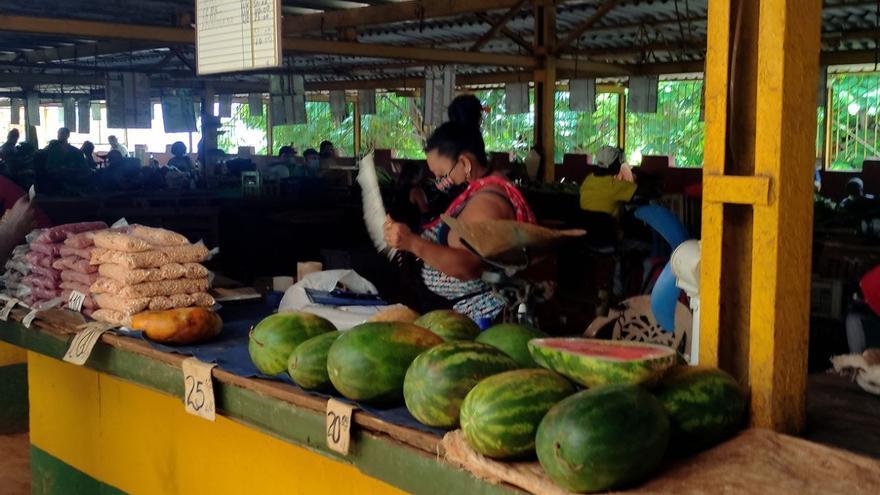
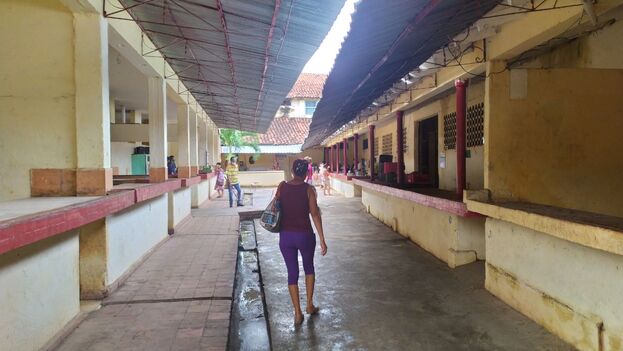
The offers are poor and no one wants to be inside the establishment, in the middle of the power outage scheduled for Vedado from early in the morning. (14ymedio)

14ymedio bigger 14ymedio, Juan Diego Rodríguez, Havana, 4 August 2022 — “People here are not used to these blackouts,” a woman said aloud when leaving the market on 19th and B on Wednesday. Known in the capital as the food boutique, this store stands out for always being well stocked, especially compared to others found all over the island, but the customer left the place with only two plantains in hand.

The arrival of the blackouts, however, has had a full impact on the market. The offers are poor and no one wants to be inside the establishment, in the middle of the power outage scheduled for Vedado from early in the morning.

“Buy from me, even if it’s half a melon, mi vida, I already want to leave,” a saleswoman, fan in hand, implored a customer who was passing by her stand. “I’m suffering from this heat, and my bursitis makes matters worse,” she lamented.

In the busy square yesterday you could barely find half a kilo of tomatoes for 200 pesos, Chinese plums at 60 and carrots or beets for 80 pesos a pound.

At noon, many stalls were already closed. The sellers preferred not to continue enduring the heat in the midst of the lack of electricity and left, but people kept arriving trying to get something, despite the high prices. The fear that when the electricity service was restored there would be nothing left overcame their little desire to be there. continue reading

The sellers of the informal market didn’t swarm around the place yesterday either. “I have milk, hot dogs, picadillo, even lobster.” The whispers that don’t stop normally weren’t heard this Wednesday.

A merchant announced sarcastically as he picked up his cassava and malangas: “Get your solidarity here, I’m leaving.”

“But compañero, don’t you think solidarity is necessary?” another asked him ironically. “Of course, of course, solidarity. But I am like this revolution, which has said enough and needs to go,” he replied, exploding like a bomb, while behind his back there was tremendous laughter.

Translated by Regina Anavy

____________

COLLABORATE WITH OUR WORK: The 14ymedio team is committed to practicing serious journalism that reflects Cuba’s reality in all its depth. Thank you for joining us on this long journey. We invite you to continue supporting us by becoming a member of 14ymedio now. Together we can continue transforming journalism in Cuba.

Cubans Respond to the Blackouts in Bayamo with Protests, Mockery and Posters

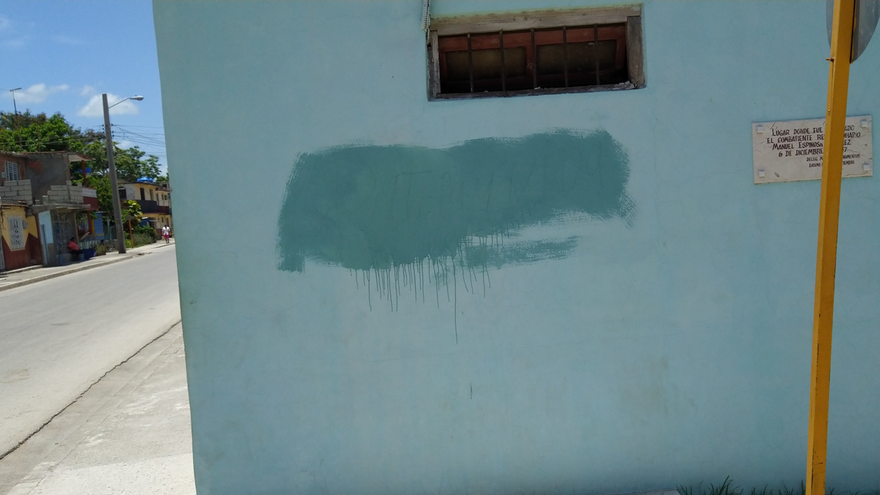
They have barely been able to cover the posters with slogans and messages against the Government and the president with a couple of brushstrokes, like this one on Avenida de los Mártires, in Bayamo. (14ymedio)

14ymedio bigger14ymedio, Bayamo, 4 August 2022 — Things are changing in Cuba and not only in the capital. The residents of Bayamo, in modest Granma Province, no longer remain silent in the face of blackouts and openly challenge the authorities.

Last Tuesday, a group of people gathered at the Altar of the Heroes, next to the monument that marks the place of the first open-air cemetery in America, and cried out against the long power cuts.

Two people passed by on a motorcycle in front of a state company and one of them, megaphone in hand, shouted: “Díaz-Canel, singao!”* before the eyes of a group of people who burst into laughter. A colonel from the Ministry of the Interior, who was present, demanded that witnesses confront the two rebels, but this only managed to increase the laughter.

On Monday night, in the Bayamés neighborhood of Camilo Cienfuegos, a group of people, in front of the patrol cars that guarded the streets, shouted “Viva Díaz-Canel,” “Viva la Revolución,” in a way that mocked those responsible for the energy situation. A few hours earlier, another protest with people banging on pots and pans had taken place in Mabay, a rural area of Bayamo, where shouts were heard of “the people, united, will never be defeated.”** continue reading

Discomfort is growing in a population where power outages exceed 10 and 14 hours, programmed in two and three cycles of blackouts during each day this summer. Posters with slogans and messages against the Government and the president are evident even in broad daylight, and they have barely been able to cover them with a couple of brush strokes of fresh paint.

The explanations of the Electrical Union are no longer of any use to the population, who don’t understand why they must endure so many hours without electricity. “But Felton [power plant] generates for [the State newspaper] Granma?” asked a neighbor of the province when the newspaper La Demajagua announced more cuts due to the loss of the thermoelectric plant, which contributes 500 MW to the system but has two units in constant breakdown. “And don’t tell me that it’s a national system because, if so, the people of Havana will also have 14 hours of blackout per day. And my congratulations to those who have earned that respect.”

For this Thursday, the Electrical Union has announced a deficit of 618 MW. Demand will be around 2,900 MW at its maximum, and the availability is barely 2,352 MW.

The Mariel thermoelectric plant has three damaged units, which is in addition to the two of Felton, the four of Nuevitas, the six of Renté and the only one of Otto Parellada. In addition, there is another unit under maintenance in Cienfuegos, and, due to a problem in the Energas Varadero steam turbine, more MW are out of generation.

Finally, we must add the problems of distributed generation, where 1,115 MW are missing due to breakdowns and almost 500 MW due to maintenance.

“The truth is that there is tremendous disorder, every day he reads the same story, only the numbers and thermoelectric plants change,” a user responded to the Electric Union statement. Meanwhile, others continue to insist on taking the drama with humor: “Did they patch up the Felton thermoelectric plant with children’s modeling clay?”

Translator’s notes:

*Cuban slang for “motherfucker,” “asshole” or “bastard.” Part of the appeal of this particular insult is that it rhymes with Diaz-Canel.

**A slogan of the Chilean Unidad Popular party of leftist President Salvador Allende.

Translated by Regina Anavy

____________

COLLABORATE WITH OUR WORK: The 14ymedio team is committed to practicing serious journalism that reflects Cuba’s reality in all its depth. Thank you for joining us on this long journey. We invite you to continue supporting us by becoming a member of 14ymedio now. Together we can continue transforming journalism in Cuba.

The Situation of Dengue Fever in Cuba is ‘Complex’ and Will be More Complicated in August, Acknowledges Public Health

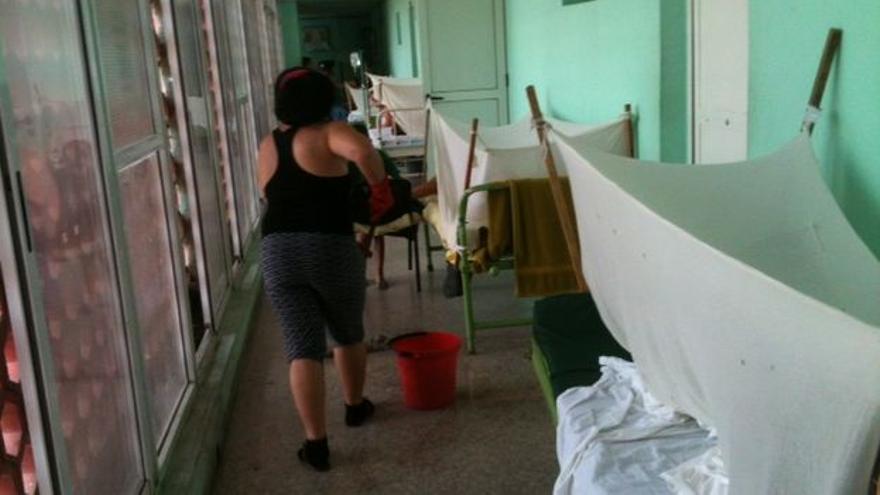
Corridor of the Pepe Portilla Children’s Hospital in Pinar del Río. (Archive/Juan Carlos Fernández)

14ymedio bigger14ymedio, Havana, 4 August 2022 — In the last week, dengue fever infections in Cuba increased by 35.5% compared to the previous week, and the prediction is for the same with the advance of August, due to “vacation, rain and intense heat, which makes the situation very complex.”

By the end of July, dengue had already spread to 11 Cuban provinces, according to the Ministry of Public Health. However, the most affected territories are Isla de la Juventud, Havana, Guantánamo, Camagüey and Holguín.

“There are serious problems with environmental management that today is also taxed with the multiplication of outbreaks throughout the territory,” said Health Minister José Ángel Portal Miranda, referring to the garbage in the streets, in a meeting with the President of the Republic, Miguel Díaz-Canel. His report was transmitted on State TV Noon News, on August 3, and the minister asked for work on this matter “knowing the limitations that exist.”

At the same meeting, he asked that crowds should be avoided in hospitals and that reserve centers should receive more patients with alarming symptoms of the disease caused by the Aedes Aegyptis mosquito.

Last week alone, Cuba detected more cases of the disease than in the entire first half of the year, 4,776 cases between July 17 and 23. That week, 10,590 tests were carried out, and the positivity rate was 45.1%. continue reading

Hospitals have increased space to receive more admissions due to dengue in recent weeks, such as the Mario Muñoz Monroy hospital, in Colón, Matanzas, which went from having two beds to 80 beds.

Health workers insist that the population must do everything possible to protect themselves, because there are no insecticides such as abate or diesel to fumigate every six days, as established in the protocols. These limitations, coupled with the summer heat and the long hours of blackouts, are leading to the proliferation of a disease that had remained in the background during COVID but now has regained strength.

Recently, a doctor told 14ymedio that healthcare workers are alarmed by the increase in cases of severe dengue fever because “it’s not usual. In previous epidemics, perhaps approximately 1% of cases had warning signs (those that warn you that the patient is not evolving well), but now it’s more than 30%.”

The Ministry of Public Health warned of the symptoms of the disease: abdominal pain, vomiting, irritability, drowsiness, swelling or edema and bleeding, and said that four serotypes of dengue are circulating on the island, “which means that it’s possible to get infected four times*,” says the announcement, sent through Telegram.

*Translator’s note: Infection with any serotype of dengue fever generally results in future immunity, but only to that serotype.  Severe cases of the disease are most common when a person who has been infected in the past is infected again, but with a different serotype.

Translated by Regina Anavy 

____________

COLLABORATE WITH OUR WORK: The 14ymedio team is committed to practicing serious journalism that reflects Cuba’s reality in all its depth. Thank you for joining us on this long journey. We invite you to continue supporting us by becoming a member of 14ymedio now. Together we can continue transforming journalism in Cuba.

Against the Ropes, the Cuban Government Announces the Purchase of Dollars in Cash at 120 pesos

Cadeca’s offices became essential in Cuba from the second half of the 1990s. (14ymedio)

14ymedio bigger14ymedio, Havana, 3 August 2022 — In the midst of the deepest economic crisis in two decades, the Cuban government announced the purchase of dollars in cash at 120 pesos starting on Thursday. “We are going to start with the purchase of foreign currency, of all currencies including the dollar, in cash, at a higher rate than today’s exchange rate,” Economy Minister Alejandro Gil Fernández said on State television’s Roundtable program on Wednesday.

Dollars in cash can only be sold in Cadeca (exchange houses) and banks, but the deposit of dollars in freely convertible currency (MLC) accounts still continues without effect, the President of the Central Bank of Cuba, Marta Sabina Wilson González emphasized on the program, adding that the measure is aimed at natural persons and private-sector actors.

“This type of exchange isn’t the type of balanced exchange rate of the economy,” Wilson González said, insisting that the new rate “isn’t static but will move in function with the market.”

Gil clarified that for the moment, foreign currency won’t be sold to the population and that this new exchange rate “isn’t going to happen immediately.” He said the measure aims to guarantee “an incentive” for people to sell foreign currency to the State.

The Government is recognizing that a professional can barely earn a hundred dollars a month for a full day’s work

This new exchange rate for foreign currencies will be not only for cash but will also include foreign exchange transfers from abroad and deposits that are in MLC  (freely convertible currency) accounts, Wilson González said.

The sale of foreign currency, according to Gil, “is a missing piece in the gear, in the mechanism of the economy,” which “in a very slight, very gradual way begins to show signs of recovery.”

Among the justifications for starting the purchase of foreign currency, Gil referred to the informal exchange market that is capturing the currencies that enter the country because of the high price at which they are sold. continue reading

“The success is that you have a level of supply in national currency that generates an incentive for people who own foreign currency or receive it from abroad or international travelers,” said the Minister of Economy, noting that they intend, with the exchange in pesos proposed by the State, for people to “have a level of consumption in the country.”

This Wednesday in the informal market on the island, a US dollar sold at 115 pesos, the euro at 119 and the MLC, a digital currency invented by the Government for stores that that take payment for food and household appliances, at 118. For months, currencies have exceeded 100 pesos in this type of exchange.

The biggest damage from this Wednesday’s announcement is to the salaries of state workers, who don’t have access to hard currency. With this rate, the Government is recognizing that a professional can barely earn a hundred dollars a month for a full day’s work.

Without prior notice, on May 20, 2021, Cuban airports stopped selling foreign currency. The news was announced by Cadeca in a message disseminated through its social networks a few hours before the measure went into force.

The state entity maintained that the low influx of tourists with the pandemic has caused a “significant deficit” of foreign exchange, and that to date it has been able to operate within the established limits, but the lack of liquidity has reached an unsustainable extreme.

The rest of the linked establishments and the banks — both sectors of state monopolies — were not selling dollars or any other hard currency long before, due to the lack of liquidity in the country, which is going through its worst crisis in three decades.

On June 21 of last year, the Government “temporarily” suspended the acceptance of bank cash deposits in US dollars. It then specified that the measure was due to “the obstacles” imposed by “the US economic blockade” and that the domestic banking system couldn’t deposit abroad the dollars it collects on the island.

Translated by Regina Anavy

____________

COLLABORATE WITH OUR WORK: The 14ymedio team is committed to practicing serious journalism that reflects Cuba’s reality in all its depth. Thank you for joining us on this long journey. We invite you to continue supporting us by becoming a member of 14ymedio now. Together we can continue transforming journalism in Cuba.

Entertaining People with Popular Control: The Castro Regime Has No Remedy

State agricultural markets in Sancti Spíritus look almost empty. (14ymedio)

14ymedio bigger14ymedio, Elías Amor Bravo, Economist, 2 August 2022 — With all that is going wrong in Cuba, the state press doesn’t miss an opportunity to transmit a false sense of normality that, far from being confirmed, leads to thinking just the opposite.

Constantly in the Castro regime, there is talk of “people’s power” everywhere, without anyone knowing very well what it means. It’s not just any realization. There’s enough for a doctoral thesis, like that of Cuban President Díaz-Canel’s on science and innovation. For this reason, someone at the State newspaper Granma has wondered if popular control, that is, the power of the people, works as a direct expression of socialist democracy in Cuba. But what power of the people are they talking about?

They allude to the old constitutional pipe dream, which even has a law, Law No. 132/2019, on the organization and operation of the municipal assemblies of People’s Power and the people’s councils that establish how “the people can exercise control and build the country’s model.” Let’s see if we understand anything.

In the State newspaper Granma they want to answer a disturbing question: how can Cubans who don’t hold a political or governmental position, from the base, in the community, access and use their power to contribute to transforming reality? It’s difficult. See if you haven’t  the video that runs through social networks in which an angry [Prime Minister Manuel] Marrero* is observed before a violent outburst from a revolutionary grandfather, who could well be taking a nap, and who nevertheless lashes out at another communist militant who complains that in 35 years no one has done anything to solve a problem. continue reading

And, of course, like everything in Cuba, if you want to understand something, you have to go to the Law, which with its 210 articles and eight chapters establishes the structure, functions and prerogatives of each of the components of the so-called “people’s power,” which, as Granma points out, “is manifested daily in the actions of the delegates and voters as the foundation of the Cuban political system.”

Precisely, one of the most important changes to Law No. 132 was the right of members of the people’s councils to carry out controls on local production and service entities, as a “potential regulatory mechanism against illegalities and violations that usually occur in state and non-state institutions,” involving the citizen himself as an engine of the changes he needs around him.

Granma reviews the experiences on this topic: Are the controls effective? What results have they had? How can they improve?

Popular controls are welcomed by the communist organization as a tool to respond to the demands of the people, an idea that is here to stay. Delegates ensure the proper functioning of the entities that operate in their constituencies, but what Chapter VII of Law 132 proposes is to involve people more in transforming their environment.

So, although previously only delegates participated in the so-called control and audit, anyone who can contribute “to evaluate, show, suggest and thoroughly review the administrative work of public and private entities, even more so if they have been pointed out by the vox populi, are now invited.

Every month, three popular control exercises are carried out, which are approved at the end of the year so as not to leave any area or sector without going through the filter of citizens and analyzing topics such as water supply, the situation of schools, grocery stores and medical offices, the sale of liquefied gas, the production of bread, the marketing of agricultural products and the so-called colerosHey, did anyone hear blackouts? It’s incredible.

The communists are exultant. Every time a control is announced, service specialists, retirees, community leaders and anyone who wishes are incorporated into the group, forming a conga line with a complicated rhythm, which ends up being deadly for some state and non-state entities, when the report is prepared with positive and negative signs and a plan of measures is required in response. Those responsible, as one can imagine, have little desire to continue.

Therefore, when agencies fall behind with the requested response, and others don’t immediately adopt the suggested decisions, some other, tougher measures are taken. In some cases, the focus is on the workers of the institutions under control, in a clear exercise of bridging those responsible for them, which leads to a further deterioration of the situation. Popular controls add fire to conflicts where the problem could be fixed with a little good will. You can see the Castro inspiration behind all this.

What is the communist regime looking for with these controls? Perhaps that the grocery stores are painted, renovated; that the culture of commerce wins, as Granma says. Let’s see: if there is nothing to sell and the grocery stores are empty, all the rest remains. That’s where popular control should begin if it wants to be of any use. There is the impression that the regime wants to fuss over popular controls to keep people entertained, away from the main concerns about blackouts, inflation or lack of food. If this is the case, it’s not strange that they talk about achieving even greater systems of controls, because according to them, credibility can be lost, and in this case, there is even the authority to request support from the president of the Municipal Assembly.

One can now imagine that all this is another waste of time within the day-to-day life of Cubans. Granma recognizes the problems that these controllers of people’s power have when certain entities located in the municipal council cannot be controlled because the scope of their work is provincial, and, in these cases, alleged negligence cannot be punished. Or the need they say to review the communication mechanisms, because, although the opinion of the delegates is that most people know when, how and where the controls are carried out, practice shows that this is not the case.

That is why, to finish filling the agenda, the leaders say that it’s necessary to take more advantage of traditional socialization methods (meetings, offices with voters), or to create new ones (social media channels or groups, informal opinion leaders) so that more people know and participate in these demonstrations of popular power. They have no remedy.

*Translator’s note: Marrero blamed doctors and other healthcare workers in Cienfuegos for the handling of the pandemic (in 2021)

Translated by Regina Anavy

____________

COLLABORATE WITH OUR WORK: The 14ymedio team is committed to practicing serious journalism that reflects Cuba’s reality in all its depth. Thank you for joining us on this long journey. We invite you to continue supporting us by becoming a member of 14ymedio now. Together we can continue transforming journalism in Cuba.

Miguel Mouse, ‘Che’ Guevara and Marianao’s Jokers

For Caignet, writing ’Miguel Mouse” during the time of Gerardo Machado resulted in a brief but notorious stay in prison.

14ymedio bigger14ymedio, Reinaldo Escobar, Havana, 29 June 2022 — Félix B. Caignet, considered the founder of radio soap operas, also wrote children’s songs and was an opponent of the first dictatorship suffered by Cubans. Among his contributions is the musical theme known as El ratoncito Miguel [Miguel Mouse], which, in the time of Gerardo Machado, resulted in a brief but notorious stay in prison.

Even at the end of the 1950s, when we endured the second dictatorship in our history, those of us who were then children raised our voices on the occasion that was propitious to emphasize the verse that said:

The thing is

that it horrifies and really scares

And you’ll see

how a mouse will die of hunger

There’s no cheese anymore

much less a slice of ham

Let’s see

who is going to tear out Misifú’s heart.

Mistifú wasn’t a cat, but the repressor on duty. Tearing out his heart meant overthrowing him from power, and the “let’s see” was related to the one who bells the cat. Cross-references that are the essence of every culture.

Years later, an Argentine who believed he knew the essence of the Cuban pontificated that the original sin of our intellectuals was summarized in the fact that they were not revolutionaries. Ernesto Guevara said it in an article entitled “Man and Socialism in Cuba,” where he labeled the entire intelligentsia of a country through his tunnel vision of a classist, Marxist revolutionary.

Today there is no shortage of those who evaluate with Guevarist criteria the behavior of those who appeal to irony and sarcasm to criticize the dictatorship. They are the same ones who don’t forgive anyone who writes the word “government” where it should say “dictatorship.”

They are the ones who don’t stop understanding that, if they’re not a government, they’re not a dictatorship.

The best joke of the year, if that contest existed, would have as winners those young people who identified Marianao* as the territory where all the promises of the dictatorship were fulfilled.

Félix B. Caignet would feel a healthy envy if he found out that his little mouse has found another way to make fun of the cat.

*Translator’s note: In the linked video two young people on a motorcycle, responding to a question from Cuban State media, say everything is fine in the Marianao neighborhood in Havana — there are no shortages, no blackouts, ‘there is everything.’

Translated by Regina Anavy

____________

COLLABORATE WITH OUR WORK: The 14ymedio team is committed to practicing serious journalism that reflects Cuba’s reality in all its depth. Thank you for joining us on this long journey. We invite you to continue supporting us by becoming a member of 14ymedio now. Together we can continue transforming journalism in Cuba.

Belarus Agrees with Cuba to Distribute the Soberana Plus Vaccine

With the approval of Soberana Plus, Belarus joins the axis of countries that, like Iran, Venezuela, Nicaragua and Mexico, have agreed with Cuba to distribute or produce its vaccines. (Finlay Institute)

14ymedio bigger

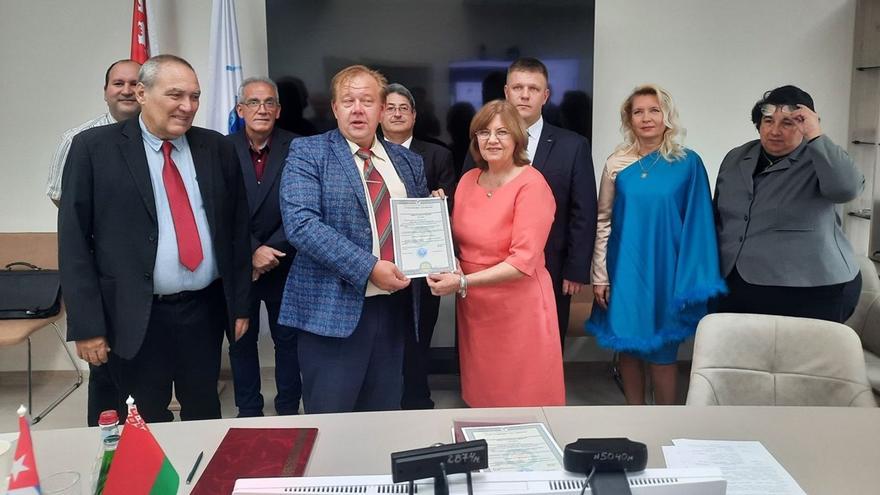
14ymedio, Havana, 27 July 2022 — Belarus became the first country in Europe on Wednesday to approve the use of the Cuban-made Soberana Plus COVID-19 vaccine. Dmitry Vladimírovich, director of the Expertise and Testing Center of the Ministry of Health of Belarus, met in Minsk with a delegation of officials and scientific staff from the island, present in the Slavic country until July 28.

During the meeting, Vladimírovich delivered the certificate, which supports the use of the drug in Belarusian territory, to Vicente Vérez Bencomo, director of the Finlay Institute of Vaccines, and to Olga Lidia Jacobo, who chairs the Center for the State Control of Medicines, Equipment and Medical Devices of Cuba.

The island’s ambassador to Minsk, Santiago Pérez Benítez, also received the endorsement of Soberana Plus. For his part, the rector of the State University of Medicine of Gomel, Ígor Stoma, talked about the experience of the use of vaccines in Belarus so far.

The Cuban delegation also held a discussion with the Belarusian Minister of Health, Dmitry Pinevichs, to evaluate subsequent contracts in the field of medicines and pharmaceutical cooperation from Havana. continue reading

According to the Ministry of Foreign Affairs of Cuba, Pinevichs referred to the “issues related to cooperation in the field of the circulation of medicines and medical products, in particular the location of Cuban medicines and vaccines in the territory of Belarus, as well as the possibility of exporting Belarusian pharmaceutical products to Cuba.”

The delegation also visited a pediatric hospital in Minsk, where a lecture was given on the application of the Soberana vaccine to children.

Neither Vladimírovich nor the Minister of Health of Belarus resisted the temptation to politically qualify the medical agreements with Cuba. The director of the professional training center said that he had been chosen on July 26 to sign the registration of the vaccine as a tribute to the “Day of National Rebellion.”

The president of Belarus, Aleksandr Lukashenko, also referred to the date in a message addressed to Cuban President Miguel Díaz-Canel, in which, handling the usual topics about the 1953 assault on the Moncada barracks, he also stated that his Government’s “economic and commercial cooperation” with the island was assured.

With the approval of Soberana Plus, Belarus joins the axis of countries that, such as Iran, Venezuela, Nicaragua and Mexico, have agreed with Cuba to distribute or produce its vaccines against COVID-19.

The signing of these commitments is not only restricted to the medical aspect, but also bring with them other requirements of a political, economic, military and commercial nature, deeper and longer-term, among the countries involved.

The Cuban Government itself has placed the vaccines produced at the Finlay Institute at the forefront of its international propaganda. Campaigns, concerts, conferences, academic events and exchanges with delegations similar to the one that came to Minsk this month are an effective point of diplomatic contact with the countries that agree to distribute pharmaceuticals from the island.

Translated by Regina Anavy
____________

COLLABORATE WITH OUR WORK: The 14ymedio team is committed to practicing serious journalism that reflects Cuba’s reality in all its depth. Thank you for joining us on this long journey. We invite you to continue supporting us by becoming a member of 14ymedio now. Together we can continue transforming journalism in Cuba.

The 54 Cuban Doctors in Nayarit, Mexico, Still Can’t See Patients

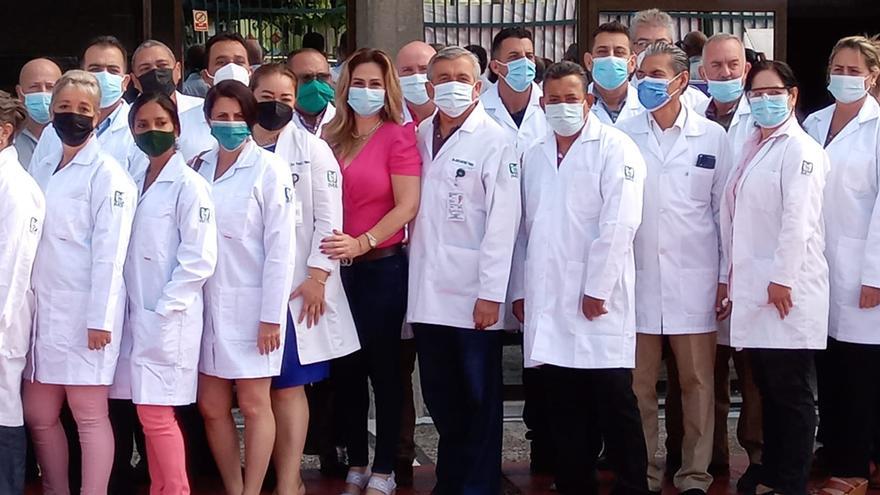
The delegation of Cuban doctors is housed in a hotel in downtown Tepic, in the Mexican state of Nayarit. (Twitter/@MarcosRguezC)

14ymedio bigger14ymedio, Ángel Salinas, Mexico, 29 June 2022 — Almost a week after the arrival of 54 Cuban doctors in the state of Nayarit, they are not yet allowed to see patients in the territory. A source from the local health sector confirmed to 14ymedio that they must undergo “study evaluations” before providing services in the hospitals in the seven marginal areas and the Tepic clinic to which they were assigned in Mexico.

On Thursday, the Secretary of Health of Nayarit, José Francisco Munguía, agreed to have the island’s doctors evaluated. “The [test] they do today defines if they are already ready,” he said, because, although “they are already demanding them from me” in the units, Cuban health workers must have a “leverage in the Directorate of Professionals,” a document that is also required of national doctors.

Article 5 of the Mexican Constitution establishes that, for the “exercise of one or more specialties, authorization from the General Directorate of Professions is required.” The retired minister of the nation’s Supreme Court of Justice, José Ramón Cossío, explained that to qualify for this permit, Cuban health workers “have to obtain the corresponding certificate.”

Sofía, a Mexican specialist who has had contact with the Cuban brigade, questioned the validity of the evaluation: “What they have received are lectures by some colleagues on specific topics and administrative training.”

One of these lectures was given by cardiologist Alejandra González, from the High Specialty Cardiological Unit. This specialist said that during the exchange of views on the treatment to be followed in patients with acute infarction, she was able to calibrate the level of the Cuban health workers. continue reading

“There I knew that there was nothing to discuss, that we are in two parallel worlds, different worlds in which the Mexican Government romantically wants to see the doctors of a third world country as a salvation,” Gónzalez said on her social networks.

The Mexican cardiologist specified: “Medical specialists asked me for the PowerPoint [slides] file to read again from there! I am perhaps more disappointed than annoyed, and maybe I am judging and generalizing, but if we examine them, I don’t think they’re ready.”

The lack of preparation of the doctors was also questioned by Gabriel Quadri, a deputy opposed to the Government of Andrés Manuel López Obrador, who also filed a complaint in March with the Office of the Attorney General of the Republic “for human trafficking, labor exploitation and forced labor,” when the hiring of 500 Cuban doctors by the Government of Mexico was confirmed.

A report revealed that the doctors on the island who arrived last year to support Mexico during the pandemic limited themselves to “making beds, taking vital signs, conducting surveys and passing sponges to patients to bathe.”

14ymedio verified that the 54 Cuban doctors who are currently in the country remain at the La Palomas hotel. “We have a crowd due to a doctors’ convention, but as of August 1, there is availability in the 75 rooms we have,” the receptionist said, by phone.

The hotel, which costs from $52 to $83 per night, has 67 standard rooms, six junior suites and two suites, all with cable TV, telephone, air conditioning and wireless network. Guests have free access to the pool and a jacuzzi.

The deputy of the opposition National Action Party, Mariana Gómez del Campo, expressed her disagreement with the hiring of 500 Cuban health workers by the Government of Mexico, “since the purpose of these missions is to enslave and exploit people.” According to her, in order for them to practice “they need a Mexican professional card” that they “don’t yet have.”

In Ixtlán del Río, one of the municipal capitals of Nayarit where health workers are expected to arrive, a residence has already been set up for two internists and two Cuban pediatricians. In the municipal presidency they are aware that the delay is due to an administrative obstacle.

In the hospital of the municipality of Rosamorada, however, they claim to be unaware of the causes for the delay. In this health center, which will be attended by eight Cuban doctors, 30 to 34 specialized consultations are offered, and up to three surgeries and three deliveries have been performed per day.

Translated by Regina Anavy

____________

COLLABORATE WITH OUR WORK: The 14ymedio team is committed to practicing serious journalism that reflects Cuba’s reality in all its depth. Thank you for joining us on this long journey. We invite you to continue supporting us by becoming a member of 14ymedio now. Together we can continue transforming journalism in Cuba.

Cuban Doctors Already in Nayarit, Mexico, Aren’t Yet Seeing Patients, With the Hiring of Another 60 Cuban Doctors Already Announced

The brigade of 54 Cuban doctors that arrived in Nayarit, Mexico, last week still can’t join the hospitals in marginalized areas. (Twitter/@MarcosRguezC)

14ymedio bigger14ymedio, Ángel Salinas, Mexico, 1 August 2022 — The Institute of Health and Welfare (INSABI), an agency of the Government of Mexico, plans to cover the lack of 66 national specialists for the state of Colima with the hiring of another 60 Cuban doctors. The doctors will be assigned to rural areas, where there is a shortage of medicines, and 21% of the population (about 153,592 inhabitants) don’t have access to health services.

According to data offered to 14ymedio by an INSABI worker, doctors on the island will receive 2,042 dollars per month with “contracts of six months and one year of stay,” although it’s not known if the Government of Cuba will be the manager of the agreement and the one who distributes the salary, as happens in other medical brigades.

In Colima, the next arrival of Cuban gynecobstetricians, internists, anesthesiologists, pediatricians and surgeons is expected, “whose hiring will take place along with the regularization of 870 temporary workers,” doctors and nurses who were already working in state clinics.

This announcement is made a week after the arrival in the Mexican state of Nayarit of 54 doctors from the island, whose incorporation into second-level hospitals remains unknown, as well as the results of the evaluations to which they have been subjected, which will serve as a “leverage in the Directorate of Professionals,” a document that is also required of national doctors, according to the Secretary of Health of Nayarit, José Francisco Munguía.  A source from the local health sector assures this newspaper that “some procedures have yet to be covered.”

“It was planned that, this Monday, at least part of the brigade was now going to join the hospitals in which they were assigned to start providing consultation,” says the local official. The federal health sector says it doesn’t know the reasons for the delay. continue reading

In the hospital, located in the town of Las Varas, in the municipality of Compostela, the health authorities also ignore the date of arrival of the Cuban doctors. “When do they arrive? No one knows,” says Rocío, a nurse from this town in the state of Nayarit who was contacted by 14ymedio. “All support is always welcome, but it bothers us that it is now that they pay attention to our hospital, which has so many needs, and all because of the arrival of Cuban doctors. Anyway, I hope they arrive soon.”

Nor have the residents of Puente de Camotlán (La Yesca), Jesús María (Del Nayar), San Francisco and Tondoroque (Bahía de Banderas) and the municipal capitals of Santiago Ixcuintla, Rosamorada and Ixtlán del Río received specific news about  the Cuban doctors.

This Sunday, Xavier Tello, a doctor and health policy analyst, explained that in order for the Cubans to be able to practice their profession in Mexico, they require “a Mexican professional card to accredit their studies, and, in the case of specialists, they must have a certification from the Council of their specialty.”

Tello noted in an interview with Radio Fórmula that “the only way they can take care of a person is under the direct supervision of a Mexican doctor with a professional card, but they cannot issue a prescription or offer a diagnostic opinion.”

For the analyst, “the reality is that the Government of Mexico wants to give money to Cuba, period.” This will be done, according to Tello, through two channels: “Training these doctors and sending some Mexican interns to study on the island.”

This newspaper tried to contact, without success, the Cuban health workers, hosted until further notice at the La Palomas hotel, in Tepic. “They can’t take calls,” said the receptionist, who pointed out that they leave the hotel early and spend almost nine hours at the headquarters of the state delegation of the Mexican Social Security Institute of Nayarit.

Translated by Regina Anavy

____________

COLLABORATE WITH OUR WORK: The 14ymedio team is committed to practicing serious journalism that reflects Cuba’s reality in all its depth. Thank you for joining us on this long journey. We invite you to continue supporting us by becoming a member of 14ymedio now. Together we can continue transforming journalism in Cuba.

The ‘Misunderstanding’ of the Cuban People

Havana must accept power outages in solidarity, the authorities ask. (EFE)

14ymedio bigger14ymedio, Reinaldo Escobar, Havana, 1 August 2022 — Fidel Castro had not yet assaulted the Moncada barracks in Santiago de Cuba when, in communist Germany, on June 17, 1953, the people took to the streets to protest against the system that, eight years later, that future assailant implanted in Cuba.

The Germans who rejected socialism were not expropriated capitalists or petty bourgeois, but construction workers. The poet and playwright Bertolt Brecht, after reading the pamphlets that the Writers’ Union distributed on Stalin Avenue indicating that the people had lost the confidence of the Government and that they could only win it again “with redoubled efforts,” asked himself, ironically, the following in the last verses of his poem, “The Solution.”

“Wouldn’t it be simpler

in that case for the Government

to dissolve the people

and choose another?”

Obviously, the solution to the disagreements of the governed with the measures of the rulers is not that those who rule seek new subjects, but that new policies are proclaimed and, better yet, that it’s others who dictate them.

People don’t have to be sympathetic to their rulers, whether they are democratically elected or hand-appointed by the only party allowed.

If the policies drawn up by those who hold government positions produce enemies in relations with other nations, if as a result of those bad relations it’s difficult to commercialize what the country can sell and acquire what it needs to buy, if the laws make it difficult  to prosper and suffocate entrepreneurs and if, to top it off, dissent becomes a crime, being understanding becomes an act of complicity. continue reading

They want to convince Cubans that people, Party and Government make up an indissoluble Holy Trinity, and that any fissure constitutes a contribution to the enemy. Therefore, understanding is not enough for those who rule: they demand applause and that the people pretend to be enthusiastic.

At the climax of that claim, to justify the inevitable power cuts in the capital in the midst of the blackouts that mainly overwhelm the cities of the interior, they have appealed to the “solidarity” of the people in Havana, who will have to accept, almost celebrate, the absence of electricity so that the people in the provinces suffer less.

The capital’s solidarity could have another less understanding face so that the inhabitants of the interior are not left alone when it comes to protesting. But then, those would be the people that the Government would like to dissolve.

Translated by Regina Anavy 

____________

COLLABORATE WITH OUR WORK: The 14ymedio team is committed to practicing serious journalism that reflects Cuba’s reality in all its depth. Thank you for joining us on this long journey. We invite you to continue supporting us by becoming a member of 14ymedio now. Together we can continue transforming journalism in Cuba.

As August is About to Begin, the Electricity Supply is Still Ailing in Cuba

Despite the blackouts, the official press doesn’t hesitate to affirm that the Cienfuegos thermoelectric plant is “one of the most stable in the country.” (Cubadebate)

14ymedio bigger14ymedio/EFE, Havana, 28 July 2022 — The Electric Union of Cuba announced on Thursday a deficit of up to 20% in the energy supply, after three days of relative stability during the official holidays on July 26.

The deficit this Thursday will be 17.9% in prime time, with an availability of 2,502 megawatts (MW) and a maximum demand of 2,950 MW, the state company reported in its usual statement.

On Wednesday, the deficient electricity supply began to affect users from 10:42 and was restored at 22:30. The company also reported that eight units out of a total of five thermoelectric power plants in the country are out of service due to breakdowns or maintenance.

On July 22 in a speech to Parliament, Miguel Díaz-Canel acknowledged the discomfort among the population over the cuts, which have been intensifying in recent months. He added that those who blame the Government for its handling of the prolonged blackouts “are responding to what the counterrevolution wants.”

The Government affirms that the cuts in supply have been caused by breakages in the plants, the shortage of fuel for generation and scheduled maintenance. Despite the state rhetoric, which affirms that everything possible is being done to avoid blackouts, and the deals with foreign companies to repair thermoelectric plants, the crisis of the Cuban energy system doesn’t seem to have an immediate solution. continue reading

A report published today in Cubadebate collects the testimony of workers of the Cienfuegos thermoelectric plant. Affected by rust and marine microorganisms, the machinery repeats the pattern of other plants in the country: lack of spare parts and lack of adequate maintenance.

In a thermoelectric plant “we work many early morning hours, many Saturdays, Sundays, many carnivals; maintenance is twenty-four hours,” says a 72-year-old technician.

“The units aren’t given the maintenance they need, so each operation becomes more complicated,” another operator admits to the official press. “There’s a lot of instability in parameters; we are working with parameters that aren’t in accordance with the plant system. You have to keep your eyes wide open. One mistake from us and the plant is gone.”

“I left work one morning and arrived home without electricity. I can’t sleep. I’m also suffering,” adds another.

However, Cubadebate has no qualms about stating that the Cienfuegos thermoelectric plant is “one of the most stable in the country.”

At the beginning of July, the Felton thermoelectric plant, in the Holguin municipality of Mayarí, suffered considerable damage due to a large fire. This accident meant an even greater deterioration of the national electricity system, unable to implement the necessary actions to achieve energy stability in the short term.

The blackouts were, along with other serious economic and political problems, the cause of the massive protests of July 11, 2021. They have also been the triggers for recent demonstrations  against the Government, such as those that took place in Los Palacios (Pinar del Río), or smaller ones in other municipalities of the country.

Translated by Regina Anavy

____________

COLLABORATE WITH OUR WORK: The 14ymedio team is committed to practicing serious journalism that reflects Cuba’s reality in all its depth. Thank you for joining us on this long journey. We invite you to continue supporting us by becoming a member of 14ymedio now. Together we can continue transforming journalism in Cuba.