
The Official Foreign Exchange Market: Failure is Already Coming

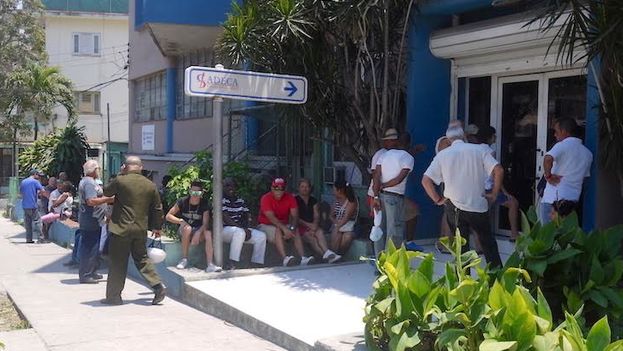
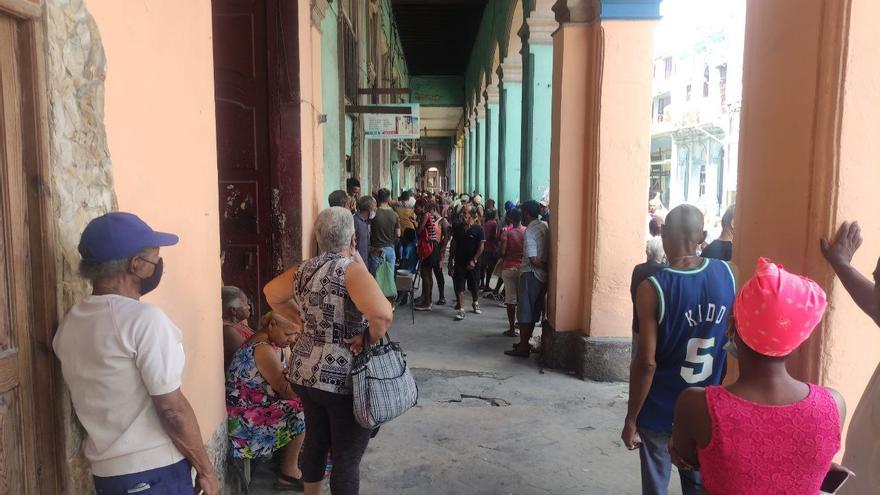
A line outside a currency exchange (Cadeca). (14ymedio)

14ymedio bigger14ymedio, Elías Amor Bravo, Economist, 27 August 2022 — There is no doubt that the issue of the moment, at least for those of us who are dedicated to the analysis of the Cuban economy, is the official authorization of foreign exchange in a series of establishments and for a fixed amount only for natural persons, while the 1×24 (US dollar to Cuban peso) exchange rate remains for other transactions.

In this blog we have already explained the reasons that lead us to think that behind this authorization there is something hidden, and the negative consequences that can be derived from it, but as the regime moves forward, we can only verify what we see happening.

An article has been published in the State newspaper Granma with the title “Why was the exchange rate of the informal market taken as a reference?” Its source is the website of the Central Bank of Cuba in a common entry with the Ministry of Economy.

What does the article say? Well, basically, to restore the operations of the official foreign exchange market in Cuba, which, it should be remembered, were interrupted by the regime shortly after beginning the Ordering Task* with the impracticable exchange rate of 1×24, there has been no choice but to “take into account the pre-existing conditions of the foreign exchange market in the country.”

And of course, that foreign exchange market is the informal one, which has been operating just since the regime decided not to make changes. Hence, the decision to implement an exchange rate for buying and selling similar to the one that exists in the informal market is justified. Can anyone think of the Cuban communist regime accepting the price of chicken in MLC (freely convertible currency) stores as the same as that in the regulated (rationed) basket? Difficult. continue reading

For those interested in communist dialectics applied to the foreign exchange market, the article will go down in history. Prisoners of the totalitarian ideology that prevents the contemplation of an economy as a continuously growing interdependent market, Cuban communists invent a sui generis definition of the exchange rate, according to which, it “emerges through a market process in which the supply and demand of foreign exchange are equalized, in which agents (households, companies and governments) have free and timely access to hard currencies, in exchange for national currency and vice versa.” Error.

The exchange rate, such as the price or level of production of the economy, arises from the interaction of domestic markets (goods, labor, assets, etc.) with external markets. The economy cannot set the relative price of its currency only with the currencies that go in and out, but with the destination they have in the national economy. Cuban communists are unable to observe this interrelationship, worried as they are about filling the coffers of the state for their own purposes.

And that’s where the second big mistake comes from when they say that “the state can influence in the establishment of a type of balanced exchange over the sources of supply and demand for foreign currency, through exchange, fiscal, monetary and other policies, but its ability to set an exchange rate is limited by the prevailing conditions in the economy.”

The state can say whatever it wants, but if the economy is in balance, which unfortunately doesn’t happen to the Cuban economy, it’s of little or no use for the state to intervene in the foreign exchange market. The only thing it can achieve is to alter the behavior of supply and demand, which is what it has ended up doing. Markets are looking for balance. Governments, with their economic policies, can influence it but not change it.

Therefore, getting the exchange rate right is not playing roulette, but knowing the equilibrium conditions of the economy and getting it to work. This is not the place to give lessons in practical macroeconomics to Cuban communists, but before acting as foreign exchange players they should start by reducing uncontrolled public spending, reducing the expansion of money in circulation, stimulating national supply through structural reforms, monitoring the value of the peso in terms of fundamentals of the economy; in short, doing things that help and don’t distract economic agents.

In reality, the same regime helps Cubans feel especially motivated to acquire a greater amount of foreign currency, by artificially maintaining a 1×24 exchange rate for the economic operations of the state and its companies and conglomerates, as well as another cheaper exchange rate for the general public. That duality doesn’t go anywhere and usually ends badly, very badly.

And if they want to tell the truth, the one thing that led to the birth of the informal foreign exchange market in Cuba was none other than the state, by renouncing its functions. If it now intends to “illegalize it,” this will be a big mistake, since it will reduce supply and increase prices, removing them from any equilibrium option.

At this point, it could be said that the regime’s decision to choose the exchange rate of the informal market for the restoration of official exchange rate operations in Cuba, should perhaps have led to the testing of other formulas such as a possible authorization of money changer as a form of self-employment that would bring to light the activity of the “informals.”

The informal exchange rate, although it reflects the serious imbalances that exist in the rest of the economic markets, is the one most suitable to deal with the supply and demand of foreign exchange for Cubans. The impossibility of the regime to promote its extension to all economic agents (the state and its companies) indicates that it’s not a general rate, but a partial solution, painted with a ridiculously large brush, that won’t result in anything good. Because the informal market is something very different from the cadecas [official currency exchange points], banks and airport offices. Everyone understands that.

On the other hand, charging as the regime does against the informal exchange rate, accusing it of being “impacted by speculative processes and the costs associated with informality” is unfair. It’s an argument that falls under its own weight, from the moment the regime makes it in this relaunch of the official foreign exchange market.

If the agents who attend the informal market feel motivated to exchange foreign currency (divisas) for national currency and vice versa, at the rate that governs operations, it will be for something, but not at all for those speculative processes or costs. This is unacceptable because it anticipates where the sanctions can come from.

Using the informal exchange rate to ensure that, since the relaunch of the foreign exchange market, the operations of buying and selling foreign currency take place as smoothly as possible through the financial system, is a clear interference of the state and the regime in the private activity of a market that has functioned efficiently and continuously since the changes were suspended at the beginning of 2021.

Good proof of this has been that from the beginning, that exchange rate substantially similar to the one that exists in the informal market has collapsed, and there are already places where the peso is quoted at 1×140 and continues to fall freely. The limitation in the number of authorized establishments, the rationing of dollars at 100 per person per day and the organizational clumsiness of the banks have led to long lines outside these  establishments, and the discomfort, protests and anger of citizens. These types of events rarely occur in the informal market, which is preparing to compete directly with the regime.

For those of us who defend the free market economy, attending these first steps in the foreign exchange market in which the regime is powerless to manage its role vis-à-vis private economic agents who operate efficiently and oriented by the needs of its customers, is a formidable spectacle.

Contemplating how the communist giant created by Fidel Castro is defeated by the Goliath of the informal exchange market is great news, which confirms how clueless the Central Bank or Alejandro Gil’s Ministry of the Economy are to face competition with the informal market under the current conditions in which the campaigns of repression and harassment that are supposed to arrive soon have not yet been unleashed. If this scenario were extended to the rest of the markets of the economy, totalitarian communism would have ended decades ago.

Communists are reluctant to maintain an artificially low exchange rate in the market of the population and non-state economic actors, because, as they say in the article, “this would imply constantly injecting foreign currency from other sectors of the economy, which in the medium term would make that exchange rate unsustainable and force the adoption of a new devaluation, which will allow the official rate to be approximated to market equilibrium to continue making foreign exchange operations viable.”

Well, then what do you think is going to happen in a few months with the decision they just made? There will be no choice but to depreciate the peso. Why don’t they wonder how, with the new exchange rate for the sale of dollars, the salary in pesos of an average Cuban has suddenly fallen by more than 400%? It’s true that whoever receives remittances won’t have complications because they will get more pesos, but what about internal inflation? Also, what happens to then 70% of society that operates only in pesos? Too many questions for the regime.

The official exchange market has been born in such unfortunate conditions, that far from fulfilling its purpose, it will pass without pain or glory, being inoperative in a short time. The economy can predict human behaviors with some ease when it comes to “free choice,” something that Cuban communists haven’t understood for 63 years. Failure is coming

Translated by Regina Anavy

____________

COLLABORATE WITH OUR WORKThe 14ymedio team is committed to practicing serious journalism that reflects Cuba’s reality in all its depth. Thank you for joining us on this long journey. We invite you to continue supporting us by becoming a member of 14ymedio now. Together we can continue transforming journalism in Cuba.
Cuba, Breaking the Truce

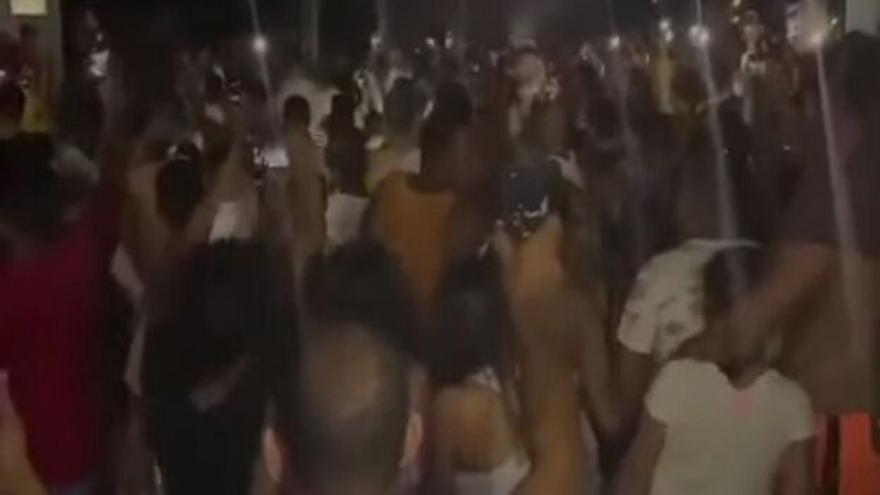
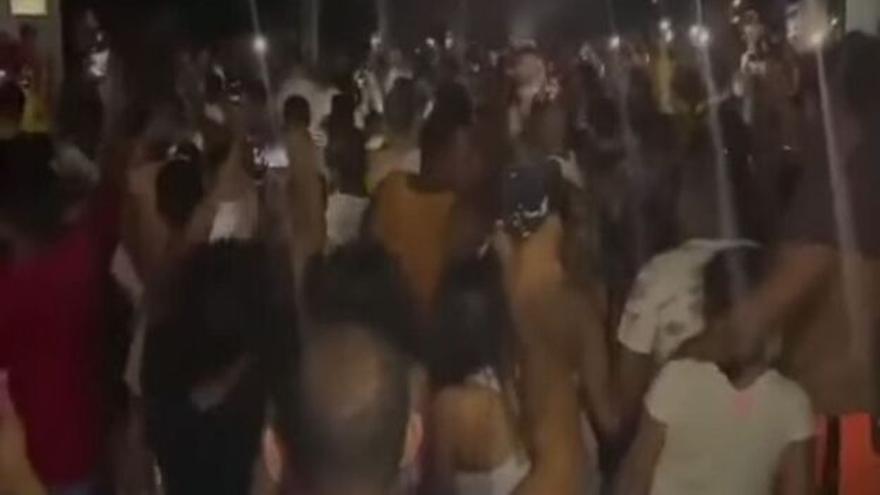
Massive night demonstration in the early hours this Friday in Nuevitas, Camagüey. (Captura/Facebook)

14ymedio bigger14ymedio, Pedro Corzo, Miami, 28 August 2022 — El 23 se rompe el corojo [on the 23rd the truce is broken (and we start riding again)], is a Mambisa expression that meant the end of the truce between the insurgents and the Spanish, who refused to leave the “always faithful island of Cuba,” a phrase that, over time, became synonymous with the fact that there is no possible conciliation when the victims of the abuses assume that they have no other alternative but to defeat their perpetrators.

General Antonio Maceo, Bronze Titan, the most distinguished Cuban general, 26 wounds in combat, refused to sign a peace agreement after ten years of struggle, 1868-1878, with the Spanish general Arsenio Martínez Campos, both agreeing to resume hostilities eight days later, motivating among the guerrillas the enthusiastic exclamation: “on the 23rd the truce is broken!” alluding to the end of the truce that many considered ominous.

Castroism breathed into broad sectors of the citizenry the certainty that the regime was immovable, that any action against it would fail and its actors would suffer the consequences. Still more, Fidel Castro had the audacity to proclaim that socialism in Cuba was irreversible, as Adolf Hitler proclaimed his thousand-year Reich.

However, we write with pride that in these six long decades, the resistance has not ceased, as shown by the numerous political prisoners who rot in prisons without international organizations being able to visit them as demanded by, among others, the Cuban Observatory of Human Rights.

On the property called Cuba, which the Castro brothers appropriated, it seems that so many opponents have emerged that the political police can’t control them. Many are losing the fear that gripped them day after day, and others show that the population is willing to break the vile armor of an atrocious dictatorship that has humiliated and vexed them for years. continue reading

It’s evident that Cubans want to break the truce since they don’t stop demanding better living conditions along with the end of the dictatorship, as has been seen in the city of Nuevitas, where the city dwellers have constantly shouted at the dictatorship that they were tired of living as slaves, some alluding in their demands to the Mambi machete redeemer and apparently echoing the expression of General Antonio, “Freedom is conquered on the edge of the machete, it is not asked for; begging for rights is typical of cowards unable to exercise them.”

The protests in most of the national territory are a constant, a symptom that the population is losing its fear and freeing itself from the burden of blind obedience to a leadership that has only reaped failures and that has devastated the country as if it had suffered a war.

Apparently, the growing misery and the permanent harvest of frustrations have led the people to realize that the promises of the regime are invalid and that they need to act at any cost to be able to access a better life.

After the protests of July 11, 2021, there has been a notable discontent aggravated by the power cuts. Power is miraculously restored when the population protests firmly, as has happened in the neighborhood of Pastelillo, in Nuevitas. This can be understood  that for the Castro government, those who are obedient suffer the most.

Everything seems to indicate that repression is no longer enough to continue controlling a population dissatisfied in all aspects. Fear and hope, the two most leafy trees of Castroism, are apparently drying up rapidly.

Citizens are noticing, more than ever before, the high levels of corruption and ineptitude of officials to solve the numerous and constant problems generated by the regime itself, which aren’t caused by the vaunted embargo or American aggression.

In addition, the most faithful supporters of Castroism, no matter how servile they may be, understand that the protests are legitimate, that they are not imported and that they don’t respond to proposals from abroad. It is the neighbor, the repressor himself, who suffers from the systematic and permanent stupidity of a failed dictatorship in all aspects, except in their effort to destroy the Cuban nation as they did with the Republic.

Translated by Regina Anavy

____________

COLLABORATE WITH OUR WORKThe 14ymedio team is committed to practicing serious journalism that reflects Cuba’s reality in all its depth. Thank you for joining us on this long journey. We invite you to continue supporting us by becoming a member of 14ymedio now. Together we can continue transforming journalism in Cuba.
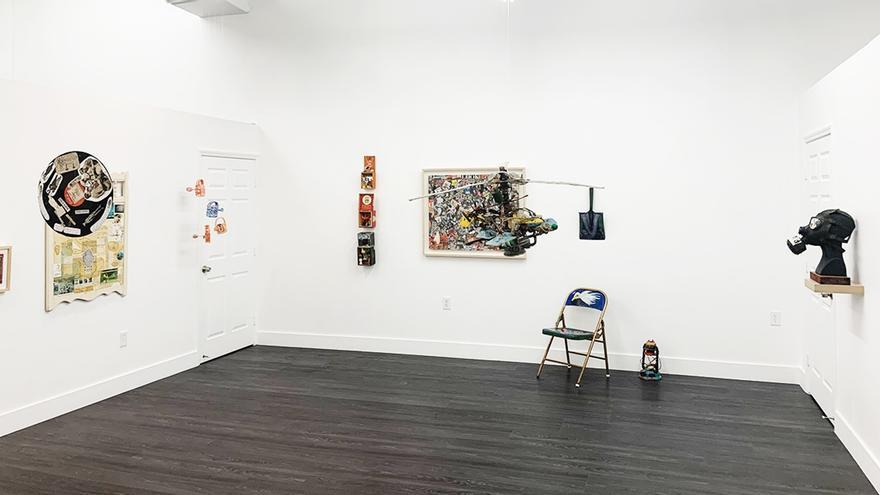
‘Outsider’ Cuban Plastic Artists Exhibit Their ‘Hidden Art’ in Miami

Among the artists who participate are Damián Valdés Dilla and Rigoberto Casorla, along with other renowned creators such as Yaniel Agrafojo, Isaac Crespo and Gloria de la Caridad Castillo. (naemi.org)

14ymedio biggerEFE (via 14ymedio), Miami, 27 August 2022 — The National Art Exhibitions of the Mentally Ill (Naemi) Foundation, focused on so-called “outsider art,” inaugurates a new exhibition this Saturday in Miami with works by renowned “marginal” artists, such as the Cubans Jorge Alberto Cadi El Buzo and Misleidys Castillo.

The exhibition Ousider Art: Revealing Masters of Hidden Art, will open this Saturday at The ArtSpace gallery, on downtown 8th Street in Miami, and features works made with different techniques from Naemi’s collection.

In addition to the aforementioned Cuban artists, the exhibit includes Damián Valdés Dilla and Rigoberto Casorla (Rigo), along with other renowned creators such as Yaniel Agrafojo, Isaac Crespo and Gloria de la Caridad Castillo, according to a statement from the foundation.

“What attracts me the most in the art of people in recovery from mental illness and in ’outsider’ art is their authenticity and originality. Their art escapes the norms and conformism of most contemporary art,” Juan Martín, the executive director in charge of the Naemi exhibition, told EFE on Friday.

The new exhibition, which follows another one inaugurated earlier this year, also in Miami, coincides with the presence of works by three artists sponsored by Naemi in the renowned contemporary art exhibition, Documenta.

One of the most important exhibitions in the world in terms of contemporary art, along with the Venice Biennale, Documenta is held in Kassel, Germany every five years and will be open to the public in its fifteenth edition until September 25. continue reading

Martín, who has 1,200 “outsider” works of art in Naemi’s permanent collection and is looking for a partner to make exchanges, said that for him it’s “an honor” that these artists now exhibit at Documenta.

They are the Cuban artist, Damián Valdés, Boris Santamaría and Carlos El Profe.

Valdés is one of the artists of Art Ousider: Revealing Masters of Hidden Art, from Miami, Martín said proudly.

The promoter said that these artists rarely name their works.

“This exhibition in Documenta proves it: the art of the ’outsiders’ is the last bastion of the creative rebellion against the power of the system. It’s a great honor that Naemi artists are in this exhibition,” he said.

He also explained that the Cuban “outsider art” works exhibited at Documenta in Germany do not belong to Naemi’s collections, but have arrived there thanks to the renowned plastic artist, Tania Bruguera, who organized the exhibition.

Bruguera directs the Hannah Arendt International Institute of Artivism (Instar), based in Havana, which has been invited to the current edition of Documenta.

According to the Naemi Foundation, “’marginal art’ refers to incredibly unique works produced by artists who have not been formally trained in art, work outside the dominant artistic sphere and have unconventional visions of the world.”

The so-called “art brut” [“raw art” or “outsider art”] sometimes has its origin in collections of European psychiatric hospitals of the 19th century, where doctors clinically analyzed the work, it adds.

Artist Damián Valdés “at the moment is in a psychiatric hospital in Havana,” while Boris Santamaría is “a homeless person in Cuba,” Martín explained.

Last February, Naemi also inaugurated the exhibition The Language Game in Miami, with 40 works by artists with mental illnesses focused on text as a plastic expression, something present in so-called “outsider art” since 1919.

Translated by Regina Anavy

____________

COLLABORATE WITH OUR WORKThe 14ymedio team is committed to practicing serious journalism that reflects Cuba’s reality in all its depth. Thank you for joining us on this long journey. We invite you to continue supporting us by becoming a member of 14ymedio now. Together we can continue transforming journalism in Cuba.
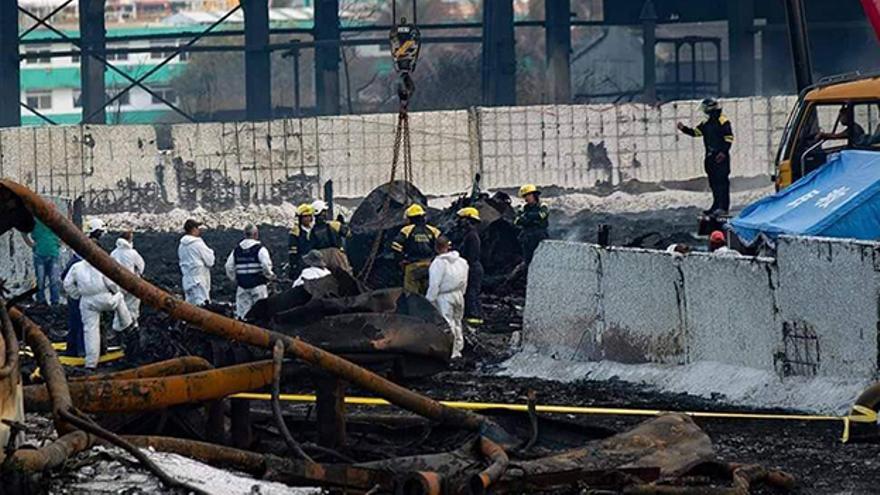
Cuba Contacts the United States to Rehabilitate the Area of the Matanzas Fire

Specialists from the Ministry of Public Health were searching for human remains in the area of the fire. (José Ángel Portal Miranda)

14ymedio biggerEFE (via 14ymedio), Havana, 27 August 2022 — Cuba maintained a dialogue with experts from the U.S. Environmental Protection Agency  (EPA), to learn about rehabilitation techniques for the area affected by the industrial fire at the Matanzas Supertanker Base, the Foreign Ministry reported on Friday.

Cuban experts asked EPA members for “their assessment of the actions already taken” in the area during a virtual meeting last Wednesday.

Representatives of the Cuban Ministry of Science, Technology and the Environment — among other institutions — presented “the main tasks undertaken since the fire was declared extinguished” on August 12, according to the Ministry of Foreign Affairs.

In addition, the Island’s specialists requested “the possibility of accessing the most innovative techniques and procedures accumulated both by the EPA, as well as by companies linked to the oil sector and other agencies involved in these types of accidents,” the source added.

In a statement released on Friday, the Cuban Foreign Ministry highlighted the “professional and profitable exchange” atmosphere of the meeting where they also talked about “possible ways of cooperation” in the rehabilitation of the area consumed by the fire. continue reading

On August 5, a fire of enormous proportions broke out at the Matanzas fuel tank base, when lightning struck 1 of the 8 tanks of the industrial park, according to the Cuban authorities.

Four of the eight tanks of the storage base — the largest facility of its kind on the Island to receive and store crude oil — burned completely, causing explosions and flares of several hundreds of feet.

The column of smoke was seen in neighboring provinces such as Mayabeque and Havana, the latter located 60 miles away.

During the first stages of the fire, Cuba confirmed and thanked the offer of “technical advice” from the United States, although nothing materialized from it.

In the accident, 16 people — mostly firefighters — lost their lives, while another 146 were injured and 15 of them remain hospitalized.

Translated by Regina Anavy

____________

COLLABORATE WITH OUR WORKThe 14ymedio team is committed to practicing serious journalism that reflects Cuba’s reality in all its depth. Thank you for joining us on this long journey. We invite you to continue supporting us by becoming a member of 14ymedio now. Together we can continue transforming journalism in Cuba.
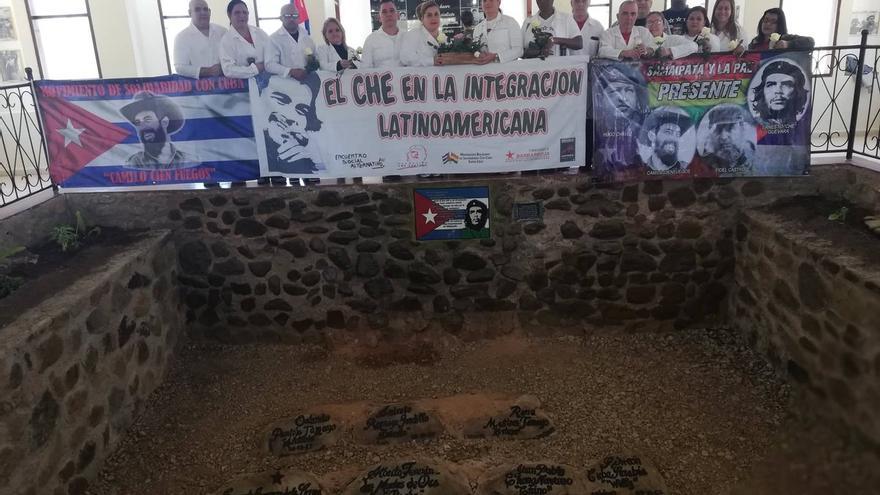
The United Nations is Asked to Ban the Financing of Cuba’s Medical Missions

Cuban doctors in 2019, paying tribute to ’Che’ Guevara in La Higuera, Bolivia. (Twitter/@CubacooperaBo)

14ymedio bigger14ymedio, Madrid, 24 August 2022 — On Tuesday, the Human Rights Foundation (HRF) published a new report denouncing Cuban medical missions as “Human Trafficking.” The document affirms that this “broadly praised” program is based “on the exploitation of health professionals and serves as an important tool of international propaganda and an important source of income for the repressive communist regime.”

In its analysis, HRF details the history of Cuba’s medical missions, which date back to the 1960s and have been sent to more than 150 countries, and it details the main mechanisms used by the regime to exploit its health workers while selling it to the world as “medical diplomacy” and “humanitarian aid.”

The document also focuses on how these missions have financed the Government with “billions of dollars”; the export of medical services is the country’s first source of income, ahead of remittances and tourism.

The New York-based NGO thus concludes what has already been widely denounced by other international organizations, such as Human Rights Watch and Prisoners Defenders: that the Cuban Government “has imposed coercive and reprisal practices on health professionals to prevent desertion, applied in a way that violates international law that protects victims of human trafficking.” continue reading

“The combination of international support and financial exploitation has freed the Cuban Government from the widespread condemnation of the international community and the adoption of structural reforms to end human trafficking,” argues HRF, which presents four requests to end this practice.

The main one is that the host countries stop hiring these medical missions unless the Cuban Government makes three changes: eliminating the ban on returning to Cuba for eight years for deserting health workers; paying the workers their salaries in full (versus retaining a large percentage); and allowing health professionals to establish employment contracts with the host country without intermediaries.

The Foundation also suggests to the international community that Cuba be eliminated from the Pan American Health Organization (PAHO) and that a “transparent and independent” investigation be initiated into the responsibility of PAHO in the trafficking of Cuban doctors in Brazil (through the Mais Medicos program).

“Global democracies should implement sanctions against the communist regime for trafficking in Cuban doctors,” says the HRF, which finally calls on the UN, through its human rights agencies, organizations and programs, to prohibit “the financing of Cuban medical missions” and issue a “public sanction” of the regime for violating the binding treaties on human trafficking.

It is precisely because of the medical missions that the United States keeps Cuba on the list of countries that don’t comply with international standards regarding human trafficking.

Despite the condemnations and all the information collected by international organizations, however, there are countries oblivious to these allegations. For example, the regional government of Calabria, in Italy, signed an agreement with Cuba, just last week, to import 497 Cuban doctors at a cost of 28 million euros a year.

Translated by Regina Anavy

____________

COLLABORATE WITH OUR WORKThe 14ymedio team is committed to practicing serious journalism that reflects Cuba’s reality in all its depth. Thank you for joining us on this long journey. We invite you to continue supporting us by becoming a member of 14ymedio now. Together we can continue transforming journalism in Cuba.
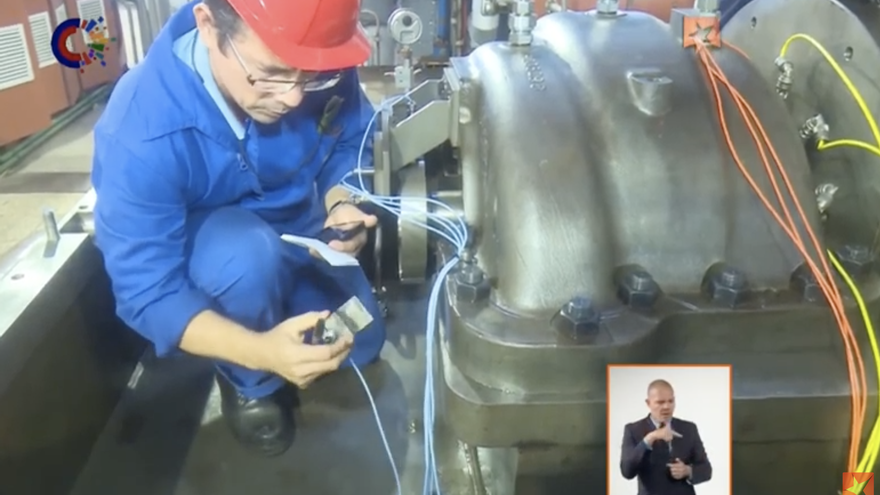
‘There Is No Money’ to Repair Thermoelectric Plants in Cuba, But There is Money to Invest in Luxury Hotels

Maintenance and repair work of the Felton thermoelectric power plant, in Mayarí, shown on national television. (Captura)

14ymedio bigger 14ymedio, Madrid, 25 August 2022 — The panorama of Cuba’s national electricity system offered by the officials who appeared on State TV’s Roundtable program on Wednesday is catastrophic and, from what they said, will continue to be so for many more months. The Minister of Energy and Mines himself, Liván Arronte Cruz, declared that maintaining it “is expensive” – installing a megawatt (MW) of new power, he explained, costs between one million and 1.6 million dollars – and “it’s not possible to ensure everything.”

After the minister spoke, Edier Guzmán Pacheco, director of Thermal Generation of the Electric Union of Cuba (UNE), explained which blocks or units are out of service and how much it will cost to recover them. Adding up the figures provided by the staff member, the amount would be between $245 million and $265 million.

Specifically, Guzmán Pacheco explained that the Island has “20 thermal blocks” of which only 16 are available. “We have lost four generating blocks, many of them due to large breakdowns,” he said.

These lost units are blocks 6 and 7 of the Máximo Gómez Thermoelectric Power Plant (CTE), in Mariel; block 2 of the Lidio Ramón Pérez CTE, in Felton, in the Holguin municipality of Mayarí, and block 4 of the Diez de Octubre plant, in Nuevitas (Camagüey), precisely where there have been the latest protests.

At the Mariel plant, unit 7 burned down on March 7, and the fire affected unit 6, which was only six months old. To reassemble turbine 7, Guzmán Pacheco acknowledged, “we don’t have the financing,” between 90 and 100 million dollars, he said. continue reading

Another fire, on July 8, was also what ruined Unit 2 in Felton, for which the Government has a budget of $55 million. “We don’t have that funding at the moment,” the official repeated.

Felton is also in full maintenance, the authorities reported on the program, and the estimated time for its full recovery will be, they said, “not less than one year.”

As for block 4 of Nuevitas, it will be the first to be ready, “in 40 days,” Guzmán Pacheco said, despite the fact that, at the same time, the “100 or 110 million euros” that the repair costs is “also an amount that we don’t have… We are seeking financing options, looking for credit options that allow us to make this block work,” he said.

If the 20 blocks were working, explained the director of the UNE, they would provide a total of 2,608 MW to the electricity system. With the four breakdowns, they give 2,042 MW. However, these are not constant either, “due to breakdowns and maintenance.”

As of yesterday, for example, block 2 of the Ernesto Guevara CTE, in Santa Cruz del Norte (Mayabeque), was damaged, and blocks 3 of Antonio Maceo, known as Renté, in Santiago de Cuba, and 1 of Felton, were “under maintenance.”

It’s not surprising, if you take into account this other figure provided on the Roundtable program: the average age of Cuba’s electric plants exceeds 35 years.

As usual, officials again blamed the situation on the U.S. embargo. “Due to the financing limitations and the economic siege of the blockade, we cannot count on the continuous participation of technical assistance that allows us to assimilate this technology,” Guzmán Pacheco said.

However, the lack of money for the repair of thermoelectric plants, some of which, they acknowledged, haven’t been maintained for a decade, contrasts with the financing of five-star hotels, whose construction doesn’t stop.

According to estimates by architects, the cost per room in a five-star hotel is 200,000 euros. In other words, an establishment like the 250-room Royalton Habana would have had a construction cost of 50 million, and a hotel with 100 rooms, 20 million.

Regarding the controversial K Tower of El Vedado — also called “López-Calleja tower” because it’s the work of the Gaesa military conglomerate, commanded until his recent death by Raúl Castro’s former son-in-law — some specialists have ventured its cost at a minimum of 200 million dollars; that is, almost the equivalent of the total investment needed to repair and update all the thermoelectric plants.

Translated by Regina Anavy

____________

COLLABORATE WITH OUR WORKThe 14ymedio team is committed to practicing serious journalism that reflects Cuba’s reality in all its depth. Thank you for joining us on this long journey. We invite you to continue supporting us by becoming a member of 14ymedio now. Together we can continue transforming journalism in Cuba.
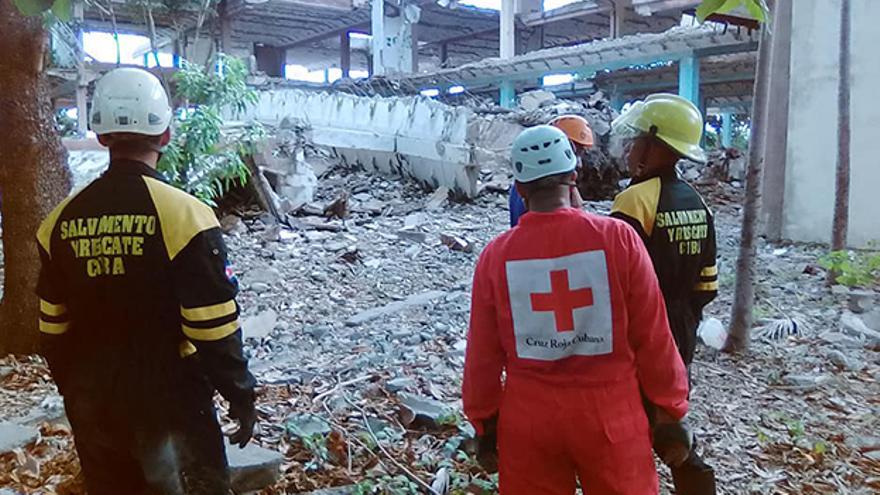
A Man ‘Under the Concrete Slabs’ of Santiago de Cuba High School is Still Trapped

The collapse occurred in the old building of the Antonio Maceo Grajales high school in Santiago de Cuba. (Aris Batalla)

14ymedio bigger14ymedio, Havana, 25 August 2022 — One person was injured during the collapse that occurred this Wednesday in the old building of the Antonio Maceo Grajales Vocational Pre-University Institute of Exact Sciences (IPVCE), in Santiago de Cuba

The rescue team also tried to locate another individual, allegedly trapped between several cement slabs after the collapse of the structure. This was reported on Facebook by Aris Arias Batalla, provincial head of Operations and Relief of the Red Cross branch in Santiago de Cuba.

“A whole multidisciplinary team worked tirelessly to remove the body that is under the concrete slabs,” wrote Arias Batalla. He added that the injured person was transferred to the Juan Bruno Zayas Clinical Surgical Hospital and, as of last night, he was “out of danger.”

The Cuban Red Cross, the Civil Defense and workers of the Mariel project and the Ministry of Construction are operating at the scene of the accident. In addition, they support the labor of workers at the cement factory, paramedics of the Integrated Medical Emergency System, brigade members and experts in rescue techniques.

During the early hours of Thursday, work was being done to clean up the debris, and they had to break up the concrete slabs with electric hammers, according to Arias Batal, a rescue worker. At 8:00 in the morning, the rescuers began the search in a second sector after not finding any bodies in the first. continue reading

Since the event became known, the people of Santiago have demanded from the authorities the immediate demolition of the facilities of the former IPVCE, which was being used as a source to extract steel from. These actions have already caused accidents, such as the one that occurred on July 6 when another collapse left two people in the rubble.

The injured were illegally removing the steel from the fourth floor of the structure, which collapsed on Wednesday.

“How long will people be so irresponsible and risk death trying to remove steel from the floors and columns?” asked Carlos Caballero Reyes on Facebook, after the latest collapse.

“Since the previous injuries, not even two months ago, those ruins should have disappeared. People aren’t aware,” Idamis Geilis said in the comments.

The boarding schools, especially in the vocational centers, prepared students to pursue university studies in science and technology and were one of the “crown jewels” of the Cuban education system during the years of the Soviet subsidy.

In 2006, a study on seismic vulnerability was carried out, and it was determined that the school represented an imminent risk, due to the occurrence of earthquakes in Santiago de Cuba.

However, over the years, the refusal of families to send their children to these centers, the material deterioration and the shortage of food caused the initiative to capsize. In 2009, Raúl Castro closed the boarding schools in the countryside, which accelerated the ruin of the vocational high schools.

Translated by Regina Anavy

____________

COLLABORATE WITH OUR WORKThe 14ymedio team is committed to practicing serious journalism that reflects Cuba’s reality in all its depth. Thank you for joining us on this long journey. We invite you to continue supporting us by becoming a member of 14ymedio now. Together we can continue transforming journalism in Cuba.
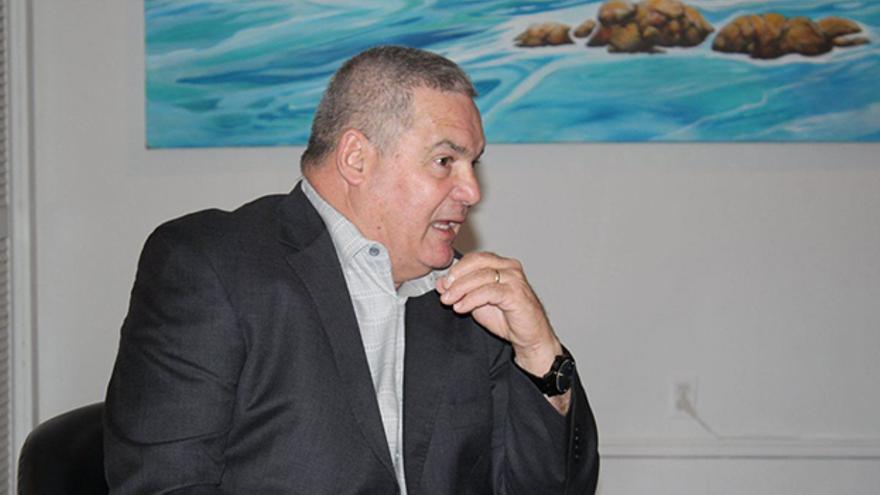
Cuban Writers in Exile Celebrate Their 25th Anniversary with PEN International

Luis Paz, president of the PEN Club. (Facebook)

14ymedio biggerEFE (via 14ymedio), Jorge I. Pérez, Miami, 25 August 2022 — The PEN Club of Cuban Writers in Exile, a subsidiary of PEN International, celebrates its 25th anniversary this Saturday with a new book about its history and the “stigma” of being a “political organization” financed by the United States, something that according to its president, the poet Luis de la Paz, “is a fallacy.”

“Our organization responds to the statutes of PEN International of writers, but these 25 years we have had to fight against an aggressive campaign by the Cuban Government that calls us ’second-rate’ writers, a political organization and one funded by the CIA and the American Government,” De la Paz tells EFE in an interview.

According to PEN International, one of the first NGOs in the world founded in 1921 by the British woman, Catherine Amy Dawson Scott, “PEN centers are the voices of literature and freedom of expression in their respective countries.”

The organization, based in London and currently chaired by Kurdish novelist, Burhan Sönmez, is present in more than 100 countries.

“We were the first world organization and group of writers to emphasize that freedom of expression and literature are inseparable,” declares the organization.

Its name was conceived as an acronym for Poets, Essayists, Novelists (PEN), which was later expanded to poets, playwrights, editors, essayists and novelists.

The history of the Cuban PEN writers dates back to 1945, when the journalist Jorge Mañach, author of one of the most controversial biographies about José Martí, “Martí the Apostle,” founded the subsidiary. continue reading

Then “long years” were interrupted, says De la Paz, when the Government of Fidel Castro arrived, and cultural institutions such as the state Casa de las Américas and the Union of Writers and Artists of Cuba were created, which “displaced” it.

The Cuban PEN, according to De la Paz, ceased to function after the Government took measures based on “Words to the Intellectuals,” in a speech given by Castro shortly after coming to power, at the National Library in 1961, in which he said: “Within the revolution everything, outside the revolution, nothing.”

“Censorship began, and many took the path of exile,” explains its president.

“It was at the 64th Congress of PEN International, held in 1997 in Edinburgh, Scotland, when, by unanimous vote, the creation of the PEN Club of Cuban Writers in Exile, based in Miami, the capital of Cuban exile, was approved,” recalls De la Paz, also a journalist based in Florida.

The poet and former political prisoner, Ángel Cuadra (1931-2021), along with other writers in exile, was the one who reactivated the Cuban PEN center, in 1997. During his captivity, Cuadra had been an Honorary Member of the Swedish PEN.

For the Cuban writer Rolando Morelli, “the Pen Club in exile must be considered, properly speaking, as a continuation of the one founded by Mañach.”

“We went into exile to preserve and conserve an ideal Cuba outside the island; that is, a symbol and embodiment of the best of our traditions,” Morelli adds from Philadelphia (Pennsylvania), where he directs the publishing house La gota de agua [The Drop of Water], which, he said, is preparing a report on the Cuban writer exiled in Spain, Gastón Baquero (1914-1997).

“Naturally, I’m honored and satisfied to be part of an institution that is a global and local reference for commitment to freedom and the defense of writers,” said Morelli, a member of the Cuban PEN in exile.

De la Paz, for his part, is proud to present this Saturday, in Miami, a book that collects all this history: “Homeland and Culture, 25 Years of PEN”, by the poet, Sara Martínez.

Next September, De la Paz and Morelli will travel to Uppsala, Sweden, to participate in the 88th PEN International Congress, which will take place from October 27 to October 1.

There they will present a resolution where “the arbitrary imprisonment of writers and plastic artists and the increasing persecution of intellectuals are denounced.”

“In exile we don’t have major problems with freedom of expression, but we do reject the lack of it on the island. Artists such as Tania Bruguera and Yunior García Aguilera are being forced into exile. The Cuban government used to try to prevent you from leaving; now it invites you to leave and doesn’t let you return. This is what is happening now,” said De la Paz.

Translated by Regina Anavy

____________

COLLABORATE WITH OUR WORKThe 14ymedio team is committed to practicing serious journalism that reflects Cuba’s reality in all its depth. Thank you for joining us on this long journey. We invite you to continue supporting us by becoming a member of 14ymedio now. Together we can continue transforming journalism in Cuba.
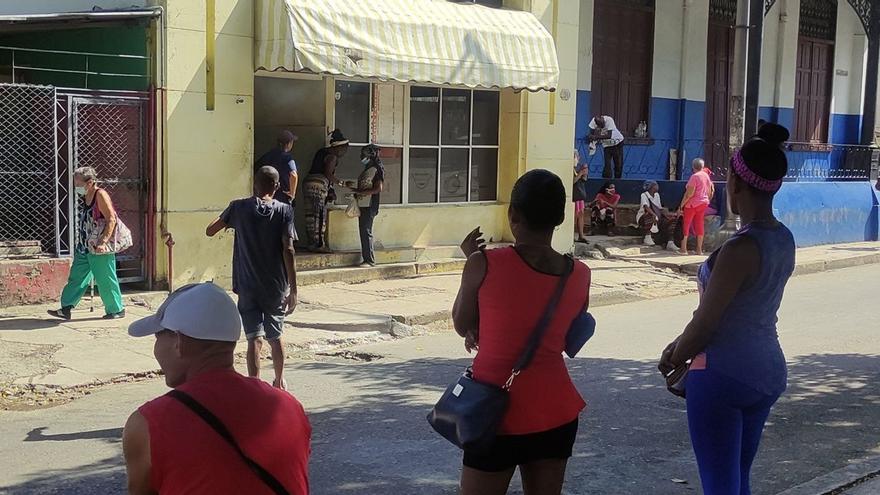
After Milk and Beef, Bread Disappears from the Cuban Table

Bakery on Carlos III Avenue in Havana. (14ymedio)

14ymedio bigger14ymedio, Juan Diego Rodríguez and Juan Izquierdo, Havana, 24 August 2022 — From the balcony, Yudineya watched dozens of bread and cookie sellers pass by every day in her neighborhood of Los Sitios in Havana, but for weeks they have practically disappeared. The shortage of wheat flour has hit private bakeries hard and has also put state bakeries in check.

For decades, “bread with something” has been the fundamental comfort food in Cuban homes. From the elaborate bite of ham and cheese to the poorest bread with oil and salt, the snacks of students and workers depend to a great extent on that baked product that has been disappearing in recent weeks.

“I don’t know what we’re going to do when our child starts school,” says Yudineya, 38, whose son will start the second grade of elementary school in September. “What my son always takes for a snack is bread with whatever appears, but now not even that is available,” she explains to 14ymedio.

In Nuevo Vedado, a colorful private bakery that until recently offered bags of the so-called “ball bread” in addition to hard-crust French bread, baguettes and rolls, now offers only roasted peanuts and egg-white merengue. “We’re not offering bread because we don’t have any flour,” the employee explains. “Sales have fallen a lot, and if we continue like this we’ll have to close.”

Line to buy bread on August 24 at the Pueblo Nuevo Council, Central Havana. (14ymedio)

But it’s not only bakeries that are feeling the blow of the shortage of wheat flour. Businesses that base their gastronomic offerings on pizzas and sandwiches are also suffering. “We were selling bags with 10 pizza crusts for 300 pesos, and now we’ve had to raise the price to 500,” says the delivery man of La Paloma, a private business in Diez de Octubre. continue reading

In front of the bakery on Carlos III, one of the few that still sells “released” [unrationed] bread, the elderly, physically disabled, kids, mothers and all kinds of people begin to show up. Neither age nor the numerous ailments exempt the Cuban, who must defend his place in line as if he were in a besieged fortress.

An employee announces that they will soon sell a few breadsticks. What in Creole gastronomy used to be long and crunchy, in socialism assumes the dictionary definition: “small stick, crude and poorly made.”

Invoking strength that they don’t have, battered Cubans, hoping to get a breadstick, stampede to take their place in line. One woman complains, “All we can get is a little piece of breadstick per person.”

Once the “sticks” have been bought and packaged, the crowd recovers its place in the shade. They must keep waiting: in an hour, they think, the bakery will take out a small amount of garlic bread.

“It will get worse,” predicts a bakery employee. “As of September 1, only the popular council can buy bread here. We’ve been told that there must be an establishment in every place that takes care of the people in that area.”

The shortage of flour occupies the gossips, as do the newspaper articles, the panic of daily hunger and the comments about the imminent school year. It scares mothers and overwhelms retirees, accustomed to a Spartan ration of bread and water with sugar.

An audio circulated on social networks, attributed to a Commerce manager, whispers to anyone who wants to listen that there will be no more flour. “Neither for hospitals nor for the army,” says the anonymous voice. Some sacks of flour will be available for standard bread and some for prisons, whose tranquility cannot be risked.

A prison riot, in a country where a protest can break out every night, has become one of the favorite topics to discuss during the blackouts and domino games.

At the bakery on Reina Street they handed out shifts before selling bread this Wednesday. (14ymedio)

“Today for breakfast I had only a hard roll that I brought from Havana several days ago,” Kenny Fernández Delgado, one of the Havana priests who bothers State Security the most, wrote on his social networks.

Fernández lambasted “communism,” which “took away my beef before I was born, and my milk at the age of 7” and now even “the ‘released’ bread has become a prisoner… Take everything away from me and that’s it,” the priest concluded, “as they did to Jesus Christ on Good Friday, because that way I will know that Easter Sunday is closer.”

The Government, as usual, used the State newspaper Granma to “rewrite” the alarming reality on the Island. “There are no problems with the production and distribution of bread from the Regulated Family Basket and the Cuban Bread Chain,” the media said, citing a note from the Ministry of Internal Trade.

He admitted, however, the “difficulties in the import of wheat,” attributed to the embargo, Cuba’s “financial constraints” and the “international logistics crisis.” The report concluded by “calming down” the vulnerable sectors of the population, apparently saved from scarcity.

Meanwhile, the official reporter Lázaro Manuel Alonso was trying to reconcile the fiction with reality: “Señores, stop the interpretations now,” he demanded on Facebook, supporting Granma’s version.

However, he admitted in the same publication, “Yes, there have been difficulties with the processing of bread due to the lack of electricity, which has nothing to do with the supply of raw materials for production.” Regardless of the contradictions within his own message, he tried to settle as “false” the rumor of scarcity that “some users have shared on social networks.”

The “white dust crisis,” as some Cubans have begun to call it, keeps private producers in suspense. Pastry shops have substantially reduced their supply, while the price for any empanada, jam or cake, no matter how squalid, is increasing.

Not only flour, but also eggs, sugar, oil and other ingredients of the family pantry will be removed from the symbolic Cuban’s table. The meats, the fruits and now, finally, the bread basket are also gone.

Translated by Regina Anavy

____________

COLLABORATE WITH OUR WORKThe 14ymedio team is committed to practicing serious journalism that reflects Cuba’s reality in all its depth. Thank you for joining us on this long journey. We invite you to continue supporting us by becoming a member of 14ymedio now. Together we can continue transforming journalism in Cuba.
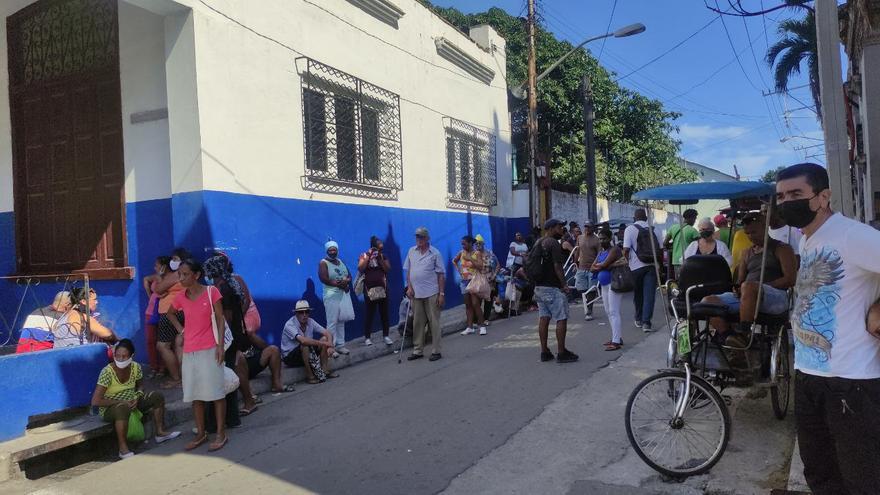
Cuba: Protests and the Declaration of the Civil Society

Last Thursday night, the population of Nuevitas took to the streets in protest against the blackouts lasting more than 10 hours. (Screen capture)

14ymedio bigger14ymedio, Ariel Hidalgo, Miami, August 24, 2022 — To those who asked when the Cuban population would return to take to the streets, when another July 11 would be repeated, it must be said: the people have already taken to the streets in many cities every day. Every day is July 11. And this is just the beginning, because, curiously, it’s the authorities themselves who give the signal for the protests to begin.

That “signal” is called a blackout. And apparently they are going to happen more and more frequently. They thought they had found the formula to prevent any mass protest in a city from spreading throughout the country: cutting off the internet, but they themselves are inadvertently putting into practice another formula to summon them: cutting off the electricity.

The difference with July 11, 2021  is that it was then face-to-face and held at the same time in many places at once, like a disadvantageous frontal war against a powerful enemy. Now, it is more like a guerrilla war, where even darkness is the best ally.

However, last week, the people of Nuevitas not only protested in the streets, but also faced the dictatorship’s attack, and there were injuries on both sides. All the demonstrations have been peaceful, but the population cannot be asked to turn the other cheek in the face of a brutal repression that makes no distinction for age or gender.

So where is all this going to go? Because cutting off the Internet no longer works for the regime, when today no city or town waits for a San Antonio de los Baños to initiate a protest. There will come a time when every town and city is protesting in the streets, and the whole country will shudder with another social explosion, this time more forceful, and then no one will be able to stop it.

The only thing that would be missing today is the common position of that civil society in rebellion, something to which Manuel Cuesta Morúa, vice president of the Committee for the Democratic Transition, was referring when he made a proposal a month after those glorious protests last year: “I think that what should happen now is to translate the social explosion into a political proposal.” And he added: “This has to be led, coordinated and activated by civil society.” continue reading

Prominent philosophers such as Spinoza and Kant agreed to define civil society as “a collective body constituted by the individuals of a society, which is positioned outside the limits of the State.” Civil society, being composed of all those who participate in that community, has a moral force superior to the State, so the State must submit to it, and not civil society to the State, especially when the party leadership that controls it was not elected by the citizens. Jean Jacques Rousseau went much further when he said: “The voice of the people is the voice of God.”

When it comes to civil society, a declaration that reflects its common position cannot be ideologized, because it would contain all the diversity of a political tuning fork, but it must address the concrete problems that are affecting us all. And this is precisely what was reflected, in just two pages, by a group of Cubans in their Manifesto of Cuban Civil Society. In a few days they collected more than 80 signatures from inside and also outside Cuba, “since the Cuban nation extends beyond the Cuban archipelago to any part of the world where there is a Cuban identified with the collective aspirations of his compatriots.”

The manifesto, which aims to collect thousands of signatures, doesn’t ask anyone for anything, but demands respect for all our legitimate rights and the release of all those imprisoned for practicing or defending them. Each signatory must give the details of his name, profession or activity he carries out, the organization to which he belongs if any, city and country where he resides, and send them to concordiaencuba@outlook.com, to proclaim to the world and to the oppressors, that the Cuban people are already on the move and that nothing and no one will be able to stop them from reaching their destination: a homeland of freedom and life.

Translated by Regina Anavy

____________

COLLABORATE WITH OUR WORKThe 14ymedio team is committed to practicing serious journalism that reflects Cuba’s reality in all its depth. Thank you for joining us on this long journey. We invite you to continue supporting us by becoming a member of 14ymedio now. Together we can continue transforming journalism in Cuba.
Rolando Cubela, the Cuban Commander who Conspired to Kill Fidel Castro, Dies in Miami

Faure Chomón, Fidel Castro and Rolando Cubela after the triumph of the 1959 Revolution. (El rastro del invasor)

14ymedio bigger14ymedio, Havana, 24 August 2022 — Commander, former political prisoner and doctor Rolando Cubela died at the age of 90 on Tuesday morning in the Miami hospital where he had been admitted for several weeks, according to family sources. A member of the Rebel Army, the guerrilla leader was part of a conspiracy to kill Fidel Castro in the 1960s.

Born in 1932 in the city of Cienfuegos, Cubela studied medicine and was a leader of the University Student Federation (FEU). After Fulgencio Batista’s military coup, on March 10, 1952, he joined the Revolutionary Directorate, a group founded by José Antonio Echeverría and Fructuoso Rodríguez.

Cubela was part of the clandestine cell that murdered Colonel Antonio Blanco Rico, head of the Military Intelligence Service, in Havana on October 27, 1956. After that action, he went into exile in Miami, where he was when his colleagues from the Directorate raided the Presidential Palace, on March 13, 1957, and failed to kill Batista.

Upon his return to Cuba, he established himself with other members of the Revolutionary Directorate in the guerrilla struggle in the Escambray mountains, where in 1958 he signed the Pact of El Pedrero with Ernesto Guevara and Camilo Cienfuegos, an alliance with the July 26 Movement that allowed the capture of the city of Santa Clara, in which Cubela was injured.

After Fidel Castro came to power, he was promoted to the rank of commander of the Armed Forces, and in 1959 he was elected president of the FEU over the other candidate, Pedro Luis Boitel, who in 1972 died on a hunger strike in prison. From the first years, Cubela began to have profound differences with the communist course of the revolutionary process. continue reading

In November 1963, a CIA agent met Cubela in Paris, who then held the position of military attaché of the Cuban embassy in Madrid. There he was given a feather, with poison in the quill, to puncture Castro when he was near him. But Cubela never used the device, since he preferred to use a rifle with a telescopic sight and silencer so as not to be so close to the target.

The delivery of the rifle was delayed, and the Cuban intelligence services ended up encircling Cubela, who was arrested in February 1966 and sentenced to death, although, due to Castro’s direct intervention, his sentence was commuted to 25 years, of which he served 12. In 1979, he went into exile in Madrid, where he worked as a doctor, and in 1988 he obtained Spanish nationality.

His profile in Madrid was very discreet due to the danger of being killed by Castro. In 2007, he participated in two public events organized by the Democracia Ya Platform, one of them in front of the Cuban Embassy in Madrid. Unlike other exiled commanders, such as Huber Matos and Eloy Gutiérrez Menoyo, Cubela did not found an anti-Castro organization during his time off the island.

After retiring from his job as a doctor, he settled in Miami, where he also maintained a low profile. The man who could have killed Fidel Castro survived him by at least six years.

Translated by Regina Anavy

____________

COLLABORATE WITH OUR WORKThe 14ymedio team is committed to practicing serious journalism that reflects Cuba’s reality in all its depth. Thank you for joining us on this long journey. We invite you to continue supporting us by becoming a member of 14ymedio now. Together we can continue transforming journalism in Cuba.
Cuba Receives Humanitarian Aid from Nicaragua and Bolivia Due to the Matanzas Fire

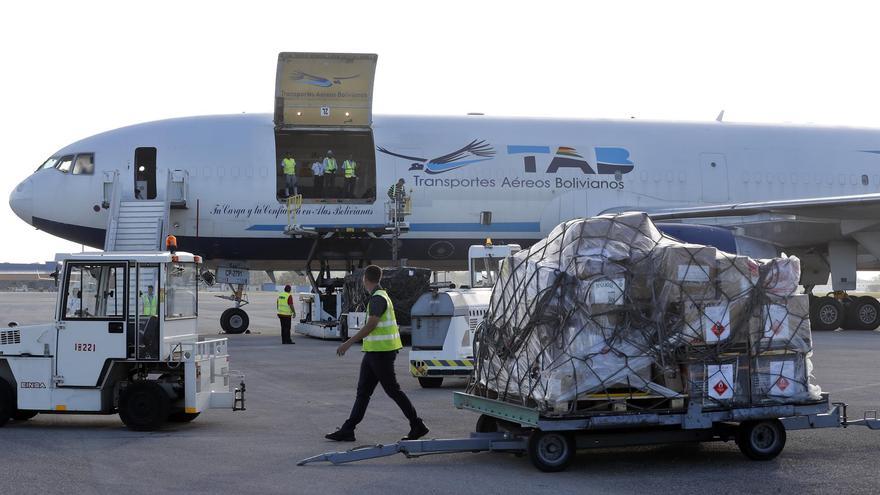
A cargo plane from Bolivia arrives at José Martí International Airport with 62.3 tons of aid due to the fire, this Monday in Havana. (EFE/Ernesto Mastrascusa)

14ymedio biggerEFE (via 14ymedio), Havana, August 23, 2022 — Cuba received shipments of humanitarian aid from Bolivia and Nicaragua on Monday due to the fire in the Matanzas Supertanker Base, the largest in the history of the country.

The donations consist of food, medicine and medical supplies, according to the Cuban Government.

The aid coming from Bolivia — more than 62 tons — arrived at the Havana international airport José Martí, and the Nicaraguan aid arrived at the port of Mariel on the ship Augusto César Sandino, which had left Arlen Siu a few days ago.

During the reception at the airfield, the deputy minister of the Ministry of Foreign Trade and Foreign Investment, Deborah Rivas, thanked Bolivia on behalf of the Island government and added that the country will also support La Paz “whenever they need us.”

Likewise, in the port of Mariel, Betsy Díaz, Minister of Internal Trade, said that the donation reaffirms the “unyielding will to strengthen historical ties” between Havana and Managua, especially “at such a difficult time.”

Other countries, such as Argentina and Spain, have already announced they are sending humanitarian aid to the Island after the accident, which left 16 dead, 146 injured and 17 hospitalized. continue reading

On August 5, a huge fire broke out at the Matanzas fuel tank base, the most important in the country, when lightning struck one of the eight tanks in the industrial park, according to the Cuban authorities.

The fire — which affected four tanks with a capacity of 13,208,602 liquid gallons — caused strong explosions, with flares of hundreds of feet, and a column of toxic black smoke that reached Havana, 60 miles away.

The island decreed two days of official mourning that ended last Friday with a posthumous tribute to 14 of the 16 victims, who until last week were still considered missing, and whose bone fragments were found at the scene of the accident.

According to Cuban experts, the degree of calcination of the remains made it impossible to extract their DNA, but he said that it corresponds to those of the missing, some of whom were young people doing their military service.

The Government revealed last week the names of the 14 people but not their ages, amid criticism of dissent and NGOs that claimed that several of them were young people in military service.

Translated by Regina Anavy

____________

COLLABORATE WITH OUR WORKThe 14ymedio team is committed to practicing serious journalism that reflects Cuba’s reality in all its depth. Thank you for joining us on this long journey. We invite you to continue supporting us by becoming a member of 14ymedio now. Together we can continue transforming journalism in Cuba.

Cuban Boxer Billy Rodriguez Escapes after Winning Against Luna in Mexico

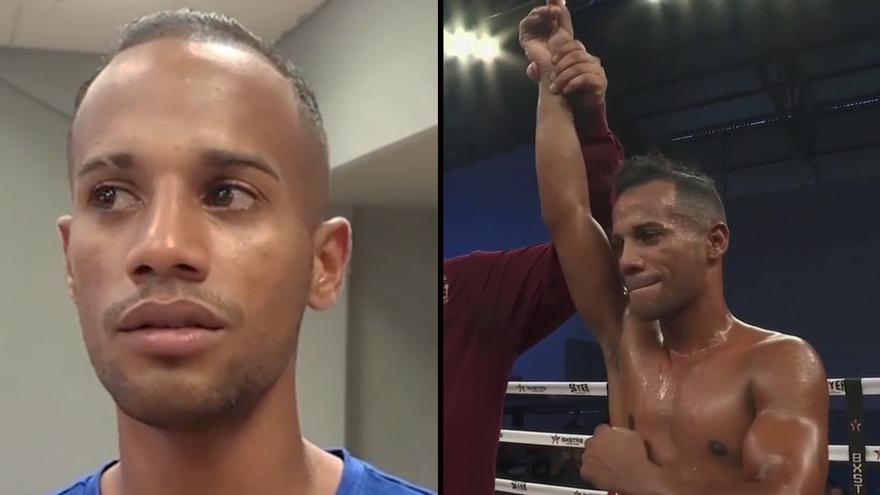
Boxer Billy Rodríguez left the Domadores de Cuba team after his professional debut in which he beat Miguel Ángel Luna. (Collage)

14ymedio bigger14ymedio, Havana, 22 August 2022 — Cuban boxer Billy Rodríguez traveled to Mexico with one goal: “to come out victorious and then enjoy myself,” he stated in an interview with the official site Jit. He showed his qualities last Friday in his professional debut against Miguel Ángel Luna, whom he beat by a technical knockout, and with his escape he gave another hook to the liver of the boxing team Domadores de Cuba.

El Niño Rodríguez, as he is known within the Cuban Boxing School, became, like every athlete who escapes, a traitor, who “turned his back on contractual obligations” and “whose attitude must be condemned.”

According to journalist Francys Romero, with Rodríguez’s abandonment there are now 31 athletes who have escaped this year from Cuban teams during international competitions, including those who have decided to end a contract with Cuba’s National Institute of Sports, Physical Education and Recreation (Inder).

“These 31 include baseball players Alfredo Fadraga and Yosvany Ávalos, who were captured and deported back to Cuba last June,” the journalist said on his social networks. “It’s the reality right now of sport and Cuban society. The situation will only get worse. In 2023, there will be Central American and Pan American Games in the same year.

Billy Rodríguez’s escape is a serious setback for the Cuban regime that highlighted the young man from Havana as a revelation and Cuba’s hope in the 108-pound division. He was due to debut on June 5 in Buenos Aires, but host Sergio Daniel Rosales said he didn’t comply with the weight requirement. continue reading

Last Friday, Rodríguez showed himself against Luna as a fast boxer, with variety in his punches and a solid right, which took down his opponent. He exhibited in the ring the teachings of his mentor, Diógenes Luna, 2001 world champion in Belfast.

Rodríguez has defined himself as a boxer who likes to exploit his right, who likes to strike, dodge and counterattack. He is also a follower of Olympic and world champion Julio César La Cruz, but his idol is Lázaro Álvarez.

El Niño is gone from Cuba. The future may bring opportunities in boxing but also professionally, as this young man has completed his studies as a physical education teacher, said Cubadebate.

Translated by Regina Anavy

____________

COLLABORATE WITH OUR WORKThe 14ymedio team is committed to practicing serious journalism that reflects Cuba’s reality in all its depth. Thank you for joining us on this long journey. We invite you to continue supporting us by becoming a member of 14ymedio now. Together we can continue transforming journalism in Cuba.
Angola Resumes its Air Relations with Cuba

The flights between Luanda and Havana will start this November 8. (TAAG Airlines)

14ymedio bigger14ymedio, Havana, 23 August 2022 — Angola’s state airline, TAAG Airlines, will cross the Atlantic Ocean again from Luanda to Havana beginning November 8, according to an official announcement by the company.

“After the positive evaluation of business for the intercontinental routes (America and Europe), TAAG is in a position to resume connections with Cuba/Havana,” the Angolan Day published a few days ago.

The flights will be made on board a Boeing 777-300 on a biweekly basis, starting in November, and it’s expected that weekly trips can be made from December. Later, in February 2023, the biweekly frequency will be resumed, says the Angolan newspaper.

There is already a flight schedule that includes November 8 and 22, and December 6, 13, 20 and 27. On the other hand, in January 2023, travelers will be able to book on February 3, 10, 17 and 24, and also on February 14 and 28. continue reading

Departure from Luanda will be at 10:00 p.m. and a landing in Havana is scheduled for 6:00 a.m. the next day, local time. Departures from the Island will be at 11:30 a.m., with an arrival in Luanda at 7:00 p.m. the next day. On its social networks, the airline has begun to promote its relaunch to the island and invites bookings on the first dates.

TAAG Airlines paused its flights due to travel restrictions during the COVID-19 pandemic and was only allowed some humanitarian or cargo trips. This airline had operated without interruption between the two countries from 1984 to 2020.

In June of this year, the CEO of TAAG, Eduardo Fairen, announced that the company is preparing to be privatized before 2025, as has happened with the rest of the companies involved in the aviation sector, prior to the open skies agreement.* Several months before these statements, in February, the company acknowledged that its debts to international suppliers are around $250 million.

Cuba and Angola established diplomatic relations on November 11, 1975 and have maintained close ties since then. Between that year and 2002, more than 300,000 Cuban soldiers participated in the civil war that broke out in Angola after its independence from Portugal, a colonial power for four centuries.

Earlier this year, the Minister of State of Angola, Adao de Almeida, visited the island and together with Cuban Deputy Prime Minister Ricardo Cabrisas reaffirmed the desire to promote “economic cooperation” between the two countries. “Today, Havana and Luanda are focusing on promoting the links between the Mariel Special Development Zone and the Special Economic Zone of the Nation of West Africa,” says a statement from the Cuban Foreign Ministry, dated February 28 of this year.

With the election in 2017 of a new president, João Lourenço, a review of the cooperation with Cuba began, which the former head of state, José Eduardo dos Santos, handled with a suspicious generosity.

In December 2020, Luanda annulled a million-dollar contract with Havana for “failure” of its obligations in the construction of a road. The company Imbondex Construcciones y Materiales de Construcción S.A. belonged to the Cuban military conglomerate Gaesa (Grupo de Administración Empresarial S.A.).

In 2015, Cuba had more than 4,000 aid workers deployed in Angola, including 1,800 doctors and 1,400 teachers.

A few days ago, more than 260 young Angolans returned to their country after graduating in healthcare specialties in Cuba, including Medicine, Stomatology, Optometry and Optics, Rehabilitation, Hygiene and Epidemiology, Nutrition, Health Information System, Veterinary Medicine, in addition to others such as Agronomy and Civil and Industrial Engineering. According to the Cuban Foreign Ministry, the island has trained about 45,000 Angolan students.

*Translator’s note: An agreement in which aircraft can fly between two countries without any restrictions.    

Translated by Regina Anavy

____________

COLLABORATE WITH OUR WORKThe 14ymedio team is committed to practicing serious journalism that reflects Cuba’s reality in all its depth. Thank you for joining us on this long journey. We invite you to continue supporting us by becoming a member of 14ymedio now. Together we can continue transforming journalism in Cuba.
The Official Sale of Dollars in Cuba Begins and Each One Will Cost 123 Pesos

The purchase can be made at 36 exchange offices and a branch of the Banco Popular de Ahorro in Isla de la Juventud. (14ymedio)

14ymedio bigger14ymedio/EFE, Havana, 22 August 2022 — The Cuban government announced on Monday that it will start selling dollars to the population on August 23 at a rate of 123.60 Cuban pesos (CUP) per dollar. The 37 premises authorized to carry out this operation will report daily the number of people who can buy that day, “depending on the availability of foreign currency,” said the Minister President of the Central Bank of Cuba (BCC), Marta Sabina Wilson González, on the Roundtable television program, hosted by Randy Alonso.

Initially, a person will be able to buy only $100 or its equivalent in other currencies, although Wilson González did not specify how often this can be done. The sale will begin in 36 exchange houses (cadecas) and a branch of the Banco Popular de Ahorro in Isla de la Juventud.

The official said that both the exchange rate, for now 120 CUP for a dollar, and the margins, will be adjusted if necessary. In addition, the purchase limit of $100 per person “can be extended” later.

“If the dollar is the most difficult currency we have for export, then the idea is for people to demand that currency, and we want that purchase to be fundamentally from the dollars we have in stock in the cadecas,” said the minister president of the Central Bank.

The Cuban authorities said that the euro is the currency that has entered the official foreign exchange market the most since they implemented the new exchange rate at the beginning of the month, followed by the dollar, the pound sterling and the Mexican peso. continue reading

The Minister of Economy, Alejandro Gil, for his part, acknowledged that “there is a demand for cash dollars” on the Island, whether to emigrate, to go shopping abroad or for other reasons. However, he clarified that right now the only way out for these dollars is to sell them on the foreign exchange market.

Cubans buy dollars to emigrate, make domestic transactions and leverage their little savings in the face of the collapse of the power of the CUP to buy goods and services. Inflation and lack of productivity have pushed the national currency into abysses never before seen.

“We’re not going to fall behind the exchange rate of the informal market,” Gil said for those who expect the official rate to compete against illegal networks. “The first step is for the State to regain control of the value of the currency,” the minister clarified. “This is not a market economy,” he stressed.

“Little by little, the State will advance in controlling the foreign exchange market,” Gil reaffirmed. But “if you have a partially dollarized market,” there will always be a demand for foreign currency. “We will reach a time of lower demand for foreign currency when we have more products available in Cuban pesos.”

The minister, who repeated the word “challenge” several times to describe the foreign exchange market, warned of the need to relaunch Cuban industry in order to sustain the pulse of the currency and reiterated his criticism of the “voluntarist” vision of the economy. “The strength of the economy is what will allow us to stabilize the exchange rate,” he explained. “You have to come down to earth and understand the sense of urgency,” he confessed.

“This is not for the new rich,” Gil defended himself. “This is not a measure for those who receive foreign currency,” he said in a speech, trying to reinforce the idea that there is an official script that includes, in the medium and short term, an improvement in daily life. “It’s not improvisation; nothing we do is improvised,” he said in the midst of a climate of increased social criticism.

Reactions to the new announcement flooded the social networks. Cuban economist Mauricio De Miranda Parrondo said ironically on Twitter: “I think the next decision of the Government will be to sell foreign currency through the ration book in Cuba. Randy says that they will assign turns in the line. I imagine they will end up making phone appointments.”

Translated by Regina Anavy

____________

COLLABORATE WITH OUR WORKThe 14ymedio team is committed to practicing serious journalism that reflects Cuba’s reality in all its depth. Thank you for joining us on this long journey. We invite you to continue supporting us by becoming a member of 14ymedio now. Together we can continue transforming journalism in Cuba.