Raul Castro Denies the Existence of ‘Generational Contradictions Within the Cuban Revolution’

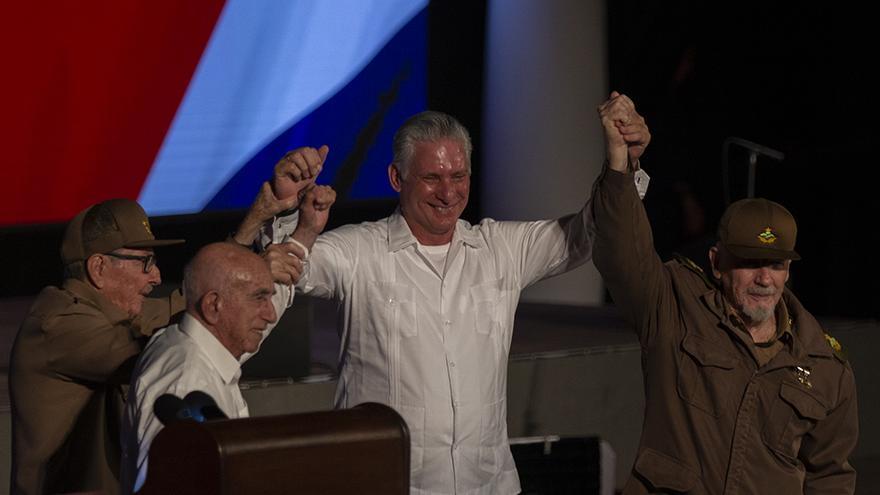
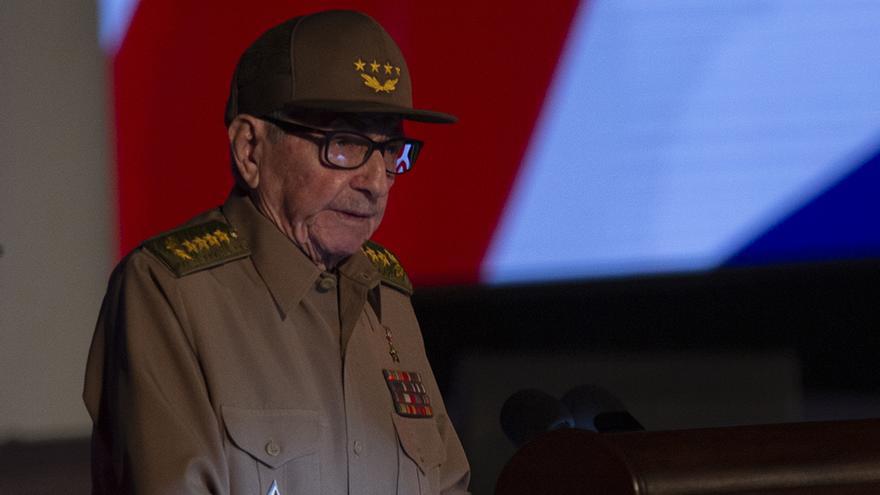
Raúl Castro, 92, wanted to support his successor this Monday, the 65th anniversary of the Revolution. (Cubadebate)

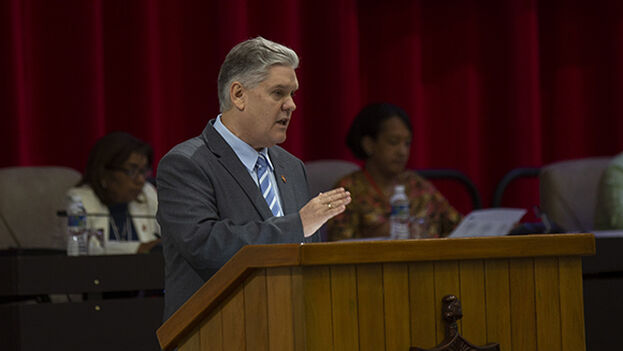
14ymedio bigger14ymedio/EFE, Havana, 2 January 2024 — Former President Raúl Castro reappeared this Monday to lead the celebrations of the 65th anniversary of the Revolution in Santiago de Cuba, in one of his most important public speeches in months. He called for unity within the Communist Party (PCC) and confidence in the new generation of leaders who have succeeded the historical leaders.

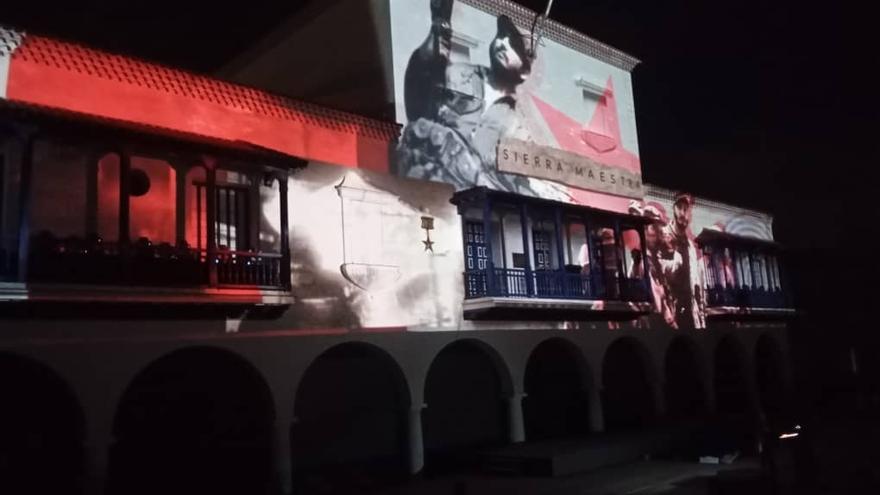
The former leader, 92-years-old, closed the annual ceremony commemorating the triumph of the guerrillas who came to power on the Island led by the late Fidel Castro (1926-2016), who was also presented, through technology, at the event. “No thieves, no traitors, no interventionists. This time it is the Revolution,” the deceased Commander was heard saying through a hologram.

His younger brother and successor in office made a speech in which he reiterated the need to close ranks within the ruling party as the “main strategic weapon” of the Revolution and the PCC. “It has allowed this small island to succeed in facing challenges. Let’s treat unity as something to be cherished,” he advised.

Fidel Castro fue omnipresente a través de las pantallas este lunes en el acto de Santiago de Cuba. (Cubadebate)
Fidel Castro was omniprsent through screens this Monday, in an event in Santiago de Cuba (Cubadebate)

Against that unity, “all the subversive plans of the enemy will fail once again,” he added.

“Today I can affirm with satisfaction that the Cuban Revolution, after 65 years of existence, far from weakening has strengthened, as I said a decade ago, on a day like today and in this very place, [and has done so] without continue reading

commitment to anyone at all, except to the people,” the former president claimed.

“I know that I express the feeling of the historical generation by ratifying confidence in those who today occupy leadership responsibility in our party and Government,” he said, in clear allusion to the current administration, led by his successor and current president of the country, Miguel Díaz-Canel, who is also the first president on the Island who was not part of the armed struggle in 1959.

Castro also emphasized that “there are no generational contradictions within the Revolution, because there is no envy or desire for power among its children,” a quote he attributed to Fidel Castro.

He also asked leaders who “because of insufficient capacity, lack of preparation or simply because they are too tired to be at the height that the moment demands,” to step aside.

Díaz-Canel spoke before Castro and was full of praise for the Revolution: “It was a libertarian act of continental projection, which not only freed the country from a servile, repressive and corrupt dictatorship, but very soon untied the knots of economic dependence on Yankee transnationals and liquidated the cruelest expressions of human exploitation that had been naturalized in the bosom of Cuban society, such as child labor, prostitution and the semi-slavery of Haitian emigrants.”

The current president highlighted what, in his opinion, have been the great pillars of Cuba after 1959: agrarian reform, education and public health. “These were works of profound and sustained social escalation that in a few years transformed a poor and backward country into a world benchmark in education, health, sports and culture,” he said.

Díaz-Canel junto a Raúl Castro en el parque Carlos Manuel de Céspedes, de Santiago de Cuba. (EFE)
Díaz-Canel with Raúl Castro in Carlos Manuel de Céspedes Park, in Santiago de Cuba. (EFE)

With that in mind, he emphasized “the makers” of the Revolution who “have brought it undefeated” and, therefore, “deserve the greatest recognition,” the main one being that the following generations will be “loyal to the history,” he added.

“This is the Revolution that after having lost 3,000 doctors due to a politically induced exodus in the 60s of the last century built one of the most formidable and prestigious health systems of our time and today has half a million workers at all levels who guarantee universal coverage and free assistance for all Cubans. At the same time, during these six decades, 600,000 Cuban health professionals have collaborated in 165 countries,” he said, with no mention of the health workers who are currently in exile due to low wages and poor working conditions in Cuba.

Cuba enters 2024 plunged into a serious economic crisis, after a fall in 2023 GDP of 1% to 2% and a fiscal deficit of 19%, in addition to a shortage of basic products such as food, medicines and fuel.

Translated by Regina Anavy

____________

COLLABORATE WITH OUR WORKThe 14ymedio team is committed to practicing serious journalism that reflects Cuba’s reality in all its depth. Thank you for joining us on this long journey. We invite you to continue supporting us by becoming a member of 14ymedio now. Together we can continue transforming journalism in Cuba.

Nurse Nurisbel Guerra Was Murdered by Her Husband in the Cuban Town of Cauto Cristo

Nurisbel Guerra was a nurse and worked on a medical mission in Venezuela. (Facebook/Nurisbel Guerra)

14ymedio bigger14ymedio, Havana | 2 January 2024 — Although the year has ended, the number of women killed in 2023 continues to grow after the confirmation, this Monday, of the femicide of Nurisbel Guerra, allegedly perpetrated by her husband on December 24 in the province of Granma. There are now 87 victims counted by the independent media and observatories.

The Guerra’s murder was initially reported by YouTuber Niover Licea, who shared on his social networks details about the case, which occurred in the Granma municipality of Cauto Cristo, halfway between Bayamo and Holguín.

Her husband, identified as Oreste Tamayo, a worker of the Electric Company of the province and from whom she intended to separate, murdered her

Guerra, whose age is unknown, served as a nurse on a medical mission in Venezuela, from which she had returned for a short period. Her husband, identified as Oreste Tamayo, a worker of the Electricity Company of the province and from whom she intended to separate, murdered her. After cutting her throat, the alleged murderer committed suicide.

This December, the official press broke its usual silence to report on the femicide of Ohanis Soto in the town of Lincoln, in the province of Artemisa. During a “domestic fight,” which occurred at 6:00 pm on December 28 and “ended fatally,” Soto was stabbed several times by her partner, Osmar Frómeta. continue reading

According to the newspaper El Artemiseño, after killing Frómeta, he surrendered to the police to avoid an alleged “settling of accounts” by Soto’s family.

A recent report published by the EFE agency uses the independent records of femicides in 2023 to draw up a profile of the victims of violence against women on the Island. A 37-year-old woman, mother and resident in a rural area is the most common image of victims of femicides. In most cases, the women were killed by their former partners.

The data also revealed that this year an average of one woman was killed every four and a half days. That is to say: on the Island there were just over seven victims of gender-based violence every month.

The data also revealed that this year on average, a woman was murdered every four and a half days

The figures are even more terrifying if we consider that, due to the lack of information and the refusal of the Government to reveal official figures, many cases of femicides are not known. This is a reality denounced by platforms such as Alas Tensas and Yo Sí Te Creo en Cuba, which are still trying to verify several femicides that allegedly occurred in 2023, so it is likely that, if information is obtained during the first days of 2024, femicides will continue to be added to last year’s record.

For its part, the Government’s promises to establish policies to protect against violence against women have fallen apart. Months ago, the authorities announced that a recently created Observatory would be in charge of monitoring this type of situation in the country in real time. However, so far they have not begun to perform the task.

Translated by Regina Anavy

____________

COLLABORATE WITH OUR WORKThe 14ymedio team is committed to practicing serious journalism that reflects Cuba’s reality in all its depth. Thank you for joining us on this long journey. We invite you to continue supporting us by becoming a member of 14ymedio now. Together we can continue transforming journalism in Cuba.

Cuban Nostalgia

The December 31 dinner is an opportunity to get together with family and close friends. (14ymedio)

14ymedio bigger14ymedio, Pedro Corzo, Miami, December 31, 2023 — The common denominator of exiles and emigrants is to have left behind their country of birth and, most likely, to share the longings for the past, which for both can be overwhelming, although different. It’s worth saying that I learned this a very short time ago.

Nostalgia is one of the most personal and complex feelings. I experienced it a year ago, in a restaurant where I had dinner with my wife and with my brothers Morera and Xiomara and their wives, Kemel and Cristina.

I assimilated my nostalgia with difficulty. A Castro singer-songwriter had just died. I call him that because his songs, as Jose A. Albertini wrote, helped to silence the firing squads who were executing people. The music of this notable artist is admired by many compatriots, and one of those fans proposed to the entertainers that they perform a song in his memory.

It is worth saying that I was very upset, although I understood the situation when everyone told me, “those are his memories of that singer, try to understand, what you remember as bitter can be sweet for someone else.” This is the irreducible truth, because sometimes you remember something as charming until it becomes dangerous. continue reading

Art in general, along with sports, have been used by Island totalitarianism to manipulate the population and spread a smokescreen over the events in Cuba. In addition, artistic manifestations have been used to repress authors, as happened to Meme Solís. The performers I remember the most are Los Cinco Latino, The Platter and Luis Aguilé, a very Cuban Argentinian.

Art in general, along with sports, have been used by Island totalitarianism to manipulate the population and spread a smokescreen over the events in Cuba

Terror devoured us. The political situation was so demonic that a song entitled Adiós Felicidad (Goodbye Happiness) by Ela O’Farrill was considered counter-revolutionary. The author was arrested and humiliated, denounced by a communist professor, a friend of the family, for having composed a counterrevolutionary ballad, an accusation that determined her exile.

Christmas, from the 1960s, began to take place very discreetly. People stopped congratulating each other, or they did it privately. At the same time, there was very little to give away, and groceries were conspicuous by their absence or their prohibitive prices. However, the worst thing was that Christmas celebrations were politically incorrect, but not New Year’s Eve, which heralded the advent of the New Man.*

On January 6, the Three Kings Day celebration also went to jail or into exile. Toys, according to government propaganda, were regulated so that all children had them. The regime replaced customs and traditions. It transformed everything so that Fidel Castro could take over the collective imagination. More than a government, a new creed was imposed in Cuba.

I admit that, at Christmas, the homesickness is more severe. It is a period that, without being religious, imprisons me and puts me in a time machine that leads to sharing again with those who are no longer there in place and time and who will never return.

My last Christmas in Cuba was in 1980. On the Island it was practically banned. Somes churches discreetly decorated in accordance with the date. I remember a temple that did open its doors, located on Trista Street in the unforgettable Santa Clara.

Castroism arranged that the Christmas holidays were celebrations without devotional connotation for the people. The festivities would take place on July 25, 26 and 27

Castroism arranged for the Christmas holidays to be celebrations without a devotional connotation for the people, something that is spreading a lot today. The festivities would take place on July 25, 26 and 27, as part of its policy of destroying the national roots and transmuting the date of the assault on the Moncada barracks as the focal point of the new religion that was winning over Cubans.

The Christmas I remember the most is that of 1958, a year before the strategy of the Three Cs was put into practice – “zero cinemas, zero purchases (compras), zero cabarets” – and Fidel Castro’s July 26, with its rhythm of bombs and personal attacks that imposed terror, a situation that would drastically worsen months later.

The country was virtually at war. We were all frightened by the extreme violence on both sides. However, no one could imagine the magnitude of the coming disaster. The Republic, the whole nation, was nearing extinction: the work of the Castro brothers.

*Translator’s note: ’Che’ Guevara, in 1964, said that a revolutionary society (based on Marxism) needed to create a New Man with a “revolutionary consciousness” who wouldn’t rely on material incentives.

Translated by Regina Anavy

____________

COLLABORATE WITH OUR WORKThe 14ymedio team is committed to practicing serious journalism that reflects Cuba’s reality in all its depth. Thank you for joining us on this long journey. We invite you to continue supporting us by becoming a member of 14ymedio now. Together we can continue transforming journalism in Cuba.

Cuba Extends the Tariff Exemption for Food, Medicines and Other Products

The import of duty-free food and medicines was approved in July 2021. (Cubadebate)

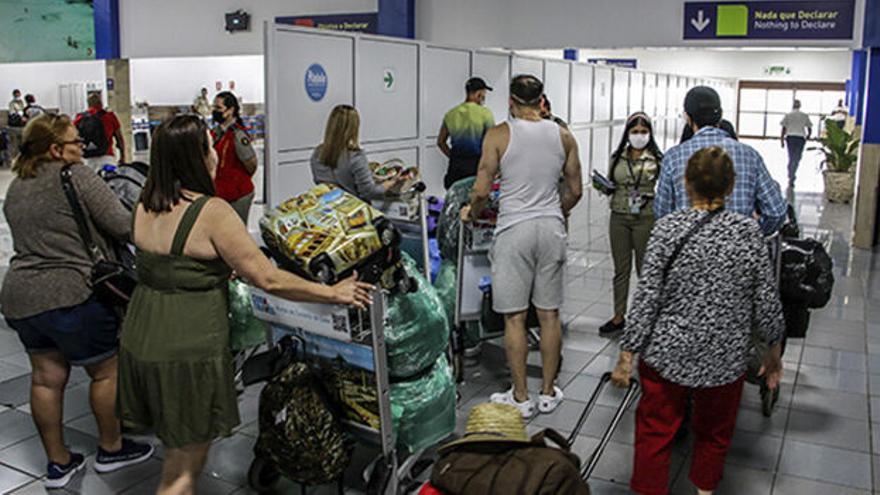
14ymedio biggerEFE (via 14ymedio), Havana, December 31, 2023 — The Cuban authorities announced this Saturday a new extension – until March 31 – to the tariff exemption for food, toiletries, medicines and even generators that travelers can bring to the Island for non-commercial purposes.

As a novelty of the measure taken in 2021 and prolonged several times, “the non-commercial import above the value established by the route of air, sea, mail and courier shipments of generators with a power greater than 900 watt-hour,” is allowed, according to the Ministry of Finance and Prices.

For the extension of the measure, “the persistence of the conditions that gave rise, in 2021, to its implementation” has been considered, according to the source.

Therefore, the tariff benefit will be maintained, which authorizes exceptionally, the non-commercial import, without limits in its value and exempt from the payment of customs duties, food, toiletries and medicines, through passengers as accompanied luggage. continue reading

The tariff benefit will be maintained, which exceptionally authorizes, the non-commercial import, without limits in its value and exempt from the payment of customs, food, toiletries and medicines

The import of food and medicines without tariff limits was a measure put into effect after the anti-government protests of 11 July 2021, which had as its main causes the scarcity and shortage of those basic products.

The law in force in Cuba on the import of luggage consists of a complex system of points and weight limits that establishes tariffs on excess items brought by travelers.

In the case of medicines, up to 22 pounds are allowed to be introduced into the country.

The economic crisis in Cuba was aggravated by the pandemic, the economic sanctions imposed by the United States and the failures in internal macroeconomic management.

Translated by Regina Anavy

____________

COLLABORATE WITH OUR WORKThe 14ymedio team is committed to practicing serious journalism that reflects Cuba’s reality in all its depth. Thank you for joining us on this long journey. We invite you to continue supporting us by becoming a member of 14ymedio now. Together we can continue transforming journalism in Cuba.

More Than 5,200 Cubans Were Deported to the Island in 2023 From Different Countries

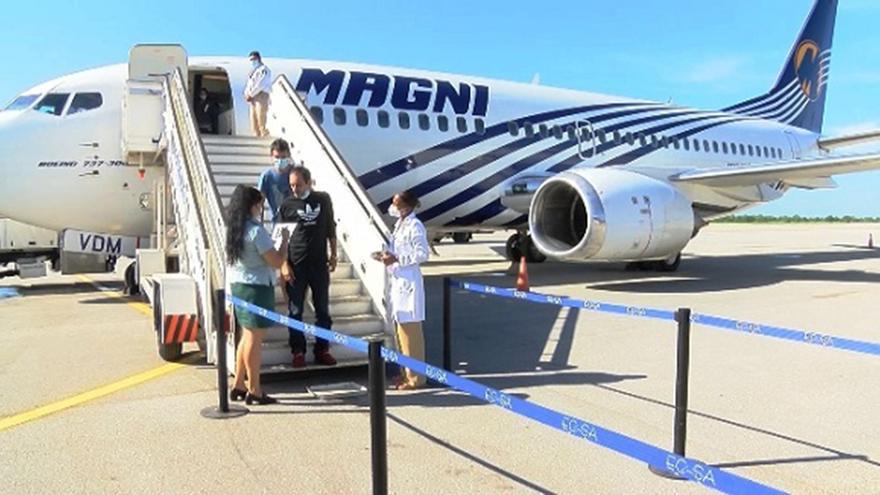
The first flight of this year with deported Cubans arrived in Havana on April 24, with 123 people. (Cubadebate)

14ymedio bigger14ymedio/EFE, Havana, December 31, 2023 — A few hours before the end of 2023, the Ministry of the Interior reported that, in the last 12 months, 5,253 Cubans have been deported by air and sea from different countries in the region. Last Thursday, the U.S. Coast Guard returned nine rafters to Cuba on the ship Charles David Jr.

Among these deportations are those carried out by the United States. The most recent transfer flight to José Martí International Airport was last Thursday, with 31 Cubans who were arrested at the border.

According to Prensa Latina, in this group, made up of two women and 29 men, there were three people who had left the country illegally by sea. The rest, it reported, did so legally but “then took irregular routes to the U.S. border.”

Under the bilateral agreement between Cuba and the United States to return to the Island those who arrive by sea, eight transfers occurred to repatriate 426 Cubans since last April, when air expulsions resumed. continue reading

This year, Cuba has also received repatriated migrants from the Bahamas, Belize, the Cayman Islands, the Dominican Republic and Mexico

The first flight with this type of deportees arrived in Havana on April 24, with 123 people. On the last day of November, 37 Cubans were deported. Yoan Enríquez, who had a probation form I-220B, was one of the passengers who had to leave his wife and a three-month-old baby in Florida.

During the current fiscal year, which began on October 1, 2022, more than 6,800 Cubans have been intercepted by the U.S. Coast Guard on trips to Florida, according to official data.

This year, Cuba has also received migrants repatriated from the Bahamas, Belize, the Cayman Islands, the Dominican Republic and Mexico.

According to what was revealed to this newspaper, Cuba accepted the returns of its nationals from the month of October from Mexico, as long as the transfer expenses were covered by the Government of Andrés Manuel López Obrador. “A cost of 4,000 pesos (237 dollars) is handled for each migrant,” said lawyer José Luis Pérez.

Since Mexico resumed flights to Havana, it used the services of the airline Viva Aerobús. In total, it has transferred 435 Cubans in five connections. “Migration has a budget item for deportations. It’s not a new expense,” the official said.

Mexico also has a bilateral agreement with Venezuela for the deportation of migrants. This Sunday, a group of 122 migrants was returned to Venezuelan territory on the second repatriation flight, for a total of 329 people if you add the 207 who arrived in the early hours of this Saturday.

Since Mexico resumed flights to Havana, it used the services of the Viva Aerobús airline. In total, it has transferred 435 Cubans in five connections

The flight was carried out through the Vuelta a la Patria (Return to the Homeland) plan, a government program launched in 2018 to facilitate the return of migrants who were victims of xenophobia, according to the Venezuelan Government.

On X (formerly Twitter), the Ministry of the Interior, Justice and Peace pointed out that the migrants were received by a “comprehensive care command” in charge of verifying their data and providing medical assistance.

The Mexican government reported this Saturday the renewal of the repatriation flights of Venezuelans who are arrested on their way to the U.S. border.

It also indicated that they are working on the implementation of social programs in Venezuela, which will benefit, among others, repatriated people by linking them to productive projects and paid internships in workplaces.

Translated by Regina Anavy

____________

COLLABORATE WITH OUR WORKThe 14ymedio team is committed to practicing serious journalism that reflects Cuba’s reality in all its depth. Thank you for joining us on this long journey. We invite you to continue supporting us by becoming a member of 14ymedio now. Together we can continue transforming journalism in Cuba.

The Minister of Economy Who Never Told the Truth (I)

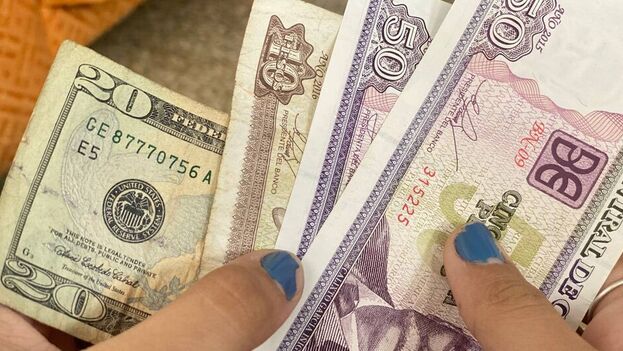
The bill on the left might buy something… the ones on the right, not much.

14ymedio bigger14ymedio, Elias Amor Bravo, Economist, December 28, 2023 — The facts speak for themselves. There is more than enough evidence that Alejandro Gil, Cuba’s Minister of Economy, knew since December 2020 and then from the first quarter of 2021, that the Ordering Task* could not go well, and that it would end up being a disaster for the weak Cuban economy. There are numerous testimonies of Spanish businessmen and investors in Cuba that confirm it.

In private, the communist leader did not welcome the economic “package” of the Ordering Task, but assuming that he had nothing against the Party or Marino Murillo, who even thought that he could succeed, or against anyone among the Cuban communist regime, he was silent and just waited for what was coming. This is not a recommended attitude for someone who is supposed to be at the head of an economy in serious crisis and locked in a vicious circle from which it is unable to exit.

That is why now, three years after the Cuban economy has lost critical mass, real GDP, investments, purchasing power and international attractiveness, it is very easy to go out on television with Randy Alonso and give a speech that aims to change the pace, not having them all with him and with an evident interference from Prime Minister Marrero. Are the Economy Minister’s days numbered? We’ll see. continue reading

Undoubtedly, it was a long Round Table program, in which Gil was accompanied by Regueiro Ale, another who is worth more for what he doesn’t say than what he does, and both undertook the unfortunate task of informing the people about the foundations of the regime’s decisions to correct the main distortions of the Cuban economy and relaunch it in 2024.

It involves two consecutive actions. First, to correct the distortions. Second, to give a boost to the economy; “reboosting” is another lie.

It is interesting to start from the distortions that Gil sees in the economy. And here, once again, the situation of the war economy is mentioned, caused by, and I quote verbatim, “the pressures of the intensified blockade, which hinders all the efforts we have to make for the economic performance of the country.”

A bad start, which loses perspective by spending energy on distortions. The intensified embargo/blockade does not prevent Cuba from developing its economic model, relating economically to 192 countries in the world, obtaining investments, tourists and most importantly, remittances, 90% from the country that “embargoes” the Cuban economy. This is a poor analysis of distortions if it is intended to find the way out of the tunnel from the available economic resources.

The second wrong idea is the mantra, repeated ad nauseam, that “we have to overcome, we have to find the alternatives by designing measures in accordance with our economic and social model, inclusive in our socialism, and that allow us, with objectivity, with realism, to get ahead.” This model failed all over the world, ask Vietnam or China, and which has been in Cuba for 65 years, a magnificent age for its retirement. If the government chooses the communist model to face the complexities, boost the economy and correct the distortions that are present in the country, in a year or two the situation may be even worse. Ministers Gil and Regueiro know it, but they are silent.

Nor does the argument work that the world economy is malfunctioning and this impacts Cuba. A simple look at the Caribbean resorts in the Dominican Republic or Costa Rica dismantles this argument. The hotels are 100% full  in this winter high season. In Cuba, they aren’t. Something is not right when the Germans, French and Swiss choose other destinations.

And of course, since there are no answers to the main questions, it’s interesting to talk about the second one, which has no solution: the regulated family basket.** Here the minister said that the population is against maintaining subsidies to all people equally since not everyone has the same purchasing power. This is a lie. What the population wants is to get rid of the regulated basket and be able to choose freely. As do many companies, too, because they could sell the products without dependence on subsidies, through the rules of supply and demand. The minister, on the other hand, says that he will review the basket, maintaining products at subsidized prices even if this is not an equitable distribution. The country’s imports for the basic basket cost more than 1.6 billion dollars as a result of increased prices in the international market.

The basket could be suppressed at any time and allow citizens to be free to choose. This is how Cuba worked before 1962, the date of the entry into force of the ration book that has been an instrument of social and economic control of communist design, which has increased poverty and misery in Cuba to levels not observable in other countries. Advances towards economic freedom are essential to relaunch the economy. Gil knows it, just as he knows that the Communist Party, committed to centralizing the decisions of choice of goods for Cubans, is the origin of the regulated basket. Any alternative to subsidized prices is seen as something negative.

And again he lies, when he says that “this doesn’t mean that the basket will disappear.” It won’t take long; it’s already happening.

Fuel is the second distortion, but Gil didn’t say why there is no oil in Cuba. Basically, two reasons. First, from the second half of 2019, Venezuela systematically reduced its oil shipments to the Island for internal reasons. Less subsidized oil forced the regime to resort to the international oil markets, but there it did not obtain financing because it wasn’t current on its debts. In Fidel Castro’s time that was possible, but in the time of Díaz-Canel either you pay or they don’t give you anything.

And by combining these two factors and attracting far fewer tourists to the Island, the ability to buy oil decreased significantly. And now Gil lies when he says that the population is worried about maintaining subsidized fuel prices, probably the lowest in the world compared to the prices of other countries. If the subsidized basket causes harms economically and socially, oil subsidies distort the energy decisions of all agents.

This is not an issue to review but to straighten out, as soon as possible. Without fuel, the economy and the country cannot function, and the dependence on oil makes Cuba a country with almost zero renewable energies. Blaming the absence of an internal mechanism of convertibility of currencies into national currency for fuel is not only a lie: it’s nonsense.

Third distortion: electricity. The same problem as fuel. Subsidized prices that prevent companies from obtaining profitability so that the quality of the service leaves much to be desired, and the lack of investment causes the network’s failures. Savings are not possible because, as a result of high prices, consumption levels are among the lowest in the world. It’s another area to be resolved with reforms in supply and demand. As in other goods and services, Gil now discovers that those who consume the most also affect those who consume the least, because when a blackout occurs, everyone suffers. It doesn’t discriminate between the largest and the smallest consumer. The solution of setting different rates depending on the level of consumption could be even worse.

He did not say it as such, but Gil incorporated the private enterprises into the list of distortions that have to be corrected by reciting some alleged opinions of the population that contribute little to the technical debate. Specifically, that those who want to buy a certain product have to go to the private companies. Why don’t Cubans find what they want in the State stores? Why is there rationing, scarcity, poverty? If the private businesses fill the need, although at a higher price, perhaps it is because this is the rule of the free market. By making the private companies fulfill a complementary function rather than a main function, the only thing achieved is that more merchandise is unavailable and people get hungry.

Then it was the turn of the distortion of the transport tariffs, which don’t earn enough to cover the costs of the State. If this is the scenario, the offer of services will fall and fewer goods and people will be transported as happened this year. Again, economic freedom is the solution, but the minister does not recognize it.

Gil pointed out that in the last four years “a group of measures has been adopted such as the incorporation of the non-State sector of the economy, the elimination of restrictions on the salaries in State companies and the removal of restrictions on distributing  profits,” but he acknowledged his poor success. He even questioned the legal rules for non-State economic actors that, in his opinion, were carried out without having a previous experience of their operation in the economy, taking as a reference the self-employed workers, which has nothing to do with the private companies. Another miscalculation, and on they go.

A special moment of the program was when Gil explained that, in the face of versions that the measures have a neoliberal character, “all decisions start from a broad process of consultation and analysis within government institutions, with the participation of academics, the Party militants and the analyses made from popular opinion.” Well, what a pity, because Vietnam, for example, thanks to well-designed neoliberal measures, overcame famines in five years and became a world’s leading exporter of rice. And what about China?

Cuban communists are the only politicians at the international level who continue to obsessively question neoliberalism, a doctrine that has given much better results than those applied by the communist model. If instead of criticizing without thinking, they reflected on what neoliberalism represents in 2023, another cock would crow.

Gil’s agenda affects the aspects that have been a failure, such as increasing the role of the State as a regulatory entity in the economy and intervening in the foreign exchange market by slowing down privatization. This gives the State a role that it cannot play because of its dependence on subsidies. Why does he lie over and over again? The market is the main mechanism for the allocation of resources in any economy, and that is neoliberal doctrine. I hope this is the way forward.

Gil’s next lie was to point out that these measures protect the social conquests of the revolution. It’s just the opposite. It is not possible to sustain a public expenditure of the dimension of the one that exists in Cuba if more wealth, employment and production are not generated. The chosen path has confirmed this for decades; a State-centralized distribution of resources goes against the trends of the world economy.

Neoliberalism, where it triumphs, does not lead the State to neglect taxes, but to liberate the markets, deregulate and act effectively. Inclusive measures to protect the people and the vulnerable need a solid economic base. Without growth, it is not possible to distribute.

So Gil is convinced that the measures will be able to correct distortions in time, and although the transformations have risks, they have to be assumed to be favorable for the revival of the economy, which is the other side of the coin.

If the intent is to lower the deficit, estimated at 18% and considered high, it must be corrected with taxes, prices and measures aimed in that direction.

It’s an important issue. Raising taxes goes against growth. If the main purpose is to accelerate the country’s economic recovery, increasing taxes is contrary to that objective. As for prices, inflation has moderated but remains high in food, recreation and transport. The minister is silent and does not tell the whole truth by assuming measures that will not give results and are poorly directed.

Part 2 is here.

Translator’s notes: 

*The Ordering Task is a collection of measures that include eliminating the Cuban Convertible Peso (CUC), leaving the Cuban peso (CUP) as the only national currency, raising prices, raising salaries (but not as much as prices), opening stores that take payment only in hard currency, which must be in the form of specially issued pre-paid debit cards, and a broad range of other measures targeted to different elements of the Cuban economy.  

**The monthly allotment of rationed goods.   

Translated by Regina Anavy

____________

COLLABORATE WITH OUR WORKThe 14ymedio team is committed to practicing serious journalism that reflects Cuba’s reality in all its depth. Thank you for joining us on this long journey. We invite you to continue supporting us by becoming a member of 14ymedio now. Together we can continue transforming journalism in Cuba.

The Virulent Protests of the Radical Sector of the Cuban Regime Force Havanatur To ‘Kill’ Santa Claus

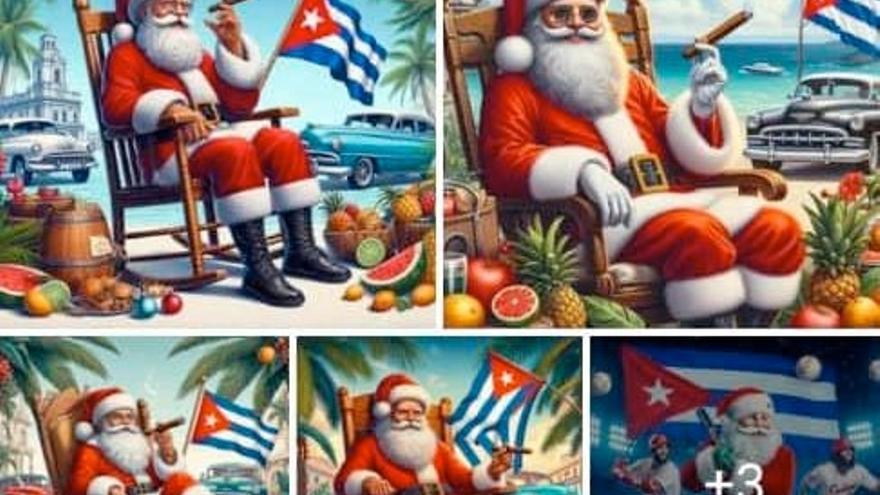
Image of Santa Claus disseminated in the tourist agency’s campaign. (Havanatur/Facebook)

14ymedio bigger14ymedio, Havana, December 30, 2023 — With a cigar in his mouth, playing baseball and distributing gifts to the children in front of the Havana Capitolio, a chubby Santa Claus promotes Cuba as a destination for Havanatur this December. The images, created with Artificial Intelligence, have unleashed a swell of criticism from the most extremist sectors, which accuse the tourist agency of succumbing “to colonizing seduction.”

The Cuban diplomat José Carlos Rodríguez Ruiz was one of those who reacted angrily to the campaign that the State company disseminated on its Facebook account, which it took down shortly after due to criticism. The former ambassador of the Island to Italy classified Santa Claus as part of the “colonizing icons and something alien to Cuban culture.”

Rodríguez’s text, which was also published by the official newspaper Tribuna de La Habana, said that “in the face of those who easily succumb to colonizing seduction, there is only one way, which is the same as our history to keep us independent and sovereign: to be alert and confront them.” The diplomat questions whether “they will have taken away the irresponsible people who thought it up, created it and published it. We don’t know. Havanatur didn’t even issue a note apologizing. They should have.” continue reading

The campaign images unleashed the anger of the most conservative followers of the Regime. (Havanatur/Facebook)

Rodríguez’s criticisms have been joined by those of fellow diplomat Orestes Hernández Hernández, who called to use, instead of the figure of the old man with a white beard dressed in red, characters from Cuban literature such as the puppet Pelusín del Monte, created by the writer Dora Alonso in 1956. For her part, the official journalist Ana Teresa Badia classified the tourism agency’s campaign as a “violation of all communication logic.”

A few hours after the first questions were published, the advertising disappeared from the Havanatur page; however, several users copied and disseminated the images in which Santa Claus swings in an armchair, smokes a cigar surrounded by tropical fruit, sunbathes on the shore of a beach and, in almost all the illustrations, is accompanied by an old American car.

Several commentators joined the angry reaction and classified Santa Claus as an “imperial construction” and “part of the war of symbols of the United States against Cuba.” However, the figure of the sympathetic old man has its origin in the second century A.D. when Nicholas of Bari was born into the bosom of a wealthy family in the Turkish city of Patara. When his parents died, he decided to distribute his wealth among the most needy and sought refuge from his pain in religion.

San Nicolás has a relationship with Havana that most Cubans ignore: he is the Greek Orthodox patron saint of the city

San Nicolás, in addition, has a relationship with Havana that most Cubans ignore: the Greek Orthodox community of the city adopted him as patron, because he is considered the protector of sailors and port cities. In fact, the Greek Orthodox cathedral of Old Havana is consecrated to him.

It is not the first time that this type of reaction has arisen to the use of foreign symbols or traditions. At the end of last October, the Maxim Rock Cultural Center, in Havana, organized a Halloween party in which an officer costume of the Nazi Schutzstaffel (better known by the acronym SS) worn by a contestant was awarded. The audacity cost the premises a temporary closure and sanctions to its managers, as later reported on social networks by the Cuban Institute of Music.

The entity then stated that the decision had been taken “given the seriousness of the fact and the evidence of the inability of the cultural institution to foresee it.” The note went beyond the specifics and took advantage of the controversy to put the festivity under the magnifying glass again. “The event (…) in addition to constituting a violation of the directives for cultural programming, puts the issue of the dangers of cultural colonization back on the table.”

Both the Cuban Institute of Music and the official spokespersons who criticized the event conveniently ignored that Halloween or Samhain, celebrated on the eve of All Saints’ Day, is a pagan festival of Celtic tradition that marked the end of the harvest season and the beginning of the new year. Irish emigrants imported it to the United States, where it was incorporated into popular culture with its own iconography. From there it has been re-exported all over the world, especially through the film industry.

That origin and the thousands of Cubans who disguise themselves every year to enjoy this holiday are systematically ignored by the Cuban authorities, who insist on identifying it exclusively with “the empire” and point to it as something foreign to the national culture, although the links of the Island with Celtic Galicia have been close for centuries.

Translated by Regina Anavy

____________

COLLABORATE WITH OUR WORK: The 14ymedio team is committed to practicing serious journalism that reflects Cuba’s reality in all its depth. Thank you for joining us on this long journey. We invite you to continue supporting us by becoming a member of 14ymedio now. Together we can continue transforming journalism in Cuba.

How Much Does 100 Dollars Weigh in Cuban Pesos?

Open the zipper, the content appears: 26,000 pesos, in thick chunks of 50-peso bills. (14ymedio)

14ymedio bigger14ymedio, Mercedes García, Sancti Spíritus | 30 December 2023 — Edith has been “hunting” for a few pounds of malanga and two pork shanks for weeks. This end of the year, her house in the Los Olivos neighborhood, in Sancti Spíritus, has become a base of operations. The budget: 100 dollars that her brother sent her months ago from the United States. Her objective: to change the currency with the utmost discretion and outside her neighborhood, where the military and cadres of the provincial government are not in short supply.

On the other side of the city, in the humble neighborhood of Jesús María, Carlos has been collecting pesos all year to buy an electric pressure cooker. Before acquiring the precious artifact, he has to get dollars, go to the bank and witness their transformation – painful after “letting go of the green” – into freely convertible currency (MLC), a currency invented by the Cuban regime.

Thanks to social networks, Edith finds in Carlos the perfect candidate for her transaction. They meet at her house. With some embarrassment, Carlos deposits a worn black briefcase on the sofa that Edith examines with suspicion. He opens the zipper, the content appears: 26,000 pesos, in thick chunks of 50-peso bills with the face, repeated 520 times, of Calixto García.

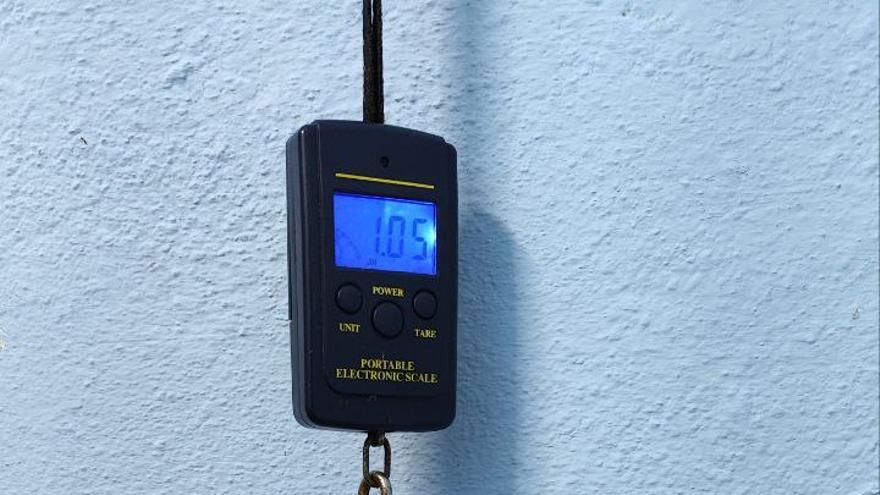
The weight of the 520 banknotes of 50 pesos is 1.05 pounds. (14ymedio)

In turn, Edith gives Carlos the thin $100 bill, with a lonely Benjamin Franklin printed in green. In the room where the exchange takes place, the television is turned on at full volume – the old trick against the gossips of the neighborhood – with the Christmas speech of the first secretary of the Communist Party of Sancti Spíritus. continue reading

“All united we will be able to move towards a better year, where the dreams, achievements and aspirations of Sancti Spíritus in progress will consolidate the unity of our people and, surely, will lead us to achieve new victories, no matter how difficult the circumstances are,” says the leader from his air-conditioned office, protected by the picture of an already senile Fidel Castro.

“But the resistance of our people, their creativity, the day-to-day effort have not made us give up our dreams,” he continues, but Edith turns off the device and says goodbye to Carlos, who goes at full speed to the bank, and from there to the hard currency store, where – he trusts – he expects to find his coveted electric pressure cooker.

Before looking for the malangas and the meat, Edith picks up the 26,000 pesos from the sofa and places it on a scale. How much does a thin 100-dollar bill weigh in pesos? The answer – amazing – is on the screen of the device: 1.05 pounds of Cuban paper.

Translated by Regina Anavy

____________

COLLABORATE WITH OUR WORKThe 14ymedio team is committed to practicing serious journalism that reflects Cuba’s reality in all its depth. Thank you for joining us on this long journey. We invite you to continue supporting us by becoming a member of 14ymedio now. Together we can continue transforming journalism in Cuba.

The Minister of Economy Who Never Told the Truth (II)

Alejandro Gil Fernández, Cuba’s deputy minister and minister of Economy and Planning, before the National Assembly of the People’s Power of Cuba. (14ymedio)

14ymedio bigger14ymedio, Elías Amor Bravo, Economist, 29 December 2023 — A good part of the State TV Round Table program was dedicated by Alejandro Gil, the Minister of Economy, to the SMEs [small- and medium-sized enterprises], of which he said that there is no stopping of the process or reprisals. Another lie. Because although it is true that in these two years the number of SMEs created has been important, the authorities have not provided data, and this is an essential indicator for evaluating the process. The functioning of SMEs has been conditioned by political action, and survival has been an obstacle course, which the regime, far from facilitating, has continuously complicated.

Along that line, the idea of transferring the powers of approval of SMEs to the municipalities must be interpreted as a control measure, which puts economic actors at the disposal of local communist leaders, who have little expertise in these matters and are obsessed with ideology. The idea of bringing the decision of the evaluation of those businesses, which are on a small scale, closer to their link with local, territorial development and municipal development strategies means that the SMEs will have limitations on their growth and scale and will operate at minimum unit costs, where profits are maximized.

The regime’s bet is that the SMEs remain small and weak, a measure that distances the Cuban economy from the free-market economy and sends a very clear message to those who do not want to see it. They say this process will be gradual, but it will not allow the consolidation of a strong private economic sector.

Local communist leaders have little expertise in these matters and are obsessed with ideology

Secondly, in addition to the transfer to the municipalities of the decision to approve SMEs, Gil announced the revision of the list of unauthorized activities for which they are carrying out an “in-depth analysis with the agencies and receiving criteria from the territorial governments.” In this regard, he said that “there will not be large annotations, but some issues will be corrected and clarifications made. There is no major transformation in the list of unauthorized activities.” Let no one expect much. continue reading

Third, Gil said that work is being done on the creation of an institute that will have as its function the coherent attention to the non-state sector of the economy and, later, be linked to the agencies of the Central State Administration for the promotion of policies and the implementation of certain rules. That is, on the one hand, competition is transferred to local powers, and on the other, a central bureaucratic body is created. What are we going to do? What is this tug-of-war?

It seems that this institute will exercise its functions over all non-state economic actors, not just for SMEs but also for non-agricultural cooperatives and self-employed workers. The institute will help lead the non-state economic actors, without direct intervention from the administrative point of view. Control and control. More bureaucracy where it is not needed.

And something that is noticed as soon as the organizational design is analyzed is that Gil’s Ministry of Economy is left out of this new, two-headed design of the national economy. It accesses an unexplored and critical terrain, whose final result is at least uncertain. However, the aim is to accentuate state control in the allocation of resources, fuel, currency and budgets, with attention to non-state economic actors, the national development plan and the country’s projected strategy. A communist hodgepodge that is difficult to digest.

It is hard to find in the world experiences like the ones that are proposed in Cuba. Another lie.

At this point, Gil said that there are sufficient experiences in the world that have been studied to identify the best way to proceed. It would help if he explained them, because it is hard to find in the world experiences like the ones that are proposed in Cuba. Another lie.

Fourthly, the Round Table has addressed the issue of subsidies on several occasions, because the economic system is unable to foresee their maintenance over time. The issue is whether to eliminate the subsidies or adapt them. No option has full support.

Progress has been made with respect to the past because Gil recognizes that subsidies aren’t free. Of course, in Cuban communism the Government pays for everything, and the price is high for the people and the economic entities because they must support a wasteful State. The subsidy to prevent the population from facing a certain high cost due to the productive inefficiency of the system has a direct cost in the state budget. Someone has to pay.

And of course, the communists finally recognize that when the State subsidizes, it’s a cost that falls on everyone

And of course, the communists finally recognize that when the State subsidizes, it’s a cost that falls on everyone. When the subsidy is assumed by the budget, it is assumed by the country. And when the country assumes it, all citizens pay for it, and this requires, almost always, an increase in the fiscal deficit.

And here comes another idea that the communists have finally figured out: If the fiscal deficit is expanded and money is issued in circulation to be able to support that deficit, inflation is created, which is a tax that falls, above all, on people with lower economic resources and the most vulnerable groups. The injustices of the economic system recognized by Gil is responsible for them. Here there is no reference to the embargo or blockade. It is an internal problem that undermines the bases of the model devised by Fidel Castro at the age of 65. Subsidies, deficits and inflation may end up breaking down the model.

One has the impression that the web of subsidies and prices for products such as energy, electricity and gas has entangled Gil, and with the weight of communist ideology he is unable to see an exit from the vicious circle. In one moment of the Round Table, the minister asked himself a series of questions that, obviously, he didn’t answer.

“First, if we don’t raise the price of fuel, the question is who pays for it. The State? With what money? With the same money that we are collecting via taxes or not allocating somewhere else? With what currency do we buy the fuel that we are going to sell after it is subsidized? With the same currency that we stopped dedicating to food? With the same currency that we stopped dedicating to medicines?”

Gil was referring to the issue of budget design, but the problem is in the justification of the budget. It is not a simple matter of passing money from one item to another with political criteria, but of eliminating items that distort the market reality of supply and demand. The resources of the people, as the minister says, are for other things. What Gil calls the correction of certain prices, which have high levels of subsidies behind them, are not only unsustainable for the country but also assumed to be equal for all. Only the market economy of supply and demand can correct the budget, and the definitive suppression of central planning.

In fifth place, continuing, Gil then addressed the issue of savings.

What is Gil talking about when salaries and pensions are the main sources of income for Cubans and are destroyed by the pressure of inflation?

It is melodramatic that in an economy like the Cuban one there is talk of saving and of identifying incentives for saving. What is Gil talking about when salaries and pensions are the main sources of income for Cubans and are destroyed by the pressure of inflation?

Gil maintains that abroad, due to the price of gas, people are obliged to save, but in Cuba, the high consumption of energy in the non-State sector makes saving measures difficult. And what about the blackouts, Minister? How do we interpret those mile-long lines at gas stations? What savings is the minister talking about, and what else does he want Cubans to stop consuming? Maybe they should return to the era of caves.

The minister wants people who consume more energy or fuel to pay a higher price and incorporate savings measures into their lives. Now, if they can’t stop consuming they have to pay a higher cost. The minister knows who the wasteful are: he just has to look at the state offices or local authorities, organizations, and other public entities to see where they can save. That’s where the waste resides, but just ask the mayor’s office or a State building for self-adjustment.

And at this point, without providing practical solutions to the issue of subsidies, the minister addressed, in sixth place, the situation of the foreign exchange market and said that “it is today one of the main distortions that the economy is facing.”

He acknowledged the obvious fact that he had not designed that informal or illegal foreign exchange market in the country. Of course, the communists had nothing to do with a market governed by supply and demand, which works efficiently.

The minister blamed the SMEs for being the only ones that have products because they can import and sell and have flexibility for prices, while the State companies have their hands tied. What is the minister waiting for to untie them? The solution is clear and the way forward as well. It is to turn the purchase and sale of the currency into a regular economic activity. And then, the alarm comes when Gil says that “we have to control it.”

In this regard, he points out that “among the measures proposed is to recover the management of foreign exchange by the State, because part of what is happening to us today, the fact that there is less State supply and more supply from the private sector, is because the private sector, in some way, is acquiring hard currency in the informal market, the illegal market, and that currency is not entering the national financial system. Therefore, State companies are practically running out of sources of currency allocation.”

It is worth reminding the minister that at the time the fixed exchange rate system was provided in the Ordering Task,*  which set the official exchange of 1 dollar to 24 pesos, this lasted less than three months before the Central Bank recognized its inability to assume the exchanges. Does he want the same thing to happen again? The currency shortage is now worse than at the beginning of 2021. Beware of experiments.

Gil recognizes that the State is sometimes not in a position to offer goods and services as it should be, because hard currency moves in another circuit, the informal one. And if that currency is not in the State’s sphere, it’s because the State is inefficient or incapable. Of course both currencies can function, but normally in all countries there is only one market, operated by private agents, with the law of supply and demand and regulated, without State intervention. That model in Cuba is possible if the communist State recognizes the informal market as the one that must operate and provide the service. That would not be neoliberal, but efficient. Doing things right.

So the intervention of the State, Gil’s answer to the distortions, will not serve to ensure the economic sustainability of the country, nor will it provide responsible and effective management of the economy. Gil knows this, and when he says otherwise, he is lying.

*Translator’s note: The Ordering Task is a collection of measures that include eliminating the Cuban Convertible Peso (CUC), leaving the Cuban peso (CUP) as the only national currency, raising prices, raising salaries (but not as much as prices), opening stores that take payment only in hard currency, which must be in the form of specially issued pre-paid debit cards, and a broad range of other measures targeted to different elements of the Cuban economy.  

Translated by Regina Anavy 

____________

COLLABORATE WITH OUR WORKThe 14ymedio team is committed to practicing serious journalism that reflects Cuba’s reality in all its depth. Thank you for joining us on this long journey. We invite you to continue supporting us by becoming a member of 14ymedio now. Together we can continue transforming journalism in Cuba.

Team Asere, Without a Homeland But With Love

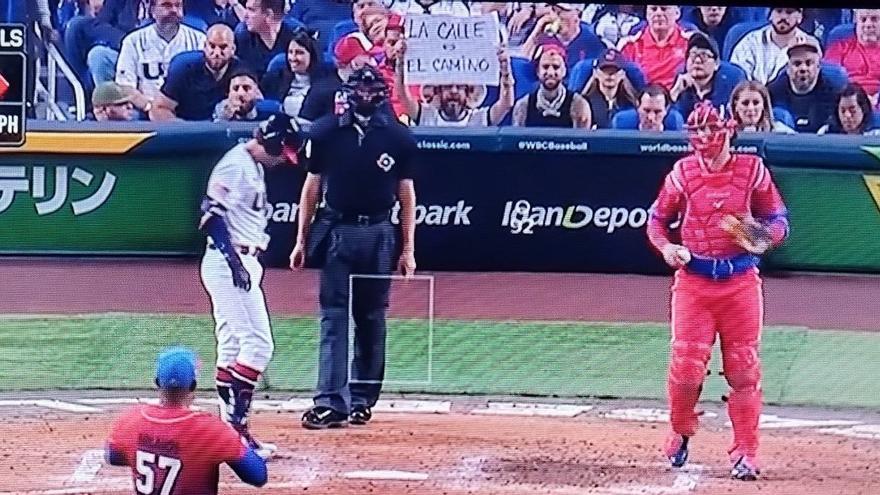
One of the moments of the live broadcast of the game between Cuba and the United States in the semifinal of the World Baseball Classic. (14ymedio)

14ymedio bigger14ymedio, Havana, 28 December 2023 — Rarely has the regime licked its wounds with as much vigor as after the defeat of Team Asere in the semifinal of the World Baseball Classic. The propaganda had turned the match against the U.S. national team into a political crusade, and, as most sports specialists had predicted, the shot backfired on Havana.

The team’s problem was, above all, one of concept. What did Team Asere represent? The best players of a dictatorship? An example of national reconciliation? An idiotic scheme  – as many called it – that tried to take the athletes who trained in the worn-out stadiums of the Island to the level in professional baseball that the emigrants had reached?

The Cuban-American community in Miami was categorical: Team Asere was a well-planned collection of “useful idiots,” puppets that – consciously or unconsciously – danced to the rhythm dictated in the dark propaganda offices of Havana. The exiles also made it clear in the LoanDepot Park stadium itself, with protests that the Cuban Foreign Ministry later described as “unfortunate and dangerous incidents.”

It was those “transgressive” groups, the regime argued, that caused Team Asere to become a cluster of nerves, unable to bat with quality and plan its continue reading

plays well. After the defeat, everything was “strongly denounced,” not only the “destabilizing elements,” but also the “difficult game” against a team with “technical superiority” like that of the United States. It was not difficult, the authorities lamented, to lose against such a “clearly winning” adversary.

Another blow to the mental tranquility of the Island’s authorities was having to broadcast the match on Cuban Television without being able to disguise the multiple posters against the regime held by the public. At the end of the game – although the moment did not reach the Cuban screens – the writer Carlos Manuel Álvarez and the artist El Sexto went down on the field carrying Cuban flags, which cost them a night in the police station. Things that happen in Miami, a city “that does not meet the minimum conditions to host an international event,” Havana said in defense.

The balance of the experiment leaves no room for optimism. Team Asere lost the match – after a series of successes in the contest that guaranteed their face to face with the United States, it must be said. But it opened the way for the commissioners of several Cuban sports, such as chess, to show themselves as “understanding” leaders: if other emigrated athletes wanted to play with the flag of their country of birth there would be no inconveniences, as long as they did so under the draconian conditions imposed by the regime.

But it wasn’t all regret and defeat. The trip to Miami bore fruit, even if it wasn’t harvested by the regime. The baseball players living on the Island arrived at José Martí International Airport loaded down with televisions, automobile tires and many suitcases, provisions to survive on an Island where only the privileged aseres* want to return.

*Translator’s note: A common word to greet a friend, asere is Cuban slang for “dude” or “buddy.”

Translated by Regina Anavy

____________

COLLABORATE WITH OUR WORKThe 14ymedio team is committed to practicing serious journalism that reflects Cuba’s reality in all its depth. Thank you for joining us on this long journey. We invite you to continue supporting us by becoming a member of 14ymedio now. Together we can continue transforming journalism in Cuba.

Suspension of Rationed Sale of Milk to Chronically Ill People in Sancti Spiritus

Last March, the local press announced that the sale of milk destined for medical diets was suspended. (14ymedio)

14ymedio bigger14ymedio, Mercedes García, Sancti Spíritus, 26 December 2023 — “It failed and failed until it stopped arriving,” this is how Nuria de las Mercedes describes the situation that the chronically ill patients of Sancti Spíritus have experienced with the supply of milk for medical diets. This December, for the second time in the year, consumers have been informed that the sale of dairy is suspended in state shops, and only the quota for children up to seven years old and pregnant women will remain.

Nuria, 74 years old, is diabetic, hypertensive and has kidney problems. Among the chronic patients who receive a liter of milk every three days, the elderly woman is in group C of the three groups [A, B and C], where beneficiaries are grouped according to their condition. “In recent months it was delayed, it was even weeks since it had arrived, and now we were told that they can’t guarantee it,” she tells this newspaper.

“They haven’t explained if it’s forever or a temporary measure,” complains the woman from Sancti Spíritus. Along with other customers who buy the rationed milk, Nuria is part of a WhatsApp group where information about the supply is shared. “In the group no one has explained about what’s going on, but now they’ve told me in the shop that it wasn’t coming.” continue reading

The state employees don’t offer a conclusive explanation. “We are in the season when traditionally there is less rain, less feed and less milk

The state employees don’t offer a conclusive explanation. “We are in the season when traditionally there is less rain, less feed and less milk,” an employee in the Kilo 12 district tells this newspaper. “At the beginning of the year the same thing happened, and then we went back to selling, although it has never returned to a normal or stable distribution.”

Last March, the local press announced that the sale of milk destined for medical diets was suspended. The announcement explained that it was a momentary measure and that the authorities of the territory had decided to “protect the allocations directed to children and pregnant women.”

Alberto Cañizares Rodríguez, director of the Río Zaza Dairy Products Company in the province, explained that the main reason for the cutback was the lack of animal feed and added that the country had not been able to import “the required levels of milk powder” to ensure coverage for chronically ill people.

However, this newspaper was able to confirm that last November, 50 tons of powdered milk expired in the provincial warehouses of Río Zaza. “It was not sold to the population and not distributed by another way, so they saw the merchandise had already expired and could not be marketed,” an employee of the company told 14ymedio at the time.

The bosses were furious when they found out and came here to try to break the chain on the weakest link

“The bosses were furious when they found out and came here to try to break the chain on the weaker link – that is, to blame us –  but the responsibility was theirs, because they told us to hold onto the product, and they did not take into account the expiration date. It was imported milk, and sometimes it is bought with little time left because that way it is cheaper on the international market.”

“Then they took samples of the milk to see if at least they could allocate it to some social program in which people can’t see the label (with the expiration date), but here that type of product suffers a lot from the heat,” he explains. “When the date expires, it usually already has a stale taste or has lost qualities to mix well with water, for example.” The product is still in the company’s warehouses.

For chronic patients, it remains for Río Zaza to process the flavored soy milk to cover the food deficit, but the product does not enjoy good acceptance and, for diabetics such as Nuria de las Mercedes, “it is more of a curse than a help because they add a lot of sugar, and it comes with dyes that are not recommended for those who have kidney problems.”

Until the beginning of 2023, Sancti Spíritus had been the only Cuban province that maintained the sale of milk for medical diets. Its status as a livestock territory assured it of the distribution, but “the year started badly and ends worse,” says Nuria. The illegal slaughter of cattle, the lack of grass in the fields and state laziness seem to be combined so that a glass of milk will not arrive on the tables of these patients in the coming months.

Translated by Regina Anavy

____________

COLLABORATE WITH OUR WORKThe 14ymedio team is committed to practicing serious journalism that reflects Cuba’s reality in all its depth. Thank you for joining us on this long journey. We invite you to continue supporting us by becoming a member of 14ymedio now. Together we can continue transforming journalism in Cuba.

Selling Gold and Silver Olympic Medals Is a Means of Subsistence for Professional Cuban Athletes

The Cuban boxer Mario Kindelán subsisted on the Island with 7,400 pesos. (Capture/Documentary ’Lucha’)

14ymedio bigger14ymedio, Havana, 28 December 2023 — Double Olympic boxing champion Mario Kindelán sold the gold medal he won at the 2000 Sydney Olympics because he “had practically nothing to eat” and to “support” his daughters. The confession of the legendary athlete, during an interview given to Play-Off Magazine at the beginning of December, is not the only testimony of athletes who had to give up their prizes for the sake of survival. Like others, the boxer – who also sold the gold medal he obtained in Athens 2004 – insists that he doesn’t regret it.

According to Kindelán, who also spoke in the documentary Lucha,* produced by the American production company Society, it was preferable to exchange his medals for “a television or a refrigerator.” The media reports that he sold his Sydney medal for $400 and used the money to support his family “for a while.”

The boxer described the precarious state in which he was living as “critical,” so much so that he and his wife divorced. Through Facebook and to help him, Kindelán was contacted to train young people at the Grappling Club of Bahrain, a country in the Persian Gulf, where he is currently located. Now Kindelán provides a fact that gives the measure of his poverty: on the Island he received 7,400 pesos for his status as Olympic champion, which “was not enough to buy candy for his children or have the security of eating.” continue reading

Yarelys Barrios sold the silver medal he won in Beijing 2008 for $11,600, on eBay

At the beginning of December, the boxer tried to sell his gold medal won in Athens 2004. Former British boxer Amir Khan, who admires Kindelán, donated $5,000 to the Cuban to build a house for his mother on the Island. According to Khan, the Cuban, in a moment of “despair,” told him to keep the medal he won in 2012, after defeating the British in Athens.

Kindelán is not the only athlete who has had to give up his medals to overcome poverty in Cuba. The discus thrower Yarelys Barrios sold the silver medal he won in Beijing 2008 for $11,600, on e-Bay. The case was announced after the International Olympic Committee reported that the athlete tested positive for the use of the doping substance acetazolamide, a diuretic and prohibited masking agent, and he was unable return the prize.

The cases of the boxers Roniel Iglesias, Carlos Banteux and Sixto Soria, the Greco-Roman wrestling athlete Juan Luis Marén, the shooter Leuris Pupo, the long-jumper Iván Pedroso and the baseball player Miguel Caldés are different: their medals appeared as part of the auction lots of RR Auction with few explanations about their provenance.

In January, as part of the Olympic Memorabilia lot, the gold medal that boxer Roniel Iglesias won at the Tokyo 2020 Olympic Games was sold. For the prize, which has the legend “Boxing, male welterweight (63-69 kg)” inscribed on the edge, RR Auction obtained $83,188; it is not known if the Cuban received any of this money.

In January, as part of the Olympic Memorabilia lot, the gold medal that boxer Roniel Iglesias won at the Tokyo 2020 Olympic Games was sold

In that same auction, Carlos Banteux’ silver medal, won at the 2008 Beijing Olympics in the 69-kilogram division, sold for $25,000.

In 2021, an American auction house sold for $71,335 the gold medals that Iván Pedroso won in hurdles in Sydney 2000, and those of the shooter Leuris Pupo, for $73,205.

On that same day, the silver medals of Cuban wrestlers were sold, that of Yasmany Lugo, which he won in Rio 2016 for $25,000 and that of Juan Luis Marén, which he won in Sydney 2000 for $10,000.

*Translator’s note: Lucha can be translated as “fight” or “struggle,” as in the daily struggle to get by.

Translated by Regina Anavy 

____________

COLLABORATE WITH OUR WORKThe 14ymedio team is committed to practicing serious journalism that reflects Cuba’s reality in all its depth. Thank you for joining us on this long journey. We invite you to continue supporting us by becoming a member of 14ymedio now. Together we can continue transforming journalism in Cuba.

Cuba: A Missing Young Man is Found Dead in Mayari, Holguin

Several relatives shared photos of the young man on social networks to facilitate the search. (Facebook/Alejandro Ramírez)

14ymedio bigger14ymedio, Havana, 28 December 2023 — This Thursday, the lifeless body of 25-year-old Eugenio García, who had been missing since last Tuesday in the municipality of Mayarí, province of Holguín, was found. The young man had left his house last Tuesday, taking 1,300,000 pesos with him to buy foreign currency in the informal market.

The journalist Mario J. Pentón, a resident of Miami, confirmed with family sources that the young man had been found dead. The reporter shared some images in which dozens of people are seen around the area where García’s body was found.

“He was under a bridge, as confirmed by the family,” adds Pentón, who was in contact with García’s sister. “He was beaten to death,” the relatives said, although the police authorities of the municipality have not yet pronounced on his initial disappearance or the discovery of the young man’s body.

Previously, in a video, filmed on Wednesday night, dozens of people were seen organizing to search in different parts of the area. “We’re going down, continue reading

in the alley, there, we’re going to look,” was heard in several voices. “Perhaps near the ice cream factory,” says another about where they should search.

For her part, the young man’s sister also released a video thanking the neighbors of Mayarí: “Thanks to the Mayari people, many people have gone into the street. More than a hundred people are helping us look for him.”

The young woman, who recorded the video “outside the police station” then pressed the officers to get dogs and do their job to find him. “I don’t see the police doing anything, I don’t see a breakthrough, I don’t see an answer,” she said with pain.

“It can’t be that the people are doing the job of the police,” the woman stressed. “They have come to support us, looking in the rivers and everywhere”

“It can’t be that the people are doing the job of the police,” the woman stressed. “They have come to support us, looking in the rivers and everywhere. I’m calling the Minint [Ministry of the Interior], the firefighters. What are they waiting for? For him to show up dead? We are wasting time.”

Pentón also reported that the police had arrested a suspect and published a series of messages, sent through Facebook Messenger, which the person in custody exchanged with García on the day of his disappearance to coordinate the informal transaction. The young man wanted to buy $4,000 to, among other things, celebrate his nephew’s birthday.

The suspect urged García to meet him at 8:00 pm on Tuesday, in an area known as Arroyo Hondo, a community belonging to the popular council of Chavaleta in the municipality of Mayarí.

Cases of missing persons are becoming more frequent in Cuba. Social networks have become a loudspeaker for families to report the absence of elderly people who, senile, walk away from their homes; women who, after going out, do not return home and people who left on their motorcycle or with large amounts of money and never return.

In 2022, the case of the murder of Santiago Morgado in Sancti Spíritus shook national public opinion. The teacher was killed with a stick and a stone to steal his vehicle. The attackers also used two pieces of agricultural machinery to submerge the teacher’s body in a well that was 10 feet deep. Subsequently, they sold the motorcycle for 200,000 pesos.

Translated by Regina Anavy

_____________

COLLABORATE WITH OUR WORKThe 14ymedio team is committed to practicing serious journalism that reflects Cuba’s reality in all its depth. Thank you for joining us on this long journey. We invite you to continue supporting us by becoming a member of 14ymedio now. Together we can continue transforming journalism in Cuba.

Manzanillo Cuba Is Without Water, With a Deteriorated Aqueduct and a Single Water Truck That Circulates Through Its Streets

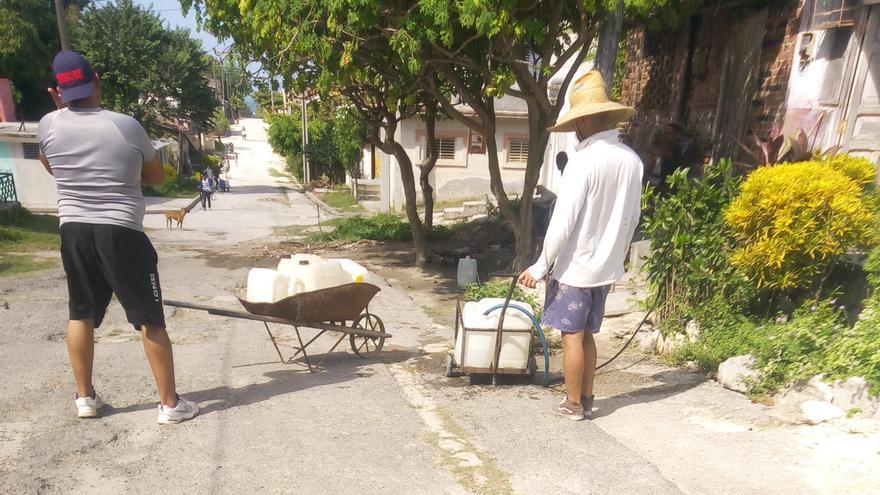
If the water truck is not sent by Communal Services but must be paid for by the families themselves, it is not uncommon for a single 55-gallon tank to cost 400 pesos. (14ymedio)

14ymedio bigger14ymedio, Juan Matos, Manzanillo (Granma province) | December 27, 2023 — When the families of Manzanillo, in the province of Granma, see a water truck parked on the corner of any neighborhood, the line takes only a few minutes to form. With a sudden drought, which compromises all the lines of production and daily life, arriving first – gallon container or bucket in hand – is not a matter of well-being or comfort, but of survival.

Even the streets of Manzanillo are eloquent about the water shortage. Dusty and yellow, when a pipa [water truck] spills a little water on the pavement, the dogs rush to lap up the liquid. If the water truck is not sent by Communal Services but must be paid by the families themselves, it is not uncommon for a single 55-gallon tank to cost 400 pesos*. At the end of the day, the business owner makes a good profit, and demand is increasing.

The lack of supply is inversely proportional to the price of products in the municipality, especially when it comes to fruits and vegetables. In a province with many farmers, the scarcity of resources has skyrocketed the price of a pound of beans to 500 pesos, a pound of rice to 150 pesos and that of pork – for whose rearing and hygiene water is indispensable – to 450. The work that is done so that an arid and battered land bears fruit, say the farmers, is titanic, although it cannot be expressed in numbers. continue reading

Nature has also begun to take its toll on the people of Manzanillo, whose authorities have been neglecting the province’s hydraulic infrastructure for decades. Last April, as a desperate measure to achieve the “sanitation” of dry areas such as Manzanillo, Deputy Prime Minister Inés María Chapman accepted from the hands of the Chinese ambassador to Havana, Ma Hui, a donation of 449 pieces of aqueduct and sewer system equipment.

Although the equipment – whose cost was 27.8 million dollars – was destined for the entire Island, the municipality of Granma topped the list of potential beneficiaries of the project, which included 93 water trucks, 60 unclogging trucks with high-pressure hoses and tools to repair leaks.

A pocos pasos de ahí, un tramo de acera en derrumbe da la medida de la insalubridad en el municipio y el estado de su red hidráulica. (14ymedio)
A few steps away, a section of collapsed sidewalk gives the measure of the unhealthiness in the municipality and the state of its hydraulic network. (14ymedio)

Of the formidable investment, as announced by the official media at the time, little actually reached Manzanillo, through whose avenues a single water truck was circulating this week. With hats and shirts – the sun of eastern Cuba does not give respite even in December – the neighbors get in line with wheelbarrows, jars and cans. Although there are young people in line, those who have the time and patience to wait their turn for several hours, often having traveled great distances, are the elderly, housewives and even children.

A few steps away, a collapsed stretch of sidewalk gives the measure of the unhealthiness in the municipality and the state of its hydraulic network. From a stagnant puddle full of garbage emerges, patched, one of the pipes that transport the town’s water, when there is some. The earth-colored liquid arrives in homes, and any precautions, such as boiling or chlorinating, are few.

Fainting or fatigue of the elderly who, poorly fed, carry a bucket to their homes is not uncommon. But there is no remedy: no one knows when the water truck will pass again, and they need to carry as much as possible. The free distribution points, opened by the Government in the vulnerable communities of Manzanillo, are not always supplied.

Although the entire Island faces the same problem of deterioration of its aqueducts and sewers, the east of the country has been especially affected by the drought. The province that has generated the most headlines has been Las Tunas, whose governor had to be held accountable last Friday to Parliament for the water crisis in municipalities that no longer know how to ask the Government for help.

The situation, according to the official press, has reached a “critical point,” in particular due to the extreme deterioration of pumping equipment. The local authorities, who depend on the “directions” from Havana, said that they could only make “patches” to the devices, which “can break at any time.”

Despair due to the lack of water reaches all parts of the eastern provinces, from the most populated cities such as Santiago de Cuba and Holguín, to the most humble hamlets of Guantánamo and Granma. Unable to solve the problem, the authorities call, of course, for “solidarity among neighbors”: “The situation is difficult, and no one can be certain. If you have a well, provide water to your neighbor, and if you have a cistern, save,” was the empty advice, of a manager of Aqueducts and Sewerage in Las Tunas.

*Translator’s note: Figures for December 2023: The minimum pension in Cuba stands at 1,528 pesos per month; that is, less than 60 euros, and the minimum wage at 2,100 (80 euros).

Translated by Regina Anavy 

____________

COLLABORATE WITH OUR WORKThe 14ymedio team is committed to practicing serious journalism that reflects Cuba’s reality in all its depth. Thank you for joining us on this long journey. We invite you to continue supporting us by becoming a member of 14ymedio now. Together we can continue transforming journalism in Cuba.

Cuba Acquires 100 Ambulances To Improve the ‘Depressed Health Sector’

Some of the vehicles are from the German brand Mercedes-Benz and the rest from the Chinese brand Foton (Capture/Caribbean Channel)

14ymedio bigger 14ymedio, Havana, 27 December 2023 — The Cuban authorities celebrated on Tuesday the import of 99 ambulances for “the gradual improvement of health services in the country.” The lot, with 50 new units and 49 in use, had an approximate value of four million dollars that was paid by the Government in full, clarified the ministers of Public Health, José Ángel Portal Miranda, and of Transport, Eduardo Rodríguez Dávila.

In a report made by Canal Caribe, officials avoided at all costs declaring the origin of the vehicles, but some of the Mercedes-Benz ambulances – presumably those in use – still had on their sides the name of their previous owner, the Valencian Community (Spain).

The second part of the lot is of the Chinese brand Foton, although it is not known if they were acquired directly in China or through a third country. Each province, including the municipality of Isla de la Juventud, will be assigned between three and four ambulances. continue reading

During the interview, the head of Transport highlighted the importance of the arrival of these vehicles, which will mostly be destined for emergency hospital services

During the interview, the head of Transport highlighted the importance of the arrival of these vehicles, which will mostly be destined for emergency hospital services, “at a time when the (Health) service is really depressed.” Rodríguez Dávila also pointed out that the vehicles are the first installment of a program that promises more lots.

For his part, Abel González Palmero, director of basic transport services at the Ministry of Public Health, acknowledged that the ambulances received “do not cover the needs of the provinces,” but softened the comment explaining that this is “a step forward” for the country.

The company in charge of managing the imports, as well as maintaining second-hand vehicles before the new ones are put into service, is MCV Comercial, a joint entity between the Ministry of Transport and Mercedes-Benz.

The manager of the company in Cuba, Ayman Makran, explained to the official channel that MCV will be in charge of checking the vehicles before incorporating them into the national fleet. “If any tire is worn, you have to change it; if any battery is old, you have to change it. We also need to incorporate more ambulances into the fleet, since it is aged,” the businessman said.

Established in 1995, MCV Comercial has been one of the arms of the regime to acquire vehicles abroad. In addition to the Mercedes-Benz brand, which is part of the joint venture, the company also imports the German cars Fuso; the Chinese Foton; Randon, Moura and Stemac from Brazil; Himoinsa and Lucas Diesel from Spain; and ZF and Voith, from Mercedes-Benz.

In addition, MCV has introduced equipment of the German brand MTU in Cuba, used in electricity generation and in industrial, maritime, rail, mining, construction and agriculture systems.

The company also has numerous Mercedes-Benz dealers on the Island, being the only one authorized to sell this brand, and some thirty workshops to repair the vehicles.

In its virtual store there are supplies available for the repair of the body, paints and tools

In its virtual store there are supplies available for the repair of the body, paints and tools. However, the products can hardly be purchased by Cubans, since they are charged in US dollars and at stratospheric prices.

It is not the first time this year that the Government has acquired ambulances. Last September, the official press announced a donation of four of these vehicles from Italy. However, the number of vehicles never seems to be enough to meet the demand of the health institutions, as the authorities of the sector themselves have admitted.

This December, vehicles were imported from Miami through the company Maravana Cargo, founded by the Cuban-American Alejandro Martínez with a license from the U.S. Treasury Department for the shipment of packages, appliances and other goods, without suffering sanctions.

The price for importing cars to the Island is determined by the regime itself, and so far it ranges between $20,000 and $56,000, depending on the model, year of manufacture and other variables. Much of this value remains in the hands of the Government, while Maravana retains an average of $8,000 per exported vehicle, which covers transport costs, insurance and the procedures.

Translated by Regina Anavy 

____________

COLLABORATE WITH OUR WORKThe 14ymedio team is committed to practicing serious journalism that reflects Cuba’s reality in all its depth. Thank you for joining us on this long journey. We invite you to continue supporting us by becoming a member of 14ymedio now. Together we can continue transforming journalism in Cuba.