
The Sister of the Former Cuban Minister of Economy Denies That He Is Detained: ‘He Is Incommunicado’

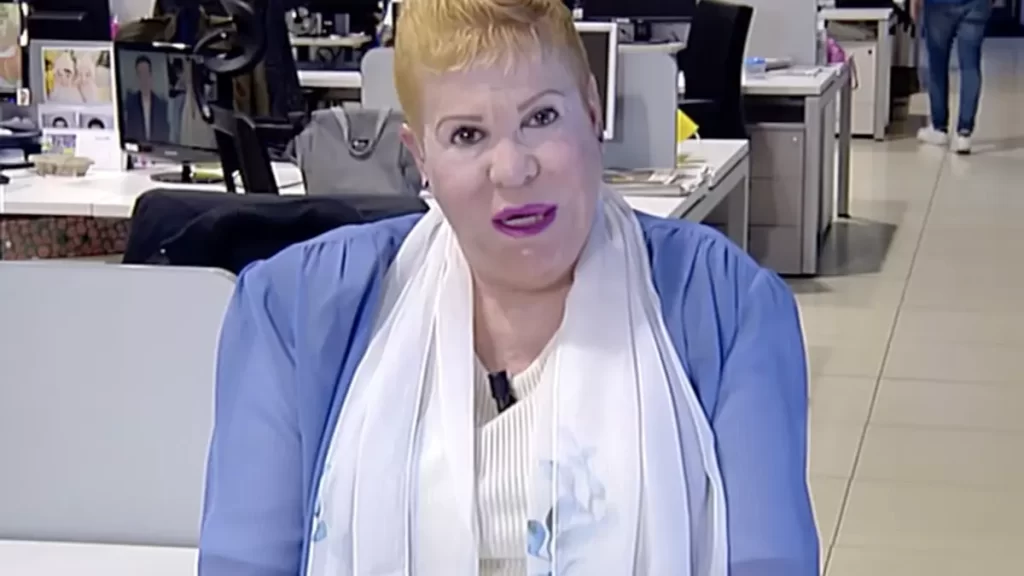
Caption – Vicky Gil, during her interview with Canary Island television, in Spain (TVC/Capture)

14ymedio bigger14ymedio, Yaiza Santos, Madrid, 20 March 2024 — María Victoria Gil Fernández spoke publicly again about her brother, the former Minister of Economy. In a statement this Monday to Canary Islands television in Spain, where she resides, she said that Alejandro Gil has not been arrested: “My brother is incommunicado.” She also blamed Raúl Castro for the so-called Ordering Task,* which plunged the country “into absolute misery.”

In conversation with 14ymedio, this Tuesday, the former presenter of Televisión Cubana, who was in Havana between March 3 and 10, just when the “investigation” that the regime undertook against her brother was announced, corroborates everything she said about the former deputy and right-hand man of President Miguel Díaz-Canel.

María Victoria Gil Fernández: “He is not detained as such; he is incommunicado somewhere, maybe in Villa Marista, if it is a detention house of the Ministry of the Interior. From the legal point of view, detention means he is in prison, and he has not been charged with a crime. I couldn’t talk to him, I couldn’t contact him, because he is totally incommunicado.”

14ymedio: But he isn’t at home, neither he nor his wife?

A: No, no, no. Neither of them. Laura María Gil González is in the house, with her husband, Álvaro Iglesias, and my grandniece, who I wanted to meet, who is a year and a half old. But I understand that my niece is working [in the Caudal group, which is charged with the  custody and transfer of securities and belongs to the Ministry of Finance]. She goes to work and everything, but she doesn’t have a cell phone. continue reading

Until the Prosecutor’s Office charges him with a crime, one cannot say that he is corrupt. That’s why I said that I will file a complaint against the Con Filo television program, because the presumption of innocence is mandatory

Q: He is not detained, but if he is somewhere similar to Villa Marista, we know what that means.

A: I imagine that given my brother’s former position, he would not be in Villa Marista. In Cuba there are some special state security houses, very nice houses, in Miramar and in Nuevo Vedado, where high-level, “high-ranking” people are taken,  who are being investigated. It was the case of Carlos Lage and many others. They have all the luxuries and comfort; they are not given bad treatment either, far from it. He must be in one of those houses; I don’t know where.

Q: Who told you that he was incomunicado?

A: My nephew, who is not involved, Alejandro Arnaldo Gil González. He has always been apart from the whole family. He is a very quiet person, very reserved. He is a computer engineer, a professor, and he lives at his wife’s house in Playa. I communicate with my nephew every day. He tells me: “Auntie, this is going to happen, I’m sure.” He must really be suffering, because you can imagine a boy with his personality, his father being accused, as they say, of corruption, which is a term that has been used even by the Cuban press, but the prosecutor’s office has not charged him with any crime.

Q: Didn’t the public statement say “serious errors in the performance of his duties”?

A: “Serious mistakes in the performance of his duties,” and then there is a tagline, which has always been added since I was a little girl, born and raised with the Revolution: “The Government will never tolerate corruption, insensitivity or simulation (fraud).” That doesn’t mean that he is being accused of corruption. Until the Prosecutor’s Office charges him with a crime, one cannot say that he is corrupt. That’s why I said that I will sue the Con Filo television program, because the presumption of innocence is mandatory. It is described in the laws of criminal procedure, which are the same in Spain as in Cuba, Uruguay and Argentina, because they all come from the same root, which is Roman Law. If you are talking about charging a crime without respecting the presumption of innocence, you are committing the crime of slander.

Q: Con Filo is not an independent news program. It is actually the way the Government talks about your brother.

A. Exactly.

Q: In the interview with Canary Islands television, you blame Raúl Castro for the situation that Cuba is experiencing, and you also point out that Díaz-Canel congratulated your brother on his birthday on February 2, the same day that he was dismissed as minister.

A: The biggest contradiction that exists is that the president of the Republic of Cuba dismisses my brother on February 2 and congratulates him for his achievements, and my brother replies: “Thank you, Díaz-Canel, we continue with you,” and then on March 7 they announce that they are investigating him. How can the president of Cuba not know what is happening?

Q: Hence the question: To what extent did Díaz-Canel know what was happening on February 2? Your brother was his right-hand man.

A: They were “nail and flesh” (really close), as we say in Cuba.

“If Díaz-Canel had something to do with that decision and made it without knowing about the crimes, in quotation marks, which are supposedly imputed to my brother, how can he congratulate him on his good work?”

Q: Does Díaz-Canel have something to do with this decision?

A: Of course he has something to do with this decision. But if he does and he made it without knowing the crimes, in quotation marks, which are supposedly imputed to my brother, how can he congratulate him on his good work? It’s contradictory.

Q: How can you legally file a lawsuit against the Cuban Government, as you said yesterday?

A: I’m a lawyer by profession; I graduated in Cuba in 1982 wth high honors. I have four specializations, in forensic medicine, for example. I was advanced in judicial science. I will attend the proceedings. My son [Daniel Trujillo Gil] says that he is going to tie me to a tree, that he is going to tear up my Cuban and Spanish passports, but I’m going to do it.

If there is a trial, as was done with Ochoa, when the State cleared itself of all its crimes with one person, I was enraged knowing that behind Ochoa there was really State corruption. I will attend personally and make a private accusation. And if they show that my brother really was corrupt, then the others were also corrupt, and all the criminals involved will fall along with him. Even if my son wants to tie me to a tree. Now that I’m back, he hid my passport. He didn’t want me going to Cuba because he said that I was going to be detained, since I had made some very strong statements against the Government, and that they have arrested political prisoners in Cuba for less. But I went to Cuba, and no one bothered me.

Q: How do you interpret that arbitrariness?

A: I don’t know. My son sat with me two days ago and said, “Mamá, I’m going to be honest with you, and I have to tell you the truth. Today I am sure that you are a member of the Cuban State Security, because only and exclusively does it explain how after the statements you have made, the posts on Facebook and the interviews you have given, you have been able to enter Cuba without any problems.”

Q: And how did you respond?

A: What am I going to tell him? If he believes it, what can I do? If it had happened to him, I would believe it too. Because it is a miracle that I have really entered and left Cuba without anyone bothering me. There have been people who have done one-fifth of what I did, and they wouldn’t even let them get off the plane. It’s very strange and has no explanation, but that’s the way it is, and I am not a member of State Security.

*Translator’s note: The Ordering Task was a collection of measures that included eliminating the Cuban Convertible Peso (CUC), leaving the Cuban peso (CUP) as the only national currency, raising prices, raising salaries (but not as much as prices), opening stores that take payment only in hard currency, which must be in the form of specially issued pre-paid debit cards, and a broad range of other measures targeted to different elements of the Cuban economy.

Translated by Regina Anavy

____________

COLLABORATE WITH OUR WORKThe 14ymedio team is committed to practicing serious journalism that reflects Cuba’s reality in all its depth. Thank you for joining us on this long journey. We invite you to continue supporting us by becoming a member of 14ymedio now. Together we can continue transforming journalism in Cuba.
At Least Five People Have Been Arrested in the Latest Protests in Cuba

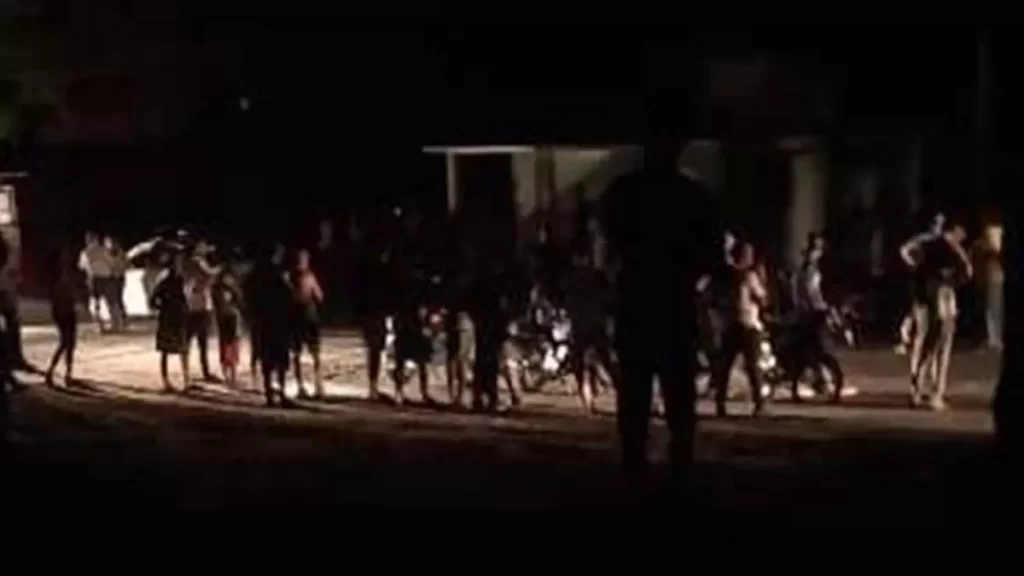
One of the images shared on social networks of  the protest in Santiago on the night of March 18 (Yosmany Mayeta Labrada/Facebook)

14ymedio bigger14ymedio, Havana, March 19, 2024 — There have now been at least eleven people arrested during this weekend’s protests in several places in Cuba. According to the legal organization Cubalex, in El Cobre (Santiago de Cuba) Oriesel García, Karel Artiles and another man whose identity is not known were arrested on Sunday. In Bayamo, Justicia 11J counted ten arrested, among whom two, Leandro Tamayo and Raúl González, have been released.

According to the organization, which does not know the identity of the others arrested and asks for help for this, Tamayo was released on Monday night after paying a fine of 3,000 pesos for “public disorders” and with an order to leave the province to return to his place of residence. “We have no more information about the conditions of Raúl González’s release,” adds Justicia 11J.

Some activists and social media profiles have also reported the arrest in Santa Marta (Matanzas) of a couple who participated in the protests on an electric motorcycle, but this has not been confirmed, and the identities of the detainees are not known.

Independent journalist Yosmany Mayeta Labrada reports that Oriesel García, 41, from Santiago, a member of the Masonic lodge, was violently arrested while demonstrating peacefully, and his whereabouts are unknown. continue reading

Justice 11J also reported the arrest of former political prisoner Ramón Jesús Velázquez Toranzo, who returned to Cuba from abroad, where he lives, and was arrested on March 8 after calling for a peaceful march in El Cobre.

His daughter Rufina Velázquez, who lives in the United States, said that her father was taken to the Carlos J. Finlay Military Hospital on Monday and that they still do not know “what charges have been invented against him or what legal process exists.”

“My brother was able to see my father, who is very weak, in a complicated health condition. He is still on hunger strike,” she added, encouraging Cubans to continue protesting. “We are uniting in a just cause, which is love for Cuba,” she said.

Despite the repression, the demonstrations continued on Monday night. With the shouts of “Turn on the power,” “Patria y vida” and “Díaz-Canel singao (motherfucker),” several neighborhoods of Santiago de Cuba, such as Micro 9 in the José Martí district, joined the march of conga and cacerolazos [banging on pots and pans],* after the residents of El Cobre did the same.

According to Mayeta on Facebook, the residents had been without electricity since 1:00 a.m. on Monday afternoon and began to demonstrate at night, chanting “We are hungry.” In the area near the Sodito cafeteria, “several patrol cars and black berets (special troops) arrived, but people continued to protest and beat on pots and pans,” he said.

Hours later, Mayeta, who lives in the US, shared other videos where several trucks were seen moving sacks, while the population shouted: “The rice, the rice has arrived!” One of the demands of the demonstrators, along with the cessation of blackouts, has been that the standard ration of food, which is late or only half of the allotted amount, be delivered to the ration stores. Local leaders have tried to calm the protests by momentarily turning on the power and speeding up the deliveries.

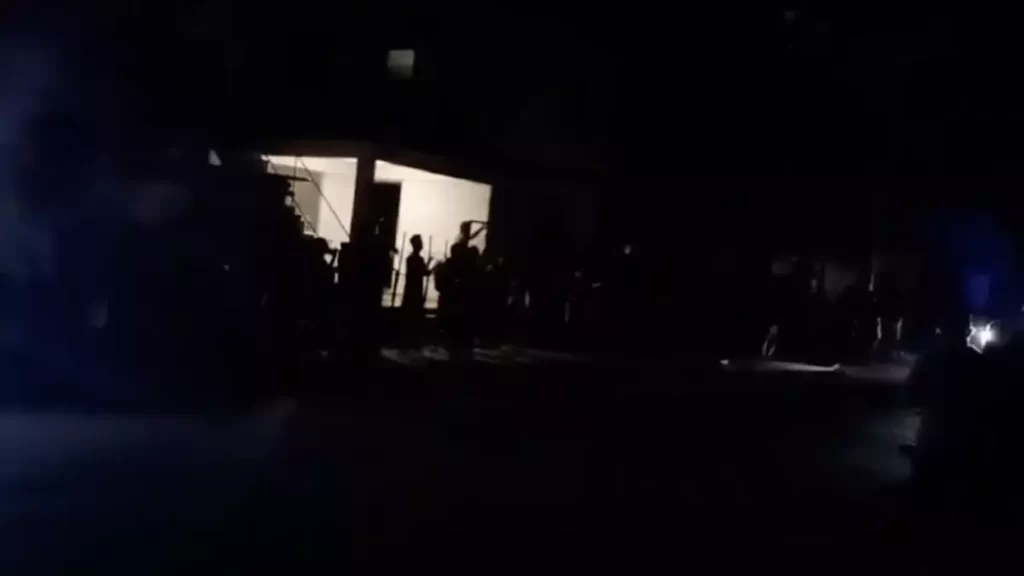
Mayeta also said that the Los Pinos neighborhood had taken to the streets and published a video in which, in the middle of a blackout, the residents walked through the streets shouting slogans.

Other publications on social networks report protests in Sancti Spíritus, as well as internet outages throughout the Island. As a neighbor who asked for anonymity told this newspaper, on Monday night several people gathered in the Jesús María neighborhood to protest, but they were silenced by a group that chanted slogans in favor of the Government. In a video released on social networks, which allegedly records these  protests, several protesters are seen singing La Bayamesa, the national anthem, and demanding “Freedom!”

Several communities of Cubans residing in various countries have demonstrated in support of the protests on the Island. In Spain, emigrants demonstrated in Madrid, Barcelona and Bilbao.

Also in Belgium and Uruguay, exiled Cubans have asked the Government of the Island to respond to the demands of the citizens and respect their right to demonstrate. “Our exile community continues demonstrating in the streets of Uruguay for the second day, accompanying the protests in Cuba and making visible the repression that the regime continues to exercise against our civil society. All off us are giving moral support to our people from South America,” said the Cubanos Libres platform in Uruguay on its social networks.

In the United States, in addition to the support of several congressmen and politicians of Cuban origin, such as Mario Díaz-Balart, Maria Elvira Salazar, Carlos Giménez, Marco Rubio and Rosa María Payá, the exile community also held demonstrations in front of the Versailles restaurant, in Little Havana (Miami), at the monument to José Martí in New Jersey and in front of the Cuban Embassy in Washington.

Meanwhile, the Cuban Government insists on blaming the United States for the economic situation of the Island and for “taking advantage” of the moment of crisis to instigate disorder. The Cuban Foreign Ministry even called on the chargé d’affaires of the Washington Embassy in Havana to give him a protest note which called for order and warned him about the “intervening” behaviors of his Government.

In this Monday’s broadcast of the Primetime News, Miguel Díaz-Canel, who appeared in front of the state press and several leaders, said the protests were “created by instigators” and called the Washington Embassy in Havana – which posted a statement on X asking for the human rights of the demonstrators to be respected – “meddling,” “hypocritical” and “arrogant.”

Faced with the accusations, the Biden Administration responded to Havana: “The United States supports the Cuban people in the exercise of their right to meet peacefully,” Brian Nichols, the head of the State Department for Latin America, said on social networks. “The Cuban Government will not be able to meet the needs of its people until it adopts democracy and the rule of law and respects the rights of citizens.”

*Translator’s note. Protesting by banging on pots and pans, called a ‘cacerolazo’ in Cuba, is a common form of protest in many Latin American countries.

Translated by Regina Anavy

____________

COLLABORATE WITH OUR WORKThe 14ymedio team is committed to practicing serious journalism that reflects Cuba’s reality in all its depth. Thank you for joining us on this long journey. We invite you to continue supporting us by becoming a member of 14ymedio now. Together we can continue transforming journalism in Cuba.
La Guiteras Power Plant Lasts Only One Day Before Shutting Down on the Cuban Electric System

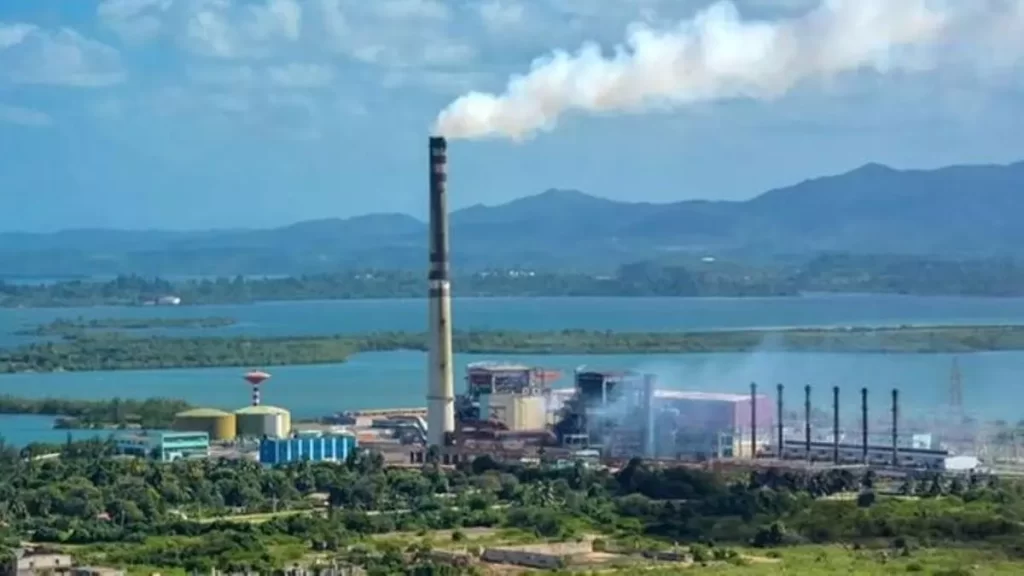
View of the Antonio Guiteras thermoelectric plant, the largest in Cuba, located in the province of Matanzas. / TV Yumurí/Facebook

14ymedio bigger14ymedio, Madrid, 20 March 2024 — The main thermoelectric power plant in the country, the Antonio Guiteras of Matanzas, left the National Electric System (SEN) just 24 hours after its synchronization. Without further details, early in the morning of Wednesday, the Electric Union of Cuba (UNE) announced that its only unit is out of service “due to a breakdown.”

The Guiteras entered the SEN on Monday, March 18, after being out of service 17 days for maintenance. Its arrival was eagerly awaited, since it is the plant with the most generation, 280 megawatts (MW) at full capacity. Journalist José Miguel Solís, of Radio Rebelde in Matanzas, follows the wanderings of the thermoelectric plant. He published an image of the Guiteras in full operation shortly before 1:00 in the afternoon on Tuesday, when its capacity was 270 MW.

According to Radio 26 of Matanzas, in the early hours of Wednesday the plant suffered an “inconvenience in the boiler,” in addition to a steam leak in one of the turbines, which the technicians hope to solve in a short time. “The correction of the breakdowns, natural after an intense maintenance of 1,500 parts, will allow the reinstatement of the unit before the time of maximum demand,” the media said. continue reading

This Monday, the Minister of Energy and Mines, Vicente de la O Levy, celebrated the return of the western colossus that, together with a tanker that was supposed to arrive with fuel “in the middle of the week,” could alleviate the huge deficit reached in the last month, when records showed a deficit of up to 45% of the daily demand for electricity throughout the Island. The blackouts have even reached Havana, traditionally free from the most extensive cuts that are common in the interior of the country, especially in the east.

The Minister of Energy and Mines, Vicente de la O Levy, celebrated the return of the western colossus, together with a tanker that was supposed to arrive with fuel “in the middle of the week”

The shortage of energy, which shuts down water pumping systems, air conditioners and fans, and causes problems with cooking in homes and businesses, among other things, have forced hundreds of Cubans into the streets throughout the country. The forecast of two weeks of calm announced by the authorities is now meaningless with the departure of the Guiteras.

In addition, unit 2 of the Felton plant, in Holguín, is no longer in the system due to a breakdown, and unit 8 of the Mariel plant and unit 6 of Nuevitas are undergoing maintenance, while the “limitations in thermal generation” as the UNE calls them, are 457 MW.

The total forecast for this Wednesday, in the middle of this panorama, is 940 MW of deficit, favored by a cooler climate than last week. “They can’t pretend that putting patches and glue on a transformer of such power can solve the problem,” says a customer. Unfortunately, what the Guiteras needs is a total maintenance on everything, and there’s no money for that.”

Translated by Regina Anavy

____________

COLLABORATE WITH OUR WORKThe 14ymedio team is committed to practicing serious journalism that reflects Cuba’s reality in all its depth. Thank you for joining us on this long journey. We invite you to continue supporting us by becoming a member of 14ymedio now. Together we can continue transforming journalism in Cuba.

Chile Faces the Danger of Following in Cuba’s Footsteps

Although they were all fair demands, the way of expressing them through citizen “revolts,” in which the current president Gabriel Boric also participated, left much to be desired / Twitter/Archivo

14ymedio bigger14ymedio, Houston, Jorge Luis León, 15 March 2024 — Chile is a beautiful and vigorous country – I saw this when I visited my Chilean family in 1996 – but the political instability and constant protests that shook the country distorted that beauty. The Estallido Social, a social outburst that lasted from October 2019 to March 2021, has been one of the most violent in recent years. Many say this was the moment of the “awakening of Chile”; others describe the protests as a “big mistake” that weakened the country enormously. For me, the outburst exceeded the limits that Chilean democracy could endure.

The trigger was the increase in public transport rates, later joined by demands for reform in the health and education sectors, as well as with pensions. Although they were all fair claims, the way of expressing them through citizen “revolts,” in which the current President Gabriel Boric also participated, left much to be desired.

The violence covered Santiago and quickly spread to other regions of the country. The “awakening” left about 34 dead, in addition to thousands wounded and arrested. On the economic front, the losses amounted to 3.3 billion dollars, between 100,000 and 300,000 jobs, the devaluation of the Chilean peso and a decline in the country’s economic growth. continue reading

The “awakening” left about 34 dead, in addition to thousands wounded and arrested   

This was the situation when Boric came to the presidency in 2022. His program promised everything that citizens had demanded during the demonstrations: justice, order, increase in the minimum wage, improvements in education and health, and, as a highlight, a new Constitution for the country. So far, nothing seemed out of the ordinary, although the inclusion of several communist politicians in his cabinet raised suspicions.

In the long run, the Administration demonstrated its inability and clumsiness in governing, to the point that 65% of the population disapproves of its management. Nothing has been resolved. On the contrary, new problems have arisen with few solutions, and the Government “advances” blindly in the face of many possible missteps.

One of the scenarios where Boric’s poor political judgment was clearly perceived was the creation of a preliminary draft of a new constitution for Chile, with which he intended to divide the country into multiple nations. Naturally, the proposal was rejected by the Chileans. Weren’t there enough elements to suggest that such clumsiness would not pass the scrutiny of the people? Yes, there were, but a myopic president and an unprepared government team could not perceive them.

This is how things continue in a country that was called at some point, with good reason, the “locomotive of South America.” If this Government does not rectify its course, if it persists in blindly following the continent’s far left, the consequences are predictable: stagnation, poverty and, what is worse, hopelessness.

Let’s look in our own mirror: Cuba, one of the most prosperous nations in Latin America, became one of the poorest. I hope history doesn’t leave the Chileans, like us, mortally wounded.

Translated by Regina Anavy    

____________

COLLABORATE WITH OUR WORKThe 14ymedio team is committed to practicing serious journalism that reflects Cuba’s reality in all its depth. Thank you for joining us on this long journey. We invite you to continue supporting us by becoming a member of 14ymedio now. Together we can continue transforming journalism in Cuba.

A Proposal To Join Forces Against the Dictatorships of Cuba and Its Allies

Luis Zúñiga, former Cuban political prisoner, during the conference on torture and dictatorships in Latin America held in Madrid. (14ymedio)

14ymedio bigger14ymedio, Madrid, Rosa Pascual, 18 March 2024 — More than 4,000 miles away from Santiago de Cuba, in Madrid, there was talk this Monday night of the protests that took place in the eastern capital and other cities of the Island. “Let’s keep present in our thoughts the people who are in the streets right now,” said Javier Larrondo, founder of Prisoners Defenders, at the beginning of the part dedicated to Cuba in Faces of Torture, autocracies in Latin America.

Leopoldo López, general secretary of the World Liberty Congress, which organized the event with the support of the Human Rights Foundation (HRF), had inaugurated a conference for victims of the tyrannies of Bolivia, Nicaragua, Venezuela and Cuba, asking for the unity of the citizens of all countries living under an autocratic regime. “Human rights have no borders; human rights cannot be defended on islands, without understanding that every human being has the same rights, regardless of where he lives,” said the Venezuelan opponent, exiled in Spain since October 2020.

Both he and former Bolivian senator Zvonko Matkovic, who spent ten years in pretrial detention without trial, insisted on the union of the activists of the four countries in response to the authoritarian regimes, all members of the Puebla Group. “The rulers help each other, and we also have to help each other.”

“They have the whole society on its knees. They need to establish terror in society. That’s why they torture those who have the audacity and courage to face them”

Along with Larrondo, the voice of Cubans was represented by Luis Zúñiga, a former political prisoner described by the regime as an “anti-Cuban terrorist,” who began by exposing how Castroism has used the Armed Forces from the beginning to torture and repress the Cuban people. “They continue reading

have the whole society on its knees. They need to establish terror in society. That’s why they torture those who have the audacity and courage to face them,” he said.

Zúñiga, who silenced the already sensitized audience by telling how he and other prisoners covered their ears with threads pulled out of their underwear so as not to hear the screams of the tortured, detailed the process of accelerated establishment on the Island of a terror based on that of the Stalinist regime. To illustrate, he gave a figure.

Before 1959, there was a prison for each province in Cuba, which then numbered 6, and now number 15. After, 240. “On an island of 11 million inhabitants. So that you understand the level of repression that has been experienced in Cuba for 65 years.” In the 1960s, he said, there were 120,000 political prisoners, “recognized by Fidel Castro and commented on at the United Nations.” He showed a photograph of a walled cell, like the one in which he himself spent nine of the 19 years he was in prison. “There is no window in the cell, and that’s where you live. You live perpetually in that twilight,” he added.

Zúñiga also spoke of the Cuban presence in Angola and showed photographs from the ’11J’ demonstrations of the wounded and beaten. By criticizing the regime, Cubans can lose their jobs and, even worse, their freedom. In addition, he stressed, Cuba is the model to follow for the rest of the autocratic countries in the region. “They have two strategies: one for friendly countries, which are Nicaragua, Venezuela, Brazil and Honduras; and another for other countries, such as Colombia, Chile, Argentina, Uruguay.” In the former, he specified, intelligence and the Armed Forces are trained, while in the second they act “through non-governmental organizations, civil society and far-left organizations.”

Venezuelan Leopoldo López, general secretary of the World Liberty Congress, inaugurated the event in Madrid. (14ymedio)

Javier Larrondo asked everyone to have a symbolic and specific thought for the leader of the Patriotic Union of Cuba, José Daniel Ferrer, among the many individual cases he cited. The alarm has increased over this prisoner in the last 24 hours, after his relatives – later supported by American and European political leaders – asked for proof of life. They haven’t heard from him since November 2023. “There is a victim who is being tortured, and they are killing him slowly, systematically. And his name is José Daniel Ferrer. They want to release him in a wheelchair, that’s a reality,” Larrondo shouted.

In his speech there was no lack of reproach toward the leaders of the European Union, for sitting down and shaking hands with the leaders of the regimes who torture those who are willing to stand up to them.

The figures provided at the beginning of the event by Javier El-Hage, legal director of HRF, did not leave anyone indifferent. “In the world, there are a total of 97 authoritarian or hybrid states; that is, with a democratic facade but authoritarian methods.” Among those he considers “hybrids” are India and Serbia, he said, warning of the considerable ground that authoritarian governments are gaining in the face of democracies.

“There is a victim who is being tortured, and they are killing him slowly, systematically. And his name is José Daniel Ferrer”

His introduction was followed by Jhanisse Vaca Daza, of the Jucumari Foundation, and Alejandra Serrate, both Bolivians, who demanded that the situation of their country be taken into account, overshadowed by the apparently most brutal cases of Cuba, Nicaragua and Venezuela.

Vaca Daza told the story of the indigenous opponent, César Bazán, a cocoa grower, who is in a private prison for medical assistance after suffering three embolisms that paralyzed him after being tortured. According to her report, the jailers pressured him to sign – with a finger, since he lacks mobility – a paper admitting his guilt. “They told him that he could be free and have the necessary care, that he is there because it is his decision to be suffering that type of torture, that he does not know because he is very stubborn and does not want to accept it,” she said.

Both agreed that the Government of Luis Arce is even “stronger in terms of repression, political persecution, torture and authoritarianism, even armed attacks on the press, because it wants to win the vote of the people who support Evo Morales.”

Another of the most emotional moments occurred during the testimony of the Nicaraguan student leader Lesther Alemán, who received a standing ovation from the auditorium by reclaiming his nationality, lost “only on paper.” “I am and will continue to be Nicaraguan, however painful that is.” Alemán, 26, spoke together with the activist Alexa Zamora, also stripped of her passport, and told of the case of the children who are collateral victims of the violence of these dictatorships, exemplified in the case of the son of one of the stateless opponents who – like him – was forcibly expatriated on a flight to the United States.

Alemán did not want to reveal the name of the affected person, but he did explain that the child could not leave the country because his father, lacking a passport, “did not exist.” The solution that was offered to the family in Migration – “sent from above” – was to deprive the minor of his paternal surname and formally take away parental authority. “The minor has had to lose his father’s last name to be able to hug him,” he said, showing the way family members are pressured.

“Not only is it worrying that there are more and more dictatorships, but that their economic and commercial power is increasing”

Venezuela was very present at the event, especially thanks to the video with virtual reality prepared by Víctor Navarro, from Voices of Memory, to place attendees of the exhibition – which will be open until Wednesday in the Serrería Belga cultural space in Madrid – inside the Helicoide prison itself, headquarters of the Bolivarian Intelligence Service in which all kinds of tortures have been reported.

Both he and Molly de la Sotta put the focus on the many detainees of the Maduro regime that “liberates political prisoners on one hand and imprisons as many on the other.” Both were critical of the processes of dialogue that have been carried out with the Government of Nicolás Maduro and, even more, of the many dealings that the different countries have with Venezuela. “Many democratic countries continued to do business with Venezuela. Not only is it worrying that there are more and more dictatorships, but that their economic and commercial power is increasing. According to a report, 48% of the world’s Gross Domestic Product is produced by autocracies,” said Navarro. “An economy that is maintained thanks to the blood of the tortured.”

De la Sotta shook up the public detailing some of the methods of torture of Chavismo that have been documented, including asphyxiation by immersion, hanging with ropes, cuts in the soles of the feet, rapes with a rifle, simulation of executions, deprivation of food and sleep for more than 48 hours, obligation to eat their own excrement and vomiting, and all kinds of ideas, imaginable or not.

“This is a key year for the permanence of this autocracy. A key year for a transition process. Yes, we need the European Union. We need you to say that there is torture in Venezuela. We need you to demand the release of political prisoners. In Venezuela there is torture; in Venezuela there is murder. But there are also Venezuelans who are not going to shut up and who are going to continue fighting,” Navarro concluded.

Translated by Regina Anavy

____________

COLLABORATE WITH OUR WORKThe 14ymedio team is committed to practicing serious journalism that reflects Cuba’s reality in all its depth. Thank you for joining us on this long journey. We invite you to continue supporting us by becoming a member of 14ymedio now. Together we can continue transforming journalism in Cuba.

Cuba and North Korea Congratulate Putin on His Electoral Victory With 87 Percent of the Votes

Russian President Vladimir Putin and his Cuban counterpart, Miguel Díaz-Canel, in an archive image.

14ymedio biggerEFE (via 14ymedio), Havana, 18 March 2024 — The president of Cuba, Miguel Díaz-Canel, congratulated his Russian counterpart, Vladimir Putin, on his re-election for a fifth term as president, after achieving his biggest electoral victory since he came to power this Sunday, which will allow him to remain in the Kremlin until 2030.

“Our sincere congratulations on the re-election of President Vladimir Putin. It is a reliable sign of the Russian people’s recognition of his management,” the Cuban ruler said on the social network X.

Díaz-Canel said that “links between Cuba and Russia will continue to be strengthened, in sectors identified for the well-being of our peoples.”

In the last year, the relationship between the two governments has intensified, with the exchange of visits by senior officials, including trips to Havana by the Russian Chancellor, Sergey Lavrov, the secretary of the Security Council and the deputy prime minister, Dmitry Chernyshenko. continue reading

Russia is one of Cuba’s top ten trading partners, and both governments define their association as “strategic.” In November 2022, Díaz-Canel and Putin analyzed in Moscow the development prospects for the Russian-Cuban strategic partnership in the political, economic, commercial, cultural and humanitarian spheres. Several agreements were signed, including the supply of oil, a key area for Havana.

The North Korean leader, Kim Jong-un, also sent a message of congratulations to the Russian president for his victory in the presidential elections held on Sunday, in which the authorities did not allow the participation of any strong opposition candidate.

In a brief note, the North Korean news agency KCNA said that Kim “congratulated Vladimir Vladimirovich Putin on Monday on his re-election to the presidency of the Russian Federation.”

The message, the report adds, “will be transmitted to the Russian Ministry of Foreign Affairs by Sin Hong-chol, ambassador of the Democratic People’s Republic of Korea (official name of North Korea) to the Russian Federation.”

The Russian Central Electoral Commission allowed only three candidates considered loyal to the Kremlin to take part in the presidential elections  

Kim and Putin held a summit meeting last September at the Russian cosmodrome in Vostochny. They agreed to expand cooperation in the military field and certified the recent rapprochement between the two countries.

Since then, Pyongyang has transferred thousands of containers with weapons that the Russian Army has used against Ukraine, and in return, it is believed that Moscow advised the North Korean regime on successfully launching its first spy satellite.

Both countries have also strengthened their cooperation in the areas of food, commerce, science, tourism and sports.

Alleging technical or formal defects, the Russian Central Electoral Commission (CEC) allowed only three candidates considered loyal to the Kremlin to take part in the presidential elections.

Putin, 71 years old and in power since 2000, received 87.34% of the votes, ten points more than in 2018 (76.5%), during the three days of voting in the eighth presidential election in the history of Russia since 1991, according to the scrutiny of 50% of the votes reported by the Central Electoral Commission (CEC).

The second and third candidates with the most votes were the communist Nikolai Kharitonov and the representative of the New People party, Vladislav Davankov, with just over 4% of the votes each. The last contender was the ultra-nationalist Leonid Slutski, who received approximately 3% of the votes.

Translated by Regina Anavy

____________

COLLABORATE WITH OUR WORKThe 14ymedio team is committed to practicing serious journalism that reflects Cuba’s reality in all its depth. Thank you for joining us on this long journey. We invite you to continue supporting us by becoming a member of 14ymedio now. Together we can continue transforming journalism in Cuba.

In the Town of Cacocum, Holguin, a Crowd Took to the Streets Last Night To Protest the Blackouts

Moment when the residents of Cacocum, Holguín, took to the streets this Saturday to protest the blackouts / Facebook/Capture

14ymedio bigger14ymedio, Havana, 17 March 2024 — “We want electricity, we want electricity!” In Holguín, they can no longer cope with the blackouts, and on Saturday night, a crowd went out to demonstrate by banging on pots and pans in the municipality of Cacocum. “People threw themselves into the street, and it was not four or five, but dozens,” a source tells this newspaper.

In the province, the power went off yesterday at six in the morning and, after seven at night, the residents’ complaints were  widespread. “I’ve just been without power for 14 hours and 15 minutes. It’s abusive, with not enough time to make coffee in the morning, or lunch, or cook food, or have cold water, because when they put it on there’s not even time to make ice, you have to buy food on the street.” This is how Maidelys describes the litany of problems faced by the residents.

In the neighborhood of Loma de la Cruz, for example, the water has not arrived for days, says Manuel, due to the lack of power required to pump it. “When you have to buy purified water on the street, it’s a disaster,” he says. “People are buying that water, which is usually only for drinking, for everything, even for cleaning.” continue reading

“I’m in the dark again, and all the children in the families around me are crying. It hurts me to think that they and I, born in the 90s, will share similar childhoods; and that their parents, like mine, will have to grab fans to ward off the heat and the nocturnal terrors of their children.” This fragment is not from an opponent, but from an article published this Saturday in Girón, the Communist Party newspaper in Matanzas. Not even the official press can continue to gloss over the energy disaster that Cuba is going through.

https://www.facebook.com/watch/?v=706423548320966

Note to readers: a ‘nighttime’ video can see here. We were not able to insert it into this post.

Nor can the the Minister of Energy and Mines, Vicente de la O Levy, hide it. His statements to national television this Saturday fully show the “complex energy situation.” The minister assures that this Monday the Guiteras thermoelectric will go into operation in Matanzas, with a power of 280 megawatts, higher than what it had when it shut down for one more repair. However, he also warns that “the situation will remain tense.”

The “fundamental problem” pointed out by De la O Levy is “the issue of fuel.” According to his words, which do not specify whether the donations from Venezuela and Mexico have stopped, they are undertaking “an intense work and a great sacrifice” at a financial level, “because we have to buy fuel in the international market.”

The minister concedes: “We have debts, and we are renegotiating and working with each country. Some have accepted; they understand our situation with electricity.” As an example, he mentioned the “boat that will arrive on the 23rd, with about 43,000 tons of fuel.”

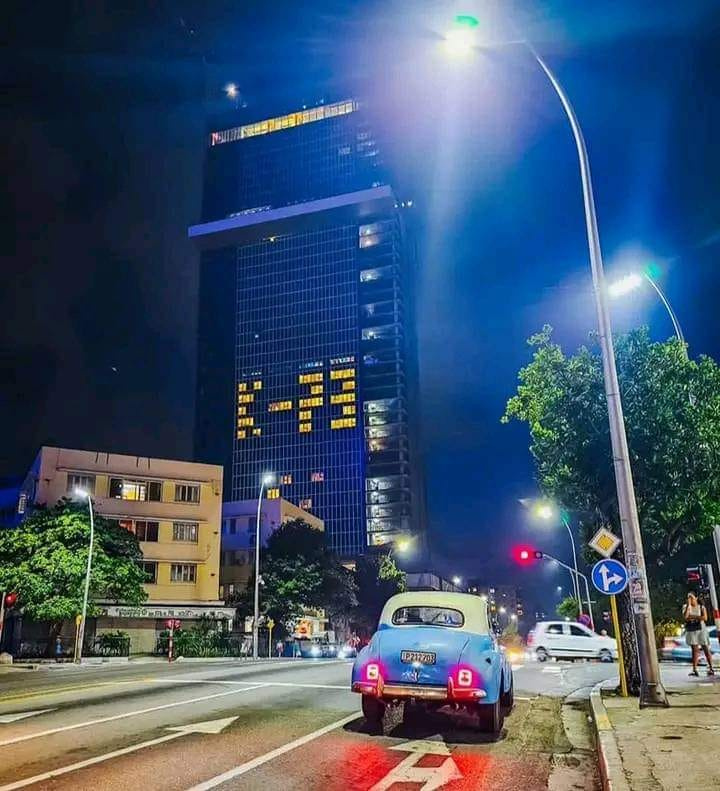
On Friday, the mammoth Tower K, on 23rd Street in El Vedado, adorned its facade with a play of lights / 14ymedio

The minister may well be referring to the tanker Eco Fleet, which arrived from Tunisia almost three weeks ago, on February 25, and has not yet unloaded. That cargo, in any case, as the minister explained, will only give fuel for “ten or twelve days.” Then, “another ship will arrive on the 29th, with crude oil that we can refine,” but the energy generation that this product will allow once refined will not happen until April 6, the senior official said. Will things get better from then on? It doesn’t seem so: “That week [April 6] we are going to have a better situation, but then there will be a bump. We are buying fuel with the few financial resources we have.”

In the meantime, an “exact hour-by-hour planning” will continue on the part of the Government. They are, says the minister, doing the impossible to reserve fuel for the hours of the night, “so that people can rest, because we are aware of what is happening.” There are regions, he acknowledges, “that have entire mornings of blackout and practically the whole day.”

Not only does this occur in Holguín but also in other provinces, such as Mayabeque, where the electricity company reported blackouts of more than 10 hours in a row, with power going on for only two to three hours. In Camagüey, independent journalist José Luis Tan Estrada reported that the deficit on Saturday was 105 MW, “which represents 99 percent of the province having no electricity from 5:00 in the morning.”

I had to throw away a lot of food, chicken thighs, fish and even cheese that spoiled,” says Dunia, desperate

The same thing happened in Sancti Spíritus. “I had to throw away a lot of of food, chicken thighs, fish and even cheese that spoiled,” says Dunia, desperate. “We are worn out, on the verge of a nervous breakdown.” The electricity company  had warned that due to the deficit, there would be more blackouts than planned: “It is necessary to extend the affected time period, as well as to advance some circuits before the scheduled time.”

In San Antonio de los Baños, Artemisa, cradle of the massive Island wide demonstrations of July 11, 2021, rumors of protests proliferate after a Saturday of continuous blackout. “They put it on and then turn it off again at about eight at night,” says María Fe. “My brother got in the shower and they cut off the power. I told him to get out, to shave with salt, because you can’t bathe in cold water. If we get sick, things will get complicated.”

Once the sun went down yesterday, mosquitoes crowded onto the screens of mobile phones, the only light in many neighborhoods of Havana, which, as the minister acknowledged, also suffers “significant affects.” In Central Havana, for example, there was an “extra” blackout that was not in the planned calendar: “Things must be very bad for them to dare do it here; our block was not planned for today,” Miguel observes.

This man, age 40, feels tired. “I calculate that last night’s blackout was a little more than three hours. When the electricity returned, the murmur of joy and relief that ran through the entire neighborhood was really impressive.” From Miguel’s balcony, you can see an object that never loses power. On Friday, the mammoth Tower K, on 23rd Street in El Vedado, adorned its facade with a play of lights. “K-23, it said,” says Miguel. “But the 2 was missing a piece. Even that building suffers from blackouts, albeit a small one.”

Translated by Regina Anavy

____________

COLLABORATE WITH OUR WORKThe 14ymedio team is committed to practicing serious journalism that reflects Cuba’s reality in all its depth. Thank you for joining us on this long journey. We invite you to continue supporting us by becoming a member of 14ymedio now. Together we can continue transforming journalism in Cuba.
Ukraine Warns of the High Number of Cubans Fighting With Russian Troops

Darío Jarrosay at the press conference held in Kiev, where several prisoners of war were interviewed

14ymedio biggerEFE (via 14ymedio), Kiev, 16 March 2024 — The Ukrainian body that deals with prisoners of war warned this Friday of the high number of Cubans fighting with Russian troops in the war in Ukraine, and reproached the authorities of Havana for their tolerance of Russian recruitment operations on the Island.

“We see photographs and videos of the Russian side where many mercenaries from Cuba are seen,” said Petro Yatsenko, the head of the Ukrainian Committee for the Treatment of Prisoners of War. At a press conference held in Kiev, he warned of the growing number of mercenaries recruited by Russia from the so-called Global South countries.

Asked by EFE about the position of the Cuban Government in the face of Russia’s actions to attract Cuban citizens into the ranks of its Army, Yatsenko stated that Ukraine has no evidence of Havana’s official participation in this type of effort. “We cannot say that it is a (Cuban) state program, but we know that no one (in Cuba) opposes it,” said the Ukrainian official, who also said that “Russian agitators” work without restrictions in Cuba. continue reading

“We cannot affirm that it is a state (Cuban) program, but we know that no one (in Cuba) opposes it”

Yatsenko made these statements at a press conference in which eight prisoners of war from Nepal, Somalia, Sierra Leone and Cuba also participated, imprisoned by Ukrainian troops while fighting with Russian forces.

Darío Jarrosay, a Cuban prisoner of war, is a 35-year-old teacher and musician from Guantánamo. He said he had been attracted to Russia by a false offer on Facebook to work in construction, and he was then dragged to fight with the Russian Army on the front. “I joined the Russian Army because, in Cuba, I received a banner (announcement) on Facebook saying that people were needed for construction.”

Jarrosay explained that he traveled to the Russian Federation from Cuba after filling out a form to work in construction. “It wasn’t to enter the war; I never agreed to enter the war,” he said at the event held in the Ukrainian capital. “When I arrived in Russia, I found myself in the war,” he said. This Cuban geography teacher and musician is now waiting for a solution to his case as a prisoner of war in Ukraine.

Petro Yatsenko, from the Ukrainian authority that deals with prisoners of war, said at the same press conference that Ukraine is open to negotiating the return of these fighters to their countries of origin. Jarrosay said he was on the flight to Russia with five other Cubans who were also looking for work in Russia. He found other Cubans In the Russian Army, and he received 250,000 rubles (about 2,500 euros) a month for fighting on the Russian side, a salary much higher than the one he received in Cuba.

Asked about the message he sends to his compatriots, Jarrosay recommended that Cubans “not go.” “Everything is a hoax,” he said. “Overnight when you go to your job you find yourself in the war.”

Along with Jarrosay, five Nepali prisoners of war, one from Sierra Leone and one from Somalia, participated in the press conference. All of them were captured by Ukraine while fighting as mercenaries with the Russian side and claimed to have been deceived when they were recruited. Some of them said that they ended up in the Russian Army after traveling from Cuba to look for civilian jobs. Others claimed to have been sent to the front after having agreed to carry out military tasks behind the front lines.

The other prisoners of war reported having been victims of deception to be recruited by the Russian Army.

By making these testimonies public, Ukraine is hoping to prevent other citizens of low-income countries from accepting jobs in Russia or positions in the Russian Army that end up leading them to kill Ukrainians, or to being captured or dying at the front, according to Yatsenko.

According to the Ukrainian official, Russia recruits more and more mercenaries from countries in Africa, Asia and, to a lesser extent, Latin America, to make up for casualties in their ranks. Ukraine has been open to negotiating the return of these captured fighters to their countries.

Translated by Regina Anavy
____________________

COLLABORATE WITH OUR WORKThe 14ymedio team is committed to practicing serious journalism that reflects Cuba’s reality in all its depth. Thank you for joining us on this long journey. We invite you to continue supporting us by becoming a member of 14ymedio now. Together we can continue transforming journalism in Cuba.
“No Martyrs or Leaders,” the New Directions for the Diminished Cuban Bodegas

This newspaper was able to confirm that the images of the country’s former leaders were no longer in at least a dozen places where they were previously exhibited.

14ymedio bigger14ymedio, Havana, Natalia López Moya, 16 March 2024  — “They told us to remove the photos,” explains the employee of a bodega (ration store) in Nuevo Vedado, Havana, before the question of a customer surprised by the disappearance of the images of Fidel Castro, his brother Raúl and Ernesto Guevara who, until recently, alternated on the wall with the blackboard that announces the ever-shorter list of available products. “They called from the Ministry of Internal Trade and advised us that we could not have any martyrs or leaders,” he says.

The practice of placing images of leaders of the Cuban Communist Party (PCC), guerrillas and people who fell in combat during the revolutionary battles, was very common in the ration stores. “You went with your libreta (ration book) to buy something, and instead of beans you found a poster with a smiling Camilo Cienfuegos or propaganda from a PCC Congress,” says Liuber, a resident of San Lázaro Street in Central Havana. He was surprised a week ago when he arrived at his bodega and found “nothing; those faces were no longer on the shelves.” continue reading

“You went with your ration book to buy something and instead of beans you found a poster with a smiling Camilo Cienfuegos”

This newspaper was able to confirm that the images were no longer in at least a dozen places where they were previously exhibited before the eyes of those who entered. A butcher’s shop on Basarrate Street in El Vedado, which until recently showed a portrait of Ernesto Guevara, with a beret and a thin beard, no longer had the photograph, previously located on the table behind the counter.

“It seems they don’t want people to continue taking photos of the bodegas and butcher shops without food but full of propaganda and posting them on social networks,” says another bodeguero in Old Havana who also received the “direction from above” to remove the images “that had been there for more years than the tomato sauce that didn’t arrive for the libreta.

The butcher shop on Basarrate Street replaced the painting of Che with an abstract / 14ymedio

However, the employee clarifies that the new regulations have not reached them in writing. “They told us at a meeting that the counterrevolution was using the photos they took inside the bodegas to create popular discomfort and associate the leaders of the process with the shortages.” The woman regrets the decision because “those images attracted tourists, who came in, started talking to us and some even left us a little gift.”

Now, the little rice that arrives every month for the standard quota does not pose for the cameras next to the face of a leader sheathed in his olive green uniform, and the sugar that is delayed in the supply no longer shares space with a poster of a guerrilla with a rifle on his shoulder. The political altars can no longer be next to the meager ration of food that is sold in the Cuban bodegas and butcher shops.

Translated by Regina Anavy

____________

COLLABORATE WITH OUR WORKThe 14ymedio team is committed to practicing serious journalism that reflects Cuba’s reality in all its depth. Thank you for joining us on this long journey. We invite you to continue supporting us by becoming a member of 14ymedio now. Together we can continue transforming journalism in Cuba.

Cuba Reaffirms Its ‘Unique Friendship’ With North Korea

Miguel Díaz-Canel and Ma Chol Su, the ambassador of North Korea

14ymedio biggerEFE (via 14ymedio), Havana, 16 March 2024 — The Cuban government decorated the ambassador of North Korea, Ma Chol Su, who finalized his diplomatic work in Havana, while reaffirming Cuba’s “unique friendship” with the Asian country, state media reported on Saturday.

The official newspaper Granma reported a meeting between the Cuban president, Miguel Díaz-Canel and the North Korean diplomat. In it, the Cuban president affirmed that the decoration was a “reaffirmation of friendship, solidarity and the brotherhood that exists between our Parties, our peoples and our Governments.”

North Korea maintains a historic relationship with Cuba that dates back to the time of the Cold War

“Our relations have matured with the passage of time; they have  endured and been consolidated. This process has been achieved because our relations have elements that distinguish them as truly unique among peoples,” he added. continue reading

The North Korean ambassador assured that he would transmit “to the leader Kim Jong-Un the messages of friendship and the fraternal feelings expressed” by Díaz-Canel.

North Korea has a historic relationship with Cuba that dates back to the time of the Cold War, in 1960. Then Cuban President Fidel Castro (1926-2016) visited North Korea in 1986, where he met with the country’s founder, Kim Il-sung, and his son and successor, Kim Jong-il, grandfather and father, respectively, of the current North Korean leader, Kim Jong-un.

The reaffirmation of political ties with North Korea takes place almost a month after the announcement of the formalization of relations between South Korea and Cuba, broken since 1959.

Translated by Regina Anavy

____________

COLLABORATE WITH OUR WORKThe 14ymedio team is committed to practicing serious journalism that reflects Cuba’s reality in all its depth. Thank you for joining us on this long journey. We invite you to continue supporting us by becoming a member of 14ymedio now. Together we can continue transforming journalism in Cuba.

German Tourism Giant TUI Suspends Its Flights From Amsterdam to Varadero

TUI maintains that it is not profitable to travel to Varadero

14ymedio bigger14ymedio, Havana, 17 March 2024 — The German operator Touristik Union International (TUI) announced that it is canceling the only service that connects Cuba with the Netherlands due to a shortage of customers. “There is not enough demand for this destination,” a TUI spokeswoman told the Luchvaart Nieuws website. Thus, from mid-May, there will be no more flights between the airports of Schiphol, in Amsterdam, and Varadero, in Matanzas.

Up to now, that flight has been operating on a weekly basis and makes a stopover in Varadero on its route to Cancun, Mexico, but the limited number of passengers who disembark and embark at Juan Gualberto Gómez airport is not profitable for the German company.

That flight operates on a weekly basis and makes a stopover in Varadero on its route to Cancun

“Travelers who have already booked a trip (after mid-May) will be personally informed by TUI or the travel agency with which they booked,” the spokesperson explained. The airline will also cancel the flights for the next winter season and does not plan to resume the route to the Cuban destination in the future. continue reading

The company will maintain, however, its flights to Cancun from Amsterdam, once a week without a stopover, and another with a stopover in Montego Bay, Jamaica.

In 2019, KLM Airlines, which was flying between Schiphol and Havana, suspended its operations due to the crisis caused by COVID-19. With the interruption of TUI’s services, Cuba has no direct connection with the Netherlands.

Luchvaart Nieuws adds that since the US abolished the visa exemption for those who have traveled to Cuba, interest in the Island as a tourist destination has decreased in that market. As provided by the measure that came into force in July 2023, if a traveler has visited the Island from 2021 and wants to enter the United States, they must apply for the B1/B2 visitor visa, which is more expensive and takes time.

The company will maintain its flights to Cancun from Amsterdam, once a week without a stopover, and another with a stopover in Montego Bay

The best alternatives for residents of Belgium, Holland and Luxembourg who want to travel to Cuba will be the routes that operate between the airports of Frankfurt and Paris to Havana and Varadero

In December 2023, TUI announced that, beginning in May of this year, it will suspend the route that connects the city of Manchester, in the United Kingdom, and Varadero.

Translated by Regina Anavy

____________

COLLABORATE WITH OUR WORKThe 14ymedio team is committed to practicing serious journalism that reflects Cuba’s reality in all its depth. Thank you for joining us on this long journey. We invite you to continue supporting us by becoming a member of 14ymedio now. Together we can continue transforming journalism in Cuba.

Spain Will Support the Construction of a Solar Park in Cuba Through an EU Initiative

The national energy plan is to reach 24% renewables  by 2030, a goal for which Cuba has a late start.

14ymedio biggerEFE (via 14ymedio), Havana, 16 March 2024 — Spain will support the construction of a solar park in Cuba within the framework of the Global Gateway strategy of the European Union (EU), the EU embassy on the Island reported in a statement on Friday.

The European bloc “has committed to supporting the energy transition in Cuba through renewable energies,” said the statement, which is made public in the midst of the energy crisis that the country is suffering, with prolonged daily blackouts.

A delegation visited the Island this week to hold talks. Spain announced its contribution, and the EU, Spain and France showed their willingness to work “to mobilize new investments in the sector,” according to the statement, which did not provide details about the project that has Spanish support. continue reading

This project aims to provide energy for 8,500 households and generate savings of 84 million euros

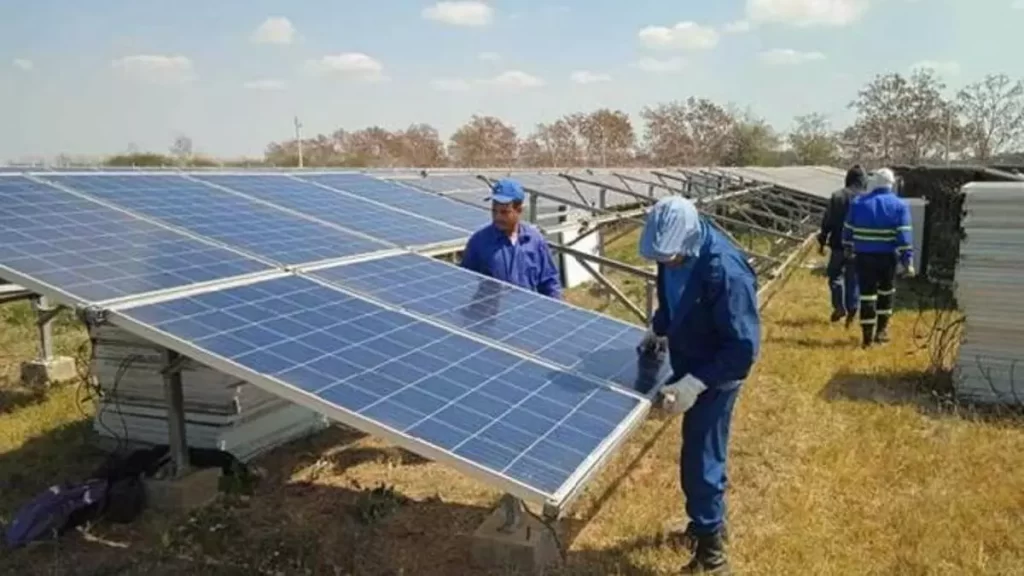
The EU delegation visited a solar plant in the west of the Island, financed entirely with European funds. According to the EU embassy in Cuba, this project aims to provide energy for 8,500 households, generate savings of 84 million euros (about 91 million dollars at today’s exchange rate), replace 168,000 tons of fuel and avoid the emission of 721,000 tons of CO2 into the atmosphere.

Global Gateway’s goal is to “promote smart, clean and safe links in the digital, energy and transport sectors, and to strengthen health, education and research systems around the world,” in accordance with the EU.

Since the end of January, the daily rate of maximum energy deficit is between 20 and 45% of the country’s needs

Cuba, plunged into a serious economic crisis for more than three years, is also going through a difficult energy crisis. Since the end of January, the daily rate of maximum energy deficit is between 20 and 45% of the country’s needs. This situation is due to the poor state of the national electricity system, which has seven obsolete thermoelectric plants with a chronic investment deficit, and a shortage of fuel due to lack of foreign exchange for importation.

This Wednesday, a plan was announced to install 92 solar parks on the Island to generate 2,000 megawatts. The national energy plan is to reach 24% renewable energies by 2030, a goal for which Cuba has a late start.

Translated by Regina Anavy

____________

COLLABORATE WITH OUR WORKThe 14ymedio team is committed to practicing serious journalism that reflects Cuba’s reality in all its depth. Thank you for joining us on this long journey. We invite you to continue supporting us by becoming a member of 14ymedio now. Together we can continue transforming journalism in Cuba.

A Strong Smell of Gas Alarms the Residents of Central Havana and the Authorities Do Not Respond

This Friday, those who passed by Galiano and Zanja couldn’t comment on anything else

14ymedio bigger14ymedio, Havana, Juan Diego Rodríguez, 15 March 2024 — A penetrating odor of gas has been alarming the neighbors of Galiano and Zanja, in Central Havana, for more than 24 hours. Early this Friday, those who passed by couldn’t comment on anything else. The situation, the residents say, is unsustainable.

In a phone call, the Gas Company confirmed to 14ymedio that several residents had already reported what appears to be a leak. “My car is now in the area,” the employee said, referring to a state service vehicle. “It looks like it’s on the street.”

In a second inspection by this newspaper, however, no official car was observed on the street   

To the question of what he advised the neighbors to do while determining if there was a way out and where to go, he answered: “Listen, I can’t give you an answer because I don’t know what’s going on.” continue reading

In a second inspection by this newspaper, however, no official car was observed on the street.

In the meantime, there’s a lot of fear. People still remember the terrible images of the Saratoga Hotel, which flew through the air on May 6, 2022, due to improper handling of liquefied gas from a tanker truck, which claimed the lives of 47 people.

Translated by Regina Anavy 

____________

COLLABORATE WITH OUR WORKThe 14ymedio team is committed to practicing serious journalism that reflects Cuba’s reality in all its depth. Thank you for joining us on this long journey. We invite you to continue supporting us by becoming a member of 14ymedio now. Together we can continue transforming journalism in Cuba.

Cuba Promises Russian Businessmen That They Will Be Able To Manage Hotels on the Island

Last year, Russian tourism grew 3.4 times compared to 2022

14ymedio bigger14ymedio, Havana, March 15, 2024 — With the arrival in Russia of Juan Carlos García Granda, Cuban Minister of Tourism, this week, the Island took a step further in its attachment to the Kremlin. Investment opportunities, inauguration of Russian-managed hotels and all kinds of facilities for tourists are Havana’s new promises to Moscow in exchange for obtaining, “in the short term,” the arrival of half a million travelers.

“The task we have put forward is to attract capital from Russian investors for Cuban tourism (…). We are working with the Russian hotel industry to have them manage hotel chains in Cuba. We want Russian businessmen to build their hotels in Cuba,” García Granda said at a conference in Moscow on Thursday.

We want Russian businessmen to build their hotels in Cuba,” García Granda said on Thursday

Cuba expects to receive more than 200,000 Russian tourists this year, a modest goal if you take into account that in 2023 more than 184,800 Russians visited Cuba, which resulted in a 3.4 percent increase in tourism from that country compared to the previous year. This was also recognized by the minister, who explained that “it is not a very large figure in absolute terms, but it will be a rather motivating result for us. I hope that in the short term, while I’m still minister, we will reach half a million.” continue reading

“The hotel business in Cuba has been developing for 30 years with the help of foreign investment. And, if we depend on Russian tourism, then it would be logical for this business to be managed by people who know Russian tourists well,” argued the minister. He added that this will involve the creation of “hotel complexes, various facilities with parking for yachts and other expansions.”

According to the minister, Cuba has adapted part of the sector so that Russian travelers feel comfortable when they visit the Island. “For example, Canadian tourists buy only one excursion while they are on vacation in Cuba. The Russians buy an average of three excursions. But over the years, customer preferences change, and we are planning to develop active and adventure tourism,” he explained. In addition, he added, “they can combine a vacation on the beach with an excursion and become familiar with Cuban culture, dance, rum production and tobacco plantations.”

The implementation of payments with MIR cards, since November 2023, was another of the “achievements” highlighted by the minister in the plan to “make things easier for the Russian client.”

“In these first months of operation, more than 2.7 million dollars have been transferred through MIR cards. There are 20,000 POS (point of sale) terminals in the main stores and tourist points throughout the country. This is something that is going to grow and all the conditions are created for it to do so,” he guaranteed. García Granda also insisted on the attractiveness of the Island for Russian tourists and clarified that “he hasn’t given up on the goal of the Russians occupying one of the first three places among foreign visitors to the country.”

Both countries propose to increase the number of flights and have their sights set on St. Petersburg

Even during the COVID-19 pandemic, the minister recalled, relations between Moscow and Havana allowed Russian travelers to continue arriving on the Island. Now, both countries intend to increase the number of flights and have their sights set on St. Petersburg, the second most populous and important city in Russia.

Last November, the Cuban ambassador to Moscow, Julio Garmendia, reported that both countries had agreed to establish an air route every ten days between St. Petersburg and Cayo Coco airport, in Ciego de Ávila, by the end of the year. However, the authorities have not revealed whether the agreement was finalized.

A similar plan was suggested this February by the St. Petersburg Tourism Development Commission, which expressed the intention to inaugurate charter flights from the Russian city to the Island. “We have to support the development of the tourism industry of each one. I think we have all the conditions to move from words to deeds,” said Óscar Enríquez, representative of the Ministry of Tourism of Cuba in Russia.

The disproportionate investment in the tourism sector, compared to others such as food or health, has not yielded the results that the regime expected. According to the annual report of selected tourism indicators, in 2023 three out of four hotel rooms on the Island were left empty.

Translated by Regina Anavy

____________

COLLABORATE WITH OUR WORKThe 14ymedio team is committed to practicing serious journalism that reflects Cuba’s reality in all its depth. Thank you for joining us on this long journey. We invite you to continue supporting us by becoming a member of 14ymedio now. Together we can continue transforming journalism in Cuba.
The Cuban Government Closes 45 Businesses for Not Implementing Electronic Payment and Targets Another 893

In Cienfuegos, three state ration stores were closed, as was a point of sale (POS) of the financial company Cimex, several sites of the Ministry of Agriculture and one Construction business. /14ymedio

14ymedio bigger14ymedio, Havana, 15 March 2024 — This Thursday, the Communist Party newspaper published a list of 45 businesses (60% of them from the private sector) whose closure was decreed by the Government for not including the electronic method among its means of payment. The measure, announced in large headlines by the official press, sends a clear message to those who violate the “right” to electronic commerce, the golden rule – Granma says – of the bancarización [banking reform] process* decreed in August 2023.

The 3,341 “control actions” that the inspectors launched in February, says Granma, in the tone of the police, revealed that 893 entities – in particular self-employed workers and points of sale administered by the Ministry of Agriculture – “do not comply” with the provisions of Resolution 93/2023 of the Internal Trade portfolio, the road map of bancarización.

After the raid, 89 fines were applied and 75 commercial authorizations were withdrawn, the newspaper reported. Mirurgia Ramírez, director of marketing of the ministry, reported that the inspectors are directing their “priority” attention to businesses that presented deficiencies in previous inspections, in particular those that took place before bancarización was approved. continue reading

This February, the official explained, the ministry found that not all the provinces had been inspected with the same rigor. In Havana, Artemisa and Matanzas, “more control actions” have been carried out, while Cienfuegos and Holguín were left behind. It is striking that, despite this, no business in the capital was closed.

This February, the official explained, the ministry found that not all provinces had been inspected with the same rigor

The conclusion is that “the measures adopted are insufficient,” and there are “delays in the contracting and activation of Transfermóvil QR Codes,” which makes electronic payment impossible. After commenting on the situation, Granma published the list of “closed” businesses. In Matanzas, three gastronomy units were suspended. In Cienfuegos, three state ration stores, a point of sale of the financial company Cimex, several points of sale of the Ministry of Agriculture and one of Construction were shut down.

In Ciego de Ávila, the private sector was the most affected, a constant that was repeated in the eastern provinces: four self-employed workers, two private companies – an organoponic and a cooperative – and a beauty institute closed their doors. The inspectors of Holguín and Granma also shut down several state points of sale.

Santiago de Cuba was left without two cafes and a restaurant, and Guantánamo saw the closure of the La Tijera store, managed by the Gaesa military conglomerate. Isla de la Juventud will stop the work of five self-employed workers and a private business, in addition to a multi-service workshop in Nueva Gerona.

“Are you complying with the provision?” Granma asks, with the intention of being rhetorical, and the numbers respond. However, the newspaper does not dedicate a single line to describing the scourges of any electronic process in Cuba: the terrible internet connection, which becomes non-existent in remote parts of the Island, the constant blackouts that affect connectivity and the lack of payment terminals or other devices.

Voluntarism** and legal warnings set the tone of the Communist Party’s newspaper, for which, if bancarización faces multiple obstacles and deficiencies, the answers must be sought in the negligence of the businesses and not in the structural crisis of the country. To denounce offenders, Granma reminds readers, the lines are open.

Translator’s notes:
*Bancarización is a term used in Cuba and other Latin American countries. All economic transactions must be made by debit card, including cash withdrawals and the payment of salaries. The term does not have a counterpart in English so the Spanish term is used throughout this translation.
** This means that it is up to the individual business to fix the problem itself. 

Translated by Regina Anavy 

____________

COLLABORATE WITH OUR WORKThe 14ymedio team is committed to practicing serious journalism that reflects Cuba’s reality in all its depth. Thank you for joining us on this long journey. We invite you to continue supporting us by becoming a member of 14ymedio now. Together we can continue transforming journalism in Cuba.