
Arrests Continue for the March 17 Protests in Santiago de Cuba

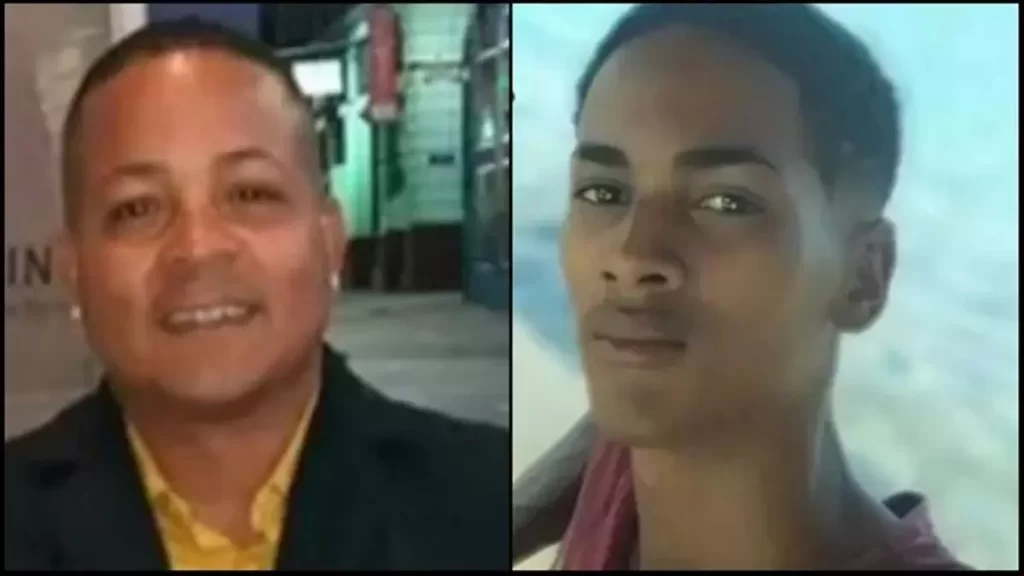
The two most recent detainees for their links to the 17J protests in Santiago de Cuba are father and son. Yosmany Mayeta Labrada / Facebookddd

14ymedio bigger14ymedio, Havana, 25 March 2024 — Almost a week after the protests that took several hundred people to the streets in Santiago de Cuba, on Saturday the authorities arrested 18-year-old, Cristian Kindelán, for having participated in the marches of the Carretera del Morro.

According to the Santiago journalist Yosmani Mayeta Labrada, who lives in the United States, the boy was removed from his house and taken to the Police Unit known as “El Palacete.” He was later transferred to the “operations and torture center” in the Altos de Versailles neighborhood.

The young man’s father, Asdrúbal Kindelán Garbey, was arrested a few hours later in the same center, after going there with several relatives to make a report on Facebook about the situation.

Teresa Garbey, Asdrubal’s mother and Cristian’s grandmother, sent a message on her social networks about the situation. In it she explains that her grandson was arrested for having appeared in a video of the protests and when she asked the agent, whom she identifies as “Major Oscar” and as the one responsible for the case, he told her, “with tremendous disrespect continue reading

that he did not have to give an explanation.” At this, the young man’s father Asdrúbal, annoyed, reprimanded the agent, which in turn caused his arrest.

“It seems that we are in the times of a dictatorship, where people disappear without any explanation, something our commander fought so much against”

“It seems that we are in the times of a dictatorship, where people disappear without giving any explanation, something which our commander fought so much against,” the woman wrote. “It seems that they want to erase all their ideas and bury their legacy in the past. I make this publication to call for the reflection of the officers of this Revolution and their new rulers. This is nothing more than a way to repress people and break them, and I wonder what they fought for and lost so many lives for only to destroy that legacy. I only ask the authorities of this country to reflect on that. I don’t sayPatria y vida’* [Homeland and life], I say ’patria y muerte’ [homeland and death].”

Her statement in defense of the regime motivated an angry response on-line from Mayeta, who wrote “I strongly ask all my followers to share this publication, because if this lady, mother and grandmother does not raise her voice for her own family and continues to support the dictatorship, I, as a Cuban from Santiago and a fighter for the freedom of Cuba and a lover of freedom, will do it.”

This weekend, the Prisoners Defenders organization said that those arrested on March 17 total 38, although the amount could be much higher.

The organization, based in Spain, pointed out that it is very difficult to obtain a final figure due to the lack of official data and the reluctance of many people to give an account of their situation, especially those who have only received a fine or a precautionary measure.

By provinces, Holguín, with 13, had the most arrests, while in Santiago de Cuba there were 12, in Havana four, in Cienfuegos two and in Artemisa three. Six of the total have now been released.

Meanwhile, Justicia 11J counted 13 detainees in total, although two of them have now been released.

*Translator’s note: “Homeland and Life” was the motto for the demonstrations of 11 July 2021, meant to contrast with the regime’s motto of “Homeland and Death.”

Translated by Regina Anavy

____________

COLLABORATE WITH OUR WORKThe 14ymedio team is committed to practicing serious journalism that reflects Cuba’s reality in all its depth. Thank you for joining us on this long journey. We invite you to continue supporting us by becoming a member of 14ymedio now. Together we can continue transforming journalism in Cuba.
Over Three Feet of Water Entered the Occupied Tenements at Galiano and Virtudes From the Rain and Hail

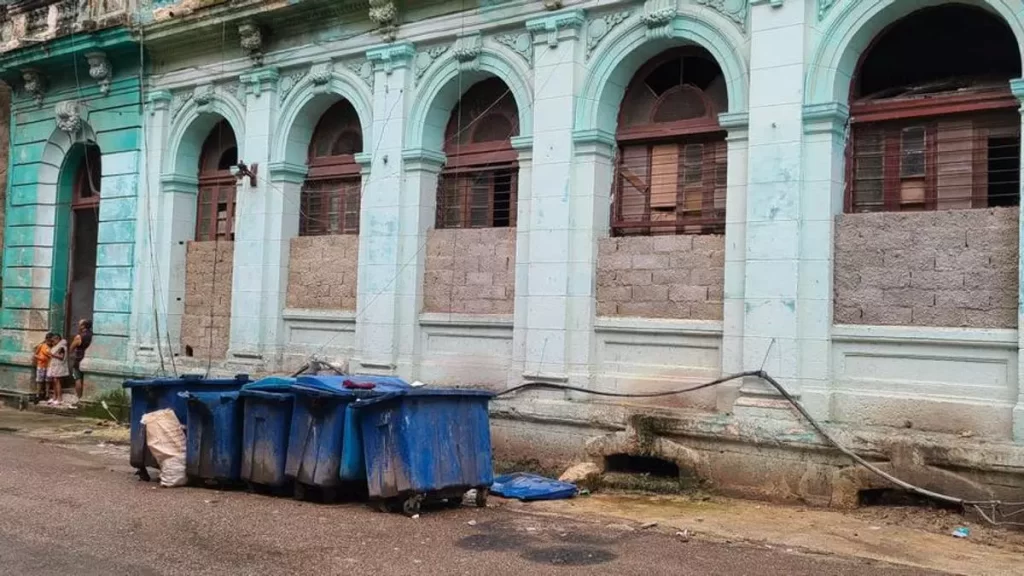
The vents lead onto the street, but also to several garbage containers, whose stench gets worse with the rain / 14ymedio

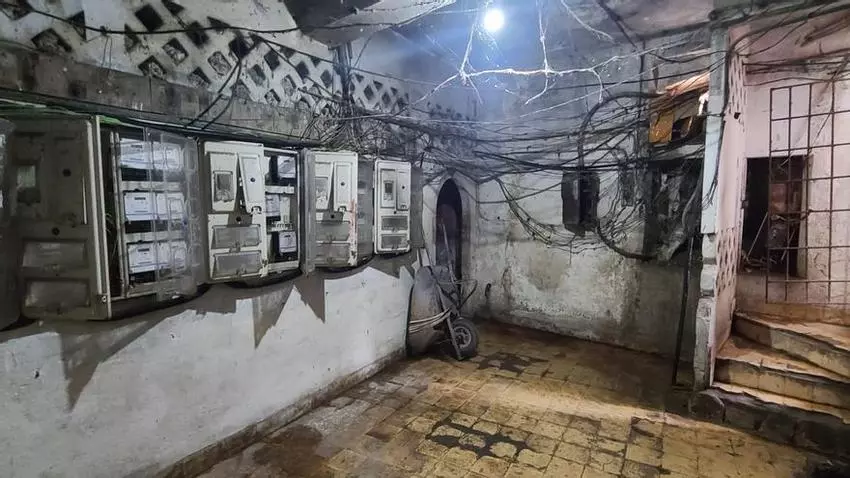
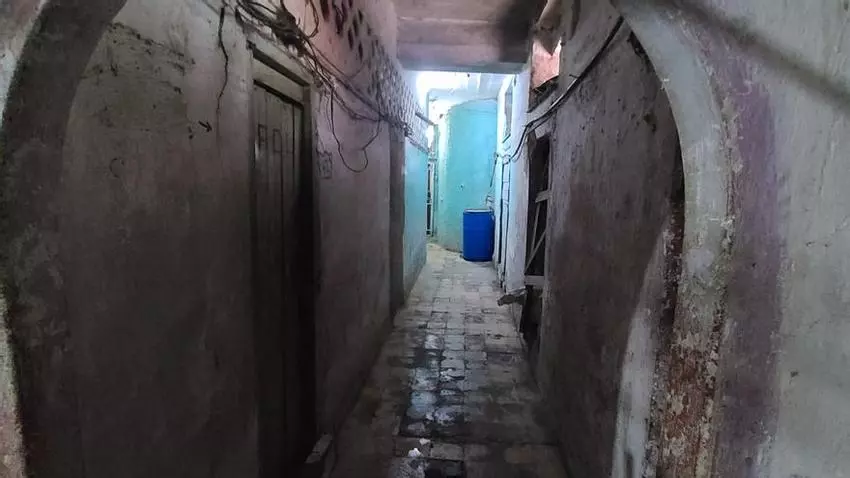
14ymedio bigger14ymedio, Pedro Espinosa, Havana, March 23, 2024 — The only natural light that residents enjoy in the tenements [“citadel” in Spanish] at Galiano and Virtudes in Havana comes from the vents at street level. However, those same openings allowed the penetration of the water that flooded the basement under an abandoned pharmacy, where several families with children live.

Storms like those that hit the west of the Island this weekend are fatal for a natural environment that is strained and in which people live in deplorable conditions. The vents lead onto the street, but also to several garbage containers the stench of which gets worse with the rain.

This Saturday, after the downpour, which also brought hail to several municipalities in Havana, residents removed water from their homes with buckets. Desperate, they asked the State for a suction pump to draw out the water, which is more than three feet deep. continue reading

This Saturday, after the downpour and the flooding, the residents had to use buckets to remove the water / 14ymedio

The pharmacy above the tenements has been closed for ten years, but the residents say that is no reason to relocate them: “There is no danger of collapse,” they have been told, despite the fact that the bricks of the pharmacy’s facade barely support the building’s arches.

One of the side effects of the storm has been, precisely, the collapses of weak and abandoned structures such as the one that, in the Matanzas neighborhood of Pueblo Nuevo, collapsed this Friday. The building, located on San Juan de Dios Street, fell with a big “rumble” at 10:00 pm, according to what the neighbors told the official press. Many said that they had tired of warning the authorities about the danger. “What they warned about finally happened,” said one of the interviewees.

Storms like those that hit the west of the Island this weekend are fatal for an environment that, by nature, is rarefied / 14ymedio

Translated by Regina Anavy
____________

COLLABORATE WITH OUR WORKThe 14ymedio team is committed to practicing serious journalism that reflects Cuba’s reality in all its depth. Thank you for joining us on this long journey. We invite you to continue supporting us by becoming a member of 14ymedio now. Together we can continue transforming journalism in Cuba.
The Creole Mojo Falters With the Rise in Price of Garlic in Cuba

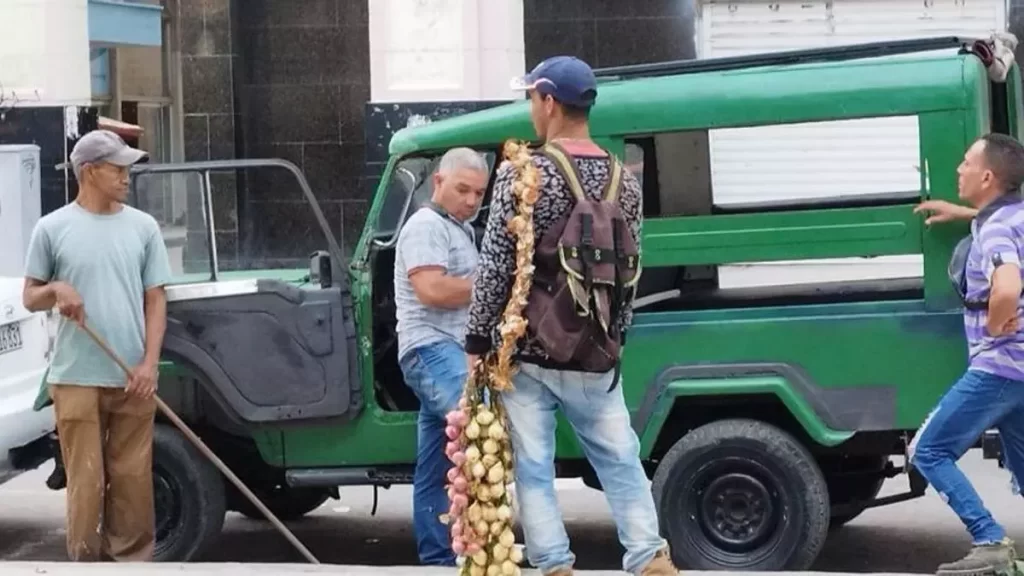
A street vendor of garlic / 14ymedio

14ymedio bigger14ymedio, Natalia López Moya, Havana, March 24, 2024 — Yucca with creole mojo, tamales with a good portion of sofrito on top and the marinade for meat. In each there is an ingredient that leads and surpasses in importance to all the others: garlic. Cuban cuisine basically smells like the aromatic condiment that accompanies a good part of everyday recipes.

However, ensuring that garlic cloves end up next to the black beans or the boiled malangas is becoming more and more difficult for the pocketbooks of Cuban families. Traditionally sold in the form of bulbs, cloves or strings, garlic is one of this year’s products that has experienced a greater price increase in the agromarkets that 14ymedio monitors every week.

At the beginning of January, on Plaza Boulevard in the city of Sancti Spíritus, a string of garlic reached 1,000 Cuban pesos, and this season’s offer for bulbs and cloves barely appeared on social platforms. “We can’t sell untied garlic because it’s not profitable,” said a seller from a well-known agromarket last January when this newspaper questioned why customers had to buy a complete string of 50 small bulbs. continue reading

“Almost everything was seasoned with the popular bulb, and it was also used in herbal teas for many ailments and in skin plasters”

“I put a small bulb in the garlic juicer and there’s plenty of space,” complained a buyer. “It’s not worth peeling because the cloves are so puny that it takes a lot of work; it’s better to crush them all together and use them like that to at least give some flavor to the food.” This is the method to “not give up eating with some garlic.”

‘Paro Nacional’ (National Strike) Is El Funky’s New Song for the Resistance in Cuba, Is Launched in Miami

“Everyone go on strike! Down with the dictatorship,” says a citizen of the Island in the video clip of El Funky’s new song / Screen capture

14ymedio biggerEFE (via 14ymedio), Miami, 20 March 2024 — This Wednesday in Miami, the Assembly of the Cuban Resistance (ARC) presented the new song by Eliexer Márquez “El Funky”, Paro Nacional (National Strike), as part of a series of initiatives in support of the resistance in Cuba.

Composed of 54 groups inside and outside the Island, the coalition reported a march this Sunday in Miami, which will start from the Bahía de Cochinos Monument and will conclude at the House of the Cuban Political Prisoner, under the slogans “Support the people of Cuba,” “End the Castro dictatorship” and “Support the National Strike.”

At an event held at the House of the Cuban Political Prisoner, the ARC presented the video of the song.

El Funky is one of the creators of the song Patria y Vida, the anthem of the 11 July 2021 protests in Cuba and winner of the Latin Grammy Awards for Song of the Year and Best Urban Song in 2021.

“We ask the international community, the European Union (EU) and Canada to stop financing the Castro regime,” Orlando Gutiérrez, coordinator of the ARC, told EFE

“We ask the international community, the European Union (EU) and Canada to stop financing the Castro regime,” Orlando Gutiérrez, coordinator of the ARC, told EFE.

Gutiérrez expressed the unconditional support of the ARC for the “Cuban people in the streets for a real change” in Cuba, a change that can only take place, he said, “with the exit from power and the illegalization of the Communist Party and the departure from the Island of the Castro family.”

In the video calling for a national strike in Cuba, several citizens express their indignation from the Island.

“Not a minute more on your knees, Cuba will be free, National Strike,” several voices over the video clip repeat, before the artist sings: “There is no government that resists or that endures that pressure, what Cuba needs is a strike.”

Translated by Regina Anavy

____________

COLLABORATE WITH OUR WORKThe 14ymedio team is committed to practicing serious journalism that reflects Cuba’s reality in all its depth. Thank you for joining us on this long journey. We invite you to continue supporting us by becoming a member of 14ymedio now. Together we can continue transforming journalism in Cuba.
Thousands of Cubans Are Left Without Electricity After Friday’s Rain and Hail Storms

Another phenomenon that accompanied the storms were gusts of wind up to 47 miles per hour / Mario J. Pentón

14ymedio bigger14ymedio, Havana, 23 March 2024 — The rain and hail that hit western Cuba this Friday left 120,000 users without power in Havana alone, as reported on Saturday morning by Lázaro Guerra, technical director of the Unión Eléctrica (UNE). The rest of the western provinces also suffered serious effects, although the worst was in four municipalities in Havana: El Cotorro, San Miguel, Arroyo Naranjo and Boyeros.

In addition, 13,679 customers are without electricity in Pinar del Río, 54,787 in Artemisa, 43,808 in Mayabeque and 38,000 in Matanzas. Guerra said that they have summoned technical brigades from the central provinces to help in the repair of the electricity network of the most damaged areas.

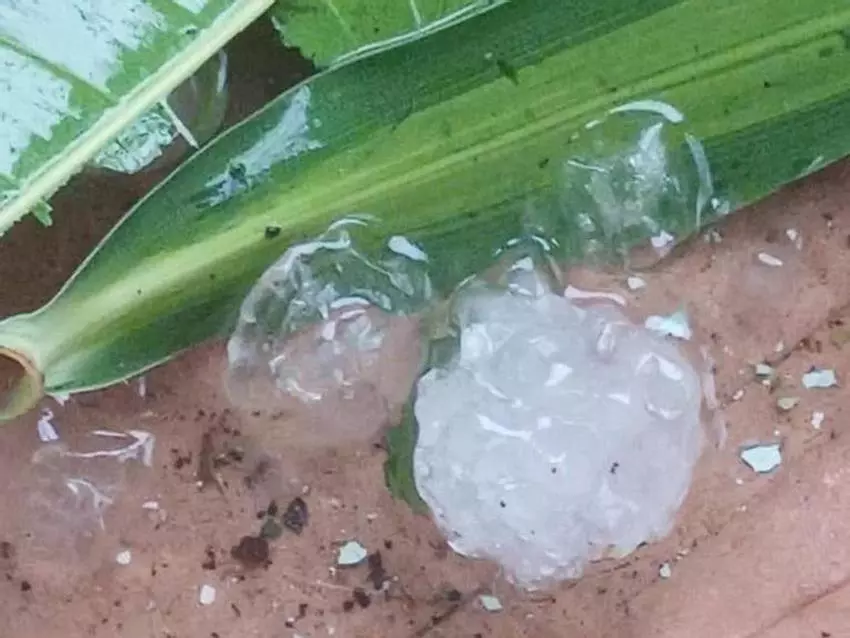
A series of clouds with rain and thunderstorms, whose passage between 3:00 pm and 6:00 pm was reported by the Institute of Meteorology this Friday, also brought hailstorms in the western towns of Honda Bay, Guanajay, Mariel, Bauta and several municipalities in the capital. The images of the hail, which according to the official press reached the size of “a one-peso coin,” circulated widely on social networks. continue reading

Hailstone in the Havana municipality of El Cotorro / 14ymedio

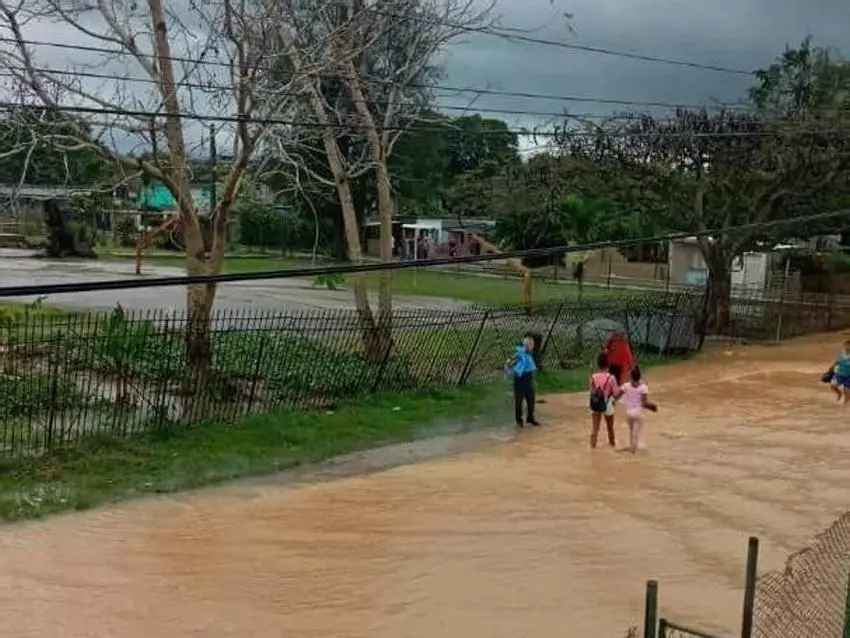
On Friday, State reporter Lázaro Manuel Alonso published some videos of the ravages that the storm was causing in Havana. The images showed the difficult advance of several vehicles on a flooded and rainy road, in addition to mounds of hail accumulated in the streets and courtyards of several houses in the Reparto Eléctrico, La Güinera and Punta Brava neighborhoods. In addition, the Luyanó River overflowed its banks, and traffic was stopped on the Via Blanca.

This is what 52nd and 99th streets looked like this Saturday, in Lotería, a municipality of Cotorro / Courtesy

The Caribbean Channel reported that several individuals who had been trapped in their vehicles during the flooding had to be rescued by firefighters. “Sources from the place confirm that the cars were swept away by the flood, while neighbors in the area had to evacuate,” they explained on social networks.

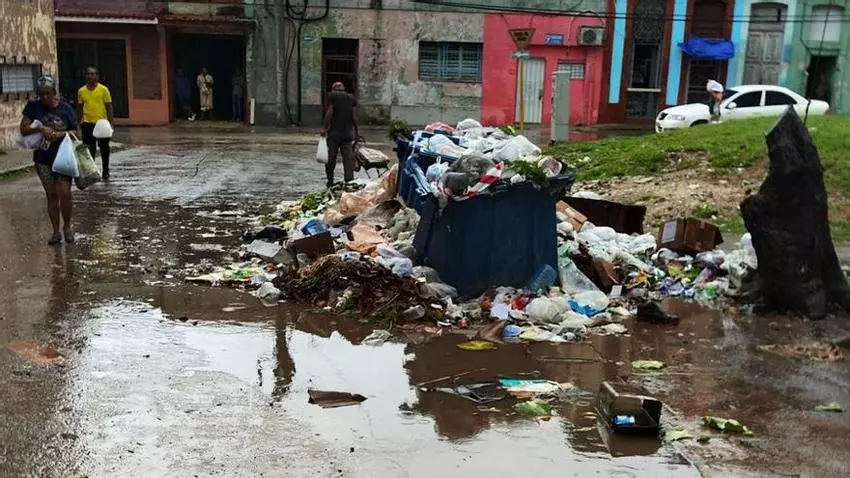
Overflowing rash bins hit by the downpour, on Calle Valle in Havana / 14ymedio

Another phenomenon that accompanied the rains were gusts of wind up to 47 miles per hour, in addition to “floods in low-lying and poorly drained areas,” according to the Institute. It also warned that the western region will continue to be cloudy on Saturday, with showers and thunderstorms becoming milder at night. The center of the country will be cloudy, with rain and thunderstorms, while the east will have few clouds and isolated rain showers.

Translated  by Regina Anavy

____________

COLLABORATE WITH OUR WORKThe 14ymedio team is committed to practicing serious journalism that reflects Cuba’s reality in all its depth. Thank you for joining us on this long journey. We invite you to continue supporting us by becoming a member of 14ymedio now. Together we can continue transforming journalism in Cuba.
In Cuba, Private Opticians Have Displaced the State Workshops That Are Totally Unstocked

Opticians carry out the few repairs they can with what they have at hand

14ymedio bigger14ymedio, Havana, 23 March 2024 — The statements to the official press by Gilda Tápanes, administrator of the State optical company of Calle del Medio, in Matanzas, leave little doubt about her opinion of the private optical companies that overshadow the State ones. “Our clientele has been stolen,” she says, despite the fact that her service “is very cheap.” However, the testimony of other managers, opticians and clients interviewed by Girón makes it clear that the State workshops have had nothing to offer since 2020, when they received their last batch of lenses and frames.

In the supposed “competition” that Tápanes describes, the understocked State opticians have lost the lead. While the 13 provincial workshops lack “arms, screws, terminals, lenses and frames,” private companies like SuperVision, which received an enthusiastic report last June, offer “all possible services.”

With a small reception area and a young staff,” the official newspaper says, “SuperVision continues receiving customers and has plans to expand to other municipalities. They work with “security and confidence,” insists Girón, and although it doesn’t necessarily support them, the conclusion is that “the private ventures are the ones that today sustain the production of eyeglasses in Matanzas.” continue reading

The properties exhibit empty showcases that force customers to buy in private companies like SuperVisión/Girón

In just 10 days, SuperVision – for a price ranging from 5,500 pesos to  10,000 – gets the appropriate lens and frame with the help of the Office of the Conservator of Matanzas, which facilitates imports.

In just 10 days, SuperVision – for a price ranging from 5,500 pesos to 10,000 – gets the appropriate lenses and frames with the help of the Office of the Conservator of Matanzas, which facilitates imports

Getting glasses through the State, characterized by”precariousness,” is “a headache,” says Girón. This was the case for Gabriel Rodríguez, from Matanzas, interviewed by the newspaper, whose son has a serious impairment in his eyesight and needed special lenses.

The State workshops, he said, “have practically nothing. Even for repairs, spare parts are scarce, not to mention their manufacture. The shortage is widespread and includes frames and lenses; in our case, there was no way to get glasses with the depth of vision the child required.”

The optician had no materials, but he knew of an “unlicensed” workshop that could “guarantee a good job” for 16,000 pesos, plus the cost of the frames. Rodríguez ended up in a private company, and the glasses for his son cost him 12,000 pesos. However, his odyssey didn’t end there. When he went to check at the pediatric hospital that the gradation of the lenses was correct, the number did not match the prescription. They company tried to reassure him: “The hospital machine is not calibrated and gives errors.” Rodríguez didn’t know who to believe.

Getting glasses from the State, characterized by “precariousness,” is “a headache” / Girón

Pedro Tanquero Riaño, provincial director of the Pharmacy and Optics Company, admits that there is no solution to the problem. “There is no financing or resources,” he says. The workshops “have been shut down for about four years because of raw materials and spare parts that it has not been possible to obtain, because everything is bought in dollars and optical services in the world are expensive,” he alleges.

Girón ends the article by blaming, of course, the U.S. blockade and saying that, despite the “voracious demands of the market” that prevail in Matanzas, at some point the State will have to start charging for glasses, even though free healthcare was “one of the greatest achievements of the Cuban social system.”

Meanwhile, for most Cubans in Matanzas, who see the prices of private companies going through the roof but will pay anything when a child is involved, they have a dilemma: “They must choose between eating or improving the child’s vision.”

Translated by Regina Anavy

____________

COLLABORATE WITH OUR WORKThe 14ymedio team is committed to practicing serious journalism that reflects Cuba’s reality in all its depth. Thank you for joining us on this long journey. We invite you to continue supporting us by becoming a member of 14ymedio now. Together we can continue transforming journalism in Cuba.

Ciego De Avila, Cuba, Extends the Sugar Harvest Until May Due to the Lack of Fuel

The Ciro Redondo sugar mill was not able to take part in the harvest this year and remains shut down.

14ymedio bigger14ymedio, Havana, 22 March 2024 — Forced to extend the harvest until March due to ’non-compliance’ — i.e. the failure to meet the goals of the sugar plan — nothing can help the Ecuador sugar mill in Ciego de Ávila. Now it is “the lack of the essential fuel,” according to the official press this Friday, that delays the ’campaign’, aimed at the province’s own consumption. Last Tuesday it still had not exceeded 45% of the production plan, with just 3,732 tons of sugar milled.

The Ecuador mill began working in January, but with significant delays in the planting and constant breakdowns of machinery, and even with the support of the Ciro Redondo workers the deadline could not be met.

“The poor dividends in the sugar mills are joined by delays in the planting, since in the first two months of 2024 only 43% of the fuel necessary for these needs was received,” says the local media, Invasor. continue reading

Now, in order to “comply with the plan for sugar,” both the Ecuador and the Primero de Enero mills, also in Ciego de Ávila, must again extend the campaign until April and May, respectively, “as long as the usual rains of that season don’t prevent the work.”

“The poor dividends of the sugar mills are joined by arrears in the planting of the cane

Of the three sugar mills, only Primero de Enero is fulfilling the forecast for the campaign and has so far delivered 1,769 tons of sugar.

As for the Ciro Redondo sugar mill, whose entry into the harvest is an unattainable goal even for workers in the sector, it remains in a “prolonged industrial silence, waiting for the incorporation of the adjoining bioelectric plant,” on whose energy it depends.

About to finish the campaign, the province has only 16% of the planned sugar, and, according to the media, “the material deficiencies that hinder the progress of manufacturing operations” are the main cause. The measures promoted in the sector so far “depend on the will of the labor groups and managers in the Ecuador mill,” who cannot stop the industry debacle on their own.

Before the extension of the harvest until April was announced, the workers of the mill had already predicted in February the disaster for sugar in the province. “The most hard-core predict that it will be the smallest production in more than a century of the mill’s existence,” Invasor said at the time.

The news is no better in other provinces. According to the official newspaper El Artemiseño, the 30 de Noviembre sugar mill of that province, “responsible for the manufacture of sugar corresponding to the basic basket of the provinces of Artemisa and Pinar del Río” — sold through the rationing system — as of Wednesday had produced 8% of the expected volume of sugar, about 746 tons.

“Broken harvesting machines, automotive and rail transport equipment, as well as the fuel deficit, also conspire against the development of the crop

According to Joselín Barrios Álvarez, director of the mill, the 30 de Noviembre mill could not even join the first weeks of the harvest due to a “fault in one of the three boilers,” a problem that is still “in the process of being solved,” and which they hope to have repaired by the end of this month. “As a result, we owe all the unprocessed sugar at that time. However, we plan to complete without problem the pending quantities for the basic basket of March: 1,001 tons for Pinar del Río and 934 for Artemisa,” Barrios explained.

“Broken harvesting machines, automotive and rail transport equipment, as well as the fuel deficit, also conspire against the development of the harvest, executed in a scenario of resource and financing limitations,” summarized El Artemiseño.

The manager, who acknowledges that “they are behind” but promises that the sugar mill will “be up to date,” said that he is working on “increasing the transport of cane to the mill from the reorganization of the harvest, adjusting to the available transport.” However, as in the Ecuador mill, there is little more that workers can do to revive the depressed sugar sector.

Translated by Regina Anavy

____________

COLLABORATE WITH OUR WORKThe 14ymedio team is committed to practicing serious journalism that reflects Cuba’s reality in all its depth. Thank you for joining us on this long journey. We invite you to continue supporting us by becoming a member of 14ymedio now. Together we can continue transforming journalism in Cuba.

At Least Six Arrested for Protesting Against the Blackouts in Holguin, Cuba

Elsa Elisa Solís Barrera and Lea Velázquez Ochoa are the two women who have been detained.

14ymedio bigger14ymedio, Havana, Miguel García, 23 March 2024 — At least six people were arrested in the town of San Andrés, in Holguín, after demonstrating on March 8. They are charged with the crimes of contempt and public disorder, according to sources close to the accused.

According to Martí Noticias, four of the detainees spent several days “incommunicado” in the State Security barracks in the people’s council of Pedernales, in the provincial capital. Since last Thursday, they have been waiting in another prison for the results of the police investigation into the protest.

Among the detainees are two women – both imprisoned in the provincial prison – who have been identified as Elsa Elisa Solís Barrera and Lea Velázquez Ochoa. Of the rest, two are imprisoned in the CubaSí prison – Yunior Barrera and Yulier Ramírez – and two others, Reinier Reimón Peña and Warnel Ricardo, are still in the State Security prison.

Elsa Solís’ mother and Yunior Barrera’s sister, Blanca María Barrera, told Martí Noticias that the authorities “have not explained anything” about the situation of the detainees. The woman, sick with worry, regretted not only the arrest of her daughter, but the fact that her 48-year-old brother is far from his children, “two minor children with intellectual disabilities.” continue reading

The authorities “have not explained anything” about the situation of the detainees  

The Holguin activist Dámaso Fernández offered details about another prisoner, Lea Velázquez, who was fined 5,000 pesos. “On Monday, March 11, they confiscated her cell phone and told her that she would be notified. When she went to get the phone, they detained her,” Fernández explained.

The activist said that on the day of the protest, a group of residents in San Andrés took to the streets “asking for freedom, banging on pots and pans and forming a crowd in the park.” Other relatives spoke to Martí Noticias but, according to the media, they asked that their statements not be published for fear of State Security reprisals.

The long blackouts and shortages that the Island is suffering sent Cubans into the street to protest in Santiago de Cuba on March 17. Since then, according to the count of the NGO Prisoners Defenders (PD), a total of 32 Cubans in nine provinces have been “detained, fined and prosecuted.” Only six of them have regained their freedom. The list of prisoners “increases every day at a considerable rate, and many victims (the majority) do not report, especially if they are given a fine or a home confinement precautionary measure, so we think that throughout the country there could have been around a hundred arrests,” warns this organization based in Madrid.

In Holguín, about 13 people were arrested on March 17, and in Cienfuegos and Artemisa, respectively, two citizens were arrested. In Havana there were four detainees and at least one each in the provinces of Granma, Guantánamo, Villa Clara and Matanzas, says PD. However, the NGO warns, given that several detainees in the protests were released with a fine and do not want to be exposed to more serious measures, the number of detainees could be estimated at 100 throughout the country.

In Holguín, about 13 people were arrested on March 17, and in Cienfuegos and Artemisa, respectively, two citizens were arrested   

Before that date, smaller demonstrations were confirmed by the independent press in several provinces of the country. One of them was the solo protest of Eric Luis Acea Quevedo, 24, who caused damage to an official car in Cienfuegos and who will have to pay more than 300,000 pesos to the State, as sources close to the young man told Martí Noticias. “First they wanted to accuse him of an attack but now they say that he will have to pay a lot of money to the Government and wait for trial in prison,” said a person from Cienfuegos who asked not to be identified.

Acea will have to pay 136,066 pesos for damage to the front windshield, 54,000 for the rear windshield, 44,610 for the door windows, and 73,100 for the labor, body work and paint: more than 300,000 pesos in total. The young man attacked the car with a machete on March 12 in front of Communist Party headquarters in Cienfueguos and was instantly arrested by the Police.

Popular discontent with the long blackouts is at the origin of several gestures of protest against State property. Throwing rocks at windows, cacerolazos (banging on pots and pans) and an increase in police surveillance are increasingly frequent in the areas that suffer the worst part of the energy crisis, as reported previously by 14ymedio.

Popular discontent with the long blackouts is at the origin of several gestures of protest against State property  

Holguín is one of the provinces where long blackouts occur, which can last up to 15 hours in a single day. A resident of the popular council of Alcides Pino told this newspaper that, since the power outages began, “the ’incidents’ to express discontent happen practically every day. They haven’t spilled into the street, but there’s no shortage of cacerolazos when the power is off. Discontent is widespread.”

As for the foreign-currency stores, the neighbor says that the authorities have not stood idly by. “They are putting police officers and red berets (state security) at night to guard them to prevent people from breaking the windows. It’s not the first time that this has happened in Holguín,” he says.

Alarm has been raised in Havana, where the Government insists on blaming the United States for the demonstrations of discontent and has unleashed a flood of propaganda that comes from Miguel Díaz-Canel himself.

The president premiered this week on State TV’s new program Desde la Presidencia (From the Presidency), a kind of Cuban Aló Presidente,* in which he crushed the official explanation for the demonstrations: “As long as there is a blockade, as long as there is a worsening blockade and the inclusion of Cuba on the list of countries that supposedly support terrorism, we have every sovereign right to blame the Government of the United States.”

*Translator’s note: Aló Presidente was a Venezuelan talk show that featured then president Hugo Chávez.

Translated by Regina Anavy

____________

COLLABORATE WITH OUR WORKThe 14ymedio team is committed to practicing serious journalism that reflects Cuba’s reality in all its depth. Thank you for joining us on this long journey. We invite you to continue supporting us by becoming a member of 14ymedio now. Together we can continue transforming journalism in Cuba.
Cuba Celebrates Trophies for Two Baseball Players, While Another Two Leave the Island

Cuba’s Under-15 national team said goodbye to the Boca Chica 2024 tournament with two wins and three losses

14ymedio bigger14ymedio, Havana, 22 March 2024 — Two days after Cuba’s Under-15 baseball team failed in the Dominican Republic by not winning a ticket to a baseball World Cup for the first time in its history, Prensa Latina published the recognition of Frank Frías Castro, from Bayamo, as the best designated batter, and Cristian Oscar Lías, from Holguín, as the best outfielder of the tournament.

The report is limited to pointing out that the Island’s national team achieved two victories against Peru and Guatemala and suffered three defeats against Puerto Rico, Venezuela and Nicaragua, so the Cuban team “found it impossible to move to the final round.” The same lukewarm headlines were offered in the official media Cubadebate and Jit, without an analysis of the failure in the Boca Chica 2024 tournament.

Under-15 players Frank Frías Castro and Cristian Oscar Lías were recognized in the Dominican Republic / Prensa Latina

In addition to the poor results in youth tournaments, which include failure in the U-15 World Cup, Cuba has been left out of the tournaments in the categories of 12, 18 and 23 years old. There is also a growing exodus of athletes, not only among the 18-year-old prospects, but also among the younger players. As of Thursday, Samuel Palencia and Liusban Sánchez are no longer in the country. Both were part of the Bayamo team in the Little League 2023. “Although one would think that these 13-year-old boys represented the new future of a lacerated baseball in Cuba, their parents had other ideas,” stressed journalist Francys Romero on the Beísbol FR! site. continue reading

With the departure of Palencia and Sánchez, there are now four members of the Little League teams who have emigrated. The other two are Luis Enrique Gurriel, cousin of the baseball players Lourdes Jr. and Yuli Gurriel, and Luis Aparicio.

Palencia arrived in the United States with his family through the humanitarian parole implemented in January 2023. Romero remembers the boy’s performance as a pitcher against Australia in the Little League 2023, when he recorded 13 strikeouts in 5 innings.

Cuban youths continue to leave the Island, the latest being Samuel Palencia and Liusban Sánchez / Francys Romero/ Facebook]

Humanitarian parole has been the way out for several Cuban baseball players. The former baseball player and manager, Yorelvis Charles, used it last November. Since August, Pitcher Saydel Peña Gómez has been established in Los Angeles. The former manager of the Cuban team and the Ciego de Ávila national team, Roger Machado, confirmed his arrival in June.

The captain of the Alazanes, Carlos Benítez, entered the United States last May. On the other hand, Liusban Sánchez, another young player, settled in the Dominican Republic. He was the third baseman and shortstop for Bayamo. Francys Romero points out that the player has good stature for his age, in addition to being athletic and a left-handed hitter.

The statistics also record casualties in the last Cuba U-12 team. Mario Serra, Kendry Abreu, Gabriel Tito Mustelier and Yondel Sajoni Cárdenas emigrated from that team.

The debacle takes place in the U-15, with the departure of 19 out of 20 players who represented the Island in the World Cup held in Mexico in 2022, where they won the silver medal. In 2023, more than 100 players emigrated from Cuba, in all categories and ages.

Translated by Regina Anavy

____________

COLLABORATE WITH OUR WORKThe 14ymedio team is committed to practicing serious journalism that reflects Cuba’s reality in all its depth. Thank you for joining us on this long journey. We invite you to continue supporting us by becoming a member of 14ymedio now. Together we can continue transforming journalism in Cuba.
For Cuba’s ‘Vegueros’ (Farmers) in Sancti Spiritus, Tobacco Is No Longer a Profitable Business

Contrary to the method of curing in the sun, the production of covered tobacco is not at risk.

14ymedio bigger14ymedio, Havana, 21 March 2024 — The current tobacco planting campaign in Sancti Spíritus, the territory with the second highest production in the country, is barely at 49%. According to the official press, which could not disguise its disappointment with the figure, the main causes of the debacle are the lack of fuel to carry out the planting and the fact that “many producers did not plant because the crop is not profitable.”

Isidro Hernández Toledo, agricultural director of the Acopio y Beneficio de Tabaco company in Sancti Spíritus, explained to the local media Escambray that until February, only 1,918 acres of tobacco were planted out of a plan of 3,954. The covered tobacco is not at risk, since they managed to plant 717 acres – 74 more than planned – but for sol en palo, sun-curing, the most widespread form of cultivation in the territory, barely 1,200 acres of the 3,334 planned were achieved.

“That resulted in a high number of producers not planting tobacco,” said Hernández Toledo, who says that the poor performance during the planting stage will have its consequences later, during the collection of tobacco at the end of the campaign. continue reading

“This type of planting (sun-curing) has its antecedent in the previous campaign”

According to Escambray, which takes advantage of the manager’s statement to focus on the farmers, “this type of planting (sun-curing) has its antecedent in the previous campaign.”* Despite the lack of some inputs, he adds, there are moments of the process that are prioritized, such as the capadura,** for which the farmers have “fertilizers, pesticides and other necessary resources for that second phase of the tobacco plant.”

“Obtaining capadura is an essential way to increase agricultural yield,” Hernández continues, although both the director and the media recognize that this has not managed to encourage the farmers, which translates into a worrying drop in production.

In October 2023, when the Sancti Spirítus tobacco sector already predicted the biggest fiasco in its planting history, the local government tried to stimulate the vegueros by offering a bonus with which they could recover 50% of their spending on fertilizers and pesticides if they managed to produce more than 1.4 tons per 2.5 acres.

The payment per ton of tobacco was also increased to 15,000 pesos, or 690 pesos per 100 pounds, in addition to reducing the profit received by the State from the agricultural inputs it sells to producers from 12% to 2%. The measures, however, did not manage to get Sancti Spíritus out of the crisis that year or turn the planting of tobacco into a “profitable” business, despite the fact that every year the industry injects millions of pesos into the State coffers.

At the moment, the vegueros are satisfied with reaching the 375 tons of covered tobacco planned for this campaign

“Many producers did not see that as an incentive and stopped planting; the process of contracting the next campaign has not yet begun because we are waiting for an economic increase for that crop, and we hope that tobacco production in the province will recover, specifically that method (sun-curing),” Hernández said.

At the moment, the vegueros are content with reaching the 375 tons of covered tobacco planned for this campaign, a goal that they consider has “real possibilities” of being met. Likewise, the province has managed to collect 621,000 bales of tobacco, 80% of what was planned.

Despite the debacle of the tobacco industry, which every year reports smaller and poorer-quality harvests, which they continue to attribute to the passage of Hurricane Ian in 2022, both the regime and its Spanish counterpart that rule the industry find ways to continue obtaining higher and higher profits. At the beginning of March, the Habano Festival, held annually in the capital of the Island, raised 19.3 million dollars in the sale of eight humidors alone – up until last year six were traditionally sold – a record figure that the Government says it will invest in Public Health.

Translator’s notes:
* Many of the covered drying sheds were destroyed in Hurricane Ian in 2022.
** Capadura is the second growth of tobacco leaves after the stalk is trimmed, a common practice in Cuba. Translated by Regina Anavy

____________

COLLABORATE WITH OUR WORKThe 14ymedio team is committed to practicing serious journalism that reflects Cuba’s reality in all its depth. Thank you for joining us on this long journey. We invite you to continue supporting us by becoming a member of 14ymedio now. Together we can continue transforming journalism in Cuba.
Cuba’s Guiteras Power Plant Reaches Its Maximum Without Solving the Island’s Energy Deficit

On Wednesday, technicians at the Guiteras thermoelectric power plant met to address the most recent problems.

14ymedio bigger14ymedio, Madrid, 21 March 2024 — At 8 p.m. this Wednesday, the Antonio Guiteras de Matanzas thermoelectric plant had reached 280 megawatts (MW), its maximum power, which it maintains today, Thursday, at the beginning of the day. The news about the main electricity generation unit in the country must now be given like this, because in a matter of minutes everything can change.

Its re-incorporation into the National Electric System (SEN) occurred last night, after a “small shutdown to repair some damage and adjust the main equipment,” according to the Electric Union of Cuba (UNE), which added that it was now “taking charge according to the procedures and regulations of the block.”

The problem was, apparently, an “inconvenience in the boiler,” coupled with a steam leak in one of the turbines, but it was enough to prevent the operation of the thermoelectric plant. The Guiteras spent the last 17 days of March shut down for a scheduled maintenance, and, after synchronizing correctly on Monday the 18th, it suffered a breakdown that took it out of the system. continue reading

The problem was, apparently, an “inconvenience in the boiler,” coupled with a steam leak in one of the turbines, but it was enough to prevent the operation of the thermoelectric plant   

The authorities had promised to have the Guiteras plant on-line and also the arrival of a fuel tanker, after several turbulent days in Cuban homes and businesses due to blackouts of up to 20 hours a day, which caused part of the population to explode. After some isolated protests in different cities, on Sunday, 17,000  people took to the streets in Santiago de Cuba, Bayamo (Granma) and Matanzas.

For this Thursday, the UNE predicted a deficit of 570 MW in peak hours, a worrying figure that predicts new blackouts but that, nevertheless, is a third of what has been missing in recent days. Today unit 5 of the Diez de Octubre power plant, unit 6 of Renté and unit 2 of Felton are out of service due to breakdowns, when yesterday there was only the latter. That is, two more have suffered some damage in the last 24 hours.

In addition, the maintenance work for unit 8 of Mariel and unit 6 of Nuevitas continues.

“More or less, how long will the maintenance take? And when will people see the result? So far, we are going from blackout to blackout. Unfailingly”

As for fuel generation, 68 units are out of service, including the expensive Turkish patanas (floating power plants) located in Mariel and Santiago de Cuba, leaving a deficit of 710 MW in this type of energy alone. In the peak hour, the power generators (120 MW) and the two patanas of Mariel (105 MW) will enter the grid, in addition to unit 3 of the Carlos Manuel de Céspedes power plant, which adds another 60 MW.

The return of the Guiteras, meanwhile, keeps Cubans divided regarding the immediate future of the situation. “Stabilizing the arrival of fuel will take time; there are other destinations, other contracts and other logistics. Our enemies want to leave the country at zero fuel, and this time they almost managed to do it. What’s new about these contracts is that they no longer depend on the market dominated by the dollar and the U.S. sanctions, and this guarantees us a stable supply. They can say whatever they want; that is the reality and these are the solutions,” said a commentator with unwavering faith in the Government.

Others, however, fear that the repairs will be temporary. “More or less, how long will the maintenance take? And when will people see the result? So far, we are going from blackout to blackout. Unfailingly.”

Translated by Regina Anavy

____________

COLLABORATE WITH OUR WORKThe 14ymedio team is committed to practicing serious journalism that reflects Cuba’s reality in all its depth. Thank you for joining us on this long journey. We invite you to continue supporting us by becoming a member of 14ymedio now. Together we can continue transforming journalism in Cuba.

Cuban Customs Declares War on Those Who Take Out More Money and Cigars Than Allowed

There are two groups of travelers that give Customs officers headaches: “these who enter” with drugs, weapons and illegal cargo, and “those who leave” with more currency than allowed.

14ymedio bigger14ymedio, Havana, 20 March 2024 — “We are surrounded by many countries,” the head of the General Customs of the Republic, Nelson Cordovés, explained this Tuesday on Cuban Television. His headaches, he said, can be attributed to two groups of travelers: “those who enter” the country with drugs, weapons and illegal cargo, and “those who leave” with more currency and cigars than allowed, and medicines that are lacking on the Island.

Cordovés attended State TV’s Round Table program with a portfolio of photographs, data and concrete examples. So far this year, 135 cases have been detected of travelers trying to take more money than the law establishes – the official equivalent of $5,000 in any foreign currency – and in 2022, this was attempted by 233 travelers.

According to the head of Customs, so far in 2024, 3.2 million pesos and 91,000 dollars have been confiscated; in 2022, 5,033 billion pesos and 420,000 dollars. The “issue of money,” Cordovés observed, has become a “trend.” continue reading

Cordovés did not explain why he omitted the figures of 2023, the year in which Mirtza Ocaña, a Cuban recently arrested in Tampa, Florida, managed to get at least 100,000 dollars off the Island. Last February, Ocaña – of whom Cordovés did not say a word – was accused by the Federal District Prosecutor’s Office of transferring that amount of money and could face up to five years in prison if she is arrested.

Cordovés did not explain why he omitted the 2023 figures, the year in which Mirtza Ocaña, a Cuban recently arrested in Tampa, United States, managed to get at least 100,000 dollars off the Island   

The irregularity was not detected during any of the 45 trips that the woman made to Cuba, and despite the surveillance of which Havana boasts, it was the U.S. authorities who, after making a search, found several thousand dollars in her clothes.

As for the “insured” medicines – those that are lacking – that people try to take out, Cordovés did not give details or the names of the drugs. Cigars, on the other hand, suffer from multiple “violations” if more than the two allowed boxes, or 20 loose cigars, are taken out. So far in 2024, 141 infractions have already been committed, a figure that far exceeded the number of 99 for the previous year.

“We cannot allow them to leave the country without control, being a Cuban exportable product,” he said, claiming that people also take out the binder leaves, work tools, boxes and qualifications (rings and other ornaments of the final product).

As for what people try to bring into Cuba, Cordovés did not spare images of the objects confiscated by his colleagues throughout the Island: pistols, rifles wrapped in aluminum foil to avoid detection, pneumatic weapons that exceed the 4.5 caliber allowed for import and drugs, about which the head of Customs spoke at great length.

Firearms, brass knuckles, ammunition and pieces of any weapon, he emphasized, “are not allowed in the country.” Cordovés suggested that there is an increase in the import of spear guns for recreational purposes, such as fishing, a symptom of their “abusive use” in Cuba, but admitted that this was more of a concern for families and depended on “their own decisions.”

Regarding drugs, the official insisted that Customs let the Ministry of the Interior do the work, with 17 cases of smuggling detected this year, with 99 kilograms (218 pounds) of drugs seized, and  55 kgs (121 lbs) in 2023. “In the last 15 years we never had that high a figure,” he said.

What drugs do they try to bring in? “Many different kinds,” Cordovés said, including “the famous chemical,” which he defined as a kind of “synthetic cannabis”   

What drugs do they try to bring in? “Many different kinds,” Cordovés said, including “the famous chemical,” which he defined as a kind of “synthetic cannabis.” Unlike other times, when it was common to hide the product – in the digestive system, for example – now more frequently drugs are camouflaged inside food, such as preserves and canned goods, or they are made to look like condiments. Another example is the import of prohibited pharmaceuticals. “We recently documented 73,000 tablets that smugglers tried to bring into the country,” he said.

Customs also does not allow the import of electronic cigarettes, because their use is “prohibited” according to the Ministry of Public Health. If a tourist brings one in, Customs temporarily confiscates it and allows him to take it back when he leaves,” Cordovés said.

Tariff violations, “another “scourge,” the official argued, is also extremely common. Fraudulent statements and “violations of tax regulations” have also been reported by Customs. The Mariel Container Terminal, the José Martí International Airport and the port of Santiago de Cuba continue to be the points of reference for this kind of illegal activity.

Finally, Cordovés regretted that Customs does not have enough workers. “We search at all the job fairs,” he said, and have “caught” 400 employees. They have had to use “the Armed Forces way”: Military Service. “Young people work with us at Customs, and we train them as technical assistants. Then they can be future officers,” he said.

He didn’t miss the opportunity that television gave him to promote the job once again. The sector, in terms of the economy, is doing well, he stressed. In addition, he promised those who knock on his door that there will always be a “stimulation”(a reward) for those who stand out in “the mission.”

Translated by Regina Anavy

_______________

COLLABORATE WITH OUR WORKThe 14ymedio team is committed to practicing serious journalism that reflects Cuba’s reality in all its depth. Thank you for joining us on this long journey. We invite you to continue supporting us by becoming a member of 14ymedio now. Together we can continue transforming journalism in Cuba.

Havana Has Plans To Repatriate the Cubans Stranded in Haiti but With No Set Date

Image published by one of the Cubans stranded in Haiti.

14ymedio bigger14ymedio, Madrid, 21 March 2024 — After two weeks without a word about the fate of the Cubans trapped in Haiti, the Cuban Embassy in Port-au-Prince announced on Wednesday that the plan for their return has been designed, but there is no scheduled date as long as the Toussaint Louverture airport remains closed, in the midst of the most recent crisis of violence that the country has been experiencing since February 29th.

“The representative of Cubana de Aviación, a member of the Cuban state mission in Haiti, has established telephone and face-to-face contact with the 32 rental houses where most of the Cuban passengers of the canceled flights are staying, reports the diplomatic headquarters. That group includes 260 Cubans in total, mostly “mules” who travel between Haiti and the Island to stock up on goods that are scarce in Cuba.

According to the statement, the Embassy is in contact with Barbara Joseph, the commercial specialist for Sunrise Airways, the Haitian travel company used by the Cubans. “There will be flights to two destinations: Camagüey and Santiago de Cuba. Passengers from other provinces will be transported by Transtur bus to their places of origin,” the text adds.

“The flights will be made to two destinations: Camagüey and Santiago de Cuba. Passengers from other provinces will be transported by Transtur bus to their places of origin”

To organize the return, Cubans who reside in Haiti – mostly workers on Cuban “missions” such as the 60 healthcare workers – and those who are passing through will meet virtually with the representatives of both airlines “in order to provide relevant information and discuss concerns.” continue reading

Some family members reflect on the distressing situation of their loved ones. “They have spent over three weeks in a place full of uncertainty, hardship and fear. Shootings and killings in the streets continue; the violence is unimaginable,” says one person.

“I make this appeal to all the families of the Cubans who are stranded in Haiti to raise our voices and ask the Government to do something for them. They have been telling us lies for 23 days, in one statement after another, about how they are going to get them out, and they still haven’t done a thing. We want our families here now! We are desperate. Please help us if you can,” one woman demanded of the Foreign Ministry, while another, whose aunt is in Haiti, wanted a quick return for her. “May God allow everything to go well and soon everyone will be here in Cuba eating together, even if it’s just picadillo, but happy and calm.”

“May God allow everything to go well, and soon everyone will be here in Cuba eating together, even if it’s just picadillo, but happy and calm”

On February 29th, when the armed gangs began a new wave of violence in Haiti, a Sunrise Airways plane bound for Cuba was delayed by gunfire. That day, for security reasons, air traffic was closed, preventing the return of the Cubans who were in the country, who have asked for help from both the airline and the Cuban Government. There are another 2,000 Cubans in Haiti “in different conditions,” according to the Minister of Foreign Affairs, Bruno Rodríguez, last week on Cuban television.

At the moment, the only country that has begun to evacuate its nationals is the United States, which plans to take 30 people every day by helicopter to the Dominican Republic. According to CNN, another 30 people were transferred to Miami on a flight chartered by the State Department. In total, there are almost 1,000 Americans in Haiti, said its spokesman, Vedant Patel.

In the meantime, the situation in the capital remains high-risk. This Wednesday, the streets of Pétion-Ville, in the hills of Port-au-Prince, were again strewn with bodies. This neighborhood is the only one in the capital of Haiti that is not yet completely controlled by armed gangs.

Seven bodies were found, adding to the 15 found two days earlier. The images were similar: bodies shot – some in the midst of flames and others already charred – stretchers with the deceased being put into ambulances and workers carrying coffins.

In addition to the already existing insecurity, at the beginning of the month about 3,000 prisoners, including gang leaders and members, managed to escape from two prisons in the city, during assaults by armed groups.

In addition to the already existing insecurity, at the beginning of the month about 3,000 prisoners, including gang leaders and members, managed to escape from two prisons in the city

All this has an impact on the functioning of the city. There is practically no commercial activity, schools are closed, and there is a constant movement of people fleeing from their homes and neighborhoods to areas considered safer.

According to the latest data from the International Organization for Migration (IOM), this new escalation of violence has led to more than 15,000 people becoming displaced. In total, more than 86,000 Haitians live in 84 refugee centers, in schools, churches and public squares, where they survive in unhealthy and inhumane conditions. In addition, according to IOM, in less than a week, 17,000 people left the capital in search of a safer place and traveled with family and friends to other provinces, putting themselves in danger, since the gangs control the roads.

The United Nations agency estimates that, since the beginning of the year, in the metropolitan area of Port-au-Prince, the displaced population has increased by 15%, and 160,000 people cannot return to their homes.

All this happens while waiting for the implementation of a transitional presidential council. The Haitian Prime Minister, Ariel Henry, will then leave power, and a multinational security force will be deployed, led by Kenya.

Translated by Regina Anavy

____________

COLLABORATE WITH OUR WORKThe 14ymedio team is committed to practicing serious journalism that reflects Cuba’s reality in all its depth. Thank you for joining us on this long journey. We invite you to continue supporting us by becoming a member of 14ymedio now. Together we can continue transforming journalism in Cuba.

The US Will Deport 24 Rafters Who Landed on Monday in the Florida Keys

The rafters made landfall on Duck Key, in Monroe County (Florida)

14ymedio bigger14ymedio, Havana, 20 March 2024 — The United States Border Patrol processed for deportation 24 rafters who landed in Duck Key, Monroe County, Florida. The Cubans were arrested on Monday by Fisheries and Wildlife officers, who handed them over to the Border Patrol, reported the acting head of the Miami Sector, Samuel Briggs.

The detainees told the officers that their journey lasted two days, after they left the Island from the northern side. The authorities provided them with medical assistance and, after certifying that they were in good health, reminded them that those who illegally enter U.S. territory will be deported and will not be able to enter the United States within a period of five years, in addition to not being eligible to seek asylum.

The detainees told the officers that their journey lasted two days, after they left the Island from the northern side

Between January and February, the same officer Briggs also recorded the arrival of 45 rafters. A group of 20 Cubans arrived on the last day of December in the Florida Keys, while another 25 made landfall in January in Biscayne National Park. All were listed for deportation.

Under the bilateral agreement between Cuba and the United States to return to the Island those who arrive by sea, there were eight transfers to repatriate 426 rafters since April 2023, when air expulsions resumed. continue reading

During the fiscal year that began on October 1, 2022 and ended on September 30, 2023, more than 6,800 Cubans were intercepted by the U.S. Coast Guard on their way to Florida, according to official data.

The landing of these Cubans comes a week after the Republican governor of Florida, Ron DeSantis, ordered the deployment of 250 police officers and soldiers to the Florida Keys to arrest rafters, mainly Haitians fleeing the violence in that country.

Between January and February, the same officer Briggs recorded the arrival of 45 rafters. A group of 20 Cubans arrived in February

However, so far, the United States Coast Guard has not recorded an increase in migrants in the waters of Florida.

“Currently no, there is nothing out of the ordinary,” the chief non-commissioned officer of the Miami Coast Guard, Stephen Lehmann, told the AP agency. “We have a team in the area and are waiting to see if there’s an influx.”

According to official figures, the U.S. Coast Guard has deported 131 Haitians who illegally entered the country by sea since the first day of last October, including 65 who were found on March 12 in a boat near the Bahamas.

Translated by Regina Anavy

____________

COLLABORATE WITH OUR WORKThe 14ymedio team is committed to practicing serious journalism that reflects Cuba’s reality in all its depth. Thank you for joining us on this long journey. We invite you to continue supporting us by becoming a member of 14ymedio now. Together we can continue transforming journalism in Cuba.

The Sister of the Former Cuban Minister of Economy Denies That He Is Detained: ‘He Is Incommunicado’

Caption – Vicky Gil, during her interview with Canary Island television, in Spain (TVC/Capture)

14ymedio bigger14ymedio, Yaiza Santos, Madrid, 20 March 2024 — María Victoria Gil Fernández spoke publicly again about her brother, the former Minister of Economy. In a statement this Monday to Canary Islands television in Spain, where she resides, she said that Alejandro Gil has not been arrested: “My brother is incommunicado.” She also blamed Raúl Castro for the so-called Ordering Task,* which plunged the country “into absolute misery.”

In conversation with 14ymedio, this Tuesday, the former presenter of Televisión Cubana, who was in Havana between March 3 and 10, just when the “investigation” that the regime undertook against her brother was announced, corroborates everything she said about the former deputy and right-hand man of President Miguel Díaz-Canel.

María Victoria Gil Fernández: “He is not detained as such; he is incommunicado somewhere, maybe in Villa Marista, if it is a detention house of the Ministry of the Interior. From the legal point of view, detention means he is in prison, and he has not been charged with a crime. I couldn’t talk to him, I couldn’t contact him, because he is totally incommunicado.”

14ymedio: But he isn’t at home, neither he nor his wife?

A: No, no, no. Neither of them. Laura María Gil González is in the house, with her husband, Álvaro Iglesias, and my grandniece, who I wanted to meet, who is a year and a half old. But I understand that my niece is working [in the Caudal group, which is charged with the  custody and transfer of securities and belongs to the Ministry of Finance]. She goes to work and everything, but she doesn’t have a cell phone. continue reading

Until the Prosecutor’s Office charges him with a crime, one cannot say that he is corrupt. That’s why I said that I will file a complaint against the Con Filo television program, because the presumption of innocence is mandatory

Q: He is not detained, but if he is somewhere similar to Villa Marista, we know what that means.

A: I imagine that given my brother’s former position, he would not be in Villa Marista. In Cuba there are some special state security houses, very nice houses, in Miramar and in Nuevo Vedado, where high-level, “high-ranking” people are taken,  who are being investigated. It was the case of Carlos Lage and many others. They have all the luxuries and comfort; they are not given bad treatment either, far from it. He must be in one of those houses; I don’t know where.

Q: Who told you that he was incomunicado?

A: My nephew, who is not involved, Alejandro Arnaldo Gil González. He has always been apart from the whole family. He is a very quiet person, very reserved. He is a computer engineer, a professor, and he lives at his wife’s house in Playa. I communicate with my nephew every day. He tells me: “Auntie, this is going to happen, I’m sure.” He must really be suffering, because you can imagine a boy with his personality, his father being accused, as they say, of corruption, which is a term that has been used even by the Cuban press, but the prosecutor’s office has not charged him with any crime.

Q: Didn’t the public statement say “serious errors in the performance of his duties”?

A: “Serious mistakes in the performance of his duties,” and then there is a tagline, which has always been added since I was a little girl, born and raised with the Revolution: “The Government will never tolerate corruption, insensitivity or simulation (fraud).” That doesn’t mean that he is being accused of corruption. Until the Prosecutor’s Office charges him with a crime, one cannot say that he is corrupt. That’s why I said that I will sue the Con Filo television program, because the presumption of innocence is mandatory. It is described in the laws of criminal procedure, which are the same in Spain as in Cuba, Uruguay and Argentina, because they all come from the same root, which is Roman Law. If you are talking about charging a crime without respecting the presumption of innocence, you are committing the crime of slander.

Q: Con Filo is not an independent news program. It is actually the way the Government talks about your brother.

A. Exactly.

Q: In the interview with Canary Islands television, you blame Raúl Castro for the situation that Cuba is experiencing, and you also point out that Díaz-Canel congratulated your brother on his birthday on February 2, the same day that he was dismissed as minister.

A: The biggest contradiction that exists is that the president of the Republic of Cuba dismisses my brother on February 2 and congratulates him for his achievements, and my brother replies: “Thank you, Díaz-Canel, we continue with you,” and then on March 7 they announce that they are investigating him. How can the president of Cuba not know what is happening?

Q: Hence the question: To what extent did Díaz-Canel know what was happening on February 2? Your brother was his right-hand man.

A: They were “nail and flesh” (really close), as we say in Cuba.

“If Díaz-Canel had something to do with that decision and made it without knowing about the crimes, in quotation marks, which are supposedly imputed to my brother, how can he congratulate him on his good work?”

Q: Does Díaz-Canel have something to do with this decision?

A: Of course he has something to do with this decision. But if he does and he made it without knowing the crimes, in quotation marks, which are supposedly imputed to my brother, how can he congratulate him on his good work? It’s contradictory.

Q: How can you legally file a lawsuit against the Cuban Government, as you said yesterday?

A: I’m a lawyer by profession; I graduated in Cuba in 1982 wth high honors. I have four specializations, in forensic medicine, for example. I was advanced in judicial science. I will attend the proceedings. My son [Daniel Trujillo Gil] says that he is going to tie me to a tree, that he is going to tear up my Cuban and Spanish passports, but I’m going to do it.

If there is a trial, as was done with Ochoa, when the State cleared itself of all its crimes with one person, I was enraged knowing that behind Ochoa there was really State corruption. I will attend personally and make a private accusation. And if they show that my brother really was corrupt, then the others were also corrupt, and all the criminals involved will fall along with him. Even if my son wants to tie me to a tree. Now that I’m back, he hid my passport. He didn’t want me going to Cuba because he said that I was going to be detained, since I had made some very strong statements against the Government, and that they have arrested political prisoners in Cuba for less. But I went to Cuba, and no one bothered me.

Q: How do you interpret that arbitrariness?

A: I don’t know. My son sat with me two days ago and said, “Mamá, I’m going to be honest with you, and I have to tell you the truth. Today I am sure that you are a member of the Cuban State Security, because only and exclusively does it explain how after the statements you have made, the posts on Facebook and the interviews you have given, you have been able to enter Cuba without any problems.”

Q: And how did you respond?

A: What am I going to tell him? If he believes it, what can I do? If it had happened to him, I would believe it too. Because it is a miracle that I have really entered and left Cuba without anyone bothering me. There have been people who have done one-fifth of what I did, and they wouldn’t even let them get off the plane. It’s very strange and has no explanation, but that’s the way it is, and I am not a member of State Security.

*Translator’s note: The Ordering Task was a collection of measures that included eliminating the Cuban Convertible Peso (CUC), leaving the Cuban peso (CUP) as the only national currency, raising prices, raising salaries (but not as much as prices), opening stores that take payment only in hard currency, which must be in the form of specially issued pre-paid debit cards, and a broad range of other measures targeted to different elements of the Cuban economy.

Translated by Regina Anavy

____________

COLLABORATE WITH OUR WORKThe 14ymedio team is committed to practicing serious journalism that reflects Cuba’s reality in all its depth. Thank you for joining us on this long journey. We invite you to continue supporting us by becoming a member of 14ymedio now. Together we can continue transforming journalism in Cuba.