Near the Havana capitol tourists ride in a horse-drawn carriage. (flickr)
14ymedio, Havana, 6 March 2023 — The collapse of tourism in Cuba once again marks a milestone this February, when the Island barely registered 186,343 visitors according to preliminary official data. Although we will have to wait until later to have the complete report of the National Office of Information and Statistics (Onei), the official newspaper Cubadebate anticipates that between January and February, 489,000 tourists arrived on the Island. The newspaper admits that this is barely half (51%) of what was recorded in the same period of 2019, comparing the numbers for the first time with a pre-pandemic year.
The total is obtained by subtracting the tourists received in January, which were 302,657. Comparing that figure with that of 2020, the last year considered normal, just before COVID-19, the Island had 23% fewer international travelers. However, the decline is much more abrupt with the second month of the year as a reference. In February 2020, Cuba received more than 400,000 tourists, so the fall is more than 53%.
If the same comparison is made with the year 2019, when more than 450,000 tourists arrived on the Island, the decrease is greater than 58%. If the months of January are compared, the decrease is slightly less, 49%, hence the average offered by Cubadebate, although the data are not yet exact, so there is a mismatch in the numbers.
With the data advanced yesterday, Canada is helping the recovery, with 252,650 tourists in 2023, 80% of those who arrived in the same period of 2019. They are followed, at a great distance, by Cubans living abroad, with 51,187, and the United States, with 24,451, in these first two months. continue reading
In the following block, the European markets appear but do not stand out, according to the official press, due to the “non-recovery of long-distance travel from the Old Continent and the inadequacy of air connections.” Thus, the list is led by the United Kingdom (13,596), followed by Germany (13,585), France (13,103), Italy (11,373) and, at the tail end, Spain (10,613), which was traditionally one of the largest groups.
Russia continues to be the only market that retreats and passes from 35,871 travelers in 2022 during the first two months of the year to 20,589. Sanctions for the invasion of Ukraine began on February 24.
According to the official press, during the first five days of the current month of March, which represents the period of maximum tourist arrivals for Cuba, only 470 flights landed at Cuban international airports, and the sea route is not significant, providing 12,180 visitors of which 3,794 are crew members, a “product of the restrictions from the United States.”
The news is not encouraging, and the objective of the Cuban Government, which once again puts all its hopes into tourism to obtain foreign currency, pay its debts and import needed products, among many other things, seems too ambitious.
The Government announced at the end of last year that it expects to reach 3.5 million foreign visitors in 2023, a small figure compared to the more than 4 million who visited in the years after the thaw and the 5 million it aspired to before the arrival of COVID-19. However, the first signs indicate that the target could be unattainable again.
This happened in 2022, when the authorities predicted 2.5 million tourists to drop to 1.7 million in October. Ultimately, 1,614,087 foreign visitors arrived on the Island in the first year without a pandemic, contributing to the increasingly evident shipwreck of the national economy.
Translated by Regina Anavy
____________
COLLABORATE WITH OUR WORK: The 14ymedio team is committed to practicing serious journalism that reflects Cuba’s reality in all its depth. Thank you for joining us on this long journey. We invite you to continue supporting us by becoming a member of 14ymedio now. Together we can continue transforming journalism in Cuba.
Cuba qualified one athlete for the Santiago 2023 games and 10 for those in San Salvador. (Facebook/Archivo)
14ymedio, Madrid, 6 March 2023 — The first escape of Cuban athletes of this year took place last Saturday in the Mexican town of Oaxtepec, in the central state of Morelos. It was the karatecas, the karate experts, Claudia C. Sánchez Pupo, Onelis Hernández Polledo, Maikel A. Noriega Silverio and Lázaro J. Chapman Mora, who participated in the qualifying competitions for the Pan American Games in Santiago and the Central American and Caribbean Games in San Salvador, both in 2023.
“They abandoned their commitment as a team and the Cuban sports system,” said the official sports media Jit, which reported the news, although it was in the last paragraph.
Earlier, they said that Cuba qualified one athlete for the Santiago 2023 games and 10 for those in San Salvador.
The highest score for the Island was achieved in the 120-pound category, by Baurelys de la Caridad Torres Alverdi, captain of the women’s team and bronze medalist of the 2019 Pan American Games in Lima.
This desertion is reminiscent of the one that took place in June last year, when four Cuban karatecas left the team while they were in Guatemala. On that occasion, Darían Díaz, Yaidel Hernández, Sunilda Ventosa and Gerardo Almenares left before completing their training sessions in preparation for the 2023 San Salvador Games. continue reading
Cuban karateca Elisabet Vasallo had warned a few months before that the discipline was in “decay.” The athlete, through her social networks, said: “For a long time, generations of high-performance karatecas, with talent and special conditions, have been destroyed.”
The bronze medalist at the Central American and Caribbean Games Barranquilla 2018 pointed at the “coaches” of the national team, saying that they were not “fair or neutral” in the choice of athletes.
Translated by Regina Anavy
____________
COLLABORATE WITH OUR WORK: The 14ymedio team is committed to practicing serious journalism that reflects Cuba’s reality in all its depth. Thank you for joining us on this long journey. We invite you to continue supporting us by becoming a member of 14ymedio now. Together we can continue transforming journalism in Cuba.
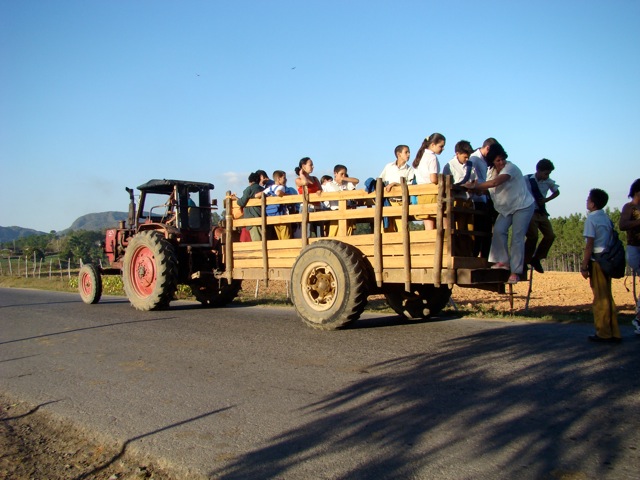
Cuban ‘ingenuity’ can only go so far to solve the nation’s transport problems, like this ‘makeshift bus’ — a cart pulled by a tractor in Pinar del Rio (2008). (MJ Porter)
14ymedio, Elías Amor Bravo, Economist, 24 February 2023 — There was some expectation on Cuban State TV’s Roundtable program for what the Minister of Transport, Eduardo Rodríguez, would say about the situation of the sector and the prospects for 2023. Not surprisingly, this January the price of transport had skyrocketed at a year-on-year rate of 15.18%, three times more than in the same month of January 2022, when it increased by 5.58%. This is worrying. Transport prices are of outstanding importance in any economy, because they are usually transferred to other prices, which causes the consolidation of inflation processes.
And, surprisingly, the minister talked about almost everything except transport prices. It seems that this matter does not interest him, nor does he consider it within his competence (maybe Meisi Bolaños [the Minister of Finances and Prices] does). The transport minister came to the program with a planned script and began by assessing the current situation of passenger transport in the country and the projections for 2023, and he ended with a report on the decisions taken by the regime in this sector.
The minister gave a lamentable description of the general transport situation, which has been characterized by a progressive deterioration of passenger transport capacity and infrastructure during the last three years. The reduced levels of services has caused “a great dissatisfaction among our people and an impact on the discipline and quality of services.” This was caused, first of all, by the “insufficient availability of freely convertible currency [hard currency] for the acquisition of spare parts, add-ons and components for the maintenance and repair of the means of transport.”
More than 40 million dollars are needed each year for maintenance, not to mention investments, as a result of the aging of the fleets, more or less the same drama as with the power plants and the blackouts. Second, there are the difficulties in the availability of fuel. Third, the infrastructure requires investments (including the National Highway and the Central Highway, and especially, the roads of the Turquino Plan*), and fourth, the “difficult financial situation of companies based on the prices of public services, which do not cover the direct expenses of the activity, accumulating significant losses” (consequences of the Ordering Task**).
In this regard, the minister limited himself to denouncing a certain lack of control of the public price of transport, and said that “state companies charge affordable prices to the population, but they are at a loss and receive support from the state budget, while non-state management forms charge prices that are only affordable to a part of the population. We must also confront those who charge abusive prices and don’t receive support from the State budget.” In other words, the minister blames the private transport sector for the lack of price controls and inflation. Bad business.
And he is wrong, because the origin of the problem lies in the supply deficit of state transport that, despite receiving support from the budget, has demanded a greater non-state participation, which it doesn’t have. The inefficiency of the state in the provision of services explains the greater demand for the superior private transport services, which the regime does not allow to grow and consolidate freely. continue reading
All of the above is the fault of the blockade/embargo. The argument is hilarious. Trump banned the entry of cruise ships into Cuba and that is why the income in hard currency that served to finance the maintenance of transport was reduced. In addition, licenses were withdrawn from Cubana de Aviación to lease planes (the company does not have its own), and limited international flights reduced income in hard currency, as did “the crackdown on fuel transports, preventing the planned operations from being carried out.”
The blockade/embargo always appears in the analyses of the problems, to which is added the global crisis (provoked by Cuba’s ally, Putin) that also affects hard currency income. At the same time, the prices of maritime freight transport increased. The combined effect of the reduction in income in hard currency, together with the increase in expenses in these currencies, forced the regime to define food, fuel and medicines as priorities. Despite this, it was not possible to attend to transport and its infrastructure from the financial point of view.
The problem, in the end, is that transport is a service that is charged in national currency but that requires hard currency for its acquisition and maintenance. This is a serious problem of the Cuban economy, which in other countries of the world is non-existent and is solved. The Cuban transport sector is another victim of the exchange system designed by the Ordering Task.
From this presentation of the general situation, the minister addressed the analysis of the problems that characterize transport today, and the focus returned to the internal situation and the economic model.
He cited the deficient regulation of the prices charged by the different state and non-state economic actors, the violations of the parameters of regular services, such as route diversions, breaches of schedules, mistreatment of passengers, transport of cargo and of more passengers than allowed, illicit purchases of tickets, speeding, deficient work of the inspectors and indisciplines and violations.
He mentioned the long-term paralysis of vehicles, whose parts are used to keep others working, with effects of theft and embezzlement, and the indolence and lack of sensitivity of drivers of state vehicles who avoid stops and don’t obey the instructions of the inspectors.
He painted a really devastating picture in which the regime is concerned about procedures and resources but not the results. Thus, he cited activities such as the process of approval and legalization of armoured vehicles in all provinces, the implementation of regulations that regulate the leasing of state transport and eliminate the obstacles that prevent the provision of services by all entities; the management of bus donations from Japan or Belgium; the implementation of electric tricycles and bicycles of the United Nations Development Program Neomobility Project and the minibuses removed from tourism and incorporated into service in the capital. Leftovers for the population.
He also mentioned the contracting of a ferry for the Island of Youth that has not yet begun its activity, the maintenance of the national train service and services in various provinces. And other decisions, such as the adaptation of class schedules at the Technological University of Havana and the University of Havana to guarantee a differentiated transport of students and teachers with Transmetro and Escolares. He referred to the launch of the Beta application of Urban MW to offer information, in real time, about the services provided by the public transport routes of the Havana Transport Company and announced the completion of the Sustainable Urban Mobility Plan of Havana. In short, all actions on the means of transport, but nothing about the results.
The minister offered the ministry’s projections for 2023:
Continue to improve work with the cadres at all levels of the system and advance in training, strengthening work links with universities and scientific research projects based on sustainable mobility.
Strengthen organizational measures to optimize the limited resources of the sector and advance in the computerization of all services and procedures; for example, automate. Implement the new administrative structure of transport activity in the provinces, which will provide a better organization and control of passenger transport in the country, including non-state transport.
Develop and promote mobility projects with external financing, including the generalization of electric and hybrid buses in public transport and the use of electric tricycles on short routes in all provinces of the country, and promote actions to reduce the demand for transportation at peak times through the adjustment of schedules, remote work and teleworking.
Continue to work on the adjustment of prices, fares and subsidies for all passenger transportation services provided by state entities and non-state forms of management. Increase the use of state vehicles and extend the experience of using tricycles in the capital to other provinces.
Continue actions that are already underway, such as concluding the dredging of the Port of Batabanó and putting into service the ferry between Batabanó and Nueva Gerona; continue to work on the restoration and improvement of the infrastructure in airports, terminals, stations, transport stops and route maps; conclude the process of legalization of armoured vehicle parts; perfect the mode of leasing state vehicles; continue the incorporation of low-tourist minibuses in the capital to pay for the Rutero service [shared taxis] and continue with the railway bus manufacturing program for rural areas.
Authorize the urgent import of tires, batteries, engine parts, spare parts and other components that are needed for the restoration of those means of transport that can be quickly implemented.
At this point in the program, the minister reported on the publication in the Extraordinary Official Gazette 16, of Decree 83, which updates the legislation on the transmission of ownership of motor vehicles, trailers and semi-trailers, in addition to their import and marketing. He said “it serves to empower economic actors, eliminate obstacles that hinder the performance of state and non-state entities as well as favor foreign investment.”
First, the wholesale sale in hard currency of new and second-hand motor vehicles was authorized to all Cuban and foreign legal entities (state companies, foreign firms, cooperatives, small and medium-sized companies, etc.). The sale price of the vehicles will not exceed the acquisition cost with a 30% commercial margin. Once again, the Cuban peso is left out of economic transactions.
Second, tax measures were incorporated. Natural persons must pay a special tax when they buy more than two vehicles (only for motorcycles and light vehicles including vans). The State collects more and more.
Third, retail sales of new and second-hand motor vehicles in hard currency were maintained, for all Cuban and foreign naturals living in Cuba, at the reference prices of the Cuban market, which will be adjusted every six months.
Fourth, the current power restriction (up to 1,000 watts) on electric motorcycles was eliminated, and the possibility of directly importing a sidecar by natural persons and motorcycles with the sidecar was authorized.
Fifth, the fund for the development of public transport was maintained as a destination for the income from the application of the special tax, both from retail sales and the new one on wholesale sales.
And sixth, the acquisition of electric vehicles, both retail and wholesale, was favored by price.
The minister spoke about the creation of infrastructure for charging from renewable energies and the recovery of vehicles discharged from tourism for commercialization as an alternative to their disappearance. He also explained that the change of chassis of compatible brands and models will be allowed and that there will be new technical requirements for imports.
The scope of the measures of this decree is so great that some analysts have wondered if the regime is not encouraging the birth of an automobile market in Cuba, but in hard currency, not in pesos, to increase the country’s level of motorized vehicles, now one of the lowest in the world.
It doesn’t seem like toasts are happening, because the minister ended by saying, about the complexity of his ministry, “We constantly have to face moving all the milk and flour in the country from the west to the east. And bring the salt from Guantánamo to the west.” If this is complex for the communist state, a piece of advice. The solution is very easy: let that activity be done exclusively by the private sector.
Translator’s notes:
*The 1987 Turquino Plan was implemented to link Cubans living in the remote, mountainous areas and to develop these regions economically. Pico Turqino is the highest point in Cuba, at 6,476 feet.
**The Ordering Task is a collection of measures that include eliminating the Cuban Convertible Peso (CUC), leaving the Cuban peso as the only national currency, raising prices, raising salaries (but not as much as prices), opening stores that take payment only in hard currency, which must be in the form of specially issued pre-paid debit cards, and a broad range of other measures targeted to different elements of the Cuban economy.
Translated by Regina Anavy
____________
COLLABORATE WITH OUR WORK: The 14ymedio team is committed to practicing serious journalism that reflects Cuba’s reality in all its depth. Thank you for joining us on this long journey. We invite you to continue supporting us by becoming a member of 14ymedio now. Together we can continue transforming journalism in Cuba.
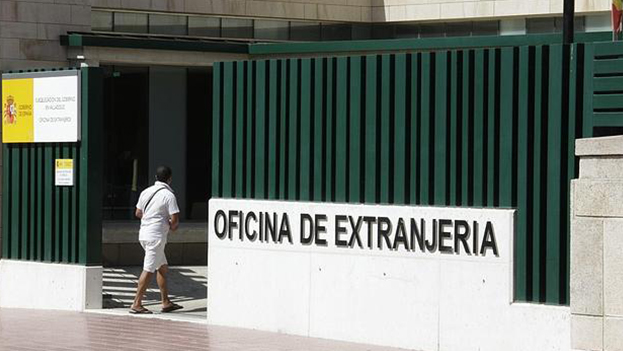
The increase in requests for asylum in Spain has caused the website for appointments to collapse.( Government of Spain)
14ymedio, Havana, 5 March 2023 — Since her arrival in Spain three months ago, Irene, a 26-year-old journalist who participated in the 11J [11 July 2021] protests in Santa Clara, tries in vain to process her asylum request from Burgos, Spain. The Spanish Government’s website — the only way to be served in the Immigration offices — has been down for weeks due to applications, and it notifies the user that there are no available appointments. Concerned, Irene phoned the police in her city, said she was Cuban and explained her situation. The answer left her stunned: “The system is overwhelmed because the Cubans themselves make an appointment and then sell it to other migrants.”
The officer commented that the collapse of the system has been taking place for a long time, with the avalanche of Cubans and Venezuelans who arrive. In addition, Russia’s invasion of Ukraine caused hundreds of thousands of citizens of that country to flee the conflict to countries of the European Union, including Spain.
When someone enters the electronic headquarters of the Spanish Public Administration and requests access to the asylum procedure, an alarm goes off: “At the moment there are no appointments available. The office will make new appointments available to you shortly.”
“The new appointments never arrive, it doesn’t matter if one accesses the site later in the morning or at dawn, on Mondays or in the middle of the week,” Irene complains.
For the journalist, it was a surprise to know that Cubans had managed to export the “tricks” from the Island to Europe. “Worse for you,” says the Immigration officer, with an angry tone, “because if the most harmed are those who make a business of this, it will go worse for them.” According to the agent, the “resellers” managed to get the appointments as soon as they are released, usually on Monday, and in a few minutes they take all the appointments.
“And it’s not a local situation,” clarifies the Burgos officer. “The appointments are offered by the Government, in Madrid, and to get one, you have to go online.” continue reading
As the months go by and the exodus from Cuba is exacerbated, European governments find it increasingly difficult to regulate the situation of the wave of migrants arriving not only from Cuba, but also from Venezuela and other Latin American and African countries. Corruption, bribery and having a “godfather” in Immigration are becoming frequent methods to initiate asylum processing.
“The bureaucracy is very similar to the one there,” says Ivan, a 35-year-old barber who arrived in Spain from Russia after a long journey through different European countries, before the war broke out. “In Madrid, the procedure is usually faster,” he says.
“When I started the process, there was no way to get an appointment. I tried all the time and always got the same message. Then I got desperate and went to the Asylum and Refuge Office on Pradillo Street,” says Enrique. “The officer who attended me told me to keep trying and if I couldn’t succeed, to take screenshots of the denial on the website and return to Immigration after a month.”
The situation exhausted the patience of the young man, who ended up turning to a lawyer who said he had a “contact” who could help. “Legal or not, I solved the problem,” says Enrique, who has not yet been granted international protection but now is happy to be “in the system,” waiting for the call for the next step in the process.
“I was coming to stay,” Juan José, an artist close to Cuba’s San Isidro Movement and a participant in the 11J [11 July 2021] demonstrations in Central Havana, explains to 14ymedio. “My visa was valid for very few days. I arrived in December 2022 and from the first day started looking for appointments.”
Juan José, who began his process in Ávila, also in the community of Castilla y León, spent all January without getting Immigration to receive him. “My life and my work allowed me to argue the reasons for the asylum request; in that sense I thought I had no problem,” he says. When he managed to be assisted, the policeman who interviewed him made him wait excessively and did not treat him well. “I don’t know if mistreatment is the word, but it wasn’t good treatment.”
When he delivered his documents, they scheduled a second appointment for him — where he had to orally explain the reasons for his request — and he had to wait twelve months, without a work permit. “I almost threw in the towel,” he says, until a Cuban friend recommended that he do the processing at a police station in Madrid, where they work faster than in the provinces.
“The Immigration officers asked me what the 11J, the San Isidro Movement and the 27N [27 November] were, which I mentioned in my interview. They knew very little about the real Cuba,” he says. On June 1, Juan José, who now has advice from the Spanish Commission for Refugee Assistance, will receive an update on his immigration status.
As long as the wait lasts, the Spanish State must guarantee his access to free public health and his safe stay in Spanish territory, without risk of deportation.
Translated by Regina Anavy
____________
COLLABORATE WITH OUR WORK: The 14ymedio team is committed to practicing serious journalism that reflects Cuba’s reality in all its depth. Thank you for joining us on this long journey. We invite you to continue supporting us by becoming a member of 14ymedio now. Together we can continue transforming journalism in Cuba.
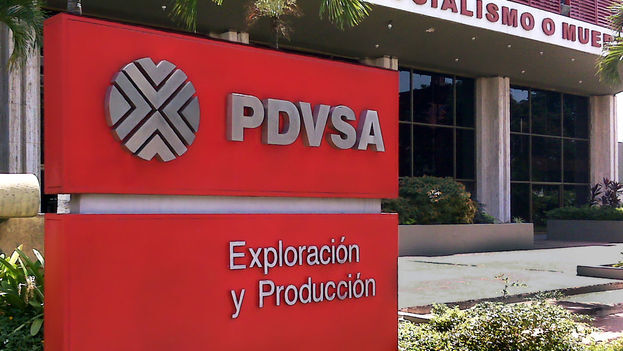
Oil imports from Venezuela alleviate the acute energy crisis that Cuba is experiencing. (Wikimedia)
14ymedio, Havana, 4 March 2023 — Despite the 8% drop in Venezuela’s oil exports in February, the amount of fuel that Nicolás Maduro sent to Cuba grew by 34% compared to the previous month. Havana received from its ally 53,320 barrels per day (bpd) of crude oil, fuel oil and gasoline mixture, about 13,545 more than in the first month of the year.
The amount of oil that Venezuela sends to the Island has not been stable in recent months. Although 52,000 bpd were unloaded in October, in November there was a fall (to 38,000) that was compensated in December, with the delivery of 57,000 bpd. In January, with 39,775, the number decreased again.
Although shipments to Cuba increased, the company Petróleos de Venezuela (PDVSA) and its associated companies exported the lowest amount of oil worldwide since mid-2022 (555,250 bpd), according to Reuters.
Seventy percent of shipments went to China, the first export destination, while shipments to Cuba accounted for 9.4%. continue reading
The new president of PDVSA, Pedro Tellechea, signed an order last January to suspend crude oil exports, with the exception of some customers with whom he has oil exchange or debt payment agreements; included in that list are Cuba, the Naftiran Intertrade Company of Iran, and contracts with the US producer Chevron and the Italian Eni. The suspension served to carry out an audit for alleged losses in shipments in Puerto José, western Venezuela, which was draining the financial liquidity of the largest terminal in the country.
For weeks, according to Reuters, the oil tankers were ordered to move away from the moorings, and some transfers from ship to ship were stopped, which resulted in a delay in the delivery of 40 million barrels of crude oil accumulated by the end of last January.
Washington authorized Chevron to expand its operations and resume the export of Venezuelan crude oil for service stations in the United States. In February alone, 82,215 bpd of heavy crude oil were sent to its refineries and other U.S. customers, while Eni shipped 656,000 barrels to Spain.
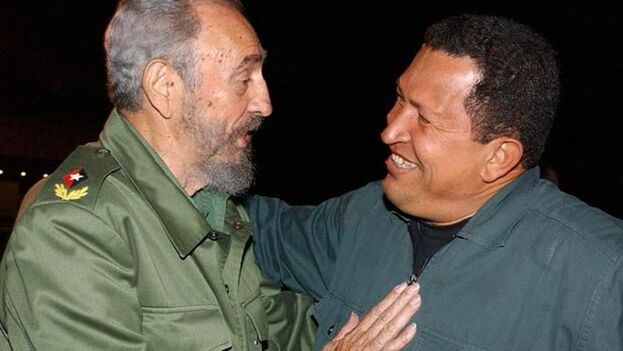
In 2000, Fidel Castro and Hugo Chávez signed an agreement in which Caracas pledged to provide 53,000 bpd in exchange for Cuban doctors. However, shipments of black gold and its derivatives in recent months have fallen below the committed quota.
Reuters points out that Venezuela also exported 347,000 metric tons of petroleum products and petrochemicals in February, a sharp drop from the record recorded in January of 727,000 tons. The collapse is attributed to problems in the operation of equipment that generated delays in the cargo terminal.
Translated by Regina Anavy
____________
COLLABORATE WITH OUR WORK: The 14ymedio team is committed to practicing serious journalism that reflects Cuba’s reality in all its depth. Thank you for joining us on this long journey. We invite you to continue supporting us by becoming a member of 14ymedio now. Together we can continue transforming journalism in Cuba.
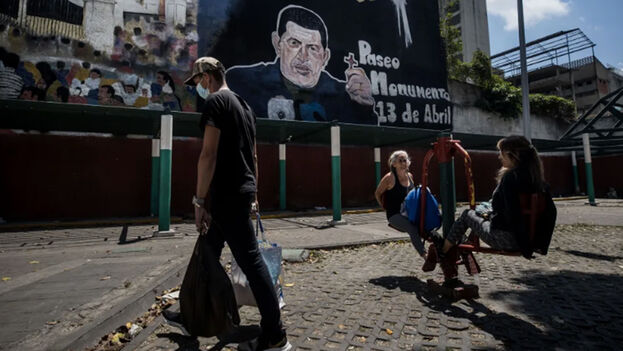
Leaders of the United Socialist Party of Venezuela began various activities on Friday to commemorate the 10-year anniversary of the death of Hugo Chávez. (EFE)
EFE (via 14ymedio), Caracas/La Paz, March 5, 2023 — The former president of Cuba Raúl Castro arrived in Venezuela this Saturday to participate in the commemoration events for the tenth anniversary of the death of the former Venezuelan president Hugo Chávez.
Castro, who traveled with Cuban Prime Minister Manuel Marrero, was received at the Maiquetía International Airport, which serves Caracas, by the Minister of Science and Technology, Gabriela Jiménez, according to the Venezuelan state television channel (VTV).
This Saturday, the former presidents of Honduras and Bolivia, Manuel Zelaya and Evo Morales respectively, also arrived in Venezuela.
Zelaya traveled to Venezuela with the Vice-Chancellor for Foreign Policy, Gerardo Torres, and Congresswoman Xiomara Zelaya.
Leaders of the United Socialist Party of Venezuela started on Friday, with various activities in different states of the country to commemorate the 10th anniversary of Hugo Chávez’s death, which will be honored on March 5th.
In a theater in the center of Caracas, a world meeting called “Validity of the Bolivarian Thought of Commander Chávez in the Twenty-first Century” began, which includes Chávez leaders and 147 delegates from more than 55 participating countries, according to the governor of the state of Miranda, Héctor Rodríguez. continue reading
Meanwhile, the President of Bolivia, Luis Arce, traveled to Venezuela this Saturday to participate in the commemoration of the 10th anniversary of the death of Hugo Chávez, along with some union leaders close to his government.
In a couple of messages on Twitter, the President mentioned that his trip is made “in response to the invitation of President Nicolás Maduro’s brother, for the World Meeting for the Validity of the Bolivarian Thought of Hugo Chávez in the 21st Century.”
Arce also published a photograph with the country’s Vice President, David Choquehuanca, to whom he handed the “baton of command,” since he will assume office as president until President Arce’s return.
The transfer of command took place at the air terminal of the Presidential Air Group, adjacent to El Alto International Airport, a neighboring city of La Paz.
Likewise, the Bolivian president indicated that he is traveling in the company of the leaders of the Bolivian Workers’ Central and the Intercultural Communities to the events, which he defined as “the 10 years since the passage to immortality of Chávez.”
Arce undertook the visit after participating that day in the inauguration of the National Wine Fair 2023 that was held in the department of Chuquisaca, in the southeast of Bolivia.
Hugo Chávez died on March 5, 2013 at the age of 58, a victim of cancer.
Translated by Regina Anavy
____________
COLLABORATE WITH OUR WORK: The 14ymedio team is committed to practicing serious journalism that reflects Cuba’s reality in all its depth. Thank you for joining us on this long journey. We invite you to continue supporting us by becoming a member of 14ymedio now. Together we can continue transforming journalism in Cuba.
14ymedio, Pedro Corzo, Miami, 5 March 2023 — I have no doubt that those who participate in elections in the countries where castrochavismo prevails are wrong, regardless of the good faith they contribute to the effort. The oppressors do not allow elections where they do not have the victory assured. It is true that in 2015 they lost the Legislative Assembly in Venezuela by respecting the popular will, but, how many times before and after have they mocked it?
Venezuela, Bolivia and Nicaragua have resorted to electoral despotism as an ideal political formula to preserve power, dressing in the legitimacy that the vote confers, so that their allies inside and out continue to proclaim that democracy reigns in Caracas, La Paz and Managua, and so that alleged defenders of democracy have arguments to continue supplying police cars to the repressors.
It is valid to note that, although Cuba is the parent company of these despotisms, its electoral practice is more crude, since it simply exercises absolute control over the elections and leaves no space to dream. However, in the land of Martí, as in the three countries mentioned, there has been no shortage of bona fide people who have believed in the electoral proposals of these autocrats.
In Cuba there is no electoral campaign or farce of opposition candidates, as in its metastasis, although according to Juan José Estrada, the activities carried out by Miguel Díaz Canel, the dictator handpicked by the Castros in the province of Villa Clara, is the closest thing to a candidate’s campaign, which is perhaps a first step in a kind of facelift of the regime in search of international recognition and support, which for its continued failures is more than necessary.
On the other hand, if some appreciate that the Nicaraguan duo of Ortega-Murillo are flirting with real Castro socialism by increasing their insane cruelties against the population, perhaps Don Miguel considers that, to survive among the Castros and their henchmen, it is vital to approach the farce of 21st Century Socialism, the story that Hugo Chávez, Lula da Silva and Fidel Castro promoted with relative success. continue reading
These three regimes, although inspired by Cuban totalitarianism, have pretended to respect the division of powers of modern states. However, in their first administration, as happened in Cuba in 1959, they placed all the organs of justice under their control to be able to delegitimize any direction contrary to their interests.
We must not forget that the Supreme Court of Justice of Cuba, in the early morning of January 1 of the year in question, proclaimed that “the Revolution is the source of law,” conferring on the process a license that initiated the most aberrant impunity.
Unfortunately, the majority of citizens do not give the judiciary the importance it deserves, when in fact it is the balance of all public management. All public powers are relevant, but the control of Justice and its magistrates gives the despot the ability to act at will in an alleged legal framework, including the always diminished electoral authority, which we only remember when the elections are approaching.
In the twentieth century, when information technology was still in its infancy, the practice to pretend that the head of government was a democrat respectful of the laws went through the purchase of votes, the theft of ballot boxes or simply a fraudulent count that favored the candidate who protected the Government. At present, although the formula has not been completely eradicated, other more sophisticated methods have been added that allow a more efficient cover-up of the true ends of those who, while seeking absolute power, intend to perpetuate themselves in it.
Perhaps Hugo Chávez’s greatest contribution, parallel to the delivery of Venezuela’s vast resources to Castro, has been the control he had over the electoral authority once he assumed power — in fact he practically hijacked it — because most of the magistrates faithfully served his interests, although possibly none with the vileness of Jorge Rodríguez Gómez, who has occupied practically all government positions. A true faithful servant, with no fear of making mistakes.
Translated by Regina Anavy
____________
COLLABORATE WITH OUR WORK: The 14ymedio team is committed to practicing serious journalism that reflects Cuba’s reality in all its depth. Thank you for joining us on this long journey. We invite you to continue supporting us by becoming a member of 14ymedio now. Together we can continue transforming journalism in Cuba.
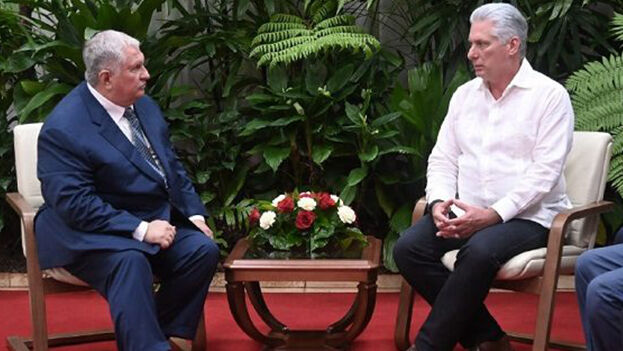
Igor Sechin, Executive Director of the Russian oil company Rosneft, along with Cuban President Miguel Díaz-Canel. (Cubadebate)
EFE (via 14ymedio), Havana, 5 March 2023 — This Saturday Cuban President Miguel Díaz-Canel received the executive director of the Russian oil company Rosneft, Igor Sechin, and thanked him for Moscow’s efforts to help the Island.
Díaz-Canel expressed his gratitude “to all the parties that have made an effort, first to understand the situation in Cuba and now to help us move forward,” the Cuban Presidency reported on Twitter.
At the meeting at the Palace of the Revolution, Sechin said that the president of Russia, Vladimir Putin, “directly and personally supervises” everything related to bilateral relations.
“First of all, I would like to convey the best wishes of our President (Putin) for you,” said the businessman, who will travel from Havana to Caracas to attend the events for the tenth anniversary of the death of former Venezuelan President Hugo Chávez. continue reading
This is the second public visit of a senior Russian official to Cuba in the last three days, after Wednesday’s meeting between Díaz-Canel and former President Raúl Castro with the secretary of the Russian Security Council, Nikolai Patrushev.
In November 2022, the Cuban president met with Putin during a visit to Moscow, where he analyzed the situation and the prospects for the development of a bilateral strategic partnership in several spheres.
In that context, he also held conversations with Sechin and thanked him for “the gestures he has made towards Cuba, which have shaped solutions in difficult times,” according to official sources.
That visit to Russia was part of a tour of other countries, such as China and Algeria, to look for solutions in the face of the serious crisis that Cuba is going through, especially in the economic, energy and food areas.
Translated by Regina Anavy
____________
COLLABORATE WITH OUR WORK: The 14ymedio team is committed to practicing serious journalism that reflects Cuba’s reality in all its depth. Thank you for joining us on this long journey. We invite you to continue supporting us by becoming a member of 14ymedio now. Together we can continue transforming journalism in Cuba.
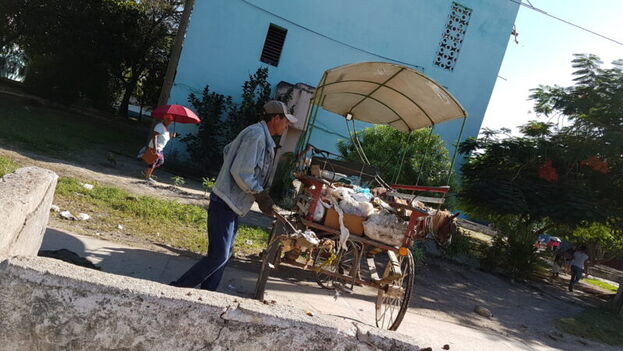
The motto of the “rebel” cart drivers is eloquent concerning their exhaustion. They simply want to “earn more and sweat less.” (Tiempo21)
14ymedio, Havana, 3 March 2023 — Every morning, a fleet of 101 carretoneros [cart drivers] tries to empty the rubbish dumps and sweep up the debris of Las Tunas. This small city in eastern Cuba, with fewer than 170,000 inhabitants, produces 1,172,447 cubic feet of garbage a month. The Communal Services regrets not having more pickups — 146 additional carts would be needed to begin a thorough cleaning of the city — but they are not willing to pay the drivers more or improve the terms of their contract.
The carretoneros collect 86.2% of the garbage from Las Tunas, according to the authorities. The rest should be transported in trucks, but the provincial deputy director of Hygiene and Death Registration — Raúl Martínez Rodríguez — the same official who revealed the poor state of the funeral transport in the area — says that they don’t work either.
The hygiene of the province depends on the self-employed cart drivers, who are now fed up with the Government’s non-payments, the exaggerated taxes on their annual profit and the lack of resources to keep their carts in good condition. This doesn’t even count the difficulty of the work, which involves handling waste without the slightest protection.
The motto of the “rebel” cart drivers is eloquent about their exhaustion. They simply want to “earn more and sweat less.” continue reading
“I walk all day full of grime, with the risk of getting sick, because among the waste there are many things that can hurt you, and they check your papers over and over again,” one of the workers, who has already found an alternative in the private sector, told the official press. “Now, hired, with a couple of good carts in the day, or throwing rubble from a construction site, I’m doing well,” he says.
Workers could find working conditions more bearable if at least the Government adequately compensated them for their work. On the contrary, state taxes and controls — they must deliver 15% of their annual income — increase every year and cause a stampede into private business.
The cost of the license also went up, and the procedure has become more complex, which complicates the incorporation of workers. In addition, keeping a horse alive and fit on the Island is an “impossible” task, complain the cart drivers, who must get grass, accessories, hardware and parts to repair the cart, in addition to constantly protecting the horse from the gangs of illegal slaughterers that abound in the Cuban countryside.
Often, the State offers these types of supplies for sale, in addition to gloves, boots and work clothes, but since the drivers are self-employed, the authorities do not give them the right to buy.
The phrase, “I stopped working for Comunales,” is heard today in Las Tunas and other cities in Cuba. It is pronounced with a tone of relief and taken as a sign of prosperity in the trade.
Local officials, subjected to the national bureaucracy, are slow to contain the stampede of their workforce. The law allows, in theory, the “ability to make changes,” on which the hygiene of Las Tunas depends. Deputy Director Martínez, however, justifies himself: “To the obvious problems of lack of resources, social indisciplines are constantly added,” he says.
Martínez does not escape the rhetoric with which the bureaucracy of Communal Services describes its problems, which the cart drivers no longer want to hear. He claims to be working on a “scaled” and “progressive” payment system, although he admits to relying on “animal traction” in the face of the low “availability coefficient” of trucks. The situation, the local press admits, is “unbearable,” and the lack of flexibility toward the self-employed will cause more losses in the coming months.
With great discretion, the regime’s newspapers have addressed the “garbage crisis” on the Island in recent weeks. “Here, 50% of the garbage that is generated daily is not collected,” said an official reporter, speaking about the municipality of Habana del Este. Also, 800 workers and nine trucks — with “breaks, lack of parts, tires and gear boxes” — do not cover the hygienic demands of the area.
Other “overcrowded” municipalities in the capital have to wait 15 days before the Communal Services come to do their job. The solution, the journalist argues, is not to improve working conditions but to activate, with more severity, the “former inspectors.”
Translated by Regina Anavy
____________
COLLABORATE WITH OUR WORK: The 14ymedio team is committed to practicing serious journalism that reflects Cuba’s reality in all its depth. Thank you for joining us on this long journey. We invite you to continue supporting us by becoming a member of 14ymedio now. Together we can continue transforming journalism in Cuba.
The high cost of living and low wages push more Cuban families below the poverty line. (14ymedio)
14ymedio, Havana, 3 March 2023 — Prices increased in Cuba 4.5 times more than salaries according to official data, although if other sources that measure sales in the informal market are consulted, prices multiplied by seven. This is reflected in the increasingly visible poverty in families that do not receive remittances, the only guarantee of survival in the context of the deepest economic crisis of the last 70 years.
The data are extracted from an analysis by Cuban economist Pedro Monreal, who describes a “serious crisis of family consumption, a burden for economic growth and an ingredient of inequality and poverty,” in a series of messages on his Twitter account, with self-made graphs and data from the National Office of Information and Statistics (ONEI).
The official figures, however, must be carefully analyzed. The ONEI data show an evolution of the sales of goods and services from January 2021 to December 2022 that went from 39,913 million pesos ($1.597 billion) to 51,242 million pesos ($2.050 billion), a growth of 28.3% that is a mirage — a “softened” vision of reality, the economist calls it — since they are expressed in nominal terms; that is, the inflationary effect is not contemplated.
The two curves reflect an increase in nominal and real consumption in 2021, but the latter plummets throughout 2022. “An important explanatory factor is the different dynamics of wages and inflation,” explains Monreal. continue reading
In 2021, as part of the Ordering Task,* the Government made public the salary tables, which multiplied the existing salaries up to that time. The minimum wage rose to 2,100 pesos per month ($84) and the minimum pension to 1,528 ($61). It was the only variable, as Monreal recalls, that was in the hands of the State, because the prices were not, from the first moment.
Marino Murillo himself, designer of the reforms, said before the entry into force of the Ordering Task that the minimum wage was calculated from the estimated price for the basic basket: 1,300 pesos ($52). It had not been more than a few months when the now invisible official admitted that the cost was already around 3,000 pesos ($120).
The ineffectiveness of the measures was seen very early, but even at that time sales in real terms rose, reaching a peak at the end of the year of about 51 billion pesos ($2 billion). But in 2022 the debacle begins “with an official consumer price index that grew almost 4.5 times more than the average salary and that, when other sources are used, indicate a price increase 7 times higher than the salary increase,” says the economist.
The average monthly salary went from 1,194 Cuban pesos ($48) in 2020 to 3,830 ($160) in 2021 (221%), which allowed inflation to be cushioned in spite of everything. However, in 2022, it only grew by 8.1%, to 4,142 Cuban pesos ($153), remaining completely useless in the face of the dizzying increase in the cost of living.
At the end of 2022, the official rise in prices was 39%, although the most alarming thing was the rise in the cost of food, which rose to 62.9%. Even more serious is the fact that the accounts of the informal economy place the real inflation of the year at 140%, coupled with a devaluation of the Cuban peso against the dollar of -57.65%.
Pedro Monreal is categorical: “The continuation of a contraction of real sales of goods and services, or their stagnation, would not be compatible with economic growth. Household consumption is a crucial component of demand, representing approximately 57% of GDP (Gross Domestic Product).”
The economist, in addition, adds another enlightening number, which is that more than a million workers earn less than the average salary, “so it is plausible to assume that inflation has had a great negative impact on poverty and inequality in Cuba.”
Although there are no official poverty statistics on the Island, a report by the Cuban Observatory of Human Rights, based in Madrid, revealed last October that 72% of Cubans live below the poverty line. In addition, of those who said they have problems even buying the most essential things to survive, 27% receive remittances and 65% do not, consolidating the class difference in a country that made a Revolution to abolish inequality.
*Translator’s note: The Ordering Task is a collection of measures that include eliminating the Cuban Convertible Peso (CUC), leaving the Cuban peso as the only national currency, raising prices, raising salaries (but not as much as prices), opening stores that take payment only in hard currency, which must be in the form of specially issued pre-paid debit cards, and a broad range of other measures targeted to different elements of the Cuban economy.
Translated by Regina Anavy
____________
COLLABORATE WITH OUR WORK: The 14ymedio team is committed to practicing serious journalism that reflects Cuba’s reality in all its depth. Thank you for joining us on this long journey. We invite you to continue supporting us by becoming a member of 14ymedio now. Together we can continue transforming journalism in Cuba.
Miguel Díaz-Canel was satisfied at the inauguration of the cigar festival. (Cuba Presidency)
14ymedio, Elías Amor Bravo, Economist, 4 March 2023 — Don’t let the party stop! We’ll see later how everything is paid for. It seems like a lie. Those who have cemented a political and ideological system against free enterprise, the market, profitability and obtaining profits, do not skimp on expenses as soon as they have the opportunity to share with their hated capitalists. This time it has been shameless.
The cigar festival presented numerous examples of that double standard of Cuban Castroism. Just a hundred feet away from the luxurious hotels where the festival events such as auctions, prizes, gala dinners, concerts, etc. were held, the Cuban people suffered from the lines, blackouts, crumbling streets, uncollected garbage and other problems. It was a metaphor for the most reactionary communist system in the world that has survived for 64 years. Incredible.
The festival not only confirmed that the embargo/blockade doesn’t exist when Cuba has a competitive product and global demand, but that the splurges and ostentation of the most extreme capitalism passed like a hurricane of creative destruction through the festival organized by the communists, who had a great time with their capitalist friends.
Surprisingly, the state press published a report that offered a good idea of the dimension of the stipend. An auction of humidors to store cigars from the festival raised the record figure of 11,220,000 euros, which, according to reports, will be allocated to the Cuban public health system. We would have to ask the Comptroller General if that is true and see if it really ends up happening. It’s a lot of money, of course. continue reading
Díaz Canel attended the auction — it is not well known in what form and on what terms, but there at Pabexpo the closing of the festival was just as (or more) spectacular than the inauguration. The communist leaders wanted to have fun after two years. Five days passed in which the regime spared no expense to satisfy international lovers of the appreciated cigars, but the lines for cooking oil remain just as long, and the blackouts continue to strike like lightning. In other words, a festival like this doesn’t change the lamentable living conditions of the Cuban people.
The auction is a metaphor for how far the regime devised by Fidel Castro 64 years ago has come. According to the state press, numerous bettors participated who, in an estimated figure of a thousand attendees, witnessed the bids in euros for six lots of the most exquisite cigars of the Upmann, Hoyo de Monterrey, Montecristo, Romeo and Julieta, Partagás and Cohiba brands. Not even in the times of the great Onassis have things this tremendous been seen.
There were also awards for the best stands at the trade fair organized during the cigar festival in a ceremony at the convention palace. The awards and special mentions for the stands, which, of course, came out of the Cuban state budget, were divided into four categories: most visited, free design, modular design and integral communication. In addition, recognition was given to the novelty of the product of the Ron Legendario Special Reservation stand. A lot of people had to be rewarded so that everyone was happy, at colossal expense.
Comercial Iberoamericana SA won the awards for the most visited stand, free design and integral communication. Free design special mentions were given to Guayaberas Cohiba Atmosphere and Brascuba SA. The modular design award went to La Estancia SA, while Havana Club International SA received the special mention of integral communication.
In addition, the Cats of Greece, the team made up of Antonis Pasparakis and Efthimios Karachristianidis, defeated Sanel Haddad and Hassan Tameemi, the Falcons of Kuwait, in the final of the fourth edition of the Habanos World Challenge, held at the palace of conventions, which also came out of the Cuban state coffers (because Habanos is the same, let no one doubt it, when it comes to paying).
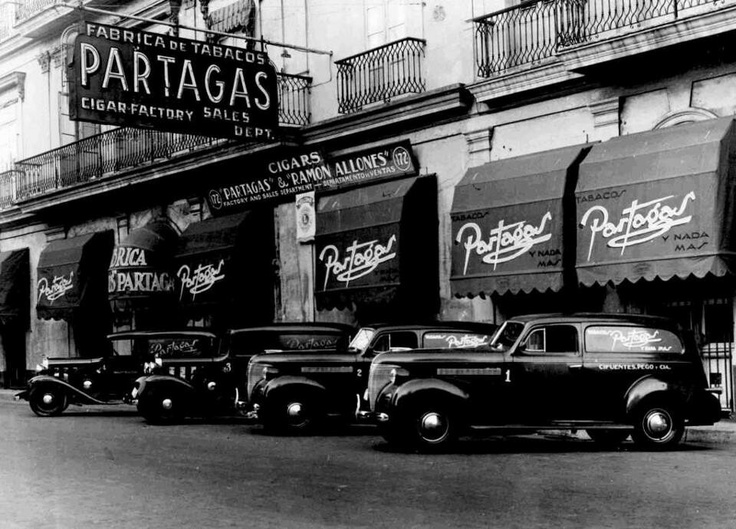
And then came the gala dinner with musical performance included (plus expenses on the State’s account) with the presence of former Prime Minister Marrero, well known for his culinary faculties. The Partagás brand was honored, and it presented its new Master Line made up of three cigar band signatures: Origin, Rite and Master.
The best tribute that the communist regime could make to Partagás would be to return the company to its legitimate heirs and compensate them for the confiscation carried out in the early 1960s. But no one talked about that, not even some Catalan businessmen who attended the event, and who were unaware that Jaume Partagás was their fellow countryman. Many years have passed in favor of the communist regime, so we have to take advantage of these occasions to remember and convey the truth so that future generations know the magnitude of the horror.
With the end of the festival, the regime’s commercial economic consortium gave the order to start the sale of Cuban cigars worldwide. Habanos S.A., euphoric about the success of the product last year, wants to increase sales, and even though production has been lower than expected because the farmers prefer to grow beans since they can charge more than for the tobacco leaf, Habanos is confident about increasing the price of a luxury product that increasingly has as users the profile of those great fortunes in the world that the Castro regime considers as enemies. That’s life.
In addition to the awards, auctions and gala dinners with live musical performances, the cigar festival hosted presentations of new cigars, the International Seminar, visits to tobacco plantations, tours of the Partagás and La Corona factories and the traditional trade fair. All this was financed, partly by the attendees, but with the secure and necessary collaboration of the regime, with a high-scale marketing budget. Knowing how much that necessary cooperation of the regime received from the empty coffers of the communist state would be convenient for responsibility and transparency. Nobody believes that this type of party happens for free.
Translated by Regina Anavy
____________
COLLABORATE WITH OUR WORK: The 14ymedio team is committed to practicing serious journalism that reflects Cuba’s reality in all its depth. Thank you for joining us on this long journey. We invite you to continue supporting us by becoming a member of 14ymedio now. Together we can continue transforming journalism in Cuba.
14ymedio, Elías Amor Bravo, Economist, 28 February 2023 — For all those who do not believe the story of the embargo/blockade and who are bored with all the pitiful complaints by the Cuban communist leaders, I recommend a visit to the 23rd edition of the Cigar Festival that is being held in Havana. It has nothing to do with an embargoed country. Quite the contrary. In addition, business is going smoothly.
At a press conference, data were offered from the productive and commercial monopoly consortium of Cuban tobacco, the so-called Habanos SA, the golden retirement of Murillo,* which generated revenues in 2022 of 545 million dollars, 2% more than the previous year.
The multinational extension of the regime’s monopoly corporation is spectacular, since it has 4,769 specialized points of sale (157 Habano, 17 Cohiba Atmosphere, 587 Habanos Terrace, 2,744 Habanos Point and 1,264 Habanos Specialist), with a growth of 10% more than in 2021. Who would have thought? Despite the campaigns, Cuban tobacco consumption continues to increase. The festival has invited 140 specialized journalists from 20 countries around the world. Who said that the Castro government doesn’t know about marketing?
Someone could misinterpret this initial tone, but it’s not my intention. The point is that anywhere Cuba has a competitive product in world markets, which sells well, at good prices, which catches investors and tobacco smokers who come to enjoy cigarettes and order their purchases, the ’blockade’ simply does not exist. It’s not even mentioned. I looked in the communist state press that covers the Havana event to see if there was any statement against the embargo/blockade by the leaders who attended. Nothing. Don’t even bother looking. It’s something for Cuba’s high society, in the most stale style of millionaires and speculators. Let them enjoy themselves, Murillo included. continue reading
The state press pursued Díaz Canel and Murillo at the inauguration in the Cuban capital of the twenty-third cigar festival that, in order to spare no expense, will go on until next Saturday, March 4. A week to enjoy, at the expense of Habanos SA and the regime, the excellence of the best product of the Island since colonial times.
Along with white gold [sugar], Cuba was internationally recognized for the quality of its tobacco from the first tobacco planters of my beloved and never forgotten Santiago de las Vegas, a municipality that stood up to the cigar stores of the metropolis, to the painstaking growers of the Vuelta Bajo region in Pinar del Río. The cigar business has survived the revolution amazingly well, and there it continues, on its feet, demonstrating what Cuba can and could do in many other areas of commerce.
So in the most triumphant tone one can imagine and with the whining far away, Díaz Canel and Murillo dedicated themselves to public relations, and at the press conference at the Palacio de Convenciones, they recreated themselves with the economic results of the Habanos SA monopoly and presented the company’s management balance sheet for 2022 with great fanfare. Some discovered a Murillo who was much more relaxed than in the time of the Ordering Task.** It’s what the elite do far from the spotlight.
As it is not an embargoed, blockaded, or besieged nation, there at the press conference the world was informed from Cuba that Spain, France, Germany, China and Switzerland were the five main markets for the cigars last year. How good it would have been to include the United States. The leaders limited themselves to saying that only the order of the nations had changed with respect to 2021. Not a reference to the northern neighbor. Neither good nor bad.
Among the activities of the festival, in addition to the visit of businessmen and tycoons from half the world, who arrive in their private jets to the besieged Island and stay in the new hotels with astronomical prices, visits to Habana factories and tobacco plantations were scheduled in the western province of Pinar del Río as the state press says, and I admit, “internationally recognized as the land of the best tobacco in the world.”
Also in that framework of a besieged and embargoed nation, the state monopoly presented the novelties of the event, basically the launches of the Montecristo Open, Bolívar New Gold Medal and Master Line (banded) products. Innovation continues to be a fundamental element of the creativity of Cuban tobacco merchants, which makes you wonder what this sector could be like if there were no communist economic model governing the destinies of the economy and the nation.
Malmierca, minister of foreign trade and foreign investment, also walked through the festival and ended up destroying the argument of the embargo/blockade by reporting at the press conference that the fair has 2,000 attendees from 110 countries, 250 exhibitors from 10 other countries and 6,459 square feet of exhibition space. Figures like these would not be possible in an embargoed country.
Malmierca welcomed exhibitors from Italy, Hungary, Spain, Panama, Mexico, Costa Rica, Canada, Ecuador and China, including Cuban exhibitors. Of the 70 stands at the fair, 59 are Cuban, who, as Malmierca said, “show the varied offers of our country in the field of crafts, cultural and musical production, fashion, tourism, gastronomy and also everything related to cigars.”
Malmierca pointed out that “this trade fair will be an ideal framework for technical and commercial exchanges between companies, suppliers and the public that will be able to have access to the exhibition,” but those exchanges will be only for certain companies, basically the state ones, those that live within the regime.
I wish that the exchanges would serve Cuban private companies, guided by the motive of profit and profitability, but the regime’s internal blockade is another thing, the worst of all.
Translated by Regina Anavy
Translator’s notes:
*Marino Murillo is the Former Minister of Economy and Planning. **The Ordering Task is a collection of measures that include eliminating the Cuban Convertible Peso (CUC), leaving the Cuban peso as the only national currency, raising prices, raising salaries (but not as much as prices), opening stores that take payment only in hard currency, which must be in the form of specially issued pre-paid debit cards, and a broad range of other measures targeted to different elements of the Cuban economy.
____________
COLLABORATE WITH OUR WORK: The 14ymedio team is committed to practicing serious journalism that reflects Cuba’s reality in all its depth. Thank you for joining us on this long journey. We invite you to continue supporting us by becoming a member of 14ymedio now. Together we can continue transforming journalism in Cuba.
Yudith Mandina, Roberto Mario and Roberto Montero have been detained in Mexico since February 16. (Screen capture)
14ymedio, Mexico, 27 February 2023 — Cubans Yudith Mandina, Roberto Montero and their son Roberto Mario have been detained at the Acayucan immigration station (Veracruz) since February 16. According to a relative, Niurka Almeida, they were taken off the bus in which they were traveling despite having proof of U.S. humanitarian parole. “There is no reason for their arrest,” he said.
Almeida told Telemundo51 that his relatives were unable to board a flight from Cancun to the U.S. due to “an inconvenience in the issuance of their travel authorization.” To resolve this situation, they traveled by bus to the headquarters of the U.S. embassy in Mexico City, but on the way were taken off the bus by Migration agents without being told the reason.
After two days without knowing about the Montero Mandinas, the relative hired an attorney, who secured an injunction to request their release. “Since Friday, we have been trying with the lawyer, but they told him on Sunday that it would take until Monday” before their situation would be defined. “They already know that the parole is real, but nothing happens and they are still imprisoned.”
A source from the immigration station told 14ymedio that the Cubans “are not detained” and that the “internment” in Acayucan is due to the fact that they “do not have a safe-conduct pass,” he said. However he refused to answer why Island nationals who have a U.S. humanitarian permit are being arrested and why it’s necessary for these migrants to have a safe-conduct pass. continue reading
Article 111 of the Migration Law establishes that the National Institute of Migration cannot detain an irregular migrant for more than 15 working days.
Mexican agents told Yida that they “didn’t know” about the benefit of parole and weren’t aware of “sponsorship or the flight permit or anything.” During their stay, a lawyer offered to release them in exchange for $5,000, arguing that at least one of the young women had false documents. After four days of uncertainty they were released.
Dachel specified that of the seven detainees, three, who apparently were a family, were taken to another place, and he did not know anything more about them. Luis Ángel Sánchez and Noelvis La O Pereira were also in the group and are still detained in Las Agujas. Both have humanitarian parole and safe-conduct passes.
Luis Ángel’s father, Luciano Sánchez, said that his son is desperate, has been “attacked” and “has a sore throat.” He said that an acquaintance of Noelvis’ family, another detainee, went to Las Agujas, but “they denied him information” because his surnames did not match any of the detainees.
In an attempt to free these Cubans, the relatives have shared videos requesting the intervention of the Government of Mexico, which have so far not been heard.
This Sunday Migration reported the arrest of a bus with 116 migrants on the road from Puebla to Mexico City. Among the detainees were people from Cuba, Venezuela, Honduras, Ecuador, Brazil, Guatemala, Nicaragua, Haiti and El Salvador. This group was transferred to Acayucan.
In Florida, this Sunday the U.S. Coast Guard repatriated 64 rafters to the Island aboard the ship IsaacMayo. According to the Cuban Ministry of the Interior, 2,431 Cubans have already been expelled so far this year.
This new group of irregular migrants – made up of 52 men, 11 women and one minor – were intercepted by the U.S. Coast Guard at sea and returned to Cuba through the port of Orozco, in the province of Artemisa.
Two of these migrants who returned on Sunday are now subject to an investigation “for being alleged perpetrators of serious criminal acts, which were investigated prior to their departure.”
The majority of the group are residents of the provinces of Havana, Matanzas and Granma, and they have participated in five illegal exits from Cuba. The previous week, the U.S. Government deported another 98 rafters in three returns.
Since last October 1, the Coast Guard crews have arrested more than 5,740 Cubans.
Translated by Regina Anavy
____________
COLLABORATE WITH OUR WORK: The 14ymedio team is committed to practicing serious journalism that reflects Cuba’s reality in all its depth. Thank you for joining us on this long journey. We invite you to continue supporting us by becoming a member of 14ymedio now. Together we can continue transforming journalism in Cuba.
One of Western Union’s offices in Florida that sent remittances to Cuba in January. (14ymedio)
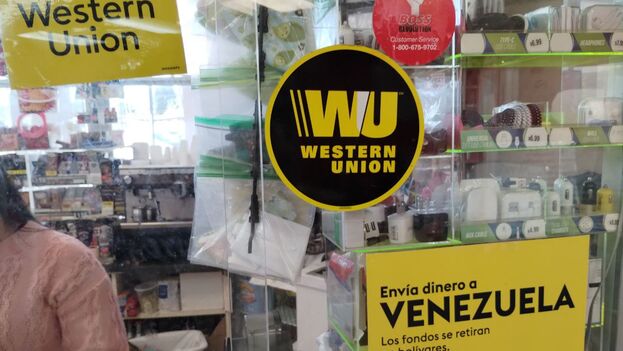
14ymedio, Havana, 2 March 2023 — The U.S. company Western Union announced on Thursday that it is now possible to send remittances to Cuba from any of its U.S. offices. The company, which had carried out a pilot test of transfers to the Island only from Florida, will use the payment channels of the Cuban agency Orbit S.A., which means that Cubans will receive their money in freely convertible currency (MLC) directly in their bank account.
Western Union had launched a test phase last January 4, to evaluate the possibility of extending transactions to the Island from the entire United States. With the mediation of Orbit — an agency based in Havana that allows the Cuban Government to audit remittances and transform them into MLC — Cubans will receive the amount sent loaded onto the currency cards of Banco Popular de Ahorro, Banco de Crédito y Comercio and Banco Metropolitano.
The brief note published in this regard by the official press assures that Orbit “will keep the population informed about the official channels that it is incorporating into its management.” continue reading
According to Cubadebate, Orbit successfully managed remittances from Europe and Canada. It clarifies that Western Union transfers are a “legitimate activity” that has been working for Cuba since 1995. It was stopped when Donald Trump sanctioned the processors Fincimex and AIS for their links with Gaesa, the Cuban military conglomerate then led by Luis Alberto Rodríguez López-Calleja, Raúl Castro’s son-in-law, who died in 2022.
With the flexibility of the Biden Administration for sending remittances, the company activated its pilot test from supermarkets, pharmacies, small shops, cafes, telephone stores and travel agencies in 65 locations in Florida.
At the beginning of 2023, the president of the North American division of Western Union, Gabriella Fitzgerald, announced “with great pleasure” the reestablishment of service and stated that the funds could arrive on the Island the same day if they were sent before noon.
The readers of Cubadebate found the announcement of Orbit and Western Union ambiguous and demanded more details from both companies. It’s “the same as now,” a reader said with disappointment, alluding to the fact that the cash deposited in the United States would be transformed into MLC as soon as it reached the Island’s bank accounts.
The announcement has also raised suspicions about the usefulness of receiving money in MLC, when stores where that only take payment through the cards face a growing shortage of products.
“The information must be more complete,” demanded the readers, who are also not satisfied with the fact that the cash dollar does not reach Cuban households, as was done in the past. Others, mockingly, affirmed that the news “does not give or take anything away from Cubans, on the contrary.”
Translated by Regina Anavy
____________
COLLABORATE WITH OUR WORK: The 14ymedio team is committed to practicing serious journalism that reflects Cuba’s reality in all its depth. Thank you for joining us on this long journey. We invite you to continue supporting us by becoming a member of 14ymedio now. Together we can continue transforming journalism in Cuba.
Miguel Díaz-Canel was satisfied this Monday at the inauguration of the cigar festival, which has 59 Cuban exhibitors linked to that industry. (Cuba Presidency)
14ymedio, Madrid, February 28, 2023 — The Festival of the Cigar was inaugurated this Monday in the Cuban capital with the presence of Miguel Díaz-Canel, who had the peace of mind of being present at one of the few sectors that can boast good figures in Cuba.
The company, Habanos S.A., took the opportunity to show its 2022 revenues, which improved by 2% over the previous year, and totaled 545 million dollars. At today’s exchange that would be 578 million dollars, ten million more than in 2021. Last year, revenues had already grown by 15% compared to 2020, which shows the good health of a product designed exclusively for the foreign sector.
According to the information offered by the company, Spain, France, Germany, China and Switzerland are Habano’s main buyers and consolidate the European market as the first recipient, with 53.7%. It is followed by the Asia-Pacific region, with 19.3%, America (15.3%) and Africa and the Middle East (11.7%).
“These results are the reflection of the perfect combination between the passion that all of us who make up this wonderful Habano business feel and the strength of our brands, which puts the finishing touch on the unique tobacco that grows in this land and that offers unparalleled moments and experiences to fans around the world,” said its presidents Luis Sánchez-Harguindey Pardo de Vera and Maritza Carrillo González, whose appointment took place just a week ago. continue reading
The managers held a press conference on Monday in which they presented all kinds of details about the brands, products and points of sale in the world, which already amount to 4,769, almost 10% more than in 2021. They also commented on the main activities of the fair.
At the inauguration was the Minister of Foreign Trade and Foreign Investment, Rodrigo Malmierca, who explained that there are 250 exhibitors from 10 countries (Italy, Hungary, Spain, Panama, Mexico, Costa Rica, Canada, Ecuador and China) in the 6,458 square feet of the exhibition.
“This trade fair will be an ideal framework for technical and commercial exchanges between companies, suppliers and the public who will be able to have access to the exhibition,” Malmierca said. The minister added that 59 of the 70 stalls at the fair are Cuban and show “the varied offer of our country in the field of crafts, cultural and musical production, fashion, tourism, gastronomy and everything related to cigars.”
But the news was not received with the same enthusiasm by the population. None of the readers of the official press who have commented on the information so far has celebrated the figures, and the vast majority ask that the income be used for the needs of Cubans.
“I would like a percentage of that money to be allocated to the purchase of medicines,” one user asks. “How many everyday problems of ordinary Cubans could be solved with that income?” another continues.
Another reader wonders about the real benefits once the expenses are deducted – “What were the expenses they incurred? That’s what says how profitable it is, economically speaking” – and one more wonders if there are more beneficiaries than the State: “The result is income less expenses. We will have to see what it is and if we don’t have to share part with a foreign partner. It is a ‘Anonymous Company.’ Who is it?”
There are also those who are concerned about the impact on health of tobacco consumption and a user who welcomes with prudent optimism a news that he considers good, but without falling into complacency. “Whatever profits the country is welcome, but don’t forget that we are an underdeveloped country, with a poor economy and also blockaded, and all sectors need oxygen,” he claims.
Among the readers, one points out in disbelief that this is the “more-than-justified moment to compensate tobacco producers in Pinar del Río for their losses in the hurricane.”
The Cuban economist residing in Spain, Elías Amor, has analyzed in his blog Cubaeconomía the data and the Festival, which he considers “an event of Castro’s high society, in the most stale style of millionaires and speculators.” The expert points out as a miracle that the tobacco industry has “survived the Revolution” and emphasizes that this demonstrates “what Cuba can and could do in many other areas of trade.”
However, he believes that none of this will benefit the population. “I wish that the exchanges would serve Cuban private companies, guided by the motive of profit and profitability, but the internal blockade of the regime is something else. The worst of all possible things.”
Translated by Regina Anavy
____________
COLLABORATE WITH OUR WORK: The 14ymedio team is committed to practicing serious journalism that reflects Cuba’s reality in all its depth. Thank you for joining us on this long journey. We invite you to continue supporting us by becoming a member of 14ymedio now. Together we can continue transforming journalism in Cuba.
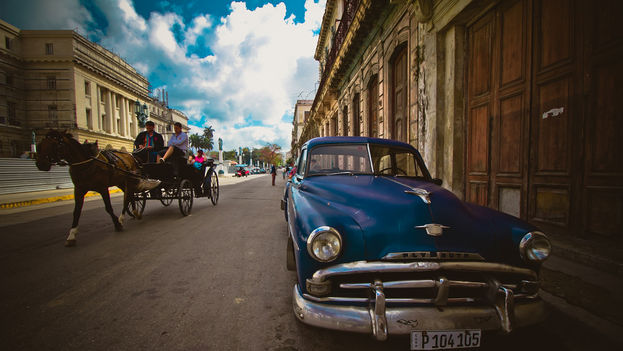
 14ymedio, Havana, 6 March 2023 — The collapse of tourism in Cuba once again marks a milestone this February, when the Island barely registered 186,343 visitors according to preliminary official data. Although we will have to wait until later to have the complete report of the National Office of Information and Statistics (Onei), the official newspaper Cubadebate anticipates that between January and February, 489,000 tourists arrived on the Island. The newspaper admits that this is barely half (51%) of what was recorded in the same period of 2019, comparing the numbers for the first time with a pre-pandemic year.