
Argentina Proposes More Trade with Four Countries, Including Cuba, to Fight Inflation

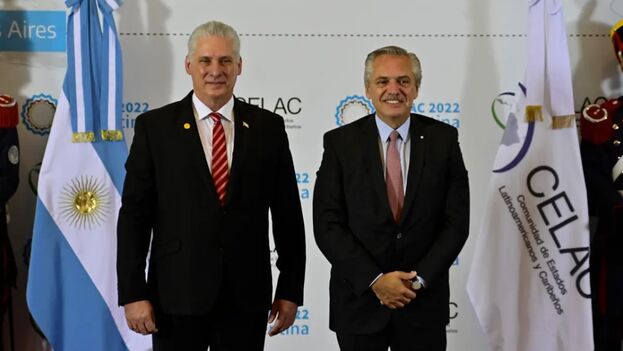
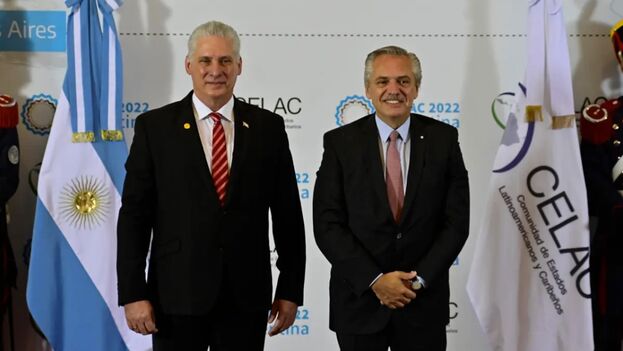
The president of Argentina, Alberto Fernandez (right), receives the president of Cuba, Miguel Díaz-Canel, at the beginning of the Celac summit of 2023, in Buenos Aires (Argentina). (EFE/Matías Martín Campaya)

14ymedio bigger14ymedio, Madrid, February 27, 2023 — Cuba is the unexpected guest at a meeting, on March 17, between the presidents of Argentina, Mexico, Brazil and Colombia to create a product exchange mechanism with which they aspire to contain inflation. The possible agreement between four Latin American giants and the stunted Cuban economy has been revealed by Alberto Fernández himself to the Argentine economic newspaper Ámbito.

“López Obrador called me and proposed we launch an agreement with Brazil, Colombia and Cuba, which total most of the region’s GDP, to help us with a problem that is common to all of us, as is inflation,” the president said in exclusive statements to that newspaper.

The Mexican, who received Fernández on February 17, told him about the idea, which should take place next month at this summit. The idea, the Argentine advanced, is to develop a set of “sensitive” products that, if their prices skyrocket, can be imported at a lower value.

The Argentine president gave a concrete example to the newspaper and explained that, if a product such as clothing went up in price alarmingly, one could go to one of the participating countries, such as Brazil, to obtain it at a cheaper value and exchange it for a more affordable one in the country, hers, without going any further. This mechanism, Fernández defined, would be “a kind of clearing,” as commercial clearing systems are known in the economic sphere. continue reading

Alberto Fernández clarifies that, after communicating with López Obrador, he spoke with Luiz Inacio Lula Da Silva, Gustavo Petro, and Miguel Díaz-Canel to share the initiative and the meeting with them. “We also agree that in the meantime the ministers of each country would talk to each other. In my case, I instructed Santiago Cafiero (Chancellor) and Sergio Massa (Minister of Economy) to move forward with that,” he adds.

From Fernández’s words it can be inferred that the idea of adding Cuba came from Mexican president, although it is the Argentine head of state himself who, naturally, includes the Island in the group of countries that contribute most to the Gross Domestic Product to Latin America.

According to data from the Economic Commission for Latin America (ECLAC), at the end of 2021, Brazil, with 1.6 trillion dollars in GDP, is the largest economy in Latin America, followed by Mexico, with 1.3 trillion dollars. Argentina (487 billion) and Colombia (314 billion) are much lower, but Chile, left in the middle (with 317 billion), is fourth in the region.

To locate Cuba you have to go to position 27, with 2.05 billion “official dollars” that year, even well below Venezuela, which is at position 12 and without mentioning the possible presence of Nicolás Maduro at the summit. Nor, apparently, is Chile’s President Gabriel Boric, at least to date, invited to the summit. He is theoretically related to this ideological block, although distant in his positions with respect to Cuba, Nicaragua and Venezuela.

The island does compete strongly for the position of inflationary champion within that group. Although Argentina, which closed 2022 with a 94.8% price increase, seems the absolute winner even against the Island, which reported 39%. However, the informal market indicates that Cuba ended the year with increases of 140%. Far away are Colombia (13%), Brazil (5.7%) and the 7.8% of Mexico, and these figures are not insignificant.

Although Argentina has not experienced an economic situation like the current one for 32 years, the last decades have been extremely unstable for both its own and foreign causes, and the country has alternated great economic growth with bankruptcies so deep that it has been forced to suspend payments and resort to the International Monetary Fund to save itself.

Like most countries, first the pandemic and then the global crisis aggravated by the war in Ukraine have worsened the situation, and the measures taken have left the economy with contrasts, both at the macro and micro levels. Despite this, and the balances that the president must make to comply with the IMF in an election year, it is expected that it will be one of the highest growth nations in the region.

Argentina is a large net exporter of raw materials, 70% of its international trade. Cereals and oilseeds account for, in fact, around 50% of their total exports, so Fernández showed great enthusiasm around the new mechanism created by López Obrador. According to the president, the countries called to sign the agreement have a large network of food, energy and manufacturing production and, in addition, will have as an incentive the relief of not being forced to resort to the dollar as an exchange currency.

The trade between Mexico and Argentina has never been particularly active. The Mexican Ministry of Economy placed the country as the 29th largest partner in 2018, only 0.2% of total trade and sixth in the region. Just a year later, in 2019, it fell even more, to 31st place, with 1.562 billion dollars. On the other hand, bilateral trade between Cuba and Argentina currently exceeds 300 million dollars and is mainly based on raw materials and food products. In recent years, discussions have increased to form joint projects, especially in the promotion of agriculture.

Translated by Regina Anavy

____________

COLLABORATE WITH OUR WORKThe 14ymedio team is committed to practicing serious journalism that reflects Cuba’s reality in all its depth. Thank you for joining us on this long journey. We invite you to continue supporting us by becoming a member of 14ymedio now. Together we can continue transforming journalism in Cuba.
The Wave of Crime in Cuba Claims the Life of a School Custodian in Santa Clara

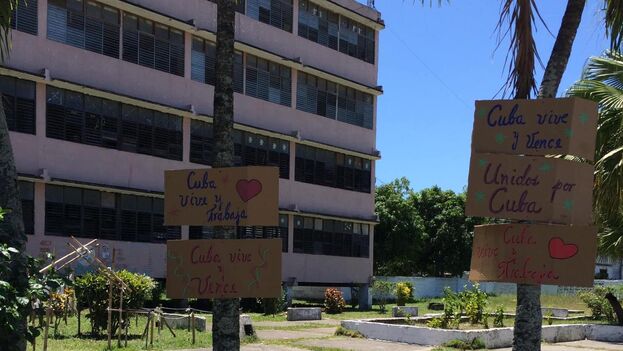
Celia Sánchez Manduley Elementary School, in Santa Clara, where the victim worked. (Facebook)

14ymedio bigger14ymedio, Havana, 28 February 2023 — A man was killed early this Sunday morning in the José Martí neighborhood, on the outskirts of Santa Clara, Villa Clara. Activist Jonatan López identified the deceased as Miguel Contino Moro, one of the security guard of the Celia Sánchez elementary school. According to their version, the killers intended to “steal some televisions,” old computers and “even food” from this school.

López, brother-in-law of political prisoner Andy García and exiled in Germany, added that the fact touches him “closely,” since his family still lives in that neighborhood and he studied in primary school where Contino was a security guard. The security guard “lived alone and was everyone’s friend.” The criminals, the activist said, attacked Contino with “a knife.”

Some readers of López’s report on Facebook commented that the Police carried out a “large deployment of military cars” during Sunday morning in the vicinity of the school. The body, they say, was “unrecognizable” by the “viciousness” of the thieves. Other versions have also circulated about the motive of the murder, including that of an alleged settling of accounts by a relative or acquaintance.

Neither the authorities nor the relatives of Contino have spoken out about it, and the Communist Party newspaper in the province — with its website out of service for months — has also not reported the death on its social networks.

López took advantage of his post to denounce the police inaction in the face of violence that is experienced in the peripheries of many cities on the Island. He mentioned some officers of the Police and State Security who reside in the José Martí department and demanded a more active participation in the preservation of tranquility in the neighborhood. continue reading

In addition, he recalled that when it came to repressing his family and political prisoner Andy García, officers and whistleblowers of Santa Clara — whom he identified as Yamileth and Leandro Sarduy — acted quickly.

The escalation of violence and the increase in crime in Cuba have not stopped in recent months. The official press and the Ministry of the Interior hide most of the cases and only agree to reveal, with very few details, those crimes that have had wide coverage on social networks and that it is no longer possible for them to ignore.

The murder in Jatibonico of Yanquiel Jiménez, a 19-year-old boy who died after being stabbed in the neck, shocked the province of Sancti Spíritus last week. Only after his case was reported on Facebook did the Police offer an official version in the Escambray newspaper.

In the midst of the increase in crime on the Island, the number of victims of femicide is one of the most alarming. With 14 women killed so far this year, according to several independent platforms, and a government that devotes more resources to the repression of opponents than to the security of the streets, Cubans feel increasingly helpless.

Translated by Regina Anavy

____________

COLLABORATE WITH OUR WORKThe 14ymedio team is committed to practicing serious journalism that reflects Cuba’s reality in all its depth. Thank you for joining us on this long journey. We invite you to continue supporting us by becoming a member of 14ymedio now. Together we can continue transforming journalism in Cuba.
Cuba’s Demographic Crossroads: No Young People of Working Age in Sight

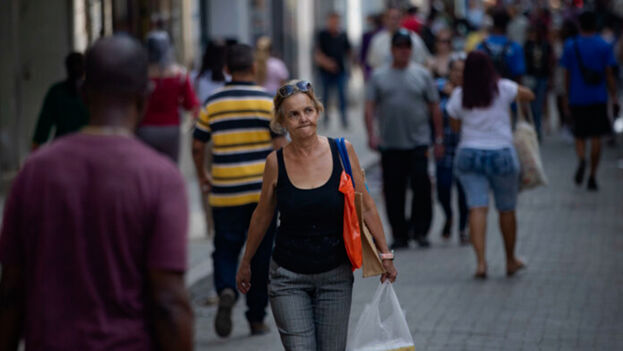
Cuba’s population is aging rapidly, and the Island does not have enough young people able to produce. (EFE)

14ymedio biggerEFE (via) 14ymedio, Laura Becquer, Havana, 26 February 2023 — Cuba faces a crossroads in the midst of one of its biggest economic crises in history: how to recover when its society ages rapidly and does not have enough young people able to produce.

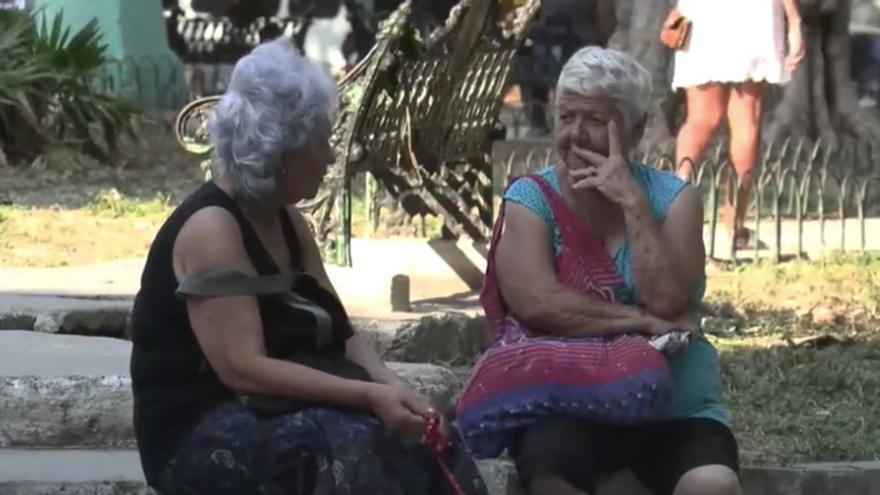
The Island now has the oldest population in Latin America and the Caribbean. Two out of ten Cubans (21.9%) are at least 60 years old, the director of the Center for Demographic Studies of the University of Havana (Cedem), Antonio Ajá, told EFE.

This means that of the 11.1 million Cubans, about 2.4 million exceed the barrier of six decades of life.

The academic emphasizes that this is the result of social policies implemented decades ago that have extended life expectancy (approximately 79 years for both sexes).

However, this brings with it a problem from an economic and social point of view.

“The economically active population that is smaller is a challenge for the social security systems, healthcare and the protection of the elderly,” he said.

Which means that there are more and more elderly and fewer young people of working age to sustain the economic activity of the country. And, in the long run, to finance the pension system. continue reading

Data from the National Office of Statistics and Information show that 99,096 births and 167,645 deaths occurred in 2021.

“Cuba has a demographic behavior similar to that of developed nations (low fertility, high life expectancy), but the difference is that they are countries that receive immigrants and also counteract demographic aging with their economic development,” he said.

Cuban economist Tamarys Bahamonde says that the number of “dependent” people who live on their pensions is increasing on the Island. (Image Capture)

“Dependent” people are also increasing: those who do not produce and live on their pensions after having contributed to the economy, Cuban economist Tamarys Bahamonde explained to EFE.

The retirement age in Cuba is 60 years (women) and 65 years (men) with a minimum monthly pension of 1,528 Cuban pesos (12 dollars at the official exchange rate and the equivalent of  $8.70 in the extended informal market).

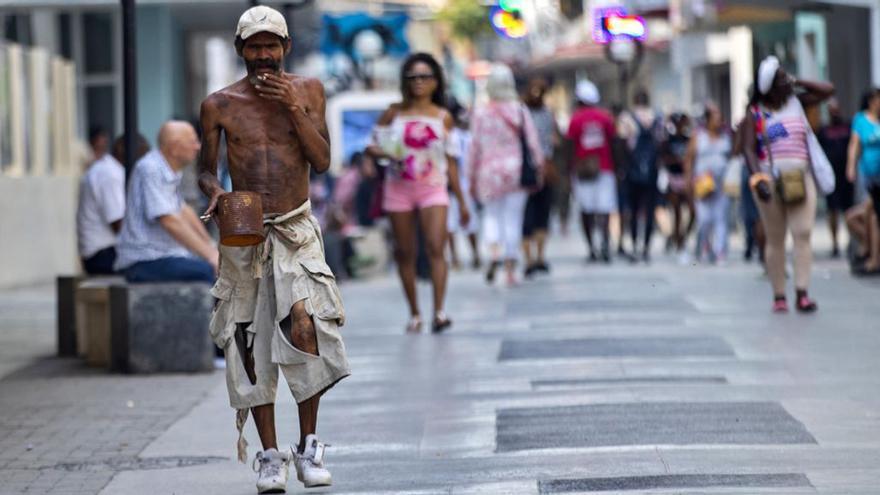
The loss of young people of productive age is explained, in large part, by the unprecedented migratory exodus that the country is experiencing.

Last year alone, more than 313,000 Cubans were intercepted by the United States at the southern border with Mexico. This represents 3% of Cuba’s total population.

The figure does not include the thousands who went to other destinations such as Mexico, Spain or South America.

This phenomenon was recognized a few days ago by Ángel Luis Ríos, general director of Productive Links of the state sugar agency, Azcuba.

Ríos assured the official newspaper Granma that the sugar mills — another engine of the economy — have a reduced and aged staff due to “the effect of migration,” and that this has translated into a deficit in the harvest.

“Cuba has a negative migratory balance since 1930 that was reinforced beginning in 1959 (when the Revolution triumphed), so it has lost population in full reproductive and productive capacity,” Professor Ajá said.

Internal migration is also negative with “depopulated and aged” rural areas, a “worrying” issue for example when it comes to producing food because there are no people to work the land, according to the expert.

Another reason for the labor flight is the lack of incentives. Cuba’s average salary is about 4,000 Cuban pesos ($32 at the official exchange rate).

The fertility rate in Cuba is 1.4 children per woman, one of the lowest in the region, for which the rate around 1.85 in 2022, according to the Economic Commission for Latin America and the Caribbean.

To maintain the level of replacement in the population, a woman must have two children and one of them must be a girl, explained Ajá, who highlighted that “Cuba has been below that indicator since 1978, with extremely low values in recent years.”

The loss of young people of productive age is explained, in large part, by the unprecedented migratory exodus in Cuba. (EFE)

For Bahamonde, meanwhile, “the very low birth rate has its cause in the economic crises that have been chaotic for society, especially for women because they have the responsibility to take care of the elderly.”

By 2030, elderly Cubans will represent 30% of a population that will not exceed 10 million, according to Professor Ajá.

Among the measures adopted by the Government to address the situation is the construction and maintenance of childcare centers, nursing homes and maternal homes, as well as supporting fertility programs and care for mothers with more than three children.

However, for Bahamonde, “the first thing is to respond to the serious economic situation and then think about the implementation of complementary policies that stimulate the birth rate.”

In the same vein, Ajá considers that “we must work to improve the economy and reflect its growth in increased income for families.”

“That has to be accompanied by policies that benefit the construction of housing, guarantee a solution to the problem of caring for the elderly and children and attract the Cuban population abroad,” added the director of Cedem.

Translated by Regina Anavy

____________

COLLABORATE WITH OUR WORKThe 14ymedio team is committed to practicing serious journalism that reflects Cuba’s reality in all its depth. Thank you for joining us on this long journey. We invite you to continue supporting us by becoming a member of 14ymedio now. Together we can continue transforming journalism in Cuba.
Some 10,000 Workers in the Electricity Sector Left Their Jobs in Cuba in 2022

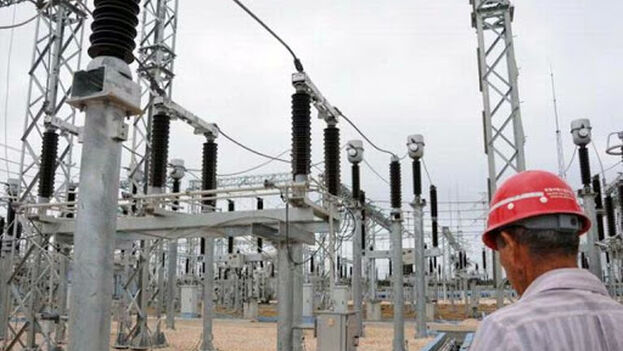
8,089 workers left their jobs in the first nine months of last year. (Escambray)

14ymedio bigger14ymedio, Havana, 27 February 2023 — Every day, more workers in the state electricity sector leave their jobs in Cuba. In the first six months of 2022, 21 a day left their jobs; in the following three months, while the country was experiencing the prolonged blackouts of the summer, the number was 26 a day. In total, 8,089 workers ceased their activities in the first nine months of last year, and at this rate, it is estimated that there were about 10,000 by the end of the year.

The figure, provided this Sunday in an article in the state newspaper Trabajadores, makes 2021 look pale, when 6,612 electricians left their jobs. The text does not mention migration and refers only to the exodus to the private sector, personified in an industrial mechanic from Cienfuegos, José Manuel Hernández, who nostalgically remembers his 20 years at the Carlos Manuel de Céspedes thermoelectric plant but left because of the tiny salary he received.

“The money I earned didn’t help me at all. Then a friend told me he was forming a small private company, one of those they call SMEs,*  to produce food, and I went with him. Now my salary is more than double what I earned at the plant,” he reveals in the middle of a heartfelt story about his love for the factory.

According to the author of the text, the general secretary of the union bureau of the thermoelectric plant, Carlos Rafael Quintero Cabrera, said at the last Plenary of the Provincial Committee — held at the end of December — that there were more than 40 vacant jobs in the plant and that the effort to generate electricity was enormous. “Workers have to feel materially and morally stimulated,” he said.

The trade unionist then stated that an attempt was made to increase the qualification of those who were studying, but the training courses have been going on for up to five years. “The concern is how we are going to retain that workforce because they are leaving for the SMEs,” he said. continue reading

Last October, Cuban television broadcast a report from the Antonio Guiteras thermoelectric plant, in Matanzas, in which one of its workers, Yoandry Flores, head of the block and a control room operator, attributed to the Ordering Task** the wage collapse in the sector. “Mostly, the operations personnel decide to leave because of the cutbacks in wages. At one point, before the reorganization, we were one of the companies that was most favored in terms of salaries, and workers could meet their needs. After the reorganization we fell to a lower level,” he said.

Salaries, after the implementation of the Ordering Task in January 2021, were between 4,000 and 8,000 pesos ($167-333) per month for workers in the electrical industry, although with options to increase pay according to their jobs, in addition to the company’s ability to increase wages according to efficiency, results and other concepts.

But the article in Trabajadores speaks of a drop in staff that dates back to the last four years. Ulises Guilarte De Nacimiento, a member of the Political Bureau of the Party and Secretary General of the Central Union of Workers, referred to that period and warned of the need to address the situation. “You can’t be indifferent to union work, which means to the tasks proposed by the Government, and they must receive prioritized attention,” he explained.

George Batista Pérez, General Secretary of the National Union of Energy and Mines, told the newspaper in the middle of last year that there was “a very serious problem in the sector.”

“The labor fluctuation is linked to the difficulties with food, transportation and salary. Decree 53 offered a salary increase for efficiency, but it did not cover expectations from the distribution of profits,” said the official, who also pointed out that the Ordering Task was a turning point for the sector. As he explained, some of the traditional benefits of employees in the electricity sector were abolished with the new rules.

Among them, he cited the fall in piecework payment due to the lack of financing (the result of the lack of resources), the shortage of funds that would allow the distribution of profits and the lack of money for technological improvements that would alleviate the workload. “As a result of all this, working conditions have only worsened. But the allowance for the purchase of food has also been eliminated, and the workers who had a differentiated offer are totally unprotected if the high prices approved are taken into account.”

The union that leads, the article says, has proposed 12 actions to recover the morale of its workers and avoid the constant loss, but when it comes to finalizing the proposals, they seem rather theoretical. They include the “establishment of a system of care and follow-up with the administrative directorates for the gradual and systematic improvement of the working and living conditions of workers; the realization of emulation checks*** with the required frequency; the review and evaluation of collective labor agreements; and payment for high performance.”

The article, which comments that time must pass in order to see the effectiveness of these approaches, adds that in the Carlos Manuel de Céspedes thermoelectric plant, something visible and immediate is being done: a new system to increase salaries. But no details are given, nor is it known how it’s working.

The workers in the electricity sector are under constant stress due to the situation of the National Energy System and the constant efforts they must make, with fewer hands, throughout the Island. This Sunday the power generation deficit again recorded high numbers, up to 513 megawatts at peak time, 7 p.m.

The population of the eastern area of the country experienced four prolonged blackouts in the 10 days between February 13 and 22, and their discomfort was reflected on social networks. “The month of March 2023 was the same as March 2022. Please use empathy, put yourself in the place of those in the middle of eastern Cuba! Use intelligence. We have been a year without rest, without tranquility, because in December and January, when we had electricity, there was stress and the fear that we would have another blackout. Seek help from experts around the world if we don’t have it here; let’s not be so proud and self-sufficient and inefficient,” exclaims an electricity customer with whom most users agree.

The Minister of Energy and Mines, Vicente de la O Levy, announced two weeks ago that an attempt would be made to cushion the situation for half of the Island, starting in March, with the return of the Lidio Ramón Pérez thermoelectric plant, from Felton, in Mayarí (Holguín) and the transfer to the south of one of the eight patanas, the floating Turkish generators, located north of the Island. But almost no one expects any patch to give results at this point, and the heat season is already lurking.

Translator’s notes:

*SMEs are small and medium sized private businesses.
**The Ordering Task is a collection of measures that include eliminating the Cuban Convertible Peso (CUC), leaving the Cuban peso as the only national currency, raising prices, raising salaries (but not as much as prices), opening stores that take payment only in hard currency, which must be in the form of specially issued pre-paid debit cards, and a broad range of other measures targeted to different elements of the Cuban economy. 
***Emulation is the need to equal or surpass others to achieve something, a kind of socialist competition.

Translated by Regina Anavy

____________

COLLABORATE WITH OUR WORKThe 14ymedio team is committed to practicing serious journalism that reflects Cuba’s reality in all its depth. Thank you for joining us on this long journey. We invite you to continue supporting us by becoming a member of 14ymedio now. Together we can continue transforming journalism in Cuba.
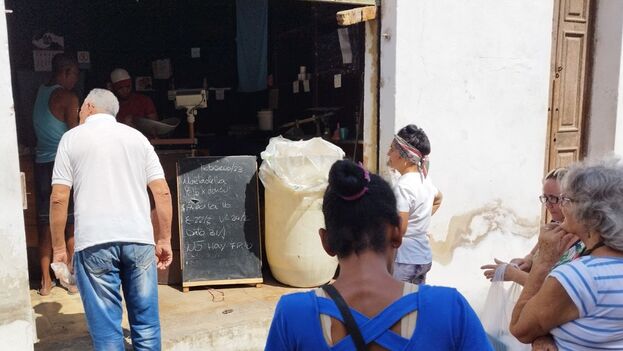
The Province of Havana Meets Only 42 Percent of Its Food Production Targets

A Ration store located on Valle Street, in Havana. (14ymedio)

14ymedio bigger 14ymedio, Havana, February 26, 2023 — The food production plan targets in Havana for January 2023 were met by just 42% of what was expected. In a meeting held this Friday, the provincial authorities discussed the implementation of 12 actions to remedy the crisis, although they did not encourage too many expectations for the recovery.

The official press had been showing signs of the economic debacle in the capital’s food sector for weeks. With the announcement that there was not enough rice, beans and oil for the rationed market, the Government once again invoked the wild card of the blockade [i.e. the US embargo] and the “involuntary delay of imports.”

In the economic balance sheet of the capital for the first month of 2023 there was no way to disguise the meager results. The province still has 877 acres of uncultivated land. One solution, the leaders calculated, could be to speed up the process of delivering land to producers, in addition to increasing the assortment in the markets and implementing mechanisms to reduce the high prices for the products of the ’basic basket’.

About twenty companies recorded losses last January, although, according to the Government, there were 15 fewer than at the end of 2022, because the majority met their “social objective” and operated despite limited prices. continue reading

Among the Havana institutions that exceeded the production targets is the Provincial Accommodation Company, with a compliance of 183%, followed by state restaurants with 177.8% and social circles with 122.5%.

To increase sales and reduce inflation, Reinaldo García Zapata, Governor of Havana, said that companies have to “insert themselves into other scenarios.” They must be “creative” to reactivate the economy, he said, without noting that many business units do not meet their production programs due to the lack of inputs, most of them imported at high costs.

At the meeting it was also reported that the staff of inspectors in Havana is at 68% coverage, while that for auditors reaches only 28%. Although the Government does not mention the causes of this deficit, it coincides with the flight of professionals in the midst of the largest exodus since the 1959 Revolution.

The authorities of the municipalities proposed that, to reverse the situation, priority be given to the training of young graduates of the Accounting and Finance career, to whom “appropriate attention must be given to stimulate their permanence.”

In addition, there were complaints against drivers and state entities that do not respect authorized passenger stops. In this regard, the Government promised to put back into service some buses that were deactivated due to breakages.

Translated by Regina Anavy

____________

COLLABORATE WITH OUR WORKThe 14ymedio team is committed to practicing serious journalism that reflects Cuba’s reality in all its depth. Thank you for joining us on this long journey. We invite you to continue supporting us by becoming a member of 14ymedio now. Together we can continue transforming journalism in Cuba.
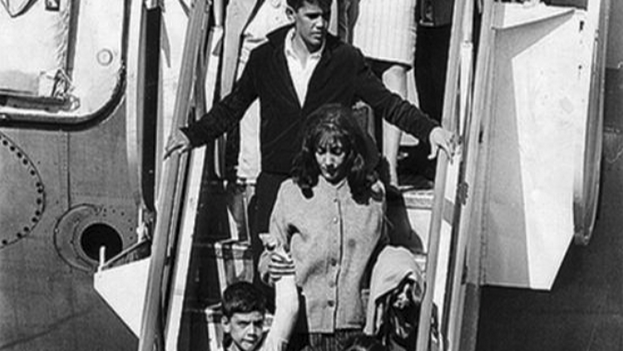
The Grief of Cuba’s ‘Peter Pan Children’ Comes to the Miami Film Festival

A group of Cuban children arrives at the Miami airport in 1961, as part of Operation Peter Pan. (Barry University/Archive)

14ymedio bigger14ymedio, Emilo J. López, Miami, 25 February 2023 — The documentary El adiós de la esperanza [Journey to Hope], by Lieter Ledesma, a Cuban actor and presenter based in Miami, is a tribute to the more than 14,000 Cuban children who suffered the “uprooting of separation” when they were sent by their parents alone to the United States between 1960 and 1962, according to its director.

This debut film by Lesdema reveals those painful experiences through the testimony of five people who as children participated in Operation Pedro Pan (Peter Pan), a massive and heartbreaking exodus that was carried out clandestinely in the early years of the Castro dictatorship.

Ledesma says that many Cuban parents warned about the “radicalization of the revolutionary process” that involved “the closure of private schools, the prohibition of religious education and the stigmatization” of those who did not sympathize with the Revolution.

Many of those parents made the hard decision to put their children on flights to Miami to begin a new life in freedom. continue reading

The film, 52 minutes long, presents “intimate details” of the family separation caused by this exodus in the testimonies of Antonio Tony Argiz, today a successful businessman who founded and directed a firm with 800 employees in various parts of the United States, and of Eduardo Padrón, the Rector Emeritus of Miami Dade College.

“During the filming we met people who remember their childhood being shattered by the separation from home. Some can’t help but burst into tears with those memories,” says Iliana Lavastida, executive director of Diario Las Américas, the newspaper responsible for the production of the documentary, which is recorded in Spanish with English subtitles.

The memories, anecdotes and testimonies of these children of the Cuban exile, continues Lavastida, were marked by “traumas of experiences in orphanages or with unfamiliar families,” in addition to having to learn to communicate in an unknown language.

Those children, today adults, have a deep feeling of gratitude toward their parents, “whom they identify as the real heroes for having had the courage to give up watching them grow in order to ensure them a better future,” the producer emphasizes.

For Ledesma, Operation Pedro Pan was a “dramatic event that many families chose as a desperate solution. The Pedro Pan children, for the most part, grew up marked by the longing for a broken home and a land where they were born, which they mourn and feel is theirs.”

The operation, which began on December 26, 1960 and officially ended on October 23, 1962, with the suspension of all commercial flights between the United States and Cuba, took place shortly after the triumph of the Cuban Revolution.

The details of what to this day is considered the largest mass exodus of unaccompanied children on the American continent serve also to “demystify a certain narrative” that says Pedro Pan was an operation organized by the US State Department and the CIA to destabilize Cuban society in the 1960s.

“In the statements of the interviewees in the documentary, they make it clear that it wasn’t,” say Ledesma and Lavastida.

The architect of Operation Pedro Pan was Monsignor Bryan Walsh, who was in charge of receiving the minors, who were later transferred to camps, orphanages or adoptive families, initially until their parents managed to leave Cuba.

The other three testimonies in the documentary correspond to  Miami businesswoman Aida Levitan, president of The Levitan Group; Enrique Ric Prado, who was director of Special Operations of the CIA Counterterrorism Center, and Eduardo Eddy Álvarez.

The five interviewed for the documentary are joined by the artists Willy Chirino and Lissette Álvarez, the Archbishop of Miami Thomas Wenski, the former mayor of Miami Tomás Regalado and the well-known Miami real estate developer Armando Codina, among some twenty testimonies.

The documentary directed by Ledesma will be shown on March 6 at the Miami Film Festival, organized by Miami Dade College.

This year’s programming includes more than 140 productions of various genres from 30 countries, including feature films, short films and documentaries, and more than a dozen world premieres, three in North America and seven in the United States.

Translated by Regina Anavy

____________

COLLABORATE WITH OUR WORKThe 14ymedio team is committed to practicing serious journalism that reflects Cuba’s reality in all its depth. Thank you for joining us on this long journey. We invite you to continue supporting us by becoming a member of 14ymedio now. Together we can continue transforming journalism in Cuba.
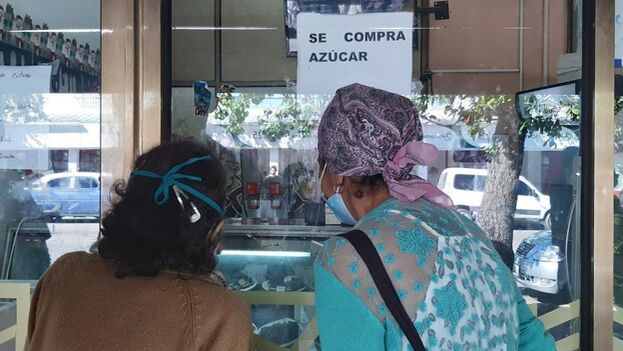
A Pound of Sugar Approaches 200 pesos ($8.30) on the Informal Cuban Market

Sign in window: “We buy sugar.” A private business buys sugar from customers to make their chocolates. (14ymedio)

14ymedio bigger14ymedio, Natalia López Moya, Havana, 26 February 2023 — Rice and sugar seem to have launched a competition in Cuba to see which increases the most in price on the informal market. While rice already exceeds 200 pesos ($8.30) a pound in several areas of the Island, sugar, once the national emblem, is on its heels and also sells for around that number and, in some provinces, even exceeds it.

“I sell 17 pounds of sugar at 180 pesos if you buy them all; if you only want a part then it’s 190,” reads an ad published in a sales group on Facebook that in a few hours accumulated dozens of comments. “It’s in Central Havana and I don’t have home service,” said the informal merchant, who shortly after updated the information with a brief message: “Sold, and I don’t have any more.”

In the previous harvest, the production of Cuban sugar mills barely reached 480,000 tons of sugar out of the 911,000 that were planned, a failure to meet the target that caused a deficit of 60,000 tons for national consumption and seriously affected exports.

Given the disastrous numbers, the product has been even more restricted in the ration stores in recent months. “They only sold me one pound, and they say that this month it’s not my turn anymore,” a lamented a retiree this Friday, noting that she buys her basic normal basket in a place on Conill Street, in the municipality of Plaza de la Revolución. continue reading

“During the Special Period (the crisis of the 90s) at least there was no shortage of sugar,” said the woman. “Many people survived those years thanks to sugar water, so now the situation is worse because we don’t even have that.” Comparisons between the current economic difficulties that the Island is going through and those suffered after the collapse of the Soviet Union are frequent.

“In my house we permanently had a bowl with sugar on the table so that everyone who came to visit us could eat a few tablespoons to be able to continue on their way,” recalls Evaristo, a resident of the neighborhood of El Cerro who this week bought “ten pounds of sugar at 170 pesos” and considers himself “lucky” because “you can’t find it now at that price.”

Recently, the Ministry of Internal Trade recognized that the delivery of sugar from the rationed market will depend on the existing availability in the country. The first results of the 2022-2023 harvest indicate that production will again be down in the dumps and far from the goal of 455,198 tons.

There is also no shortage of those who see in the product deficit a possibility of doing business by importing substitutes. “I sell 500 grams of aspartame, a sweetener that sweetens more than sugar. It is ideal for businesses that prepare sweets. The bag costs 60 dollars. I only accept this currency,” reads a very popular classifieds portal.

Others, given the price similarities between some foods, propose a barter. “I will trade five pounds of rice for three pounds of white sugar,” suggests someone in another Facebook group where the exchange of goods has gained space. The galloping loss of value of the Cuban peso makes many prefer to offer their merchandise in exchange for other foods rather than receive the national currency.

Inside people’s homes consumption is cut, coffee is taken more bitter, and fruit desserts in syrup are scarce. “Now I can’t even think of offering you anything sweet when you visit. The little sugar we have left is for the family’s consumption. There is not one more spoonful for anyone,” says Evaristo, who was born in 1959, when Cuban sugar mills achieved more than 5 million tons of sugar.

Translated by Regina Anavy

____________

COLLABORATE WITH OUR WORKThe 14ymedio team is committed to practicing serious journalism that reflects Cuba’s reality in all its depth. Thank you for joining us on this long journey. We invite you to continue supporting us by becoming a member of 14ymedio now. Together we can continue transforming journalism in Cuba.
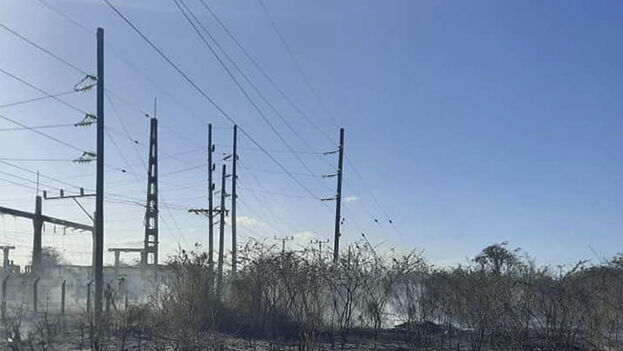
The Energy Collapse of Recent Days is ‘Unprecedented’ in Cuba, Recognizes an Electric Company Employee

The fires have damaged the transmission infrastructure in the province of Ciego de Ávila. (Electric Company)

14ymedio bigger14ymedio, Havana, February 25, 2023 — The energy collapse that has caused four major blackouts on two-thirds of the Island in just nine days “is unprecedented,” Daniel Pérez García, director of the Electric Company of Ciego de Ávila, acknowledged on Thursday.

For the official press, which defines blackouts as “deplorable facts,” the crisis began on Monday, February 13, with the first disconnection of the National Electricity System (SEN) from Ciego de Ávila to Guantánamo due to a fire in a cane field. On Saturday, the 18th, the second blackout of up to six hours occurred in the network that connects Matanzas to Guantánamo, attributed to “human error.”

The service was interrupted again on Tuesday, the 21st and Wednesday the 22nd, with cuts caused, respectively, by a fire and a breakdown whose causes are still unknown.

Blackouts have mainly punished families in the central and eastern provinces. The “starting point” of the crisis is due to the weakness of the electrical system, Carlos Arencibia Fernández, director of the Provincial Loads Office, said at a press conference. Any disturbance causes an automatic frequency trigger as a “protection measure,” he added.

The official said that the system is not robust enough to withstand the maintenance load and the breakdowns in thermal generation units, in addition to the difficulty of obtaining fuel. continue reading

The age of the SEN’s infrastructure, with thermoelectric plants more than 40 years in operation, makes it vulnerable to any extreme climatic event. For Arencibia Fernández, the occurrence of fires during the drought period, which extends from November to April, is “normal” under the high voltage networks of 110 to 220 kilovolts (kV). Then, there are the effects on the transmission of energy due to thunderstorms in the summer season.

But in previous years “there were no current consequences because the generation was compensated,” he said.

The fires recorded in Ciego de Ávila have put the electricity infrastructure of the province in tension, warned Pérez García. In recent days the flames have come close to substations such as Morón Norte and Santana, but without impact.

As if that were not enough, he added, there have been 34 interruptions in the service so far in 2023, due to the change of 86 poles that have been affected by fires that occurred as of February 19. In the municipality of Baraguá alone, 17 infrastructures were damaged, he said.

One of the fires also triggered the bioelectric line of the Ciro Redondo power plant, whose function is to protect the transmission of the boilers. Pérez García considered it urgent that it be solved in the coming days to guarantee “better conditions” in the service. For the time being, the directors pointed out that the priority is to restore the supply of electricity to “vital centers,” such as hospitals, dairy companies and sugar mills.

Meanwhile, the Electric Union (UNE) expects the system failures to be solved with the mobile generation in a floating Turkish generator which is being installed in the bay of Santiago de Cuba, as well as the activation of unit 1 of the Lidio Ramón Pérez thermoelectric plant from Felton in Holguín, after several weeks of maintenance, said Alfredo López Valdés, general director of the UNE.

After a 2022 with blackouts of up to 12 hours, the Minister of Energy and Mines, Vicente de la O Levy, warned at the beginning of this year that the cuts would continue between January and April for the maintenance of the generators, but he promised that they would be localized and not “as traumatic” as those experienced between August and October of last year.

A month had passed since those statements, when he hardened his prognosis for the power cuts and said that they would occur three hours a day until May.

Translated by Regina Anavy

____________

COLLABORATE WITH OUR WORKThe 14ymedio team is committed to practicing serious journalism that reflects Cuba’s reality in all its depth. Thank you for joining us on this long journey. We invite you to continue supporting us by becoming a member of 14ymedio now. Together we can continue transforming journalism in Cuba.
The Latin American Hybrid Left

The president of Argentina, Alberto Fernandez (on the right), receives the president of Cuba, Miguel Díaz-Canel, at the beginning of the Celac summit of 2023, in Buenos Aires (Argentina). (EFE/Matías Martín Campaya)

14ymedio bigger14ymedio, Yunior García Aguilera, Madrid, 23 February 2023 — During the Cold War, Latin America was more like a hot zone. It is undeniable that almost all the countries in the area suffered extreme right-wing dictatorships, nor can the United States’ support for these regimes cannot be hidden. The fear of Soviet tentacles was real, and Cuba was proof enough, with a missile crisis that almost exterminated us all.

But Fidel Castro would also use fear as a permanent discourse, governing at gunpoint and deploying a fierce propaganda campaign to seduce fans of violent revolutions.

The left would come out of its first adolescence without being so Marxist or rebellious. The United States lowered the tone and became more tolerant, mainly after the collapse of the USSR. Leftist Latin Americans could then come to power with votes rather than bullets.

This is how the Pink Tide emerged, with its bouquet of enthusiastic figures. The group went along successfully for a while, increasing social spending and managing to reduce poverty. Although, in reality, the initial luck was possible thanks to the increase in the price of oil and other raw materials.

Then came the debacle: corruption scandals, inflation, a return to poverty and electoral defeats. Except some leaders would not be willing to give up power so easily. Today, Latin America suffers from three dictatorships, all of the extreme left.

Some analysts talk about a new Pink Tide after the victories of López Obrador in Mexico, Fernández in Argentina, Boric in Chile and Petro in Colombia, plus the rebirth of Lula in Brazil. And although it is true that the largest economies in the region are governed by progressive leaders, the context is very different. The world has still not recovered from the impact of the pandemic, and Putin’s invasion has disrupted everything. continue reading

Like the war, this tide is quite hybrid. Its protagonists have openly expressed their differences with respect to Russia and have demonstrated nuances concerning the “triangle of sadness” (Cuba-Venezuela-Nicaragua).

Boric, for example, has harshly criticized the three regimes. He has said that the situation of Cuban prisoners of conscience is unacceptable, has urged Venezuela’s President Maduro to hold truly democratic elections by 2024 and has called Nicaragua’s Daniel Ortega a dictator. The Chilean has also described Putin as an autocrat who is waging a war of aggression and not, as Russian propaganda claims, a “special military operation.”

For his part, Gustavo Petro, the first leftist president of Colombia, has been much more ambiguous on the issue of Ukraine and refused to send that country the Russian weapons he possesses, a decision that was applauded by Moscow.

Although Petro tried to keep his distance from his authoritarian neighbors during his campaign, his inclination in favor of castrochavismo is no secret to anyone. With Nicaragua the matter is more delicate, partly because of a territorial dispute between the two nations and also because Ortega’s decision to banish more than 300 Nicaraguans is absolutely indefensible.

For the current president of Argentina, Alberto Fernández, Cuba and the ’blockade’ [i.e. the US embargo] will always be part of the same phrase, since he “is not aware of the repression on the Island.” At the recent Celac summit, he said that all those present had been elected by their people and that Maduro was “more than invited.” However, Chávez’s heir canceled his trip at the last minute. He did not want to take risks, since there is a reward of 15 million dollars for those who facilitate his international capture. With regard to Ortega, the Argentine chameleon has also been forced to condemn him after his last tyrannical extravagance.

For the president of Mexico, castro-ortega-chavismo is as innocent as singing Las Mañanitas. López Obrador sabotaged the Summit of the Americas when Biden did not want to invite the triumvirate, which maintained relations with Maduro while 60 countries recognized Juan Guaidó as the legitimate president of Venezuela, and López Obrador recently handed over the order of the Aztec Eagle to the Cuban dictator. But as with Ortega, El Peje* also softened his radicalism. A few days ago he revealed a letter he sent in December to the former guerrilla-dictator, requesting the release of the opposition prisoner Dora María Téllez.

Lula has been a fervent defender of Castroism, going so far as to affirm that Cuba would have the same standards as Norway or Denmark if it were not for the embargo. He also refuses to hand over weapons to Zelenski and has proposed a third way for a dialogued solution, led by none other than China.

As we can see, the Latin American hybrid left is no longer a teenager, but there is still a long way to go before it becomes a democratic adult.

*Translator’s note: El Peje is Lopez-Obrador’s nickname because of his accent. The nickname comes from pejelagarto (literally, fish lizard), an alligator-like fish from his native Tabasco, meaning he’s hard to pin down.  

Translated by Regina Anavy

____________

COLLABORATE WITH OUR WORKThe 14ymedio team is committed to practicing serious journalism that reflects Cuba’s reality in all its depth. Thank you for joining us on this long journey. We invite you to continue supporting us by becoming a member of 14ymedio now. Together we can continue transforming journalism in Cuba.
Cassava Flour Ham and Soy Milk, the ‘Alternative’ Diet of Cubans

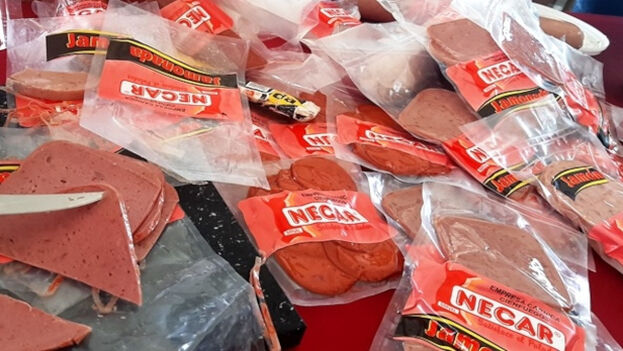
The ham produced with these “new ingredients” has been distributed in recreational centers and for domestic consumption in the form of slices to make sandwiches. (5 de Septiembre)

14ymedio bigger14ymedio, Havana, 23 February 2023 — The alternative that the Meat Company of Cienfuegos found to stay active is the production of sausages based on cassava, rice and cornstarch, due to the shortage of wheat and the low production of beef and pork on the Island. “We have had good results,” Luis Jiménez Marrero, an operator of the plant located in the municipality of Palmira, told the provincial newspaper 5 de Septiembre.

In Cuba, wheat flour is used in the production of ham, uncommon in other countries, but even wheat is absent in food production. “The mixture of the ingredients responds to current needs,” Jiménez Marrero said, while recognizing that the durability of the cold meat is still being analyzed and that “flavors conditioned to characteristics” are sought.

The ham produced with these new ingredients has been distributed in recreational centers and for domestic consumption in the form of cold cuts for sandwiches, the operator added, with “good acceptance” by the consumer. “We managed to make the product in small slices, which is easy for consumption: you open the package, take out the slice, put it on bread, and you now have a snack,” he explained to the local newspaper.

Cassava is the star substitute for wheat flour in Cuba and is used to make fish or bread croquettes, although in bakeries it has not been so popular due to its rapid expiration and the variations in taste. In addition, cassava starch is used in the pharmaceutical and cosmetic industry, and also as a substitute for malt in beer manufacturing. continue reading

The general shortage of products has led producers to explore new alternatives, such as in Pinar del Río, where soy is grown to meet the demand for feed in the pig sector. This cereal, high in protein and used to make milk of plant origin, is also a source of oil, a use that the Cuban authorities are currently analyzing, said Ortelio Rodríguez, sub-delegate of Agriculture of the province.

In statements to the local newspaper Guerrillero, the official explained that the province has 247 acres of soybeans, distributed in the municipalities of Pinar del Río, Consolación del Sur and Los Palacios. The goal, he added, is to obtain enough seeds to reach 2,471 acres in the Vueltabajo region in the second half of this year.

Soy is an “ideal” candidate for Cuban producers because its cultivation produces high yields with the application of few agricultural inputs, up to 3.5 tons per acre, in addition to adapting to extreme climatic conditions.

Rodríguez recalled that soybeans were previously grown on a “small scale” in the province, but there was resistance from the health system because there was a myth that it attracted pests that put tobacco plantations at risk. “The same diseases that attack soybeans also affect beans and, despite that, thousands of acres have been planted in Pinar del Río without us having had problems,” he said.

Soy was one of the life-saving crops of the Cuban economy, according to Raúl Castro’s promises in 2007, when he said that enough milk had to be produced for “everyone who wants to have a glass.” Since then, there has been little progress. The Cuban government produces soy yogurt for lactose intolerant people, although the common use of this derivative is due to the fact that milk production fails to meet national demand.

Translated by Regina Anavy

____________

COLLABORATE WITH OUR WORKThe 14ymedio team is committed to practicing serious journalism that reflects Cuba’s reality in all its depth. Thank you for joining us on this long journey. We invite you to continue supporting us by becoming a member of 14ymedio now. Together we can continue transforming journalism in Cuba.
A Judge Grants Political Asylum to the Pilot who Escaped from Cuba on an Antonov Plane

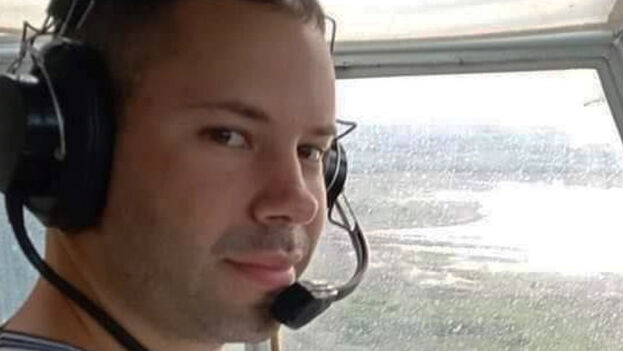
In a year and a day, the Cuban pilot Rubén Martínez Machado will be able to apply for permanent residence through the Cuban Adjustment Law. (Facebook)

14ymedio bigger14ymedio/EFE, Miami, February 23, 2023 — Cuban pilot Rubén Martínez Machado, who escaped from Cuba on October 21 in a Russian Antonov plane, was granted political asylum in the United States. “We won. They gave asylum to my client,” lawyer Eduardo Soto reported on Thursday.” There was no reservation of appeal, so he stays here.”

Martínez, 29 years old and detained up to now at the Broward Transitional Center, a facility in Florida of Immigration and Customs Control of the United States, attended a judicial hearing this Thursday. After the decision in his favor, he is expected to be released this Friday, according to Telemundo 51. In a year and a day Martínez Machado will be able to apply for permanent residence through the Cuban Adjustment Law.

The Cuban said that he used the plane he was flying, belonging to the National Air Services Company, to leave the Island, and he flew from the province of Sancti Spíritus, in central Cuba, to the Dade-Collier Training and Transition Airport in the wetlands of the Florida Everglades.

After an hour of travel and a little after landing, Martínez Machado was placed at the disposal of the U.S. Government Customs and Border Protection Office (CBP). continue reading

His future was uncertain after the judge denied him bail to be released on the grounds of having stolen the plane in which he arrived in Florida. In this context, the pilot’s lawyer filed an appeal.

During the hearing on November 10 before a U.S. prosecutor for the crime of “stealing an aircraft,” Martínez declared that the plane was only “a means” to leave the Island, and that 12 days were enough for him to plan the maneuver.

Martinez stressed that he had managed to raise the equivalent of 3,000 dollars to legally leave Cuba for Spain, but that after the monetary change brought about by the Ordering Task,* his savings were reduced to 1,500, according to his calculations.

He insisted that he made the decision to bet his life “on being free, which is still at stake.” During the process, the Cuban’s lawyer commented that his client “is happy to have arrived in the country of freedoms.”

In mid-November, when the U.S. Government was trying to move the plane in which Martínez traveled, the aircraft crashed in the Everglades, west of Miami-Dade, Florida. Federal authorities then said that it was operated by two “government-contracted pilots,” who were in the process of moving the plane to another location, but they did not provide details.

* Translator’s note: The “Ordering Task” is a collection of measures that include eliminating the Cuban Convertible Peso (CUC), leaving the Cuban peso as the only national currency, raising prices, raising salaries (but not as much as prices), opening stores that take payment only in hard currency, which must be in the form of specially issued pre-paid debit cards, and a broad range of other measures targeted to different elements of the Cuban economy.   

Translated by Regina Anavy

____________

COLLABORATE WITH OUR WORKThe 14ymedio team is committed to practicing serious journalism that reflects Cuba’s reality in all its depth. Thank you for joining us on this long journey. We invite you to continue supporting us by becoming a member of 14ymedio now. Together we can continue transforming journalism in Cuba.
Delta Resumes Flights to Cuba Three Years After the Start of the Pandemic

Delta will resume its flight between Havana and Miami on April 10. (EFE)

14ymedio bigger14ymedio, Havana, February 22, 2023 — After three years of interruption due to the coronavirus pandemic, Delta Airlines announced that it will resume operations with Havana on April 10. The company will reconnect the capital of Cuba with Miami International Airport with two daily direct flights, it reported in a statement published on its website.

The airline has allocated an Airbus A320 aircraft, with First Class, Delta Comfort+ and Main Cabin ticket options. Its first daily flight will leave Havana at 11:55 a.m. and the second at 4:25 p.m., while the route from Miami is scheduled to depart at 9:05 a.m. and 1:40 p.m.

Delta, whose base of operations is in Atlanta, is the only American airline to fly to the Island since 1953, but it suspended operations in 1961 due to the political and migratory instability caused by the Revolution.

The pause lasted 55 years until 2016, when Delta resumed its flights in the midst of the thaw initiated by then-President Barack Obama. In 2020, it was forced to stop by the coronavirus restrictions. Before the health crisis, the company connected Cuba to Miami, New York-JFK and Atlanta. In its statement, Delta said that it “continues to be committed” to restoring its global network, which will allow it to consolidate a significant increase in profitability. continue reading

With the resumption of services with Havana, Delta reports that passengers traveling to Miami will have access to 203 weekly flights, non-stop, from 10 airports in the United States.

In October 2022, Delta joined United Airlines’ request to postpone  an extension to the United States Department of Transportation to delay the start of operations, because it needed more time to review contracts with service providers and adjust the infrastructure at José Martí International Airport. The company pointed out that it also had “continuous challenges” to obtain visas for the personnel who would travel to Cuba.

United resumed operations in November 2022 with direct flights to Havana from Houston (Texas) and Newark (New Jersey). That same month, American Airlines reactivated its trips between Miami to Abel Santamaría International Airport, in Santa Clara.

On the eve of the high tourism season, the Cuban government said last November that 45 foreign airlines operated at international airports, including Mexican and Canadian companies, and other less well-known companies such as the Polish Lot and the TAAG Angola.

Foreign tourism in 2023 began on the wrong foot with the arrival of 246,000 visitors in January, a figure that, although it exceeds that recorded in January 2022, when 86,424 were received, is 37.5% below the 393,762 foreigners who visited the Island in January 2020, before the shutdowns.

Authorities expect the long-awaited recovery of the tourism industry to be achieved this year, but industry specialists expect the world to return to pre-pandemic tourism levels only in 2024 or 2025.

Translated by Regina Anavy

____________

COLLABORATE WITH OUR WORKThe 14ymedio team is committed to practicing serious journalism that reflects Cuba’s reality in all its depth. Thank you for joining us on this long journey. We invite you to continue supporting us by becoming a member of 14ymedio now. Together we can continue transforming journalism in Cuba.
The Fault Has Been Fixed, but the Energy Deficit Prevents Power Returning to Part of Cuba

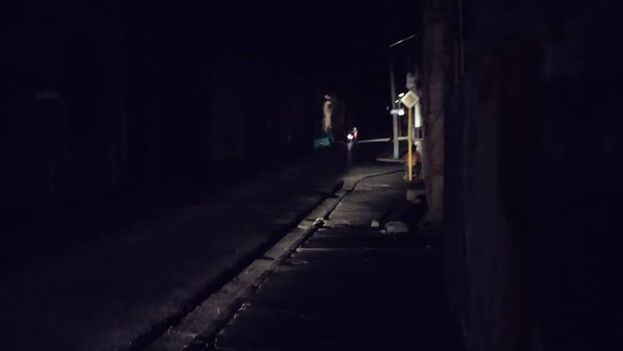
The provinces from Cienfuegos to Guantánamo are without service, the Electric Union reported. (14ymedio)

14ymedio bigger14ymedio, Havana, 22 February 2023 — A massive blackout left much of Cuba without electricity on Wednesday afternoon. It is the second consecutive day for countless residents of the eastern part of the Island and the fourth out of the last ten days. Around 8 at night, the fault had been solved but the energy deficit prevented the return of power in many places, according to the general director of the Unión Eléctrica (UNE), Alfredo López.

The breakdown happened again on the 220 kilovolt line that connects Matanzas with Cienfuegos, leaving all customers up to Guantanamo without service, including industries, said hours before Yadier Ruiz, director of the Power Control office in Villa Clara.

López explained that, in the fragile state of the system, the large load transfer from West to East is causing situations like these. The failure of this Wednesday repeated the failure of previous days. continue reading

The director of the UNE confirmed that one of the Turkish pieces of equipment in the western area will soon move to Santiago de Cuba, an insistent demand from the eastern provinces for weeks, tired of being the ones that suffer the consequences most frequently of breakdowns and lack of energy.

That, added to the reincorporation of the Lidio Ramón Pérez thermoelectric plant, in Felton (Holguín) next month, when its maintenance ends, should improve the prospects for the eastern half of Cuba, although users are wary of promises that are never fulfilled.

“It’s been two days since we’ve been able to turn on the appliances in order to cook,” independent reporter Francisco Herodes Díaz explains from the city of Santiago de Cuba. “Just when we were getting used to having electricity again, we had another blackout.”

The situation is especially sensitive in areas of the country that depend on electricity for cooking food, because they don’t have a supply of manufactured gas or access to liquefied gas, which is distributed in tanks, or the ability to maintain a supply of firewood or coal.

Speaking on state television on February 16, the Minister of Energy and Mines, Vicente de la O’Levy, said that “about 250 million dollars a year” are needed for the network to work under “normal conditions,”not counting the cost of importing fuel. In 2022 alone, 1.7 billion dollars were spent on that.

After the fall in tourism revenues, resulting from the increase in U.S. sanctions during the Donald Trump Administration and the complications of the pandemic, spare parts purchases and maintenance became increasingly deficient, causing the availability of energy in Cuba to be 37% over installed capacity in the country.

The last two major anti-government protests took place in a context of widespread electricity crisis: on July 11, 2021 (11J) and at the end of September and early October 2022, after the passage of Hurricane Ian.

Translated by Regina Anavy

____________

COLLABORATE WITH OUR WORKThe 14ymedio team is committed to practicing serious journalism that reflects Cuba’s reality in all its depth. Thank you for joining us on this long journey. We invite you to continue supporting us by becoming a member of 14ymedio now. Together we can continue transforming journalism in Cuba.

Cuban Telecommunications Company Attributes the Cuts in Communications to ‘The Failure of a Card’

“There is an interruption in the networks and work is being done to restore the service,” Etecsa replied to this newspaper. (14ymedio)

14ymedio bigger14ymedio, Havana, 22 February 2023 — Several independent activists and journalists in Cuba suffered a cut in communications this Wednesday. Both 14ymedio’s director, Yoani Sánchez, and its chief editor, Reinaldo Escobar, cannot use their telephone lines. Miriam Celaya and Boris González report the same.

In a phone call, the state telecommunications monopoly Etecsa responded to this newspaper that “there is interruption in the networks and work is being done to restore the service.” In the face of a client’s protests through Twitter, the company replied: “Send us privately your service number to check. We have similar reports and our specialists are reviewing. Do you only notice problems placing the call or in some other service?”

Hours later, the company issued a brief statement via its social networks in which it said it had received complaints from customers “about difficulties in establishing voice calls through the cellular network.” The diagnosis that Etecsa made blamed “the failure of a card that caused instability in the operation of a computer that intervenes in the processing of this service, which caused effects to be perceived randomly in making or receiving calls.” In addition, they said that SMS services and mobile data were in operation.

“If the difficulty in accessing this service persists, we would appreciate it if you could contact us through our official channels,” the text concludes. continue reading

The company did not at any time allude to possible problems with the energy supply. In just over a week, there have been three serious power outages on the Island, which the Unión Eléctrica de Cuba (UNE) has attributed to “breakdowns” caused by fires or “human error.”

On the other hand, Cubanet collaborator Vladimir Turró was detained by State Security for almost three hours, in which his whereabouts were not known. Another independent journalist, Julio Aleaga, was also arrested when he left his house in El Vedado  this morning and released in the afternoon.

“I was arrested today at 8:30; they had me in the car for two hours and took me to the Zanja station,” the analyst explained to several colleagues on the Island. “I was questioned by two officers separately: ‘Alfredo’, about my participation on social networks, and ‘Osvaldo’, about my activity with the APLP [Association for Freedom of the Press].” Aleaga added that “they want to send me into exile.”

Translated by Regina Anavy

____________

COLLABORATE WITH OUR WORKThe 14ymedio team is committed to practicing serious journalism that reflects Cuba’s reality in all its depth. Thank you for joining us on this long journey. We invite you to continue supporting us by becoming a member of 14ymedio now. Together we can continue transforming journalism in Cuba.
In Addition to the ‘Blockade’, Cuba Blames Migration and Crime for Low Sugar Production

The Urbano Norris sugar mill, in Holguín, is one of the largest, and its production deficit is becoming more noticeable. (Government of San Germán)

14ymedio bigger14ymedio, Havana, February 20, 2023 — The amount of sugar that Cuba’s State-owned sugar producer, Azcuba, should have produced by this time is unknown, but the deficit is already 95,000 tons, a huge amount if one takes into account that 400,000 tons is the total needed just to meet the domestic demand for sugar. The engineer of the state sugar company, Ángel Luis Ríos Riquenes, optimistically told the official Communist Party newspaper Granma that they can guarantee the forecast, but his explanation doesn’t inspire too much confidence.

“It is true that it will take a little longer than expected. With the productive deficit we have so far, some mills have marked the end of the sugar harvest in April; others, in the month of May. The greatest risk is that we may be affected by weather conditions,” he said in an interview published this Sunday in Granma.

Last September, after a ruinous harvest, the authorities made the decision to grind in fewer mills to work more efficiently. Compared to the 36 working mills in 2022, of which only 3 met the targets of the plan, the president of Azcuba, Julio Andrés García Pérez, said that for this season the harvest had to be “planned so that it is objective, flexible and, although small, with good practices, concentrating resources in fewer sugar mills.”

In 2022, 911,000 tons had been projected and only 473,720 were obtained, so 455,198 tons of sugar have been scheduled for this year, which will go to the ’family basket’ as a part of the rationing system, tourism, medicines, industrial productions and export. Last year, 411,000 tons were committed to sales abroad but could not be sent.

The words of Ríos Riquenes, this Sunday, warn of the real possibility that the negligible projected harvest will not even be reached, and among its causes the expert cites something new: the staff deficit due to “the aging of the workforce and the effect of migration. It also influences the current economic situation of the country, marked by inflation. For example, the productive problems of a plant prevent workers from receiving decent wages, and many leave,” he says. continue reading

To make matters worse, there are fewer and fewer bosses and qualified personnel, “which has caused a lack of discipline and rigor,” says the engineer, who reveals that the Antonio Guiteras sugar mill (Las Tunas) has suffered several major breaks due to bad operation and was stopped for nine days. This is, along with Urbano Noris (Holguín), the one with the most problems. Both contribute the most to meeting the targets of the plan today, and their “non-compliances” weigh heavily in the total, says Ríos Riquenes.

Electrical breakdowns, fires, the lack of parts for both cane cutting and transport, fuel shortages and financing problems, attributed as usual to the US ‘blockade’ [as the Cuban government insists on calling the US embargo], do the rest.

Ríos says that the problem, for the moment, has not been the cane particularly, although it could be exploited more, but that the grinder does not run satisfactorily. He points out five other main sugar mills: 30 de Noviembre (Artemisa), Mario Muñoz (Matanzas), Panamá (Camagüey), Dos Ríos (Santiago de Cuba) and Arquímides Colina (Granma).

“To counteract this situation, measures were taken with the cadres to strengthen attention to those mills. Today most of them have been taking the steps, as confirmed by the increase in grinding and yields,” he says, pleased, although he adds one more reason to justify the low production: crime.

“The criminals have trashed fences and warehouses; they have threatened the guards and workers of the plants, as well as the families of those who oppose them. Their damage has been quite extensive in some sugar mills — those of Matanzas, Camagüey and Holguín, in particular. We took a tour of all of them [on the Island], and it’s clear that confrontation will be harsh,” he adds.

Azcuba maintains its strategy, the engineer continues, to “flexibilize” the harvest and to have some of the mills that are not grinding make molasses for alcohols and spirits, an experience that, according to him, gives employment, produces income and contributes to the battered economy. In addition, some power plants have been authorized to pay the debts they have with cane producers with the income obtained from alcohol production. That also offers a way out for cane producers, who, under the order not to grind for more than a dozen power plants, can sell the cane for alcohol even if it is not for sugar.

The data provided on Cuba in the interview support the more detailed ones published on the 15th in the Sierra Maestra newspaper about the province of Santiago de Cuba, where they need more than 3,000 tons for a plan of 19,000 “that can no longer be fulfilled in March due to the days of delay,” according to William Hernández Morales, coordinator of the Provincial Government sector.

The sugar panorama in Santiago speaks for itself: of the four sugar mills that still remain in the province, the América Libre has the harvesting area in operation, and the grinding has been stopped for three years. The Julio A. Mella is dedicated to molasses, alcohol and animal feed; the Paquito Rosales to molasses — although it is providing some sugar outside the plan — and only the Dos Ríos contributes to the harvest for the basic family basket.

In 1959, Cuba had 156 operating mills that produced 5.6 million tons of sugar. During the years of the Soviet subsidy, although without reaching the mythical 10 million announced by Fidel Castro, record figures were reached that went beyond eight million tons in the best harvests, between 1970 and 1989. Since then, the decline has been constant, but in recent years it has plummeted, and in the streets, Cubans miss one of the products that they have resorted to the most to fill their stomachs due to the lack of food, despite the fact that it’s damage to health is increasingly known.

“The other day I went to ask them to make me a cake for Valentine’s Day, and they told me that they had almost no sugar,” a Habanero, scandalized by the cost, told this newspaper: “2,000 pesos [$83] for a cake without sugar!”

Translated by Regina Anavy

____________

COLLABORATE WITH OUR WORKThe 14ymedio team is committed to practicing serious journalism that reflects Cuba’s reality in all its depth. Thank you for joining us on this long journey. We invite you to continue supporting us by becoming a member of 14ymedio now. Together we can continue transforming journalism in Cuba.