Ramon Alejandro Munoz, Sonia Garro’s Husband, Writes to the Daughter of One of the Five Spies

COMBINADO DEL ESTE, 28 November – In Cuba, “Free Territory of America,” there is a population of almost 12 million inhabitants. This entire population suffers terrible disappointments when their family members are taken to prison for fabricated reasons and without any proof; but it turns out that in various newspapers and magazines they have publications about the so-called Five Heroes, and the family of Ramon Labañino – one of the Five – have made statements about it.

I don’t know young lady, what story you have been told, but in the prisons where your father is there are things you can never do in the Cuban prisons.

For example, in the Cuban magazine Zunzún, there was a story where you and your sisters are at the prison with your father, and the magazine commented that they didn’t allow you to take cameras in; so who took that photo? You say they don’t allow him to touch you but in one of the photos he’s holding your hand.

Do you know how the prison regime works in Cuban prisons? Clearly no. Well, I’ll tell you and we can compare the two systems.

For your information, in Cuban prisons there are also political prisoners; in the prisons of Cuba they torture and kill; there are thousands of inmates suffering constant attacks by the guards, and no executioner has paid for his crimes.

In the prisons of Cuba, and particularly in the maximum security Combinado del Este prison, the food is scarce and of poor quality; sometimes it is even rotten.

In the Cuban prisons they don’t let family members bring food to the visit, mayonnaise, hot dogs, pizzas, sweets, oil, ham, rice, much less meat and natural homemade juices. The letters to your children, wife, or other family members can’t be taken by them, you read them to them and then tear them up.

The human conditions are appalling; the hygiene worse. Privacy is violated, because they search even your genitals after a visit. We are all humiliated and treated like animals. Just like the Nazis did in concentration camps.

It could be that your mom hasn’t told you about the terrorists who planted the bombs in the Bodeguita del Media and the Copacabana Hotel, where some Italians lost their lives.

Because, young lady, Chávez Abarca y Cruz León — authors of this terrorist act — are in Combinado del Este prison in Havana, and they enjoy conditions that we who are Cuba, legitimate children of this earth that saw our births, don’t have.

They have telephones in their rooms, fans, fridges with cold water, good quality food and get high quality medical care from a good medical commission, while we can die and a doctor doesn’t show up.

On the Round Table program, shamelessly, to denounce the bad diet suffered by the “five heroes” they explained that for more than a week they were eating chicken without potatoes, that there were no onions with the steak, and that the ice cream was melted.

To us, Cuban prisoners — especially the political prisoners — we have potatoes without chicken, onions without steak and we’ve never seen ice cream here; but fine, most Cuban citizens can’t enjoy these foods.

Six pounds of sugar, half a pound of oil, seven pounds of rice, 10 ounces of beans, a 90-gram bread per person, this is all that the “Benefactor State” can guarantee its people on the ration book for more than half a century.

We’re fed up hearing the Cuban Government say that we have an economic blockade imposed by the United States for more than 54 years, because really in Cuba there are three blockades, the blockade the Cuban Government has against its own people, the blockade in the prisons, and the racist blockade.

What irony! In 2000 Fidel Castro proclaimed that of all the projects he was most passion about that of converting prisons to schools, because it is the most humane, the most just and socialist; but it seems that Fidel Castro brought his project to fruition backwards, and there are schools that have been converted into prisons.

Perhaps you know that State Security will not allow our fellow travelers in the cause to visit us in prison, and the Ladies in White  are brutally beaten for peacefully demanding the freedom of political prisoners?

Would you like it if you, your sister, your grandmother, your mom and other members of your family were beaten for asking for freedom for your father? I’m sure you wouldn’t.

Do you know that my wife, Sonia Garro Alfons — political prisoner and Lady in White — was injured in her left leg by a gunshot just for failing to agree with the Fidel Castro regime?

She is a prisoner; I see her every three months in a pavilion, that’s only 4 times in a year. They use this to punish us and the room they give us is that of those condemned to death or life in prison; it has iron bars and a locked aluminum door; also there are microphones and cameras.

Does it seem to you, young lady, that this is fair? What despair. The person who is writing to you is Ramón Alejandro Muños González, Cuban citizen, political prisoner and independent journalist; married father of 12 children.

Currently I am an inmate in Combinado del Este prison, condemned to 14 years of privation of liberty; and my wife, Sonia Garro, was unjustly condemned to 10 years in prison. Both my wife and I are heroes, but that’s not what your parents told you.

Note: This letter will be sent to the Council of State; the Round Table; the newspapers Granma, Rebel Youth, and Workers, and the magazine Calle del Medio; to the digital site Cubadebate; the radio station Radio Martí; and all the Internet sites that want to show solidarity with our cause.

30 November 2013
The Political Police Intensify the State of Siege Against Martha Beatriz Roque

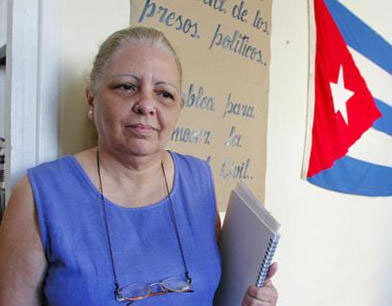
The siege situation against political opposition leader Martha Beatriz Roque Cabello has reached extreme tension.  Today her apartment continues cordoned off by the State Security (political police) and supposed neighbors insult her through a megaphone, calling her “traitor” among other affronts.

In a telephone conversation with this Paper, the pro-Human Rights activist and former prisoner of the so-called Group of 73, exhibited an alarming state of nerves. They do not let her move from there and they do not let anyone pass to visit her. On her door they have placed a photo of Fidel Castro and another with the five Cuban government spies who form part of the Castro campaign.

Neighbors who visited her yesterday at 6 in the afternoon told her that they could not permit counterrevolutionaries to go to her house because that damages the elderly and children.

Martha Beatriz wants to pursue a legal claim on the grounds that what they are doing is unconstitutional.  A lawyer has already interviewed her.

In the midst of her desperation, she has asked that if they do not leave her in peace, they should return her to jail, since, she says, she is a prisoner in her own home.

Today eleven members of the Cuban Community Communicators Network, an independent press agency that she organizes, were arrested.  These reporters were trying to get to her house.  Of the eleven arrested, six were taken to the Guanabacoa township and released. Of the other five nothing is known.

It also transpired that the political opposition leader Arnaldo Ramos Lazurique, recently arrested when he visited Roque Cabello, was freed at the Dragones police station.

What they are doing now to Martha Beatriz brings to mind the sad episodes that occurred in Cuba in 1980, when citizens who were leaving the country forever were persecuted, beaten, stoned, humiliated openly in public and their houses were besieged.

Cubanet, November 27, 2013

Translated by mlk

“With The Misery that We Have in This Countr”: Listening to Citizens Unburdening Themselves / Gladys Linares

“The transition now is taking place in the most important place, that is, in the soul and mind of Cubans, frustrated and disillusioned by so many broken promises.”
Oscar Espinosa Chepe

Havana, Cuba, November, www.cubanet.org — Every day the discontent of the people becomes more evident. It is not unusual for strangers to take advantage of any forced waiting to let off steam about their own problems, and in many cases, shared problems.

So, now it is customary to hear complaints and curses against the government at bus stops, in lines at the bodega, the butcher shop, the bakery, and in line at the medical clinic.

For example, in line at the clinic, one Saturday at midday, the following scene took place.

The almost thirty seats of the waiting room of the 30th of November Polyclinic  were practically full, because there was only one doctor on duty.  The really needy patients stayed, with no other option than to arm themselves with patience, but some left, figuring that they would not get out of there in two hours.

Catalina had no other option than to do like the former because she urgently needed a prescription and already at the Lawton Polyclinic they had “steamrolled” her: that doctor showed her her pitiful supply of three prescriptions, which, she said, demanded that they economize, so if it was not urgent…

And here the woman was now, waiting, like another twenty-odd people, for her turn.  After a while, a man of about fifty years of age arrived, aching, and asked who was last in line, so he would know his place, in a bad humored voice because of the number of people.

When a woman told him that there was only one doctor on duty, the man answered her that it was natural, if all the Cuban doctors are in Venezuela, Bolivia, Brazil or Haiti, or in whatever country except Cuba.  That is why so many clinics are closed and lines are so long in the ones that are open.

A very correct and well dressed young man intervened, who added that, it seems, the medications have gone with the doctors.  Another agreed, convinced that the same thing had happened to medical devices, judging by the news of NTV, in which they often spoke not only of medications freely shared, but entire hospitals donated by Cuba to those countries.

A girl asked where the Government gets what it gives, since when you go to a hospital, there is almost never anything with which to do tomography, nor a plate, nor a blood analysis, to which the gentleman replied that surely it has to do with donations which, instead of delivering them to the Cuban people, for whom they are managed, the Government uses them to earn followers in all of Latin America. Those present were in agreement that that was criminal, with the misery that we have in this country.

And so, between complaints and opinions — that if Maduro goes down the same road, that if medical attention that is worth it in Cuba is that of Cira Garcia or what the Venezuelans receive — time was passing.  Suddenly, another doctor with a foreign appearance arrived, who a little later opened the other consultation room.

Coincidentally, it was this one to whom Catalina was assigned when her turn arrived.  The woman entered with fear that this time too they would refuse her prescription, but by luck the complete opposite happened.  This doctor had an enormous bundle of them, and did not hesitate to give one to her and another to the gentleman who “slipped” in to ask for it.

Catalina left the clinic very happy, because now she could continue with her treatment.  On passing through the waiting room, she heard the patients who were continuing to unburden themselves: that if my cousin was a prisoner in UMAP for having long hair and listening to the Beatles, that if “this guy” is a cheeky one, so much that he prohibited them, and then to send him to make a statue of Lennon and to say that “he too is a dreamer,” that if the scarcity is in agriculture, because in the hotels and in the houses of the “pinchos” — the nomenklatura — nothing is lacking, that what they are going to do to recover the investment of those who had set up video rooms, that they commanded them all to shut down their businesses overnight, instead of giving them a license. . .

And for background music, Juan Gabriel on the laboratory’s mp3 and a blast of water falling from a tank on the roof.

Translated by mlk.
27 November 2013

Havana Smells Very Bad / Victor Ariel Gonzalez

Havana, Cuba, November 2013, www.cubanet.org – In Cuba there exists no consumer society.  Or heavy industrial activity.  The quantity of debris should not be frightening. But the treatment of waste is troubling, because it pollutes the country and promises to future generations.

There exists no appropriate policy for dealing with the debris.  And if it is true that Cuban reality demands a solution for more urgent problems, where the trash goes, it should not be left behind.

The frowned upon dumpster divers

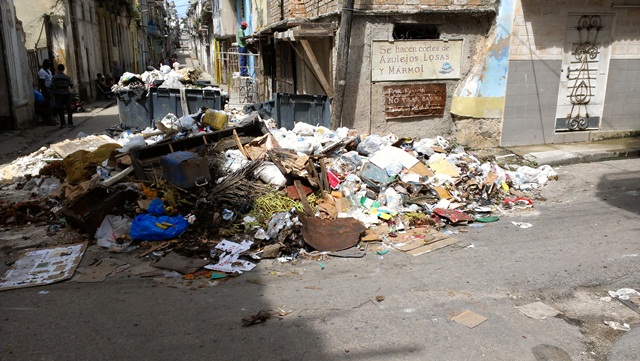
In homes, work centers, dumpsters on the streets, everything that is thrown in the trash falls in the same compartment where glass or metal or biodegrables are not distinguished. The whole lot ends up at the landfills, where the trash is not classified or its treatment facilitated.

One of the effective ways of contending with trash is recycling.  In Cuba it is a task of extreme difficulty.  There is no education nor political will directed to the necessary separation of wastes.  Moreover, the State hinders the process.

An example of that is the negative attitude towards “divers,” who are dedicated to searching for empty beer and soft drink cans to sell to raw materials recovery companies.  These individuals are frowned upon by the government in spite of the fact that their labor is ecologically laudable and they are socially useful since they have honest work.

Beyond not separating trash, the system does not even recognize the work of those who could be called “little aluminum businesses.”

If other discarded materials also gave business, there is no doubt that the waste recovery industry would rapidly flourish and contribute to the city’s improvement.

Fire at the big dump

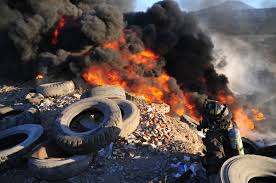
From the heights of one of the faculties of the Superior Polytechnic Institute, Jose Antonio Echeverria observed how a dense column of smoke rose, born in the entrails of the big dump of Avenue 100.  The toxic spectacle was nothing new: the uncontrolled combustion of debris would be dragged by the wind to the classroom of the university grounds.  The students in class there were going to inhale however much undesirable chemicals the fire generated.

Only after many sinister — and repeated — complaints was the cause of the fire removed, giving certain treatment to the wastes.  The decomposition of large quantities of organic material can generate sufficient heat to unleash accidental fires.

The fire out, the bad odor of the Dump of Avenue 100 continued flogging the surrounding population.

The first mistake is to locate an enormous landfill in the middle of Marianao township, near well traveled areas, but of course, quite distant from the Havana neighborhoods where the country’s ruling class lives.

Lack of containers

Another of the problems is the lack of trash containers and the irregularities in collection.  Parts and fuel are stolen from the garbage truck, as they are from all state vehicles.  Garbage cans are also vandalized.  Their wheels are ideal for making street vendor carts.  Wastes accumulate for days on the corners.

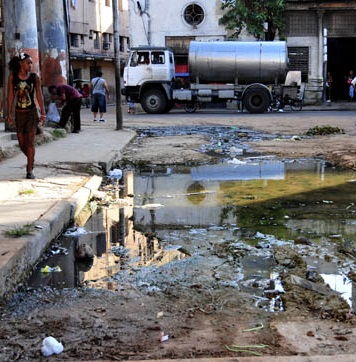
Not to mention sewer networks.  The growing population has made the water collection and treatment system collapse.  And the construction going up lacks the most basic technical standards.  Entire communities are found with a deficient and even non-existent sewerage.  Sewer water runs through the streets or seeps into the lower soil, contaminating springs, while the toxic wastes in rivers and oceans destroy various ecosystems in their wake.

The lack of control, the accumulation of trash and the deterioration of water treatment systems contribute to the fact that in Cuba there exists the danger of a widespread epidemic.  Signs of the health crisis have already started to be seen:  the resurgence of illnesses that were eradicated from the country indicates that the filth that surrounds us will have disastrous consequences.

By Victor Ariel Gonzalez

Cubanet, November 26, 2013

Translated by mlk

Lezama Lima vs. Moscow / Francis Sanchez

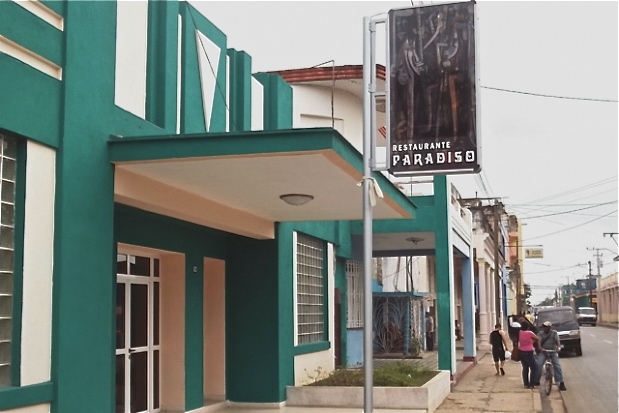
Almost thirty years after the fall of the communist bloc, the Cuban writer José Lezama Lima is still dealing with “Moscow” through the ongoing influence of the Soviet Union, to which he himself fell victim, dying after having been ostracized after the principles of dialectical materialism were brought to bear on him. Though long dead and gone, he still divides opinions in Ciego de Ávila, a town in the country’s interior whose residents never really knew of the obese author, sometimes referred to as “the immobile traveler.” A popular restaurant here, which until not long ago was known as Moscú (Moscow in English), has reopened its doors to the surprise and confusion of many. It is now known as Paradiso.*

The name change can only be attributed to an interest in reducing the complexities of a writer and his work into a tourist plaque. It is a longstanding practice that can be seen in Dublin with James Joyce, and in Cuba and elsewhere with Ernest Hemingway. Curiously, if in the end Lezama seemed more exotic, more odd than “normal” for a sophisticated poet in a Caribbean environment plagued by the cliches of political propoganda, it was because of the social isolation he suffered after the importation of a system marked by the socialist excesses of Soviet five-year plans, utopian visions and repressive methodologies.

We already know what “links” Lezama with the city of the Kremlin. We also know how that city’s infuence spread throughout Cuba, reaching into even the most remote corners and psyches of multiple generations. What is more difficult to understand is how the city of Ciego de Ávila chose to associate itself with the poet it chose to honor, considering he could not stand to spend so much as one provincial night in a room in Santa Clara. Yet at a point very near the Central Highway there is now a state-run restaurant — recently opened, spacious, elegant, full of mirrors — named for his novel, which censors prevented from being released in Cuba when it was first published.

Nothing in the building recalls its “Moscovite” past. Nor is there any evidence that the writer, who looked like a corpulent mollusk, ever lived at 162 Trocadero. It amounts to a simple name change and an announcement that invites any passersby to spend some time on the corner of Maceo Street. “Gallery-restaurant” appears to be the new term for this transformation, a metaphorical acronym for a food-service business, as though the association were not apparent.

Very quickly the debates started, and they were not about the menu possibilities but rather about the settling of scores, which in Cuba historically involves culture, daily life and even geological strata.

In Invasor, a provincial Communist Party newspaper, a reporter mentions the resurrection resulting Lezama’s current popularization, noting that “he was silenced in this country during the bleak period of the cultural five-year plan.” The writer adds enthusiastically, “A name of such reknown as Paradiso will undoubtedly serve as a moral challenge to Cuban culture through gastronomy.”

But in the same publication another columnist laments tossing the corpse of the beloved former superpower out with the trash. “I would not dream of trying to erase the name of the restaurant because… it is the iconic representation of what the Soviet Union was, a state… which held out its hand to feed us.” And though the writer acknowledges Lezama’s right to compensation now that the poet has once again been returned to the national pantheon after having lived like a lost soul for whom no one lit candles, he quietly adds, “it is good that we pay homage to Lezama and his legacy, which we did not always do, but there is no need to get carried away.”

A quarrel over the super-deceased. The sublime fat man and the Soviet superpower. It could be called “The Tragedy of the Century,” except now it is being replayed in a minor key as a municipal farce.

To know the final result means waiting to see how the people of Ciego de Ávila choose to call the establishment from now on, by the old name or the new one. There is nothing to guarantee that invoking the title of a novel destined for perpetuity will prevent a restaurant from succumbing to sudden collapse or gradual neglect, a common characteristic of Cuba’s state-run economy. There is also the challenge of maintaining a satisfactory relationship with the world of Paradiso. Running from the stove and refrigerator to the the tables and counters increases the risk of fatigue.

Some customers may recoil in terror if they are forced to swallow the size of this project along with a bowl of broth. It is enough to make one fear the suggestion by one of the aforementioned journalists: “It might be worthwhile for the restaurant’s workers to at least be familiar with the novel’s plot summary so that they might be able to share this information with those who dine there.”

Diario de Cuba, November 21, 2013

*Translator’s note: The restaurant bears the same name as a 1966 novel by Lezama Lima. The novel figures prominently in the plot of the 1994 movie Strawberry and Chocolate.

Attorneys in Service to Castroism / Ernesto Garcia Diaz

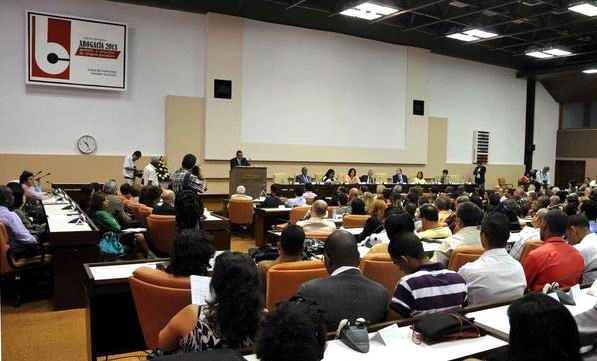
Havana, Cuba, November, www.cubanet.org — Last November 21 the “2013 International Advocacy Congress” concluded in Havana.  The event was sponsored by the National Organization of Collective Law Firms of Cuba (ONBC). At its opening, Homero Acosta, secretary of the State Counsel, was present, and doctors Joao Maria Moureira de Sousa and Hermenegildo Cachimbombo, Attorney General and president of the Order of Attorneys of the Republic of Angola.  According to the official press, the conclave included the participation of 400 Cuban delegates and 17 foreign countries.

In the event, the Attorney General of Angola, holder of a professor’s chair in Law, gave a keynote lecture about “The importance of ethics and professional conduct of lawyers,” noting that “The attorney is considered by some as a defender of the bad and by others as a professional essential to the full development of the State and society. . . He must comport himself ethically, cultivate moral values and principals.”  So it seems that this professional came with the purpose of teaching habits, skills of courage and ethical values that Cuban lawyers have lost in the exercise of trial defense or in the representation of their clients.

Obviously, the Angolan Prosecutor, coming from the emergent third power of the African continent, rich in petroleum, diamonds, gold and other natural resources, was not interested in the binding central theme of “the economic rights of those who lost a family member and the sick or mutilated veterans of the international war of Angola.”

The president of the ONBC, Ariel Mantecon, did likewise. True to the Castro pattern, he said that his organizations focuses “On the Cuban juridical context in considering access to defense as a constitutional right, making possible the immediate presence of this in the criminal process.”  Deceptive words when, precisely this year, and in the month of October, the opposition Cuban Commission on Human Rights and National Reconciliation (CCDHRN), reported about the 909 arbitrary detentions, the highest number in 18 months; and his organization does not make fair use of Habeas Corpus against the Detentions by the Castro Regime.

Even if Advocacy 2013 focused its topics on core aspects of modern societies, this group servile to the Castro regime has done little in the face of complaints that the Inter-American Commission of Human Rights makes which sent letters to the Cuban government in order to have an opinion on this part, in cases that take place constantly and are not responded to by the Cuban communist regime and sometimes even, the answers come in empty envelopes, according to the said Commission, or official answers arrive that far from answering the cases that are exposed to them, they oppose:  “You all do not have authority or any jurisdiction to inquire about the cases for which you solicit us.”

Likewise Rene Gonzales, ex-convict for the crime of espionage against the United States, who took part in the event in order to get to know the attendees as they are “his brothers” and to teach them ethical norms of loyalty to the regime, and not his confrontation over the factual limitation of individual liberties in Cuba.  He should have told them that Cuban ex-agents are treated respectfully and enjoy good health and feeding.  In contrast with those that are prisoners in Cuba for fighting for individual freedoms and respect for human rights. Maybe Rene is not familiar with Cuban fighters like the Ladies in White who are detained and left deprived of resources in areas and towns far from their homes as a new punishment practice of Castros?

In summary, the Congress served to raise funds on which the regime feeds: it strengthened the control structure between the executives and the member lawyers of the guild; just as it ratified the servile role of the ONBC supervised by the Ministry of Justice and watched by the Department of Organization of the Central Committee of the Communist Party, without really being an “autonomous national institution and of social interest.”

By Ernesto Garcia Diaz

Cubanet, November 26, 2013.

Translated by mlk

A Repentant Former Gunman / Michel Iroy Rodriguez

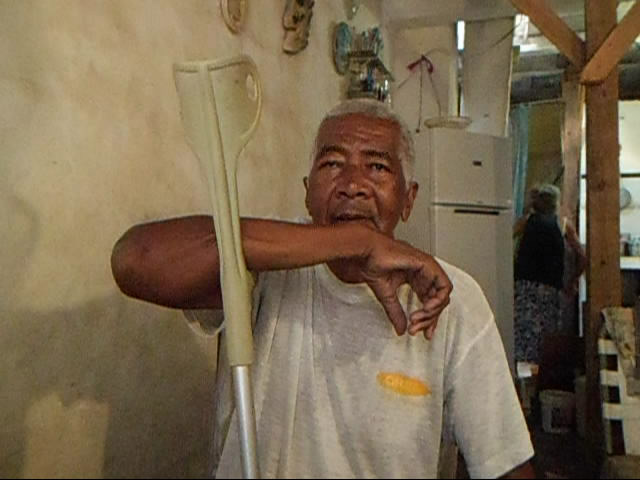
Havana, Cuba, November 2013, www.cubanet.org.  — Juan Lazaro Avila Herrera, physically impaired (his right leg is lame) regrets having belonged in his youth to a firing squad at the La Cabaña Fort.

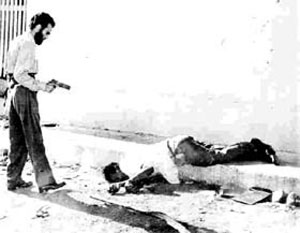
When he served in the Association of Rebel Youths, at only 18 years of age, he was attracted to belonging to the firing squads.  He remembers that along with him, a group of 23 youths, aged between 16 and 20, were captivated.

According to him, sometimes the executioners seized rings and other items from the people shot.

Once he was accused of counterrevolution and taken to the Principe prison.  He says that during the trial he was so scared that he defecated in his pants.  He thought he would be shot, but he was absolved. In spite of that, after he left jail, for a week he had to go sign in every day at a police unit.

“I was infiltrated into a counterrevolutionary band and participated in several operations.  In one of them I arrested a priest, from whom we confiscated in the basement of the church explosives and weapons plus a map where the places were marked that would be blown up,” he recounts.

He says he is remorseful for having been at the point of killing a man named Jose Diaz when he arrested him in his home, where they took him with 14 AKs and several Makarov pistols.  “I put the pistol to his forehead and squeezed the trigger. If I did not kill him it was because the weapon jammed,” he said.

He served as investigator for the Ministry of the Interior (MININT) in the Guanabacoa police unit, dealing with cases of car theft and rape in the area of the beaches to the east of the capital.  He remembers that one time, when he was investigating a case of the rape of a young girl of 12 years of age, he was outraged and beat the arrestee he was interrogating with the butt of his pistol.

Avila also belonged to the Merchant Marine. He says he has transported weapons and sugar to several countries, among them Angola, Nicaragua and Honduras.  He says that in this latter country, 10 thousand tons of sugar were sent once, which were not for the Honduran people but were transported to a North American boat which was found lying alongside his boat.

“It was a mistake to have dedicated almost all my life to the Revolution. I ask myself all the time what did I fight for,” he told this reporter.

Avila Herrera retired with a pension of 279 Cuban pesos (slightly more than $10 US).  He lives in a dwelling that is a hallway with kitchen and bath. He decided to tell his story to the independent press because he is very disappointed in the government he served and for which he was willing die and kill.

Michel Iroy Rodriguez, yeikosuri11@gmail.com

Cubanet, November 21, 2013

Translated by mlk

Mummies Against Prostitutes: The Last Revolutionary Combat / Jose Hugo Fernandez

Havana, Cuba.  November, www.cubanet/org — The prostitutes of Havana never inspire as much pity as when we see them accompanied by those mummies of European and US Stalinism who today constitute their VIP clientele.  Really you have to have a heart of stone not only to go to bed with such a stinky and gassy old fogy but even to barely endure his proximity.

As soon as they disembark on the Island, without shaking off the dust of the road, these old gentlemen feed their spirit going to the Plaza de la Revolution and the Che sanctuary in Santa Clara.  Then, invariably, it is time for dessert.  So they get naked in Obispo Street in Havana, around Central Park or on La Rampa, in pursuit of our little hookers, the last flashes of the beacon of America.

“What a waste, buddy,” exclaim the gentlemen from around here on seeing them bargaining, while the women whisper, teasingly, and the oldest ones are scandalized at “the turns life has taken here.”  But they continue on their way, business as usual, confident, it seems, that they have left respectability in safekeeping, beyond the sea, along with their ancient wives.

If it were possible to take into account decency or common sense when dealing with this wildlife, you would have to ask why, at least, they do not attempt to take the prostitutes to some place apart, where they would be waiting for them without the need to expose themselves so boldly to absurdity and ridicule.  But that’s not how they are.  It is obvious that they have resolved to enjoy as God commands their last revolutionary orgy, now that only the devil knows the sacrifice that it cost to organize it, gathering for years the remnants of their salaries as retirees.

What a pity that there are no statistics that reflect how many casualties the worldwide revolution has suffered as a consequence of the heart attacks provoked by these encounters between the mummy veterans and our mud blossoms of the Fidelist legacy. In any case, they would say they’d died for socialism, if they managed to say anything, before shutting their trap, in the end, forever.

“Old age is an incurable disease,” Terentius warned us.  But it may be that he was not right, at least in this situation.  I believe that my grandmother was more accurate, and did not agree that people lose shame as they age because now nothing matters to them.  He who has no shame in old age — she used to say — never had any.

José Hugo Fernández

Cubanet, 21 November 2013

Translated by mlk.

Are Private Small Business Owners the Scapegoats? / Gladys Linares

LA HABANA, Cuba, November, www.cubanet.org – To us, the most interesting part of the National Television News is the weather report. “There is no use in watching the news,” says Julio, an octogenarian neighbor, “just to hear that the whole world is screwed up and in Cuba everything is going very well”.

After a speech on July 7th, 2013 by General Raul Castro Ruz, first secretary of the Central Committee of the Cuban Communist Party and president of the Councils of the State and Ministers, a speech in which he criticized the Cuban people’s loss of values and the chaotic situation of the country, the news started transmitting on Tuesdays a series of reports titled “Cuba Says”.

The one aired this week has given rise to a series of commentaries among the people, for example, that the large amount of inspectors imposing high penalty fees and suspending licences is part of an arranged operation, without doubt created against the private small business owners, because in the State’s good service centers everything seemed to be too organized: employees wearing uniforms, talking about hygiene norms… for many it was obviously staged.

A neighbor was commenting: “Before giving the private owners the licenses to process and sell food products, they were inspected by Public Health, because that is what happened to my son before he could open the restaurant. How is it possible that right after they get closed because they don’t meet the requirements?”

“They are clipping their wings, it’s not like they are becoming rich with their businesses”, another man says, “They are not fooling anybody: they gave out all those licenses to mask the massive layoffs in 2010, but as always, that’s a way to keep them in check and controlled”.

The lack of hygiene in the state centers where they process and sell food products is nothing new, unfortunately. Just to give an example, the bread that people eat daily, is left on a counter for hours, full of flies. The same employee handles the bread, money, and writes down on the food booklet with his bare hands. When the bread is covered we all know it is because an inspection is due. They deliver the bread to the so-called Paneras — where the bread is sold but not baked — transporting the bread in carts pulled by horses, a cart or a bicycle cart, and it is stored in open boxes, made out of plastic, wood or woven baskets.

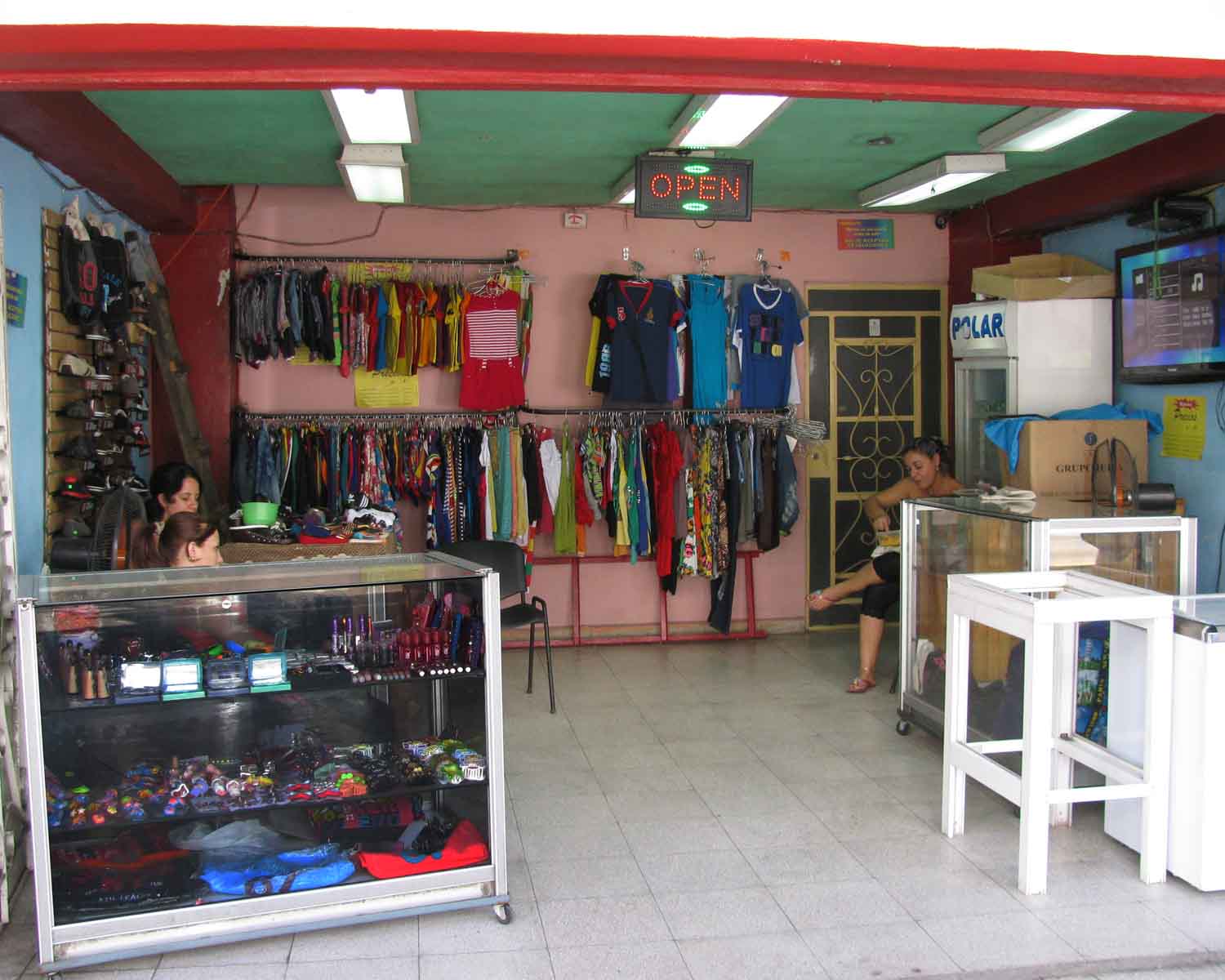
People prefer the service of privately-owned cafeterias because of the quality of the products, the speed and quality of customer service that most of them offer, while in state-owned cafeterias the menus are very limited, and many times flies are part of the menu. Even the more expensive establishments, like some of the pastry chain Sylvain, have missing glass on the counters and flies have free access to the pastry.

The cockroaches find a home in hospitals, urgent care facilities, and doctor offices, but also in food processing establishments: lunchroom, bakeries, and restaurants of selling in the national currency, the Cuban peso, or in CUCs, the Cuban Convertible Peso. This is the case of Plaza Carlos III or the cafeteria in La Rampa Movie Theater.

In the “bodegas”, where food rations distributed by the State are sold, rats are also found camping, that is why some employees have a cats in these establishments, hidden from the view of the customers. A neighbor was telling me how she didn’t dare to buy the rice last month, because she saw how the seller killed a mouse inside a rice bag and he didn’t even bother to throw it away.

The lack of concern on the part of the Government about the lack of hygiene is detrimental to the health of the population. The water pollution, the bugs in the trash that is not picked up for days, and other ills, are some of the consequences. People need their problems to be addressed with a real solution, instead of drawing attention away from them and using the small business owners as scapegoats.

Gladys Linares

Cubanet, 21 November 2013

Teacher Dismissed from Job for Reporting Fraud / Roberto Jesus Quinones Haces

GUANTÁNAMO, Cuba, November, www.cubanet.org – Alain Lobaina Laseria is a mathematics graduate and worked in the Pedro Agustín Pérez Basic Secondary School in the municipality of El Salvador in Guantánamo. However, he has been dismissed from his employment for reporting failures and irregularities related to the education system.

When one teacher at the school went to complete a work mission to Haiti and another transferred to a polytechnic, Alain, who until that point had worked as a tutor, had to teach mathematics and physics to eighth grade students.  Upon receiving the groups he carried out an examination to check the students’ knowledge and the results were disastrous.  In one of the groups no one passed and in the other, from 72 students, only 7 passed.

As the course advanced Alain noticed that the students level of knowledge was extremely low. After carrying out the second test in mathematics, he failed 8 students because they had handed in their exam papers almost completely blank. After reporting the results, the teacher in charge of the grade carried out an analysis and threatened him, saying that he could not fail those students. From that moment onwards his situation in the school became very difficult.

Then he decided to write, under the protection of Article 63 of the Constitution of the Republic, a letter to the government and the municipal Party in which he reported the fraud that had been committed in the school and how he had been pressured to pass 100 percent of the students.

Furthermore, as a response to the public call to the highest levels of government and the Party to combat corruption and all kinds of violations, Alain reported other cases of fraud committed in Polytechnic No. 2, in the San Justo neighbourhood, in the Vocational Computing Polytechnic, in the Pre-University Vocational Institute of Exact Sciences and in the educational centres of the city of Guantanamo.

Shortly after Alain sent his letter, the Provincial Director of Education turned up at the school and read it in front of all the workers.  The purpose of discrediting him in front of his colleagues and making an enemy of him was made clear through the following warnings: “All of this school’s workers can be involved in this….this letter cannot be published in the Venceremos de Guatanamo Newspaper…and we will not tolerate a Gorbachov here in El Salvador”

In the final test, Alain failed various students, being the only teacher who didn’t promote 100 percent of students. In the re-evaluation test he caught a student copying the exam responses from a cheat sheet and reported the incident to the school administration. However, all he achieved was to have the school principal, Angel Velazquez, the secretary of the Party named Leticia, the municipal education teacher leader and the secretaries of the UJC (Young Communist Union) and the trade union reprimand him as if he were the guilty one.

Although Alain was opposed to the fraudulent student sitting another re-evaluation test, the aforementioned people agreed to allow it and they never investigated to find out how, suspiciously, the boy obtained the correct responses to the exam.

Upon starting this school semester, the principal of the school cancelled Alain’s work contract.  All this has occurred after the Granma Newspaper has repeatedly denounced academic fraud and the radio program “Speaking Clearly” of Rebel Radio and the television program “The Roundtable” have adopted similar positions.

Roberto Jesús Quiñones Haces

Cubanet, 19 November 2013

Translated by Peter W Davies

“The Prices In The All Stores Are Fined” /Jorge Olivera Castillo

Havana, Cuba, November, www.cubanet.org — The details of the corrupt practices detected in the Carlos III Complex of stores and in a municipal entity in the business of community services reinforce opinions about the incapacity of the government to stop a phenomenon that has metastasized in Cuban society.

As on previous occasions, people have counted on documentary proof of the facts, recorded on flash drives that are distributed furtively from hand to hand.  One never knows who is the initial provider, but presumably it is a premeditated act in the Ministry of the Interior. The lack of official information is compensated for by the traffic in copies, rented or sold, to a clientele eager to find out the identity of the guilty parties and their schemes to enrich themselves.

Both cases, occurrences in Havana, again reliably demonstrate the infeasibility of economic centralization. In most state enterprises. a lack of administrative control still prevails, which facilitates the growth of corruption in all its forms.

The efforts by the General Controller of the Republic to put a stop to it are worth nothing. Few wind up in prison. The rest contrive to continue their dirty shenanigans which include embezzlement, extortion and bribery.

“Prices in all the stores are ’fined.’  Besides being already inflated by order of the enterprise that provides the merchandise, extra is added that is later shared between the management, the financially responsible, and the employees,” a store clerk explained to me on condition of anonymity.

“Our salary is a pittance. If we don’t do this, it would be like working for free. It’s true that we steal from the customer, but those are the rules of the game. This is every man for himself,” he added.

In the conversation I found out that the managers make off with the greater part of the illegal revenues. In some cases their earnings exceed 300 convertible pesos a day. Such dividends represent a fortune in a country where the average salary is less then one convertible peso daily.

Among the beneficiaries of these illegalities must also be mentioned the hundreds of former counter-intelligence officials. Not a few are listed on the security payrolls of each shopping center, others work as inspectors of those who have to deliver part of the booty. Refusing to do it is the shortest path to jail.

In the end, everything functions without setbacks. They only have to comply with the established codes. From time to time, the general controller, Gladys Bejerano, in order not to completely lose her credibility, decides to put an end to some of the corruption. It is like putting your hand in a drum with your eyes closed. You will always extract a corrupt person, but at a low level, since the big ones are untouchable.

Jorge Olivera Castillo

Cubanet, November 20, 2013

Translated by mlk

Havana’s El Trigal Market Reappears / Ernesto Garcia Diaz

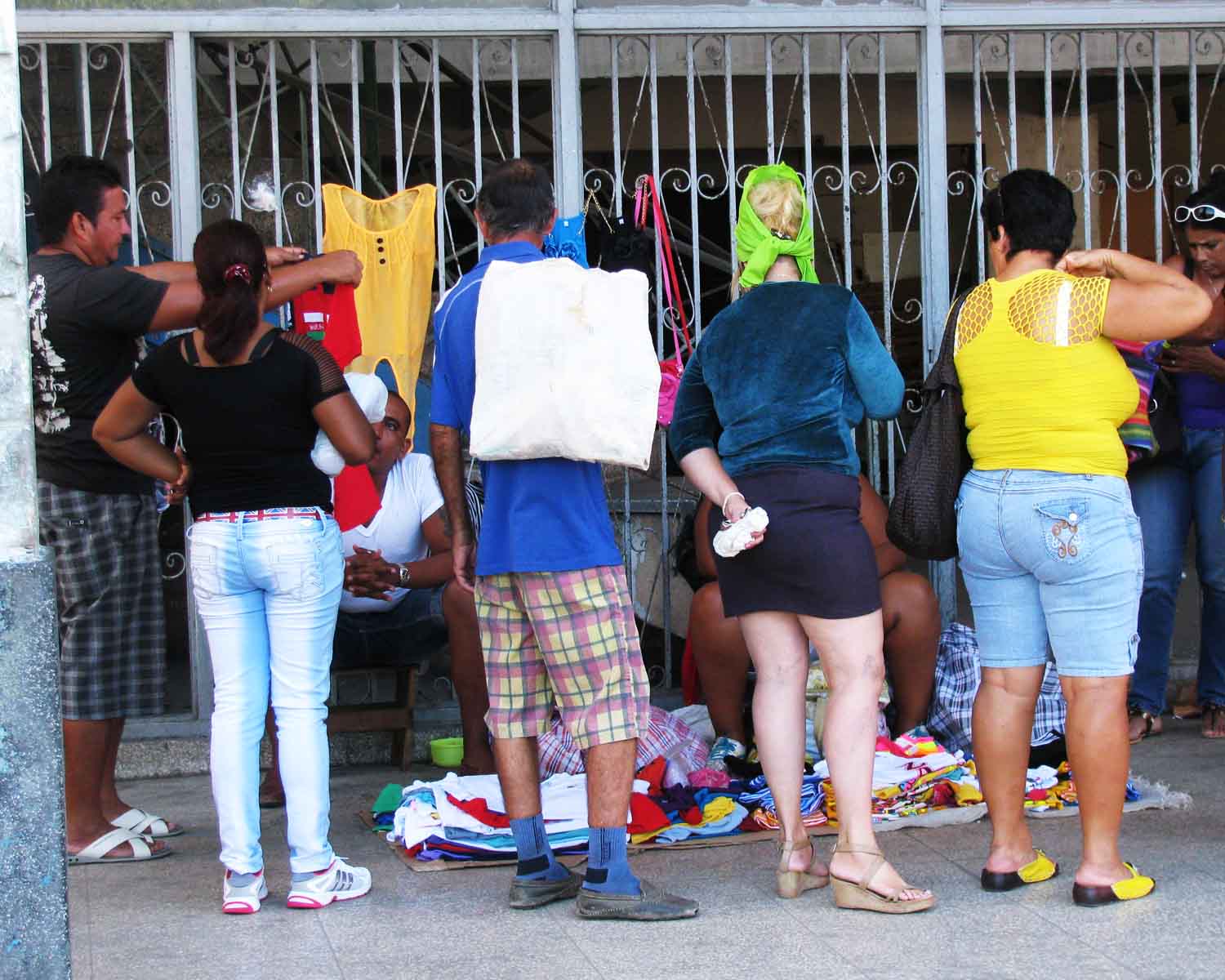
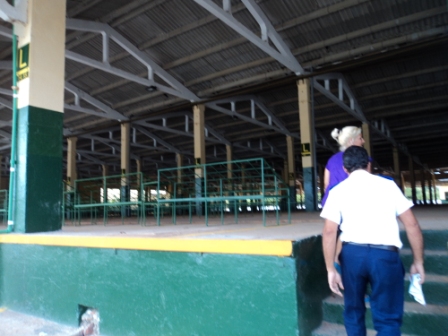
MERCADO-EL-TRIGALHavana, Cuba, November, www.cubanet.org — The Cuban regime, in pursuit of “unleashing the productive forces,” has established, through Law Decree No. 318/2013, the new “Rule About the Commercialization of Agricultural Products in the provinces of Artemisa, Mayabeque and Havana.”  The communist leaders say that this new regulation is directed to eliminate the mechanisms that hinder the process of agricultural commercialization, as well as the “quest to make it more dynamic, efficient and flexible.”

The official newspaper Granma circulates, with optimism, various articles about this new Commercialization System which will begin to function this coming December.  The Havana population receives the news with despair and reservations, because it does not see substantial changes in the scarcity of food, their high prices, or the lack of quality and variety.

Producers continue to be circumspect because although the regulation permits the sale and purchase of the surplus once the contracts with the State have been fulfilled, the control and Statism that the regime maintains make them doubt that this will happen.  Also because the State does not sell them the necessary equipment to assure the safety of their products to their final destination.

It is reasonable to remember that during the decade of the ’80’s, in the capital of the Island, three farmers market hubs operated: Berroa, Ocho Vias and El Trigal. These centers have been led by the Council of the Administration of Provincial Popular Power of Havana and the ministers of Interior Commerce and Agriculture.

For many years, the commercial organization created facilitated the illegal markets or “black market,” which occasioned crimes of larceny, theft and diversion of resources, with the consequent loss of millions.  Audits and inspections by the Agricultural Ministry and other State agencies have reflected excessive costs and alleged losses.  El Trigal, not a few times, was implicated and closed for said causes.

On the other hand, on the esplanade of 114th Street and the Pinar del Rio Highway, belonging to the Marianao township, a wholesale agricultural market functions in the open, attended by productive methods, points of sale and brokers. This structure, headed by Colonel Samblon, will close in December, and has not been exempt from acts of vandalism and a regulated commercial organization.

The peculiar and striking thing is that the colonel mentioned, converted into the president of the non-agricultural cooperative who will operate the El Trigal market, will head that center under the supervision of General Colás, according to what I was able to learn there.

The farmer’s market will offer to sellers and buyers a night service between six in the afternoon and six in the morning.  To that end, it will rent spaces for the sale of merchandise.  The entry (as much for trucks as for persons), the loading and unloading, the weighing and other secondary services will be leased and collected by the cooperative.

Also, the competitors will be obliged to leave the market at six in the morning with their unsold merchandise in tow, in order to get in a new line and enter the enclosure again at six in the afternoon.  An agonizing way of marketing, conserving and preserving perishable products in an installation whose refrigerators are not operational!  In the daytime they will weigh the trucks that come from the provinces, for their distribution to the basic units or network of markets.

It is anecdotal to remember when the communist ex-dictator Fidel Castro Ruz, in August 1960, before 600 cooperative coordinators, said, “Now we enter a higher level, now we enter into a new project, a new purpose, a new aspiration: the aspiration to diversify agriculture.”  The ex-leader, with his “development programs,” years later destroyed the productive and industrial base of the Cuban economy.  Will we now be journeying through the dreams and deliriums of the General President?

In summary, the new commercial organization that the regime tried to implement will enrich the cooperative businessmen of military ancestry, at the expense of producers, private sales representatives and the people, who will continue enduring the experiments of the dictatorship of the Castro brothers.

Ernesto Garcia Diaz

Cubanet, November 12, 2013

Translated by mlk

Public Services: Horror and Nightmare / Jose Hugo Fernandez

cap
The Rapid of Ayesteran and Boyeros in Cerro. Photo: Jose Hugo Fernandez

Havana, Cuba, November,  www.cubanet.org — In a state cafeteria called The Rapid, in the Havana neighborhood of Cerro, the clients do not have access to the television installed there for public purposes.  The equipment shows them only its backside while the screen remains facing the employees, who hoard it for their exclusive use.  It may be a trivial detail, but it really is an expression of a very serious conduct, on which rests the chronic crisis of public services in Cuba.

Because of a malformation that has become endemic and whose origins are rooted in the bad example and bad seed that the totalitarian dictatorship disseminated among us, the employees of this kind of public service seem to be convinced that it is their customers who owe service to them, not the other way around.

If bureaucrats abuse on a whim the time and patience of those who pay them to be attended to, or if the employees of the business and food receive customers as if they were intruders who slip onto their private property, that is not due only — as is customarily said — to the “employment unsuitability” nor to the big gaps in their school preparation.

The destruction of the culture of good service among us is above all a consequence and expression of the system of government that we have suffered in the past five decades. In fact, the regime itself represents the first major evidence of the problem, since instead of being a servant of the people, as all governments are required to be — in concept and in practice — it inverted the terms from the first day, making us its servants.

No analysis, no project to address the debacle of our public services, could be purely objective if there is no recognition of the basic causes and if it does not conceive of their eradication as a first step.

As in the oldest and and most rancid monarchies, Cuba is marked by many small fiefdoms. With the disadvantage that our offspring of feudalism reached a high in that it ceased to be functional even for the king’s own interests, and turned into  just a surreal counterproductive nightmare.

At the summit are the chiefs of the regime as absolute sovereigns. Then come the subordinated of power, who have their parcels distributed according to the influence of each group or individual, and how close they are to the king. In this direction the pyramid descends to the most ridiculous extreme. So anyone who is holding anything in their hands needs those who are lower on the scale, making a fiefdom of their limited domain. And in the end there are only the serfs, whom, moreover, also create tiny fiefdoms, such as public service employees.

Life right now is showing us that it was naive to think that with the opening of small businesses by the self-employed, that at least in this area headway would be made in improving customer service.

The truth is that in its fundamental aspects, the culture of good service is not enjoyed in the establishments and other means of self-employment. Both when they stop doing what they should, and when they do they should not, the way that most of the self-employed serve their clientele does not distinguish them as people who have had a change of mentality.

Negligence and sloppiness is so deeply rooted for so long among us, that it is not possible remedy it unless we start by removing the evil at its root.

José Hugo Fernándaz

Cubanet, 18 November 2013

ETECSA, A Bankrupt Monopoly / Pablo Pascual Mendez Pina

DSC07931That we are in a state of ruin is something that no Cuban in his or her right mind really questions, though we have become all too accustomed to the cynicism of the architects of this disaster, who continue to blame the “Yankee blockade” for all the misery afflicting people.

As though this were not enough, it is appalling to see Havana overrun with billboards and posters touting utopian slogans such as “Let us fight for a prosperous and sustainable socialism.” And “Revolution means never lying or violating ethical principles.” Or “Banish the fear of looking for problems in fulfilling our duties.” One cannot walk even a few kilometers to refill a mobile phone account, to wait in line in hopes of resolving some bureaucratic issue or to file a complaint without coming across a marquee announcing, “ETECSA, on line with the world.”

What is obvious is that the state telecommunications monopoly, commonly known as ETECSA, is no longer a public-private partnership with financial backing from the multi-national telecommunications firm Telecom, whose employees wore uniforms, drove a fleet of vehicles and had access to spare parts in order to respond to the needs of its customers.

Some 85% of workers questioned believe that, ever since ETECSA fell into the hands of GAE – a business arm of the Ministry of the Interior (MININT) – it has become a kind of Cinderella. Innumerable questionnaires indicate that it has also become known for its inefficiency.

Rolando Chapotín, a 70-year-old retiree from Vedado, describes how an ETESCA employee fit together various bits of cable to fix a problem with his landline. “It was obvious he did not have the parts he needed,” says Chapotín, “but he worked hard to resolve the problem until fortunately it was fixed. That young man made me forget about all the waiting in line and arguments with bureaucrats. Now I would like to know where the hell all the money that GAE takes in is going.”

To the question “Why does it take so long for ETECSA to resolve problems that have been reported?,” a technician replies, “We don’t have the vehicles, we don’t have the materials, we are short-staffed, wiring is no longer well-sealed and whenever there is a downpour, the problems multiply. There’s also a significant number of customers who have spent three months waiting for their landlines to be repaired.” The technician summed it up by saying, “ETESCA might be on line with the world, but not so much with Cuba.”

From Moron to “Cuba Says”

The government sponsored website Cubadebate reported that this past October a meeting of company directors from the eight eastern provinces was held in the town of Morón. It was chaired by Mayra Arevich, an engineer and the current chief executive of ETECSA. The goal was to prioritize the handling of complaints from the public and to analyze problems associated with mobile phones and landlines, services to which only three million customers currently have access.

Hilda Arias, ETECSA’s head of mobile phone services, told those present that there would be an increase in capacity of 270,000 just this year, resulting in a growth of two million mobile phone lines, or the equivalent of 18% of Cuba’s population.

According to anonymous sources a significant part of this increased capacity is destined for use by the Revolutionary Armed Forces Ministry (MINFAR), the Council of State, the Council of Ministers, the offices of the Communist Party and other governmental organizations. These are services to be paid for indirectly by private customers.

A recent installment Cuba Dice (Cuba Says) — an ongoing series broadcast by Star Television News (NTV) in which official journalists solicit opinions on pertinent topics from people on the street — raised the issue of problems with telecommunication services.

As might be expected, 90% of respondents complained of punitive fees on mobile phone and internet services, and the ludicrous 5 CUC mandatory monthly charge for maintaining cell phone service.*

Other complaints involved overcharging to refill pre-paid cell phone accounts, long lines at branch offices and retail outlets, and the inability of local customers to take advantage of double-airtime offers available to overseas customers.

However, the most pointed criticisms involved the refusal by officials to increase the number of landlines and pay phones, restrictions which impact the poor, who cannot afford the cost of mobile phone service.

In interviews company directors distanced themselves from the serious financial problems facing ETECSA and its inability to made new investments in infrastructure. They say that most of its income, which is in the form of convertible pesos (CUCs), is spent just on subsidizing local phone service.

“Mobile phone service in Cuba costs 2.50 dollars a month,” says Hilda Arias, the aforementioned director of ETECSA’s cell phone services. According to Arias the company is obliged to offer double-airtime minutes to attract overseas customers due to the need for “fresh sources of hard currency.”

Sniffing around

A former ETECSA director, who requested anonymity, stated that in the 1990s a Telecom vice-president informed his Cuban partners that his company was willing to make the investments necessary to provide a landline to any Cuban who asked for one.

“At the time international calls were the principal source of ETECSA’s revenue and it was clear that increasing the number of domestic customers would increase profits,” he says.

“The company’s Cuban partners, however, were strongly opposed and agreed to only a modest expansion, with priority given to workers in healthcare and education. Assigning the remaining increase in capacity was left to the mercy of Revolutionary communities and organizations.

“Up till now,” says the former director, “Cuba has not even been able to double the capacity it had in 1959, when there were eight landlines for every hundred residents and it ranked 14th in the world in terms of telephone coverage.”

In contrast the former director points to the case of neighboring Haiti, which had a rate of phone coverage lower than that of Cuba. But because landlines and pay phones were considered obsolete, it successfully extended mobile phone service to nearly 85% of the population in a very short period of time.

Asking not to be identified, a former MININT official stated, “One of the justifications for slowing the growth of phone service in Cuba is that there is a requirement that any increase in private telephone coverage be augmented by an equivalent increase in the monitoring capabilities of the CIN, MININT’s counter-intelligence branch. The systems for telephone surveillance, known as K1 and K2, must have a capability of 100%, as was the case in the former East Germany.”

According to this source, internet use is also under surveillance. Monitoring, however, is not clandestine. State Security actually likes citizens to feel they are being watched.

“ETECSA has become a military organization,” says an anonymous worker. He is referring to the change in administrative structure under the aegis of GAE. “Now the old branches are called divisions and other department have been reclassified with names like Strategic Projects and Logistics.”

In spite of these changes, some ETECSA directors and workers are still dipping their hands in the till. As is the case in any given part of Cuba, corruption thrives in the absence of other financial incentives. Sources indicate that one distinctive feature of ETECSA is that it is the employees who previously worked at MINFAR and MININT who have proven to be the most corrupt.

Some ETECSA workers admit to having been shocked when Miamir Mesa, an engineer and former head of the company, was given a promotion and put in charge of the Ministry of Communications after a notorious corruption scandal which came to light in July 2010 involving Cubacell as well as Logistica, a firm with ties to foreign companies.

During his tenure at ETECSA he used and abused “means of collateral responsibility” for which company directors were called to account for irregularities and misdeeds by their subordinates.

The client is never right 

At the end of the October 25th broadcast of Cuba Says on NTV, a constituent from the Carmelo people’s council in Havana’s Vedado district — a man nicknamed “el Master” in reference to his level of college education — made a statement.

“No one has yet explained to me why Cubans complain so much,” he said. “A mobile phone contract costs 120 CUC but they have reduced it to 30. A nation’s mobile phone system is not some trinket meant to be sold on a street corner. ETECSA serves society and a society must work with the resources at its disposal. Let’s be clear. Mobile phone and internet fees are high but no one is taking money out of anyone’s pocket. We might pay 4.50 CUC for one hour of internet time but we might also get a surgical procedure for free that would cost $20,000 in the US.”

He added, “We Revolutionaries have not seen the need for an election in fifty-four years. To those non-conformists who have left for other parts, well, let them stay there.”

Pablo Pascual Méndez Piña

Diario de Cuba, November 18, 2013

*Translator’s note: The fee, roughly equal to five US dollars, is equivalent to 25% of the average monthly salary in Cuba.

The Best Art School in the World / Yusimi Rodriguez Lopez

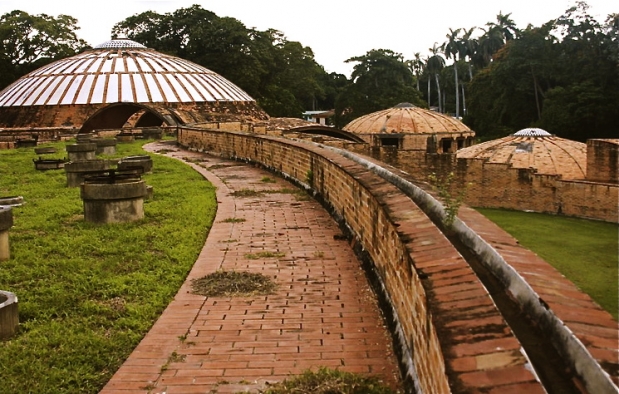
Escuela Nacional de Arte / National Art School

Six months ago I took an American photographer to meet to the former model and ex-ballerina Luz Maria Collazo. She had served as an interpreter with two other important Cuban ex-models and that would be our last evening of work. She was the main target of his lens and his interest, but when he saw that chance had led him also to the house of the architect Roberto Gottardi, he was surprised and pleased by the opportunity to meet and take a photo with him.

I had met Gottardi in 2020, when I interviewed Luz Maria Collazo. Until that time, her name and history at the National Art School was completely unknown to me. I suppose the same is true for many of my compatriots. She promised me an interview, but time passed and I was postponing that decision until I forgot about.

The reaction of the American photographer surprised me: Gottardo was an internationally well-known and respected architect. The school designed by him, along with Ricardo Porro and Vittrio Garatti, is considered one of the most representative works of Cuban architecture from the sixties.

The photographer knew about him from the documentary Unfinished Spaces by Alysa Nahmias and Benjamin Murray, which tells the story of the emergence of the idea of creating the National Art School, its design, construction and… its non-completion. That was how I learned of the existence of this film and a few days ago a friend made me a copy on a flash drive.

Unfinished Spaces shows us the National School of Art in the first half of the sixties, showing, almost from the beginning, images of the first moments after the victory of 1959: the real joy of the Cuban people in being liberated from the tyrant Fulgencio Batista; hope of the announced glorious future; the revolutionary ferment.

It was during this period that Fidel Castro and Ernesto Guevara appeared at the very exclusive Country Club, where they were not members, and while playing a round of golf, the leader had the idea of creating a school of art in that space. “We are going to build the best school of art in the world,” says the architect Selma Diaz, who was charged with leading the project.

The task of designing five faculties of art was assumed with overwhelming enthusiasm by architects Ricardo Porro, Vittrio Garatti and Roberto Gottardi; and not only by them, but also by the builders and the students who took classes within the site under construction and later participated voluntarily in the work to finish it, at the rhythm of small orchestras also composed of students. The actress Mirta Ibarra, a student at the school at the time, described the atmosphere as one of total freedom and creativity.

Very often, looking at those images of those early years of the Revolution, I wondered if, had I been a young woman at the time, would I have managed, or wanted to, hold myself apart from the effervescence. The music of Giancarlo Vulcano accompanying the images of Unfinished Spaces awakens a nostalgia for a past I didn’t experience and that in my eyes is like a legend, a fantastic epic, something unreal.

But amid the nostalgia an alarm sounds in my head: the leader of a country has the power to go to a private club, without invitation, and to decide to transform the space into something else?

Does being president mean being the owner of the country? In those moments I remember Fidel Castro was not then the president of Cuba. I see him playing golf with Ernesto Guevara and the image I see is consistent with the recent victory of his son Tony Castro in a golf tournament, and the courses that they built in this country to play this sport. I think that if gold was ever stigmatized as a “bourgeois sport” it was only in my imagination.

Half built, have destroyed

But Unfinished Spaces is not a documentary focused on criticizing the “Revolution” nor its maximum leader. The film puts its drama and music at the service of showing the history of this architectural masterpiece and its passage from a colossal project — the best art school in the world — to abandonment, neglect, “official marginalization” (the words of the architect Mario Coyula) and stigmatization of its creators.

Unfinished Spaces lets us hear the voices of those who were victims of unjust decisions that destroyed the school and with it an important project in the lives of these three artists; but it also shows the opposite view, that allows us to ask ourselves whether the construction of a school that size, with an unlimited budget, wasn’t a mistake, given the circumstances and resources of the country, although in practice the architects had decided to use the cheapest materials at your fingertips. There is also the testimony of the then students who witnessed the militarization and the expulsion of gay students.

Those who studied there then talk their way through the place that was turned into ruins before it was finished being built; the naturalness of one of them is striking when he says: “I think most students didn’t wondered why the school wasn’t finished, as there are many things in Cuba where the same thing happens.”

Buildings half built or half destroyed come to mind, building that never come to be repaired; the streets that are fixed and broken again in less than a month, the ruins visible from the buses. Are we living in an unfinished country, half built (or half destroyed)?

The National Art School has not only been the victim of wrong internal decisions, scarcities and looting by the homeless. The documentary doesn’t hide the fact that it could have been repaired and completed just a few years ago, but the regulations of the American “blockade” prevented it.

One of the questions I would have wanted to ask Gottardi is why he remained in Cuba, why was he the only one of the three architects who stayed. Now I won’t have to ask. His life, and also the lives of the other two artists abroad, have remained linked to the National Art School.

The shows the moment in which life rewards them, after 45 years, and it is just Fidel Castro, the first person to have a vision of that school, who decided the work should end. His confession of having fallen in love with the project when they showed it to him is surprising, but for a long time he reserved his opinion before the specialists who underestimated the work. His words are surprising because this is a man whose failure to listen to the specialist who warned him that it was impossible to produce ten million tons of sugar still devastates the country, nor did he listen to those who counseled against the planting of Caturra coffee or the closing of small businesses.

Anyway, the important thing is not the past, but rather resuming construction on the project. Porro’s two faculties were finished and only need to be restored. Those of Garatti and Gottardi need to be finished. Gottardo, however, realizes that his faculty is not going to be the same as it was going to be 45 years ago, the circumstances aren’t the same, the country is not the same. Nor could it be now what would have been more than 50 years ago, what was promised to our fathers.

Then, the end comes, not of the construction of the School, but of the documentary: due to the world economic crisis and the two hurricanes that hit the Island, the State stopped funding any unproductive architecture project, including the National Art School. It’s hard to know if we will see it brought to completion, and also whether this documentary will come to theaters in this country. But at least it is circulating from flash memory to flash memory, and to remain in this memory is bigger than our collective memory.

Yusimí Rodríguez López

From Diario de Cuba, 20 November 2013

Documentary by Alysa Nahmias and Benjamín Murray, 2011.