Neither Fresh Milk Nor Diet Milk / Osmar Laffita Rojas

Havana, Cuba, December, www.cubanet.org – Last year 2012, the Ministry of Agriculture reported the production of fresh milk at a level of 516,246,500 litres nationally. Out of this total, the province of Camagüey occupied the first position with 96,299,600 litres. Followed, at a distance, by Villa Clara with 51,794,100 litres; Sancti Spíritus with 49,923,100 and Matanzas with 44,352,800 litres.

As part of a long list of inefficiencies and unfulfilled commitments, the state was not able to fulfill its commitment dated July 26th 2007 to guarantee a daily litre of fresh milk to every child under 7 years.

With a few days to go to the end of 2013, this year’s milk production is not known. That silence is a sign that things aren’t going well.

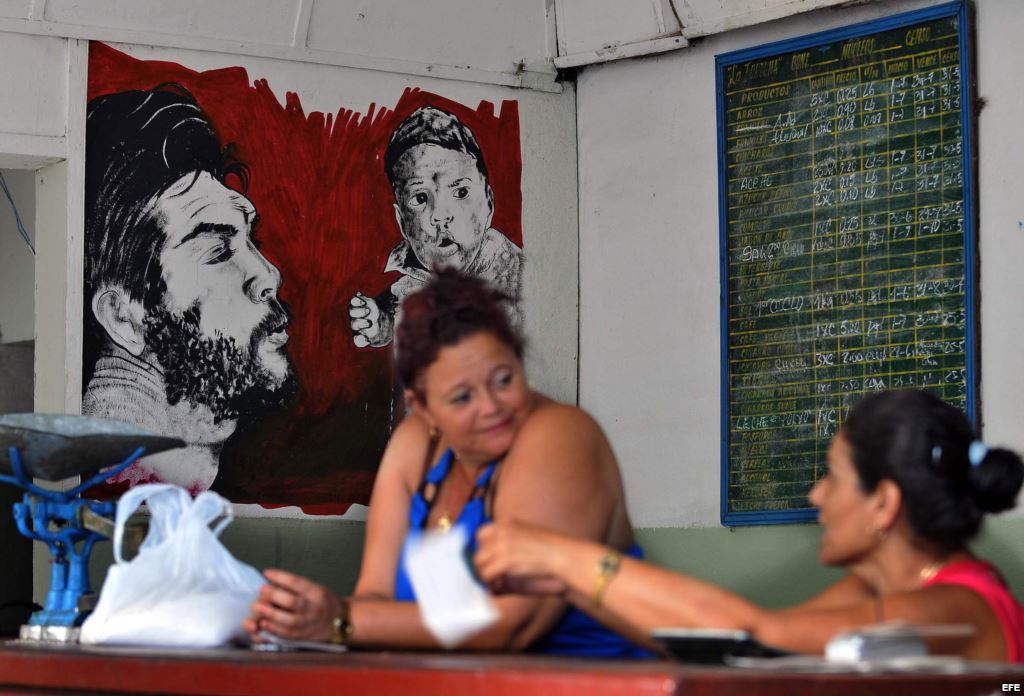
In most of the provinces, they are continuing with the standard sale of 3 kilos a  month of powdered milk, at the subsidised price of 10 cents a kilo. Every 10 days, children under 7 have the right to a kilo of this miik.

Not being able to guarantee the supply of fresh milk and in order to ensure the children get the diet they need, the state had no choice but to import thousands of tons of powdered milk whose price in the international market was over $4,000 dollars a ton.

That imported powdered milk is also for pregnant women and those diagnosed with chronic illness like diabetes, who get a voucher for a kilo of powdered milk a month, whose price is similar to that sold for children.

It seems like the milk production in the past year has not been what was hoped.

Last August 5th, the weekly Trabajadores, official publication of the Cuba Workers Centre (CTC) , announced the construction of a powdered milk factory in the province of Camagüey with capacity to produce 100,000 litres of milk a day, using milk from the dairies in the Camagüey area.

Production testing of the factory in question will be started at the end of September.

They are putting up the new factory in the place where the old factory was to have been in the 90’s, which would have been the first powdered milk factory in Cuba. Construction was held up for lack of funding. Since then, the state has kept on importing powdered milk, thousands of tons, paying tens of millions of dollars.

The powdered milk factory which they are putting up in Camagüey is fitted with Chinese and Italian technology and its cost has reached 528,000 dollars. It should produced 2,350 tons of powdered whole and low-fat milk a year and 1,100 tons of butter.

The newspaper Granma, on 31st August, announced that work on the project was over 70% advanced  and that at the end of September they will start assembly of the machinery and, if there are no holdups, they forecast completion for the end of December. But, up to now, they haven’t given any more information on this.

At the beginning of December, they announced that pregnant women and the chronically sick in the provinces of Mayabeque, La Habana, Artemisa and Santa Clara, who received powdered milk for their diet, by way of an experiment, will, from January, instead of that, receive a new dairy formula made up of casein, lacto-whey, water, and animal or vegetable fat with different levels of protein.

On this point, the Vice Minister of Internal Trade, Bárbara Acosta, said that this measure was taken because of the over-consumption of powdered milk and assured the deputies that it would not be extended past the date indicated

It seems like there was a setback in the production of milk in the second half of this year.

In the Foreign Currency Recovery Stores* (TRD, from its Spanish initials) they have not offered butter or condensed and evaporated milk produced locally for months.

You only find cheese in certain supermarkets, and not always. The price is about $15 a kilo, which is in fact prohibitive for most Cubans, whose salary doesn’t exceed $20 a month.

The official press keeps completely silent about the crisis in the production of fresh milk. It seems like the government has ordered that they don’t touch on such a sensitive topic.

ramsetgandhi@yahoo.com

Translated by GH

*Translators note: This interesting name makes clear the government’s interest in operating stores that sell products only in hard currency; their purpose is to “recover” the remittances sent to Cubans from family and friends abroad. Products in these stores are generally sold at significant markups.

23 December 2013 / Cubanet
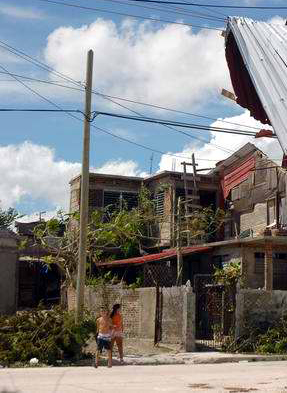
Government Orders Added Buildings Demolished / Reinaldo Emilio Cosano

HAVANA, Cuba, December, www.cubanet.org – Many Havanans are confused and outraged that the government is eliminating constructions added without permits from the Institute of Physical Planning. After allowing them for decades, the withdrawal of authorization of thise privately-constructed buildings now is creating a very serious conflict, one more in the severe housing crisis in the capital.

Felix Mengana Franco, 34, an electrician living on the capital neighborhood of San Agustin, where multi-family five-story buildings predominate, states:

“They have demolished buildings and are continuing to do so. It’s unreasonable to dismantle the improvised garages. Neighbors in my building and others in the area are going crazy trying to think about how to protect their cars. They don’t have any other place. Do they take them up to their apartments on the third, fourth or fifth floors? Its absurd that so many buildings have been built in 50 years but they don’t build garages to protect vehicles from the risks of weather and theft.”

Garages, workshops for the repair of cars and motorcycles or the repair of home appliances, shacks for water pumps, bike repairs, living quarters… There is a huge need and lack of renovations of buildings ruined or destroyed, and now, to make it all worse, this plan aggravates the situation.

“I know of a case of a married couple with two children, six and seven, and two grandparents, who live crammed into a little shack,” added Mengana Franco.

Parking outdoors is exposed to the weather and to the plague of thieves. They steal parts off of cars and motorcycles, especially tires and batteries, scarce and expensive. The vehicles they steal from are dismantled piece by piece and sold, taking advantage of the lack of parts of state-run establishments, the only ones, or their astronomical prices.

Rodolfo, a resident of Alamar to the east of Havana, expressed his disagreement:

“Before demolition, the state should adequately resolve the problem created. I sacrificed myself in numerous sugar harvests. I earned the distinctions of “national vanguard” and “millionaire harvester” for the millions of arrobas of cane I harvested, and for this I got the right to buy a Russian Lada car. Now I have no way to protect it if they tear down my garage. I live on the fifth floor.”

Felix Mengana concludes, “If it’s prohibited, why does the government allow people to fool themselves, having their space, their privacy, to late tear down their huts and their dreams?”

cosanoalen@yahoo.com

23 December 2013 / Cubanet
Living in a Shelter: The Tragedy of Thousands of Cubans / Lilianne Ruiz

HAVANA, Cuba, December 2013, www.cubanet.org – The poverty in which most Cubans live — and to which they adapt, thanks to the meticulous mechanisms of power that 54 years of State terror have imposed — is not an insurmountable fate.  It would be enough for the Cuban government to respect all human rights, opening the political and economic game, in order to improve the living conditions of the island’s inhabitants.

Misery is aggravated when one has neither a place to live nor economic resources to rent, build or buy a house.  It is estimated that, in the Central Havana municipality alone, 6,201 families (24,584 people) are affected by the uninhabitable condition of their dwellings.  Of that number, only 125 families are located in the so-called transit communities: collective shelters, as they are known in Cuba.

But those figures do not shed light on what it means for a family to live sheltered. One must cross the threshold of figures in order to see up close the true face of the tragedy.

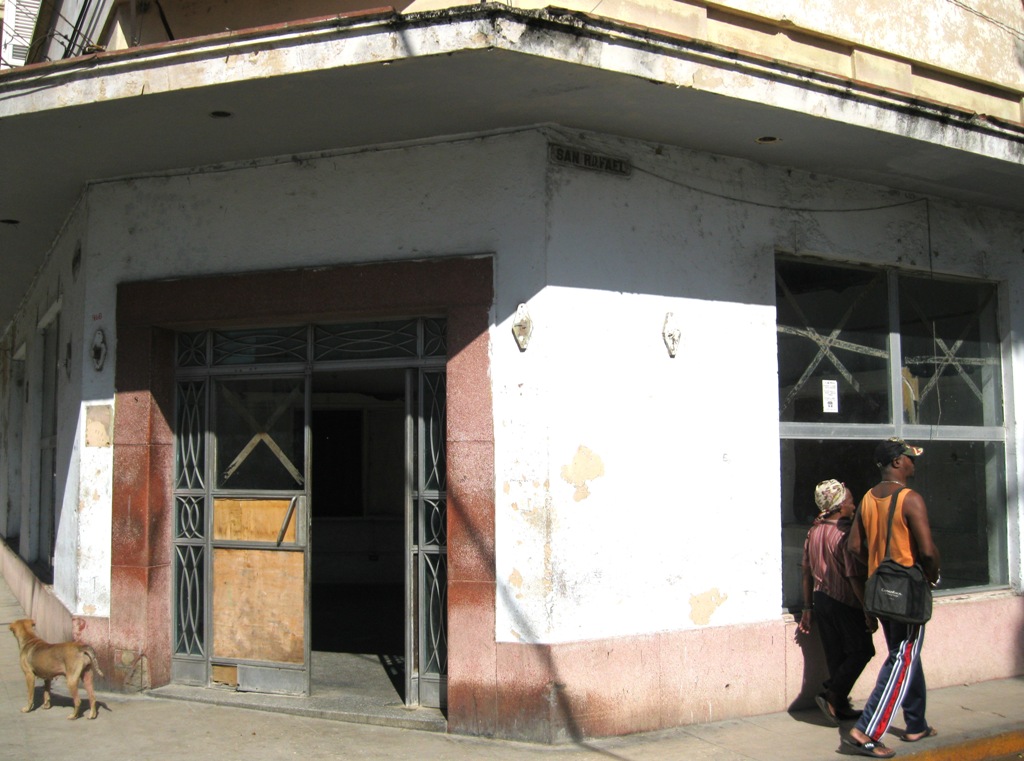
The “Collective Shelter” of San Rafael 417 in Central Havana

According to those who live there, the building previously housed a factory for sanitary napkins (intimates in the Cuban language).  Decrepit posters with some communist slogans are not missing. The hall is divided into different rooms where the belongings of those who have come to stop in this site are grouped. What seems to be the bathroom is in fact a latrine. Nor is there seen anywhere a sink with running water.

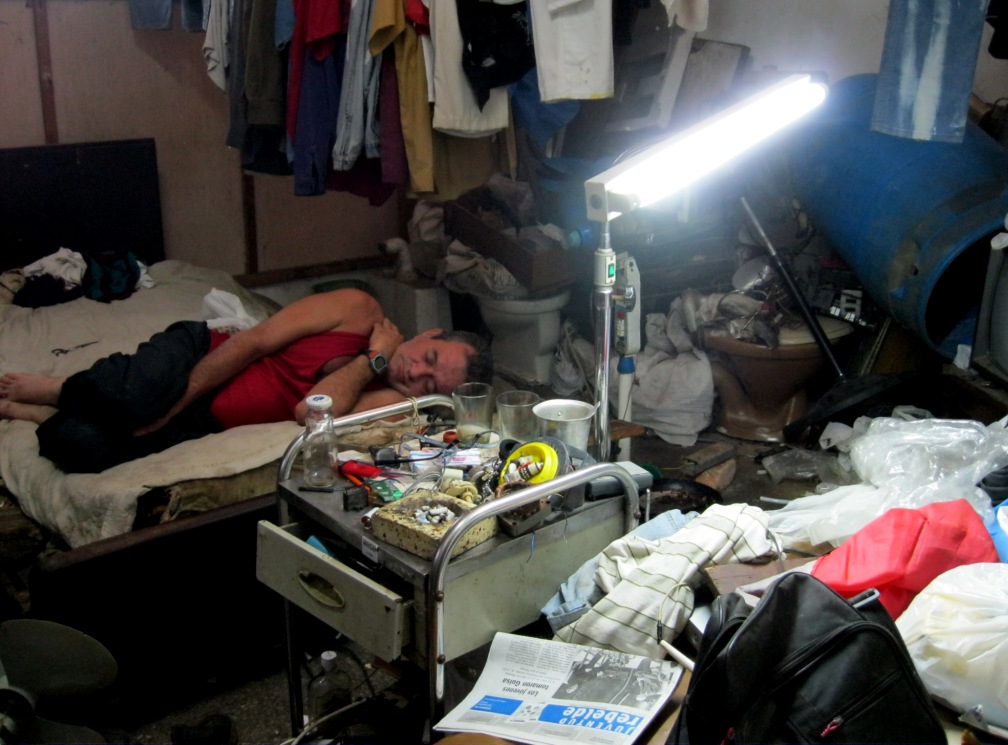
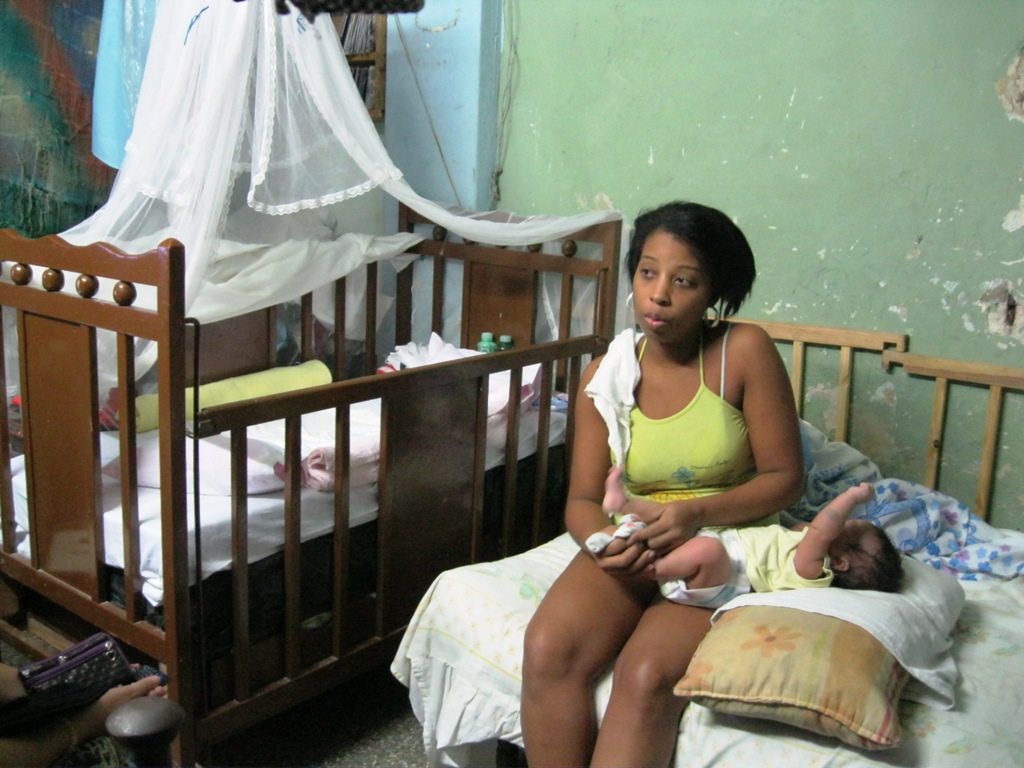
Iverlysse Junco is 29 years old. The door of the little room of wooden planks where she lives with her husband and four children creates a false illusion of privacy. Everything looks poor and ugly, but it is impressive to see the white of the diapers that cover the cradle of her baby born a month ago. She has not neglected her personal appearance in spite of the fact that she is not expecting anyone; she keeps her dignity in the cleanliness and order that she maintains in the 4 x 4 meters where they live.

Six years ago they left a tenement in danger of collapse. The room has not a single window. The first thing that she shows us behind a curtain is another sliding wooden plank that gives onto the street.

“When we came it was completely closed, but one day I could not endure any longer the lack of air and I grabbed a saw in order to make that opening,” she says.  “The bad thing is that now my husband and I cannot leave together, because one of us two has to stay in order to make sure no one enters and takes our things. They came to assess a fine against me, for nothing less than for altering the facade.  But I told the district delegate that they are very familiar with my situation.”

On an improvised kitchen counter is a pair of electric burners where she does everything: from cooking to boiling the diapers, as is customary among Cuban mothers who have no way to pay for the luxury of disposable diapers, which involves a greater cost than a month’s salary.

The baby is cold as a consequence of the humidity: she has to hang out clothes there inside. The water she asks of a neighbor on the block. He lets them fill the buckets that they then carry to a little tank in the corner of the room. That limited water has to serve them for washing, mopping, cooking and bathing in the same room. Part of everyone’s routine every day is to keep the deposit full. But with other needs there is no arrangement; they have to urinate and defecate in a bucket dedicated to that purpose and then go out to pour it down the drain in the street.

“Everything is hard here. The most difficult is getting up in the morning and having to be watching the people to be able to go out to dispose of the bucket. I cannot not have the bleach for cleaning and the freshener.”

Her husband works in demolition, which is why she is aware of the quantity of collapses that occurs, especially when it rains.

“When do I leave here? The collapses are going to continue because Havana is falling down.”

Although Iverlysse and her husband work a lot, they see themselves reduced to total dependency on the State. In a collectivist system, which condemns private property and the free market, the hypothetical solution is that, not with one’s own effort, but with collective work, the Junco family will get a house in which to live.

In practice, society has submitted to state control and planning.  The happiness of the Junco family depends then on their file being privileged in the eyes of the official, who next December 20 will have to decide if, among the 900 cases that are presented in the whole of the Havana province — after prioritizing the “cases” that have spent 20 years sheltered, hoping — theirs qualifies as sufficiently affected by an extreme situation.

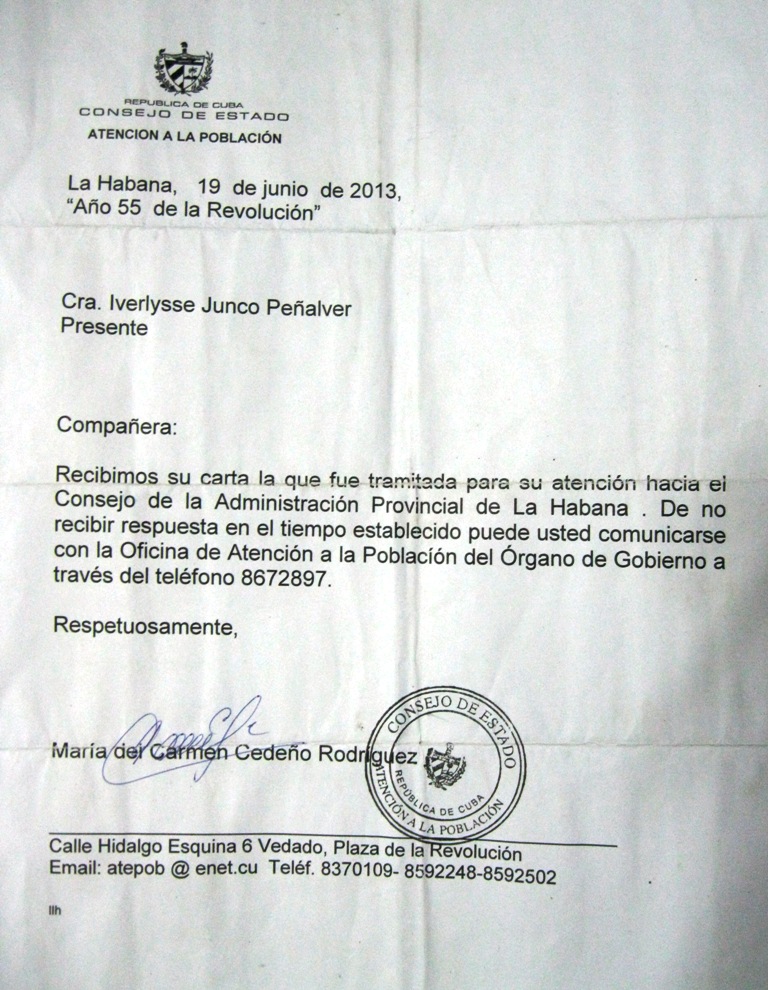
“I have already gone to the Province (Office of Dwellings) and to the government. Three times I went to Revolution Plaza and seven times I wrote letters to the State Counsel.  On all those occasions the answer was:  You have to wait.  There are worse cases than yours. What can be worse than this?” Iverlysse asks herself.

The statistics about the numbers of sheltered people and those waiting to become sheltered, were offered by the Municipal Unit of Attention to the Transit Communities (UMACT) of the Central Havana municipality by a person who requested anonymity. The number of the 900 cases that will be presented next December 20 was provided by a housing worker who also wanted to withhold his name.

December 15, 2013/ By Lilianne Ruiz.

From Cubanet

Translated by mlk.

Reinaldo Arenas’ Nest of Suffering and Partying / Jose Hugo Fernandez

An interior room on the second floor was
An interior room on the second floor was R. Arenas’ nest of pain and parties

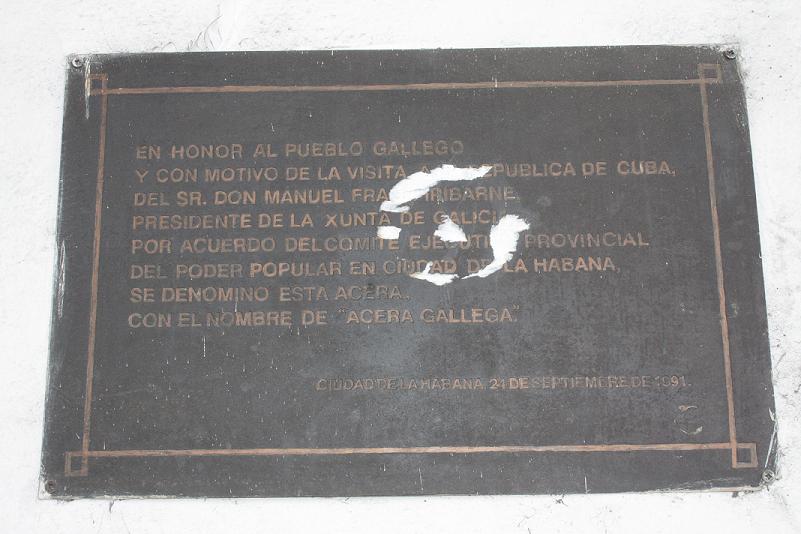
Havana, Cuba, December, http://www.cubanet.org. In Havana, at the corner of Prado and Dragones streets, the regime affixed a plaque to honor the memory of a foreign fascist: Manuel Fraga Iribarne. But not even the tiniest plaque or sign exists in this city that invites us to remember the most notable among those Cuban authors educated during the revolutionary period: Reinaldo Arenas.

Although he was born in the eastern part of the island, Arenas came into his own as a writer in Havana and it was this city that witnessed his most joyful and painful experiences, insofar as he was ingenious, rebellious, Dionysian, irreverent, a rabble-rouser and dead set against obeying any rule that wasn’t that of his free spirit and his insatiable flesh.

Many are the sites through which we could trace the footprints that he left in this city. Someday, in a democratic future, when the cultural authorities decide to honor themselves by revitalizing the memory of this man by means of a tour-homage to the places where he created, reveled, and suffered in Havana, it will be enough for them to use as their guide the descriptions from his book, Before Night Falls, a work as dramatic and simultaneously funny as its author.

Precisely in that book, Arenas dedicates an entire chapter to the Hotel Monserrate (corner of Monserrate and Obrapía Streets), a former whore’s den in whose second story he managed to carve out the tiniest private space in Havana, a room that he was to buy secretly. In that Hotel, according to the author himself, there lived a veritable cornucopia of misfits who lived outside the law. “If the police would come,” he comments jovially, “the only thing they had to do was put up some prison bars across the main entrance to the building, the only door in the place, and everyone inside would be held prisoner.”

A few days ago, curious to know if anything had changed, I visited the Monserrate, more than thirty years after the details described by Arenas.

There are no substantial changes. The building remains as dilapidated as always. The same atrocious front door. The dark hallways, the walls and ceiling with chipped paint, that hasn’t been retouched in more than half a century. The ancient elevator, which inspired in Arenas such great jokes and so many furtive sexual adventures, continues its astonishing balancing act, while contemplating a fall without ever actually falling. The clothes hanging on the lines on the balconies…

My name is Bebita, Reinaldo Arenas’ friend. Photo by José Hugo Fernández.

With respect to the “wildlife” that is the neighbors, the old whores have all died by now, after their conversion to the Communist Party, but it’s still possible to find there several of the recurring characters from Before Night Falls. A few have left (for Hell or God knows where) and others remain the same, stranded in time, only now so much older. But almost all of those that remain couldn’t be photographed because, as if they were Hollywood A-listers, they demanded that I pay them in CUC (convertible pesos) for appearing in any photos or for affording me a brief interview. One exception was Bebita, who not for nothing had also been an exception when she gave her friendship and her generous help to the writer. “I am Reinaldo’s friend,” she told me, while she opened the door to her room to offer me a seat, very willing, and even enthusiastic about the possibility of bringing me up-to-date, for free, on life and miracles in the Monserrate.

Through her I learned that the character who sold the room to the novelist (he calls him Rubén) continues to be as warped as ever and that he charged him for using the bathroom, 50 centavos a pop, according to Arenas, but Bebita clarifies that it was 50 centavos for using the toilet and a peso for taking a bath. With some help from Bebita, who allowed him to put a waste pipe through the middle of her room, Reinaldo was finally able to have his own bathroom. Later, the room would revert back to the aforementioned Rubén.

“On the first floor lived Bebita with her friend; they were two women who played the drums and who would get all caught up in problems caused by jealousy on a daily basis,” wrote Arenas. Well, she still lives there, also with a friend, perhaps not the same one as before, since she is much younger than Bebita. But now peace reigns in Bebita’s room, although her personal saint is still the same: Shangó, the orisha of storms (thunder and lightening).

“Some day if they decide to put up a monument in honor of Reinaldo,” she said to me, “no other place would be more ideal than the Monserrate Building, nest of his suffering and his partying. And I assume that the monument ought to be in the shape of a phallus.”

The ancient elevator of Arenas’ sexual adventures and tricks.


Dark hallway on the first floor of the Monserrate.
They pay homage to a fascist, while they relegate Arenas to oblivion.
If the police would come, the only thing they would have to do would be to place prison bars across the main entrance to the building.

Photos and article by José Hugo Fernández.

Note: The author’s books can be bought here.

Translated by: K. Rauch

Cubanet, 11 December 2013

Repression Against Demonstrators Reaches Barbaric Levels

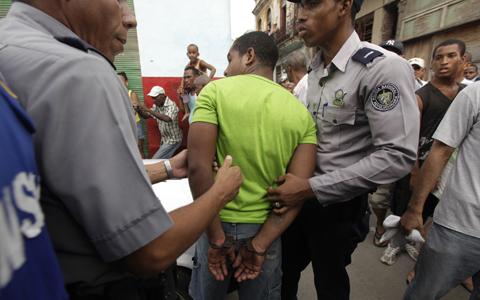
MIAMI, Florida, December 12, 2013, www.cubanet.org — The worst consequences of Cuban military repression were suffered on Dec. 10, International Human Rights Day, on the eastern part of the island. More than 130 arrests were made and about 160 peaceful demonstrators beaten according to the leader of the Patriotic Union of Cuba (UNPACU), José Daniel Ferrer, as part of preliminary action.

A member of the Ladies in White from Santiago de Cuba, Arlenis Alarcon Perez, had to be operated on as a result of being kicked by paramilitary groups. She is in serious condition and remains in intensive care at the Military Hospital after injuries to her solar plexus caused internal bleeding. The operation was performed late last night. The solar plexus is a vascular network that can burst from sudden physical blows according to the activist Martha Beatriz Roque Cabello.

Arlenis Pérez Alarcón lives at Castillo Duanie between 14th and Piñeiro streets in the Luis Dagnés district of Santiago de Cuba. She has been a member of the Ladies in White for about two months.

Meanwhile, in a telephone conversation with martinoticias.com José Daniel Ferrer, speaking from the Palmarito of Cauto district in Mella, Santiago de Cuba province, confirmed the use of tear gas against civilians, including children, in various parts of eastern Cuba. Ferrer said that in the Mafo district in Contramaestre the home of peaceful opposition figure Ovid Martin Castellanos was attacked twice. Ferrer said that many activists were in very poor condition in places where the attacks took place, Ferrer said.

Three drunken men attacked demonstrators. One of them was injured in the process and required medical attention according to the head of UNPACU.

Thursday, December 12, 2013, CubaNet

The Contradictory Spirit of Nostalgia / Camilo Ernesto Olivera

HAVANA, Cuba, December, www.cubanet.org — Between 1977 and 1978 Cubans living in the United States were able for the first time to return to the island to visit relatives. When my great uncle and great aunt came to our house, my father, who was an official in the Revolutionary Armed Forces (FAR), could not be present. As a member of the Communist Party and the armed forces he had to obey orders, which were to refuse to greet them.

I remember as a child that my aunt and uncle stayed for lunch. There were tears in my aunt’s eyes when she saw the steaming, aromatic pot of black beans placed on the table. She said that, since she had left Cuba, she had not had beans and rice like the kind they make here. She later asked that we accompany her in a prayer of thanks. Even my uncle, who was not very religious, joined in — something I was only able to full understand years later.

In 1990 a group of students were returning home from Poland on a Cubana de Aviación flight. During a layover in Gander, Newfoundland almost all of them decided to take advantage of Canada’s then-generous asylum laws. More than twenty years later a member of the group was returning to Cuba as a tourist. He was travelling in economy class and his flight had several unscheduled layovers before landing at the Holguín airport.

His friend told us that during the last leg of the trip he managed to fall asleep. When they opened the hatchway door, a burst of steam and the penetrating odor of wet grass and rotting trash told him he had arrived in Cuba. This smell, so familiar during his childhood and adolescence, had been almost forgotten during the two decades he had lived in Canada.

At the moment they opened the hatchway door, all the memories came rushing back. An overwhelming sense of joy and sadness came over him. Later, surrounded by the love of family and friends, he managed to momentarily overcome this feeling. While in Banes he saw traces of the town’s devastation, the result of three hurricanes: one in 2008, another in 2012 and the main one, which has been destroying it since 1959. He also passed the homes of his childhood friends. Many were gone. The facades of others have or had been defaced with signs and placards stigmatizing their owners for opposing the government.

Recently, a young woman who was my first wife and one of my best friends in adolescence was visiting. She said, “Everything is more or less the same as when I left, but the decay of the houses and the people is evident. Now there are hard-currency stores for people with money, but the anguish and resignation have become became endemic.”

While we were having a beer to relieve the noontime heat, my friend used her mobile phone to show me the exact moment that she lost her internet connection. “I was chatting on Facebook and suddenly the whole screen froze. Then someone came up to me and said we were arriving in Cuba.”

She also told me, “I cannot understand how it is possible to feel nostalgia for a country where time has virtually stood still, like the image on my cell phone. It hurts me every minute, every house I knew from childhood that no longer exists, because it has been destroyed, because the rice dish of rice with black beans seems so different to me here. It feels like I am going back into my past, like I’m going to a cemetery to transfer a beloved family member from the crypt to the ossuary. ”

She took my hands and squeezed them hard between hers. It was as if she were trying to cling to nostalgia, drifting between love for what was and homelessness. Then we closed our eyes and let ourselves go.

December 11, 2013, Cubanet

New Interactive Map Shows Human Rights Abuse in Cuba

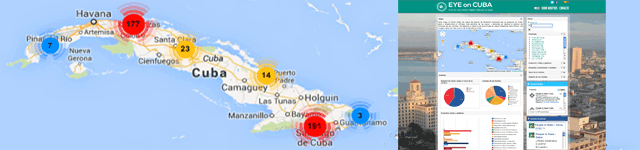
Miami, Florida, December, www.cubanet.org-The organization People in Need, based in The Czech Republic has launched the project EYE ON CUBA, a new interactive map which documents and geographically pinpoints the abuse of Human Rights in Cuba.

Through an intuitive interface the site shows the number of abuses committed in each of the Island’s provinces. Zooming-in geographically by using the zoom in (+zoom) or the zoom out (-zoom) buttons, the map is able to show in detail each particular case of abuse.

The search for information is simplified by the filters located to the right of the map which include categories such as Province, civil and political Rights, economic and social Rights and the victim’s gender and the authors of such crimes. The categories group multiple filters which can be added to one’s search criteria. The site also has a series of graphics which lists statistics and trends for the data entered, making the analysis much easier to comprehend.

From a technical point of view, the map is based on Google Maps’ application programming interface (API.) The information on the website’s data base is combined in real time with Google Maps geographical information in order to created a hybrid web application (mashup) which combines the usefulness of both functions.

The cases of abuse shown in the website are based on the exact documentation recorded for each existing case made by actual activists who work day in and day out on behalf of the protection and defense of Human Rights in the country.

Cuba is a signatory of the Universal Declaration of Human Rights and is a member of the United Nation’s Human Rights Council, but in spite of that, the government violates  human rights and they refuse to acknowledge their defense as a legitimate activity, denigrating local Human Rights groups, harassing, beating and detaining in order to punish activists who try to document these abuses.

The project has as a principal objective helping Cubans exercise and demand their rights through the local initiatives which encompass all the Cuban provinces. On top of offering direct ground assistance, the protect helps bring awareness to the international community and bring international attention about the most flagrant cases of abuse.

The map does not reflect all the Human Rights cases of abuse committed in Cuba, but it does give a personal focus about each case and it does help stir public emotion with the victims’ stories.

Cubanet, December 9, 2013

Translated by: Adriana Correa

Bastion 2013, A Little Game in a Make-Believe War / Jorge Olivera Castillo

HAVANA, Cuba, December, www.cubanet.org — The Bastion 2013 Strategic Exercises recently concluded with the so-called National Days of Defense. Headlines such as “The Heart of the Country Is Invulnerable,” “The Enemy Will Have No Peace,” “An Unbreakable Coastline” and others equally ridiculous could be read in the November 25 edition of the weekly Trabajadores.

They have once again taken the military paraphernalia out of storage to inflict an imaginary defeat on the enemy, which occasionally lands in the country with its phantom divisions.

As well as being something outside the bounds of common sense, fabricating external aggression at this point is increasingly useless. There have been so many combat preparations and invasion warnings that have proved pointless that almost no Cuban believes in the demagoguery that sustains them anymore.

Indifference and mockery are the routine reactions to these expenditures of human and material resources, which are not even successful at diverting attention from the serious social and economic problems that affect a wide segment of the population.

“They are shameless. Instead of investing money in important things, they waste it knowing full well that we will never see American troops in Cuba. It is a cliche they use for the sake of convenience. Essentially, it stems from a need to present an image of unity and strength. They know that the probability of a military confrontation between the two countries is very low, practically impossible,” says a former military official.

Very few citizens spend time on this sort of news. The most widely read items in the official press continue to be the television schedule and the sports page.

“I don’t waste my time on this nonsense. We have had enough of this war for subsistence. If the Americans ever come, I would be happy if they brought food and other stuff. With that they would win two out of three. The country is already in ruins, even without a missile having been fired from overseas,” says a retiree living in the capital.

After a series of virtual military battles throughout the country, Cubans are still confronting challenges brought on by difficult circumstances. Dealing with the bureaucracy, finding their way through the maze of the black market and struggling with high prices for essential consumer goods are some of their primary concerns. According to the vox popoli, however, efforts to keep us mired in poverty will be even more intense in 2014.

There is no shortage of reasons for such assumptions. The just completed Bastion 2013 is a bagatelle, a children’s game compared to the battles we have to face every day in the farmers’ market, with their heart-rending prices, or in the hard-currency stores, which are fully capable of destroying anyone’s patience.

oliverajorge75@yahoo.com

Cubanet, 2 December 2013

The Torture of the Retired / Lourdes Gomez

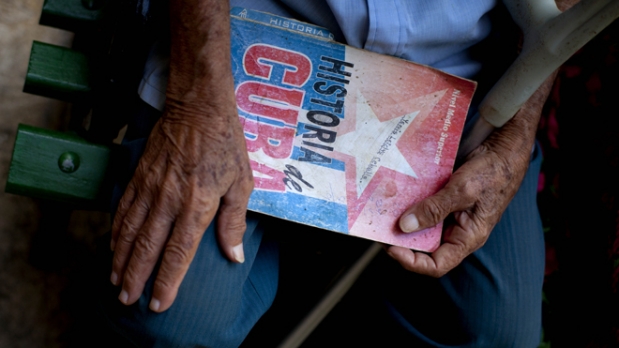
An old man with a Cuban history book.

According to the Center for Population and Development Studies of the National Bureau of Statistics of Cuba by 2025 some 26.1% of the population be 60 years and older, which makes us a country with one of the highest indices of aging in Latin America. Being retired in Cuba today means belonging to a population group distinguished not only by its lack of productivity, but also for its lack of economic resources. The “Revolution” prides itself on having bettered the quality of life for Cubans, especially in the area of health. Today we can satisfy ourselves that life expectancy is comparable to that of developed countries (75 years on average), praiseworthy if this quality is maintained in all aspects of the lives of older adults.

Today, if the retired want to supplement their income that have no other option than to turn to family members for help or to turn to “self-employment.” It’s become common to see old people in whatever neighborhood, seated or walking around, selling cigarettes at retail, peanuts, or whatever other scarce product allows them to get some money every day to be able to deal with prices that rise while salaries remain stagnant.

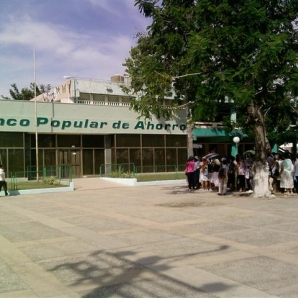
Retired people waiting in front of the bank to collect their pensions (LG-DDC)

In Santiago de Cuba its an ordinary occurrence to see, twice a month, the degrading spectacle of banks overcrowded with old people, standing in line from the night before, filling the sidewalks and parks around the banking institutions for several hours and at times even days, waiting to collect. They are men and women who have dedicated forty years or more to working for the Government that today repays them with the torture of a miserable pension.

The retirees are divided into two large groups: those who collect up to 200 pesos ($8.30 US) and those who collect more, the first at the end of the month and the second at the beginning. In fact, the banks have taken measures with respect to this: the days designated for collection of pensions have that as a priority and others are not served.

For Maria Elena, 76, retired hairdresser, the pension collection day has become the most important day in her life for the last ten years.

“In the two or three days  my pension lasts I feed my taste, I can buy a nice bite of ham and cheese, I can buy meat, and arrange some other things. But for me the most important is the food, even if it’s bad,” she said from the front of the collection line at the People’s Savings Bank.

Maria Elena belongs to the more than 2 million Cubans over 60 who receive a pension that’s less than the average wage. Many of the were imbued with the Revolutionary spirit at the start of the Revolution, they cling to the ration book and their faith that the government will protect them. They don’t understand that the announced economic changes point to a veiled market society that they’ve been isolated from.

Hilda, 81, retired from the municipal sector, said, “I live thanks to the support of my children who give me products to sell on the black market at a profit. It’s not easy for us because we also have health limitations and the chances for some other work don’t exist, much less now that they’re laying off young people.”

The challenge of old age

To address the problems of aging is a challenge for the government. In Santiago de Cuba with a population of close to half a million people, there are two nursing homes over capacity, and two “grandparents’ houses,” dedicated to their care while their children are at work. Obviously, these centers are inadequate before the growing demand.

Options have been created that provide food assistance to destitute elderly in various workers’ canteens in businesses near their neighborhoods, and they have even called on the private sector. They are early attempts of a reality that they still don’t know how to take.

Pedro Angel, a retired construction worker 86 and disabled, says he wants to go to a nursing home but can’t do so for lack of places. He has to hope that those who are there will die, “I spend the day alone at home until my daughter comes, I’m missing a leg, I get two free lunches a week at a private Italian restaurant, and with one leg I can’t take care of myself so I hope they give me a place before I die.”

Palliatives don’t solve problems. The situation also affects the working sector, as they are the children who in most cases assume the care of their parents and have to employ a person for that job or leave work themselves, because assistance costs an average of 300 to 500 pesos a month (~$12-$21)and is unattainable on the average salary.

The solutions are not in sight. Amid the “economic restructuring,” addressing the problems of the elderly is not a priority. But something must be done, as the situation will worsen. According to an article in Granma about the new Social Security Act, in 2025 the population over 60 years will surpass three million people.

Lourdes Gómez | Santiago de Cuba

From Diario de Cuba, 2 December 2013

Dining Rooms for the Elderly Are Pathetic / Gladys Linares

Havana, Cuba, November, www.cubanet.org – The Cuban Constitution, in Article 48 says: “The State protects through social assistance the elderly without resources and any other person unfit for work who lacks family members in a condition to lend them help.” In Law 105 of Social Security and Regulation 283 the requisites are established for fulfilling the mentioned article.

But in spite of the government propaganda about the important resources that it invests in social assistance, for old people it is very difficult to achieve this protection because of the series of obstacles that are imposed on them.

Tomasa is one of these old people.  She says she never worked for the government: she used to sew for the street and now arthritis prohibits her from doing so.  She made efforts to get the aid, but as she has a son, they refused it for her.

“I live alone,” she says, “because although my son is listed in the Address Register and in the ration book (I do not want him to lose the little room when I die); he is married, has two children and lives with the woman. His salary is not enough for them.  What conditions does he have to help me?  And in spite of that, he gives me money to pay for the refrigerator and to get my quota on the ration book.”

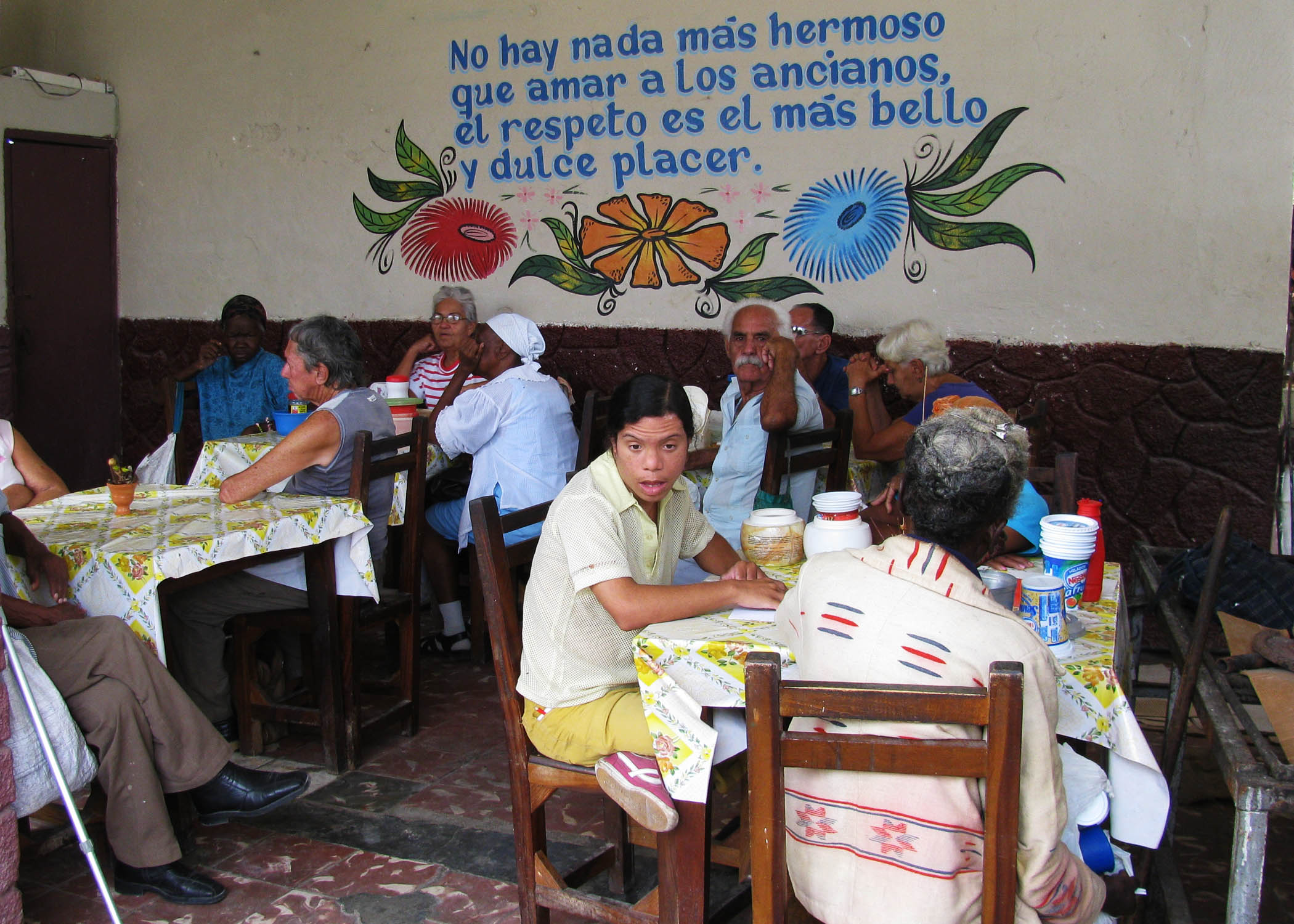
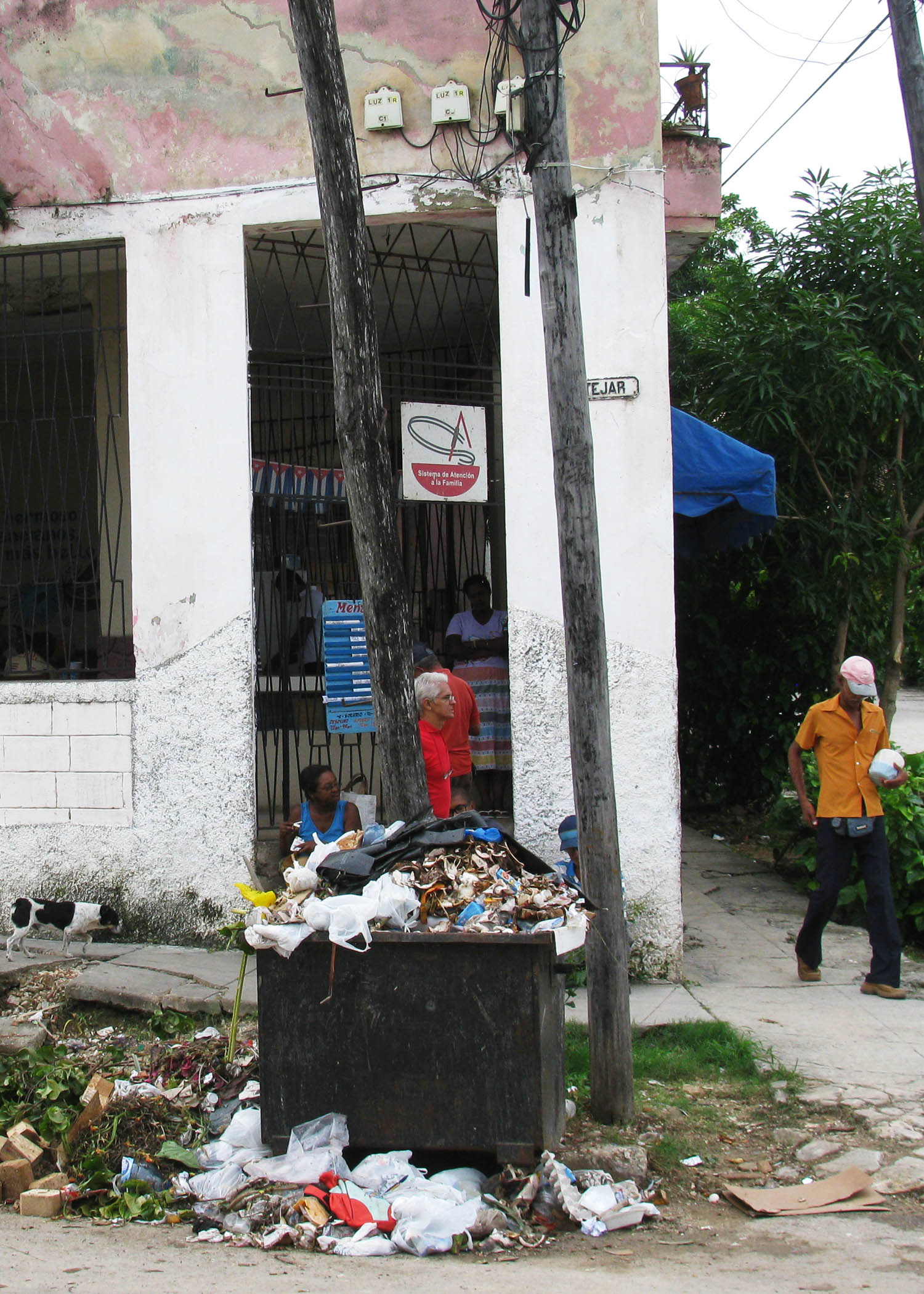
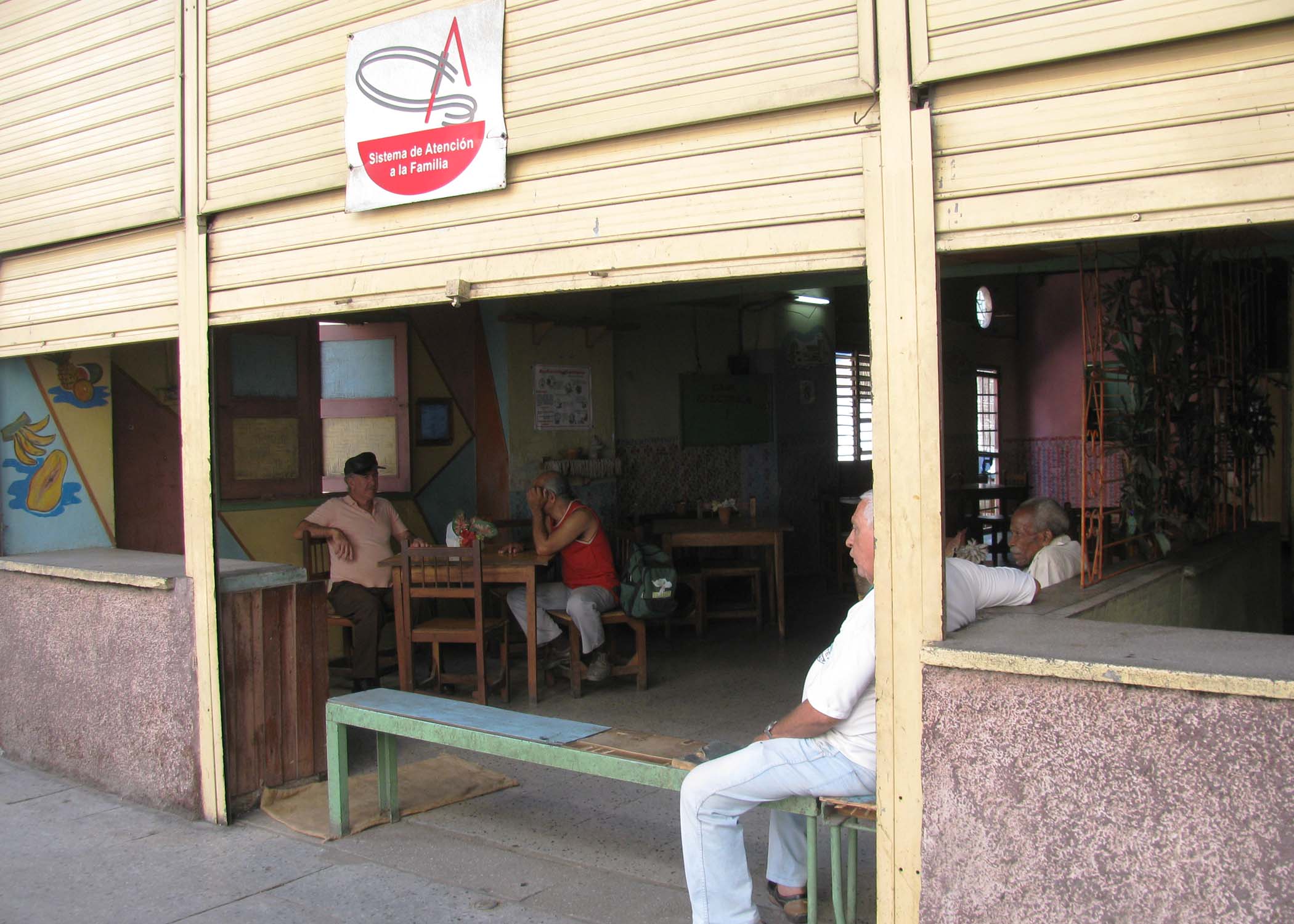
In Cuba there are 2,045,000 old people, who represent 18.3% of the population according to figures from the most recent census carried out in 2012 and published in the newspaper Granma on November 8, 2013.  As a strategy to confront the aging population, 17 years ago the System of Attention to the Family (SAF) was created, consisting of dining rooms to sell cheap food to the elderly who receive a pension of 200 Cuban pesos or less (around $8 US).

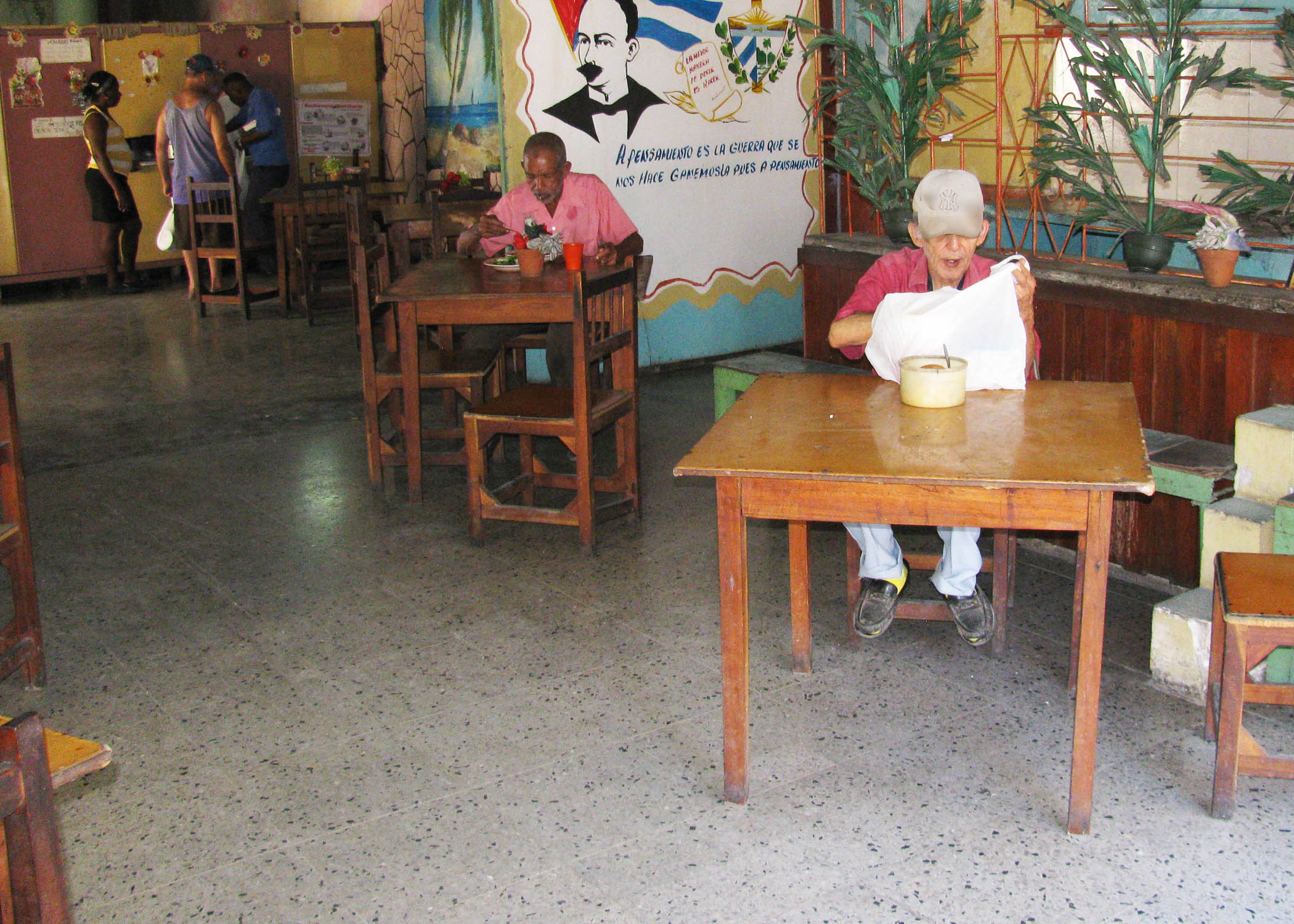
In all these years, the SAFs have not increased. Very few exist in each township. Some have closed because of the danger of collapse, and in almost all the rest the building conditions are bad. The kitchens are improvised and the lack of sanitation is alarming.

It is depressing to pass through one of these places and see the elderly standing in line while they wait to be served in their containers the badly prepared food that they then improve in their homes.

But still knowing all these difficulties, the elderly fight to be enrolled.  Rebeca is one of these. She used to receive help from her sister abroad, but the sister died, and Rebeca is not economically solvent.  She complains that the requirements for social assistance are many.

In the year 2010 with the policy of suppressing freebies, many old people who used to receive social assistance were excluded. Linet is 73 years old. She used to live with an older sister who had a son with mental retardation. On her death, the young man was awarded her pension. Linet, who had worked almost always as a domestic, then sought social assistance, and they awarded it to her.

Nevertheless, in 2010, her assistance was withdrawn. As much as she has written to all the authorities, they have not restored it to her because a pensioner lives in her house — the nephew — who supposedly is obliged to support her.

The part about the relatives “who have conditions” having to help the elderly without resources, is supremely debatable, if one takes into account that in Cuba they are quite few (if there are any) the people who are self-sufficient on their salaries alone. The responsibility for apportioning a decent existence through social assistance falls to the State.

Gladys Linares

Cubanet, December 2, 2013.

Translated by mlk

Danger, collapse! / Alberto Mendez Castello

PUERTO PADRE, Cuba, November, www.cubanet.org — The latest collapse in this city, that of the carpenter’s shop El Nivel, and the next that presumably will occur, that of the Plaza Hotel, make the residents of Puerto Padre ask themselves:  How long will this town destroy itself without the government doing anything to stop it?

Of the five hotels that used to be, only two are still in service, Villa Azul and Campana.  Comodoro and Plaza remain closed, falling to pieces, and of Colon there remains only a foundation.

The Sierra, one of the best restaurants that was, remains scrapped, as Hurricane Ike left it in the early morning of September 8, 2008.  And The Vaquerito, a cafeteria that used to offer various dishes at affordable prices to people of low income, also had to close its doors given its calamitous state.

In the same city center, the shoe store has already come tumbling down, and the principal repair of the Hospital Docente Guillermo Dominguez, today in the worst state of sanitary health, fails to materialize.

“As of today we cannot say that we have the resources to undertake these projects,” said the president of the Municipal Assembly of Popular Power, Miguel Jorge, interviewed by local television last week.

Mr. Jorge’s claim is a fallacy: Puerto Padre does generate financial resources capable of achieving its restoration, but they are not going to wind up in the municipal chests but at other lofty bodies of Power.

Nothing serves better than this example: in the same city center where the mentioned collapses have occurred, and where others will occur for lack of undertaking urgent repairs, seven “hard currency collection stores” (TRDs) — as these State stores are called — are operating.  In one of those, for certain the smallest, they have daily sales in excess of three thousand five hundred convertible pesos.

This small TRD alone annually collects more than a million and a quarter convertible pesos, with only the work of three employees.  And the profits of a TRD are well-known: “With what I sell in a day, they can pay me my salary for a year with money left over,” an employee told me on condition that I not reveal his name to the press.

Thousands of Puerto Padre residents live abroad, mainly in the United States, and except for stingy people forgetful of their origins, they all send help to their family members, in many cases old people, who, without the remittances from their relatives, would remain malnourished if not dead if they relied on food rations.

Food, clothes, shoes, domestic appliances and construction materials are sold at prices much higher than the realistic sales figures, producing earnings which, if only a part of them were spent on the municipality, today Puerto Padre would not present, in most places now, this image of a bombed city.

In addition to having the Antonio Guiteras headquarters, the major sugar producer in Cuba, Puerto Padre counts on another privileged “industry”: that of the remittances.

But while their absent children send heavy sums from abroad in convertible currency, a great part of which is going to wind up in the cash registers of the TRDs, the city collapses, without the authorities doing anything to stop it.

Remember this a crime against humanity.  The historical legacy of people is not only destroyed by action, with bombs, but also by omission, on the part of those who have the responsibility of preserving it for new generations, and yet they remain with arms crossed, while the cities collapse.

Notices warning “Danger, collapse!” are not rare in this city.  Hopefully those posters soon will have no place in Puerto Padre, and the Plaza Hotel will not end up in ruins as did our emblematic Hotel Colon.

Hopefully. We children of this town work for that, those of us who remain here, and those who left, and no one, through whatever powers they may possess because of their cannons and tanks of war, is entitled to divert the channel of our sweat to add gold braid to their uniforms.

Translated by mlk

27 November 2013

War-Time Opportunists / Pablo Pascual Mendez Pina

Raúl Castro.

In Cuba the practice of wasting time is a daily phenomenon. It evaporates in conversations on the street corner, in workplaces, while waiting for buses, resolving bureaucratic problems, reading the newspaper Granma, looking for bargains in the farmers’ markets and “building socialism,” which is like a long road from one form of capitalism to another.

Ninety percent of those questioned on this topic agree that the island’s biggest waste of time and resources has been preparing to confront “Yankee imperialism,” which has been threatening us with invasion for fifty-four years.

Because of this “imminent threat” the Ministry of Revolutionary Armed Forces (MINFAR) and its General Staff maintains a headquarters with 500 offices housing more than 4,000 officials and civilian workers, an illusory comfort obtained through exorbitant expenditures of energy and fuel.

According to anonymous sources the Sierra Maestra Building, formerly the Havana City Hall or INRA Building, contains three dining halls as well as coffee shops, a gymnasium, stores, a logistical center, a medical clinic and a restaurant-bar reserved for high-ranking officials. At least 400 employees provide service and maintenance, among them an elite battalion in charge of security.

Inside one will find the Universal Hall of the Revolutionary Armed Forces (FAR) — a smaller scale replica of a similar room in the Kremlin’s Palace of Congresses —which is used for official celebrations. There are also vast areas set aside for parking lots, repair shops, corps of engineers, a firefighting brigade and a sizable fleet of cars and buses used to ferry officials from the General Staff offices to their housing compounds.

It is worth noting that all of the Castro brothers’ highest ranking officers live in mansions that once belonged to Cuba’s former upper-class, all of which are located in affluent residential districts: Nuevo Vedado, Kholy, Miramar and Biltmore. There is even a special brigade in charge of maintaining and remodeling them.

Throughout the length and breadth of the island, MINFAR maintains an endless number of underground military units, clubs, hospitals, weapon repair facilities, hangars, airfields, naval bases, ammunition supplies, spare parts stores, fuel, food and and underground command centers. A high percentage of these rely on obsolete WWII-era equipment, while the rest of the technology dates from the 1950s, 1960s and 1970s.

Engineers have had to modify much of the military’s machinery because it is now difficult to get supplies of spare parts from Russia and Ukraine.

Military employees are the island’s least productive workers and paradoxically its best paid. Their pay scales are based on military rank, years of service, awards, security clearance, educational level, scientific knowledge and other factors.

They also also receive free clothing and uniforms, cigarettes, housing, and vacations at holiday resorts reserved exclusively for the FAR. They may also purchase home appliances and other consumer items sold at hard currency stores (known in Cuba by the English word “shoppings”), except that for MINFAR personel Cuba’s dual currency system does not exist. In the fiefdom of Raul Castro the CUC (convertible peso) and CUP (Cuban peso) have the same value.*

To finance the expenditures of this military behemoth, the general-president created the MINFAR Business Administration Group (Grupo Administrativo Empresarial or GAE), a conglomerate that absorbed the state phone monopoly ETECSA, the import-export company CIMEX, the retail chain TRD Caribe, the now-defunct CUBALSE, the hotel chains Gaviota and and Horizontes as well as other state-run corporations.

In his report to the First Communist Party Congress, Fidel Castro acknowledged, “As long as imperialism exists, the party, the state and the people will give the defense services its maximum attention. We will never neglect the revolutionary guard.”

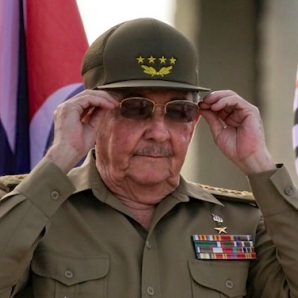
General Raul Castro, however, justified MINFAR’s resistance to change and the economic burdens it imposes when he said at the conclusion of the Bastion-2013 military maneuvers on November 24, 2013, “To avoid rivers of blood, rivers of resources are needed.”

In contrast, 95% of those interviewed believed that, in spite of all the exhortations, political speeches, military exercises and multi-million dollar expenditures, Cuba’s defenses remain vulnerable to an American attack.

They’re coming or they’re not coming

Reinaldo Rodriguez, a 58-year-old electrician, alleges that, when Castro was building up his forces in the Sierra Maestra, he plotted a confrontation with an enemy giant like the United States to parody the legend of David and Goliath and to engineer worldwide anti-imperialist solidarity.

“Castro used us,” says Rodríguez. “I was taking classes at a technological institute in the 1970s and year after year we were required to train for forty-five days as anti-aircraft artillery gunners. The cold, the hunger and the rough times that they put us through in the trenches were pointless. And still our generation had to put up with the same harangues about an invasion that never came.”

Javier, a 40-year-old resident of Vedado and bread store employee said that in 2007 the Military Committee called him up for mobilizations on numerous occasions and even threatened him with arrest if he did not show up.

They were taken to a unit in the vicinity of Artemis, where they were given uniforms and boots. They were left there for fifteen day with nothing to do. He recalls that at the end they were given diplomas while a colonel — drunk as a skunk — gave a speech to conclude their training.

An engineering student at the José Antonio Echeverría Polytechnic Institute (ISPJAE) says, “According to military instructors at ISPJAE, in the event of a confrontation, Cuba would be invaded and occupied by the ’Yumas.’”

“Then the ’war of all the people’ would begin,” he says. “A model of terrorist resistance in which every Cuban would have access to an explosive or any weapon necessary to massacre a Yankee soldier. A quota drawn up by the top leadership of the Communist Party would require one invader a week to be killed in every town for a total of 168 murders a day.”

He and one of his classmates ask themselves, “If MINFAR is not capable of deterring an invasion and we are the ones who are supposed to kill the Yankees, then what devils are they painting?”

Paco Echemendía, a 52-year-old accountant, spent his military service in a mechanized troop unit and participated in several maneuvers at Jejenes in Pinar del Rio province. He noted that, in the years in which he participated, fuel costs were in multi-million dollar figures.

“How is it possible,” asks Paco, that they demand more and more sacrifice in public service ads only to spend all the savings on military exercises? Listen, those amphibious tanks drink gas like crazy.”

Chicho, a 72-year-old retiree from Cerro, says, “At this point and with all things the public needs, it is inconceivable that people are still acting stupid and running around with rifles made of straw… For 54 years MINFAR has been the presidential headquarters of both Fidel and Raul Castro and, as long as they are alive, those fat asses in the army will still be the biggest opportunists on the island.”

Pablo Pascual Méndez Piña

From Diario de Cuba, December 3, 2013

*Translator’s note: Cuba has two currencies: the convertible peso (CUC) and the Cuban peso (CUP). The CUC is pegged at roughly one-to-one to the US dollar. Most wages in Cuba, however, are paid in CUP, which amounts to an average monthly salary of US $20. By treating CUC prices as though they were CUP prices (in reality 1 CUC equals 26.5 CUP), hard currency stores offer military personnel a huge discount on consumer purchases.

Tradition and Mirror Images / Regina Coyula

Alicia Alonso
Alicia Alonso

I stopped having any contact with the National Ballet of Cuba (BNC) almost thirty years ago. That experience was marked by some close friendships, affection and oversized hatreds. But reading “BNC’s Dancers Reveal a Long Tradition” brought me back to an Orwellian 1984 when a group of dancers — all young people at the time — staged an attempted protest. Basically the issues were the same as those being raised in writing today: poor lodging, transportation and food during international tours. In addition the dancers of that time, who “we are now longer the same people,” also complained of favoritism, which was a factor in choosing who would go on tour. Though everyone would have preferred to practice internationalism in Europe, it was the era of friendship with Nicaragua. And then there were the roles. The principal ones were also under fire, since many of them were cast based on personal rapport rather than on merit.

Among the non-conformists there were excellent professional leaders in both the company and the UJC (Union of Communist Youth), who were treated badly by the BNC. The atmosphere was tense in classrooms, dressing rooms and behind the scenes. Situations were neutralized with threats or favors, which explains the anonymous nature of the current complaint.

Certainly our dancers live better than most Cubans, but if we compare them to their counterparts in world-class companies — a league which includes the BNC — they are malnourished, exploited and involved in shady dealings. Everything is done to increase the stipend and better the quality of life. Because for many years dancers and maitres were able to work anywhere in the world without having to hand over a substantial portion of their earnings to the Ministry of Culture — a gift courtesy of its prima ballerina assoluta — the BNC opened a pathway to exile.

Nothing seems to have changed, nor do I think it will, but it is my heart’s desire that the young people who authored the letter of complaint in 2013 might be able to fight for their artistic and labor rights without the need for anonymity.

It was well-known within the BNC that Alicia Alonso and Fidel Castro were mirror images of each other. Each ruled at whim, as in a royal court. Each was surrounded by sycophants, eager to fawn and even to play the fool. Some did it out of conviction, others in hopes of gaining advantage. Subordinates maintained a love-hate relationship with the matriarchal-patriarchal figure. But woe to anyone who dared question a decision or challenge their leaderships! It was embarrassing to see how many of the people who mocked her backstage would file through the diva’s dressing room after a disastrous performance, or her office on the following day, to assure her that she had been magnificent, divine (though never a “bitch.” No, that would have been very coarse). At the time Jorge Esquivel was still her partenaire. With Orlando Salgado it would have been even worse.

My personal relationship with Alicia was decent enough until Fidel Castro gave a reception for the BNC after a successful international tour. Bruzón, one of Castro’s personal bodyguards, approached me to say that Fidel wanted to meet and chat with some young dancers. I rounded up a few, including some who inevitably felt uncomfortable, and drove them to a small establishment.

Castro was talking to Alicia, her husband, Sonia Calero and Alberto Alonso when I burst in, preceded by Bruzón and this insolent group. As directed by the bodyguard, I introduced them one-by-one to Fidel, who went about asking them questions. At one point Alicia’s thumb, painted “pink pearl,” found its way into my shoulder, a gesture which foretold of problems. “He already knows them,” she told me in a tone of voice that matched the finger in my shoulder.

The next day my boss was called into Carlos Aldana’s office. At the time he was the heir apparent and was “dealing” with ideological issues, in other words party-related matters. Alicia had called him to demand my ouster. Aldana realized it was just a tantrum; my boss was aware of everything there was to know and backed me up. But in light of complaints from “the old lady,” I was not allowed to have further dealings with the company. Almost all the rebels of that period now live outside of Cuba, so it does not behoove me to lie.

For some scatterbrain who plugs along cluelessly, in the same way that Aldana used to deal with ideological issues, I “dealt” with the country’s dance movement. It’s the stuff of G2.*

Regina Coyula
*Translator’s note: Also known as DI, an acronym for Intelligence Directorate, the main state intelligence agency of the Cuban government.

Diario de Cuba, December 1, 2013

The Market Where Cubans Pray for Renewed Abundance / Lilianne Ruiz

HAVANA, Cuba, Novemer 2013, www.cubanet.org — Back then there were images of abundance. Our elders say it was a gift to the senses. Memory arouses a nostalgia for a kind of lost paradise.

El Mercado Único. Amelia, 80 years old.

“It was quite a city, quite a city. It was cheap, cheap… All the fruits and vegetables you could want. Cuban fruit (frutas de caney). The Chinese brought in apples. There were apples from California in wrapped in Chinese paper. They were in a basket that said they were from California. The fish was fresh. The fishermen went around with zinc coolers where they kept the fish on ice. They got the fish fresh off the boats. You could find fish anywhere. If you wanted lobster, they would sell it to you live. There was parguito, the best fish I ever had. And bass cut into steaks. There were Chinese and Italian restaurants. I remember, when my husband and I would go to a cabaret, we would stop there at one or two in the morning to have some wonton soup and it would be full of people. All that is gone now.”

Nowadays the Mercado Único (One-of-a-Kind Market) is known simply as Cuatro Caminos (Four Roads). The downstairs looks as though some Lilliputians launched a “Haitian revolution” and exiled Gulliver. The only horn of plenty to be seen is the one carved in stone on the face of the building. Remarkably, it remains intact. In spite of Raul Castro’s economic reforms legalizing self-employment, there are only a few small, almost invisible businesses. Outside a CADECA currency exchange office, with its sign advertising 90 convertible pesos for 100 dollars, there is only a liquor salesman and someone hoping to find customers for a few animals at the building’s perimeter.

The building itself is falling apart. The roof, supported by steel-reinforced columns (well-worn Herculean columns), is damp and the trapped water seeks an escape route through cracks in the ceiling, threatening the structure with collapse.

Fruits and vegetables are still sold in one wing of the market. The vendors swear that you can find products there that are not for sale in any of Havana’s other “agros” or farmers’ markets — fruits like canistel and guanábana. Seventy-year-old Angel says, “Those of you who were born later don’t know about Cuban fruits. So much has disappeared that we no longer even have names for things.”

At the entrance on Manglar Street (now Arroyo Street) there are large cages with live poultry for sale. A young man wearing an attractive necklace of red and black beads approaches us. His name is Ronald Rodríguez, but tells us we should call him by his religious name, Eshu bí, which means Son of Elegguá. In Afro-Cuban mythology this orisha, or Yoruba deity, is the protector of travelers and the deity of crossroads. After saying hello, he proposes a barter exchange: “Put my photo on Facebook.”

“We sell animals to Santeria followers and practitioners, who use them in their rituals to save people,” he says.

An animal vendor (who asked not to be identified) says that on average eighty people a day make purchases there. He notes that the sale of goats and sheep is illegal within city limits, which makes it more difficult to get animals. Now the “animaleros,” as they are called by Santeria followers, only do work on special request.

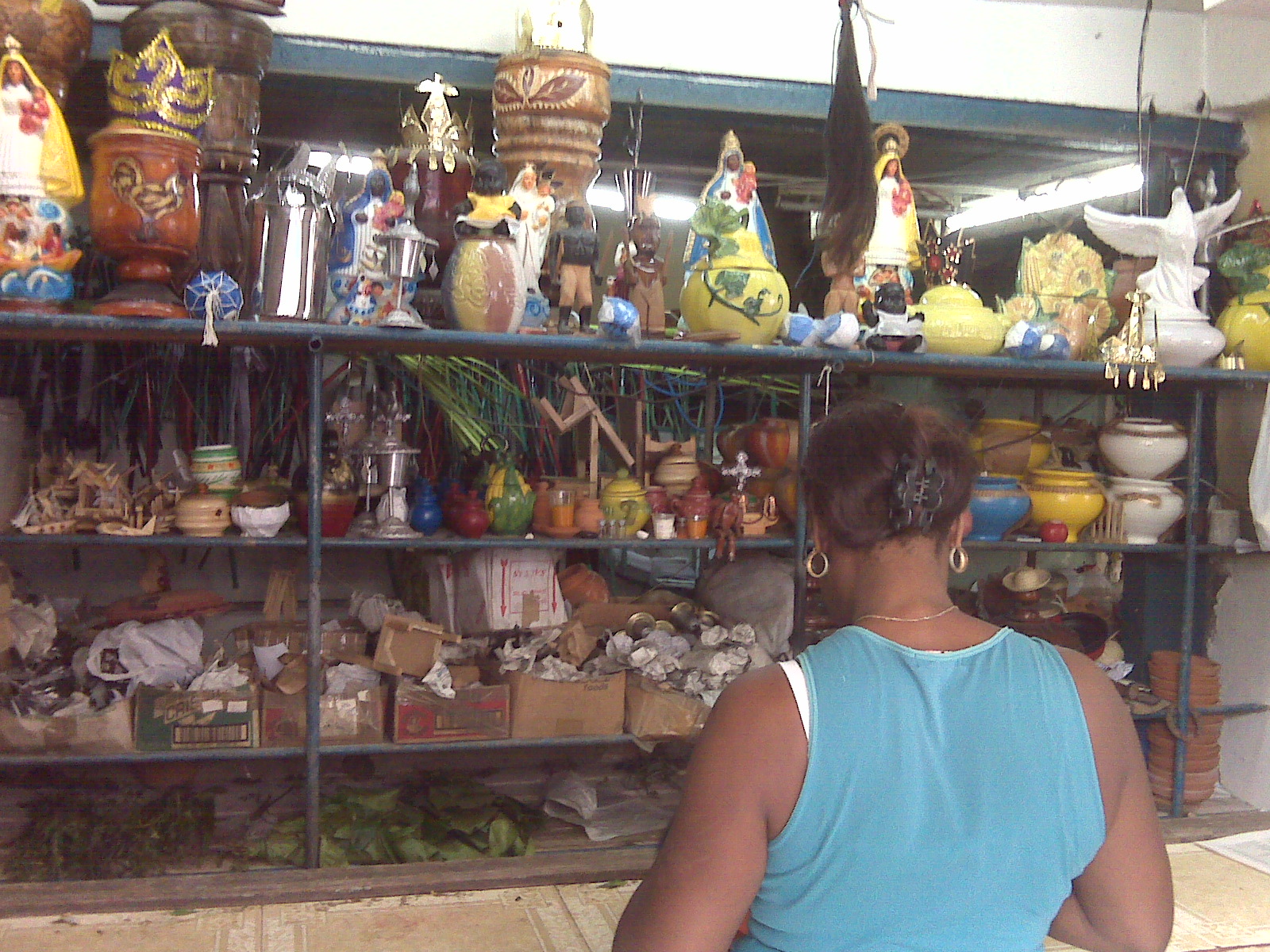
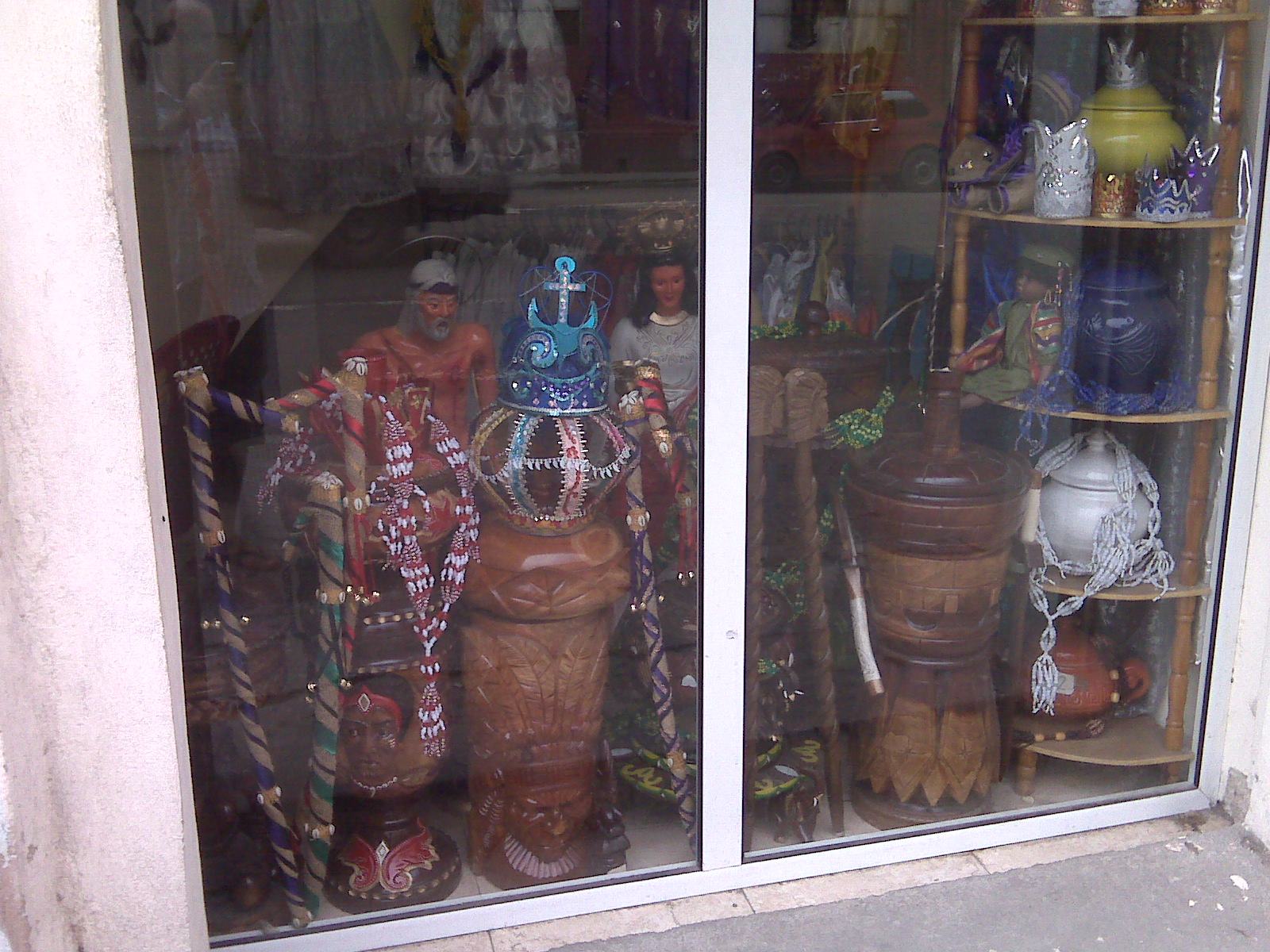
An interesting phenomenon in the vicinity surrounding the market is the number of traditional Cuban Yoruba religious articles for sale. What previously had been modest businesses selling these items have become veritable boutiques, with windows displaying art associated with Afro-Cuban sects. A wood carving might cost 900 CUC (or roughly 900 US dolllars).

One of the store owners

According to Yoruba tradition, public plazas are where one finds both the living and the dead. In Cuatro Caminos residents of Havana turn to the four street corners (the four cardinal points) to ask the blessing of Olofi and the spirits who live in the plaza. The most popular items for sale here are herbs, coconut and candles, which are used to “make a saint,” a rite of initiation. Some people shop for herbs for use in spiritual cleansing rituals.

Materials come from Mexico

“There are seamstresses who make priestly garments. We bring in the materials from Mexico. Artisans make the beaded necklaces and bring them to us. We have everything here that people need. Everyone has a retail license. In the old days, until the early 1960s, herb vendors used to operate out of pushcarts. You can’t have pushcarts on the street anymore, but the herbalists can sell out of their homes. Cuba has created a Yoruba religion with the hope of prosperity.”

Cuatro Caminos is still an exceptional place, a point of confluence with access to any location in Havana. Calle Cristina (Cristina Street) leads to Avenida del Puerto (Port Avenue) where there used to be a ferry with daily roundtrip service between Havana and Key West.

After 1959 the new revolutionary government banned private property along with civil and political liberties in the name of a dubious majority. With them went citizens’ freedom and rights.

Lilianne Ruiz

Cubanet, November 25, 2013

Bastion 2013 and the Ghost of the Enemy /Orlando Delgado

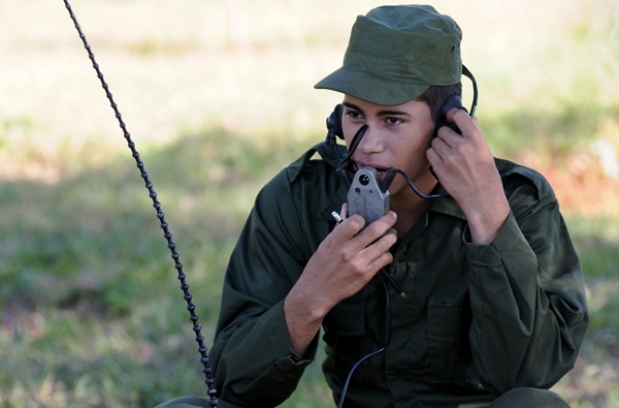
A soldier during the Bastión-2013 maneuvers. (JUVENTUD REBELDE)

It happened in the early morning hours of Monday, 19 November: suddenly the usual transmissions were cut and all the official TV channels were linked. Many thought it might be news of great impact: the death of Fidel Castro or something like that. The image of Raul Castro raised the expectation. But it was all a big fiasco. Castro II announced the beginning of the military exercises all over the country. Perhaps war is coming, many wondered.

We all know how far the country is from participating with its men in any of the conflicts that plague the planet. The regime doesn’t have the will nor the resources for it. The words of the General were clear: “With the engagement in this exercise we propose top continue raising the level of preparation and cohesion of the organs of leadership and control of the troops (…) to confront the different actions of the enemy.”

It remains doubtful what actions they’re thinking of resisting, because any moderately informed person knows that “the enemy” is not planning any military actions. It’s a great blunder to believe that the United States (a country with which we have ties of all kinds) is thinking of a military attack on Cuba. This is the strange idea that the regime constantly tries to sell to justify huge and unnecessary military expenditure in a bankrupt economy, as well as for maintaining internal repression.

Bastion 2013 — as these maneuvers are called — are simply intended to remind Cubans about “our eternal struggle against the empire,” in line with the Castro ideal that “as long as imperialism exists, the Party, the State and the people will offer themselves to the greatest defense. The Revolutionary guard will never be neglected.”

It’s well known that, lacking enemies, totalitarian systems invent them, their livelihood depends on confrontation with an external rival that supposedly tries to “colonize” or “invade” the national territory. Such an archaic idea in the 21st century, with an economic interconnected at the planetary scale, and where borders tend to disappear, is obvious to the least of the analysts.

The Cuban leaders live in another epoch, disconnected from reality. They force citizens into a condition of western pariahs in the era of the Internet and smartphones.

One of the collateral objectives of these useless efforts in which university students and other sectors of society participate, is the constant glorification of violence as the only method to resolve the differences that exist in any modern community, to the detriment of the peaceful way.

Reconciliation and open dialog among all Cubans (living where they live and thinking how they think) should be the fundamental premise for the rebirth of the country, leaving being once and for all the ballast of Castro’s totalitarianism that today oppresses is. Cube is not a bastion and the vast majority of its people just want to live in peace. The speeches of the barricade have died and the only Stalinist dictator of the West — without a doubt — also has an expiration date.

Orlando Delgado

From Diario de Cuba, 25 November 2013