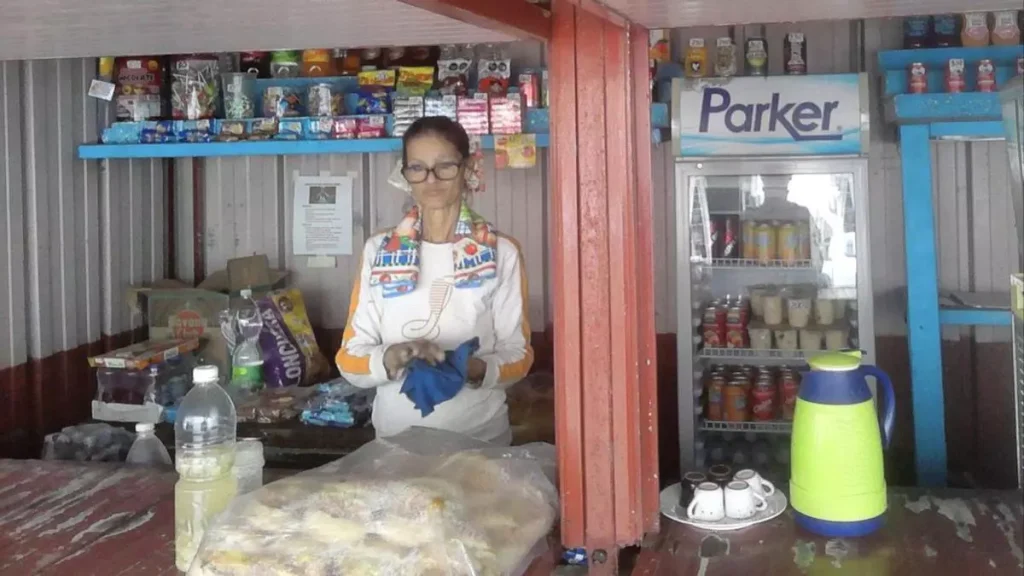
The Blackout Forces Musicians of the Gran Teatro de la Habana To Give a Concert in the Dark

Amid the gloom, they give “one of the few joys of the day, of the week, of the month”
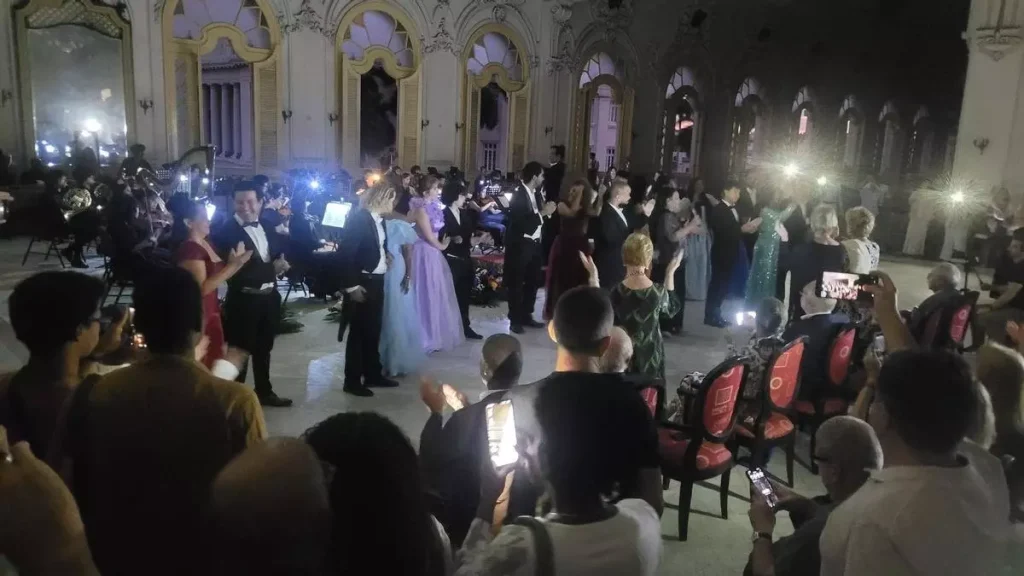

Twenty minutes before the program began, the national electrical system collapsed, in what was the second total blackout in a week / Facebook

14ymedio bigger14ymedio, Havana, March 23, 2026 – Months of preparation and rehearsals were on the verge of going to waste last Saturday at the Gran Teatro de La Habana. That day was the culmination of the preparation for the Caruso concert, a lyrical evening commemorating the historic presence in Cuba of the famous Italian tenor Enrico Caruso, who performed in 1920 at that emblematic site, then known as Teatro Tacón. However, 20 minutes before the program began, the national electrical system collapsed, in what was the second total blackout in a week.

“Organizing and carrying out a project becomes more difficult every day,” laments Yhovani Duarte, director of the Symphony Orchestra of the Gran Teatro de La Habana, in a heartfelt post on social media, in which he recounts that, despite the lack of electricity, he decided to go ahead with the concert in front of the audience, which filled the venue.

“The theater director called me and said: ‘What do we do?’ Well, we open the windows and make music as long as the light allows it. The audience is there and deserves it. Seeing all the seats filled and some people standing was more than enough reason to give our best,” he writes. continue reading

“The magic happens. After half an hour you can only see the small lights of the musicians, and the faces are indistinguishable, but they are incredible”

On the other side, in the audience, was the countertenor Ubail Zamora. As a spectator, he recounts that, in the darkness, the orchestra uses portable lamps to illuminate the sheet music. “The magic happens. After half an hour you can only see the small lights of the musicians, and the faces are indistinguishable, but they are incredible… giving their best,” he says in a post on his social media.

From the stage, Yhovani Duarte and his musicians experience a catharsis with the audience, as the night stripped away the last traces of light. “It was beautiful to hear the enormous ovation the choir received after performing Va, pensiero, from the opera Nabucco, and the intense applause for each soloist and the orchestra. The concert went on, and the sunset was gifting us obscurity and the magic happened.”

“With the first harmony of Nessun dorma from Turandot, as if someone had given a signal, the flashlights of the cell phones in the audience all turned on at once, and the full emotional charge became evident on the faces and in the tears of the orchestra musicians and on mine,” adds the director.

Across from him, from Zamora’s perspective, the lights from the phones begin to reveal the singer to them, “perhaps, one of the few joys of the day, of the week, of the month… When it all ends, the ovation fills the venue and pours out through the windows of the hall.”

“When it all ends, the ovation fills the venue and pours out through the windows of the hall”

“The offer of La Traviata was now a catharsis for the finish. It was a magical late afternoon-evening that I will never forget,” adds the Symphony Orchestra director in his message, which has gathered dozens of comments highlighting the professionalism and courage to carry out their work despite adversity.

Duarte closed his post by thanking the team of the National Lyric Theater of Cuba, the Symphony Orchestra of the Gran Teatro de La Habana Alicia Alonso, and the audience, “who accompanied us until the end in the darkest part of the night, but with the light that only music can give us.”

The light generated by the musicians and attendees fades away. “Outside there is a dark Havana,” says Ubail Zamora, who, like the rest of the spectators, heads home. “I leave with some friends passing in front of a dimly lit Capitol, trying to stay illuminated after the wonderful hour I have just experienced,” he says, although he immediately admits that “reality hits you in the face with a blunt blow when you say goodbye to everyone and know you are going to walk through a very dark and dangerous Old Havana.”

“You arrive home, with a trembling and lonely soul after a day that seemed wonderful. And you write 24 hours later, still without electricity, with a weak connection, trying to gather a lot of calm so that the precise words come out, the ones your colleagues and every person who made it possible to change our lives for an hour deserve,” he says. And he concludes: “The phone battery is running out, and in the distance it seems they have turned on lights in one of the nearby neighborhoods because you can see the glow. Here the mosquitoes are eating me and I slowly fade. I return in the gloom to my corner, and as for the light… not even hope.”

Translated by Regina Anavy

______________________

COLLABORATE WITH OUR WORK: The 14ymedio team is committed to practicing serious journalism that reflects Cuba’s reality in all its depth. Thank you for joining us on this long journey. We invite you to continue supporting us by becoming a member of 14ymedio now. Together we can continue transforming journalism in Cuba.
Cuba’s new “Investment” Law: the Castroist Piñata

It is in reality about laundering the billions hidden in tax havens of Castro-communism: it is Cuba’s transition toward Putinism

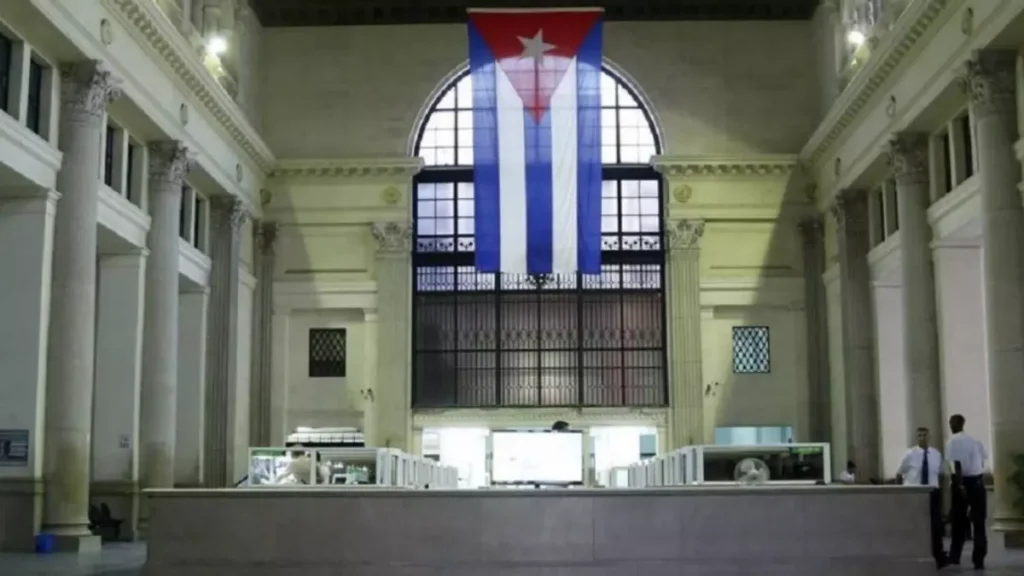
Havana International Bank has long functioned as the regime’s main money laundering vehicle. / El Carabobeño

14ymedio bigger14ymedio, Julio M. Shiling, Miami, March 23, 2026 – On March 16, 2026, the deputy prime minister and minister of Foreign Trade and Investment of communist Cuba, Óscar Pérez-Oliva Fraga, announced a radical change. Cubans living abroad, regardless of their residency status, can now invest, own, and partner in private businesses on the Island, including large infrastructure projects. The Castro regime presented it as an opening towar the exile and the diaspora. In reality, this decree is the opening act of a carefully orchestrated transfer-of-wealth heist, designed to launder the billions hidden in offshore tax havens of Castro-communism and return them to the Island under the pretext of “legal” private investment. It is Cuba’s transition toward Putinism.

The parallels with post-Soviet Russia are unmistakable. After the collapse of the USSR, the nomenklatura — top Communist Party officials, their families, and the security apparatus — devised a fraudulent “privatization” plan. State assets were auctioned off at bargain prices to insiders who had already moved wealth abroad through shell companies. The result was not capitalism, but kleptocracy: a new oligarchic class emerging directly from the old regime. Cuba is now replicating that model. Members of the regime who have deposited fortunes in offshore vehicles will soon “invest” those same funds in their own country, acquiring legal ownership of businesses while ordinary Cubans remain trapped in poverty. The very financial architecture of the dictatorship makes this plan possible.

Members of the regime who have deposited fortunes in “offshore”vehicles will soon “invest” those same funds in their own country, acquiring legal ownership of businesses while ordinary Cubans remain trapped in poverty

Let us consider the regime’s proven offshore network. Havana International Bank (Havin Bank Ltd.), headquartered in Canary Wharf, London, at 189 Marsh Wall, has long functioned as the regime’s main money laundering vehicle. This Castro-Communist front company is 100% state-owned and linked to the Central Bank of Cuba. It was sanctioned by the U.S. Treasury’s Office of Foreign Assets Control (OFAC) in 2020 precisely for channeling funds to the dictatorial government in Havana. Other entities —ACMEX Management Company in the opaque tax haven of Liechtenstein, Mid-Atlantic structures registered in Luxembourg, and Caroil Transport Marine Ltd. in Cyprus— form an interconnected network of shipping companies and holding firms used to move assets discreetly.

These are not neutral companies. They are instruments of the State. The new law provides the perfect legal excuse: a relative or trusted representative of a high-ranking official, now reclassified as a “Cuban resident abroad,” can channel those offshore millions into Cuban businesses, converting the regime’s illicit capital into “private” property.

There are three possible interpretations of the regime’s sudden generosity. First, it could be the classic Castro “bait-and-switch” strategy. Havana has repeatedly continue reading

offered limited openings, only to reverse course once capital has flowed in and its political usefulness has been exhausted. History suggests this pattern remains likely. Second, the regime may genuinely hope to imitate China’s model: leveraging exile and diaspora capital to drive growth while maintaining political control. This scenario is unlikely for two reasons. The Cuban exile community has consistently refused to invest while the dictatorship remains in place, citing the risk of future confiscation and moral opposition to supporting repression.

More decisively, any significant investment by Cuban Americans or other U.S. persons would still require specific authorization from the OFAC of the U.S. Treasury Department, under the long-standing U.S. embargo against Cuba. The embargo, enforced through the OFAC, generally prohibits direct investment in Cuban businesses by U.S. persons, with very limited exceptions that do not extend to broad commercial participation. Washington is not willing to issue the licenses necessary for large-scale flows that would rescue the regime.

Washington is not willing to issue the licenses necessary for large-scale flows that would rescue the regime

That leaves the third and most plausible explanation: the Russian-style model is now underway. The decree is not economic liberalization; it is legal cover for the mass repatriation and legitimization of hidden communist assets. The regime, aligned individuals, high-ranking officials, their families, and the structural apparatus will obtain “investor” status under the new migratory category. Their foreign holdings will suddenly appear as legitimate diaspora capital, buying stakes in hotels, agricultural enterprises, and micro, small, and medium-sized businesses. The plunder becomes “legal.” The dictatorship shifts from overt state socialism to a Putinist hybrid: nominal private ownership controlled by the same clique that has ruled for sixty-seven years.

The implications are stark. This is not an invitation to genuine entrepreneurs, but a structured operation to convert looted national wealth into protected private fortunes. Once “invested,” these assets will be shielded from future sanctions and international scrutiny under the cover of law. In effect, the looters are not only evading justice but are also legally entrenching their theft for decades to come.

Nominal private ownership controlled by the same clique that has ruled for sixty-seven years

The United States, in shaping its foreign policy in line with the November 2025 National Security Strategy statement, must draw a clear and uncompromising line. No investment law or regulation enacted by the Castro-communist regime deserves even minimal recognition. For the future democratic government of a free Cuba, every transaction, partnership, share transfer, or property claim enabled by this March 2026 decree must be declared null and void from the outset, as it is legally tainted, morally repugnant, and strategically unacceptable. This is not an economic opening. It is the regime’s final piñata party for the nomenklatura, in which the billions hidden and looted from the Cuban people over decades are finally broken open and redistributed among the same ruling clique and its proxies under the thin disguise of “diaspora investment.”

Treating any of these measures as legitimate is handing thieves the keys to their own getaway car and blessing the robbery in real time. The Cuban people (and U.S. businesses and individuals) have already been victims of the mass asset theft carried out in 1959. They should not be forced to watch a second theft unfold without resistance. Democratic governments, international financial institutions, and the exile community itself have a clear duty: reject the plan outright, invalidate every dollar that flows through it, and deny the Castro dynasty the Putin-style rebranding it so desperately seeks. Anything less is complicity in the most cynical heist in history.

Editor’s Note: This text was originally published on the Patria de Martí website.

Translated by Regina Anavy

______________________

COLLABORATE WITH OUR WORK: The 14ymedio team is committed to practicing serious journalism that reflects Cuba’s reality in all its depth. Thank you for joining us on this long journey. We invite you to continue supporting us by becoming a member of 14ymedio now. Together we can continue transforming journalism in Cuba.
Havana Chronicles: Reina, the Stately Havana Street Where Garbage is Sold

The city’s portals display objects rescued from trash piles

She has only one shoe on display; it’s the right one, a woman’s shoe, and I reckon it’s a small size, maybe for a teenager / 14ymedio

14ymedio bigger14ymedio, Yoani Sánchez, Havana, March 19, 2026 / Caruso wakes me up. The rooster in my neighborhood has lost track of time; at three in the morning, he lets out a loud, clear crow that pulls me out of bed. He’s been marking our awakenings for years, and he’s probably the son or grandson of that first Caruso, as my husband and I christened him when we felt his power and richness of tone. We don’t know how he’s managed to survive in a country where chicken soup is the dream of many, but there he is, getting ahead of the sun each day.

This Wednesday I have a complicated mission. I have to go to a market near the Capitol Building in Havana to buy some welding rods and a few meters of Royal Cord cable. In Cuba, anyone who doesn’t know something about masonry, DIY, and electricity is doomed. Most repairs depend on doing them yourself, and the purchase of supplies for any renovation is the responsibility of the person doing it. So, I’ve had to learn the grit numbers of sandpaper for wood or metal, the basics of water pipe thermofusion, and some electrical fundamentals, so they don’t try to sell me 14-gauge wire as if it were 12-gauge.

I don’t take a raincoat even though rain is forecast. If I got caught in yesterday’s downpour… I won’t get caught today, I tell myself. I stand in Rancho Boyeros and hold out my arm. There are two possible signals. Thumb pointing inward means I’m going to Central Havana, index finger pointing outward means I’m heading to Vedado. But no one stops, even though I do both. I walk. I take Ayestarán for a while and turn onto 20 de Mayo. A friend’s daughter is having a birthday, and her mother wants to make her a cold salad with sausages. She’s entrusted me with the task of getting those darn hot dogs, which are scarce these days.

There is a state-run dollar store at Infanta and Santa Marta where I’ve been told I might find it. Since the sale of food and basic goods in foreign currency began, these markets have been at the center of popular discontent. Paying salaries in Cuban pesos and requiring US dollars to buy everyday necessities doesn’t align with what we hear continue reading

from the podiums about an inclusive and profoundly humane socialism. Outside the store, which miraculously has electricity, an elderly man holds out his hand and asks me for something “to eat.”

Who buys the products for these stores?

I go inside and put my purse in the locker, because there’s no dollar store that doesn’t require you to leave your bag outside. The first thing that hits me is the smell of spoiled meat. There are cans of sliced ​​mushrooms on the shelves, but no milk. They’ve placed some jars of canned asparagus in plain sight, but no butter. They don’t have eggs either, although on one of the shelves they’re advertising “Greek-style” black olives—dried and salted. Who buys the products for these stores? How is it possible that they don’t have cans of sardines or cheese, but they do have a piece of cod, a kilogram of which costs an entire three months’ worth of pension? There’s frozen salmon, but no vegetable oil.

Perritos” are also nowhere to be found. The most common staple in Cuban meals is currently on the run. Sausages have been a staple food for families on this island for decades. Easy to store, divisible ad infinitum — as whole sausages, pieces, and even ground into mince—they’ve served as snacks, romantic dinners, and have filled the bags families take to their relatives in prison. Despite their low nutritional value, they are so essential to the daily diet that their absence creates a domestic cataclysm in this country.

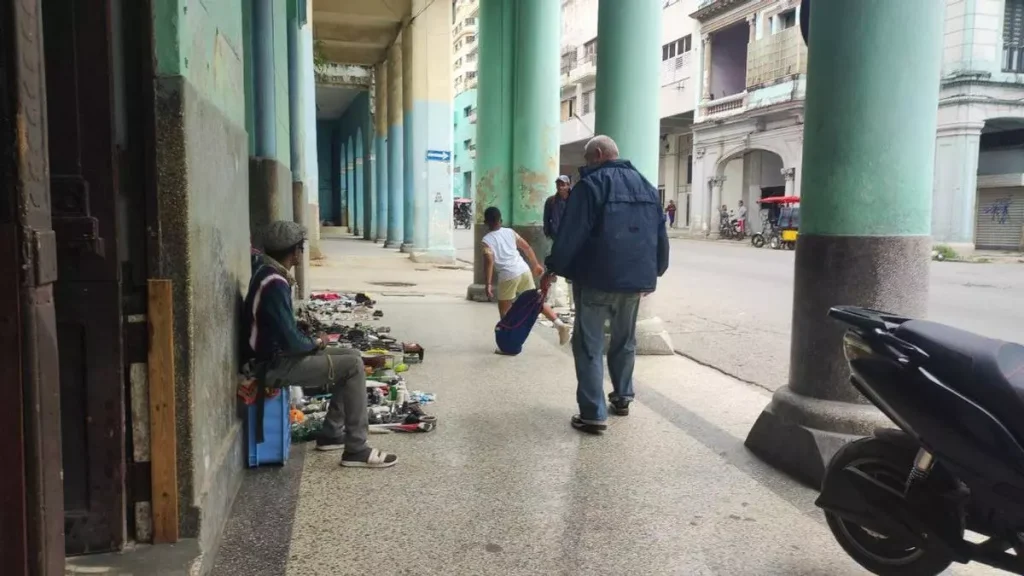
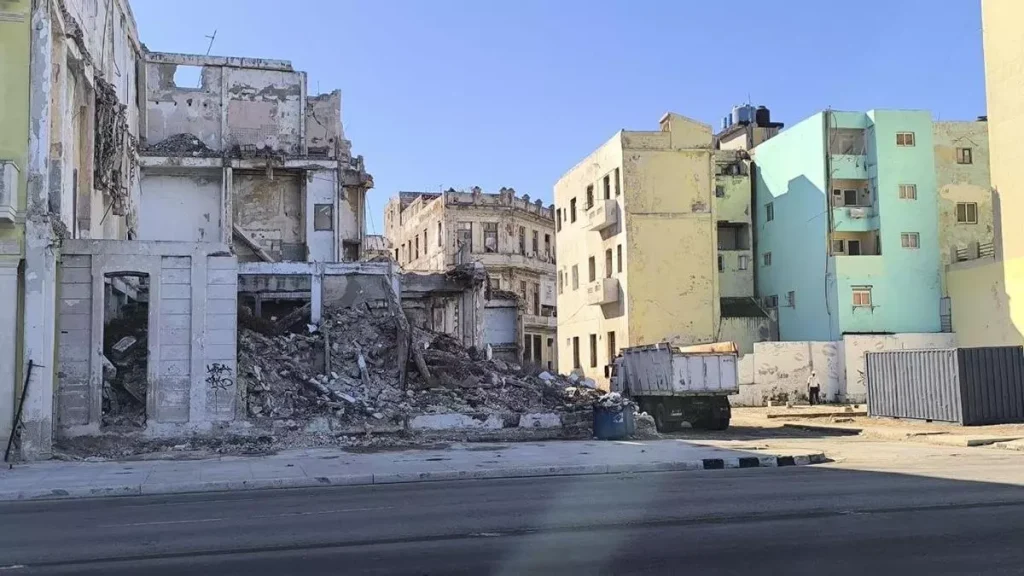
I leave the market empty-handed, a market that was supposed to have everything we needed and could afford in “the currency of the enemy.” I accelerate up to Carlos III and eagerly head down Reina. No sooner do I begin my stroll through the arcades of Havana’s most stately street than I am struck by the sight of the stalls scattered here and there. They aren’t, like a few years ago, street vendors hawking scouring pads and superglue. They’re selling trash.

She has only one shoe on display; it’s the right shoe, a woman’s shoe, and I reckon it’s a small size, maybe for a teenager.

There’s a man displaying worn and crumpled shoes on the portal’s sidewalk, shoes that have been left out in the sun and weather for a long time. He also has some old remote controls that no one knows if they’ll ever work again, but which still bear the imprint of their last owner’s body grease. The man looks up and points out his best merchandise. They’re half-inch plumbing elbows, still coated with the hard water minerals that are pumped into our homes every day. No plumbing system can withstand such neglect. I know because I spend my time fixing leaks here and there. Every week I dedicate more time to fixing drains and pipes than to writing newspaper pieces.

Further along, there’s another junk vendor. All his wares are salvaged from the many trash piles scattered throughout the city. This one has been less careful and has barely cleaned the items before putting them on display, so they’re covered in crusts, grime, and ingrained dirt. He has only one shoe on display; it’s a woman’s right shoe, and I calculate that it’s a small size, maybe for a teenager. He also has a broken radio antenna and an Italian coffee maker missing its handle and funnel.

I advance a few meters and an old woman offers me a 2016 calendar and a blister pack of pills whose names are barely legible through the dirt. I practically run off, holding my breath as I pass the entrance to the Ultra store, and when I emerge into La Fraternidad Park, it hits me. The state-run La Isla de Cuba market is just a few meters away. “I’m sure they have sausages there,” I tell myself. I cross the street with such enthusiasm that I’m nearly hit by the only motor vehicle that has probably passed by in ages, amidst the energy crisis we’re experiencing.

“Just ask, we have it.”

Once again frustration. There is a heavy, sordid atmosphere in this store. Many employees watch the customers’ every move, as if we were all potential thieves. The butcher’s section is empty. There’s a jar of Spanish capers, but no frozen chicken. Sausages are nowhere to be found. The cold salad for my friend’s daughter’s birthday will have to be just macaroni and homemade mayonnaise.

Finally, I arrive at the hardware market. It’s like a candonga, a bustling  open-air marketplace of private vendors, just a few meters from the Cuban Parliament building. They’re so formal over there, unanimously approving every law dropped from above, and here we are, solving real problems. A flexible hose for the sink? A light switch to conrol the light we almost never have? A drain pipe for the toilet? “Just ask, we’ve got it,” a young vendor assures me. I inquire about ten meters of royal cord. The transaction is quick. It doesn’t smell like rotten meat like the dollar store. No one asks me to leave my bag outside. No one suspiciously examines the bills I hand over. I leave with the cord draped over my collarbones to make it easier to carry.

I walk home. There’s no other way because there’s hardly any public transport. As I pass Reina Street, the old vendor waves the shoe he only has the right one in front of my face again. Together we make a terrifying sight. He’s like a madman with a teenager’s shoe in his hand, and I’m like a suicide bomber with a cable around my neck.

Havana Chronicles:

Searching for Light Through the Deserted Streets of Havana

The Death Throes of ‘Granma’, the Mouthpiece of a Regime Cornered by Crisis

The Anxiety of the Disconnected Cuban

One Mella, Three Mellas, Life in Cuba Is Measured in Thousands of Pesos

It Is Forbidden To Leave Home in Cuba Today Because It Is a “Counter-Revolutionary Day”

Vedado, the Heart of Havana’s Nightlife, Is Now Converted Into a Desert

Havana, in Critical Condition

______________________

COLLABORATE WITH OUR WORK: The 14ymedio team is committed to practicing serious journalism that reflects Cuba’s reality in all its depth. Thank you for joining us on this long journey. We invite you to continue supporting us by becoming a member of 14ymedio now. Together we can continue transforming journalism in Cuba.
Cuban Troubador Silvio Rodríguez Composes His Own Requiem

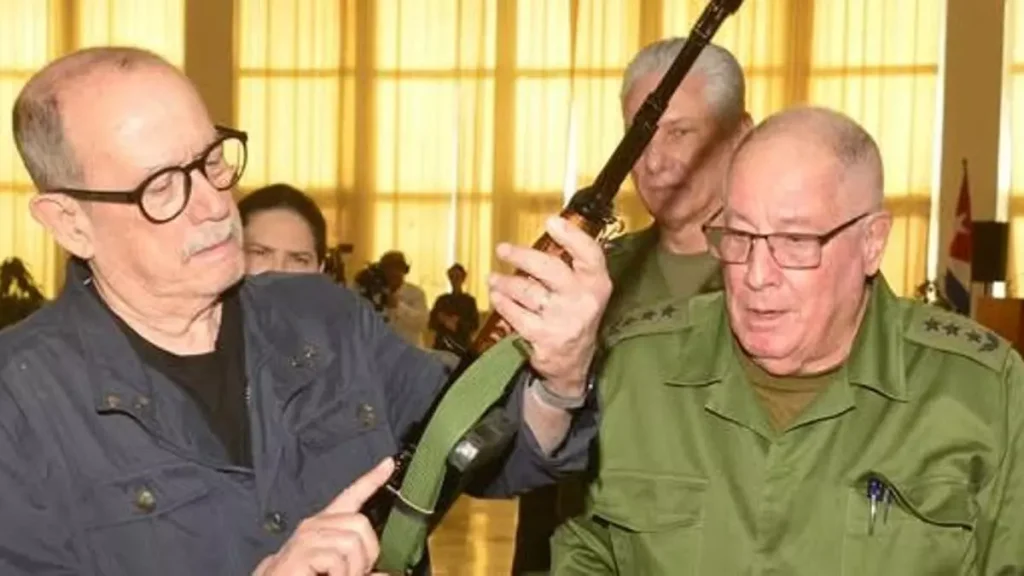
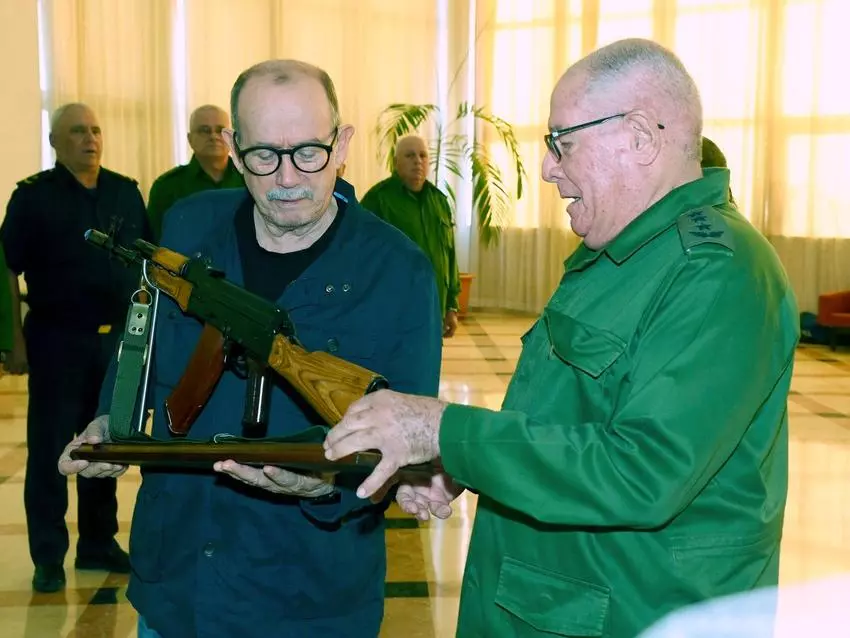
With the regime’s top brass present, the presentation of an AKM assault rifle to the old troubadour has something grotesque about it.

Silvio Rodríguez [left], at 79, belongs to a generation of artists who experienced firsthand the structural distrust of those in power. / Facebook / Minfar Cuba
14ymedio bigger

Yunior García Aguilera, Madrid, March 20, 2026 / It looked like a meme or an image created with artificial intelligence. But it wasn’t. The official website of the Ministry of the Revolutionary Armed Forces (FAR) released a photograph of the moment an elderly Silvio Rodríguez received an AKM rifle. Alongside him are the Minister of the FAR, Álvaro López Miera, and Cuban PresidentMiguel Díaz-Canel. It was not, therefore, a social media prank or an apocryphal parody, but an official act: the delivery of a weapon of war to a civilian, endorsed by the highest authorities in the country.

The scene is both grotesque and revealing. Grotesque, because it is difficult not to see in that image the symbolic collapse of a figure who for decades sought to embody the critical, or at least reflective, conscience of the Revolution. Revealing, because it ultimately reveals with brutal clarity what was perhaps always there. Silvio never managed to escape the magnetic pull of the “r” in Revolution, with all its implicit violence. Everything else—his doubts, his nuances, his tactical silences, and his occasional gestures—is dwarfed by this photograph in which he appears not as a troubled singer, but as a privileged wielder of a firearm.

From a legal standpoint, the scene is also incongruous. Decree-Law 262 on weapons and ammunition allows civilians to obtain certain licenses under very restrictive conditions, but generally excludes weapons of war such as rifles with a caliber greater than 5.6 millimeters and automatic or military-grade weapons. An AKM, in its standard configuration, hardly fits the bill as a civilian weapon for home defense, hunting, or sport shooting. Hence, the photograph not only carries a disturbing political undertone but also a clear whiff of impunity. In a country where the average citizen’s every move is regulated, seeing a troubadour publicly receive an assault rifle with the blessing of those in power conveys not legality, but arbitrariness.

Silvio, at 79, belongs to a generation of artists who experienced firsthand the structural distrust of power

After the Island-wide protests of 11 July 2021, Dayana Prieto and I met with him and his wife, Niurka González, at one of their luxurious recording studios. Looking for the exact address, we approached several people continue reading

queuing in front of a store in the area. We asked an older woman if she knew where Ojalá Studios was located. And she, with that blend of dry humor and popular wisdom that survives even in poverty, replied, “I wish I could get some chicken in that line.”

The conversation with Silvio lasted about 70 minutes and was recorded at his request. In that meeting, he promised to make “a call” to request the release of political prisoners. It is possible he did. It is also possible that, if he did, no one on the other end paid much attention. The episode accurately portrays his true place within the system. Because those in power are willing to use him whenever his rhetoric suits them, just as they are willing to ignore him when it becomes inconvenient.

Silvio, at 79, belongs to a generation of artists who experienced firsthand the Cuban regime’s deep-seated distrust of intelligence, sensitivity, and independent thought. Some broke with the regime outright. Others remained silent. Others learned to survive in hushed tones. And some, like him, dedicated a considerable part of their lives to demonstrating loyalty to their oppressors, whom they never fully trusted.

This is not to deny his musical stature or his importance in Cuban culture. His work is part of the country’s emotional archive. But it is also true that, for many young people, his songs evoke less lyrical epics than open-air public demonstrations, acts of self-affirmation, the pedagogy of sacrifice, and the background noise of a system that has turned scarcity into doctrine. It is no wonder, then, that the number of Cubans for whom Silvio no longer represents poetry, but rather the soundtrack of a failed and dying regime, is growing.

When those in power distribute rifles in the midst of a social crisis, the message ceases to be metaphorical and becomes dangerously concrete. / Facebook / Minfar Cuba

In recent days, Silvio had publicly demanded* his AKM, “if they attack,” referring to a hypothetical US aggression. But while that external enemy has yet to appear on any shore, within Cuba signs of discontent are multiplying: protests, pot-banging demonstrations, student sit-ins, repression, and surveillance. The real threat is not the US Marines; it is the citizens who can’t take it anymore.

Hence the inevitable question: Why arm a well-known civilian now? Against whom is this “resistance” envisioned? Against a nonexistent landing or against Cubans protesting because they have no electricity, no food, no hope? Has the order to start a civil war been given? When the government distributes rifles in the midst of a social crisis, the message ceases to be metaphorical and becomes dangerously concrete. Especially when, in Morón, there are reports of a teenage protester being shot—and not just with a rubber bullet.

That’s what makes the photograph so sinister. While in various parts of the country young people are harassed, repressed, or shot for protesting, the State stages the presentation of an AKM to one of its most famous artists. While some young people demand the bare minimum to study and live, other aging—and wealthy—men continue to embody the internal violence of the besieged city. While the youth try to free themselves from fear, the nomenklatura and their well-paid cronies cling to the stagecraft of war.

The memes about Silvio don’t stem solely from the cruelty of the internet and social media. They arise, above all, from the brutality with which Cuban reality has become more ferocious than any war anthem. For years, the singer-songwriter sought to present himself as an uncomfortable conscience within the Revolution. Today, he appears as something else entirely: the disciplined image of an artist who couldn’t overcome the “r” in Revolution, but seems capable of wielding a Soviet rifle. Silvio has just composed his own requiem.

*On social media he posted: I demand my AKM, if they [the US] launch an attack. And let it be known that I mean it, Silvio. 18 March 2026

______________________

COLLABORATE WITH OUR WORK: The 14ymedio team is committed to practicing serious journalism that reflects Cuba’s reality in all its depth. Thank you for joining us on this long journey. We invite you to continue supporting us by becoming a member of 14ymedio now. Together we can continue transforming journalism in Cuba.
Havana Chronicles: Searching for Light Through the Deserted Streets of Havana

The pot-banging protests reach the neighborhoods where military personnel, officials and state journalists, “comuñangas” and “sarampionosos” reside

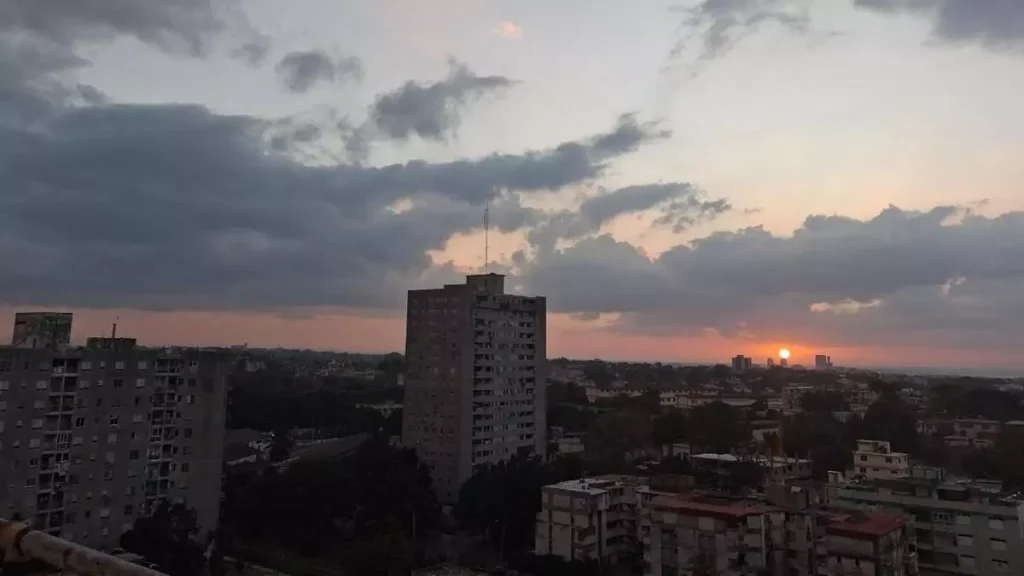
Even with an initial proportion of “communist” and “measles-ridden” residents, this area has repeatedly reached the boiling point of indignation in recent days. / 14ymedio

14ymedio bigger14ymedio, Yoani Sánchez, Havana, March 20 2026 — “Hold on tight,” the electric tricycle driver manages to say to me before the whole vehicle lurches violently over a pothole. I was lucky, because I managed to board the electric taxi before it started to drizzle again. The young man warns me that this is the last trip he’ll make, that he hasn’t been able to charge the battery due to lack of electricity. “I’m from block five, they don’t give us a break,” he concludes.

The Havana where I grew up used to be divided into municipalities and neighborhoods, but now we’re defined by the blocks the Electric Union has designed for its blackout schedules. I’m no longer from Nuevo Vedado; now I’m from Block 4. When the power goes out, my obsession is to walk as far as I can to get away from the “dark side.” There are days when I take very strange routes, because when I get to a place, the power goes out there too, or I get told the lights have come on back at home, and I decide to return immediately.

My neighbors say we live in the “shit-eaters’ block.” The number of hours without power isn’t the same for all neighborhoods. If there’s a pot-banging protest or a popular demonstration, chances are they’ll restore electricity to that part of the city shortly afterward, and the outages won’t be as long in the following days. My neighborhood has a reputation for being peaceful. When the concrete blocks that characterize it started springing up everywhere, its initial inhabitants were people integrated into the system. For the most part, military personnel, government officials, and state journalists occupied these apartments.

There are no docile areas left in this country. Popular anger knows no postal codes or political-administrative divisions.

But even with an initial proportion of “comuñangas”* and “sarampionosos”* residents, this area has repeatedly erupted in recent days. There are no docile areas left continue reading

in this country. Popular anger knows no postal code or political-administrative division.

From my balcony, I see the two 20-story buildings that rise on the corner of Tejas. “Those people hardly ever get electricity,” I think. I scan the two towers every night, and it pains me to say it, but they spend most of their time in darkness. That’s not a neighborhood of meek people like mine; they punish them with long blackouts because they’re poor. The energy crisis has united us in our differences. The upscale Casino Deportivo and the troubled El Canal neighborhoods embrace each other in the darkness. La Timba and Nuevo Vedado have become one in this hour of gloom.

They say the residents of Toyo Corner took to the streets last night. That’s no small thing. That intersection was the scene of some of the most intense moments of the 11 July 2021 protests [’11’]. An overturned police car, a bloodstained flag, and young people with faces that seemed to celebrate the future were immortalized in photos and videos. Afterward, terror spread, and many of those protesters ended up joining the ranks of the more than 1,200 political prisoners currently on the island.

I put some bags of water in the freezer to turn them into ice. The idea is that they’ll help preserve the food. Six days later, I poke my finger into the plastic bag and everything inside is still liquid; it hasn’t had time to harden because the refrigerator hasn’t had power for very long. Luckily, I’ve never liked drinking cold water because it gives me a stabbing chill. But I have other urgent matters: a bloody liquid surrounds the package of chicken quarters I bought this week. I’ll have to eat it quickly.

We have become an island of pampering. Every day we all perform the pantomime of being alive.

As I escape the blackout in my neighborhood and search for a building with electricity, I reach the complicated corner where 31st Avenue and 10th Street intersect in Playa. In the middle of the intersection stands a traffic cop whose uniform is a bit too big for him. He goes through the sequence of gestures to warn vehicles coming from one direction or the other because the traffic light is out. I press myself almost up to him and look in all directions. No cars are coming, but the young officer continues his dance of “go,” “wait,” “go now,” “stop.” It’s just him and me, but it feels like we’re at Shibuya Crossing, the most hectic intersection in the world, in Tokyo.

We’ve become an island of pampering. Every day, we all perform the pantomime of being alive. I pretend to connect to the internet even though I have to climb onto the roof, stretch my torso, and raise my arm. My neighbor plays the part of working for the official press, but he hardly ever goes to work and can’t remember the last time he wrote a press release. The shopkeeper on the corner pretends to obey the law, even though behind the scenes he has to pull a thousand and one strings to keep his business open.

A neighbor calls to tell me the power’s back on in my building. I turn around and leave the policeman with his solitary choreography behind me. Last night, the pots and pans were banged in several Havana neighborhoods, so our electricity has been restored ahead of schedule. The “block of shit-eaters” is learning. There’s no postal code separating us anymore. We’re all like Toyo Corner in this hour of darkness.

*Translator’s note: Derogatory terms for ‘communists’

Havana Chronicles:

The Death Throes of ‘Granma’, the Mouthpiece of a Regime Cornered by Crisis

The Anxiety of the Disconnected Cuban

One Mella, Three Mellas, Life in Cuba Is Measured in Thousands of Pesos

It Is Forbidden To Leave Home in Cuba Today Because It Is a “Counter-Revolutionary Day”

Vedado, the Heart of Havana’s Nightlife, Is Now Converted Into a Desert

Havana, in Critical Condition

______________________

COLLABORATE WITH OUR WORK: The 14ymedio team is committed to practicing serious journalism that reflects Cuba’s reality in all its depth. Thank you for joining us on this long journey. We invite you to continue supporting us by becoming a member of 14ymedio now. Together we can continue transforming journalism in Cuba.
Small Businesses in Matanzas, Cuba, Are Closing Due to Falling Sales: People Look, but They No Longer Buy

“For Cuban pockets, the priority is food. Everything else has to wait.”

“Those who sell food are the ones most likely to survive.” / 14ymedio

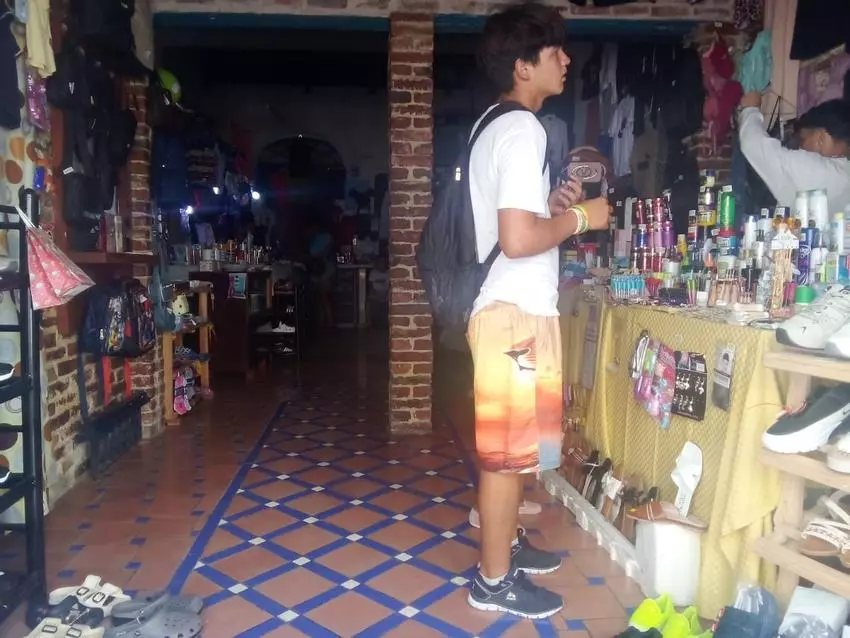
14ymedio bigger14ymedio, Julio César Contreras,. Matanzas, March 22, 2026  / Taking stock of sales around noon, Yunia reviews a notebook where the numbers are written halfheartedly. The total doesn’t add up: barely 2,200 pesos all morning. Behind her, necklaces, bracelets, and keychains shine under a dim light that fails to attract customers. “No matter how much I try to promote the products, people come, look, and leave,” she says, without taking her eyes off the table.

At that small stand, a few blocks from Plaza de la Vigía, two eras intersect: that of a city that once lived off commercial bustle, and that of a present where every peso counts and is almost never enough. Yunia knows it. She also knows her stand is hanging by a thread. “It’s not my fault that a plastic broom costs 1,500 pesos, but in the end I’ll be the one who pays the consequences of these crazy prices,” she says. The business owner has already hinted that, if sales don’t improve, she herself will sit behind the table. For Yunia, that would mean losing her job.

Inflation, which gives no respite, has been pushing these small merchants into a kind of daily survival. Money loses value as quickly as prices rise, and what used to be a minor expense — a handbag, a decoration, a perfume — today competes directly with food. “For Cuban pockets, the priority is food. Everything else has to wait,” sums up Idael, an entrepreneur who recently closed her shop on Medio Street.

“Not even on dates like February 14 were there big profits.” / 14ymedio

Her story is not unique. For years she sold women’s clothing and men’s shoes in one of those spaces where constant foot traffic ensured customers. Today, that same flow has turned into a parade of glances that calculate, compare, and leave empty-handed. “There was a lot of money going out and very little coming in. Between rent, taxes, and merchandise, the numbers didn’t work,” she explains. The decision was drastic: she gave up continue reading

the license and left the premises.

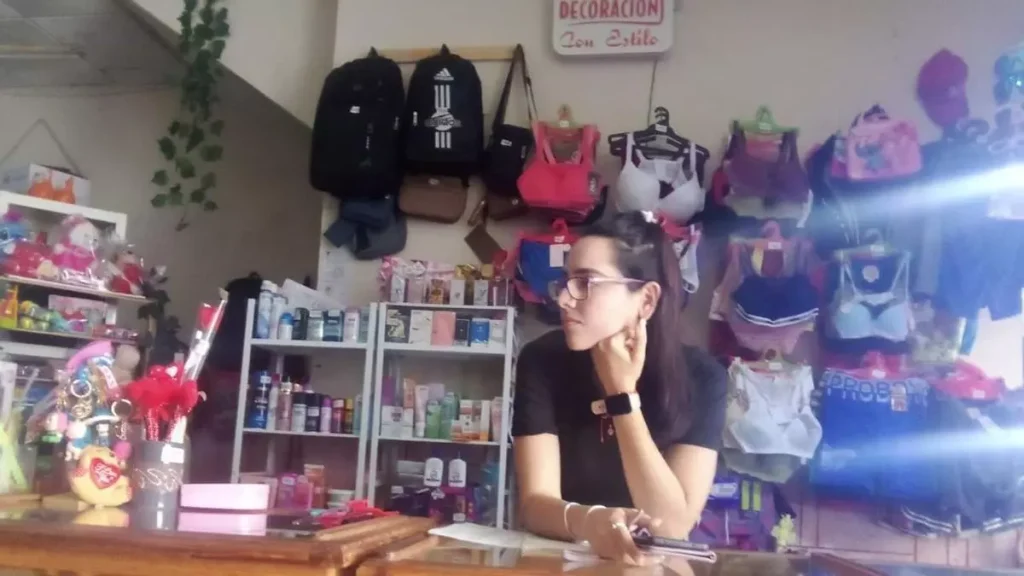
Inside another store, not far away, a young woman rests her chin on her hand while watching the door. Around her, backpacks, underwear, and hygiene products share space on shelves that are full but motionless. The scene repeats itself: merchandise comes in but doesn’t go out. “Since the end of last year there’s been no need to restock anything,” Yunia comments. “Not even on dates like February 14 were there big profits.”

The city, meanwhile, seems to be slowing down. On streets like Milanés or Calzada de Tirry, activity drops sharply after midday. “Here, the little that gets sold happens at 1:00 in the afternoon . After that hour, this place is empty,” says another shopkeeper, who shares space in a large room with other trades that have been disappearing one by one. First it was the cellphone repairman, affected by blackouts that prevented him from working. Then the watchmaker. Then the jewelry seller. All of them closed.

“Not even on dates like February 14 were there big profits.” / 14ymedio

She has held on, but only halfway. She has negotiated to pay only half a day’s rent for the space and has diversified her offerings over the limit of what is permitted. “My license doesn’t include selling hygiene products, but if I don’t take the risk, I’ll starve,” she admits. Thus, among handbags and wallets, she offers soap, toothpaste, and razors that end up being the most sought-after products.

The crisis has pushed many to reinvent themselves outside physical spaces. Idael, for example, now sells through social media. “I have a manager who posts on Facebook and Instagram. I pay her a commission for each sale,” she explains. Without a storefront, without fixed employees, and without the associated costs, she has managed to stay afloat. But she acknowledges that not everyone is as lucky. “Those who sell food are the ones most likely to survive.”

On a porch with brick columns, a young man scans a table full of perfumes, costume jewelry, and small imported items. He stops, picks up a bottle, asks the price, and puts it back. The gesture repeats at every counter. The walk is not for buying, it is for recognizing limits. Outside, the city continues at its slow pace, with fewer cars, fewer people, and less money circulating.

Yunia closes her notebook and puts away the pen. She looks again at the table, adjusts a bracelet, lines up some earrings. The gesture is almost automatic, a routine that tries to maintain order amid imbalance. “This used to guarantee sales,” she says, referring to the location of the shop. Today, it barely guarantees anything else than the certainty that, in an economy where the peso is worth less and less and prices keep rising, there is no one to buy what is not absolutely necessary.

Translated by Regina Anavy

______________________

COLLABORATE WITH OUR WORK: The 14ymedio team is committed to practicing serious journalism that reflects Cuba’s reality in all its depth. Thank you for joining us on this long journey. We invite you to continue supporting us by becoming a member of 14ymedio now. Together we can continue transforming journalism in Cuba.
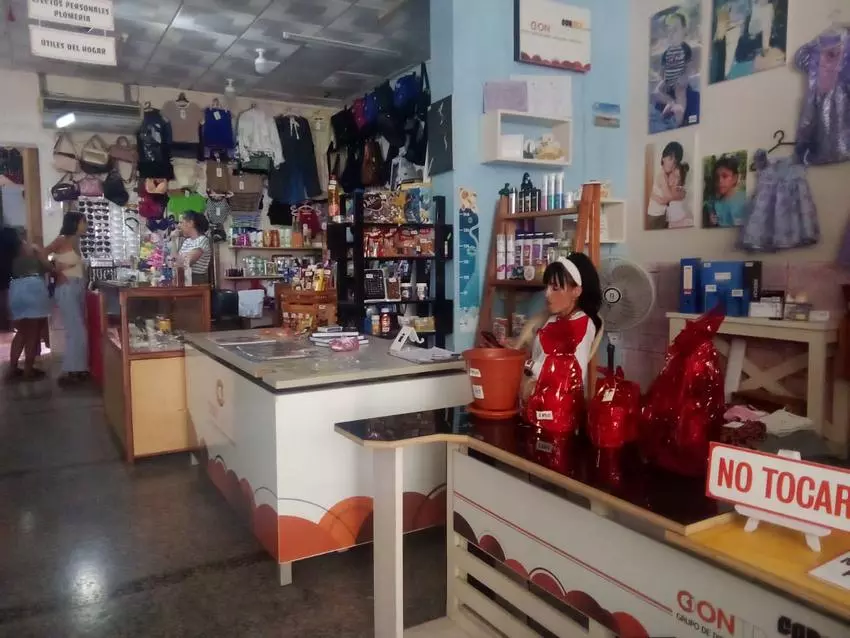
The Cuban Regime Releases 21 Political Prisoners While Arresting 15 Protesters

The Cuban Observatory for Human Rights reports 35 repressive actions in just four days

The regime maintains its repressive apparatus intact and activates it swiftly whenever it detects any expression of public discontent. / EFE

14ymedio bigger14ymedio, Havana, 17 March 2026 — The Cuban regime has released 21 political prisoners as part of an agreement reached with the Vatican, but this move—presented by the authorities as a gesture of easing tensions—has coincided with a new wave of repression on the island. While some inmates have been freed, at least 15 people have been arbitrarily detained for taking part in protests in various provinces across the country, according to a report issued this Tuesday by the Cuban Observatory of Human Rights (OCDH).

The organization warned that, far from pointing to any real political opening, the releases have been accompanied by a spike in surveillance, threats, and arrests. “Since the Cuban regime announced the release of 51 political prisoners, an increase in repressive actions has been observed. Between March 13 and 16, 2026, at least 35 repressive actions were documented, targeting protesters, journalists, activists, relatives of political prisoners, and opposition figures,” the observatory said.

The release of 21 political prisoners—many of them convicted for taking part in the Island-wide 11 July 2021 protests—has not meant any reduction in pressure on dissent or on the social discontent that continues to surface in different parts of the country. On the contrary, repression seems to have shifted from prisons to the streets and into the homes of those who dare to protest or speak out.

Two minors are also on the list: Jonathan Muir Burgos, 16, and Kevin Samuel Echeverría, 15, who was also shot in the leg.

Among the most recent incidents are the arrests following protests in Morón, in the province of Ciego de Ávila. According to the OCDH, many of the 15 arbitrary detentions recorded in recent days are linked to those demonstrations. Alongside the arrests, the organization documented threats, constant police surveillance outside homes, de facto house arrests, police brutality against protesters, summonses, harassment of activists and journalists, and fresh reports of abuse inside prisons. continue reading

“These events show a pattern of pressure and control aimed at silencing protest and limiting the exercise of fundamental rights,” the NGO warned. The regime keeps its repressive apparatus fully intact and activates it quickly whenever it detects any expression of public discontent.

According to the information released, 12 people remain detained or their release has not been confirmed. The list includes Ángel Baldomero Quintana Martínez, Bryan Pérez Muñoz, Erick Simón Toledano, Iledier Tabuada Machado, Juan Manuel Griñán Clemente, Raicer Crespo, Silvio de la Caridad Quintana Martínez, Vladimir Ortiz Ortiz, Yaisdely Castillo Hernández, and Yosuan Naranjo. It also includes two minors: Jonathan Muir Burgos, 16, and Kevin Samuel Echeverría, 15, who, as mentioned, was shot in the leg.

The presence of teenagers among those detained once again puts the spotlight on the disproportionate use of force and the criminalization even of minors in protest situations. The case of Kevin Samuel Echeverría, wounded by gunfire, adds a particularly serious element to a chain of events in which the authorities have failed to provide convincing public explanations.

The regime is trying to score political points from the prisoner releases while keeping up intimidation against those protesting now.

So far, those released after these arbitrary detentions are Catherine Gutiérrez Sánchez, Elier Muir Ávila, and Rolando Pérez Lora. Their release, however, does not change the overall picture of repression reported by human rights organizations, which stress that short-term detentions, threats, and constant surveillance are also forms of political punishment.

Meanwhile, the list of political prisoners released under the Vatican deal has now reached 21 names. Most were convicted of sedition, contempt, public disorder, assault, or resistance—charges routinely used by the Cuban justice system to punish protest. Among them are Adael Jesús Leyva Díaz, Frank Aldama Rodríguez, José Luis Sánchez Tito, Roberto Ferrer Gener, and Wilmer Moreno Suárez, several of whom were serving sentences of between 13 and 18 years in prison. Many are from Havana, though others come from Artemisa, Holguín, Villa Clara, Santiago de Cuba, Camagüey, and Mayabeque.

The disproportionate nature of these sentences, imposed in many cases on participants in the July 11, 2021 protests, has been denounced for years by international bodies and human rights platforms. Vatican mediation has now secured the release of a group of prisoners, but the Cuban government has shown no sign of revising the legal and policing framework that made those convictions possible, nor of abandoning repression as its go-to response to dissent.

The regime is trying to politically capitalize on the releases while continuing to intimidate those protesting today. The partial release of political prisoners does not amount to any real improvement in public freedoms when repression against dissent continues at the same time.

Translated by GH

______________________

COLLABORATE WITH OUR WORK: The 14ymedio team is committed to practicing serious journalism that reflects Cuba’s reality in all its depth. Thank you for joining us on this long journey. We invite you to continue supporting us by becoming a member of 14ymedio now. Together we can continue transforming journalism in Cuba.
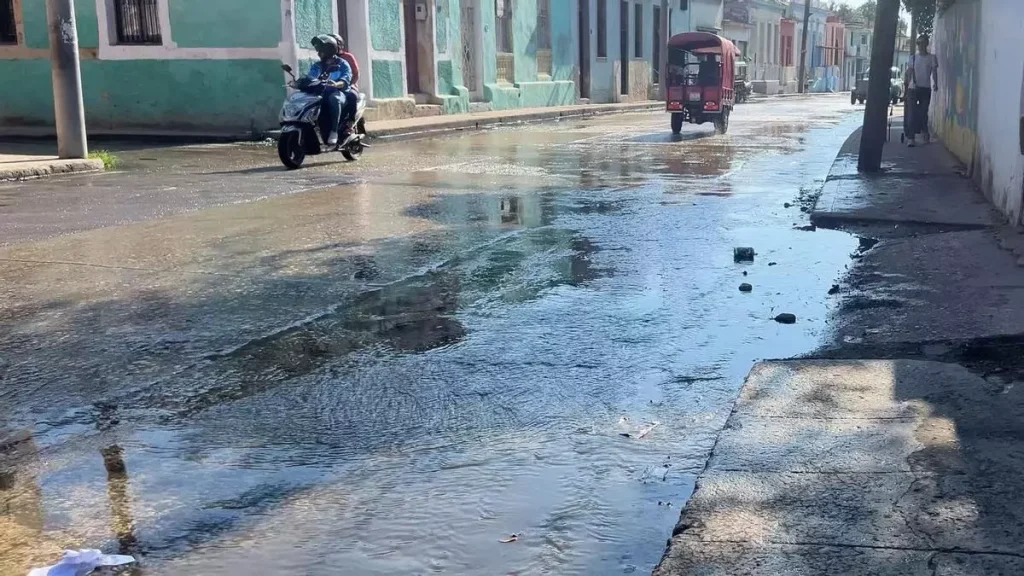
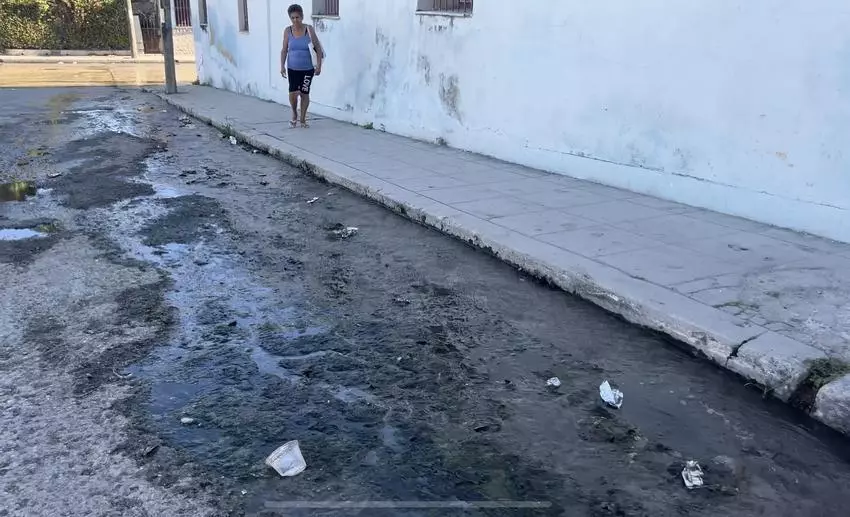
In Guanabacoa, Cuba, Multicolored Springs of Sewage Water Run Through the Streets

A neighbor improvised a bridge of blocks to be able to leave her house: “You can’t even go out in flip-flops if you don’t want to come back with dirty feet.”

The problem of sewage water in Havana goes back a long time. / 14ymedio

14ymedio bigger14ymedio, Darío Hernández, March 21, 2026 – Havana / Sewage water flows freely through the streets of Guanabacoa, to the point that Corral Falso, the municipality’s main avenue, is impossible to cross in stretches that span several blocks. Overflowing septic ditches have further undermined sanitation in the area, and residents are forced to live with a dark, green, viscous river up to 20 cm deep, under a blazing sun and temperatures above 30 degrees.

Overflowing drains can be seen even in the most unsuitable places. For example, on the corner by the Guillermo Tomás music school, which also has a garbage dump nearly 30 meters long in front of it. Or every weekend, around the agricultural markets, where trucks arrive and distribute food for the population on improvised platforms.

The problem of sewage water in Havana goes back a long time, and in most cases is due to breaks, lack of sanitation, and above all the poor condition of the capital’s sewer system. However, it has worsened with the unchecked proliferation of garbage dumps due to the lack of fuel.

“The stench, the flies, the mosquitoes, and everything that comes with it is something we have to live with.” / 14ymedio

“This is a never-ending war. You call Aguas de La Habana or Communal Services, and they come when they can and unclog the sewer in question, but as soon as the water starts flowing again, the blockage and the rot return,” says Zulema, who has one of those “multicolored springs,” as she ironically calls them,running in front of her doorway.

“That green stuff you see there shows you that the water stagnates here for weeks. The stench, the flies, the mosquitoes, and everything that comes with it is something we have to live with,” Zulema continues. The neighbor has had to improvise a “bridge” of blocks to be able to leave her house. “You can’t even go out in flip-flops if you don’t want to come back with dirty feet.”

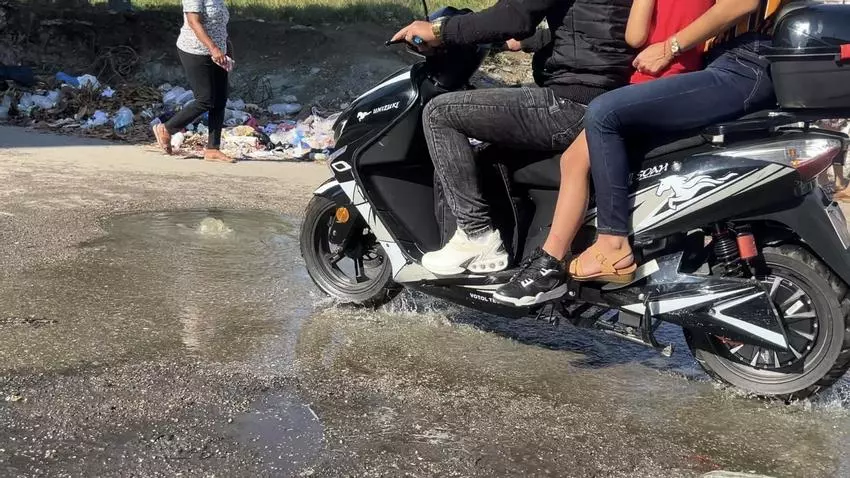
Tricycles and electric motorcycles—because there are no longer cars—slow down on these blocks so as not to splash and dirty continue reading

their vehicles. On some corners and along the edges of sidewalks, plants of dubious origin have begun to grow.

Workers from Communal Services broke a pipe while carrying out cleaning work, “and now the sewer overflows more easily.” / 14ymedio

Lázaro, another affected resident, says the problem already existed before, but that “the water was more potable, not as unsanitary.” The problem worsened, he recounts, when workers from Communal Services recently broke a pipe while doing cleaning work, “and now the sewer overflows more easily.” Added to this, he continues, is that at every corner there is a “mini dump.” “If you put those two things together, the result is what we are living through,” he summarizes. “What are we living through? I can’t define it in words, but it’s profoundly immoral.”

“When the agricultural fairs began, I had my stall on that block. They were all around the Amphitheater, but we had to move over here,” says Miguel, who now sells root vegetables and produce on the block next to the Amphitheater. “There was one time when the entire fair was moved to another location, a few blocks from the Municipal Party headquarters, precisely because of this, because of the filth in this place. Apparently there were complaints from residents. It really was just one block that, although wide, was uncomfortable for everyone, and the following week we came back here. In other words, they know this is not the ideal place to sell food, but there’s no alternative.”

River of sewage in Guanabacoa: living among waste / 14ymedio

Translated by Regina Anavy
______________________

COLLABORATE WITH OUR WORK: The 14ymedio team is committed to practicing serious journalism that reflects Cuba’s reality in all its depth. Thank you for joining us on this long journey. We invite you to continue supporting us by becoming a member of 14ymedio now. Together we can continue transforming journalism in Cuba.
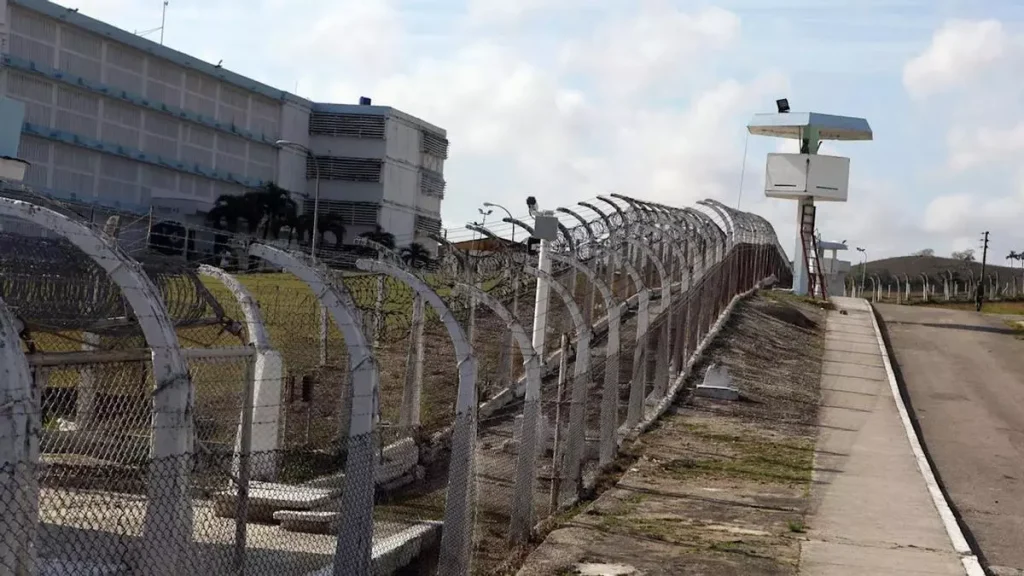
Cuban President Díaz-Canel Capitalizes on the Arrival of the Nuestra América Convoy Amid the Regime’s Erosion

The solidarity of discredited figures from the international left aligns with the dictatorship and its lack of response to the productive collapse and the hardship imposed on the population.

The Spaniard Pablo Iglesias asserted that the situation in Cuba is not as “it is being presented from outside.” / 14ymedio

14ymedio bigger14ymedio, March 21, 2026, Havana / Havana once again staged one of those events this Friday in which official rhetoric tries to prevail over a crisis that is already difficult to conceal. Miguel Díaz-Canel received at the Convention Palace the members of the Nuestra América Convoy, an international solidarity initiative that brings humanitarian aid to Cuba and that the Government has presented as proof of political backing amid the tightening of United States sanctions.

The event, laden with slogans, expressions of gratitude, and references to the “blockade,”* served the authorities to project an image of resistance and international support. But it also made clear the extent to which the country today depends on external aid to alleviate basic shortages, despite having presented itself for decades as a moral, medical, and political power of the continent. With an unproductive economy in ruins, the Island once again needs food, medicines, hygiene products, and solar panels arriving from abroad to meet urgent needs.

The arrival of the convoy, promoted by civil organizations and left-wing platforms such as the Progressive International, has been presented as a response to the economic and energy siege imposed by Washington. The Cuban Government has clung to that narrative to insist that the crisis the Island is experiencing is almost exclusively the result of the U.S. embargo*. However, the constant use of that argument contrasts with the lack of deep reforms and the persistence of internal obstacles that continue to limit economic development and hold back emerging sectors, such as small and medium-sized private enterprises.

Pablo Iglesias’s assessment came after listening in Havana almost exclusively to Communist Party leaders and without having set foot on the capital’s streets

Fernando González Llort, president of the Cuban Institute of Friendship with the Peoples (ICAP), was one of those tasked with opening the round of speeches. He spoke of “decency, morality, and dignity,” and asserted that the convoy is making history for Cuba and for the world. According to him, about 650 visitors from 33 countries and more than 140 social, cultural, and political organizations have joined the initiative.

International support was, indeed, the focus of the day. From Uruguay, the president continue reading

of the Broad Front, Fernando Pereira, condemned U.S. interference in Latin America and defended leftist internationalism. Medea Benjamin, American co-founder of Code Pink, said that Washington’s policy toward Cuba is “cruel and inhumane” and asserted that this stance does not represent all the people of the United States. The leader of the British left, Jeremy Corbyn, for his part called on Europe to take a firmer position against the oil blockade and maintained that there is no legal basis in international law that justifies the sanctions.

Pablo Iglesias, former vice president of the Spanish Government and founder of the Podemos political party, stated on El Tablero that the situation in Cuba is not as “it is being presented from outside.” His assessment came after listening in Havana almost exclusively to Communist Party leaders and without having set foot on the capital’s streets. He also said he was surprised by the following of Canal Red, his online television program, on the Island, although the example he gave was that of a Cuban woman residing in Germany for ten years.

The invited voices agreed on one idea: Cuba is not alone. However, that international support, staged alongside the ruling leadership, contrasts with the daily experience of millions of Cubans, marked by blackouts, shortages, high prices, lack of medicines, and the absence of effective channels to demand change. The event projected an image of political support for the Government but left out that other Cuba that survives amid deterioration and increasingly expresses its discontent.

A convoy does not change the structural deterioration of an economy that neither produces, exports, or pays its workers decently

In parallel with the political event in Havana, the material side of the initiative was advancing from Mexico. According to EFE, a first vessel departed from Puerto Progreso, in Yucatán, with about 30 tons of aid destined for Cuba. Two other smaller vessels, planned from Isla Mujeres, had to delay their departure due to bad weather. The maritime coordinator of the operation, Adnaan Stumo, explained that the change in wind direction and intermittent rains forced the postponement of the vessel’s departure, which would transport an additional three to four tons.

The cargo includes food, medicines, hygiene products, and solar panels. It is not insignificant, but it is not enough to alter the magnitude of the Cuban crisis. That a solidarity convoy brings 20 or 30 tons of aid has considerable political and symbolic weight, but it does not change the structural deterioration of an economy that neither produces, exports, or pay its workers decently, and also fails to guarantee essential services to its citizens.

Díaz-Canel, faithful to the official script, took advantage of the stage to insist that Cuba is facing a “fourth-generation war,” an offensive of disinformation aimed at breaking the country’s ties with its historical and cultural roots. He also rejected that the Revolution came to power illegitimately, denied that Cuba is a terrorist state, and maintained that the greatest human rights violation against Cubans is the embargo.

*Translator’s note: There is, in fact, no US ‘blockade’ on Cuba, but this continues to be the term the Cuban government prefers to apply to the ongoing US embargo. During the Cuban Missile Crisis the US ordered a Naval blockade (which it called a ‘quarantine’) on Cuba in 1962, between 22 October and 20 November of that year. The blockade was lifted when Russia agreed to remove its nuclear missiles from the Island. The embargo had been imposed earlier in February of the same year, and although modified from time to time, it is still in force.

Translated by Regina Anavy

______________________

COLLABORATE WITH OUR WORK: The 14ymedio team is committed to practicing serious journalism that reflects Cuba’s reality in all its depth. Thank you for joining us on this long journey. We invite you to continue supporting us by becoming a member of 14ymedio now. Together we can continue transforming journalism in Cuba.
The U.S. Has Deported Nearly 500 Cubans to Mexico in the Last Month, an Activist Reports

“They are people who have been left in limbo,” says Luis Rey García Villagrán.

Mexican authorities have ignored the demands of Cubans deported by the US. / EFE

14ymedio bigger14ymedio, Ángel Salinas, March 19, 2026 – Mexico City / In Tapachula there are nearly 500 Cubans deported by the U.S. who have been “abandoned in the early morning over the last month in different locations,” reports Luis Rey García Villagrán, director of the Center for Human Dignification. “They are people who have been left in migratory limbo,” he says.

The activist tells 14ymedio that “these people have lost all their rights” and asserted that “they are in a situation of statelessness.” They are migrants, he said, whom Cuba does not want and who in the U.S. “have already lost their rights.”

Mexican authorities have ignored the demands of these deportees. The activist points out that when going to the offices of the Mexican Commission for Refugee Assistance (Comar), deported Cubans are allowed to fill out forms, and “in the best case they are asked to wait between three and four months to receive an email that will never arrive.”

With the closure of the U.S. border since Donald Trump assumed the presidency, García Villagrán says that around 30,000 Cubans have been stranded, to which must be added the people being deported, among whom “there are elderly people and others living on the streets.”

The director of the Center for Human Dignity, Luis Rey García Villagrán / EFE

The deputy secretary for Human Mobility of the Secretariat of the Southern Border, Eduardo Antonio Castillejos Argüello, acknowledged to local media that last year nearly 12,000 people deported from the United States were recorded, without continue reading

specifying their nationality.

In December of last year, Oliver, who is Cuban, told this newspaper that the U.S. was deporting criminals to Mexico and “erasing their records before they cross.”

Oliver, who had an I-220A form, reported that along with 37 other migrants from the Island he was expelled and abandoned “without documents or money” in the country, and his future was left in limbo. The man spent two days sleeping on the street, wandering  without eating because the rest of the deportees split up. “Here, friendship is nothing. It’s every man for himself.”

García Villagrán said they are seeking to pressure Comar and the National Migration Institute to assist migrants deported by the U.S., for which they have already gathered around 350 signatures. “Many of them remain in precarious conditions, sleeping in public spaces or carrying out informal activities to survive, while facing the lack of documents that define their migratory status.”

In migration offices “there are around 15,000 applications from Cubans” that have been pending for months without a solution, the activist added.

Translated by Regina Anavy

______________________

COLLABORATE WITH OUR WORK: The 14ymedio team is committed to practicing serious journalism that reflects Cuba’s reality in all its depth. Thank you for joining us on this long journey. We invite you to continue supporting us by becoming a member of 14ymedio now. Together we can continue transforming journalism in Cuba.
A Report Calls for a Full Clean-Up of Venezuela’s Defence Sector After Years of Cuban Infiltration

The document puts the cost to Caracas of trading oil for repression at 63.8 billion dollars

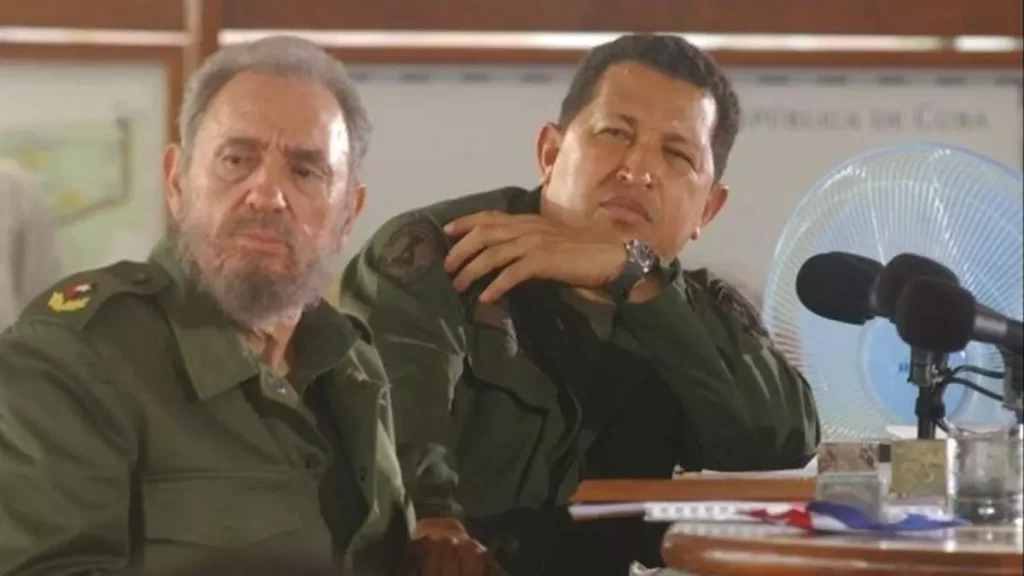
Fidel Castro and Hugo Chávez forged the oil alliance back in 2000. / Cubadebate

14ymedio bigger14ymedio, 19 March 2026, Madrid — The operational withdrawal of Cuban personnel from Venezuela isn’t enough if the country is to be democratized. That is the main conclusion of a report put together by the Miranda Center of Democracy, a US-based organization backed by the Republican Party, published this Wednesday. It recalls how chavismo has been swapping oil for repression—also the title of the report—to such an extent that a full purge of the security apparatus is being demanded if anything is to change in the country.

The document highlights the huge amount of money Venezuela has sent to Cuba since the 2000 agreements between Hugo Chávez and Fidel Castro. According to the text, the figure comes to 44.5 billion dollars at current prices, which in real (inflation-adjusted) terms is 63.8 billion dollars. That’s the estimate of what’s been transferred in oil to Havana over all these years in exchange for, among other things, personnel services—although back in 2016 Nicolás Maduro put Venezuela’s “investment” in that exchange at around 250 billion dollars, very likely an exaggeration.

According to the report, the 2000–2004 agreement involved sending 53,000 barrels of oil per day (bpd) on credit at 2% interest over 15 years, including a two-year grace period, with an official exchange of doctors and teachers. When it was renewed, the volumes stayed the same and a fixed price of 27 dollars per barrel was set, shielded from market increases.

The Group for Coordination and Liaison (Gruce) was set up between 2007 and 2008 when, fearing a coup after Chávez lost a referendum, he signed a secret deal with Castro

From 2005 to 2012, when oil production was strong, the amount rose to about 105,000 bpd on average, and the nominal value of the sales hit 3 billion dollars a year (thanks to high global oil prices, which Cuba didn’t have to suffer and even benefited from, since it resold part of that oil to other customers). During this period continue reading

, according to the report, the Group for Coordination and Liaison (Gruce) was created—a joint intelligence hub—and the “Cubanization” of Venezuelan services such as the Directorate General of Military Counterintelligence (Dgcim) and the Bolivarian National Intelligence Service (Sebin) took place.

In later years, oil shipments started to fall, averaging 69,000 bpd in 2016 and 55,000 bpd in 2017. Between 2020 and 2023, the estimated average was 30,000 to 40,000, years when Cuba’s power crisis went from bad to worse. The report says that in 2024 exports barely reached around 32,000 bpd, while in 2025 they rose to 52,000, to secure Gruce’s backing in case Maduro fell. However, tracking data suggests the real figure that year was much lower, around 27,400 bpd.

The Gruce is, in fact, the central focus of the report. According to available information, it was set up between 2007 and 2008 when, worried about a possible coup after losing a referendum, Chávez signed a secret agreement with Castro to lock in the regime’s survival. Its functions included monitoring both military personnel and civilians, training agents, and filtering out potential plans against the Government. It had a mixed composition of Cubans and Venezuelans.

“White rooms” were set up—interrogation centres where torture was carried out—documented by the UN—designed for the detainee’s “biological exhaustion”

The report mentions a group of about eight Cuban Armed Forces officers specializing in counterintelligence, psychological warfare and crowd control who operated out of Fuerte Tiuna, where 32 FAR soldiers died during the US attack aimed at capturing Maduro on January 3.

On the Venezuelan side, the visible figures were Iván Hernández Dala, described as having turned military intelligence into an internal repression body; Gustavo González López, seen as the main link with Cuba and appointed this week as Defence Minister; Alexander Granko Arteaga, in charge of tactical and shock operations; and Alexis Rodríguez Cabello, currently head of Sebin and, according to the report, a key figure in the Cabello family’s power circle and that of current president Delcy Rodríguez.

The Gruce, the document stresses, introduced three elements which, in the view of the Miranda Center of Democracy, are “irreparable.” First, they replaced Venezuelan military academy manuals with the Cuban doctrine of “War of the Entire People,” under which the opposition is considered an “internal enemy.” On the technological side, they control identity systems, registries and notaries, giving Cuba access to that key database. Lastly, they set up the “white rooms”—interrogation centres where torture was carried out, as documented by the UN, aimed at the detainee’s “biological exhaustion.”

“The deepest legacy of the Oil for Repression model is the total abdication of Venezuelan sovereignty through what is known as an ‘Invasion by invitation’”

Among the consequences of this system, up to 18,000 politically motivated detentions have been recorded since 2014, 2,000 of them during the protests following the 2024 elections, which were widely won by the opposition. There were also documented abuses in detention centres—El Helicoide (Sebin) and Boleíta (Dgcim)—including beatings, blows with blunt objects, suffocation with plastic bags, sexual violence and force-feeding. There are also two recorded deaths in custody: Fernando Albán (in 2018) and Alfredo Díaz at the end of 2025, due to lack of medical care.

“The deepest legacy of the Oil for Repression model is the total abdication of Venezuelan sovereignty through what is known as an ‘Invasion by invitation’,” the document states, accusing chavismo of allowing another State to penetrate the highest levels of national security and sensitive information.

“Any process of redemocratization must involve the expulsion of foreign actors operating under secret arrangements, as has occurred not only with Cuban actors but also with Iranian, Russian, Chinese or Belarusian ones, and the rebuilding of institutions that are beyond repair,” the text calls for. It was released the same day news broke of the replacement of Vladimir Padrino López after more than a decade as Defence Minister. Even so, Venezuela’s Armed Forces remain under the same senior military leadership and are commanded—with Washington’s blessing—by Delcy Rodríguez, identified in the report as a key figure in the civilian intelligence axis.

Translated by GH

______________________

COLLABORATE WITH OUR WORK: The 14ymedio team is committed to practicing serious journalism that reflects Cuba’s reality in all its depth. Thank you for joining us on this long journey. We invite you to continue supporting us by becoming a member of 14ymedio now. Together we can continue transforming journalism in Cuba.
“Here, Every Little While They Are Banging on the Pots”

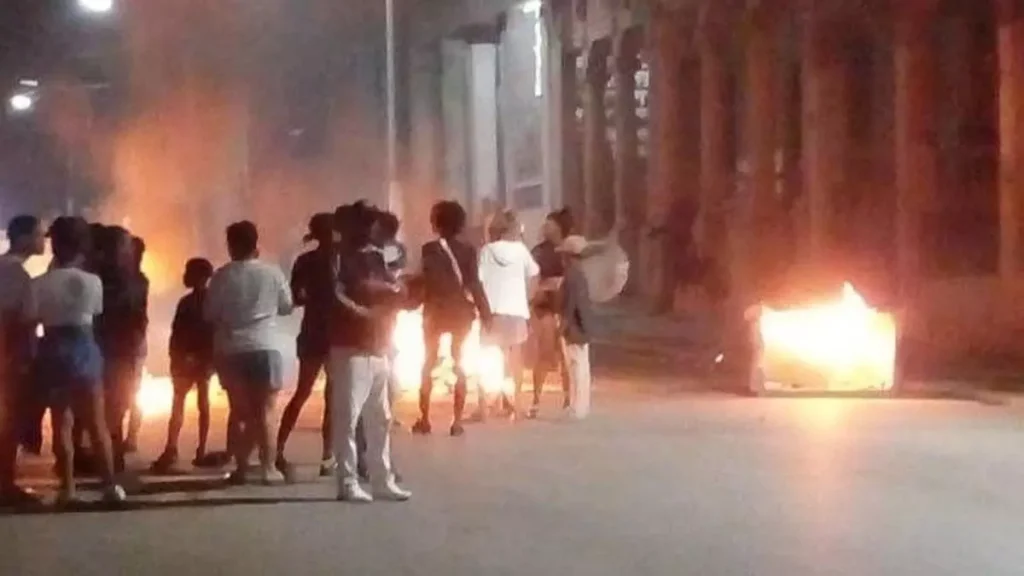
Residents in the Diez de Octubre neighborhood protests again while in Luyanó there are residents who have been without water for 30 days.

Residents of Diez de Octubre once again built barricades and bonfires on Thursday night. / 14ymedio

14ymedio bigger14ymedio, Juan Diego Rodríguez, March 20, 2026 – Havana / The protests, which in recent weeks have moved from social media to the streets, were very loud this Thursday in Havana. At the intersection of Santa Irene and Diez de Octubre Avenue, several bonfires were lit and barricades were built demanding electricity, images that have gone halfway around the world through social media. It was the most striking focal point of last night’s demonstrations, but in Alamar shouts of “Freedom” and “Down with the dictatorship” were also heard, banged out on pots and pans, mixed with demands for electricity.

“Here, every little while the pots are banging,” says María, a resident of Diez de Octubre, “but they have no shame anymore, they don’t care about the protests. And I don’t go outside because, where exactly are they banging? I hear them, and from my house I bang mine, I don’t care. The problem is that if I go out and the young guys come running…,” adds this retiree, who fears joining a protest and being injured in a bad fall that could land her in a precarious hospital.

According to her experience, after several days of hearing pot-banging protests, public lighting turns on quickly when there is a demonstration, but only in the streets and not in homes. “To sum it up: we are like in Peru, when there’s no water or electricity. And now we’re worse, because when there’s no water there’s no electricity, no gas, nothing. Not even shame in this country,” she complains. continue reading

“To sum it up: we are like in Peru, when there’s no water or electricity. And now we’re worse, because when there’s no water there’s no electricity, no gas, nothing. Not even shame in this country”

In Santos Suárez, Lawton and Víbora Park, where the protest caught on in a big way, they are more fortunate than in Luyanó, residents of this latter neighborhood believe, where in addition to problems with electricity there are also issues with water supply. Pedro, a resident of this area, tells 14ymedio that his cousin has been without water for a month. “Yesterday he spent the whole day holding back from going to the bathroom, until a bucket showed up that a neighbor gave him and he was able to go,” he complains.

The poor supply situation is not new for Pedro, but things have worsened in recent times, and small and medium private businesses have a lot to do with it, in his opinion. “Here where I live we are all elderly, physically disabled. There is a community cistern that supplies about eight or ten apartments. So we have requested a water truck, but they say they have a very long list. But water trucks are never lacking for the two or three most famous private businesses around here,” he says.

Pedro states that few have the possibility of paying the 26,000 pesos that the water truck driver demands, under the table. “I can’t. First of all, either I eat or I drink water.” The residents have the option, he says, of getting a bottle at a church “sponsored by some Canadians” that purifies it with a special filter, but there are “huge lines.”

Reality thus clashes, once again, with the epic narrative of the official press. The report that the State newspaper Granma dedicates to the return of unit 4 of the Carlos Manuel de Céspedes thermoelectric plant, in Cienfuegos, and the 158 megawatts – the same as block 3 – that were added to the system on Wednesday are completely overshadowed by deficits that continue hovering around obscene levels. The 316 megawatts (MW) now in the system corresponding to the entire plant have been of no use: for this Friday, the expected deficit is 1,864 MW. Little difference from the 1,960 MW on Monday, before the most recent addition.

Pedro states that few have the possibility of paying the 26,000 pesos that the water truck driver demands, under the table

On Tuesday the 17th, in the middle of the collapse of the national electric system (SEN), unit 4 synchronized with the rest of the grid after a year and four months of repairs. It still had a scare this Wednesday the 18th, when a failure in the feed pump ruined the triumphant debut, but it recovered a few hours later and the Electric Union was able to celebrate the return.

The population’s indifference was total: “So what? How does that benefit us? Circuit 1 of Palma Soriano was supposed to have power restored from 4 in the afternoon to 7 at night and they didn’t do it. According to information from a colleague at the electrical dispatch, there was no availability at that time, so we have to continue in blackout until they feel like it. Today it has rained all day, imagine cooking with charcoal or firewood under heavy downpours,” complained one user.

The day is expected to be hard again, since during peak hours it is forecast that only 60% of the electricity the country demands will be generated, 1,834 MW compared to the 3,050 needed. The UNE no longer has distributed generation due to the lack of diesel, and thermal generation has limitations of 437 MW, with units 6 of Mariel and 5 of Nuevitas under maintenance and units 5 and 6 of Mariel, 3 of Santa Cruz del Norte, 2 of Felton and 3 and 6 of Antonio Maceo out of service.

Photovoltaic parks, the Government’s great hope, are contributing more and more: 236 MW as the maximum power delivered yesterday Thursday. But when night falls, darkness returns to the Island.

Translated by Regina Anavy

______________________

COLLABORATE WITH OUR WORK: The 14ymedio team is committed to practicing serious journalism that reflects Cuba’s reality in all its depth. Thank you for joining us on this long journey. We invite you to continue supporting us by becoming a member of 14ymedio now. Together we can continue transforming journalism in Cuba.
US Will Prevent the Arrival in Cuba of Two Oil Tankers Heading to the Island with Russian Fuel

• Faced with this ban, the Sea Horse has changed course and is now looking for another port in the Caribbean to sell its cargo
• The Anatoly Kolodkin, sanctioned by Washington, is continuing on its route and had a Russian Navy escort at the start of its voyage

US Will Prevent the Arrival in Cuba of Two Oil Tankers Heading to the Island with Russian Fuel

14ymedio biggerThe United States suddenly banned the sale of Russian crude to Cuba this Thursday. The Treasury Department, which on March 12 had issued a license authorizing the sale of Russian crude until April 11, added a new paragraph on Thursday listing countries where the transaction remains prohibited: Cuba, Iran, North Korea, and Russian-occupied Ukrainian territories.

In this way, the exception that had been agreed to try to ease the oil shortage caused by the closure of the Strait of Hormuz and the war in Iran does not apply to the Island—and the first consequences may already be playing out.

The tanker Sea Horse, flying the Hong Kong (China) flag, which until yesterday was heading to Cuba with 200,000 barrels of Russian diesel, has turned around and is now sailing toward Trinidad and Tobago. The vessel’s location—at 3:11 a.m. this Friday—was identified by New York Times (NYT) journalist Christiaan Triebert, a specialist in visual data investigations, who reports in the New York paper on the uncertain future that may also await the Anatoly Kolodkin, carrying around 730,000 barrels of Urals crude and expected to reach the port of Matanzas at the end of March.

Triebert questions the version put forward by Windward—reported Thursday by 14ymedio—and believes it’s not possible that the Sea Horse reached Cuba and delivered an initial cargo in early March. According to that maritime intelligence firm, the ship—having departed from the Baltic bound for the Island—carried out a deceptive maneuver between mid and late February to force other vessels to give way. With that trick, it allegedly managed to reach Cuba with 190,000 barrels of Russian diesel.

This newspaper contacted University of Texas expert Jorge Piñón, who cast doubt on that maneuver. “Anything is possible, but tracking services, Reuters, and Bloomberg don’t show it,” he continue reading

warned.

Still, the tanker had been spotted again heading toward Cuba with a very similar cargo. “Our calculations indicate it would take approximately five days to reach Cuba’s north coast, 1,146 nautical miles away,” the specialist told 14ymedio on Thursday.

The NYT maintains—along the same lines as Reuters and Bloomberg—that Windward’s analysis doesn’t seem credible. “Analysts were puzzled when the tanker spent three weeks drifting in the Atlantic. Some claimed it manipulated its signal and secretly docked in Cuba; we don’t believe that’s true. It stopped because its owners feared retaliation from the United States,” Triebert argued on social media Thursday.

“According to Marine Traffic, the Sea Horse has changed course and moved away from Cuba, heading somewhere else in the Caribbean in search of a buyer for its nearly 200,000 barrels of diesel. (It has also been at sea for weeks; it needs to dock somewhere),” he added. Hours later, he confirmed the rerouting noted by the same platform, which flagged: “Automatic Identification System (AIS) destination changed.”

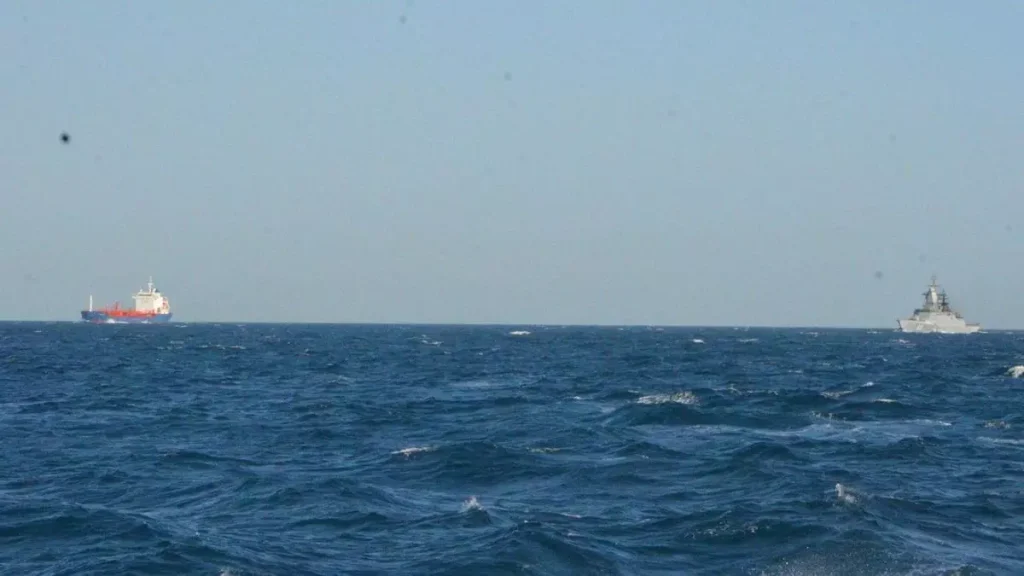
The question now is what will happen to the Anatoly Kolodkin. The tanker, owned by the Russian government, left the port of Primorsk in the Baltic Sea on March 9 and was initially traveling escorted by the Soobrazitelniy, a Russian Navy vessel, according to a British military source.
The tanker passed through the English Channel this week and is now heading across the Atlantic, after listing the port of Atlantida (US) as its destination in what looks like a pretty obvious ruse.

Both the Anatoly Kolodkin and its owner—the state shipping company Sovcomflot—have been under US sanctions since 2024, so that destination can basically be ruled out. Kpler says its real destination is Matanzas, citing an industry expert.

The expert explained that the 730,000 barrels of crude—if they make it—would be used to produce diesel, gasoline, and jet fuel, as well as generate electricity. But first it would have to be refined, and in any case it would only be a temporary fix, giving Cuba breathing room for “no more than 30 days.”

The NYT also spoke with Jorge Piñón for its Thursday report. The expert reiterated that the crude would serve to produce fuels and electricity, but would require refining and would only provide short-term relief—again, “no more than 30 days.”

Still, it wouldn’t be the first time the US Coast Guard has forced a Russian tanker to change course despite having a naval escort. At the beginning of January, US forces began tracking the Bella-1 (later renamed Marinera), used to transport hydrocarbons from Russia, Iran, and Venezuela, which was heading to the latter. After two weeks under surveillance—and despite being accompanied by a submarine sent by Moscow—the vessel and its crew were detained, although the sailors were later released following an agreement between Trump and Putin.

Although the fleet operating in the Caribbean since the summer of 2025—when Washington stepped up pressure on Nicolás Maduro—has shrunk to support deployments in the Middle East, Coast Guard sources told the NYT there is “a continuous presence in the Florida Strait and the Caribbean.”
In that context, the head of Southern Command, Francis Donovan, told Congress on Thursday that the US military is not preparing for any takeover of Cuba, and added that he is unaware of any plan by the Trump administration to support Cuban opposition groups in exile in order to overthrow the government in Havana.

Translated by GH

______________________

COLLABORATE WITH OUR WORK: The 14ymedio team is committed to practicing serious journalism that reflects Cuba’s reality in all its depth. Thank you for joining us on this long journey. We invite you to continue supporting us by becoming a member of 14ymedio now. Together we can continue transforming journalism in Cuba.
Four State Security Agents Are Sent To Detain Jorge Fernández Era During a Peaceful Protest in Havana

State Security arrests the writer once again amid growing repression in Cuba.

14ymedio bigger14ymedio, March 19, 2026, Havana / The writer and activist Jorge Fernández Era was detained this Wednesday in Havana for several hours after leaving his home to carry out his usual peaceful protest, which he holds on the 18th of each month.

The writer himself later posted that he remained detained between 3:13 pm and 11:33 pm at night in a cell at the Zanja police unit in Centro Habana.

Fernández Era recounted the details this Thursday in a Facebook post titled The Pact of Zanja, referring, with his usual humor, to the agreement that ended the Ten Years’ War between Cuba and Spain in 1878.

According to the writer, he was intercepted in the Santos Suárez neighborhood by a patrol car with four agents, two from State Security and two from the police and taken handcuffed—“of course,” he writes—to the station. “Given the deployment, people must have thought they had finally caught the second most wanted drug trafficker in the world,” he joked.

Given the deployment, people must have thought they had finally caught the second most wanted drug trafficker in the world

Fernández Era points out that the Zanja station brings back memories of the beating the police gave him last year in that same place. During his detention, he was interrogated by a lieutenant colonel from State Security, who allegedly suggested that he cease his activism: “In the style of Martínez Campos, between the lines he proposed surrender.” The writer rejected the proposal: “I replied that for a long time now the counterrevolution is represented by them and all those who live well at the expense of the sacrifice, silence, and double standards for the people. I told him that he should take me to trial if he felt like it for telling him what he was constantly writing down: I would go proudly to prison if continue reading

he proceeded that way.”

The activist also pointed out the ironic concern the Police had for his physical integrity when releasing him after 11:30 at night. According to his account, his release was not an act of goodwill but rather due to the authorities’ fear of a public reaction.

News of his arrest had been made public yesterday by his wife, Laideliz Herrera Laza, through a message on Facebook: “My husband, Jorge Fernández Era, left at 2:15 p.m. to exercise his right to peaceful protest, recognized in the Constitution, and has not yet returned home.” Hours later, she warned that the activist had not returned. After more than seven hours, she confirmed his release: “My husband is now home. Thank you all for your support.”

The detention occurred just two months after a similar arrest on January 18, when Fernández Era remained missing for 16 hours after attempting to carry out the same monthly protest. The writer has been detained on multiple occasions, and in several of them he has reported mistreatment, including beatings by authorities, who inflicted injuries he later showed to the media.

The writer has been detained on multiple occasions, and in several of them he has reported mistreatment, including beatings by authorities

The writer has participated in these actions since 2023, joining the initiative promoted by academic Alina Bárbara López Hernández, who has also been detained dozens of times for protesting peacefully and who has a pending trial, postponed without a date, for the crime of contempt and disobedience that, according to State Security, occurred during one of those arrests.

This detention takes place amid an intensification of police repression, which has worsened in recent days following protests over power outages. In this context, authorities have increased the use of short-term detentions without charges against activists and independent journalists, especially those who attempt to exercise the right to protest in public spaces.

Translated by Regina Anavy

______________________

COLLABORATE WITH OUR WORK: The 14ymedio team is committed to practicing serious journalism that reflects Cuba’s reality in all its depth. Thank you for joining us on this long journey. We invite you to continue supporting us by becoming a member of 14ymedio now. Together we can continue transforming journalism in Cuba.
Imported Beer and Other Alcoholic Beverages Will Increase in Price in Cuba

The Ministry of Finance and Prices establishes a tax of 0.30 USD per liter for all alcohol imports.

An imported 355 ml can of beer could increase in price by about 50 pesos if purchased from a mipyme. / 14ymedio

14ymedio bigger14ymedio, March 19, 2026, Havana / Starting today, imported alcoholic beverages will have a special tax of 0.30 dollars per liter. This is established by the Official Gazette published this Wednesday, signed last March 6 by the Ministry of Finance and Prices.

The list of items subject to the new rate includes malt beers, ethyl alcohol of various strengths, whisky, rum, vodka, gin, liqueurs, and other spirits.

The measure has generated rejection among the population, as can be seen in reactions to the publication on social media, since it implies the inevitable increase in the price of alcoholic beverages for consumers.

In practice, an imported 355 ml can of beer could increase in price by about 50 pesos if purchased from an MSME [mipyme]*, taking into account the current price of the dollar on the informal market. According to statistics published by the Ministry of Public Health in 2022, around 73% of Cubans consume alcohol regularly.

The Ministry of Finance and Prices emphasizes in the resolution that the revenue obtained will go directly to the State Budget “for its redistribution through social continue reading

spending programs in health, education, security, social assistance, and culture, among others.”

The measure has generated rejection among the population, since it implies the inevitable increase in the price of alcoholic beverages for consumers

Domestic production is excluded from the measure, where brands such as Bucanero and Parranda stand out, which could in theory benefit the local industry.

The tax will be applied to the tariff subheadings corresponding to these products and must be paid by both state entities and non-state economic actors that import them. The resolution is based on Decree Law 107 of April 2025 and entered into force on March 19, 2026.

Although the tax formally falls on importers, it will, as is natural, be passed on directly to consumers. A one-liter bottle could increase by at least 0.30 USD. In larger formats or sales in bars, the increase could accumulate significantly for logistical reasons.

The increase occurs in a context of limited access to imported alcoholic beverages, dependence on state stores and mipymes that sell in dollars, freely convertible currency (MLC), or their equivalent in Cuban pesos. A tax of 0.30 USD per liter may seem small, but it adds to high logistical costs and exchange rate volatility.

According to the National Office of Statistics and Information (Onei), alcoholic beverages and tobacco led price increases in 2025, with a year-on-year rise of 69.82%.

The informal foreign exchange market reflects a weakening of the Cuban peso, with the dollar surpassing 530 CUP at the end of March 2026. This, together with reduced imports by mipymes and the decline in tourism, contributes to a generalized increase in the price of imported products.

*Micro, Small, Medium Enterprises [mipyme in Spanish]

Translated by Regina Anavy

______________________

COLLABORATE WITH OUR WORK: The 14ymedio team is committed to practicing serious journalism that reflects Cuba’s reality in all its depth. Thank you for joining us on this long journey. We invite you to continue supporting us by becoming a member of 14ymedio now. Together we can continue transforming journalism in Cuba.