
Cuba’s Prime Minister Arrives in Moscow With an Entourage of Ministers and the President of the Central Bank

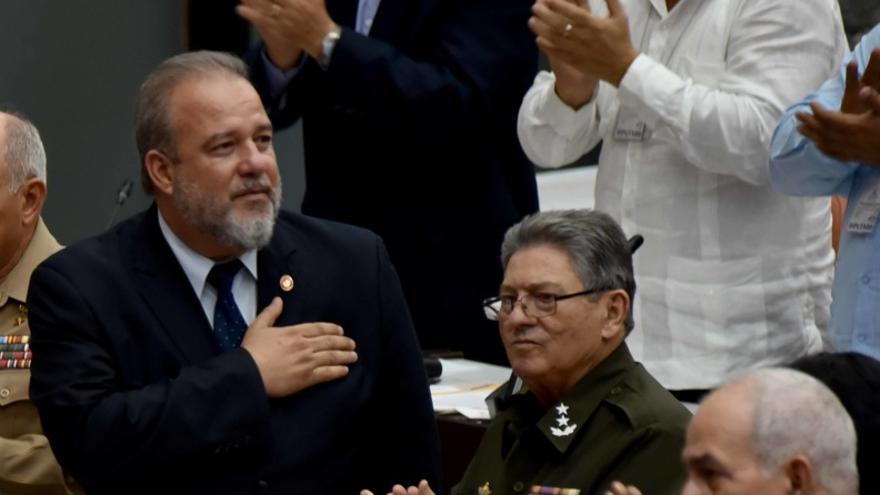
Cuban Prime Minister Manuel Marrero in his first appointment in office. (ACN)

14ymedio bigger14ymedio, Madrid, 6 June 2023 — The Cuban Prime Minister, Manuel Marrero, arrived in Moscow in the early hours of Tuesday “to expand and consolidate bilateral relations” between Russia and the Island. The official visit will last until June 17, as noted by the official Twitter account of the Government, which has changed the background image of the profile for one of the famous cathedral of San Basilio, located in Red Square.

Marrero was received by Julio Garmendía Peña, Cuba’s ambassador to Moscow, on his arrival from Turkey, where he attended the inauguration of Recep Tayyip Erdogan, re-elected as president of the country, and met with Turkish businessmen.

Eleven days of meetings await the prime minister “in the context of the expansion and consolidation of links, in particular economic ande commercial ones,” but he will not be alone. The bloated Cuban entourage is composed of the Deputy Prime Minister and Head of Foreign Trade and Foreign Investment, Ricardo Cabrisas, and the Ministers of Public Health, Tourism, Energy and Mines and Transport.

It also includes Gerardo Peñalver, first deputy minister of Foreign Affairs, and Joaquín Alonso Vázquez, minister-president of the Central Bank of Cuba.

First on Marrero’s agenda is his participation in the Eurasian Intergovernmental Council, which will be held between the 7th and 9th in Sochi, on the shores of the Black Sea. Subsequently, a “program” is planned in the capital that has not yet been detailed, and, finally, he will attend the International Economic Forum in St. Petersburg. continue reading

The Prime Minister’s visit was announced last April and comes seven months after the one made by Miguel Díaz-Canel in November 2022, also after passing through Turkey, on a tour that previously included Algeria and ended in China to gather help from all these countries, mainly to try to solve the energy problem that last summer plunged the Island not only into serious economic problems, but also into social protests against the Government. The inclusion of Minister Vicente de la O Levy in Marrero’s entourage invites us to think that there is a lot to talk about this issue.

The same can be assumed of the presence of Alonso Vázquez, after the request of three Russian banks to operate on the Island was made in May. Just a few months ago, Cuba implemented the operation of the Mir payment system (the Russian version of Visa or Mastercard), and its leaders have addressed on several occasions the possibility of adopting payment in rubles to circumvent international sanctions, although most experts consider this option as very unlikely in the regional context of Cuba, where the US dollar is the currency of reference.

The Minister of Tourism, Juan Carlos García Granda, has his own mission: to rescue the dwindling Russian market. The Cuban authorities have insisted on a recovery of travelers from that country despite the fact that the data indicate that the number is decreasing. That decrease has been attributed to the lack of flights for much of last year and from sanctions for the invasion of Ukraine, but the truth is that the Russians began to exchange Cuba for the Dominican Republic long before the war began.

As for the presence of the Minister of Transport, ties with Russia come from afar. In 2019, the Union of Railways of Cuba and the Russian RZD signed an agreement worth 2.314 billion dollars to modernize the Island’s railway infrastructure. Although a year later senior Russian officials explained that few of the sixty projects signed could be realized with Cubans because of their economic problems and their “mentality,” cooperation has not stopped completely. Among other things, the Island has received locomotives and wagons from Moscow, in addition to remodeling workshops with Chinese help.

Of course, there was the presence of Cabrisas, a debt negotiator and the visible face of Russian investments, which currently cover all sectors. However, the strangest presence is that of the Minister of Health since, although there are cooperation agreements between both countries in scientific and health matters, the materialization is less visible than in other areas. In June of last year, Cabrisas met with Mikhail Murashko, Russian Minister of Health, to discuss the possibility of a mutual supply of medicines and collaboration in the area of nuclear medicine.

Exchanges between Russia and Cuba have increased at a giant pace in the last year when, since the invasion of Ukraine, Moscow has needed the Island as a gateway to the entire Latin American continent, to replace Europe, which has put an end to its years of friendship with the Kremlin. The Havana regime, likewise, needs Putin’s help to survive and in exchange is willing to offer concessions never seen before.

Just a month ago, Boris Titov, a counselor of the Russian Government, said that the Island has offered Russian businessmen the right to land in usufruct for a period of 30 years, an unprecedented privilege since 1959. Those conditions affect, he explained, “both the long-term lease of land and the tax-free import of agricultural machinery, the granting of the right to transfer foreign exchange profits and much more.” The official added that they expect the reduction of “bureaucratic barriers.”

Titov has been advising the Government of the Island for months to transform its economy and open up more to the private sector, but fear has spread among many analysts who consider that Cuba is heading towards a Russian-style capitalism of oligarchies.

In recent months, Deputy Prime Minister Dmitri Chernishenko; economic adviser to President Vladimir Putin, Maxim Oreshkin; the president of the Duma, Vyacheslav Volodin; Foreign Minister Sergey Lavrov; Secretary of the Security Council, Nikolai Patrushev; and the executive director of the state oil giant Rosneft, Igor Sechin, have also traveled to Cuba.

Translated by Regina Anavy

____________

COLLABORATE WITH OUR WORKThe 14ymedio team is committed to practicing serious journalism that reflects Cuba’s reality in all its depth. Thank you for joining us on this long journey. We invite you to continue supporting us by becoming a member of 14ymedio now. Together we can continue transforming journalism in Cuba.

The Shortage of Banknotes in Cuba Forces Cart Operators To Accept Transfers

The cart operators, in addition to the option of payment by transfer, had something else that is scarce in the eyes of the habaneros in recent times: pumpkin. (14ymedio)

14ymedio bigger14ymedio, Juan Diego Rodríguez, Havana, 6 June 2023 — Modernity has reached the cart operators, who usually bet on the surroundings of the agricultural market at 17th and K, in Havana – by force, like almost everything. This Tuesday, among onions and bananas, one of the sellers exhibited an unprecedented poster. “Transfer is accepted,” it said, followed by the digits of a bank account.

The shortage of cash on the Island, especially of banknotes, has led merchants like this to look for a solution in banking transactions, although without much success. In the minutes in which this newspaper observed the scene, no one resorted to this form of payment, but it can be expected that there will be demand, if the operator offers it.

At the end of May, the Minister of Economy, Alejandro Gil, admitted to Parliament that inflation is having among its consequences the lack of cash. The Government lacks money to print more banknotes, and the idea of developing new series with higher denominations that respond to the current high prices is unthinkable in this context.

The minister proposed to the deputies the banking of transactions, which he praised for being a fast, safe and controlled mechanism. However, there are many Cubans who do not even have an account — much less in national currency — due to the distrust of the solvency of the system itself and the devaluation of the currency. Many, too, fear the close control of their funds — sometimes derived from the informal economy — by authorities who are characterized, precisely, by the lack of transparency with which they operate. continue reading

To all this is added the poor functioning of the technologies, from the card payment terminals to the Transfermovil and EnZona systems, which were praised this Monday on national television during a discussion on the day’s Roundtable program, dedicated to talking about electronic commerce and online sales.

The cart operator, in addition to the option of payment by transfer, had something more that is scarce in the eyes of the habaneros in recent times: pumpkin. In any case, the prices of all products were, as usual, higher than those of the state agricultural markets.

Translated by Regina Anavy

____________

COLLABORATE WITH OUR WORKThe 14ymedio team is committed to practicing serious journalism that reflects Cuba’s reality in all its depth. Thank you for joining us on this long journey. We invite you to continue supporting us by becoming a member of 14ymedio now. Together we can continue transforming journalism in Cuba.
Bosnia-Herzegovina, Gateway to the European Union for Cuban Refugees

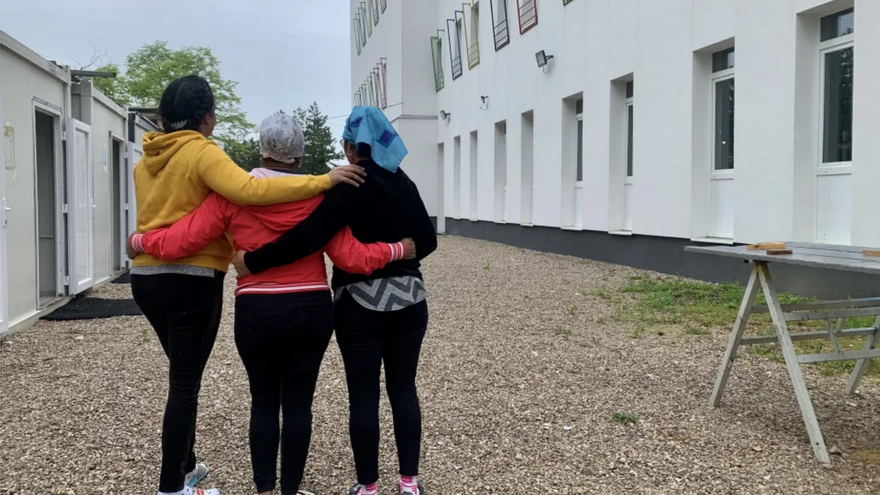
Refugees arrive in Bosnia-Herzegovina by bus, taxi, or even crossing the Drina River by boat.

14ymedio biggerEFE (via 14ymedio), Nedim Hasic, Sarajevo, 6 June 2023 —  Carolina is a 50-year-old Cuban who for a long time lived between the dilemma of remaining in poverty or trying to emigrate to Europe. Today she is stranded in the far west of Bosnia-Herzegovina, a few kilometers from the border with Croatia and the EU.

“It was my husband who made the decision for us. To go to a place where we can work and earn more, not just survive,” she tells EFE at the reception center for refugees in the town of Borici.

She did not want to reveal her real name or surname, fearing for the safety of their daughter and three grandchildren who have stayed in Cuba.

Carolina and her husband, like dozens of other Cubans in Bosnia, dream of being able to enter Croatia, a country that is part of the Schengen zone of free community movement. In this way, they hope to be able to arrive in Spain one day, “because of the language,” the desired destination for many Cubans.

“In Cuba I worked wherever I could. I am a seamstress by profession. I sewed clothes in my house and also worked in a factory where work clothes were made,” says Carolina. continue reading

They arrived in Bosnia from neighboring Serbia, where they entered when Cubans still did not need a visa. They stayed there for eight months but, in the end, decided to continue on the road to the EU.

Her compatriot Maria (another fictitious name) is a physics teacher. At 43 she is the mother of two children ages 18 and 19, who stayed in Cuba.

Together with her husband, she left the Island due to the poor economic situation of the family. “We had no other choice. We simply couldn’t live with the money we brought home; it didn’t even cover our elementary needs,” she recalls.

Both Carolina’s and María’s husbands refused to talk to EFE.

In the Bosnian Office for Foreign Affairs, EFE was told that in the Borici reception center, of the 1,620 migrants registered so far this year, 713 are citizens of Cuba, including 346 women and 97 children, and the rest are mostly Afghans.

In the center of Lipa, located in the same western area but intended only for adult men, 3,253 migrants were registered this year, most of them Afghans and Moroccans, as well as 114 Cubans.

Refugees arrive in Bosnia-Herzegovina by bus or taxi, or even crossing the Drina River by boat, Cubans say. Some traveled first to Russia, Cuba’s main ally, and from there to Belarus, Turkey and finally to Serbia.

The Cubans of Borici are afraid because they receive news about “hot returns” of migrants from Croatia, or about problems with clandestine boats to cross the border River Sava.

When they enter Bosnia-Herzegovina, Cubans announce their desire to seek asylum, which allows them a month to leave since they don’t want to stay in that country, one of the poorest in Europe.

Thirty years ago, Bosnia was the scene of the bloodiest of the civil wars in the former Yugoslavia, with about 100,000 dead and hundreds of thousands injured and displaced.

The Cubans interviewed by EFE point out that it was very difficult to decide to leave their country and leave for an unknown world. The key factor was confidence in a better future.

“It is said in the world that health care in Cuba is excellent. We don’t see it that way; in the end we have to pay for everything with our money,” says Valeria, another Cuban from Borici.

“Donations arrive in Cuba from abroad, but we do not see that they are invested in infrastructure or schools, nor do we know where the money goes,” says this woman, who wants to get to Germany, where she has relatives.

In Bosnia-Herzegovina, located on the so-called “Balkan route” of refugees, there are currently about 850 immigrants in reception centers, most of them from Afghanistan, according to data from the International Organization for Migration.

However, the local press estimates that so far this year, more than 7,000 immigrants have passed through the Balkan country, dreaming of reaching the EU.

Translated by Regina Anavy 
____________

COLLABORATE WITH OUR WORKThe 14ymedio team is committed to practicing serious journalism that reflects Cuba’s reality in all its depth. Thank you for joining us on this long journey. We invite you to continue supporting us by becoming a member of 14ymedio now. Together we can continue transforming journalism in Cuba.
Three Dissidents Who Called for a Press Conference Are Arrested in Cuba

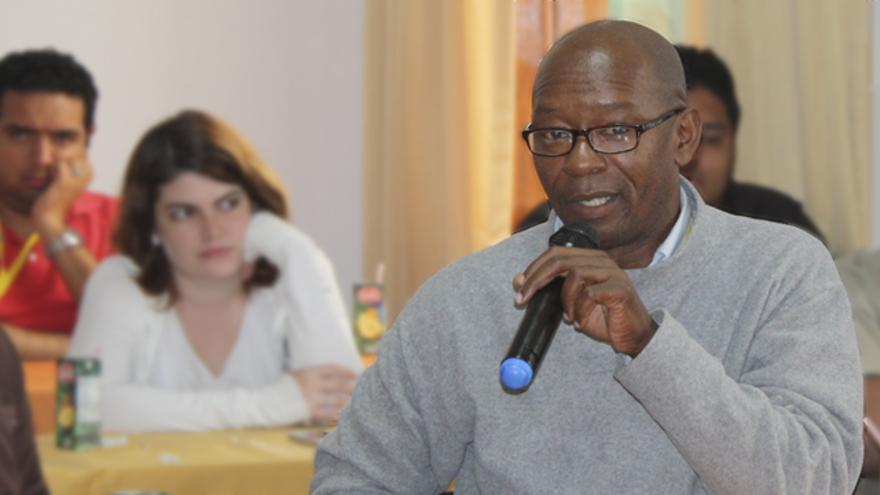
Manuel Cuesta Morúa during a speech at the Political Institute for Freedom in Peru. (Archive)

14ymedio biggerEFE (via 14ymedio), Havana, 5 June 2023 — Three Cuban dissidents were arrested this Monday after convening a press conference in which they intended to present a global strategy against political, gender, racial, institutionalized and economic violence in the country.

The opponent Manuel Cuesta Morúa explained to EFE that he was temporarily arrested on his way to the place of the media appointment and taken back to his home, where a police team was installed in the neighborhood, presumably so he couldn’t leave. María Mercedes Benítez and Juan Antonio Madrazo, who had borrowed a house in Havana for the press conference, were also arrested.

The Ministry of the Interior has not made a statement so far on these arrests and their causes. The official media have not referred to these events either.

The three arrested were trying to present a security strategy called Shanti, backed by the dissident platforms D’Frente, Council for the Democratic Transition in Cuba and the Democratic Action Unity Committee, according to the documents they sent to the media.

“Cuba is entering a vacuum of violence that is harming individuals, families, communities, groups and sectors of civil society,” warns the press release, which says that this violence is being “blacked out by the media and poorly disguised by the rhetoric of the authorities.” continue reading

The document highlights femicides, 34 so far this year according to the feminist platforms that record them (in the absence of official statistics), “murders,” “thefts” and “daytime assaults.”

It also talks about “institutional violence normalized by the political system,” emphasizing the role of the new Criminal Code and the recently approved Social Communication Law.

The proposal, which they describe as “ambitious” work, advocates for “amnesty and the decriminalization of dissent,” “initiatives against gender violence,” “the recovery of citizen sovereignty” and “the pacification of the streets.”

It also calls for addressing “institutionalized economic inequalities,” “flagrant violations of the Constitution and laws,” establishing a “culture of respect and tolerance” and a language that does not encourage “exclusion and hatred from the State and society, and by Cubans inside and outside Cuba.”

Among the symbolic actions it proposes is an “orange march” for Human Rights Day.

Translated by Regina Anavy

____________

COLLABORATE WITH OUR WORKThe 14ymedio team is committed to practicing serious journalism that reflects Cuba’s reality in all its depth. Thank you for joining us on this long journey. We invite you to continue supporting us by becoming a member of 14ymedio now. Together we can continue transforming journalism in Cuba.
Russians in Havana, the Second Possession

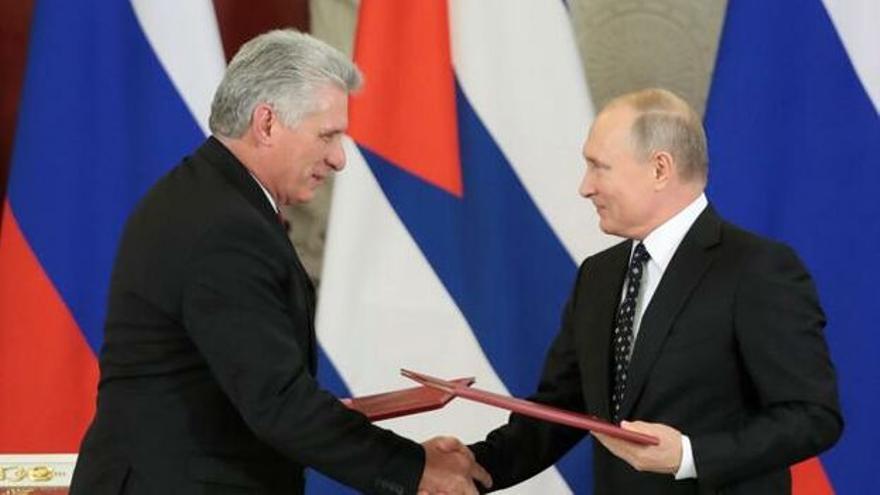
Cuban President Miguel Díaz-Canel and his Russian counterpart, Vladimir Putin, during the signing of bilateral agreements in 2019. (EFE)

14ymedio bigger14ymedio, Pedro Corzo, Miami, 4 June 2023 — It is evident that the Kremlin exerts a more than fatal attraction on the Castros. I do not say Russians or Communists; it’s those famous buildings that have transcended in time as a symbol of power and devotion for those who think and feel like autocrats, a feeling shared to the core by the Cuban rulers, without a doubt, the most representative despots of that fervor.

First were the tsars, then the general secretaries of the Communist Party and now Colonel Vladimir Putin, who, as a good KGB, knows that the Island can be his most reliable preserve, since exploitation knows no limits or borders there. Everything seems to indicate that the employee of the Castro family, Miguel Díaz-Canel, is pushing himself harder than his predecessors, something impossible to imagine, to be in that situation.

Fidel and Raúl Castro handed over Cuba to the Soviet leaders. The bolos, as the Cubans called them, could do whatever they wanted, including settling anywhere in the national territory, in exchange for a very generous subsidy that allowed the construction of the wall of totalitarianism.

The eagerness to Sovietize Cuba was so intense that the regime, since 1959, has granted scholarships to tens of thousands of young people to study in the communist paradise. Paradoxically, a significant number of those young people did not buy the fable, becoming staunch enemies of communist proposals, many of them assuming leadership positions, particularly in Europe, in the fight against the Castro regime. continue reading

Soviet power in Cuba was overwhelming. The Castros responded blindly to Moscow’s mandates abroad and applied the precepts of their Motherland to the interior of the Island. Cubans of my generation should not forget that Soviet and Russian literature flooded libraries and bookstores, cinema was a propaganda festival about the invincible socialist world and the artistic companies of the communist area did not cease with their great spectacles.

Nor should we leave aside the chronic shortage of food that was solved with the magical appearance of a can of Russian meat; that the most popular medicine, for a time, was a balm of resins with a name impossible to pronounce, until both disappeared; and that, after standing in line for hours to enter a miserable amusement park, access was denied to Cubans if a group of tourists from the socialist countries arrived.

The privileged relationship between Havana and Moscow was not interrupted because the Castros were nationalists but because the Kremlin of the time, managed by Mikhail Gorbachev, decided not to continue paying the bills of the country that had contributed the most to Soviet bankruptcy.

Now, as former political prisoner José Estrada wrote a while ago, former military, KGB and their heirs are returning, for the moment dressed in civilian clothes and discussing investments and profits, as in the past they instructed the repressors and Island bureaucrats on how to implement effective social control. In turn the Castros, not at all selfish, shared these tools with their associates from Venezuela, Nicaragua and Bolivia, just as they would with any enlightened leader ready to implement their instructions.

The autocrat Díaz-Canel and his henchmen have declared that they are ready to provide special conditions to Russian businessmen, “including the right to use Cuban land for 30-year terms, the tax-free importation of agricultural machinery and the right to repatriate the profits in foreign currency, which the Cuban Government currently restricts.”

This second triumphal entry of Russia into Cuba, by the hand of Vladimir Putin, does not seek to solve the needs of the population, but to perpetuate the Castro dynasty in government and strengthen an alliance with the Kremlin that to some extent revives the old military association, a situation that directly threatens Western democracies.

The dictator Díaz-Canel and his mentor, Raúl Castro, know that there are more profitable opportunities in the world than those of the Russians, but for them they are inadmissible, since their survival means exercising strict control over the sector of society capable of producing wealth, and the development of the economy must conform to the interests of the ruling class.

Translated by Regina Anavy

____________

COLLABORATE WITH OUR WORKThe 14ymedio team is committed to practicing serious journalism that reflects Cuba’s reality in all its depth. Thank you for joining us on this long journey. We invite you to continue supporting us by becoming a member of 14ymedio now. Together we can continue transforming journalism in Cuba.
Cuba Received More Oil in May, Suspicions Grow About the Fuel’s Destination

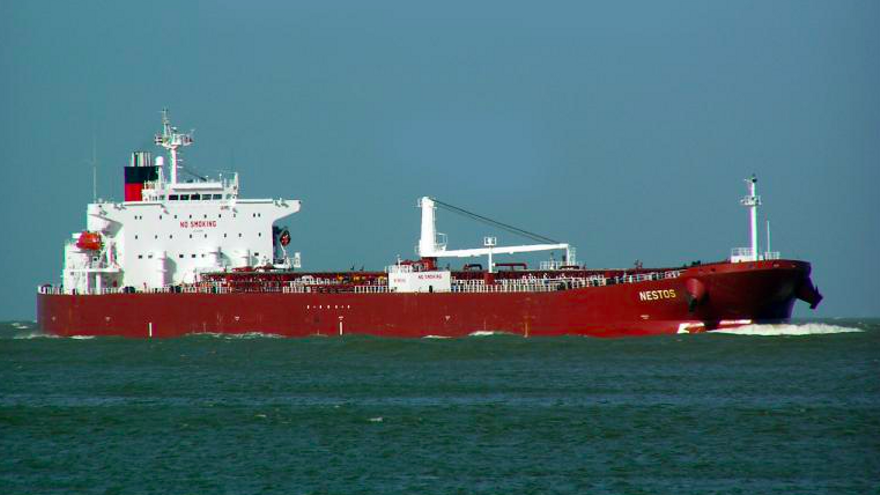
The Vilma sailed from José on several occasions to the port in Cienfuegos, designated as the destination on the application, but as it approached the Island it disappeared from the radar. (Vesselfinder)

14ymedio bigger14ymedio, Havana, 3 June 2023 — The constant movement of oil tankers from Venezuela to Cuban ports during the month of May foreshadowed what, this Friday, was confirmed by the data published by Reuters: exports of Venezuelan crude oil to the Island reached 58,100 barrels per day (bpd), almost 30% more than was  sent by the state PDVSA in April, which was only 45,250 bpd.

In its usual monthly report on the commercial activities of Petróleos de Venezuela S.A., the British agency detected a 14% drop in May exports compared to the previous month, but Havana was again saved from the cuts. On average, total sales were 606,258 bpd of crude oil and refined products, less than the previous two months but more than January and February of this year.

For its part, the American company Chevron – recently authorized to export Venezuelan fuel – sent 149,000 bpd to the United States and its warehouses in the Bahamas in May, a little more than in April (141,000 bpd).

Venezuela’s exchange with its allies has not stopped. According to Reuters, Iran sent a shipment of 2.1 million barrels of gas condensate to Caracas, but according to the Tanker Trackers application it has not yet been unloaded.

In the case of Cuba, the activity has been frantic during May: from the Venezuelan port terminal of José, several ships have sailed to the Island, especially to Cienfuegos, where Vesselfinder detected the presence of the oil tanker Vilma, with a Cuban flag. continue reading

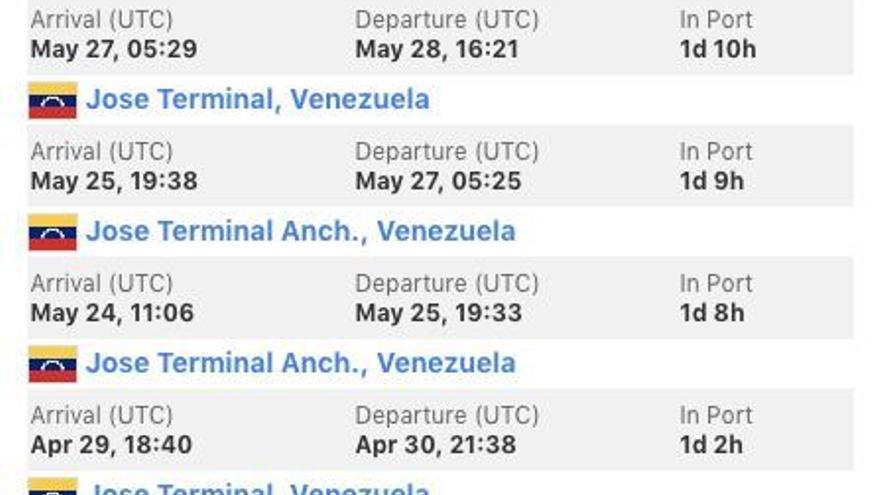
The Vilma sailed on several occasions to the Cienfuegos port – indicated as a destination by the application – from José, but as it approached the Island it disappeared from the radar, to appear days later anchored in Venezuela. When examining the list of ports of the oil tanker, Cienfuegos doesn’t appear in the registry.

When examining the registry list of ports of call of the tanker, it never appears to have been in Cienfuegos. (Screen capture)

But this is not the only ship with a Cuban flag that has irregular activity. The same happens with the Alicia, which, coming from the Venezuelan port of Amuay, didn’t declare its destination; and with the Sandino, which set sail from José on May 11 and whose landing pier is not known.

Like the Vilma, the oil tanker Delsa constantly sails from the Venezuelan terminal to Matanzas, where it is supposed to be anchored from May 28, but the Cuban destination is also erased on its registry. El Pastorita, another of the Cuban tankers, left Havana several days ago and arrived this Friday in Moa, a port with little activity on the eastern coast of the Island.

Even more discreet, but always on the increase, has been the movement of international oil tankers to Cuba. This Saturday, the oil tanker Marianna V.V., with the Panamanian flag, was anchored in Havana; the Primula, with the flag of Belize, was in Mariel; and the Caribbean Alliance – with the Panamanian flag – will sail towards Moa, where it will join the Dutch oil tanker NQ Calipso.

The Nicos arrived at the port of Santiago de Cuba this Friday, with the flag of St. Vincent and the Grenadines, which at the time of this article had not declared its origin for more than 70 days, and whose record of arrivals is empty. At the same terminal and coming from the port of Kaliningrad, in Russia, the tanker Scot Hamburg – with the Dutch flag – will arrive on June 6.

Translated by Regina Anavy

____________

COLLABORATE WITH OUR WORKThe 14ymedio team is committed to practicing serious journalism that reflects Cuba’s reality in all its depth. Thank you for joining us on this long journey. We invite you to continue supporting us by becoming a member of 14ymedio now. Together we can continue transforming journalism in Cuba.
A Court Sanctions 13 Cubans With Up to Two Years in Prison for Reselling Fuel

Since the beginning of April, the Island has been going through a fuel shortage that has resulted in long lines at gas stations. (14ymedio)

14ymedio biggerEFE (via 14ymedio), Havana, 2 June 2023 — A court in Havana sanctioned 13 people with sentences of up to 2 years in prison for reselling fuel in the midst of a severe shortage crisis that has affected Cuba for two months, official media reported on Friday.

According to a statement from the People’s Provincial Court of Havana, cited by Cubadebate, two people will serve their sentence with correctional work, while 11 more will go to prison. The minimum prison sentence is one year and four months.

In total, 15 people were tried – two were acquitted — for the crime of speculation. The sentence is not final, so it can still be appealed.

Those sanctioned, according to the court, sold the fuel on the Island’s extensive black market at prices ranging from 350 to 600 pesos per liter, that is, more than 20 times the price at service stations.

Since the beginning of April, the Island has been going through a shortage of fuel that has resulted in long lines at gas stations, which often don’t have the fuel. continue reading

This situation has led several Cubans to resell the fuel they manage to get at exorbitant prices as a quick way to get cash. The country is also going through a deep economic crisis that has been exacerbated since the beginning of the pandemic in 2020.

According to the court, they increased the framework for sanctions to 11 people, taking into account that the crimes “were committed in a complex scenario, nuanced by the shortage of fuel.”

The Cuban government reported at the end of April that the lack of fuel would continue until May due to “non-compliance by the supplying countries.”

Translated by Regina Anavy
____________

COLLABORATE WITH OUR WORKThe 14ymedio team is committed to practicing serious journalism that reflects Cuba’s reality in all its depth. Thank you for joining us on this long journey. We invite you to continue supporting us by becoming a member of 14ymedio now. Together we can continue transforming journalism in Cuba.

Cuba is Without Sanitary Pads Since January Because Its Sole Producer Could Not Afford Raw Materials

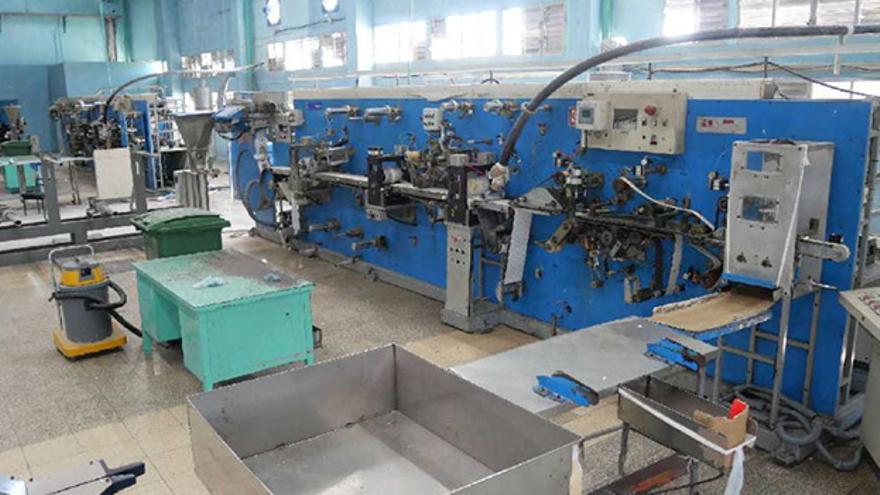
Production at the Mathisa sanitary pad factory in Sancti Spiritus was halted in January because it ran out of a key raw material. (Escambray)

14ymedio bigger14ymedio, Havana, 1 June 2023 — All year, Cuban women have been complaining that they have not been able find sanitary pads in the country’s stores. The government finally issued an official explanation on Thursday: The Mathisa factory in Sancti Spiritus, the country’s sole supplier, had to halt production in January due to a lack of raw materials and did not have the money to buy more.

On Thursday the company’s director, Angel Pozo Gonzalez, told the provincial newspaper Escambray that further production now hinges on a shipment of polyethylene, which is not expected to arrive until July, and warned that the product will remain in short supply at the nation’s pharmacies.

The collapse of the Cuban economy has weighed heavily on operations at Mathisa, which in 2021 was described in the provincial press as a brand new plant with excess inventory due to distribution problems. Only two years later, production ground to a halt because the factory ran out of raw materials, specifically polyethylene, which is used to make the plastic that covers the pad.

Mathisa relies exclusively on raw material from abroad and Pozo Gonzalez admitted that financial “limitations” had made importing it difficult. He said officials have since approved additional purchases and that the company was expecting suppliers in Mexico and Finland to begin shipments next month.

The director admitted that shipments of raw material would be staggered but claimed that the factory is ready to resume production immediately, operating as many as three shifts a day to reach this year’s production target of more than 4.5 million packages. continue reading

Before it shut down, the plant was operating at peak capacity. During the few days of January, when it was still up and running, it produced 560,000 packages, very close to its first-quarter target. “We used up 100% of the raw material we had in our warehouses because the product was in short supply and we were trying to speed up the delivery cycle,” explained Pozo Gonzalez. He said that entire production run had already been shipped out and was no longer available for purchase.

In addition to Sancti Spiritus, Mathisa supplies the provinces of Matanzas, Villa Clara, Cienfuegos, Ciego de Avila and Camaguey with its six varieties of Mariposa brand products. They are typically sold in pharmacies or online through the Caribe and Cimex chain of stores. Pozo Gonzalez warns, however, that production will be much lower than the ten to fourteen million packages it produced in previous years.

Mathisa pads do not enjoy a good reputation. Customers complain that the product’s outer layer feels rough to the touch and tends to move around, and that the poor quality of the adhesive keeps them from staying in place. The pads are also not as absorbent as those of other brands so consumers have to use more of them.

During the shutdown, the company sidelined forty workers, transferred fifty and kept a maintenance staff of twenty. Pozo Gonzalez says the situation is no different from that of Mathisa’s two other plants, one in Granma province and the other in Havana.

This is not the first time that Mathisa, which ships out more than forty-two million pads a year, has had to halt operations due to a shortage of raw materials. In 2018 the state-owned company reported that eight of the ten materials it needed to produce the pads were imported from Spain, Italy and China. Only the packaging is produced domestically.

The company’s problems are only growing. It is increasingly difficult to find its products in rationed pharmacies, where a month’s supply of pads sells for only 1.20 pesos. Meanwhile, prices on the black market range from 200 to 250 pesos.

What the government-run press has not discussed at any time is Thai Binh, a Vietnamese company that has been operating in the Mariel Special Development Zone since 2019. Its sanitary pads can be purchased for dollars or online through websites where Cuban emigres can buy items for their family members on the island.

____________

COLLABORATE WITH OUR WORKThe 14ymedio team is committed to practicing serious journalism that reflects Cuba’s reality in all its depth. Thank you for joining us on this long journey. We invite you to continue supporting us by becoming a member of 14ymedio now. Together we can continue transforming journalism in Cuba.
‘When I Left Cuba’, the Untold Story of the 4,000 Minors Who Fled to Spain

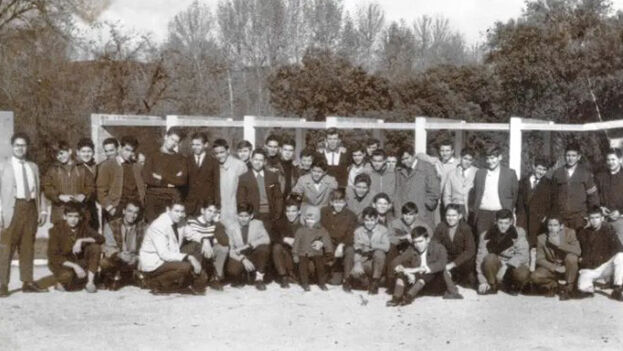
Photograph by publisher Casa Vacía showing a group of Cubans in Spain in 1966 — just some of the children who travelled to the country. (EFE)

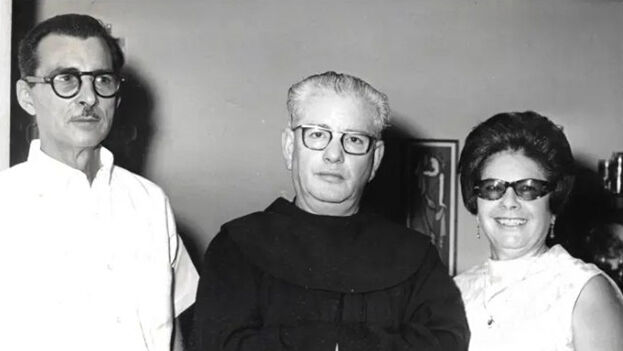
14ymedio biggerXavier Carbonell, Salamanca, 21 May 2023 – On 25 April 1969, Remberto Pérez was reunited with his family in the United States after two years separation. He’d escaped from Cuba just as he’d turned fifteen – the Armed Forces were ready to call him up – and he headed for Madrid, where a Franciscan priest, Antonio Camiñas, took charge of looking after him until his parents could leave the island.

Las Tunas had become an inhospitable city for the Pérez family. His father spent long days under the hot sun in the east of the island, under constant threat of a machete, and unpaid: this was Fidel Castro’s punishment for asking permission to leave the island. His mother, after saying goodbye to her son Remberto at the airport, discovered that she’d become pregnant for the fourth time.

His sister María also remained behind, and after more than fifty years she hasn’t forgotten what those last years in Cuba meant for the family. Two years after Remberto’s departure in 1967, they all managed to emigrate to the United States.

Remberto and María had much to talk about: he had become one of the so called “children of father Camiñas” — between 1966 and 1974 the Franciscan managed to give refuge to around 4,000 minors in Spain for as long as was necessary — she had witnessed the deterioration of the country just as she had witnessed the deterioration of the family itself.

“I said goodbye to a fat little boy and met up in New York with a tall handsome youth who dressed like The Beatles”, remembers María Pérez, 69, in conversation with 14ymedio. “Nevertheless, he was shocked when he saw us. My father was very suntanned, I was very skinny and my mother wasn’t well”.

The siblings decided to tell Remberto’s and the stories of the other children – those children of what some people have named Operation Madrid – in the book Cuando salí de Cuba [When I Left Cuba] (Casa Vacía), with the collaboration of the historian Ricardo Quiza. continue reading

The silent protagonist of the story – which brings together 50 testimonies – is Antonio Camiñas, a priest, born in Remedios in the old province of Las Villas and expelled by Castro to Spain. For María Pérez, it is “a moving story” that has been ignored for decades by Cubans.

Camiñas arranged for the welcoming of the island’s children from the church of San Francisco el Grande in Madrid – which became his general headquarters; the minors had been on the point of being recruited into Castro’s armed forces.

“The main reason for getting the children out  was the Military Service Act which required young men aged 15-27 to remain in Cuba”, Pérez explained. “However, the immediate danger were the UMAP [internment work camps for ‘undesirables’]– the military units that give support to manufacturing, because the boys were nearly all religious and from anti-establishment families, that had expressed their desire to leave the country”.

“Everyone remembers Camiñas as a kind of angel but one with his feet firmly on the ground”, he says. “He was very Cuban. They said he smoked a lot. He gave all the boys affectionate nicknames. He was also a very practical man”.

Photo by publisher Casa Vacía: Father Antonio Carmiñas with the aunt and uncle of siblings Remberto and María Pérez, authors of the book ‘When I Left Cuba’. (EFE)

Food, clothing, medication, transport: Camiñas was an administrative genius who shared his skills with other priests and Cuban families in Spain. The children will never forget the black Cadillac owned by Isabel de Falla – a millionaire from the old Cuban nobility – which picked them up from Barajas airport. “It was like an ocean liner cruising through the streets of Madrid”, they record in their testimonies.

Camiñas, Pérez says, never wanted to publicise his work, not only out of discretion but because he considered it his mission as a religious human being. The children are grown up now but that doesn’t prevent them from “going back in time” through the retelling of the tale – to the El Escorial hostel, the Casa de Campo and Navacerrada, where Camiñas gave them shelter.

It’s the voices which are important in ‘When I left Cuba’ – a book of testimony, not a history book. It will fall to more studious writers, says Pérez, to explain some of the deeper questions surrounding Operation Madrid, such as: how did Camiñas manage to avoid Castro interfering in his plans? Was there some secret agreement between the regime and Francisco Franco, the Spanish dictator who died not many years later in 1975? Why did Cuban propagandists decide to hide the childrens’ story instead of using it to discredit those who chose exile, as it did with Operation Peter Pan, in 1960?

“The objective of the book is to open up a window to such questions”, admits Pérez. Not even the families involved are sure where the plan came from. In Cuba in 1966 they began to talk about that “route” for getting the children to Spain. You had to go to the embassy, obtain the documents and pay for the passage.

“It cost me a lot to think that the Cuban government wasn’t in agreement with the Spanish one. Nearly 4,000 children couldn’t leave a country without the regime knowing”, he reflects. Spain and Cuba, he adds, never broke off relations and Castro had a certain kind of friendship with Franco, of whom he said that “he never treated his government badly”.

At first it was a bit disorganised, says the co-author of ‘When I left Cuba’ – for example, the case of the boy who arrived at Barajas but there was no one there to pick him up. “A police officer spoke to him and took him to an office where, by chance, they knew about Camiñas’s work. One of the officials took him home and he stayed there until he was taken to the priest a day or two after”, he says.

In another case a boy of 11 was taken in a bus directly to the church of San Francisco el Grande. “Because of these situations Camiñas began to organise daily visits to the airport to see whether there had been any children who arrived unaccompanied. There were many people who helped him”, he explains.

At the Escorial and the other hostels the children lived out their adolescence as fully as circumstances allowed. They collected pesetas to travel into Madrid for walks, went on tourist trails, were well liked by everyone and talked nonstop. “They cried during the night; in the morning they got up to play ball”, says Pérez. “Of the ones that I know, none blamed their parents for the decision that they made”. 

Eventually the time came to tell the whole story. Remberto came home and said to his sister: “Oskar Schindler saved hundreds of Jews from the Holocaust and the whole world knows about it. But father Camiñas saved nearly 4,000 Cuban children and today no one remembers who he was”. 

María’s first idea was to approach the writer Enrique del Risco, who couldn’t take on the project but recommended Ricardo Quiza as a collaborator. The process took two years, during which dozens of “children” were interviewed. “It’s all recorded”, Pérez assures us, thinking about a possible audiovisual future for the project. 

After seeing the results and the reception of ‘When I left Cuba’, both Pérez siblings are convinced that it will get harder and harder for the regime to hide the story of Operation Madrid. “My parents were sure of one thing: they wanted to save their children. I believe that they did”, says María, whose memory “beats and goes on beating” for the island – as it goes in the song by Luis Aguilé which gave its title to the book.

Translated by Ricardo Recluso
____________

COLLABORATE WITH OUR WORKThe 14ymedio team is committed to practicing serious journalism that reflects Cuba’s reality in all its depth. Thank you for joining us on this long journey. We invite you to continue supporting us by becoming a member of 14ymedio now. Together we can continue transforming journalism in Cuba.
The Russian Reconquest of Cuba: What We’re Not Seeing

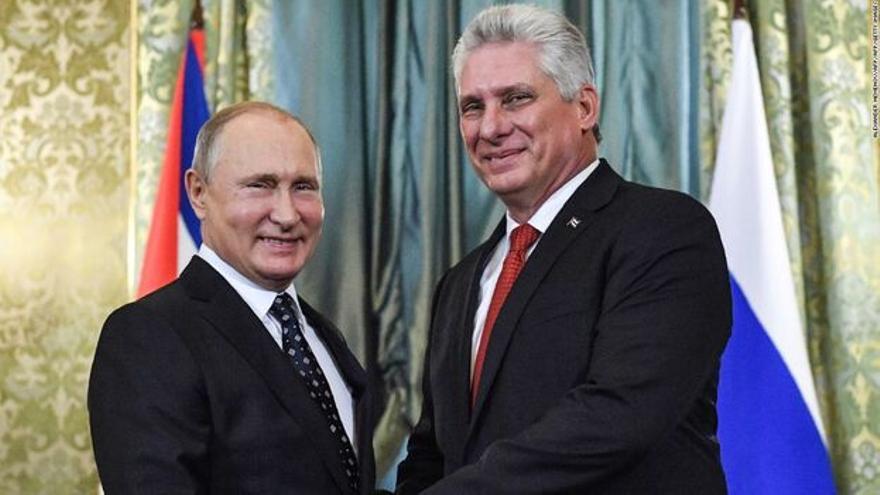
Cuban president, Miguel Díaz-Canel, with the Russian president, Vladimir Putin. (Archive/Kremlin)

14ymedio bigger14ymedio, Rolando Gallardo, Quito, 3 June 2023 — After twenty long intergovernmental sessions between Cuba and Russia and a visit of moral support by Díaz-Canel to the butcher of Ukraine — the warrior Vladimir Vladimirovich Putin — the Havana regime opened its arms to the proposals and pressures of the Russian oligarchy. Cuba is going through the greatest economic, political and social crisis in its recent history, and for the Kremlin’s vultures it is low-hanging fruit. The conditions ceased to be mere points of negotiation to become a “take it or leave it.”

What is Russia looking for in Cuba by gaining land in usufruct for more than 30 years? This is the question that the official media makes us ask, when, without a doubt, it is the least important element in the geopolitical move that the weak Cuban regime is making.

Let’s pay attention. Russia is a country of 17 million square kilometers (6,563,737 sq. miles), while Cuba does not exceed 11,000 (4,247 sq. miles). The small Caribbean island fits 1,545 times into the territory of the Russian Federation.

One might think that fertile Cuban lands are an appetizing prize for Russian farmers and Siberian businessmen tired of snow and frozen furrows, but such ideas would be typical of an irrational villager.

The most fertile lands on the earth’s surface are called chernozem, and they are only found on 7% of the planet, and of that amount 74% are in Russia. To be clear, Cuba would fit 23 times into the highly fertile territory of Russia, and we are not even talking about the other arable lands of the largest country in the world. A small detail: Cuba doesn’t have a single square meter of chernozem. continue reading

It is evident that it is not the “privileged” lands of Cuba that convened the eleventh business meeting between the Russian oligarchs and the worn-out Cuban leadership. The words of Boris Titov, the most visible face of the Russian right-wing billionaires and businessman close to the Castro regime, should serve as an alert for us to understand what is coming.

As “Comrade” Titov said at the inauguration of the XI Meeting of the Business Committee: “There is a whole set of proposals for Russian businessmen, such as the usufruct of land for more than 30 years. The elimination of tariffs for the import of high-tech products and the guaranteed right to be able to send the earnings and profits obtained in business to Russia (…). Currently, the Government of the Republic of Cuba guarantees that this process will be done in a short time with privileges for Russian businessmen.”

These words may seem innocuous, but it is necessary to translate Russian intentions into neighborhood Spanish. Titov is the main teacher of the political guidelines (requirements) of the Russian oligarchs to the Cuban regime. The so-called “roadmap” between Moscow and Havana are commandments to move forward with investments. The official document is preserved under some secrecy, as usual, but official publications of the Putin Government already allude to it, using that name.

From what has been published by Russian media, it is understood that the lands in usufruct are nothing more than the elimination of land leases for Russian agricultural and technology companies. Even the Americans were not so evicted with the Treaty of the Lease of Naval Bases and Coalfields. The “imperium” always paid rent. But the Russians will take the land for their companies and businesses without paying, and they will enjoy privileges that have not been given to any Cuban company that doesn’t have a direct association with the military entrepreneurship of the Castro regime.

Russians will be able to bring in technology for their businesses without paying the tariffs that Cubans have to pay even for basic necessities. They are guaranteed that they will not be disturbed at the Customs of the Republic of Cuba, while the citizens of the Island do not have that security.

The most scandalous of the privileges is that “the elimination of tariffs for the import of high-tech products is guaranteed, as is the right to be able to send to Russia the earnings and profits obtained in business,” according to Titov. If it were another country that spoke of free-form capital outflow, the Havana regime and its press would shout that they are profiteers and vultures.

It is natural that Russia’s “vulture” investments arrive at this time with guarantees of return to the accounts of the oligarchs outside Cuba. Russians can be whatever they want, but fools they have never been. Cuba is a country in political and social crisis, lacking leadership, and a hotbed of silent conflicts between the military, select cadres of the Communist Party and those close to power. In an increasingly unstable country it is mandatory to have a capital escape route that does not collide with bureaucratic obstacles and lack of legal guarantees.

The Russian Deputy Prime Minister, Dmitri Chernishenko, said during the meeting in Havana: “The Governments of Russia and Cuba are working on the creation of beneficial conditions for business. That means the elimination of bureaucratic barriers, the reduction of taxes and tariffs and the development of banking infrastructure to guarantee uninterrupted service.”

There are many optimists on social networks who see in this move the salvation of the dictatorship and the rebound of the Cuban domestic economy. The big question they should ask themselves is in what currency they plan to use to pay the Russians for the agricultural and technological products they will develop in Cuba. Do you really believe that the Russian ultra-capitalist millionaires led by Titov want to accumulate pesos?

Cuban emigration has decimated the Cuban population in the last decade. Estimates indicate that more than 2.3 million Cubans live in the United States. The northern neighbor is the largest source of remittances for Cuba. If the Russians take charge, they will try to monopolize the turbulent foreign exchange market of the Island and fill their pockets while they can.

In these circumstances, Fidel comes to mind, when he was questioned by a journalist at the inauguration of one of those first hotels for foreigners which denied access to Cubans. “If these mixed hotels were to charge in pesos, the hotel would not be built here. Because even the capitalists would not come to invest; it they wouldn’t really be interested in accumulating pesos.” Then he continued with his diatribe about the American blockade, in the same style as the current Díaz-Canel discourse.

Cuba is a long loop of repetitions of history. Memories of past failures come and go. The owners of Cuba’s destiny are not the Russian oligarchs, nor the pink cadres of the Communist Party, nor the old military, nor the last-minute screamers. This prolonged and unpleasant novel will culminate when the Cuban people do what they have to do.

Translated by Regina Anavy

____________

COLLABORATE WITH OUR WORKThe 14ymedio team is committed to practicing serious journalism that reflects Cuba’s reality in all its depth. Thank you for joining us on this long journey. We invite you to continue supporting us by becoming a member of 14ymedio now. Together we can continue transforming journalism in Cuba.
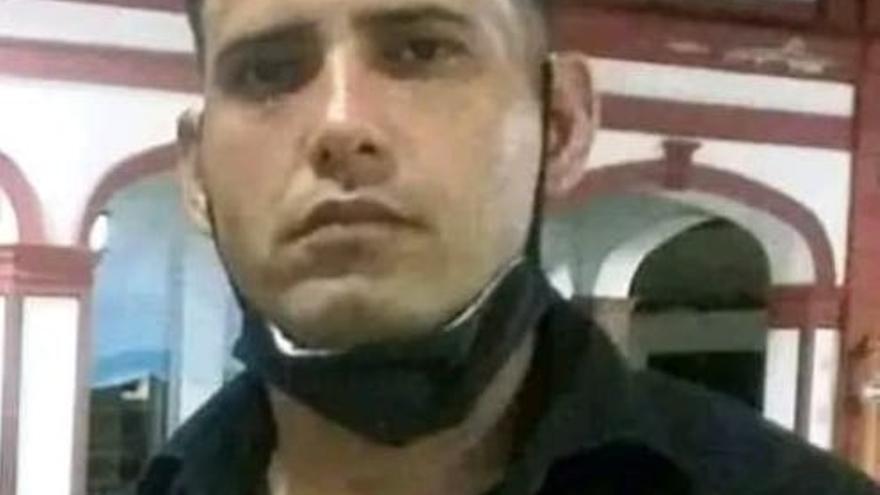
Cuba’s ’11J’ Prisoner Yosvany Rosell Garcia Caso Suspends His Hunger Strike

Yosvany Rosell was transferred on May 29 from the Cuba Sí prison to the prisoners’ room of the hospital. (Facebook)

14ymedio bigger14ymedio, Havana, 2 June 2023 — Political prisoner Yosvany Rosell García Caso suspended his hunger strike on Thursday after three weeks of fasting. Sentenced to 15 years for his participation in the protests of 11 July 2021, the 34-year-old ingested a broth that his wife took him to the Lucía Iñiguez Landín Surgical Clinical Hospital, in the city of Holguín.

“Thank God my husband is restoring himself with liquid,” Mailín Rodríguez Sánchez posted on her Facebook account. “He drank broth and is in therapy,” she added, while thanking “the support and concern” that her family received during her husband’s hunger strike, when he barely weighed 122 pounds.

By profession a welder and blacksmith, García Caso was transferred on May 29 from El Yayal prison, Cuba Sí, to the prisoners’ room of the hospital. Initially he refused to receive hydration serums and was determined to “continue the strike because he is tired of his rights and those of the other prisoners continuing to be violated,”  after the ’11J’ protests, Rodríguez explained to 14ymedio at the time.

His wife hoped that their eldest daughter, 14-years-old, would be able to convince her father to eat food again. “My girl is telling me that she wants to see her dad, and we are making arrangements so that she can visit him in the hospital.” Family pressures paid off, something that Rodríguez celebrated: “I hope he recovers very soon; his life is worth gold for his children and for me.”

García Caso began the strike on May 11, after an incident in which the prison authorities denied him a visit from his wife and three children, and as the days went by he extended his demands to that of being released as soon as possible. continue reading

Upon learning of the strike, his wife went to the prison four times  but was not allowed to see him, and she could only meet her husband the day after he was taken to the hospital. The prisoner was also denied the religious assistance that Rodríguez requested repeatedly.

This was the third time that García Caso carried out a hunger strike. In February 2022, he spent 17 days without taking food to demand that he not be transferred from Holguín to a prison in Cienfuegos, and for improvements in prison conditions. At that time, he had been the victim of several suspensions of his right to make the regulatory phone calls, and they kept him in isolation.

A few months later, in July of last year, he went on a hunger strike again, after being beaten for dressing in white as a reminder of the popular demonstrations of 11J.

The political prisoner claims not to regret having taken to the streets on that day of popular protests, an act that cost him prosecution for the crime of sedition. “How could I regret wanting to see my country free from a communist dictatorship? A country that has been submerged for more than 60 years in extreme poverty, and with all our human rights violated?” he said in a letter that his wife disseminated on social networks. “That blessed July 11 not only marked a before and after of the beginning of the end of communism in Cuba, it also showed us the worst face of the dictatorship.”

Translated by Regina Anavy

____________

COLLABORATE WITH OUR WORKThe 14ymedio team is committed to practicing serious journalism that reflects Cuba’s reality in all its depth. Thank you for joining us on this long journey. We invite you to continue supporting us by becoming a member of 14ymedio now. Together we can continue transforming journalism in Cuba.
Ten Months After the Crime, the Murderers of a Teacher in Cuba Receive Life Imprisonment

Santiago Morgado’s body was found days after he went missing. (Facebook)

14ymedio bigger14ymedio, Havana, June 2, 2023 — Two of the murderers of Professor Santiago Morgado, whose body was found in a well in July last year, in Sancti Spíritus, have been sentenced to life imprisonment. This was confirmed by activist Néstor Estévez, the victim’s relatives and witnesses to the trial.

A third person involved in the crime received a sentence of 30 years in prison, and two others received, respectively, two and one year in prison. The latter are involved in the sale of the Suzuki motorcycle that Morgado was riding, and which, according to the investigation, was the motive for the homicide. The vehicle was taken to Camagüey, where it was sold in desperation for 200,000 pesos.

Estévez tells this newspaper that on Wednesday, when the sentence was handed down, “the city was completely militarized,” and many of Morgado’s relatives were “rounded up” by State Security. “Maybe they thought they were going to appear in court to take a photo or a video,” ventures the activist, resident in the United States, who manages a page with independent information about Sancti Spíritus. In addition, he says that the relatives have not communicated with him again, despite his attempts, so he suspects that they may be threatened by the agents.

The official press, for the moment, has not reported the news. At the end of 2022, Escambray published that one of the five detainees was released on bail (presumably the one who received the lowest sentence).

Shortly after Morgado’s body was found, the provincial newspaper revealed in a report that two of those involved had been the material perpetrators of his violent death and that one of them knew him well. The first of the murderers led Morgado to El Capitolio, a town of the Banao People’s Council, where, hidden in the undergrowth, his companion was waiting. continue reading

The attackers used a stick and a stone, in addition to two pieces of agricultural machinery, to submerge the teacher’s body in the well.

As for the rest of those involved, one of them rode Morgado’s motorcycle to Camagüey, where the fourth individual tried to sell it for an initial price of 800,000 pesos, which he soon had to give up. Finally, the fifth detainee was the intermediary of the sale.

Of the five subjects, aged between 28 and 45, three are residents of Banao, one in the same town, another in El Pinto and the third in El Capitolio. The other two lived in Vertientes, from which it follows that the crimes occurred in places they knew well.

Morgado’s acquaintances were the ones who placed the most emphasis on the search for the body, since the police, as usual in these cases, took their time to join the investigation.

Translated by Regina Anavy

____________

COLLABORATE WITH OUR WORKThe 14ymedio team is committed to practicing serious journalism that reflects Cuba’s reality in all its depth. Thank you for joining us on this long journey. We invite you to continue supporting us by becoming a member of 14ymedio now. Together we can continue transforming journalism in Cuba.
Professor Alina Barbara Lopez Has Been ‘Regulated’ and Will Not Be Able To Leave Cuba

Alina Bárbara López Hernández learned that she was “regulated for reasons of public interest” when applying for a new passport. (Facebook)

14ymedio bigger 14ymedio, Madrid, June 2, 2023 — The Cuban historian Alina Bárbara López Hernández, who has been demonstrating peacefully since April on the 18th of each month in the Freedom Park of the city of Matanzas, is regulated; that is, prohibited from leaving the Island.

In a post published this Friday, the professor explained that she knew that she was “regulated for reasons of public interest” when applying for a new passport, since hers had just expired. She was planning to attend an event organized by the Association for the Study of the Cuban Economy in the United States, which she had already attended in 2017.

“I don’t know what that phrase [’regulated’] means, but I will not admit an arbitrariness that contradicts the Constitution of the Republic itself, which in its Article 52 establishes freedom of movement for citizens, and although it clarifies that there may be exceptions, I do not consider myself described in any of them,” López Hernández affirms in her text.

The teacher reports: “I will wait all next week for the authority that decided to regulate me to contact me and inform me that such arbitrariness was reversed.” In addition, she assures that she will not “knock on any door, file any complaint or try to negotiate with anyone.”

After that time, she continues, she will begin to exercise “every week” her “right to peaceful demonstration, this time carrying a sign that will indicate the reasons for my action.” And she concludes: “I am fully aware of the consequences that this may have. I will also be willing to take them on. I’d rather go to prison than be subdued. We will see if those who decide these violations are willing to take the risk of depriving me of liberty.” continue reading

On April 6, López Hernández was detained for several hours by State Security after protesting the arrest of the writer Jorge Fernández Era in the same Parque de la Libertad.

In a long Facebook post after being released, she gave the details of her arbitrary detention for exercising “a constitutional right in a country without political rights” and announced that every 18th day she would demonstrate peacefully.

Her petitions would be four: “a National Constituent Assembly democratically elected to draft a new Constitution applicable in all its parts,” “that the State not disengage from the critical situation of the elderly, retirees, pensioners and families who are in extreme poverty,” “freedom for political prisoners without mandatory exile” and “ceasing harassment of people who exercise their freedom of expression.”

On the last occasion, in May, she said that to counteract her action, the authorities organized “a political act” that began “as soon as they saw me arrive”: “Microphones, amplification equipment, flags, very loud music and groups of officials and agents of State Security, always identifiable.”

The teacher began to merit attention from State Security at the same time as the young artists grouped in the event The Worst Generation, censored last October. López Hernández was going to write a preface for a book that would have the same title, which the regime also prevented from being carried out.

She herself denounced the harassment but stayed on social media. After receiving several requests from the political police to be interrogated, she filed with the Provincial Prosecutor’s Office of Matanzas a “formal complaint and action of nullity against official subpoenas.” With this, the teacher managed to get the State Security to annul the summons.

Three months later, inspired by the action, Jorge Fernández Era filed a similar claim of nullity for violation of the Criminal Procedure Law, after receiving a summons from the political police, and did not attend the meeting.

The writer said at that time that the officer who approached him expressly reminded him not to be inspired by the case of Alina Bárbara López Hernández, warning him that “Matanzas is not Havana.”

With the prohibition of renewing her passport, the historian joins the list of Cubans who cannot leave their country because they disagree with the regime or want to exercise their profession independently. Among them are the journalists of this newspaper Reinaldo Escobar and Miriam Celaya, the analyst Julio Aleaga Pesant, the activist Boris González and the director of La Hora de Cuba, Henry Constantín.

Many others, who had also been regulated, managed to leave the Island on the condition of not returning. State Security only lifted their ban on travel abroad after learning of their decision to emigrate. They had been subjected to pressure, police subpoenas and surveillance around their own homes.

Translated by Regina Anavy

____________

COLLABORATE WITH OUR WORKThe 14ymedio team is committed to practicing serious journalism that reflects Cuba’s reality in all its depth. Thank you for joining us on this long journey. We invite you to continue supporting us by becoming a member of 14ymedio now. Together we can continue transforming journalism in Cuba.
Relatives of the Girl Who Died in Bahia Honda Say They Have Been Warned ‘We Can’t Return to Cuba’

Héctor offered details of what happened with the sinking of the boat in Bahía Honda, Artemisa. (Video capture/Univision)

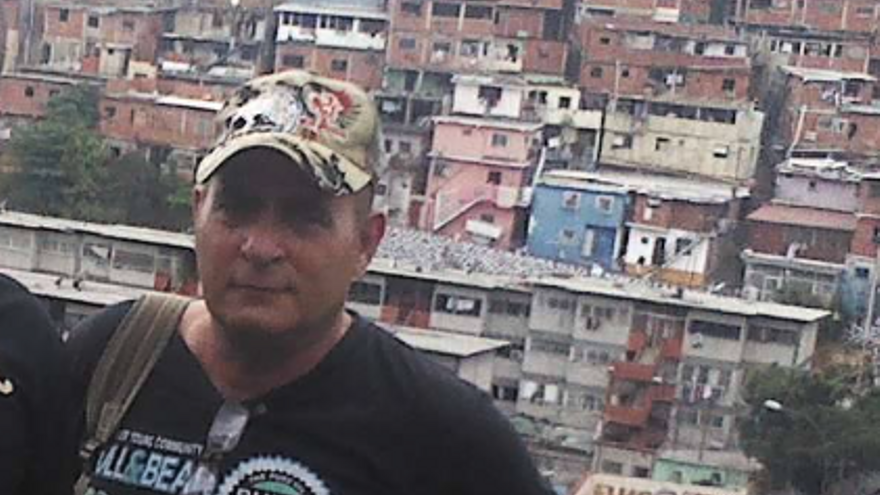
14ymedio bigger14ymedio, Havana, 31 May 2023 — “We have been warned that we cannot return to Cuba,” says Héctor Manuel Meizoso González,the unlce of Elizabeth, the girl who died last October in the sinking of a boat after being hit by a Border Guard boat in Bahía Honda, Artemisa. He managed to leave Cuba with his sister a month ago and relates his fears to this newspaper.

This Wednesday, from the police unit known as the Cuatro Caminos Technician, in Guanajay, the family that remains in Cuba received a phone call making it clear that they should not return to the Island. Meizoso González, 21, fears that the situation for the relatives who were left behind may worsen after his departure.

Little Elizabeth’s grandmother “could not travel,” emphasizes the young man and confirms that the minor’s mother, Diana Meizoso, arrived in Miami a month ago through humanitarian parole, a path established since January of this year to ensure safe migration between Cuba and the United States.

After arriving in Miami, the minor’s uncle again rejected the version of the Ministry of the Interior, which pointed out the Bahia Honda case as “human trafficking.” At the time, an official note assured that “there were no invasive or aggressive actions” and argued that the crash was inevitable because the boat “had stood in the way” of the Border Guards.

In an interview for the Univision network, the migrant denied the official version. “That’s not what happened; they left out some of the video in Cuba.” He reiterated that on October 28, the Cuban Border Guards rammed the boat on which 28 people were trying to leave the Island, including six of their relatives, causing the death of Elizabeth, Yerandy García Meizoso, Aimara Meizoso, Israel Gómez, Indira Serrano Cala, Nathali Acosta Lemus and Omar Reyes Valdés. continue reading

The most recent statement by Diana Meizoso’s brother coincides with the one he gave to 14ymedio in November last year: “That was not an accident, that was murder, because it was done on purpose,” he said then. The intention of the Border Guards was to sink the speedboat.

In the interview broadcast this week through social networks, Meizoso González explained that the boat had left the Griffin behind, but when they “stopped they felt that the boat was moving” and that was when the Border Guards’ boat fell on top of them.

The young man, who is still affected by the disaster, also mentioned that when he went to obtain the official document on the cause of death of his niece, he was denied. “A friend who works there told me that she didn’t die from drowning, she died from the blows that were given.”

Diana Meizoso was arrested last November by State Security and taken to headquarters in Villa Marista, Havana, to change her statement. She refused to do it, said Héctor.

The Cuban interviewed by the Univision network said that there was pressure for several of the survivors to change their statements. “My brother (Héctor Eduardo Meizoso Chiong, who was traveling with his wife, sister and a cousin) was beaten; that’s why they put on his coat. In the video disseminated by the Cuban authorities he said “things were not true, we were not clear about what had happened, we said that it was a murder and it wasn’t like that.”

Meanwhile, Luis Manuel Borges Álvarez, the boatman who also survived the sinking of the boat in Bahía Honda, is in prison, awaiting trial. In a statement edited by the authorities like the ones they usually do to discredit dissidents and which was broadcast on official television, he blamed Héctor Meizoso Fabelo, the uncle of the young people, as the main organizer of the attempt to leave the country.

Translated by Regina Anavy

____________

COLLABORATE WITH OUR WORKThe 14ymedio team is committed to practicing serious journalism that reflects Cuba’s reality in all its depth. Thank you for joining us on this long journey. We invite you to continue supporting us by becoming a member of 14ymedio now. Together we can continue transforming journalism in Cuba.
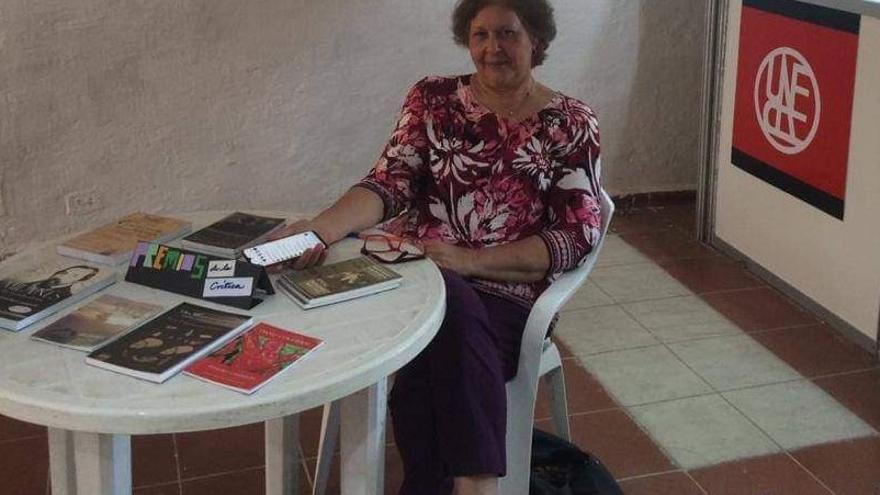
Commercial Advertising Enters the Official Press With an Advertisement for a ‘Cuban Amazon’

Main page of Cubamodela, the “Cuban Amazon.” (Screen capture)

14ymedio bigger14ymedio, Madrid, 2 June 2023 — The Cuban communist press aligns itself with the hated capitalist media by including, this Friday, its first commercial advertising paid for by a private company. Cubadebate has an ad for the micro-business Cubamodela, which defines itself as a “Cuban Amazon” and sells products at prices inaccessible to the vast majority of the population.

The sponsored text, as indicated at the end of the publication, appears with the epigraph publirreportaje, which only includes five previous topics, three from Havana Club and one from Caudal S.A., both state. On this occasion, it is a 100% private company that is announced, becoming a precedent for those who are about to deal with the new Social Communication Law approved a week ago, which will enter into force in six months.

The new legislation puts on paper a practice previously banned in the Cuban media by indicating in Article 38.1 that it can “complement the financial and material assurance of their activities with the commercialization inside and outside the country of their productions and services, the sale of advertising spaces, sponsorship, national and international cooperation projects and other means, all legally recognized, provided that the fulfillment of their public function is not compromised.”

However, this first advertiser is not a stranger to Cubadebate. Cubamodela, founded in 2015, in the wave of the thaw between Havana and Washington, was born as a platform dedicated to the exchange of interests of models, photographers and other people in the environment, but soon began to evolve into a website in which makeup, clothes or rentals are offered. After several years navigating this panorama, at the end of 2021, its founder and director, Alejandro Peñalver, associated with other self-employed people who wanted to use his platform to publicize their products and services. continue reading

“Currently, our business is linked to about 18 local enterprises, from leather goods, jewelry, toys, furniture and artisanal wines to photography services and clothing rental for weddings,” Peñalver, a graduate in Economics from the University of Havana, told Cubadebate in April 2022.

The media gave wide coverage to this online commerce platform, which at that time did not yet deliver the purchases at home, but was already preparing the new page, released in 2023. In it can be found everything from clothes and jewelry to spare parts, pet products and food, organized by departments in a way that, as its founder announced, refers to the American giant Amazon, although in a much more modest way.

“We want to sell and be attractive, and thus contribute to meeting the needs of the population. We accept both domestic and foreign payments. Those who have relatives outside Cuba can execute the purchases by paying from there, and the savings will be even greater,” says Peñalver in the promotional article.

One of the keys to the business is the “links with national producers,” which allows costs to be reduced. Its director insists that Cubamodela is specifically a showcase for self-employed and Cuban entrepreneurs to offer their products, achieving visibility in return, thanks to the popularity that the web already supposedly has and that improves its positioning.

“No more standing in lines under the sun,” says the campaign slogan. The businessman recognizes that the most sold products are spaghetti, tomato paste and detergent and, although he claims that their price is cheaper than that of “most private points of sale,” the products are very expensive compared to Europe, the United States and Mexico. A package of pasta costs $1.50, and a package of 32 rolls of toilet paper reaches $16, despite being on sale.

The commerce, explains Cuban economist Elías Amor, “attracts a very specific segment of customers with high purchasing power, who don’t need to pay attention to the relationship of their pay with prices. It’s a market segment in which the heat, the buses or the strenuous lines are not known, nor do they have to experiment with their negative effects, aspects that Cubamodela’s advertising and marketing highlights to ensure and give content to its competitive offer.”

The expert dedicates an entry on his blog to online commerce from the promotion that appeared in Cubadebate and considers that ideas such as that of Cubamodela are very good news. Amor analyzes the project and praises Cubamodela for having “thought of really interesting ideas,” including the deployment of relationships with suppliers, which guarantees the quality of the product and the stability of supplies.

“This, of course, would never have been done by communist state commerce. It has had empty stores with nothing to offer for 64 years.”

However, the economist is also aware of the limitations of the experiment, precisely because it addresses a percentage of the population that once again leaves out those who have the most needs. “In any case, it is easy to assume that online commerce moves in a very specific segment of customers with high purchasing power, and that they do not pay attention to the relationship of their remuneration with prices. A market segment that coexists with the majority of the population that, because they have an insignificant purchasing power from their salaries and pensions, have to waste their life suffering from the aforementioned heat, the poor bus transportation and standing in lines. These injustices exist currently in Cuba, and nothing and no one seems to avoid them, quite the opposite. Faced with the parsimony of the state sector, the private sector takes advantage of the situation,” he concludes.

Translated by Regina Anavy

____________

COLLABORATE WITH OUR WORKThe 14ymedio team is committed to practicing serious journalism that reflects Cuba’s reality in all its depth. Thank you for joining us on this long journey. We invite you to continue supporting us by becoming a member of 14ymedio now. Together we can continue transforming journalism in Cuba.