
The Endless Ordeal of Retirees in Matanzas, Cuba, to Collect their Pensions

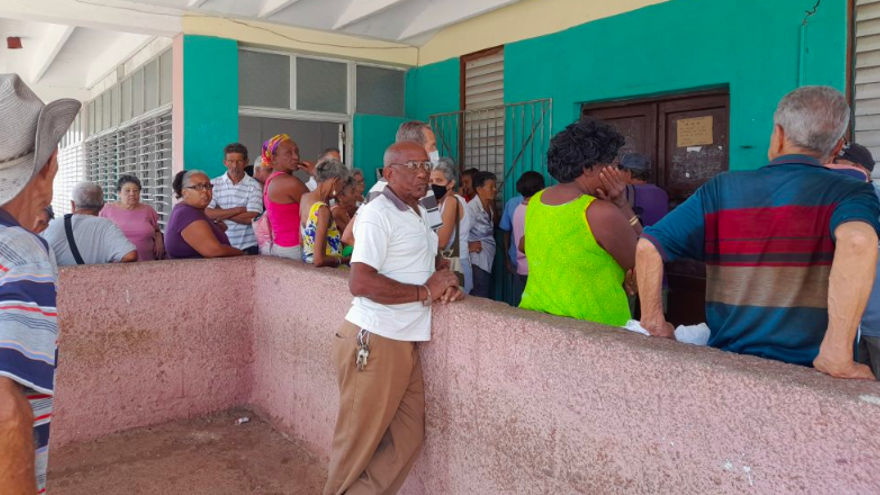
Those affected are elderly people, many of them already with health problems. (Girón)

14ymedio bigger14ymedio, Havana, 17 May 2023 — The lack of workers is once again in the news on the Island. On this occasion, the protagonist is the shortage of professionals in the Post Offices, causing serious problems in the collection of pensions, according to the Matanzas newspaper Girón on Tuesday. The official media initially attributes the chaos to an employee who has been sick long-term and whom it has been impossible to replace permanently, but the branch director hints that the problem is not isolated.

“There is a shortage of workers, that is why we, the managers, are moving to make the corresponding payments. The solution depends on who we can hire”, says Ismary Hernández, director of the Post Office Unit in the Versalles neighborhood, in the city of Matanzas, to which the office of the old Medical Center belongs. The more than 200 retirees attached to this headquarters denounce that they have not been able to collect in a timely manner for months, as have the 130 people who receive social assistance at the same location.

Those affected are elderly people, many of them already with health problems, and who bitterly lament the difficulties it means for them to stand in line for days. Because the worst thing, they agree, is when the money runs out and the office closes, leaving them unpaid.

“There is a shortage of workers, that is why we, the managers, are moving to make the corresponding payments. The solution depends on who we can hire”

 “It’s been happening for months,” says an 89-year-old retiree interviewed by the outlet. They show up at 10 or 11 in the morning. It’s not right to keep old people, including me, waiting here for so many hours. Yesterday at one in the afternoon they said the money had run out. We had to leave and come back today to stand in line again, when the compañera arrived at 11:30 to make the payments,” he says. continue reading

All the testimonies coincide in pointing out the negligence and bad manners with which the workers, when they are there, treat the pensioners. “It’s illogical for all in this town to come here at six-odd in the morning to stand in line, and it’s already 11:30 and no one shows up, not even to give us an explanation. Is it that, when someone retires, he no longer deserves consideration, doesn’t have value?” laments a retiree who worked for 49 years during his life.

“I have never gone through so much work to get paid as I do now. We are here without having breakfast, without eating anything”, protests another who, at 76, feels relieved for not being among the oldest and tells that an 89-year-old friend had to be helped by her children when she collapsed while waiting in line.

“They calmly tell you: ‘We ran out of money’, another says “I’m leaving.” Those who are working go home, and often the little old people don’t even have enough for a soda.  “It’s a lack of respect to us” protests another one.

Having managers there has allowed things to go better this month, although everyone knows that it is not the solution. “This month was better, everyone was paid on time and the payment was quite fast”, says Hernández. “What happens is, and this has been explained to the clients on another occasion, that she, as an employee, has other responsibilities. Within these functions, she has been interspersing the payment to the assisted-retirees,” Bárbaro Ortega Araujo told Girón Ediesky, deputy director of the Post Office in Matanzas.

The service requires, he adds, some training, but not only that, you have to be selective because of the large amounts of money that are handled

Yaneysi Remón Suárez, the company’s Director of Operations, maintains that she has requested personnel from the Ministry of Labor, but “so far no one has appeared.” The service requires, she adds, some training and, not only that, you have to be selective because of the large amounts of money they handle. “In greater quantity as a result of the Ordering Task and these salary increases. The institution manages millions of pesos,” she argues.

Correos moves even more money than a bank on a given day,” she adds, but the salaries that are offered are not very attractive. The official states that a postman currently earns 2,600 pesos. “Anyone in another entity – such as a bank, Etecsa, new economic players – earns much more than a postman, who spends eight hours in the sun, pedaling and offering the service,” she explains.

As if that were not enough, there are no tires for bicycles, which makes traveling to deliver the mail impossible.

There are no short-term solutions either, acknowledge the managers. The official who has been multiplying her duties for three months must help with the payments, and although they affirm that “the negotiations do not stop” and that they are trying to increase salaries, one of the most advanced proposals is to mobilize those in the military service.

“When the borders were closed and the large avalanche of packages from international parcels ceased and people opted for shipments by sea, the Ministry of the Armed Forces helped us. We made a contract with them, with young men who were serving in the Military Service. We are calling for that too to resume,” Ortega Araujo states.

____________

COLLABORATE WITH OUR WORKThe 14ymedio team is committed to practicing serious journalism that reflects Cuba’s reality in all its depth. Thank you for joining us on this long journey. We invite you to continue supporting us by becoming a member of 14ymedio now. Together we can continue transforming journalism in Cuba.
The Hemispheric Front Criticizes the Pope for Receiving Cuban President Diaz-Canel and Treating Him With ‘Obvious Affection’

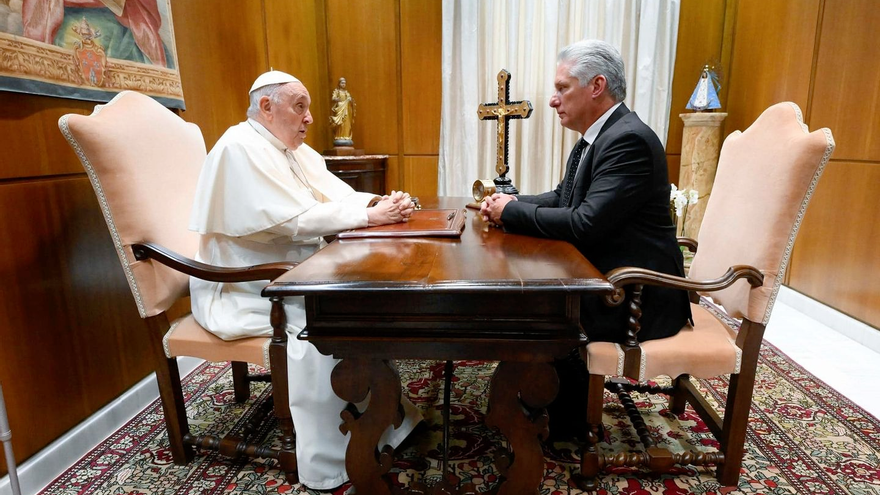
Pope Francis with Miguel Díaz-Canel, during his meeting in the Vatican. (Twitter/Cuban Foreign Ministry)

14ymedio biggerEFE (via 14ymedio), Miami, 27 June 2023 — The Hemispheric Front for Freedom (FHL), composed of parliamentarians, academics, political leaders and human rights defenders from several Latin American countries, criticized Pope Francis for receiving the Cuban president, Miguel Díaz-Canel, last week and for treating him with “an obvious affection that offends” the victims.

“It pains us as Catholics and Christians that you receive the criminal (Díaz-Canel) and other representatives of the Castro dictatorship while the Vatican ignores the true representatives of Cuban civil society,” the FHL said on Tuesday in a letter sent to the Pope.

The group says in the letter that it does not intend to question papal decisions but reminds the pontiff that the Cuban president “is charged with crimes against humanity” and that “his victims cannot be ignored, much less by you.”

“With what merit have you received the current dictator of Cuba?” asks the FHL, after saying that the reception of the Cuban leader “has painful and very questionable implications.” continue reading

Díaz-Canel was received on June 20 by Pope Francis, at the first audience held in the Vatican between the two. They talked for 40 minutes, according to Vatican sources.

After the meeting, the Cuban president met in the Secretariat of State with Cardinal Pietro Parolin, and issues such as the request for the release of prisoners were discussed.

For the FHL, an organization committed to “promoting the values of freedom in the region and in the world,” the concession of the meeting “should have been conditioned, publicly and at the very least, on the release of Cuban political prisoners.”

It said in the letter that Díaz-Canel “unleashed a fierce repression that included shootings and beatings against the people who took to the streets, peacefully, to demand freedom” on July 11, 2021.

The Cuban government, it added, “does not respect women or children. Over 1,400 people were imprisoned, and 784 were sentenced to between 5 and 25 years in prison, including minors.”

The FHL reminded the Pope that “half a century of efforts, at the highest levels, have not produced an iota of moderation or tolerance in the communist regime, not even mercy for the innocent.”

The letter ends, signed by Dragos Dolanescu and Orlando Gutiérrez-Boronat, president and secretary general of the FHL, by saying that the Cuban regime will not change its attitude because “its ideology is based on hatred of everyone who does not think like them.”

Translated by Regina Anavy

____________

COLLABORATE WITH OUR WORKThe 14ymedio team is committed to practicing serious journalism that reflects Cuba’s reality in all its depth. Thank you for joining us on this long journey. We invite you to continue supporting us by becoming a member of 14ymedio now. Together we can continue transforming journalism in Cuba.
The Cuban Minister of the Army Is the First Foreign Visitor in Moscow After the Wagner Group’s Mutiny

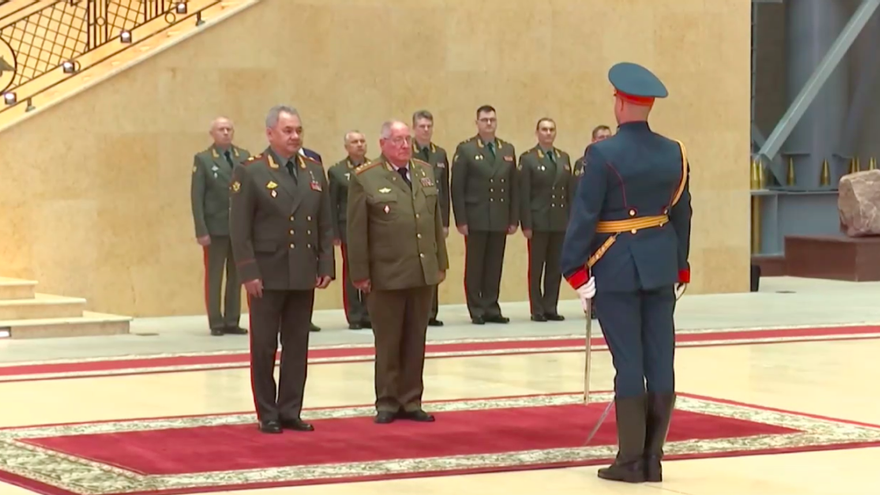
Wearing in a full-dress uniform, reminiscent of the Soviet era and currently worn by the Russian military, López Miera was received this Tuesday with all protocol. (Moskvichmag)

14ymedio bigger14ymedio, Havana, 27 June 2023 — The parsimony of Havana in the face of the armed rebellion of the Wagner mercenary group against Vladimir Putin does not seem to have embittered the Island’s alliance with the Kremlin: the Cuban Minister of the Armed Forces, Álvaro López Miera, is the first senior foreign official to visit Russia after last Saturday’s tension, with the aim of discussing the realization of “a series of joint projects in the technical-military field.”

Wearing a full-dress uniform, reminiscent of the Soviet era and currently worn by the Russian military, López Miera was received this Tuesday, with all protocol, by the Russian Defense Minister, Sergei Shoigu, at the headquarters of his ministry. The Cuban press has not yet said a word about the general’s visit to Moscow.

According to the Russian agency Sputnik, Shoigu proposed to his counterpart “to address in detail all existing and promising cooperation projects in the military field.” The minister assured that there was “a wide variety of issues” in which Russia could support Cuba, including “technical” aid to the Island’s Army.

He praised Cuba as “an important partner” that demonstrated “a complete understanding of the reasons” that led Putin to invade Ukraine, although he did not allude to the cautious silence that, during all the tension with the Wagner troops, the Havana regime maintained. The bilateral dialogue, Shoiguu summarized, is in the best of states, and they “are taking measures” to “protect their cooperation” against international sanctions.

“Russia is willing to provide assistance to Cuba,” the soldier promised López Miera, although both Sputnik and other media that reported the visit avoided defining the exact content of that “strategic” aid. continue reading

On June 13, Putin decorated Lopez Miera with the Order of Friendship, for his “important contribution” to the “strengthening of military and technical-military cooperation between the two countries,” Prensa Latina reported.

Born in 1943 and minister of the Armed Forces since 2021, López Miera was part of Cuba’s military interventions in Angola and Ethiopia. He is one of the senior Cuban officials sanctioned by the U.S. Government “for his involvement in human rights violations.”

The resignation of Shoigu and Valeri Gueràsimov, head of the Russian General Staff, was one of the demands initially defended by the Wagner group and its leader, Yevgeny Prigozhin, who blamed both soldiers for the “chaos” that the battlefront had become in Ukraine. After the mercenaries advanced in the direction of Moscow and took – without resistance – the city of Rostov, Prigozhin stopped the march on the pretext of avoiding the “spilling of blood.” The president of Belarus, Aleksandr Lukashenko, mediated between the Kremlin and Prigozhin, who ended up stopping the uprising 24 hours after starting it.

Later, when everything was over, Miguel Díaz-Canel issued a tweet expressing his “total conviction” for Russia’s ability to maintain “unity and constitutional order.” The Cuban ruler added: “I express the solidarity of the people and government of Cuba to the esteemed President Putin and the brotherly people of the Russian Federation, in the face of attempts to provoke an armed rebellion in the nation.”

The Cuban Foreign Minister, Bruno Rodríguez, limited himself to sharing Díaz-Canel’s message while the official press was slow to publish the news of the rebellion, in total agreement with the version of state media such as Russia Today.

Other Russian allies in the region, such as Venezuela and Nicaragua, quickly spoke out in support of the Kremlin. Nicolás Maduro sent an “arm of solidarity and support” to Putin during an event with the military, while Daniel Ortega said that his government will be “always aware” of what happens with Russia and with the “brother president, comrade and comrade Vladimir Putin.”

Translated by Regina Anavy

____________

COLLABORATE WITH OUR WORKThe 14ymedio team is committed to practicing serious journalism that reflects Cuba’s reality in all its depth. Thank you for joining us on this long journey. We invite you to continue supporting us by becoming a member of 14ymedio now. Together we can continue transforming journalism in Cuba.

Dying in Cuba is No Longer Free

The “basic” coffins that the Cuban State will continue to cover in Sancti Spíritus. (Escambray)

14ymedio bigger14ymedio, Havana, 27 June 2023 — Funeral services that have been largely free in Cuba since the 1959 Revolution are beginning to be charged, and others that were already charged will increase in price.

In Sancti Spíritus, according to an article published on Tuesday in Escambray, “the structure of Comunales [community services]” is reordered, the agency  dedicated so far to these tasks, and a unit of obituary services has been created to “improve the funeral homes and chapels of the province.”

The provincial newspaper offers an interview with the new director of that unit, Yoel Aquiles Martínez, who explains with the usual official jargon, “We have already begun with the monetary reimbursement for the payment of certain activities associated with deaths” due to “the need to free the State from some expenses and to increase the efficiency of certain services.”

So far, the article continues, it has charged for the cremation of corpses and the transfer of the deceased to other provinces, but from now on the transfer of the deceased from one municipality to another within the same province will also be paid, as well as the “vigil at home.” continue reading

In this case, “the funeral home provides the services related to the wake, and the family would pay on the basis of the approved price rate.” It is a variant, says Escambray, which “is already applied in the capital of the country” but in Sancti Spíritus “is in the process of approval.”

They will continue at no cost “the delivery of a coffin, the transfer from the house or the hospital to the funeral home or chapel with the provision of the funeral car, the fuel for that activity and the arrangement of the corpse, and within these benefits, those that are related to the wake in the premises enabled as such,” clarifies the newspaper, “but if the family wants another type of service, such as carrying out the burial in another place, outside the municipality or province, then they would be charged for that.”

From the Escambray’s interview, it appears that the State will offer citizens who can afford them “extra” services, such as amphorae for ashes, “other types of coffins of a better design” or “fine flowers.”

“Our purpose is that the obituary services are gradually self-financing, and with that income we can improve those that remain free of charge, including the constructive improvements of the funeral homes and chapels, as well as the technical status of the cars, something that has been worked on, but, due to the degree of deterioration they presented and the long time of usage, it has been impossible to carry out this activity efficiently,” the official acknowledges.

Yoel Aquiles Martínez also says that they have just received two hearses “of Chinese origin,” valued at 1,800,000 pesos each, “and another delivery of this type of transport to the province is expected.”

Faced with the question, which reflects the discomfort of the population due to the frequent delay of the funeral cars, the manager excuses himself by saying that they have “up to two hours to carry out the transfers, but the car can’t arrive until the legal documentation procedure is completed.”

“This is a province with a high degree of population aging,” he continues, “and the number of deaths has increased, to the point that, in recent times, with an average of 200 and more deaths a month, today we are above 400, and usually 50 percent of these happen between Friday and Sunday, which makes the obituary activity in the territory more complex.”

The announcement comes at a time when funeral services have hit rock bottom. The funeral homes have been deteriorating and lack sufficient staff for cleaning. Many times they have a single glass to use during the wake to see the face of the deceased in the coffin, so families must wait for other mourners to finish using it to get one.

The traditional cup of coffee, inherent in Cuban wakes, has also disappeared due to the lack of the product in state funeral homes. Flower wreaths sold to relatives have more tree leaves than flowers and have been smaller and more expensive every year. The amphorae for ashes are crude and fragile.

However, the worst criticisms fall on the coffins or “boxes of the dead,” as they are popularly called. Made of flimsy wood, these coffins lost the metal trim years ago, and the slats have been replaced by strips of wood and cardboard. As a result, it is common to hear that the body of the deceased falls out in the middle of the funeral or during the transfer to the cemetery.

Translated by Regina Anavy

____________

COLLABORATE WITH OUR WORKThe 14ymedio team is committed to practicing serious journalism that reflects Cuba’s reality in all its depth. Thank you for joining us on this long journey. We invite you to continue supporting us by becoming a member of 14ymedio now. Together we can continue transforming journalism in Cuba.

Four Cuban Soccer Players Escape in Miami After the Defeat in the Gold Cup Against Guatemala

Cuba debuted with a defeat against Guatemala by 1-0. (Jit)

14ymedio bigger14ymedio, Havana, 28 June 2023 — Footballers Roberney Caballero, Denilson Milanés, Neisser Sandó and Jassael Herrera left the Cuban national team after the 1-0 defeat in the Gold Cup against Guatemala. According to journalist Francys Romero, the escape took place in Miami before the team traveled to Houston, where it will face the Guadalupe national team next Saturday.

He pointed out that this brings the total to 33 desertions by Cuban athletes in 2023. “According to soccer agents, they have the potential to play professionally.”

The strategy announced by the Cuban Football Federation to prevent these escapes didn’t work. The Cuban sports authorities take away the passports of the athletes before they travel, and their use of cell phones in the hotel is controlled.

Last January, the president of the state Football Association of Cuba (AFC), Oliet Rodríguez, announced the formation of a register of Cuban soccer players in an automated system governed by the International Amateur Football Federation (FIFA).

“This new initiative would limit the access of Cuban players to other countries illegally, either in national teams or in clubs,” the federation representative warned. Caballero, Milanés, Herrera and Sandó cared little about complying with the regulations. continue reading

The pro-government media Jit limited itself to analyzing the defeat of the Cuban team. “The emotional blow was overwhelming,” it acknowledged. “The defeat (by Guatemala) was inevitable as the minutes passed, and the Caribbean team tried more with pride than with order, an insufficient effort given the circumstances,” it said.

According to figures offered by Play-Off Magazine, the Gold Cup has been the springboard for the escape of 19 soccer players from the Island. In the 2022 edition, Rey Ángel Martínez, 20, and Alberto Delgado, 22, broke off their relationships with Cuban sport.

In 2005, during a stay in Seattle, soccer players Yaykel Pérez and Maykel Galindo separated from the group. Pérez’s physical qualities led him to appear on the Chivas USA team, being recognized as the first Cuban in the military in a squad with Mexican roots. He also excelled with the Los Angeles Blues of the United Soccer League.

Translated by Regina Anavy

____________

COLLABORATE WITH OUR WORKThe 14ymedio team is committed to practicing serious journalism that reflects Cuba’s reality in all its depth. Thank you for joining us on this long journey. We invite you to continue supporting us by becoming a member of 14ymedio now. Together we can continue transforming journalism in Cuba.
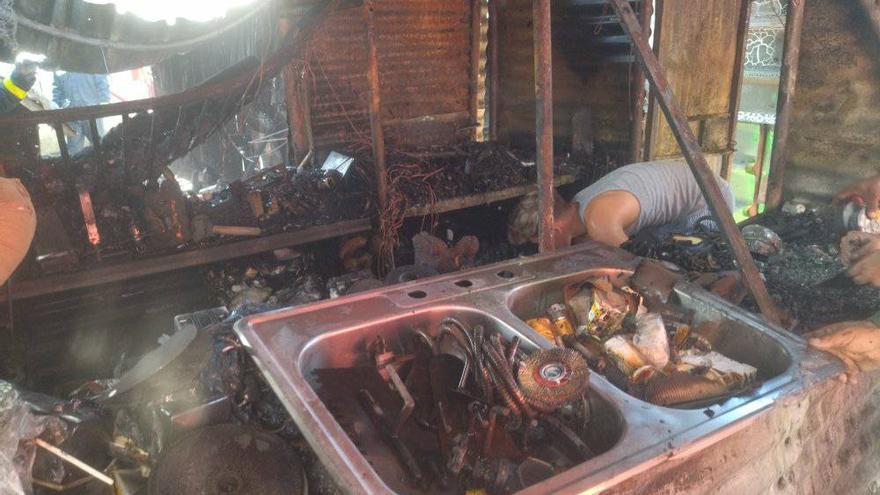
Clean Up Needed at La Candonga de Santa Clara, Cuba, After a Fire Destroyed Several Kiosks

Between seven and ten kiosks were destroyed by the fire, according to the first report. (Yunier Javier Sifonte Diaz)

14ymedio bigger14ymedio, Havana, 29 June 2023 — A fire devastated the commercial area of Santa Clara known as La Candonga on Wednesday. The fire destroyed between seven and ten sales kiosks, according to the first official report, and the cause of the fire is being investigated.

The event became known a few hours after the death of seven people in Havana in a fire caused by the explosion of two electric motorcycles. In the Santa Clara incident, however, there were no  injuries, but the losses are valued at millions of pesos for the self-employed who sell in the kiosks.

They were, precisely, the first to arrive to try to contain the fire and prevent its spread. Subsequently, the firefighters, the president of the municipal government, some cadres of the Communist Party and authorities of the territory arrived.

The people of Santa Clara reacted to the news, released by the official journalist Yunier Javier Sifonte Díaz on his Facebook page, with regret for the losses of the merchants and a place where “one can find everything or almost everything he needs.” There was widespread relief that the event left no injuries or deaths. continue reading

“The situation is very difficult, but that place has no conditions for anything, it looks like a shop in a favela,” one user highlighted. Another agreed with his opinion and denounced the potential insecurity of the area. “It’s time for them to make La Candonga a place for selling, but with kiosks made by the State, with electrical and health safety, all done aesthetically.”

Another commentator pointed out that the unfortunate event provided an opportunity to renovate the space “in areas with the same conditions, for example, the underutilized Los Pilongos.”

La Candonga Las Flores is located in front of the Arnaldo Milián Castro hospital in Santa Clara. In that commercial space, hundreds of self-employed are grouped with the tacit consent of the authorities, although the activity is not legal, since its sellers offer  products imported through mules.

The authorities have on numerous occasions accused the candongueros of inflating prices, selling in high quantities and originally in CUC [Cuban convertible currency pegged to the US dollar and no longer in use]. During the pandemic, the place was closed to prevent the spread of COVID-19, which led to a successful displacement to social networks.

The trade group on Telegram exceeds 4,000 members, and that of Facebook has more than 11,400 followers, although one of the rules, to avoid having problems with the authorities, is the prohibition of publishing messages of a political nature or that go “against morality.” Those who incur such prohibitions are eliminated immediately.

Translated by Regina Anavy 

____________

COLLABORATE WITH OUR WORKThe 14ymedio team is committed to practicing serious journalism that reflects Cuba’s reality in all its depth. Thank you for joining us on this long journey. We invite you to continue supporting us by becoming a member of 14ymedio now. Together we can continue transforming journalism in Cuba.
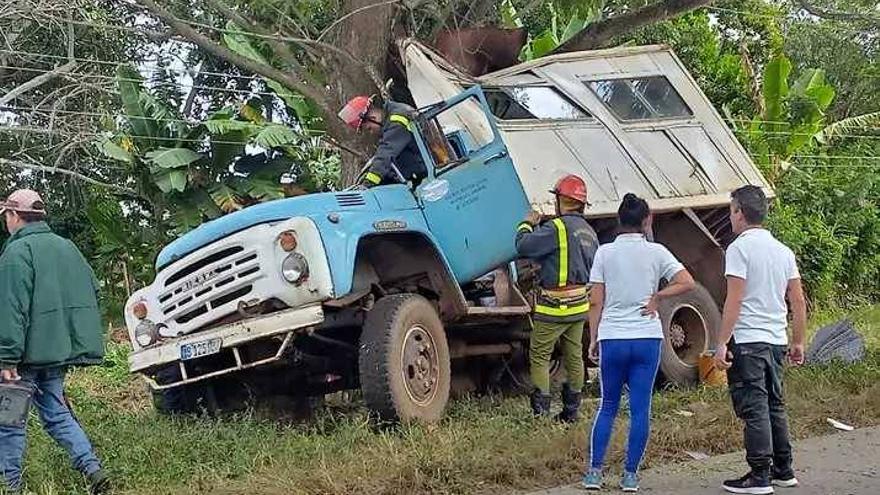
Cuban Police Ask Drivers To Pay ‘Due Attention’ To Reduce Road Deaths by 25 Percent

Cuban authorities say that 90% of accidents are due to distractions. (Radio Rebelde)

14ymedio bigger14ymedio, Madrid, 28 June 2023 — As of June 1st 290 people had lost their lives in traffic accidents in Cuba. This is 12 fewer than last year in the same period, but there is no loophole for complacency. In the same period of time, 412 Spaniards died for the same reason in a country that is five times the population of the Island.

“There is still a lack of perception in the population of the risks that can lead to a traffic accident,” said Roberto Rodríguez Fernández, head of the Specialized Traffic Body of the General Directorate of the Police, who this time quantified the accidents that could be avoided.

According to the information disseminated in the official press, the colonel offered the accident data by tiptoeing around the authorities. Just a day before, the Minister of Transport himself, Eduardo Rodríguez Dávila, placed the roads that present “an unfavorable technical state” at 40%, but Rodríguez Fernández preferred to quantify citizen responsibility.

“We lack signs; the technical states of the road and vehicles are not adequate, but if you drive with caution and pay due attention, we could avoid 35% of traffic accidents, 25% of the deceased and 28% of the injured in the country,” said the colonel.

Rodríguez offered the data for the first five months of the year at a press conference. There were 3,620 traffic accidents and 2,807 people were injured, which means 448 accidents and 198 fewer injuries. “As long as a human being loses his life or is injured, we have to be dissatisfied with what has been done,” he said. continue reading

Next, he attributed to the “human factor” the cause of 90% of accidents, of which up to 75% are due to distractions. “When we talk about not attending to the control of the vehicle, we refer to any act or maneuver that prevents the correct concentration in driving. Reading a document, answering a call or sending messages,” he said.

Twenty-nine percent of accidents occurred due to “violations of the road,” which include skipping the signals and invading the opposite lane. Nineteen percent of the deaths and 29% of the injuries occurred for this reason, and, in addition, in 82% of the accidents due to this cause, at least one person died.

Rodríguez also referred to the accidents that occurred due to speeding, and although he did not give a percentage – now exceeding 100% – he said that they have decreased, but that the average number of deaths in these cases is one person for every seven accidents. Although speeding accidents decreased during the period, the number of deaths from this cause has increased.

Six out of ten accidents on the Island leave fatalities, the colonel said, especially in one of the most fatal cases: the crash of vehicles. Disregard of pedestrians also has a high mortality rate. For every five of these, one person dies, usually the pedestrian.

As for the ages, the most affected are in the range from 21 to 35, while the majority of deaths belong to the 46 to 55. The most dangerous time slot is the one that takes place between 3 and 6 in the afternoon, with a regular increase on weekends.

“Seventy percent of accidents in the country occur in urban areas. Among these, 81% are in residential areas,” added the official, who warned that the only provinces in which the three indicators (accidents, deaths and injuries) increased were Pinar del Río and, above all, Villa Clara.

The data indicate that almost two Cubans die a day on the roads. The most serious accident that occurred this June (a month not counted in the data offered on Tuesday) occurred in Puerto Escondido, between Mayabeque and Matanzas. A tanker truck and a passenger truck collided near the Bacunayagua bridge, leaving four dead and eight injured. Among the fatalities was a ten-year-old girl, Nayeis González Villamil, who could not overcome the serious injuries with which she was admitted to the Elíseo Noel Caamaño pediatric hospital, in Matanzas and died 48 hours later.

Cuba’s aging motor fleet and the shortage of public transport is one of the causes for many private vehicles to adapt for collective passenger transport without safety conditions, favoring accidents with fatal results.

Translated by Regina Anavy

____________

COLLABORATE WITH OUR WORKThe 14ymedio team is committed to practicing serious journalism that reflects Cuba’s reality in all its depth. Thank you for joining us on this long journey. We invite you to continue supporting us by becoming a member of 14ymedio now. Together we can continue transforming journalism in Cuba.
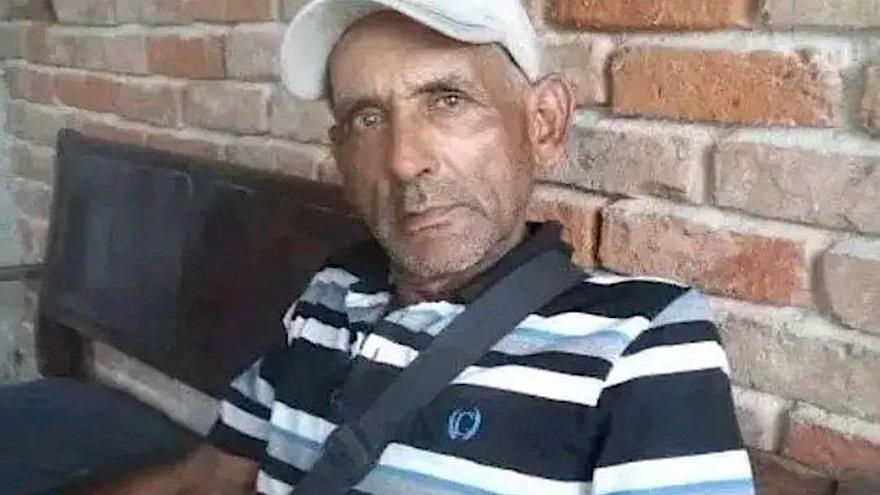
Cuban Coachman Dies After Being Robbed in Santa Clara Tourist Area

Díaz was not engaged in transporting people but rather loads, such as bagasse from the Guaraperas, and would take it to the garbage dump. (Courtesy)

14ymedio bigger14ymedio, Havana, May 24, 2023 — Antonio Silvino Díaz Yera, 57 years old, who worked as a Santa Clara cart driver, died on Monday after being assaulted and stabbed outside the Los Caneyes Hotel. The Police have arrested two suspects, yet the investigation remains open, as the horse and cart — whose theft is the alleged motive for the murder — have not been found.

“He’d gone out on a ride and never returned,” said Laurien López — niece of the deceased and resident of Camajuaní — who reported the crime. Díaz’s still-living body was found the next morning by a male resident of the Los Caneyes neighborhood, a hotel located on the outskirts of the city and very close to the Che Guevara Mausoleum.

The man, immediately called for a patrol car and Díaz was taken to the Arnaldo Milián Provincial Clinical Surgery Hospital. “He arrived with a stab wound to the chest, a slit throat and with many bruises. He hardly had any vital signs and was almost dead,” López recounts. “He died in the foyer, while they were trying to save him.”

“The police arrested two people with blood-stained clothes, but they haven’t wanted to talk,” revealed Díaz’s niece. However, there was no sign of the cart or the horse.

Despite the fact that the place where López was assaulted is frequently visited by tourists, it is a remote area in whose vicinity shanty neighborhoods have accumulated. The most notable of them and where crime is frequent, is located right next to the pharaonic Guevara mausoleum. continue reading

“The family is extremely upset about what happened. My uncle had a slight learning disability. He had no children and lived with a cousin of ours,” says López. “He was not engaged in transporting people but rather some loads, such as bagasse from the guaraperas, and he would take it to the dump. He lived between the streets of Roble and Síndico. Occasionally, someone would see him and place an order.”

In December 2022, another cart driver from Villa Clara, identified as Osvaldo, was also murdered in order to steal his horse in the municipality of Encrucijada. The crime was reported on social networks, but the Police did not offer any official version. Like López, he also went out to carry out an errand and did not return to his house. He was found in a cane field, with his throat cut and a mutilated hand.

Last April, another cart driver from Jinaguayabo, a rural town near Remedios and the luxurious Cayería Norte de Villa Clara, explained to this newspaper that his route had become a highly dangerous area.

In the middle of a journey, he picked up three people who were waiting on the road and shortly after he was robbed. “When they were reaching the bridge, the one behind me tied a strap around my neck and forced me to park in the ditch.” They took the phone, some bluetooth headphones, his watch and the collection of the day, 2,500 pesos. “At least they left me the horse and cart,” he recounted with some relief. “Now we have to see if I can buy back what I lost, because the Police are not going to find the thieves.”

The violent theft of animals in Cuban fields has also been on the rise for the past two years, with Villa Clara topping the list of unsafe provinces.

A report published in this newspaper last July exposed the methods of thieves to steal large and small livestock from private farms. The criminals study the place and the owners of the animals well, and use different painkillers to sedate oxen, cows and pigs, which they then transport in carts or dismember on the spot.

Violence and murder are increasingly accompanying assaults on the island. This Tuesday, a priest from Santiago de Cuba, Eliosbel Pereira, was attacked to take his motorbike away. The priest also received a machete blow to the left hand that required surgery.

Laurien López, who lamented the murder of his uncle on Facebook this Tuesday, is clear about the urgency of resolving the situation of insecurity in the country: “Stop those speeches about the country advancing. It does advance, but in delinquency and crimes “, he rebuked. “The Cuba that once was calm is very dangerous.”

____________

COLLABORATE WITH OUR WORKThe 14ymedio team is committed to practicing serious journalism that reflects Cuba’s reality in all its depth. Thank you for joining us on this long journey. We invite you to continue supporting us by becoming a member of 14ymedio now. Together we can continue transforming journalism in Cuba.

Shouts of ‘Freedom’ Shake Havana’s Martí Theater in an Echo of July 11th 2021 Protests

Presentation this Sunday of Les Miserables at the Martí Theater in Havana. (Marti Theatre)

14ymedio bigger14ymedio, Reinaldo Escobar, Havana, June 26, 20230 — Chanting the cry of “Freedom” — as thousands of voices throughout Cuba did on July 11, 2021 — became grounds for repression and imprisonment. So when actors in a concert performance of Les Miserables at Havana’s Martí Theater joined their wondrous voices to repeat the forbidden word, an authentic revolutionary fervor swept over the those present.

Victor Hugo published his novel Les Miserables thirty years after the anti-monarchist insurrection of June 1832, an uprising that saw the streets of Paris filled with barricades. The basest passions and highest ideals mixed with frustration and hope in this chaotic epic.

When the young, idealistic Marius sings, “Here they dreamed of revolution. Here is where they lit the flame. Here they sang about tomorrow, but tomorrow never came,” no one in the audience could have missed the similarity between these lyrics and events from recent Cuban history. Nor was it possible to miss the analogy of the shared hope — the day Cubans have been waiting for – when everyone proclaims in unison, “One more hour, one day more, one day more.”

I ask myself if, during these times of censorship, it might occur to some official at the Ministry of Culture to chastise the cast for the conviction with which they gave voice to the word freedom, or for the seditious call to a revolution for freedom.

The orchestra’s performance was as spirited as those of the singers. The only thing to which this would-be critic might object was the incessant projection of clips from the 2012 film of the same name (itself inspired by a 1985 stage version), which distracted from what was happening on stage.

Unfortunately, there were neither printed programs — at least not on Sunday, June 25 — that recorded the names of the cast members, nor even a poster at the theater’s entrance.

Thanks to widespread disregard for rules about not taking photos or recording videos during live performances, it was possible to post a clip of the production below. Though it was poorly shot, it is beautifully sung and worth a look.

I hope there is an encore.

____________

COLLABORATE WITH OUR WORKThe 14ymedio team is committed to practicing serious journalism that reflects Cuba’s reality in all its depth. Thank you for joining us on this long journey. We invite you to continue supporting us by becoming a member of 14ymedio now. Together we can continue transforming journalism in Cuba.
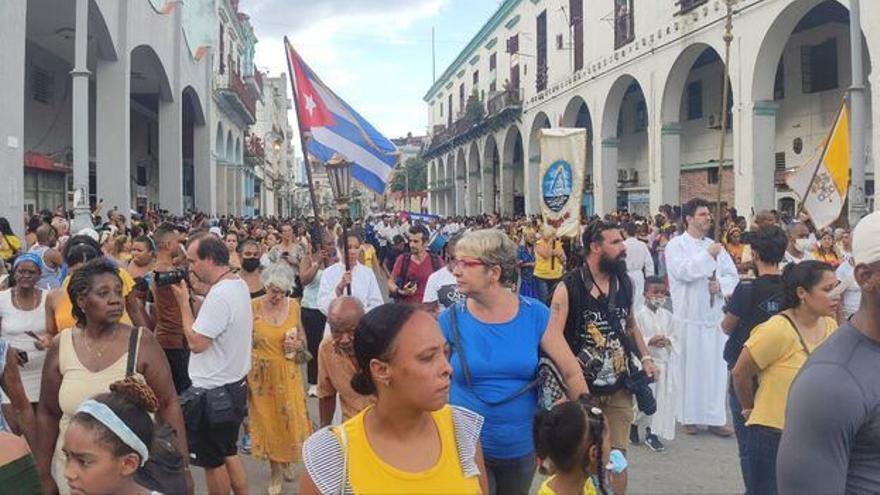
The Regime Persecutes Religious Cubans for Their ‘Civic Position’, According to Human Rights Group / 14yMedio

Some 63% of interviewees said they knew that religious processions were denied or conditioned. (14ymedio)

14ymedio bigger14ymedio, Havana, 22 June 2023 — The most recent report of the Cuban Observatory of Human Rights (OCDH) on religious freedom alleges that the Island’s religious are more vulnerable to the harassment of the regime because of their “civic position.” Sixty-eight percent of the 1,394 people surveyed by the organization said they knew of cases in which a religious group has been repressed or threatened for its criticism of the Government.

The publication of the study, which coincides with the visit of Cuban President Miguel Díaz-Canel to Pope Francis in the Vatican, does not define, however, whether the persecution has to do with the beliefs themselves or whether, on the contrary, it can be attributed to the critical role the religious have played in the Cuban public sphere.

Those interviewed by OCDH reside in 83 municipalities in the 15 provinces of the Island and were surveyed during February of this year. The general conclusion is that the country remains an inhospitable territory in terms of religious freedom. All participants – 45% of them women – are over 18 years old, and the figures have a margin of error of +/- 2.62 points.

Sustaining a critical political stance based on faith is, for 58% of the interviewees, the first cause of harassment by the regime, while 45% believe that “talking publicly about their faith” – including on social networks – can motivate discriminatory treatment. continue reading

The report also denounces “concrete actions” against religious institutions and leaders. Sixty-four percent of respondents know of cases in which they have been denied “permits for events in public spaces,” while 63% mentioned the denial or conditioning of permits “to build or repair temples,” and the same percentage, claimed to know of episodes in which the departure of processions was denied or conditioned.

In this sense, the Catholic priest José Luis Pueyo, of the Diocese of Santa Clara, affirms that a distinction must be made between “freedom of worship” and “religious freedom.” In the first case, it is one of the dimensions of religious life, but it does not exhaust it: “There are dimensions such as educational activity, presence in school and university, care for the elderly, sick and needy, communicative activity – press, radio and television – as well as a multitude of civil and associative activities (what is called ’civil society’) that are totally restricted and are monopolized, no longer by the State, but by the Communist Party,” he explains to 14ymedio.

According to Pueyo, it is “curious” that the religious must negotiate with the Party and not with the Government itself. In fact, 68% of those surveyed by the OCDH point to the Office of Religious Affairs, led by Caridad Diego – who was part of the government delegation that visited the Vatican this week – as the agency that promotes the violation of religious freedom. More than half of those consulted know a leader “who has been prevented or hindered from performing his work.”

A section of the study analyzes the “confidence” of Cubans in “national institutions,” concluding that 42% trust religious associations more than official ones. Human rights groups (19%) and independent media (13%) have the same reliability, while the Government enjoys only 13%.

Official institutions such as the Committees for the Defense of the Revolution (CDR), the Federation of Cuban Women (FMC), the Police, the Armed Forces and the courts comprise a devastating 2%. In general, 73% of respondents report that the country “is going in the wrong direction.” The CDRs are, according to 65% of the Cubans consulted, the body through which the Government exercises supervision over the religious.

The OCDH also states that the regime promotes “surveillance and control” over the religious for sustaining a “civic commitment in accordance with the values of their faith.” In addition, the Government limits the “action and social influence of religious entities and congregations, especially those that demand a greater presence in public space and in the communities.”

The United States included Cuba in 2022 on the blacklist of countries that violate religious freedom, along with Nicaragua, China, Saudi Arabia, North Korea, Russia, Iran, Pakistan, Burma, Eritrea, Tajikistan and Turkmenistan. The Government of the Island responded with a campaign that involved like-minded religious leaders, such as members of the ruling Council of Churches, the Yoruba Cultural Association, the Islamic League of Cuba and the Cabildo Quisicuaba cultural project. Enrique Alemán, director of Quisicuaba, defended the Cuban State, saying that it “recognizes, respects and guarantees” all religions, but he avoided alluding to the critical stance of many of its leaders.

During the summer of that same year, a report by Prisoners Defenders, based in Madrid, showed that since 1959 the regime has organized an espionage network to infiltrate numerous agents in churches and also in fraternities such as Freemasonry.

In the case of the latter association, its national Grand Master, Francisco Alonso Vidal, had to escape from the Island after the sustained harassment of State Security. The Freemason then denounced the systematic infiltration of Cuban counterintelligence, with the aim of monitoring and influencing the decisions of all fraternal and religious institutions on the Island.

Translated by Regina Anavy

____________

COLLABORATE WITH OUR WORKThe 14ymedio team is committed to practicing serious journalism that reflects Cuba’s reality in all its depth. Thank you for joining us on this long journey. We invite you to continue supporting us by becoming a member of 14ymedio now. Together we can continue transforming journalism in Cuba.
Cuba Is Without Water for the Poor of Mayari and the Rich of Miramar, Including the Embassies

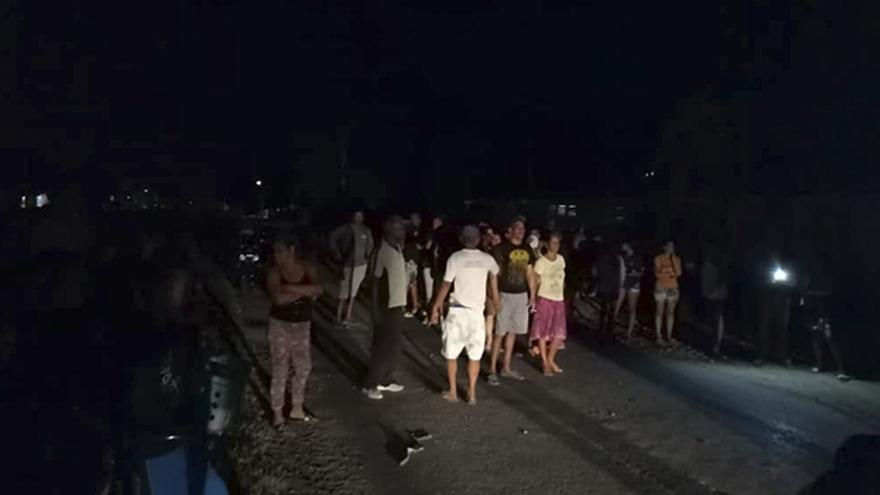
The residents in the Cuban town of Guatemala, municipality of Mayarí (Holguín), took to the streets to demand the restoration of water service. (Facebook)

14ymedio bigger14ymedio, Havana, 27 June 2023 — The lack of water drives Cubans mad, from one side of the Island to the other. In the Guatemala neighborhood, in Mayarí, Holguín, dozens of residents took to the streets early morning on Tuesday after being without service for three months, and in Havana, even diplomats and foreigners residing in the exclusive neighborhood of Miramar suffer from the problem.

Illuminated only by the light of their cell phones, the Mayarí protesters repeated a single cry: “Water!” and demanded the attention of the authorities. Shortly after the rally began, some provincial leaders arrived to “converse,” and they promised solutions for the same week.

In the videos published on Facebook, Geovanis Martín Gutiérrez, president of the Municipal Assembly of People’s Power in Mayarí, is seen trying to reassure the crowd, who listened with disbelief to the official’s promise to install three pumps.

Martín Gutiérrez said that he had already spoken to Havana, where a hydraulic pump was being “prepared” and was “on its way.”

They said the equipment would be ready between Wednesday and Thursday, he said, and he asked that they “speed it up so that it would arrive sooner.” In the face of citizen protests, the official admitted that the motor cables are being rewound in Matanzas and then will go to the Cuban capital.

The families in the town had run out of water after the pumping engines broke. On his Facebook profile, official journalist Emilio Rodríguez Pupo said last Saturday that “the search continues” for solutions to the installation of a motor. continue reading

On Saturday, a pump was installed, but the official channels recognize that it is not enough to meet the demand, given the small flow of 7 gallons per second. The water deficit has been alleviated with watertrucks, which also do not manage to meet the needs of families.

However, Martín Gutiérrez clarified that getting the equipment wasn’t a problem, but the motors had collapsed due to a power outage during “the May rains.” Even so, he promised that the pump sent from Havana will be installed, one that the provincial government is managing and another that will be on “reserve.”

The official Realidades desde Holguín reported that after the conversation with the authorities, the “inhabitants went home to go about their daily business.” According to this source, families “already have the precious liquid at their fingertips. We told them that harmony would return, and so it did,” said the article, accompanied by photographs of the empty streets after the gathering.

Meanwhile, the capital itself also has a significant deficit in water service that affects more than 200,000 families, the equivalent of 10% of the population.

According to the official newspaper Tribuna de La Habana, the western region benefited “very little or not at all” from the torrential rains of recent weeks. Both Havana and Cienfuegos suffer a decline in their reservoirs and are in critical condition.

Engineer Rosaura Socarraz Ordaz, director of Operations of the Aguas de La Habana Company, explained that the most affected municipalities are Playa, Marianao and La Lisa. Families in these places receive the service on alternate days for eight hours on average, but due to system breakdowns caused by electric shocks, the schedule has been reduced.

In a meeting chaired by Deputy Prime Minister Inés María Chapman, it was reported that in July a batch of 12 pumping machines will arrive on the Island that will stabilize the supply system. At the moment, community water tanks and the use of  wells have been enabled.

User reactions were not long in coming, and it shows that the problem does not discriminate between residents with resources. The user Mario Hernández, who identified himself as a worker of a real estate agency that serves embassies and commercial offices, said in a comment to the Tribune article that in the Council of Miramar, in the municipality of Playa, there are not even watertrucks to supply the water in diplomatic headquarters.

In addition to reducing the hours of service, the pressure level has been lowered, so the cisterns don’t even fill up to half. “The complaints have already begun,” said Hernández, and he added that embassy officials plan to send an official complaint to the Ministry of Foreign Affairs of Cuba.

Translated by Regina Anavy

____________

COLLABORATE WITH OUR WORKThe 14ymedio team is committed to practicing serious journalism that reflects Cuba’s reality in all its depth. Thank you for joining us on this long journey. We invite you to continue supporting us by becoming a member of 14ymedio now. Together we can continue transforming journalism in Cuba.
Due to Lack of Money for Maintenance, Only 50 Percent of Transport in Cuba Works

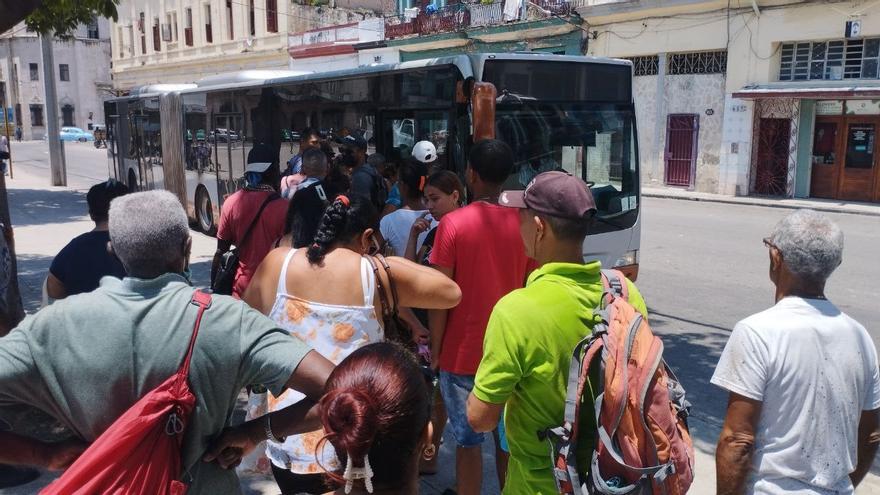
The minister put the cost of keeping the fleet ready at 40 to 50 million dollars a year, and since there is no money, the availability of transport is only 50%. (14ymedio)

14ymedio bigger14ymedio, Madrid, 27 June 2023 — With the holidays just around the corner, the overall situation in passenger transport is bleak on the Island. The most serious thing, due to its repercussions on mortality, is the insecurity of the roads. According to the Minister of Transport, Eduardo Rodríguez Dávila, 40% have an unfavorable technical condition.

The bad news from the sector did not take anyone by surprise, despite the fact that the minister made an effort to show some achievements last year. Among them, the increase in the bus fleet in Havana, something that would not have been possible without the donation of 104 additional vehicles. Ten minibuses were also added, in this case thanks to the fall in tourism, which they served before. Other advances in 2022 were the increase in routes in the capital with 75 electric tricycles, the reestablishment of rail services and the MóvilWeb Urbanos application for transport, among other things.

But the assessment doesn’t leave a good taste in the mouth, since Rodríguez Dávila began by admitting that there is a “decrease in passenger and cargo transport capacities” and attributed the situation to objective and subjective factors.

The minister put the cost of keeping the fleet ready at 40 or 50 million dollars a year and, since there is no money, the availability of transport is only 50%, “aggravated by the fuel situation on the island.” Although the traffic in the ports indicates that oil is arriving, the needs are many, and public transport does not exactly seem to be the priority. According to the minister, in some provinces only “opening and closing” trips are made due to a shortage that he attributed, among other reasons, to the “persecution” of the ships that transport it, alluding to the US embargo. continue reading

Rodríguez Dávila insisted that the sector needs to have access to “freely convertible currency to guarantee fuel, spare parts and other logistical elements,” raising the shadow of the possibility of  charging for transport in freely convertible currency (MLC).

At the moment, at least, it doesn’t seem to be the solution. The minister complained that the measure to ban cruises from the United States, taken by the Donald Trump Administration and not reversed by the Biden Administration, prevents a lot of foreign exchange from being captured in ports. Despite this, he explained that at the beginning of this year an MLC fund was created exclusively for the sector, which is formed “with income from abroad in the aviation and maritime-port systems.” With that money, he said, more than a thousand means of transport were recovered, since it was invested in buses.

The minister indicated that transport has “acceptable prices for the population,” although the data of the consumer price index (CPI) indicate that it is one of the sectors that has risen the most in the last year, more than 18% since last April. However, although for Cubans the cost is high, companies are in deficit or, in the words of Rodríguez Dávila, “they are below the threshold of the profitability of companies” and many of them “report losses.”

“The main transport bases throughout the country have been working practically without spare parts for the last three years,” he added.

The official also spoke about the railway, which is very deficient in terms of passenger transport, although it has been possible to move “prioritized” cargo as long as conditions have allowed it. With this, he refers to the almost 600,000 tons of fuel, sugar and products corresponding to the basic basket that move along the railways.

On the other hand, the transport of port cargo was reduced by 44% since 2018, but new means for its improvement have been incorporated, including small ships with 2,800 tons of capacity.

Among the positive points, valued by the minister, is the theoretical improvement of parcel shipping services, the legalization of new means of transport, such as electric tricycles that provide service on short routes between cities, and the creation of a public bicycle service.

“We are going to continue with that program,” he said, while threatening “more energetic measures with drivers and bosses who fail to comply with the support that state vehicles must give to passenger transport.”

Translated by Regina Anavy

____________

COLLABORATE WITH OUR WORKThe 14ymedio team is committed to practicing serious journalism that reflects Cuba’s reality in all its depth. Thank you for joining us on this long journey. We invite you to continue supporting us by becoming a member of 14ymedio now. Together we can continue transforming journalism in Cuba.
Goya and Fabelo, Worlds in Collision

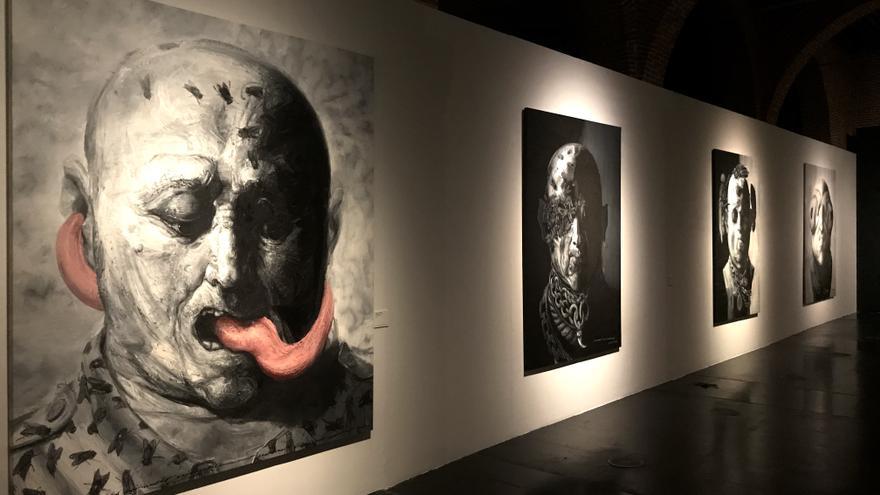
La exposición ’Goya y Fabelo: Mundos’, que reúne piezas de ambos pintores, estará abierta hasta el 30 de julio en la galería Condeduque, en Madrid. (14ymedio)
The exhibition ‘Goya and Fabelo: Mundos’, which brings together pieces by both painters, will be open until July 30 at the Condeduque gallery in Madrid. (14ymedio)

14ymedio bigger Xavier Carbonell, Madrid, 25 June 2023 – In the land of Roberto Fabelo all the statues have been decapitated and the cities are in ruins. Junk, coffee pots, washbasins, cookpots, drowsy and rugged faces, letters that have forgotten what words they belong to, men who are half asleep or who sleep the sleep of reason – all these define the artist’s work.

The tide has carried Fabelo’s works to Madrid and those who turn up to see them in the little red brick salon in the Condeduque arts centre, surrounded by geometry and order, don’t imagine they’re looking at something collapsed. The return of the master to Europe – he looks cold and black and older – does not come without some reflection and sadness. He comes in search of a father, a lineage that has always been his but one that he now wants to announce: Goya.

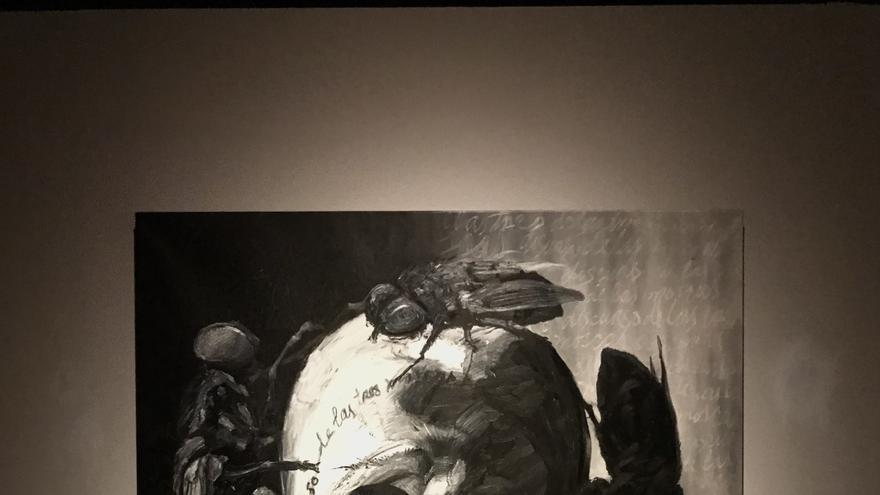
The affinity between the painter from Aragón and the Cuban one was marked from the day in which Fabelo painted his first animal with a human face. There’s a certain look that’s essential to both: the depth of the dark layers of the human, in the parts where the light upsets everything and the creatures are saturated with meaning, words and forms. Like Goya, Fabelo fills his pictures with phrases and codes. One of them promises: “if the sun comes up, we’re out of here…”; the other one paints “…on the wings of a fly”. 

In 'Leadership', drawn in 2022 on an immense cardboard, Fabelo figures without admitting it the drama of the island in the last two years. (14 and a half)
In ‘Liderazgo’ [‘Leadership’], painted in 2022 on an immense sheet of cardboard, Fabelo encodes, without admitting it, the drama of the island in the last two years. (14ymedio)

Anyone who has followed Fabelo’s works on his native island, where they form part of domestic life and imagination, will note the transgression imparted by Mundos [Worlds]. From having a certain affinity with the regime – at some points he has attributed his success, with timidity, to Castro’s revolution – he has moved more towards criticism, through the use of symbolism. The fraudulence of power, the manipulation, the possibility of dissent and of withdrawing from the scene, the predominance of the worst always happening – these all impose themselves on top of any other themes. continue reading

Upon entering the Condeduque centre, various Kafkaesque-style cockroaches tell the visitor that they’ve arrived in the dominion of monsters. Lined up like a battalion, they are Los Caprichos [The Caprices] and Los desastres de la guerra [Disasters of War], which make up some of Goya’s twilight works. They’ve already engaged in battle with Fabelo’s rhinoceroses and satyrs. What we witness – in the darkness of the salon held back by time – is the dialogue between two gentlemen who have shared a duel.

From this planetary confrontation, in which Fabelo spars also against other models of his – Durero, Dalí, El Bosco – emerge, unharmed, certain domestic objects, which the Cuban has always treated with kindness, like talismans. In a cauldron there is the Virgin of Kindness, patron of Cuba; the coffee pots have faces, and weep for all the shortages; bullets fired by soviet rifles on the island have become magnetised into a sphere. 

Fabela, like Goya, is an elemental narrator. He’s interested in the weight of a story, the accumulation of gestures and signs with a synthetic capacity which connects him with Monterroso or Borges. In Liderazgo, created in 2022, on an immense sheet of cardboard, Fabelo encodes, without admitting it, the drama of the island of the last two years. The stampede of animals away from a fire or a deluge; the decapitated general, sabre in hand, leaning on an octopus, still insisting on giving orders; the incredible large ugly bird; the ogre; the satyr boxer; a creepy crawly that pleasurably rubs its back against the mud; the whisper of flies – all encapsulate the drama of fleeing or of remaining in an oppressive place. A self portrait of Fabelo as a monster abandoning with fear the margins of his own picture gives us a hint as to the conflict in the life and work of the painter. 

Of course, Fabelo’s calibre is encyclopaedic. His drama belongs to everyone and isn’t confined to the cartography of Cuba or of Cubans. Neither are Goya’s uniforms, swords, canon fire and vermin limited only to the Napoleonic era, all of which ask whether there isn’t anyone that can let them loose. Between both painters gravitate two centuries, annulled by the same sensibility. It’s probable that exile, memory and death, which have always pursued Fabelo, will catch up with him finally in Europe. It’s the price of immortality.

One of the triptych: ‘Discurso de las tres moscas’ [Speech of the Three Flies], oil on canvas, from 2013. (14ymedio)
Translated by Ricardo Recluso

____________

COLLABORATE WITH OUR WORKThe 14ymedio team is committed to practicing serious journalism that reflects Cuba’s reality in all its depth. Thank you for joining us on this long journey. We invite you to continue supporting us by becoming a member of 14ymedio now. Together we can continue transforming journalism in Cuba.

Thanks to Cuban Ingenuity, the Regime Is Losing Control of Dollar Transactions

Some companies are setting up payment systems to facilitate money transfers that circumvent Cuban banks. (EFE/Lenin Nolly/File)

14ymedio bigger14ymedio, Havana, 23 June 2023 — Javier operates a food service business in Central Havana serving both tourists and locals. His customers have the option of paying for his services in pesos, dollars or euros, currencies this businessman has no intention of leaving on the table. Because he has a Spanish passport, he was able to open an account at one of that country’s banks. This serves a double purpose: it allows him to move his earnings offshore and to act as an informal money transfer agency.

Any number of Cuban emigrés living in Spain are familiar with the services Javier (a fictitious name) offers. The operation is simple. They deposit remittances they want to send to Cuban family members into his account along with a twelve-euro “commission.” On the other side of the Atlantic he meets the recipients at their home at a pre-arranged time. Once he receives confirmation on his cell phone that the transfer has been gone through, he turns the cash over to the emigrés’ Cuban relatives.

It’s a win for everyone involved in the transaction. Javier makes a small profit from the hard currency in his foreign bank; the relatives on the island get much-sought-after euros (or their equivalent in pesos) which are unavailable to them in Cuba; and the emigrés circumvent the Cuban banking system, a widespread desire among many in the exile community. The only loser in all this is the regime, which has no clue that money is being moved around.

Cuban creativity continues to satisfy the needs of the moment. This business is similar in part to one El Nuevo Herald described in an article on Friday, which describes how people like Javier are bypassing the island’s official financial channels. The Miami-based newspaper spoke with several of that city’s money transfer companies, which help finance the island’s private sector with remittances from Cubans living in the United States. continue reading

The setup works like this: a private business owner in Cuba submits a request through a money transfer company, which handles buying and shipping products from an account funded by deposits from family members. Once the item is delivered, the owner reimburses the company in pesos or foreign currency at its branch office in Cuba and pays it a fee for acting as intermediary

The company benefits because the process ensures it has cash on hand in Cuba to pay remittances since it is impossible to execute bank transfers from the United States due to the embargo. “From a banking compliance perspective, it is completely inappropriate,” said one Cuban customer who benefits from the practice. “But from another perspective, we are talking about the first time in recent history that the Cuban government does not have access to these dollars or to any of the monies from these operations.”

Businesspeople interviewed for this article said ideally there would be a bank specifically for the private sector but they believe that this alternative, though inadequate, is currently the best option.

Other interviewees say that moving money across the globe is very complicated because banks are very interconnected through the U.S. banking system. Unless one has foreign nationality like Javier, or is married to a foreign national, it is almost impossible to have an overseas bank account.

The Herald claims these alternative solutions are an unintended consequence of measures taken by the Trump administration. Because the U.S. does not allow remittances to be transferred through banks run by the Cuban military — the only available option on the island — many companies were forced out of the business. Other options, however, began to proliferate. The first solution relied on so-called “mules,” which had all the risks and limitations of carrying cash around. But the pandemic, along with the subsquent closure of international borders, encouraged more imaginative solutions.

Sources in the Biden administration told the Herald that it was looking very closely at what it can do to facilitate private businesses’ access to the financial system. “This is one of the main things, if not the main thing, that small Cuban businesses who want to do things well and be respected have asked us,” said an official.

The Herald published an article on Thursday that addresses the issue of new privately owned companies that are “scaling up businesses to a degree that was unimaginable just a couple of years ago.” Oniel Diaz Castellanos, founder of the Cuban consulting firm Auge, told the newspaper that the proliferation of these businesses is a paradigm shift on the island.

Though there are many in society who perceive small and medium-sized businesses (SMEs) as little more than extensions of the regime and drivers of inflation, the article is more in line with the positive view offered by Cuban economist Pavel Vidal, who just a few weeks ago pointed out what he feels are many unfounded prejudices. “A segment within the ruling party does not want reform and are very happy with the seemingly widespread pessimistic view of SMEs,” he argued.

Those interviewed for the article share that point of view and believe that their prosperity is evidence that less money is flowing into the state coffers. However, the article also describes suspicions many people, including many in the opposition, still have about these new entrepreneurs because they operate outside the political arena and are limited in what they can do in regards to imports and exports, areas in which the regime still maintains a monopoly.

However, some merchants interviewed by 14ymedio are happy to discuss their ability to overcome the difficulties faced by ordinary Cubans.

“We’ve been learning which importers do everything more quickly and efficiently,” says the accountant at a small business that purchases food from overseas. “A good incentive for employees who work directly with SMEs helps a lot. Almost all the work of contacting the supplier and managing the shipping, freight and everything else is done by us. By the time [our clients] sign and stamp the import certificate, we’ve already taken care of things. All they need to do is validate it”.

____________

COLLABORATE WITH OUR WORKThe 14ymedio team is committed to practicing serious journalism that reflects Cuba’s reality in all its depth. Thank you for joining us on this long journey. We invite you to continue supporting us by becoming a member of 14ymedio now. Together we can continue transforming journalism in Cuba.
Victims of Crimes Prefer Not To Call the Police, Three Officers Lament on Cuban Television

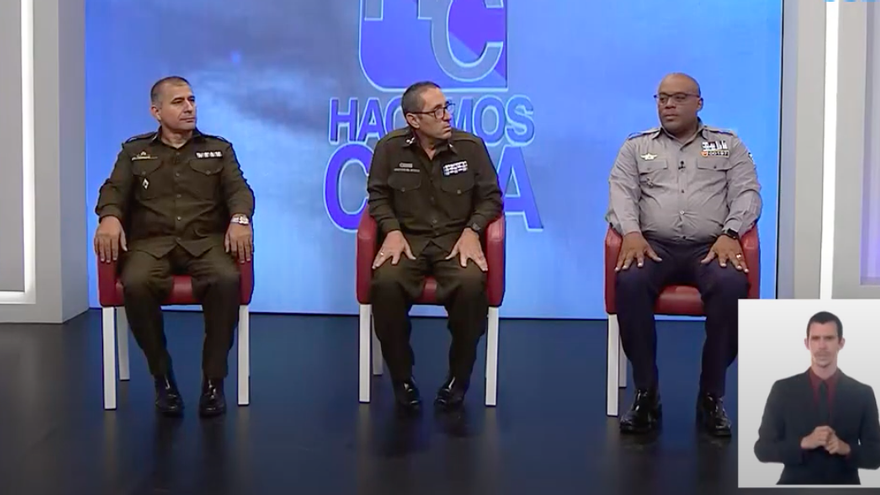
Raúl Cano, head of the General Directorate of Criminal Investigation, Manuel Valdés, head of the “confrontation body” of the Department of Investigations and Hugo Morales, national head of Patrols. (Captura)

14ymedio bigger14ymedio, Havana, 27 June 2023 — The Police appeared this Monday on Cuban Television to lick their wounds from the wave of violence, robberies and murders suffered by the country and to denounce its coverage by the independent press. It is, insisted the agents in the Hacemos Cuba TV program, incidents of “isolated criminal behavior” that “the usual enemies” magnify to make the Ministry of the Interior look bad and argue that Cuba is a “failed State.”

The program, moderated by the presenter and spokesman of the regime, Humberto López, is the extension of a recent editorial on crime published in Granma, where it was admitted that the Police solve only 60% of the crimes on the Island that do not involve firearms.

Hugo Morales, national head of Patrols, and Raúl Cano, head of the General Directorate of Criminal Investigation, provided another fact: 2% of the total crimes in which a person has lost his life remain unresolved, despite the fact that they are given “superior attention.”

The unclosed files “remain on the table,” apologized Cano, who assured that the “continuity of investigation is permanent” in each of the cases – he did not specify how many – “until it is possible to give an answer to the relatives of the victims.” In addition, they added the data that Granma had provided days before: 10% of crimes involving a firearm also remain unsolved.

None of these numbers worries the officials too much, whose real concern, they said, is that Cuba’s reputation in terms of citizen security is maintained. According to the State media, the independent press intends to “sow panic” in the population and establish a “parallel world.” To exemplify the “manipulation” of reality, they cited three alleged crimes disseminated on social networks: the assault “at gunpoint” of a bus on route 436 in Havana, the theft of cell phones and clothes in the pediatric ward of Güines (Mayabeque) and the kidnapping of a child in Havana.

“None of these facts are true,” said Morales, who did not allude, however, to the dozens of crimes reported by the independent media with abundant documentation and testimonies. continue reading

The Police are “the first to arrive on the scene” where a crime is committed, the agent guaranteed, and after “verifying the real existence of the facts, they guide the victims on how to preserve the site.” Then, he says, the “rest of the systems” are contacted, such as forensics, Public Health and State Security.

Morales explained that the Ministry of the Interior is working on the “neutralization of the criminal potential” of the Island and that it intends to strengthen surveillance on the roads. In addition, it will not fail to promote “alliance” with the informers assigned by the Committees for the Defense of the Revolution to ensure “the control of people who are prone to commit criminal acts.”

For his part, Cano regretted the reluctance of the population to contact the Police. “If someone is robbed and doesn’t report it because he thinks that there will be no response, he is depriving law enforcement agencies of knowing the perpetrators of those crimes better.”

He stated that if what prevents the making of complaints is fear, the Police have “ways” to maintain the protection of “collaborators” who help dismantle “criminal chains.” “It is an ethical principle to preserve the identity of people and protect them, even with guarantees before the law, when they provide information that is useful in the investigative processes,” Manuel Valdés, head of the “Confrontation Body” of the Technical Department of Investigations, said in his speech.

Valdés was alarmed by the “new ways of operating of criminals” and the increase in judicial processes – almost twice as much now as in past years, he said without specifying the data – to which Cano replied by noting that the Police had “scientific knowledge, preparation, dedication and the incentive of creativity in the investigation.” The key, he said, is to develop criminology and “avoid concentrations of criminal acts.”

Even so, he warned, “it is possible that results are not always achieved.” For the rest of the program, the officers spoke about citizen security on the Island, where there is no need to wear, they celebrated, “bulletproof vests or protective backpacks.” “You can’t talk about insecurity in a country where a boy can play in a park without fear of being kidnapped or where you don’t have to hide a child to protect him from a shooting in the middle of a residential area,” they said, in a veiled allusion to the United States.

We must not forget the vocation of the Cuban Police, the agents emphasized, to which Fidel Castro attributed the condition of being “the best in the world, the most organized, the most prepared and also the most human.”

According to the official press, the agents have carried out 11,500 actions to prevent and confront crime so far this year, and their work has resulted in the arrest of more than 12,000 people. Although Hacemos Cuba dodged the obvious conclusion throughout the program and none of the agents dared to rattle the cage, the data – even incomplete – do not lie: as long as the crisis lasts, the escalation of violence is unstoppable.

Translated by Regina Anavy

____________

COLLABORATE WITH OUR WORKThe 14ymedio team is committed to practicing serious journalism that reflects Cuba’s reality in all its depth. Thank you for joining us on this long journey. We invite you to continue supporting us by becoming a member of 14ymedio now. Together we can continue transforming journalism in Cuba.