
The Cuban Regime Admits to the UN That 39 Adolescents Were Sentenced to Prison for the July 11th Protests

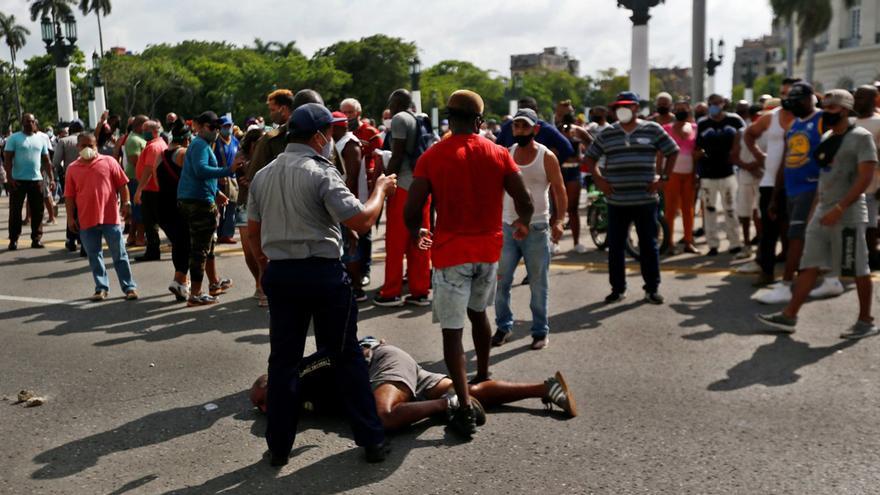
One of the protesters arrested by the police during the July 11th (11J) protests in Havana (EFE/Ernesto Mastrascusa)

14ymedio bigger14ymedio, Havana, May 29, 2023 – The Cuban regime admitted to arresting and prosecuting 39 minors, and sentencing six adolescents aged 16 to 18 years old to prison, after the protests of the July 11th, 2021 (11J).  The data are part of a government report dated December 30th, 2022, presented by the Diplomatic Mission of Cuba to the Committee on the Rights of the Child in Geneva.  On Monday, Prisoners Defenders (PD) called attention to the recent publication, unknown until now.

In the report, the Government accused the committee of maintaining “a profound ignorance to the reality of the country and the vast protection and promotion of child and adolescent rights in Cuba.”  Immediately afterwards, it revealed its “opinions” regarding a complaint by Geneva against the regime in May 2022, which demanded accountability with regard to compliance with the rights of minors in Cuba, following the wave of repression unleashed by the 11J protests, a date on which, the report states, “extremely serious violent actions and crimes” were carried out against state security.

“Four hundred eighty-eight people have been sanctioned, including 39 young people between the ages of 16 and 18 years, primarily for the crimes of sedition, sabotage, armed and violent robbery, assault, contempt, and public disorder,” the report summarizes, almost at the end of the document. In addition, it confirms that “the sanctions of deprivation of liberty befell upon 383 of the accused, considering the severity and circumstances in which the events occurred, their level of participation and personal conduct; among them 6 young people aged between 16 and 18 years.”

However, the document by Cuba’s Permanent Mission to the UN in Geneva insists that “the age for a subject to be considered criminally responsible is 16 years of age, as established in the current Criminal Code” on the Island. “As such, in Cuba there aren’t any minors younger than 16 years who have been subjected to judicial proceedings, regardless of the result or severity of their actions.” continue reading

The report acknowledges that another 105 protesters who were tried had their prison sentences commuted to correctional labor, and 33 young people between the ages of 16 and 18 years were among them, “11 were sentenced to correctional labor with internment and a similar number were sentenced to correctional labor without internment and limited freedom, respectively.” The latter, it states, were under surveillance to achieve “rectification of conduct” and “social reintegration”.

The text alleges that Cuban authorities respect “the freedom of assembly, protest and association,” including that of children and adolescents but only for “legal purposes” and they are not opposed to “observing the precepts” established by the law.

Particularly bothersome for the authorities, states the document, was the Committee’s observation that “several children, some as young as 13 years, were violently arrested, taken from their homes during the night without informing their families of their whereabouts, detained, isolated and transferred to different locations to be interrogated for long hours.”

As for the minors younger than 16 years, it states they “receive decriminalized treatment and administrative measures are available for their reorientation, specialized and individualized education” in ’special centers’.

PD, in its commentary on the report, denounced that “the centers for minors belong to the Ministry of the Interior, not the Ministry of Education. They are prisons,” and adds that the document does not specify what treatment was given to those younger than 16 years.

The report admits that “for cases comprising those between 16 and 18 years of age, they exercise strict observance of the Criminal Procedures Law, in place since January 1, 2022,” which assumes they are treated with the same degree of rigor as those outside that age range, although they are promised “special treatment” during the trial.

On May 11, PD denounced that as of the end of April Cuban prisons held 1,048 political prisoners and prisoners of conscience. Although that is 18 fewer than in March, the Madrid-based organization highlighted in its last monthly report that the the number of cases of minors “have flourished”.

The organization stressed an increase in the number of incarcerated minors, which totaled 35 in April (two more than in March.) Of these, four are girls, serving sentences or being processed. The organization highlighted that a “good portion” are held in penitentiary centers the government refers to by the euphemism Integrated Education Schools.

At least 18 adolescents were charged with or convicted of sedition, one of the most severe charges in the Criminal Code used by the regime to punish the 11J participants. “The median penalty for these convicted minors is five years deprivation of liberty, a punishment which is, on average, greater than that suffered by adults in political prison prior to 11J,” states PD.

Translated by: Silvia Suárez

____________

COLLABORATE WITH OUR WORKThe 14ymedio team is committed to practicing serious journalism that reflects Cuba’s reality in all its depth. Thank you for joining us on this long journey. We invite you to continue supporting us by becoming a member of 14ymedio now. Together we can continue transforming journalism in Cuba.
‘Green Banking’ in Cuba Will Wither Before it Begins

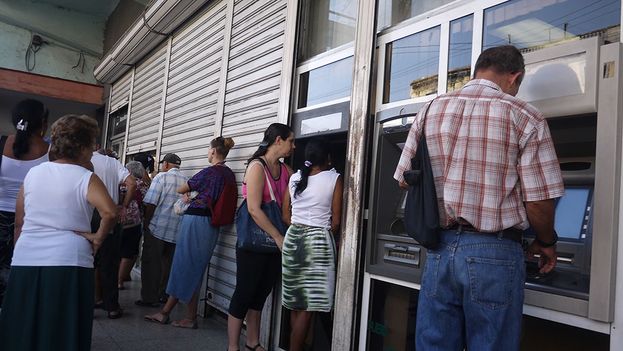
Lines at Cuban ATMs grow on weekends (14ymedio)

14ymedio bigger14ymedio, Elías Amor Bravo, Economist, 12 June 2023 — Another surprise arrives from the Island. A report in the state press says that “green banking is being encouraged in Cuba, aimed at promoting products and services focused on biodiversity,” from the incorporation of regulated risk management for the development of green financing and banking eco-efficiency practices.

What do you think? In a banking system controlled and managed by the state, inefficient, unable to encourage the use of electronic instruments by a population that distrusts these entities, they now announce “green banking.” It reminds me of that phrase of distraction used by Fidel Castro, before taking over the means of production and the property rights of all Cubans: “This revolution is green like the palms.” Well, no, it ended up being red and bloody, and history is there to confirm it.

So don’t believe it. This report on “green banking” is not very relevant. To begin with, I have my doubts that it can be launched on the Island under current conditions. This is just one more of the many examples of the regime’s propaganda to distract people from talking about the country’s real problem: the lack of food, gasoline and electricity.

As has already been pointed out, green banking is represented by a series of financial institutions that offer financing for renewable energy projects to activate the fight against climate change. The main reasons for investing in this type of project are concern for the future of the planet, climate change and the growth prospects of these energies.

Therefore, there is an increasing number of banks that are betting on investing in “green” projects that allow renewable energies to be a main source of energy around the world. In Cuba, it is worth remembering, renewable energies barely represent 5% of the country’s electricity generation, and the investments that must be made are conspicuous by their absence while waiting for some foreigner to opt for the Island. continue reading

In any case, it should be remembered that green banking arose as a result of the limited aid that the governments of many countries offered to the development of renewable energies, so that financial institutions, betting on their corporate social responsibility, started programs to support clean energy.

From there, green banks began to offer very attractive loans, under more favorable terms than the market average, to private individuals and companies that, by investing in these energies, began to pay lower bills for the use of renewables and even, in some countries, to supply the surpluses to the network, for which they obtained income. So green banking, while betting on profitable investment projects, boosted the economy and employment and managed to curb climate change. In many cases, the costs of financing the investment were covered by the benefits derived from energy savings, especially for large consumers.

And here comes another aspect to take into account. As in many other areas of modernization, green banking originated in the United States as a result of the lack of attention of the government of that country to support green energies with public funds. So the first entity that opted for this business model was the Connecticut Green Bank. These are public institutions, controlled by state governments, that invest through loans in renewable energy projects at the same time that they are dedicated to attracting the savings of private investors to this type of investment.

Another problem. Savings in Cuba are scarce, and in addition, they are subject to the financial priorities of the mechanism with which the regime covers its public spending needs, placing government bonds in banks. Therefore, it will be difficult to mobilize resources for green banking initiatives in Cuba.

However, the state press says in its report that the regime offers, until 2025, a training and awareness-raising process to guarantee the success of the progressive application in the national territory of green banking, meaning that the issue is still incipient and that it can end up being filed in a drawer if the demand, as expected, is not activated.

In this regard, the authorities point out the commitment to “promote products and services focused on biodiversity, from the incorporation of environmental risk management governed by regulations to developing green finance and banking eco-efficiency practices. In addition, they plan to encourage the mobilization of resources for such purposes as the sustainable management of biodiversity, climate change, the rational use of natural resources and environmental quality.” Resources? From where?

What’s more, producers or economic actors who think of these projects as a profitable option will not be attracted by advantages in interest rates or by some type of guarantees, because these indicators in the Cuban financial system do not adjust to supply and demand but are the result of administrative decisions. Also, the level of the productive business sector in Cuba is not in a position to place this type of initiative in its business plans, even less so at the individual level.

Taking into account which type of project can be financed with green banking, there are only those “aimed at the conservation of biodiversity; the reduction of pollution; the use of natural resources such as water, land degradation and desertification; strengthening agricultural systems to contribute to food security and credits for renewable energy purposes.” It is not easy to identify private economic agents, like small enterprises or self-employed workers, who can be eligible for this type of initiative.

Little is known about the facilities provided by the regime for the importation of renewable equipment, basically nothing. It’s another unsuccessful measure. Cubans are worried about other things that are very different. Understandably.

Translated by Regina Anavy

____________

COLLABORATE WITH OUR WORKThe 14ymedio team is committed to practicing serious journalism that reflects Cuba’s reality in all its depth. Thank you for joining us on this long journey. We invite you to continue supporting us by becoming a member of 14ymedio now. Together we can continue transforming journalism in Cuba.
‘Mi Tierra’: A Record Preserving the Estefans’ Roots Turns 30′

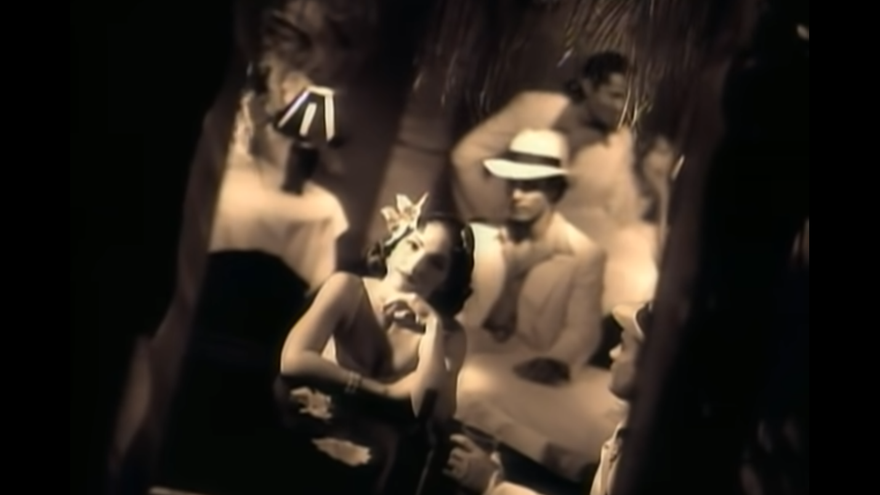
Gloria Estefan in the video for Los años que me quedan (“The years I have left”), one of the album’s greatest hits. Source: video capture.

14ymedio biggerEFE (via 14ymedio), Jorge I. Pérez, Miami, 11 June 2023 — Mi Tierra (“My Homeland”) remains the favorite album of Cuban American singer Gloria Estefan who, 30 years after its release, describes the record as “a cultural project” that she and her husband, producer Emilio Estefan, did for their children.

“It was made to keep Cuba alive and for our children to know their roots,” says Estefan in an interview with EFE in Miami on the occasion of the 30th anniversary of an album that was not the first she recorded in Spanish, but was the first that she made in Spanish “after success in English.”

“It’s a project that plays variations of Cuban music, which is so rich. Culturally, it reflects Emilio and me. As artists, it has been the greatest contribution we have made to who we are. That mixture (of sounds) is very real within us,” says the singer, composer and actress.

With 12 songs written especially for the album, which was released on June 22, 1993 under Sony Music’s Epic Records label, Mi Tierra includes pieces in such Cuban genres as bolero, son montuno, chachachá, and danzón, and closes with a conga santiaguera [music for an ensemble dance from Santiago de Cuba in Oriente, Cuba’s easternmost province].

From 1993 to now, 19 million copies have been sold, she declares with pride.

“I grew up singing the Cuban ’standards’.” When we left Cuba, my mother was able to take only one suitcase with her. But my grandmother would send me mango compotes — which didn’t exist in this country — and inside the box she’d put records by Olga Guillot, by Celia Cruz, by Cachao. So as a child l sang all these songs that meant a lot to me,” Gloria says. continue reading

About the origin of Mi Tierra, Gloria says that when they were “at the height of success,” she and her husband began to dream of being able to show the world why they were mixing Afro-Cuban sounds with their music.

“We wanted to put out something new, compose new songs, but ones that would sound as if they’d been written in the 40s, during Cuba’s musical golden age, songs before Castro. So, we came up with that concept.”

According to the performer — who was born in Havana in 1957 and arrived in Miami at two years of age — “the project began to develop.”

“We talked about bringing in the greats of Cuban music. So, there’s Cachao (Cuban musician and composer Israel López, who died in 2008), Arturo Sandoval, Paquito D’Rivera–and Juanito Márquez, a composer who was the king of feeling,” she explains.*

“We were touring the world with music in English, and when we told the [record] company we wanted to do it, they thought we had gone crazy, because it was an American company. But we said, ’You know, you have to trust us,’” recalls the Miami Sound Machine vocalist.

Gloria Estefan, one of the most successful artists in the history of Latin music, explains that the album’s title song was written “with an idea of Emilio’s” that the Colombian composer Fabio Alonso Salgado, better known as Estéfano, ended up rounding out.

“Emilio told him he wanted to make a song about what one feels about the land one leaves behind. ’I want it to be a nostalgic song, so that any immigrant anywhere in the world can remember the smells, the flavors,’ he asked him, and the two of them sat down and composed the song.”

The singer recalls that with Miami Sound Machine she had already recorded a Spanish album, A Toda Máquina, which only had two songs “snuck in” that were in English: I Need A Man and Dr. Beat.

“I’ve sung in Spanish long before all the hits in English, so (with Mi Tierra) it was like going back to our initial idea and the songs we played here at quinces [girls’ 15th birthday celebrations], weddings, bautizos [christenings], but with new and original songs.”

“I loved every moment of the creation of that record,” she says.

Asked how she feels knowing that her music is still officially banned in Cuba, she replied: “This album was a love letter to our land and a hand that I extended to Cuba across these 90 miles. Cuba is still very important in our lives–we share something, which is heritage,” she remarked.

Next week Gloria Estefan will be inducted into the American Songwriters Hall of Fame. It’s “something that means a lot to me,” she says.**

Translator’s Notes:
* “Feeling,” a term which, in the context of musical styles, is often spelled phonetically in Spanish as filin, was a type of popular song in the Cuba of the 1940s.
** Gloria Estefan was inducted into the Songwriters Hall of Fame on June 19, 2023. She is the first Hispanic woman to be so honored.

Translated by: Alicia Barraqué Ellison

____________

COLLABORATE WITH OUR WORKThe 14ymedio team is committed to practicing serious journalism that reflects Cuba’s reality in all its depth. Thank you for joining us on this long journey. We invite you to continue supporting us by becoming a member of 14ymedio now. Together we can continue transforming journalism in Cuba.
For the Cuban Foreign Minister, Chinese Espionage Is a ‘Disinformation Operation’

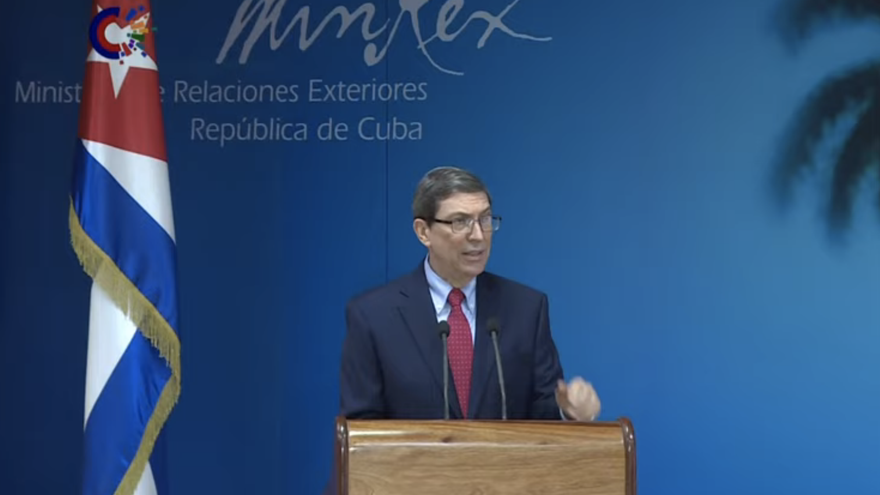
Cuban Foreign Minister Bruno Rodríguez during a press conference for foreign media in Havana. (Screen capture)

14ymedio biggerEFE (via 14ymedio), 13 June 2023 – Cuba described this Monday as “false” and “a new disinformation operation” the statements of the U.S. Government about the presence of a Chinese espionage center on the Island.

“The statements of the Secretary of State of the United States (Antony Blinken) about the presence of a Chinese espionage base in Cuba constitute a falsehood,” said the Cuban Foreign Minister, Bruno Rodríguez, in a statement released on his Twitter account and official media.

The head of Cuban diplomacy pointed out that “Cuba’s position on this issue is clear and categorical” and stated that Blinken’s statements “lack support.”

“Cuba is not a threat to the United States, nor to any country. The United States applies a policy that daily threatens and punishes the Cuban population as a whole,” stressed the Cuban foreign minister.

He also said that Washington’s accusations are intended to “serve as a pretext to maintain the economic blockade against Cuba and the maximum pressure measures that have reinforced it in recent years.” continue reading

Secretary of State Blinken said on Monday during a press conference that Joe Biden’s government has “a strategy” to counter Chinese espionage in Cuba and other countries that is yielding results.

On Saturday, the U.S. Government declassified information from its intelligence services that claim that since 2019, or even earlier, China has had some “intelligence collection facilities,” a term that can include anything from centers with dozens of spies to a simple listening station equipped with an antenna.

According to those reports, when Joe Biden arrived at the White House in January 2021, he received information that China was trying to expand its intelligence services around the world with the creation of espionage centers in Latin America, the Middle East, Asia and Africa.

Blinken made those statements days after The Wall Street Journal published that China and Cuba had agreed to build a large espionage center on the Island, a report that the Government of Havana categorically denied and that the White House initially described as “inexact.”

The Deputy Foreign Minister of Cuba, Carlos Fernández de Cossío, said that what was published by the New York newspaper was “unfounded information,” “slander” and “fallacies” to justify the U.S. sanctions against Cuba and destabilize the Island.

For its part, the Chinese government accused the United States of “spreading rumors and slander.”

One of the spokespersons for the White House, John Kirby, responded this Monday at a press conference to questions from EFE that “we have made our concerns clear,” when questioned whether there had been any communication with the Cuban Executive on this issue.

Translated by Regina Anavy

____________

COLLABORATE WITH OUR WORKThe 14ymedio team is committed to practicing serious journalism that reflects Cuba’s reality in all its depth. Thank you for joining us on this long journey. We invite you to continue supporting us by becoming a member of 14ymedio now. Together we can continue transforming journalism in Cuba.

Three Dead and a Girl Gravely Injured After an Accident in Mayabeque, Cuba

The accident occurred in the vicinity of the Bacunayagua bridge, in Puerto Escondido, on the border between Mayabeque and Matanzas. (Girón Newspaper)

14ymedio bigger14ymedio, Madrid, 13 June 2023 — At least three died and nine were injured — one seriously, a girl  — after a collision between a tanker truck and a passenger truck near the Bacunayagua bridge, in Puerto Escondido, on the border between Mayabeque and Matanzas.

The victims were from Alquízar, Artemisa, and were on an excursion to Varadero, Cubadebate reported.

According to the official press, whose source was a doctor from the Comandante Faustino Pérez hospital, around 7:30 a.m. eight people injured from the accident, four of them “red coded,” were transferred there. Two of the deceased, whose names have not been reported, died in the emergency room. The first victim lost his life at the scene of the accident, official journalist José Miguel Solís reported on his social networks.

Of the rest, two are in “stable severe” condition in the intermediate care room, two are “with care” and two others are under observation.

Three minors were also admitted to the Elíseo Noel Caamaño pediatric hospital, also in the city of Matanzas. The most serious, Nayeis González Villamil, ten years old, is “in intensive care, with severe cranial trauma.” Estefany González Villamil, 13, and Harly Romero Cruz, seven, are hospitalized but not in danger of death. continue reading

According to data from the National Road Safety Commission, published last month, 243 Cubans died and about 2,300 were injured in the more than 3,000 traffic accidents recorded in Cuba between January and April of this year. In other words, on average, two Cubans died every day and 19 were injured on the roads.

Translated by Regina Anavy

____________

COLLABORATE WITH OUR WORKThe 14ymedio team is committed to practicing serious journalism that reflects Cuba’s reality in all its depth. Thank you for joining us on this long journey. We invite you to continue supporting us by becoming a member of 14ymedio now. Together we can continue transforming journalism in Cuba.
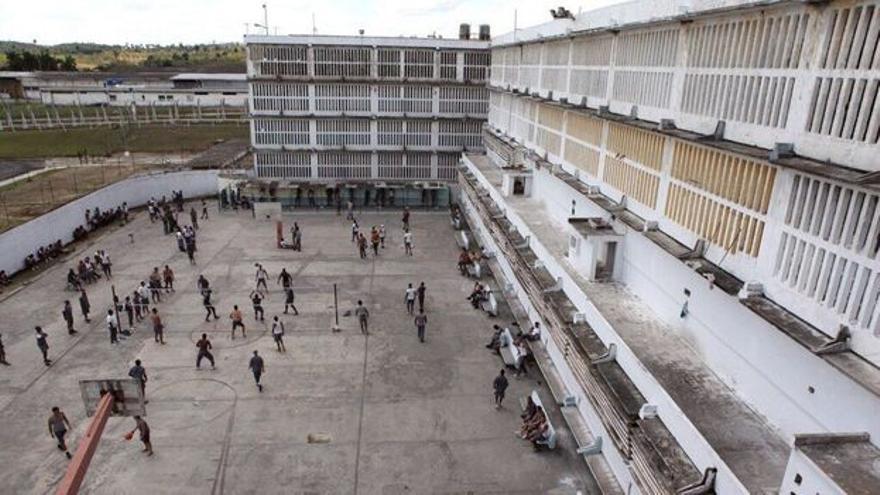
Castro’s Tortures

Inmates in the Combinado del Este are subjected to discriminatory treatment, labor violations, and physical and mental torture. (EFE)

14ymedio bigger14ymedio, Pedro Corzo, Miami, 10 June 2023 — The NGO Prisoners Defenders, led by Javier Larrondo, has presented a report entitled “First Comprehensive Study on Torture in Cuba,” a well-prepared work that demonstrates how the Cuban totalitarian regime ruthlessly abuses its citizens regardless of age, sex or any other condition.

According to the document, the work began in 2022 based on 15 patterns of torture and 181 victims, who “served as a random and statistically representative sample of a group of 1,277 civilian political prisoners, all of them tortured in Cuban prisons in the last 12 months.”

“Eighty percent of those random cases suffered more than five types of torture, and children and young people are two of the most tortured groups. Gabriela was a protester on 11J who went to prison at the age of 17. According to written and oral testimony, the guards made her squat, put their fingers in her vagina and threatened to rape her. She still suffers emotionally from the many things they did to her, says the document.

This kind of research is fundamental for those who remain determined not to see the tragedy that the Castro regime has meant for Cuba and Cubans, a situation that undoubtedly repeats itself in Havana’s allies (Nicaragua, Venezuela and Bolivia), as well as in other countries that are attracted by totalitarian temptation.

In 2012, under the direction of the filmmaker Luis Guardia and the pro-democracy activist Francisco Paco Lorenzo, we produced a documentary entitled Castro’s Tortures, a historic film that can be found on social networks, which shows how from the moment Fidel and Raúl Castro came to power, torture and the violation and abuse of human rights have not ceased on the Island. continue reading

The film begins with Castro saying that in Cuba there has never been repression, torture or murder, and it continues with former political prisoner Abel Nieves responding that even as a teenager he was tortured. They put him on his back, his arms at his sides, unable to move, with water running over his body. He concludes by saying that he spent seven days in that wet coffin, one of the gloomy drawers of the Atares Palace in Havana.

Abel, a 21-year-old prisoner, was a man of great moral integrity but very affected by the numerous abuses he suffered. His dedication to the Cuban democratic cause was absolute, and his commitment throughout imprisonment was extremely remarkable.

Orestes Pérez, a 28-year-old prisoner, like other prisoners in Topes de Collantes, was tied to a large stone and thrown into a pool to get him to denounce his companions. Evelio Ancheta was savagely tortured in the gloomy cabañitas with sudden and radical temperature changes. He was also thrown tied up into a swimming pool, and the family was misinformed about his condition. Aurelio Hernández, in the same place, was injected with sodium pentotal, received electric shocks and was subjected to simulated shootings , as was Rigoberto Hernández. Prisoner Annete Escandón did not suffer from mental problems but was given 20 electroshocks in the Mazorra hospital for three months, the same as other prisoners, including Raúl Salazar, who suffered severe consequences from the torture.

It would be painful to describe all the witness statements in the documentary.  In addition to physical abuse, there are “violations of labor rights, the legislated violation of due  criminal process, the violation of multiple fundamental rights and freedoms such as freedom of thought, expression, assembly, association, movement and religious freedom, among others. Other aspects are the legislated impunity for abuses by the authorities, arbitrary detentions, forced disappearances, provisional imprisonment and the lack of defense lawyers in Cuba.

Translated by Regina Anavy

____________

COLLABORATE WITH OUR WORKThe 14ymedio team is committed to practicing serious journalism that reflects Cuba’s reality in all its depth. Thank you for joining us on this long journey. We invite you to continue supporting us by becoming a member of 14ymedio now. Together we can continue transforming journalism in Cuba.

U.S. Invests $28 Million in Repairs to Its Cuban Embassy and Staff Housing

The number of embassy personnel is currently one third what it was six or seven years ago and staffing up “will take time.” (14ymedio)

14ymedio bigger14ymedio, Havana, 13 June 2023 — The iconic United States embassy in Havana, located along the city’s seaside Malecón, is undergoing renovation after years of progressive deterioration. Benjamin Ziff, the top U.S. diplomat in Cuba, told the news agency Reuters that Washington is investing twenty-eight million dollars to repair damaged portions of the building.

“The important thing to realize about diplomacy is that it is not only policy; it’s logistics,” said Ziff. There will also be an increase in consular personnel as well as programs to promote human rights and private business on the island.

The project is happening amid new tensions in the always precarious diplomatic relations between Havana and Washington. The news comes after the Wall Street Journal reported that Cuba had reached an agreement with China to build a spy base on the island. The Cuban government initially denied the report while the White House characterized it as “inexact.”

Late last month, however, the U.S. governement declassified secret intelligence documents indicating that it was aware of Chinese spying operations on the island by the time Joe Biden took office in January 2021 if not before.

Ziff notes that investing in repairs to the U.S. embassy will restore the country’s diplomatic presence on the island. “You need to have people. You need to have a building,” he says. continue reading

14ymedio has confirmed that work crews doing maintenance on the building are encountering serious deterioration both in the building itself and in the embassy’s living quarters, which have been vacant since the U.S. drastically reduced embassy staff due to concerns over suspected “sonic attacks” on personnel, which ultimately led to a suspension of most consular services.

A source confirmed that the living quarters are largely empty because there are so employees to occupy them. Doors, toilets and sinks have been stolen from some of the units.

Maintenance work began in May 2022 and will likely continue into the third quarter of 2024. Reuters reports that the delay is due to disputes and a lack of confidence between the two countries.

The roughly twelve-person construction crew, which includes five Cubans, must be accompanied at all times by U.S. contractors with special security clearances. The Cuban government, however, has been slow to issue them visas.

They have also had to deal with a shortatge of constuction materials on the island. For example, if a contractor breaks a sawblade, he has to return to the United States to get a replacement. He then has to apply for another visa to get back into Cuba, a process can take two months, during which time work grinds to a halt.

Machinery imported from the U.S. was also damaged due to the high sulfur content of the fuel. There have also been delays due to shortages of cement and steel rebars.

Ziff notes that some problems were resolved after the Cuban government agreed to streamline its visa process and the State Department sent over stainless steel for the fencing and granite for the building’s new facade.

No sooner do things seem to be moving forward, however, than new problems crop up. So-called “secure” containers to transport sensitive building materials under diplomatic seal are now facing bureaucratic delays. “There is an understanding that it is good for the bilateral relationship to have an embassy that is safe and secure,” Ziff said. “However, trying to bring in materials remains a problem.”

The building officially reopened as an embassy in 2015 during the Obama administration. Prior to that, it was known as the United States Interests Section in Havana. Two years later, employees began suffering from neurological conditions that came to be known as “Havana syndrome” and staff size was reduced.

According to Ziff, intelligence investigations have determined that it is “highly unlikely” that a foreign adversary was responsible for these illnesses. He reports that the embassy’s staff and agenda have returned to “a more solid” footing.

____________

COLLABORATE WITH OUR WORKThe 14ymedio team is committed to practicing serious journalism that reflects Cuba’s reality in all its depth. Thank you for joining us on this long journey. We invite you to continue supporting us by becoming a member of 14ymedio now. Together we can continue transforming journalism in Cuba.
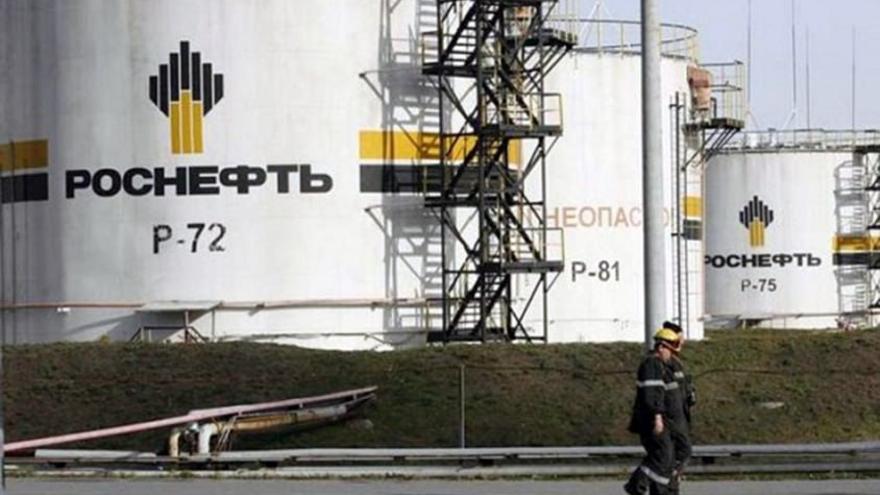
Cuba Negotiates With Russia for the Delivery of 32,000 Barrels of Oil per Day for a Year

Deposits of the Russian state company Rosneft. (Energy Newspaper)

14ymedio biggerEFE/14medio, MRussia and Cuba are preparing an intergovernmental agreement for Russia’s Rosneft to supply 1.64 million tons of oil and hydrocarbons annually to the Island, Cuban Prime Minister Manuel Marrero Cruz said on Tuesday during a meeting with his Russian counterpart, Mikhail Mishustin.

The Prime Minister, who is on an official visit to Russia, commented that on Tuesday he spoke with directors of Rosneft, who informed him about the progress of the working group created to prepare the agreement between Havana and Moscow.

According to Marrero, this agreement seeks to guarantee the “stable supply” of oil to Cuba.

Marrero stressed the validity and importance of this agreement for his country and acknowledged that Cuba is experiencing difficulties with the supply of fuels.

Researcher Jorge Piñón, from the University of Texas, informed 14ymedio that the amount of oil that Havana is negotiating with Moscow (1,640,000 tons) is equivalent to 32,000 barrels per day.

“This will cover Cuba’s deficit of 90,000 barrels per day, assuming that Venezuela continues to deliver 57,000 barrels per day. At today’s prices, approximately $58 a barrel for Urals crude oil, the total value is about $676 million per year. How is this debt going to be paid?” continue reading

For his part, Mishustin, who meets for the second time with Marrero as part of his visit, stressed that Russia “considers the strengthening of friendship and partnership with Cuba as an unquestionable priority.”

The head of the Russian Government added that the cooperation between Moscow and Havana “has passed the test of time and repeatedly demonstrated its stability in the face of external challenges,” among which he cited the economic sanctions of the “unfriendly countries.”

Mishustin reported that both countries are working on the creation of a bilateral financial system of payments and have begun to trade based on national currencies, the ruble and the Cuban peso.

On Tuesday, the Cuban Prime Minister met with the former Russian president and vice president of the Russian Security Council, Dmitri Medvedev, to discuss bilateral cooperation, including the technical-military, transport, industry and investment spheres.

In particular, they talked about cultural and humanitarian cooperation and the scholarship program for Cuban students, as well as the creation of a special school for the teaching of the Russian language in Cuba.

Marrero, who has already participated in the intergovernmental council of the post-Soviet Eurasian Economic Union and has held meetings with senior Russian officials, plans to attend the St. Petersburg International Economic Forum this week.

In the midst of an unprecedented rapprochement, Havana bets on the “generosity” of Moscow, which has already sent several loads of hydrocarbons. The Russian Prime Minister, Mikhail Mishustin, had already promised Manuel Marrero “the execution of large joint projects” in the oil field.

In this regard, Piñón stated in an interview with Radio Televisión Martí, last Wednesday, that Cuba lost one million barrels of storage during the fire in Matanzas and that, given the need to make space to store the 800,000 barrels of high-quality crude oil that arrived on the Island from Russia, it is likely that the loads of two of the oil tankers from Venezuela have been resold.

Translated by Regina Anavy

____________

COLLABORATE WITH OUR WORKThe 14ymedio team is committed to practicing serious journalism that reflects Cuba’s reality in all its depth. Thank you for joining us on this long journey. We invite you to continue supporting us by becoming a member of 14ymedio now. Together we can continue transforming journalism in Cuba.
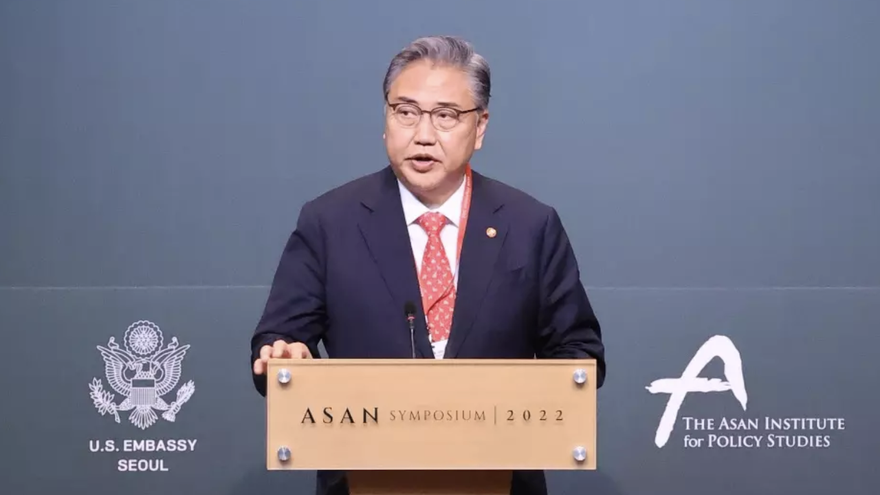
The Official Press Does Not Report It, but Cuba and South Korea Are Exploring How To ‘Strengthen Trade’

South Korean Foreign Minister Park Jin in a file image. (EFE)

14ymedio bigger14ymedio, Madrid, 13 June 2023 — Cuba and South Korea, which do not have diplomatic relations, held talks last month “to discuss the strengthening of trade,” as reported on Tuesday by the Ministry of Foreign Affairs of the Asian country and picked up by the Yonhap agency.

The meeting took place between the South Korean Foreign Minister, Park Jin, and the Cuban Deputy Foreign Minister, Josefina Vidal, according to the agency of diplomatic sources, when Park  attended the meeting of the Association of Caribbean States (ACS), held in Antigua, Guatemala, last May.

In a press conference, the spokesman of the South Korean Foreign Ministry, Lim Soo-suk, said that “both parties exchanged views on mutual interests, including cooperation at the ACS level.”

Yonhap’s note highlights that the meeting, “not announced,” is the first high-level contact between the two countries since the one that occurred in May 2018, between the then South Korean Chancellor, Kang Kyung-wha, and her Cuban counterpart, Bruno Rodríguez.

The Island is the only Latin American state with which South Korea does not have diplomatic relations, and, in addition, Cuba has never hid its closeness to North Korea. However, the agency says that’s Seoul “continues with behind-the-scene efforts to engage with the Latin American country.”

As an example, they report that the South Korean country “provided humanitarian assistance worth $200,000” after the partial destruction, in an unprecedented fire, of the Matanzas Supertank Base, in August last year.

None of this has been publicized by the official press of the Island.

Translated by Regina Anavy

____________

COLLABORATE WITH OUR WORKThe 14ymedio team is committed to practicing serious journalism that reflects Cuba’s reality in all its depth. Thank you for joining us on this long journey. We invite you to continue supporting us by becoming a member of 14ymedio now. Together we can continue transforming journalism in Cuba.
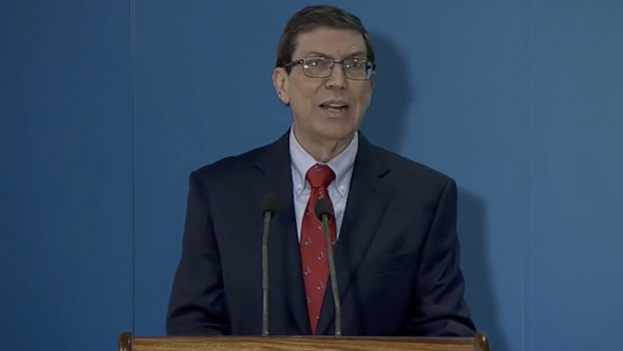
Gaviota and the Chinese Bases: Distracting Attention From the Serious Economic Situation? No, Thanks

Cuba’s Minister of Foreign Affairs Bruno Rodríguez. (Screen capture)

14ymedio bigger14ymedio, Elías Amor Bravo, Economist, 13 June 2023 — The Castro regime has been quick to deny two pieces of information circulating in the media and on social networks. This is unusual. The hierarchy that directs the country rarely finds reasons to lower itself to the level of media confrontation, since it exercises absolute control over the state press, propaganda and manipulation. But this time, that hegemonic position has not helped at all.

We refer to the accusation by the Secretary of State of the United States about the presence of a Chinese espionage base in Cuba, which was immediately dismissed by Minister of Foreign Affairs Bruno Rodríguez, and also to the announcement made by Gaviota that rumors that Cuban citizens are not allowed to enter the group’s hotel facilities are unfounded.

The two issues, of different relevance, have forced the regime to enter into the “battle of information,” one of the axes of the discourse of the leaders that, apparently, has come to stay. This gives an idea of the level of precariousness, wear and tear and lack of contact with reality of those who hold political power in Cuba at the moment. Does anyone really believe that Fidel Castro would have engaged in a discussion at this level? In the time of the old dictator, it is most likely that none of this would have been really known, because at that time censorship worked 100% and with it the fear of being discovered. The screws have been loosened; there is erosion and a lack of criteria – the ingredients for the end of a political cycle that is already, in some way, happening.

Bruno Rodríguez, in an undiplomatic and strident tone, attacked his Yankee counterpart Blinken, saying that Blinken’s statement was “a falsehood,” and he added that Cuba is not a threat to the United States or any country. Castrista diplomacy had proven that efforts to improve its international image, by bringing to Havana the leader of Colombia, Gustavo Petro, to seal, for the umpteenth time, peace with the guerrillas, have collapsed with the controversy of the Chinese espionage base. continue reading

It’s not usual, among foreign ministers and career diplomats, that Bruno Rodríguez would use such contemptuous words, but the positions of the regime against the United States are known, and whenever they can, they attack mercilessly. Havana also said that the statements of the Secretary of State “lack support,” indicating that the issue of the embargo/blockade was going to appear immediately.

And it did. Rodríguez said that “it is a pretext to maintain the economic blockade against Cuba and the measures of maximum pressure that have reinforced it in recent years. They are the subject of growing international rejection as well as in the United States, including the demand to remove Cuba from the arbitrary list of States Sponsors of Terrorism.” Under such conditions, wouldn’t it have been easier to convene a press conference to offer all the available information and confirm that there is no base or any project to build one?

No. For the diplomacy of the regime, the Chinese base or anything else, no matter how innocent, is used to emphasize that Cuba is not a threat to the United States, or to any country. Well then, let them prove it.

It is not enough to say that “the United States applies a policy that daily threatens and punishes the Cuban population as a whole. The United States has imposed and has dozens of military bases in our region, and also maintains, against the will of the Cuban people, a military base in the territory it illegally occupies in the province of Guantánamo.” In a way, with this argument, the Cuban communist minister approves of a Chinese base against the United States, which someone could interpret as a serious recklessness of Rodríguez, a leap forward in the conflict between the two countries that can have a very problematic end.

The issue of the Chinese base in Cuba spread to the media on June 8, when The Wall Street Journal reported that between China and Cuba there was allegedly an agreement on military matters for the installation of an espionage base. At that time, the Cuban regime came forward and described these statements as false and unfounded, and the person in charge of doing so was the Deputy Minister of Foreign Affairs, Carlos Fernández de Cossío, who said that “slanders of this type have often been fabricated by United States officials, apparently familiar with intelligence information.”

China joined the denial when Wang Wenbin, spokesman for the Ministry of Foreign Affairs, asked Washington to ” stop interfering in the internal affairs” of the Island and accused the administration of spreading false information. Wang Wenbin went further and accused the United States of “spreading rumors and slander,” a common tactic that “is the country’s trademark, deliberately interfering in the internal affairs of other countries.”

Later, the spokesman of the National Security Council in Washington, John Kirby, also questioned the report released by The Wall Street Journal, and said that it didn’t reflect  reality. Then Secretary of State Blinken came out with his statement that there are sufficient indications of the existence of the Chinese base in Cuba.

The Cuban communists must be amused with all the back and forth, and it’s strange that their allies, Venezuela and Nicaragua, have not entered the dance. They will, of course.

The other news that has provoked official denial is the one that began with rumors and circulated on social media, confirming that the Gaviota Business Group had decided to prohibit the entry of Cubans to their hotels. The news was supported by a Gaviota corporate statement signed by a high-level official.

Gaviota denied the rumors, and in a syrupy statement on it’s website defended “healthy and quality recreation as a right for all customers and a premise for this group.” It stressed that all its customers, regardless of nationality, have the right to enjoy the services and facilities… We are committed to providing an inclusive and enriching tourist experience for all our guests, without exception.”

Finally, the statement pointed out that “at Gaviota we work to ensure that our guests have a unique experience and our facilities offer a wide variety of services and activities designed to meet the needs and preferences of each client.”

Gaviota’s statement did not have the same media pull as Rodríguez’s statements about the Chinese base. They are not issues of the same depth, but the two are united by a common denominator, which the regime pursues to impose its explanations.

In essence, let there be talk of anything, no matter how absurd, except the economic situation. It is no longer just that statistical data are not published on the ONEI website to evaluate the situation, it is that they try by all means to divert attention, launching issues that engage Tyre and Trojans in a debate that distances us from the serious economic situation in which Cubans live and the lack of effective solutions to get out of the vicious circle caused by the Ordering Task.*

In this blog we are not going to do it, because we are clear about the objective: Cubans must know that another economic and political system is possible, and that they have it closer than ever. This bickering say very little about who is at the head of the nation.

*The Ordering Task is a collection of measures that include eliminating the Cuban Convertible Peso (CUC), leaving the Cuban peso as the only national currency, raising prices, raising salaries (but not as much as prices), opening stores that take payment only in hard currency, which must be in the form of specially issued pre-paid debit cards, and a broad range of other measures targeted to different elements of the Cuban economy. 

Translated by Regina Anavy

____________

COLLABORATE WITH OUR WORKThe 14ymedio team is committed to practicing serious journalism that reflects Cuba’s reality in all its depth. Thank you for joining us on this long journey. We invite you to continue supporting us by becoming a member of 14ymedio now. Together we can continue transforming journalism in Cuba.
With an Exchange Rate of 200 CUP per Dollar, the Peso Reaches a New All-Time Low

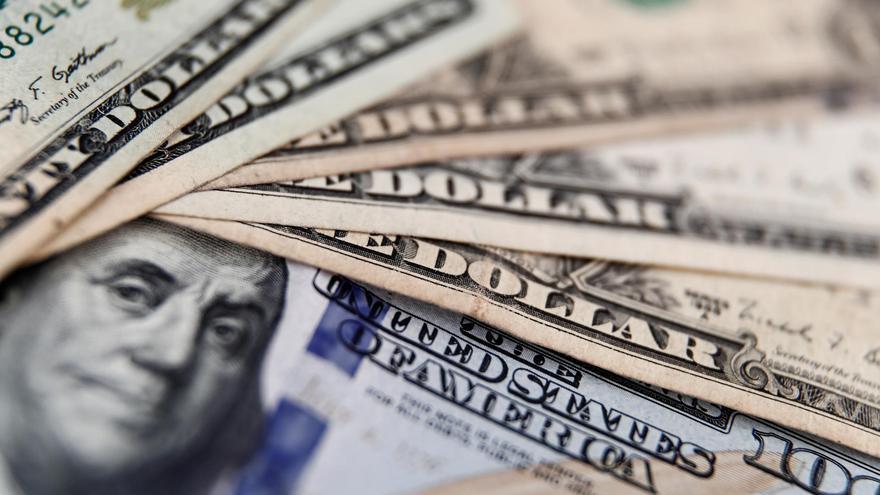
The dollar is scarce and there is a lot of demand. (EFE/File/Sebastiao Moreira)

14ymedio bigger14ymedio/EFE, Havana, 13 June 2023 — The dollar once again reaches 200 Cuban pesos (CUP), a situation that the Island had already experienced in October 2022. This time, according to analysts, it has different characteristics.

If the previous time the dizzying rise was the result of speculation, this time it’s because of the “incomplete recovery after the pandemic, especially of tourism and macroeconomic imbalances, such as the fiscal deficit,” according to Cuban economist Pavel Vidal, a professor at the Javeriana University of Cali (Colombia).

The specialist, in addition, does not see an encouraging future and indicates that most likely the exchange rate “will continue to be above 200” in the future.

Mauricio de Miranda, full professor and researcher at the same university, adds another factor: immigration. “There is a shortage of dollars and a very high demand for them,” he told EFE, which has reported on the phenomenon. continue reading

At the beginning of 2021, with the start of the Ordering Task,* the authorities announced an exchange rate of 1 dollar for 24 CUP. That was always considered by economists as totally far from reality, and it was not long before it was proven that they were right.

On the street, the dollar took little time to reach rates close to 80 or 90 pesos, and a year later, in August 2022, the Central Bank announced a modification, going up to 120 pesos per dollar for individuals and the retail sector.

But today’s situation is different from that of last October, when the 200-peso barrier was broken for the first time, according to Vidal.

In those days, Vidal recalls, there was an “overreaction to the exchange rate.”

In a new attempt to retain foreign currency in the financial sector, the Government announced last April that, after two years, Cuban banks would again accept dollar deposits in cash.

Experts saw in that announcement a contradiction to the spirit of monetary reform that sought, precisely, the opposite: to stop dollarization.

One of those critics was de Miranda, who reminds EFE that in “the national market, the dollar continues to be the currency that solves many things.”

“As long as the Cuban national market continues to offer important goods in foreign currency, the Cuban peso will not recover,” he says.

*Translator’s note: The Ordering Task is a collection of measures that include eliminating the Cuban Convertible Peso (CUC), leaving the Cuban peso as the only national currency, raising prices, raising salaries (but not as much as prices), opening stores that take payment only in hard currency, which must be in the form of specially issued pre-paid debit cards, and a broad range of other measures targeted to different elements of the Cuban economy. 

Translated by Regina Anavy
____________

COLLABORATE WITH OUR WORKThe 14ymedio team is committed to practicing serious journalism that reflects Cuba’s reality in all its depth. Thank you for joining us on this long journey. We invite you to continue supporting us by becoming a member of 14ymedio now. Together we can continue transforming journalism in Cuba.
Now Havana Wants to be Dulcinea

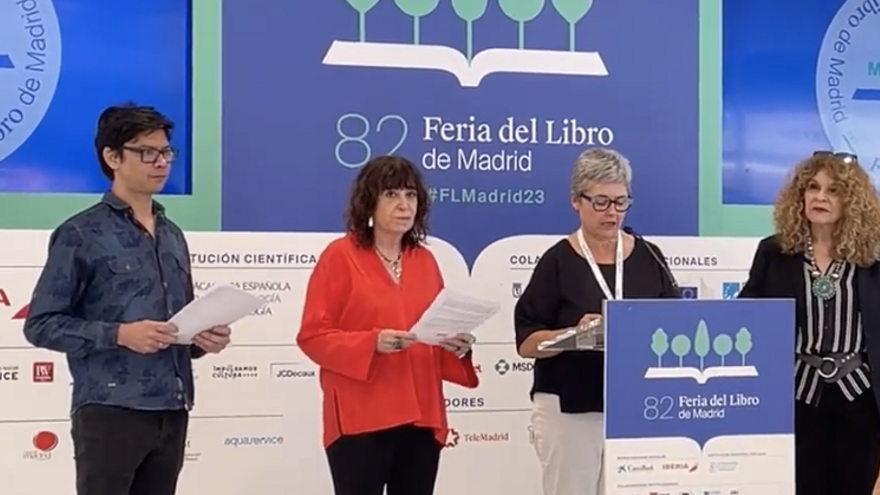
From left to right, Yunior García Aguilera, Rosa Montero, Eva Orúe and Gioconda Belli, during the reading of the manifesto at the Madrid Book Fair. (Screen capture)

14ymedio bigger14ymedio, Yunior García Aguilera, Madrid, 12 June 2023 — At the recent Madrid Book Fair, they read out a manifesto: Literature, always on the side of freedom. The regime in Havana, always quick with a smart answer, put out a riposte in the name of Casa de las Americas, with the title: On the side of Don Quixote.

They accuse the editors of the manifesto of “giving in to the campaign by the hegemonic press against anyone who refuses to accept the dictates of Washington.” How very ironic, coming from a people who bend over backwards to the dictates of Moscow, to go out to battle with this faded old cliché. Perhaps they don’t realise that their “joker” convinces no one anymore? Maybe they just have absolutely no imagination left at all? Are they that mediocre that all they can do is cling onto arguments that are so obsolete, so yellowing and worn out with endless, interminable use?

Perhaps it needs to be gently pointed out to the Cuban regime that the principal promoter of this manifesto is Gioconda Belli, winner, no less, of the Casa de las Americas Prize in 1978, amongst many other honours. The Nicaraguan poet and novelist doesn’t need to ’give in to any campaign’ – because she has been, along with her compatriot Sergio Ramírez, at the centre of attacks from a deranged dictator like Daniel Ortega. Also, these two have received the support of an overwhelming majority of intellectuals,  along with all of the other people who have been forced into exile – although Havana maintains a stony silence on such immense injustice.

Among the signatories of the Manifesto are some huge names – some of which the centre, at 3a and G in El Vedado hasn’t yet been able to invite to attend. And it’s probable that some names have been gathered in error (something which has already been rectified) but there we see other names like: Rosa Montero, Juan Carlos Chirinos, Joan Manuel Serrat… and the list just keeps growing.

The Cuban authoritarianism’s declaration, having nothing to put forward in its defence, takes futile refuge in the pages of Quixote and tries to pass itself off as Dulcinea del Toboso. They demand that we judge them as good and just people, though everyone knows that there’s nothing left to celebrate there.

The land of Dulce María Loynaz is just a sad wasteland today, in which the hospitals and the schools fall to bits whilst the number of luxury hotels and the number of prisons multiplies. Cuban artistes suffer censorship today like in the worst times of the pavonatowhilst they see all their rights flattened and with no right of reply. Every Cuban tilts against absurd windmills every single day, carrying out great heroic feats just to obtain a plate of food and dreaming about escape from this hell. continue reading

In Cervantes’ book, Dulcinea represents the platonic love of the protagonist – although in reality she is the idealised form of a country girl called Aldonza Lorenzo, whom the author describes, in a cruel manner, with shades of humour, saying that she  was the woman who was the most skilled at salting a pig in the whole of La Mancha. And even when Sancho Panza presents Quixote with a supposed Dulcinea it’s really a foul smelling wench with a hairy wart on her top lip. Don Quixote, a prisoner in his own delirium, justifies the woman’s ugliness by saying that she’s been the victim of some “magic curse”.

It’s understandable, that a regime which has nothing at all positive to show in its master plan, would insist on appealing to Utopias. But more than sixty years have already passed and real life could not be more dystopian than it is now. It is utterly unforgivable that they continue with this fraud, passing themselves off as some kind of joke princess with the hairy wart on her top lip. These people neither want nor plan for any project for their peoples’ freedom. The only, only, thing that interests them is clinging onto absolute power at all costs. The reality of Cuba is not a Cervantes one, it’s an Orwellian one.

We Cubans are totally screwed off now with this stupid endless obsession with romanticising the misery and suffering of a people. The Mexican president, Andrés Manuel López Obrador, wants us to be a modern Numancia, although the inhabitants of that village situated on the Muela mountain ended up dying of starvation, from slavery or by suicide. Not long ago, Josep Borell said that Cuba will be the Mallorca of the Caribbean. As the top representative for foreign affairs in the EU he didn’t seem in the slightest bit worried about the more than one thousand political prisoners, nor about all the violations of human rights: he saw only beaches of white sand where European tourists go to get tanned. He only sees the threat from the Chinese and the Russians’ plundering our land whilst Europe fails to grap its own share of the pie.

But Cuba does not want to be any kind Numancia, nor a Mallorca, even less a Dulcinea. Cuba wants to be free. And then, when we are, we will tear down all of those windmills.

Translated by Ricardo Recluso

____________

COLLABORATE WITH OUR WORKThe 14ymedio team is committed to practicing serious journalism that reflects Cuba’s reality in all its depth. Thank you for joining us on this long journey. We invite you to continue supporting us by becoming a member of 14ymedio now. Together we can continue transforming journalism in Cuba.
Caritas Warns About the Situation of Thousands of Families After the Rains in Eastern Cuba

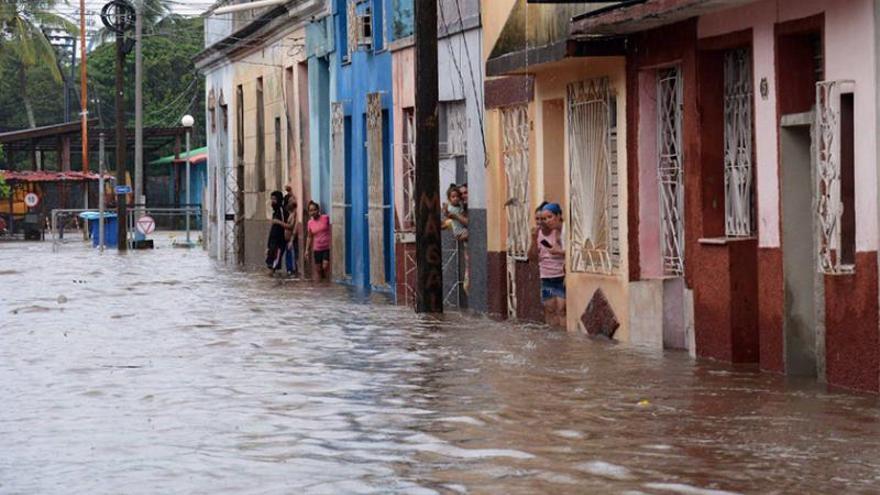
Street flooded by the rains in Camagüey. (Escambray)

14ymedio bigger14ymedio, Havana, 13 June 2023 — The loss of six human lives and innumerable resources during the heavy rains that eastern Cuba has suffered in recent days have set off alarms for several humanitarian organizations both inside and outside Cuba. This is the case of Caritas, managed by the Catholic Church, whose subsidiary in Cuba made a request for help that was published on Monday by Vatican News.

The damage caused by the rainfall, it says, “worsens the difficulties that the Cuban nation is already suffering,” from the “pre-existing economic crisis.”

The Caritas alert is aimed at those who want to help the dioceses – ecclesiastical provinces – of Camagüey, Bayamo-Manzanillo, Holguín-Las Tunas and Santiago de Cuba, the most affected by the bad weather. Drawing attention to the seriousness of the situation and the precariousness in which many families find themselves, the organization explained that, especially in Bayamo-Manzanillo, the panorama was uncertain: 10,000 homes damaged, crops ruined and 470 communities flooded, plus another 25 isolated from land.

Vatican News interviewed several Caritas officials in Cuba, who confirmed the extreme need for material aid in the eastern region of the country. “Streets such as Rosario, República, Palma, Avenida de la Caridad up to the funeral home, also the main artery, Candelario and the Casino Campestre present a worrying panorama due to the flooding,” María Rosa Rodríguez, director of Caritas in Camagüey, explained to the Vatican newspaper. continue reading

Rodríguez said that the scenario faced by the evacuees, who had to put their material goods under protection, is unfortunate. The damage to buildings of more distant villages, such as Vertientes, Amancio and Jimaguayú, have been “innumerable,” and “the oldest houses were destroyed by the excess of water,” he summarized. He added that the groups of volunteers who have come to those places have found “water up to and above the gutters.”

In Holguín, where Vatican News interviewed the local director of Caritas, Mariela Vázquez, the organization reported “great damage,” and announced that “the risks and losses are increasing due to the overflowing rivers.” The most affected towns, he said, are Mayarí, Sagua, Gibara, San Germán and Puerto Padre.

The scene in Santiago de Cuba, from where the official Ana María Piñole reports, is not very optimistic: “Rivers and streams flood everything. In some areas, the fields that were already recovering have been lost. We maintain communication with priests and pastoral teams located in more damaged areas, but the climatic instability still does not allow the expansion of data on the damage, although they say that the situation is unfortunate.”

After reacting slowly to the crisis, Cuban President Miguel Díaz-Canel said on Monday that the United Nations agencies operating in Cuba, in addition to his ally Venezuela, have offered their help. The official press deferred coverage of the rains, which did not occupy the front page of the newspapers until several days after the damage began. The information offered by the state media alludes to the “benefit” of the rainfall: it filled the country’s dams and reservoirs.

Some newspapers have echoed Díaz-Canel’s request, such as Tribuna de La Habana, which announced, as of this Monday, a “collection of donations in the municipal governments of each territory.” “Spaces will be enabled in the headquarters of the 15 Municipal Assemblies of People’s Power of the province for the collection of donations,” the newspaper reported.

On June 7, the Institute of Meteorology of Cuba issued a special warning to explain that the cause of the heavy downpours was the combination of a trough in the middle and high levels of the troposphere, over the Gulf of Mexico.

However, the Civil Defense did not issue its usual informative stages of alert and alarm to warn citizens and institutions to take preventive measures.

Translated by Regina Anavy

____________

COLLABORATE WITH OUR WORKThe 14ymedio team is committed to practicing serious journalism that reflects Cuba’s reality in all its depth. Thank you for joining us on this long journey. We invite you to continue supporting us by becoming a member of 14ymedio now. Together we can continue transforming journalism in Cuba.
Cuba’s Captain in the World Baseball Classic Signs a Contract With a Japanese Team

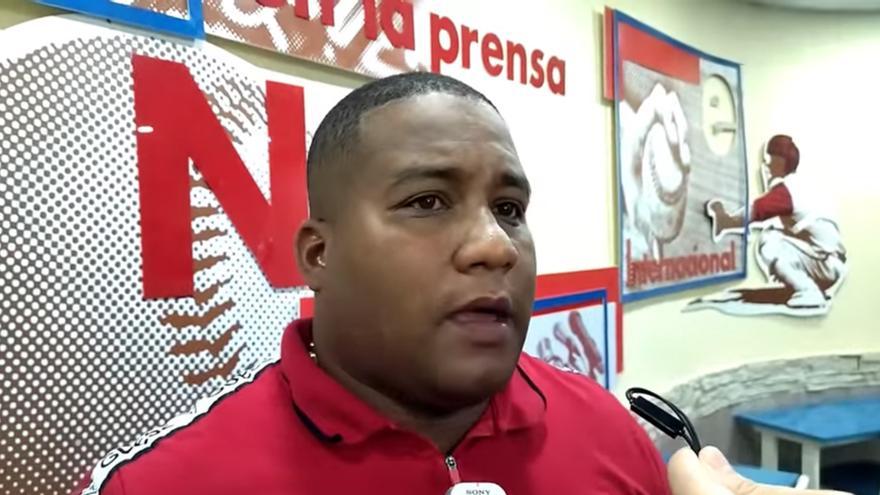
Alfredo Despaigne will play the remainder of the season with the SoftBank Falcons of the Japanese League. (Capture/Facebook: Guillermo Rodriguez Hidalgo)
Alfredo Despaigne will play the remainder of the season with the SoftBank Falcons of the Japanese League. (Screen capture/Facebook: Guillermo Rodriguez Hidalgo)

14ymedio bigger14ymedio, Havana, 13 June 2023 — The captain of the Cuban team in the last World Baseball Classic, Alfredo Despaigne, formalized his contract with the SoftBank Falcons of the Japanese League (NPB) on Monday. According to the Swing Completo portal, the pre-agreement “was around the figure of 1.5 million dollars,” although the final amount was not disclosed.

In November 2021, the treasurer of the Cuban Federation, Luis Daniel Del Risco, reported that the teams that hire Cuban players must pay 20% of the salary that the athlete receives. Also, according to data from the Gaceta Oficial of 2021, every athlete hired abroad must pay a tax of 4% on what he receives.

Despaigne had said that “he had not planned to return to Japan,” where he spent six years defending the team that has finally hired him again. The agreement is for the rest of the season, the baseball player stressed. “In the years that I was there, we were four consecutive champions, and let’s hope that the fifth crown will be repeated this year,” he told journalist Guillermo Rodriguez Hidalgo.

The signing of the player from Granma, who has 184 home runs in the Japanese Baseball League, took place in the Adolfo Luque Hall of the Latin American stadium and was attended by the president of the Cuban Baseball Federation, Juan Reinaldo Pérez. continue reading

This player has a batting average p of .263, with 184 home runs and 545 RBIs. His average of bases obtained among the total number of batting opportunities yields .842, in addition to 786 hits.

Alfredo Despaigne’s best season in the NPB was recorded in 2017, with an average of .262, by connecting with 35 long balls and 103 trailers.

On Monday, the contract of Cuban outfielder Alexey Lumpuy with the American team Chicago Cubs was also made official. A native of Camagüey, age 18, he left the Island a year ago. He is an “explosive” athlete, possessing power in his arm and good throwing speed, said journalist Francys Romero. “He is the 23rd player to sign in the current international period,” the reporter said on his social networks.

The Chicago Cubs also hosted the 19-year-old ambidextrous batter, Eriandys Ramón. This Cuban athlete is part of the wave of abandonment of the country in 2022. He was on the team for the U-15 World Cup in 2018 and was currently part of Ray Castillo’s Academy in the Dominican Republic.

Translated by Regina Anavy

____________

COLLABORATE WITH OUR WORKThe 14ymedio team is committed to practicing serious journalism that reflects Cuba’s reality in all its depth. Thank you for joining us on this long journey. We invite you to continue supporting us by becoming a member of 14ymedio now. Together we can continue transforming journalism in Cuba.

The Cuban Government Acknowledges Having Used Diesel From the State Industry To Generate Electricity

Since April, Cuba has suffered a crisis due to a fuel deficit that has resulted mainly in shortages of service centers. (14ymedio)

14ymedio biggerEFE/14ymedio, Havana, 13 June 2023 — The Cuban Minister of Economy and Planning, Alejandro Gil, acknowledged that the diversion of diesel from industry to electricity generation has negatively affected the country’s productive activity.

Gil made these statements in his inaugural speech at the “Three Days of Productive Economics of Cuba,” a meeting of state and non-state economists and businessmen that takes place until Friday at the Chamber of Commerce in Havana.

“In recent months we have had to consume fuel for the generation of electricity, diesel mainly, due to the breakdowns we have had in the thermal plants. And that overconsumption of diesel affects the economy, because it leaves less fuel for use in productive activity,” he explained.

Since April, Cuba has been suffering from a fuel deficit crisis that has mainly resulted in shortages in gas stations and long lines of vehicles waiting to refuel, sometimes for several days.

The Cuban government initially indicated that it was from non-compliance by the fuel supplying countries and that the effects would last at least through April and May. The situation has not improved, and the government has not given any indication of when the situation could normalize.

Gil added in his speech that this situation has led his ministry to make difficult decisions in the face of fuel shortages. continue reading

“From time to time we call an industry and tell it to shut down. We have to stop the production of steel, the production of cement. Why? To try to help the population. And we always say when we pick up the phone that we are also affecting the population. We are less affected by the blackouts, but we are ceasing to produce,” he said.

The minister stressed that the country continues to consume “a lot of fossil fuel for the generation of electricity,” something that is “limiting economic growth.”

“That’s not how the economy can function. The economy depends on the basis of a stability of fuel and electricity generation,” he said.

Gil said that Cuba would not have enough foreign currency to support an economic growth of 4%. However, last December, the minister said that the Government expected the national economy to grow by 3% in 2023, compared to this year’s 2% and the 1.3% growth of 2022, so it would not yet be possible to recover the levels of 2019, prior to the COVID-19 pandemic. The official announced these figures when presenting the 2023 Economic Plan to the National Assembly of People’s Power.

The Minister of Economy focused his speech on Tuesday on the substitution of imports and the export of goods and services in order to generate foreign currency and to attract foreign investment, which he called a “strategic ally.”

He assured that Cuba is in a “productive recovery process” after “three years of a very complex economic situation.”

The Island is suffering its worst crisis in decades, with shortages of basic products (food, medicines and fuel), frequent blackouts, depreciation of the national currency, partial dollarization of the economy and strong inflation.

The minister said that the country is suffering from “very complicated inflation in recent years” and that this price increase is “one of the most visible problems that the economy has to face and solve.”

In his opinion, part of the price increase is due to Cuba’s strong dependence on the foreign market.

“We import more than 20 cents of the dollar to produce one peso of gross domestic product (GDP). We have a very high imported component. We put a lot of effort in the plans in 2016 and 2017, but we never fulfilled them. We ended up with a tendency to continue importing more to generate GDP, and that is one of the main limitations for economic growth,” he explained.

One dollar is exchanged for 24 Cuban pesos in the formal market (for state companies and legal entities), but in the informal one it has depreciated up to 200 pesos per US dollar.

Currently, he added, national supply is “very restricted” and imports do not meet demand, which has a certain consumption capacity.

“Today, a very high percent, I could say more than 90% of the products sold in our store network [that accepts payment only] in MLC (freely convertible currency) are imported. And in the national currency network, very little is sold, and a good part is imported,” he said.

To reactivate the economy, he advocated replacing imports of intermediate and final goods with “efficient” investment in national production – especially in industries with “idle capacities” – and thus generate added value and employment.

In this way, supply could be expanded, inflation could be addressed, and imports could be reduced. “All that can be done perfectly. We have the opportunity to solve it,” Gil said.

Translated by Regina Anavy

____________

COLLABORATE WITH OUR WORKThe 14ymedio team is committed to practicing serious journalism that reflects Cuba’s reality in all its depth. Thank you for joining us on this long journey. We invite you to continue supporting us by becoming a member of 14ymedio now. Together we can continue transforming journalism in Cuba.