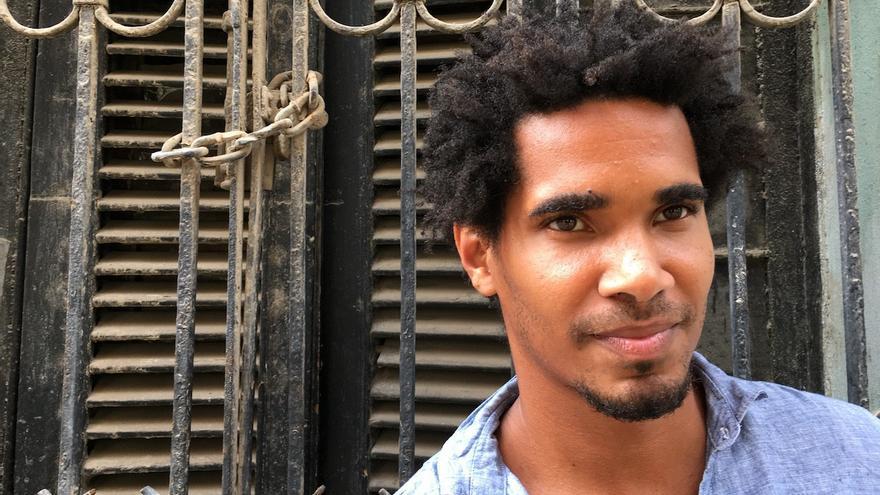
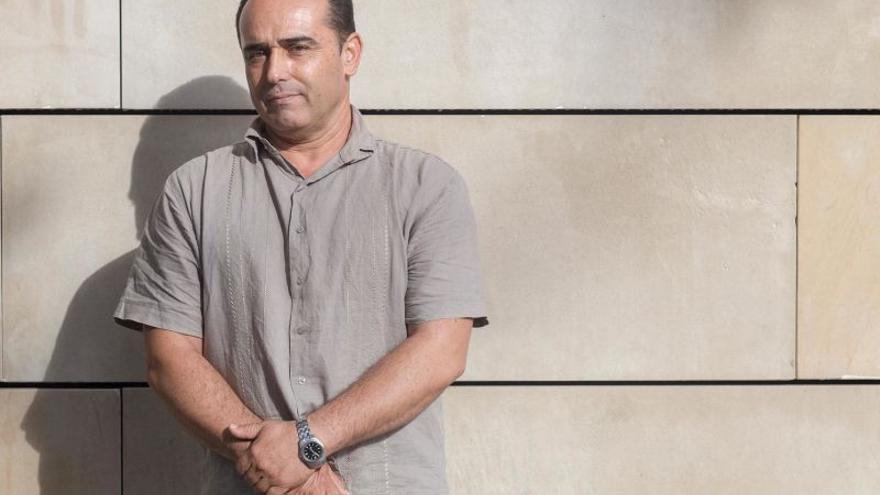
Christian Liberation Movement national coordinator Eduardo Cardet was violently arrested on 30 November 2016 at the door of his home in Holguin. (CC)
14ymedio, Havana, 28 July 2018 — The Christian Liberation Movement (MCL) has asked French Foreign Minister Jean-Yves Le Drian to intercede for the release of activist Eduardo Cardet, during his visit to Cuba on Saturday, according to the Catholic news agency Aciprensa.
Le Drian is the first member of French President Emmanuel Macron’s government to visit the island and will meet with Cuban Foreign Minister Bruno Rodríguez. His arrival coincides with the first hundred days of Miguel Díaz-Canel’s term as president of Cuba.
In its letter, the MCL asks Le Drian “to intercede with the Cuban authorities for the freedom of our national coordinator, Eduardo Cardet (elected in 2014 as Oswaldo Payá’s successor), who is recognized as a prisoner of conscience.” continue reading
The letter was delivered by the Cuban writer Zoé Valdés, resident in Paris, to the Ministry of Foreign Affairs, where the officials explained that they knew of the case of Cardet and the minister would have the letter in his hands “shortly.”
In the letter, the opposition movement details that Cardet “was violently arrested on November 30, 2016 at the door of his house” in Holguín, and was subsequently convicted of an alleged crime of assault on authority in a “manipulated trial.”
The three-year prison sentence aims to “prevent his peaceful activism for a democratic change in Cuba through legal means, especially by coordinating the ‘One Cuban, one vote’ campaign that calls for changing the current electoral law so that it will be democratic and inclusive,” says the letter.
This week the NGO UN Watch filed a complaint with the United Nations Working Group on Arbitrary Detentions to demand that the island’s authorities release Cardet. UN Watch lawyers registered the case against the Cuban State last July 23 with this independent organ of the UN formed by five jurists and experts in human rights.
UN Watch denounces that since his arrest, Cardet has been beaten, he has been denied medical treatment, visits by a priest and in a “routine” way also those of his family members, in addition to being denied bail.
On May 26, authorities suspended family visits for a period of six months as “punishment for the family’s campaign for the release” of Cardet and agents of the State Security have “harassed” and are monitoring the family of the dissident.
_______________________
The 14ymedio team is committed to serious journalism that reflects the reality of deep Cuba. Thank you for joining us on this long road. We invite you to continue supporting us, but this time by becoming a member of 14ymedio. Together we can continue to transform journalism in Cuba.
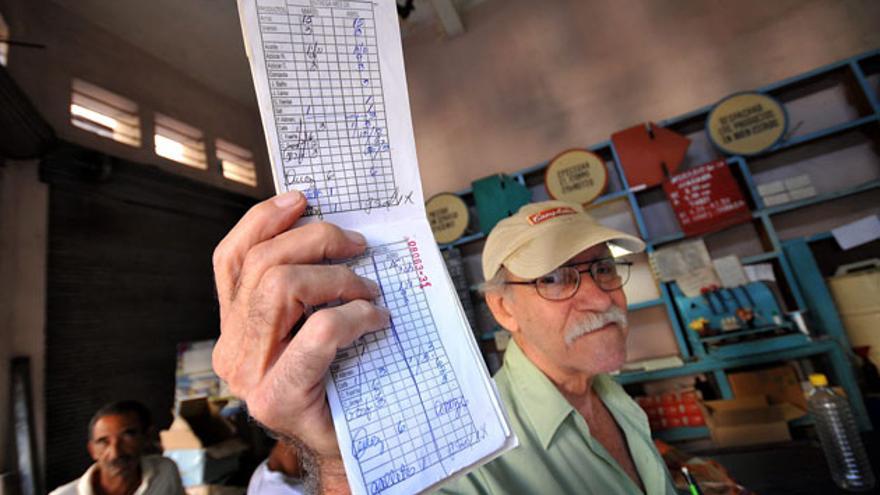
A man holding a ration book, which provides some basic monthly staples. (EFE)
14ymedio, July 27, 2018 — The decapitalization of the Cuban economy and a decline in productivity has created a “gap” with the rest of Latin America that can only be closed by increasing the rate of investment to 10% to 15% of the gross domestic product (GDP), as noted this Friday by an economist at a conference in Miami.
This is one of the conclusions of a study entitled “What Is the Cuban Economy’s Place in the Region?” It was conducted by the Colombian economist Pavel Vidal Alejandro, who presented it on the second day of the annual conference of the Association for the Study of the Cuban Economy Cuban (ASCE).
This is the first time purchasing power parity (PPP), total GDP, per capita output and productivity of the Cuban economy has been measured. continue reading
Vidal points out the problem in relying on Cuban government’s statistics on the exchange rate to calculate GDP is that the official rate of one Cuban peso (CUP) to one US dollar “overestimates the dollar value of the GDP” and distorts it.
Based on the official exchange rate, Cuba’s total GDP in 2014 was 80.65 million dollars while per capita GDP was 7,177 dollars.
But Vidal’s estimate, which is based on the average exchange rate, differs substantially from the official estimate. According to Vidal total GDP and per capita GDP in 2014 were 33.88 million dollars and 3,016 dollars respectively, 60% less than the official estimate.
The economist, a professor at the Pontifical Xavierian University in Cali, used the PPA and formulations from the Penn World Table (PWT), as well as international relative price estimates by the World Bank, to calculate Cuba’s GDP. He then compared the island’s economy with ten economies of similar size in the region.
One of the principal conclusions of his report is that the Cuban economy “has still not achieved the levels of productivity or per capita GDP” it saw in the years preceding the serious economic crisis of the 1990s, known as the Special Period.
In fact Cuba’s total and per capita GDP in 2014 in current dollars relative to the PPA rate “is around 30% lower than 1985 levels.”
Vidal concluded that the Cuban economy shrank relative to the rest of the region and currently is equivalent to 71% of the economy of the Dominican Republic and 61% of the Ecuadoran economy.
It is worth remembering, he notes, that in the 1970s Cuba, along with Uruguay, had the highest per capita GDP in the region. Today, however, the Caribbean nation occupies sixth place among the ten nations — Bolivia, Costa Rica, Dominican Republic, Ecuador, Guatemala, Honduras, Jamaica, Panama, Paraguay and Uruguay — chosen for the comparison.
Although the reforms undertaken by former president Raul Castro were “a step in the right direction,” they are “insufficient” to halt decapitalization and increase productivity. They also fail to leverage advantages the island has in education.
Vidal feels that, if Cuba wants to recover lost ground, it will have to increase productivity, something only possible if it commits to significant structural reforms and increased investment.
He believes increasing the rate of investment must be “the number one priority” in being able to halt decapitalization, which he sees as a disadvantage that has worsened since 2011 with the emigration of the young labor force.
In the realm of education, the economist points out that classroom and academic instruction had been one of Cuba’s important advantages that helped close the gap in the 1970s and 1980s. However, that is no longer the case. Today there are few opportunities for a qualified work force, one of the principal contradictions of the reforms.
In conclusion, he observes that the “socialist system has shrunk the Cuban economy relative to the rest of the region.”
_____________________
The 14ymedio team is committed to serious journalism that reflects the reality of deep Cuba. Thank you for joining us on this long road. We invite you to continue supporting us, but this time by becoming a member of 14ymedio. Together we can continue to transform journalism in Cuba.
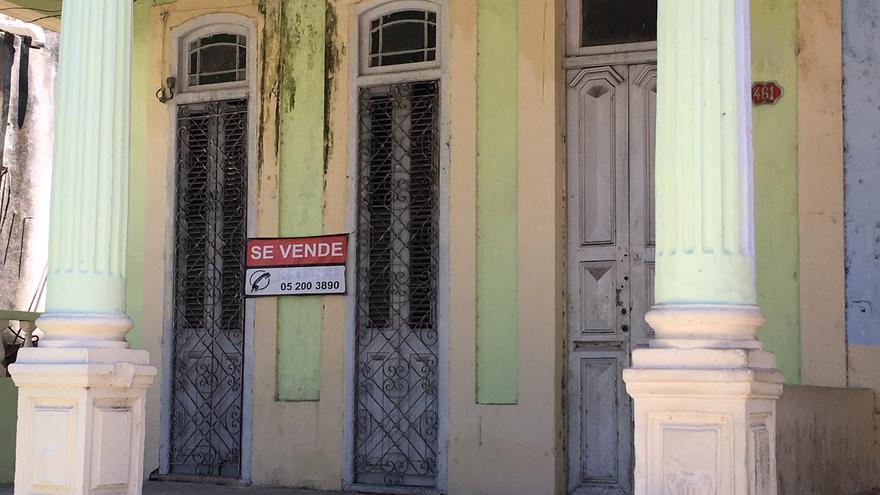
The buying and selling of homes was authorized in 2011 after decades of prohibition. (14ymedio)
14ymedio, Luz Escobar, Havana, 28 July 2018 — Trading, donating, buying and repairing dwellings in tourist areas will be more complicated from now on with the advent of new regulations. After July 24 an authorization from the Municipal Housing Directorate or the Physical Planning Institute will be required, in addition to the requisites in force in the rest of the country.
Since, at the end of 2011, the government of Raul Castro authorized the sale of homes after decades of prohibition, a dynamic real estate market was unleashed in a country with 3,700,000 homes, some 86% of them owned individually.
Less than two years after the ban on these transactions was lifted, some 80,000 sales and gifts were carried out, according to data offered then by Aniuska Puente Fontanella, specialist with the Directorate of the Commercial Property Registry and the Heritage of the Ministry of Justice. continue reading
In recent years authorities have tried to control the phenomenon with the creation of taxes and, more recently, with new regulations for the better areas demanded by the tourist rental businesses and private restaurants. The new measures pose an additional obstacle to the development of the private sector.
Among the outstanding tourist zones are the Varadero peninsula, the most famous Cuban resort, and also the coast of Havana of the East, especially the beach areas of that township which are visited by many vacationing foreigners and nationals each year.
From now on, according to the latest resolution, when a resident from those areas wants to trade, donate, sell or buy a property, he will have to seek an authorization from the Municipal Housing Directorate, unlike in other areas where it is only necessary to formalize the process before a notary.
When it comes to repairing or remodeling a dwelling, the license will be processed by the Municipal Directorate of Physical Planning, a supra-entity created by the government in order to bring order to the urban space and directed by General Samuel Rodiles Planas, a hard-line military officer.
After complying with those procedures, the owner of a house in these areas will have to await a confirmation by the Tourism territorial delegation, which will take into account “the balance” of the resident population in each area in order to keep it from increasing and affecting state activity in that sector.
The new requirement has alerted owners of hostels, restaurants and architecturally valuable houses, who now fear the paralysis or freezing of repairs and projects managed privately in these areas.
The Official Gazette also warns that trades in these areas must not contribute to a population increase or create new owners. The text prohibits gifts and sales from affecting the tourist development programs.
The construction of new buildings will also be limited in a way that “rigorously fits” the Territorial Ordinance Plan and the urban regulations of those areas. This decision has fallen like a bucket of cold water on those who have bought land in tourist areas in order to later build a house.
In the case of Old Havana and Central Havana, capital municipalities that are associated with the City Historian’s Office, there exist other specific ordinances that are even more restrictive.
“The rooms that remain unoccupied and available in favor of the State” in those areas “will be delivered directly to the Office of the City of Havana Historian” who will dispose of them “in accord with the established regulations.”
The objective, according to the Official Gazette, will be “relocation and better housing conditions for the resident population” in the area as well as “the restoration and conservation of heritage.” It says another purpose of the new law is to promote “tourist development” and “the provision of social services to the population.”
One of the measures that is causing more controversy is the prohibition on dividing rooms or bedrooms, whether they are “situated in bunkhouses or tenement blocks, except in basic cases of social interest and previous authorization by the Historian’s Office.”
The practice of dividing spaces, whether vertically or horizontally (the well-known barbacoas*), has been used for decades to relieve housing problems in Cuba. At the end of 2016 there was a deficit of more than 880,000 houses on the Island, and last year only 21,827 new dwellings were built, according to information from the National Office of Statistics.
Translated by Mary Lou Keel
*Translator’s note: “Barbacoa” (barbecue) is an unlikely term for a platform built in high-ceilinged room to add another “floor.” Search on term in the linked report by the late architect Mario Coyula to find out more; the first reference is on page 7 and a drawing of a ’barbacoa’ is on page 10.
______________________________
The 14ymedio team is committed to serious journalism that reflects the reality of deep Cuba. Thank you for joining us on this long road. We invite you to continue supporting us, but this time by becoming a member of 14ymedio. Together we can continue to transform journalism in Cuba.
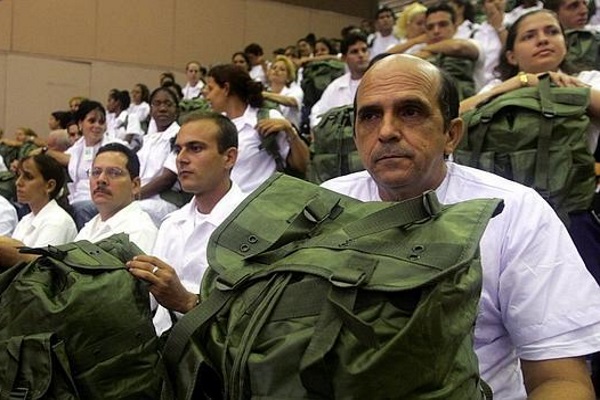
Cuban doctors before leaving on an international mission (Reuters)
Cubanet, Miriam Celaya, West Palm Beach, 24 July 2018 — In Venezuela, while hundreds of health workers have been out on the street on strike for a month in demand for decent wages and better working conditions, the official Cuban media have just announced the immediate delivery of 62 Cuban doctors, recently graduated from the University of Medical Sciences of Havana (UCMH), who will provide free services in popular areas of that South American country as part of the Barrio Adentro Mission.
The labor dispute taking place between health personnel and the government of Venezuela was initially promoted by the nurses’ guild, but doctors, lab technicians, service employees and administrative staff of several public hospitals have quickly joined, without receiving any satisfactory response from the president, Nicolás Maduro, despite the demonstrators’ requests for dialogue, and their current intention to join forces with workers of other public companies, also on strike for similar reasons. continue reading
In addition to the demands for wage increases, there are also complaints about the shortage of medicines, the poor state of hospital facilities and the collapse of the infrastructure that impedes adequate treatment for patients with serious and/or chronic diseases. It also prevents guaranteeing an adequate diet for patients who require admission and surgery. In fact, the capacity for hospitalization or surgical interventions is, at present, minimal, as various medical, humanitarian, religious and Human Rights institutions have been reporting for a long time.
Paradoxically, in a country where, according to Decree #8.938 of April 30, 2012, “with rank, value and force of Organic Labor Law, Male and Female Workers” (LOTTT) promulgated by the then President, Hugo Chávez, and published in the Extraordinary Official Gazette #6.076 of May 7, 2012, workers’ right to strike is acknowledged, and replacement by others to occupy their posts is expressly prohibited, so it is outrageous that the leader himself is allowed to royally violate his country’s legislation.
Thus, instead of facing the situation and responding to his own workers, the Executive simply replaces them, sub-hiring through his buddy the Cuban president, 62 inexperienced Cuban physicians who will perform as so many others of their countrymen’s shamans, modern slaves who have preceded them or who continue to serve as voluntary captives of both governments. It is highly unlikely that these new villains can solve any problem in the critical health picture in Venezuela, but at least they will help Mr. Maduro show his care for the poorer of those he governs, and for Mr. Díaz-Canel to justify the continuity of the already dwindling deliveries of oil to Cuba.
And all this despite the fact that just three months ago, on April 30, 2018, the official Telesur press monopoly published, at full speed, a triumphant headline that read: “Venezuelans have been protected by Labor Law for six years.” And then iy offered a laudatory text to celebrate the prodigious social advances achieved in a six-year period through LOTT, “a legal tool worthy of the revolutionary process of transition to socialism that Venezuela is experiencing,” as expressed in April 2012 by Hugo Chávez when he promulgated said Decree-Law, whose regulations were later signed by Nicolás Maduro as head of state to wash his… hands with him.
Thus, without any disguise or embarrassment, the Caracas-Havana conspiracy claimed the prerogative of desecrating, in a single haul, the Venezuelan labor law and the supposedly sacrosanct words and drive of one who considered himself Bolívar’s spiritual heir, a visionary who had hallucinations of “socialism, XXI Century style” and one who, once “planted” at the Cuartel de la Montaña and evidently no longer able to transmute into the little bird adviser* to his disadvantaged pupil, Nicolás Maduro, remains the same as the ashes of his master, Castro I, only for the permanent symbolic evocation that “legitimizes” the continuity of the chaos in their respective countries.
With the rampant shamelessness of those who feel immune, the duet Maduro-Díaz Canel has just set aside Article 489 of the LOTT, which stipulates “the protection of the exercise of the right to strike” and establishes the ban on the contracting of other workers “to carry out the work of those who participate in the strike.” For further derision, the same article adds that “Workers during the exercise of their right to strike shall be protected from trade union immunity under this Law …” And all this contempt to what has been legislated is done by invoking the medical assistance program in exchange for oil – euphemistically called “Mission Barrio Adentro” – promoted in 2003 by the then presidents Hugo Chávez and Fidel Castro.
It’s just a matter of time before we see how many of these new instant doctors, hastily trained in courses taken after mass registration, are more proficient in serving the interests of the regime and its allies than in conscientiously performing the altruistic work that would correspond to a profession destined to save lives and alleviate human suffering, and who will most likely end up “defecting” from the “mission” and reaching their true goal: escaping to freedom. At least such is the dream that many of them secretly cherish, while out loud, and before a flag so often defiled, they solemnly swear “to defend the revolution and the conquests of socialism” wherever duty calls.
And, if at the end of all the farce the very sacred “mission” ends in the Yuma*, that would be better still. For, after all, it seems that in many cases, the end does justify the means.
Translated by Norma Whiting
Translator’s notes: * Venezuelan president Nicolas Maduro has claimed that deceased president Hugo Chavez appears to him as a little bird and advises him. On announcing this he reproduced the tweeting noises he hears from Chavez . **”La Yuma” is Cuban street lingo for the United States
Luis Manuel Otero Alcántara was detained for 48 hours for Saturday’s protest attempt against decree 349. (14ymedio)
14ymedio, Luz Escobar, Havana, 24 July 2018 — Luis Manuel Otero Alcántara spent two days in detention after the act of protest he tried to carry out last Saturday, along with five other artists against Decree 349 that regulates artistic performances in private spaces.
The group was also made up of Soandry del Río, José Ernesto Alonso, Iris Ruiz, Amaury Pacheco and Yanelys Núñez, the only one of the six gathered on the steps of the Capitol in Havana who was not arrested despite appearing with their faces covered with excrement and holding a sign that called for “free art.” The founder of #00Bienal spent 48 hours in a police station while his colleagues were released in the hours after the arrest.
“They beat me from the Capitol to the police station and told me I have to respect the police. They beat me as if they were trying to break my back,” denounces Otero Alcantara in a conversation with 14ymedio hours after his release. continue reading
The artist explains that the afternoon was quiet and the protest action had not yet begun when the police appeared and arrested them. Although Otero confesses that he was in shock, he reacted by arguing that a citizen sitting in a public space that could not be arrested without proof of having committed any crime worthy of handcuffing him and putting him in the police car. The officer who arrested him refused to give him explanations about the causes of his arrest, so the artist resisted.
At the police station on Zanja Street, the officer known as Kenia, who has dealt with the cases of other artists such as Tania Bruguera, threatened Otero with imprisoning him for many years to prevent his artistic actions. The young man replied that he was already planning the second edition of the alternative Biennial that he organized last May for his “responsibility with the times.”
The group of artists decided to carry out a protest action after having been ignored by the Minister of Culture, to whom they had directed a letter to claim precisely what the decree prevents. “We wanted to be able to meet with the minister to clarify the independence of Cuban art, from music to dance, everything. We want there to be no need to be a degreed artist in order to have a space of legitimacy, and now it turns out that the space of allegiance is such that tomorrow you can lose your house if you sell a painting,” he denounces.
In addition, Otero Alcántara warns that this decree affects not only independent artists but also those who depend on the institution. “You can be a graduate of a school, but if they want to they can remove you from the Artist Register, as happened with some people in #00Bienal, and thus become part of the list of artists from whom they decide to take everything away.
For the artist, the decree “amounts to a stoning of all contemporary Cuban culture, everything that is not official and does not fall within the canon, it goes away” and it is “a very clear response” to the challenge the cultural authorities of the country perceived in the successful carrying off the independent Biennial event held in May.
The striking protest of Yanelis Núñez is, for Otero Alcántara, symbolic as well as very courageous. “It’s shit as a symbol of how we feel and how they treat us,” he says.
Amaury Pacheco, another of those who participated in the action and one of those who managed to record the moment of the arrest of Otero Alcántara, also celebrates this intervention that references the performance of Ángel Delgado, an artist who defecated on a copy of the state newspaper Granma. “Now the shit is on us in the form of protest and that makes us untouchable, Yanelys, they could not touch her and we carry the shit that has been poured on us all this time to the Capitol, directly to their stairs,” he said.
Pacheco feels “very happy” that “at least five people” have taken this step against a decree that he considers “a shot at the head of Cuban art” and a tool the Government uses to make alternative spaces “disappear completely” and to prevent unauthorized activities in private homes. If this is successful, he insists, events such as Endless Poetry or an upcoming independent Biennial will disappear.
These events coincide with an offensive against cultural activities by the Government.
A few days ago, Alpidio Alonso became Minister of Culture. Pacheco recalled that the new minister became famous in Alamar at the time of the “triumvirate” that he formed with Rojas and Jacomino when, in those years, he was directing the policy of the Hermanos Saíz Association. “If afigure with this background now appears as Minister of Culture he must also take a strong position for Cuban artists.”
In addition, this Monday 14ymedio, was able to confirm with the Cuban Institute of Cinematographic Art and Industry (ICAIC) that Ramón Samada is the new president of the organization. The appointment had not been announced in the official media, although it probably occurred in the last month. In a note on the week of German cinema in Havana published in Havana, he was already identified as the highest authority of the ICAIC.
Samada is a hardline officialist known for having starred in several controversial attempts to silence opponents. In 2015, he promoted the attempt to expel Eliécer Ávila from one of the assemblies of the G-20, where a group of filmmakers were calling for a film law on the island.
Years before, in 2010, he banned the entry of several government critics to Chaplin Cinema, where the eighth Young Filmmakers Exhibition was held. On that occasion the documentary Revolution was going to be screened, dedicated to the hip hop group Los Aldeanos. Among the artists who were prevented from entering were Ciro Javier Díaz Penado and Claudio Fuentes.
____________________________
The 14ymedio team is committed to serious journalism that reflects the reality of deep Cuba. Thank you for joining us on this long road. We invite you to continue supporting us, but this time by becoming a member of 14ymedio. Together we can continue to transform journalism in Cuba.
Ex-Governor Raúl Castro with President Miguel Díaz-Canel in Santiago de Cuba. (Granma)
14ymedio, Havana, July 26, 2018 — Raul Castro returned to the limelight, making an appearance at the main event celebrating the sixty-fifth anniversary of the assault on the Moncada Barracks, considered by the government to be the start of the Cuban revolution. In his first speech since giving up power on April 19, the former president spoke once again the nation’s tense economic situation, called for maximum savings and described recent electoral defeats of leftist Latin American leaders as a “neoliberal offensive.”
Castro, who remains secrectary general of the Cuban Communist Party, referred to the current constitutional reform process, stating its success “wil depend on Cubans’ active and committed participation.” He urged that all necessary steps be taken to ensure that “every citizen understands how profound and sweeping the proposed changes in the text are.”
At the beginning of this month five Protestant denominations made public statements opposing marriage equality, which the proposed constitution defines as the “union between two people” rather than “between a man and a woman.” For this reason several religious communities are calling on their members to reject the constitution. continue reading
Some opposition groups are also calling for a “no” vote in the referendum in protest against an article in the document which identifies the Communist Party as of the nation’s guiding force and reaffirms the “irrevocability” of the socialist system. Numerous dissident organizations have begun to campaigning for a negative vote.
“We cannot ignore the complicated nature of the current internal and external situation,” Castro acknowledged during the commemoration of the 1953 assault on the Moncada Barracks — at the time the most important military fortress in eastern Cuba — in which he took part with his brother.
The political event was broadcast live by state radio and television and was attended by more than 10,000 Santiago residents, who began arriving at the site sometime after midnight on Wednesday.
Castro warned of “an ongoing, tense situation in foreign earnings as a result of anticipated economic impacts from sugar exports and tourism” and blamed the problems “a prolonged drought, a devastating Hurricane Irma, unseasonably heavy rains and tropical storm Alberto.”
The former leader also cited the U.S. embargo, a standard talking point in his speeches, and denounced its “tightening” in recent months, which coincided with the arrival of Donald Trump in the White House.
“Despite these adverse factors, as previously reported, there was a slight growth of the economy in the first half of the year,” he said, referring to the 1.1% of GDP growth between January and June 2018, an insufficient figure for a real improvement in the lives of Cubans, according to some economists interviewed by this newspaper.
Castro described this result as “encouraging” but said that “it is necessary to ensure exports and reduce all non-essential expenses to allocate the amounts available to production and services that generate income in foreign currency.” The phrase was received with very serious faces among those present.
The memory of the economic crisis of the 90s, officially named the Special Period, has resurged with more intensity in the last year with the cuts of oil shipments to the island from Venezuela, the worsening of the shortages of products in the network of retail stores and the return of power cuts in several cities in the country.
The former president defined savings as “the main source of resources” in these circumstances and, as is traditional in these speeches whose style was coined by his brother Fidel Castro, he did not detail the figures for productive achievements or future projects.
In relation to the retreat suffered by the left in Latin America, the former president blamed Washington and its “methods of unconventional warfare,” in addition to describing as “fraudulent” some successes of the right in Latin American elections for having benefited from “support of the hegemonic media.” It is, according to him, “a neoliberal offensive.”
Castro did not miss the opportunity to reiterate Cuba’s “unwavering solidarity” with Nicolás Maduro and Daniel Ortega, in addition to demanding the freedom of former Brazilian president Luiz Inácio Lula da Silva and “his right to be the presidential candidate of the Workers Party” in the upcoming Brazilian elections.
Relations with Washington occupied a good part of the speech in which Castro reiterated the phrase that “Cuba should not be expected to renounce the ideas for which it had fought for more than a century in order to improve relations with the United States.”
This week the Assistant Secretary of State for Latin America, Paco Palmieri, met in Havana with officials of the Foreign Ministry, who once again denied the attacks and accused the United States of seeking political ends. In his speech this Thursday, Raul Castro defined the alleged attacks as a pretext for the Trump Administration to cool relations with the island.
When he finished speaking, the first rays of sun had not yet come out in Santiago de Cuba.
_____________________________
The 14ymedio team is committed to serious journalism that reflects the reality of deep Cuba. Thank you for joining us on this long road. We invite you to continue supporting us, but this time by becoming a member of 14ymedio. Together we can continue to transform journalism in Cuba.
Residents walking near the entrance of Barbacoa, in Guantánamo. (14ymedio)
14ymedio, Mario J. Pentón, Miami | 25 July 2018 – Cuba’s 1.1% economic growth the first semester of 2018, announced by President Miguel Díaz-Canel, will not reach the kitchens of the Cuban people, nor will it be felt in the already reduced purchasing power of their wallets, according to various economists consulted by 14ymedio.
The island, crippled by the crisis of its greatest ally, Venezuela, has not been able to recover in light of the reduced number of tourists, the fall in exports, the impacts of tropical hurricanes and the incompetence of governmental officials.
“I am alarmed by this statistic. I am quite worried because I believe the Cuban economy is quickly getting out of control. Various Latin American nations have current growth rates above 4%. Cuba is below average. It is usual [for Cuba], but it indicates that the motors of the economy are turned off,” says the Cuban professor and economist Elías Amor Bravo from Valencia, Spain. continue reading
Amor Bravo explains that the low economic growth rate is produced by the fall in tourism, which is not registering the figures that were anticipated. In the first semester of the year, the number of tourists that traveled to Cuba fell by 5%. In the case of Americans, the reduction was of 24% (some 266,000 people) compared to the previous year. President Donald Trump’s new policy, which promised a hard stance against the tourism enterprises owned by the Cuban military, has struck the country’s economy.
The economist says that foreign direct investment continues to be paltry with respect to the 2.5 billion dollars that the country needs annually. In addition, the sugar harvest has been quite poor, one of the worst in an entire century in fact (1.1 millions of tons), coupled with the damage caused by hurricane Irma (13.585 billion dollars) and tropical storm Alberto. The trade balance (the difference between exports and imports) in 2016, the last year for which statistics are available, is of -7.953 billion dollars.
“The uncontrolled public deficit has snowballed from year to year and is fed by an ever-increasing debt,” cites Amor, in addition to “the government officials’ failure to manage the economy.”
Cuba received crucial aid in 2014 with the pardoning of 90% of its debt of 35 billion dollars to the former Soviet Union, of which the Russian Federation was on the receiving end. In 2015, the Paris Club and Havana reached an agreement to forgive 8.5 of the 11.1 billion dollars Cuba had accumulated in debt and interest since 1986. Mexico also pardoned 70% of the 487 million it had loaned to the island. Japan forgave almost one billion dollars of an outstanding debt in 2014.
“The symptom of the illness is a fever, but the illness is what a doctor must study. If you only fight the fever you don’t solve the problem. The illness in the Cuban case is the disequilibrium due to a lack of exports and the uncontrollable spending of the State,” he says.
An increase in blackouts, more shortages in shops where items are sold in Cuban convertible pesos (CUC), as well as in the rationed markets, are the result of the island’s current economic situation. This has led to a resurgence of government control over the private sector. According to economist Carmelo Mesa-Lago’s calculations, the average Cuban’s purchasing power is barely 51% of what it was in 1989.
The signs of deterioration have also been felt by the pharmaceutical sector due to various liquidity issues related to paying suppliers of raw materials. In an industry that imports 85% of the ingredients for the fabrication of drugs, the crisis has led to shortages of 45 basic medications.
The picture is the same for the supplies of ice cream, soft drinks and beer which have fallen sharply in recent months in stores and manufacturers. The problems in buying packaging and raw materials abroad has led many industries, such as Cuba’s iconic ice cream maker Coppelia, to reduce their production and temporarily close some plants.
Mesa-Lago concludes in a recent study that the average growth of the economy between 2016-2018 will be 0.6%, a very poor figure compared with other countries in the region. The International Monetary Fund forecast 1.6% growth for Latin America this year.
Emilio Morales, director of The Havana Consulting Group, also doubts the Cuban president’s figure. “A growth of 1.1% of GDP is questionable due to the poor economic results of this semester. At this moment the country is going through a tense financial situation and a profound lack of liquidity, which has delayed payments to a group of important suppliers of raw materials and products,” says Morales.
Cuba managed to boost its economy after Hugo Chávez came to power in Venezuela, which allowed it to find an alternative to the subsidies it had received from the former Soviet Union.
The signing of a collaboration agreement with Caracas at the beginning of this century and the sending of tens of thousands of professionals to work in Venezuela, for which that country paid Havana directly with subsidized oil, was like giving Fidel Castro’s government an oxygen balloon. However, the crisis facing Venezuela has caused this to change.
According to the latest published official figures, trade between both countries fell to 2.224 billion dollars in 2016, the historical minimum since the beginning of Chavismo, after having exceeded 8.2 billion in 2012.
Left side: Percentage of oil imports by Venezuela. Right side: Venezuelan exports to oil to ALBA (Bolivarian Alliance for the Americas) countries.
Venezuela, which in the best years of its “Bolivarian revolution” sent around 120,000 barrels of oil per day to Cuba (at a value of about 4 billion dollars a year), has reduced the shipments to about 55,000 barrels. The vertiginous fall of petroleum production in Venezuela has forced it to go to international markets to buy crude oil that it later sends to Cuba by an annual cost of around 1.2 billion dollars.
Cuba-Venezuela Trade Figures. Red line: Imports from Venezuela to Cuba. Green line: Exports from Cuba to Venezuela. Blue bars: Total trade. Source: Cuba’s Office of National Statistics
According to the economist Omar Everleny Pérez, “the government’s plan is still not being met every year, and the plan itself is already low.”
“For the economy to achieve the takeoff it needs to grow steadily between 5% and 7%, and for the last four or five years the Cuban economy has hit a plateau of 2%,” he told this newspaper by phone.
Pérez, who directed the Center for the Study of the Cuban Economy at the University of Havana, believes that there is a vicious circle that blocks growth from resuming.
“A 1% growth in the case of an economy with a level as low as Cuba’s is nothing, it does not reach the population, it has no impact,” he says.
_________________________
The 14ymedio team is committed to serious journalism that reflects the reality of deep Cuba. Thank you for joining us on this long road. We invite you to continue supporting us, but this time by becoming a member of 14ymedio. Together we can continue to transform journalism in Cuba.
Fernando Damaso, 20July 2018 — At the close of the Tenth Congress of the Union of Cuban Journalists (UPEC), the new President of the Councils of State and of Ministers said, “Cuban journalists deserve the indisputable credit for having sustained the voice of the nation during the most adverse circumstances and periods, with admirable loyalty, strong sense of responsibility, talent, intelligence, and contagious enthusiasm that always generates interesting proposals.”
A clarification is in order: In reality, the only voice that they have sustained has been that of the sole party and of the government, not that of the nation. continue reading
At another point in his speech, he asserted, “I understand the anger of those who are not invited to the table because they are not part of UPEC, nor of the Cuban society that won, with sacrifice and effort, the exclusive right to discuss how to design the future.”
Another clarification is in order: Who decided that to make current journalism one must be part of the officialist UPEC? Who decided that to discuss how to design the future, one must be part of the exclusive governmental civil society?
A requirement so permeated by dogmatism and intolerance, of a restrictive and sectarian character–so foreign to José Martí’s thinking of “one Republic for all and for the good of all”–is shocking in our day when information no longer is institutional and, in the case of Cuba and similar countries, governmental, before it is civic: Twitter, the iPhone, Instagram, blogs, tablets, laptops, and all the new technology, has placed in citizens’ hands the means to democratize information. The era of official and sealed information, and of one opinion, has passed, and nobody cares about it anymore.
Too bad that the supposed “new discourse” is so like the old one, which seems taken from a moth-eaten archive.
Yudiris Caridad Cintras with her three children leaving the Hotel Rex. (14ymedio)
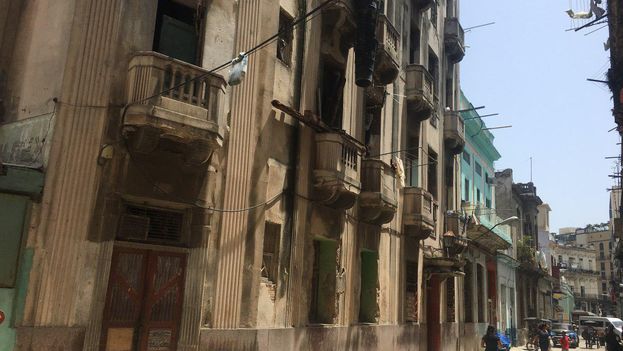
14ymedio, Reinaldo Escobar, Havana, 26 July 2018 — The two hotels have the same name but have had very different destinies. The Hotel Rex in Santiago de Cuba, where some of the protagonists of the assault on the Moncada barracks stayed, can boast of three stars. The ruins of what was once the Hotel Rex in Havana, on the other hand, at number 64 San Miguel Street, are home to several families who live with the fear of an imminent collapse or eviction.
The deterioration of this four-story building with its formerly beautiful Art Deco facade adorned with balconies has had different stages. The worst came to pass in the late 80s, when it stopped being an inn that was rented by the hour for love affairs and became a shelter to accommodate families who had lost their homes due to building collapses, fires or because the buildings they previously lived in had simply deteriorated to the point where they were declared uninhabitable. continue reading
Each of the small rooms with bathroom, suitable for the shelter two lovers for a couple of hours of passion, welcomed large families who installed kitchens, laundry rooms and ‘subdivisions’ made from whatever material was available. Everyone believed that their stay would be for a limited time and under the logic of provisionality exploited their spaces without mercy.
Finally, the stigma of uninhabitability fell on the Rex and its inhabitants were relocated. However, despite the unfortunate state in which negligence left the building, it remained a space with a roof and this, more than a minimum, was a luxury for the most needy, willing to do anything to obtain and maintain housing in the capital of the Republic.
Exterior view of the Hotel Rex in San Miguel street in Centro Habana. (14ymedio)
They come from all the provinces — hustlers, workers joining the “heroic construction contingents,” policemen to persecute criminals, and thugs to evade the police– with every square meter of surface disputed every day, along with every stretch of cable through which the electricity circulates, and each pipe through which the water flows.
The network of procedures required to obtain a permit to live in this lion’s den includes the recognition of ‘exceptional circumstances’ that legitimizes some cases and, although it is difficult to prove, many of the previous procedures that resulted in the authorization to live there bear the unmistakable stench of corruption.
Yudiris Caridad Cintras, from the municipality of Antilla, in Holguín, had to escape with her three children from the house where she was mistreated for more than 7 years by her husband, an ex-cop who was never convicted of any of the numerous complaints she filed for threats and abuse.
This took place in May 2017, when she was 30 years old, and led her to qualify for the category of a “social case,” for which she receives economic aid of 300 Cuban pesos (roughly $12 US): 135 to pay for meals, and 165 for two of her children who do not receive maintenance from the father.
The delegate for this district of the municipality of Centro Habana, Ramón César García, alias El Yardo, was assigned the task of housing her and he placed her in a room on the second floor of the Rex that did not even have a toilet. For months she had to relieve herself in bags. Some neighbors sympathized with Yudiris and helped her move to the third floor, where there was a room with better conditions. They improvised a door for her and there she settled with what she could pick up off the street. Now she sleeps on the floor with her children, after burning old mattresses infected with bedbugs.
Currently, relations between Yudiris and the delegate are very difficult. According to her, this representative of the People’s Power, also a former cop, “has in his house the control of the water pump that supplies that liquid, subject to his own pleasure.” She hasn’t forgotten the occasion when she went to complain that she had been without water for days.” He mistreated me verbally and physically in the presence of my children, I had the youngest of the children in my arms when he knocked me to the ground by punching me in the face.” In addition, Yuridis denounces that he is accusing her of being a “human rights” person or a member of the Ladies in White, in order to isolate her.
Yudiris Caridad Cintras her rights in the offices of the Municipal People’s Power of Centro Habana. (14ymedio)
As recounted by Yudiris herself, and as 14ymedio was able to verify, also living in the Rex are around a dozen police friends of the delegate, who support him unconditionally in gratitude for the authorizations he has provided them without legal grounds. “I’m surrounded,” says the woman with a mixture of humor and anguish
Yudiris has gone to every government agency to raise complaints. In each office she tells her whole story and each one adds the new steps to her ordeal.
Her case is now known to the Ombudsman Office of the Council of State, in the military prosecutor’s office, the provincial prosecutor’s office, the provincial Committee of the Party, the Federation of Cuban Women, and the Municipal Assembly of Centro Habana. “I have been promised mattresses and a kitchen but the only thing I have achieved is that they allow me to have one of my children in a Children’s Circle.”
Yudiris de la Caridad is just one of the many cases caught between the quarrels and shared solidarity in this lodging that has become a pigsty. The human birds of prey among the ruins dehumanize some and make others better, but they are all victims equally, even the victimizers.
This Thursday July 26, in the revelry of the celebrations for the attack on the Moncada Barracks so many years ago, some of the veterans of that “historical feat” will remember the hours they spent at the Rex Hotel in Santiago de Cuba, maybe they will visit it and admire the good state in which everything is preserved. Probably none of them knows about the Havana Rex, nor do they need to.
______________________________
The 14ymedio team is committed to serious journalism that reflects the reality of deep Cuba. Thank you for joining us on this long road. We invite you to continue supporting us, but this time by becoming a member of 14ymedio. Together we can continue to transform journalism in Cuba.
Fernando Damaso, 12 July 2018 — The 1940 Constitution, considered one of the most democratic, advanced and well-balanced constitutions in the world, was prepared by important and well-known representatives of Cuban society, politics and economics, selected by way of free and honest elections, to form the Constituent Assembly, in order that each party could publicly set out its constitutional programme.
It ended up with seventy-seven selected delegates (42 opposition and 35 government), including statesmen, intellectuals, lawyers, polemicists, parliamentarians, experts in international law, workers’ leaders, and political leaders, representing all ideological and political perspectives, from the most radical to the most conservative. Although some historians say there were eighty-one, I am going on the figures provided by Dr. Carlos Marquez Sterling, which I consider the more accurate. In the end it was signed by seventy-one delegates. continue reading
All the debates were public and transmitted on the radio, with the press giving its opinions and debating the issues, putting things before the public and creating an atmosphere of patriotic fervour and real popular participation and discussion.
What is happening now, as in 1976, and its subsequent reforms, ends up as a totalitarian reform, with a project put together by a chosen group of Party and government officials, whom the people don’t know and, most of them having no public reputation apart from representing the different current national ideologies and politics. The process is run by the ancient Party and government directors, like an updating for the present day economic situation, without touching the policies, which are dogmatically maintained, with the objective of holding onto power for as long as possible.
They consider that a Constitutional Assembly is unnecessary because the National Assembly of Peoples’ Power has within its functions that of drawing up or reforming the Constitution. It is well-known that this doesn’t serve present-day Cuban society, but only the monopoly Party, to which it is completely subservient.
The public don’t know what is being debated either, as discussion is held behind closed doors, with only skimpy information provided later by the official press. Everyone knows that the so-called popular participation, opinions and suggestions, are swamped by a massive formal exercise, so that most people have no idea what the Constitution stands for, and, even less, its legal complications, having to just get on with accepting without question whatever is proposed, as has been the custom for the last sixty years.
It seems to have been forgotten that constitutions are not academic documents or bureaucratic formulas, but wide-ranging social pacts, which are routed in vigorous controversy, and in which consensus may be found. It is by way of such processes that constitutions are validated and acquire their relevance.
The current process, which excludes any democratic debate or participation by all Cuban social points of view, makes for a second rate constitution, incapable of achieving the importance of the 1940 version.
The group of immigrants rescued by the Colombian Navy. (Twitter)
14YMEDIO, Miami | July 23, 2018 – The Colombian Navy rescued 21 “undocumented” immigrants off the coast of the San Andrés archipelago, more than 400 miles from Colombia’s Atlantic shoreline, according to a statement issued by that country’s military.
Thirteen of the immigrants were Cuban nationals, while the other eight were Ecuadorians.
“The undocumented immigrants were being transported by two Colombian nationals aboard a motorboat named ‘Black Moon’ traveling in the area south of the island of San Andres,” the authorities said. continue reading
According to the statement, the migrants received medical attention at a military health facility when they reached land.
The migrants were turned over to Colombian Immigration, while the alleged traffickers were handed over to the country’s Attorney General, and the boat in which they were being transported was confiscated.
The border guards at San Andrés Station have rescued 38 undocumented migrants this year and captured five people allegedly linked to immigrant trafficking.
The Colombian coast is part of the route undertaken by thousands of Cubans, Haitians, and Africans who every year try to reach the southern border of the United States. Although the “wet foot, dry foot” policy was repealed by former President Barack Obama, many Cubans continue to arrive on U.S. soil hoping to get political asylum.
Two weeks ago, 62 emigrants from Bangladesh, Brazil, Cuba, Eritrea, and India were thrown into the waters of the Colombian Caribbean by traffickers who were transporting them on a boat to Central America. A Cuban died on the dangerous crossing, authorities said.
Translated by Tomás A.
_______________________________
The 14ymedio team is committed to serious journalism that reflects the reality of deep Cuba. Thank you for joining us on this long road. We invite you to continue supporting us, but this time by becoming a member of 14ymedio. Together we can continue to transform journalism in Cuba.
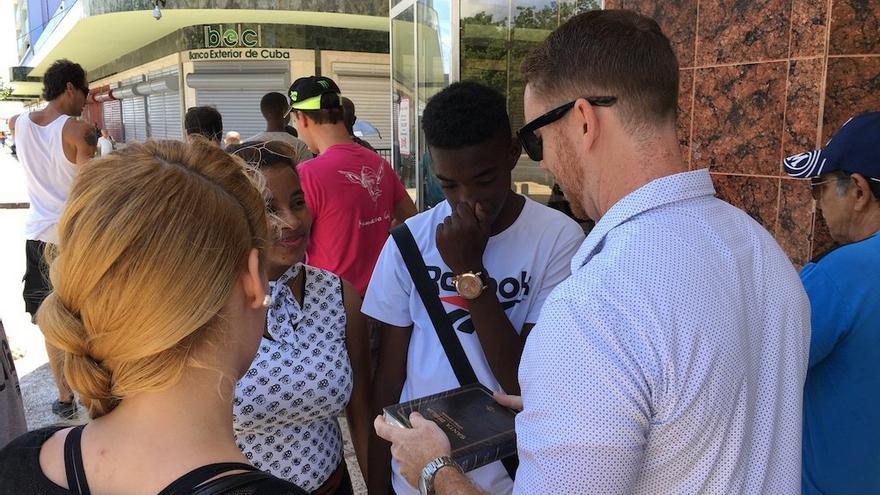
14ymedio, Luz Escobar, Havana | 17 July 2018 – The shouting and singing of a hundred evangelicals who prayed in defense of the “design of the original family” was heard two blocks from the Methodist church located between K and 25th Streets in Havana’s Vedado neighborhood. A live band accompanied Pastor Lester Fernandez as he spoke to his flock in a ceremony broadcast live on the internet that lasted several hours last Saturday.
In the pews there was no room for anyone else. From the crowded seats everyone raises their arms and sings, and at times they stand up and dance. “We know that this fast is not a fast without answers but with answers,” says the pastor and the believers give him a big ovation. continue reading
Speculations that the Constitutional reform now in progress will open the door to marriage between people of the same sex, and statements “especially by Mariela Castro,” specifies the pastor, are the reason for this fast. And he asks: “Do you imagine that when our children go to school and study Civics, our children are told blatantly and openly: you have a penis but you can figure out if, instead of being a man you want to be a woman, can you imagine a class like that?” Everyone responds “Nooooo,” and again applauds.
Fernandez said that in several countries in Europe laws have been passed to regulate unions between people of the same sex, which he attributed to a supposed weakness of the Church in those places. “Thanks to the Lord, our churches in Cuba are not like that and the Lord has prepared us for this moment, today more than ever, because we are a well-defined Church and the sin that is abhorred, we abhor,” he said.
On June 28, five Christian denominations issued a statement in which they expressed their rejection of a constitutional reform that would allow for equal marriage. Since then, opinions for and against have appeared in the independent press and social networks. “There are people who have confused what we are saying. There are people who believe that we are getting into politics or we are going to get into politics because we are going to hold a demonstration against the government. Today the Party is very nervous. We have people from State Security and independent journalists who are recording us but I am not afraid,” he tells his audience.
The pastor asked those who were present to “make it clear to the Government” that they were not afraid of them “because the Church is not going to depreciate itself, that our getting into politics is depreciating us.” He also said that they were not going to “sit idly by” in this matter, which, he said, will be solved with “fasting and prayer.”
Fernandez placed the number of people attending the fast at 800 — though this newspaper calculates it was about 500 — and said it was the largest congregation ever in the church.
It is still unknown how unions between same-sex couples will be regulated, but Mariela Castro, director of the National Center for Sex Education (Cenesex) and daughter of Raúl Castro, said that the issue would be promoted in the debates of the National Assembly, as a part of the constitutional reform.
The pastor explained that “more than 3,000 churches” prayed that day in their temples because they did not get permission to march on La Rampa. “How about if we pray for the National Assembly, How about if we pray for Raúl Castro, How about if we pray for Díaz-Canel and for Lazo? And even for Mariela Castro we are going to pray,” he encouraged the congregation. Fernandez asked the Cenesex director to “instead of what she is defending today, defend the true family bond.”
The march, called by the Assemblies of God, the Eastern and Western Baptist Conventions, the Evangelical League and the Methodist Church, was suspended, they said in a statement, because it overlapped with other activities. Although they said they are also working “with government leaders” to find a date and place for another “massive event” in the future.
“At this moment the churches in Cuba are carrying out this fast in favor of the family” closing the doors “before any attempt and every intention to make homosexualism and lesbianism (sic) formalized or legalized in Cuba,” he affirms. The pastor quoted passages from the Old Testament asking for a death sentence for homosexual relationships.
Methodists distributed Bibles to passersby after fasting in their Vedado church. (14y medio)
The pastor called on the faithful between the ages of 17 and 31 to go to La Rampa, the area of the capital in which, in his opinion there are more homosexuals, and to distribute bibles for free. “The young girls are given one of the pink ones and give the men the black ones,” he exhorted, while through a side door two boys left with several boxes full of Bibles of both colors.
The convocation took place minutes later when dozens of young people walked throughout La Rampa to fulfill the pastor’s request. Under the summer sun that embraced the city, at noon, some of the passers-by directly said that they did not want to know anything about the word of God, others listened with lowered heads and almost none showed the slightest enthusiasm.
The fast was copied in other municipalities of Havana and in several provinces of the country. In Holguin, dozens of faithful gathered at the entrance of a church to shout “viva!” while waving posters with a picture of what for them represents “the original family.” Similar scenes were repeated in Guantánamo and Pinar de Río.
Designer Roberto Ramos Mori feels that the posters that have appeared stuck on some electric posts and bus stops and that were displayed this Saturday in some churches, are “inciters of hatred and discrimination.” He asks, “If they [the government levies a] fine on me for doing it, shouldn’t the same thing happen to them?”
The Facebook page of the Afro-Cuban Alliance, an independent organization that fights against LGBTI discrimination, published some images of these posters warning that the intention of this campaign is “to go against the legalization of equal marriage in the constitutional reform.”
______________________
The 14ymedio team is committed to serious journalism that reflects the reality of deep Cuba. Thank you for joining us on this long road. We invite you to continue supporting us, but this time by becoming a member of 14ymedio. Together we can continue to transform journalism in Cuba.
14ymedio, Reinaldo Escobar, Havana, July 10, 2018 — We now know that at its seventh plenary session the Communist Party Central Committee reviewed the draft of the new Cuban constitution. It was reported that the text of the document is now a fait accompli. In the coming days deputies to the National Assembly will approve what is still a draft. It will then be released for public comment after which the final draft will be submitted for a referendum.
In the time that has elapsed since the commission was formed to come up with a preliminary draft, no media outlet, political leader nor any government official has indicated what changes will be allowed in the revised constitution, or even if the current one will be completely reformulated. continue reading
The only thing that has been confirmed is that there will be no change to the “irrevocable” status of the socialist system and that Article 5, which proclaims the Cuban Communist Party to be the “guiding force of society and the state,” will be preserved.
As happens in any mystery, information is being replaced with speculation. Among the issues generating the most speculation are how this new Constitution will treat the issue of private property and whether same sex couples will be allowed to marry. Substantial changes to regulations governing foreign investment, government control of the economy and some new item having to do with citizenship are also anticipated.
To a lesser degree there is also speculation about a constitutional change limiting high-ranking government officials to two five-year terms, the recognition of the new provinces and a probable modification to the makeup of the National Assembly.
During the period when delegates have been drafting this document, not one of these issues has been the subject of public debate. We do not even know what was debated behind closed doors much less what arguments the advocates for various positions have used.
Considering that all the commission’s delegates are members of the Communist Party, it is worth remembering the debates held by the constituent assembly which drafted the 1940 constitution. That body was made up of seventy-seven elected members, with the governing coalition’s thirty-five participants in the minority. The opposition had forty-two, some of whom were communists.
Those historic proceedings were broadcast live on radio. Everyone knew what was being debated and what each delegate’s position was. Labor unions held daily demonstrations in front of the National Capitol, where the debates were being held, to make sure that their demands were heard. In a age before either television or social media, editorial writers from the nation’s most prominent newspapers made their own proposals and questioned others.
There is not an even minimally convincing argument to justify the lack of transparency surrounding the working sessions of this commission. One of the most striking results of this lack of transparency is the public’s indifference. People are not talking about it in the bread lines nor at the bus stops nor during informal chats at the workplace, where the World Cup and the latest installment of the nightly soap opera are what capture people’s attention.
In order to win approval for the new constitution in the upcoming referendum, the government must make sure the gears of tedium are well-oiled. The Committees for the Defense of the Revolution (CDRs) will summon voters and go through the usual process. During a hasty but brief campaign with no counter arguments, it will insist on a yes vote for the fatherland, for sovereignty, for a bright future.
The current silence is not the result of negligence nor is it an oversight. It has been meticulously planned in order to minimize the time citizens need to become aware of the value of their vote.
___________________________
The 14ymedio team is committed to serious journalism that reflects the reality of deep Cuba. Thank you for joining us on this long road. We invite you to continue supporting us, but this time by becoming a member of 14ymedio. Together we can continue to transform journalism in Cuba.
The interruption also affected Internet navigation on WIFI access points (14ymedio)
14YMEDIO, Havana, July 20, 20108–Another interruption in Cuba’s Nauta email and Internet services left thousands of users without communication on Friday. The failure is the second in less than three weeks that affected several official digital sites, like the newspaper Granma, the national email Nauta, and the WIFI zones of Internet connection, according to 14ymedio.
“They’re doing a comprehensive repair on the whole cellphone service to improve the network,” an employee of the state communications company Etecsa explained to this newspaper. “Many clients have called because they’re having problems, and we’re asking that they don’t try to access the WIFI network for the moment to avoid leaving the session open and continue consuming their balances without really being connected,” he added. continue reading
According to the employee, “The repair work started on Friday morning and is expected to take up to Monday night,” although the only telephone company in the country didn’t issue a notice to alert its clients nor did it apologize on social media for the inconvenience.
The interruption in service has unleashed a barrage of criticism of the State monopoly and also has generated some hope that the repairs are related to preparations for cellphone Internet service.
Cuba is one of the most backward countries in this hemisphere as far as Internet connectivity is concerned. Only 4.5 million citizens, around 40 percent of the population, can access the Web, according to official data, and independent experts find even that figure very questionable.
This past July 3, another Etecsa failure left the country without the company’s Nauta email service, and technical problems also affected the official newspapers, Granma, Trabajadores and Juventud Rebelde, which are hosted on national servers.
At this time the company is not clarifying what kind of problems they are confronting, but technical failures in the State monopoly are common, although it’s not often they affect newspapers like Granma, the offiicial voice of the Communist Party.
One week earlier, a fire in an Etecsa building caused a blackout in mobile telephone service in the provinces of the center of the country and Pinar del Río. More than 1.5 million cellphone lines remained sithout service after the disaster in Santa Clara.
Translated by Regina Anavy
____________________________________
The 14ymedio team is committed to serious journalism that reflects the reality of deep Cuba. Thank you for joining us on this long road. We invite you to continue supporting us, but this time by becoming a member of 14ymedio. Together we can continue to transform journalism in Cuba.
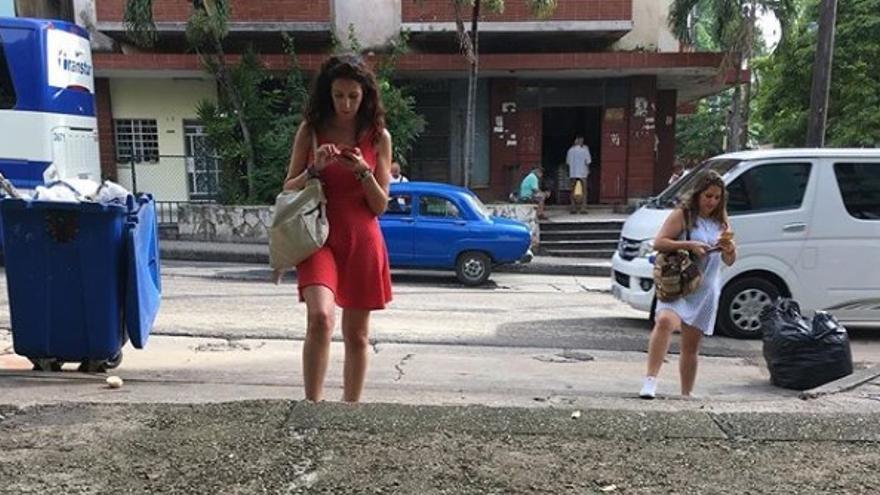
Two women look at their phones while walking in Havana. (Luz Escobar)
14ymedio, Havana, 21 July 2018 — The technological infrastructure for the arrival of internet service to mobile phones is “almost there,” according to Tania Velázquez Rodríguez, a senior official at the state Telecommunications Company (Etecsa). Although she did not disclose the start date, her statements are consistent with a pre-launch “integral repair” that has caused failures in the company’s email and Nauta navigation services.
During a press conference, Velázquez called for “customers to prepare for the technological leap,” according to the official press. She said that Etecsa “is getting ready for this process with the decision to operate cellular telephony networks for 900 MHz, 1,800 MHz and 2,600 MHz.” continue reading
Currently there are more than five million cell phones in Cuba and Etecsa is preparing its commercial offices throughout the country to respond to the problems that the arrival of the internet will cause. “Everything is designed so that people can self-manage the configuration of the service without having to go into the offices,” Velazquez said.
Velázquez, Etecsa’s Vice President of Business Strategy and Technology, said access to the Internet through mobile telephony is among “the main objectives of the company” which has “the technological conditions to guarantee the quality and security of the service.”
Since Friday morning, Etecsa users have reported interruptions in Nauta email and navigation services. The failure is the second in less than three weeks affecting several official digital sites, such as the state newspaper Granma, Nauta national email service, and WIFI internet connection zones, as 14ymedio has found.
A customer service employee explained to this newspaper that she was doing “an integral repair on all the cellular telephony for the improvement of the network.” An interruption that many clients read in an optimistic key as the preparations continue to open internet browsing on cell phones.
For weeks, some privileged users have been enjoying web browsing from their mobile phones, including official journalists, foreign businessmen and diplomats.
The rest of the Internet users use wifi access areas installed in the squares and central locations of the country, in addition to the Nauta Hogar (Home) service which, this year, should reach 52,000 homes.
The official figures counted more than 4.5 million Internet users in 2016, most of them from the Wi-Fi zones installed after 2015, or from the internet rooms managed by Etecsa with terminals belonging to the company.
These data are questioned by experts who say that the government includes users who connect to intranet services, national e-mail and other portals hosted on local servers.
_______________________________
The 14ymedio team is committed to serious journalism that reflects the reality of deep Cuba. Thank you for joining us on this long road. We invite you to continue supporting us, but this time by becoming a member of 14ymedio. Together we can continue to transform journalism in Cuba.
 14ymedio, Havana, 28 July 2018 — The Christian Liberation Movement (MCL) has asked French Foreign Minister Jean-Yves Le Drian to intercede for the release of activist Eduardo Cardet, during his visit to Cuba on Saturday, according to the Catholic news agency Aciprensa.