Diaz-Canel: A New Image and an Old Dogma

Miguel Díaz-Canel during a meeting with the youth in Granma in which he asked them if they all had internet. (La Demajagua)

14ymedio bigger14ymedio, Miriam Celaya, Havana, 2 July 2018 — In recent weeks, the presence of Díaz-Canel in the official media has become frequent to the point of saturation, in stark contrast to the opacity he maintained during his years in training as the dauphin of former president, Raúl Castro, with the exception — if anything — of the days before being elected by the deputies of the National Assembly, when he began to appear more regularly among the old hierarchs of the historical generation as a prelude to his future position as head of the Government.

It could be said that the de facto leader has not only inherited the Castro’s throne, but also the gift of ubiquity of the historic leader, who during his 47-year reign of omnipotence seemed to be everywhere at the same time.

So many and such public media presentations seem to pursue the intent of dressing up Raul Castro’s chosen with the legitimacy that was never verified at the ballot boxes with the votes of the electorate, and with prestige that does not even belong to him, the supposed historical distinction that the members of the almost extinct guerrilla cast of the yacht Granma or of the Sierra Maestra have granted onto themselves. continue reading

This would explain, to some extent, the forced importance that the official media give to this young president of stony temperament and impenetrable expression, whose strong attachment to the script of his predecessors confers the inevitable aura of a puppet, subject to the will of his superiors. Thus, orphaned of authority, prestige, true capacity for decision, charisma and ability for communication, the real power urges him to manufacture his doll props leadership, by cultivating that image as energetic guide, laborious, human, familial, committed to the direction of the country and very in touch with the people.

So many and so public media presentations seem to pursue the intent of appointing Raúl Castro’s chosen with the legitimacy that was never verified at the urns with the votes of the electorate

Thus, as a superhero capable of saving the nation in these turbulent times of crisis, we have seen the new president in the most varied circumstances and contexts: in shirt sleeves at the scene of an air disaster just one hour after this occurred, with an interest in the details of the tragedy, and endorsing an in-depth investigation of the facts and a complete and transparent information of what happened; on a tour of several provinces, where he has thoroughly immersed himself in the people, visiting the Sanctuary of La Caridad del Cobre, patron saint of Cuba; reverencing, as in appearance of deep reflection, before the stone that guards Fidel Castro’s ashes; leading important meetings, among others, those of the Council of State; receiving ambassadors and other distinguished visitors or attending a popular music concert where he was congratulated by one of the artists and cheered by those present.

And uncaringly and unexpectedly, taking a walk through the streets with his wife. The socialist Cuba finally debuts a first lady who appears on the asphalt in lycra and low-heeled shoes, taken by the hand of the president and slightly behind his firm step, or in a snug-fitting dress at a solemn ceremony. She does not wear fashion designer clothes or a stylish haircut; for that would not be a very dignified image of the companion of a communist president.

At the same time, there is a special interest in programming the image of a modern, carefree president, aware of what goes on in social networks and in international media, an active participant in the economic, social and cultural life of the country, distant from the stiffness and rigidity of the olive-green gerontocracy that was the visible face of power for decades.

Everything suggests an implicit will to rejuvenate the image of power, which, however, contrasts with the prevalence of the old discourse of Fidel’s revolutionary orthodoxy

Everything suggests an implicit will to rejuvenate the image of power, which, however, contrasts with the prevalence of the old discourse of Fidel’s revolutionary orthodoxy. New wine in old wineskins. Thus, paradoxically, a renewal of form coexists with a propping up of the old dogma. Just a change of appearance, a symbolic leadership that overlaps the survival of an autocratic leadership that, under the guise of evolution, continues to show its seams.

And as is to be expected, all this flapping of apparent changes is unleashing a barrage of opinions. There is no shortage of those who, even from the “enemy” of the Castros’ press, support the idea that Díaz-Canel “is winking” at the intentions of reforms for Cubans on the Island, or those who fall back into the trap of populism (“Díaz-Canel does mix with the people”), unconsciously paving the way for a renewed autocracy.

Because, it is well known, the media has great power, even to demonstrate that what is good and new is perhaps harmful and old. This very president, who now monopolizes the attention of the Castro press monopoly, has been one of the most furious Torquemadas to whip up independent journalism, incite control over the press and promote the total control of internet administration by the Government.

A modern, reformist, youthful, accessible president? As far as I’m concerned, he will remain the same as his mentors until he demonstrates the opposite with very clear actions.

Translated by Norma Whiting

_______________________

The 14ymedio team is committed to serious journalism that reflects the reality of deep Cuba. Thank you for joining us on this long road. We invite you to continue supporting us, but this time by becoming a member of 14ymedio. Together we can continue to transform journalism in Cuba.

Court Lifts Embargo Against a Cargo of Russian Oil Destined for Cuba

Cienfuegos Refinery, an investment abandoned by the Government of Nicolás Maduro. (EFE)

14ymedio bigger

14ymedio, Miami, 26 June 2018 — An oil tanker prevented for more than a month from delivering Russian oil bought by Venezuela’s state oil company, Petroleos de Venezuela (PDVSA), to send to Cuba, has been unloaded in the Caribbean. Another ship with Russian oil for Havana paid for by Caracas, will also unload very soon, according to sources quoted by Reuters.

The Aframax Advante Atom tanker, detained after a dispute between PDVSA and ConocoPhillips, based in Texas, had not been able to deliever the oil purchased Russia in May to support Venezuela’s Caribbean ally. Conoco obtained a court order that allowed it to confiscate assets, inventories and shipments of PDVSA for a value of two billion dollars to satisfy a lawsuit against Caracas. continue reading

Although a part of the measures were repealed, Venezuela has not been able to fully utilize its refining and storage facilities in the region and has been forced to divert oil shipments, which delays its exports.

According to Reuters, the cargo of Aframax Advante Atom was transferred from ship to ship in the vicinity of the Cayman Islands, south of Cuba. The agency also reports that the Aframax British Cygnet, which was carrying Russian crude for re-export to Cuba, was diverted to the Aruba transfer area at the beginning of June to unload its cargo.

The crisis of the Venezuelan oil company, once the jewel in the country’s crown, has led it to buy oil abroad to meet its commitments. Venezuela was sending around 100,000 barrels a day of oil to Cuba as part of a collaboration agreement signed between Fidel Castro and Hugo Chávez. In return, Cuba continues to send thousands of professionals to Venezuela.

After the collapse of the Venezuelan economy, shipments have been reduced to 40,000 barrels per day, putting in check the fragile Cuban economy, which recorded red numbers for the first time in more than two decades last year.

Venezuela has abandoned important investments in Cuba , such as the Cienfuegos refinery, which started with money from Caracas but was recently handed over to the Cuban side.

“PDVSA exported an average of 765,000 barrels per day of crude and refined products to its customers in the first two weeks of June,” Reuters says, representing a 32% drop in production. The number of active platforms fell in May to 28, compared with 54 in the same month of 2017.

Sources from the Organization of Petroleum Exporting Countries estimated that Venezuela’s production fell to 1.3 million barrels of oil in May, the lowest production since the 1950s.

__________________

The 14ymedio team is committed to serious journalism that reflects the reality of deep Cuba. Thank you for joining us on this long road. We invite you to continue supporting us, but this time by becoming a member of 14ymedio. Together we can continue to transform journalism in Cuba.

The “New” Cuban Constitution: Defeat or Opportunity? / Cubanet, Miriam Celaya

A billboard celebrating the 35th anniversary of the current Cuban constitution. “Party, People, Government, State, a Single Will”

Miriam Celaya, Cubanet, West Palm Beach, 28 June 2018 — A recent inquiry by colleagues Ana León and Augusto César San Martín about the expectations of several citizens, in the face of the constitutional reform, arouses reflection on some of the numerous gaps in the field of civic culture and rights ailing the Cuban population.

Perhaps an illustrative example, which portrays the colossal work of citizen education that will have to be developed in an eventual transition scenario towards democracy, is the evidence of the almost absolute ignorance of the Law of laws by at least some of the Cubans questioned on the subject.

However, ignorance and even disdain regarding constitutional issues are not the only existing factors. In fact, illiteracy in legal and civil rights issues in Cuba is practically a congenital social disease, something perfectly understandable in a country governed for decades by autocratic voluntarism, through decrees and improvised regulations that commonly overcome — and even contradict — the letter, the spirit, the strength and the legal hierarchy of the Constitution itself. continue reading

Add to this that both the content of the Constitution and the laws, the courts that must enforce them and the institutions that must ensure order, exist in order to guarantee the privileges of Power, not the rights of citizenship, which determines that the subject (let’s call him the “citizen”) is constantly forced to commit crimes because of the imperatives of survival, and tends to alienate himself from a legal body that neither represents nor favors him.

Such legal confusion is also reflected in the opinions reaped by León and San Martín, where a segment of the participants, whom the authors define as “more radical,” believe that in the current constitutional reform process “everything must be changed, starting with the political vision from which the new document will be written,” while another imprecise number of testimonies show “modest aspirations,” of which only one is revealed: “increase in salaries and pensions.” A longing that would be related to a specific law in any case, but not to a Constitution.

Unfortunately, we do not know the number of subjects involved in the aforementioned journalistic survey, and we also lack other information about them, such as their ages, occupations and places of residence, which may be useful for venturing additional assessments. For this reason — scarce in testimonies and abounding above all in opinions issued by the authors — the text does not meet the expectations suggested by the title.

However, it is appreciated that León and San Martín bring up a topic as important as the preparation of a new constitution in Cuba. Especially if one takes into account the environment of conspiracy in which the new Statute is being cooked, the peculiar moment in which its drafting has been decided — marked by the transfer of the presidency of the country from the so-called “historical generation” to the “generational relay” — and the inexplicable fact that such a complex task is headed precisely by the ex-president, General Raúl Castro, who had the opportunity of convening a Constituent Assembly and amending the Constitution during the more than 10 years of his ill-fated mandate, but didn’t do it.

And since the corset that will truss the “new” Constitution from its inception was already announced — socialism’s irrevocable character and the role of the Cuban Communist Party as the leading force of society and of the State — it can be assumed that the novelties the new Statute brings are simple accommodations to disguise the subtle return to capitalism that has (illegally) been taking place before our eyes.

Clearly, the Constitution of Castro II will legitimize the highly vilified “exploitation of man by man,” which returned decades ago to successfully emulate the already previously sacramental (though never explicit) exploitation of man by the State; the privileged presence of foreign capital; the exclusion of Cubans and the perpetuation of power, all camouflaged under the innocent euphemism of “the Cuban model.”

So, if the official media have made reference to the debate by the National Assembly of Peoples Power of less conspicuous issues, such as equal marriage or revision of the Family Code, I do not think it intends to catapult Princess Mariela Castro towards future political stardom — in such a macho and homophobic country, much more is needed than the support of an army of gay revolutionaries to assume the presidency — but to create a smokescreen, a mere distraction that offers the world the image that, in effect, Cuba is changing and that it is more democratic and inclusive than many developed countries. From the UMAP* to the Palace of Marriages… Now that is the will to change, gentlemen!

As for the political and economic freedoms for Cubans, we already know that this option is vetoed. The olive-green mafia, now dressed in elegant suits and neat guayaberas, will move only the chips that certify their political interests, endorse their capital and maintain social control and “political balance.”

And in addition, they may astutely throw some legal crumbs that favor the minimal and undemanding private sector — a wholesale market, even if it is not stocked or offering better prices than the retailer, for example — in order to win their support and compliance. It is known that, as a general rule, the goals of long-term societies are not related to being freer, more prosperous and independent, but also to the petty aspiration of not belonging to the majority sector, the poorest members of the population.

And assuredly, the remnants of the Castro regime and its political heirs will make their legalistic move so well that they will be able to show the world how some eight million idiots will go docilely to the polls to consecrate with their vote the perpetuity of the dispossession of their rights. We have already seen it before.

Except that (who knows?), the “masses” should understand that, this time, only they have the possibility to surprise us, and to use the power of their vote to say “NO” to a Constitution that is born mutilated and spurious. Maybe we are facing an opportunity and not a defeat.

Perhaps some opposition leaders, so engrossed in defending their own little egos, are missing a golden opportunity to show the world that there are a large number of Cubans who deserve recognition and support in their democratic aspirations, and — in passing — to clarify to the autocracy that they can no longer count on a unanimous and monotonous herd.

A tiny step, yes, but a step forward. It’s true that it would be an arduous task for leaders and activists to mobilize this time to get people to go the polls – rather than to boycott them – and to cast NO votes to oppose the conspiracy of Power. It is also true that this would not produce money or allow for personality cults, but on the contrary: it would cost capital and blur the leadership into “all of us.” For the first time the common leader would be the electorate. But, if what it really is about is the future of Cuba and of all Cubans, it would be well worth the effort.

*The UMAP, Unidades Militares de Ayuda a la Producción, (Military Units for Aid to Production) were forced-work agricultural labor camps operated by the Cuban government during the mid-1960’s. Scant information available has characterized the camps solely as an instance of gender policing, though it was created for individuals who, for religious or other beliefs were not able to serve in the regular military units.

Miriam Celaya is a Cubanet journalist, resident in Cuba, who is visiting Florida

Translated by Norma Whiting

Resolution 4 on Human Rights / Rafael León Rodríguez

Rafael León Rodríguez, 19 June 2018 — Presented by the Cuban Democratic Project (Prodecu) of Cuba.

The Council of the Christian Democratic Organization of America (ODCA), meeting in the city of Bogotá on June 14, 2018, with regards to the situation of Human Rights and freedoms in Cuba.

Resolve:

1.- The ODCA warns that, despite the recent change in the Presidency of Cuba formalized on April 19, 2018, the Government has remained without fundamental changes in the relevant issues of respect for Human Rights and the exercise of civil and political liberties in Cuba. On the contrary, there have been some more restrictive measures regarding the ability of dissidents to travel and actions to strengthen the official repression of opponents.

2.- The ODCA reiterates to the Government of Cuba its obligation to fulfill the international commitments in the matter of Human Rights, signed before the United Nations in February 2018, and make the necessary changes so that Cuba acts in accordance with International Law and reintegrate into the community of nations that recognize the dignity of the human person and the universal rights and freedoms that belong to all people at all times and places.

3.- The ODCA requests the Cuban Government lift the restrictions on leaving the country that unfairly affect, since the summer of 2017, the Vice President of ODCA and General Coordinator of the Cuban Democratic Project Rafael León. This right has already been exercised previously by Rafael León and other Cuban citizens who have participated abroad in conferences, seminars or political, technical, cultural, artistic, and various kinds of meetings. The application of new exit restrictions constitutes a setback to the rights of citizens already recognized by the Government.

4.- Finally, the ODCA calls for the immediate release of prisoners of conscience and human rights defenders and for the recognition of the right of all Cubans to dissent and exercise their universally recognized civil and political freedoms.

The Village Presidents / Fernando Damaso

Some of the major concerns of Cuba’s past presidents.

Fernando Damaso, 26 June 2018 — As I understand it, the presidents of countries deal with the main problems of those countries, and do not waste their time on matters that, at most, are the responsibility of their ministers or lower levels of the administrative apparatus of the State.

The case of Cuba is different: here the president deals with how old elevators in old buildings are replaced by new ones; how construction materials are sold in the establishments created for this purpose; how fuel is distributed among the organs and institutions of the State; and how, all around it, a huge black market operates; the coverage of sanitary napkins for our women on their critical days; and so on. The litany of trifles to which the president dedicates his attention could be endless.

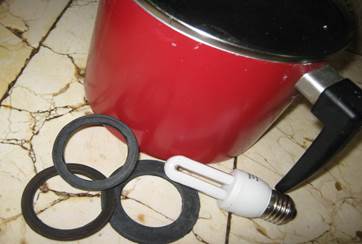
He is not the only one, since his two predecessors did the same. We remember, among the “presidential tasks”: the design of school uniforms; the differentiated prices of beers and malts; the installation of establishments to sell hamburgers with added soft drinks; the four ounces of coffee mixed-with-peas per consumer; the cow “Ubre Blanca” (White Udder) and its one hundred liters of milk; the coffee pot gasket rings; the eucalyptus candies; the energy saving light bulbs; the Chinese bicycles without night lighting; the chocolate bar; the soy yogurt; the electric stoves and the cooking utensils; and many other things.

Such an original country, where presidents fulfill “important tasks,” can not advance, develop, or create anything prosperous and efficient.

The job of a president is not to visit provinces and municipalities to do political proselytizing, nor dunk a basketball at a school to demonstrate their physical skills.

The job of a president is to steer the state responsibly and make it work efficiently in the interests of citizens.

Kenya’s President Celebrates the Deployment of Cuban Doctors

President Uhuru Kenyatta attended the event and subsequently posted images of the moment on his Twitter account. (@UKenyatta)

14ymedio bigger14ymedio, Havana | 28 June 2018 — After the controversy and a short course at the School of Sciences in Nairobi, the Cuban doctors in Kenya left Wednesday from the capital, sent off by crowds of people, to the counties where they will undertake their work.

The president himself, Uhuru Kenyatta, attended the event and subsequently published images of the moment on his Twitter account, writing: continue reading

“The 100 Cuban doctors specializing in cardiology, nephrology and neurosurgery, among other specialties, are now ready to move to the counties and I am delighted to formally send them off to provide much-needed services to the Kenyan population, let us embrace and support them.” He also posted photographs in which the healthcare workers are seen on buses bidding farewell to the authorities, Cuban flag in hand.

The doctors arrived in the country on June 6 pending the resolution of a complaint that tried to challenge their hiring. Three unemployed Kenyan doctors had filed the case in the Employment and Labor Relations Tribunal arguing that doctors in Kenya should have priority over Cubans.

On June 19, Judge Onesmus Makau dismissed the complaint alleging that it was not proven that the rights of doctors and other specialists had been violated by the decision to import Cuban doctors.

The Union of Doctors and Dentists of Kenya (KMPDU) had also opposed recruitment on the grounds that it would cost taxpayers billions of shillings.

“The Cuban doctors will cost the taxpayer more than 2 billion shillings (about 20 million dollars) plus the additional costs of security, transportation, housing and food from the governments of the counties,” said the general secretary of the union, Ouma Oluga.

The President issued a statement on Wednesday explaining that in the next 100 days his Government will launch a campaign to immunize 400,000 children, which is expected to increase coverage, currently some 80%.

In the same communication, he took the opportunity to talk about Cuban health workers, praising the agreement and the benefits it will bring to Kenya.

“Our ratio of 1 doctor to every 16,000 Kenyans remains an obstacle to achieving universal health care coverage. Local specialists are few and far between, however, their services are in great demand in the country. The bilateral agreement between Kenya and Cuba, therefore, will improve health collaboration in the provision of specialized services and will also develop the skills of our local doctors,” said Kenyatta.

Cuba’s ambassador in Kenya, Ernesto Gómez Díaz, attended the event and said that the deployment of medical specialists was key to consolidating the growing bilateral relationship between Kenya and Cuba.

As a part of the pact, Kenya and Cuba are negotiating an agreement on the control of malaria vectors through the use of biolarvicide technology available on the island.

 ________________________

The 14ymedio team is committed to serious journalism that reflects the reality of deep Cuba. Thank you for joining us on this long road. We invite you to continue supporting us, but this time by becoming a member of 14ymedio. Together we can continue to transform journalism in Cuba.

Mexico Moves to the Left Against the Imaginary Pendulum

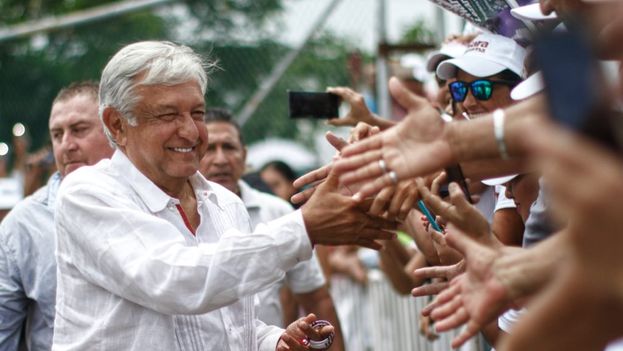
Andrés Manuel López Obrador has an inveterate addiction to promising subsidies. (Morena)

14ymedio bigger14ymedio, Carlos Alberto Montaner, Miami, 1 July 2018 — This article could not be published in Mexico right now. The elections are on Sunday July first and as of Thursday the ban has been declared. The purpose is to avoid influencing the voters who, supposedly, meditate on whom they will elect as president. In fact, the great national concern is the World Cup and the fact that Mexico has chances to win it.

What a stupid measure! In the times of our majesty the internet all that is useless. As of several days ago, 99.99% of the voters have made their decision. Polls show Andrés Manuel López Obrador – AMLO to Mexicans – of the MORENA Party as the winner with 45% intending to vote for him. The distant second is Ricardo Anaya (PAN-PRD) with 19%, and José Antonio Meade of PRI is third with just 15%. The difference is so great that if there had been a second round* AMLO would clearly defeat Anaya. continue reading

Why is Mexico moving to the left, against the imaginary pendulum, when almost all of Latin America seems to be moving in the other direction? Probably, because of AMLO who, despite being a politician of the system (he has been a member of the PRI and the PRD), has some of the attributes of the caudillo outsider, and the fact that the vast majority of Mexicans are tired of traditional politicians incapable of alleviating the very serious problems of increasing violence and great corruption.

Also, because Mexico is a country only lightly related to Latin America. It has its rich pre-Columbian history, its powerful colonial viceroyalty and its republican history without Simón Bolívar and without José de San Martín. It has its cuisine, its myths, its literature, its cinema, its music, and, ultimately, its rich and varied culture at the service of the almost 130 million Mexicans who live in the country and many of the 40 million located in the United States.

To which is added a remarkable phenomenon: the only foreign nation that really influences Mexico’s social mentality is the United States. Not withstanding that in two slashes the United States took half of Mexico’s territory. The first cut was Texas in 1836, and the second, ten years later, was the rest of what is now the southwestern US, including California.

Neither Spain, which is the distant past of the gachupines (native Spaniards in Mexico), nor Latin America, with whom the country shares a language and many features of a common identity bequeathed by the Motherland, are present in the daily life of Mexicans. The Mexican obsession is the United States.

I remember that, after participating in a seminar with Samuel Huntington at Harvard organized by Larry Harrison, the American thinker expressed his concern about the strong Mexican presence in the west of the country, given that they might eventually try to link to Mexico. I was then invited to give a lecture in Monterrey and, when I finished, I explained and asked my Mexican listeners about Huntington’s conjecture.

My hosts laughed. Had neither Huntington nor I had heard of the Tex-Mex world, very rich in culinary and musical expressions? It was the other way around: what could happen, according to them, was that one day northern Mexico would ask for its annexation to the United States. There was, they said, a very strong force of attraction from Texas that made residents of Monterrey feel more emotionally close to the Texan culture than to Mexico City.

In short, who is afraid of AMLO and why? Fearing him, with reason, are employers and society’s elite. The fear comes from his inveterate addiction to promising subsidies. AMLO’s populist features arouse the terror of business groups and domestic and foreign investors. He will raise public spending to terrible levels.

Many assume he could be another Hugo Chávez. I do not think so. He doesn’t seem as foolish. I suspect he will choose another mode of disaster, but one less severe. Maybe it will be like the first term of Peru’s Alan García, or the initial years of Venezuelan Rafael Caldera’s second term, until reality made him change direction.

The unfortunate thing is that his term will overlap with that of Donald Trump. A right-wing populist and a left-wing populist will mutually reinforce their worst instincts. In any case, Trump must be thinking of adding thirty feet to his border wall while AMLO is thinking nothing will be done to stop the flood of emigrants. The train crash is all but certain.

*Translator’s note: There are no run-offs in Mexican presidential elections. The highest vote getter wins, even without a majority. The president serves only one six-year term.

_______________________________

The 14ymedio team is committed to serious journalism that reflects the reality of deep Cuba. Thank you for joining us on this long road. We invite you to continue supporting us, but this time by becoming a member of 14ymedio. Together we can continue to transform journalism in Cuba.
The Unfinished Tasks of Pope Francis

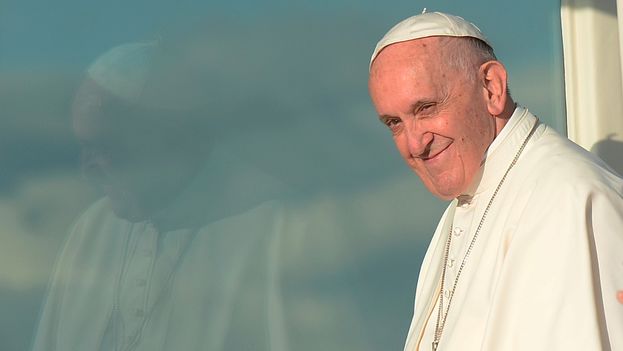
Pope Francis assumed the throne of Saint Peter with the aura of renewal. (Twitter)

14ymedio bigger14ymedio, Yoani Sanchez, Havana, 1 July 2018 — The scandal has transcended Chile and reached the doors of the Vatican itself. The earthquake provoked by accusations of sexual abuse and cover-ups against several Chilean priests has also challenged Pope Francis, who accepted the resignation of five Chilean bishops but is aware that the problem extends throughout the world’s Catholic Church.

Among the prelates and seminarians themselves, opinions on how to solve the current crisis remain divided and polarized. While some see the denunciations as an attack to the Christian faith and an attack against the ecclesiastical institution, others urge the implementation of important changes that would diminish the incidence of these scourges. Placed above this mountain of criticism, the Pope seems like a figure made of paper at the mercy of the storm. continue reading

The man who became the Bishop of Rome surrounded by an aura of renewal, has been able to do little to introduce real changes in the temples and convents that would contribute to modernizing the Church, opening it to a changing world where “the rule of law” must govern everyone, without complicities or silences. Francis has failed the victims of these abuses by not fostering the transformations necessary to prevent them from continuing to happen.

The discussion on the subject has special connotations in Latin America, since this region has more than 425 million Catholics, a figure that represents almost 40% of the Catholic faithful on the planet. The debate has been ignited even in countries such as Cuba where scandals of clerical abuse have not yet reached the front pages of the papers, due to the prudish secrecy of the official press and the fear of those affected.

Sotto voce, in Cuban corridors and sacristies, the news about the events in Chile inflames discussions. Few can escape taking sides given what happened.

“Eliminate the obligation of celibacy,” a young Cuban who studied at a seminar on the island proposes without blinking. “The ordination of women, greater transparency in the management of resources, the democratization of the communities and even the acceptance of homosexual marriage,” round out the demands of this potential priest who finally hung up his habit without seeing his dreams materialize.

“These scandals will pass because the Church is millenarian and has withstood worse attacks, we are going to weather the storm and continue,” says the elderly priest of a Havana parish. “We can not all be evaluated by the actions of some and celibacy must remain intact because it is something that distinguishes us and reinforces our chastity,” he adds.

Between the weathered priest and the young ex-seminarian is an abyss carved out by their differences. Both share religious faith but there is a vast difference in their beliefs about how the institution to which they belong should function. Both are Catholics, but while one clings to the traditions and the old ways, the other inhabits the church of the future, the one that Pope Francis has not managed to promote.

__________________________

Note: This column  was originally published in the Latin American edition of Deutsche Welle.