Academies To Produce Macho-Men In Cuba / Abel Sierra Madero

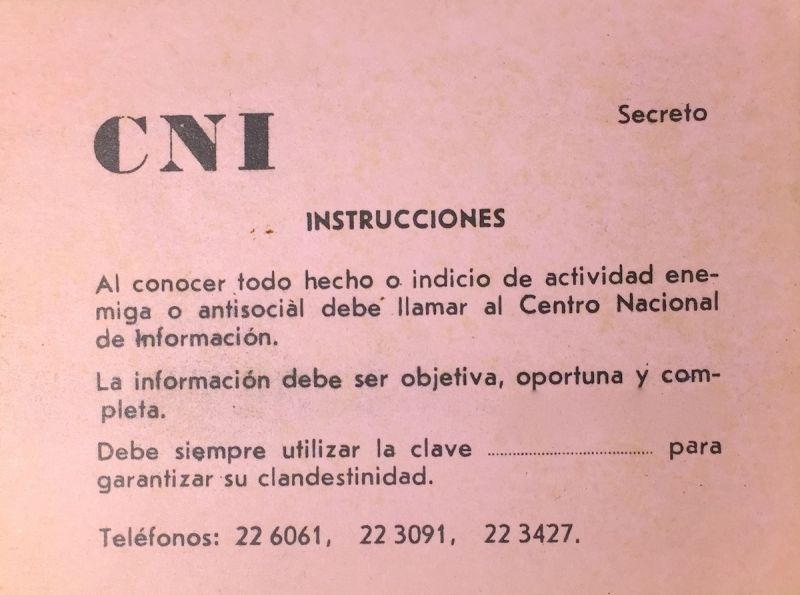
Card issued by the “National Information Center,” which was tied to the Committees for the Defense of the Revolution (CDR) in the 1960s. This document constitutes a valuable source for the study of vigilance and social and political control in Cuba. On the upper right corner of the card appears the word, “secret,” along with instructions to informants. These should contact the Center when they “know of any instance or indication of enemy activity,” and use a password to maintain “secrecy.” Photo courtesy of María Antonia Cabrera Arus.

In the 1960s, close to 30,000 young men were detained in forced-labor camps. The mistreatments that took place in these camps, known as Military Units to Aid Production UMAP, in the name of “social hygiene,” testify to the homophobic component of the Cuban Revolution.

Abel Sierra Madero, From Letras Libras, January 2016 — Between 1965 and 1968, the Cuban government established, in the central region of the country, dozens of forced-labor camps known as Military Units to Aid Production (UMAP), where about 30,000 men were sent under the pretext of the Obligatory Military Service Law (SMO). The hybrid structure of work camps cum military units served to camouflage the true objectives of the recruitment effort and to distance the UMAPs from the legacy of forced labor. Thus the military-style organization and discipline to which the detainees were subjected could be justified. November 2015 marked 50 years since the regime implemented this experiment.

Historians have generally avoided research into state social-control policies based on forced labor, concentration and isolation of thousands of Cuban citizens at rural locations set up during the 1960s. Likewise, they have rejected the usage of such terminology, as if it did not apply to the case of Cuban socialism, or its use was not “politically incorrect.” By the same token, testimonies and narratives produced by former UMAP detainees have almost always been held suspect. A fascination with beards and uniforms on the part of the mainstream press in Europe and the US, along with powerful images constructed by revolutionary propaganda, have up to now overshadowed the testimonies of Cuban exiles regarding their terrible experiences in these camps.

These accounts became part of an anti-communist narrative to which, supposedly, the exiles had to conform in order to survive outside Cuba. At least, that was what Ambrosio Fornet, one of the most recognized intellectuals on the Island, thought in 1984 while giving an interview to Gay Community News. Although he recognized that the UMAPs were a sort of “academy to produce macho-men,” Fornet criticized the perspectives on the repression offered by exiled continue reading

Cuban writers and artists in the documentary film, Improper Conduct (1984), by Néstor Almendros and Orlando Jiménez Leal. According to Fornet, the majority of the witnesses who appeared in the film lied about UMAP; the writers were saying “what they should say because they’re making a living off of anti-communism.” He added, “The idea of a repressive police state that persecutes individuals is totally absurd and stupid.”

UMAP cannot be understood as an isolated institution, but rather as part of a project of “social engineering” geared toward social and political control. That is, a technology that involved the judicial, military, educational, medical and psychiatric apparatuses. For the establishment of these camps, complex methodologies were employed to identify specific subjects and purge them from mass institutions and organizations, up to and including their recruitment and internment.

Masculinization and Militarization

There were several criteria that the authorities took into account to recruit and intern thousands of subjects in the forced-labor camps. One of them was homosexuality, and it is estimated that around 800 homosexuals were shut away in the camps. Nevertheless, there were other, political, reasons.

In the mid-1960s, Cuba was involved in a transnational process of constructing socialism along with the Soviet Union, the Eastern socialist bloc, and China. These regimes invested many symbolic resources in the creation of national stereotypes that were almost always associated with complex processes of masculinization. In this sense, the concept of the “New Man” was one of the most powerful ideals within these systems, although it had also been used by German Nazism and Italian Fascism.

In the Cuban case, this concept was associated with a broader ideological strain of social homogenization in which fashion, urban sociability practices, religious creeds and work-related behavior were key elements to bring in line with the official normative vision. Thus it is not strange that—besides homosexuals—delinquents, religious believers, intellectuals or simply young men of bourgeois background, were also sent to UMAP.
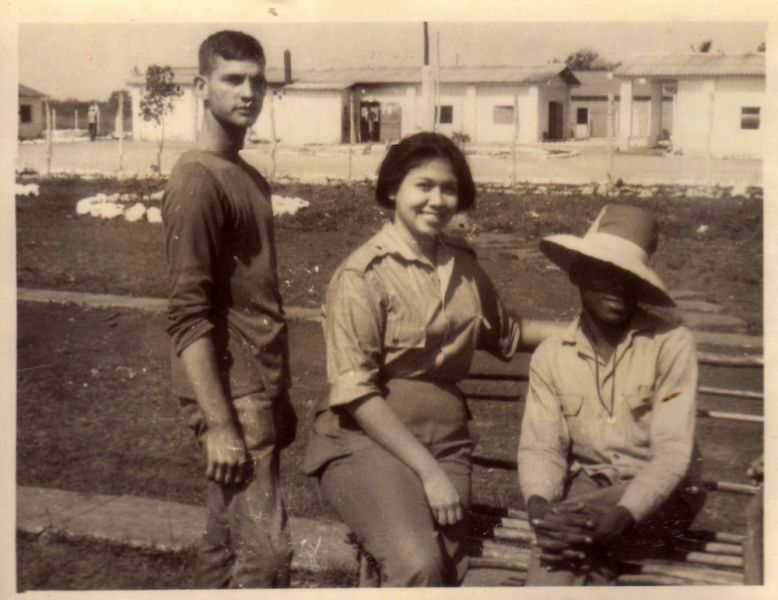
The psychologist Liliana Morenza, a member of the UMAP research team of psychologists, with two homosexuals from Company 4, Battalion 7, Unit to Aid Production, “La Violeta,” Camagüey, 1967. Photo courtesy of Dr. María Elena Solé.

Although the establishment of the forced-labor camps was accomplished towards the end of 1965, these camps were created under the pretext of Law 1129 of 26 November 1963, which established Obligatory Military Service (SMO) for a period of three years, for men between the ages of 16 and 45. The law exempted those who were the only source of economic support for their parents, spouse and children. At least in theory, the law allowed for a deferral of the recruitment of young men who were finishing their final year of secondary school, pre-university, or university studies.

Nonetheless, the authorities applied those sections with discretion, employing political criteria regarding UMAP. Some young men who constituted the only support for their families were recruited without regard for the consequences for those domestic economies. Many students of diverse educational levels who were at the point of graduating became eligible for recruitment to the SMO when they were expelled as part of a “purification” process. This process, which began around 1965—a few months before the first call to UMAP—had the character of a “purge,” a social crusade, headed by the Union of Young Communists (UJC) against those who were not perceived as “revolutionaries.”

In a communication published in Mella magazine on 31 May 1965, the UJC admonished high school students to expel “counterrevolutionary and homosexual elements” from their groups in the final year of study, so as to impede their university admissions. Also mentioned are those who display “deviances,” or “some kind of petit-bourgeois softness and apathy towards the revolutionary activities being performed by the student body.” They should be sent to the SMO so that they may “gain the right” to be admitted to university. “You know who they are, you have had to fight them many times […] apply the strength of worker and peasant power, the strength of the masses, the right of the masses against their enemies […] Away with the homosexuals and counterrevolutionaries from our schools!” Thus concluded the communication.
Seen here is psychologist Liliana Morenza, one of the specialists who joined the UMAP research team of psychologists, with various homosexuals and military officials. Company 4, Battalion 7, “La Violeta” Unit to Aid Production, Camagüey. 1967. (Courtesy of Dr. María Elena Solé).

A few days later, Alma Mater magazine—the official organ of the Federation of University Students (FEU)—went along with this policy, assuring readers that the purification was the result of the historical moment, and a “necessity for the future development of the Revolution.” The assertion was that the purges of counterrevolutionaries and homosexuals should not be understood as two isolated processes, but rather as one, because “so noxious are the influence and activity of both of them to the formation of the professional revolutionary of the future.”

Once the purges were finalized, those young men were left exposed and at the mercy of the State. Their entry into UMAP was a matter of time. No sooner were the purifications concluded, via the Committees for the Defense of the Revolution (CDR)—one of the most effective surveillance institutions created for social and political control in Cuba—than censuses were conducted to identify those youths who were not working nor going to school. This information was provided to the Ministry of the Interior and the Ministry of Revolutionary Armed Forces (MINFAR), the entities charged with recruitment for the UMAPs.

By 1964, Fidel Castro was boasting of the impact the SMO was having on Cuban youth, and emphasizing the failure of institutions such as the family and school in the education of young people. “All right, then, what they could not teach them at home,” he would declare, “what they could not teach them in school, what they could not teach them at the institute, they learned in the army, they learned in a military unit.” For his part, his brother Raúl Castro Ruz, at that time minister of the FAR, gave assurances in a speech delivered on 17 April 1965, that the objectives of the Revolution could only be achieved with a “youth of tempered character,” possessing a “firm character” that was “forged in sacrifice,” far from “softnesses.” A youth that would be inspired “not by dancers of the Twist and Rock and Roll, nor by a display of pseudo-intellectualism,” a youth that would stay away from “all that would weaken the character of men.”

The economic utilization of the body

By way of these processes of militarization and masculinization, the intent was not only to correct gestures and postures, but to reorient and reintegrate those forces and bodies to an economic apparatus. The rhetoric of war, employed repeatedly by the leaders of the Revolution, was incorporated into the ideological and economic discourse in the form of military-type campaigns, and the workers were seen as heroes and soldiers—not just to insert them into a political rituality, but to utilize them as a workforce without having to compensate them financially. In a 1969 article, economist Carmelo Mesa-Lago analyed the types of non-paid work during the 1960s in Cuba, and among those models mentioned UMAP. According to Mesa-Lago, the government achieved savings of around $300-million Cuban pesos through non-paid labor between 1962 and 1967.
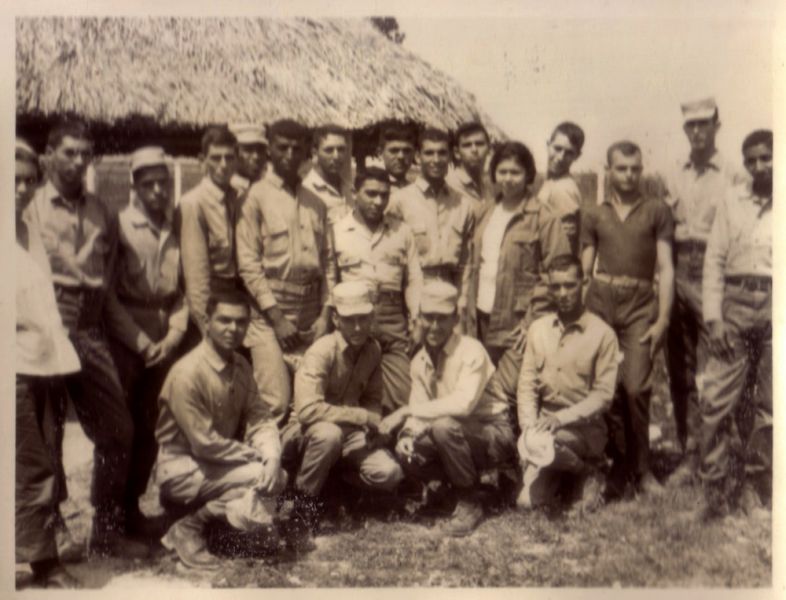
Photo taken by the team of psychologists during a session of hormone therapy administered to homosexuals in UMAP, 1967. (Courtesy of Dr. María Elena Solé).

Around the 1960s, the Cuban economy was dependent on sugar, but the mechanization of cane-cutting was not widespread, therefore the success of the harvests depended on manual cutting. During this period, the sugar harvests began to form part of a great ideological leap that Fidel Castro had planned for 1970. The Maximum Leader was trying to take the Island to a higher degree in the construction of socialism by way of a harvest of ten-million tons of sugar. To achieve the desired effect, Castro needed to mobilize and deploy a major workforce to the areas where large sugar plantations were located. Camagüey province, with considerable expanses of land and scarce labor, was strategically selected for the establishment of the UMAPs in the final months of 1965.

Thus, the camps were inserted into the planned socialist economy, as had occurred in the Soviet Union with the gulag (General Directorate of Labor Camps). Vladimir V. Tchernavin, who managed to escape from a Soviet gulag, describes how, at the start of 1930, that institution became a great forced-labor enterprise, appearing to be a correctional entity, which allowed for the establishment of development plans in places where such an endeavor would have been very difficult without the available forced labor. According to Tchernavin, the gulag provided a structure and functions similar to those of a state enterprise, it was organized like military units, and the detainees received a miserable wage for their work.

A similar thing occurred with UMAP. The inmates of these camps, as well as others recruited by the SMO, received a salary of seven pesos per month, and they were compelled to participate in what is known as “socialist emulation,” a type of competition to incentivize production in which the “vanguards” did not receive financial compensation, but rather diplomas or recognition during political and mass events.

Cover of Sin Tregua! [Without Truce], informational bulletin of the UMAPs political arm, No. 6, 1967. “Social hygiene is what this is called”
Cover of Sin Tregua! [Without Truce], informational bulletin of the UMAPs political arm, No. 6, 1967.
“Social hygiene is what this is called”

It could be said that at the start of 1959, moral panic was the ideological framework on which the campaign for national regeneration was based, which called the entire nation to liquidate the “vices” of the past and consolidate revolutionary power. But very soon, this religious sort of schema was complemented with speeches about hygiene and the notion of “social sickness.”

On 15 April 1965, some months before the first recruitment drive for the UMAPs, the writer Samuel Feijóo, in El Mundo newspaper, published “Revolution and Vices,” an account of the tensions that caused the merging of the religious, political and hygienic discourses. Among the vices that still needed to be eradicated, the writer pointed to alcoholism, and “rampant and provocative homosexuality.” He assured readers that the matter was “not about persecuting homosexuals, but rather about destroying their positions, their procedures, their influence. Social hygiene is what this is called.”

In this manner, the discourses on hygiene and those that came out of the field of psychology were adapted to justify the UMAPs. The camps became a quarantine area, a laboratory that provided not only for the isolation of inmates, but also for the opportunity to study them. In May of 1966, a few months after the UMAPs had been established, María Elena Solé put together a team of psychologists and physicians that made up a secret operation organized by the political arm of MINFAR, to design and work on rehabilitation and reeducation programs for homosexuals in UMAP.

According to Solé’s testimony to me in March 2012, the team’s work consisted in “evaluating these persons from a psychological perspective.” But the evaluation and classification was not based exclusively on aspects related to the generic-sexual configuration of the individuals, but rather incorporated also an ideological criterion.

The team of psychologists drew upon the notion of “afocancia,” a cubanism not recognized by the dictionary, which has been employed to negatively describe those persons who stand out publicly because of certain physical or moral characteristics. Thus, a Template A (for “afocante”) was designed, to distribute homosexuals across four scales: A1, A2, A3 and A4. Type-1 “afocantes” were considered to be those “who did not make a public show of their problem, and were revolutionaries—in the sense that they did not wish to leave the country—comported themselves in a normal fashion, and were more or less integrated into society.” Conversely, “one who let his feathers fly and who, besides, was not integrated into the Revolution nor had any interest in it,” and had expressed a desire to leave the country, was considered a Type-4 “afocante.” As María Elena Solé explained, “there were revolutionaries in this group, but if someone made a display of his problem, we would not classify him as A-1, but as A-4.”

Some of the former UMAP inmates assure me that the team of psychologists conducted various experiments and tests of a behaviorist and reflexologist nature, which included the application of electroshock. However, Dr. Solé asserts that the tests that were done were solely designed to “measure intelligence.” In contrast, Héctor Santiago — a theater person connected to one of the most controversial cultural projects of the 1960s in Cuba, Ediciones El Puente, and who was sent to a UMAP — assured me that the team’s examinations were, at least in their totality, of another character. According to Santiago, the psychologists and psychiatrists utilized behaviorist techniques in the UMAPs such as shocks produced by electrodes, and insulin-produced comas. These experiments consisted in the application of alternating-current shocks “while showing us photographs of nude men, so that we would subconsciously reject them, turning us by-force into heterosexuals.”

This description concurs with various articles that detailed this procedure and that circulated in specialized Cuban journals of psychology and psychiatry during the 1960s. This therapy, which had been developed in Prague by K. Freund, consisted in creating conditioned reflexes. In Cuba it was Dr. Edmundo Gutiérrez Agramonte who incorporated this practice.

Felipe Guerra Matos, the official in charge of the dismantling UMAP, remarked to me during an interview in June 2015, that the idea of placing teams of psychologists in the UMAPs had been his, and that up to 30,000 subjects were confined in them, including approximately 850 homosexuals. At one point in the conversation, Guerra Matos stated, “We committed grave errors, imposing punishments on the little faggots, a lot of things were done there […] They were made to stare into the sun, to count ants […] ‘Go ahead, stare into the sun, you’ll see.’ Any abomination that occurred to some harebrained guard. I am at fault, because I signed off on recruitments.”

The punishments in the UMAPs could range from verbal insults to physical mistreatment and torture. Several of my interviewees assured me that one of the methods of punishment employed by some guards consisted in burying the detainee in a hole in the ground and leaving him with his head exposed for several hours. Some were dunked in a tank of water until they lost consciousness; others were tied to a stake or a fence and left for the night, exposed to the elements, so that they would be food for mosquitos. According to Héctor Santiago, this method of punishment was called “the stake.” The torment and mortification of the body had a purpose of intimidation and formed part of a narrative in which the punishments were given names such as the “trapeze,” the “brick,” the “rope,” the “hole,” among others.

On the other hand, many of the camps were surrounded by barbed-wire fences, used repeatedly in jails and concentration camps. According to the singer-songwriter Pablo Milanés, who was sent to UMAP in 1966, these fences were composed of 14 wire strands, arranged so that they reached up to six meters in height. A brief song is dedicated to this wire fence and the enclosure, entitled, “Fourteen Strands and One Day.” Milanés explained to me that the song was not recorded in those years, but rather later, in the studios of the Cuban Institute of Cinematographic Art and Industry, in the 1970s.

Fourteen strands and one day separate me from my beloved,

Fourteen strands and one day separate me from my mother,

And now I know whom I will love

When the strands and the day

I am able to leave.

Epilogue

The history of this sad experiment has remained buried on the Island. Up to today, the Cuban government has constantly denied the character of the UMAPs, and has sought to erase from the collective imagination anything related to this subject. At the same time, the international Left has preferred to view UMAP as an error inherent to revolutionary movements. This ideological exercise has been influenced by the manner in which the figure of Fidel Castro became one of the most powerful representations of the Revolution. Therefore, once the critiques and international campaigns calling for the dismantling of the camps began, it became indispensable to disassociate the Maximum Leader from these processes, so that UMAP could be justified as an exception that should not be identified with the Revolution. This is how, for example, Ernesto Cardenal did it. In his book, En Cuba (1972), the Nicaraguan poet and theologian told of how he was visited by two young men who were interested in complementing his official view of the Island. One of them had been a “jailer” for UMAP, and assured Cardenal that it was Fidel Castro who eliminated those “concentration camps,” invoking at times the law of an eye for an eye, a tooth for a tooth. The picturesque account that Cardenal narrates in his book constitutes the only source that makes this type of reference. In 2010, during an interview granted to the Mexican newspaper La Jornada, Fidel Castro himself finally “assumed” his responsibility in the establishment of those work camps.

UMAP was officially dissolved via Law 058 of October 1968. Although these camps disappeared as an institution, other, more sophisticated devices and institutions replaced them, keeping intact the spirit and motivations that created them. The decade of the 1970s was still to come.

Translated by Alicia Barraqué Ellison
A Visit More Symbolic Than Political / 14ymedio, Yoani Sanchez

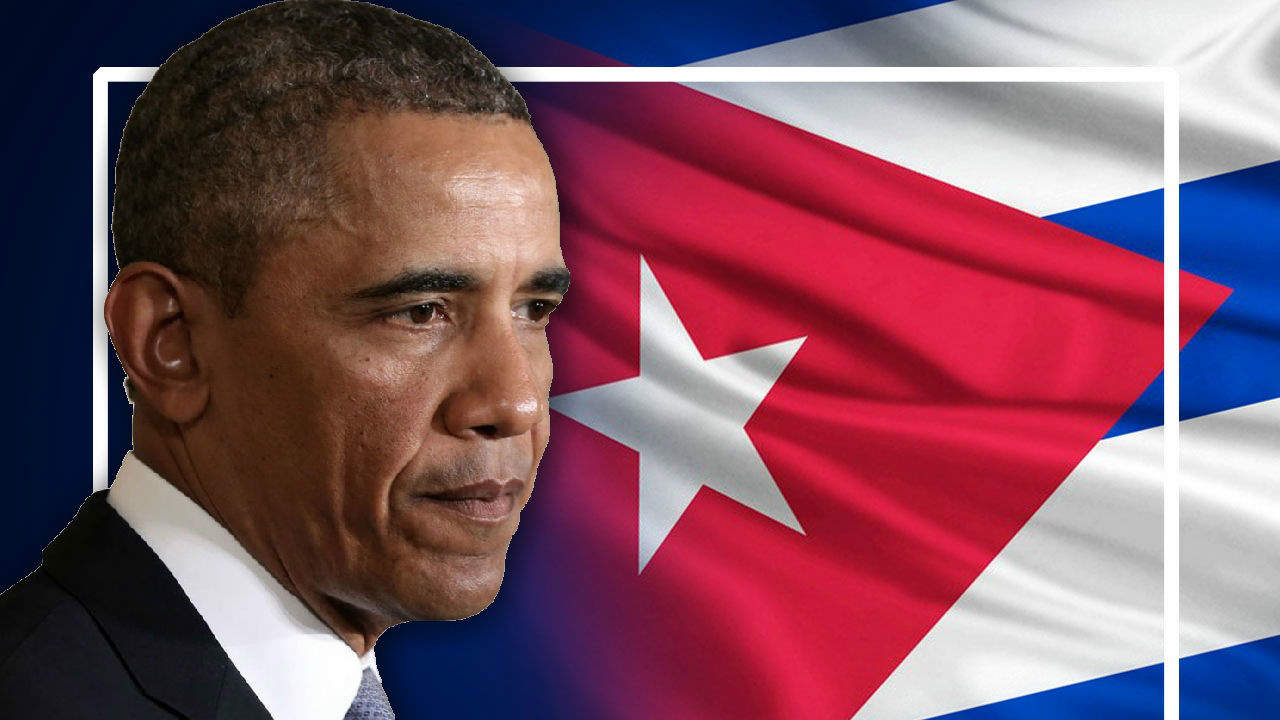
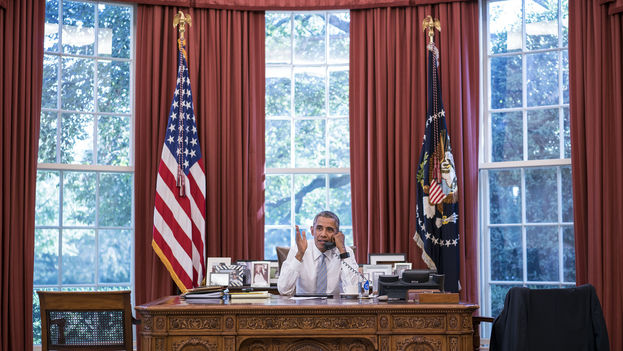
The US president, Barack Obama talks with his Cuban counterpart Raul Castro. (White House)

14ymedio bigger14ymedio, Generation Y, Yoani Sanchez, 18 February 2016 — The last time a United States president visited Cuba Havana’s Capitol Building had not yet opened, baseball’s star pitcher The Black Diamond died, and my grandmother was a little girl with messy hair and a penetrating gaze. There is no one left who remembers this moment who can tell us about it first hand, so Barack Obama’s arrival on the island will be a new experience for all Cubans.

How will people react? With joy and relief. Although there is little the president of another country can do to change a nation where we citizens have allowed a dictatorship, his visit will have a strong symbolic impact. No one can deny that the resident of the White House will be more appealing and popular among Cubans than the old and uncharismatic general who inherited power through his bloodline. continue reading

When the presidential plane touches down on the island, the discourse of the barricade, so commonly called on by the Cuban government for over half a century, will suffer an irreversible blow. It will not be the same as seeing Raul Castro and Barack Obama shaking hands in Panama to see them to meet on the territory that until recently was full of official billboards against “the empire” with mocking caricatures of Uncle Sam.

The Communist Party press will have to jump through hoops to explain to us the official welcome of the commander-in-chief of the armed forces of the “enemy country.” The most recalcitrant Party militants will feel betrayed and it will be clear to all that, behind the supposed ideology, there is only a determination to cling to power through the typical strategies of political chameleons.

In the streets, people will experience the enthusiasm of the unexpected event. For black and mixed-race Cubans, the message is clear and direct in a country where a white gerontocracy controls power. Those who have a T-shirt or sign with Obama’s face will flaunt it on those days, taking advantage of official persuasiveness. Fidel Castro will die a little more in his guarded Havana refuge.

“President” brand beer will run out in the cafés, where loud calls to “give me two more Obamas” will be heard, and there is no doubt that the civil registries that week will record several newborns with names like Obamita de la Caridad Perez or Yurislandi Obama. Pepito, the little boy who stars in our popular humor, will release a couple of jokes for the occasion, and tchotchkes sellers will offer items with the lawyer’s profile and the five letters of his name.

One thing is clear, however, beyond the trinkets of enthusiasm, the leader of the United States cannot change Cuba and it is better if he doesn’t try, because this national mess is our responsibility. His trip, however, will have a lasting effect and he should take advantage of the opportunity to send a loud and clear message in front of the microphones.

His words should be directed to those young people who right now are assembling a raft, fueled by their despair they carry within. He needs to let them know that the material and moral misery that surrounds them is not the responsibility of the White House. The best way in which Obama can transcend Cuba’s history is by making it clear that the perpetrators of the drama we are living are here, in the Plaza of the Revolution in Havana.

Somos+ Official Note on Barack Obama’s Visit to Cuba / Somos+

Somos+ (We Are More), Eliecer Avila, 18 February 2016 — The Somos+ Political Movement welcomes the upcoming visit of President of the United States Barack Obama to Cuba. This event confirms the willingness of his government to strengthen the bonds of friendship with our people.

There is evidence that the Cuban people feel respect and admiration for Obama, because, in practice, he has done more than Raul Castro to overcome the old patterns of the Cold War and to advance the search for new opportunities for the development, prosperity and freedom of the Cuban people. continue reading

During his visit Obama will be able to explain to us first hand the details of the changes in policy and the opportunities they open for both peoples. We are sure that he will be received in the streets here like a hero, an image that will contrast greatly with the “hatred toward the enemy neighbor” that they have tried to instill in us for more than half a century. And above all, it will be absolutely incompatible with the abominable and absurd repression against those accused of being “allies” of that “enemy.”

It must also be made very clear that it will not be Obama, nor the pope, nor anyone who is not of our own people who will resolve the profound problems that are strangling our nation. However, in this fight, every favorable wind is appreciated.

Going forward from today Cuba will experience a decisive chain of historic events that will mark its present and its future. President Obama’s visit will be one of them.

Naturally, Somos+ welcomes him and wishes him success.

Eliecer Avila, Engineer
President, Somos+ (We Are More)

Dressmaker, A Dying Profession / 14ymedio, Lilianne Ruiz

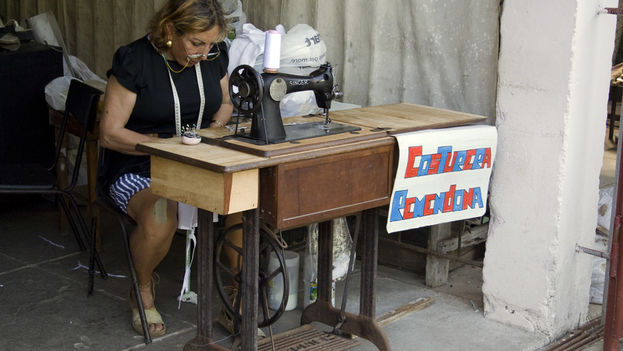
A seamstress offers her services to sew and mend in Havana. (14ymedio)

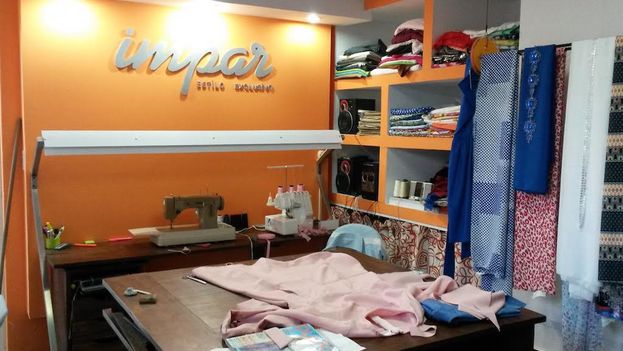
14ymedio bigger14ymedio, Lilianne Ruiz, Havana, 16 February 2016 – Spending her days among needles, threads and fabrics, the dressmaker Yansa Muniz defends handmade garments against the widespread trend to prefer brand name clothes. Her tenacity has led to the creation of Impar (Unparalleled), a workshop in Havana’s Nuevo Vedado neighborhood, where she dedicates herself to made-to-measure outfits.

In a society where tailors and seamstresses are an endangered species, this young woman learned the craft from her grandmother, an expert in hats for the theater. However, it was only a few years ago that she realized she wanted to devote the rest of her life to those skills learned in childhood.

Yansa acquired her own self-employment license in 2013, when the authorities outlawed the sale of imported clothing. “I sewed a tea towel and they gave me permission,” she says, recalling the sewing exam she had to take before the inspectors of the Ministry of Labor to demonstrate her skills.

Now, much later, her biggest concern is finding the raw materials to support her business, amid the shortages and high prices in the Cuban market. continue reading

Most of her customers are women between 40 and 50, who find it hard to find clothes in their size at the state stores. Also common are those who come to ask her to repair or alter some garment; she rarely provides services to teenagers because they “prefer brand name clothing,” says the dressmaker.

In August, the greatest demand is for repairing and altering school uniforms, often “we have to take them apart and start from the beginning,” says Yansa. She works with two machines, an electric Singer and a German Gritzner, which lets her do finishes such as scallops similar to industrial machines, and she feels herself lucky compared to others who use unpowered machines “and have to work the pedal the whole time.”

Impar, a dressmakers in Havana’s Nuevo Vedado neighborhood managed by Yansa Muñiz. (14ymedio)

The informal (underground) market in fabric is not as well developed as that for already-made clothing. Bringing resources from another country is not a solution because right now the government only allows the import of ten yards of fabric. “If they have one yard more we seize the entire shipment,” confirms an official with the Public Services Department of the General Customs of the Republic.

Some seamstresses are worshipped for their skill. This is true in the case of Elvira Menendez, 78, who boasts that she can still “sew up a storm” and has the vision to “thread a needle on the first try.” She lives in Regla and has made clothes ranging from layettes to wedding dresses for many generations of the residents in her area.

The most successful outfit from this seamstress was a copy of the jacket Michael Jackson wore in one of his videos. “People came from all over Havana to buy it,” she recalls. She was also an expert in plagiarizing jeans, at a time when they were only available to those with relatives abroad.

Now, when she talks about fashion, her eyes light up and she remembers the works of dressmaking shops such as La Época, Fin de Siglo, Belinda Modas and Angelita’s Novias. “The seamstresses there followed the trends from Paris and New York,” she said. After the crisis of the ‘60s “people were looking in their closets for old fabrics that could be reused to sew something new.”

Her worst nightmare came true in the decades of the ‘70s and ‘80s, “when you saw the same patterned fabric in a man’s shirt or in a woman’s dress,” she jokes. Her market niche now is clothes for children who are taking ballet or Spanish dancing classes, the clothing for Santeria rituals, and uniforms for sports teams and for employees of private restaurants.

Elvira recognizes that the importing of clothes from Panama and Ecuador is “putting an end to this profession.” She can’t compete with the “catalogs of brand name clothing from there,” she comments, referring to the underground market in clothes. While she talks, she sews a robe for a little girl, with ruffles and covered buttons. “This is something you see less and less of,” says the veteran seamstress.

Cuban Writers-Artists Union Addresses “Organized Gangs” / 14ymedio, Zunilda Mata

Gangs are usually made up of children, often under age 14 (Frame / ARTE)

14ymedio bigger14ymedio, Zunilda Mata, Havana, 17 February 2016 — The deterioration of ethical values ​​was the focus of discussions held at the Union of Writers and Artists of Cuba (UNEAC) last Friday in Havana. The meeting also addressed violence and the emergence of “organized gangs” formed by children and adolescents, a problem in response to which the city’s artists were called on to “protect the social fabric of communities.”

During the meeting, they discussed “problems that may exist in the slums” and the role of artists in response these phenomena. One participant at the event, who requested anonymity, told 14ymedio that a prosecutor invited by the cultural authorities reported that some of the gangs “are armed” and “are dangerous.” continue reading

Also attending the meeting were members of the entity’s Standing Committee on Community Culture, Heritage and Traditions and representatives of the Ministry of Culture, which called for transforming the “citizen and his environment” through art. Miguel Barnet, president of UNEAC, considered this as the artists’ ” biggest challenge.”

As a solution to the escalating violence in Cuban streets and the moral impoverishment of the population, authorities in the arts called for more “hard work” and “strengthening the identity and culture of the country.”

Several of those attending the meeting, among them writers, playwrights and theater and television actors, were concerned about the social situation in the country. The consumption of audiovisual materials, which a number of people described as “violent without artistic values,” was also a focus of the discussions in which “the weekly packet” was sharply criticized.

Criticism also fell on artists, with participants noting that “there is insufficient level of preparedness” to carry forward the “community cultural work,” and that there is often “limited awareness” of this type of project at the neighborhood level.

Members of UNEAC have reported an increase in violence in recent months, and they are asking for effective measures against crime. In the city of Camagüey, the intellectual Pedro Armando Junco is leading an initiative to apply stricter penalties against perpetrators of murder.

The death of his son, the rocker Mandy at the hands of a gang with knives, last May, has led Junco to believe that “the only way to eradicate the violence in the streets” is “to punish severely those responsible for a case of this magnitude.

Clashes between gangs are happening more and more frequently in different neighborhoods of Havana, where families are often left to mourn a victim who was killed.

These groups, such as the one that calls itself Los Desaforaos (The Outlaws) and an increasingly popular composed of girls who identify themselves as Las Apululu, are composed of children who are often under 14. The gang members often have a very strong sense of identity and commitment to the group, which revolves around two or three older leaders, more experienced in the art of street fighting.

Is What Comes After Raul Castro Worse? / Ivan Garcia

Photo from the travel blog Chavetas.

Ivan Garcia, 8 February 2016 — The family dinner hour is almost sacred in Cuba. After a frugal meal or a delicious supper, depending on what one can afford, comes the time for coffee, a smoke and a debate about the present and the future.

There are two factions: optimists and pessimists. Among each there are various sub-groups, those who are moderate, hopeful, neutral or disillusioned. Meal time, which usually takes place around eight, often coincides with the nightly television news.

On the island, as in much of the world, the television has a special place in the home. The family of Ignacio Remon, a private taxi driver, makes himself comfortable in his living room’s large brown chairs as his family begins chatting about this and that. continue reading

Ignacio pleads for silence so he can listen to the news. “Old man, you must like science fiction. Only lunatics and bums pay attention to Cuban news,” his children joke, moving to the front porch to chat about frivolous things.

“My family is right. The only place where things are going well in Cuba is on the nightly news. Young people don’t care about being informed — not by TV, radio or newspapers. They are into their own thing, into fashion, football and making plans to emigrate. The future of our country should be of interest to everyone,” he says while sprawled out smoking on the sofa.

The future? It makes a good topic for national debate. When you ask Ignacio’s wife, children or parents about their plans for the future, they remain silent. “I don’t see myself in Cuba five years from now,” says one of his children, a college student. “It’s always the same old story: no money, living day-to-day, the same old rhetoric about prosperous and sustainable socialism.”

Milena, his sister, is a nurse and works in a dilapidated Havana hospital. She does 24-hour shifts and then rests for three days. “The hospital operates by candlelight. There is a shortage of doctors and specialists, and patients complain. The daily topic of conversation is about how money does not go far enough, how expensive food is and how the country is not progressing. If I were to be sent on on a medical mission overseas, my life would be completely at the hands of those people (the regime),” she observes.

The taxi driver’s wife and parents believe they have lived long enough to realize that the government’s strategies amount to delaying tactics. “In Cuba it’s better not to talk about politics or the future. Everyone understands that. That’s why people prefer to disconnect by watching soap operas, or a baseball or soccer match, or reading books. This isn’t socialism or capitalism. It’s just a bunch of friends holding onto power,” notes one of the three.

During nightly dinner-time chats or lazy Sunday afternoons it is difficult to find a Cuban family that looks upon the current state of affairs with a sense of optimism. But they do exist.

Magda, a single mother of a seven-year-old girl, has climbed the social ladder through talent and determination. A professional worker, she is convinced that in Cuba the best is yet to come.

“There’s no doubt that, when you look at the current national situation, people are disillusioned. GDP grew by four percent but no one sees any growth. They see three and a half million tourists but the economy is not improving. On the contrary. Agricultural output has flatlined and prices are going through the roof. These old guys (the country’s leaders) are hanging up their gloves. I am convinced that, once they die, the country will take a blg leap forward. Emigration is not a solution. We were born here and it is up to us to bring about change for the better,” says Magda.

Encouraging words but how to turn them into reality? The state has not provided avenues for people to participate in national life effectively. Without batting an eye, Magda responds, “We won’t be worse off. There is discontent on the street but I am Catholic and I am convinced that in 2016 something will happen, something peaceful and untraumatic.”

Not even the vast class of bureaucrats, which survives by suckling off the state, is as optimistic as Magda. One example is Reinier, the head manager of a grocery store, who has opinions quite different from those of Magda.

“Cuba’s future is unpredictable,” confesses Reinier. “Those who use their government positions to steal today could be in prison tomorrow. But if they are well leveraged, they could end up in even better positions. All you need to do is open the floodgates and do business with the Yankees. But real business, not the pretend kind we’re doing now. I am placing all my bets on capitalism and that we’ll leave all this foolishness behind. Actually, we already have capitalism, but the bad kind.”

For many people on the island socialism and the benefactor state are part of a fictional narrative. “What we have in Cuba is a kind of African capitalism controlled by a government that levies taxes and earns yields much higher than the most ruthless capitalist entrepreneur,” says Joel, a high school teacher.

Normando, a retiree, prefers not to lose sleep thinking about it. “When you are eighty-four years old, the future is today. Tomorrow, we’ll see. What comes after Raul Castro will be worse, with military clans owning all the businesses. It’s all the same to me; I don’t have much now anyway,” he says.

The future does not much concern the country’s leaders either. It would good to ask them if they have a long-term plan for Cuba and its citizens. Or if if all just amounts to speeches and newspaper headlines.

From Hispanopost, February 4, 2016


Five Cuban Water Polo Players Escape In Mexico / 14ymedio

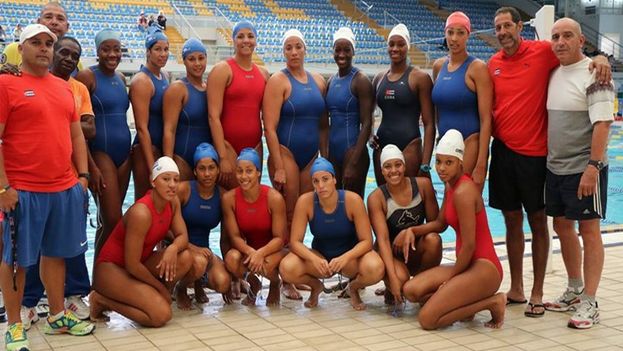
The Cuban water polo team in Nuevo Leon, Mexico. (INDE)

14ymedio bigger14ymedio, 16 February 2016 — Five players from Cuba’s women’s water polo team escaped from a training in the Mexican city of Monterrey and traveled to the United States, local sports officials told the DPA agency. The news, which had been circulating for days on social networks, was confirmed on Tuesday.

The escape forced the cancellation of the training and the rest of the water polo squad returned to the island on Sunday.” The Cuban government did not make any official statement, they simply told the rest of us (who didn’t desert) that they were changing the tickets to return to Cuba,” a team source told DPA. continue reading

The Cuban team was composed of 13 athletes and had arrived in Mexico City in early February to train with representatives of Nuevo Leon. The athletes were hosted in the Olympic Village of the State Institute of Sport and trained at the Olympic Aquatic Center University.

“Still today, we do not know if five players deserted, or one trainer and four players*,” reported the Nuevo Leon Sports Institute media coordinator, Juan Ramón Piña.

“It was unexpected, five left the Olympic Village and no one knew anything until the team staff confirmed that they went to the United States,” added the manager, who said that the departures occurred between Tuesday and Thursday of last week.

Between Wednesday the 17th and Friday the 19th, the Cuban team was scheduled to participate in a local tournament to wrap up its training cycle. The games are part of a collaboration agreement signed on 29 January between the sports authorities of the state of Nuevo Leon and Cuba to exchange coaches and engage in test matches.

The flight of athletes came just days after the brothers Yulieski and Lourdes Jr. Gourriel left the Cuban baseball team at the end of the Caribbean Series in the Dominican Republic.

*Translator’s note: The New York Times reported: “Right now I feel like the freest Cuban in the whole world,” said Rodny Nápoles, 39, a coach of the Cuban national women’s water polo team who crossed into Laredo this week.

Havana Bay / 14ymedio

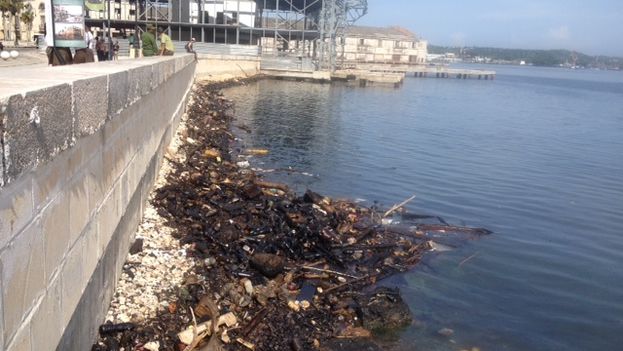
Havana Bay (14ymedio)

14ymedio bigger14ymedio, Havana, 15 February 2016 — With the decline of port activity in Havana Bay, the environmental pollution that has characterized the coast of the Cuban capital for decades has diminished. However, much remains to be done to improve the waters which specialists say are among the dirtiest in the Caribbean region. continue reading

Added to the industrial waste dumped into the two square miles of the bay every day, is the residential waste coming from the city’s sewers and several rivers that flow into the sea. Some 124 industries classified as environmentally “aggressive” discharge their waste into the area and another 53 that are “highly polluting” complicate the situation.

In recent years, there has been a return of fish and marine birds to the Havana coastline, but the waters still maintains a strong odor of fuel and evidences a great deal of floating solid waste. The Nico oil refinery causes profound damage not only to Havana Bay, but also to the surrounding slums that receive its contaminated emissions.

A long-term project proposes to move the industry towards the Port of Mariel zone, about 30 miles west of the capital, according to the official press. The Port of Havana is then intended to accommodate the cruise ships and tourist yachts, along with associated food and recreational services.

What Women Want / Luis Felipe Rojas

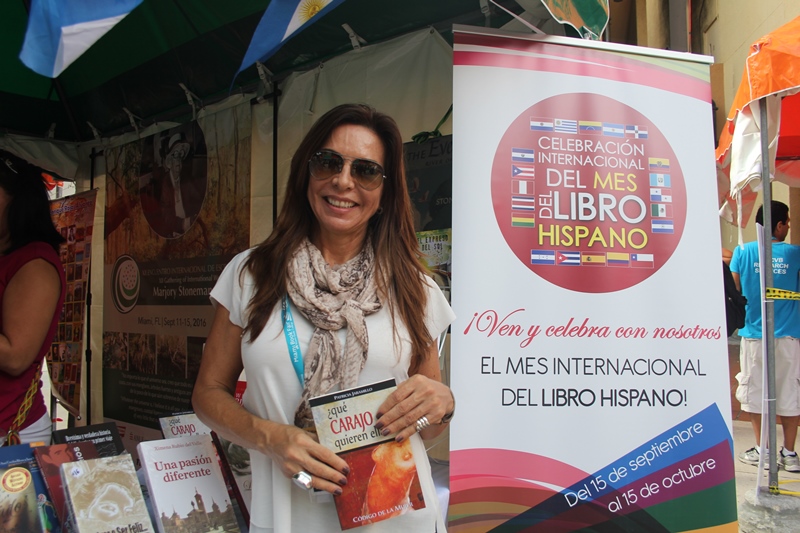
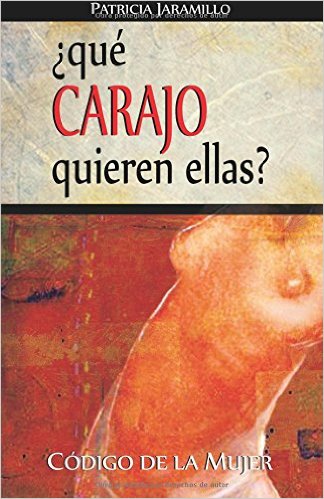
Patricia Jaramillo, author of the book “What the hell do they want?” Photo – Luis Felipe Rojas.

Luis Felipe Rojas, 28 January 2016 — Patricia Jaramilla is a Colombian lady, whose composure helped her write What the hell do they want? — an independent production, which isn’t a manual, but a “code for women,” which is the subtitle of the text which she gave me as a present a few months ago.

We are talking about an energetic and relaxed writer, who produced a book in order that men could once and for all understand what it is they want. These are the times of the best sellers and not all works go the same way, or at the same speed, but this one promises to be a super best-seller, coming from an “indie” writer. continue reading

In this work, she deals with women who are beautiful and mocking, heroic, and half-mad. They are manipulative and intelligent women, who penetrate mens’ thoughts: queens who end up with all the territory we once laid claim to, and that we men foolishly flaunted.

In the pages of her book there are tips to face painful separations, final divorces and the scabs that emerge from the boredom between couples who cross the threshold of habit. “Understanding feminine codes can be an almost impossible task, and this is because men have not learned to decipher them,” says the author.

At the last Miami Book Fair I ran into Patricia Jaramillo, who was hiding from the sun under a tent where her writer friends were also selling newly released books. Patricia went out in the middle of the street, asking people questions, and inviting them under the awning displaying the cover of her book: some bought it and most tried to decipher the puzzle: What the hell do they want?

Following is one of the many gems in the book:

“Why doesn’t your wife want to have sex (with you)? What are the excuses women use to say no? What the hell do they want?

— I’m watching a program on television.

— I’m dirty and / or sweaty.

— I’m exhausted

— I’m trying to watch the movie.

— I had too much to drink and/or eat.

— I have to get up early tomorrow.

— I’m sick.

— I’m on my period, etc.

The truth behind all these excuses:

“She’s angry! Surely that is the most frequent reason why a woman will refuse sex. If there is an area of relationships in which women think they are in control, surely it is intimacy. Refusal shows who’s the boss in bed and punishes you for her anger. She could also be avoiding sex with you, because she isn’t enjoying it.”

The truth is, they are always an enigma, women are a dark tunnel and you have to go slowly, win her over with patience, and only in this way will we save ourselves and solve the riddle: “What the hell do they want?”

Patricia Jaramillo wants to help us to understand and, also promises a new release: “What the hell do men want?”

Translated by GH

The Dangerous World of Cuba’s Pushcart Vendors / 14ymedio, Miriam Celaya

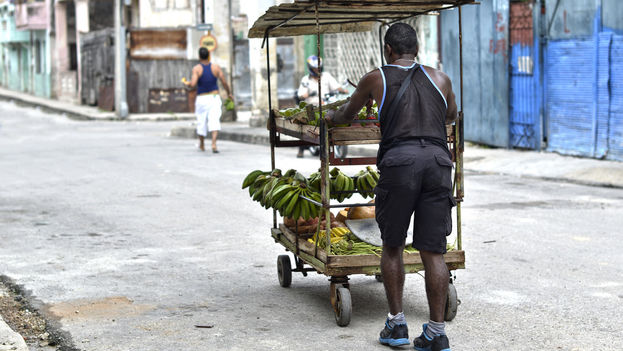
Pushcart vendor on a Havana street (CC)

14ymedio bigger14ymedio, Miriam Celaya, Havana, 13 February 2016 — There is a great poster of general-president Raúl Castro on the façade of a private building in the heart of Central Havana. In the image, he is saluting, dressed in a military uniform, accompanied by the memorable phrase, extracted from one of his promissory speeches he made during his era as an imitation reformist: “Those who are committed to demonize, criminalize and prosecute the self-employed chose a path that, in addition to being mean, is ludicrous because of its untenable nature. Cuba is counting on them as one of the engines of future development, and their presence in the urban landscape is clearly here to stay.” As it is customary to those among his caste, the general was lying, and of those intended engines of future development only a few remain, trying to survive with much difficulty and almost furtively.

However, under the mantra placed in the shadow of their modest Havana trade, those mistaken sellers believe they will be protected from the whims of a regime well versed in denying its own creations, either because they don’t properly subordinate themselves to the interests they were created for, or for considering them to be a potential threat to its supremacy. Is the same simulation game that propelled thousands of self-employed to join the apocryphal official union, which has turned a blind eye and a deaf ear to the abuse of their members by the most powerful boss on this island, the State-Party-Government, from which no one is safe.

To hold such a conclave amid a starving population would be too cynical, even for the Cuban Government continue reading

While there are fewer operations of confiscation and persecution against the merchants in the squalid private sector, in particular the popular vendors engaging in street selling of agricultural products, an occasional cart starts to appear timidly, usually at dusk, when the inspectors and heads of sectors of the uniformed police have concluded their workday.

According to unconfirmed rumors from official sources, many of the pushcart vendors affected by the crackdown in late 2015 and early 2016 have been informally allowed to trade again, though “quietly and low-key.”

A survey conducted in several districts of the populous municipality of Central Havana is able to prove the effect of the bellows technique — stretch and loosen – that the authorities usually apply, where each raid is followed apparent tolerance, under the careful eyes of the guardians of system, in part to control both the boom of the emerging sector sellers who have proven to be highly competitive against the State sector, and partly to lessen the great popular discontent triggered by the sudden decrease in the flow of food available to feed families.

Some cell phone video images uploaded to the internet which were recorded by ordinary citizens, witnesses of the official crusade against pushcart vendors, have shown the public the true nature of the so-called “Raul reforms” the people’s disdain in the face of official abuse and of its repressive forces, and the spontaneous popular solidarity towards the sellers. New communications technologies, even in a country as disconnected from the web as is Cuba, make it increasingly difficult to peddle the old discourse of “good and fair government” and “happy Cubans.”

On the threshold of the Seventh Congress of the Communist Party of Cuba nothing is more inconvenient than to implement unpopular measures, particularly when the State is incapable of emulating, in terms of production and food trade, even the fragile self-employed sector. To hold such a conclave amid a starving population would be too cynical even for the Cuban government.

In Cuba, there is a diffuse band of tolerance between legality and crime, as the authorities see fit

For that reason, and without making much fuss, agents and government control officials have notified several pushcart vendors that they can once again sell their products, though they have not yet returned the licenses to the more obstinate ones from whom they were seized.

Yasser is one of them. Although he’s only 30, he has great work experience. He began working as a teenager, after quitting his studies at a technological institute due to poor economic conditions at home, where the only sources of income were his mother’s salary and his grandmother’s pension, a story that has become extremely common in Cuba.

“First I started as bicycle repairman, but I soon discovered that it was more profitable to buy and sell bicycles and spare parts than to be getting my hands dirty and breaking my back repairing old clunkers. That’s where I learned that my true calling was trade: the buying and selling and the constant and hard cash profits. I do my best work in trading,” he smiles, sure of what he is talking about.

When the bicycle business began to decline, he went to work with his uncle at a State agricultural cooperative, in the countryside. “I did not intend to work the land forever, but the agricultural trade interested me. After I stopped working in bikes, I had managed a vegetable stand for a while, through my uncle’s contacts, but it was risky and the profits were low, so I decided to learn more about the countryside and production management first hand. Meanwhile, I would develop a good network of contacts to use later, when I could have my own little business, which was my set idea.”

So that’s how it went. And Yasser, the young man from Havana did so well in that State cooperative he even got a license which legally certifies him as “delegate of the National Association of Small Farmers (ANAP),” a document that allows him to stock up on products sold in his pushcart as a self-employed person.

Now, with his peculiar charisma and his skills as a merchant, Yasser buys directly from a private producer and ships the products home using private transportation services. To avoid having the goods confiscated, he uses his card as “delegate of the ANAP” and an authorization from a bribed manager of a State co-op “that produces absolutely nothing” but that certifies that his products were bought from that co-op and are destined for a State Agricultural Market (MAE), or to some workplace, or any other place. With these papers of safe passage and his getup as producer, wearing a hat and high water galoshes up to his knees, embedded with mud from the furrows, Yasser has managed to survive in the dangerous world of private business.

General corruption in Cuba is, at the same time, the real support of the “economic model” and of the social balance, the trap that standardizes all Cubans as transgressors of the law

However, he knows perfectly well that he is teetering on a tightrope. In Cuba there is a diffuse band of tolerance between legality and crime, as suits the authorities. Simply put, if an administrator who signs his “passage” falls into disgrace, the chain of beneficiaries will also fall, including Yasser. General corruption in Cuba is, at the same time, the real support of the “economic model” and of the social balance, the trap that standardizes all Cubans as transgressors of the law. Anyone can end up in a dungeon.

“When this business with the pushcarts started, I thought it might be an opportunity for me. I really believed in the premise that, this time, we were really going to be respected as contributors, though my uncle kept telling me that the government was going to change gears and go in reverse, as always. I went as far as owning two carts, which my uncle and my cousin took care of, because I am the owner and the go-between at the same time, and I’m always going between the country and the city, getting the products. Now I only take this one out – he points to a simple chivichana [a rustic skateboard] loaded with the best tomatoes around town, at 12 Cuban pesos – and I am putting out the goods gradually. I do not want evil eyes on me, because, in the end, this business will also go bust, it will be one more deception. As my grandmother says, these people are a lost cause.”

It’s only been a few years since the false blessing of the self-employment industry workers, and the very Government has taken it upon itself to demonize, criminalize and prosecute them, belying its own discourse. “They do not even respect themselves, that’s why nobody believes them, nobody wants them and nobody respects them anymore.” says Yasser with what seems more like a pessimistic old man’s view than the words of a young 30-something. His disillusionment is, by far, the most authentic symbol of a society which has succumbed to the fatigue of almost 60 years of hypocrisy.

Translated by Norma Whiting

Ladies In White Pay Tribute To Laura Pollan / 14ymedio

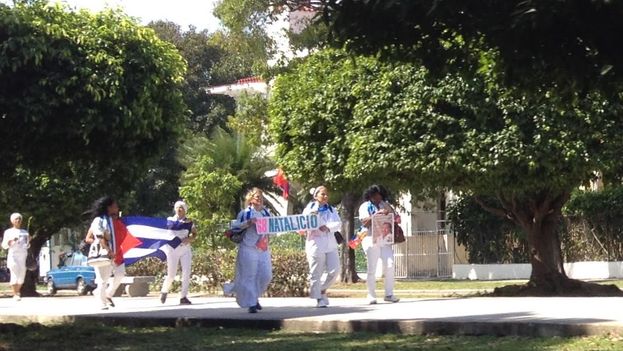
Ladies in White paid tribute to the 68th anniversary of the birth of Laura Pollan. (14ymedio)

14ymedio bigger14ymedio, Havana, 14 February 2016 — Several groups of Cuban activists paid tribute on Sunday to Laura Pollan, the late leader of the Ladies in White. The weekly pilgrimage of the human rights movement along 5th Avenue in Havana honored the 68th anniversary of the birth of the late founder and leading figure in the women’s group.

At least 37 women made it to the parish of Santa Rita, in the neighborhood of Miramar and joined in the march. Another 15 activists from various organizations were also represented at the site to support the opposition, as confirmed by this newspaper. continue reading

Pollan was born on February 13, 1948. She worked as a teacher and began her civic activism at the time of the Black Spring of 2013, when her husband Hector Maseda was convicted and sent to prison. She led the Ladies in White dissident movement until her death in October 2011.

In 2014, a group headed by her daughter, Laura Labrada, separated from the Ladies in White and formed the Laura Pollan Ladies in White Civic Movement.

At the conclusion of the march this Sunday in Havana, the women met, as is traditional, in Gandhi Park. As they left the park they were violently arrested and taken to the Tarara Police Station, east of Havana, according to reports to 14ymedio from activists.

Also on Sunday, the Patriotic Union of Cuba (UNPACU) denounced the arrest of 83 of its members, most of them while trying to get to the Sanctuary of the Virgin of Charity of Cobre in Santiago de Cuba.

Camagüey’s “innovative potential” / 14ymedio, Sol Garcia Basulto

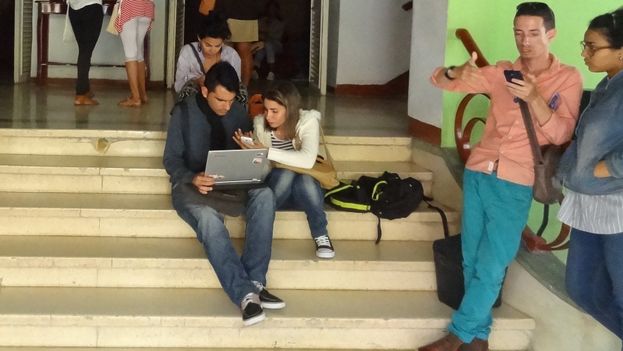
Just outside the Casablanca movie theater, several participants of the First Meeting on Audiovisual Culture and Digital Technologies in Camagüey. (14ymedio)

14ymedio bigger14ymedio, Sol Garcia Basulto, Camaguey, 14 February 2016 – Perseverance and optimism are Juan Antonio Garcia Borrero’s inseparable allies. Only the perseverance of this movie critic who is passionate about new technologies has allowed him to pull off the First Meeting on Audiovisual Culture and Digital Technologies in Camagüey. The event, censored last November, took place this week (11-12 February) and attracted an audience interested in audiovisual culture.

The meeting was held in The Alley of Miracles and the Alhambra room at the Casablanca cinema, and included lectures, workshops and other activities that show “the innovative potential” in the city, according to Garcia Borrero, who called on the guests to “listen, share and learn.” continue reading

The event set out to make Camagüey a a “stronghold in the creative use of new technologies related to the audiovisual culture.” Among its highlights was a panel moderated by Yoan Pico on the importance of media libraries in the digital revolution, with the presence of Jorge Santos Caballero, Luis Alvarez Alvarez and the host. The discussion concluded that the computerization of Cuban culture is imminent.

Digitizing books for the Net generation, born in the digital age, is the only way to guide young people to a healthy and well-informed consumer environment, the panelists pointed out. In this event they listed some of the aspirations of the project with regards to audiovisual dissemination, among them, “reaching a wider audience with cyber-literacy and new technology resources.”

Participants were able to access a digital media library, from which it was possible to download, from the wireless network in the lobby of the Casablanca cinema, the fifth installment of “A Thousand and one Texts,” a compilation from the researcher and critic Desiderio Navarro. Also available was a compendium with “The 220 best movies in the history of the cinema” selected by the Saiz Brothers Association.

The workshop addressed tricks and ways to get information and distribute audiovisual material in a session on the experiences that made up a part of the technology encounter. The public had the chance to question, criticize and suggest ideas for new digital literacy projects to representatives of the institutions involved: the State telecommunications monopoly, the Youth Club, the Information Faculty at the University of Camagüey, Citmatel, Portal Príncipe, and the Cuban Union of information Scientists.

Also invited were the so-called Wifi instructors, staff prepared to provide information and advice to users in the different Wifi zones that provide wireless access to the internet. These young people explained the importance of their work, which they defined as supporting “the population on a journey away from digital ignorance.”

There was no discussion of the sites censored on national networks, several of them made within Cuba. Some of the attendees believe that the next session of the event should include representatives of other sectors that work in new technologies and not only figures from the cultural audiovisual scene.

However, it seems to have unleashed in Camagüey one of the first battles for “technological emancipation,” as defined by Garcia Borrero, an initiative that “will demand long term collaborations and contributions from people who are immersed in the digital computerization supporting Cuban culture.”

At the end of the event, the manager of this First Meeting on Audiovisual Culture and Digital Technologies wrote in his blog that the dreams raised “now seem elusive,” but “it doesn’t matter how few there are, for now, involved in the enterprise.” In his judgment, “we must continue doing things however shocking that others ignore.”

Under the Umbrella of Jose Marti / Fernando Damaso

Fernando Damaso, 5 February 2016 — A few days ago the 2nd International With All and For the Good of All Conference was held in Havana, a government activity that, according to its organizers, brought together more than 500 delegates from around 50 nations.

It is convenient to seriously talk about and study Marti, although in this case the title of the Conference is ironic, because it takes place in a country where the commitment to Jose Marti’s “with all and for the good of all” has not been met.

The participants, as expected, with some exceptions, are part of the international fauna who unconditionally support the Cuban regime and make up its associations of solidarity. Analyzing and deepening Jose Marti’s thought is a mask of their true objectives: trying to confront the current process of changes where leftist and populist ideas are suffering a setback. continue reading

For many years now, Cuban leaders have realized that Marti, with his universal thinking, appeals to everyong, a kind of “Chinese ointment.” Early on they used the authority of Marti to justify the Moncada attack, and then used and reused him according to the interests of the moment, linking him to Lenin, Ho Chi Minh and other historical characters.

To accomplish this, his ideas have been carefully chosen, eliminating all those that contradicted with the regime, such as the following:

“The country is the happiness of all, the pain of all, the sky of all, and no one person’s fiefdom or chaplaincy.”

“The haters should be declared traitors to the republic. Hatred does not build.”

“All unchecked power exercised over a long time degenerates into a caste system.”

“No masks can be worn in countries with a free press, which blows through the city each morning like an unruly wind, lifting all masks.”

“I think they kill my child every time they deprive a person of their right to think.”

Some characters are already “fixed points” in these activities like, Frei Beto, Atilio Borón, Iganacio Ramonet and others, who know very well what the Cuban authorities like to hear. Acting accordingly, assures them an all-expense paid invitation to future events.

The sad thing is that there are still honest people who, believing they are doing something important for the good of the Cuban people, lend themselves to the game.

We Don’t Need a Thousand Years / 14ymedio, Yoani Sanchez

Pope Francis and Patriarch Kirill during a meeting in Havana. (EFE)

14ymedio bigger14ymedio, Yoani Sanchez, 14 February 2016 — A Catholic pope and a patriarch of the Orthodox Church just shared a hug in Cuba. A thousand years of enmity have concluded with three kisses at the Havana airport and the signing of an agreement to protect the Christian flock. The scene for this historic event could not be more contradictory: a country where the government refuses to recognize its critics and has dynamited all the bridges for dialogue with the opposition.

From a cleverly publicized stage setting, Raul Castro has taken on the task of showing the island as a natural terrain for dialogue. However, to make use of this zone of ​​conciliation, the General demands two strict requirements be complied with. Participants in the negotiations can only be foreigners and should not express even the slightest questioning of the hosts. continue reading

Under these conditions, the government of Colombia and the FARC guerrillas have engaged in peace talks for more than three years. A conflict in which thousands of human lives have been lost, people have been displaces, and continuing military clashes between both sides hinder the process of coming to an understanding and make any kind of agreement unthinkable.

The Catholic and Orthodox hierarchies have done the same thing. The hug between Francis and Kiril closes a stage that began in the year 1054 when the Pope of Rome and the Patriarch of Constantinople excommunicated each other. A schism that shaped a part of the world that we know today, and created a separation in everything from rights to questions of theology and doctrine. A chasm that seemed insurmountable until this Friday.

In the case of both the Colombian peace negotiations and a meeting between two religious leaders, the seriousness of the confrontation has demanded a good deal of sensitivity to get to the point of dialogue. Around the discussion table and in the improvised meeting room at the airport, those involved were conscious that in any mediation no one can emerge unscathed, without ceding even an inch.

The principals have to show willingness to agree, in part because of the exhaustion associated with any confrontation. But especially because they understand the damage their dispute is doing to the common people, desecrating the existence of the people and of the faithful. The pope and the patriarch have shaken hands because they know that in all those centuries of denying each other, the principal victim of their enmity has been the Christian flock.

In several photos of the February 12th historical meeting we also see Cuba’s general-president. The man who during his eight years in office has not demonstrated the greatness of narrowing the distance that separates him from his political opponents, who do not have blood on their hands nor arms stowed under their beds, but rather ideas that differ from those of the Communist Party and a sincere concern for their country, along with the imperative to promote peaceful change.

Refusing to talk while lending our national soil so that others can come to agreement, Raul Castro confirms his small stature as a statesman and reveals his fear of awarding legitimacy to the opposition. Despite his reluctance, we Cubans will end up understanding each other and we will not need to wait one thousand years to give each other three loud kisses on the cheek.

Crisis in Agriculture: Land for Those Who Work It / Dimas Castellanos

By Dimas Castellano, 9 February 2016

Property and crisis

Once the Cuban Government arrived in power, imbued by an exacerbated voluntarism, it ignored the laws that govern the economy and subordinated them to ideology. From this moment on, the loss of the autonomy that is required by economic processes was converted into a factor of poverty.

In 1959, with the first agrarian reform law, the Government handed over property titles to 100,000 farmers but concentrated in its own hands some 40.2 percent of cultivable land. In 1963, with the second agrarian reform law, the 1,000 farms that had more than five horses swelled the fund of State lands, which grew to almost 70 percent.

In 1976, with the objective of decreasing the numbers of small owners, the Government initiated a project of “cooperativization,” through which it created the Cooperatives of Agricultural Production (CPA), thereby raising the share of land that was State property to 75 percent. The result was inefficiency, scarcity of products and high prices, which obliged the Government in 1993 to convert continue reading

a part of unused State land into the Basic Units of Production Cooperative (UBPC), while retaining the property ownership for itself.

Fourteen years later, on July 26, 2007, in his speech in Camagüey, General Raúl Castro recognized the deficiencies, errors and bureaucratic or indolent attitudes reflected in the fields infected with the marabú weed, and he announced the decision to “change everything that should be changed.’

And in 2007, he promulgated Decree Law 259, through which he began the handing over of idle land to private individuals. However, the measure sidestepped the declaration of changing everything that should be changed and was limited to transferring — through a form of leasing known as ’usufruct’, which is the right to use the land without actually owning title to it — a part of the land that the State wasn’t able to make productive. The poor result obtained from this measure did not achieve what was proposed.

Of the 420,000 acres held by the 1,989 existing UBPCs, almost 40 percent remained idle; their expanse, although comprising 27 percent of the agricultural area of the country, produced only 12 percent of the grain, food and vegetables, and 17 percent of the milk, and only 27 percent had satisfactory results. In 2010, 15 percent of the UBPCs closed with losses, and another 6 percent didn’t even submit a balance sheet.

In order to stop the deterioration, in August 2012, the Council of Ministers issued a package of 17 measures and a new General Regulation for the UBPCs that recognized what before had been denied: the capacity to acquire rights and to contract obligations; that is, juridicial personality [a legal term meaning an entity that has a distinct identity, with rights and obligations].

In December 2012, without altering the structure of the property, Decree-Law 300 was substituted for Decree-Law 259. It alleviated some restrictions, but it kept others and implemented new ones. Article 11 said that lands in usufruct could integrate with a State farm with a juridicial personality, to a UBPC or a CPA, for which “the usufruct cedes the right of usufruct over the lands and the improvements to the entity with which it integrates.”

In May, 2013, at the meeting of the Council of Ministers, Marino Murillo Jorge, Vice President of the Council of State, recognized that the measures, which for decades had been put into practice for managing the land, hadn’t led to the necessary growth in production. Finally, in 2014, Decree-Law 300 was modified with Decree-Law 311.

The loss of autonomy — which is to the economy what oxygen is to living bodies — together with voluntarism, the methods of command and control, the centralized planning, the inability of the bosses and administrators, and the diminished interest of the producers, shaped the agricultural inefficiency that has characterized Cuban agriculture for several decades.

The process described shows the impossibility of resolving the crisis in agriculture with the monopoly of State property and leads to the analysis of usufruct and the cooperatives in Cuba.

The cooperatives and usufruct 

As far as cooperatives are concerned, the Declaration of the International Cooperative Alliance (ACI), adopted in 1995, defines cooperatives as autonomous associations of persons who unite voluntarily to cope with their needs and their common economic, social and cultural aspirations, through an enterprise of conjoined and democratically controlled property.

In agreement with this definition, the ones created in Cuba — with the exception of the Cooperatives of Credits and Services, where, although without juridicial personality, the farmers conserved ownership of the land and the means of production — are not classified as such.

The Sugar Cane Cooperatives, created in March 1960 in areas that formerly belonged to private sugar mill owners, almost immediately were converted into State enterprises. The emergence of the CPAs in 1976 with the purpose of reducing, even more, the quantity of land in private hands, was also a State decision. And the UBPCs, organized in 1993, didn’t result from a true socialism but from the crisis in State agriculture.

If the cooperatives in Cuba are created by the will of the State; if the Council of Ministers  regulates them; if the entity that authorizes their constitution is the entity that controls, evaluates their functioning and defines when the “members” can contract with salaried workers; if the activities and tasks that the “partners” can assume are created in places decided by the State and “deal with segments of the market that are not competitive with the State”; and, on top of this, if the State retains ownership over the fundamental means of production, then they are not true cooperatives, but State cooperatives in usufruct.

A convincing proof of this false cooperativism was the report published in the newspaper, Granma, on Friday, January 25, 2013, which announced the decision of the National Association of Small Farmers to replace or remove from their positions 632 presidents of agricultural cooperatives.

For its part, usufruct consists of the use and enjoyment of a good belonging to others. If there had been consistency with the principle of changing everything that should be changed, the idle lands, infected with marabú, would have been handed over to those who work the land.

Nothing justifies making private producers — who have demonstrated they can be efficient — owners in usufruct, and giving ownership to the State, which is responsible for the inefficiency. The question sends us to one of the reasons declared by the 1959 Revolution: to return the land to the farmers. Why now does the land not belong to those who work it?

Neither the State lands, nor the cooperatives created by the State, nor the 17 measures of 2012, nor the successive decrees that handed over land in usufruct have managed to pull Cuban agriculture out of the crisis created by the State monopoly of property.

On the contrary, the crisis has worsened.

Such a result, like it or not, places on the agenda the need for a new reform directed at eliminating the large State land holdings, converting the present owners in usufruct to owners in title and transforming the rest of State property into private property and large cooperative enterprises.

Therefore, what is needed is to determine what are the most effective forms of property in each moment and place for personal and social development, which will make the institution of property a foundation of personal and social order.

Not recognizing this need explains how the administrators of cooperatives can be separated, not by the members, but by a para-State institution like the National Association of Small Farmers, or that the Second Secretary of the Communist Party of Cuba threatens the owners in usufruct with the emphatic declaration: “The land belongs to the State. Without discussion.” The obvious question is: And what is the State going to do with land that it never managed to make productive?

The answer is requires the democratization of economic relations, so that parallel to the State, Cubans participate like subjects with institutionalized rights.

From Diario de Cuba

Translated by Regina Anavy