Since June, Cuban television seems like Chavezvision, as its five channels have focused on following the evolution and process of recuperation of the Venezuelan president Hugo Chavez, and all the direct and telephone communications between Cuba and the people in his cabinet, and every one of his appearances and actions since his return to Venezuela. They rebroadcast it over and over as if they are preparing us for an exam. As we no longer suffer from the long speeches of prior days, now they grind away at us with those of the oil barons.
This narcissistic soap opera that we Cubans have already lived with for far too long has made us suspicious of the tools used by the caudillo rogues to maintain themselves in power. On their Latin flutes they play romantic melodies pleasing to the ears of the majority, to enchant the masses. It even comes to the point that I tend to doubt if the illness of Hugo Chavez is real. This new version of the tropical “reality show,” seems woven by people very skilled in the art of remaining in power and their similarity and relationship with Havana is not coincidental.
But much is at stake, not just the arrogant personal victory of a man of the party — here they mixed, confused and personified the concepts of state, nation and country and focus those on one man — but an entire country and three generations of Cubans who have worked hard for the consolidation of a utopia that is terminally ill.
We are, by adversity, a country hampered by dependency. To our own idiosyncratic anchors we must add historic events that have cemented the subordination. For more than four centuries (from 1492 to 1899) we depended on Spain, until 1959 on the United States, for almost 30 years (until 1989) on the former Soviet Union, and now on Venezuela. If we can point to something comforting in our favor, it is that the durations of our dependency have been diminishing. What is not cut short is the corresponding adulation that is levied, as evidenced with the “native volunteers” in service to Spain during the time of the colonial period, and that is reflected today in the elite of power of our country, when generally (not just now when they say they are sick) they give more media coverage to a foreign president then to the leader of Cuba.
There is a concern in Cuban society with relation to the future if the condition of the Bolivarian leader is real. What will become of Cubans if we stop receiving the daily tons of oil sent to us from Venezuela? Will we return to the Special Period? These are the doubts that are in the street; although many think that the old oligarchic and nepotistic formula of the caudillos will not find an exception in the Venezuelan case and that Chavez will perpetuate himself in power with the naming of his brother as his successor. In any event, I champion the recovery of the leader, but we must look to our own mental health and delete these repeated propagandistic exaggerations that alienate our daily life. Perhaps the illness of Chavez contributes to the inauguration of true reforms with perspective and without the laying manipulations, the structures to put us on the path toward a democratic state of rights and common good. Meanwhile, this is precisely what we must focus on and we must not lose our minds.
Since June, Cuban television seems like Chavezvision, as its five channels have focused on following the evolution and process of recuperation of the Venezuelan president Hugo Chavez, and all the direct and telephone communications between Cuba and the people in his cabinet, and every one of his appearances and actions since his return to Venezuela. They rebroadcast it over and over as if they are preparing us for an exam. As we no longer suffer from the long speeches of prior days, now they grind away at us with those of the oil barons.
This narcissistic soap opera that we Cubans have already lived with for far too long has made us suspicious of the tools used by the caudillo rogues to maintain themselves in power. On their Latin flutes they play romantic melodies pleasing to the ears of the majority, to enchant the masses. It even comes to the point that I tend to doubt if the illness of Hugo Chavez is real. This new version of the tropical “reality show,” seems woven by people very skilled in the art of remaining in power and their similarity and relationship with Havana is not coincidental.
But much is at stake, not just the arrogant personal victory of a man of the party — here they mixed, confused and personified the concepts of state, nation and country and focus those on one man — but an entire country and three generations of Cubans who have worked hard for the consolidation of a utopia that is terminally ill.
We are, by adversity, a country hampered by dependency. To our own idiosyncratic anchors we must add historic events that have cemented the subordination. For more than four centuries (from 1492 to 1899) we depended on Spain, until 1959 on the United States, for almost 30 years (until 1989) on the former Soviet Union, and now on Venezuela. If we can point to something comforting in our favor, it is that the durations of our dependency have been diminishing. What is not cut short is the corresponding adulation that is levied, as evidenced with the “native volunteers” in service to Spain during the time of the colonial period, and that is reflected today in the elite of power of our country, when generally (not just now when they say they are sick) they give more media coverage to a foreign president then to the leader of Cuba.
There is a concern in Cuban society with relation to the future if the condition of the Bolivarian leader is real. What will become of Cubans if we stop receiving the daily tons of oil sent to us from Venezuela? Will we return to the Special Period? These are the doubts that are in the street; although many think that the old oligarchic and nepotistic formula of the caudillos will not find an exception in the Venezuelan case and that Chavez will perpetuate himself in power with the naming of his brother as his successor. In any event, I champion the recovery of the leader, but we must look to our own mental health and delete these repeated propagandistic exaggerations that alienate our daily life. Perhaps the illness of Chavez contributes to the inauguration of true reforms with perspective and without the laying manipulations, the structures to put us on the path toward a democratic state of rights and common good. Meanwhile, this is precisely what we must focus on and we must not lose our minds.
Going to a movie theater to see adult films, buying a beer in some bar, or being hired as an employee, are some of the proofs that we have arrived at the age of majority. When we are fourteen or fifteen years old, every day brings us closer to that legal adulthood we await so anxiously. We approach a milestone that we flaunt in front of friends, while reminding our parents that we are no long so small, that they can no longer treat us like children. But the sensations associated with reaching sixteen are quite distinct from those that overwhelm us when our children reach the age of legal responsibility. It’s exactly then that we realize how physically and mentally immature they are to take on so much responsibility.
I am reflecting on this because my son will reach the age of majority this coming August. He will then be ready–according to the law–to buy alcoholic beverages, to be drafted into the army, or to go to prison. From that moment, nothing he does will be treated by the criminal code as if he were a minor. He could even be called to die or to kill in a war, a not ridiculous option in today’s Cuba. All the teenagers born in the difficult year of 1995 will pass through, in this 2011, the barrier between childhood and adulthood. And I say, without maternal excess, that they are too young, too fragile, to face the burden of being considered adults by a legal system that does not correspond to international norms.
Several weeks ago, the United Nations asked the Cuban authorities to raise the age of majority to 18 years. But there is little hope that such a demand will become fact. Were it to be successful, all the women between 16 and 17 who are selling their bodies to tourists would become minors trapped in child prostitution. And postponing the end of childhood would also deprive the government of a great number of voters–easier to manipulate–in local elections. And, of course, it would temporarily prolong the ascendancy of parents over their children, to the detriment of that of the State over these young citizens.
Now that I am more than twice the age required to exchange the card of a minor for the ID of an adult, I realize they robbed me of a couple of years; that an incorrect legislation placed a responsibility on my shoulders that I did not have the discernment to assume. At that time, I enjoyed it as if it were a letter of freedom, but today I see it as the loss of a legal protection that was my right.
On Saturday I put aside the clutter in my house, which seems endless, so as not to miss the panel “Cuba and its future,” sponsored by the digital space Estado de Sats. The panel was made up of the economist Karina Galvez, Yoani Sanchez as a digital media expert, Wilfredo Vallin as a lawyer, but the name that decided me to travel from Miramar, crammed into the noisy 179 Route full of boys planning to go to the beach, was the political scientist Pedro Campos. I went with the feeling that I would be a witness to an unprecedented and necessary event: The confluence of different opinions with openness and respect; the belief that the solution for Cuba is not in the hands of a group determined by official guidelines.
I can’t say I went in vain. I listened to very thoughtful opinions, met interesting people, but was unable to hear Karina, who was held for three hours at a Pinar del Rio police station when she prepared to travel to Havana, or Campos, who apologized for not attending due to personal reasons.
Pressures. Pressures of various kinds, but pressures nonetheless. But I have confidence that this citizens’ dialog will be openly produced, even without government approval. It is imperative that the Cuban situation, and those who doubt it should consult the political economy manuals. Or stick their heads out the window.
On the afternoon of July 15, 2011, the town of Mantilla, on Havana’s outskirts, was shocked by the death of Angel Izquierdo Medina, a 14-year-old black teenager, who died from a gunshot to the femoral artery by Amado Interian, a retired police Major.
According to the victim’s family members, three boys, including Angel, entered the property of the ex-police officer, to take genips, also known Spanish limes, from a tree. When the ex-cop caught them in the act, he fired two shots from his pistol. Before retiring, Interian had been a police chief in the area.
The child’s body was laid out in the Mauline funeral home, at the entrance of Santa Amalia residential neighborhood. More than 500 people attended the viewing, most of them fellow students, in shock from the news, and also teachers and neighbors.
“Oh my God he was the same age as my son, because a mischief, that only can be done by an extremist”, said one of the spectators sobbing, while passing by the coffin.
Agents of the State Security Forces dressed in civil clothes took over the funeral home because the mourners had been threatening to protest. Around midnight there were incidents reported at the site, without arrests being made. The burial was on Saturday July 16, 2011, at 2 o’clock in the afternoon, in the Christopher Columbus cemetery.
Mantilla is a Havana suburb, with a low income population and high levels of dangerousness. It belongs to the municipality of Arroyo Naranjo, the most violent and poor of the capital city.
So far, we don’t know if the ex-police officer will be prosecuted because of the adolescent’s death. As is usual in Cuba, when things of this nature happen, the official media prefers to keep silent and not to report what happened.
Photo: Mamoncillos. With its sweet flesh, it is one of the most preferred fruits in Cuba. But as with so many fruits, after 1959 they were scarce in the market and could still be consumed only by those who have a tree of Melicoccus bijugatus (its scientific name) in the backyard. The genip along with the sugar apple, soursop, custard apple, cashew, canistel, loquat, plum and apple banana, is listed as one of the extinct fruits after Castros took power. Years after this barbaric event — one of the tasks of the ‘famous’ Che Guevara’s invasion brigade was to uproot fruit trees from the fields where it passed by — little by little the fruits started to reappear again — mangoes, guavas , mamey and avocados — among others fruits that have been always been greatly eaten by Cubans. With the only difference that before the bearded men, with 10 or 20 cents you could buy a mamey or an avocado and now days you cannot find them for less than 10 or 20 cuban pesos. (Tania Quintero)
*Translator’s note: Melicoccus bijugatus, commonly called Spanish lime, genip, genipe, quenepa, mamoncillo, limoncillo, it is a one-inch, round fruit with a green leathery skin at maturity. Each fruit has a large seed inside, the same ovoid shape as the fruit itself , the seeds have a fleshy tan-coloured edible sweet and juicy seed coat.
I spent weeks debating with myself about taking a serious break from Octavo Cerco. I don’t want to be melodramatic but it is surprising how what began as an exercise in personal freedom has been transformed into a tremendous responsibility. I don’t like it to be so. Because I write because I because it keeps me grounded and not because a week has gone by since I posted.
I finished my personal debate, and have come to the basic conclusion that it’s time for a rest. Between the government, summer and the island I almost lost control last week. No way. I am going to sleep 12 hours a day, and try to stop smoking, take a break from the National News on TV and the newspaper Granma (these last two measures are an imperative for me), and I am going to finish my second story.
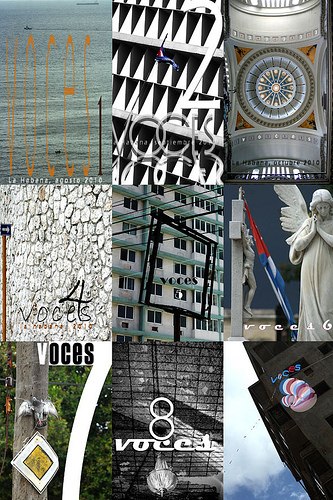
Meanwhile, I ask for the forgiveness and understanding of everyone (the trolls and other vermin on the network: don’t chew your fingers, it’s just a little break) and I leave you Pavimento, my first little story, published in Number 8 of Voices magazine, under the pseudonym of Dalila Douceca.
Eliseo Alberto Diego, to his friends simply “Lichi,” talks as if he were writing, narrating the most ordinary stories as if they were literature. I remember some afternoons in his house in Vedado when he would tell us these anecdotes and we couldn’t say, precisely, if they were total inventions or might have some smidgen of reality. Because this big kid full of laughter delights in narrating and narrating. His acquaintances have thus become his receptive “ears” where he has tried out the fiction that later appears in the pages of his books. We set ourselves up, to our infinite pleasure, as the beings on whom he tests and practices–over and over–his work.
Thus, when Lichi the great storyteller told us he needed a kidney transplant, our first thought was that he was trying out another of his poetic tricks. He was, by then, already half Cuban and half Mexican, half poet and half novelist, and now, we suspected, he wanted to boast of being composed of organic material from several people. It seemed, viewed with suspicion, simply his latest invention. But no, he wasn’t talking about a character in the style of those described in “Esther en alguna parte” (Esther Somewhere), or “La eternidad en fin comienza un lunes” (Eternity Finally Begins on Monday), but about himself. His body was writing, for him, the most dramatic of his stories.
I remember that my husband, Reinaldo, offered him one of his kidneys, but Lichi didn’t want to believe him, or wouldn’t allow his friend to face so many battles without one of those organs. Last night we got the news that his body now houses a fragment of a Mexican teenager who died in an accident. The solidarity of a family, the wait–at times not so patient–of the son of the great Eliseo, and the desires of his friends, have combined to begin to give a happy ending to this adventure. Now, when he returns to embellish his stories, we will, inevitably, have to believe him a little more. Because Lichi, the skilled storyteller of our Havana afternoons, has been very close to an experience that only he can tell us.
Máximo Gómez, the great Dominican promoter of our independence, said that Cubans either don’t reach far enough or reach too far, and without a doubt, he was right. As you can see he knew us very well! Now with this new issue of eliminating paternalism and gratuities, the correctness of his opinion is ratified one more time. Let’s look at it piece by piece, but first is necessary to make clearthat the so called paternalism and gratuities are undisputed fallacies, which served to mask the miserable wages that Cubans have been receiving for more than fifty years: the government supplied through the commonly named ration card some products, increasingly fewer, at lower prices (subsidized), as well as some services provided free of charge, in order to not raise the salaries and pay the workers what they really should have been paid. Therefore, everything has been paid for with the salaries that the workers didn’t receive.
Today the minimum monthly salary does not exceed $240 pesos national currency (equal to 10 CUC* or 9 US dollars) and the median monthly salary is $440 pesos national currency (20 CUC* — equal to 18 US dollars). If we convert this to a daily basis the wages will be 8 and 16 Cuban pesos national currency, respectively (in either case less than 1 CUC or 1 dollar a day). This is important in order to establish comparisons.
The prices of products that were supplied before as subsidized, now are supplied as “released” (that is unrationed) items (it seems they were in jail), but at a huge price (maybe because the cost of the bail bond). Here are some examples: rice, from 40 to 90 cents a pound, increased to 5 cuban pesos; refined sugar, from 20 cents a pound to 8 cuban pesos; brown sugar, from 10 cents a pound to 6 cuban pesos; washing soap, from 20 cents a bar, to 6 cuban pesos; bath soap, from 40 cents a bar to 5 cuban pesos, and liquid detergent, from $3.50 a liter to 25 cuban pesos. If the State truly subsidized these products, how much were the subsidiesequivalent to? Nobody can believe that sugar (the primary national export product back in its heyday) could possibly be subsidized at 7.80 cuban pesos a pound, nor liquid detergent at 21.50 cuban pesos. This is totally absurd.
The question would be, why these exaggerated prices on essential goods? The acquisition of one of them represents a citizen’s salary for a day’s work or more. Is this part of the economic model updating? For these price raises there was no need for any kind of meeting, nor discussions in the social base, neither in the National Assembly: They were just implemented and that’s it. About raising the salaries, which should be the right thing to do, nobody says absolutely anything. The most you can hear is that, it will be done when we are able to produce and increase the production. In other words: Wait for the Greek Calends.
These, unfortunately, are our realities, and it calls attention to the fact that there are still dreamers, who believe we are on the right path towards the solution of our problems. So far, it has only produced a redistribution of the load: Move even more cargo from the imaginary shoulders of the State (in reality it has always been on Cubans shoulders ) to the already overloaded citizens.
*Translator’s note: CUC is a Cuban Convertible Peso, one of Cuba’s two currencies, the other being Moneda Nacional — National Money — or the Cuban peso.
The Spanish businessman Sebastián Martínez Ferraté, charged with corruption of minors, pimping and illegal economic activities, will be judged on Monday July 18 at the Provincial Court of Havana, whose official seat is located on Prado, Teniente and Rey. However, trials in the presence of diplomats and the media are usually held in the 10th of October Municipal Court, on Carmen and Juan Delgado.
On a ward of La Condesa, a special prison for foreigners on the outskirts of the capital. Martinez Ferraté has been waiting for a year for a trial whose verdict is known beforehand.
The prosecution requested 15 years’ imprisonment, maybe reduced to 10 or 5. But it is clear that they will have him pay the bill for having made, or contributing to making, in 2008, a documentary showing the full extent of prostitution, including child prostitution.
It also exposed the corruption existing around prostitution on the island. The documentary was shown on Tele Cinco, a private TV channel in Spain. It was a blockbuster.
And a blow to the Cuban authorities. So they began plotting their revenge. It is known that every year the US State Department places Cuba on the list of countries where child prostitution is practiced. Something that bothers the government a lot. And the Sebastián case served to send a message to the insolent foreign visitors who might dare to show the ugly face of the country.
The documentary might be new for those who support the Castros in Spain. But for a Cuban independent journalist it is more of the same.
What the audio-visual documents continues to happen in Cuba. Each day the prostitutes are younger and almost an industry of prostitution has been erected. I’m not saying the police stand around with their arms crossed, but for every prostitute, pimp or child molester put behind bars, four more appear.
Prostitution is a social phenomenon. Dragged down by poverty, lack of opportunity and the desire to emigrate, a legion of women sell themselves to tourists for two 20-dollar bills.
The government has never offered an estimate of the number of people enrolled in prostitution. But there are thousands. The public knows about the increase in prostitution and pimping, and they mention it under their breath.
What bothers the authorities is that the subject is being put on display by the mainstream media. And with child prostitution being a sensitive issue, the director of a hotel chain in Mallorca prepared a trap for Ferraté Martinez.
According to the writer Ángel Santiesteban in his blog, The Childrenthat Nobody Wanted, through a Cuban “friend” related to Martinez, in July 2010, they had him come to Cuba believing that he would be making a documentary about the hotel business. No sooner did he arrive in Havana then he was arrested and put into jail.
The Spaniard sinned by naiveté. The Cuban government does not forgive certain “offenses.” They punish them. Harshly. Sebastian Martinez joined the list of guinea pigs that serve the Castro regime for negotiating future deals.
He will become a currency of exchange. Like the American Alan Gross or local dissidents. There are a range of options for exchanging Martinez. From a line of credit, asking the Spanish politicians to raise support for the unique position of the EU, up to silence and complicity with the regime in Havana.Or anything else. You can figure it out.
Francis Sanchez, 18 April 2011 — I had promised to publish two other parts of my last post, “Closed for Demolition”. Many days have gone by without my being able to do so. I will no longer do it, because definitely what I had in mind would only add essay-type content. The fundamental thing, the denunciation, is already done, and what remains is the testimony. I will save those texts in order to add other pages to new projects.
I am very grateful to all those who have written comments and who have offered me solidarity because, although it may seem minimal, it is an indispensable nourishment for moving ahead with life. In some way, although at times there is a delay in my being able to know it, I have always ended up becoming aware of what they comment and write to me. But it is true that I could not publish with the necessary frequency, or safety, without harming other people who were helping me. Thank you.
The blog “Man in the Clouds” is a marvelous chapter of my life that I do not regret. Of course, neither am I the one who is closing it–“for now”, I hear the little voice of temptation tell me–I specifically denounce my fear–not so much for me, but for my family–and the things that cause it, because no one is to blame for feeling fear. “No one. Absolutely no one,” says the magnificent writer Eliseo Alberto in the memoir “Report Against Myself.”
What will be most difficult in closing or cutting off is the need for complete freedom of expression, an inalienable right that connects hears and does not depend on any cable. So we will keep on seeing each other in this beautiful site.
The television series “The Reasons of Cuba”, which launched a new catalogue of agents infiltrated into Cuban society, with the direction the revelations took, places in evidence a new period of control or official pressure on national culture and intellectuality, as if the margin of natural life we had left for our development were not already very miserable. The supposed master act of these “agents” did not happen before or after it came out on television, but only now that they have come to achieve something with true impact, and it is this: the mixture of anger, disappointment, nausea, fear, shame, pity, remorse, etc. that can be found by following the tracks that they left among all the manipulated people–colleagues, friends, neighbors, work mates, etc.–whom they tried to provoke and attract with false projects that they made up themselves. Revulsion is said to be a paralyzing feeling. Now, when the coaxial cable that has arrived at the Cuban coast is about to begin to function, and at all levels they are trying to limit access to the new technologies, flagrantly violating the privacy of the mail, which is a violation of the Cuban Constitution, perhaps the punishing blow is taking shape, the censorship that we intellectuals have been waiting for since the “email crisis” of 2007. To criminalize intellectuality and that natural attachment to freedom of expression.
[I have decided to publish, before this blog is closed down, some texts that I didn’t publish at the time because it was practically impossible to do it because of obvious difficulties or because as time passed I doubted that it would be the best idea. Due to recent events, I think it is best not to leave them unpublished. They are the following texts: the article “Guatacas” (Hoes), the poem “La palabra Abedul” (The Word Abedul) and the documents “Carta abierta a un amigo” (Open Letter to a Friend) and “Aclaración al lector” (Clarification to the Reader). The last work that must be published on this blog is “Cerrado por demolición” (Closed for Demolition), which will appear in three parts or submissions: “La cosa en la red” (The Thing in the Net), “Puntos negros” (Black Points) and “Nosotros y las nubes” (We and the Clouds).]
I. The “Thing” in the Net
When I opened this blog, only some five months ago, I told the story of a night full of nightmares, the time that my wife almost collapsed and I was at her side for us to survive impotence and frustration together for reasons that are explained in the post “Mass Layoffs. Dissolve the public?” Now this blog called “Man in the Clouds” is closed down or nailed to the air with this article which, under the title “Closed for Demolition” I plan to publish in three parts or submissions, after I have once again lived through a night of horror. Cuban television has just shown, at the top hour of eight-thirty at night, a new chapter of the series “The Reasons of Cuba”, with the title “Cyberwarfare”.
I had promised myself to try to never hurt, much less attack, other people in my writing, as well as to not defend myself from that type of low blows when I became a target because of my points of view–to encourage personal disagreements or mudslinging, supposedly among intellectuals, is an undertaking of destruction and ethical poverty in which the principal investors in immobility and censorship are accustomed to place their ample resources, betting on empty, on despair and generalized revulsion–but it seems I have no alternative but to break the second of my resolutions and defend myself. I will do this because essentially it won’t even be self-defense, which is a luxury impossible for me to properly undertake given the very excessive and even abstract disproportion between my attacker and myself. It seems the critical hour has come and I want, while I still can, to denounce injustice and put my ideas and my position down in writing.
The faceless apparatus of the political police accuses me, among the few “independent bloggers” that exist in Cuba, to be in the pay of the United States government. “Cybermercenaries in Cuba” wrote an invisible hand on the Google search engine and, to the horror of my family, I do not know which shady search engine could have produced as a result of this television program showing a page of my blog on the small screen. Enrique Ubieta, who often shows up to defend the powerful “Raison d’Etat”, author of some book he was asked to produce and director of the newspaper “La calle del medio”, at one point says to the camera that this is obviously some ambitious guy who, like somebody who sets up a fried food stand, is trying to get through the economic crisis very easily by getting on the Internet for money paid by Washington. It is unbearably false that my blog be shown here, even a single page for a fraction of a second, but it happened and I saw it, and the most horrible part is that it is linked to my profound impotence. I don’t have to say that I have never set foot inside the USA Interest Section in Havana, nor have I earned or aspired to earn a cent for writing or recording my ideas on a personal blog. A blog that began one day in search of my own breathing room as a marginalized intellectual. A marginalization whose degree has increased a lot since, in early 2007, I published my text “La crisis de la baja cultura” (The Crisis of Low Culture), loaded with a strong dose of social criticism, at the same time as those events that some have called “the email crisis”.
To write, create and reflect, defending the hypothesis of full internal freedom, is something that I have had since I was a child, like breathing. But it makes no sense for me to try to run faster than the lies, since a larger truth is common knowledge, atrocious and popularly incorporated into people’s daily survival mechanism in the face of despotism and the Mystery Syndrome in Cuba: the key is not to predict the problem you might get into, but the one the want to create for you. I, like any individual, lack legal mobility inside a monotonous system, and the most I can hope for is that they pardon my life in order not to air dirty laundry in front of third parties. The structure, the true apparatus of power, works in the shadows. The convictions and activities that any individual may be involved in that show any degree of rejection of the system will be just one set of little crystals under a magnifying glass, a microscope or a telescopic viewer, according to each clinical evolution.
Some months before, a video had leaked through–circulated on a flash drive to another–that was of a conference given to some colleagues by a specialist from the Ministry of the Interior, entitled “Enemy Campaigns and Policies for Confronting Counterrevolutionary Groups”, in which the theme of the new technologies was addressed. On the topic of the blogosphere, he made the following comment:
“They want to create in our minds the concept that the blogger is a kind of enemy of the Revolution. If we take on the bloggers now, we will really make an enemy for ourselves.”
The presenter doubtless was alluding to the process of criminalization that, before the Internet and blogs, over time had made against other technologies that had empowered people: video cameras, video cassettes, computers, printers, mobile phones, to give just a few examples, as well as concepts such as civil society and branches of science like sociology. Which reminds me that, in 1998 when I got my first computer with a printer connected, a cultural assembly registered a complaint against the “danger” that was in my house, which was made by the director of the provincial library. The operating strategy, nevertheless, apparently was going to suffer a radical shift, going from the supposed precaution of a private meeting to the public offensive tactic of the establishment of a new prohibitive code that, following the war manual, reduces a problematic social reality to an epithet, a discrediting term for a person who asks for rationality, but gets echo, euphoria, unconditional repudiation: “cybermercenary” is the new word that overwrites so many other terms that have historically been put in the mouths of the masses.
The day after the previously mentioned television program showed, the newspaper “Granma”, official organ of the PCC (Cuban Communist Party), would publish an even more inclusive and horrific accusation, which apparently left me before the masses labeled just as one more venal soldier, but with all the colors of the typical beast for whom the hunting season never expires in public spaces: pro-Yankee, traitor, terrorist, in other words a monster ready for lynching, packing and sending to hell. In a provincial town like Ciego de Ávila, where I live, going to hell is not a very long trip. These processes of demonization had already begun long before, with a harassment that became progressively less veiled. Now it is the spying, vigilance and persecution I suffer all the time. A meeting was even called by the First Secretary of the Provincial Party at which intellectuals and journalists were exhorted to avoid me. One fine day somebody robs me, takes my cell phone out of my wallet. Another day someone comes to let me know they have been recording and filming me. From one day to the next a literary activity that some careless promoter was kind enough to organize for me and my family is cancelled. Suddenly the television, on the program of March 21 previously mentioned, puts a moral price on my photo. And finally, as a climax, “Granma” publishes multiple accusations, which are also so exaggerated that I am able to refute them all at the same time. Luckily, the activity of a writer and the social reflections made on a blog have the objective of staying afloat, of opening oneself to scrutiny, letting the light in that so bothers those who live in shadows and speculation. So instead of saying “lie” a thousand times, I can limit myself to asking in what part of my texts I have advocated any of that which is imputed to me here:
“These bloggers […] have exhorted people to rise up in Cuba, have promoted violence, support the Cuban Settlement Law, justified the blockade, deny that the most reactionary sector of Miami is the enemy of the Cuban people, say that the case of the terrorist Luis Posada Carriles is a smoke screen and even go so far as to openly express [sic] the change of the political system […].”*3
The latter reproach is very confusing since the editing evidently failed, but it is worth doubting if, in order to straighten out the text, the “official organ of the party” would be willing to do without the Marxist dialectic that has theoretically justified the Cuban political system and which recognizes in social relations a non-linear process, an object of permanent transformation. Would it be inhuman to live according to the universal maxim, so romantic and absolute, of “change everything [everything!] that must be changed.” Or rather is it not monstrous that someone can decide what everything is for everyone? An identical paradox was presented to intellectuals in June of 1961, in a meeting at the National Library, under the banner of “Inside the Revolution, everything. Against the Revolution, nothing” (this year is the fiftieth anniversary of this event), so that these [intellectuals] could entertain themselves for a long while “sucking on this stone”. Life would show that no one was going to find an escape from the rhetoric of power, no one except the subject master himself, much less intellectuals with the “original sin” of not being of the proletariat or revolutionaries and, meanwhile, they could give each other as many exclusions as there were stars in the sky and political power could be concentrated. Well, for good reason the “words of the intellectuals” are not known, although the ‘I’m afraid” said that day by Virgilio Piñera is still quite explicit.
I responsibly proclaim what I believe comes out naturally in my work: I would never associate myself with hatred or the shedding of a drop of blood; I do not approve of the blockade against Cuba; I reject any type of terrorism, fundamentally state terrorism. To express myself against all terrorism would lead me to be, for example, against the type that promotes revolutions by blowing up bombs in movie houses and parks, against the type that tries to destabilize governments by putting bombs in hotels, against the type that organizes paramilitary squadrons and causes people to disappear, against the type that converts society into an artificial political web capable of functioning millimetrically to produce the expatriation or social death of anyone whom it doesn’t like, against the type that sends out crowds to surround a man in his house with his family only because he thinks differently… By the way, regarding my rejection of violence, in a section of my poem collection “Epitafios de nadie” (Nobody’s Epitaphs) (Ed. Oriente, 2009), the poem “Medallista de plata” (Silver Medalist) about the sabotage of that Cuban plane in Barbados says: “[…] On what island, of what random face / did the assassin ask quickly quickly for a ticket? / It was forgotten here in his luggage. / Never open it again. The gold is for the sea.” In the same book, as a matter of fact, two other poems about such tragedies in contemporary Cuban history do not appear, since they were censored: the sinking of the tugboat Trece de Marzo and the events of August 1994 which some call the Malecón Uprising.
Many sectors or social groups have been categorized as traitors or fifth columnists, also lumped in a group, according to some strategy of doctrinal hardening, sometimes within something as simple as to say, “Whoever doesn’t jump is a Yankee.” These have included those young men who had to hide away to listen to the Beatles, Catholics, Jehovah’s Witnesses, homosexuals, poets of family life, ecologists, street artists of the eighties, hip hop singers, and a long list of others, each one in its own time. Over and over, we members of the Cuban family have been variously called “scum”, “country-sellers”, “worms”, and have apparently been worthy of repudiation, stonings and kicks, receiving and passing on the baton, the black speck. At the same time, in order to restrain that plurality embodying ideological differences and social criticism, frequently the traitorous pretext has been used by people who adopt a field of intellectual action that is internally mined because they were supposedly making up a scenario for a foreign invasion. A very notable Inquisition-like scene was set up against the authors of the books “Fuera de juego” (Out of the Game) and “Los siete contra Tebas” (Seven Against Thebes), prize winners from the UNEAC 1968, in poetry and theater, respectively. The “Declaration of the UNEAC”, signed November 15, 1968, and given out as a prologue to the poem collection of Heberto Padilla, demonstrated a mechanism that would remain essentially active, an overgrown apparatus that marks people and works for their circulation with an untimely meaning.
“Now then: whom do these books serve? Do they serve our revolution, slandered this way, hurt by such means? Obviously not. Our revolutionary conviction allows us to point out that poetry and that theater are our enemies, and their authors are the artists they need to feed their Trojan horse at the hour when imperialism decides to put into practice its policy of warlike frontal aggression against Cuba.”
Manuel Díaz Martínez, a member of the Poetry Judging Panel, tells us that, after a lot of maneuvering to avoid giving the prize based strictly on literary quality, the executive leaders of the UNEAC met with the different members of the panel to explain to them the problems that had come up with the books in question and there, at that time, Félix Pita Rodríguez in his role as attorney general, played the last card, the lethal disintegrating ray one, saying: “The problem, comrades, is that there is a conspiracy by the intellectuals against the revolution.” Díaz Martínez reveals: “Before such an accusation, I asked to speak and I requested him to give out the names of those “conspirators”. He didn’t give them. What existed was a government conspiracy against freedom of opinion.”3 Although Félix Pita didn’t say them, the names of those intellectuals would become well known in the following years, due to the weight of the suffering and ostracism that some of them, “counterrevolutionaries” like José Lezama Lima and Virgilio Piñera, would endure to the end of their lives.
I reject and denounce the epithet “counterrevolutionary”–the term mercenary is included a priori; it is always around the house–that they want to apply to me as a pretext for repression, for eliminating the right to live in a nation and a culture that are alive and open, because I practice an intellectual policy of resistance that is not that of collaboration, or of silence, or of exile; it is perhaps best described as existentialist. If it offends me, it is because it is untrue, the same reason for which I believe the term “revolutionary” intellectual is invalid since it, with a functionalism and a reductionist and exclusionary axiological economy, has been used to deny the natural rights of the artist or the intellectual–uncomplicate him, dehumanize him, emptying his thought and work–in the period following the triumph of the Revolution, inside Cuba. Both reductions are resonating figures that follow the same selective pattern, since they inform, more than on the particular qualities, on the will for power that dominates a social field reduced to its minimum expression.
The game of taking turns in power allowed inside such limits carries with it too much feigning, pretense, hypertrophy, traditional debate of the appropriateness of social criticism, a problem that soon became written in the annals of academia as exclusively applying to the topic of the function or the “role of the revolutionary intellectual” in society. The art of simulation, needed to survive, would lead many to cross the waters of that obligatory ideological baptism while barely touching them, adopting an essentialist vision of accepting the stereotype of such a mark in a decontextualized form. Manuel Díaz Martínez himself tells that, in the meeting of the Judging Panel at which a final decision would be made, he defended his proposal, declaring that “Fuera del juego” (Out of the Game) was critical but not counterrevolutionary–actually revolutionary in its criticism”.
This synecdoche could be justified for the hypo-statization of the figure of the “revolutionary intellectual” for the plain and simple flesh-and-blood intellectual, as has frequently happened, trusting that the rights earned for one, for the only existing or really accepted one, are going to be extended as if by contagion to the rest. This modest aspiration, nevertheless, perhaps hides in the end a conflict with the humanist tradition, when one tries to make obsolete an ideal model, on which have depended a good part of the achievements of Western civilization–to which the process of Cuban nationality belongs, however much this might be sometimes denied–in which intellectuals not only represented themselves to themselves and to others, like mirrors facing mirrors, but who aspired to express, catalyze, assign prerogatives, rights and rich possibilities of all of society as a whole. In this sense, the social and critical relevance of the intellectual is going to be subject to the universal norm of the average common man, because he thinks or exists, nothing else.
But the degree of ideal communicability and criticism that the advocates of a Manichean, convenient, simplifying power structure in Cuba unfortunately seems to be being reduced, more and more, to zero. Desiderio Navarro, in his presentation “In medias res publicas” (In the middle of the public thing) presented at the International Conference “The Role of the Intellectual in the Public Arena” (organized by the Prince Claus of Holland Fund held in Beirut in February 2000), stated regarding the Cuban situation:
“[…]the criteria for correct social criticism would not be [whether it is] the truth, but rather the degree to which its attention to detail, scrupulousness and rigor correspond to a certain measure of what is necessary or advisable. […] To not criticize the whole or to criticize less than is necessary or advisable is not a reason for condemnation and exclusion. This shows that “zero”, total absence, is in reality the ideal degree of social criticism.”4
So neither does the favorite strategy of official refutation accept within the public domain that any ideo-esthetic platform be established for debate unless it is not vertically controlled. In practice, this reaction has been made into law: close the social contract to the human being, discrediting his will as if he were a micro-organnism that obeys an infinitely superior infection process.
“The most frequent manner of attacking critical interventions by the intellectuals in the public sphere is not, as one might expect, pointing out the negative consequences that their critical statements could supposedly have or, even less, the demonstration of the supposedly erroneous nature of these statements, but rather the attribution of reprehensible hidden intentions to their authors […].”5
I am not falling off this cloud now. I knew the risk of being, of “inhabiting the language”, even those limits broken and contaminated by an alien reality. Limits where there is always a lack of oxygen for the creatures that struggle to keep the heat and tremor of their dreams. One day a beloved successful writer taught me: “I only start wars I know I am going to win.” This author, of course, had arranged to get in and out of scandalous activities without being unworthy of a certificate of confidence that is only issued from the vision of the winners. But true success is never the presence of anything, or proof of life, at least never in that despicable sense, not visionary. On the contrary, I think that if the plan for my freedom is condemned to failure in the small and circumstantial sense, it must move forward toward it in the larger sense: “I can no longer be free/I will enlarge my prisons.”6 If indeed our common home–although not the largest of those we live in–is history, country, a language of our present and shared being, it seems inhabitable for the people who are completely defeated and must leave outside their excess suffering, even having fallen; the imponderable of being can make us endure before the door.
Notes:
1 The program was transmitted o the Cubavisión channel on March 21, 2011, and retransmitted on other channels the following day.
2 “The Reasons of Cuba”. Cyber warfare: mercenaries on the net”, Deisy Francis Mexidor, in Granma, March 22, 2011, p. 5.
3 Manuel Díaz Martínez: “Brief Inside Story of the Padilla Case”.
4 Desiderio Navarro: “In medias res publicas”, in magazine “La Gaceta de Cuba”, no. 3, May-June, 2001, p.43.
5 Idem.
6 Verse by Manuel Altolaguirre.
Social processes have an often unpredictable alchemy. Although there are analysts who persist in wanting to write a universal formula for uprisings, or another for civil peace, reality is wedded to the contrary. Cuba, for example, has defied the prognostications of nearly all the optimists and exceeded the expectations of even the most hallucinatory minds.
It appears that the specialty of our country is to shatter the forecasts of Santeria priests, spiritualists and fortune-tellers. For several decades we have disappointed the predictions of our collapse and, in particular, the repeated prophecy of a popular revolt. Cubanologists of all stripes have assured us, on this or that occasion, that the the island is on the verge of fracture and that the people will throw themselves into the streets at any moment.
Instead, the sidewalks are indeed full of people, but they are standing in line to buy bread or eggs, or to submit applications to consulates to emigrate. Not even the candles lit by the Santeria priests for tranquility are upended by violence. Those of us who hope for a peaceful solution are happy because, at least to date, nobody has had to serve as cannon fodder against the anti-riot squads.
The chimerical formula of explosion foretold by some relies on the element economic strangulation to inspire a people to rise up in struggle. There are those who would like to give another turn of the screw to the United States embargo against the island and cut off all remittances that come from the outside. According to their hypothesis, Cubans caught between the rock of their needs and the hard place of an authoritarian government would choose to overthrow the latter.
I must confess that the mere mention of this theory reminds me of a bad joke: An ancient leader, being interviewed by a journalist, enumerates the signs of resistance. The autocrat relates that his people have survived the economic crisis, the lack of food, the collapse of the electrical network and the absence of public transport. As he explains each hardship in this string he appends, again and again, “and yet the people stand firm.” Finally, the daring reporter interrupts him with a question, “And have you tried arsenic, Commander?”
The thesis that our reality simply needs more economic hardship for the social pressure cooker to burst is heard, oddly, most often among people who do not live in the country. The Diaz-Balart amendment to the Financial Services Appropriation Bills, recently approved by the House Appropriations Committee of the U.S. Congress, would roll back measures taken earlier this year by president Barack Obama that eased restrictions on family travel to the island and liberalized person-to-person monetary assistance. Voices in support of the amendment see these bridges as oxygen that feeds the Cuban government, prolonging its stay in power.
According to the arithmetic of “deprive them to make them react,” change would be just around the corner the day the spigot of foreign aid dried up once and for all. But in the middle of that proposition, untested in practice, eleven million people, and an equal number of stomachs, would be caught. People who did not hit the streets in the devastating years of the nineties when our plates were nearly empty and our clothes hung in tatters from our emaciated frames.
During that time of endless hardship, a single popular “uprising” happened on August 5, 1994, sparked by people desperate to leave the country, not change things here. As fearful as we might be that the pressure cooker could reach the bursting point, the reality is that the vast majority would rather throw themselves into to the sea than face the repressive forces.
And it is not because a people has a genetic predisposition to bravery or cowardice, it is simply that there are a vast number of methods to confront social rebellion. Those that have already touched us are, without a doubt, efficient to the point of scientific proof.
For those political scientists who veer closer to physics than to social sciences, it would be enough to shut off the flow of remittances and travel between Cuban-Americans and the the island for something to begin to move on the national stage. In their desire to prove such a conjecture, the theory would be promulgated by them and the bodies of the martyrs would be borne by us.
Over the course of the experiment and as it moved toward its conclusion, the swimming pools of the mansions of the olive-green clad rulers would not lack their supply of chlorine, the satellite Internet of the Maximum Leader’s children would not diminish a single kilobyte in bandwidth, and the brand name lingerie of so many officials would not cease to flow through back channels into the country.
Not only would this turn of the screw be unnoticed on the dining tables of the official hierarchy, but with their full bellies they would continue to rule over a people with only one obsessive thought: where to find something to eat every day. The misery that reigns in so many places would continue to be a mechanism of domination, not one of disobedience.
Watching the news that filters to us through illegal satellite TV, text messages, Twitter and email, we feel like guinea pigs in a laboratory where all decisions are made by others, far from our shores. We have the sensation of being mere numbers in a calculation as simple as it is dangerous. Where the result anticipated by the architects of the “pressure cooker theory” – that it will explode – ignores the fact that its detonation could provoke a cycle of violence that no one could know how or when it might end.
Adonis G.B. came into the world as the socialist system in Eastern Europe was beginning to collapse. He spent his childhood among the privations of to Cuba’s most critical time which we called “The Special Period.” Perhaps he proudly wore the pioneer scarf and his voice may have been the loudest when the children shouted, “We will be like Che!” We can guess that in his teens he was exposed to the new educational method of teaching classes through television. Also, he had the opportunity to be confused by the dual monetary system and, one find day when he started to shave, he would have discovered in the mirror a man with no expectations.
It is not ours, now, to find political advantage in Adonis’ decision to travel as a stowaway in the landing gear of an Iberian Airbus, but to find the causes that pushed him to die like that. The truth is that the Island’s officials haven’t said a single word about his death, paralyzed, perhaps, by the degree of popular anguish. But despite the institutional secrecy, the news circulates on all sides and and one question predominates: Was the situation of this young man in Cuba so untenable, or did he have an additional reason, whether feeling pursued by danger or compelled to cross the ocean to meet someone? For now, no one knows. The truth is that he could not have undertaken such a plan without planning ahead, because among the most protected places on this island are the airports.
It’s hard not to dwell on his suffering in the cramped space he shared with the jet’s wheels. The pain in his bones fractured by the implacable landing gear mechanism a few seconds after takeoff, the panic of confinement, the rage at understanding the failure of his attempt, the unexpected cold that ended up killing him. No one will ever know if he had the occasion to repent.
We don’t know the severity of his problems, but what we can intuit is that he found no solution at hand to end them. Adonis came to the conclusion that he had to leave the country. But he didn’t have a Spanish grandfather that would allow him to change his nationality; no one in the world would give him a letter of invitation; no embassy would award him a visa, because his desire to be a permanent immigrant surely leaked through his pores. Nor was he a high performance athlete or a talented musician with the ability to travel and desert. He lacked any contact with the human smugglers who frequently cross the Straits of Florida, and had not the slightest idea that he was going to commit a folly.
There is no thermometer that measures human despair and each person has his own threshold of resistance. This young Cuban whose body was found hanging in a strange position in the Madrid airport had two opportunities to participate in elections, never knowing how the candidates he elected thought. He attended elementary school at the time of the Fifth Communist Party Congress and had to wait fourteen more years for the next Party Congress to announce some changes. He probably didn’t have a profession with a future, nor resources to undertake the intricacies of self-employment. His own roof would have been, for his short years, an impossibility.
Adonis could not wait. If he had stayed in his country he would be alive, thinking of a better way to escape from here.
 Since June, Cuban television seems like Chavezvision, as its five channels have focused on following the evolution and process of recuperation of the Venezuelan president Hugo Chavez, and all the direct and telephone communications between Cuba and the people in his cabinet, and every one of his appearances and actions since his return to Venezuela. They rebroadcast it over and over as if they are preparing us for an exam. As we no longer suffer from the long speeches of prior days, now they grind away at us with those of the oil barons.
 On the afternoon of July 15, 2011, the town of Mantilla, on Havana’s outskirts, was shocked by the death of Angel Izquierdo Medina, a 14-year-old black teenager, who died from a gunshot to the femoral artery by Amado Interian, a retired police Major.
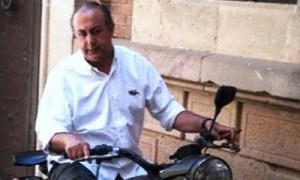 The Spanish businessman Sebastián Martínez Ferraté, charged with corruption of minors, pimping and illegal economic activities, will be judged on Monday July 18 at the Provincial Court of Havana, whose official seat is located on Prado, Teniente and Rey. However, trials in the presence of diplomats and the media are usually held in the 10th of October Municipal Court, on Carmen and Juan Delgado.